SECNAV Del Toro Names Future Guided Missile Frigate USS Hamilton (FFG 66) 
From SECNAV Public Affairs, May 23, 2024 

Secretary of the Navy Carlos Del Toro announced that a future Constellation-class Guided Missile Frigate (FFG 66) will be named USS Hamilton. Secretary Del Toro made the announcement, May 23, while joining New York Mayor Eric Adams at Gracie Mansion for the New York City Mayor’s Fleet Week Welcome Breakfast.  

The future USS Hamilton honors Secretary of the Treasury and Founder of the U. S. Coast Guard Alexander Hamilton and the crews of previous Navy vessels to bear the name.  

“Secretary Hamilton was a fierce advocate for our Nation to establish a Navy. He understood that we, as a maritime nation, needed to establish ourselves from the outset as a maritime power, both commercial and naval,” said Secretary Del Toro. “USS Hamilton, once constructed, will sail around the world, representing the freedom and ideals its namesake spent his life advocating for.”  

During the Revolutionary War, Hamilton served for four years as an aide-de-camp for General George Washington and later, in 1781, commanded a light infantry battalion at the battle of Yorktown.  He subsequently contributed significantly to the adoption of the United States Constitution by serving as a delegate to the Constitutional Convention, drafting a large portion of the Federalist Papers, and providing pivotal support for New York’s adoption of the proposed document.    

As President Washington’s first Secretary of the Treasury, Hamilton was the architect of policies that greatly strengthened the country’s credit and economy.  He consistently advocated for a strong Navy, and encouraged the development of dock yards, naval arsenals, and shore facilities.  To counter the large number of smugglers who were undercutting the new nation’s finances by evading import taxes, Secretary Hamilton in 1790 spurred the establishment of the U.S. Revenue Cutter Service—forerunner of today’s United States Coast Guard.  Ships previously named in honor of Alexander Hamilton have served in the U.S. Navy, U.S. Coast Guard, and Revenue Cutter Service.   

USS Hamilton, the fifth of the new Constellation-class frigates, was appropriated in 2024. The other ships in the class are USS Constellation (FFG 62), USS Congress (FFG 63), USS Chesapeake (FFG 64), and USS Lafayette (FFG 65), which Secretary Del Toro named last year in France.  

The Constellation-class guided-missile frigate represents the Navy’s next generation small surface combatant. This ship class will be an agile, multi-mission warship, capable of operations in both blue-water and littoral environments, providing increased combat-credible forward presence that provides a military advantage at sea.  

The Constellation-class will have multi-mission capability to conduct air warfare, anti-submarine warfare, surface warfare, electronic warfare, and information operations.  


SECNAV Del Toro Names Two Future Guided-Missile Destroyers (DDG 143) and (DDG 144) 

From SECNAV Public Affairs, May 22, 2024 

Secretary of the Navy Carlos Del Toro announced the names of the Navy’s newest Arleigh Burke-class Guided Missile Destroyers, the future USS Richard J. Danzig (DDG 143) and the future USS Michael G. Mullen (DDG 144) during a U.S. Naval Academy Commencement Week ceremony, May 22. 

DDG 143 honors the Honorable Richard J. Danzig, the 71st Secretary of the Navy, and DDG 144 honors retired Admiral Michael J. Mullen, the former Chairman of the Joint Chiefs of Staff and Chief of Naval Operations. These are the first ships to bear their names. 

“Secretary Danzig and Admiral Mullen were visionary leaders in the mold of the greatest naval leaders that came before. Together they have nearly 100 years of service,” said Secretary Del Toro. “Both Secretary Danzig and Admiral Mullen worked tirelessly to ensure our Sailors and Marines had the resources, technologies, and capabilities to set them up for success. I am proud to honor them with these new DDGs.” 

Born in New York City in 1944, Secretary Danzig received a B.A. degree from Reed College, a J.D. degree from Yale Law School, and Bachelor of Philosophy and Doctor of Philosophy degrees from Oxford University. 

Secretary Danzig served in the Office of the Secretary of Defense from 1977 to 1981, first as a Deputy Assistant Secretary, then as the Principal Deputy Assistant Secretary of Defense for Manpower, Reserve Affairs and Logistics. In these roles, he contributed to the Department’s mobilization and deployment of manpower and material. Secretary Danzig later served as Under Secretary of the Navy from November 1993 to May 1997, before being sworn in as Secretary of the Navy on Nov. 16, 1998.  

Secretary Danzig’s tenure emphasized four themes: ridding the Services of “a conscript mentality” by treating Sailors and Marines as skilled workers and supporting them with new capital investments and personnel systems; achieving better synergy between the Navy and Marine Corps; strengthening the ability of the sea services to influence events ashore; and embracing new technologies to better achieve those goals. Since the end of his tenure, he has served in multiple technology and national security-oriented think tanks, councils, and panels. 

“This is such a wonderful honor. It’s certainly a wonderful and touching thing,” said Secretary Danzig. “What is most important to me is that this provides a connection among all of the Sailors who will be on this ship.” 

Commissioned in 1968, Mullen first deployed aboard the USS Collett (DD 730) for operations off the coast of Vietnam as part of U.S. Seventh Fleet. His command tours include the USS Noxubee (AOG 56), USS Goldsboro (DDG 20), USS Yorktown (CVN 10), Cruiser-Destroyer Group TWO with concurrent duties as commander of the USS George Washington (CVN 73) Aircraft Carrier Battle Group, U.S. Second Fleet with concurrent command of NATO Striking Fleet Atlantic, and U.S. Naval Forces, Europe with concurrent command of Allied Joint Force Command located in Naples, Italy.  Staff and shore tours include service at the Office of the Secretary of Defense, the Bureau of Naval Personnel, and multiple tours in the Office of the Chief of Naval Operations.  

As Chief of Naval Operations, Mullen led the united maritime strategy, oversaw support for the Global War on Terror, and expanded relations with partners and allies.  

As Chairman of the Joint Chiefs of Staff, he focused on Joint/combined combat operations in Afghanistan and Libya as well as a major humanitarian operation in Japan; implemented the repeal of Don’t Ask/Don’t Tell; and stood up U.S. Africa Command and U.S. Cyber Command. 

“This is an honor of a lifetime and one I certainly never expected. It says so much about the Navy that I love, and it represents most of my life at sea,” said Mullen. “So, along with my wife, Deborah, and my family, this is just something that is so very, very special.” 

Arleigh Burke-class destroyers, built around the Aegis Combat System, are the backbone of the U.S. Navy’s surface fleet providing protection to America around the globe. 

“DDG 143 and DDG 144, once built and commissioned, will be the most technologically advanced warships ever built, just as Jack H. Lucas, Carney, Arleigh Burke, and each of their predecessors in the long and storied life of the class,” said Secretary Del Toro. 

They incorporate stealth techniques, allowing these highly capable, multi-mission ships to conduct a variety of operations, from peacetime presence to national security, providing a wide range of warfighting capabilities in multi-threat air, surface and subsurface domains. These elements of sea power enable the Navy to defend American prosperity and prevent future conflict abroad. 


May 22 U.S. Central Command Update 

From U.S. Central Command, May 22, 2024 
 

TAMPA, Fla. – At approximately 3:16 p.m. (Sanaa time) on May 22, U.S. Central Command (USCENTCOM) forces successfully engaged four uncrewed aerial systems (UAS) in an Iranian-backed Houthi controlled area of Yemen.   

It was determined these systems presented an imminent threat to U.S., coalition forces, and merchant vessels in the region. These actions are taken to protect freedom of navigation and make international waters safer and more secure for U.S., coalition, and merchant vessels. 


HASC TACAIR Mark-Up Would Assign Newest Super Hornets to Navy Reserve

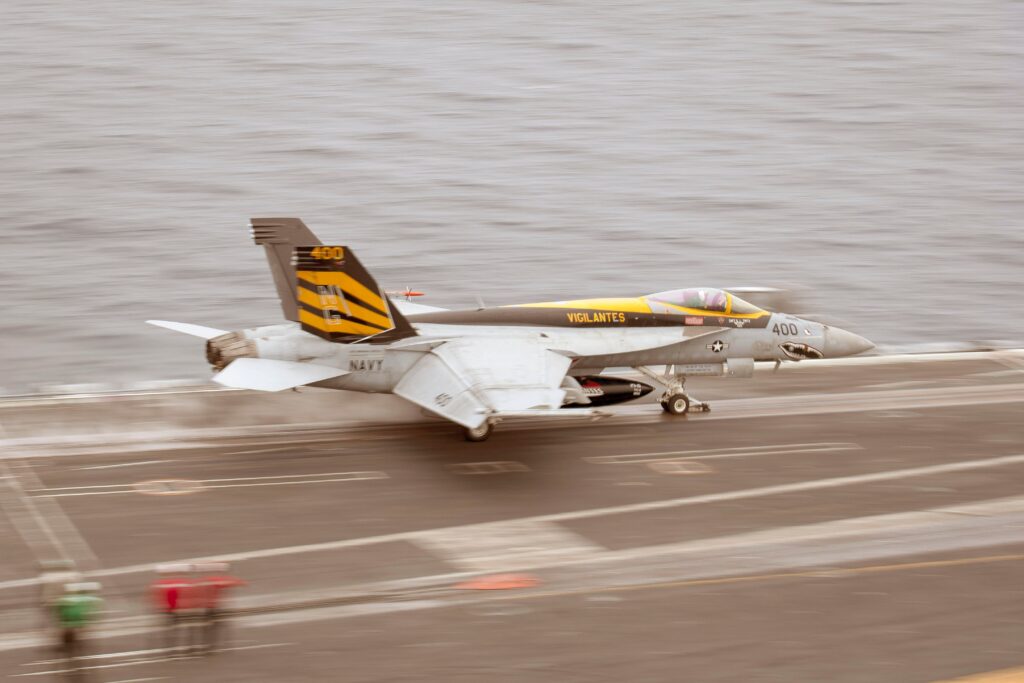
PACIFIC OCEAN (May 19, 2024) An F/A-18E Super Hornet, assigned to Strike Fighter Squadron (VFA) 151, takes off from the flight deck of the Nimitz-class aircraft carrier USS Abraham Lincoln (CVN 72). (U.S. Navy photo by MC1 Kevin J. Steinberg)

By Richard R. Burgess, Senior Editor 

ARLINGTON, Va. — The mark-up of the House Armed Services Committee’s TACAIR and Land Forces subcommittee for the 2025 National Defense Authorization Act would assign the newest F/A-18E/F Super Hornet strike fighters to the Navy Reserve. 

The mark-up would “require the Secretary of the Navy to assign only to the Navy Reserve all F/A-18E/F Super Hornet aircraft procured using funds appropriated for the Navy for fiscal year 2022 or fiscal year 2023,” the text of the mark-up said. 

“The Secretary of the Navy shall ensure that all covered [F/A-18] aircraft are (1) provided only to the Navy Reserve; and (2) used only to recapitalize and maintain,  within the Navy Reserve (A) a deployable tactical strike-fighter capability; and (B) a threat representative adversary support capability that may be used in support of training activities of the Department of Defense,” the document said. 

The Super Hornets would be Block III versions. The only Navy Reserve squadron currently equipped with Super Hornets — Fighter Composite Squadron 12 — operates older versions of the F/A-18E. 

The subcommittee’s mark-up also approved multiyear procurement authority beginning in 2025 for Marine Corps’ CH-53K King Stallion heavy lift helicopters and the T408 engines that power them. 


Combined Maritime Forces’ Combined Task Force 154 Marks Productive First Year

MANAMA, Bahrain (May 21, 2024) Royal Jordanian Naval Force Capt. Ayman Salem Alnaimat, commander of Combined Task Force (CTF) 154, bottom right, and service members from CTF 154 pose for a photo outside of U.S. Naval Forces Central Command headquarters in Manama, Bahrain, May 21. CTF 154 conducts multinational maritime training at locations across the Middle East, enabling more CMF partner-nations to participate in training opportunities without ships or aircraft, particularly during courses that are facilitated ashore. (Photo by Courtesy Photo)

By Combined Maritime Forces Public Affairs | May 22, 2024 

MANAMA, BAHRAINCombined Maritime Forces’ Combined Task Force (CTF) 154 marked one year as the partnership’s multinational maritime training task force, May 22. 

CTF 154 provides multinational maritime training across the Middle East, centered on five core areas: maritime awareness, law of the sea, maritime interdiction, maritime rescue and assistance, and leadership development. CTF 154 customizes training to meet partner needs, enabling more nations to participate in training evolutions, even without ships or aircraft. 

Since standing up last year, CTF 154 has completed nearly 30 training exercises across five operations: Compass Rose I and II in Bahrain; Southern Readiness in the Seychelles, and Northern Readiness I and II in Jordan. These events connected more than 135 subject matter experts with over 400 participants from 23 countries. 

“Working and training collectively allows us to operate more effectively,” said Vice Adm. George Wikoff, CMF commander. “With CTF 154 we’re boosting regional maritime security by providing the ‘go-to’ training that partners and members need to keep the advantage in a dynamic environment.” 

The task force conducted their inaugural event, Compass Rose, in Bahrain May 22-25, 2023. The training included more than 50 participants from Bahrain, Kuwait, Oman, Pakistan, Saudi Arabia, the United Kingdom and United States and focused on first aid and vessel boarding procedures. The second Compass Rose exercise also occurred in Bahrain that December, with training on visit, board, search and seizure procedures, vessel security, and watch officer fundamentals. 

In July, CTF 154 traveled to the Seychelles for Exercise Southern Readiness. The exercise involved vessel boarding, search-and-rescue operation techniques, maritime law and navigation. This was undertaken by field experts from Canada, Australia, France, United Kingdom, India, Italy and the United States of America, including experts from Seychelles Coast Guard and the locally based office of the United Nations on Drugs and Crimes. 

CTF 154 conducted operation Northern Readiness at the Royal Jordanian Naval Base in Aqaba, Jordan, in October. More than 30 CMF facilitators from eight nations led training courses on maritime awareness, law of the sea, VBSS, search and rescue, medical evacuations, seamanship development, public affairs, and leadership development. 

In February, the Task Force held its largest scale event to date, Operation Northern Readiness II. Approximately 150 participants, facilitators, and observers took part, including representatives from CMF, European Union Naval Force Operation, and the United Nations Institute for Training and Research. 

“Being the commander of Combined Task Force 154 is an honor for the Royal Jordanian Navy and for myself,” said Capt. Ayman Salem Alnaimat, who became CTF 154’s second commander in November. “As we celebrate a year of impressive accomplishments, I believe the task force has more to achieve. All CMF members and our regional maritime partners support our efforts, which promote interoperability, capacity, capability and cooperation.” 

CMF is the largest multinational naval partnership in the world, with 43 nations committed to upholding the international rules-based order at sea, which promotes security, stability, and prosperity across approximately 3.2 million square miles of international waters, encompassing some of the world’s most important shipping lanes. 

CMF’s other task forces include CTF 150 that focuses on maritime security in the Gulf of Oman and Indian Ocean; CTF 151, which leads regional counter-piracy efforts; CTF 152, dedicated to maritime security in the Arabian Gulf; and CTF 153 in the Red Sea. 


USS Greeneville Arrives at New Homeport of Naval Base Point Loma

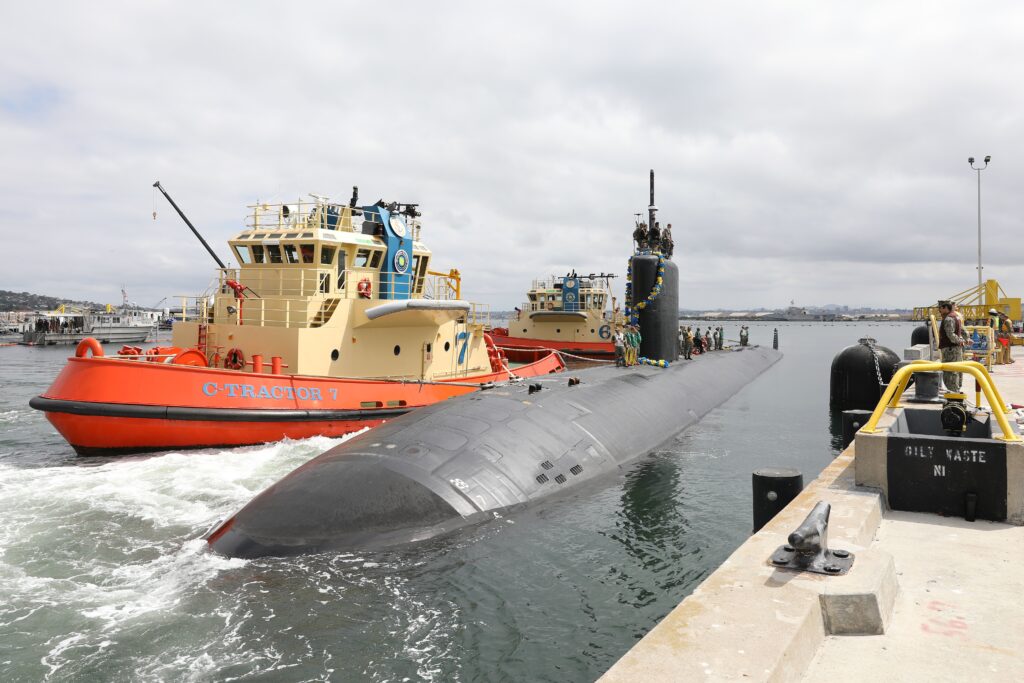
NAVAL BASE SAN DIEGO (May 20, 2024) The Los Angeles-class fast-attack submarine USS Greeneville (SSN 772) arrives at its new homeport at Naval Base Point Loma, Calif., May 20, 2024, following a 30-month engineered overhaul at Portsmouth Naval Shipyard in Kittery, Maine. (U.S. Navy photo by MC1Tiarra N. Brown) 
 

20 May 2024 

From MC1 Tiarra Brown, Commander, Submarine Squadron 11 Public Affairs 

The Los Angeles-class fast-attack submarine USS Greeneville (SSN 772) and its crew of approximately 155 Sailors arrived at its new homeport of Naval Base Point Loma, San Diego, May 20, 2024. 
 
Greenville is conducting a homeport shift to San Diego following the completion of a 30 month Engineered Overhaul (EOH) at Portsmouth Naval Shipyard in Kittery, Maine. Prior to beginning its EOH, Greeneville was homeported at Joint Base Pearl Harbor-Hickam, Hawaii. 
 
Submarine EOHs are comprehensive maintenance periods, ranging from 24 to 36 months in duration, and are normally conducted near the mid-point of a submarine’s service life. The EOH period encompasses necessary repairs, maintenance, equipment modernization and upgrades, and system alterations. The production work accomplished during the EOH will ensure the submarine operates at full technical capacity and mission capability, and remains certified for unrestricted operations over the long term. 
 
“It is a wonderful feeling to be here in San Diego,” said Cmdr. Chad Tella, Greeneville’s commanding officer. “This crew has worked incredibly hard over the course of the last 30 months while Greeneville was in the shipyard. Over the past month of operations, the crew has demonstrated their professionalism and resilience in safely bringing Greeneville to our new home. I could not be more proud of each and every crewmember, and I am happy to join the warfighters of Submarine Squadron 11.” 
 
Greenville will be joining the four Los Angeles-class fast-attack submarines already assigned to Submarine Squadron 11. More than half of the U.S. Navy’s submarine force is based in the Indo-Pacific region due to the area’s strategic importance. 
 
“We are excited to welcome Greeneville to the Submarine Squadron 11 family,” said Capt. Kenneth Douglas, Commander, Submarine Squadron 11. “They bring increased experience and capability under the water to our already impressive arsenal and we are looking forward to seeing what they will do.” 
 
Changing homeports can be challenging for crews, as it requires a lot of communication and coordination between multiple organizations. 
 
“We are extremely proud of our Sailors and their families who have worked tirelessly to return our ship back to the fleet,” said Greeneville’s Chief of the Boat, Senior Chief Logistics Specialist (Submarine) Dan Dumitrache. “They have persevered through months of shift work, several arduous crew certification events, countless numbers of complex ship system testing, household goods shipments, and geographic separation from their loved ones. Their hard work and preparation has ensured that Greeneville will continue to be an undersea warfighting asset for years to come. We are excited to show our operational commanders what we are capable of. Our Sailors and their families exemplify the ship’s motto, ‘Second to None.’” 
 
Greeneville was built by Virginia-based Newport News Shipbuilding and DryDock Company beginning in 1990 and was commissioned in February 1996 at Naval Station Norfolk. It is the only vessel in United States Naval history named after Greeneville, Tennessee. 
 
Greeneville is now assigned to U.S. 3rd Fleet. An integral part of U.S. Pacific Fleet, U.S. 3rd Fleet leads naval forces in the Indo-Pacific and provides the realistic, relevant training necessary to execute the Navy’s role across the full spectrum of military operations—from combat operations to humanitarian assistance and disaster relief. U.S. 3rd Fleet works together with allies and partners to advance freedom of navigation, the rule of law, and other principles that underpin security in the Indo-Pacific. 


SECNAV Del Toro Discusses Building Comprehensive U.S. and Allied Maritime Power at National Maritime Day Ceremony

SECNAV Public Affairs, May 22, 2024 

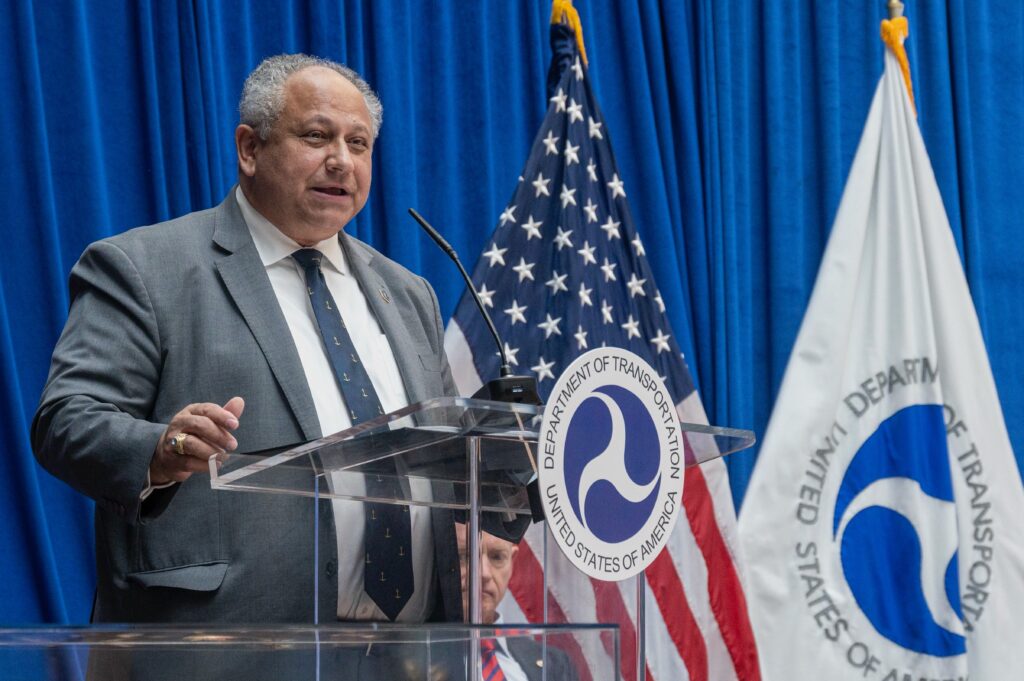
Secretary of the Navy Carlos Del Toro today reiterated his commitment to restoring the Nation’s vital strategic shipping and shipbuilding industry. 

Secretary Del Toro made the remarks at the U.S. Department of Transportation, Maritime Administration (MARAD) National Maritime Day ceremony, May 22, in Washington, D.C. 

“History reveals that no nation has endured as a great naval power without also being a commercial maritime power, both in shipbuilding and shipping,” said Secretary Del Toro. “And for the first time in 125 years, we have a full-spectrum, global maritime competitor. That is why, as Secretary of the Navy, I have advocated so forcefully to revive commercial shipbuilding and the U.S. Merchant Marine.” 

To achieve this goal, Secretary Del Toro has engaged across the Cabinet to advance a whole-of-government effort to rebuild the Nation’s comprehensive maritime power. 

For example, last May, Secretary Del Toro met with Secretary of Transportation Pete Buttigieg and Administrator for the Department of Transportation Maritime Administration (MARAD) retired Rear Adm. Ann C. Phillips to begin laying key groundwork for interagency collaboration that is at the center of our new national Maritime Statecraft. 

“Our collective efforts have catapulted the importance of restoring America’s comprehensive maritime power to the top of the national agenda. We are now participating in multiple White House-led interagency processes on naval and commercial shipbuilding,” said Secretary Del Toro. 

In addition, last year, Secretary Del Toro brought together the Maritime Administration, the U.S. Coast Guard, National Oceanic and Atmospheric Administration (NOAA), and the Army to form a Government Shipbuilder’s Council to tackle common challenges. 

“We are also working closely at the state level, including with the Governors of Wisconsin and Michigan, on improving shipyard communities and mobilizing the ‘North Coast’s’ world-class industrial workforce,” said Secretary Del Toro. 

Other efforts include: 

Engaging with organized labor. Last month, Senior Advisor Steve Brock was present at the signing ceremony of an innovative union contract between Bartlett Maritime and the President of the Boilermakers Union. This new program will train union welders in the construction trades in shipbuilding work and deploy them as a rotational force to shipyards around the country. 

Working to restore competition in the U.S. shipbuilding marketplace. Earlier this year, Secretary Del Toro traveled to Asia to meet with the top executives of the world’s most advanced and productive commercial shipbuilders. He brought to the table a simple, yet profound opportunity: “Invest in America”—modernize and invigorate the U.S. shipbuilding ecosystem with your cutting-edge technology and processes. 

Expanding opportunities. Recently, the Department of Energy (DOE) expanded eligibility for its significant infrastructure and IRA loan program to include new and modernized commercial shipyards, as well as, construction of commercial ships at scale. These incentives should open a path for U.S. built ships to once again be part of our commercial sealift programs. 

“On this National Maritime Day, I want mariners and those who love and support them to know a renaissance in American maritime power has begun, and we, in the Department of the Navy, are with you,” said Secretary Del Toro. 

Congress established National Maritime Day in 1933 to honor the maritime industry’s significant contributions to the United States.  Congress established National Maritime Day to honor the American steamship Savannah’s historic voyage from the United States to England, marking the first successful transatlantic crossing using steam propulsion, 91 years ago. 

Read Secretary Del Toro’s full remarks online


Netherlands, U.S. naval forces conduct South China Sea operations

USS Mobile and HNLMS Tromp conduct a Replenishment At Sea with USNS Wally Schirra. (U.S. Navy photo)

By Lt. j. g. Rebecca Moore, May 22, 2024 

SOUTH CHINA SEA  –  The Netherlands and United States’ navies conducted bilateral operations in the South China Sea, May 22. 
 
Participants included U.S. Navy Independence-variant littoral combat ship USS Mobile (LCS 26), Lewis and Clark-class dry cargo ship USNS Wally Schirra (T-AKE 8) and Royal Netherlands Navy De Zeven Provinciën-class frigate HNLMS Tromp (F803). 
 
“The Netherlands is one of our oldest, continuous bilateral relationships, stemming from the 18th century. I look forward to any opportunity to work together with partners and allies, especially at sea,” said Capt. Sean Lewis, commodore, Destroyer Squadron 7. “We share a deep commitment to maintaining stability and free use of vital sea lanes in the Indo-Pacific.” 
 
The bilateral operation provided a valuable opportunity to improve allied interoperability and conduct complex scenarios to improve combined readiness. 
 
“We’re fortunate to work together with allies and to have them provide replenishment to us. Operating together fortifies our existing relationship with our partners from the U.S.,” said Cmdr. Yvonne van Beusekom, Commanding Officer HNLMS Tromp. “We look to continue coordination between our nations to promote regional peace and stability in the Indo-Pacific region.” 
 
The U.S. Navy regularly participates with allies and partners in high-end maritime exercises and operations, which have continued to grow in scale, scope and complexity, to create combined operations that enhance interoperability, boost deterrence and demonstrate shared resolve. 
 
“We are fortunate to work with friends at sea in the region. Consistent collaboration makes us better as a crew and more capable as a joint force,” said Cmdr. David Gardner, commanding officer for Mobile. “Bilateral operations like these strengthen bonds with our Royal Netherlands Navy partners and deepen our understanding of how to operate together.” 
 
During the operation, Commander, Destroyer Squadron 15 acted as a facilitator between DESRON 7 and the Netherlands. Multilateral operations improve interoperability between allied navies and support a free and open Indo-Pacific. These evolutions demonstrate the strength of regional partnerships, interchangeability and cooperation. 
 
As the U.S. Navy’s forward-deployed DESRON in Southeast Asia, DESRON 7 serves as the primary tactical and operational commander of littoral combat ships rotationally deployed to the U.S. 7th Fleet area of responsibility, functions as Expeditionary Strike Group 7’s Sea Combat Commander and builds partnerships through training and exercises and military-to military engagements. 
 
7th Fleet is the U.S. Navy’s largest forward-deployed numbered fleet, and routinely interacts and operates with allies and partners in preserving a free and open Indo-Pacific region. 


U.S. Pacific Fleet Announces 29th RIMPAC Exercise 

From Commander, U.S. 3rd Fleet Public Affairs 

SAN DIEGO – Approximately 29 nations, 40 surface ships, 3 submarines, 14 national land forces, over 150 aircraft and more than 25,000 personnel will participate in the biennial Rim of the Pacific (RIMPAC) exercise scheduled June 26 to Aug. 2, in and around the Hawaiian Islands. 

RIMPAC 2024 is the 29th exercise in the series that began in 1971. As the world’s largest international maritime exercise, RIMPAC combines force capabilities in a dynamic maritime environment to demonstrate enduring interoperability across the full spectrum of military operations. 

The theme of RIMPAC 2024 is “Partners: Integrated and Prepared.” To promote a free and open Indo-Pacific, Exercise RIMPAC is the premier joint and combined maritime exercise, utilizing and preserving a world class maritime training environment. With inclusivity at its core, RIMPAC fosters multi-national cooperation and trust, leverages interoperability, and achieves respective national objectives to strengthen integrated, prepared, coalition partners. 

This year’s exercise includes forces from Australia, Belgium, Brazil, Brunei, Canada, Chile, Colombia, Denmark, Ecuador, France, Germany, India, Indonesia, Israel, Italy, Japan, Malaysia, Mexico, Netherlands, New Zealand, Peru, the Republic of Korea, the Republic of the Philippines, Singapore, Sri Lanka, Thailand, Tonga, the United Kingdom and the United States. 

Hosted by Commander, U.S. Pacific Fleet, RIMPAC 2024 will be led by Commander, U.S. 3rd Fleet, who will serve as the Combined Task Force (CTF) commander. For the first time in RIMPAC history, a member of the Chilean Navy, Commodore Alberto Guerrero, will serve as deputy commander of the CTF. Rear Adm. Kazushi Yokota of the Japan Maritime Self-Defense Force will serve as vice commander. Other key leaders of the multinational force will include Commodore Kristjan Monaghan of Canada, who will command the maritime component, and Air Commodore Louise Desjardins of Australia, who will command the air component. 

During RIMPAC, integrated and prepared partners train and operate together in order to strengthen our collective forces and promote a free and open Indo-Pacific. RIMPAC 2024 contributes to the increased interoperability, resiliency and agility needed by the Joint and Combined Force to deter and defeat aggression by major powers across all domains and levels of conflict. 


U.S. Coast Guard Visit to Republic of Palau Strengthens Maritime Navigation and Cooperation

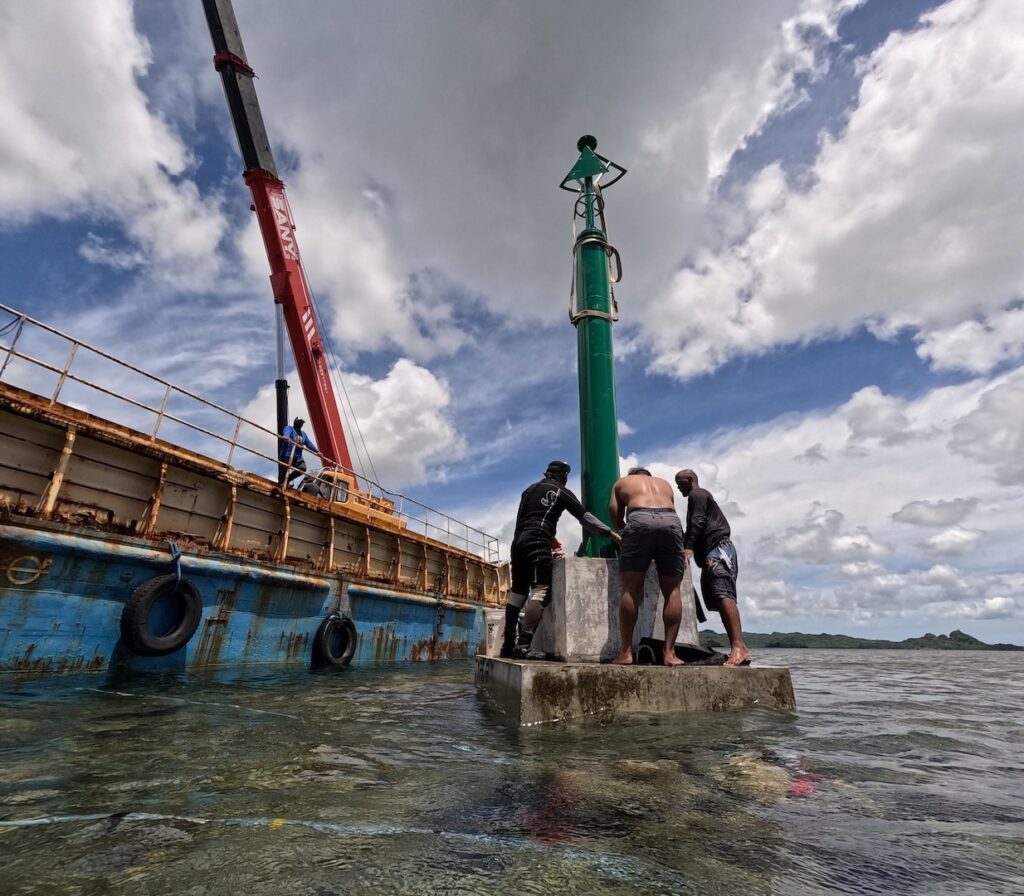
U.S. Coast Guard Forces Micronesia Sector Guam personnel and Marine Transportation leadership observe the installation of fixed ATON from the government of Japan being installed in Palau on May 14, 2024. The team completed a vital weeklong mission in the Republic of Palau, setting the stage for future collaboration and bolstering safe maritime navigation and security. This visit, in response to a request from Palau Marine Transportation, focused on an Aids to Navigation (ATON) Subject Matter Expert Exchange (SMEE). (U.S. Coast Guard photo)

From U.S. Coast Guard Forces Micronesia/Sector Guam, May 20, 2024 

KOROR, Republic of Palau – On May 14, 2024, the U.S. Coast Guard completed a vital weeklong mission in the Republic of Palau, setting the stage for future collaboration and bolstering safe maritime navigation and security. 
 
This visit, in response to a request from Palau Marine Transportation, focused on an Aids to Navigation (ATON) Subject Matter Expert Exchange (SMEE). The exchange laid the foundation for a future SMEE planned for later in the year, including personnel from the 225-foot sea-going buoy tender, USCGC Hickory (WLB 212). 
 
Palau, a nation consisting of approximately 340 islands and renowned for its maritime heritage and strategic location in the Pacific, plays a crucial role in regional maritime safety, security, and environmental stewardship. With its vibrant tourism industry and commitment to marine conservation, Palau’s efforts are vital for the economic and ecological health of the region. 
 
Lt. Anna Maria Vaccaro and Lt. Jay DeInnocentiis led the U.S. Coast Guard SMEE team. They met with Palau Marine Transportation leadership and ATON technicians to discuss the fixed and floating ATON constellation in Palau. The team also reviewed the equipment storage and set-up for fixed and floating aids. They went to sea with the marine transportation team to inspect the aids on the reef and observed the establishment of a fixed aid. 
 
Palau requested U.S. Coast Guard assistance with establishing four additional fixed aids in locations challenged by the rapid depth changes and strong currents. A microbeacon barge, a type of barge equipped with microbeacon technology which often is used for shallow water ATON positioning and coastal navigation, is the most suitable asset for this task due to the channel’s bathymetry. The barge is provided by the U.S. Coast Guard and will be delivered by USCGC Hickory upon the buoy tender’s arrival back to the Western Pacific. The Palauan team plans to use the microbeacon barge for servicing coastal aids to navigation in shallow waters. 
 
In addition to the SMEE, Capt. Nicholas Simmons, U.S. Coast Guard Forces Micronesia/Sector Guam commander, and Capt. Robert Kistner, the incoming commander, traveled to Palau for brief yet impactful introductions and to express gratitude for the support received during Capt. Simmons’ tenure as commander. 
 
Strategic Importance of ATON 
 
The strategic relationship between the U.S. Coast Guard and the Republic of Palau is vital for ensuring maritime safety, security, and prosperity in the Pacific region. The ATON system is crucial for safe navigation, preventing maritime accidents, and ensuring the smooth flow of marine transportation. This system supports economic activities, fisheries, and the overall security of maritime routes, which are essential for Palau and its partners. 
 
“The economic and environmental value of ATON in maintaining a safe and efficient maritime transportation system cannot be overstated,” said Capt. Simmons. “Our collaboration with Palau Marine Transportation demonstrates our commitment to enhancing maritime safety and supporting our partners in the Pacific. It has been a privilege to be in Palau, and I am profoundly grateful for the exceptional relationship and hospitality extended to us.” 
 
Trip Highlights 
 
• Leadership Engagement: Lt. Vaccaro and Lt. DeInnocentiis met with senior leaders at Palau Marine Transportation to discuss the ATON constellation. They observed the implemention of fixed aids provided by the government of Japan and witnessed the installation of a fixed aid on the reef. 
• Promotion Ceremony: They observed the promotion ceremony of a U.S. Naval colleague Cmdr. Brendan Kruse, COFA Security Cooperation Officer, further supporting Department of Defense relationships in the region. 
• Community Participation: Lt. Vaccaro participated in Palau National Police Week’s 5K Walkathon and candlelight vigil. 
• Key Introductions: Capt. Kistner met with critical partners in Palau, including National Security Coordinator Ms. Jen Anson, U.S. Embassy Palau Charge d’Affaires Mr. Andrew McLean, and U.S. Maritime Advisor to Marine Law Ms. Jennifer Ketchum (USCG Ret.). The team toured the Port of Malakal, the Joint Operations Center, and visited the PSS Remeliik II, a Guardian-class patrol boat in the service of Palau’s Division of Maritime Law Enforcement, built and provided by Australia. 
 
Future Support 
 
The Service tentatively plans an ATON SMEE accompanied by the Hickory and crew for late 2024 to further engage with Palauan partners and establish a realistic timeline for servicing aids in Palau. This continued partnership underscores the U.S. Coast Guard’s commitment to supporting maritime navigation and security in the region, reinforcing the positive impacts and legacy of reliability. 
 
“Our continued collaboration with the Republic of Palau is a testament to the strong strategic partnership we share,” said Capt. Kistner. “By working together, we can enhance Palau’s maritime transportation system and build local capacity, ensuring the safety and security of its waters and contributing to the stability of the broader Pacific region. We are deeply grateful for Palau’s cooperation and support in this mission.” 
 
The U.S. Coast Guard Forces Micronesia/Sector Guam team focuses on maritime safety, security, and stewardship in Oceania. With a primary presence in Guam and Saipan and over 300 members across Guam and the Commonwealth of the Northern Mariana Islands, the team maintains a strong U.S. presence in the Micronesia sub-region and adjacent areas, closely tied to local communities.