Coast Guard Offloads More Than $24 Million in Illegal Narcotics Interdicted in Eastern Caribbean
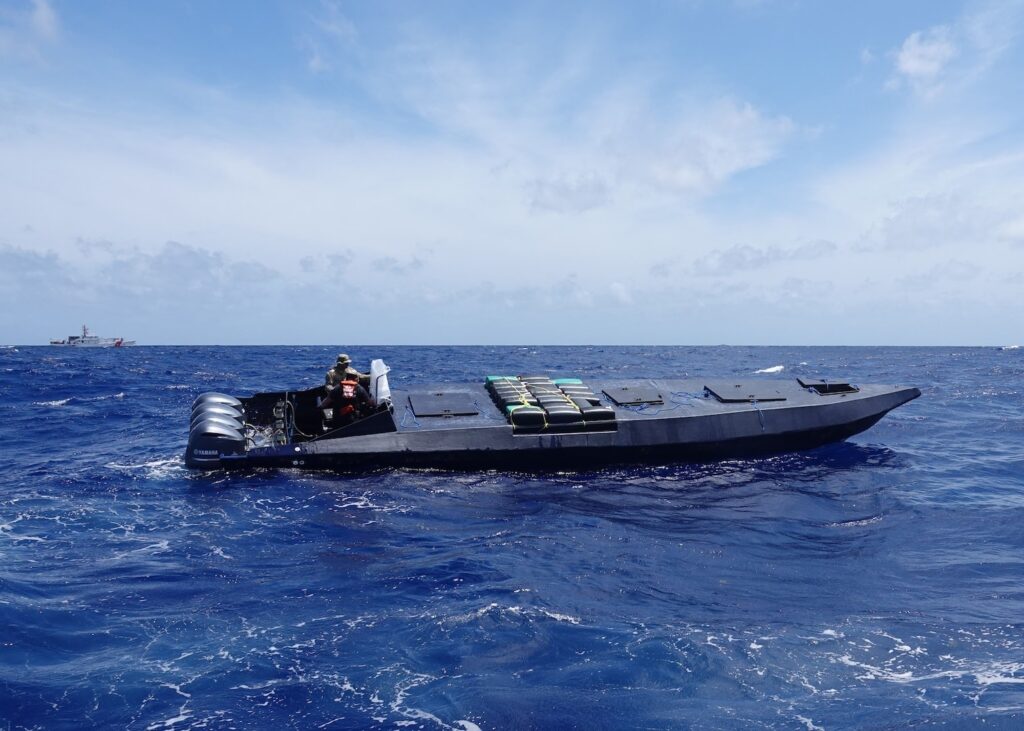
Crew members from USCGC Margaret Norvell (WPC 1105) board a drug smuggling vessel carrying 30 bales of illegal narcotics approximately 190 miles south of Puerto Rico March 24, 2024. The bales weighed more than 1,850 pounds and have an estimated street value of approximately $24.3 million. (U.S. Coast Guard photo courtesy of the USCGC Margaret Norvell crew)

U.S. Coast Guard 7th District, April 5, 2024 

MIAMI – The crew of Coast Guard Cutter Margaret Norvell offloaded more than 1,850 pounds of cocaine with an assessed street value of approximately $24.3 million in Miami, Friday.   

The crew interdicted a low-profile go-fast vessel carrying 30 bales of the illicit narcotics and detained five suspected smugglers approximately 190 miles south of Puerto Rico.   

The suspected smugglers will face prosecution in federal courts by the Department of Justice.   

“I am incredibly proud of our crew,” said Lt. Cmdr. Colin Weaver, Commanding Officer of cutter Margaret Norvell. “I am also grateful for the exceptional coordination and teamwork extending beyond our unit that contributed to this interdiction. Countering drug trafficking organizations that operate throughout the Caribbean depends upon the international and interagency partnerships that JIATF-S and Joint Task Force-East bring to the fight.”   

The Margaret Norvell crew deployed with two boarding officers from Coast Guard Tactical Law Enforcement Team-South (TACLET-S) based in Opa Locka, Florida. TACLET-S is part of the Coast Guard’s deployable specialized forces program, with advanced training in high-risk interdiction operations in the maritime environment, including non-compliant vessel pursuit missions. Law enforcement detachments from TACLET-S deploy aboard Coast Guard, U.S. Navy and foreign allied ships to augment their capabilities and authorities to perform counter drug missions under U.S. law.   

“Drug busts like this one by Margaret Norvell’s crew save lives by reducing the flow of harmful narcotics to the United States and disrupting the illicit maritime activity of transnational criminal organizations,” said Capt. John B. McWhite, chief of enforcement for Coast Guard District Seven. “The efforts to counter illicit smuggling in the Caribbean are truly a collaboration between the Coast Guard and our federal partners and regional allies. The Coast Guard will continue to do our part to deny drug trafficking networks access to maritime smuggling routes in support of the National Drug Control Strategy.”  

Detecting and interdicting illegal drug traffickers on the high seas involves significant interagency and international coordination. The Joint Interagency Task Force South in Key West, Florida conducts the detection and monitoring of aerial and maritime transit of illegal drugs. Once interdiction becomes imminent, the law enforcement phase of the operation begins, and control of the operation shifts to the U.S. Coast Guard throughout the interdiction and apprehension. Interdictions in the Caribbean Sea are performed by members of the U.S. Coast Guard under the authority and control of the Coast Guard’s Seventh District, headquartered in Miami.   

The cutter Margaret Norvell is one of 20 Sentinel-class fast response cutters homeported in the Seventh District. The FRCs are multi-mission patrol boats tasked with vital homeland security missions including drug and migrant interdiction; ports, waterways and coastal security; fisheries enforcement; search and rescue; and national defense. FRCs are named after Coast Guard enlisted heroes in service history, and the cutter’s namesake, Margaret Norvell, served for 41 years with the U.S. Lighthouse Service in Louisiana from 1891 to 1932.   

For breaking news, follow us on “X” (formerly Twitter). For additional information, find us on Facebook and Instagram.   

Visit GoCoastGuard.com to learn about active duty and reserve, officer and enlisted opportunities in the U.S. Coast Guard. Information on how to apply to the U.S. Coast Guard Academy can be found here.   


Metal Shark Set to Debut Autonomous, Amphibious, Semi-Submersible “Prowler” Military Interceptor and “Frenzy” Micro-USV

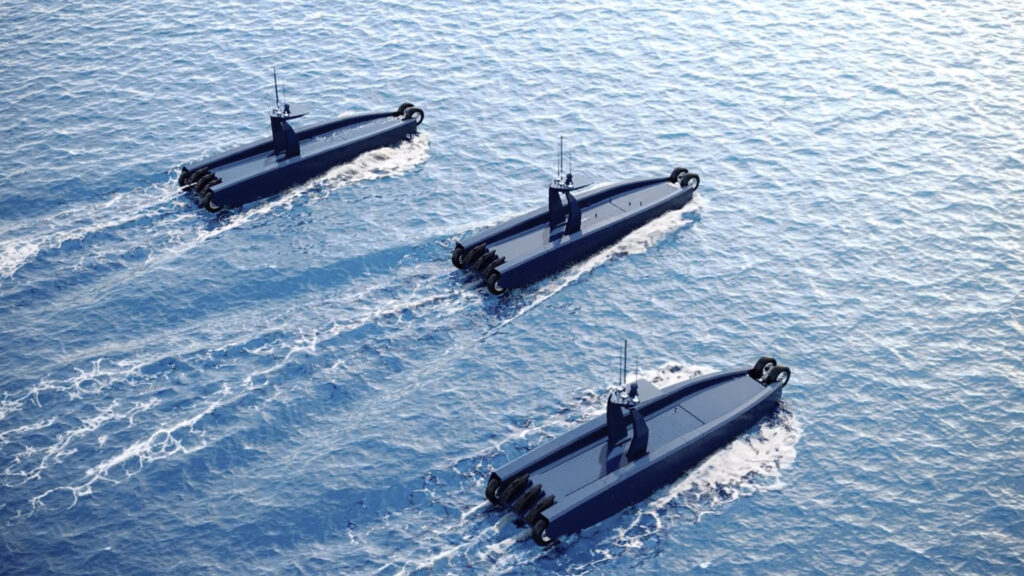
JEANERETTE, La. – April 4th, 2024: Louisiana-based boat builder Metal Shark has announced the debut of “Prowler,” a versatile military craft combining multiple unique technologies to meet the current and near future warfighting requirements of the US military and its allies. The company is also debuting “Frenzy,” a high-performance, low-cost, amphibious micro-USV with a payload carrying capacity of up to 14 lbs. 

Merging autonomous, amphibious, and semi-submersible capabilities with the performance and seakeeping characteristics of a slender deep-vee monohull surface craft, Prowler has been designed to address operational challenges identified by the United States Navy and Marine Corps, two key Metal Shark clients.  

“Prowler represents the sum total of everything we’ve learned while building 400-plus autonomous and remote operated vessels for our military customers over the past decade,” said Metal Shark CEO Chris Allard. “Every aspect of Prowler’s intended operation draws from proven technology. Prowler delivers massive increases in lethality and versatility, merging multiple capabilities into a compact, flexible, lower-cost platform ready for volume production.” 

Fully amphibious and capable of autonomous or remote operation on land or at sea, Prowler offers drastically simplified launch and recovery compared to traditional vessels. Prowler is capable of self-launch and self-recovery at boat ramps, without a prime mover or trailer, or from the well deck of an amphibious ship, with no need for cumbersome cradles or dollies. Prowler’s low-speed crawl enables autonomous or remote operation on land, allowing vessels to be staged and maneuvered with minimal effort.  

Prowler operates on land via a proprietary electric-drive system developed by Metal Shark, which uses low-pressure, high-traction tires mated to dedicated motors for propulsion and steering. Hydraulic rams raise and lower front and rear wheels for operation on land or at sea. Rear wheels are equipped with OTR-certified tires and marine brakes, and Prowler features DOT-compliant lighting. This allows Prowler to be transported over the road behind a conventional prime mover with no trailer, greatly simplifying logistics for operators. 

Propelled by a 300-horsepower Volvo Penta D6 Aquamatic inboard diesel engine and stern drive, the 30-foot, welded-aluminum Prowler operates as a typical surface vessel while underway, with a deep-vee planing hull delivering a 35-knot sprint speed and 500 nautical mile range.  

Designed for extended loitering in a semi-submerged state, Prowler’s large integrated ballast tanks flood when the vessel is static. In loitering mode, Prowler’s decks are near the waterline, with only the vessel’s arch-style communications mast visible above the water. Semi-submersion reduces Prowler’s operational profile while also improving stability for sensors, surveillance and weapons systems. 

Prowler’s mast carries an array of communications equipment and a situational awareness ensemble for autonomous or remote operation, and can be equipped with port and starboard launch tubes for the deployment of loitering smart drones or other weapons. The mast also serves as the air intake for Prowler’s diesel engine. A lithium-ion battery or optional generator power pack supports station keeping, surveillance, guidance, and communications systems during extended loitering periods of up to a week. 

The lift from Prowler’s planing hull design allows the vessel to quickly climb to the surface from its submerged state to resume normal operation once the surveillance mission concludes.  

Prowler is equipped with a computer networked system able to support a multitude of UMAA-compliant command and control, autonomy, targeting, and AI software packages. Prowler’s system architecture provides the forward flexibility to accommodate third party software and/or hardware upgrades to support collaborative intercept capability or other technologies as they may be required.  

Prowler’s computer system, along with propulsion, mechanical, and electrical systems are contained within a single removable module to allow for expedited onsite servicing, repair, upgrade, or replacement with no need to transport the vessel. 

Prowler can simultaneously carry multiple payloads, with 1,000 lbs. of total payload carrying capacity. In addition to the aforementioned smart loitering drones, Prowler can carry up to twelve “Frenzy” amphibious micro USVs, which are carried on deck and self-launched on their own wheels via Prowler’s stern ramp. Designed and built by Metal Shark, the Frenzy features electric waterjet propulsion, carries a payload of up to 14 lbs., and, like Prowler, can loiter in a semi-submerged state. 

“I’ve been toying with the notion of this little gizmo ever since we began designing the Long Range Unmanned Surface Vessel (LRUSV) for the Marine Corps,” said Mr. Allard, speaking of the Frenzy micro USV. “There’s a huge need for attritable USVs in a compact form factor, and very few sources. Frenzy will serve this demand, and putting Frenzy onboard Prowler makes perfect sense. Pairing an over-the-horizon capable USV with micro-USVs delivers a one-two punch capability, keeping the key asset safe while allowing the attritable drones to do their job, all while being watched from the sky.” 

Prowler and Frenzy will make their public debut April 8th through 10th at Sea-Air-Space 2024 in National Harbor, Maryland, before returning to Metal Shark’s Louisiana facilities for further testing and development. 

“We challenged the men and women of Metal Shark to dream big and to think outside the box to bring Prowler and Frenzy to life in an accelerated timeframe, and I am blown away by their talent, energy, and dedication to this project,” said Mr. Allard. “I look forward to showing off the ingenuity and hard work of our people next week at Sea-Air-Space.” 


April 3 Red Sea Update 

U.S. Central Command, April 3, 2024 

TAMPA, Fla. – Between approximately 3:49 to 10:00 a.m. (Sanaa time) on April 3, USS Gravely (DDG 107) and U.S. Central Command (CENTCOM) forces successfully engaged and destroyed one inbound anti-ship ballistic missile (ASBM) and two unmanned aerial systems (UAS) launched by Iranian-backed Houthi terrorists from Yemen towards USS Gravely in the Red Sea. 

There were no injuries or damage reported by U.S., coalition, or commercial ships. 

Additionally, during this timeframe CENTCOM forces destroyed a mobile surface-to-air missile system in Houthi controlled territory. 

It was determined these systems presented a threat to U.S. and coalition forces and merchant vessels in the region. 

U.S. Central Command is dedicated to protecting the freedom of navigation and making international waters safer and more secure for Coalition and merchant vessels. 


New Geo-Tracking Buoys Make a Splash During Live Test Events

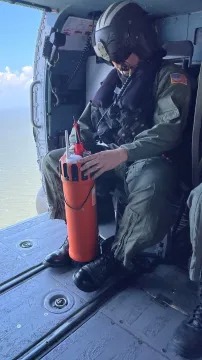
A MOTT buoy being prepared for a drop from an MH-60T helicopter. Photo credit: S&T.

U.S. Department of Homeland Security, April 4, 2024 

New rugged buoy technologies equipped with Automatic Identification Systems aim to help the U.S. Coast Guard mark and track objects in the water. 

Recent years have seen an uptick in the use of geo-tracking technology, which has become so widespread and affordable that we are able to attach small trackers to car keys or luggage to find them with our smartphones. The Science and Technology Directorate (S&T) is working with the U.S. Coast Guard (USCG) to develop buoys with improved geo-tracking technology for mission specific field use. 

Instead of looking for car keys, USCG crews can use this technology to find and mark critical locations or objects in the water using buoys deployed from air or surface vessels. These could include stranded boats, contraband, or hazardous waste that are required to be reidentified after initial search and rescue or interdiction efforts are complete. The two new buoy systems, created by S&T industry partners, are moving into the final round of testing this year after successfully completing functional tests in 2023. 

Building a Better Buoy 

The USCG handles thousands of cases each year, each potentially involving the deployment of numerous supporting assets necessary to complete those missions. After the initial response efforts, ocean currents and associated weather conditions can carry away watercraft or other manmade materials from the original incident site. This presents a challenge for USCG crews since those materials left behind can become navigation hazards in busy shipping lanes or involve illegal goods. During a drug interdiction, for example, suspects will often throw contraband overboard while fleeing. Determining where these illegal materials are located is an essential part of gathering evidence and protecting the nation’s coasts; therefore, finding them quickly is key. 

“The availability of accurate, real-time geo-position data is critical in verifying the drift and motion of items of interest and assisting in the planning of a search and rescue or other response mission,” said Edwin Thiedeman of the USCG Office of C4 & Sensors Capabilities. 

“S&T is working closely with the vendors, USCG subject matter experts, and operators to deliver more capable buoys to support multiple USCG missions. These new improved buoys will provide the USCG with much improved accuracy and reliability to execute their important maritime missions,” stated Ron McNeal, S&T Silicon Valley Innovation Program (SVIP) transition director. 

While the USCG currently has geo-tracking buoys, the existing systems do not have a secondary locator that is visible at sea level day and night in case of geo-tracking failure. The existing systems are not reusable or rechargeable, so they have to be replaced frequently, representing a significant cost and a potential loss in data. S&T’s SVIP put out a call to industry through the Maritime Object Tracking Technology (MOTT) solicitation for rugged geo-tracking buoys that could be quickly deployed from both air and surface vessels traveling at high speeds. The buoys needed to transmit Automatic Identification System (AIS) and Global Positioning System (GPS) data, which large ships use to share and receive location data while traversing the world’s waterways. Having AIS/GPS capabilities built into the buoy helps ensure USCG crews would be able to quickly pick up signals using their existing communications equipment. 

“The ability to link small innovative businesses directly with the government to provide new technologies to fit government needs has a wide range of benefits for all parties. With all of this in mind, MOTT’s goal was to find a start-up company with a new or existing buoy system that could be tailored to the USCG’s needs, resulting in more efficient technology transition and acquisition processes,“ said CDR Rebecca Fosha, deputy of the USCG Research, Development, Test & Evaluation and Innovation Program

Following the solicitation’s initial launch in March 2020, SVIP awarded funds to two companies: Kenautics, Inc. and Morcom International, Inc. Each business had an existing system they could adapt to the USCG’s requirements: the Kenautics Global Positioning System AIS Navigation and Tracking Buoy and the Morcom Tracking Unit for Navigational Aid. Both companies reached Phase 3 of the SVIP funding lifecycle in 2023, which required functional tests in a real-world setting. 

“Startups typically don’t have the human or financial capital to champion large R&D projects,” said Melissa Oh, SVIP managing director. “Using the SVIP phased approach, we are quickly able to assess if a technology will have the ability to respond to the given need and transition the technology to the operators on a timeline that allows smaller businesses to be competitive.” 

Go For Test Launch 

In August and November 2023, staff from SVIP and the USCG Research, Development, Test & Evaluation and Innovation Program traveled to USCG Base Elizabeth City, North Carolina, to conduct separate test runs for each of the new MOTT buoys. The tests focused on how the buoys operated when dropped from different altitudes and velocities, which involved deploying the systems from an MH-60T helicopter and an HC-130J fixed wing aircraft traveling at various speeds and altitudes. Evaluators were interested in how the rugged designs held up upon impact, given that one version of the buoy has a parachute and the other does not. 

It was also important to see whether the buoys successfully continued to function when they impacted the water, while at the same time determining whether the buoy went too deep under the surface of the water. Going too deep underwater could risk the system striking the bottom, where it might potentially get stuck or malfunction once it resurfaced. Participants conducted 10 drops over the course of four days, which provided valuable feedback on improvements that Kenautics and Morcom International can incorporate into the next version of their prototypes. 

“It was important to test the buoys in a realistic, operational environment—in this case Base Elizabeth City—to evaluate the structure, functions, and software integrity. Observation from USCG personnel and the companies provided valuable feedback to modify the buoys’ performance to better fit USCG missions,” noted Jason Pharr from the Tactical/Navigation Program Office in the Engineering Support Branch of the USCG Aviation Logistics Center. 

In addition to testing the buoys’ ability to withstand water impact, S&T and USCG staff also evaluated their battery life and cybersecurity. Rechargeable batteries are one of the design components that will help make the new buoys more cost effective than current models, so it was important to see how long they could operate in an open ocean environment. 

Test sessions were conducted over several flights lasting approximately two hours for each sortie, which gave a realistic scenario of how long it might take USCG crews to return to an incident site once conditions were safe. During operational deployment, the buoys utilized strobe lights, radio beacons and transmitted AIS information approximately every 10 minutes so crews could pick up the signals on both visual and radio frequency scanners. Separate from the drop tests but related to the buoys’ communications capabilities, S&T also conducted Red Team testing with a third party to determine whether there were any cybersecurity issues for either system. The goal was to see whether the buoy signals could be vulnerable to detection or hacking by civilian systems, since this could represent a potential risk. 

The Next Wave 

Last year’s Phase 3 test sessions provided critical insight into how the MOTT buoys could be improved moving forward. The next rounds of operational evaluations are scheduled to take place later in 2024. The MOTT buoy is one of S&T’s joint projects between S&T and the USCG through SVIP, which also includes a Language Translation device that operates offline in a zero-connectivity environment. These systems could potentially join a growing list of solutions that empower our nation’s homeland security operations while promoting more efficient technology transition-to-market. 


ARTEMIS program receives first repatriated Swiss F-5 of Batch for U.S. Navy

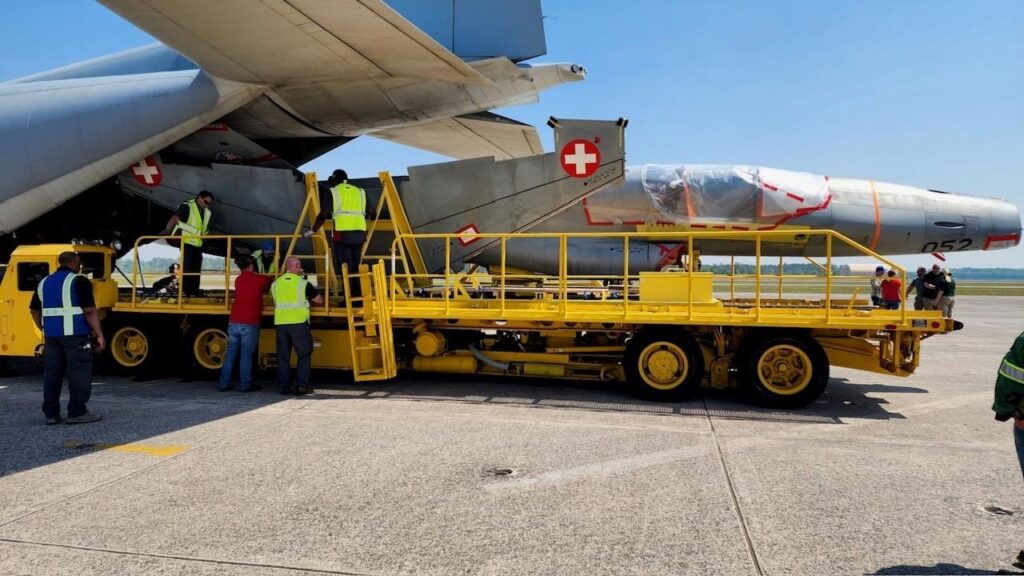
The first of 22 repatriated Swiss F-5 Tiger II aircraft arrived at the Tactical Air Support facility at Cecil Field in Jacksonville, Florida, March 21 for the second phase of the Avionics Reconfiguration and Tactical/Modernization for Inventory Standardization (ARTEMIS) program, ferried by a U.S. Marine Corps C-130J from Marine Aerial Refueler Transport Squadron (VMGR) 234. 

Naval Air Systems Command, Apr. 4, 2024 

CECIL FIELD, Florida — The first of 22 repatriated Swiss F-5 Tiger II aircraft arrived at the Tactical Air Support facility at Cecil Field in Jacksonville, Florida, March 21 for the second phase of the Avionics Reconfiguration and Tactical/Modernization for Inventory Standardization (ARTEMIS) program. 

The aircraft, which arrived via a U.S. Marine Corps C-130J from Marine Aerial Refueler Transport Squadron (VMGR) 234, marks a milestone that is the culmination of several months of engineering and maintenance efforts performed by the Tactical Air Support team in close coordination with Navy and Marine Corps stakeholders, said Capt. Greg Sutton, Specialized and Proven Aircraft Program Office (PMA-226) program manager. 

“Expansion of the F-5 program ensures future success in training Navy and Marine Corps aviators,” Sutton said. 

In 2020, the US Navy and the Swiss Government entered into an agreement to repatriate 22 Swiss Air Force F-5 aircraft into the US Navy and US Marine Corps Adversary fleet.  As part of the ARTEMIS Program, the Tactical Air Support subcontractor, RUAG, located in Emmen, Switzerland, performs the program’s first phase with aircraft inspection, maintenance, structural component replacement, and engine modification and overhaul. Upon completion of this phase, the aircraft are transferred to Tactical Air Support’s facility to begin phase 2. During this phase, aircraft inspections, maintenance, and repair continue while integrating a new glass cockpit, modern avionics, and other safety modifications. 

Initial deliveries of the 22 aircraft are planned by mid-2025 with program completion in 2028 adding 11 F-5 Adversary aircraft to the each to the existing inventory of Navy and Marine Corps.   


Black Sea Maritime Forum kicks off in Bucharest 

By U.S. Naval Forces Europe-Africa Public Affairs 

BUCHAREST, Romania  –  The third convening of the Black Sea Maritime Forum, cohosted by Romanian Naval Forces, U.S. Naval Forces Europe-Africa and Allied Joint Force Command Naples, Italy, began April 4 in Bucharest, Romania.  

“Maritime security within the Black Sea is a shared interest among NATO allies and partner nations,” said Adm. Stuart B. Munsch, commander of U.S. Naval Forces Europe-Africa and Allied Joint Force Naples, Italy. “The free flow of commerce on this important waterway is vital to Black Sea countries and supports global economic prosperity. The U.S. Navy, alongside our NATO Allies and partners, is committed to promoting a secure, prosperous, and interconnected Black Sea region that is free from threats to territorial integrity and from economic coercion – this conference speaks to our commitment.” 

This year’s forum will be attended by representatives from Bulgaria, France, Georgia, Greece, Italy, Japan, Romania, Sweden, Türkiye, the United Kingdom, the United States, as well as delegates from NATO navies and partner nations.    

“A multi-institutional event, the Black Sea Maritime Forum represents an excellent opportunity to build bridges between the Black Sea, Mediterranean Sea and the Baltic Sea.” said Vice Admiral Mihai Panait, commander of the Romanian Naval Forces. “We have to continue working together and share our experience in order to improve our knowledge regarding the strategic context, risks and threats specific to the Black Sea region and draw some conclusions concerning to reduce vulnerabilities and increase resilience.” 

To facilitate dialogue, panels addressed the Black Sea’s role in the global economy and energy sectors, and Black Sea maritime security cooperation.  

This year marks the 75th anniversary of the NATO Alliance, the world’s most successful alliance, recently expanding to 32 Nations through the accession of Sweden. 

Allied Joint Force Command (JFC) Naples was activated on 15 March 2004, when its predecessor command, Allied Forces Southern Europe (AFSOUTH), was deactivated after nearly 53 years of successful activity in support of peace and stability in and around its designated area of responsibility. Twenty-two NATO nations contribute to the JFC Naples military staff in order to deter aggression and to contribute to the effective defense of NATO territory and forces and to preserve or restore the security of NATO nations. 

U.S. Naval Forces Europe-Africa is actively involved in maintaining security throughout the region. NAVEUR-NAVAF and U.S. 6th Fleet routinely conduct exercises with Bulgaria, Georgia, Romania, Türkiye, Ukraine, and other Black Sea partner nations, training maritime readiness and increasing interoperability capabilities. Commander, Task Force 68 routinely works with Allied and partner nations to construct logistics infrastructure, while training and exercising demining techniques throughout the region. Commander, Task Force 67’s deploys maritime patrol and reconnaissance aircraft, the P-8 Poseidon, to conduct patrols over the Black Sea and surrounding region. 

For over 80 years, U.S. Naval Forces Europe-Africa (NAVEUR-NAVAF) has forged strategic relationships with allies and partners, leveraging a foundation of shared values to preserve security and stability. 

Headquartered in Naples, Italy, NAVEUR-NAVAF operates U.S. naval forces in the U.S. European Command (USEUCOM) and U.S. Africa Command (USAFRICOM) areas of responsibility. U.S. Sixth Fleet is permanently assigned to NAVEUR-NAVAF, and employs maritime forces through the full spectrum of joint and naval operations. 


Shield AI to Acquire Australia’s Sentient Vision Systems, Establish Shield AI Australia

The acquisition enhances Shield AI’s software suite and expansion into Australian market, the company said. Shield AI

SYDNEY – Shield AI Inc. announced a definitive agreement to acquire Sentient Vision Systems, an Australia-based leader in AI-enabled real-time situational awareness, pending customary closing conditions and regulatory approval.

The companies will merge AI expertise and operational understanding to deliver superior intelligence surveillance and reconnaissance capabilities for today’s rapidly changing defense and security environment. In August 2023, the companies announced the joint development of a ViDAR-enabled wide area motion imagery (WAMI) solution called “Sentient Observer,” which Shield AI plans to fly this year.

“The combination of AI pilots, Sentient Observer and teams of affordable drones like the MQ-35 VBAT will provide the same land and maritime domain awareness that today’s $40 million and $180 million Group 5 drones and crewed aircraft like the P-8 provide, at a fraction of the price. The DoD has asked for an all-seeing eye over tens of thousands of square miles, 24/7, without the need for GPS or communication links. For Shield AI, Sentient Observer is the final piece of that puzzle. The DoD can begin augmenting and replacing their legacy solutions for a distributed, low cost, low risk solution that doesn’t break the bank if an aircraft is shot down,” said Brandon Tseng, Shield AI’s president, cofounder, and former Navy SEAL.

“This acquisition unites Sentient’s ViDAR and our Hivemind AI pilot, creating the world’s most advanced AI-piloted ISR sensor package,” said Ryan Tseng, CEO of Shield AI. “Considering the imperative of covering vast maritime areas, especially in the Pacific, joining forces with Sentient was a strategic choice given their expertise in optical radar solutions. The integration of WAMI on V-BAT will revolutionize our offering, enabling Group 3-sized aircraft to perform tasks that previously required larger, costlier aircraft, significantly enhancing our customer’s operational capabilities.”

This news follows several significant milestones for Shield AI’s growth in the Australian market. In February, V-BAT received certification for Australian operations from Australia’s Civil Aviation Safety Authority. Shortly thereafter, in partnership with Shield AI’s Australian partner, Toll Aviation, the companies launched the inaugural Australian V-BAT training course.

“What stood out to us about Shield AI is that they are the only company in the world with an operational AI pilot, and therefore have the technological expertise and maturity to really deliver on the AI technology workstream underlined in AUKUS Pillar 2. The innovation breakthrough combining our computer vision AI-enabled ViDAR and Shield AI’s Hivemind will increase situational awareness, enabling quicker more effective decision making and help to save lives,” said Sentient’s CEO, Mark Palmer.

ViDAR is Sentient’s AI system, which uses an electro-optic or infrared sensor to detect and classify targets in the imagery stream that would be invisible to a human operator or to a conventional radar. Shield AI’s flagship product, Hivemind, is an AI pilot that enables teams of intelligent aircraft to operate and complete missions autonomously in high-threat environments, without the need for remote operators or GPS.

Hivemind is an aircraft-agnostic autonomy stack similar to the self-driving technology found in cars. It has flown six aircraft, including quadcopters, the MQ-35A V-BAT, the F-16, and Kratos MQM-178 Firejet. Later this year, it will fly Kratos’ XQ-58 Valkyrie. Shield AI has accumulated more autonomous flight hours executing fighter jet maneuvers, like dogfighting, than any company in the world.


Navy Awards Boeing Additional Funds for MQ-25 Drones for Testing 

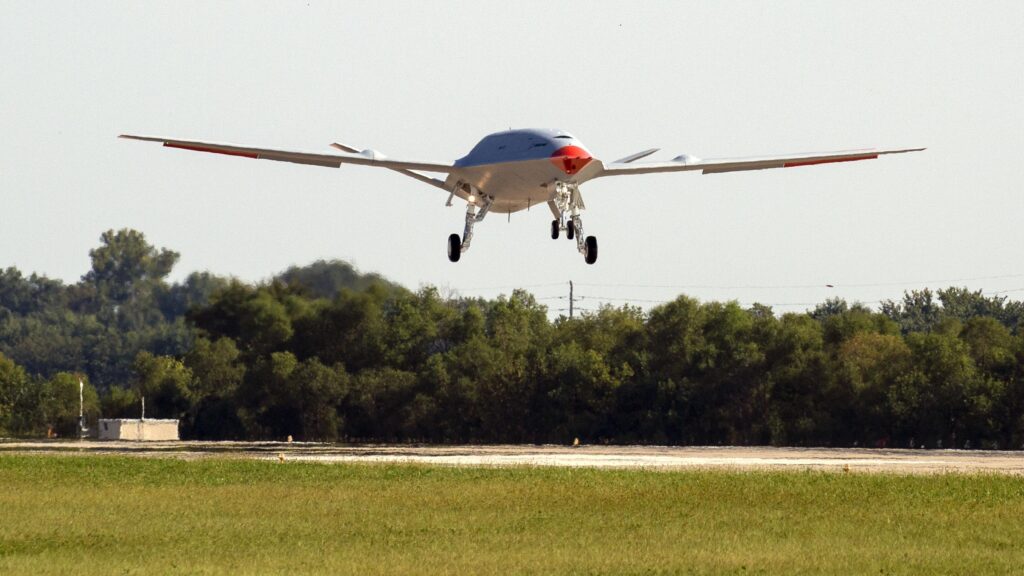
The Boeing-owned MQ-25 test unmanned aerial vehicle, T1. (Boeing)

By Richard R. Burgess, Senior Editor 

ARLINGTON, Va. — The Navy has awarded Boeing funds to enhance the production of MQ-25A Stingray carrier-based aerial refueling unmanned aerial vehicles, bringing to five the number procured for testing. 

The Naval Air Systems Command awarded The Boeing Company a cost-plus-fixed-fee, cost-plus-incentive-fee, fixed-price incentive (firm-target) $657.1 million contract modification for the aircraft, according to a March 29 Defense Department contract announcement.  

“This modification adds scope for the production and delivery of two additional MQ-25 System Demonstration Test Article aircraft (air vehicles four and five), to include associated tooling and communication system changes for the Navy,” the announcement said. “Additionally, this modification definitizes obsolescence phase two for non-recurring engineering to address product baseline obsolescence to support low-rate initial production for the MQ-25 Stingray program.” 

The MQ-25A is a single-engine carrier-based UAV designed to refuel other aircraft while in flight. The Navy is procuring the Stingray to refuel F-35 Lightning II and F/A-18E/F Super Hornet strike fighters, EA-18G Growler electronic attack aircraft, and E-2D Advanced Hawkeye command and control aircraft. 

Procurement of the MQ-25A will allow the Navy to free up Super Hornet strike fighters from the aerial refueling role for their primary combat missions. It also will help preserve the service life of the Super Hornet fleet. 

The Navy ordered four development models of the MQ-25A in August 2018, followed by an order for three more in April 2020. The company-owned prototype made its first flight in September 2019 and in 2021 demonstrated its ability to refuel the F-35C, F/A-18E/F, and the E-2D. The September 2022, the Navy awarded Boeing a contract for advance materials for Low-Rate Initial Production Lot 1. Initial operational capability is expected in 2026. The Navy plans to procure 72 Stingrays. 


Lockheed Martin Conducts Historic LRASM Flight Test

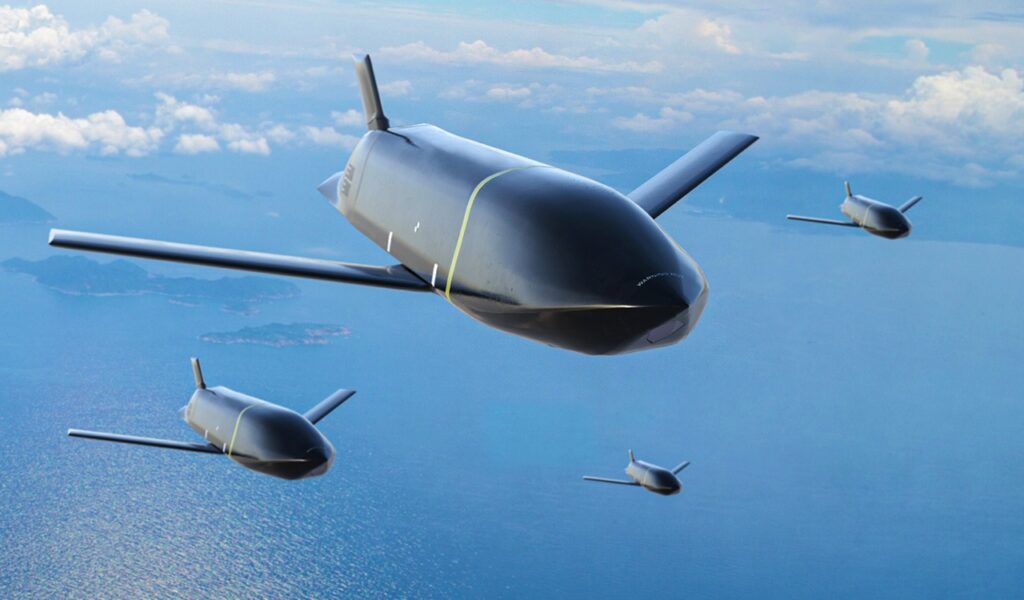
Orlando, Fla., April 3, 2024– The U.S. Navy in partnership with Lockheed Martin [NYSE: LMT] successfully conducted a historic Long-Range Anti-Ship Missile (LRASM) flight test with four missiles simultaneously in flight. 

During the 12th Integrated Test Event (ITE-12), the U.S. Navy was able to demonstrate the weapon’s inherent high-end lethality from mission planning through kill chain integration and its effects on the target. All mission objectives were met, reinforcing high confidence in the weapon’s capabilities and superior firepower. 

“We have continued to invest in the design and development of LRASM’s anti-surface warfare capabilities to ensure that warfighters have the 21st century security solutions they need to complete their missions and come home safely,” said Lisbeth Vogelpohl, LRASM program director at Lockheed Martin Missiles and Fire Control. “This event was a testament to our commitment to deliver reliable products that work each and every time, ensuring those who serve stay ahead of ready.” 

ITE-12 was the next ‘big-step’ in LRASM’s evolution. The successful test was a graduation exercise for the missiles’ latest configuration and lays the foundation for increased capabilities to come. 

As a member of the AGM-158 family of cruise missiles, LRASM delivers long-range, highly survivable and lethal capability against highly defended surface combatants that no other weapon in the inventory can provide. 


Kratos Demonstrates XQ-58A Electronic Warfare Capabilities for Marine Corps 

From Kratos Defense, April 2, 2024 

SAN DIEGO, April 02, 2024 (GLOBE NEWSWIRE) – Kratos Defense & Security Solutions, Inc. (NASDAQ:KTOS), a leading National Security Solutions provider, announced that Kratos Unmanned Systems Division has successfully demonstrated the ability of the XQ-58A to fly in concert with two F-35 aircraft and the ability to deliver an integrated electronic attack (EA) capability on the XQ-58A Valkyrie aircraft during a live flight test event at Eglin Air Force Base, Florida. The demonstration completes the first phase of the United States Marine Corps’ Penetrating Affordable Autonomous Collaborative Killer – Portfolio (PAACK-P) program. Flight test support was provided by the 40th Flight Test Squadron, 96th Test Wing. All flight test objectives were successfully met. 

The demonstration follows the award of a $22.9M “Phase 2” contract modification on December 4, 2023 for additional engineering development and flight test demonstrations, and marks a significant milestone in the PAACK-P program as the Headquarters Marine Corps Aviation Cunningham Group and Advanced Development Team, Marine Corps Warfighting Lab, the Office of the Undersecretary of Defense for Research and Engineering (OUSD(R&E)), the Naval Air Systems Command (NAVAIR), and Naval Air Warfare Center Aircraft Division (NAWCAD) AIRWorks continue to inform MQ-58B requirements for the Marine Air-Ground Task Force (MAGTF) Unmanned Aerial System (UAS) Expeditionary (MUX) Tactical Aircraft (TACAIR) for use in a Suppression of Enemy Air Defense (SEAD) role. 

The XQ-58A’s advanced EA payload autonomously detected, identified, and geolocated multiple tactically relevant targets of interest, transmitted emitter target track coordinates to collaborative assets, and successfully presented non-kinetic electronic attack effects against multiple emitters. Flying since 2019, the Kratos XQ-58A Valkyrie is a high-performance, runway-independent tactical UAV capable of long-range flights at high-subsonic speeds. The Valkyrie can serve as a loyal wingman, conduct single UAS operations, or operate in swarms. Combining affordability, survivability, long-range, high-subsonic speeds, maneuverability, and ability to carry flexible mission kit configurations and mix of lethal weapons from its internal bomb bay and wing stations, the XQ-58A provides unmatched operational flexibility at an affordable price for multiple Department of Defense customers. 

“MUX TACAIR promises to increase the lethality and survivability of our current crewed platforms,” said Lt. Col. Bradley Buick, Cunningham Group Capabilities, Research, and Integration Officer. “These platforms are the future of air warfare.” 

Steve Fendley, president of Kratos Unmanned Systems Division, said, “We’re very excited about the mission capability demonstrated during the flight and the incredible effectiveness per cost that this enables; not to mention the elimination of risk to a human pilot, and elimination of risk to expensive manned platforms.  We’re proud to be pioneering these technologies with our integrated autonomous aircraft systems that truly validate the DoD’s goal of achieving effective, survivable, affordable mass.  We are humbled to support the vision and drive of our Marine’s customer who has charted the course for these critical 21st century capabilities and proud to be working as a collective team with Kratos high performance uncrewed jets, Northrop Grumman’s leading technology EW systems, and the Marine Corps.”