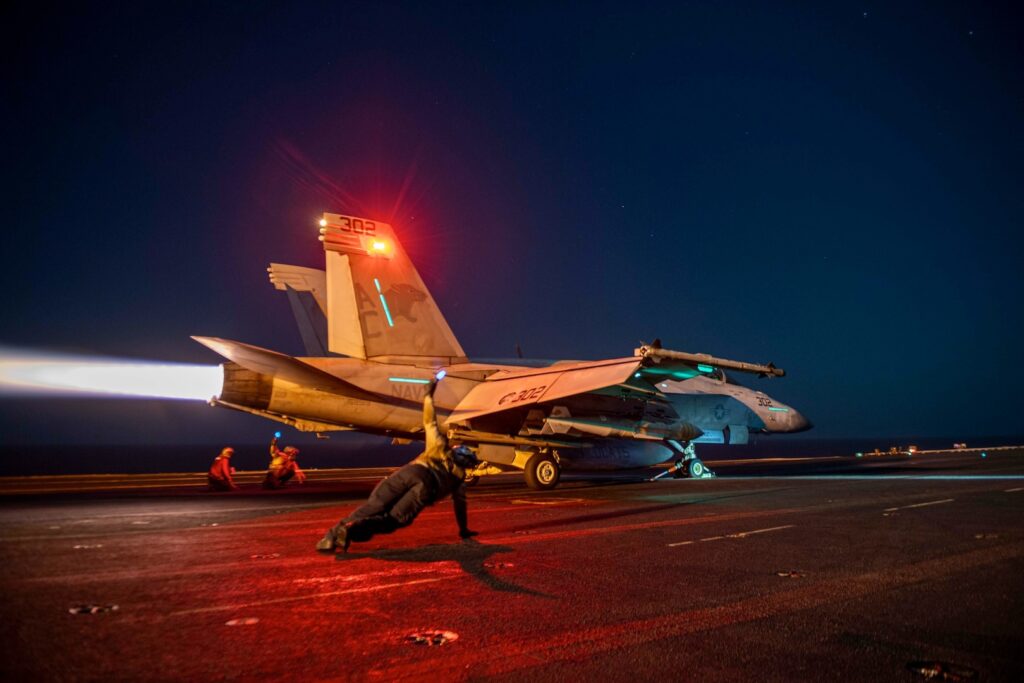
Feb. 26, 2024 TAMPA, Fla. – On Feb. 26, between the hours of 4:45 p.m. and 11:45 p.m. (Sanaa time), U.S. Central Command (CENTCOM) forces destroyed three unmanned surface vessels (USV), two mobile anti-ship cruise missiles (ASCM), and a one-way attack unmanned aerial vehicle (UAV) in self-defense. The USV and ASCM weapons were prepared to launch towards, and the UAV was over, the Red Sea.
CENTCOM forces identified the USVs and missiles in Houthi-controlled areas of Yemen, as well as the UAV over the Red Sea, and determined that they presented an imminent threat to merchant vessels and to the U.S. Navy ships in the region. These actions are taken to protect freedom of navigation and make international waters safer and more secure for U.S. Navy and merchant vessels.
RTX’s Raytheon Completes First Flight Test for New AMRAAM-ER Variant
Successful test showcases increased capabilities of upgraded AMRAAM-ER
ANDOYA, Norway (Feb. 27, 2024) — Raytheon, an RTX (NYSE: RTX) business, and Kongsberg Defence & Aerospace, with support from the Norwegian Ministry of Defense (MoD) and Armed Forces, successfully completed a flight test of an updated AMRAAM®-Extended Range missile variant from a National Advanced Surface-to-Air Missile System (NASAMS). The successful flight test showcases the increased capabilities of the upgraded AMRAAM-ER.
This latest AMRAAM-ER variant is a first-of-its-kind configuration incorporating the guidance section of the AIM-120 C-8. It also incorporates a more robust 10-inch rocket motor from Nammo and a 10-inch Control Actuator System, from Kongsberg Defence & Aerospace, branded the Norwegian Propulsion Stack, for which the Norwegian MoD has been a collaborative partner.
“Integrating this new technology into the AMRAAM-ER ensures the advanced capabilities of the surface-launched munition for many years to come,” said Paul Ferraro, president of Air & Space Defense Systems at Raytheon. “Agile software upgrades will continue to advance AMRAAM to stay ahead of evolving threats.”
The testing included a test firing, during which the missile flew a preprogramed flight path to verify safe egress from the NASAMS launcher and missile performance.
The AMRAAM-ER is designed to be integrated with the NASAMS launcher for increased air defense protection, intercepting targets with increased range and altitude of a non-extended range AMRAAM.
NASAMS, a highly adaptable medium-range air defense solution, is jointly developed and produced by Raytheon and Kongsberg Defence & Aerospace. Drawing on decades of experience, industrial cooperation, and significant investment made by all three parties, this new cooperative arrangement will grow the capabilities of NASAMS to ensure it keeps pace with ever-evolving complex threats.
U.S. Forces, Allies Conduct Joint Strikes in Yemen
USCENTCOM
Feb. 24, 2024 TAMPA, Fla. –On Feb. 24, at approximately 11:45 p.m. (Sanaa Yemen time), U.S. Central Command forces alongside UK Armed Forces, and with support from Australia, Bahrain, Canada, Denmark, the Netherlands, and New Zealand, conducted strikes against 18 Houthi targets in Iranian-backed Houthi terrorist-controlled areas of Yemen. These strikes from this multilateral coalition targeted areas used by the Houthis to attack international merchant vessels and naval ships in the region. Illegal Houthi attacks have disrupted humanitarian aid bound for Yemen, harmed Middle Eastern economies, and caused environmental damage.
The targets included Houthi underground weapons storage facilities, missile storage facilities, one- way attack unmanned aerial systems, air defense systems, radars, and a helicopter. These strikes are intended to degrade Houthi capability and disrupt their continued reckless and unlawful attacks on international commercial and U.S. and U.K. vessels in the Red Sea, Bab AI-Mandeb Strait, and the Gulf of Aden.
The goal of this multi-national effort is to defend ourselves, our partners, and allies in the region and restore freedom of navigation by destroying Houthi capabilities used to threaten U.S. and partner forces in the Red Sea and surrounding waterways. These strikes are separate and distinct from the multinational freedom of navigation actions performed under Operation Prosperity Guardian.
Feb. 25 Red Sea Update
USCENTCOM
Feb. 25, 2024
TAMPA, Fla. – On Feb. 24 at 11:45 p.m. (Sanaa time), the Iranian-backed Houthis launched one anti-ship ballistic missile likely targeting the M/V Torm Thor, a U.S.-flagged, owned, and operated chemical/oil product tanker in the Gulf of Aden. The missile impacted the water causing no damage or injuries.
Earlier in the evening, at about 9 p.m. (Sanaa time), U.S. Central Command forces shot down two one-way attack unmanned aerial vehicles over the southern Red Sea in self-defense. A third UAV crashed from an assessed in-flight failure.
CENTCOM forces identified the UAVs and determined they presented an imminent threat to merchant vessels and to the U.S. Navy ships in the region. These actions are taken to protect freedom of navigation and make international waters safer and more secure for U.S. Navy and merchant vessels.
U.S. Coast Guard Cutter Polar Star completes Operation Deep Freeze 2024 mission, departs Antarctica
Feb. 23, 2024
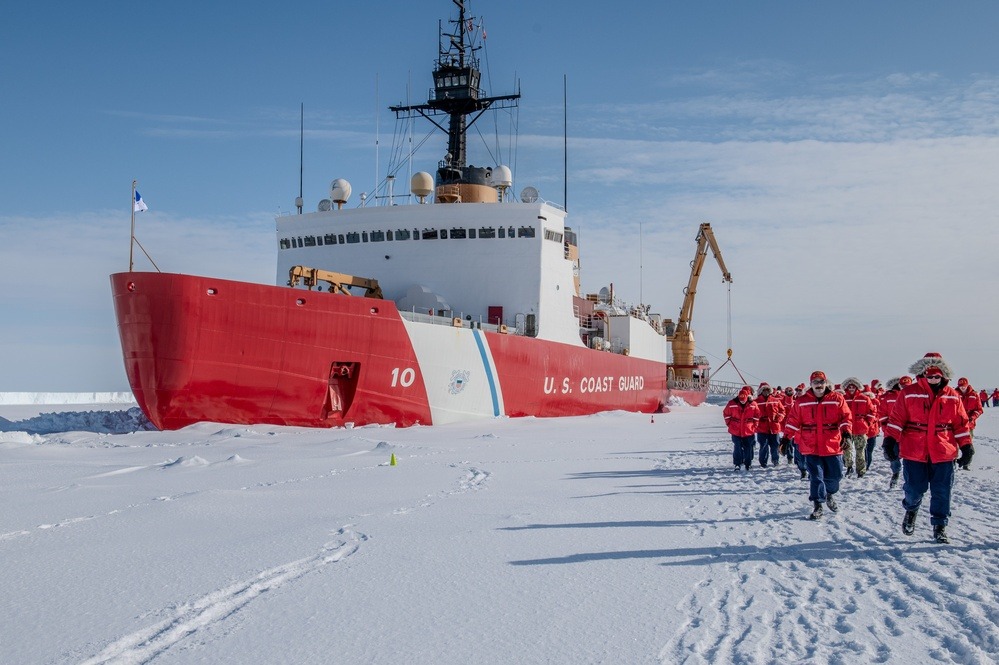
SOUTHERN OCEAN — The U.S. Coast Guard Cutter Polar Star (WAGB 10) and crew departed McMurdo Station, Antarctica, Feb. 12, after operating for 51 days below the Antarctic Circle in support of Operation Deep Freeze 2024.
The Polar Star and crew broke a 38-mile channel through fast ice to create a navigable route for vessels to reach McMurdo Station and escorted a cargo vessel and oil tanker through the ice to and from the station.
“This year, the fast ice in McMurdo Sound was exceptionally thick due to the winds and temperature at the end of last season” said Lt. Cmdr. Don Rudnickas, operations officer. “It challenged our ship and our crew in almost every way, but we met those challenges to achieve our ultimate concern – the resupply of McMurdo Station by sea.”
Before departing the Antarctic Region, the cutter also visited the Bay of Whales, where members from all three of the Coast Guard Regional Dive Lockers dove 90 miles south of the previously documented record for southernmost scuba dive. The crew also went ashore adjacent to the Ross Ice Shelf in the Bay of Whales where they conducted their Antarctica Service Medal ceremony and were able to walk up to the ice shelf.
“Operation Deep Freeze demands more than just breaking ice; it requires navigating the complexities of keeping a 48-year-old cutter operational while subjecting her to the most extreme conditions possible,” said Capt. Keith Ropella, commanding officer. “We rely on the crew’s technical expertise, teamwork, and their commitment to overcoming the relentless obstacles posed by time and nature. It’s also the collaboration of a Joint Task Force, comprised of servicemembers from the U.S. Air Force, Army, and Navy, that play a crucial role in mission success.”
Operation Deep Freeze is the annual logistical support mission provided by the Department of Defense to the National Science Foundation (NSF) managed by the U.S. Antarctic Program (USAP). This includes coordination of strategic inter-theater airlift, tactical intra-theater airlift and airdrop, aeromedical evacuation support, search and rescue response, sealift, seaport access, bulk fuel supply, port cargo handling, and transportation requirements supporting the NSF. This is a unique mission demonstrating U.S. commitment to the Antarctic Treaty and to research programs conducted for the betterment of all humanity. The Polar Star and crew contribute to this yearly effort through icebreaking to clear the channel for supply vessels.
The Polar Star is the United States’ only asset capable of providing access to both Polar Regions. It is a 399-foot heavy polar icebreaker commissioned in 1976, weighing 13,500 tons and is 84-feet wide with a 34-foot draft. The six diesel and three gas turbine engines produce up to 75,000 horsepower.
CNO Visits Philadelphia for Submarine and Shipbuilding Updates
23 February 2024
PHILADELPHIA (Feb. 23, 2024) – Chief of Naval Operations Adm. Lisa Franchetti visited Naval Foundry and Propeller Center (NFPC), the Naval Sea Systems Command (NAVSEA) Compatibility Test Facility (CTF), and the Philly Shipyard, Feb. 22.
Franchetti’s visit provided her the opportunity to receive updates on submarine production, to discuss innovative practices in the shipbuilding industry, and to engage with members of Congress as they work together to ensure the U.S. Navy remains the world’s preeminent fighting force.
“Thank you for your continued leadership in working to strengthen our organic industrial capacity and building the partnership we need to reach the submarine production cadence the Navy requires,” Franchetti said. “It’s not just service in a uniform, its service to our nation – and strengthening our organic industrial base is one of the Navy’s top priorities to ensure we maintain our warfighting advantage.”
CNO heard from NFCP’s Director Nate Bird how their 100 percent civilian workforce has the ability to test and design simultaneously, running hundreds of simulations on equipment to optimize submarine efficiency, and ensure on-time delivery of key components. Bird explained that NFCP is on track to deliver four key components of the Columbia-class submarine on time.
CNO then saw first-hand why the unique machining capabilities of the Navy’s only foundry and propulsor manufacturing facility make it a national asset – flexible to support the Navy’s needs, while observing the pouring of the aft outer structure of the future Columbia-class ballistic missile submarine USS Wisconsin (SSBN 827).
“Columbia-class ballistic missile submarines are the nation’s future sea based strategic deterrent and will provide the most survivable leg of the nation’s strategic triad,” Franchetti told NFCP personnel during her tour. “The work you’re doing is important not just to our Navy but to our nation, and our national defense. Thank you for being part of the team.”
While touring the Philly Shipyard with representatives from the Department of Transportation’s Maritime Administration (MARAD), TOTE Services, and Philly Shipyard leadership, Franchetti learned about MARAD’s Vessel Construction Manager (VCM) program and how they are using the VCM model to build their newest National Security Multi-Mission Vessels – on time and on budget.
The three organizations explained how the innovation of the VCM model is the combination of three things: providing the shipyard a very mature design, contracting with a firm-fixed price model, and the use of a small government oversight team.
“It’s great to see how you’ve put this partnership together,” said Franchetti. “Your philosophy, core values and teamwork are great for our nation. You are creating opportunities to procure ships in different ways. Increasing U.S. ability to affordably build ships is critical to our national security.”
Following the shipyard tour, Adm. Bill Houston, Director Naval Reactors, hosted CNO for a tour of the NAVSEA CTF. Franchetti saw how NAVSEA engineers test, operate, and maintain the first-of-its-kind Colombia-class integrated power system (electric drive) and propulsion plant electric distribution system. This innovative, state-of-the-art facility allows the Navy to conduct pre-delivery testing, troubleshooting, and training, ensuring we produce reliable capabilities that are essential to maintaining our sea-based strategic deterrence.
“The CTF serves as the Navy’s premiere test facility for the new Columbia class electric drive propulsion system,” said Houston. “This facility has been invaluable in proving out this transformative technology for the Columbia class. Future testing of components here before installation is a game-changing approach to shipbuilding and will ensure these parts are ready to support the Navy’s priority procurement effort to replace the most survivable leg of the Nation’s strategic deterrent.”
This was Franchetti’s first visit to Philadelphia as Chief of Naval Operations and part of a series of visits to see the Navy’s manufacturing and testing capabilities. CNO conducted the visit alongside Rep. Mary Gay Scanlon (D-PA) and Rep. Donald Norcross (D-NJ), as well as Professional Staff Members from the offices of Rep. Chris Deluzio (D-PA) and Rep. Joe Courtney (D-CT).
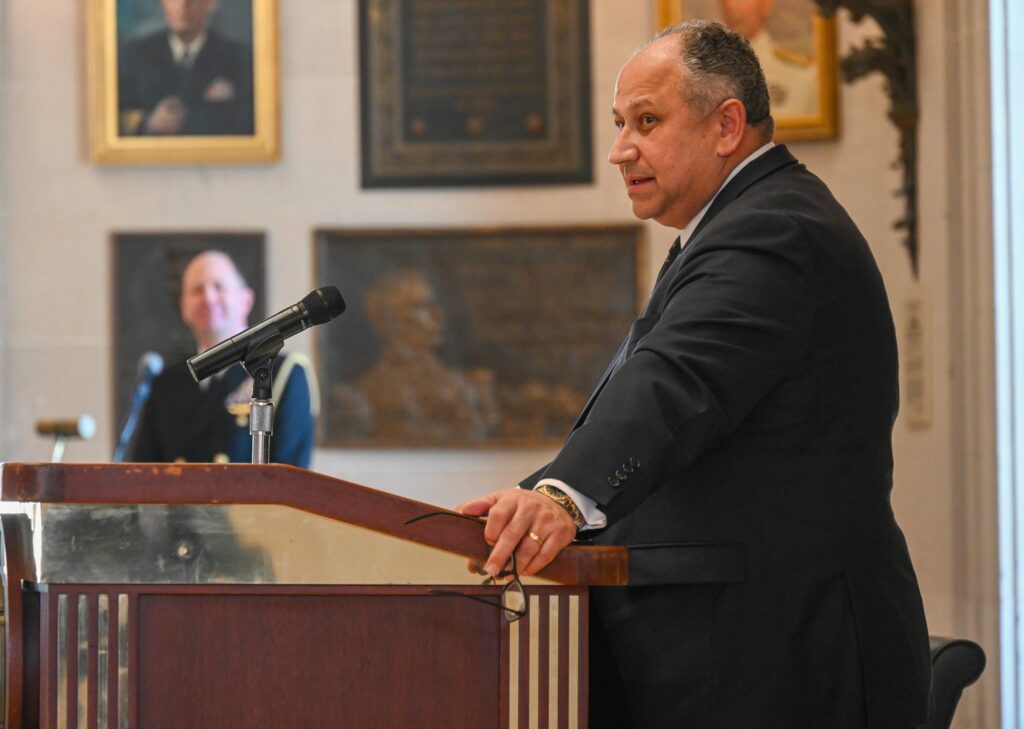
SECNAV Del Toro Travels to the Indo-Pacific to Further Maritime Cooperation, Explore Opportunities to Enhance Naval Capabilities
24 February 2024
Secretary of the Navy Carlos Del Toro travels to the Indo-Pacific to meet with allies and partners to further maritime cooperation, explore opportunities to collaborate with the Republic of Korea (ROK) and Japan on commercial and Naval shipbuilding, and engage with Sailors, Marines, and Department of the Navy (DON) civilians forward deployed to the region.
He will also travel to Palau for a series of strategic engagements on the expanding relationship with that critically important Compact of Free Association (COFA) state.
Secretary Del Toro will meet with government officials in ROK and Japan to reaffirm the DON’s long-standing partnership and iron clad commitment to each. He will engage with key shipbuilding industry executives in the ROK and Japan and will tour the world’s most technologically advanced and productive shipyards to observe the power of integrated commercial and naval shipbuilding and its potential for reviving America’s maritime industrial shipbuilding capabilities and capacity.
“We’re extremely thankful to both the ROK and Japan for being the great allies that they are,” said Secretary Del Toro. “We have a responsibility to have these conversations now to see how we can advance our interoperability and leverage the capabilities and capacities of our collective domestic industrial capabilities in peacetime or if necessary, during conflict.”
The visit to three states critical to the protection of the maritime commons is part of Secretary Del Toro’s Maritime Statecraft efforts to revive the maritime power of the nation’s shipbuilding and maintenance. It comes on the heels of a visit to New York City, Feb. 22, where he announced the creation of the Maritime Economic Deterrence Executive Council (MEDEC), which is focused on mitigating adversarial foreign investment risks, innovation and technology.
The trip aligns with the Pentagon’s recently released National Defense Industrial Strategy, which calls for venture capital and new ideas to revive the U.S. industrial base.
Carl Vinson Carrier Strike Group Returns from Western Pacific Deployment
26 February 2024
By Seaman Nathan Jordan
SAN DIEGO - Nimitz-class aircraft carrier USS Carl Vinson (CVN 70), flagship of Carrier Strike Group (CSG) 1, returned to its homeport of Naval Air Station North Island, Feb. 23, following a four-month deployment to the Western Pacific.
Carl Vinson is joined by two other CSG-1 ships, the Ticonderoga-class guided-missile cruiser USS Princeton (CG 59) and Arleigh Burke-class guided-missile destroyer USS Sterett (DDG 104), which returned to their homeport of Naval Base San Diego.
“This Carrier Strike Group and our Sailors’ deployment accomplishments demonstrate our unwavering contribution to the Navy’s global engagement strategy,” said Rear Adm. Carlos Sardiello, CSG-1 commander. “During the past four months, we routinely flew and sailed anywhere international law allows to assure Americans, allies and partners of our commitment to bolstering regional security and stability in the Indo-Pacific. With the unwavering support of our families and friends, we were proud to sail and fly forward as a symbol and the promise of America’s advantage at sea.”
The strike group departed for the scheduled deployment from San Diego Oct. 12, 2023, to sail and maneuver across the U.S. 3rd and 7th Fleet areas of operations. While in 7th Fleet, CSG-1 participated in and supported numerous bilateral and multinational maritime exercises in support of a free and open Indo-Pacific.
The strike group conducted routine port visits to the Republic of Korea, Singapore, Philippines and Hawaii. Individual ships in CSG-1 visited Australia, Japan, Guam, Saipan, and Palau.
“These port visits demonstrated U.S. commitment to the Indo-Pacific region and further enhanced relationships with the leaders and local populations,” said Sardiello.
In total, the strike group supported U.S. relations with eight allied and partner nations through two Multi-Large Deck Events, Annual Exercise 2023, several bilateral, tri-lateral and multi-lateral maritime exercises in the Philippine Sea and South China Sea. CSG-1 worked alongside Australia, Canada, Indonesia, Japan, Malaysia, Philippines, Republic of Korea and Singapore to reaffirm their commitment to regional stability and security in the Indo-Pacific.
Furthermore, CSG-1 integrated and operated seamlessly with the U.S. Joint Force conducting maritime exercises with Naval Special Warfare operators, unmanned surface vessels, U.S. Marine Corps, U.S. Army, U.S. Air Force and two multi-carrier operations with the Theodore Roosevelt and Ronald Reagan CSGs.
In 133 days underway, the ship’s crew conducted 10 underway replenishments, logged more than 13,000 flight hours and over 6,000 sorties, sailed more than 36,000 nautical miles, and safely received over 12 million gallons of fuel with zero mishaps. The Vinson crew conducted 9,540 launch and recovery evolutions, 7,835 aircraft moves, 651 aircraft elevator moves, issued nearly 12 million gallons of fuel to aircraft, and transferred nearly 5,000 pallets of cargo and mail.
“I couldn’t be more proud of our Sailors. They executed with precision and discipline while strengthening our relationships with allies and partners. They were superb naval ambassadors in foreign ports,” said Capt. Matthew Thomas, Carl Vinson’s commanding officer. “These highly trained Sailors showed they are reliable, resilient, and ready to support and defend the American way of life every day.”
Notable key leader engagements and visits aboard Carl Vinson included Republic of Korea Minister of Defense, defense chiefs from Indonesia and Malaysia, Commander of Japan Maritime Self-Defense Force, U.S. Ambassadors to Singapore and Indonesia, senior officers from the Armed Forces of the Philippines, U.S. Chief of Naval Operations and Master Chief Petty Officer of the Navy, among others.
The Carl Vinson strike group deployed with flagship USS Carl Vinson and embarked CSG-1 staff, Carrier Air Wing (CVW) 2, Destroyer Squadron (DESRON) 1 staff and the Ticonderoga class guided-missile cruiser USS Princeton (CG 59). DESRON-1 ships included Arleigh Burke-class guided-missile destroyers USS Hopper (DDG 70), USS Kidd (DDG 100), USS Sterett (DDG 104), and USS William P. Lawrence (DDG 110).
The squadrons of CVW-2 embarked aboard Carl Vinson included the F-35C Lightning II squadron, “Warhawks” of Strike Fighter Squadron (VFA) 97; the F/A-18 E/F Super Hornet squadrons, “Bounty Hunters” of VFA-2, “Stingers” of VFA-113, “Golden Dragons” of VFA-192; the “Gauntlets” of Electronic Attack Squadron (VAQ) 136, the “Black Eagles” of Early Warning Squadron (VAW) 113, the “Blue Hawks” of Helicopter Maritime Strike Squadron (HSM) 78, the “Black Knights” of Helicopter Sea Combat Squadron (HSC) 4 and the “Titans” of Fleet Logistics Multi-mission Squadron (VRM) 30.
Vinson’s embarked air wing, deployed for the first time with the Navy’s newest Block III Super Hornets adding 4th generation plus capability to the largest joint strike fighter air wing in the Navy.
“As the U.S. Navy’s most advanced air wing, comprised of 4th and 5th generation strike fighters, advanced electronic attack, technologically-leading command and control, and versatile rotary wing capability, we deliver unprecedented lethality and survivability to CSG-1 ensuring that the strike force can operate and win in contested battlespace both now and well into the future,” said Capt. Timothy Myers, CVW-2 commander.
The Carl Vinson CSG is a multiplatform team of ships and aircraft, capable of carrying out a wide variety of missions around the globe from combat missions to humanitarian assistance and disaster relief response.
HII Launches Virginia-class Submarine Massachusetts at Newport News Shipbuilding
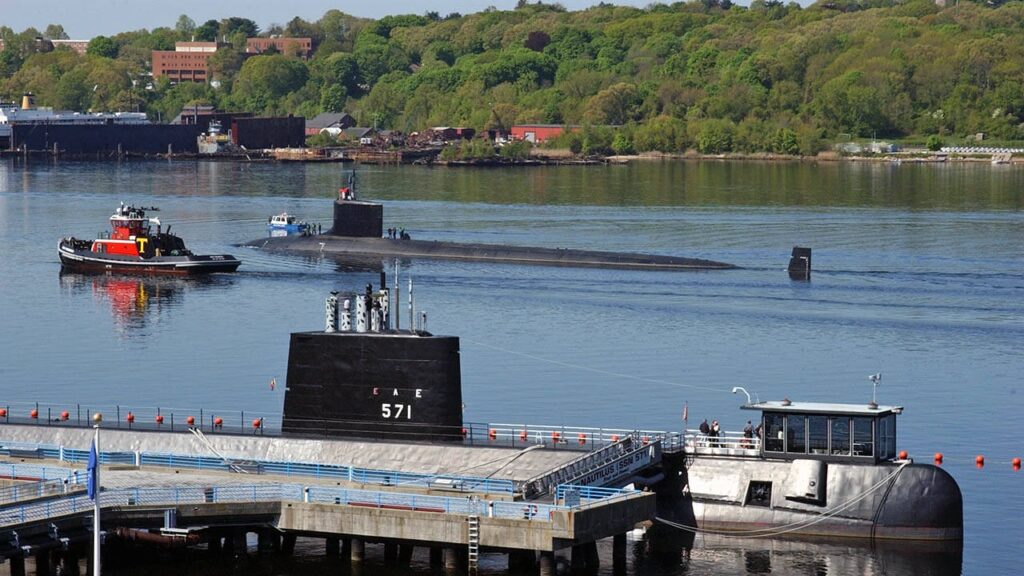
NEWPORT NEWS, Va., Feb. 23, 2024 (GLOBE NEWSWIRE) — HII (NYSE: HII) announced today that Virginia-class submarine Massachusetts (SSN 798) was recently launched into the James River at the company’s Newport News Shipbuilding (NNS) division.
Shipbuilders transferred the submarine from a construction facility to the floating dry dock, where it was later submerged and moved by tugboats to a submarine pier at the shipyard for final outfitting, testing and crew certification.
“Following the christening of this mighty submarine in May, witnessing Massachusetts launch into the river is a source of immense pride for our shipbuilding team,” said Jason Ward, NNS vice president of Virginia-class submarine construction. “We understand the importance of Massachusetts, and we will continue to execute with purpose to bring this important national security asset to life and deliver it to the Navy.”
Virginia-class nuclear-powered fast attack submarines are built for a broad spectrum of open-ocean and littoral missions to replace the Navy’s Los Angeles-class submarines as they are retired. Virginia-class submarines incorporate dozens of new technologies and innovations that increase firepower, maneuverability and stealth to significantly enhance their warfighting capabilities. These submarines are capable of supporting multiple mission areas and can operate at speeds of more than 25 knots.
Massachusetts is the 25th Virginia-class submarine and will be the 12th delivered by NNS, which is one of only two shipyards capable of designing and building nuclear-powered submarines for the U.S. Navy.
US Coast Guard Cutter Thetis Disrupts Illegal Narcotics Trafficking During Caribbean Deployment
Feb. 23, 2024
KEY WEST, Fla. – The crew of the U.S. Coast Guard Cutter Thetis (WMEC 910) returned to their homeport in Key West on Friday following a 62-day patrol in the Central Caribbean Sea.
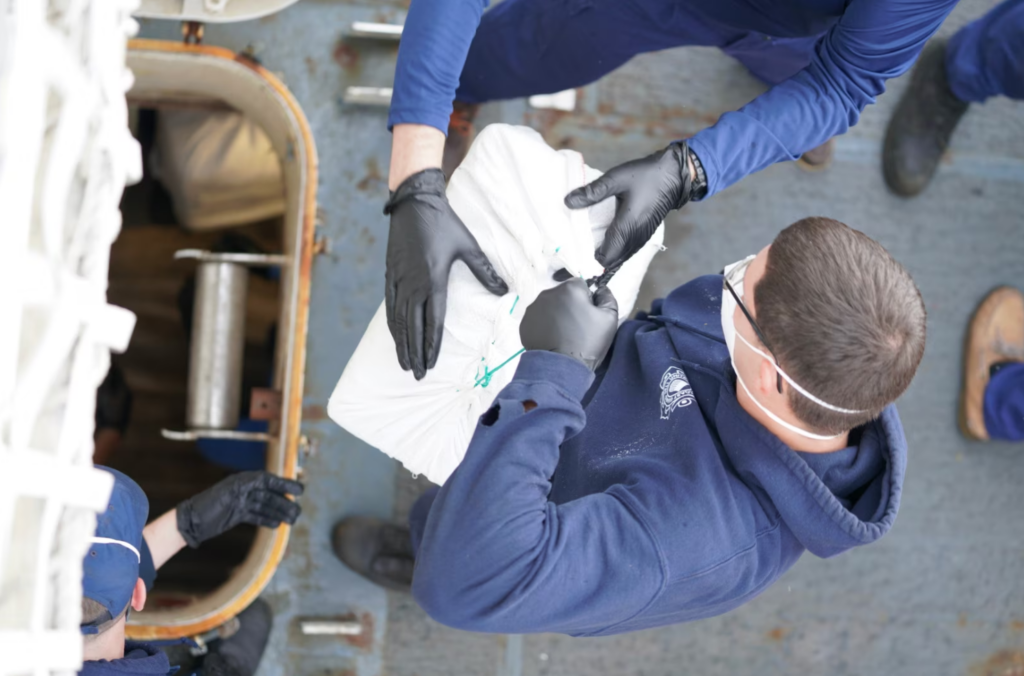
Thetis worked in support of the Joint Interagency Task Force-South alongside partners to deter illegal narcotics trafficking in the Central Caribbean. With an embarked MH-65 Dolphin helicopter crew from the Coast Guard Helicopter Interdiction Tactical Squadron and support from the USS Farragut (DDG 99), Thetis interdicted approximately 2,646 pounds of cocaine with an estimated street value of $34.8 million.
Thetis pursued two cases while patrolling the region and conducted law enforcement operations through close coordination with multiple maritime patrol aircraft and other Coast Guard assets. With the Farragut, Thetis interdicted more than 2,094 pounds of cocaine.
In another case, Thetis interdicted a go-fast vessel, resulting in the detainment of two suspected narcotics traffickers and the seizure of 441 pounds of cocaine.
“The cases we encountered on this patrol emphasize the importance of collaboration across departments and agencies in deterring the flow of illegal narcotics into the United States,” said Master Chief Petty Officer AJ Gibson, the command chief of Thetis. “I am extremely proud of the adaptability and determination displayed by our crew in successfully completing the mission.”
Thetis is a 270-foot Famous-class medium-endurance cutter with a crew of 100. Their primary missions are counter-narcotics operations, migrant interdiction, living marine resources protection, and search and rescue in support of U.S. Coast Guard operations throughout the Western Hemisphere.
Red Sea Update
USCENTCOM
Feb. 23, 2024
TAMPA, Fla. - On Feb. 22, at approximately 5 p.m. (Sanaa time), U.S. Central Command (CENTCOM) forces conducted self-defense strikes against four Iranian-backed Houthi unmanned aerial vehicles (UAV) and two mobile anti-ship cruise missiles (ASCM) that were prepared to launch from Houthi-controlled areas of Yemen towards the Red Sea.
On Feb. 23, between 3:30 and 5 a.m., CENTCOM forces shot down three Houthi one-way attack UAV near several commercial ships operating in the Red Sea. There was no damage to any ships.
CENTCOM forces identified the UAVs and ASCMs and determined they presented an imminent threat to merchant vessels and to the U.S. Navy ships in the region. These actions will protect freedom of navigation and make international waters safer and more secure for U.S. Navy and merchant vessels.