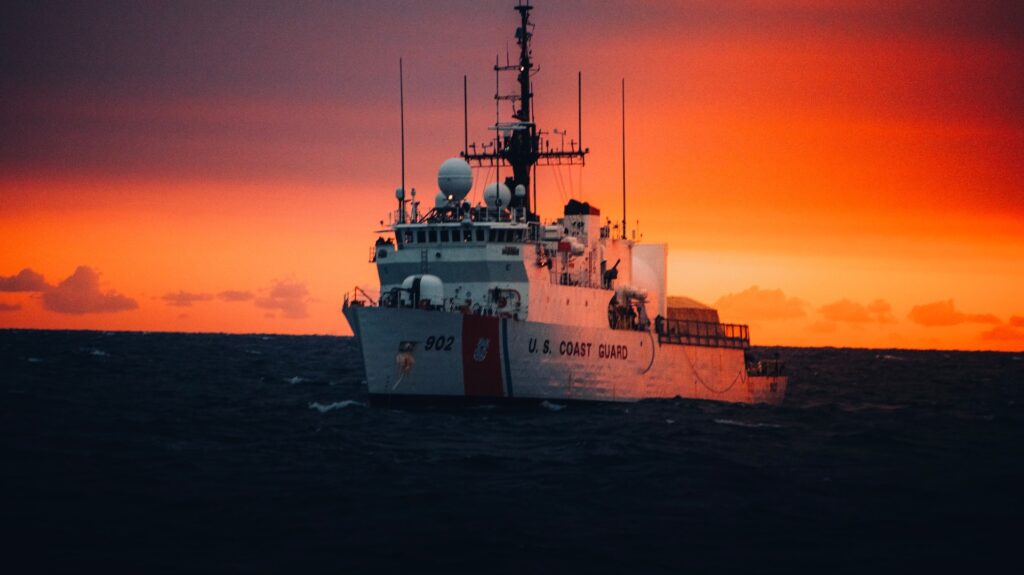
Coast Guard Cutter Tampa returns home after 77-day patrol in the Florida Straits
Feb. 13, 2024
PORTSMOUTH, Va. — U.S. Coast Guard Cutter Tampa (WMEC 902) and crew returned home Tuesday, following a 77-day maritime safety and security patrol in the Florida Straits.
Tampa deployed in support of Homeland Security Task Force – Southeast (HSTF-SE) and Operation Vigilant Sentry (OVS), patrolling within the Coast Guard Seventh District’s area of responsibility. While underway, Tampa’s crew performed as Commander Task Unit (CTU) for operations in and around the Florida Straits, coordinating with other Coast Guard units to detect, deter, and intercept unsafe and illegal maritime migration ventures bound for the United States.
While at sea, Tampa’s crew interdicted one vessel with two Cuban migrants aboard, attempting to reach the U.S. through dangerous and unlawful channels. In total, Tampa’s crew also contributed to the interdiction of 207 migrants throughout the patrol.
While deployed, the crew also celebrated the cutter’s 40th birthday. Tampa commissioned on Dec. 12, 1982.
“CGC Tampa has gracefully completed a multitude of missions throughout her 40 years of service,” said Cmdr. Walter Krolman, commanding officer of Tampa. “From mass migration rescues to participating in multi-nation military exercises and conducting counterdrug operations, Tampa continues to prove her motto, “Thy way is the sea, thy path in the great waters.”
HSTF-SE serves as the DHS lead for operational and tactical planning, command and control, and as a standing organization to deter, mitigate and respond to maritime mass migration in the Caribbean Sea and the Florida Straits. HSTF-SE continues enhanced enforcement efforts in support of OVS, the 2004 DHS-developed plan to respond to irregular maritime migration in the Caribbean Sea and the Florida Straits.
Tampa is a 270-foot, Famous-class medium endurance cutter. The cutter’s primary missions are counter-narcotics operations, migrant interdiction, living marine resources protection, and search and rescue in support of U.S. Coast Guard operations throughout the Western Hemisphere.
For information on how to join the U.S. Coast Guard, visit www.GoCoastGuard.com to learn more about active duty and reserve, officer and enlisted opportunities. Information on how to apply to the U.S. Coast Guard Academy can be found here.
Viasat Announces First U.S. Navy Military Sealift Command Ship Installation
Company to Maintain and Operate Commercial Communications Infrastructure for 105 Ships Under Next Generation Wideband Follow-On Contract
February 13, 2024
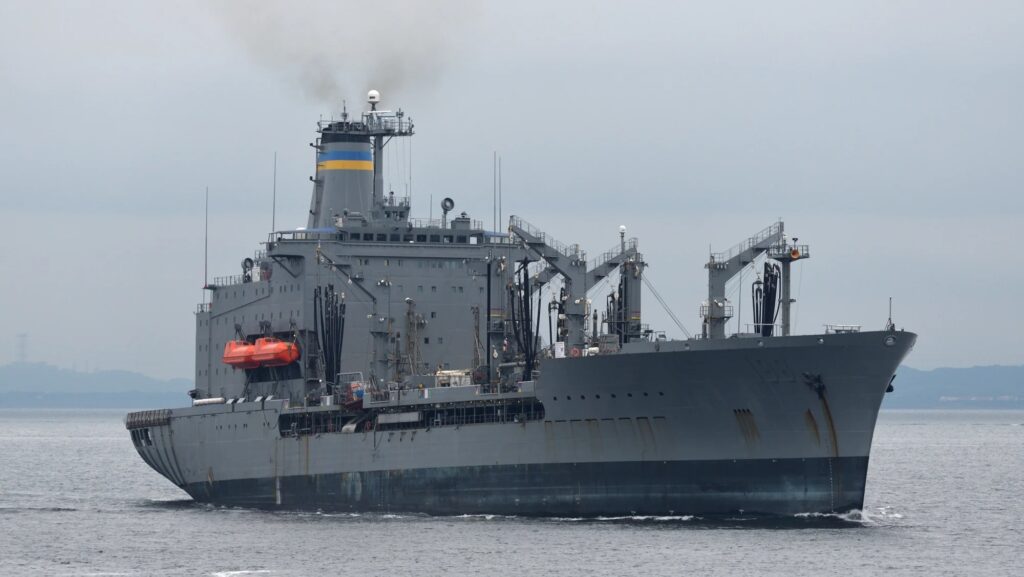
CARLSBAD, Calif., February 13, 2024 – Viasat, Inc. (NASDAQ: VSAT), a global leader in satellite communications, today announced the completion of the first ship installation for the U.S. Navy Military Sealift Command (MSC) under the Next Generation Wideband (NGW) Follow-On (FO) 10-year Indefinite Delivery/Indefinite Quantity contract awarded to Inmarsat Government by the Defense Information Systems Agency (DISA) on June 30, 2022. Under the contract, the company maintains and operates commercial communications infrastructure, which includes satellite systems, teleport services and terrestrial services. Inmarsat Government is now part of Viasat’s government business following the company’s acquisition of Inmarsat on May 30, 2023.
This first installation of 105 ships demonstrates the company’s ability to deliver a robust, reliable global managed satellite communications (SATCOM) solution. The company upgraded the MSC ship’s primary afloat network from Ku-band to the Global Xpress (GX) Ka-band system and ELERA Enhanced L-band Maritime Antenna (ELMA), a variant of the award-winning LAISR L-band solution to provide communications on the move via a small-size, high throughput terminal.
“As the premier maritime logistics provider for the U.S. Department of Defense, the Military Sealift Command plays a critical role in our nation’s defense. Our ships must have resilient communications capabilities that deliver consistent performance and can be relied upon regardless of location or weather conditions.” said Eliot J. Skinner, Deputy Command Information Officer. “These upgrades ensure that our Mariners can confidently operate anywhere in the world knowing they have a reliable, redundant communications network supporting them.”
The hybrid solution of Ka- and L-band service ensures that the MSC ships have secure, resilient, worldwide communications capabilities, as well as a reliable global, on-demand backup network. This approach is designed to provide significant enhancements over legacy Ku-band by providing higher and scalable data rates on ships’ primary and back-up systems, and uniform coverage across the GX and ELERA networks. Additionally, by delivering the primary and secondary SATCOM capabilities in a holistic, managed service model that includes satellites, ground networks and type-approved terminals – SATCOM as a Service – the company attains an optimal state of efficiency and functionality, while delivering a superior user experience and saving government resources.
“We have reliably served the U.S. Navy Military Sealift Command for more than 10 years, and we are proud to continue supporting its operations around the world,” said Steve Gizinski, Managing Director, Viasat Government Services. “These upgrades provide the MSC fleet with significant enhancements in SATCOM capabilities, including expanded global coverage, improved reliability and resiliency, and the on-demand data rates that meet user needs.”
The MSC fleet benefits from an integrated, worldwide solution that delivers high throughput with RF (Radio Frequency) band and path diversity to ships at sea. All of the network aspects are designed as a single solution and for mobility, so users experience a reliable, on-demand continuous service.
IISS Military Balance 2024 Spotlights an Era of Global Insecurity
13 Feb. 2024
KEY FINDINGS:
•Russia has lost around as many tanks as it had in its active inventory when it launched the full-scale invasion of Ukraine in February 2022
•While Moscow has traded quality for quantity in its replenishment efforts, Ukraine, so far, has been able to offset equipment losses through Western donations, upgrading quality in the process
•Global defence spending grew by 9% to reach a record USD2.2 trillion, driven, in part by NATO member states boosting budgets in response to Russia’s aggression against Ukraine. Non-US NATO members now spend 32% more on defence since Russia’s 2014 invasion of Crimea
•Iran’s expanding influence on conflict areas manifested itself by the Houthis’ use of Iranian-supplied anti-ship missiles and Russia’s continued employment of Iranian-supplied UAVs
•China has demonstrated increased power-projection capacity, driving increased cooperation among Western and Asian militaries as a counterbalance
•Monitoring undersea critical national infrastructure is becoming a driver of maritime domain awareness efforts within national security establishments
The IISS Military Balance 2024 highlights the extent to which the world has entered a more dangerous period in the last twelve months, examining how increased tensions and conflict have reshaped the global defence-industrial landscape.
Our new data shows how countries are reshaping their equipment and spending plans and how their regional ties are changing in accordance with geopolitical reality.
The IISS Military Balance, now in its 65th year, shows the deteriorating security environment which is exemplified by a mounting number of conflicts, such as the Hamas–Israel war, Russia’s continued aggression against Ukraine, Azerbaijan’s takeover of the Nagorno-Karabakh region, coups in Niger and Gabon, as well as China’s more assertive manoeuvres around Taiwan, in the South China Sea and elsewhere.
In Ukraine, Russian equipment losses continue on a large scale. Our analysts assess that its full-scale invasion has cost Russia more than 3,000 main battle tanks, roughly as many as the Kremlin had in its active inventory before February 2022. Russia has been drawing on stored equipment to replenish losses.
Ukraine, meanwhile, has relied heavily on Western equipment to maintain its inventory levels and help underpin its deep battle to strike targets beyond the frontlines. But Kyiv also continued to demonstrate its ingenuity in other ways, using Western and indigenously developed systems to put Russia’s Black Sea Fleet on the back foot. It has also shown the utility of uninhabited maritime vehicles (UMV), giving the technology that other navies have been exploring a boost. The newest edition of The IISS Military Balance includes data on UMVs in country listings for the first time.
The combination of Russia’s war on Ukraine and rising tensions between with China and Western countries have been principal drivers of military spending. Global defence spending is up 9% from the previous year and poised to rise further in 2024, based on already announced spending commitments.
This era of insecurity is also resetting the global defence-industrial landscape. The US and Europe are ramping up production of missiles and ammunition and while progress has been slow, those efforts promise to soon deliver a greater defence production capacity after decades of underinvestment. Russia’s focus on equipping its armed forces is causing some long-term buyers of arms from Moscow to look elsewhere.
We reveal that non-US NATO countries now spend a combined 32% more than they did when Russia invaded Crimea in 2014, showing how Moscow’s actions have driven a response in the West. But that spending is only fixing long-standing issues and there are suggestions that inflation remains a concern, with costs for some types of ammunition more than doubling. The West’s basic inability to keep up with demand is being addressed, but gaps remain glaring.
While the West ramps up spending, so are China and Russia, which now dedicates more than 30% of government outlays to total military expenditure. The past year has also shown how some armed forces are reviving interest in equipment that had been neglected, such as artillery and air defence, while also embracing new technology, such as hypersonic glide vehicles and cruise missiles, or direct attack munitions. Nuclear weapons are also very much back on the agenda, with China adding missile silos and the United States modernising warheads and delivery systems.
Bastian Giegerich, Director-General and Chief Executive of the International Institute for Strategic Studies, said, “The IISS Military Balance is published at an important time when the rules-based order is being increasingly questioned. While Western defence spending is rising and plans to revamp equipment are ongoing, we reflect on the challenges including those set by Russia’s ongoing invasion of Ukraine, China’s military modernization and events in the Middle East. The IISS Military Balance remains an indispensable guide to defence capabilities and military data.”
U.S. 2nd Fleet Forward Deploys for Steadfast Defender 2024
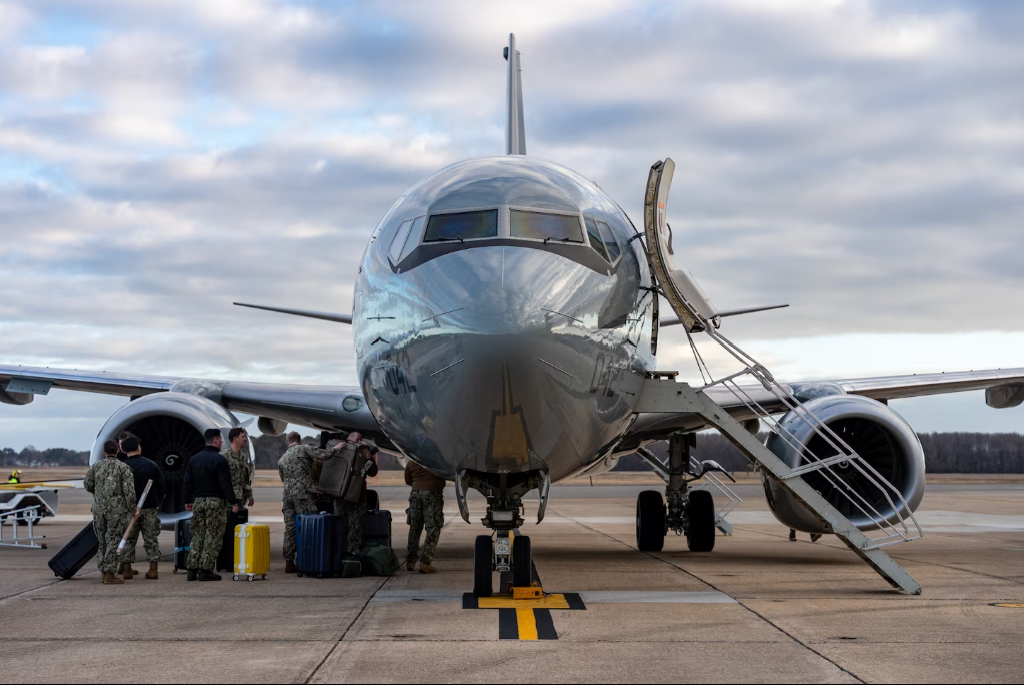
U.S. 2nd Fleet staff load luggage onto a Marine Corps C-40 aircraft departing for Bodø, Norway for Steadfast Defender 2024, at Naval Air Station Oceana, Va., Feb. 7, 2024. Steadfast Defender 2024, NATO’s largest exercise in decades, will demonstrate NATO’s ability to deploy forces rapidly from across the Alliance to reinforce the defense of Europe. (U.S. Navy photo by Mass Communication Specialist 2nd Class Anderson W. Branch)
BODØ, Norway – A contingent of more than 100 U.S. 2nd Fleet and Expeditionary Strike Group (ESG) 2 personnel are forward deployed to Bodø, Norway to establish a maritime command element, Commander Task Force North (CTF-N), in support of the NATO exercise Steadfast Defender 2024.
Rear Admiral David Patchell, vice commander, U.S. 2nd Fleet, and Commander CTF North explained how large, multi-national exercises continue to solidify NATO’s interoperability and readiness.
“Steadfast Defender is a chance to practice, to exercise, to come together, build relationships, and strengthen the readiness and unity that already exists,” said Patchell. “NATO is stronger than it has ever been. This exercise represents another opportunity for over 90,000 sailors, aviators and soldiers to work together across the alliance.”
Steadfast Defender 2024, NATO’s largest exercise in decades, includes more than 90,000 troops from 31 allied nations, and Sweden. The exercise will demonstrate NATO’s ability to deploy forces rapidly from across the Alliance to reinforce the defense of Europe. Within the CTF-N command center, there are currently eight allied nations that comprise the task force, and the numbers of personnel will grow as the exercise progresses.
The Whidbey Island-class dock landing ship USS Gunston Hall (LSD 44), left Norfolk, Va., Jan. 24, 2024 as the first tactical movement of Steadfast Defender 24. Rear Admiral Benjamin Nicholson, commander, Expeditionary Strike Group 2 and deputy commander CTF-N, said that he is incredibly proud of the work the ship has done already.
“The ships’ crew has already completed multiple training events and represented the United States as ambassadors during a port visit to Portsmouth, England,” said Nicholson. “This exercise is about learning and teamwork. We will learn the tools and techniques to conduct future maritime operations and further develop our tactics and training as a team with our Allies and partners.”
The CTF-North staff will conduct the full range of maritime operations in coordination with NATO Allies and partners operating out of Bodø Airbase.
“I’m thankful for the Sailors of U.S. 2nd Fleet, ESG-2 and all of our partners that are joining us. The commitment is outstanding, and you can see and you can feel the excitement, the readiness. This team is ready; ready to execute, ready to learn, ready to be creative and innovative as we go through this exercise.” said Patchell.
U.S. 2nd Fleet, reestablished in 2018 in response to the changing global security environment, develops and employs maritime forces ready to fight across multiple domains in the Atlantic and Arctic in order to ensure access, deter aggression and defend U.S., allied, and partner interests.
U.S. Navy photos and b-roll are available on DVIDS. For more information, contact [email protected].
Follow along with the exercise on social media by using #steadfastdefender24
Marine Corps Systems Command Announces Organizational Restructuring, Enhancing Force Modernization and Capability Delivery
Feb. 13, 2024
MARINE CORPS BASE QUANTICO, Va.— Marine Corps Systems Command, or MARCORSYSCOM, and Program Executive Officer Land Systems, or PEO LS, are initiating a structural reorganization aimed at modernizing and streamlining operations to enhance the operational capabilities of the Marine Corps.
These changes—modeled after the principles laid out by former Commandant David H. Berger and underscored by current Commandant Eric M. Smith in Force Design, continued guidance from senior leadership, and feedback from across the acquisition community—underscore the Corps’ commitment to modernizing and optimizing operations to reduce bureaucratic delays to program execution.
As recently noted by MCSC commander, Brig. Gen. David C. Walsh, the changes come at a strategically critical moment for the Marine Corps. In an era of renewed great power competition—marked by emerging challenges to the established global order by our nation’s stated adversaries—the need to deliver the capabilities required by Marines to win on the future battlefield becomes imperative.
According to Walsh, “Acquisition programs continue to increase in complexity and accelerate with rapidly evolving technology. As the Marine Corps modernizes to meet these challenges via Force Design, there is a clear imperative to pick up the pace of capability delivery. We will provide the Marines with the right equipment at the right time.”
Ultimately, the changes made aim to boost efficiency and agility by streamlining decision-making processes, harmonizing organizational structures, and strategically aligning programs to enhance warfighting capabilities ahead of the ever-evolving geopolitical landscape.
Similarly, major changes are on the horizon at PEO LS, where targeted realignments and deliberate consolidation will bolster critical modernization efforts associated with integrated command and control as well as combat and tactical vehicle fleet modernization. Key moves include the realignment of light and heavy tactical vehicle programs, the consolidation of intelligence systems and cyber operations and of air and ground command and control systems. This strategic restructuring positions PEO LS to better meet the evolving demands of modern warfare and operational efficiency. According to Mr. Stephen Bowdren, Program Executive Officer Land Systems, “These changes, coupled with complementary initiatives with MCWL and CD&I, are key first steps on a path to a more rapid and responsive Marine Corps acquisition enterprise which is essential to meeting the requirements of Force Design”
Ultimately, this comprehensive restructuring represents a significant step forward in enhancing the Corps’ readiness and responsiveness to the challenges of the future fight. By streamlining processes and aligning resources more closely with strategic priorities, MARCORSYSCOM and PEO LS are poised to accelerate the delivery of critical capabilities to Marines in the field—equipping them to fight and win in any clime or place.
USNS Robert E. Peary and NAVELSG Join Forces to Carry Out Proof-of-Concept Testing
NORFOLK, Va. – Military Sealift Command’s (MSC) Lewis and Clark-class dry cargo ship USNS Robert E. Peary (T-AKE 5) and the Navy Expeditionary Logistics Support Group (NAVELSG), in January, joined forces to successfully conduct 1,456 cargo and ordnance transfer lifts, with the Navy’s newest and most advanced aircraft carrier USS Gerald R. Ford (CVN 78). The Net Explosive Weight (NEW) of the combined transfers was more than a thousand tons.
Through collaboration and coordination between MSC and NAVELSG, a Proof of Concept (POC) idea formed, with the primary objective to integrate 10 NAVELSG Sailors with 116 MSC Civil Service Mariners (CIVMARS) aboard Robert E. Peary in order to support a critical mission afloat ordnance operation with CVN 78 in the Atlantic Ocean.
Leaders from both MSC and NAVELSG expressed great enthusiasm for the opportunity to forge a partnership that extends into the future, said MSC’s CLF Fleet Sustainment Division Director Rick Adside. “This partnership addresses critical manning shortfalls of CIVMARs onboard MSC Combat Logistics Force (CLF) ships, while providing opportunities for NAVESLG to enhance its existing Tactics, Techniques, and Procedures (TTP) in support of CLF fleet sustainment mission sets.”
Although NAVELSG Sailors have long supported MSC cargo operations ashore, this level of integration, marked a significant milestone that promises both professional and operational benefits for both MSC and NAVELSG, Adside said. “MSC gains the ability to better account for in-transit ordnance, while NAVELSG acquires additional proficiency equivalent to MSC’s Cargo Afloat Rig Teams (CART), augmenting their existing AMMO/QUAL Certification program. This POC is also noteworthy because it contributes to a more seamless integration experience for both CIVMAR and NAVELSG personnel.”
The success of this proof-of-concept testing will serve as a springboard for future partnering opportunities between NAVELSG and MSC, Adside said.
Robert E. Peary’s shipmaster Capt. Andrew Lindey deemed the proof of concept testing a huge success. “I know this because when I asked the deck leadership if they would like to have the Sailors onboard for future ordnance events there was a resounding YES! This was a great educational opportunity for the Sailors and a huge manpower help for the ship.”
Ten NAVELSG Sailors Augment Robert E. Peary’s Cargo Team
Forty MSC CIVMARs from Robert E. Peary’s cargo team and 10 NAVELSG Sailors, assigned temporarily to the vessel to help strengthen the cargo team’s capability, worked around the clock for 72 hours, in January, in order to complete the afloat ordnance operations with USS Gerald R. Ford, Lindey said.
“Both U.S. Navy Sailors and MSC CIVMARs worked hand-in-hand the entire download. The Sailors from Navy Cargo Handling Battalion (NCHB) One had great attitudes and actively looked for ways to help! Without the Sailors from NAVELSG, it would have taken longer for the CIVMARs to get the job done.”
Before joining Robert E. Peary’s cargo team, the 10 NAVELSG Sailors first received specialized training from the ship’s crew. In accordance with MSC’s Safety Management System, the Sailors trained in several critical areas: cargo weapons elevator operations, ordnance banding, ordnance blocking and bracing, and ordnance accounting and sentencing. Upon completion of their training and while the ship was enroute to the rendezvous position of the aircraft carrier, Robert E. Peary was tasked to refuel two Navy ships: USS McFaul (DDG 74) and USS Thomas Hudner (DDG 116). These two events, executed by the CIVMARs, gave the Sailors a front row seat on how to conduct underway replenishments at sea, properly and safely, Lindey said.
REP – CVN Cargo and Ordnance Transfer Lifts
The transfer lifts between Robert E. Peary and Gerald R. Ford took place over three days in January, with more than 1,299 ordnance and 157 cargo transfer lifts completed. The transfer details are as follows:
Day 1: 403 Vertical Replenishments Day 2: 418 Vertical Replenishments Day 2: 216 Connected Replenishments Day 3: 262 Vertical Replenishments – ordnance Day 3: 157 Vertical Replenishments – cargo
“I am always proud of the Robert E. Peary crew because I know they put their hearts into their work, but I am even more proud of how they took the Navy Sailors into their team and made them apart of the crew.”
CLF ships and MSC
Robert E. Peary is one of 14 fleet ordnance and dry cargo ships that are part of MSC’s Combat Logistics Force (CLF) inventory. CLFs are the supply lines to U.S. Navy ships while at sea. CLF ships provide virtually everything Navy ships need including fuel, food, fleet ordnance, dry cargo, spare parts, mail, and other supplies.
CLF ships enable the Navy fleet to remain at sea and combat ready for extended periods. In addition to U.S. Navy ships, CLF ships also resupply international partners and allies operating in both the Atlantic and Pacific Oceans.
“In peacetime or conflict, amidst the ever-changing landscape of global affairs, America’s Navy remains a successful and highly impactful global force. When called upon, it swiftly responds to and supports world events. Military Sealift Command (MSC) plays a vital role in providing essential sustainment to warships, enabling the fleet to meet its mission objectives, including the safe handling and execution of transitional ordnance from deploying and redeploying ships,” Adside said.
Coast Guard Cutter Willow crew returns to homeport after 32-day patrol in Caribbean Sea
Feb. 13, 2024
CHARLESTON, S.C. – The Coast Guard Cutter Willow (WLB 202) crew returned to their homeport in Charleston, Saturday, after a 32-day patrol throughout the Caribbean Sea.
The Willow crew serviced 37 aids to navigation in Puerto Rico and the US Virgin Islands.
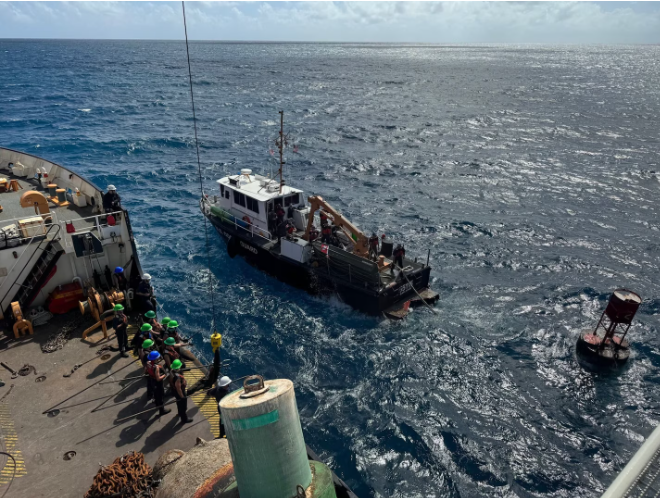
Working alongside the Coast Guard Research and Development (R&D) Center, the Willow crew installed a prototype buoy to replace Bahia de San Juan Lighted Buoy 2, which has historically been reported off station or missing due to the significant weather it encounters. Mariners utilize buoys to identify the best water for their vessels transiting into San Juan Harbor. The Sealite Trident 2600 buoy hull is a lightweight, non-ferrous hull made of recyclable plastic material. This plastic hull has been tested for heavy weather by the R&D Center and was moored in Bahia de San Juan, Jan. 16, 2024. The deployment of a prototype buoy is part of ongoing Coast Guard-wide field research into the next generation of aids to navigation (ATON) and mooring designs to support future decisions on the most cost-efficient ATON buoy inventory.
Additionally, Willow crew members worked with Aids to Navigation Team (ANT) Puerto Rico and Coast Guard Regional Dive Locker East to recover two wayward buoy hulls and one sunken buoy hull. Two wayward buoy hulls were in areas too shallow for Willow to operate in, so smaller craft from ANT Puerto Rico and divers from the Regional Dive locker were able to recover the two buoys from critical marine areas and complete an at-sea delivery to Willow. Removing these buoys is important as it eliminates hazards of navigation, prevents deterioration of the marine environment, and allows for the refurbishment and recapitalization of the buoy.
“We always look forward to our deployments to Puerto Rico and the U.S. Virgin Islands to ensure the proper maintenance of the maritime transportation system,” said Cmdr. Erin Chlum, Willow’s commanding officer. “The positive relationships we have with the local Coast Guard units and the pilot associations throughout the region allow us to address any concerns or discrepancies as soon as possible.”
Willow conducted a port call in Frederiksted, St. Croix, U.S. Virgin Islands, where the crew offered public tours and brought in more than 300 visitors, educating the community on the Coast Guard’s role in maintaining the maritime transportation system and search and rescue. Willow crew members also participated in a beach cleanup on the island, helping to remove 50 pounds of trash.
“The officers and crew of Coast Guard Cutter Willow greatly appreciate the warm welcome and hospitality we received on the beautiful island of St. Croix,” said Chlum. “I would like to thank everyone who came to the public tours of the cutter at the Frederiksted Pier. It was an amazing opportunity to hear directly from the people we serve when conducting our primary mission of maintaining the buoys of the U.S. Virgin Islands.”
Willow is a 225-foot Juniper class sea-going buoy tender. The tender crew is responsible for servicing 246 aids to navigation in South Carolina, Georgia, and throughout the Caribbean, including Cuba, Haiti, Puerto Rico, and the U.S. Virgin Islands. The Willow crew conducts law enforcement, search and rescue, and marine environmental protection missions.
U.S. Marines Deliver Emergency Relief to Mindanao
By III MEF Communications
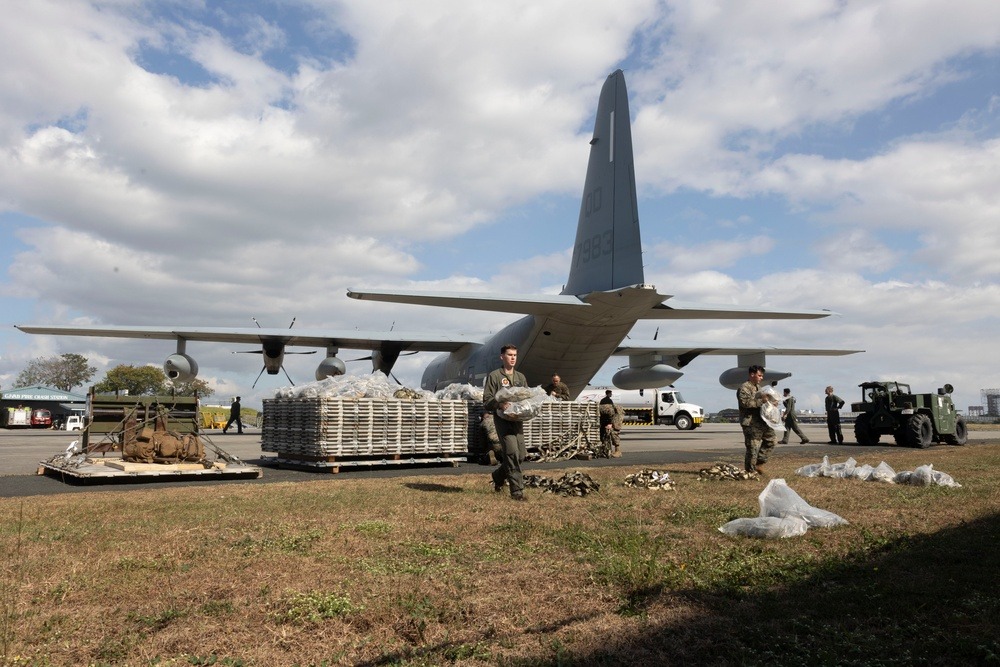
CAMP COURTNEY, OKINAWA, Japan –At the request of the Government of the Philippines, U.S. Marines from III Marine Expeditionary Force will support the U.S. Agency for International Development by providing foreign humanitarian assistance to the ongoing disaster relief mission in Mindanao, Republic of the Philippines, Feb. 12, 2024.
Marines from Marine Aircraft Group 12, 1st Marine Aircraft Wing, will deliver requested supplies to the Armed Forces of the Philippines for distribution using KC-130J Hercules aircraft.
“Support to our Allies and partners, and their people in a time of need, is a non-negotiable,” said U.S. Marine Corps Lt. Gen. Roger Turner, the III MEF commanding general. “Working in direct coordination with the U.S. Agency for International Development and the Government of the Philippines, we stand ready to support those who need urgent assistance.”
The Marine Corps Air Station Iwakuni-based aircraft group will deliver meals for distribution by the Armed Forced of the Philippines in Mindanao. The meals will provide temporary relief while the Republic of the Philippines works to restore essential services.
The forward presence and ready posture of III MEF assets in the region facilitate rapid and effective response to crisis, demonstrating the U.S’s commitment to Allies and partners during times of need.
Due to the nature of the disaster, additional details will be provided once operationally feasible.
Coast Guard Cutter Dependable returns home after 59-day patrol in the Florida Straits and Windward Passage
Feb. 10, 2024
Coast Guard Cutter Dependable returns home after 59-day patrol in the Florida Straits and Windward Passage
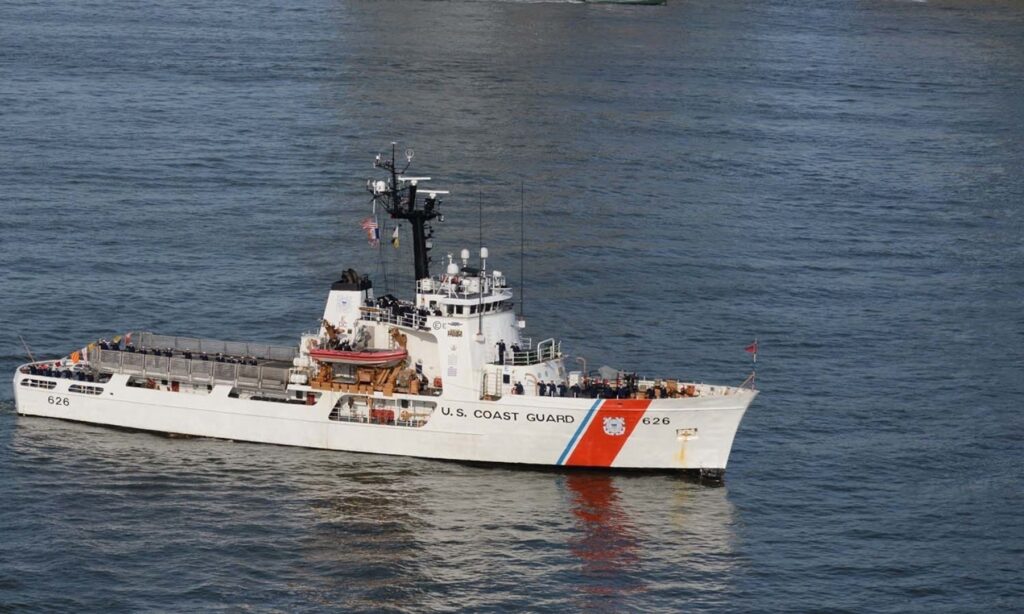
VIRGINIA BEACH, Va. — The crew of Coast Guard Cutter Dependable (WMEC 626) returned to their home port in Virginia Beach, Saturday, following a 59-day maritime safety and security patrol in the Florida Straits and Windward Passage.
Dependable and crew members deployed in support of Homeland Security Task Force-Southeast (HSTF-SE) and Operation Vigilant Sentry (OVS) while patrolling in the Coast Guard Seventh District’s area of operations. Dependable’s crew conducted illegal migration deterrence and interdiction operations while collaborating with other Coast Guard and interagency assets across the region to protect life at sea and secure U.S. maritime borders.
While underway in the Florida Straits and Windward Passage, Dependable worked with additional law enforcement entities, including U.S. Customs and Border Protection and the Haitian Coast Guard Commission, to detect, deter, and intercept unsafe and illegal migrant ventures bound for the United States. During the patrol, Dependable located and deterred four unlawful voyages with approximately 100 migrants on board. In addition, Dependable’s crew rescued 33 people aboard a 25-foot vessel in distress 6 miles off Haiti’s coast during heavy seas. Crew members conducted the search and rescue mission in 8-to-12-foot seas and winds gusting to 46 mph, saving all on board.
“Over the last two months, the crew of the Dependable have executed all assigned missions with dedication, skill, and initiative,” said Cmdr. Kristopher Ensley, commanding officer of Dependable. “Most notably, there are 33 people still alive today because of our crew and the way they courageously braved 12-foot seas, 40-knot winds, and limited visibility to execute this critical rescue. I could not be more proud of this team; they have truly lived up to our ship’s motto: ‘Count on Us!’”
Established in 2003, HSTF-SE is the Department of Homeland Security-led interagency task force charged with directing operational and tactical planning, command and control, and functions as a standing organization to deter, mitigate, and respond to maritime mass migration in the Caribbean Sea and Florida Straits.
OVS is the 2004 DHS plan that provides the structure for deploying joint air and surface assets and personnel to respond to irregular maritime migration in the Caribbean corridor of the United States. Its primary objectives are to protect life at sea while deterring and dissuading mass maritime migration alongside our federal, state, and local partners.
Dependable is a 210-foot, Reliance-class medium endurance cutter with a crew of 76. Since commissioning in 1968, Dependable has executed counterdrug and migrant interdiction operations, enforced federal fishery laws, and conducted search and rescue missions in support of Coast Guard operations throughout the Western Hemisphere.
For information on how to join the U.S. Coast Guard, visit www.GoCoastGuard.com to learn more about active duty and reserve, officer and enlisted opportunities. Information on how to apply to the U.S. Coast Guard Academy can be found here.
BAE Systems to enhance U.S. Navy’s MQ-25A UAS with next-generation vehicle management system computer
Increased computing power delivers advanced performance for unmanned aerial refueler
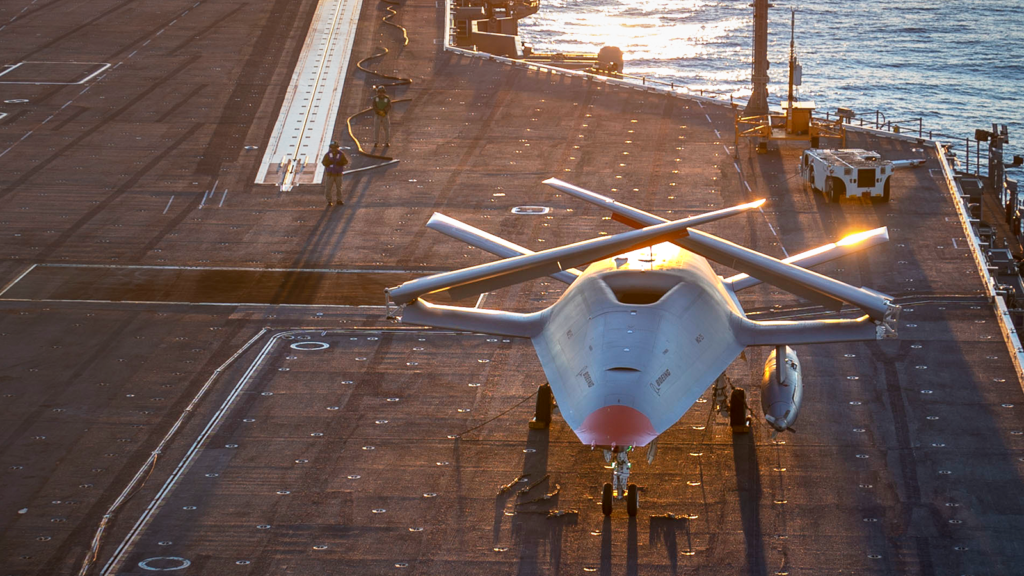
ENDICOTT, N.Y. — Feb. 12, 2024 — BAE Systems has been selected by Boeing to upgrade and modernize the vehicle management system computer (VMSC) for the U.S. Navy’s MQ-25 unmanned aerial refueling system. The technology refresh will increase computing power and address obsolescence issues, providing the unmanned aerial tanker with an integrated solution that improves aircraft performance and allows for future capability growth.
BAE Systems’ next-generation VMSC controls all flight surfaces and performs overall vehicle management duties for the autonomous MQ-25. The MQ-25 is the Navy’s first operational carrier-based unmanned aircraft and is designed to provide a much-needed aerial refueling capability. It also aims to relieve the refueling mission workload for F/A-18 aircraft, allowing them to take on other key mission roles, increasing the fleet’s capacity.
“BAE Systems is a leader in flight-critical systems and solutions,” said Corin Beck, senior director of Military Aircraft Systems for Controls and Avionics Solutions at BAE Systems. “Our upgraded VMSC for the MQ-25 will deliver advanced functionality—enabling this platform to execute today and tomorrow’s critical missions, while also reducing the amount of hardware required on the aircraft through consolidation into this computer.”
The cost-effective VMSC upgrade will use quad-core processors to increase computing power while optimizing size, weight, and power footprint on the aircraft. The multi-core processor selected for the MQ-25 VMSC has recently completed qualification on another U.S. military platform thereby reducing cost, schedule, and integration risk for this program.
This highly efficient and integrated system will deliver more capability by replacing multiple other onboard computers, improving aircraft reliability and reducing total lifecycle cost of ownership for the Navy. The new VMSC also provides growth capability to support future missions of the MQ-25, such as intelligence, surveillance and reconnaissance (ISR) technologies, and lays the foundation for all future carrier-based unmanned systems by pioneering the cutting-edge manned-unmanned teaming (MUM-T) operational concept.
BAE Systems also provides the Identification Friend or Foe (IFF) System for the aircraft.
The company has more than 40 years of experience developing and integrating flight control technology for military and commercial platforms. Work on the VMSC occurs at BAE Systems’ state-of-the-art engineering and manufacturing facility in Endicott, New York.