VMFA-542 Becomes First F-35B Squadron on East Coast to Achieve Initial Operational Capability
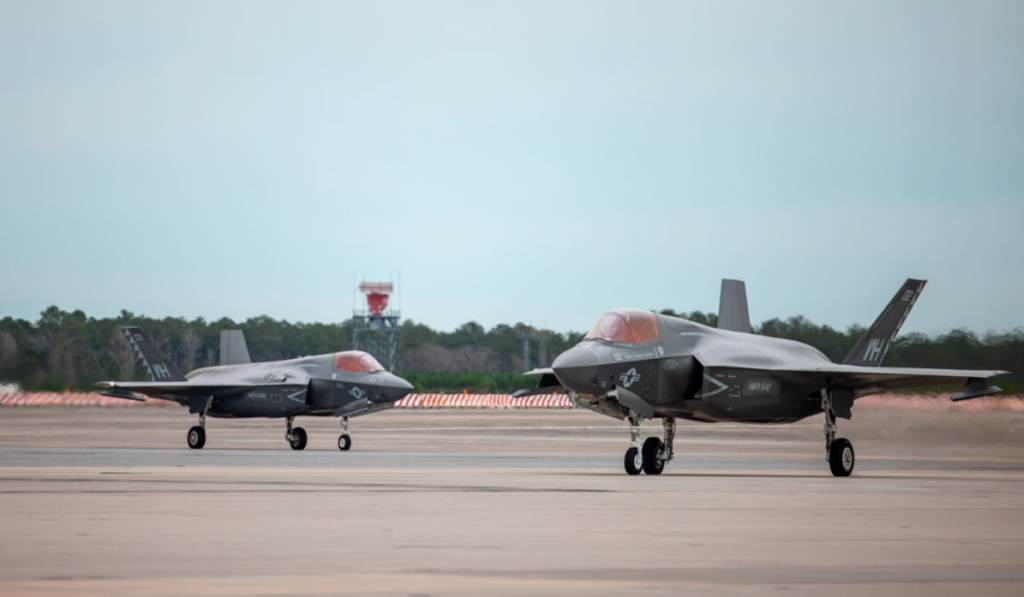
Two U.S. Marine Corps F-35B Lightning II jets with Marine Fighter Attack Squadron (VMFA) 542 taxi at Marine Corps Air Station Cherry Point, North Carolina, Dec. 28, 2023. U.S. Marine Corps | Warrant Officer Akeel Austin
MARINE CORPS AIR STATION CHERRY POINT, North Carolina – Marine Fighter Attack Squadron (VMFA) 542, 2nd Marine Aircraft Wing (MAW), became the first East Coast F-35B Lightning II Joint Strike Fighter squadron in the Fleet Marine Force to achieve initial operational capability, Feb. 5.
Initial operational capability means that VMFA-542 has enough operational F-35B Lightning II aircraft, trained pilots, maintainers, and support equipment to self-sustain its mission essential tasks (METs). These METs include conducting close-air support, offensive anti-air warfare, strike coordination and reconnaissance, and electronic attacks.
“VMFA-542 is the first operational fifth-generation squadron in II Marine Expeditionary Force, giving the aviation combat element the most lethal, survivable, and interoperable strike fighter in the U.S. inventory,” said Lieutenant Colonel Brian Hansell, commanding officer of VMFA-542. “The F-35B is unmatched in its capability to support Marines against the advanced threats that we can expect in the future.”
The F-35 is a fifth-generation fighter jet with advanced stealth, agility and maneuverability, sensor and information fusion, and provides the pilot with real-time access to battlespace information. It is designed to meet an advanced threat while improving lethality, survivability, and supportability. The F-35B Lightning II is the short-takeoff and vertical-landing F-35 variant. This capability allows the aircraft to operate from amphibious assault ships and expeditionary airstrips less than 2,000 feet long.
“I am extremely proud of the Marines and Sailors of VMFA-542,” said Colonel James T. Bardo, commanding officer of Marine Aircraft Group 14, the parent command of VMFA-542. “Achieving initial operational capability at the pace and precision of which they did truly demonstrates what an exceptional unit this is. This milestone demonstrates their hard work, ingenuity, and perseverance.”
Achieving initial operational capability also means that VMFA-542 is one step closer to achieving full operational capability and completing its F-35B Lightning II transition, a process that began in December 2022.
VMFA-542 is a subordinate unit of 2nd MAW, the aviation combat element of II Marine Expeditionary Force.
U.S Coast Guard Cutter Steadfast decommissioned after 56 years of service
Feb. 6, 2024
ASTORIA, Ore. — The Coast Guard decommissioned the U.S. Coast Guard Cutter Steadfast (WMEC 623) during a ceremony, Thursday, Feb. 1, 2024, in Astoria.
Rear Adm. Brendan McPherson, deputy commander, Coast Guard Pacific Area, presided over the ceremony honoring the 56 years of service Steadfast and its crews provided to the nation.
Commissioned in 1968, Steadfast was one of 16 Reliance-class medium endurance cutters built for search and rescue, counter-narcotic operations, and migrant interdiction.
“The cutter Steadfast has been a stalwart ship for the Coast Guard, frequently conducting lifesaving missions, contributing to our national security and protecting our Marine Transportation System.” said McPherson. “I am immensely proud of Steadfast’s crew for their dedication to duty while enhancing our nation’s maritime safety and security throughout the Pacific Ocean.”
During the cutter’s most recent deployment, the crew transited 11,742 nautical miles on a 64-day multi-mission deployment, from Oregon to several hundred miles off the coast of Central Mexico conducting training, law enforcement, recruiting and public affairs missions, along with helicopter operations.
“Steadfast has an incredible legacy of honorable service to our nation,” said Cmdr. Brock Eckel, Steadfast’s commanding officer. “I am grateful to have had the opportunity to lead such an amazing crew through dynamic patrols and high-risk counter-narcotics operations. I want to thank the crew for their dedication, camaraderie, and desire to serve our country; they are what make this ship so special.”
As part of the U.S. Coast Guard’s Foreign Military Sales Program, Steadfast will transfer to Baltimore where she will be available for transfer to another country as an Excess Defense Article.
Steadfast was one of the Coast Guard’s 13 remaining 210-foot, Reliance-class medium endurance cutters. As part of the Coast Guard’s acquisition program, the 360-foot Heritage-class offshore patrol cutters and the 154-foot fast response cutters will replace the Coast Guard’s 270-foot and 210-foot medium endurance cutters. The offshore patrol cutters will provide the majority of offshore presence for the Coast Guard’s cutter fleet, bridging the capabilities of the 418-foot national security cutters, which patrol the open ocean, and the 154-foot fast response cutters, which serve closer to shore
SECNAV Del Toro Stresses DON’s Support of Small Businesses During National 8(a) Conference
06 February 2024
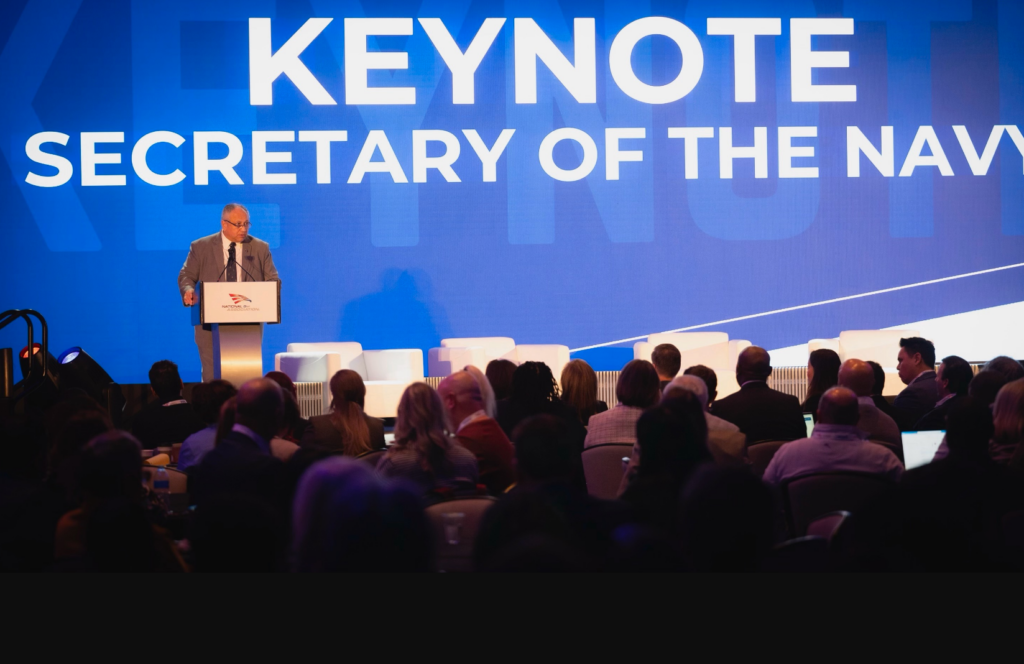
Secretary of the Navy Carlos Del Toro today spoke to hundreds of small business owners at the National 8(a) Association Small Business Conference in Atlanta, Feb. 6.
The National 8(a) Association is a non-profit that provides education and guidance for small businesses including minority, aspiring, current and graduate 8(a), HUBZone, SDVOB, VOSB, SDB, WOSB, DBE, and teaming partnerships.
Secretary Del Toro stressed the Department of the Navy’s Office of Small Business Program’s (DON OSBP) proven commitment to aggressively expanding small business opportunity to partner with the DON on its significant procurement investments for goods and services.
“In fiscal year 2023, we spent $20.1 billion on contracts with small businesses, exceeding our target goal for the year by over 17 percent,” said Secretary Del Toro. “Furthermore, we exceeded our sub-category goals for service-disabled Veteran-owned, women-owned, and HUBZone, and came within 0.04% of meeting our small, disadvantaged business goal. And this year, we are well on our way to meeting our goals, and we’re not even at the halfway point, with billions of dollars committed to contracts with small businesses across all categories.”
Secretary Del Toro also discussed the importance the DON’s puts on supporting the small business community.
“The National 8(a) Association and other organizations like it play a critical role in educating, guiding, and supporting small businesses as they prepare to work with the federal government, and we are grateful for the role they play in our small business ecosystem,” said Secretary Del Toro. “From my vantage point as Secretary of the Navy, a healthy, diverse industrial base made up of companies of all sizes—founded by American entrepreneurs from all walks of life—is absolutely crucial to the success of our Navy and our Marine Corps.”
Secretary Del Toro reiterated his commitment to working with small businesses to provide the Navy and Marine Corps team with the support, systems, and platforms needed to confront the global challenges we face today.
“Strengthening maritime dominance is focused on ensuring our Sailors and Marines have the right mix of platforms and capabilities so that they are prepared to deter our nation’s potential adversaries, and, if called upon, fight and decisively win our Nation’s wars,” said Secretary Del Toro. “In terms of cutting-edge capabilities, we are working with small businesses to secure our advantages in technology areas such as artificial intelligence and machine learning, cybersecurity, and unmanned systems.
Before leaving the conference in Atlanta, Secretary Del Toro hosted a roundtable with about two dozen small business owners to continue the dialogue on how small businesses and the DON can support each other.
“For the companies represented here that are focused on improving the lives of our personnel, whether it be through delivering world-class education and training, or providing resources to support the health and resiliency of our Navy and Marine Corps communities, we welcome the opportunity to learn more about your offerings during or after this week’s conference,” said Secretary Del Toro.
Atlanta is the first leg a travel for Secretary Del Toro this week. Next, he travels to Puerto Rico, where he will participate in a U.S. Department of Commerce Minority Business Development Agency Business Roundtable and a joint U.S. Departments of Defense and Navy Business Roundtable. He’ll also have key leader engagements and national call to service events.
Secretary Del Toro’s full remarks from the National 8(a) Association Small Business Conference can be found here.
Coast Guard Sails to Islands of Federated States of Micronesia with Needed Equipment, Supplies
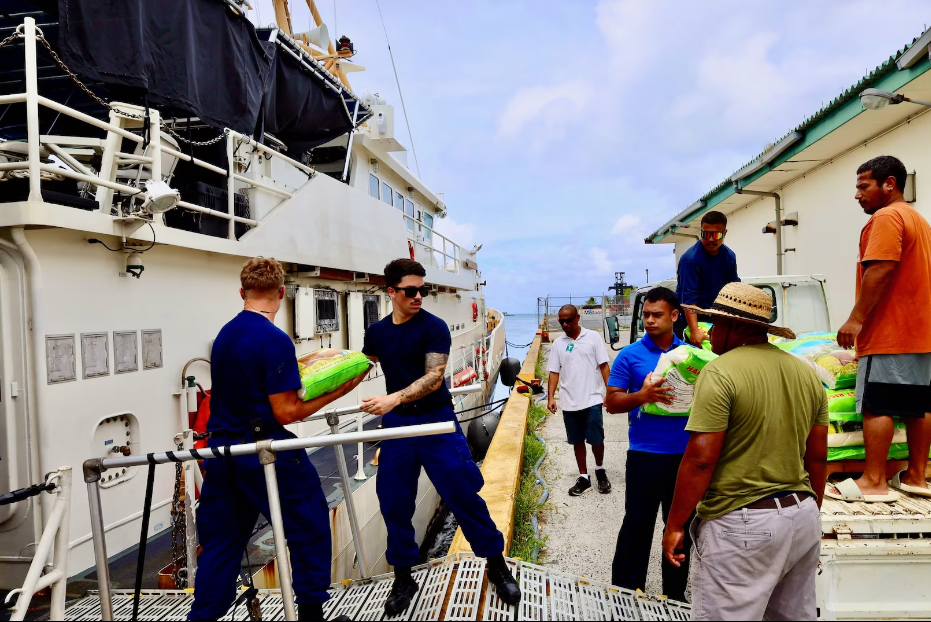
POHNPEI, Federated States of Micronesia — The USCGC Oliver Henry (WPC 1140) crew arrived at Dekhitik Harbor in Pohnpei on Feb. 1 as part of an international effort to deliver essential supplies and equipment to the drought-affected outer islands of Nukuoro and Kapingamarangi Atolls.
Due to the El Niño weather phenomenon, these remote communities required immediate assistance, including water purification solutions, to combat the scarcity of potable water.
Embarked on this vital mission were RO technicians Mr. Dudley Lorrin from the International Organization for Migration (IOM) and Mr. Jimmy Edward from the Pohnpei Department of Public Safety (DPS). The mission was critical in providing immediate relief, including the transportation and operational setup of Reverse Osmosis (RO) units capable of converting seawater into drinkable water. These units, crucial for the survival of the island communities, can produce up to 350 gallons of fresh water daily and are powered by solar panels or high-capacity batteries.
Significantly, the deployment was supported by various partners. The U.S. Navy Seabees repaired an IOM Reverse Osmosis unit in preparation for the mission. The Government of Australia’s Pacific Maritime Security Program donated specialized heavy-duty batteries to ensure the RO units’ functionality. Additionally, the Pohnpei State Government contributed one ton of rice, emphasizing the collaborative nature of this humanitarian operation.
Upon reaching Nukuoro, the USCGC Oliver Henry crew swiftly made an existing RO unit operational with the newly transported batteries, demonstrating adaptability and technical proficiency. Petty Officer 1st Class Kai Ruiz, an electrician’s mate, connected two 12V batteries to the island’s RO pump using spare parts from both the cutter and the local community—a testament to the crew’s resourcefulness and commitment to the mission.
In Kapingamarangi, the crew performed a successful systems check on the local RO unit, confirming its full mission capability. Troubleshooting efforts also extended to the solar system and HF radio, identifying the need for replacement of the decade-old solar batteries and the HF radio antenna—issues earmarked for future attention by local government authorities.
The mission’s cargo included 2,000 lbs of rice, two RO generator kits, three solar panel kits, and medical supplies, directly addressing the immediate needs of Nukuoro and Kapingamarangi. Upon departure, three medical kits, 80 gallons of bottled water donated by U.S. Coast Guard members and brought from Guam, diesel fuel, and various paper products were offloaded in Kapingamarangi, reflecting a comprehensive approach to aid delivery.
“Our visit was more than a delivery mission; it was an opportunity to strengthen ties with the island communities,” said Lt. Ray Cerrato, commanding officer of Oliver Henry. “The crew’s engagement with local schools and villages left a lasting impression, underscoring the U.S. Coast Guard’s commitment to the well-being of these remote populations. The gratitude expressed by the village chiefs and the anticipation of future visits highlight the enduring relationships fostered by these endeavors.”
This mission exemplifies the U.S. Coast Guard’s dedication to humanitarian aid and international cooperation, ensuring the well-being of vulnerable communities in the Pacific. The collective effort of all parties involved, from the initial loading in Guam to the final delivery and operational support on the islands, showcases a unified response to the challenges faced by Nukuoro and Kapingamarangi, reinforcing the U.S. Coast Guard’s role as a pivotal force for good in the region.
USCGC Oliver Henry’s crew is conducting the first U.S. Coast Guard Forces Micronesia/Sector Guam expeditionary patrol of 2024 under Operation Rematau and Operation Blue Pacific. The Oliver Henry is the 40th 154-foot Sentinel-class Fast Response Cutter named for Oliver T. Henry, Jr., an enlisted African American Coast Guard member first to break the color barrier of a then-segregated Service. It homeports in Guam, working with U.S. Coast Guard Forces Micronesia/Sector Guam, which comprises nearly 300 personnel to provide a significant portion of the U.S. Coast Guard’s enduring regional presence in Oceania.
USNS Brunswick Returns Home After 7 Years in the Western Pacific
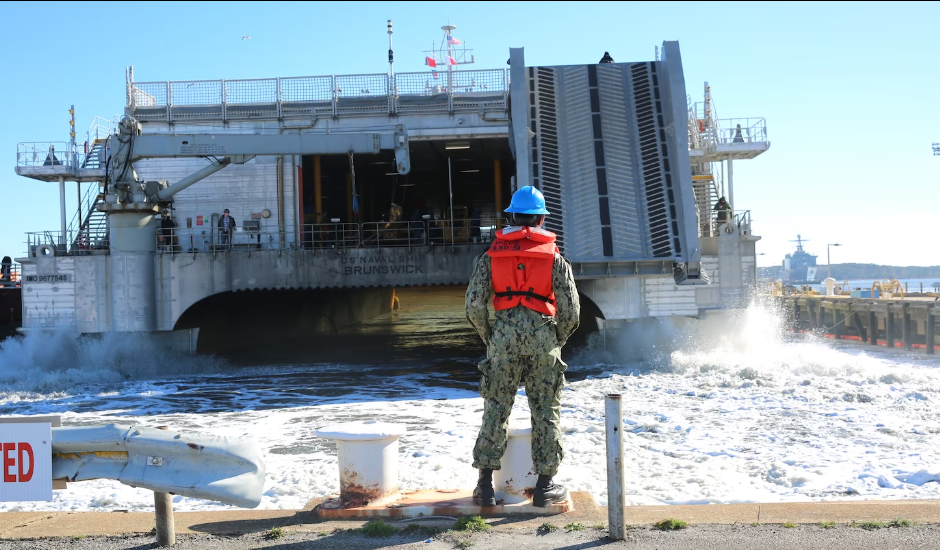
Military Sealift Command’s sixth expeditionary fast transport vessel USNS Brunswick shifted its hub port in Saipan to Joint Expeditionary Base Little Creek – Fort Story, Virginia, Feb. 3.
NORFOLK, Va. ꟷ Military Sealift Command’s sixth expeditionary fast transport vessel USNS Brunswick (T-EPF 6) shifted its hub port in Saipan to Joint Expeditionary Base Little Creek – Fort Story, Va., Feb. 3. The evolution signified the completion of a seven-year forward deployment that began Jan. 30, 2017, in support of military logistics operations in U.S. 7th, 5th, and 3rd Fleets’ areas of operation.
While steaming more than 21,600 nautical miles in support of a variety of high visibility, multinational U.S. Navy and partner nation operations in several Pacific countries, including Australia, Canada, Japan, Malaysia, Peru, the Philippines, South Korea, Thailand, and the United Kingdom, Brunswick circumnavigated the globe, a first for the vessel and a first for an EPF.
Built for its speed and its capacity to support a wide range of operational maneuver and sustainment, relief operations in small or damaged ports, global fleet stations operations, flexible logistics support and rapid transport as an alternative to airlift, Brunswick’s performance remained rock-solid throughout its seven-year deployment.
2017
While supporting military logistics operations in U.S. 3rd Fleet, Brunswick participated in Operation Triggerfish 2017, conducted several port calls to Pohnpei and Chuuk in the Federated States of Micronesia and Guam, and hosted distinguished visitors such as Robert Riley, U.S. ambassador to Micronesia. This vital cargo and passenger operation fostered relationships with the islands visited and provided potential sites for future military infrastructure projects.
2018
Brunswick operated from Saipan in support of military operations throughout the western Pacific Ocean in 2018. While there, Brunswick visited places such as Guam, Yap, Thailand and Malaysia as part the 2018 Pacific Partnership, an annual mission focused on disaster preparedness and humanitarian assistance, conducted in the Indo-Pacific with more than 500 personnel from several Pacific countries, including Australia, Canada, Japan, Malaysia, Peru, the Philippines, South Korea, Thailand and the United Kingdom. The EPF also participated in several port visits to Lumut and Kuching and Malaysia. The crew took advantage of the opportunity to experience Malaysia’s rich culture and strengthen ties with the local population. Port visits such as these serve as an important element in the U.S. Navy’s theater security cooperation efforts by enhancing solid relationships with partner nations throughout the region.
2019
In addition to participating in its second Pacific Partnership in 2019, Brunswick, together with sister ship Fall River (T-EPF 4), conducted engineering projects, hosted medical events, and oversaw humanitarian assistance and disaster response training exercises throughout the pacific region.
EPFs, working together, bridge the gap between high-speed, low-capacity airlift, low-speed, and high-capacity sealift in order to provide for the movement of personnel, equipment, and supplies over operational distances and the sustainment of joint theater and multinational logistics that help to augment MSC’s combat logistics force. Additionally, Brunswick docked in the Lower Mortlock Islands to support local communities recovering from the aftermath of Typhoon Wutip, a Category 5 super typhoon that affected Guam, Federated States of Micronesia and the Northern Mariana Islands. The typhoon claimed the lives of 86 people and injured hundreds of others.
2020
The Brunswick crew was recognized in 2020 for their extraordinary support and contributions to the Typhoon Wutip relief efforts. U.S. Maritime Administration Administrator Rear Adm. (Ret.) Mark H. Buzby presented the crew with the Merchant Marine Medal for Outstanding Achievement. In addition, Brunswick supported the Valiant Shield 2020, a joint force training exercise to protect the Indo-Pacific. During the exercise, more than 11,000 Soldiers, Marines, Sailors, and Airmen synchronized to train in a real-world environment to demonstrate their readiness to respond to any contingency at a moment’s notice.
2021
Brunswick took part in Noble Jaguar, in 2021, an integrated naval exercise in and around Japan that included units from the III Marine Expeditionary Force (III MEF), along with elements of U.S. 7th Fleet.
2022
Brunswick, along with sister ships USNS Millinocket (T-EPF 3) and USNS Puerto Rico (T-EPF 11), in 2022, supported the CARAT exercise, Resolute Dragon, Koa Moana, Valiant Shield, and various other regional security cooperation exercises for III MEF.
2023
The expeditionary fast transport vessel played an instrumental role in exercises Talisman Sabre, Balikatan, Keen Sword and Kamandag for III MEF in 2023. Marines and other members of the U.S. military routinely embark on ships like Brunswick to transport cargo, equipment, and personnel expeditiously. Likewise, Brunswick supported I MEF for three months during its Marine Rotational Force – Southeast Asia deployment. EPFs provide warfighters flexibility as the ship’s storage capacity can be tailored to meet mission objectives.
While in U.S. 5th Fleet, Brunswick accomplished a humanitarian assistance mission that resulted in the movement of 836 evacuees from 18 nations, including 168 U.S. citizens, from the Port of Sudan to Jeddah, Saudi Arabia in support of the Department of State’s efforts to evacuate and assist U.S. citizens and other civilians during the civil war in Sudan.
Throughout this seven-year deployment, the superb work performed by the Brunswick crew helped to improve interoperability and foster trust and cooperation with partner nations, all of which is in keeping with the Navy’s goal to enhance regional preparedness for crisis response.
MSC operates approximately 120 non-combatant civilian-crewed ships that replenish U.S. Navy ships, conduct specialized missions, and strategically preposition combat cargo at sea around the world while moving military cargo and supplies used by deployed U.S. forces and coalition partners.
To learn more about MSC visit: https://sealiftcommand.com.
USS Farragut Returns Home Following Successful SOUTHCOM Deployment
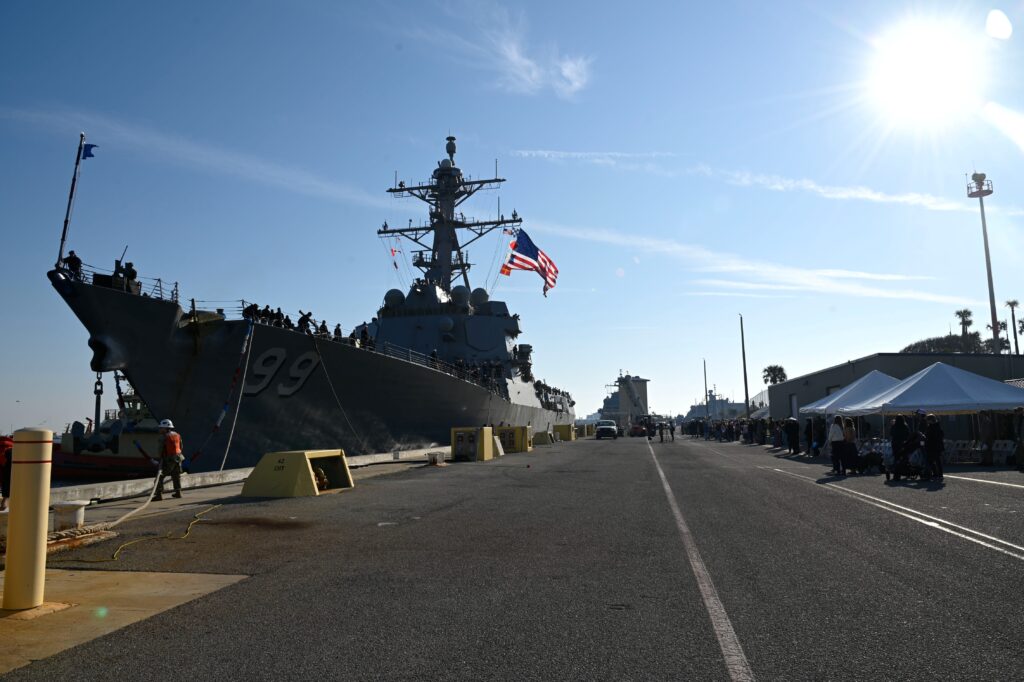
NAVAL STATION MAYPORT, Florida ꟷ Farragut, along with the “Valkyries” of Helicopter Maritime Strike Squadron (HSM) 50 Det 2 deployed in September 2023 to support Joint Interagency Task Force (JIATF)-South’s counter-narcotics operations in the Caribbean Sea.
During the deployment, Farragut, with her embarked U.S. Coast Guard Law Enforcement Detachment (LEDET), apprehended or disrupted an estimated 1,770 kilograms of cocaine worth an estimated street value of more than $44 million and the detention of 18 suspected illicit drug runners.
“Every Sailor and Coast Guardsmen had a role in this team effort,” said Farragut Commanding Officer Cmdr. Tom Roberts. “We, alongside allies and partners, seized the opportunity to advance regional and strategic objectives in the area of operations, supporting our nation and our Navy. I could not be more proud of our team and their accomplishments.”
Farragut, the LEDET, and HSM 50 Det 2 conducted operations with the Dominican Navy and British Royal Navy to assist with the apprehension and transfer of personnel and cargo. Farragut also conducted deck landing qualifications with Joint Task Force Bravo (JTF-B) Soldiers, qualifying 18 UH-60A Black Hawk helicopter pilots for maritime operations.
Farragut’s port visits included Willemstad, Curacao, where the ship hosted local students and military personnel to showcase the capabilities of Farragut and discuss the daily lives of Sailors onboard a U.S. naval warship.
“The crew of USS Farragut demonstrated tremendous proficiency and professionalism while executing theater security cooperation events and counter illicit trafficking operations throughout their extended 4-month deployment.” said Capt. Bryan Gallo, Commodore of Task Force FOUR FIVE.
CTF 45 is the U.S. 4th Fleet surface task force charged with executing combined naval operations, building and strengthening regional maritime partnerships, and acting as a DoD-ready service provider to JIATF-South in support of counter-illicit trafficking operations in Central and South American waters.
U.S. Naval Forces Southern Command/U.S. 4th Fleet is the trusted maritime partner for Caribbean, Central and South America maritime forces leading to improved unity, security and stability.
Cooper Hands Over Command of U.S. 5th Fleet to Wikoff
By U.S. Naval Forces Central Command Public Affairs | February 01, 2024
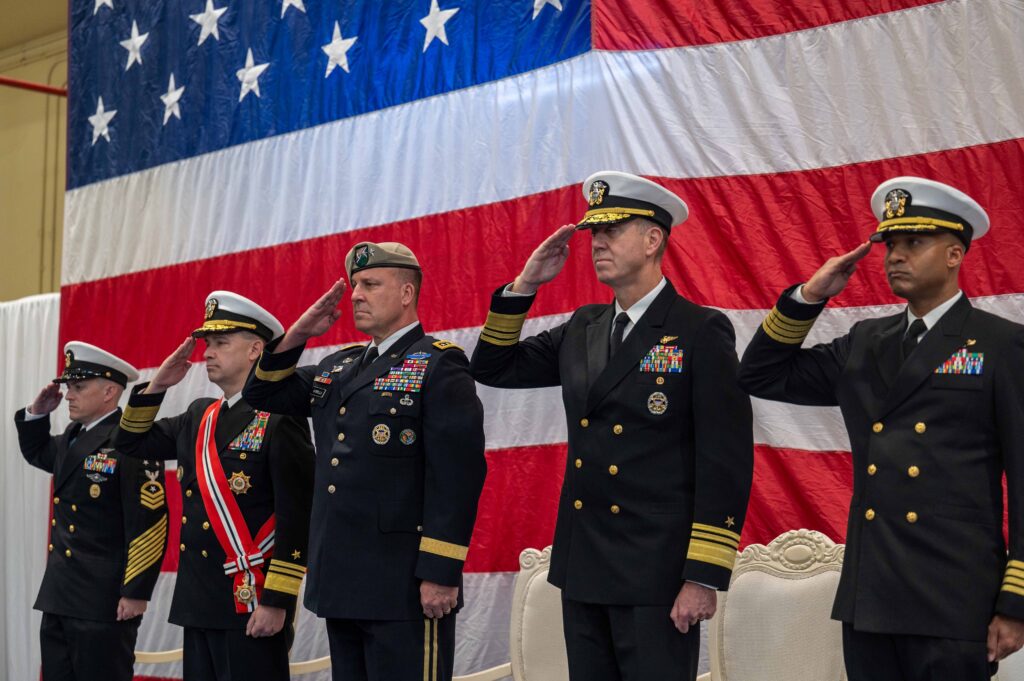
MANAMA, Bahrain ꟷ Vice Adm. Brad Cooper turned over command of Middle East naval forces to Vice Adm. George Wikoff during a change of command ceremony at Naval Support Activity Bahrain, Feb. 1.
The time-honored ceremony marked Wikoff’s assumption of command of U.S. Naval Forces Central Command (NAVCENT), U.S. 5th Fleet, Combined Maritime Forces (CMF), and the International Maritime Security Construct (IMSC).
Cooper, who assumed command in May 2021, led more than 16,000 Sailors, Marines, Coastguardsmen, and civilians. As CMF commander, he oversaw a 41-nation maritime partnership in one of the world’s most diverse and challenging area of operations.
Army Gen. Michael “Erik” Kurilla, commander of U.S. Central Command (CENTCOM), presided over the ceremony. During his remarks, he highlighted Cooper’s accomplishments while in command, noting the importance of people at the heart of his success in ensuring maritime security.
“His investment in our people, our partners, and to developing innovative approaches has truly made a difference in 5th Fleet and across the Central Region,” Kurilla said, noting Cooper’s leadership advanced U.S. and coalition naval forces through numerous complex joint and combined maritime operational events, resulting in enhanced security and stability in the maritime environment.
Recently, Cooper led efforts to counter Houthi malign activities in the Red Sea through Operation Prosperity Guardian, bringing more than 20 nations together to provide a persistent presence in the Red Sea, the Bab al-Mandeb, and the Gulf of Aden. Further, he led U.S. Navy efforts to diminish Houthi drone and missile capabilities through the execution of more than 100 strikes inside Houthi-controlled portions of Yemen in conjunction with Operation Poseidon Archer.
He also established the first naval unmanned and artificial intelligence task force, Task Force 59. During his tour, TF 59 went from experimentation to operations, including the first use of weapons aboard an unmanned platform.
Cooper spearheaded Operation Unified Takedown, resulting in the largest seizure of illegal weapons and drugs, smuggled out of Iran, in the history of Middle East naval operations.
With an eye toward expanding maritime security, Cooper also forged new partnerships with Caspian Sea nations and other central European countries.
As CMF commander, Cooper expanded the coalition to its greatest point in 22 years, 41 nations, and also established two new task forces: Combined Task Force (CTF) 153, focused on the Red Sea region; and CTF-154, leading multinational maritime training at locations across the Middle East. CMF task forces provided maritime security, conducted counter piracy and counter terrorism operations, and combated illegal drug smuggling, confiscating over $1.4 billion in narcotics during his tour. As the commander of IMSC, he grew its membership from eight to 12 nations.
Cooper said none of it could have been accomplished without the exceptional performance of the Sailors, Marines and Coast Guardsmen deployed to U.S. 5th Fleet.
“Every success starts and ends with people, and that has certainly been the case here in the Middle East these past few years” Cooper said. “The extraordinary Sailors, Marines and Coast Guardsmen who have deployed to this region have been, and continue to be, at the top of their game. I could not be prouder of their achievements and consider it a privilege of a lifetime to serve alongside them during this tour.”
Cooper reports next to Central Command at MacDill Air Force Base in Tampa, Florida, as the CENTCOM Deputy Commander.
Wikoff assumes command following his most recent tour as Acting Commander, Naval Air Forces/Acting Commander, Naval Air Force, U.S. Pacific Fleet. A naval aviator, Wikoff served operationally in Fighter Squadron (VF) 102 onboard USS America (CV 66) and VF 154 forward deployed to Atsugi, Japan on USS Kitty Hawk (CV 63). He commanded Strike Fighter Squadron (VFA) 211, deployed onboard USS Enterprise (CVN 65), VFA 122, Carrier Air Wing (CVW) 3, deployed onboard USS Harry S. Truman (CVN 75), and Carrier Strike Group (CSG) 5, forward deployed to Yokosuka, Japan, aboard USS Ronald Reagan (CVN 76).
“I am particularly excited to lead our like-minded partners in the Combined Maritime Forces with whom the United States stands shoulder-to-shoulder in the defense of Freedom of Navigation and Rules-Based International Order,” Wikoff said.
U.S. Naval Forces Central Command is the maritime component commander of U.S. Central Command in the U.S. 5th Fleet area of operations. It encompasses about 2.5 million square miles of water area and includes the Arabian Gulf, Gulf of Oman, Arabian Sea, the Gulf of Aden, the Red Sea and parts of the Indian Ocean. The expanse is comprised of more than 20 countries and includes three critical choke points at the Strait of Hormuz, the Suez Canal, and the Bab al-Mandeb.
HII Completes Builder’s Trials On Richard M. McCool Jr. (LPD 29)
The amphibious transport dock ship Richard M. McCool Jr. (LPD 29). HII
PASCAGOULA, Mississippi ꟷ HII’s Ingalls Shipbuilding division announced Feb. 1 the successful completion of builder’s sea trials for the amphibious transport dock ship Richard M. McCool Jr. (LPD 29). The San Antonio-class ship spent time in the Gulf of Mexico testing all systems in preparation for the remaining events that will occur prior to delivery of the ship, expected to occur in the spring.
“Our shipbuilders have worked hard to get LPD 29 to sea,” said Ingalls Shipbuilding Ship Program Manager Davianne Stokes. “We are absolutely dedicated to get this important asset into the hands of our Navy and Marine Corps partners.”
Ingalls Shipbuilding has delivered 12 San Antonio-class ships and currently has three LPDs under construction, including Richard M. McCool Jr.; Harrisburg (LPD 30), the first Flight II LPD; and Pittsburgh (LPD 31). LPD Flight II is the next generation amphibious ship to replace Whidbey Island (LSD 41) and Harpers Ferry (LSD 49) classes of dock landing ships.
In March 2023, Ingalls received a $1.3 billion modification to a previously awarded contract from the U.S. Navy for the procurement of the detail design and construction of LPD 32, named Philadelphia, the 16th ship in the San Antonio class and the third LPD Flight II.
Amphibious transport dock ships are a major part of the Navy’s 21st century expeditionary force, deployed with a U.S. Marine Corps Air-Ground Task Force for amphibious and expeditionary crisis response operations that range from deterrence and joint-force enablement to humanitarian assistance and disaster relief.
BAE Systems Delivers Firepower to USMC with New Amphibious Combat Vehicle Test Variant
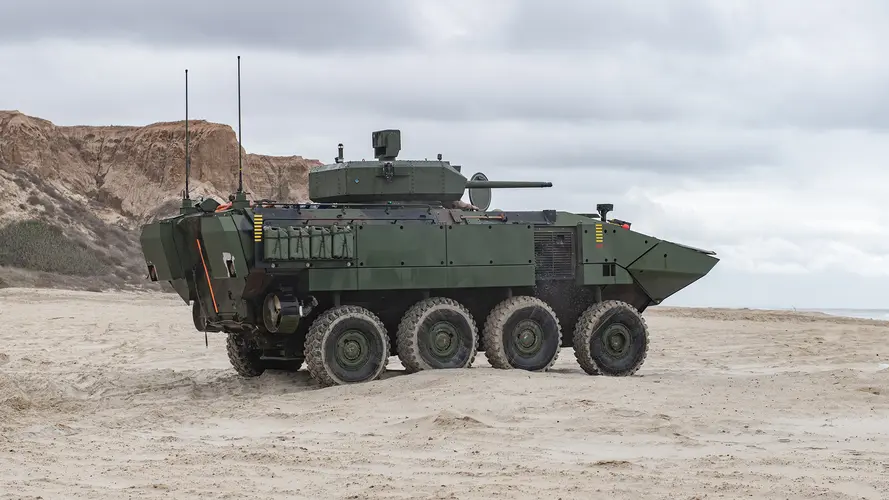
BAE Systems delivered a new Amphibious Combat Vehicle 30mm Cannon variant to the U.S. Marine Corps for testing. BAE Systems
STAFFORD, Virginia — BAE Systems delivered the first production representative test vehicle (PRTV) of the new Amphibious Combat Vehicle 30mm Cannon (ACV-30) variant to the U.S. Marine Corps for testing.
“ACV-30 equips dismounted Marines with direct fire support allowing them to simultaneously find, fix and engage targets more effectively and efficiently than current systems,” said Garrett Lacaillade, vice president of the amphibious vehicles product line for BAE Systems. “Innovating for the future, consistent with Force Design 2030 priorities, we have teamed with our strategic partners Iveco Defence Vehicles, Kongsberg and the Marine Corps to deliver not only an incredibly lethal capability, but a vehicle and weapon system that has the growth potential to incorporate new technologies to defeat future threats.”
ACV-30 is the third variant in the ACV family of vehicles designed, developed, and built since BAE Systems was selected as the prime contractor for the program in 2018. The vehicle mounts a stabilized, medium caliber Remote Turret System manufactured by Kongsberg that provides the lethality and protection Marines need while leaving ample room for troop capacity and payload while keeping the crew under armor. The remote turret eliminates the space requirement of legacy turreted cannon systems and provides more room to transport troops or mission essential equipment, and reduces weight for better mobility, the company said.
BAE Systems is currently in full-rate production with the ACV Personnel (ACV-P) variant and ACV Command and Control (ACV-C) variant, and is on contract for the design and development of an ACV Recovery (ACV-R) variant which will provide direct field support, maintenance and recovery to the ACV family of vehicles.
Each customizable ACV variant in the family of vehicles provides true open-ocean and ship-to-objective capability, land mobility, survivability and growth potential to meet the evolving operational needs of Marines around the world.
ACV production and support take place at BAE Systems locations in Stafford, Virginia; San Jose, California; Sterling Heights, Michigan; Aiken, South Carolina; and York, Pennsylvania.
Coast Guard Cutter Alex Haley Returns to Kodiak from Bering Sea Patrol
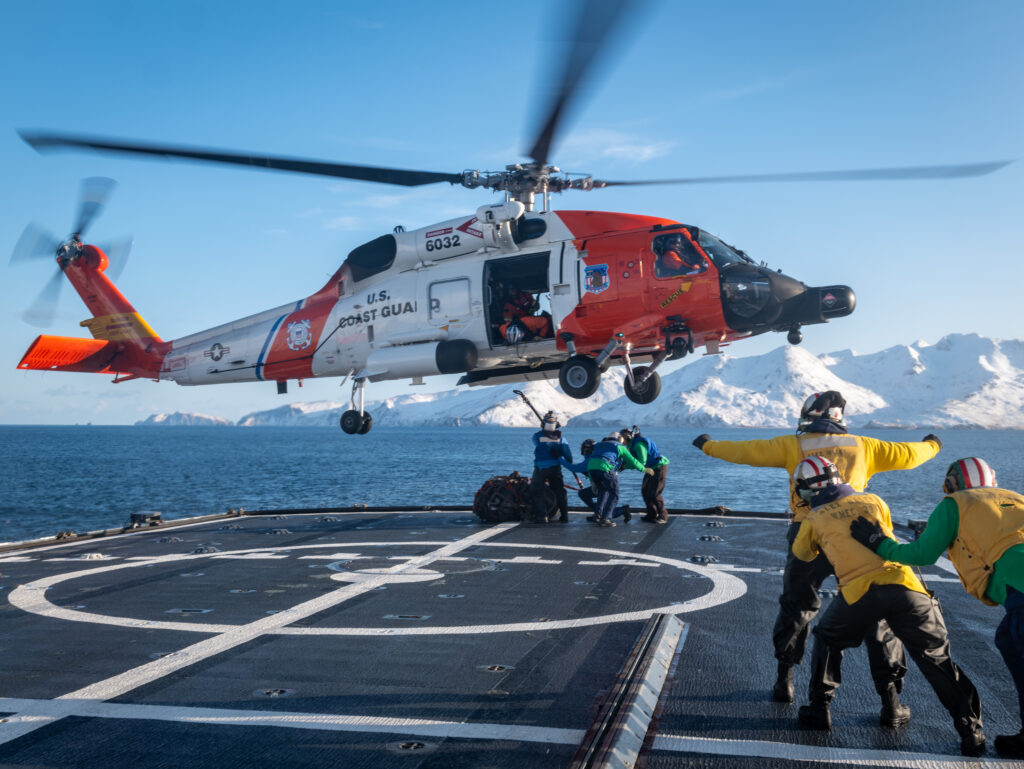
Crew members on USCGC Alex Haley conduct vertical replenishment training with the crew of an MH-60 Jayhawk helicopter from Air Station Kodiak in the Bering Sea Jan. 8. U.S. Coast Guard | Petty Officer 1st Class Jasen Newman
KODIAK, Alaska — The crew of USCGC Alex Haley (WMEC-39) returned home to Kodiak on Jan. 29 following a 45-day winter Bering Sea patrol during which they conducted domestic fisheries enforcement, responded to search and rescue and conducted several shipboard training exercises.
Prior to departing for the Bering Sea, the crew completed their Tailored Ship Training Assessment in Seattle. This assessment is a comprehensive evaluation on the crew’s capability to respond to a wide range of scenarios, from seamanship drills to battling shipboard fires and flooding. The crew of Alex Haley completed this biennial assessment ahead of schedule and with an overall score of 98% across all warfare areas.
After spending the holidays in the Bering Sea, Alex Haley was recalled from a logistics stop to respond to the motor vessel Genius Star XI on fire west of Dutch Harbor. After arriving on scene and determining the situation was stable, Coast Guard District 17 redirected the cutter to disabled fishing vessel Aleutian No. 1 off the coast of Amchitka, 575 miles southwest of Dutch Harbor. Alex Haley sailed through heavy seas to arrive on scene and safely establish a tow during nighttime gale conditions subsequently towing the 121-foot ship and crew of eight 160 miles to safe harbor in Adak.
In addition to maintaining a search and rescue presence in the Bering Sea, the crew conducted law enforcement and living marine resource protection throughout the Bering Sea and Aleutian Island chain to ensure compliance with applicable federal laws and regulations and support a working relationship with the Alaskan fishing fleet. Alex Haley conducted nine fisheries boardings, issuing three Living Marine Resources violations and two safety violations.