GA-ASI Completes First Lifetime for Full-Scale Fatigue Test on MQ-9B
*****
SAN DIEGO – 03 January 2024
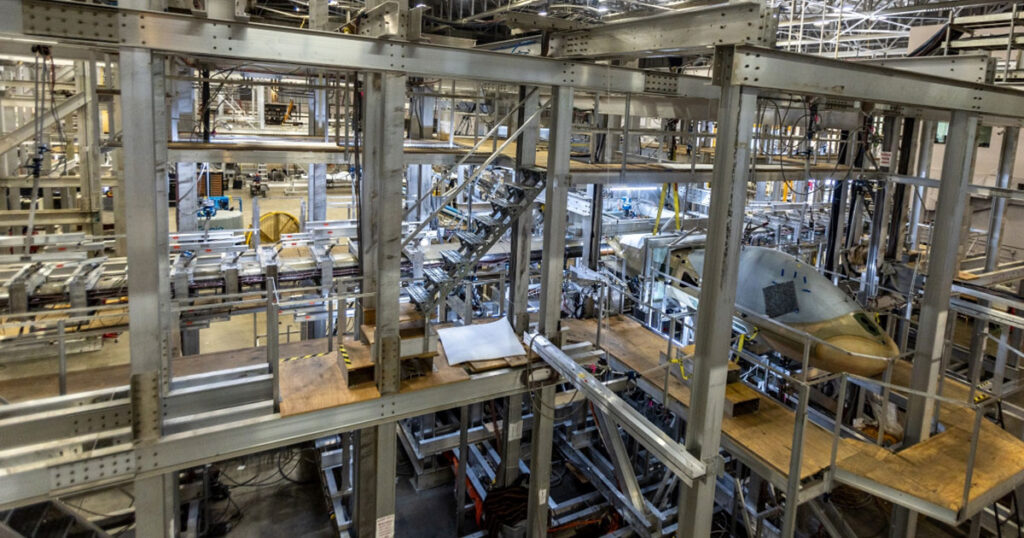
On Dec. 5, 2023, General Atomics Aeronautical Systems, Inc. (GA-ASI) completed a major milestone with the full-scale fatigue testing of an MQ-9B Remotely Piloted Aircraft (RPA). The team completed the “first lifetime” of fatigue testing – equivalent to 40,000 operating hours – and represents an important step in validating the design of the airframe system. The testing is part of the aircraft certification to the NATO standard STANAG 4671, where the aircraft will ultimately be tested through three lifetimes, thereby proving the 40,000 hour lifetime of the airframe.
The full-scale fatigue test simulates the aircraft’s design service through the application of repeated structural loading on the assembled airframe. The testing identifies any potential structural deficiencies ahead of fleet usage and assists in developing inspection and maintenance schedules for the airframe. The results of the test will be used as a part of the documentation for certification, as well as form the basis for in-service inspections of structural components.
MQ-9B is GA-ASI’s most advanced RPA and includes the SkyGuardian® and SeaGuardian® models, as well as the new Protector RG Mk 1 that is currently being delivered to the U.K. Royal Air Force.
“Full-scale fatigue testing is an integral part of validating the airframe design and a key input to the certification of the airframe prior to going into service,” said Chris Dusseault, Vice President of MQ-9B in Europe. “The completion of the fatigue test builds confidence for our MQ-9B customers that the SkyGuardian/SeaGuardian airframe meets the stringent design rigor and is a mature system at Entry into Service.”
The testing is the validation of years of design and analysis efforts. This is the first of three lifetimes of testing for the airframe. Two of the lifetimes simulate the operation of an aircraft under normal conditions, and the third lifetime has intentional damage inflicted on the airframe’s critical components to demonstrate its resistance to operational damage that may occur in the lifetime of the air vehicle.
Testing was conducted Dec. 13, 2022-Dec. 5, 2023, at Wichita State University’s National Institute for Aviation Research in Wichita, Kan. The airframe tested is a production airframe purpose-built to support the test campaign.
Military Sealift Command Celebrates ’75 Years of Maritime Excellence’
NORFOLK, Va. – This year, Military Sealift Command will celebrate its 75th anniversary. Since 1949, MSC, originally Military Sea Transportation Service (MSTS), has been at the forefront of maritime logistics supporting the nation’s joint warfighters around the world. Over the decades, the command has evolved into an agile fleet of more than 135 civilian-crewed ships that replenish U.S. Navy ships at sea, conduct specialized missions, preposition combat cargo at sea around the world, perform a variety of support services, and move military equipment and supplies to deployed U.S. forces.
Today, MSC’s workforce includes more than 7,000 civil service and contract mariners, shore staff and active duty and reservist service members; deployed in regions all over the world. Throughout 2024, the command will be remembering its history, honoring its legacy and celebrating the contributions of its Civil Service Mariners, civilians and military members – past and present – through various community outreach, observances and other special events to reflect on “75 Years of Maritime Excellence.”
“The prosecution of war requires the use of a tremendous number of noncombatant vessels. In all our history, we have never had a sufficient number of ships to meet the voracious appetite of war. Even with its service Force vessels, the Navy does not have enough ships to serve the mobile logistic support needs of the combatant fleets. In any war, therefore, the Armed Forces need the help and the close cooperation of the merchant marine. The groundwork for wartime cooperation with the merchant marine must be laid in times of peace. It would be dangerous to delay such cooperation until the outbreak of war for the complexities of ocean transportation cannot be learned overnight.” – Vice Adm. William Callahan, Commander, Military Sea Transportation Service, 1952.
The idea of creating an all-encompassing component responsible for water transportation of the military, in both peace and wartime was suggested as early as 1847 by the Quartermaster General of the Army, Brig. Gen. Thomas S. Jesup who had competed with the Navy for the chartering of American merchant ships. However, it would be another century before the idea would began to become reality. The division would continue through the early 1900s and the Spanish-American War and both World Wars.
During World War II, four different government agencies competed to utilize the commercial merchant marine – the Naval Transportation Service, the Army Transport Service, the U. S. Maritime Commission’s War Shipping Administration, and the Fleet Support Services. To oversee these organizations, the Joint Chiefs of Staff established the Joint Military Transportation Command.
On Dec. 15, 1948, the Secretary of Defense James Forrestal issued a statement, “all military sea transport including Army transports would be placed under Navy command.” With the decision made, discussions began on the details of the actual transfer and scope of the new command.
While the Army and Air Force agreed in the transfer of sealift functions to the Navy, the services could not agree on how to distribute the costs. The services thought was the Navy should pay for the operations of the vessels, while the Navy believed that the services wanting to ship items should provide the necessary funds. This issue was not resolved until the new Secretary of Defense, Louis Johnson, issued a memorandum July 12, 1949 that spelled out the financing, purpose and responsibilities of the MSTS. The new command opened for business October 1, 1949 – the birth of Military Sealift Command.
The initial MSTS fleet consisted of six troop transports, three attack transports, 12 attack cargo ships, and 16 tankers, commissioned vessels in the U.S. Navy and manned by military crews. During the Vietnam War, MSTS was renamed Military Sealift Command.
“MSC has been conspicuous because its people and ships generally have been where the action has been.” – Rear Adm. Bruce Keener III, Commander, Military Sealift Command, 1981.
Since its inception MSTS/MSC has been present during every major conflict since World War II, providing vital logistic and operational support to the warfighters on the front line. MSTS responded to the challenge of the Korean War within nine months deploying the 24th Infantry Division from Japan followed by the 25th Infantry Division and 1st Cavalry Division. In three years, MSTS transported more than 54 million tons of cargo, nearly 5 million troops and passengers and more than 22 million long tons of petroleum.
Between 1965 and 1969, MSC transported nearly 54 million tons of combat equipment and supplies and nearly 8 million tons of fuel to Vietnam. MSC ships also transported troops to Vietnam which marked the last use of MSC troop ships. Now, U.S. troops are primarily transported to theater by air.
During the first Persian Gulf Wars, Operations Desert Shield and Desert Storm, MSC distinguished itself as the largest source of defense transportation delivering more than 12 million tons of wheeled and tracked vehicles, helicopters, ammunition, dry cargo, fuel and other supplies and equipment. At the height of the war, MSC managed more than 230 government-owned and chartered ships.
Following the attacks of 9/11, MSC ships delivered more than 25 billion gallons of fuel and moved 126 million square feet of combat equipment and supplies to U.S. and coalition forces engaged in operations supporting Iraq and Afghanistan.
In March of 2003, on the heaviest day of delivering combat gear to Kuwait for Operation Iraqi Freedom, MSC operated 167 ships that stretched from the U.S. East and Gulf Coasts to Kuwait, the equivalent to one ship every 50 miles, a constant stream of combat material, supplies, vehicles and helicopters delivered to U.S. forces in the Middle East.
Throughout its existence, the MSC combat logistics force has continued to provide fuel, ordnance, food, parts, and supplies via underway replenishment to carrier strike groups and amphibious ready groups, independent deployers and ships from allied and partner nations.
“In peacetime, during conflict, responding to natural disasters and now during this global pandemic, our mariners and their teammates ashore remain steadfast and committed to provide agile logistics to our Navy, support joint warfighters forward and help defend our nation.” – Rear Admiral Michael Wettlaufer, Commander, Military Sealift Command, 2023.
The key for MSC’s longevity has always been its Civil Service Mariners (CIVMARs). Merchant mariners have courageously supported the nation’s warfighters, and they have a tradition of going in harm’s way to deliver equipment and personnel, wherever and whenever called upon.
There is no better display of the spirit and versatility of the merchant mariner than the “Taluga Tigers.” In 1972, a group MSC civil service mariners did something many naval leaders didn’t think was possible when they took a decommissioned Navy oiler and converted it into MSC’s first fleet service oiler.
The experimental project, Charger Log II, tested MSC’s ability to man a fleet oiler with a minimum crew of mariners. The goal was to test the viability of operating an aging Navy ship with a civilian crew.
The recently decommissioned Cimarron-class oiler, USS Taluga (T-AO 62), was turned over to MSC, and after an overhaul, USNS Taluga (T-AO 62) became the first MSC fleet support oiler. Manned with a crew of 105 CIVMARs and a 16-member military detachment to handle communications, Taluga would conduct 875 underway replenishments with the Seventh Fleet over three and a half years.
The Tigers proved that mariners could conduct underway replenishments repurposing a Navy oiler and their efforts set a new course for the Navy. It was a cost-saving alternative that preserved the operational lifetime of numerous naval vessels.
With the success of Taluga, the Naval Fleet Auxiliary Force grew from one ship to 22 T-AOs, eight T-AEs and three supply ships purchased from the British Ministry of Defense recommissioned as Sirius-class T-AFS ships. Then, in 1987, the USNS Henry J. Kaiser (T-AO-187) was introduced to the fleet in 1987 becoming the first of a 15-ship class of replenishment vessels designed from the beginning to be operated by civilian mariners.
“Through innovation, adaptability and a commitment to success, we will continue Military Sealift Command’s legacy of Maritime Excellence for another 75 years.” – Rear Adm. Philip Sobeck, Commander, Military Sealift Command, 2024.
As the Henry J. Kaiser-class fleet oiler era ends, the John Lewis-class era begins, and MSC continues to adapt to an ever-evolving maritime environment. The Navy accepted delivery of USNS John Lewis (T-AO 205) in July 2022. It is the first of 20 in the class – USNS Harvey Milk (T-AO 206) was delivered in May 2023.
The new oilers have the capacity to carry 156,000 barrels of oil, including biofuels. They are fitted with a helideck with the capacity to conduct refueling for helicopters, and they can hold more dry cargo than their predecessors. The vessels can also be armed with a close-in weapon system anti-ship missile defence system for detecting and destroying anti-ship cruise missiles.
Twelve new classes of vessels are scheduled to come online over the next decade, and 20 new ships will be delivered to the fleet in the next five years, all with modernized systems. MSC is also focusing on emerging capabilities such as new connectors, unmanned aerial resupply and expeditionary munitions reload to better support distributed maritime logistics.
For 75 years, MSC has provided agile logistics, strategic sealift and specialized missions to the Department of Defense and has kept warfighters equipped and ready. Now, they are looking forward to another 75!
MANAMA, Bahrain — U.S. Coast Guard cutters assigned to the Combined Maritime Forces seized illegal drugs with a total estimated street value of $24.5 million on Dec. 24 and Dec. 26 from vessels in the Gulf of Oman.
At approximately 2 p.m. local time (10 a.m. Greenwich Mean Time) on Dec. 24, a team from USCGC Clarence Sutphin Jr. (WPC 1147), a Sentinel-class cutter patrolling under the command of Combined Task Force 150 of the Combined Maritime Forces, boarded a dhow after it displayed several indicators consistent with illicit drug trafficking.
Aboard, the crew discovered 90 kilograms of heroin with an estimated street value of $3.2 million.
After testing and seizing the narcotics, the team disembarked the dhow, allowing it to continue on its journey.
At approximately 5 a.m. local time (9 a.m. Greenwich Mean Time) on Dec. 26, a team from USCGC John Scheuerman (WPC 1146), a Sentinel-class cutter patrolling under the command of Combined Task Force 150 of the Combined Maritime Forces, boarded a dhow after it also displayed several indicators consistent with illicit drug trafficking.
Aboard, the team discovered 261 kilograms of methamphetamines, 2,936 kilograms of hashish, 142 kilograms of heroin and 75,000 pills with the potential to be abused as opium substitutes, with a total estimated street value of more than $21.3 million.
The John Scheuerman team released the dhow’s crew and disposed of the illicit drugs.
The mission of Combined Task Force 150 is to disrupt the ability of non-state actors to move weapons or drugs, or engage in other illicit activities, in the Gulf of Oman, Arabian Sea and Indian Ocean.
These interdictions marked the tenth and eleventh times Combined Task Force 150 assets have seized illegal narcotics at sea since France took command in July 2023.
Combined Maritime Forces is a multinational maritime partnership committed to disrupting criminal and terrorist activities by restricting their freedom of maneuver across approximately 3.2 million square miles of international waters encompassing some of the world’s most important shipping lanes.
Since 2021, units assigned to the Combined Maritime Forces have seized more than $1 billion in illegal drugs while patrolling waters across the Middle East.
USS Ford CSG Redeploys To Homeport
*****
Jan. 1, 2024
By NAVEUR/NAVAF/SIXTH FLEET Public Affairs
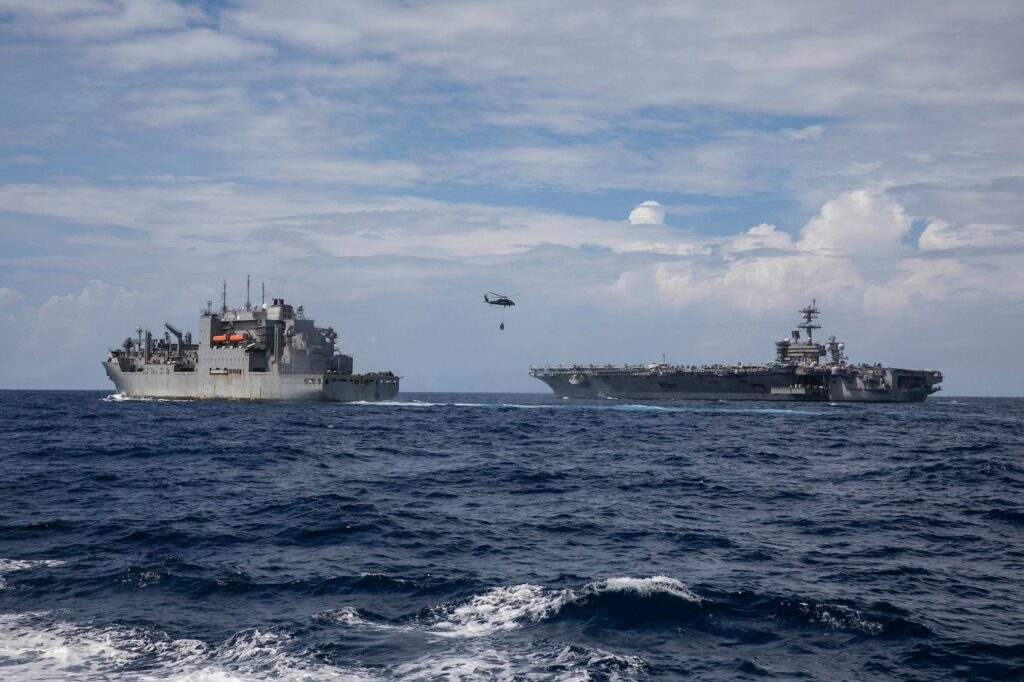
NAPLES, Italy – Immediately following HAMAS’s brutal attack on Israel, the USS GERALD R. FORD Carrier Strike Group was ordered to the eastern Mediterranean to contribute to our regional deterrence and defense posture. In the coming days, the USS Gerald R. Ford Carrier Strike Group will redeploy to its home port as scheduled to prepare for future deployments.
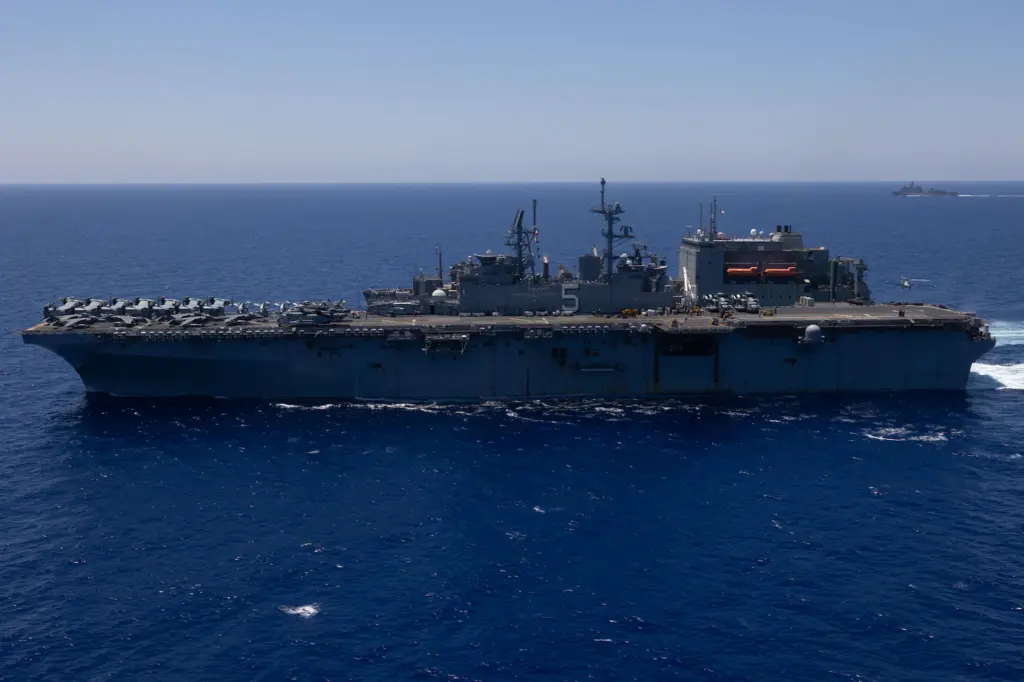
The Department of Defense continually evaluates force posture globally and will retain extensive capability both in the Mediterranean and across the Middle East. This includes the current deployment of the USS DWIGHT D. EISENHOWER Carrier Strike Group to the Middle East, the deployment of additional cruisers and destroyers in the Mediterranean and Middle East, and the recent arrival of the Wasp-class amphibious ship USS Bataan (LHD 5) and the Harpers Ferry-class dock landing ship USS Carter Hall (LSD 50) in the eastern Mediterranean Sea. The USS Bataan and USS Carter Hall join the San Antonio-class amphibious transport dock ship USS Mesa Verde (LPD 19) and, with the embarked 26th Marine Expeditionary Unit (MEU), these ships have re-aggregated as the Amphibious Ready Group (ARG) in the eastern Mediterranean. The ARG/MEU consists of three ships and approximately 2,000 Marines that provide sea-based expeditionary forces capable of supporting a wide range of missions.
Also, we are collaborating with Allies and partners to bolster maritime security in the region. DoD will continue to leverage its collective force posture in the region to deter any state or non-state actor from escalating this crisis beyond Gaza. And we continue to extend our appreciation to the U.S. service members still abroad, and their families and loved ones at home, in support of our steadfast commitment to global security.
CMF-assigned Cutter Seizes Hashish and Methamphetamines in North Arabian Sea
*****
By Combined Maritime Forces Public Affairs | January 02, 2024
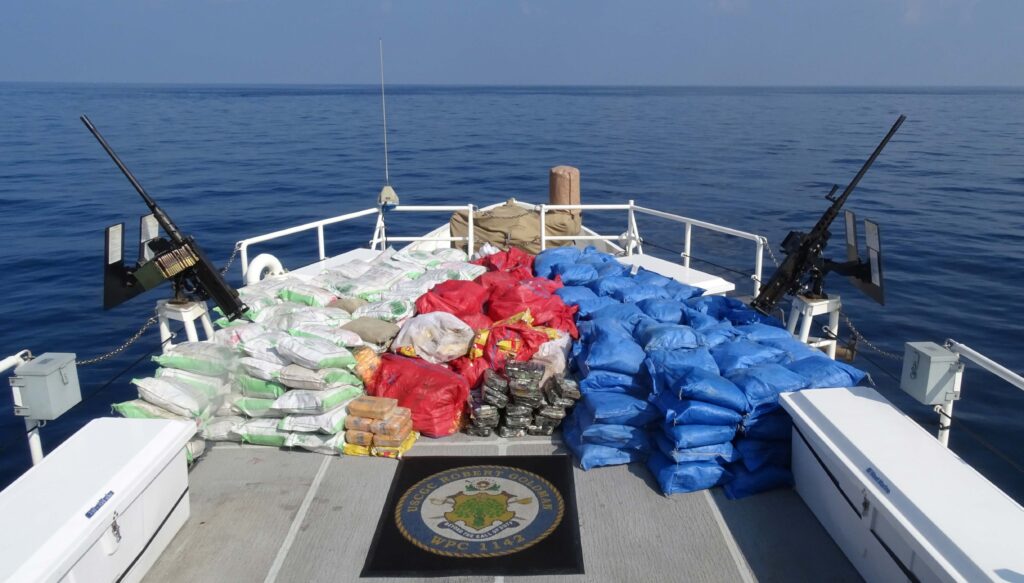
A U.S. Coast Guard cutter patrolling under the command of Combined Task Force 150 of the Combined Maritime Forces seized hashish and methamphetamines with a total estimated street value of $24.3 million Dec. 28 in the North Arabian Sea.
It was the third seizure by a CMF-assigned cutter in four days, following seizures by USCGC Clarence Sutphin Jr. (WPC 1147) and USCGC John Scheuerman (WPC 1146) of hashish, heroin, methamphetamines and pills with a total estimated street value of $24.5 million Dec. 24 and Dec. 26 in the Gulf of Oman.
A team from USCGC Robert Goldman (WPC 1142), a Sentinel-class cutter, boarded a dhow at approximately 6:30 a.m. local time Dec. 28 after it displayed indicators consistent with illicit drug trafficking.
Aboard, the team discovered over 300 bags of drugs containing 3,514 kilograms of hashish and 417 kilograms of methamphetamines.
The Robert Goldman team released the dhow and disposed of the illicit drugs.
The mission of Combined Task Force 150 is to disrupt the ability of non-state actors to move weapons or drugs, or engage in other illicit activities, in the Gulf of Oman, Arabian Sea and Indian Ocean.
This interdiction marked the twelfth time Combined Task Force 150 assets have seized illegal narcotics at sea since France took command in July 2023.
Combined Maritime Forces is a multinational maritime partnership committed to disrupting criminal and terrorist activities by restricting their freedom of maneuver across approximately 3.2 million square miles of international waters encompassing some of the world’s most important shipping lanes.
Since 2021, units assigned to the Combined Maritime Forces have seized more than $1 billion in illegal drugs while patrolling waters across the Middle East.
NAPLES, Italy – The Wasp-class amphibious ship USS Bataan (LHD 5) and the Harpers Ferry-class dock landing ship USS Carter Hall (LSD 50) transited Dec. 28, 2023, from the Red Sea to the Eastern Mediterranean Sea and will join the San Antonio-class amphibious transport dock ship USS Mesa Verde (LPD 19). With the embarked 26th Marine Expeditionary Unit (MEU), these ships will re-aggregate as the Amphibious Ready Group (ARG) in the eastern Mediterranean.
Carl Vinson Carrier Strike Group Conducts Maritime Operations in South China Sea
*****
27 December 2023
From Ensign Valentine Mulango
Carrier Strike Group 1, led by its flagship, Nimitz-class aircraft carrier USS Carl Vinson, is operating in the South China Sea following a scheduled port visit to the Republic of Singapore.
While in the South China Sea, the strike group is conducting maritime security operations, which include flight operations with fixed and rotary wing aircraft, maritime strike exercises, and coordinated tactical training between surface and air units. Carrier operations in the South China Sea are part of the U.S. Navy’s routine presence in the Indo-Pacific.
“The United States will continue to fly, sail, and operate safely, wherever international law allows—so that all nations can benefit from use of the maritime commons. This includes the South China Sea, where nearly $4 trillion in trade transits each year and it has some of the world’s richest fishing grounds that employ an estimated 3.7 million people,” said Rear Adm. Carlos Sardiello, commander, CSG-1. “Since transiting the Pacific from San Diego into the South China Sea, we’ve participated in multilateral, trilateral and bilateral training exercises in the Indo-Pacific region to increase our combined readiness with like-minded allies and partners to demonstrate our shared commitment to the rules-based international order.”
CSG 1 consists of CVN 70, Carrier Air Wing (CVW) 2, Ticonderoga class guided-missile cruiser USS Princeton (CG 59) and Destroyer Squadron (DESRON) 1, which includes Arleigh Burke-class guided-missile destroyers USS Hopper (DDG 70), USS Kidd (DDG 100), USS Sterett (DDG 104), and USS William P. Lawrence (DDG 110).
Prior to entering the South China Sea, CSG-1 participated in a trilateral maritime exercise with the Japan Maritime Self-Defense Force (JMSDF) and Republic of Korea Navy. The exercises provided an opportunity for the three maritime forces to sail together and conduct enhanced planning and advanced maritime communication operations.
The Vinson strike group departed San Diego Oct. 12 for a scheduled deployment to the Western Pacific. Since entering the U.S. 7th Fleet area of operations, the group participated in the Multi-Large Deck Event and Annual Exercise 2023 in the Philippine Sea. These exercises provided opportunities to collaborate with allied forces such as the Royal Australian Navy, Royal Canadian Navy, and JMSDF, to further strengthen regional cooperative efforts.
CSG-1 is a multiplatform team of ships and aircraft, capable of carrying out a wide variety of missions around the globe from combat missions to humanitarian assistance and disaster relief response. CSG-1 is currently deployed to U.S. 7th Fleet area of operations in support of a free and open Indo-Pacific.
U.S. 7th Fleet is the U.S. Navy’s largest forward-deployed numbered fleet and routinely interacts and operates with allies and partners in preserving a free and open Indo-Pacific region.
For more news from CSG 1, visit http://www.dvidshub.net/unit/CSG1
USCG Cutter Seneca Returns from Western Caribbean and Eastern Pacific Patrol
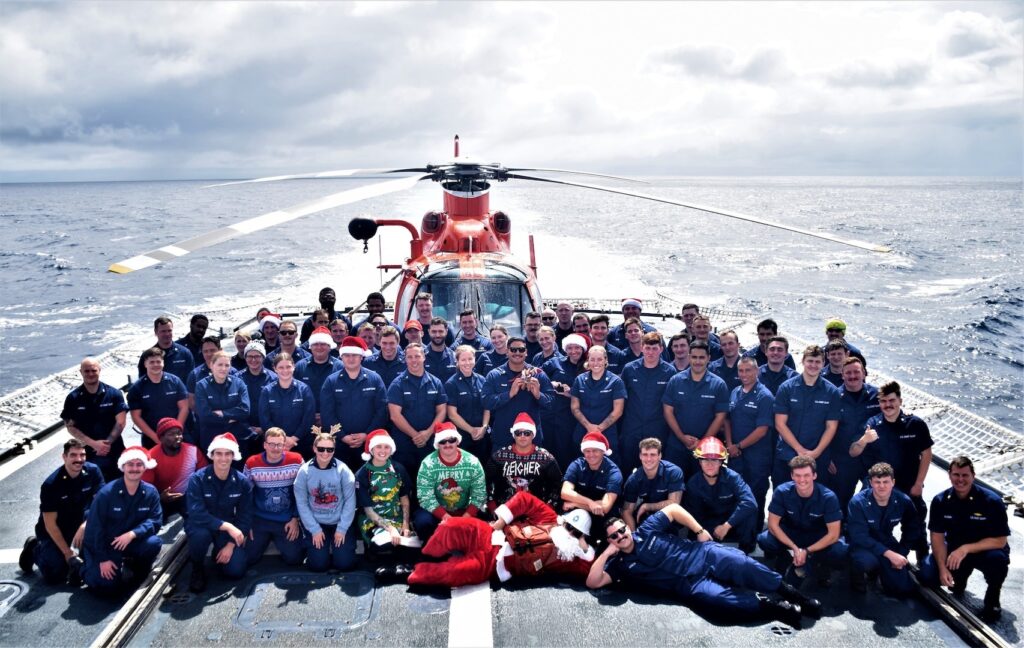
PORTSMOUTH, Va. — The crew of U.S. Coast Guard Cutter Seneca (WMEC 906) returned home to Portsmouth, Friday, following a 65-day patrol in the Western Caribbean and Eastern Pacific Ocean.
Patrolling in support of Joint Interagency Task Force-South, Seneca worked alongside other Coast Guard cutters, Department of Defense and Department of Homeland Security units, and international partners to conduct maritime safety and security missions.
During their patrol, Seneca responded to a sailboat in distress more than 100 miles west of Dry Tortugas National Park in heavy seas. Seneca provided a vital communications relay between the Coast Guard’s Seventh District, Coast Guard Sector Key West, and a Coast Guard Air Station Clearwater MH-60 helicopter crew, which airlifted the injured mariner to the Lower Keys Medical Center for immediate medical care.
“The resilience and tenacity of Seneca’s crew was on display during our 65-day deployment to the Western Caribbean Sea and Eastern Pacific Ocean,” said Capt. James McCormack, the commanding officer of Seneca. “Seneca provided persistent presence in deterring transnational criminal organizations from trafficking illicit narcotics across the Central American region bound for the United States. The crew is eager to return to our family and friends for the holiday season and looks forward to our next mission protecting the United States and those at sea.”
Seneca is a 270-foot, Famous-class medium endurance cutter. The cutter’s primary missions are counter-drug operations, migrant interdiction, enforcement of federal fishery laws, and search and rescue in support of U.S. Coast Guard operations throughout the Western Hemisphere.
For information on how to join the U.S. Coast Guard, visit GoCoastGuard.com to learn about active duty, reserve, officer, and enlisted opportunities. Information on how to apply to the U.S. Coast Guard Academy can be found here.
SECNAV Del Toro Meets With Industry on V-22 Osprey
Release from SECNAV Public Affairs
*****
22 December 2023
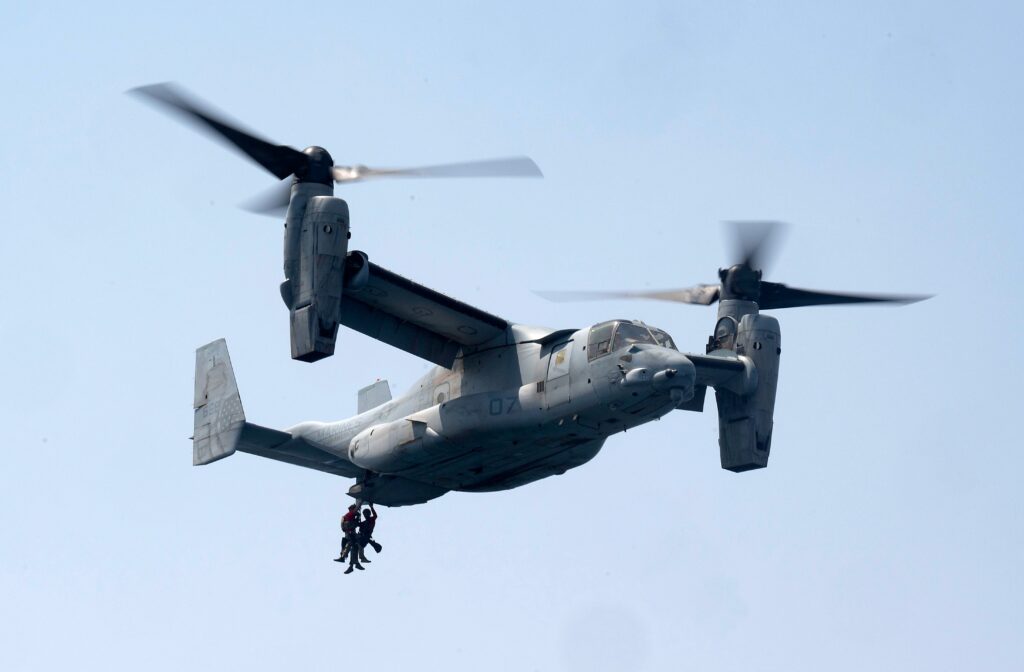
Secretary of the Navy Carlos Del Toro met with the chief executives of Bell Boeing earlier this week to discuss the V-22 Osprey program following the Dec. 6 grounding of the V-22 fleet.
“We are committed to the reliability, availability, and safety of this vital aircraft,” said Secretary Del Toro. “The Navy is working closely with our Service and industry partners to return the Osprey to flight, while our priority remains ensuring the safety of our Sailors, Marines, and Airmen.”
“I was reassured by our industry partners’ commitment to improving reliability and readiness of the V-22 while providing the safest aircraft to accomplish the V-22’s unique missions in both competition and conflict.”
The grounding of the V-22 Osprey fleet is the result of a fatal crash off the coast of Japan on Nov. 29. The cause of the crash is currently under investigation.
Navy and Marine Corps V-22 aircraft deliver transformational speed, depth, and agility to our Sailors and Marines, conducting all-weather assault support, time-critical logistics and supply missions in support of Naval Forces and Combatant Commanders.
U.S. Coast Guard Cutter Polar Star Departs Australia, En Route to Antarctica
Editor’s Note: To follow the U.S. Coast Guard Cutter Polar Star’s Operation Deep Freeze journey, click here for more imagery.
HOBART, Australia — U.S. Coast Guard Cutter Polar Star (WAGB 10) and crew departed Hobart, Wednesday, after a four-day port call in Hobart and an earlier stop in Sydney, to begin the journey across the Southern Ocean en route to Antarctica in support of Operation Deep Freeze 2024.
While in Hobart and Sydney, the crew hosted tours aboard the Polar Star for guests from the U.S. Embassy including U.S. Ambassador for Australia Caroline Kennedy and members from the Australian government, Royal Australian Navy, Tasmanian government, local industry partners, and local schools and universities.
“A sincere thank you to our Australian hosts and all our international partners whose incredible collaboration has defined the success of Operation Deep Freeze,” said Capt. Keith Ropella, commanding officer of Polar Star. “The cohesion among Antarctic programs reinforces the significance of our joint efforts, fostering a legacy of success for future scientific endeavors in this challenging environment.”
Operation Deep Freeze is a joint military service mission to resupply the United States Antarctic stations of the National Science Foundation, who is the lead agency for the United States Antarctic program (USAP). This year marks Polar Star’s 27th voyage to Antarctica. Every year, a joint and total force team work together to complete a successful Operation Deep Freeze season. Military members from the U.S. Air Force, Army, Coast Guard, and Navy work together through Joint Task Force-Support Forces Antarctica to continue the tradition of providing U.S. military support. Operation Deep Freeze works closely with other Antarctic programs to include those of Australia and New Zealand, as well as those Nations’ respective defense forces.
Leading up to and during the transit, the crew received training and prepared themselves to support this vital mission despite the austere environment. Operation Deep Freeze is one of the more challenging U.S. military peacetime missions due to the harsh environment in which it is conducted. Antarctica is the coldest, windiest, most inhospitable continent on the planet, and each trip requires careful planning and coordination.
“Through rigorous training and specialized preparations, our Coast Guard team stands ready for the challenges of Operation Deep Freeze,” said Lt. Cmdr. Don Rudnickas, operations officer of Polar Star. “The Coast Guard’s unwavering commitment underscores our dedication to the success of U.S. missions in the Polar Regions, ensuring the safety and efficacy of our operations.”
The Polar Star provides heavy icebreaking capabilities to facilitate sealift, seaport access, bulk fuel supply, and port cargo handling for three U.S. research stations in Antarctica with McMurdo Station being the largest. The cutter’s icebreaking capabilities enable the safe delivery of critical supplies to sustain USAP’s year-round operations and support international partnership in the harsh Antarctic environment. It’s vitally important that the U.S. maintains a maritime domain presence in Antarctica to protect uninhibited international access to the region.
When the Polar Star deploys in support of Operation Deep Freeze, they routinely spend the holiday season away from home. During the cutter’s first stop in Honolulu, the crew celebrated Thanksgiving while underway and moored alongside the U.S. Navy fleet at Joint Base Pearl Harbor-Hickam in Honolulu.
During the transit across the Pacific, the crew sailed through the position 0 degrees latitude and 180 degrees longitude, also known as “The X” marking the intersection of the equator and international date line. Crossing this exact position is a unique and rare opportunity among Coast Guard crews.
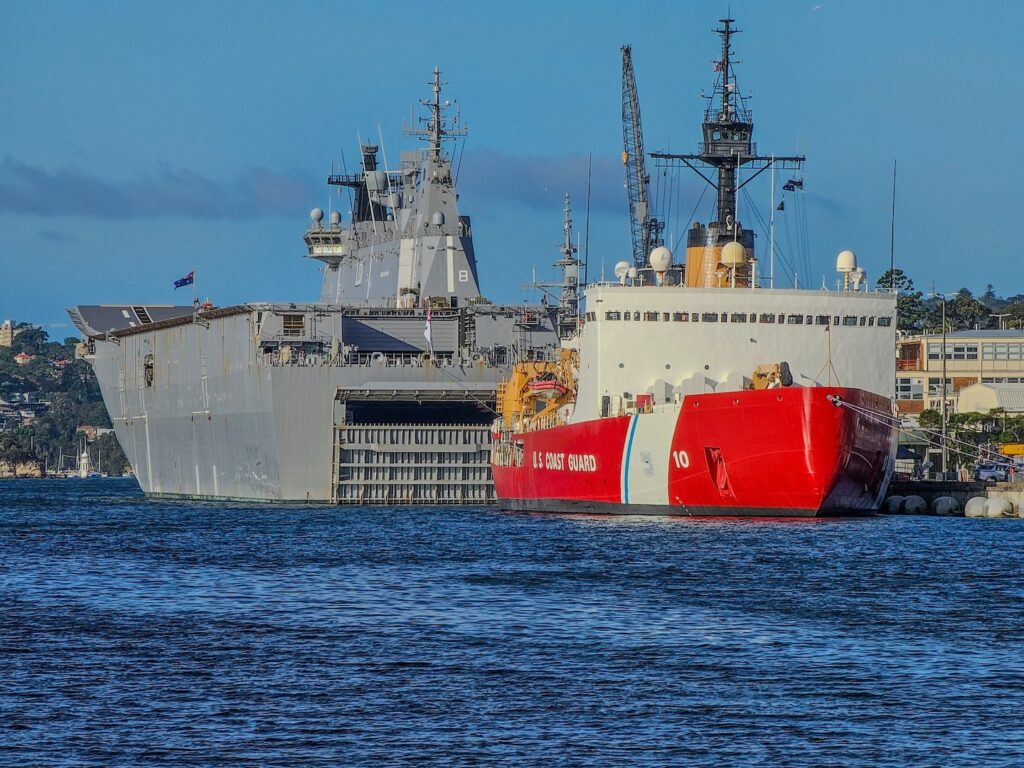
On December 10, the Polar Star moored at HMAS Kuttabul alongside several Royal Australian Navy ships close to the center of Sydney during a logistics stop for fuel and supplies.
The Polar Star departed its Seattle homeport November 15 and has traveled approximately 7,700 miles with stops in Honolulu, Sydney and Hobart.
The Polar Star is the United States’ only asset capable of providing access to both Polar Regions. It is a 399-foot heavy polar icebreaker commissioned in 1976, weighing 13,500 tons, 84-feet wide, with a 34-foot draft. The six diesel and three gas turbine engines produce up to 75,000 horsepower.