12th Marine Regiment Re-Designated to 12th Marine Littoral Regiment
Release from Headquarters Marine Corps
*****
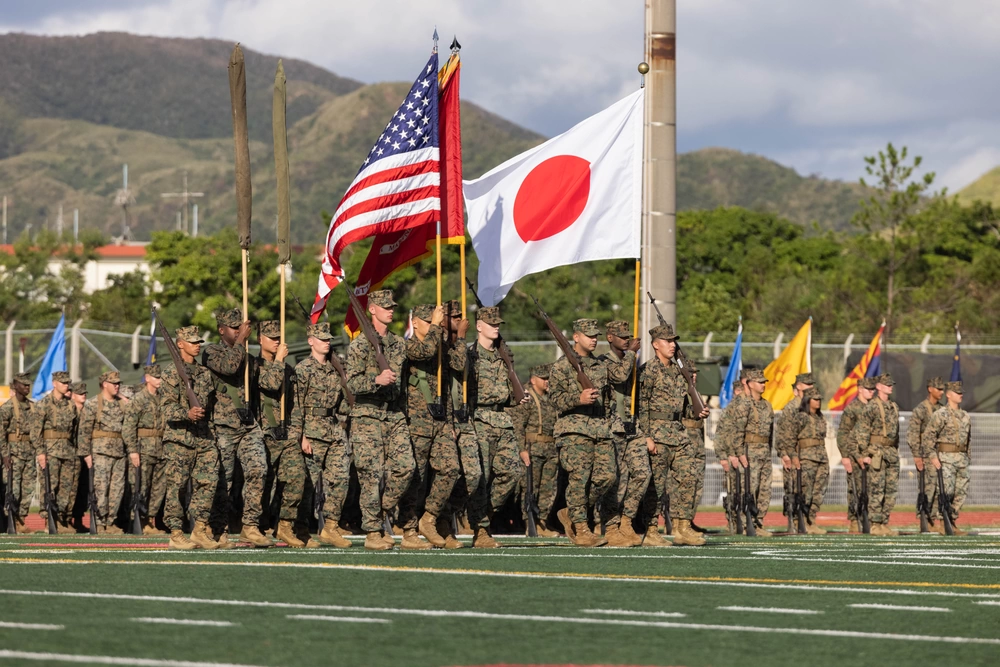
CAMP HANSEN, OKINAWA, Japan – 12th Marine Regiment redesignated to 12th Marine Littoral Regiment (MLR) on November 15, 2023, during a ceremony at Camp Hansen, Okinawa, Japan. This redesignation is the first step in the process outlined in January’s Security Consultative Committee (“2+2”) announcement that reinforces the enduring commitment of the U.S. to the defense of Japan and to peace and stability in the Indo-Pacific.
“Today marks a significant milestone in the storied history of the 12th Marine Regiment as they redesignate to the 12th Marine Littoral Regiment,” said Maj. Gen. Christian Wortman, commanding general of the 3d Marine Division. “12th MLR is poised to meet the challenges of today and tomorrow, with a vigilant eye on the horizon and a steadfast resolve to protect our nation and support the defense of Japan.”
While forward stationed in Okinawa, Japan, 12th Marine Littoral Regiment will integrate with the Joint Force and the capabilities of our allies and partners, supporting deterrence efforts, and remaining prepared to respond to potential crises.
“12th MLR represents a vital evolution of our mission and capabilities.,” said Col. Peter Eltringham, commanding officer of 12th Marine Littoral Regiment. “We’re proud to be here in the First Island Chain, and a force prepared to respond to contingencies wherever and whenever required. It is our pledge to guard and advance the 12th Marines legacy of honor, fidelity and valor, now as the 12th MLR.”
BAE Systems to equip Royal Australian Navy’s Hunter class frigates with Mk 45 naval gun
LOUISVILLE, Ky. — Nov. 15, 2023 — BAE Systems has received a contract to deliver multiple shipsets of the Mk 45 Medium Caliber Gun and automated Ammunition Handling System (AHS) for the Royal Australian Navy’s new Hunter class frigates. The Mk 45 gun system will equip the Royal Australian Navy with a common, adaptable gun system that can easily integrate advanced munitions to provide the firepower required to meet the Hunter class deterrence mission.
“We are proud to partner with BAE Systems Maritime Australia to deliver the Mk 45 gun system and Ammunition Handling System to the Royal Australian Navy,” said Brent Butcher, vice president and general manager of Weapon Systems at BAE Systems, Inc. “The highly reliable Mk 45 system maximizes the lethality of the Hunter class frigates, offers the capability to integrate advanced munitions, and supports additional future technology upgrades. With this system fielded on 11 fleets across the globe, it has proven it offers high-reliability.”
The Mk 45 gun system combines the 5-inch, 62-caliber Mk 45 Mod 4A naval gun with a fully automated AHS that continuously supplies the gun with ammunition, in high sea state conditions, without assistance from the crew. This automated gun system increases Sailor productivity, reduces risk to Sailor safety, and increases the operational capability of the Mk 45 at sea.
Work on the contract will begin in 2023 and finish in 2036. Engineering work will be completed in Minneapolis, Minnesota and production will occur in Louisville, Kentucky.
BAE Systems has delivered over 280 shipboard applications to the U.S. Navy and 11 fleets across the globe.
Future USS Thad Cochran Marks Start of Fabrication
Release from Naval Sea Systems Command
*****
Nov. 15, 2023
PASCAGOULA, Miss. — The Navy and HII’s Ingalls Shipbuilding division marked the start of fabrication for the future USS Thad Cochran (DDG 135) with a ceremony at HII’s shipyard, Nov. 13.
The ship is named for the late Thad Cochran, a United States senator who represented Mississippi from 1978 to 2018 and served as chairman of the United States Senate Appropriations Committee.
DDG 135 will be a Flight III guided missile destroyer centered on the AN/SPY-6(V)1 Air and Missile Defense Radar and will provide greatly enhanced warfighting capability to the fleet. The Flight III baseline begins with DDGs 125-126 and continues with DDG 128 and follow-on ships.
“The future USS Thad Cochran’s start of fabrication is the first major milestone in the construction of the ship. Flight III guided missile destroyers will deliver unparalleled warfighting capabilities to the Fleet, bringing nearly 10,000 tons of American maritime strength across the world’s oceans and seas,” said Capt. Seth Miller, DDG 51 program manager, Program Executive Office Ships.
Ingalls Shipbuilding division is also in production on future destroyers Ted Stevens (DDG 128), Jeremiah Denton (DDG 129), George M. Neal (DDG 131), and Sam Nunn (DDG 133).
As one of the Defense Department’s largest acquisition organizations, PEO Ships is responsible for executing the development and procurement of all destroyers, amphibious ships, special mission and support ships, boats and craft.
Australia’s First MQ-4C Takes Flight
Release from Northrop Grumman
*****
PALMDALE, Calif. – Nov. 13, 2023 – Northrop Grumman Corporation (NYSE: NOC) successfully completed the first flight of Australia’s multi-intelligence MQ-4C Triton uncrewed aircraft on Thursday, Nov. 9 at its Palmdale Aircraft Integration Center in California. The flight marks a major production milestone as Northrop Grumman progresses toward delivery of Australia’s first Triton in 2024.
Built for the U.S. Navy and Royal Australian Air Force, the multi-intelligence MQ-4C Triton is the only uncrewed, high-altitude, long-endurance aircraft performing persistent maritime intelligence, surveillance, reconnaissance and targeting.
The first flight occurred at 11:56 a.m. PST with total flight time of approximately 6 hours and 24 minutes. Airworthiness evaluations, such as engine, flight control and fuel system checks, and basic aircraft handling tests were conducted.
In September, the Australian government announced the addition of a fourth aircraft that will enhance the resilience of their fleet and provide superior surveillance capability to monitor and protect Australia’s maritime interests 24/7.
Experts:
Christine Zeitz, chief executive and general manager Australia & New Zealand, Northrop Grumman: “We are leveraging our deep expertise in uncrewed high-altitude long endurance aircraft to enable Australia to establish a superior long range maritime surveillance capability to monitor and protect Australia’s maritime interests 24/7.”
Air Marshal Robert Chipman, Chief of the Royal Australian Air Force: “Triton expands Australia’s intelligence, surveillance and reconnaissance capability by providing reliable real-time intelligence and situational awareness. Persistent surveillance enables better planning, greatly enhancing joint military responses and operations.”
Details on Program:
The multi-intelligence MQ-4C Triton uncrewed aerial system achieved a declaration of initial operating capability (IOC) by the U.S. Navy on Aug. 3, 2023.
Australia’s role in the Triton cooperative program was critical to shaping its system requirements. Together, U.S. and Australian defense forces will be able to share data collected by their respective Tritons, a critical ability in one of the world’s most strategically important regions.
Australia’s security challenges run the spectrum of humanitarian and disaster relief to maritime monitoring of the vital sea lanes in the Indo-Pacific. With all four Australian Tritons currently under contract progressing as planned through their production schedules, the systems will have a vital role to play with sensors and communication nodes that can facilitate the transfer of data across warfighting domains and various mission needs.
Keel Authenticated for Future Billy Frank Jr.
Release from Naval Sea Systems Command
*****
Nov. 14, 2023
By Team Ships Public Affairs
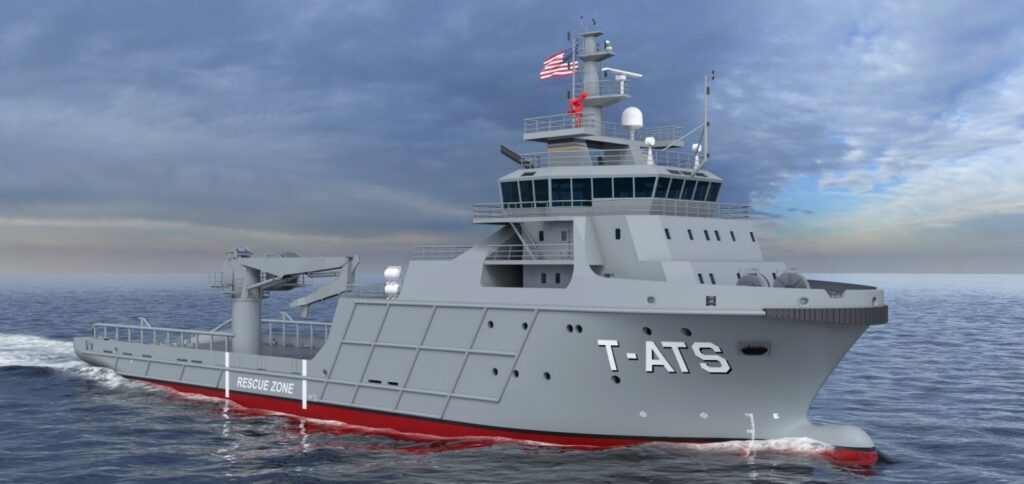
MOBILE, Ala. – The keel for the future USNS Billy Frank Jr. (T-ATS 11), the Navy’s 6th Navajo-class platform, was laid Nov. 14 at Austal USA’s shipyard in Mobile, Alabama.
A keel laying ceremony recognizes the start of a ship’s construction through the union of a ship’s modular components and the welding, or “authentication,” of an honoree’s initials into a ceremonial keel plate that becomes part of the ship. On hand to authenticate the keel was ship sponsor Pegan Frank, spouse to Nisqually Tribal Council Chairman William Frank III, son of the late Billy Frank Jr.
Billy Frank Jr. was a Nisqually tribal member and an iconic Native American environmental leader and treaty rights activist. After serving in the U.S. Marine Corps during the Korean War, Frank chaired the Northwest Indian Fisheries Commission for over 30 years, receiving the Albert Schweitzer Prize for Humanitarianism and the Martin Luther King, Jr. Distinguished Service Award. President Obama posthumously awarded him the Presidential Medal of Freedom in 2015.
“The future Billy Frank Jr.’s keel laying marks the beginning of the construction journey for this ship,” said John Lighthammer, program manager, Auxiliary and Special Mission Shipbuilding Program Office. “It is an honor to be joined by members of the Nisqually Tribe and we look forward to the partnership as we highlight their heritage.”
The Navajo class is a multi-mission, common hull platform that will deploy to support a range of missions such as towing, rescue, salvage, humanitarian assistance, oil spill response and wide-area search and surveillance. The vessels will replace the existing Powhatan-class T-ATF fleet ocean tugs and Safeguard-class T-ARS rescue and salvage ships in service with the U.S. Military Sealift Command.
Austal USA is also in production of future USNS Solomon Atkinson (T-ATS 12) with an additional three more T-ATS- ships under contract.
As one of the Defense Department’s largest acquisition organizations, PEO Ships is responsible for executing the development and procurement of all destroyers, amphibious ships, special mission and support ships, and boats and craft.
USS Stethem, Task Force 59 put more eyes in the sky, expanding maritime domain awareness
231109-N-CX511-6346 GULF OF OMAN (Nov. 9, 2023) A FlexRotor unmanned aerial vehicle hovers over the flight deck of the Arleigh Burke-class guided-missile destroyer USS Stethem (DDG 63) during UAV operations in the Gulf of Oman, Nov. 9. USS Stethem is deployed to the U.S. 5th Fleet area of operations to help ensure maritime security and stability in the Middle East region. (U.S. Navy photo by Ensign Rory Cox)
By U.S. Naval Forces Central Command Public Affairs | November 14, 2023
MANAMA, Bahrain —The Arleigh Burke-class guided-missile destroyer USS Stethem (DDG 63) recently demonstrated expansive maritime domain awareness, utilizing Flexrotor unmanned aerial vehicles during operations in the Gulf of Oman, Nov. 8-9.
The UAVs, part of U.S. Naval Forces Central Command’s Task Force 59, put a highly capable intelligence, surveillance and reconnaissance (ISR) capability in the hands of Sailors at sea. Flexrotor’s high endurance and vertical takeoff-and-landing capabilities make them particularly well suited for the task of building an accurate maritime picture, said Capt. Colin Corridan, Task Force 59 commodore.
“Our warfighters require innovative methods for gaining a deeper understanding of the operating environment,” Corridan said. “The ISR capabilities of these UAVs greatly expand our sight picture and help us better monitor what’s happening in the region.”
Flexrotor provides complete autonomous flight following takeoff, with a wide communication range and the ability for around-the-clock ISR coverage. It can be used day or night by U.S. and coalition partners for a wide range of intelligence, surveillance, target acquisition and reconnaissance operations over land and sea.
Flexrotors played an integral part in recent operations where it integrated with 12 different unmanned platforms for “manned-unmanned teaming” operations, tracking Iranian Navy and Islamic Revolutionary Guard Corps Navy (IRGCN) ships and small boats over several days during routine patrols in and around the Strait of Hormuz.
The operations aboard Stethem built on the strength of that operation, Corridan noted.
“The Sailors aboard Stethem and from Task Force 59 are strengthening maritime security and stability through the use of Flexrotor, deterring malign activity by bad-faith actors,” he said. “As these capabilities expand, we’re going to be able to gain more information more quickly to be able to make faster, smarter decisions.”
U.S. Naval Forces Central Command/U.S. 5th Fleet’s area of operations encompasses about 2.5 million square miles of water area and includes the Arabian Gulf, Red Sea, Gulf of Oman, Gulf of Aden, Arabian Sea and parts of the Indian Ocean. This expanse, comprising 21 nations, includes three critical choke points at the Strait of Hormuz, the Suez Canal and the Strait of Bab al Mandeb.
New Uncrewed Undersea Capabilities Strengthen AUKUS Partnership
Release from the U.S. Department of Defense
*****
The UK, US and Australia have strengthened their maritime forces, introducing new uncrewed undersea vessels to extend the range and lethality of their warfare capabilities.
As part of the AUKUS partnership, the nations have taken part in a joint exercise off the east coast of Australia to test new equipment that will increase the protection of critical underwater infrastructure. During the exercise, Australia’s new Undersea Support Vessel, Australian Defence Vessel (ADV) Guidance, hosted a range of undersea capabilities while they were tested at sea.
A recent addition to the Australian fleet, the ADV Guidance’s primary role is to support undersea and surveillance systems trials and includes the ability to host a small team of sailors as well as on-board and off-board systems, with both crewed and uncrewed capability. Earlier this month, Lieutenant General Rob Magowan, the UK’s Deputy Chief of Defence Staff for Military Capability, joined international representatives to witness the showcase of a range of advanced undersea capabilities deployed from ADV Guidance.
The UK’s Offshore Patrol Vessel HMS Tamar, which is on a 5-year deployment to the Indo-Pacific, also played a key role in the exercise. HMS Tamar used a combination of divers and autonomous underwater vehicles to conduct mine countermeasure operations, and monitor critical infrastructure, including pipelines and communication cables.
Last week, First Sea Lord Admiral Sir Ben Key visited Australia to address the Australian Sea Power Conference, discussing the UK’s commitment to the collective security of the region.
Key said:
“The recent AUKUS trials and exercise demonstrate the advances being made possible by our tri-lateral collaboration under the partnership. It is hugely exciting to see the strength of our three nations, coming together through the AUKUS partnership to successfully develop and demonstrate a range of underwater capabilities that are crucial to ensuring safety and security in the region and more broadly.
AUKUS is a landmark security and defence partnership between Australia, the UK, and the US to support a free and open Indo-Pacific by strengthening regional global security. This exercise is a significant step forward for delivery of the undersea warfare capabilities work stream under the second pillar of AUKUS.
AUKUS Pillar 2 seeks to strengthen trilateral capabilities in cutting-edge military technologies, increase interoperability, and drive knowledge-sharing and innovation. AUKUS partners are developing a suite of advanced capabilities including autonomous systems, artificial intelligence, and other key technologies for the three AUKUS nations. Pillar 2 complements trilateral efforts under AUKUS Pillar 1 to deliver a conventionally-armed nuclear-powered submarine capability to Australia.”
Chief of Navy, Vice Admiral Mark Hammond AO, Royal Australian Navy, said:
“Submarines are critical to the defence of Australia. Our submarines, and other military assets, will increasingly work with autonomous systems below and on the surface of the ocean to extend range and lethality.
AUKUS Pillar Two is about delivering advanced capabilities, including through technologies that extend reach and range.
As we have seen in the Ukraine conflict, scalable autonomous and semi-autonomous systems have the capacity to transform warfighting. The Defence Strategic Review (DSR) identified asymmetric capabilities like these as critical in the defence and protection of the nation.
These technologies originate from a range of industries, like the off-shore oil and gas and communications industries. They have been modified to carry a military payload to become force multipliers, working in concert with our ships, submarines and aircraft, and to serve as a key deterrent.
What we get by working with industry in this way is speed, what we get by doing it together under the AUKUS partnership is scale, where the sum of the whole is greater than its parts.”
Admiral Samuel Paparo, U.S. Navy, the Commander of U.S. Pacific Fleet, said:
“These exercises accelerate our combined development of advanced military capabilities. In a dynamic strategic environment and the escalation of competitors’ coercive activities, AUKUS is not just about the exchange of submarines and capabilities, it is an expansion of our continued trust in and commitment to our allies.
We are prioritizing capabilities that improve our warfighter’s ability to see, understand, decide and act – then work together to bolster integrated deterrence.
Australia, the United Kingdom and the United States are developing and fielding joint advanced military capabilities to promote security and stability in the Indo-Pacific region. The strategic alignment of our national defense strategies anchored by shared values is driving unprecedented collaboration in advanced technologies.
Our trilateral exercises develop and deliver interoperable, threat-informed capabilities key to the warfighter, and contribute to sustained defense industrial-based collaboration. Meanwhile, the AUKUS partners are investing in trilateral projects that are enhancing our scientific and technological capacity to build enduring advantages for the future.”
Earlier this month, the Australian Deputy Prime Minister joined the UK Defence Secretary Grant Shapps on a visit to Rolls Royce in Derby – the location where the nuclear reactors will be built for the SSN-AUKUS submarines under the AUKUS collaboration.
USS Chung-Hoon Shifts Homeport to San Diego
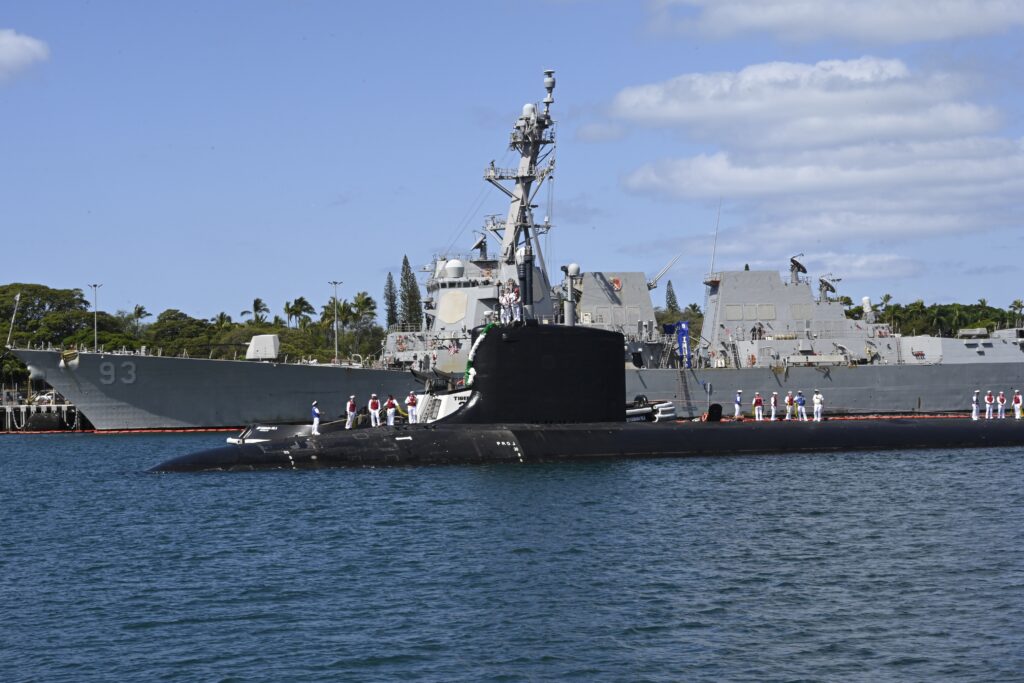
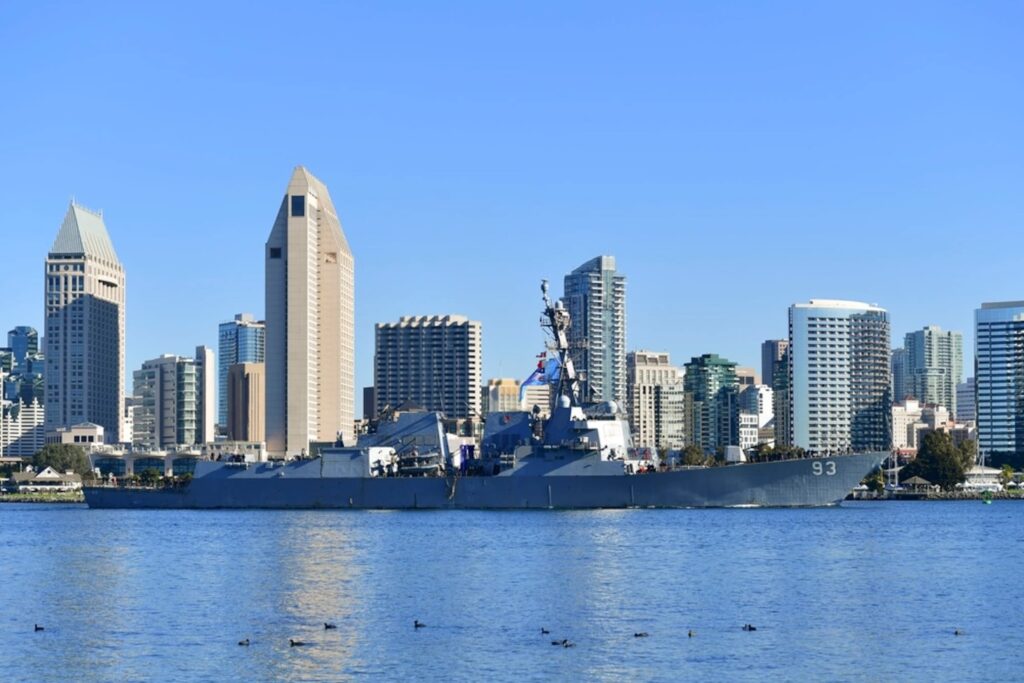
SAN DIEGO (Nov. 9, 2023) The Arleigh Burke-class guided missile destroyer USS Chung-Hoon (DDG 93) sails toward Naval Base San Diego following a change of homeport from Joint Base Pearl Harbor-Hickam, Hawaii.
SAN DIEGO, CA — The Arleigh Burke-class guided missile destroyer USS Chung-Hoon (DDG 93) arrived at Naval Base San Diego Nov. 9, concluding the ship’s homeport shift from Joint Base Pearl Harbor-Hickam, Hawaii to Naval Base San Diego.
Chung-Hoon, assigned to U.S. 3rd Fleet, recently completed a deployment to the U.S. 7th Fleet area of operations and has been relocated to San Diego to complete a mid-life modernization.
The modernization will broaden Chung-Hoon’s warfighting capabilities and is part of a larger guided-missile destroyer modernization program.
“We will certainly miss the Aloha spirit but hope to bring some of it with us to San Diego.,” said Cmdr. Kevin Schaeffer, Chung-Hoon’s commanding officer. “The support we received from the entire Pearl Harbor waterfront was always fantastic, and we will miss the team that has been supporting us since our commissioning. Our Chung-Hoon ohana has made lifelong memories, both personally and professionally, during our 20 years in Hawaii. We are excited to start this new chapter in San Diego.”
An integral part of U.S. Pacific Fleet, U.S. 3rd Fleet operates naval forces in the Indo-Pacific and provides the realistic, relevant training necessary to execute the U.S. Navy’s role across the full spectrum of military operations – from combat operations to humanitarian assistance and disaster relief. U.S. 3rd Fleet works together with Allies and partners to advance freedom of navigation, the rule of law, and other principles that underpin security for the Indo-Pacific region.
Navy Leaders from FVEY Nations Meet to Collaborate, Strengthen Relationship
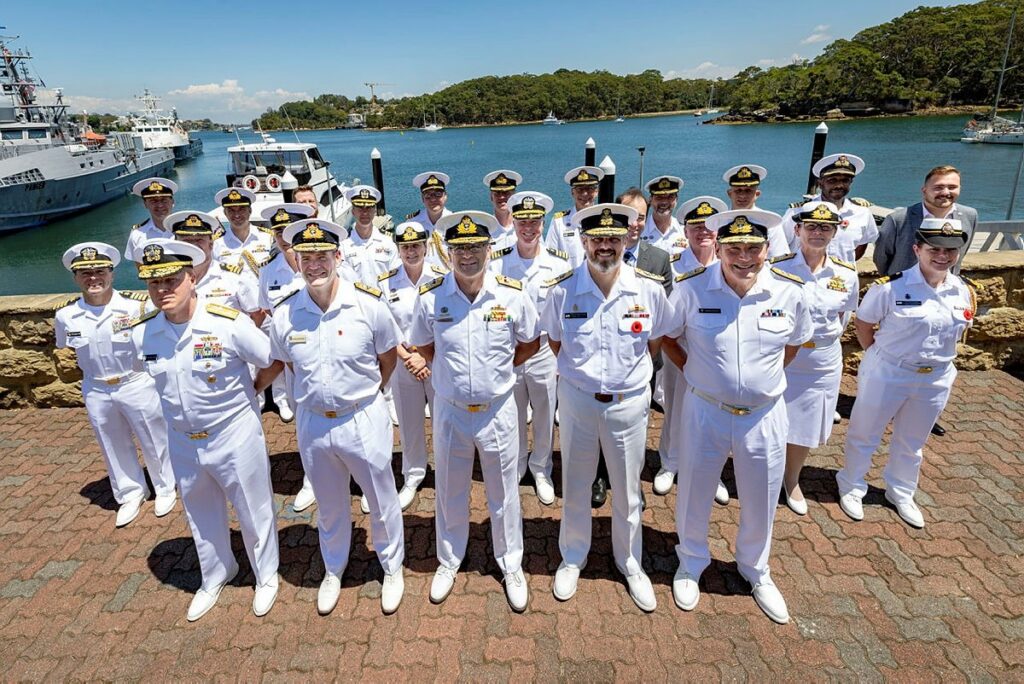
SYDNEY – Leaders from the navies of Australia, Canada, New Zealand, the United Kingdom, and the United States met in Sydney to discuss strategic partnerships, exchange valuable insights, and address key challenges faced in the ever-evolving global maritime landscape, Nov. 10, 2023.
The event fostered collaboration, strengthened alliances, and enhanced maritime security among the intelligence-sharing nations, known as FVEYs or the Five Eyes Alliance.
“This meeting was a testament to our unwavering commitment to protect our shared interests, and provided a unique opportunity to enhance cooperation, exchange knowledge, and collectively address the challenges that lay ahead,” said Rear Adm. Tom Moninger, the U.S. Navy’s Director for Plans, Policy & Integration.
The meeting proved to be a significant milestone in strengthening the FVEYs’ collective efforts towards ensuring regional and global security, providing a platform for leaders to share best practices, forge closer ties, and explore joint initiatives that will further bolster maritime security and stability.
“With the escalation of conflict in the world, it is more important than ever to gather with our FVEY partners to exchange invaluable insights and collectively address the rising challenges of the moment. Together, we reaffirm the enduring strength of our defence partnerships and our commitment to working together in securing the seas for a safer and more stable future,” said Royal Canadian Navy Rear-Admiral Chris Robinson, Commander Maritime Forces Pacific.
Deputy Chief of the Royal Australian Navy, Rear Admiral Jonathan Earley CSC, RAN, hosted the historic gathering, and emphasized that the meeting served as a catalyst for further collaboration among the FVEYs.
“We are confident that the outcomes of this meeting will strengthen our collective resolve to ensure the safety and security of our maritime domains,” said Earley.
Formally established shortly after the end of World War II, the FVEYs partnership continues to play a significant role in global security, aiming to uphold the rules-based international order.
Coast Guard to Lay Up Some Cutters, Boats in Face of Recruit Shortfall
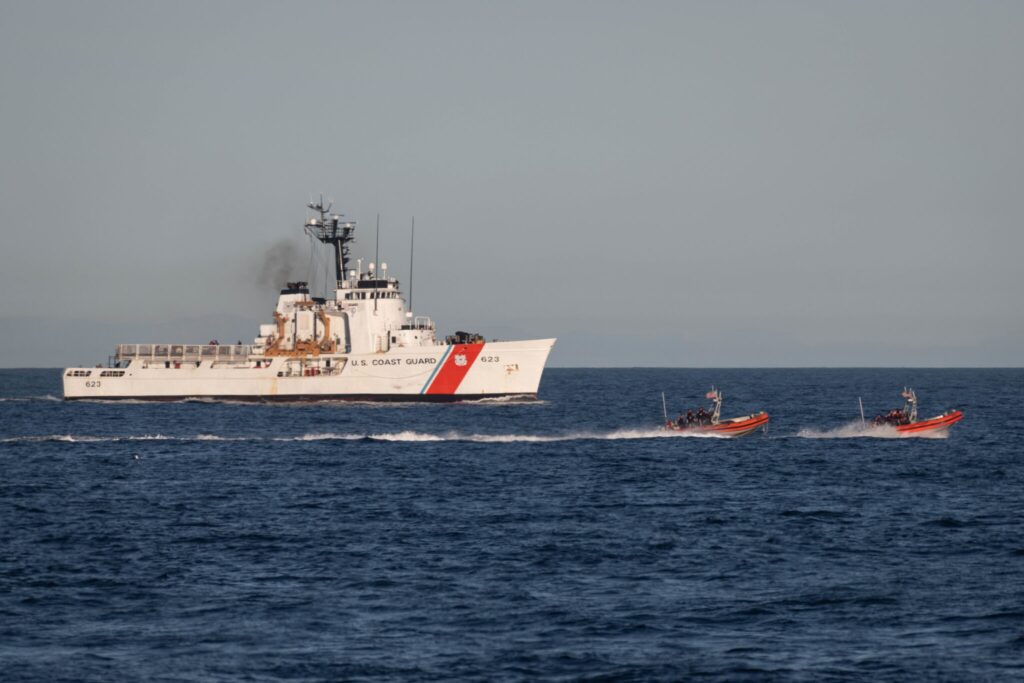
The Reliance-class medium-endurance cutter Reliance, shown here in 2022, will be decommissioned and three sister cutters will be laid up, pending decommissioning. U.S. Coast Guard
By Richard R. Burgess, Senior Editor
*****
ARINGTON, Va.—The U.S. Coast Guard will lay up several cutters and patrol boats because of a service-wide manning shortage, moves that will reduce the Coast Guard’s capacity for operations in the near term as the service grapples with the shortage of personnel.
The Coast Guard is short of some 3,000 personnel because in large part of shortfalls in recruiting in fiscal 2024.
“The Coast Guard is short nearly 10% of the entire enlisted workforce and cannot continue to operate as we have historically with fewer people,” wrote AJ Pulkkinen in the October 31 announcement posted on the Coast Guard website. “To mitigate the workforce challenge risk in a deliberative and strategic fashion, the Vice Commandant, Adm. Steven Poulin, has provided specific temporary operational guidance to adapt our operations while prioritizing lifesaving missions, national security and protection of the marine transportation system.”
“The Coast Guard cannot maintain the same level of operations with our current shortfall – we cannot do the same with less. Conducting our missions is often inherently dangerous, and doing so without enough crew puts our members and the American public at increased risk,” wrote Commandant Adm. Linda Fagan and Master Chief Petty Officer of the Coast Guard Heath Jones.
“There will be no loss of search and rescue (SAR) capabilities,” the announcement said. “However, we will temporarily adjust operations to prioritize our lifesaving missions, national security, and protection of the Marine transportation System. “
“As cutter crews are not scalable, the only way to reduce the workforce of the cutter fleet is to reduce the number of operating cutters,” the announcement said. “Previously planned cutter decommissionings will continue, including the [Reliance-class] Coast Guard Cutter Steadfast [WMEC 623]. Some cutters will be placed in a special status awaiting either decommissioning or future reactivation. In some cases, the crews will do a hull swap to lay up the cutter with the largest pending maintenance requirement.
The cutters and patrol boats affected include:
Three 210-foot Reliance-class medium-endurance cutters (WMECs) will be placed in layup, pending decommissioning.
Seven 87-foot Marine Protector-class patrol boats (WPBs) will be placed in layup, pending reactivation.
Five 65-foot harbor tugs (WYTLs) will temporarily not be continuously manned but will be kept in a ready status in case icebreaking is needed.
Two 154-foot Sentinel-class fast response cutters (WPCs) will commence uncrewed Recurring Depot Availability Program (RDAP) at the Coast Guard Yard in Baltimore, Maryland. The next 154-foot WPC scheduled for RDAP will deliver the hull to the Coast Guard Yard and swap hulls with a cutter that has completed drydock.
The cutbacks will affect 44 shore stations and 36 aids-to-navigation teams (ANTs) as well, which have more personnel than the prescribed staffing standards.
“The stations will be reduced to their staffing standards and the ANTs to one billet below their staffing standards,” the announcement said.
Other shoreside changes include, but are not limited to:
Crews at all 23 seasonal station smalls will transfer to their parent command.
The six non-response units (boat forces units without SAR responsibilities) will suspend operations and their crews will be reassigned in assignment year (AY) 2024.
The identified 19 stations whose SAR response capabilities are redundant will be deemed Scheduled Mission Units. Three of these 19 stations will be ports, waterways, and coastal security (PWCS) level one-Scheduled Mission Units.”
“The ‘Trackline to 10,000,’ to have ten thousand members assigned to afloat units, is still the goal for our future fleet and we will get there,” said Capt. John Driscoll, the Chief of the Office of Cutter Forces, in the release. “We need to adjust our operating capacity now so we can prepare for the future. We will gradually grow fleet capacity back through continued construction of ships with the latest technology and the best crew habitability. Our cutter fleet is in demand globally, and I can see our cuttermen continuing to explore new locations as our ship operations are dedicated to the highest priority missions.
“The Coast Guard has always answered the call when faced with incredible challenges,” Driscoll said. “We will take this challenge head-on and use it as an opportunity to prepare for the future.”