U.S. Sixth Fleet Conducts Bilateral, Dual-Carrier Operations in Eastern Mediterranean Sea 

Release from Carrier Strike Group 12 Public Affairs and Carrier Strike Group 2 Public Affairs 

***** 

EASTERN MEDITERRANEAN SEA  –  The ships and aircraft of two U.S. Navy aircraft carrier strike groups conducted joint exercises over the last three days. 

Sailors and naval aviators from the USS Gerald R. Ford (CVN 78) Carrier Strike Group (CSG 12) and those of the USS Dwight D. Eisenhower (CVN 69) Carrier Strike Group (CSG 2) trained on high-value unit defense, ballistic missile defense, replenishments-at-sea, cross-deck flight operations, and maritime security operations. 

They were joined by USS Mount Whitney (LCC 20) – the U.S. Sixth Fleet Command and Control ship – and the Italian Navy frigates ITS Virginio Fasan (F 591) and ITS Carlo Margottini (F 592). 

“Operating and training alongside each other demonstrates the U.S. Navy’s ability to seamlessly accomplish multiple missions, deter aggression and support our allies and partners,” said Rear Adm. Erik Eslich, Commander of CSG 12. 

More than 11,000 U.S personnel participated in the three-day exercises. 

“The seamless integration of naval and air commands between us and our partners helps build a theater-wide common tactical picture to make us a more ready and postured force,” said Rear Adm. Marc Miguez, Commander of CSG 2. “Our focus on teamwork and dual-carrier operations provide us the ability to train like we fight.” 

The Italian ships Fasan and Margottini joined the two carrier strike groups to exercise NATO alliance integration. Fasan also participated in Composite Unit Training Exercise with the Eisenhower strike group earlier this year. 

“Operating dual carrier strike groups alongside Allies and Partners in a dynamic environment demonstrates our capability and capacity to respond with agility decisively to any contingency,” said Vice Adm. Thomas Ishee, commander of the U.S. Sixth Fleet. “Our presence sends a clear signal about our commitment to deter aggression and promote stability throughout the region.” 

The ships of the Gerald R. Ford strike group have participated in multiple operations and exercises throughout the Sixth Fleet area of responsibility, including Sage Wolverine, Baltic Operations 2023, exercise Air Defender 2023, and NATO enhanced vigilance activity Neptune Strike, as well as operations with 17 countries in the U.S. Naval Forces Europe/Africa/U.S. Sixth Fleet area of operations. 

The Gerald R. Ford strike group is comprised of the aircraft carrier USS Gerald R. Ford (CVN 78), Carrier Air Wing (CVW) 8, Destroyer Squadron (DESRON) 2, the Information Warfare Commander, and the Ticonderoga-class guided-missile cruiser USS Normandy (CG 60). 

The ships of DESRON-2 are the Arleigh Burke-class guided-missile destroyers USS Ramage (DDG 61), USS Bulkeley (DDG 84), and USS Paul Ignatius (DDG 117). 

The Dwight D. Eisenhower strike group is comprised of the aircraft carrier USS Dwight D. Eisenhower (CVN69), the guided-missile cruiser USS Philippine Sea (CG 58), the guided-missile destroyers USS Mason (DDG 87) and USS Gravely (DDG 107) of Destroyer Squadron (DESRON) 22, and Carrier Air Wing (CVW) 3 with its nine squadrons. 

U.S. Sixth Fleet, headquartered in Naples, Italy, conducts the full spectrum of joint and naval operations, often in concert with allies and interagency partners, in order to advance U.S. national interests and security and stability throughout Europe and Africa. 


Adm. Lisa Franchetti Sworn in as 33rd CNO 

Release from the Navy Office of Information 

***** 

02 November 2023 

WASHINGTON – Secretary of the Navy Carlos Del Toro swore-in Admiral Lisa Franchetti as the 33rd Chief of Naval Operations at a small ceremony in the Pentagon, Nov. 2. 

“I am honored to have been confirmed as the 33rd Chief of Naval Operations, and am proud to serve alongside the Sailors and civilians that make up our Navy team,” Franchetti said. “I look forward to continuing to lead the world’s most powerful Navy.” 

Franchetti most recently served as Vice Chief of Naval Operations, a billet held from Sept. 2022 to Nov. 2023. She is a native of Rochester, New York and was commissioned in 1985. Her operational tours include commanding officer of USS Ross (DDG 71) and DESRON-21, and served as commander of Pacific Partnership 2010, embarked on USNS Mercy (T-AH 19). Her flag assignments include commander, U.S. Naval Forces Korea; commander, Carrier Strike Group 9; commander, Carrier Strike Group 15; chief of staff, Strategy, Plans and Policy (J-5) Joint Staff; commander, U.S. 6th Fleet, Naval Striking and Support Forces NATO; deputy commander, U.S. Naval Forces Europe; deputy commander, U.S. Naval Forces Africa; Joint Force Maritime Component Commander; deputy Chief of Naval Operations for Warfighting Development, N7; and director for Strategy, Plans and Policy (J-5), Joint Staff.. 

“It was my honor today to swear in Adm. Lisa M. Franchetti as the 33rd Chief of Naval Operations,” Del Toro said. “I have the utmost confidence that [she] will faithfully fulfill the duties of this esteemed position. I look forward to working with her to lead our Force into the future as we continue to strengthen our maritime dominance, build a culture of warfighting excellence, and enhance strategic partnerships.” 


7th Fleet Destroyer and Royal Canadian Navy Frigate Transit Taiwan Strait 

Release from Commander, U.S. 7th Fleet Public Affairs 

***** 

01 November 2023 

From Commander, U.S. 7th Fleet Public Affairs 

Arleigh Burke-class guided-missile destroyer USS Rafael Peralta (DDG 115) and Royal Canadian Navy Halifax-class frigate HMCS Ottawa (FFH 341) conducted a routine Taiwan Strait transit November 1 (local time) through waters where high-seas freedoms of navigation and overflight apply in accordance with international law. 

The ships transited through a corridor in the Strait that is beyond the territorial sea of any coastal State. The transit was unremarkable, unprovocative, and consistent with international law. Rafael Peralta and Ottawa’s bilateral transit through the Taiwan Strait demonstrates the commitment of the United States and our allies and partners to a free and open Indo-Pacific. Cooperation like this represents the centerpiece of our approach to a secure and prosperous region where aircraft and ships of all nations may fly, sail and operate anywhere international law allows.  


Exercise Digital Talon Advances Unmanned Lethality at Sea 

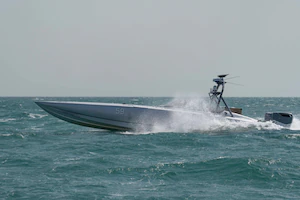
ARABIAN GULF (Oct. 26, 2023) A MARTAC T-38 Devil Ray unmanned surface vehicle, equipped with a Lethal Miniature Aerial Missile System, operates in the Arabian Gulf, Oct. 26. U.S. Naval Forces Central Command recently completed Exercise Digital Talon, demonstrating the ability of unmanned platforms to pair with traditionally crewed ships in “manned-unmanned teaming” to identify and target hostile forces at sea. Then, using munitions launched from another unmanned platform, engaged and destroyed those targets. (Photo by Mass Communication Specialist 2nd Class Jacob Vernier)

Release from U.S. Naval Forces Central Command Public Affairs 

***** 

MANAMA, Bahrain — U.S. Naval Forces Central Command (NAVCENT) is advancing lethality and the combat capabilities of unmanned surface vehicles (USVs) during live weapons firing exercises in the international waters surrounding the Arabian Peninsula, Oct. 23. 

The firing exercises were conducted as part of Exercise Digital Talon and constituted the first use of lethal munitions from USVs in the Middle East region. 

During the exercise, NAVCENT’s Task Force 59, the Navy’s first Unmanned and Artificial Intelligence Task Force, demonstrated the ability of unmanned platforms to pair with traditionally crewed ships in “manned-unmanned teaming” to identify and target simulated hostile forces at sea. The hostile forces were represented through the use of a target boat. Then, using live munitions launched from another unmanned platform, NAVCENT forces engaged and destroyed the targets. 

During multiple firing events, a MARTAC T38 Devil Ray USV, equipped with a Lethal Miniature Aerial Missile System, successfully scored direct hits each time. A human operator ashore at Task Force 59’s Robotics Operations Center made the engagement decisions. 

Digital Talon was coordinated with and supported by Commander, Special Operations Forces Central Command. 

This exercise is the second time in as many months the U.S. Navy has successfully demonstrated advanced unmanned capabilities in the region, according to Vice Adm. Brad Cooper, NAVCENT commander. In September, unmanned underwater surface and aerial vehicles were able to track Iranian Navy and Islamic Revolutionary Guard Corps Navy ships and small boats over several days during routine patrols in and around the Strait of Hormuz. 

“We are focused on the operational application of new, cutting-edge unmanned systems and artificial intelligence technologies. Last month, we integrated 12 different unmanned platforms with manned ships for ‘manned-unmanned teaming’ operations to conduct enhanced maritime security operations in the waters surrounding the Arabian Peninsula,” he said. “During Digital Talon, we took a significant step forward and advanced our capability to the ‘next level’ beyond just maritime domain awareness, which has been a traditional focus with Task Force 59. We have proven these unmanned platforms can enhance fleet lethality. In doing so, we are strengthening regional maritime security and enhancing deterrence against malign activity.” 

Looking ahead, Cooper said, he expects to see the progress expand in scale and impact, including future exercises expanding the arsenal of combat-capable unmanned systems. 

“I’m excited about the direction we’re headed,” he said. 

U.S. Naval Forces Central Command/U.S. 5th Fleet’s area of operations encompasses about 2.5 million square miles of water area and includes the Arabian Gulf, Red Sea, Gulf of Oman, Gulf of Aden, Arabian Sea and parts of the Indian Ocean. This expanse, comprising 21 nations, includes three critical choke points at the Strait of Hormuz, the Suez Canal and the Strait of Bab al Mandeb. 


Coast Guard, partners complete Operation Koa Kai off the Island of Hawaii 

Release from U.S. Coast Guard 14th District 

***** 

Nov. 1, 2023 

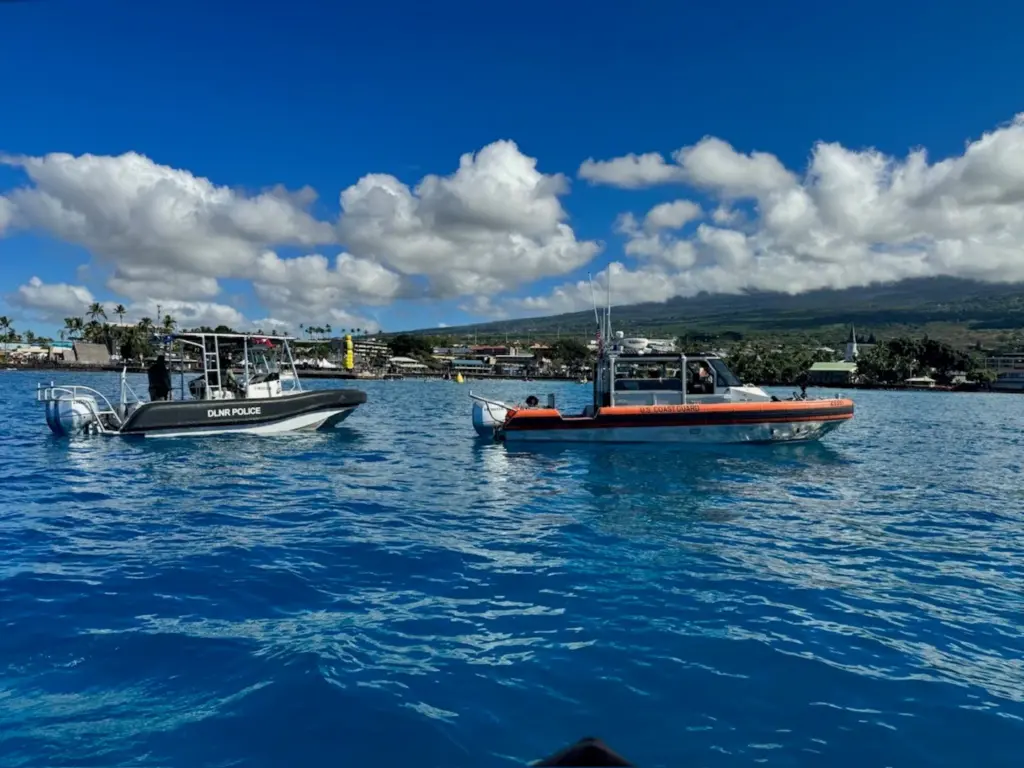
HONOLULU — The U.S. Coast Guard completed Operation Koa Kai, a comprehensive month-long maritime security and safety operation conducted throughout October off the Island of Hawaii. 

The annual operation, carried out in collaboration with the Department of Land and Natural Resources (DLNR) and the National Oceanic and Atmospheric Administration (NOAA) Office of Law Enforcement, focused on safeguarding the coastal waters and maritime assets, ensuring the well-being of both residents and visitors to the region. 

Operations completed include: 

  • 137 underway hours with 19 joint patrol hours 
  • Two search and rescue responses 
  • 26 maritime security and response operation patrols 
  • 11 small vessel security boardings (SVSB) 
  • Three high-capacity passenger vessel escorts 
  • 24 Response Boat-Small boardings and nine uninspected passenger vessel boardings 
  • Dockside inspections conducted in collaboration with the Marine Safety Team (MST) Hawaii for certificate of inspection verification. 

“This operation exemplifies the commitment of our Coast Guard personnel and partner agencies to the security and safety of Hawaii’s maritime domain,” said Chief Warrant Officer Omar Perez, a Coast Guard Sector Honolulu enforcement officer. “Our combined efforts are essential in maintaining maritime security and safeguarding lives in the waters off the Big Island of Hawaii.” 

While taking part in Operation Koa Kai, the Coast Guard Maritime Safety & Security Team 91107 Honolulu (MSST) provided safety zone enforcement for the 2.4-mile swim course included in the Ironman World Championship Women’s Race held in Kailua-Kona. The MSST played a pivotal role in a collaborative interagency effort, joining forces with agencies such as the Federal Bureau of Investigations, Department of Homeland Security Federal Air Marshals, Department of Defense, Hawaii Police Department, Hawaii Sheriff’s Office, Hawaii Conservation Officers, Hawaii Fire Department, and the Ironman Public Safety/Emergency Management department. This partnership, characterized by meticulous mission planning and preparation, was aimed at ensuring the safety of all athletes, spectators, staff, and volunteers during the high-profile event. 

Operation Koa Kai reflects the Coast Guard’s mission to protect and serve the maritime community, ensuring the smooth flow of commerce, maintaining maritime safety, and responding promptly to emergencies. 

Agencies involved in Operation Koa Kai include: 

  • U.S. Coast Guard Maritime Safety & Security Team Honolulu (MSST)  
  • U.S. Coast Guard Marine Safety Team (MST) Hawaii 
  • NOAA Office of Law Enforcement (OLE) 
  • DLNR ​​Hawaii Division of Conservation and Resource Enforcement 
  • Kona Police Department 


Statement From Secretary of Defense Lloyd J. Austin III on Senate Passage of Some U.S. Military Nominees 

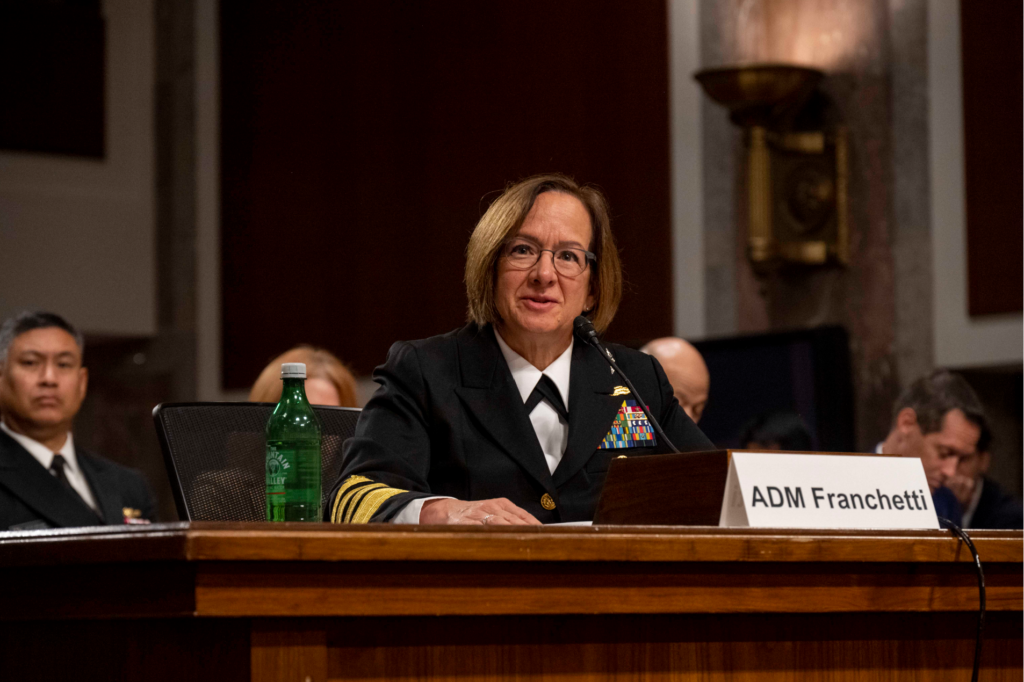
WASHINGTON (Sept. 14, 2023) Vice Chief of Naval Operations Adm. Lisa Franchetti answers questions from members of the Senate Armed Services Committee during her confirmation hearing at the Dirksen Senate Office Building in Washington, D.C., Sept. 14 2023. Franchetti was nominated to become the next Chief of Naval Operations by President Joseph R. Biden. (U.S. Navy photo by Chief Mass Communication Specialist Amanda R. Gray)

Release from the U.S. Department of Defense 

***** 

NOV. 2, 2023 

I am glad the Senate has today confirmed Adm. Lisa Franchetti as Chief of Naval Operations, Gen. David Allvin as Chief of Staff of the Air Force, and Lt. Gen. Chris Mahoney as Assistant Commandant of the Marine Corps. They are outstanding leaders who have faithfully served their country for decades, and I know they will continue to be great leaders of our force as they continue to tackle the crucial national security issues of these challenging times.  
  
But we still have more than 370 superbly qualified leaders who have seen their nominations unnecessarily stalled. As we face a variety of urgent challenges, the most powerful fighting force in history must be at full-strength. This unprecedented delay in confirming our military’s top leaders has hurt our military’s readiness and unnecessarily weighed down our military families, who already give up so much to support those who serve. While today’s vote is a step forward, we continue to urge the Senate to take swift action on the remaining nominations so that these American heroes can lead our team in keeping our country safe. 


VAW-120 PARTICIPATES IN FINAL FLIGHT OF C-2A GREYHOUND, SIGNIFIES END OF SQUADRON’S TRAINING MISSION FOR CARRIER ONBOARD DELIVERY 

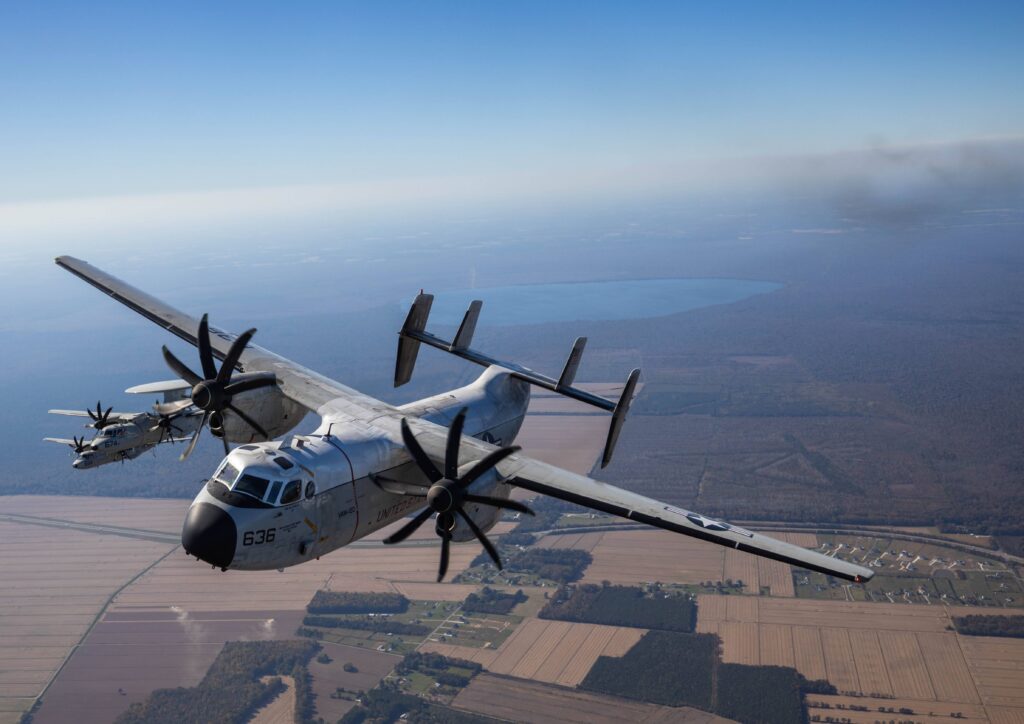
OUTER BANKS, N.C. (Oct. 31, 2023) Airborne Command and Control Squadron (VAW) 120 marks the end of their training role for the C-2A Greyhound aircraft’s carrier onboard delivery mission with a final flight over the Wright Brothers First Flight memorial at Kill Devil Hills, N.C. The Greyhound aircraft will be replaced by the CMV-22 Osprey aircraft in the coming years. (U.S. Navy photo by Aircrew Survival Equipmentman 2nd Class Richard Warren)

Release from Commander, Naval Air Force Atlantic, Public Affairs 

***** 

02 November 2023 

NORFOLK, Virginia – To mark the official end of the Airborne Command & Control Squadron (VAW) 120 Fleet Replacement Squadron (FRS) training role for the carrier onboard delivery (COD) mission, the squadron’s last C-2 instructor pilot, VAW-120 executive officer, and aircrew flew the C-2A Greyhound aircraft during a ceremonial flight over the Outer Banks and Cape Hatteras operating area, Oct. 30.  
 
Since September 1994, VAW-120 has served as the single FRS squadron to train all E-2C/D Hawkeye and C-2A aircrew. The last VAW-120 Greyhound flight provided an opportunity to recognize all of the previous aircrew who were trained at VAW-120 to operate the Greyhound.  
 
Lt. Spencer Tack, who commanded the flight, flew the last VAW-120 Greyhound at the FRS. Tack discussed being afforded the opportunity to be part of the platform’s storied history.   
 
“It is surreal … we all knew it was not going to be around forever,” Tack added, who completed the training of the final two C-2A aircrew in late September 2023. “I didn’t think I would get a spot at the FRS initially, but looking back now, being one among the last is a huge honor.”  
 
VAW-120’s last two C-2 instructor pilots, Tack and Lt. Patrick Sopko have shared a similar path to arrive at this historical juncture together. Both received their commission in 2014, Tack in March and Sopko in May. After initial flight school, they reported to VAW-120 and qualified together in 2017. Soon after their FRS training, Sopko left for VRC-30 on the west coast and Tack to VRC-40 on the east coast. Once again, in April 2021, both aviators returned to VAW-120 to train the remaining aircrew who will operate the C-2A until VRC-40 is decommissioned in 2026.  
 
“I don’t think it really has hit me yet; I also attended the decommissioning ceremony at VRC-30,” Sopko said. “It is still an honor to represent the last instructors who have trained aircrew to operate the C-2.” 
 
Over the last several years while assigned to VAW-120, Tack and Sopko trained up to 15 aircrew. While both checked aboard as instructors, they will check out together and report to VRC-40 where they will fly alongside the very same pilots they helped train over the past few years.  
 
During the historical flight of VAW-120’s last C-2A, an E-2C Hawkeye, E-2D Advanced Hawkeye and a second C-2A from VRC-40 participated in the ceremonial flight to recognize past aviation accomplishments both in civilian and military history. The flight plan included a flyover above the Wright Brothers First Flight memorial.  
 
“A lot of history in aviation, proud to incorporate our flight above the Wright Brothers National Memorial to signify their contributions to aviation and honor that of all aircrew who have trained at VAW-120 to fly the C-2A,” said Lt. Joshua Reyes, a VAW-120 E-2 instructor pilot who conducted the flight planning for the historical flight. While that first flight lasted 12 seconds and covered a distance of 120 feet, it changed the aviation world.  
 
Fleet Logistics Multi-Mission Wing and the CMV-22B Osprey aircraft will be the replacement for the C-2A Greyhound for the COD mission. It provides the Navy with increases in capability and operational flexibility over the C-2A. 


Tactical Resupply UAS ready for the fleet 

Six production models of the TRV-150C Tactical Resupply Unmanned Aircraft System (TRUAS) arrive at Littoral Logistics Battalion Three (LLB-3), Marine Corps Base Hawaii. The Navy and Marine Corps announced Initial Operational Capability (IOC) for TRUAS Oct. 27. (Marine Corps Photo)

Release from Naval Air Systems Command 

***** 

Nov 1, 2023 

Naval Air Station Patuxent River, Md. — The Navy and Marine Corps announced Initial Operational Capability (IOC) for the TRV-150C Tactical Resupply Unmanned Aircraft System (TRUAS) Oct. 27 at Marine Corps Base Hawaii. 

The first six production systems arrived last week at the Marines Third Littoral Logistics Battalion (LLB-3) in Kaneohe Bay, Hawaii, which means that LLB-3 is sufficiently manned, trained and ready to deploy with the TRV-150C. 

“This achievement means the fleet is ready and fully capable of deploying and using this game-changing system, which will enable Marines to perform forward deployed contested logistics missions,” said Gregg Skinner, Navy and Marine Corps Small Tactical Unmanned Aircraft Systems program manager (PMA-263), whose Unmanned Logistics Systems-Air (ULS-A) team oversees the TRUAS program. 

Prior to declaring IOC, support staff from the Air Test and Evaluations Squadron Two Four (UX-24) from Naval Air Warfare Center Webster Outlying Field in Maryland arrived at MCB Hawaii along with an instructor from the Training and Logistics Support Activity Pacific, to conduct final operator qualification with LLB-3. After reviewing the differences between prototype and production systems, the trainers and operators successfully completed 36 training flights to ensure that the unit was ready to deploy. 

PMA-263 awarded the production contract for the TRV-150C in April 2023 following a rapid prototyping initiative that brought the system from inception to the fleet in less than four years. 

“This was a total team effort in accomplishing this milestone in record time,” Skinner said. “Special thanks to the PMA263 Team, Training and Logistics Support Activity Pacific, Air Test and Evaluations Squadron Two Four (UX-24), and the Survice Engineering Company (TRUAS prime contractor) for their hard work and dedication aimed at getting this much needed Force Design 2023 capability in the hands of the Warfighter.” 

TRUAS is a land based, autonomous UAS that provides organic logistics to Marine squads through automated launch, waypoint navigation, and automated landing and payload drop. The system provides battlefield logistics capability to distribute critical supplies at Expeditionary Advanced Bases, where the risk to manned aircraft would deny manned aviation resupply operations out to the last tactical mile. 

“The contested logistics environment challenges the ability of our Marines to distribute necessary supplies to the right place at the time of need,” said Col. Aaron Angell, Logistics Combat Element Division director.  “TRUAS gives a logistics unit the organic ability to immediately respond with a precision ground launched air delivery system.  This is leap-ahead technology that we will learn to continue to shape future unmanned aerial logistics platforms.” 


USNS Mercy’s visit to Marshall Islands marks launch of Pacific Partnership 24-1 

The hospital ship USNS Mercy (T-AH 19) prepares to anchor off the coast of Majuro, Republic of Marshall Islands, prior to its first mission stop for Pacific Partnership 2024-1 Oct. 30, 2023. Pacific Partnership, now in its 19th iteration, is the largest multinational humanitarian assistance and disaster relief mission in the Pacific and brings together more than 1000 participants from 8 partner and host nations. (U.S. Navy photo by Grady Fontana)

Release from U.S. Pacific Fleet 

*****

31 October 2023 

On October 30, the United States Pacific Partnership has arrived in Republic of the Marshall Islands (RMI) to commence the largest annual multinational humanitarian assistance and disaster relief preparedness mission conducted in the Indo-Pacific region. 

The arrival of Military Sealift Command hospital ship USNS Mercy (T-AH 19) to Majuro, RMI, signifies the launch of the Pacific Partnership 24-1 mission, which will enable American and Marshallese participants to work together to enhance disaster response capabilities and foster new and enduring friendships. 
 
“The Pacific Partnership 24-1 mission is one example of our longstanding commitment to the Indo-Pacific region, while further strengthening enduring relationships and cooperation with partner-nations such as the RMI,” said Rear Adm. Mark A. Melson, Commander, Task Force 73 and Executive Agent for this year’s mission. “The RMI is a long and respected partner with deep ties to the U.S. Navy and contributes to security and stability in the region.” 
 
At the invitation of host nations, Pacific Partnership’s mission partners conduct tailored humanitarian civil action preparedness activities in areas such as engineering, disaster response, public health, and host nation outreach events. 
 
This year marks the fifth time Pacific Partnership has been to RMI. This stop will provide tailored medical care focusing on surgeries, training for first responders, clinical care, subject-matter exchanges, and community education at Majuro, Ebeye and Aur Atolls. 
 
Engineering projects will include school renovations at Long Island Elementary and Rita Elementary Schools, while experts in the field will share knowledge exchanges through exercises covering humanitarian and disaster relief topics. 
 
Additionally, the U.S. Pacific Fleet Band will perform alongside Australian military musicians in a variety of community engagements. 
 
“Pacific Partnership creates lasting bonds of friendships and trust between the United States, partner nations, and host nations,” said U.S. Navy Captain Brian Quin PP 24-1 Mission Commander. “I am excited to continue the tradition and honored to be a part of such an important mission”. 
 
USNS Mercy will serve as the mission platform and a combined team of civilian crew members and uniformed military members make up the crew of Mercy, which can staff up to 1,200 medical personnel. 
 
The ship has 12 fully equipped operating rooms, 1,000 hospital beds, radiological services, a medical laboratory, a pharmacy, optometry facilities, a CT scanner and an oxygen-producing plant. In addition to activities aboard the hospital ship, Pacific Partnership medical providers will work shoulder to shoulder with colleagues at the Majuro Hospital and Laura Clinic, ensuring that information exchange results in sustainable medical practices once USNS Mercy leaves the RMI. 
 
Pacific Partnership focuses on multiple effort to help build resilience and host nation capacity to support essential humanitarian services. 
 
As an added feature, RMI will partner with the Mercy’s medical team and deploy the country’s own hospital ship, Liwatoon Mour, to deliver health care services to outer atolls. They will take aboard and integrate Mercy medical staff to Aur Atoll in an effort to eradicate tuberculosis, a first-time collaboration for the Pacific Partnership mission. 
 
This year’s mission will also feature nearly 1,500 personnel from allies and partner nations including Australia, Chile, Japan, Germany, and New Zealand. 
 
Born out of the devastation brought by the December 2004 tsunami that swept through parts of South and Southeast Asia, Pacific Partnership began as a military-led humanitarian response to one of the world’s most catastrophic natural disasters. Building on the success and goodwill of this operation, the U.S. helped spearhead the inaugural Pacific Partnership mission in 2006. This mission leveraged partner militaries and the proficiencies of Non-Governmental Organizations to expand disaster relief capacity in Bangladesh, Indonesia, the Philippines, and Timor-Leste. 
 
Pacific Partnership, now in its 19th iteration, is the largest annual multinational humanitarian assistance and disaster relief preparedness mission conducted in the Indo-Pacific. Each year the mission team works collectively with host and partner nations to enhance regional interoperability and disaster response capabilities, increase security and stability in the region, and foster new and enduring friendships in the Indo-Pacific. 
 
For more information about Pacific Partnership visit www.facebook.com/pacificpartnership, www.instagram.com/pacific_partnership/ or https://www.dvidshub.net/feature/PacificPartnership. Pacific Partnership public affairs can be reached via email at [email protected]


KRAKEN AND L3HARRIS COLLABORATE FOR USSV INNOVATION 

Release from Kraken 

***** 

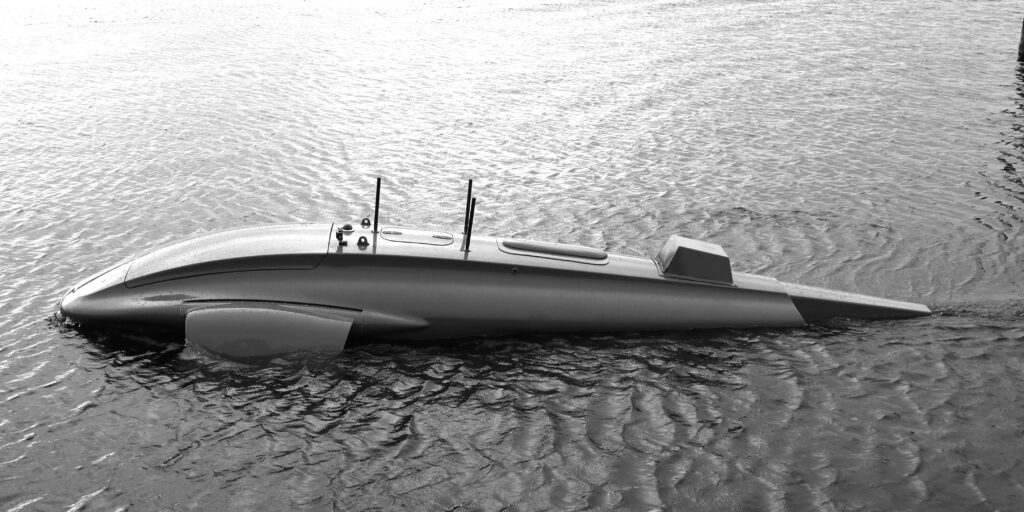
Kraken Technology Group is pleased to announce an official collaboration with L3Harris Technologies (NYSE: LHX) to advance the integration of control systems within the K40 MANTA prototype.    

This is a pivotal step in the technical evolution of Kraken’s K40 MANTA platform, setting the foundation for the development of enhanced autonomous capabilities and ultimately, full autonomy. 

The K40 is an uncrewed surface-subsurface (USSV) platform that utilises foils for rapid surface transit before submerging for clandestine manoeuvring. This high-performance vessel requires well-established, cutting-edge control systems and L3Harris possesses the necessary components and expertise required for seamless integration into the K40 MANTA. These integrated systems will enable the remote control of the uncrewed platform for engineering testing, foil development, powertrain calibration and demonstration before enhancement in later developmental stages. 

“We look forward to working with L3Harris on the implementation of key systems for K40 MANTA as a foundation for future developments,” said Mal Crease, Founder and CEO of Kraken Technology Group.  

“L3Harris is proud to collaborate with Kraken on this groundbreaking platform,” said Mark Exeter, Managing Director, ASV, L3Harris. “Our two companies possess complementary skills, benefiting both organizations through this venture. Furthermore, this collaboration paves the way for broader collaboration, capitalizing on our shared expertise, further facilitated by our proximity to Portsmouth, a renowned UK marine innovation hub.”