USCGC Oliver Henry concludes 28-day patrol, strengthening sovereignty and resource security in Blue Pacific
Release from U.S. Coast Guard Forces Micronesia/Sector Guam, Oct. 27, 2023 

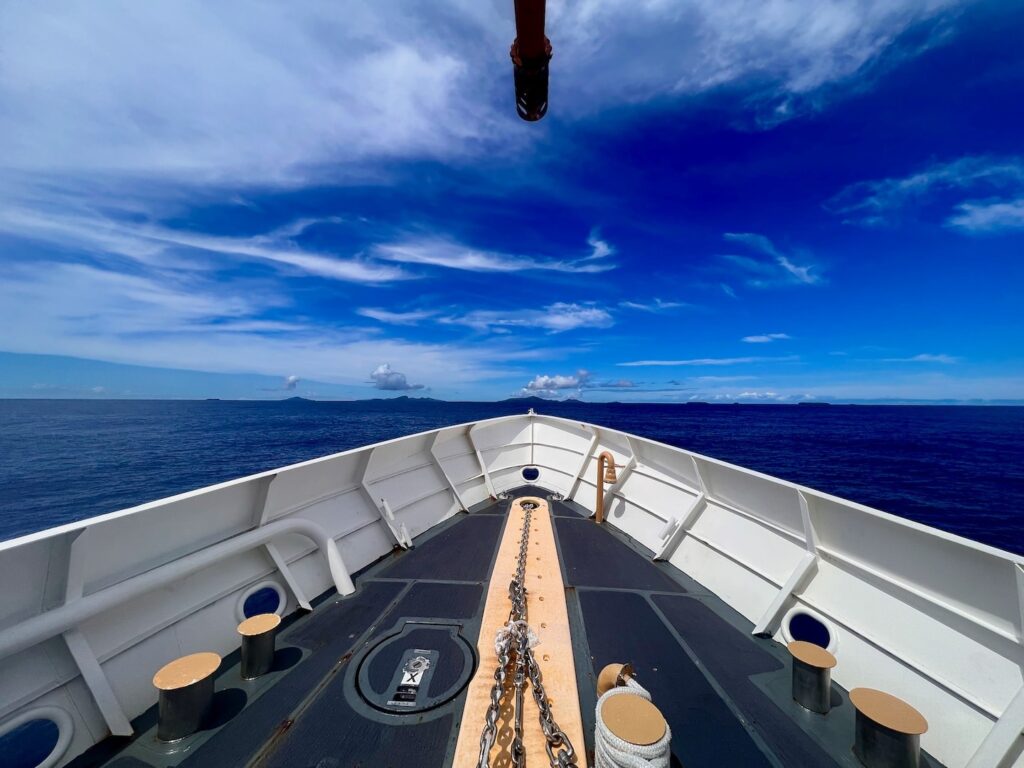
SANTA RITA, Guam — The USCGC Oliver Henry (WPC 1140) crew returned to homeport on Oct. 15 after a 28-day patrol that reinforced the U.S. commitment to sovereignty and resource security in the Federated States of Micronesia Exclusive Economic Zone (EEZ) and beyond.  
 
The mission, which was part of Operation Rematau and the broader U.S. Coast Guard’s Operation Blue Pacific, fortifies the U.S. reputation as a reliable, trusted partner in the region. 
 
Sovereignty and resource security are fundamental components of national and regional stability. Access to vital goods, particularly in remote island nations, hinges on the maritime domains’ secure and lawful use. During the patrol, the Oliver Henry crew dedicated 11 days in the FSM’s EEZ and two days on the high seas, logging 422 total operational hours and sailing 4,986 nautical miles. The team’s presence and surveillance capabilities bolstered maritime domain awareness and effectively upheld regional sovereignty. 
 
“This mission represents another pivotal chapter in the ongoing success story of Operation Rematau and the U.S. Coast Guard’s contribution to a free and open Blue Pacific. We continue to prove that our Service is not just a force for good but a dependable and committed partner in this strategic region’s long-term security and prosperity,” said Capt. Nick Simmons, commander of U.S. Coast Guard Forces Micronesia/Sector Guam, reflecting on the broader objectives. 
 
The crew conducted three observation reports on Chinese-Taipei, Korean, and Japanese-flagged fishing vessels within the FSM EEZ and on the high seas, thus contributing to regional stability and resource protection.  
 
Additionally, the crew delivered new school supplies to communities on two FSM atolls and facilitated the return of the Nukuoro Elementary School principal. The mission ensured the delivery of over 6,000 pounds of supplies to Chuuk and Yap. The supplies include goods from UNICEF like 39 Schools-in-a-Box, 31 Early Childhood Development, and two Recreation Kits so children can play and learn even during emergencies. 
 
Further enhancing partnerships, the crew hosted the U.S. Ambassador to FSM, Jennifer Johnson and newly arrived Foreign Service Officer Amy Gradin in Phonpei. They toured the ship and discussed the invaluable role the U.S. Coast Guard plays in search and rescue and deterrence of illegal, unreported, and unregulated fishing in FSM territorial waters and in the region. The Oliver Henry crew also took embassy personnel underway for area familiarization and atoll surveys. 
 
A unique part of these patrols is the human connection. Lt. Ray Cerrato, the commanding officer of Oliver Henry, emphasized this, stating, “The relationships we’ve built and the lives we’ve touched will last a lifetime. From delivering school supplies to sharing best practices with agency partners, these interactions go beyond mere duty; they embody the human spirit of cooperation and mutual respect.” 
 
About U.S. Coast Guard Forces Micronesia/Sector Guam 
 
U.S. Coast Guard Forces Micronesia/Sector Guam serves as a linchpin for U.S. maritime interests in the region, fostering enduring partnerships with regional allies. The 300-strong team emphasizes maritime safety, security, and stewardship, reinforcing the U.S. Coast Guard’s long-standing reputation as a trusted partner in Blue Pacific. 
 
About USCGC Oliver Henry 
 
USCGC Oliver Henry (WPC 1140) is the 40th 154-foot Sentinel-class Fast Response Cutter named for Oliver T. Henry, Jr., an enlisted African American Coast Guard member first to break the color barrier of a then-segregated Service. Designed for many missions, including search and rescue, national defense, and maritime law enforcement, the Oliver Henry plays a significant role in safeguarding national interests and preserving good maritime governance. 


Navy to Christen and Launch Fleet Replenishment Oiler USNS Robert F. Kennedy

***** 

OCT. 27, 2023 

The Navy will christen and launch the USNS Robert F. Kennedy (T-AO 208) as the newest John Lewis-class fleet replenishment oiler during an 8:00 a.m. PDT ceremony on Saturday, Oct. 28, in San Diego. 

The Honorable Nancy Pelosi, Speaker Emerita, U.S. House of Representatives, will deliver the christening ceremony’s principal address. Remarks will also be provided by the Honorable Carlos Del Toro, Secretary of the Navy, Rear Admiral Brendan McLane, Special Assistant to Commander, U.S. Third Fleet, Mr. Steven Cade, Executive Director, Military Sealift Command, and Mr. Dave Carver, President, General Dynamics NASSCO. The ship’s sponsor is the Honorable Kathleen Kennedy Townsend, eldest daughter of Robert F. Kennedy. 

T-AO 208 is the 4th John Lewis-class fleet replenishment oiler and will be operated by the Navy’s Military Sealift Command. She is the first naval auxiliary ship to bear the name of USNS Robert F. Kennedy, honoring the late U.S. Navy veteran, Robert F. Kennedy. The selection of Robert F. Kennedy as the ship’s namesake, honors the memory of Robert F. Kennedy, the younger brother of John F. Kennedy, who became the 35th President of the United States in 1961. Robert F. Kennedy, served in the U.S. Navy Reserve from 1944-1946. He later served as Attorney General of the United States before resigning in 1964 to become a candidate for the U.S. Senate. In 1965, he was elected to the Senate and served as a Democrat from New York until his death in 1968. 

The John Lewis-class ships are based on commercial design standards and will recapitalize the current T-AO 187-class fleet replenishment oilers to provide underway replenishment of fuel to U.S. Navy and allied partner ships at sea. These ships are part of the Navy’s Combat Logistics Force. 

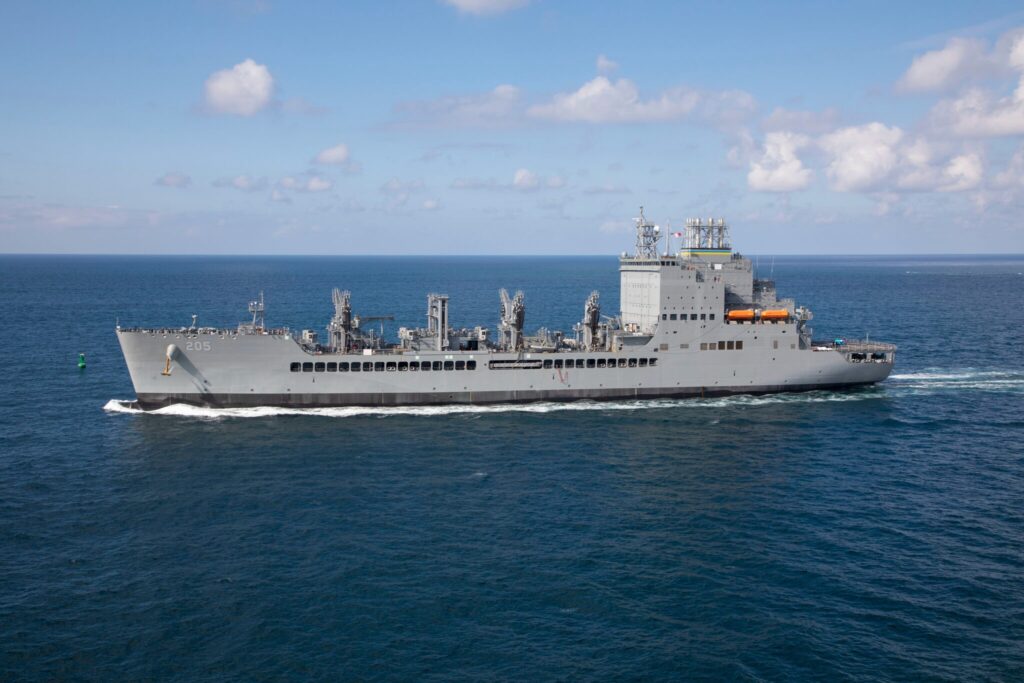
In June 2016, the Navy awarded a $3.2 billion contract to General Dynamics NASSCO in San Diego for the design and construction of the first six ships of the Future Fleet Replenishment Ship, the John Lewis-class. The first of class, USNS John Lewis (T-AO 205), delivered in July 2022 and is currently in her Post-Shakedown Availability. USNS Harvey Milk (T-AO 206) delivered in July 2023 and is conducting some maintenance work in preparation for transit to the east coast. T-AO 207-210 are under construction at General Dynamics NASSCO in San Diego and T-AO 211-213 are under contract. The Navy plans to procure 20 ships of the John Lewis class. 

The ceremony will be live streamed on YouTube. The link becomes active approximately ten minutes prior to the event at 7:50 a.m. PDT. 

Media may direct queries to the Navy Office of Information at (703) 697-5342. More information on the fleet replenishment oiler program can be found at:  https://www.navy.mil/Resources/Fact-Files/Display-FactFiles/Article/2222909/fleet-replenishment-oilers-t-ao/


U.S. Coast Guard releases Arctic Strategic Outlook Implementation Plan

Release from U.S. Coast Guard 

***** 

Oct. 26, 2023 

WASHINGTON – The Coast Guard released the Arctic Strategic Outlook Implementation Plan in Washington Thursday.  

The implementation plan outlines 14 interconnected, action-oriented initiatives the Coast Guard will undertake to execute strategic objectives from the 2019 Arctic Strategic Outlook.  These efforts promote safety, security, stewardship and protect sovereign rights across the Arctic while supporting the National Strategy for the Arctic Region.   

The Coast Guard has long supported joint Arctic operations and exercises and our presence in the Arctic enables the Service to operationalize national strategies, strengthen partnerships and protect regional interests.  

“The Coast Guard is committed to a safe, secure and cooperative Arctic,” said Coast Guard Vice Commandant Adm. Steve Poulin. “Our continued presence strengthens maritime governance and stewardship in the region and is vital to ensuring national security and economic prosperity.”  

The Coast Guard’s mission in the Arctic has endured for more than 150 years, since the inaugural voyage of revenue cutters to Alaska in 1867. Today, the Arctic is experiencing unprecedented levels of environmental, operational and geostrategic stress requiring a collaborative approach to overtake these complex challenges. The Coast Guard’s Arctic Strategic Outlook Implementation Plan embodies this approach by directing actions to safeguard American interests and highlighting the Coast Guard’s prominent leadership role in international organizations responsible for regulating navigation, coordinating search and rescue operations, ensuring vessel safety, enforcing fisheries regulations and responding to environmental pollution incidents throughout the expansive Arctic region.   

The United States is an Arctic Nation, and the Coast Guard continues to serve as the lead federal agency for homeland security, safety and environmental stewardship in the region.   


U.S. Navy Foreign Military Sales Program Accepts Riverine Patrol Boats

Release from Silver Ships 

***** 

Silver Ships completes six riverine patrol boats for the U.S. Navy  

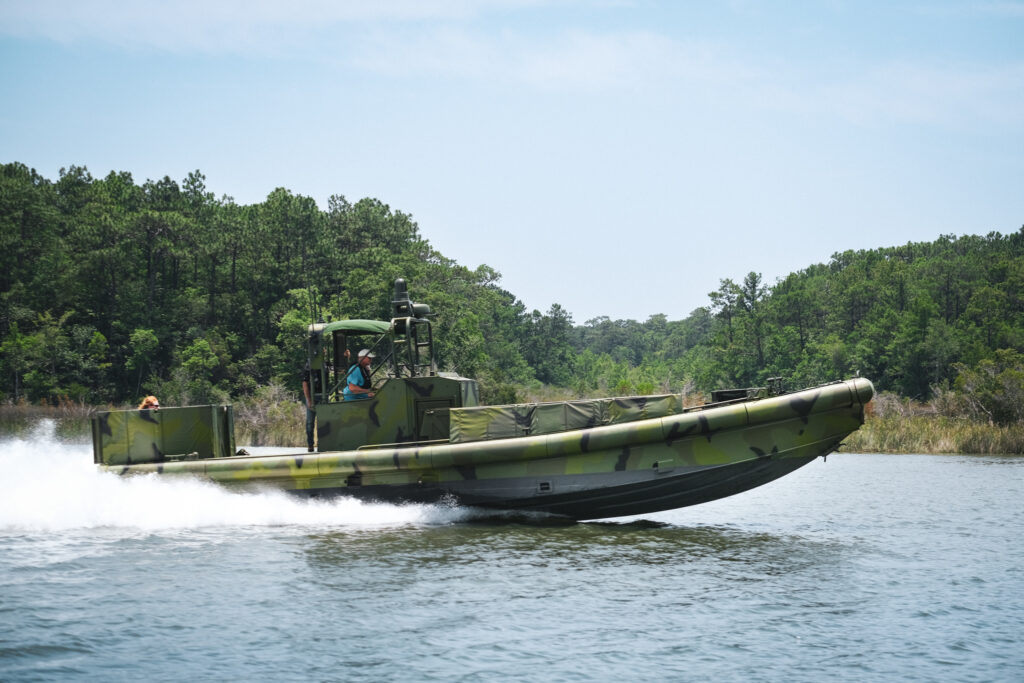
Mobile, Ala. (October 25, 2023) – Silver Ships has completed the construction of six riverine patrol boats (RPB) under a contract award worth $6.12 million from the Naval Sea Systems Command. The vessels were designed and constructed as a part of the United States Navy Foreign Military Sale (FMS) program and will benefit a Pacific region ally. Each RPB was inspected and accepted by the Navy and await overseas shipment.  

The six custom-designed riverine patrol boats are uniquely engineered to successfully operate in shallow and hazardous waters. The rugged, 40-foot center-console patrol boats are powered by twin Yanmar 440 HP engines and Hamilton waterjets. Traveling at more than 30 knots, the boats reach necessary speeds with limited operating noise in order to remain stealthy.  

The boats are armed and armored and have been designed to carry 20 personnel, or a typical crew of six with 14 additional troops and cargo. Riverine patrol boats are used for foreign and joint force operations on river, coastal and open ocean patrol and interdiction duties. Typically, they are used for counter-terrorism and lawlessness but can also be used for humanitarian assistance, medical evacuation, command and control, counter-drug, search and rescue and many other missions. 

 “For more than two decades, Silver Ships has remained committed to providing top quality and highly durable aluminum workboats to the U.S. and foreign militaries. We are proud to provide these RPBs to the Navy’s Foreign Military Sales program that meet the highest quality, performance and durability standards,” said Shawn Lobree, Silver Ships Director of Federal Programs.  

Silver Ships has worked with the U.S. Military for nearly 30 years in creating mission-specific boats. Silver Ships takes pride in our support of the U.S. Military and remains dedicated to meeting all operational needs while offering maximum crew safety and outstanding performance. 


USS Jack H. Lucas (DDG 125) Arrives at Homeport in San Diego

Release from Commander, Naval Surface Force, U.S. Pacific Fleet 

***** 

By Ensign Sarah Beauchamp 

25 October 2023 

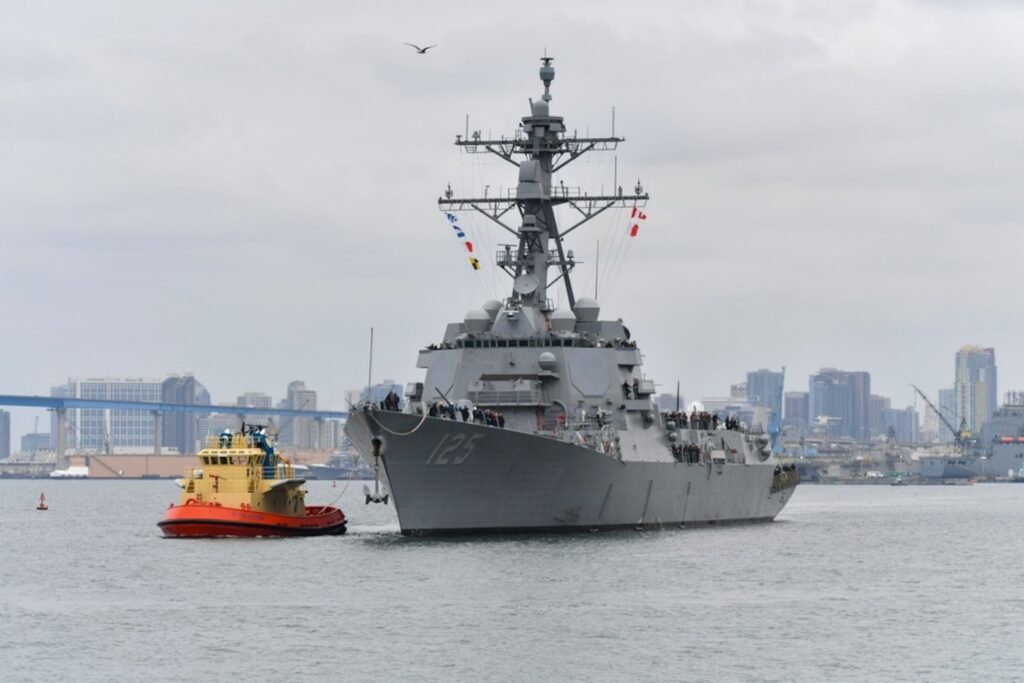
SAN DIEGO, Calif. – The first Flight III Arleigh Burke-class guided-missile destroyer, USS Jack H. Lucas (DDG 125), arrived at its new homeport in San Diego Oct. 25. 
 
The Navy commissioned Jack H. Lucas, Oct. 7, 2023, during a ceremony in Tampa, Florida under the leadership of Carrier Strike Group 11. The destroyer is assigned to U.S. 3rd Fleet. 
 
“I am so proud of all of the Sailors of Jack H. Lucas, who truly embody the indestructible mindset of the namesake,” said Capt. Brett Oster, commanding officer of Jack H. Lucas. “They have worked tirelessly on all qualifications and certifications, setting the bar and allowing the ship to arrive in San Diego to reunite with family and friends on schedule.” 
 
The crew of the Jack H. Lucas successfully completed a safe voyage from Pascagoula, Mississippi, to Tampa while executing critical evolutions to include navigation check ride, engineering drills, and a missile launch using the latest ship-based radar and weapons systems. The ship and crew were welcomed by thousands of guests who were given the opportunity to tour the vessel in anticipation of the commissioning ceremony. 
 
The commissioning ceremony was attended by more than 5,000 guests including family and friends of the crew, the local community of Tampa Bay, and distinguished officials. This event marked a significant milestone for the vessel and her crew and served as a testament to their dedication and hard work. 
 
Following commissioning, the ship continued its journey to the Pacific Ocean by successfully transiting the Panama Canal and making stops in Rodman, Panama and Manzanillo, Mexico. 
 
“I am immensely proud of our incredibly talented crew, taking the ship underway a week before conducting two sea and anchors in Tampa and completing a skillful Panama Canal transit while en route to our homeport San Diego,” said Cmdr. Matthew Kleine, executive officer of Jack H. Lucas. 
 
Upon arrival to San Diego, Jack H. Lucas was given a warm welcome from 300 friends and family members as it pulled into its new homeport for the first time. The reception was a testament to the strong bonds forged between the crew and their loved ones throughout their voyage. 
 
In the coming year, the ship will undergo a series of rigorous tests to evaluate its combat readiness and effectiveness. These tests will serve as a critical assessment of the vessel’s combat capability and will ensure that the Flight III variant destroyer is ready to serve in the Navy. 
 
Built by Huntington Ingalls Industries in Pascagoula, Mississippi, Jack H. Lucas was launched on June 4, 2021, and delivered to the U.S. Navy March 26, 2022. The ship was commissioned in Port of Tampa, Florida on Oct. 7, 2023, and then transited to her homeport at Naval Base San Diego, California. 
 
Arleigh Burke-class Destroyers are the backbone of the U.S. Navy’s surface fleet. These highly capable, multi-mission ships conduct a variety of operations, from peacetime presence to national security providing a wide range of warfighting capabilities in multi-threat air, surface, and subsurface. 
 
An integral part of U.S. Pacific Fleet, U.S. 3rd Fleet operates naval forces in the Indo-Pacific and provides the realistic, relevant training necessary to execute our Navy’s role across the full spectrum of military operations – from combat operations to humanitarian assistance and disaster relief. U.S. 3rd Fleet works together with our allies and partners to advance freedom of navigation, the rule of law, and other principles that underpin security for the Indo-Pacific region. 


CAES Awarded Production Contract from US Navy for New AN/ALQ-99 Low Band Transmitter

Release from CAES 

***** 

OCTOBER 25, 2023 

Arlington, Va. – CAES, a leading provider of mission-critical advanced electronics, has been awarded a contract from the U.S. Navy for production of the AN/ALQ-99 Low Band Consolidation (LBC) transmitter. Total funding through 2025 to support both the U.S. Navy and Royal Australian Air Force (RAAF) is expected to exceed $55 million, if all options are exercised. This award also includes new special test equipment and follows a contract for the initial pre-production phase of the LBC. 

“We are proud of our longstanding partnership with the U.S. Navy on next-generation electronic warfare technology,” said Mike Kahn, CAES president and CEO. “The LBC brings critical upgrades to the AN/ALQ-99 Low Band Transmitter (LBT) to combat evolving and emerging threats.”  

The LBC is a modification to the AN/ALQ-99 LBT. CAES has a proven history of developing, producing and delivering LBTs. CAES provides these components for the U.S. Navy and RAAF EA-18G Growler Airborne Electronic Attack fleets. These transmitters played a critical role in protecting the lives of U.S. and coalition forces during Operation Iraqi Freedom, Operation Enduring Freedom and across the Global War on Terror. 

Having manufactured more than 850 transmitters across the last several decades, CAES continues to deliver products at the forefront of U.S. Navy and RAAF’s EA-18G operations worldwide. CAES transmitters are designed, built and tested to provide high power across multiple octave bandwidths, which allows them to withstand the demanding and severe environment of maritime, Tactical Aviation aircraft operating from U.S. Navy aircraft carriers. They also provide high reliability with low maintenance costs. 


US Navy and MDA Successfully Intercept Multiple Targets in Integrated Air and Missile Defense Test 

Release from PEO Integrated Warfare Systems Public Affairs and MDA Public Affairs 

***** 

Oct. 26, 2023 

By PEO Integrated Warfare Systems Public Affairs and MDA Public Affairs 

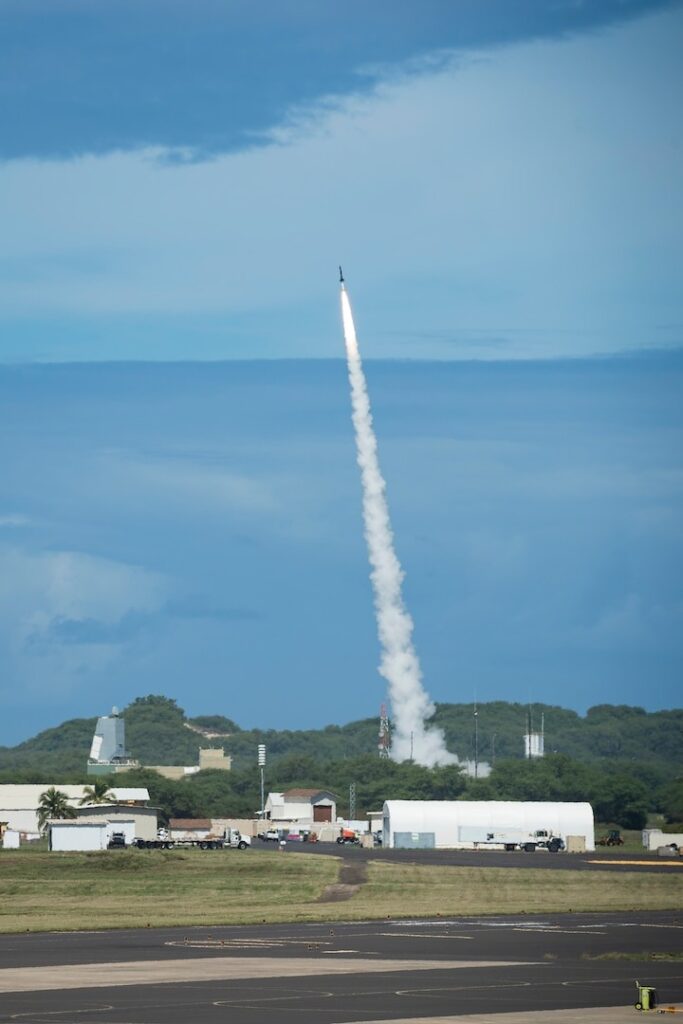
U.S. Navy Arleigh Burke-class destroyer USS CARL M. LEVIN (DDG 120) successfully intercepted multiple targets in an Integrated Air and Missile Defense (IAMD) test executed by the U.S. Navy Program Executive Office Integrated Warfare Systems and the Missile Defense Agency (MDA) from the Pacific Missile Range Facility, Kauai, Hawaii. 

The joint test, known as Vigilant Wyvern, demonstrated the capability of a ballistic missile defense-configured Aegis ship to detect, track, engage and execute intercepts of two short-range ballistic missile (SRBM) targets while concurrently demonstrating an Anti-Air Warfare (AAW) engagement of two subsonic anti-ship cruise missile drone targets. 

This realistic, live-fire raid scenario represented one of the largest IAMD events ever conducted in the U.S. Indo-Pacific Command Area of Responsibility and demonstrated for the first time a concurrent Ballistic Missile Defense and Anti-Air Warfare raid. 

The test, designated Flight Test Aegis Weapon System-48 (FTM-48) by the MDA, demonstrated the IAMD engagement of two SRBM targets with two Standard Missile 3 Block IA (SM-3 Blk IA) interceptors, and engagement of two subsonic anti-ship cruise missile drone targets with four SM-2 Blk IIIA interceptors. 

“The success of Vigilant Wyvern is a huge milestone,” said RDML Seiko Okano, Program Executive Officer Integrated Warfare Systems. “The Navy and MDA successfully demonstrated the tremendous capability of Aegis ships defending against an IAMD raid scenario. This test event is the first of its kind and an excellent example of collaboration between organizations, further progressing a unified mission to increase capability. Congratulations to the joint test team and the ship’s crew for an excellent event.” 

As part of the IAMD Priority Mode, ships can integrate classic air defense with new discrimination and tracking capabilities to defend against coordinated, simultaneous missile attacks. 

“The success of this joint test represents a critical step in defending against multiple targets in a realistic raid scenario,” said RDML Douglas Williams, MDA Acting Director. “The Aegis weapon system successfully defeated multiple concurrent attacks, showcasing the incredible versatility of both this system and the crew of the USS CARL M. LEVIN. My congratulations to the entire test team in achieving this milestone.” 

PEO IWS and the MDA jointly executed Vigilant Wyvern/FTM-48. Targets were launched from the Pacific Missile Range Facility, located on Kauai, Hawaii. 

Additional information about the Navy’s AEGIS Integrated Combat System and Guided Missile Destroyers can be found at www.navy.mil and additional information about all elements of the U.S. Missile Defense System can be found at www.mda.mil


SM-6 Missile Fired from Deck of LCS  

Release from Commander, Naval Surface Forces 

***** 

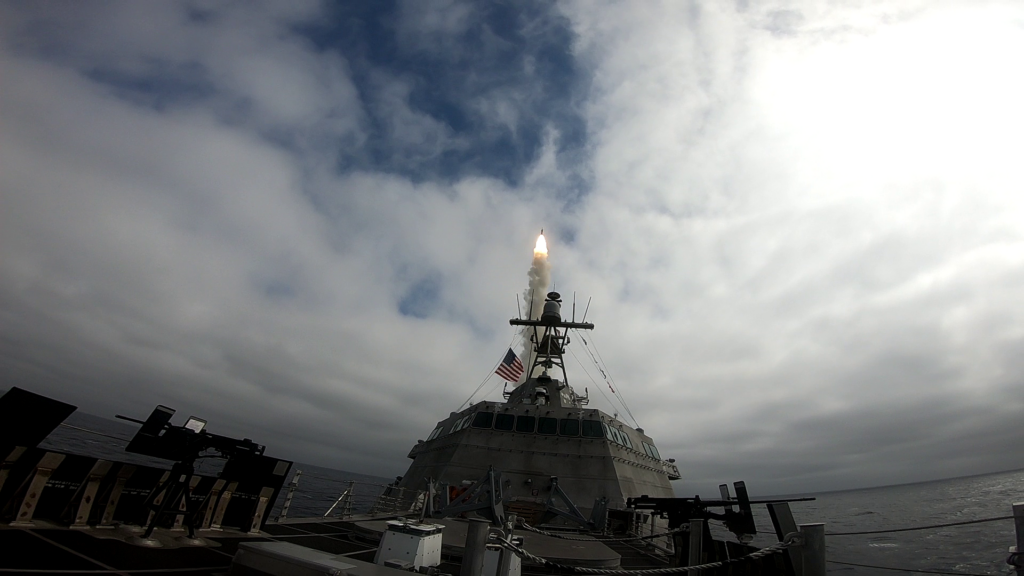
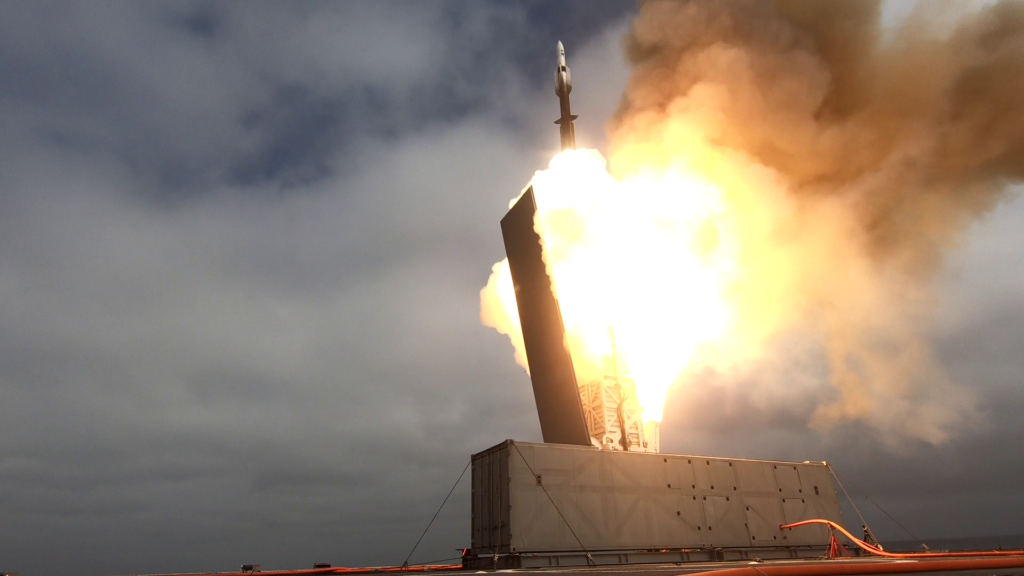
SAN DIEGO — USS Savannah (LCS 28) conducted a live-fire demonstration Oct. 24 in the Eastern Pacific Ocean utilizing a containerized launching system that fired an SM-6 missile at a designated target, according to Cmdr. Arlo Abrahamson, spokesperson for the Naval Surface Forces. The exercise demonstrated the modularity and lethality of Littoral Combat Ships and the ability to successfully integrate a containerized weapons system to engage a surface target. The exercise will inform continued testing, evaluation, and integration of containerized weapons systems on afloat platforms. 


Unmanned Surface Vessel Division Arrives in Sydney 

Release from U.S. 7th Fleet Public Affairs 

***** 

Oct. 25, 2023 

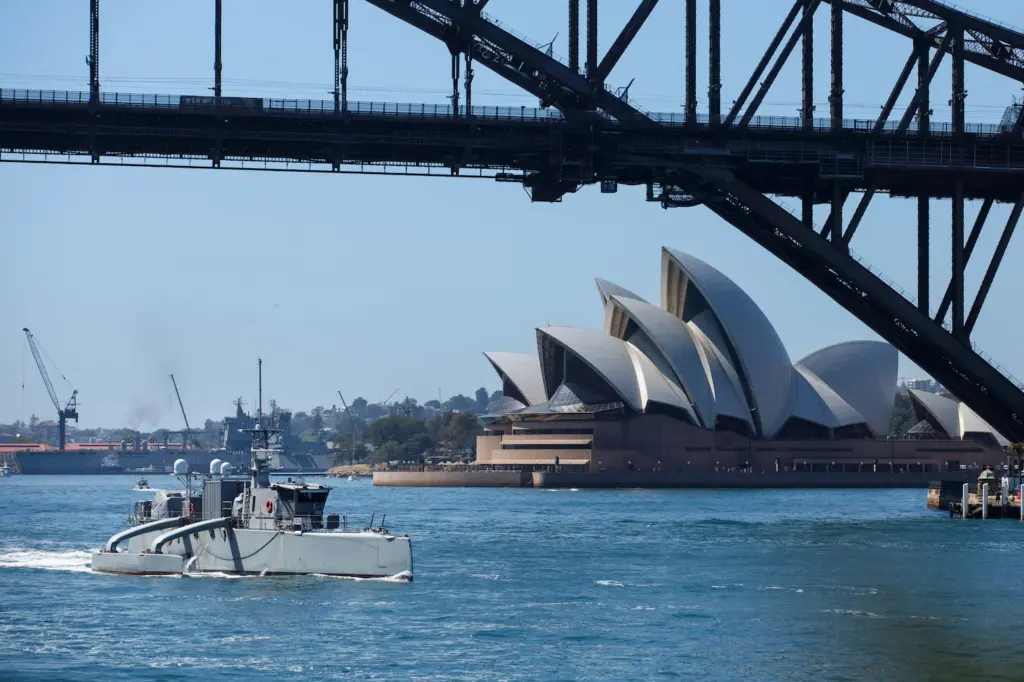
SYDNEY   –  Unmanned Surface Vessel Division One’s (USVDIV-1) unmanned surface vessels (USVs) Ranger, Mariner, Seahawk and Sea Hunter arrived in Sydney, Australia, for a scheduled port visit October 24 ahead of their participation in bilateral exercises with the Royal Australian Navy (RAN). 

During the exercises, USVDIV-1 will collaborate with the RAN on testing unmanned systems in concert with industry partners to advance a shared understanding of these capabilities to meet strategic requirements. 

“I look forward to furthering the strong relationship our navies have worked hard to create,” said U.S. Navy Commander Jeremiah Daley, commanding officer of USVDIV-1. “Our shared vision of a free and open Indo-Pacific relies upon developing these advanced capabilities that will create the asymmetric warfighting advantages to deter aggression in contested environments.” 

Along with the USVs, the Independence-variant littoral combat ship USS Oakland also arrived in Sydney. All five U.S. Navy vessels are currently employed in the ongoing U.S. Pacific Fleet exercise Integrated Battle Problem (IBP) 23.2 to develop concepts of operations for future unmanned programs of record and further integrated USVs into routine operations alongside manned surface combatants. 

“In order to develop a program as different and disruptive as small, medium, and large USVs, integrating with allies and partners early and consistently in its development is key to our success,” said Daley. “Through exercises like IBP 23.2 and Autonomous Warrior, we continue to learn from experience in an operational theater and deepen our interoperable strength.” 

USVDIV-1’s mission is to test, evaluate and operate in support of integrating USVs into fleet operations and provide recommendations to Navy leadership on the development of unmanned systems. 

U.S. 7th Fleet is the U.S. Navy’s largest forward-deployed numbered fleet, and routinely interacts and operates with allies and partners in preserving a free and open Indo-Pacific region. 


U.S. Coast Guard Cutter Vigilant returns from Caribbean patrol after interdicting 5,600 pounds of illicit drugs 

Release from U.S. Coast Guard Atlantic Area 

***** 

Oct. 24, 2023 

CAPE CANAVERAL, Fla. – The crew of the U.S. Coast Guard Cutter Vigilant (WMEC 617) returned home to Cape Canaveral, Tuesday, following a 29-day patrol in the Central Caribbean and Florida Straits. 

Patrolling in support of Joint Interagency Task Force-South, Vigilant worked alongside other Coast Guard cutters, Department of Defense and Department of Homeland Security units, and international partners to conduct counter-drug operations.  

During the patrol, Vigilant’s crew disrupted illegal narcotics smuggling, interdicting more than 5,600 pounds of illicit drugs. While in theater, Vigilant interdicted five drug-smuggling vessels and apprehended eight suspected traffickers, contributing directly to U.S. Coast Guard objectives to combat transnational criminal organizations. 

Vigilant operated as the Central Tasking Unit coordinating international and other asset movement to interdict suspected drug smuggling vessels, which strengthened ties with international partners and promoted regional stability and security. 

In addition, Vigilant rescued 12 Cuban migrants in an unseaworthy vessel 120 nautical miles south of Cuba. Once aboard Vigilant, the crew provided the migrants with food, water, shelter, and medical aid until they were repatriated. 

 “I’m extremely proud of our crew and the important lifesaving and critical counter-narcotic missions that we were able to perform on this patrol,” said Cmdr. Jon Potterton, the commanding officer of Vigilant. “It was excellent that we were able to strengthen our domestic and international partnerships and work together to make the world a safer place.” 

Vigilant is a 210-foot Reliance-class medium endurance cutter. The cutter’s primary missions are counter-drug operations, migrant interdiction, enforcement of federal fishery laws, and search and rescue in support of U.S. Coast Guard operations. The medium endurance cutters fall under the command of the U.S. Coast Guard Atlantic Area. Based in Portsmouth, Virginia, U.S. Coast Guard Atlantic Area oversees all Coast Guard operations east of the Rocky Mountains to the Arabian Gulf. In addition to surge operations, Atlantic Area also allocates ships to deploy to the Caribbean and Eastern Pacific to combat transnational organized crime and illicit maritime activity. 

For information on how to join the U.S. Coast Guard, visit GoCoastGuard.com to learn about active duty, reserve, officer, and enlisted opportunities. Information on how to apply to the U.S. Coast Guard Academy can be found here