Koa Moana Marines Host Puma Training for Palau Maritime Law Enforcement

KOROR, PALAU 

09.14.2023 

Story by Staff Sgt. Courtney White 

1st Marine Logistics Group   

U.S. Marines with Task Force Koa Moana 23 concluded the Task Force Koa Moana RQ-20B Puma Training Course with a graduation ceremony at the Palau Joint Operations Center, Bureau of Maritime Security and Fish & Wildlife Protection, Koror, Palau, Sept. 14, 2023.

 
The three-week Marine-led course taught 11 Palauan Maritime Law Enforcement Officers how to use the RQ-20B Puma drone, which is an unmanned aircraft system used for surveillance and intelligence gathering. 
 
“Originally, we were going to just teach them how to fly the Puma,” said Staff Sgt. Alex Lane, a native of Rockford, Illinois and the course supervisor. “But, we turned it into a train-the-trainer; we train the Palauans and then they teach their fellow Palauans how to accurately operate the drone during their operations at sea and also here in their homeland of Palau.” 
 
According to Lane, the students learned how to deal with maintenance issues as well as how to fly, launch and land the Puma. 
 
“They were five-day instructional weeks, where we would be doing one to two days of classroom work,” said Lane. “The third day would be us flying it at the pier on land, and then the following two days would be us flying it off the boat. We would take it about a mile out and they are able to practice while the boats are moving, so they can get used to how they would normally use it in a maritime domain.” 
 
The Palauan Maritime Law Enforcement Officers have had RQ-20B Pumas for approximately two years, but within the first year, they lost a majority of their operators to other job capacities and have not had anyone trained to fly them recently. 
 
“We came out here and they had operators who had no knowledge and no experience,” said Lane. “Within just five days, they were full-fledged operators. The next week they were teaching us as the instructors to see where their knowledge was at. Then the next week, they were teaching their fellow Palauans. For individuals who had no knowledge of how to fly a drone, they picked it up so fast. I was extremely impressed with them.” 
 
The goal of the course is to enable the officers to use the Puma system on every single operation that they will embark on. 
 
“They will be using it for search and rescue operations and as a deterrent for suspicious vessels,” said Lane. “They can fly it near them and it will be like ‘hey, this is Palau, you can’t come into our water.’ It is also the same for illegal, unregulated or unreported fishing. It will be a better reconnaissance and surveillance asset for them. They will be able to see these wrong doings and be able to get a clear picture of it and more information to relay to the nation of Palau. It makes everyone’s job easier.” 
 
According to the Marine instructors, the students picked up on the skills quickly and were able to proficiently conduct operations. 
 
“I think it went extremely well; we learned so much about these new technologies that we didn’t have and I think it will be very useful for us to use and utilize during our trips and for surveillance,” said Monique Hideo, a Police Officer 2 at the Palau Division of Maritime Security. “The Marines have so much knowledge about drones. It was a great experience to learn under people who really know their stuff. The Marines were amazing at making us feel confident. I would say if they weren’t there to teach us, we would be less likely to be confident behind the controller.” 
 
During the training, the students would be designated as a mission operator or as a vehicle operator and would have practical application exercises. 
 
“I would say the best part was actually having the drones in the air,” said Hideo. “You could just imagine all the good things it could do when an emergency actually happens, because all of these features would be so helpful.” 


Targeting Capability a Priority for Navy’s Triton UAV 

****** 

By Richard R. Burgess, Senior Editor

ARLINGTON, Va. — Equipping the Navy’s MQ-4C Triton high-altitude, long-endurance unmanned aerial vehicle (UAV) with a targeting capability is a priority that would enhance the system’s capabilities to support distributed maritime operations, the UAV’s builder said.  

The MQ-4C with the multi-intelligence Integrated Functional Capability 4 (IFC-4) achieved Initial Operational Capability (IOC) earlier this month when Unmanned Patrol Squadron 19 (VUP-19) deployed a detachment to Guam to establish an orbit. The squadron had deployed a two-aircraft detachment to Guam in 2020 for Early Operational Capability (EOC) with the IFC-3 configuration.  

Rho Cauley Bruner, Northrop Grumman’s Triton program director, said in an interview with Seapower that her program office is now “fully immersed in delivering [the IFC-4] configuration” in both retrofits to earlier-produced Tritons and “now we’re at that stage in the production line where we’re building the IFC-4 configuration from the ground up.”   

“As we look to the future, one of the things that’s really important to us is to have the system be as readily modifiable to accommodate threats as they develop and technologies as they mature, so, in partnership with the U.S. Navy, we continue to execute our strategy for advanced development,” Bruner said. “That would enable advanced capabilities insertion and mission expansion to keep pace with the threat. 

Triton sensors and other mission systems were deployed on a surrogate aircraft—a flying test bed—for targeting missions during Exercise Northern Edge. 

“The goal of that was to demonstrate persistent long-range targeting capability,” Bruner said. “That demo was done around the Gulf of Alaska and really did demonstrate that Triton has incredible potential to enhance that Distributed Maritime Operations concept that has been evolving over the last several years. 

“Adding the targeting capability to Triton [is] going to be a priority for our customer,” she said. 

The Navy’s program of record currently is 27 MQ-4Cs, including the three development aircraft (including one formerly owned by Northrop Grumman for development), the two initial IFC-3 EOC aircraft, and 22 production versions. Australia, a key partner in the Triton program, is procuring four Tritons for the Royal Australian Air Force. 

Bruner said that “we believe that six to seven Tritons would be optimal to help Australia conduct surveillance in its areas of interest.” 

The U.S. Navy plans to establish three orbits with its Triton UAV force and establish a second squadron, VUP-11, in fiscal 2026.  


Crowley, BWXT Debut Nuclear Power Generation Vessel Concept

Release from Crowley  

***** 

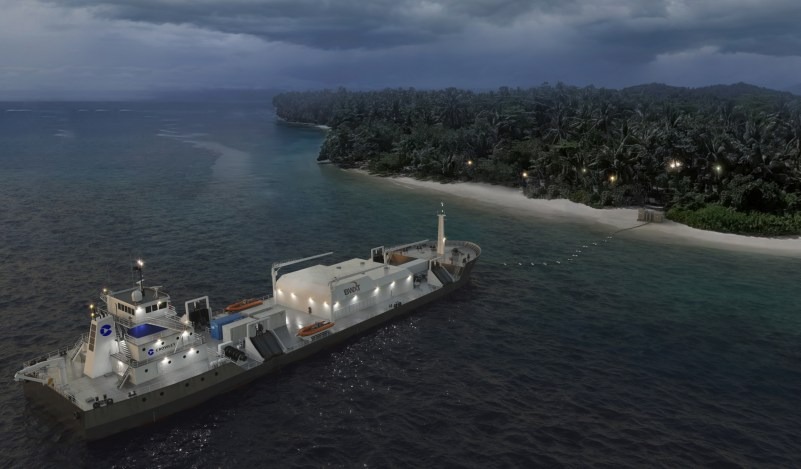
(JACKSONVILLE, Fla.; Sept. 20, 2023) – Global shipping and energy supply chain leader Crowley has teamed with nuclear power leader BWX Technologies, Inc. (NYSE: BWXT) through a memorandum of understanding for a ship concept that has the potential to generate alternative, zero-carbon emission energy for defense and disaster needs by including a microreactor on board. 

The new memorandum of understanding with BWXT’s Advanced Technologies subsidiary will allow both companies to jointly pursue and develop opportunities relative to the design, engineering and development of new shallow-draft hull ships that will supply small-scale nuclear energy to shoreside locations. The new ships would feature the latest technology available for factory fabricated microreactors, readily deployed into a shipyard configuration for ease of installation on the vessel. The onboard power plant would supply energy to shore facilities, such as military bases in remote island locations, backup utility grids after disasters, and provide power in other scenarios where traditional electricity sources are damaged or not possible. 

The new vessel concept envisions a 378-foot ship that pulls from the logistics and marine capabilities of Crowley, a longtime operator with in-house vessel design by its Crowley Engineering Services, and the nuclear capabilities of BWXT, a leading supplier of nuclear components, fuel and services to the U.S. government at the highest levels of safety and security for more than 60 years. Both Crowley and BWXT are based in the United States and have been in business for more than a century. 

“Our cooperation with BWXT will move Crowley for the first time into the nuclear energy sector, a key part of our commitment to sustainable, alternative energy sources. This concept supports the U.S. Department of Energy’s goal of maintaining U.S. leadership in nuclear energy technology as well as many the U.S. Department of Defense’s strategic goals for operational energy,” said Shiju Zacharia, senior vice president and general manager, Crowley Government Solutions. 

This new vessel concept pairs traditional propulsion while carrying a modular reactor between 5 and 50 megawatts that can be activated upon arrival at the destination and be deactivated and transported after the power supply is discontinued. Buoyed power delivery cables will enable the ships to deploy energy connections to shore. Shallow draft hulls allow the vessels to maneuver to strategically deliver power for military activities or if disasters limit harbor access. 

“We are excited to work alongside Crowley to leverage our ongoing reactor development and demonstration programs, advancing nuclear technology into new and novel markets to deliver zero carbon emissions energy generation to strategic locations,” said Joe Miller, president of BWXT Advanced Technologies LLC. 


General Dynamics Electric Boat awarded $517 million for Virginia-class submarine parts

Release from General Dynamics Electric Boat 

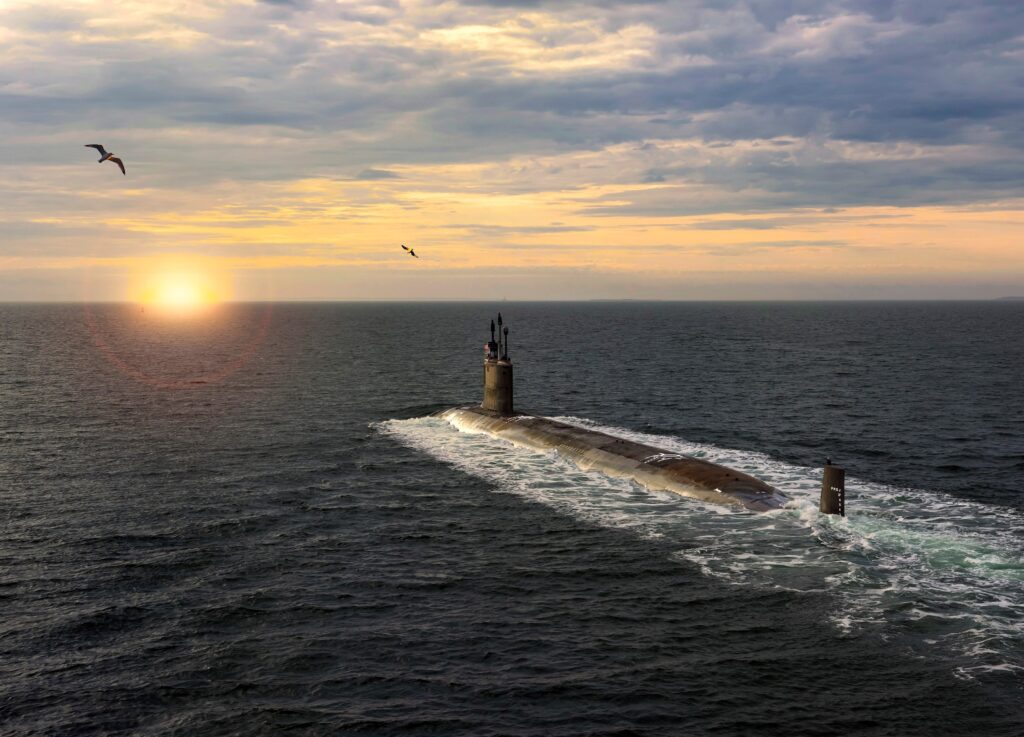
GROTON, Conn. (Sept. 20, 2023) – General Dynamics Electric Boat, a business unit of General Dynamics (NYSE: GD), announced today it was awarded a $517.2 million delivery order against a previously issued basic ordering agreement for procurement and delivery of initial Virginia-class attack submarine spare parts to support maintenance availabilities. Work will be performed in Groton and Pawcatuck, Connecticut. 

“The shipbuilders of Electric Boat are proud to continue our role providing lifecycle maintenance support to the U.S. Navy’s operational submarine fleet in keeping with our mission to provide sailors with the advantage that helps protect our nation,” said Kevin Graney, president of General Dynamics Electric Boat.  

General Dynamics Electric Boat designs, builds, repairs and modernizes nuclear submarines for the U.S. Navy. Headquartered in Groton, Connecticut, the company employs approximately 21,000 people. More information about General Dynamics Electric Boat is available at gdeb.com


Australia Awards L3Harris AUD$328 Million Maritime Underwater Tracking Range Contract 

Release from L3Harris 

***** 

PERTH, Australia, Sept. 20, 2023 — The Australian Department of Defence awarded L3Harris Technologies (NYSE:LHX) a contract, valued at up to AUD$328 million, to deliver new Maritime Underwater Tracking Ranges (MUTR) for the Royal Australian Navy (RAN). 

The SEA1350 Phase 3 MUTR program will provide undersea warfare support including a sub-surface tracking capability to aid current and future Australian Defence Force assets, warfighting tactics and proficiency. This program also enables sovereign readiness by safeguarding Australia’s maritime approaches and sea lines of communication. 

“We’re committed to growing Australian defence capabilities by leveraging our global technology and experience to develop Australia’s sovereign maritime underwater tracking range approach,” said Alan Clements, Corporate Vice President and Australia Country Executive, L3Harris. “This is an important competence now and into the future as we continue to modernize and enhance maritime platforms and systems.” 

Through a series of sensors, the tracking ranges will capture and relay information on the location and movement of assets that are operating within the tracking field. The MUTR will facilitate exercises in deep ocean and littoral waters, involving surface and sub-surface assets simultaneously. The ranges are integral to the Commonwealth being able to swiftly test and evaluate the readiness of platforms and their weapon systems, especially in support of Australia’s strategic shipbuilding program. 

L3Harris will build the MUTR in Western Australia and will provide the RAN with sub-surface tracking capability and optimized preparedness. The MUTR will support Australia’s emphasis on anti-submarine warfare capability and enable littoral test and evaluation enhancements through the next decade. 


French-Led Combined Task Force 150 seized more illegal narcotics in the Arabian Sea

Release from U.S. Naval Forces Central Command Public Affairs  

***** 

By U.S. Naval Forces Central Command Public Affairs | September 20, 2023 

MANAMA, Bahrain — On September 7, UK warship HMS Lancaster (F229), operating in support of the French-led Combined Task Force (CTF) 150 seized more than 450kg of illegal drugs including heroin and hashish in the Arabian Sea. 

With a street value of approximately $9.5 million this is the first narcotics seizure since the French Navy took over command of CTF 150 from the UK in July. The Combined Maritime Forces (CMF) remain committed to disrupting criminal and terrorist activities by restricting their freedom of maneuver in the maritime environment. 

Capt Yannick Bossu, CTF 150 Commanding officer said, “This seizure demonstrates once again the operational effectiveness of CTF 150 and illustrates the UK and France’s commitment to maritime security alongside their regional and international partners.” 

Cmdr Chris Sharp, HMS Lancaster Commanding Officer remarked, “This success again demonstrates how international partners can work together in stopping illegal maritime activity which funds terrorist activity. This was a great success shared by all those involved.” 

CTF 150 is one of the five operational forces of CMF, a 38-nation maritime partnership headquartered in Bahrain. CMF strengthens the maritime security in this strategic area, by countering activities that finance terrorism and international crime. This is the twelfth time that France commanded CTF 150. 

 
https://www.cusnc.navy.mil/


Australia Announces Procurement of Fourth MQ-4C Triton UAV

By Richard R. Burgess, Senior Editor

ARLINGTON, Va.—The Australian Defence Force (ADF) will procure a fourth MQ-4C Triton high-altitude, long-endurance unmanned aerial vehicle UAV), the Australian government announced in a Sept. 19 release.

The Triton’s builder, Northrop Grumman Corporation, is scheduled to deliver Australia’s first Triton and its ground and support systems in 2024. The UAVs will be operated from RAAF Tindal, in the Northern Territories by 9 Squadron, which will be headquartered RAAF Edinburgh, South Australia. 

“Defence Industry Minister Patna Conroy said the purchase of the additional Triton will enhance operations from Australia’s northern bases, a priority under the Defence Strategic Review,” the release said. 

Northrop Grumman continues production of the latest configuration of the Triton, the multi-intelligence Integrated Functional Configuration 4 (IFC-4) for the U.S. Navy. Earlier this month, the U.S. Navy declared Initial Operational Capability for the Triton, which has been deployed to Guam to establish its first orbit. The Triton deployed to Guam in 2020 for Early Operational Capability. The Navy’s program of record for the Triton calls for 27 aircraft, including the development aircraft. 

Australia also plans to upgrade its fleet of 14 P-8A Poseidon maritime patrol aircraft between 2026 and 2030 with “enhancements to anti-submarine warfare, maritime strike and intelligence collection capabilities,” the release said. 


US Coast Guard Cutter Thetis nabs $70 million in illegal narcotics during 55-day patrol

Release From USCG News

***** 

KEY WEST, Fla. – The crew of U.S. Coast Guard Cutter Thetis (WMEC 910) returned home to Key West, Friday, following a 55-day patrol in the Western Caribbean Sea and Eastern Pacific Ocean. 

Patrolling in support of Joint Interagency Task Force South, Thetis worked alongside other Coast Guard cutters and U.S. partners to conduct counterdrug operations and fight transnational criminal organizations with the assistance of an embarked aviation detachment from the Coast Guard Helicopter Interdiction Tactical Squadron. 

While underway, Thetis seized approximately $70 million worth of illegal narcotics over the course of two counterdrug operations. During one case, Thetis crew members apprehended three suspected drug traffickers. In another case, collaboration with a U.S. Customs and Border Protection maritime patrol aircraft led to the recovery of approximately 5,325 pounds of illegal narcotics by the Thetis’ pursuit team. 

“These cases highlight the need for Coast Guard presence in these regions to combat the illegal trafficking of drugs and emphasizes the operational capabilities of our platform and crew,” said Cmdr. Gavin Garcia, the commanding officer of Thetis. “I am extremely proud of our crew’s dedication and operational achievements during this patrol.”   

Thetis is a 270-foot, Famous-class medium-endurance cutter. The cutter’s primary missions are counterdrug operations, migrant interdiction, enforcement of federal fishery laws as well as search and rescue. 

Medium-endurance cutters fall under the command of the U.S. Coast Guard Atlantic Area in Portsmouth, Virginia. Coast Guard Atlantic Area oversees all Coast Guard operations east of the Rocky Mountains to the Arabian Gulf. In addition to surge operations, Atlantic Area also allocates ships to deploy to the Caribbean and Eastern Pacific to combat transnational organized crime and illicit maritime activity. 


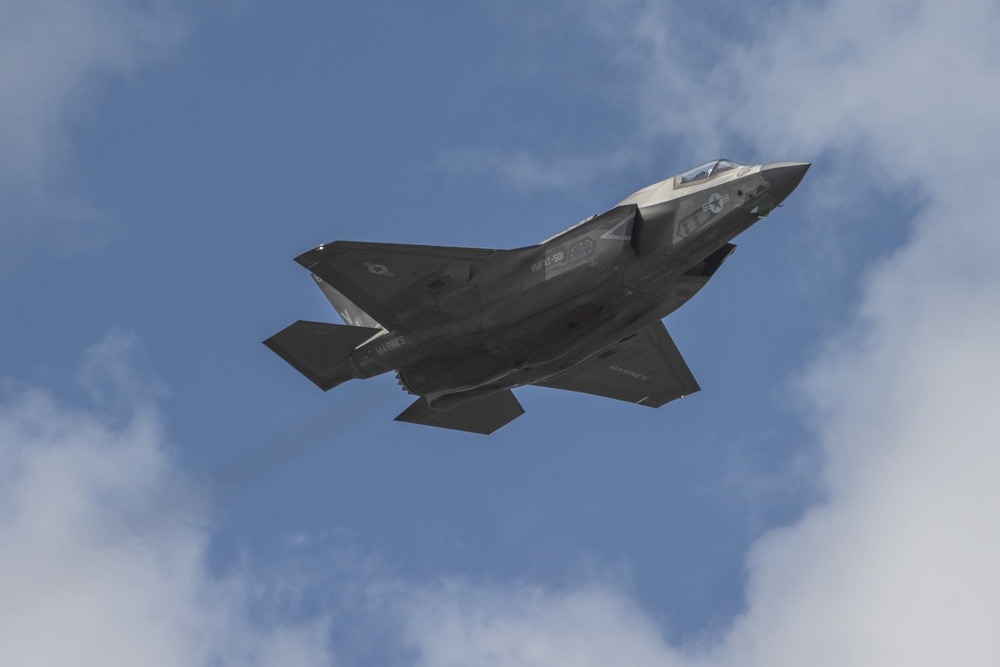
JB Charleston, MCAS Beaufort search-and-recovery team locates F-35B debris field

Release from 2nd Marine Aircraft Wing 

****** 

JOINT BASE CHARLESTON, S.C. – Personnel from Joint Base Charleston and Marine Corps Air Station Beaufort, in close coordination with local authorities, have located a debris field in Williamsburg County.  

The debris was discovered two hours northeast of Joint Base Charleston.  

Teams from Joint Base Charleston, Marine Corps Air Station Beaufort, the 2nd Marine Aircraft Wing out of MCAS Cherry Point, Navy Region Southeast, the FAA, the Civil Air Patrol, as well as local, county, and state law enforcement across South Carolina have been working together to locate the U.S. Marine Corps F-35B.  

Members of the community should avoid the area as the recovery team secures the debris field.  

JB Charleston transferred the incident command to the U.S. Marine Corps on the evening on Sept. 19, as they began the recovery process.  

The mishap is currently under investigation, and we are unable to provide additional details to preserve the integrity of the investigative process.  

We would like to thank all of our mission partners, as well as local, county, and state authorities, for their dedication and support throughout the search and as we transition to the recovery phase.  


New ocean mapping center expands NOAA, University of New Hampshire partnership  

By NOAA Communications, September 19, 2023 

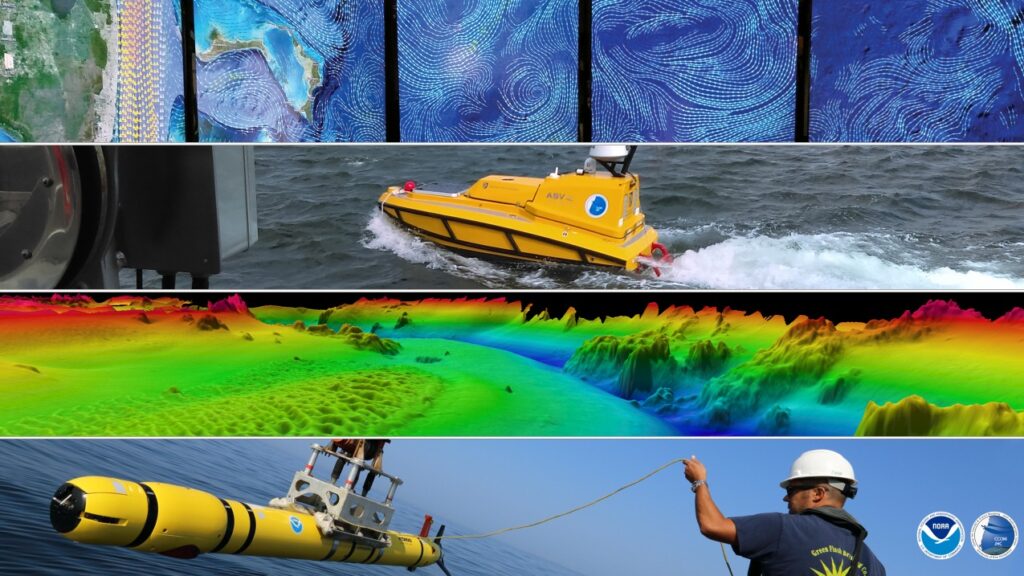
NOAA and the University of New Hampshire (UNH) are expanding a 24-year ocean and Great Lakes mapping partnership through the creation of a new Center of Excellence for Operational Ocean and Great Lakes Mapping. 

“NOAA and UNH have a long history of collaborating to advance the latest technologies and tools to map our ocean, coasts and Great Lakes — a cornerstone of the blue economy,” said Rick Spinrad, Ph.D., NOAA Administrator. “Our continued partnership on the Center of Excellence will help build a workforce ready to tackle the mapping challenges of the future, and further our understanding of our changing ocean and coasts.” 

“The University of New Hampshire’s world-class Center for Coastal and Ocean Mapping and Joint Hydrographic Center has led the way for more than two decades in ocean mapping, helping ensure safe marine transportation and understanding coastal hazards. This leadership is affirmed by NOAA locating a new Center of Excellence for Operational Ocean and Great Lakes Mapping on UNH’s campus. With this $8 million NOAA grant I helped secure, New Hampshire’s ongoing research and training programs will remain ahead of the curve in this leading field,” said Senator Jeanne Shaheen, chair of the Senate Appropriations subcommittee that funds NOAA.  

The Center of Excellence is funded through $10 million in NOAA’s FY 2023 budget, and will complement existing research, technical expertise and advanced educational programs at the NOAA-UNH Joint Hydrographic Center and UNH’s Center for Coastal Ocean Mapping. The Center of Excellence will focus on the following priorities: 

  • Delivering practical hydrographic training and fostering workforce development for ocean mapping operations. 
  • Providing technical expertise and systems support for NOAA’s mapping operations on an increasingly diverse set of platforms, including new ships and uncrewed survey vessels. 

  • Partnering with academia and industry to transition ocean mapping research to operations.  

“Accurate and up-to-date maps of our ocean, coasts and Great Lakes are critical to maritime commerce, transportation and recreation, and directly support resilient coastal communities,” said Nicole LeBoeuf, director of NOAA’s National Ocean Service. “This new Center of Excellence will build on existing collaboration with UNH as we implement cutting-edge mapping technology and train the next generation of ocean and coastal mapping professionals.” 

“NOAA’s Office of Coast Survey is excited to work with the University of New Hampshire as we develop and operate the Center of Excellence for Operational Ocean and Great Lakes Mapping,” said RDML Ben Evans, director of NOAA’s Office of Coast Survey. “This Center will amplify our efforts to transition research to operations, provide technical support to our fleet, and generate, develop and diversify our mapping workforce, all in collaboration with our academic, public and private sector partners.” 

A portion of the funding will be used by UNH to construct a new, state-of-the-art ocean mapping facility that will serve as the focal point of a campus innovation hub to bring together academia, industry and government. The new facility will include office and instructional space, as well as a large, high-ceiling area with overhead cranes — known as a high bay — for storing, outfitting and staging bulky equipment and small vessels. Upon completion, the facility would provide a shared space for collaboration between NOAA staff from the Joint Hydrographic Center and Center of Excellence, UNH faculty and staff and ocean industry partners.  

“The Center of Excellence will build upon our decades-long partnership with NOAA, as well as grow the critical research field of ocean and Great Lakes mapping, where we can engage with industry leaders to develop and train the next generation of mappers,” said Marian McCord, senior vice provost for research, economic engagement and outreach at the University of New Hampshire. “NOAA will anchor UNH’s new mixed-use complex, The Edge, which will be the core of activity for faculty, students, industry and government to come together, share ideas and execute cutting-edge concepts. This breeding ground for innovation and invention will be a key player in providing economic growth for the town of Durham and growing the workforce in the state of New Hampshire.” 

Ocean mapping data is the basis for researching, exploring and characterizing our nation’s ocean, coasts and Great Lakes in order to support maritime commerce, transportation and emergency response activities. Ocean and Great Lakes mapping provides foundational data for a wide range of key NOAA priorities, including modeling and forecasting water levels, currents, storm surge and tsunami inundation; fisheries habitat identification; marine protected area site selection and management; and environmentally sound offshore energy development. Learn more about NOAA’s mapping responsibilities through the Office of Coast Survey

NOAA: Kate Silverstein, [email protected] 
University of New Hampshire: Thomas Cronin, [email protected]; Robbin Ray, [email protected]