VIRGINIA BEACH, Va. – The Afloat Watch-station Intelligence Course (AWIC) Teams, formally known as Information Warfare Team Trainer, in both Virginia Beach and San Diego are continuing to efficiently and effectively prepare afloat Information Warfare teams from the fleet for deployment.
AWIC is a scenario-based building block curriculum for commands that comprise Carrier Strike Groups, and Amphibious Readiness Groups, designed to help Sailors prepare for their Composite Training Unit Exercise, better known as COMPTUEX, as they seek deployment certifications.
The San Diego and Virginia Beach AWIC teams collaborate and coordinate training evolutions for deploying information warfare teams in order to help enable operational readiness across the fleet.
Cryptologic Technician Technical 1st Class Jasmine Turner, course supervisor for AWIC at the Virginia Beach site, explained that both officer and enlisted personnel within these Information Warfare teams are provided the knowledge and skills “to perform as an integrated Information Warfare team at the basic phase level, capable of providing indications and warnings for battlespace awareness to appropriate commanders in support of fleet intelligence operations.”
Turner summarized the course as an opportunity for teams to understand the baseline for how to run their watch floors while on deployment.
The AWIC course at IWTC Virginia Beach consists of three week long iterations (AWIC 1, 2, and 3) that steadily build in difficulty. AWIC 1 is a scenario simulated underway that helps supplementary plot and expeditionary plot Sailors develop their fundamental watch standing skills and processes, such as monitoring chat rooms and tactical reports, learn about the greater composite warfare command structure, and understand standard operating procedures. AWIC 2 increases the level of tension and amount of reporting during the simulated underway period, requiring the students to collaborate, incorporate, and fuse all source intelligence for the appropriate warfare commander. AWIC 3 raises the level of underway simulation to extremely heightened tensions and integrates all aspects of the information warfare community.
Cryptologic Technician Collection Chief Marlena Peter, the course supervisor for AWC at the San Diego site, described the cohesive and organic flow from AWIC 1 to AWIC 3 as a process that becomes “more kinetic and increasingly difficult as the teams becomes more proficient.” Only after teams are deemed proficient at the basic fundamentals can they proceed to the more difficult stages of the course.
The AWIC courses provide each command with a scenario based on the area of responsibility in which the command will be deployed. The Pacific and the Middle East are the current predominant options. The San Diego AWIC team has been instrumental in the development of new scenarios for the course, spearheading the development of a new series of 5th Fleet scenarios and the first ever scenario for 7th Fleet.
Thus far in 2023, Virginia Beach and San Diego have helped train eleven commands including seven Carrier Strike Groups (CSG) and four Amphibious Readiness Groups (CPR); including CSG-2 (USS Dwight D. Eisenhower), CSG-8 (USS Harry S. Truman), CSG-5 (USS Ronald Reagan), CSG-1 (USS Carl Vinson), CSG-9 (USS Theodore Roosevelt), CSG-3 (USS Abraham Lincoln), CPR-8 (USS Bataan), CPR-4 (USS Wasp), CPR-5 (USS Boxer), CPR-11 (USS America).
IWTCVB currently offers 74 courses of instruction in information technology, cryptology, and intelligence with an instructor and support staff of over 300 military, civilian, and contract members who train over 7,000 students yearly at five training sites. It is one of four schoolhouses for the Center for Information Warfare Training (CIWT) and also oversees learning sites at Fort Huachuca, Ariz.; Jacksonville and Mayport, Fla.; Kings Bay, Ga.; and Groton, Conn.
With four schoolhouse commands, two detachments, and training sites throughout the United States and Japan, Center for Information Warfare Training trains over 26,000 students every year, delivering trained information warfare professionals to the Navy and joint services. Center for Information Warfare Training also offers more than 200 courses for cryptologic technicians, intelligence specialists, information systems technicians, electronics technicians, and officers in the information warfare community.
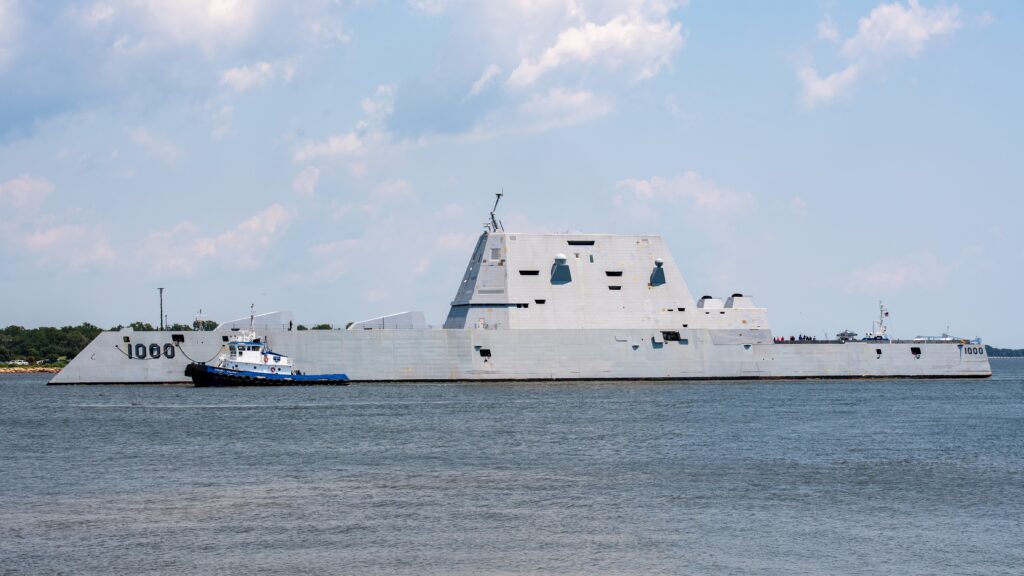
PASCAGOULA, Miss., Aug. 29, 2023 (GLOBE NEWSWIRE) — HII’s (NYSE: HII) Ingalls Shipbuilding division was awarded a $154.8 million contract modification today for the modernization of USS Zumwalt (DDG 1000).
“It is an honor to serve the sailors of Zumwalt and to welcome them to our community,” said Ingalls Shipbuilding DDG 1000 ship construction manager Bruce Knowles. “The Ingalls team is ready to support you in completing this important work.”
USS Zumwalt (DDG 1000) arrived in Pascagoula on Aug. 19 after leaving San Diego earlier in the month. The ship will enter a modernization period and receive technology upgrades including the integration of the Conventional Prompt Strike (CPS) weapon system, ensuring USS Zumwalt remains one of the most technologically advanced and lethal ships in the U.S. Navy.
In January 2023, Ingalls was awarded a $10.5 million contract for the modernization period planning of Zumwalt-class guided missile destroyers, USS Zumwalt (DDG 1000) and USS Michael Monsoor (DDG 1001). USS Michael Monsoor will receive the CPS install at Ingalls during a future modernization period. Additionally, Lyndon B. Johnson (DDG 1002) arrived at Ingalls in January 2022 and is undergoing a combat systems activation.
Zumwalt-class destroyers feature a state-of-the-art electric propulsion system, wave-piercing tumblehome hull, stealth design and are equipped with the most advanced warfighting technology and weaponry. These ships will be capable of performing a range of deterrence, power projection, sea control, and command and control missions.
In the last five years, HII has invested nearly $1 billion in the infrastructure, facility and toolsets at Ingalls, enabling their people, improving product flow and process efficiency, and enhancing product quality. As a long-standing partner in the construction and system activation of Navy destroyers, Ingalls is able to leverage their 85-year shipbuilding legacy and modernized facilities to support future generation systems and platforms.
Naval Surface Force, U.S. Pacific Fleet, Public Affairs
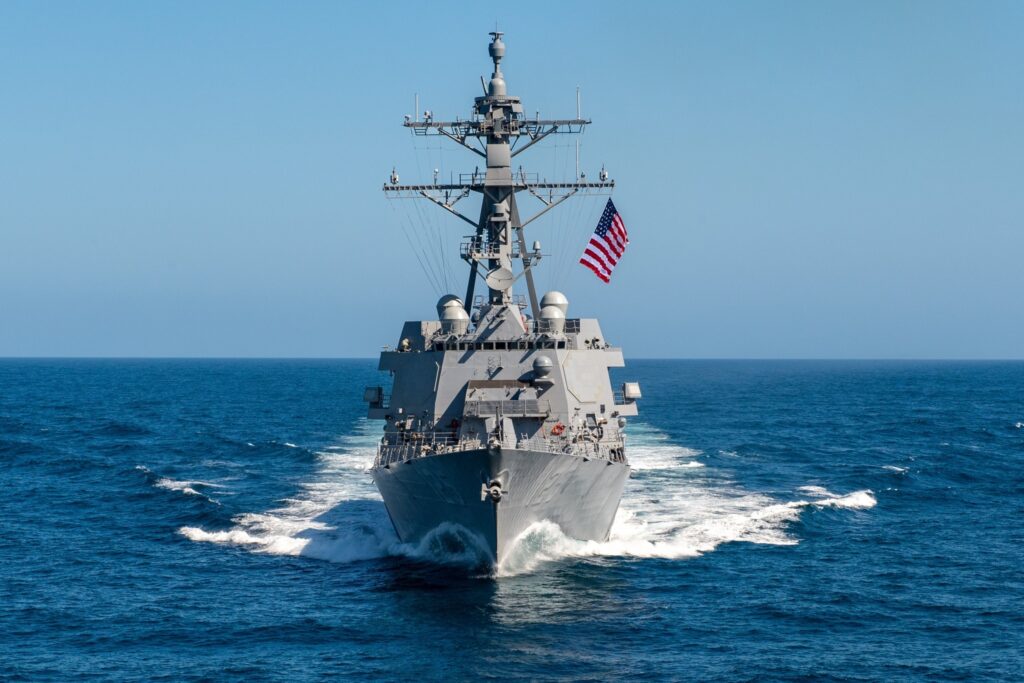
The future USS Jack H. Lucas (DDG 125) will join the active fleet on October 7, with a commissioning ceremony in Tampa, Florida. DDG 125 will be the Navy’s first Flight III destroyer with notable technological upgrades. The Flight III upgrades are centered on the AN/SPY-6(V)1 Air and Missile Defense Radar and incorporates upgrades to the electrical power and cooling capacity.
Guided-missile destroyers provide multi-mission offensive and defensive capabilities. Destroyers can operate independently or as part of carrier strike groups, surface action groups, and expeditionary strike groups. They are capable of conducting anti-air warfare (AAW), anti-submarine warfare (ASW), and anti-surface warfare (ASuW).
The ship’s name was selected on Sept. 17, 2016 by then Secretary of the Navy Ray Mabus to serve as a constant reminder to the immense impact actions taken by any one Sailor or Marine can truly have.
DDG 125 is named for Pfc. Jack Lucas, who served in the U.S. Marines during World War II, earning the Medal of Honor for his heroism at Iwo Jima, when he was just 17 years old. He is the youngest Marine, and the youngest serviceman in World War II, to be awarded the United States’ highest military decoration for valor. In 1961, he returned to military service as a captain in the U.S. Army and trained younger troops headed for Vietnam. Lucas passed away on June 5, 2008 in Hattiesburg, Mississippi.
Ruby Lucas, widow of the ship’s namesake, and philanthropist Cathy Reynolds are the ship’s sponsors.
This will be the first Naval warship to bear the name Jack H. Lucas.
Following commissioning, USS Jack H. Lucas will transit to its homeport of San Diego.
Force Design 2030: Acquisition for the Future Battlefield
QUANTICO, Va. — The 2018 National Defense Strategy warns that U.S. adversaries are actively challenging the long-standing rules-based international order, thus “creating a security environment more complex and volatile than any we have experienced in recent memory.”
Building on the Pentagon’s observations, Gen. David H. Berger, then-commandant of the Marine Corps, released his seminal 2019 Commandant’s Planning Guidance, in which he proposed sweeping changes aimed at transforming the Corps from its established land-focused role in the Middle East into a naval expeditionary force-in-readiness primed for active engagement in contested maritime spaces within the Indo-Pacific region.
This ultimately led to the initiation of Force Design 2030—a strategic overhaul aimed at transforming the Marine Corps into a more agile, technologically advanced force, prioritizing stand-in forces, littoral operations, modernization, force sizing and composition, training, and international cooperation.
For the acquisition community, the shift to Force Design 2030 opens doors for creativity and innovation, as seen in the development and fielding of cutting-edge gear by Marine Corps Systems Command and Program Executive Officer Land Systems.
As Marine Corps Systems Command’s Executive Director, Dr. Todd Calhoun, recently told Quantico’s acquisition workforce, “As we prepare to face potential future adversaries, it is becoming increasingly evident that acquisition is the pacing element of Force Design 2030.”
In reimagining the Corps for future battlefields, Force Design 2030 centers on a leaner, agile force equipped for naval expeditionary warfare and prepared for an unpredictable future.
“Force Design 2030 is more than a strategy – it’s a vision for the future of the Marine Corps, one that takes into account the evolving challenges of the modern battlefield,” said Brig. Gen. David C. Walsh, commander of MARCORSYSCOM. “As we shift focus towards the Indo-Pacific, it’s imperative we equip our Marines with the cutting-edge tools and technologies that give us an edge in this new operational landscape.”
A significant aspect of this transformation is the realignment and reduction in ground and aviation forces, signaling a transition from traditional ground combat and emphasizing naval expeditionary warfare and its distinct demands.
In parallel, the strategy underlines the deployment of cutting-edge technologies like unmanned aerial and ground systems, advanced air defenses, and anti-ship missiles to enhance the Corps’ ability to sense, strike, and counter targets.
These capabilities are acquired through a process of continuous experimentation and an emphasis on user feedback, particularly from the fleet.
“Our requirements are well-defined, but there’s been an intriguing rediscovery process within the acquisition community,” shared Program Executive Officer Land Systems Stephen Bowdren. “We’ve come to understand that, as important as our requirements are, the unique needs and experiences of each Marine are just as critical. We’re not merely fulfilling a requirement; we’re also taking into account the user experience and focusing on ensuring the success of our warfighters.”
Walsh is confident that MARCORSYSCOM will continue to prepare the warfighter to fight and win in any clime or place.
“While China stands as our primary adversary, our commitment remains unwavering to protect American interests across the globe,” he said. “The strategic rationale behind our approach is clear: equipping our forces with the capabilities to effectively engage in this highly challenging theater ensures that we have the necessary tools to respond to crises, conflicts, and responsibilities wherever they may arise worldwide.”
As Ukraine’s successful use of the American High Mobility Artillery Rocket System has shown in Eastern Europe, American capabilities remain versatile—especially against our stated adversaries.
“Nevertheless, we must acknowledge the magnitude and breadth of the challenges confronting us, in both military and economic terms, that pose the most substantial threat we’ve faced in generations,” Bowdren explained. “That said, I wouldn’t say we were ever unprepared for this challenge. We just never want a fair fight. We want a completely unfair fight if it comes to that. Our part in that effort is to develop, build, deliver, and sustain dominant warfighting capabilities for our Marines.”
Evolving Acquisition for Future Battlefields
While Force Design 2030 reimagines the operational role of the warfighter, it also opens the door for innovative acquisition, putting bleeding-edge gear in the hands of Marines.
“Change and evolution are hardwired into the DNA of the Marine Corps,” said Calhoun. “The shift towards the Indo-Pacific under Force Design 2030 brings new challenges and opportunities in acquisition. Our commitment is to drive innovation and smart procurement strategies that ensure our Marines have the best tools and technologies to adapt, succeed and ultimately dominate in this evolving landscape.”
Three years into Force Design 2030’s ten-year timeline, the modeling and experimentation stage, which permitted the divestment of legacy gear, is complete. That means the focus lies solidly on equipping the warfighter—both at home and in the field.
“One of the big shifts that we did this year from a planning and possibly a programming perspective is that we said divestments are complete. We are no longer looking to figure out what do we need to get rid of in order to modernize,” Brig. Gen. Stephen Lightfoot, director of Marine Corps’ Capabilities Development Directorate told reporters in June.
So far, this has meant a shift towards acquiring state-of-the-art gear allowing Marines to beat their adversaries on the battlefield while operating independently in small, distributed forces—often for extended periods with limited outside support.
This has led to the development of capabilities like the expeditionary fueling systems, multi-wave radio systems, an updated vehicular fleet, and the Corps’ first medium-range air defense capability since HAWK. On the MARCORSYSCOM side, one program that stands out is the Long Range Unmanned Surface Vessel—or LRUSV.
Lauded as one of the Corps’ first semi-autonomous vessel programs, the LRUSV aligns with the Commandant’s latest Force Design 2030 update, where Berger envisioned a future in which “amphibious warfare ships will offer even more capability, serving as ‘motherships’ for a variety of manned, unmanned, and human-machine teamed systems.”
“Through Middle Tier of Acquisition rapid prototyping authorities, the team was able to assess the market, place vendors on agreement, and quickly deliver LRUSVs, autonomy software, sensors, and C2 equipment,” said Col. Paul Gillikin who, until recently, served as program manager for Fire Support Systems.
“Due to our strong vendor-program office team, we had a boat in the water one year from agreement award despite COVID supply chain impacts. The benefits of the LRUSV prototyping effort allows the Marine Corps to understand the concept, costs, and [Doctrinal, Organizational, Training, Materiel, Leadership and education, Personnel, Facilities and Policy] implications before the Service becomes fully invested,” he continued.
This rapid prototyping process ultimately allowed Gillikin’s team to get LRUSV on the water and in the hands of Marines for testing quickly, allowing for increased Marine feedback throughout the acquisition process.
Col. Craig Clarkson, commanding officer at Marine Corps Tactical Systems Support Activity, adds perspective to this emphasis on feedback, stating, “Force Design 2030 is not simply a blueprint for the future; it’s a call for dynamic engagement with the Fleet. Their firsthand experiences, tactical insights, and invaluable feedback are integral to our acquisition process and help shape our understanding of what is needed to fight and win on the modern battlefield.”
Similarly, PEO Land Systems has been successful in bringing back the Corps’ air defense capabilities through its Ground-Based Air Defense systems. The Medium-Range Intercept Capability, or MRIC, is one example of this programmatic success.
“A striking example of successful acquisition support to Force Design 2030 execution can be seen in our Ground-Based Air Defense system,” said Bowdren. “Just five years ago, our primary air defense weapon was the Stinger Man-Portable Air-Defense System. Today, we’ve implemented systems like the Marine Air Defense Integrated System, the Light Marine Air Defense Integrated System, MRIC, and we’re seeing the emergence of Installation Counter-small Unmanned Aircraft Systems. In a very short period of time, we’ve established a comprehensive suite of capabilities designed to counter the full range of aerial threats to Marines.”
The transformation undergone by the Marine Corps is manifest in the groundbreaking gear that equips Marines. The past three years have been marked by a radical overhaul, with MARCORSYSCOM and PEO Land Systems leading the acquisition charge towards force modernization.
The journey, though charted with unerring foresight and audacity, continues to evolve. Experimentation, an integral part of this process, has allowed for the rapid adaptation and refinement of systems to best serve Marines’ operational needs. The input and feedback from Marines, those on the ground, have been invaluable in this phase, fine-tuning advancements to the unique demands of the modern battlefield.
Through the vision of Force Design 2030, MARCORSYSCOM and its supported Program Executive Offices have updated the Corps’ equipment and embraced a new generation of warfare—utilizing bleeding-edge gear and cutting-edge tactics that redefine the landscape of conflict. The transformation promised by FD 2030 is underway, and with it, the Marine Corps is poised to ensure America’s continued military superiority, no matter the time or place.
U.S. and Republic of Palau sign agreement to strengthen ties with new chapter in maritime security and stewardship in the Pacific
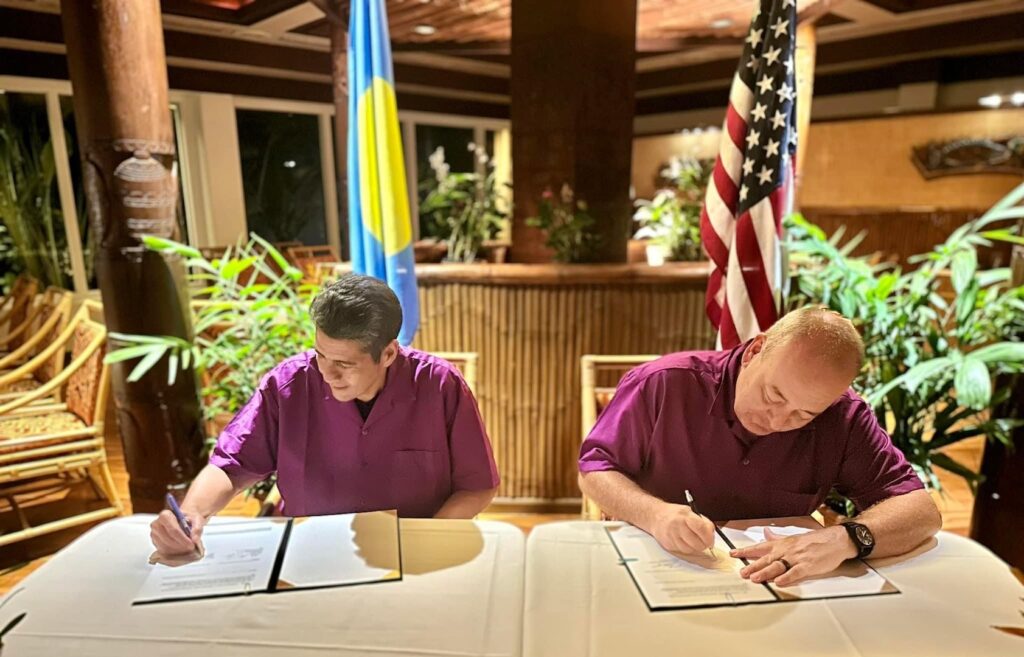
SANTA RITA, Guam — As part of a continued commitment to enhancing maritime governance and promoting regional sovereignty, representatives of the United States and the Republic of Palau signed an expanded bilateral law enforcement agreement on Aug. 23, 2023, on the sidelines of the Joint Heads of Pacific Security conference in Palau.
“The United States and the Republic of Palau share common interests and values supporting a free and open Indo-Pacific. This agreement will help us meet our security commitments in Palau by increasing maritime domain awareness and preventing IUU Fishing within Palau’s EEZ,” said U.S. Embassy Koror’s Chargé d’Affaires, Andrew J. McLean.
This significant regional milestone agreement enables the U.S. Coast Guard to enforce regulations at sea in Palau’s exclusive economic zone (EEZ) on behalf of Palau without a Palauan officer present.
“This agreement helps Palau monitor our exclusive economic zone, protect against Illegal, Unreported, and Unregulated fishing, and deter uninvited vessels from conducting questionable maneuvers within our waters,” said President Surangel S. Whipps, Jr. “It’s these types of partnerships that help us work toward our common goal of peace and prosperity in the region.”
This advancement follows the similar agreement signed with the Federated States of Micronesia in October 2022, under which the U.S. Coast Guard has conducted boardings for FSM. Additional recent regional security advancements also include the bilateral defense agreement signed with Papua New Guinea in May 2023, recently ratified by the parliament, which will enable U.S. Coast Guard boarding officers alongside their Papua New Guinea counterparts to conduct boardings in PNG’s EEZ for the first time later this year.
Through Operation Rematau, an integral part of Operation Blue Pacific and led by U.S. Coast Guard Forces Micronesia/Sector Guam, U.S. Coast Guard personnel actively exercise several of the 12 bilateral maritime law enforcement agreements with Pacific Island Countries annually. These agreements, which include the landmark enhanced shiprider arrangement with FSM, reinforce maritime law enforcement operations, bolster maritime domain awareness, and foster security, safety, sovereignty, and economic prosperity throughout Oceania.
The Republic of Palau, a sovereign nation known for its hospitality, vibrant culture, and stringent marine conservation laws, comprises about 340 islands, islets, and atolls. With approximately 17,000 people, Palau is committed to protecting its rich marine environment, including some of the world’s most renowned diving spots. The Palauan economy is mainly based on tourism, alongside an essential fishing industry and small-scale subsistence farming.
“We’re thrilled to deepen our partnership with the Republic of Palau, an island nation with a rich history and a strong commitment to protecting their maritime resources,” said Capt. Nick Simmons, U.S. Coast Guard Forces Micronesia/Sector Guam commander. “This agreement, in alignment with the Pacific Partnership Strategy, significantly strengthens our collective efforts to counter illicit maritime activities in the region and reflects our shared dedication to safeguarding the people of the Pacific. It provides an avenue for our teams, including our proven Fast Response Cutter crews, to increase our support to our partners in Palau.”
The shiprider program supports regional coordination and aligns with the Pacific Partnership Strategy, contributing to the U.S. Coast Guard’s Operation Blue Pacific and Operation Rematau. The bilateral agreements enacted in the Pacific convey the United States’ ongoing investment in protecting shared resources and an interest in maritime safety and security. They also embody the U.S. Coast Guard’s unwavering commitment to maritime safety, security, and stewardship in Oceania. They comprise more than 600 members in Hawaii and 300 members based in Guam and the Commonwealth of the Northern Mariana Islands.
With this historic agreement, the U.S. continues demonstrating an enduring presence in the Pacific, facilitating increased regional stability, security, and resilience for U.S. partners. This unity of effort with Pacific Island Countries, including the collaboration with Palau, amplifies our collective ability to protect resources and maintain a free and open Indo-Pacific for all nations who observe the rule of law.
Draper Breaks Ground on Strategic Enhanced Ground Test Facility
Draper begins work on a new campus in Florida to support the nation’s defense, security and space exploration interests.
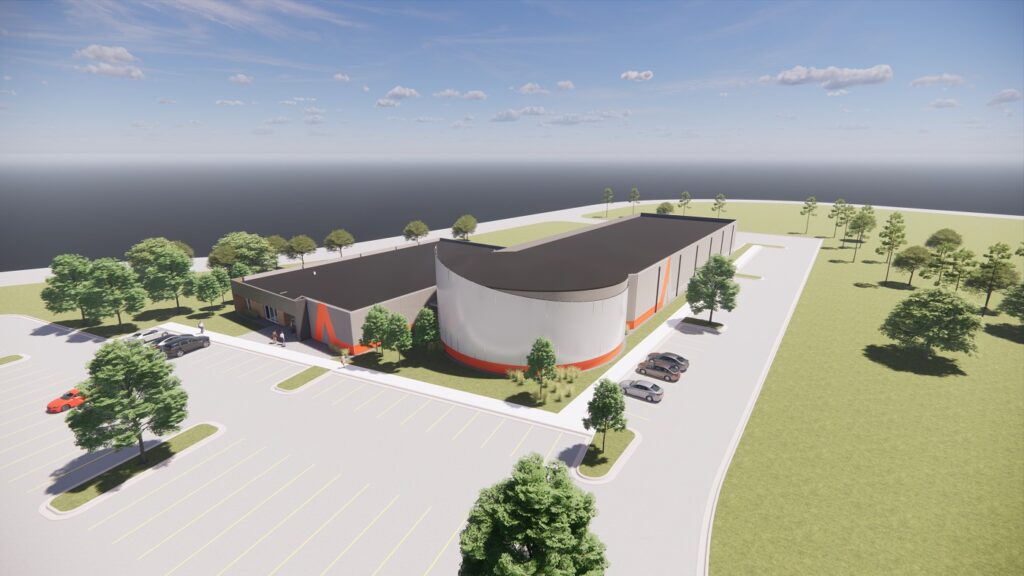
CAMBRIDGE, Mass., Aug. 29, 2023 /PRNewswire-PRWeb/ — Draper will further demonstrate its commitment to the Strategic Deterrence Mission and to the nation’s defense, security, and space exploration interests today with the groundbreaking ceremony for its Strategic Enhanced Ground Test Facility (SEGTF) in Riverfront Center, Titusville, Fla.
As part of the infrastructure investment, the Draper Strategic Enhanced Ground Test Facility will enable testing of critical Guidance, Navigation & Control technologies with the support of a world-class centrifuge and associated Navy Test Facilities resident at Cape Canaveral. Approximately 50 Draper employees will be initially located in the SEGTF.
The ceremony will be held at 8:30 a.m. EDT at the Draper Strategic Enhanced Ground Test Facility site located at 6280 Riverfront Center Boulevard, Titusville, Fla.
Highlighting the occasion will be remarks from Vice Admiral Johnny R. Wolfe, Jr., USN, Director, Strategic Systems Programs; Draper CEO and President Dr. Jerry M. Wohletz; Draper Vice President and General Manager of Navy Strategic Systems Robert Bacon; and Draper Board of Directors Chairman David Shedd.
“As the U.S. Navy’s strategic guidance prime contractor, Draper has designed and supported the guidance system for every fleet ballistic missile deployed since the program began in 1955,” Wohletz said. “This new facility enables Draper to continue to deliver on that legacy while preparing for major nuclear triad modernization efforts and underscores Draper’s commitment to national security.”
The Draper Strategic Enhanced Ground Test Facility will have approximately 37,000 square feet. This facility will house Draper employees, providing core capabilities in simulation, hardware-in-the-loop and system test to continue to enable a ‘test-as-you-fly’ approach for exquisite guidance components required in high accuracy, reliability and survivability applications. This range of services will provide local hiring opportunities. The long-term vision expands Draper’s campus footprint and includes future expansion to support over 150 employees.
“We look forward to continuing this important mission with our industry partners,” said Vice Admiral Johnny R. Wolfe, Jr., USN, Director, Strategic Systems Programs. “Draper has long pioneered innovative test approaches for Strategic Weapons Systems and this facility will continue that legacy.”
Robert Bacon, Vice President and General Manager of Navy Strategic Systems at Draper, said, “The Draper Strategic Enhanced Ground Test Facility continues our commitment to provide the Navy with a highly capable, reliable, flexible test infrastructure that replicates environments only seen in costly missile tests. These proven approaches are critical as we look to develop and deploy capabilities at a pace we have not seen in decades across the Strategic mission domain.”
Construction of the building is scheduled for completion in summer of 2026. Draper will serve as the sole tenant of the Draper Strategic Enhanced Ground Test Facility. North American Properties was the property seller and will be serving as the property development partner.
Experiences from the Vietnam, Iraq Conflicts Shape How Naval Aviation Will Fight Next
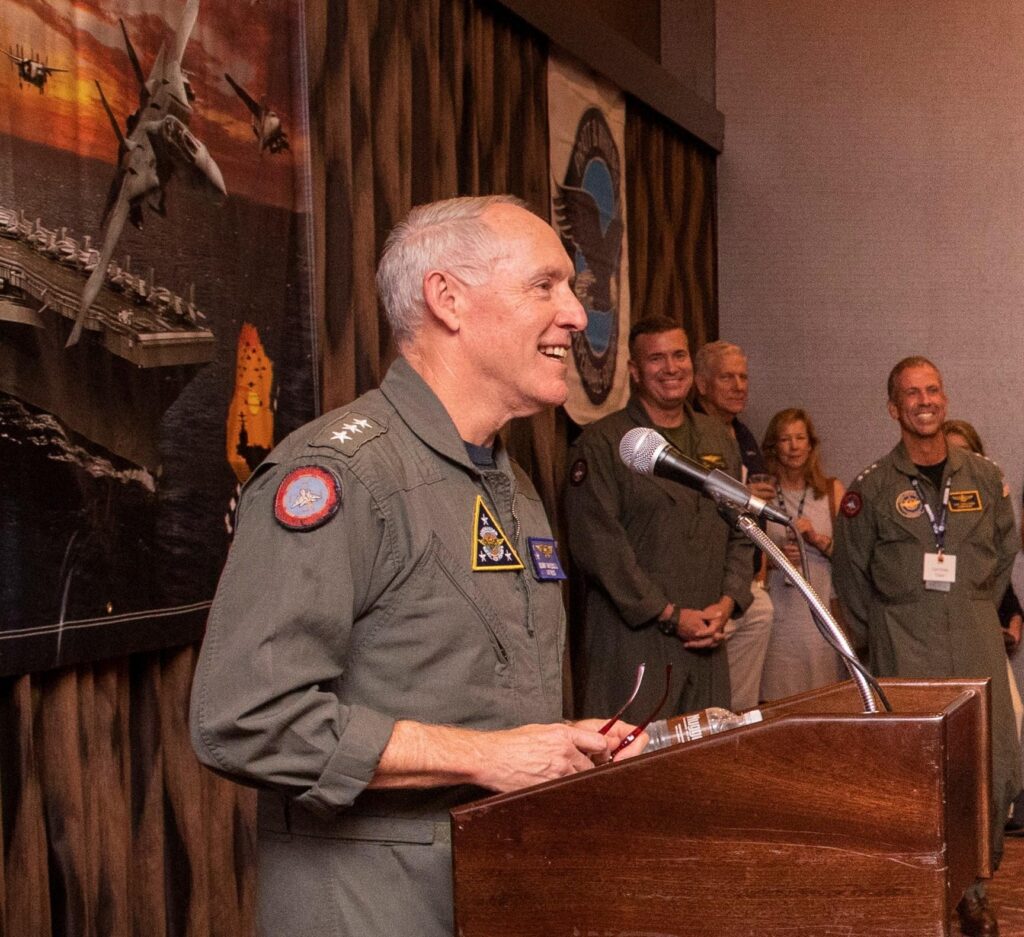
SPARKS, Nevada (Aug. 24, 2023) Commander, Naval Air Forces Vice Adm. Kenneth Whitesell speaks at the Naval Aviation Enterprise (NAE) Update to Industry Partners alongside Marine Corps Deputy Commandant for Aviation Lt. Gen. Michael Cederholm (behind left) and Commander, Naval Air Systems Command Vice Adm. Carl Chebi during Tailhook 2023.
Sparks, Nev.–The Tailhook Association’s 2023 symposium—Hook ’23—took place August 24- 26, 2023, ending with a banquet keynoted by the Commander of U.S. Indo-Pacific Command (INDOPACOM), Adm. John Aquilino, and Commander, Naval Air Forces (CNAF), Vice Adm. Kenneth Whitesell. The three-day event featured dialogue from across carrier aviation, providing opportunities for naval aviators to honor their past as well as to discuss the requirements for current readiness and the future force.
As senior leaders and senior naval aviators, Aquilino and Whitesell participated in multiple events throughout the three-day symposium, listening to the needs of the fleet and sharing with them high-level perspectives.
Aquilino emphasized that Naval Aviation members have to “be ready … We are doing everything, every day, to prevent conflict. That’s what we do.” He added that a war in the Pacific would be detrimental to every nation on earth. The United States doesn’t want that but would win if necessary. “The integrated joint force of the United States is not something you’re ready to take on today, tomorrow or any day,” Aquilino stated.
The camaraderie and unmatched abilities of Naval Aviation were common threads throughout Hook ’23. Whitesell stated, “It is up to us, every person in this room, to make the Navy and Naval Aviation an elite culture that America’s brightest, toughest and most innovative youth choose to join … it relies on us to maintain the mindset of duty, preparedness and sacrifice–a culture evidenced in past heroes, who have truly set the example.”
This year’s theme focused on Operation Iraqi Freedom (OIF), with two panels exploring how Naval Aviation has progressed in the two decades since that conflict began, the lessons learned from those who flew operations and how the experiences of that generation form the new generation of warfighters. One panel featured speakers who were junior officers during the conflict while the other featured senior leaders from the conflict.
Naval Aviation played a pivotal role in OIF’s success and in supporting joint and coalition forces on the ground. “There’s a constant steady push for integration across the force from seabed to space,” said Naval Air Warfare Development Center, Deputy Commanding Officer, Capt. Michael “Snap” Langbehn. Operating from aircraft carriers and amphibious assault ships, pilots and aircrew provided crucial air support, reconnaissance and strike capabilities that significantly contributed to the campaign’s achievements.
For many of the people involved in OIF, the confidence in them to execute combat operations safely showcased the level of training and skill needed to be an immediate asset. “There was an amazing amount of trust that was put into us; we went from flight school to flying combat missions in a short amount of time,” said the Commander of Carrier Air Wing One, Capt. Brad “Keds” Converse.
During the most emotionally powerful panel, four Vietnam Prisoners of War (POWs) shared stories and lessons from captivity. In a large ballroom filled to standing room only, attendees listened to the compelling narratives of Capt. Rod Knutson, Capt. Irv Williams, Mr. Dave Everett and Capt. Jack Ensch as they described how they endured as POWs in the infamous Hanoi Hilton and came back to live meaningful, productive lives of contribution.
“We didn’t stop fighting when we were captured,” Williams said. “We were proud to serve. We are proud of this country.”
Another cornerstone of the symposium was the Aviation Flag Panel. In addition to Aqulino and Whitesell, panelists were: U.S. Marine Corps Deputy Commandant for Aviation Lt. Gen. Michael Cederholm; Commander, Naval Air Systems Command (NAVAIR), Vice Adm. Carl Chebi; Commander, Naval Air Force Atlantic, Rear Adm. Douglas Verissimo; the Navy’s N98, Rear Adm. Michael Donnelly; Deputy Chief of Naval Personnel, Rear Adm. Michael Baze; and Chief of Naval Air Training, Rear Adm. Richard Brophy. They answered questions from the crowd and provided updates to a number of projects and initiatives.
Donnelly spoke about how carriers are a lynchpin in Naval Aviation. The ability to get the carriers in the new Ford-class delivered on-time is essential, and the Navy is working closely with industry to optimize the process.
Other topics touched included the Air Wing of the Future including the incorporation of the F-35 Joint Strike Fighter, an improved pipeline for new students training to be naval aviators and the continued press for improving quality of life/quality of service.
Chebi encouraged aviators to come to his command, NAVAIR, as part of the test community. They need the best and the brightest, he said, to test the future capabilities of Naval Aviation.
Other programming from the symposium included panels about resourcing, the Naval Safety Command, careers and industry as well as a winging ceremony in which several new aviators pinned on their wings of gold–a meaningful experience for everyone in the community. For additional information from Hook ‘23 and pictures from the winging, POW panel and more, visit then follow the NAE on LinkedIn at https://www.linkedin.com/company/naval-aviation-enterprise, on Facebook @NAEready and on X @NAE_Readiness.
U.S. Coast Guard Cutter Active returns from 58-day counternarcotics patrol
PORT ANGELES, Wash. — The U.S. Coast Guard Cutter Active (WMEC 618) and crew returned to homeport, Thursday, after a 58-day counternarcotics patrol in the Eastern Pacific Ocean.
Sailing over 12,000 nautical miles, from the cutter’s homeport in the Pacific Northwest, Active patrolled in support of a Joint Interagency Task Force South counternarcotics mission. Active’s crew of 70 Coast Guard men and women worked over the course of multiple hours to locate and interdict a drug laden “go-fast” vessel using the cutter’s embarked small boats. A total of 130 kg of cocaine was seized and four suspects were interdicted.
In addition to counternarcotic operations, Active played a role in the response to a search and rescue case of a missing American sailor last seen departing Mexico. In a joint effort with the Mexican Navy, Active located and investigated the sailing vessel Defiant, found overturned over 200 miles from nearest land. Active searched over 1,500 square miles of the Pacific but was unable to locate the sailor.
Active’s crew successfully rescued three endangered loggerhead sea turtles that had become tangled in abandoned fishing gear. Active removed the derelict gear and properly disposed of it to prevent further harm to wildlife.
“I am very proud of the cutter and the crew’s performance, said Cmdr. Adam Disque, commanding officer of the Active. “We were able to interdict illegal narcotics, assist in an international search and rescue case, and participate in a professional exchange with our partners in the Mexican Navy. The crew demonstrated professionalism and resiliency as we worked through a variety of logistical and engineering issues to keep Active mission ready. It was a great patrol and now we are looking forward to returning to cooler latitudes and spending some time with our families and friends.”
Commissioned in 1966, Coast Guard Cutter Active, affectionately nicknamed, “The Li’l Tough Guy,” is one of three medium endurance cutters homeported on the West Coast and is the oldest of all the Pacific Area major cutters. The medium endurance fleet supports all of the Coast Guard’s law enforcement, living marine resource, and search and rescue missions throughout the world.
MARINE ROTATIONAL FORCE – DARWIN MV-22B OSPREY TILTROTOR AIRCRAFT CRASH
Release from Marine Rotational Force – Darwin
*****
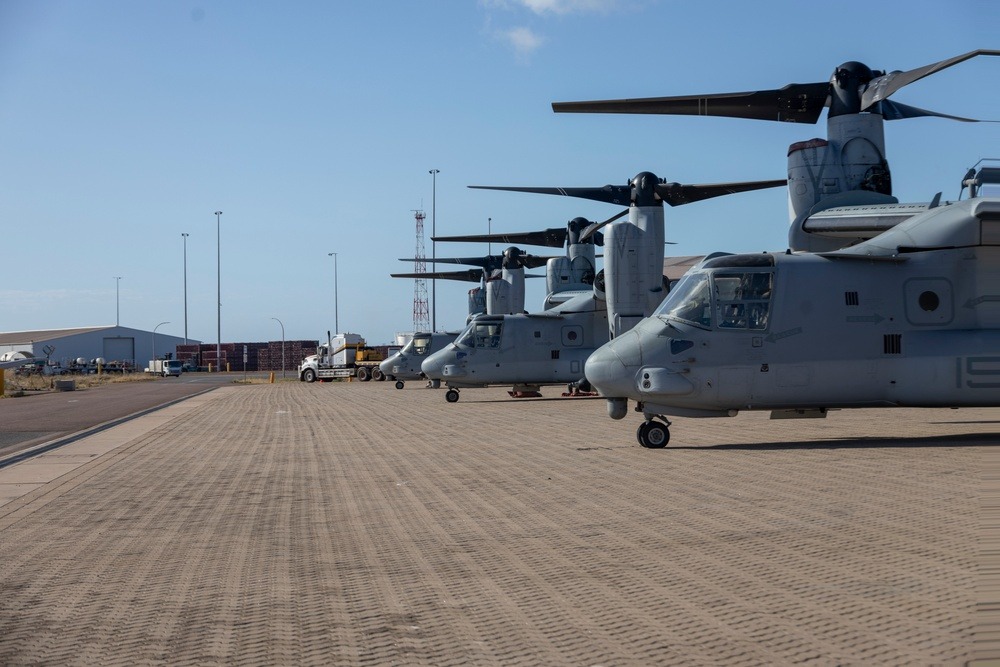
DARWIN, AUSTRALIA — Marine Rotational Force – Darwin can confirm a U.S. Marine Corps MV-22B Osprey crash on Melville Island, north of Darwin, Northern Territory, Australia while transporting troops during a routine training exercise. The incident took place at approximately 9:30 a.m. There were a total of 23 personnel on board. Three have been confirmed deceased while five others were transported to Royal Darwin Hospital in serious condition.
The Marines aboard the aircraft were flying in support of Exercise Predators Run. Recovery efforts are ongoing. The cause of the incident is under investigation. Further details will be provided as the situation develops.
Marine Aviator Killed in F./A-18D Hornet Crash
EL CENTRO, Calif. (Sept. 28, 2020) Marines with Marine All Weather Attack Squadron 224 (VMFA 224), Marine Aircraft Group 31, 2nd Marine Aircraft Wing, prepare F/A-18s for flight operations aboard Naval Air Facility El Centro, Calif. on Sept. 28, 2020. (U.S. Marine Corps photo by Lance Cpl. Nicholas Buss)
*****
ARLINGTON, Va. — A Marine Corps aviator was killed in the crash of his F/A-18D Hornet strike fighter on Aug. 24.
The two-seat Hornet, with only the pilot on board, crashed near Marine Corps Air Station Miramar, California, at 11:54 PST, according to a release from the 2nd Marine Aircraft Wing. The name of the pilot will not be released until the next of kin has been notified. The mishap is under investigation.
The aircraft was assigned to Marine All-Weather Fighter Attack Squadron (VMFA (AW)) 224, based at MCAS Beaufort, South Carolina. The squadron is one of only two VMFA(AW) squadrons remaining in the Marine Corps, the other being VMFA(AW)-533. The Marine Corps is in transition from the F/A-18 Hornet to the F-35B/C Lightning II strike fighter.