Northrop Grumman to Manufacture US Navy’s Advanced Lightweight Torpedo

Launched from surface ships, fixed-wing aircraft, and helicopters, the MK54 MOD 2 Advanced Lightweight Torpedo is key to the U.S. Navy’s strategy to address modern and future submarine threats. (Photo Credit: Northrop Grumman)  

Features a newly developed, Northrop Grumman-designed warhead that delivers increased weapon lethality 

Release From Northrop Grumman

PLYMOUTH, Minn. – Jan. 12, 2026 – Northrop Grumman (NYSE: NOC) will manufacture and deliver to the U.S. Navy a new advanced lightweight torpedo with a custom-designed warhead to increase its lethality. Northrop Grumman will draw upon decades of production expertise to deliver a weapon that fires from multiple naval platforms. 

  • Northrop Grumman will perform the integration and initial proof of manufacturing at the company’s facility in Plymouth, Minnesota, and Allegany Ballistics Laboratory (ABL) in Rocket Center, West Virginia.   

  • The contract, worth $233 million, covers the proof of manufacturing and qualification phases, as well as delivery of multiple torpedoes for qualification testing. 

  • Northrop Grumman’s state-of-the-art facilities and technologies allow for rapid delivery of this urgent U.S. Navy requirement.   

Expert:  

Dave Fine, vice president, armament systems, Northrop Grumman: “Northrop Grumman is leveraging over 80 years of innovative torpedo technology, combined with our capacity and speed in delivery, to accelerate the design qualification and manufacturing for the advanced lightweight torpedo. This new weapon will provide U.S. and allied sailors with a next-generation response to counter the most advanced undersea threats.”  

Details on the Advanced Lightweight Torpedo Program:  

The MK54 MOD 2 was designed under a cooperative development agreement with the Australian Defence Force, led by the U.S. Navy. This upgraded torpedo will enhance the existing inventory of MK54 MOD 0 and MOD 1 variants with Northrop Grumman’s advanced warhead and processing capabilities, resulting in increased performance and lethality. Capable of tracking, classifying, and attacking underwater targets, MK54 MOD 2 will operate in all ocean environments.  


HII Successfully Demonstrates Sea Launcher, Ship-Based Automated Launch and Recovery of REMUS Autonomous Underwater Vehicle

Release From HII

POCASSET, Mass., Jan. 13, 2026 (GLOBE NEWSWIRE) — HII (NYSE: HII), the world’s leading manufacturer of autonomous underwater unmanned vehicles, announced today the successful shipboard deployment and recovery of a REMUS autonomous underwater vehicle (UUV) using the company’s automated launch and recovery system, Sea Launcher. 

The demonstration represents a key milestone in advancing operationally proven manned-unmanned teaming for maritime missions and highlights HII’s ability to integrate mature automation and autonomy into ship-ready systems, including the HII ROMULUS family of unmanned surface vessels (USVs) currently in production. 

During recent testing, HII validated key aspects of system performance to support a fully autonomous, end-to-end launch and recovery sequence. The test used a representative vehicle configured for real-world mission conditions and mirrored a recovery procedure that has been proven in deployments repeatedly across U.S. Navy and allied operations. 

Automated launch and recovery significantly reduces risk to sailors, expands mission range and flexibility, and shortens mission timelines. These advantages are particularly important in contested or high-sea-state environments, where minimizing hands-on deck operations improves safety and operational availability. 

“This is proven technology applied in a highly relevant shipboard configuration,” said Duane Fotheringham, president of Mission Technologies’ Unmanned Systems business group. “REMUS has successfully performed autonomous line capture and recovery for years. What this demonstration shows is how seamlessly that capability integrates with automated launch and recovery systems onboard manned or unmanned vessels to support modern maritime operations.” 

REMUS is one of the most widely deployed autonomous underwater vehicle families in the world, trusted by more than 30 navies for missions including mine countermeasures, undersea survey, intelligence collection, and environmental sensing. Its modular design and open architecture allow it to operate independently or as part of a distributed maritime force, teaming with crewed ships, unmanned surface vessels, and other undersea platforms. 

“This demonstration reinforces the value of REMUS within a distributed maritime operating model,” Fotheringham added. “Whether operating alongside manned platforms or coordinating with other unmanned systems, REMUS provides commanders with a reliable and flexible capability they already know and trust.” 

Looking ahead, HII plans to continue integrating REMUS with its new ROMULUS unmanned surface vessel (USV) family, as well as a range of manned and unmanned ships, to support evolving customer requirements across U.S. and allied navies. 


Stopping Small Vessels Safely at Sea

The multi-agency team poses at the CVSC test site. (Photo by NAWC Visual Communication Branch.) 

Release From the Department of Homeland Security

The Science and Technology Directorate (S&T) is developing a new contactless vessel stopping technology for the U.S. Coast Guard (USCG) to bolster interdiction efforts along our maritime borders. 

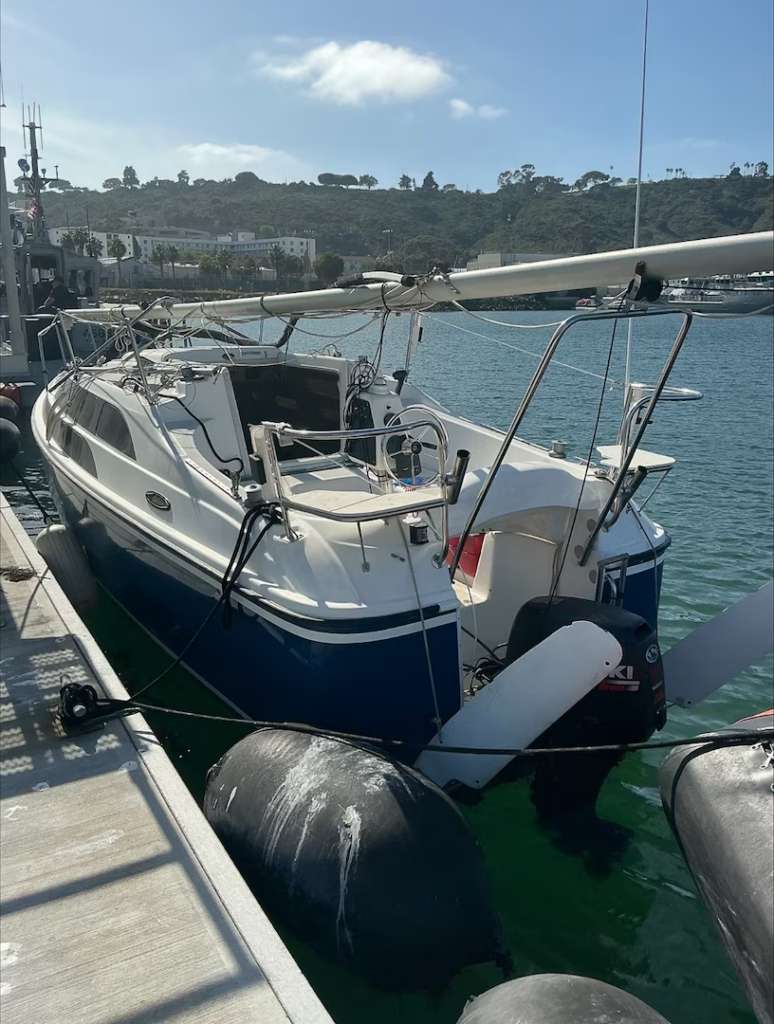
S&T, USCG, and the Naval Air Warfare Center Weapons Division (NAWCWD) have been conducting proof-of-concept demonstrations of a new Contactless Vessel Stopping Capability (CVSC) prototype. The CVSC uses high energy microwaves to temporarily stop the motor inside of small watercraft, like jet skis. The most recent demonstration, held in December, showed how effective it can be and how much progress has been made. 

This effort began when USCG approached S&T seeking a technology that would allow them to safely and consistently stop small non-compliant vessels. The solution S&T is developing with NAWCWD utilizes highly energized radio frequency pulses to overwhelm the electronic circuits within the targeted vessel, causing the engine to shut down and bring the jet ski to a stop. NAWCWD was selected to build the prototype because they have specialized expertise with high-powered microwave technologies that have demonstrated disruption, degradation, and denial effects on electronic target types, including outboard vessels and combustion engines. 

“We’re looking forward to improving upon the progress we’ve made and accelerating future developments to give USCG a solution to their small vessel gap as fast as possible,” said S&T Maritime and Immigration Security Solutions Program Manager Anthony Caracciolo. 

One potential use case for CVSC technology would be assisting USCG with intercepting a jet ski suspected of traveling from Mexico and trying to come ashore in San Diego. Currently, USCG uses a much larger, 33-foot boat to chase it down. Jet skis are small, fast, and very maneuverable, and there are not many options when it comes to stopping that kind of vessel. CVSC is akin to law enforcement deploying a spike strip on a road to stop a non-compliant vehicle. Once a watercraft is stopped, USCG can determine whether the vessel is involved in something nefarious, like moving drugs, or human trafficking. 

Naval Air Weapons Station (NAWS) China Lake is known for its military research and development facilities and provided an excellent venue to test and evaluate CVSC. The small, teardrop-shaped pond that was used for the test is called PMT, dating back to its previous history as the Pacific Missile Test Center, which merged with NAWS many years ago. 

The multi-agency team poses at the CVSC test site. Photo credit: NAWC Visual Communication Branch. 

To demonstrate the prototype’s capabilities, a jet ski is tethered in place in the PMT. The engine is started, and a test rig consisting of a server attached to a cone-shaped antenna is powered up and aimed at the idling jet ski. At the first demonstration, held last September, the engine was shut down using the CVSC multiple times, restarted, and shut down again, showing that there was no permanent damage to the craft. 

“There are microwave transmitters that can stop a large vessel,” Caracciolo said, “with engines mounted on the back.”  The microwave transmitter can be placed on the front of the pursuing boat for a direct line-of-sight engagement. “But jet skis are different. The small engine is inside of the craft, and the operator is blocking it with their body. CVSC is designed to be effective in those challenging conditions.” 

A follow up demonstration was then conducted in December. During the September demo it took some time for the motor in the targeted jet ski to stop.  During the December demo, the jet ski was shut down almost instantaneously.  The improved response was due to correcting a fault in the transmission cable connecting the pulse generator to the antenna and slightly increasing the pulse repetition rate. 

S&T will take the information gathered from this test and apply it to the next prototype, which will refine the power levels, ranges and safety parameters. Follow-on demonstrations are scheduled for early next year. 

Until spike strips are invented for the high seas, S&T will be there to develop the next best thing. 

For more information about CVSC, listen to Anthony Caracciolo’s episode of S&T’s Technologically Speaking podcast, Good Chance You’re Going to Save Lives. 


Fairbanks Morse Defense Expands Robotic Welding Capabilities to Strengthen Fleet Readiness and Reduce Maintenance Downtime 

FMD’s advanced robotic welding technology cuts repair times, enhances safety and boosts fleet readiness for naval operations  

Release From Fairbanks Morse Defense 

BELOIT, Wis. – January, 12, 2025 – Fairbanks Morse Defense (FMD) has announced the expansion of its robotic welding program aimed at boosting ship repair and maintenance efficiency for the U.S. Navy and allied fleets. The company’s robotic welding technology combines automation, precision and data-driven performance to reduce operational downtime, improve safety and extend the service life of naval assets.  

FMD’s robotics integrate advanced machine learning technology that enables automated weld control, consistent quality and real-time weld fault detection. By merging robotics with human expertise, FMD can accelerate repairs while ensuring each weld meets stringent naval standards. This innovation is part of the company’s broader strategy to modernize maintenance operations and strengthen mission readiness across the maritime defense sector.  

“Robotic welding represents a fundamental shift in how we approach fleet sustainment. It allows us to complete repairs faster, more accurately and more safely than ever before. This technology does not replace skilled technicians, but it enhances their capabilities, ensuring ships are returned to service in record time without compromising quality or safety,” said Keith Haasl, President, Service and Technology at Fairbanks Morse Defense.  

FMD’s robotic welding technology is engineered to perform critical repairs in confined or challenging environments, such as engine rooms and below-deck components. Robotic welders work up to three times faster than manual welding and can reduce crank bore repair time by as much as 75% (even in large-scale jobs).   

FMD robotics are programmed to maintain heat distribution and weld spacing consistently from the first bead to the 1,000th. This ensures each weld is executed with consistent accuracy and durability, reducing the likelihood of rework or failure. The technology also captures detailed data from every weld performed, creating a traceable record that supports quality assurance and predictive maintenance programs.  

FMD’s welding robots have been deployed successfully in high-pressure naval repair operations, including emergent crank line repairs on U.S. submarines, where the system demonstrated three times faster weld repair under demanding conditions. The project validated the effectiveness of robotic welding in critical mission support and confirmed its role as an enabler of faster fleet readiness.  

By automating repetitive or high-risk welding tasks, the system minimizes exposure to heat and hazardous materials for human operators, improving overall workplace safety. Skilled technicians remain integral to the process, overseeing operations, conducting inspections and managing complex or customized welds that require human oversight. This human-machine collaboration supports FMD’s long-term workforce development strategy by allowing technicians to focus on high-value work while leveraging robotics for precision and endurance.   

FMD’s robotics program is aligned with its broader focus on digital transformation across its service and technology divisions. The company remains focused on advancing automation, extended reality training and predictive analytics as part of its long-term strategy to deliver innovative solutions that enhance operational performance and mission success.  


GDIT Awarded $988 Million Contract to Modernize Navy C5ISR Systems

Company will integrate advanced systems across all surface combatant ships to stay ahead of emerging threats

Release From General Dynamics Information Technology

FALLS CHURCH, Va. – General Dynamics Information Technology (GDIT), a business unit of General Dynamics (NYSE:GD), announced today that it was awarded the Ship and Air Command, Control, Communications, Computers, Combat, Intelligence, Surveillance, and Reconnaissance (C5ISR) Systems Support (SACSS) contract to continue modernizing the U.S. Navy fleet. The $988 million contract, awarded in December, has a one-year base period, four one-year options and a six-month option.  

Under the contract, GDIT will modernize and integrate C5ISR systems to enhance the operational effectiveness and readiness of naval forces. The company will provide integration, engineering, procurement, logistics and installation services onboard all classes of surface combatant ships, including guided missile ships, aircraft carriers, Coast Guard vessels, manned and unmanned aircraft and shore stations. GDIT will upgrade these systems efficiently to enable the Navy to keep its current vessels operational and ensure mission continuity. 

“C5ISR systems are foundational to how our Navy senses, communicates and fights in the modern battlespace,” said Brian Sheridan, GDIT senior vice president for Defense. “We look forward to continuing to deliver innovative solutions to ensure these vital systems operate at peak performance and enable our warfighters to stay ahead of emerging threats.” 

GDIT has decades of experience delivering mission-critical services to the Navy. The company supports the development of advanced electronic warfare technologies for airborne platforms, provides training support services for more than 100,000 U.S. and allied sailors around the globe, and delivers advanced artificial intelligence/machine learning solutions to modernize the Navy Enterprise Service Desk program. 


Austal USA Christens Final EPF: Future USNS Lansing

Credit: Austal USA 

Release From Austal USA

MOBILE, Ala. – The final U.S. Navy Expeditionary Fast Transport Ship – future USNS Lansing (EPF 16) – was christened at a ceremony today at Austal USA’s Mobile, Ala. ship manufacturing facility.  The christening marks a major milestone in the Spearhead-class EPF program, which has delivered vital high-speed, shallow-draft transport capability to the U.S. Navy and Military Sealift Command. Since the inception of the EPF program, Austal USA has built and delivered a fleet of fast transport vessels that provide agile intra-theater personnel and cargo movement, rapid response support, and enhanced operational flexibility around the globe. 

This christening event was unique in that two sponsors christened the ship; The Honorable Gretchen Whitmer, Governor of Michigan, and The Honorable Lisa McClain, U.S. Representative serving Michigan’s 9th District broke bottles of champagne simultaneously on the bow of the ship after which they jointly exclaimed, “For the United States of America, I christen thee Lansing. May God bless this ship and all who sail in her!”.  

“I was especially honored to witness this tradition that means so much to our Navy and our Nation with the christening of the last ship of this great fleet. The Flight II Expeditionary Fast Transport ships represent a significant increase in naval auxiliary capability, designed to support a wide range of missions including medical operations, logistics, and troop transport.” commented Austal USA President Michelle Kruger.  “These ships are built by an exceptional team of dedicated men and women who consistently strive to be the best in the industry, delivering the most capable and cost-effective vessels to our superior Navy.” 

The Honorable Gretchen Whitmer has been Michigan’s Governor since 2019.  As a lifelong Michigander, earning both her bachelor’s degree and law degree from Michigan State University, Whitmer is a lawyer, an educator, former prosecutor, State Representative and Senator.  Since taking her oath of office, she has signed executive directives to clean up Michigan’s drinking water, secure equal pay for equal work, and expand opportunities for small and disadvantaged businesses. 

Born and raised in Stockbridge, Michigan, The Honorable Lisa McClain is serving her second term as U.S. Representative for Michigan’s 9th District.  She currently serves as a member of the House Committee on Financial Services and the Committee on Education and Workforce and Chairwoman of the House Republican Conference for the 119th Congress.   

Speakers at today’s event included: Principal speaker, The Honorable Hung Cao, Under Secretary, U.S. Navy; Rear Admiral Benjamin Nicholson, Commander, Military Sealift Command, U.S. Navy; Vice Admiral Seiko Okano, Principal Military Deputy to the Assistant Secretary of the Navy for Research, Development and Acquisition; Michelle Kruger, Austal USA President; and Scott Bonk, Director, Future Combatants & Mission Systems, General Dynamics Mission Systems. 

The future USNS Lansing is the first Navy ship named after the capital of Michigan.  There have been 32 naval ships named after some aspect of Michigan. This includes the first iron-hulled ship in the Navy, named after the state and commissioned in 1844.  

EPF Flight II provides a Role 2E (enhanced) medical capability which includes, among other capabilities, basic secondary health care built around primary surgery; intensive care unit; ward beds; and limited x-ray, laboratory and dental support. The EPF’s catamaran design provides inherent stability to allow surgeons to perform underway medical procedures in the ship’s operating suite. Enhanced capabilities to support V-22 flight operations and launch and recover 11-meter Rigid Hull Inflatable Boats complement the ship’s medical facilities. These Flight II upgrades along with EPF’s speed, maneuverability and shallow water access are key enablers for mission support of future Distributed Maritime Operations and Expeditionary Advanced Base Operations around the world. Flight II retains the capability of the Flight I to support other missions including core logistics. EPF is one of four shipbuilding programs under serial production at Austal USA. 

The EPF program has been a cornerstone of Austal USA’s contribution to U.S. maritime logistics and expeditionary operations, providing fast, flexible support for a wide range of fleet missions. With the christening of the final EPF vessel, Austal USA continues its legacy of supporting the U.S. Navy with innovative ship design and construction excellence. 


Coast Guard Cutter Kimball Returns to Honolulu After 120-Day Arctic Patrol

 A Landing Signals Officer aboard USCGC Kimball (WMSL 756) directs a Cold Bay-based MH-60 helicopter during helicopter in-flight refueling operations in the Bering Sea, Oct. 31, 2025. The hook-up crew stood by to attach the fuel hose, a capability that allows the aircraft to remain airborne during refueling to support a sustained operational tempo and mission readiness. (U.S. Coast Guard photo by Petty Officer 2nd Class Peter Holtzhausen) 

Release From U.S. Coast Guard Oceania District

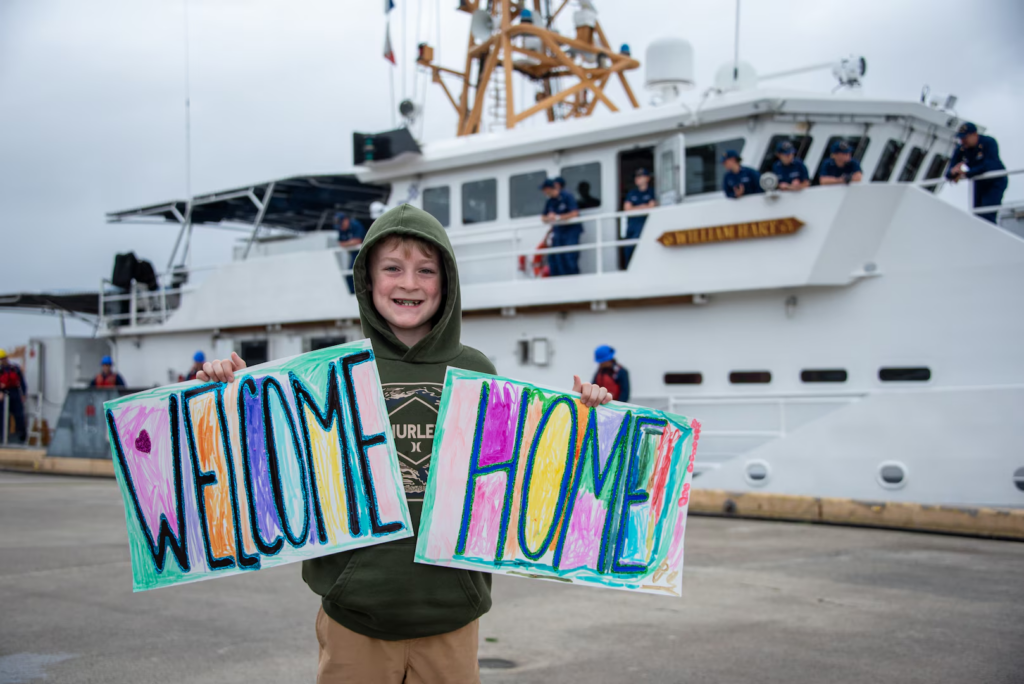
HONOLULU — The crew of the Coast Guard Cutter Kimball (WMSL 756) returned to Honolulu, Jan. 1, after a 120-day, 16,500-nautical-mile deployment to the Bering Sea and Gulf of Alaska reinforcing maritime safety, security, and national sovereignty in the region. 

As the Arctic region continues to become more accessible and consequential, the demand for U.S. Coast Guard statutory mission services, leadership, and presence continues to grow. Kimball’s crew exemplified these efforts. 

Throughout the deployment, Kimball’s crew conducted law enforcement operations, provided critical emergency response, and participated in joint exercises with the Department of War, showcasing the versatility and capability of the national security cutter platform. 

Kimball’s law enforcement teams conducted 13 inspections of fishing vessels and conducted joint boardings with the National Oceanic and Atmospheric Administration Office of Law Enforcement. Three citations were issued for violations that included two cases of illegally retained catches. 

The crew also conducted extensive training with MH-60 helicopters from Air Station Kodiak to enhance proficiency between cutters and air crews. In addition, Kimball tested the new Vertical Takeoff and Landing Battery (V-BAT) unmanned aerial system while patrolling the Bering Sea, conducting several operations to evaluate and enhance the cutter’s surveillance capabilities. 

Following the aftermath of Typhoon Halong, Kimball’s crew provided critical support to the area by positioning as a ready fueling platform for responding air assets. The crew also served as the on-scene coordinator and rendered assistance to a disabled and adrift bulk carrier that lost propulsion near a heavily trafficked pass through the Aleutian Islands. 

Kimball participated in two joint operations with United States Alaskan Command under Operation TUNDRA MERLIN. These activities involved Kimball and multiple U.S. Air Force aircraft in simulated joint maritime strikes, providing valuable insight into the national security cutter’s capabilities and demonstrates integration of Department of Homeland Security and Department of War assets in support of homeland defense. 

“I am immensely proud of this crew for standing the watch over one of the harshest maritime operational areas in the world,” said Capt. Craig Allen, Kimball’s commanding officer. “This crew demonstrated remarkable skill, tenacity, and teamwork across a wide spectrum of Coast Guard missions. Their professionalism made a direct positive impact to the safety and security of the Alaskan community.” 

While on patrol, Kimball’s crew crossed the Arctic Circle, earning the designation as “Blue Nose Polar Bears.” The crew also engaged with the Dutch Harbor, Alaksa, community by volunteering for a beach clean-up and hosting a holiday-themed tour of the cutter for nearly 250 local residents. 

Commissioned in 2019, Kimball is one of two 418-foot, Legend-class national security cutters homeported in Honolulu. The cutter’s primary missions are counter-drug operations and defense readiness. The namesake of U.S. Coast Guard Cutter Kimball is Sumner Increase Kimball, the organizer of the United States Life-Saving Service and its general superintendent from 1878–1915. 


CH-53K Program Enters Multi-Year Procurement Contract with GE 

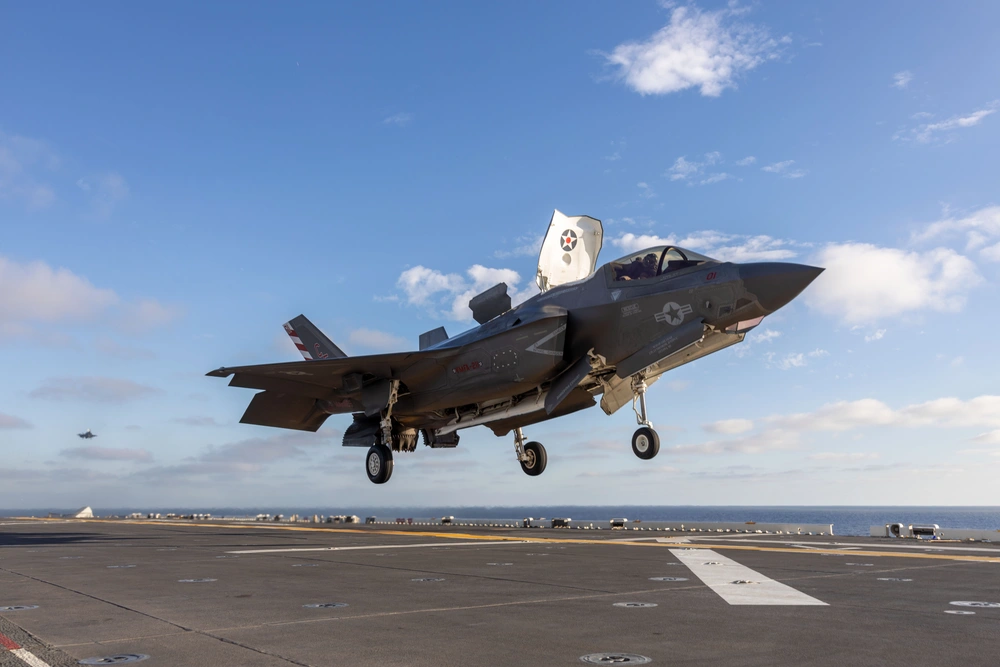
A U.S. Marine Corps CH-53K King Stallion helicopter assigned to Marine Heavy Helicopter Squadron (HMH) 461, Marine Aircraft Group 29 lifts a joint light tactical vehicle during a helicopter support team exercise at Marine Corps Base Camp Lejeune, North Carolina, Sep. 4, 2025. The helicopter support team operations enhanced the ability to coordinate safe rigging, loading, and lifting of vehicles by helicopter for precise and secure air transport. (U.S. Marine Corps photo by Sgt. Jorge Borjas) 

Release From Naval Air Systems Command

NAS PATUXENT RIVER, Md. — A five-year, multi-year procurement (MYP) contract was signed on January 8 between the Department of War (DOW) and GE Aerospace for both new production and spare T-408 engines, along with associated sustainment services for the CH-53K King Stallion helicopter. The $1.4 billion contract covers five years, Lots 9-13, providing more than $174 million in savings over the Future Years Defense Program (FYDP). 

The CH-53K program is critical to the Marine Corps’ strategic plan. It is replacing the CH-53E as the only marinized heavy-lift rotary-wing aircraft in the U.S. defense inventory. 

“This multi-year procurement is a key indicator of the strong commitment to the CH-53K program, and the integral part that GE plays,” said Col. Kate Fleeger, program manager, H-53 Heavy Lift Helicopters Program Office (PMA-261). “The contract allows GE to manage supply chain health through a stable, predictable demand signal, ultimately achieving better pricing, passing those savings on to the government.” 

Multi-year procurement is one of several contracting mechanisms that Congress permits the DOW to use in limited circumstances. MYP is used in lieu of an annual contract and provides the opportunity for significant savings. MYP contracts require congressional approval for each use, with the program meeting specific criteria to qualify for MYP. 

“By committing to long-term contracts, we are simultaneously reducing cost and helping to strengthen our defense industrial base,” said Fleeger. “Ultimately, this multi-year procurement will significantly reduce risk to the CH-53K transition plan.” 

Long-term, MYP contracts provide stability to industrial partners while incentivizing investment. That investment provides personnel and equipment needed for uninterrupted production for the years negotiated. It also allows the program office to improve production while reducing the administrative burdens of annual contracts. 

There are currently 23 CH-53K aircraft in operation with the U.S. Marine Corps. The CH-53K King Stallion program is on track for its first Marine Expeditionary Unit (MEU) deployment in FY27. 

PMA-261 manages the cradle to grave procurement, development, support, fielding and disposal of the entire family of H-53 heavy lift helicopters. 


VMM-264 Reactivates Following Five-Year Hiatus

11 Dec 2025 | Capt. Jacob Ballard2nd Marine Aircraft Wing 

MARINE CORPS AIR STATION CHERRY POINT, N.C. — Marine Medium Tiltrotor Squadron (VMM) 264, 2nd Marine Aircraft Wing (MAW), was reactivated during a ceremony at Marine Corps Air Station New River, North Carolina, on Thursday. 

VMM-264, known as “The Black Knights,” was deactivated on June 24, 2020, under Force Design initiatives. Throughout the squadron’s deactivation, the Marine Corps conducted an analysis of force management to ensure no operational commitments were unmet. This analysis identified the need for an additional VMM squadron on the east coast to provide sustained operational support to II Marine Expeditionary Force (MEF). This change within 2nd MAW reflects incremental adjustments to Force Design to meet the operational demands of the service. 

During the reactivation ceremony, Col. Daniel Kaiser, commanding officer of Marine Aircraft Group 26 (MAG), spoke about the squadron’s history and its role in the MV-22’s early operational employment.  

“VMM-264 carries a distinguished legacy, having been established in 1959 and providing decades of critical support to Marine Air-Ground Task Force (MAGTF) operations around the globe. Upon transitioning to the MV-22 Osprey in 2009, the squadron played a pivotal role in developing and advancing the MV-22 as the Marine Corps’ premier assault support platform.” 

Kaiser went on to express excitement about the squadron’s return. “MAG-26 is proud to welcome this storied unit back into the fold and looks forward to the significant contributions the ‘Black Knights’ will bring in support of the ‘Carolina MAGTF.’” 

The squadron will resume operating the MV-22 Osprey tiltrotor aircraft. The MV-22 Osprey is a multi-role tiltrotor aircraft developed by Bell Helicopter and Boeing, designed to support Marine Corps operations with enhanced versatility and speed. First introduced in the late 1990s, the MV-22 combines the vertical takeoff capability of a helicopter with the speed and range of a fixed-wing airplane. It is equipped to perform a wide array of missions, including troop transport, logistics support, and casualty evacuation. Due to its speed and range, the Osprey significantly reduces transit time in operational environments, making it a crucial asset for rapid deployment and maneuverability in the field.  

In addition to the reactivation, the ceremony also served as an assumption of command, during which Lt. Col. Paul Lancaster formally assumed responsibility, authority, and accountability for VMM-264 as the commanding officer. 

Lancaster expressed his pride in leading the reactivation. “I’m proud to lead the reactivation of a legacy assault support unit. This reactivation brings the necessary balance and capacity to the MV-22 community and supports the continued evolution of Marine Corps aviation.” He also recognized the efforts of those who made the reactivation possible: “Today’s ceremony honors the Marines and Sailors who worked tirelessly to build a world-class squadron, dedicated to operational excellence. It also honors the thousands of Marines and Sailors who wore the Black Knight patch previously.” 

VMM-264 is a subordinate unit of 2nd MAW, the aviation combat element of II MEF. 


HII Expands European Unmanned Operations with New Facility in Portchester, UK

Release From HII

PORTCHESTER, United Kingdom, Jan. 12, 2026 (GLOBE NEWSWIRE) — HII (NYSE: HII), the world’s leading manufacturer of autonomous surface and underwater unmanned vehicles, has doubled the size of its unmanned facility in Portchester, U.K. 

The enlarged facility significantly enhances and strengthens the company’s presence in the United Kingdom and increases capacity and support for the U.K. Royal Navy and European partners that operate the REMUS line of unmanned underwater vehicles (UUVs). 

In addition to supporting regional unmanned customers, the Portchester facility will serve as a European hub for HII’s Mission Technologies division, enabling collaborative customer support for U.S. combatant commands and allied missions. The site will provide operational, technical, and logistics support to deploy, sustain, and integrate electronic warfare and C5ISR systems, fleet modernization efforts, artificial intelligence capabilities, and live, virtual, and constructive training. 

The facility also prepares the region for the deployment and sustainment of HII’s ROMULUS family of unmanned surface vessels (USVs), a modular AI-enabled line powered by HII’s Odyssey Autonomous Control System and scheduled for availability in 2026. 

HII’s unmanned platforms are known for modular design, long endurance and reliable field performance. They support defense, commercial and research missions that include mine countermeasures, hydrographic survey, intelligence collection and environmental monitoring. 

The expanded Portchester facility will operate as a strengthened regional hub for HII’s unmanned systems. Staffed by U.K. employees, it will drive new jobs and support supplier engagement, maintenance, training and long-term sustainment for operators across the U.K. and Europe. The site will also work in close coordination with HII’s global engineering, production, training and mission support teams to keep programs aligned and effective. 

Duane Fotheringham, president of Mission Technologies’ Unmanned Systems business group, said, “This new HII Portchester facility reinforces HII’s long term presence in the United Kingdom and provides a strong foundation for future cooperation. It ensures that U.K. and European operators, suppliers, and partners of ROMULUS USVs and REMUS UUVs receive regional access to world class support, training and sustainment.” 

REMUS UUV Family of Systems 

REMUS unmanned underwater vehicles are the world’s leading UUV. They use an open-architecture design that supports the rapid integration of new payloads, mission-specific configurations, and future upgrades that ensure operators keep pace with evolving challenges and requirements while managing costs. REMUS systems are in service with more than 30 countries, including 14 NATO members, and are known for dependable operation, advanced sensor performance, and a strong record in mine hunting, reconnaissance and underwater survey missions. 

In September, Babcock International Group and HII signed a memorandum of understanding to integrate HII’s REMUS vehicles with Babcock’s submarine Weapon Handling and Launch Systems. The goal is autonomous launch and recovery of UUVs through submarine torpedo tubes, strengthening undersea advantage for allied navies. The partnership builds on the U.S. Navy’s first successful forward-deployed torpedo-tube launch and recovery of a UUV using a REMUS. Babcock’s Weapon Handling and Launch Systems are in service with submarine fleets in the U.K., Canada, Australia, Spain and South Korea. 

The Royal Navy has a long partnership with REMUS. Since 2001, the Ministry of Defence has acquired REMUS 100, REMUS 300 and REMUS 600 vehicles for mine countermeasure operations. In 2024, HII announced the sale of three REMUS 100s and five REMUS 300s to the Royal Navy. This order reflects confidence in the upgrade potential and build quality of HII systems and builds on more than two decades of cooperation. The first two REMUS 100s delivered in 2001 remain in active service today. 

The REMUS Mine Hunting Capability (MHC) provides high resolution seabed imaging and precise navigation, giving naval teams a fast and reliable tool to counter underwater threats. 

The REMUS line includes several variants, each designed for specific mission sets and operating depths. The numbering reflects operational depth and generation. 

  • REMUS 130: Compact and optimized for shallow-water operations and rapid deployment. 

  • REMUS 300: Offers increased range and payload capacity in a lightweight form. Serves as the baseline for the U.S. Navy’s Lionfish program. 

  • REMUS 620: Features modular upgrades, modernized electronics, battery life up to 110 hours, and a range of 275 nautical miles. Recently supported submarine launch and recovery operations for the U.S. Navy Submarine Force. 

  • REMUS 6000: Operates at depths up to 6,000 meters and is used for deep-sea recovery and complex scientific work. 

All REMUS models share a common architecture, allowing operators to scale capability while maintaining system familiarity. More than 90% of REMUS units delivered over the past 23 years remain in service. This highlights the platform’s durability and lifecycle value, two critical factors in defense acquisition. 

REMUS Track Record 

  • Defense: Used by 14 NATO navies for mine warfare, ISR, and seabed mapping. 

  • Search and Recovery: Played key roles in the search for Air France Flight 447, post-tsunami response in Japan, and the discovery of USS Indianapolis (CA 35). 

  • Science and Environment: Supports environmental monitoring, marine archaeology, and oceanographic research. The National Oceanic and Atmospheric Administration is deploying REMUS 620 systems to map seafloor habitats affected by the Deepwater Horizon spill. 

HII ROMULUS USV Family of Systems 

HII’s ROMULUS family is a modular, AI-enabled line of USVs powered by the Odyssey Autonomous Control System. The flagship, ROMULUS 190, is currently under construction with sea trials planned for 2026. 

ROMULUS is built on a commercial-standard hull for rapid, repeatable production. It delivers speeds over 25 knots and a range of 2,500 nautical miles. Large versions of the ROMULUS are capable of carrying four 40-foot ISO containers. ROMULUS is purpose built for global mission deployment and extended autonomous operations. 

Powered by the Odyssey ACS, ROMULUS delivers open-ocean autonomy, multi-agent swarming, and modular adaptability. It supports missions that include ISR, counter-unmanned air systems, mine countermeasures, strike, and launch and recovery of UUVs and UAVs.