The Chairman of the Joint Chiefs of Staff Army Gen. Mark A. Milley has named Sgt. Maj. of the Marine Corps Troy E. Black to succeed Senior Enlisted Advisor to the Chairman Ramon “CZ” Colon-Lopez.
SEAC is the most senior enlisted rank in the U.S. military, and serves as the chairman’s direct tie to the enlisted force.
The transfer of responsibility ceremony will be November 3 along with Colon-Lopez’s retirement from the U.S. Air Force.
Black has spent 35 years in the Marine Corps. He attended recruit training at Marine Corps Recruit Depot Parris Island, South Carolina, in April 1988. He has been the sergeant major of the Marine Corps since 2019.
Black served in Operation Just Cause, Operation Desert Shield/Desert Storm and deployed numerous times to Afghanistan and Iraq.
Black began his career in the fleet as an infantry machine gunner serving in units from a fleet anti-terrorism security team company, to the 3rd Battalion of the 5th Marine Regiment to the 13th Marine Expeditionary Unit.
He has successfully completed tours as a drill instructor at Marine Corps Recruit Depot Parris Island, South Carolina (where he met his wife, Stacie), and at the Officer Candidate School, Quantico, Virginia.
As a sergeant major, Black has served at the 3rd Battalion of the 7th Marine Regiment; Combat Logistics Battalion 5, 11th Marine Expeditionary Unit, 1st Marine Logistics Group and at Marine Corps Manpower and Reserve Affairs.
Black will be the fifth SEAC and the second Marine to hold the rank.
Remarks by Secretary of Defense Lloyd J. Austin III at the Commandant of the Marine Corps Relinquishment of Office Ceremony
It’s an honor to be here at Marine Barracks Washington, which is the oldest active post in the Corps.
And it’s great to see Secretary Del Toro, General Milley, and so many other military leaders, distinguished guests, friends, and family members.
I’m delighted to be with you to celebrate the career of an outstanding Marine: our 38th Commandant of the Marine Corps, General David Berger.
But he would be the first to tell you that today is a celebration of all of our outstanding Marines.
For two and a half centuries, U.S. Marines have proudly been the “first to fight.” They’ve fought with valor on beaches, in cities, and in jungles. Their commitment to our democracy and to their brothers and sisters in arms is unbreakable. And their courage has long been central to America’s success on the battlefield.
Today, we face a challenging new security landscape. But our Marines are navigating it with the same grit, power, and resolve that have always set the Corps apart.
That’s especially important in our primary theater of operations, the Indo-Pacific. I was honored to visit earlier this year with some very impressive Marines in Japan and the Philippines. I got to see firsthand how the Corps is strengthening deterrence alongside our allies. And the Corps is hard at work standing up the 12th Marine Littoral Regiment in Okinawa, which will make our Joint Force even more lethal.
Marines are also central to our operations and deterrence in Europe. They train alongside our NATO allies on everything from cold-weather operations to mountain warfare. And as Russia continues its cruel war of choice against Ukraine, our “stand-in force” of Marines is critical for NATO’s deterrence and defense.
In fact, it’s hard to find a spot on the globe where Marines aren’t making it safer.
And when a crisis erupts, we count on our Marines to be ready for anything—and to leap into action.
Today, as we work to strengthen our military for the great competitions ahead, the Marine Corps is absolutely central.
The Force Design 2030 Plan outlines how the Marines will modernize the Corps to deepen America’s deterrence—and, if necessary, to fight and to win wherever they must.
And General Dave Berger has led this historic and transformational effort.
He’s done so with vision, creativity, and boldness.
He’s not just willing to embrace change.
He’s eager to lead change.
It’s often said that militaries are always preparing to fight the last war.
But General Berger has been driving hard to deter the next war.
In his four years as Commandant, he has focused relentlessly on the future fight. He has faced hard choices head-on. He has encouraged creative thinking at every level of the Corps. And he has pushed our Department to redefine readiness for the 21st century.
Now, despite all of his achievements, Dave is one of the most humble leaders in our inventory.
In fact, he probably hates that I’m talking about him right now.
But I’m going to do it for a few more minutes, Dave, so relax.
You know, anyone who’s worked in government knows how tempting it can be to just kick the can down the road, or to make do with the old ways for a little longer.
But that’s not Dave Berger.
His staff says that he has “never once hit the ‘Easy’ button.”
And that’s been true throughout his career.
As a young officer, General Berger did it all: reconnaissance training, jumpmaster school, aviation, combat dive, you name it.
He went on to command the First Marine Division in Afghanistan, the First Marine Expeditionary Force in Camp Pendleton, and Fleet Marine Forces Pacific, where he saw firsthand what it takes to deter aggression in the Indo-Pacific.
He’s a warrior-scholar. He’s a tremendous communicator. He’s a tireless advocate for younger Marines.
And he’s a great listener.
In fact, General Berger believes that the more senior you get, the more important it is to listen—to everyone, no matter their rank or title.
Young majors on his staff recall that General Berger would ask them about their own experiences in the Corps, and how things could work better.
And for anyone with a good idea, he’s always got an open door and an open mind.
Now, if you ask General Berger how he stays grounded, his answer is simple: his family.
And let me recognize General Berger’s parents, JC and Martha, his wife Donna, and their four sons: Joseph, Ryan, Phillip, and Jeffrey.
You know, there is nothing more important to Dave than family.
He loves coaching his sons’ sports teams, bragging on their accomplishments, and riding four-wheelers back on the farm with his grandchildren.
He takes leave just to spend time with his family, and he turns his phone off so he can be present.
And Dave always makes clear to the teams he leads: family comes first.
He loves talking with his staff about what their families are up to—and he encourages them to make sure they’re spending time with their loved ones.
And that really makes a difference to Marines at all levels of the Corps.
So I want to thank Dave for his focus on family. And I want to thank this outstanding military family for serving right alongside General Berger.
Donna, thanks for all that you’ve done for our country and the Corps—and for your tireless work on behalf of military families.
This year marks 42 years since Dave became a Marine—and 42 years of marriage for Dave and Donna. So let’s give it up for them.
And to General Berger’s children and your families—thanks for your love and support, and for what you’re doing to serve our country as well.
You know, years ago, Dave and Donna had a conversation about whether he should stay in the Marines. And they decided that if he ever had three bad days in a row, he’d get out of the military.
And General Berger says that he’s never had those three bad days.
So Dave, I want to thank you for everything that you have done to strengthen the Marine Corps and to defend the United States.
Now, I know that everyone here is looking forward to the rapid confirmation of a distinguished successor to General Berger.
You know, it’s been more than a century since the U.S. Marine Corps has operated without a Senate-confirmed commandant.
Smooth and timely transitions of confirmed leadership are central to the defense of the United States, and to the full strength of the most powerful fighting force in history.
Stable and orderly leadership transitions are also vital to maintaining our unmatched network of allies and partners.
And they’re crucial for our military readiness.
And of course, our military families give up so much to support those who serve—so they shouldn’t be weighed down with any extra uncertainty.
We have a sacred duty to do right by those who volunteer to wear the cloth of our nation, and their families.
I remain confident that all Americans can come together to agree on that basic obligation to those who keep us safe.
I am also confident that the United States Senate will meet its responsibilities.
And I look forward to welcoming an outstanding new Commandant for our Marine Corps, and to adding many other distinguished senior leaders across the Joint Force.
You know, there’s a saying in the Marines: “We don’t accept applications, only commitments.”
And every day, Marines bring their trademark commitment—quiet but fierce—to their teammates, their commanders, and their country.
That commitment has allowed America to fight and win countless battles across the centuries.
That commitment is what lets America race to the aid of those in need, anywhere on the planet.
And that commitment is why I’m confident that our military is ready to deter aggression wherever we can and to fight and win wherever we must—today, tomorrow, and for decades to come.
And I am confident that we will rise to the challenge of making our country stronger, and making our world safer.
To our Marine Corps: thank you for your unfailing commitment to our country.
And to General Berger: thank you for your unfailing commitment to our Marine Corps.
May God bless you and your family. May God continue to bless our Marine Corps. And may God continue to bless the United States of America.
Thank you very much.
Nuclear Propulsion School First – Three Royal Australian Navy Officers Graduate the Program
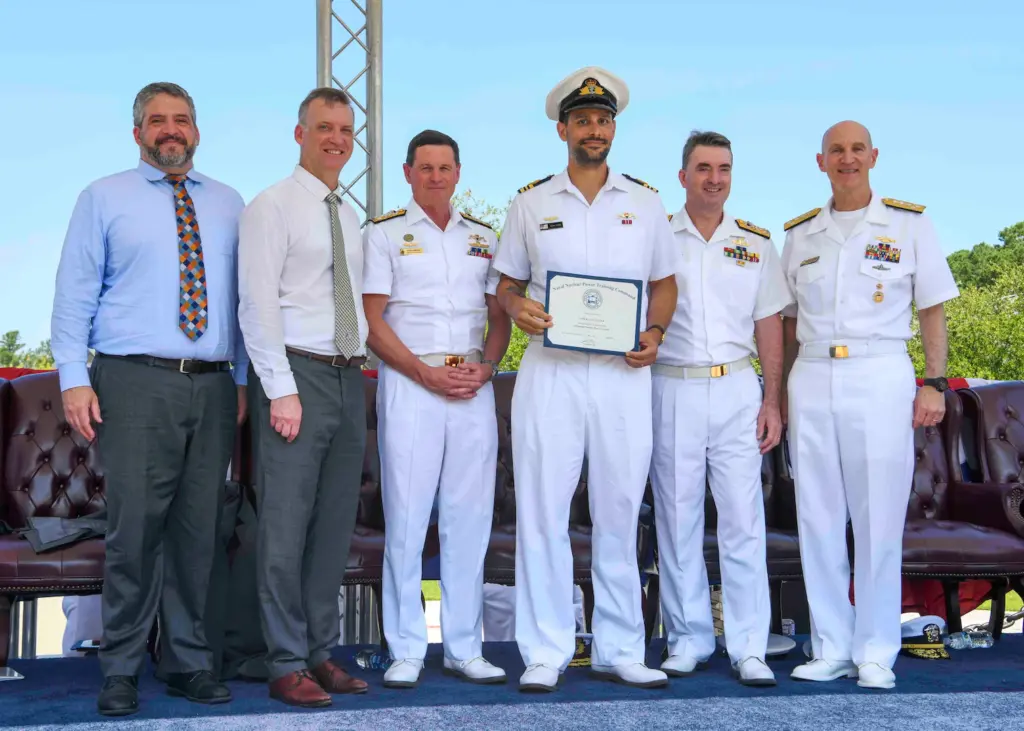
Goose Creek, SC –Three Royal Australian Navy (RAN) officers graduated from the United States Navy’s Nuclear Power School (NPS) today, marking a significant step in Australia’s goal to operate conventionally armed, nuclear-powered attack submarines (SSNs).
Lt. Cmdr. James Heydon, Lt. Cmdr. Adam Klyne, and Lt. William Hall started NPS in November 2022, becoming the first cadre of RAN personnel to go through one of the Department of Defense’s most rigorous and demanding training programs.
“I knew coming in that this was going to be a challenge, and I was not disappointed,” said Heydon. “That said, being one of the first Australians to graduate from NPS means a lot to me personally and for Australia as we work to build the stewardship needed to safely operate a nuclear reactor. With that as our motivation, my colleagues and I put our heads down and cracked on.”
NPS trains officers and enlisted personnel in the science and engineering principles that are fundamental to the design, operation, and maintenance of naval nuclear propulsion plants.
“What these graduates learn at NPS prepares them for the next step in becoming a nuclear-qualified officer,” said Adm. James Caldwell Jr., Director, Naval Nuclear Propulsion Program. “From here, they will continue their academic and practical studies so that when they go to their aircraft carrier or, in the case of our RAN officers, submarines, they are ready to safely and competently operate the power plant.”
The three RAN officers will next report to Nuclear Prototype Training Unit (NPTU) Charleston to complete Engineering Officer of the Watch training, which will conclude in late 2023 or early 2024. Following NPTU, the officers will go through Submarine Officer Basic Course for approximately 2.5 months in Groton, Connecticut and then be assigned to a Virginia-class SSN to continue their training and qualifications.
“These officers will form the nucleus of the RAN’s nuclear-qualified submariners and, through them, Australia will develop its ability to operate, maintain, and build their own conventionally armed nuclear powered submarines when it receives its first Virginia-class submarine from in the U.S. in the early 2030s,” shared Capt. Lincoln Reifsteck the AUKUS Integration and Acquisition Program Manager.
“Today marks a significant step forward in the Royal Australian Navy’s ability to build its sovereign SSN capability,” said Vice Adm. Jonathan Mead, the Australia Submarine Agency’s Director General. “I could not be more proud of these three officers. Today, we have sharpened the tip of our undersea warfighting spear, and we are closer to having a safer and more secure Indo-Pacific region.”
There are six RAN officers enrolled in NPS with more planned to join in the near future. “NPS has the capacity to train RAN officers and enlisted personnel. In doing so, we are able to impart the stewardship and knowledge that has allowed the United States to safely operate nuclear-powered ships for nearly 70 years and steam more than 171 million miles,” said Caldwell.
Initially announced in September 2021, the AUKUS trilateral agreement between Australia, the United Kingdom, and the United States is a strategic endeavor aimed at strengthening the security and defense capabilities of the three nations that also promotes stability and security in the Indo-Pacific region. Australia will acquire conventionally armed SSNs for the Royal Australian Navy under Pillar I of AUKUS via the Optimal Pathway announced by the heads of the three partner nations on March 13, 2023.
The Optimal Pathway for Australia’s acquisition of nuclear powered submarines begins this year with an increase in the number of U.S. SSNs visiting HMAS Stirling in Western Australia. As early as 2027, U.S. and U.K. SSNs will begin extended rotations to Australia to accelerate the development of Australia’s workforce, infrastructure, and regulatory system as part of the Submarine Rotational Force – West (SRF-W). With congressional approval, the United States intends to sell three Virginia-class SSNs to Australia starting in the early 2030s with the potential to sell up to two additional hulls if needed. These efforts will maintain Australia’s submarine capacity as it builds its fleet of SSN-AUKUS, a trilaterally developed nuclear powered submarines based on the U.K.’s next generation design. The Royal Australian Navy intends to take delivery of the first SSN AUKUS in the late 2030s followed by the first Australian-built SSN AUKUS in the early 2040s.
UMS SKELDAR and Hydronalix Announce Co-Operation Agreement at Modern Day Marine Event
Co-operation agreement enables UMS SKELDAR to equip its market-leading SKELDAR V-200 with Hydronalix’s Unmanned Surface Vehicle (USV) enhancing the manned-unmanned common operating picture across multiple maritime domains.
Release from UMS Skeldar
*****
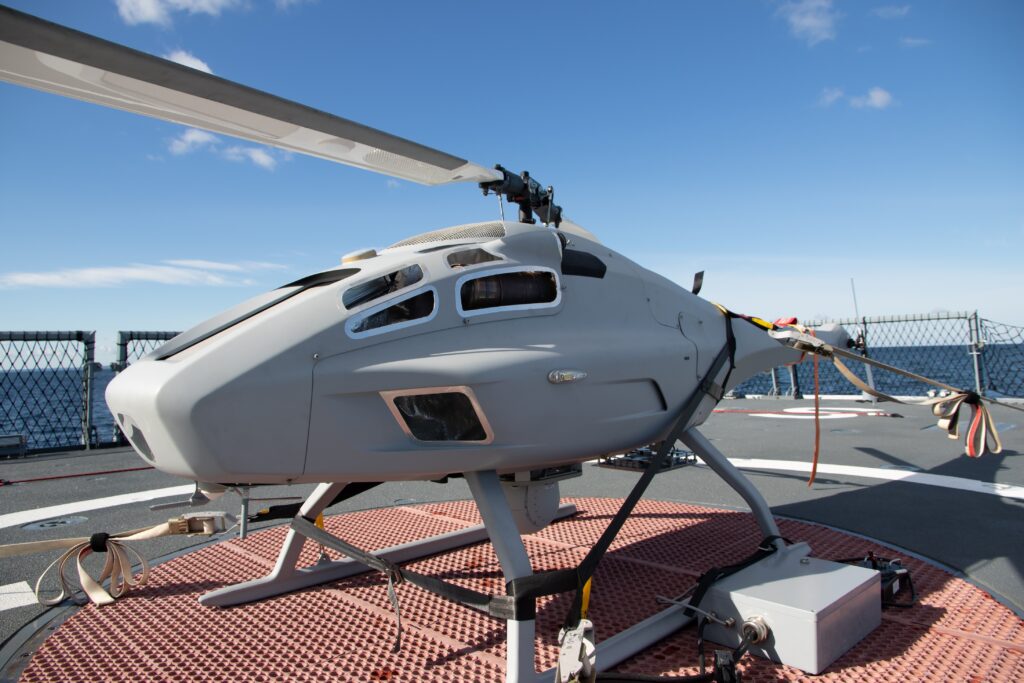
26th June – UMS SKELDAR and Hydronalix are pleased to announce a co-operation agreement at the Modern Day Marine event, due to be held between June 27th and 29th, 2023, in Washington DC, USA. The agreement will feature UMS SKELDAR’s market-leading SKELDAR V-200 Unmanned Aerial Vehicle (UAV) equipped with one of Hydronalix’s groundbreaking Unmanned Surface Vehicle (USV) systems. The purpose of the new joint platform is to offer solutions to emerging operational challenges within, for example, complex, contested littoral areas where supporting networks of manned – unmanned systems are required for efficient, resilient operations.
Hydronalix’s USV, which will for the first time be attached to UMS SKELDAR’s V-200 platform, can be employed as a communications link between the different users in all domains. This combined system will provide the Marine Corps and Navy the capability to adapt to complex littoral environments rapidly thanks to its ability to be quickly deployed day or night over sea. Additionally, the Intelligence, Surveillance, Reconnaissance and Targeting (ISR&T) benefits offered by launching USVs teamed with UAVs in conflict zones, greatly broadens the operational picture for users.
Ted Ackerstierna, UMS SKELDAR’s Vice President for the USA market, explains: “At UMS SKELDAR, we are constantly working to broaden the capabilities of our UAV platforms, not only in terms of sensor-based payloads, but also with technologies like Hydronalix’s USVs that we can employ from our UAV systems. The USVs offered by Hydronalix are such versatile pieces of technology, which we saw a great many uses for including supporting covert surveillance missions and acting as a critical communications link. Attached to our SKELDAR V-200, which has an endurance of over six hours with significant payload weight, the complete system will be able to provide a wide range of enhanced capabilities for Marine Corps and Navy war fighters across their operational domains.”
Anthony Mulligan, CEO for Hydronalix, adds: “The possibility of launching Hydronalix’s USVs from UMS SKELDAR’s V-00 UAVs is a potential gamechanger for Marine Corps and Navy war fighters who seek unmanned technologies that can enhance their operational capabilities. The future distributed force concepts require innovative solutions that can provide the domain awareness for effective decision making. From rescue to weapon assignment, the UMS SKELDAR UAV / Hydronalix USV platform combination with advanced mesh networking promises to serve Expeditionary and Special Forces under new distributed force designs.”
HII Donates Dry Dock Gate to Become Part of Sustainable Fish Reef
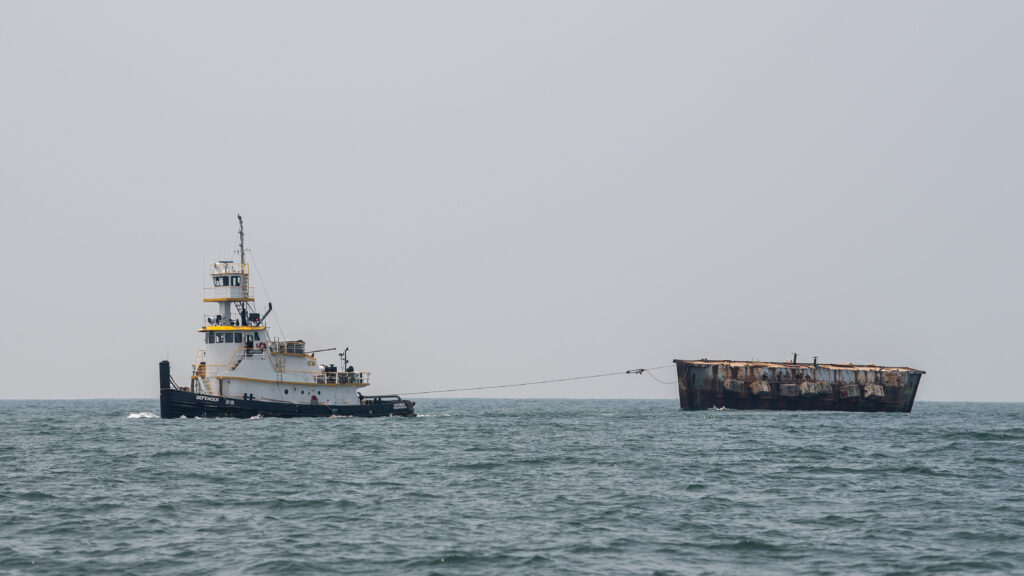
NEWPORT NEWS, Va., July 06, 2023 (GLOBE NEWSWIRE) — HII (NYSE: HII) announced today that its Newport News Shipbuilding division partnered with the Virginia Marine Resource Commission (VMRC) to donate and sink a former dry dock caisson gate offshore, giving it new life as part of an artificial reef.
The donation is aligned with HII’s sustainability efforts to protect our shared resources and reflects a corporate commitment to a sustainable, resilient and inclusive future.
Caisson gates are used at the harbor end of a dry dock, with pipes inside allowing for water from the James River to enter when NNS needs to flood the dry dock. This particular gate, originally put into service at NNS in 1967, was part of a dry dock no longer in use at the shipyard.
NNS crews worked to prepare the caisson gate, ensuring that it was environmentally ready to take on its new mission. That included stripping all loose paint, removing electrical items and ensuring all oils and solvents were removed. The gate was also ballasted for sinking to ensure it landed on the seabed properly.
In late June, the gate left NNS, was towed offshore and sunk. It is now taking on new life as part of the VMRC Tower Reef, which is already home to multiple barges, other vessels and subway cars.
“Donating this caisson gate to give it a new purpose was a natural choice for us,” said John Anderson, NNS senior dock master, who spearheaded the project. “We understand that nurturing and protecting our oceans isn’t just the right thing to do, it also makes good business sense as we serve our customer, shipbuilders and community.”
The donation directly supports Virginia’s Artificial Reef Program, which aims to replicate natural fish habitats as closely as possible and increase fishing opportunities for anglers.
“VMRC has been building and enhancing reefs for citizens of the commonwealth for over 40 years,” explained VMRC Commissioner Jamie Green, a strong proponent for the program. “We are excited to partner with NNS to utilize material that has such a rich history with the Hampton Roads area.”
This partnership is part of HII’s continued commitment to a sustainable future. The 2023 HII Sustainability Update is available here.
Contract for 2 NOAA research ships awarded to Thoma-Sea Marine Constructors, LLC.
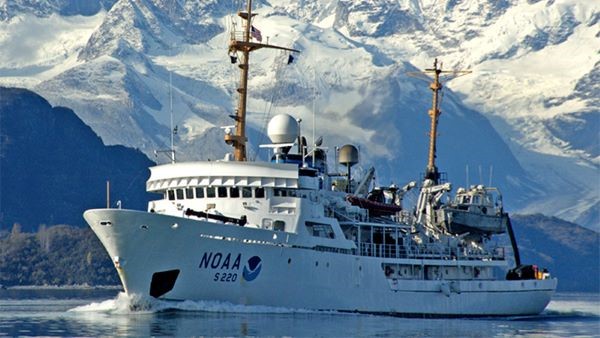
NOAA Ship Fairweather is one of the current charting and mapping vessels in the NOAA fleet. Credit: NOAA
Release from NOAA
*****
Investments from the Inflation Reduction Act support Biden-Harris Administration’s Investing in America Agenda
NOAA will add two new ships to its fleet of groundbreaking research vessels. The agency selected Thoma-Sea Marine Constructors, LLC. for a $624.6 million contract to initially design and build two cutting-edge research vessels, with an option to purchase two more. The first two ships will be built in Houma, Louisiana, with an expected delivery date of 2027 and 2028.
The new ships will focus primarily on ocean mapping and nautical charting as part of NOAA’s mission to deliver tools and information to help mariners safely navigate the nation’s ports and harbors. Ships from around the world move $1.5 trillion worth of products in and out of U.S. ports every year and rely on navigation charts to do so safely. The new vessels will have additional capabilities to help assess and manage living marine resources and collect data for oceanographic monitoring, research and modeling activities.
“These state-of-the-art ships will ensure that we can continue to meet NOAA’s mission to support safe navigation, coastal resource management and the nation’s blue economy,” said NOAA Administrator Rick Spinrad, Ph.D. “I’m also proud that these new vessels will harness modern engines and design that will move NOAA forward in reducing its own emissions with an eye towards achieving a net-zero fleet.”
The ships will be designed to coordinate, acquire and process large data sets like those gathered from mapping the seafloor and characterizing marine habitats. They will also have the ability to deploy crewed survey work boats, scientific equipment and uncrewed systems, which enhance the work the ship does.
“This is another milestone in NOAA’s effort to recapitalize our aging fleet of ships,” said NOAA Corps Rear Adm. Nancy Hann, director of NOAA Marine and Aviation Operations and the NOAA Commissioned Officer Corps. “These ships are vital for mapping the United States Exclusive Economic Zone, enabling maritime commerce and responding to natural disasters, and will allow us to meet critical at-sea data collection requirements for the economic security, public safety and national security for many years to come.”
This contract was awarded following a request for proposals that was open June–October 2022.
The design and construction of these new ships is funded in part by the Inflation Reduction Act — a historic $3.3 billion investment to help communities, including tribes and vulnerable populations, prepare, adapt and build resilience to weather and climate events in pursuit of a climate-ready nation. The act also supports improvements to weather and climate data and services, and strengthens NOAA’s fleet of research airplanes and ships.
The research and survey ships operated, managed and maintained by NOAA Marine and Aviation Operations comprise the largest fleet of federal research ships in the nation. Ranging from large oceanographic research vessels capable of exploring the world’s deepest ocean, to smaller ships responsible for charting the shallow bays and inlets of the U.S. The fleet supports a wide range of marine activities, including fisheries surveys, nautical charting and ocean and climate studies. NOAA ships are operated by NOAA Corps officers and civilian professional mariners.
Climate, weather, and water affect all life on our ocean planet. NOAA’s mission is to understand and predict our changing environment, from the deep sea to outer space, and to manage and conserve America’s coastal and marine resources. See how NOAA science, services, and stewardship benefit your community: Visit noaa.gov for our latest news and features, and join us on social media.
BAE Systems awarded Next Generation Launcher design contract
BAE Systems was selected to design and deliver a new prototype deck launching system to the U.S. Navy.
BAE Systems was awarded a $37 million U.S. Department of Defense Ordnance Technology Consortium (DOTC) contract to design the Next Generation Evolved SeaSparrow Missile Launch System (NGELS). The company will support the NATO SeaSparrow Program Office (NSPO) to design and deliver prototype deck launching systems to support the U.S. Navy and allied countries with the Evolved SeaSparrow Missile (ESSM) ship self-defense system.
NGELS is a deck-mounted, fixed-angle launcher that leverages BAE Systems’ Adaptable Deck Launcher (ADL) concept to store and launch ESSMs from Mk 25 missile canisters, which are also produced by BAE Systems. Easily integrated into large deck platforms, NGELS will support the fielding of the latest and most highly-capable ESSM missile, the Block 2 variant, a multi-role surface-to-air and surface-to-surface missile capable of protecting aircraft carriers and other flat-decked ships against advanced air and surface threats. NGELS will use proven Mk 41 Vertical Launching System subsystems to deliver surface-to-air and surface-to-surface defense capabilities to aircraft carriers and amphibious ships in order to defeat missile threats.
“We have a long history of providing missile integration, launching systems, and canister design to the U.S. Navy,” said Brent Butcher, vice president of the weapon systems product line at BAE Systems. “NGELS leverages the expertise of our workforce to provide a ready-to-deploy system that enhances mission effectiveness and enables reliable ship defense for the U.S. Navy. We look forward to working with our customers to bring this enhanced capability to the fleet and introducing it to international users.”
HII Celebrates First Meal Aboard Virginia-Class Submarine New Jersey (SSN 796)
NEWPORT NEWS, Va., July 05, 2023 (GLOBE NEWSWIRE) — HII’s (NYSE: HII) Newport News Shipbuilding division moved another step closer toward delivery of Virginia-class submarine New Jersey (SSN 796) to the U.S. Navy when the first meal was recently served aboard the nuclear-powered fast attack submarine.
New Jersey is currently pierside at NNS and is in the final stages of construction and testing.
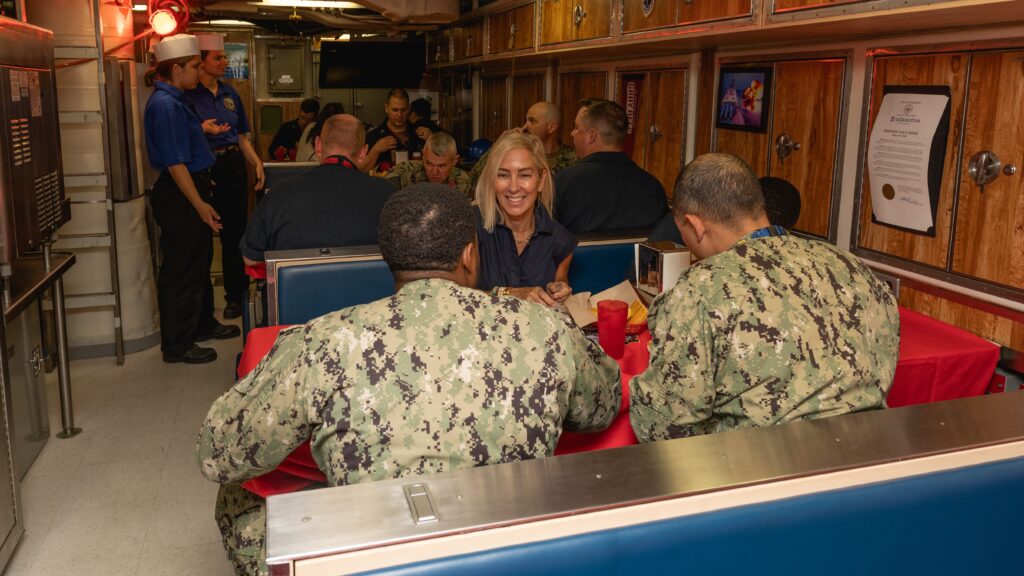
To celebrate the first meal, the crew welcomed the ship’s sponsor, Susan DiMarco, who is a New Jersey resident, retired dentist and the wife of former Secretary of Homeland Security Jeh Johnson, to dine with them. The menu included some of the crew’s voted favorites, such as barbeque brisket, baked catfish, cornbread, accompanying side dishes and coveted “hard pack” ice cream.
“The first meal is a meaningful milestone in the submarine’s construction as it represents the start of what will be thousands of meals served aboard New Jersey as the crew prepares to bring her into the fleet,” said Jason Ward, NNS vice president of Virginia-class submarine construction. “We understand the important mission ahead for New Jersey and we look forward to delivering this critical asset in service of the nation.”
“It’s refreshing to see the crew transition to working and eating onboard as we achieve the first step in bringing the ship to life,” said Cmdr. Steve Halle, commanding officer of the pre-commissioning unit. “We are excited to share this milestone with our sponsor, Susan, her son, and some commissioning members as we grow our relationship with the state of New Jersey.”
New Jersey was christened in November 2021 at NNS. It is the first submarine designed with modifications for gender integration. Following successful sea trials later this year, New Jersey will be the 11thVirginia-class submarine delivered by NNS.
NNS is one of only two shipyards capable of designing and building nuclear-powered submarines for the U.S. Navy.
Leidos Announces New Manufacturing Facility in North Charleston, South Carolina
Facility will insource production of key security products and bring new jobs to the region
(RESTON, Va.) July 6, 2023 – Leidos (NYSE:LDOS), a FORTUNE® 500 science and technology leader, today announced plans to establish a new security systems manufacturing facility in North Charleston, South Carolina. This will be the company’s third security systems manufacturing location in the U.S., expanding its presence and support to customers. Leidos will invest $31.7 million in the new facility, creating up to 170 new jobs in the region over time.
“This facility brings more manufacturing back into the U.S. and expands Leidos’ global security capabilities for the aviation and critical infrastructure markets,” said Jim Moos, Leidos Civil Group president. “We’re thrilled to expand into the North Charleston area and look forward to making a positive impact in the community.”
The new facility will produce security systems for Leidos’ Security Enterprise Solutions (SES) operation. SES offers a comprehensive suite of fully automated and integrated products for aviation, shipping ports, border crossings and critical infrastructure customers. These systems provide threat detection by screening baggage, cargo and people at checkpoints around the world.
“Leidos’ $31.7 million investment in their new facility here in the Lowcountry will lead to significant job growth and economic development,” said Congresswoman Nancy Mace (R-SC-1). “We congratulate them on their expanding operation and thank them for putting their faith in South Carolina.”
Located in Ladson Industrial Park, the new 150,000-square-foot facility will enable Leidos to onshore more manufacturing increasing the company’s critical capacity to support their growing customer base. The new plant will optimize manufacturing efficiency, quality and safety through application of best-in-class manufacturing processes. The facility is currently under construction and is expected to be fully operational by the first half of 2024.
U.S. Prevents Iran from Seizing Two Merchant Tankers in Gulf of Oman
By U.S. Naval Forces Central Command Public Affairs | July 05, 2023
GULF OF OMAN — On July 5, U.S. forces prevented two attempted commercial tanker seizures by the Iranian Navy after the Iranians had opened fire in one of the incidents near the coast of Oman.
Both of these incidents occurred in international waters.
At 1 a.m. local time, one Iranian naval vessel approached the Marshall Islands-flagged oil tanker TRF Moss in international waters in the Gulf of Oman. The Iranian vessel departed the scene when U.S. Navy guided-missile destroyer USS McFaul (DDG 74) arrived on station. Additionally, the U.S. Navy deployed surveillance assets, including MQ-9 Reaper and P-8 Poseidon maritime patrol aircraft.
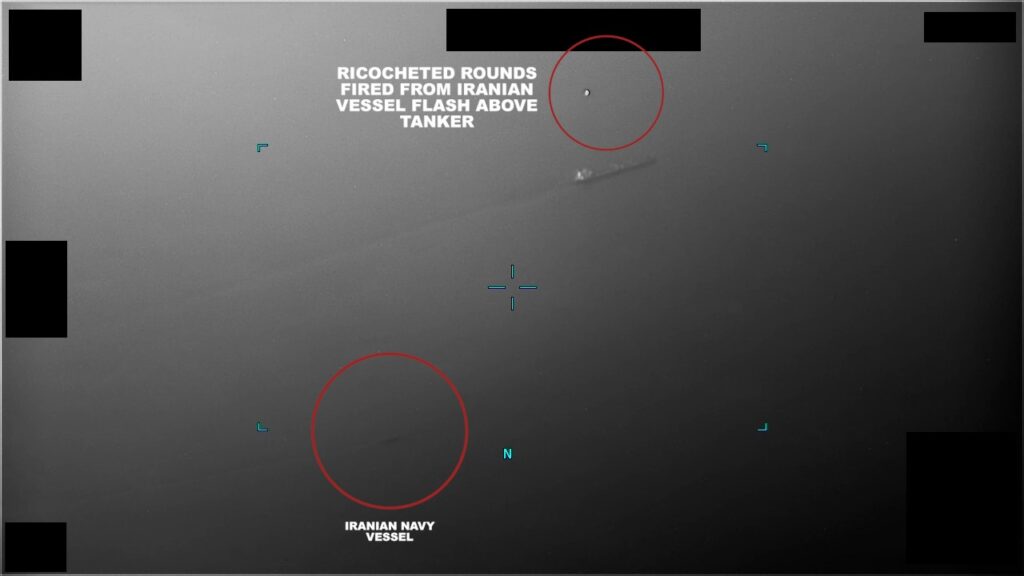
Approximately three hours later, the U.S. Navy received a distress call from Bahamian-flagged oil tanker Richmond Voyager while the ship was more than 20 miles off the coast of Muscat, Oman, and transiting international waters toward the Arabian Sea. Another Iranian naval vessel had closed within one mile of Richmond Voyager while hailing the commercial tanker to stop.
McFaul directed course toward Richmond Voyager at maximum speed as the merchant tanker continued its transit. Prior to McFaul’s arrival on scene, Iranian personnel fired multiple, long bursts from both small arms and crew-served weapons. Richmond Voyager sustained no casualties or significant damage. However, several rounds hit the ship’s hull near crew living spaces. The Iranian navy vessel departed when McFaul arrived.
In May, the United States increased the rotation of ships and aircraft patrolling the Strait of Hormuz with partners following an uptick in Iranian merchant vessel seizures. The increased force presence supports multinational efforts under the International Maritime Security Construct and bilaterally with partner nations to deter threats to commercial shipping and reassure regional mariners.
“I couldn’t be prouder of the entire [U.S. Naval Forces Central Command] team, especially the exceptional effort by the McFaul crew, for immediately responding and preventing another seizure,” said Vice Adm. Brad Cooper, commander of U.S. Naval Forces Central Command, U.S. 5th Fleet and Combined Maritime Forces. “We remain vigilant and ready to protect navigational rights in these critical waters.”
Since 2021, Iran has harassed, attacked or seized nearly 20 internationally flagged merchant vessels, presenting a clear threat to regional maritime security and the global economy.