Coast Guard Concludes 21 Years of Maritime Security Detachments to Gitmo
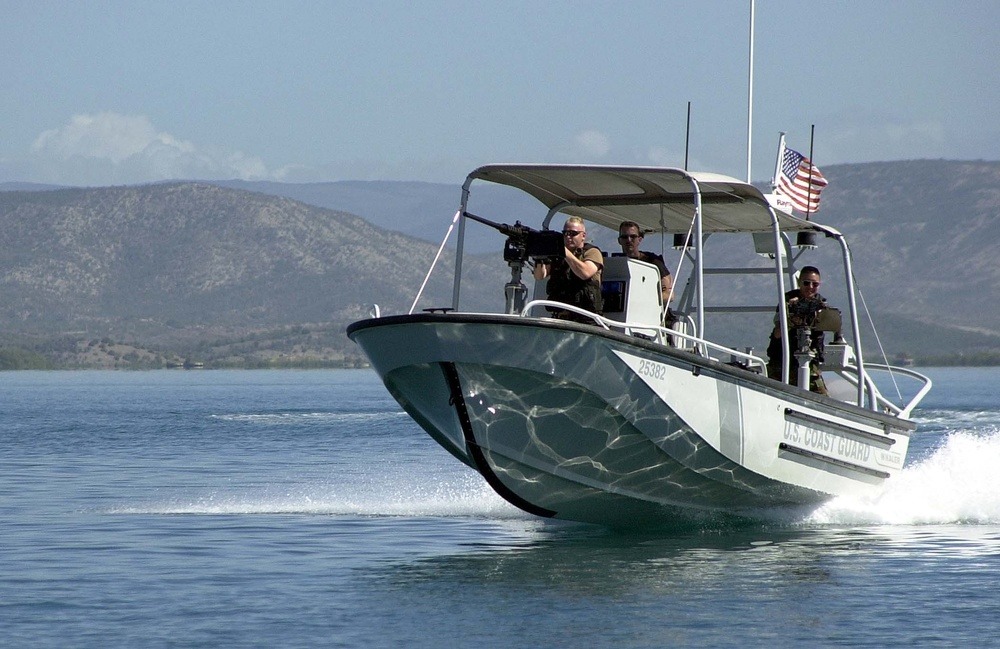
GUANTANAMO BAY, Cuba (Feb. 4)–Patrolling the waters of Guantanamo Bay are members of Port Security Unit 305 from Fort Eustis, Va. PSU 305 deployed to the Cuba in late January in support of the global war on terrorism. USCG photo by PA3 Krystyna Johnson
*****
ARLINGTON, Va. — The Coast Guard has closed its maritime security detachment in Guantanamo Bay (Gitmo), Cuba, concluding a 21-year presence of port security units that provided security to the naval base, the longest continuous deployment of the Coast Guard Reserve in its history.
As noted in a June 13 message from the Coast Guard commandant, the Maritime Security Detachment cased its colors that date.
Port Security Unit (PSU) 305, which provided the last detachment, also was the first to staff the Maritime Security Detachment in 2002, when prisoners seized by U.S. forces during Operation Enduring Freedom in Afghanistan and elsewhere were imprisoned at Gitmo.
“Since 2002, the Coast Guard has safeguarded critical assets and infrastructure for Joint Task Force Guantanamo in support of Operation ENDURING FREEDOM,” the message said. “Through countless hours of rigorous training, relentless vigilance, and steadfast resilience, Coast Guard Port Security Units and Maritime Safety and Security Teams have upheld the highest standards of professionalism while executing this vital mission.”
PSU 305 returned to Virgina on June 14 after its nine-month deployment, which was the unit’s fifth such deployment over the 21 years.
With the closure of the detachment. Responsibility for maritime anti-terrorism/force protection of Gitmo was transferred to Naval Station Guantanamo Bay, the message said.
CADET CORNER: How Sea Cadets Changed My Life
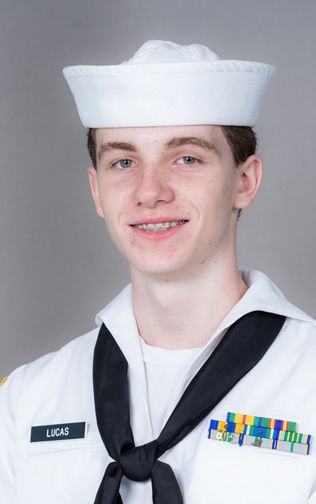
PO2 Cristian, Lucas For the first couple of years I was apart of the program, I did not accomplish much. I would attend my weekly Saturday drills, spending the day nonchalantly following my staff cadets, as we would perform a near identical POD at each meeting. I would go home without having retained much and then forget about Sea Cadets until Friday evening of the next week. While it was true that we occasionally deviated with various events that helped expand my horizons, I still wouldn’t absorb or even understand too much of what I would experience, and even let some opportunities go to waste.
This was such the case until a couple weeks after I had turned 16, which is when I attended Recruit Training and first connected to the wider Sea Cadet community. Despite having previously attended League Orientation, my RT is when I first began to understand the program and the Navy. It lit a fire in me to pursue greatness within the Corps and opened my eyes, inspiring me to make use of the opportunities offered. In fact, hours after I had graduated I begged my parents to immediately send me another training that took place less than two weeks later; field operations at Green Swamp, FL.
Going to trainings has helped me gain many attributes, such as discipline, cleanliness, obedience, greater physical strength and capability. I have become a practical and orderly person: stricter with myself and now with a greater sense of independence. My experience has enriched me with different varieties of knowledge and practical skills. From Field Operations I gained an understanding of how infantry forces conduct their missions and gained a better perspective of what it means to in combat. During my MAA training, I learned about law enforcement and the ins and outs of radio communication, clearing buildings, and SOP for MAAs. At Seabee training, I physically built a deck with my shipmates giving me not only the practical handy skills that are required to work with my hands but also a greater zeal for teamwork which has improved my interpersonal skillset.
My training at POLA is ultimately what has been the most developmental. Learning about what it means to be a leader and how to navigate its difficulties helped me in everyday life. I began to understand the sacrifices required and how to maintain the relationship between subordinates and those in command.
Returning to my unit the summer after POLA, I received my Petty officer third-class rank. Since I was the only Petty officer at that point and with the previous leadership withdrawing, I was given the position of LPO and ordered to take charge of my unit. I suddenly found myself in a difficult position, with both Officers and Cadets alike looking toward me to lead. This time period would be a trial by fire where my only options were to sink or swim. And although it was stressful, I was able to grow into my role and did not buckle under the pressure. Becoming a petty officer not only improved my leadership skills but also defined me in smaller aspects. I learned how to project authority with confidence but while also maintaining neutrality, and it also has helped me speak more clearly. Calling commands and addressing my cadets refined my voice so that I trip over my words less and convey my intentions with greater effectiveness.
The Sea Cadet program has enriched myself and my life in countless ways and for that I am exceedingly grateful.
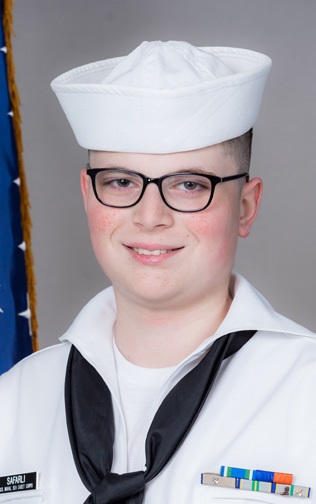
SN Safarli, Jamil Don’t stop believin’ Participating in the Naval Cadet Corps recruit training in camp Geneva (Fruitland, FL) was undoubtedly one of the most challenging experiences I have had to face in my life. The difficulties I faced from the moment I was assigned to the training till the end taught me valuable life lessons that have stuck with me ever since. Firstly, getting to the training site was an arduous task that took my family four hours. I had to endure a long; difficult drive to the site, which only added to my anxiety. I had never been to the training site before and did not know what to expect.
Flashforward to after the hotel night, I was greeted by a set of unfamiliar faces, which only made me feel more nervous. The next morning, we were up at 4 am, which was not something I was used to. I was already tired from the previous day’s journey, and I did not expect the training to be as intense as it was. However, I quickly realized that the physical training was the best I have ever done.
Despite my tiredness, I pushed myself to the limit and exceeded my expectations. For the next few days, it took me a while to adjust to the rigorous routine and the demands of the training. However, as time passed, I found myself becoming more accustomed to the routine, and it became easier to adapt to the environment. The teachings that I experienced during the training were also valuable lessons. I learned that it is essential to keep yourself occupied, even when things seem out of control. I also learned the importance of staying focused on the task at hand and not allowing myself to become distracted by external factors. As the days went by, I began to feel more comfortable with the other recruits, and we started to work together as a team. This experience taught me the value of teamwork and how important it is to rely on others in times of need. I realized that even in the most challenging of situations, it is essential to stay positive and work together to overcome any obstacles.
In conclusion, the Naval Cadet Corps recruit training was an experience that pushed me to my limits and taught me valuable lessons that have stayed with me ever since. From the grueling drive to the site to the early morning wakeups and the intense physical training, I learned the value of perseverance, teamwork, and staying focused on the task at hand. Although it was a difficult experience, I am grateful for the lessons I learned and the memories I made.
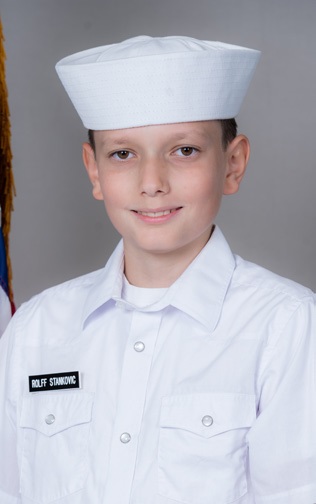
LC3 Rolff Stankovic, Marko
Over the past year, my first with the Sea Cadets, I learned what a Sea Cadet is: The United States Navy Sea Cadets Corps gives its cadets skills, knowledge, and confidence through training. Sea Cadets has made a difference in my life by showing me its core values to strive for – honor, respect, commitment, and service. It has made a difference in my life by giving me the ability to rise to responsibility, enjoy countless adventures, and, most of all, has built my confidence.
Sea Cadets has made a difference in my life by giving me the knowledge and experience to be responsible. Responsibility means doing something you are supposed to do and accepting the results of your actions. In the Sea Cadets program, I am expected to prioritize and accomplish tasks in a timely manner. Some of the ways I must apply the value of responsibility while I am at camp is by being physically ready, taking showers and tidying up my space without command, and being dressed in less than ten minutes.
Sea Cadets has made a difference in my life by giving me many adventures to learn the importance of teamwork and leadership. Some of the adventures focus on teambuilding activities that help me and my friends work together, overcome obstacles, and reach our goals. For example, at Tiger Tails Recreational Center we had rope and aerial challenges to triumph over. Exploring new places like Vizcaya, watching an air show, meeting Navy helicopter pilots, going on a Coast Guard cruiser, touring a destroyer ship, and attending the Seven Seas Gala are just a few of the countless adventures that Sea Cadets has given me. I also learned from the community service activities like beach clean-up and laying down wreaths.
Sea Cadets has made a difference in my life by giving me confidence in myself, my choices, and my actions. The Sea Cadets program has helped me understand that a person’s confidence is one that is built out of a multitude of experiences. Sea Cadets encourages and motivates me to think and act with confidence. The lessons I have learned have made me realize that I can do great things. This confidence can be seen in my academics and personal life too.
Sea Cadets has taught me many useful skills that embody the core values. I pledge to uphold those values by continuing to grow and keeping honor, respect, commitment, and service in mind.
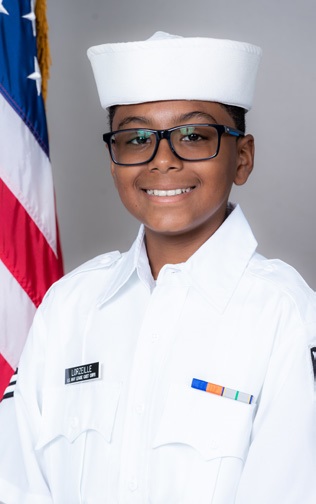
LC2 Lorzeille, Andrew The United States Naval Sea Cadets Corps. This is the name of the program that changed my life. My name is Andrew Lorzeille, but I am now known as LC2 Lorzeille. This program is only $100 a year, but I went to events that cost more than $500 dollars. The people in my division are not only just people, but they are also my family. We are all one ship, united and strong, with honor, respect, commitment, and service.
To start off, this program offers fun activities that includes team-working skills, cooperation, and friendship. For example, we went to help the community by bringing pumpkins to a Pumpkin Patch. We were all in a line, passing pumpkins down, and working as a team while making new friends. That day was incredibly fun, even though I was starting off as a new cadet, and I did not know anyone. I made great friends and muscles that day. Another example is the Shark-Tagging Event. On that day, we had extreme persistence to tag a shark. We spent about 4 hours trying to lure it, and on the 5th hour, we used teamwork and cooperation to tie it down and tag it. It turned out to be a tiger shark, and when I touched it, it was very rough. Events like these are once-in-a-lifetime and teach great lessons about teamwork, cooperation, and friendship.
In addition, this program has helped me to be a better person by giving me duties, responsibility, and discipline. For example, I went to a three-day camp for training. We were taught survival skills, respect, teamwork, and discipline. We built a shelter out of leaves and sticks, we learned about formations and practiced on it, and overall had an amazing time. Another example is the Seven Seas Gala. I had a huge responsibility for ringing the bell a certain number of times at extremely specific times during a speech. Even though I was nervous on the stage, I felt proud of myself for stepping up to the challenge of having a huge responsibility. After the Seven Seas Gala, people gave me respect for doing an excellent job. This is how the program helped me to be a better person by giving me duties, responsibilities, and discipline.
To summarize, the United States Naval Sea Cadets Corps has changed my life in many positive ways. It has given me once-in-a-lifetime events, teamwork skills, friendship, responsibility, and discipline. I learned many survival skills and feel very proud of being part of The USS Fort Lauderdale Division. My name is LC2 Lorzeille, what are you doing today?
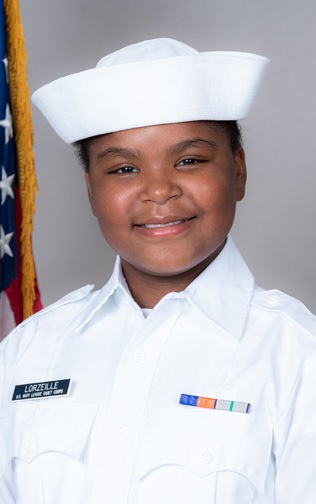
LC2 Lorzeille, Sophia The program that has changed my life is called the United States Naval Sea Cadets Corps, USS Fort Lauderdale Division. Everyone in the program is very friendly. This youth program has impacted my life in many positive ways!
To begin with, this program helps me understand and practice the four core values of the Sea Cadets Organization which are: honor, respect, commitment, and service. For example, if the person in command yells “EARS”! This means that everyone is supposed to be listening. It can sometimes be unexpected. At other times, the command must repeat themselves because cadets are still talking. I am learning how to be more disciplined and respectful.
In addition, every Saturday I have a lot of fun. For instance, I have gone to some swimming events including a Shark Tagging Event! Outstanding! The shark looked so big. He was 12 feet long! I also went to meet the Blue Angels in person. I saw the Blue Angels jets and they were cool to look at and meeting the pilots was exciting, but I was nervous, too. During the Mini Recruit Training, I enjoyed sleeping over in the cabins with my friends and going to the beach the next day. Also, as I will continue to grow with the program, my confidence will become sky-high.
In conclusion, the Navy Sea Cadets Corps program has improved my life a lot over this past year. Its four core values will shape my future as an individual. I love the program and the challenges of every Saturday.
Submit a Story
Northrop Grumman Enhances G/ATOR with New Performance Capabilities
Northrop Grumman successfully completed Full-Rate Production Lot One of G/ATOR and will deliver 46 awarded systems to the Marine Corps. (Photo Credit: Northrop Grumman)
BALTIMORE – June 14, 2023 – Northrop Grumman Corporation (NYSE: NOC) continues to enhance the functionality of AN/TPS-80 Ground/Air Task-Oriented Radar (G/ATOR) with new performance upgrades that will extend the range and add advanced capabilities following the completion of Full Rate Production lot one to the U.S. Marine Corps. While in production, G/ATOR has proven to be an agile expeditionary air defense capability suitable for air base defense. Based on the success of the fielded systems, new performance upgrades that will extend the range and capability are planned for next year for the Multifunction radar systems in production.
“The advanced functionality significantly increases the range of the current system, enhances cruise missile defense capability and establishes G/ATOR as the most agile ground-based surveillance and integrated fire control system available today,” said Melissa Johanson, director, advanced land sensors, Northrop Grumman. “We are committed to outpacing modern adversary threat systems for partner and allied forces with advanced surveillance and fire control capability.”
G/ATOR combines five of the Marine Corps’ single-mission radars into one multi-mission system for total air and missile defense surveillance. This provides a new level of protection and situational understanding for warfighters and enables them to make better decisions when it matters most. The Marine Corps has been granted funding from Congress for eight additional G/ATOR systems. To date, 21 of the awarded 46 Northrop Grumman systems have been fielded.
G/ATOR is one piece of the solution providing joint forces with an operational picture and deep breadth of data to operate in today’s contested environment, in support of the U.S. Marine Corps’ Force Design 2030 strategy.
The Department of the Navy (DoN) and the United States Special Operations Command Join Forces to Supercharge Early Threat Warning Systems
*****
Arlington, VA – Applied Signals Intelligence, CACI, DRS Advanced ISR, Resonant Sciences, and Roke USA have been awarded the Joint Threat Warning System (JTWS) Directional Finding/Omnidirectional Antenna project through the Strategic & Spectrum Missions Advanced Resilient Trusted Systems (S²MARTS) Other Transaction Authority (OTA) to develop a direction-finding antenna for Joint Threat Warning Systems.
A Joint Threat Warning System (JTWS) is an integrated system used by government and military organizations to monitor and analyze potential threats to national security. It is a type of early warning system designed to detect, collect, analyze, and report potential threats to our nation. These threats can range from terrorist activities to natural disasters.
Joint threat warning systems are essential for providing early warning and protection to military personnel and other organizations. This directional finding/omnidirectional antenna will provide a crucial capability to the JTWS, allowing it to detect and identify threats from electromagnetic signals. By modifying the latest antenna technology commercially available, these companies will produce improvements in the ability to collect, process, locate and exploit Signals of Interest (SOI) enhancing the mission performance of providing timely, relevant, and responsive threat avoidance information.
The JTWS Directional Finding/Omnidirectional Antenna project will ultimately provide early threat warnings to military personnel and can analyze the direction of arrival (DOA) of signals, providing lifesaving detailed information to those who need it most. By providing timely warnings and the directional of the potential threat, the JTWS Directional Finding/Omnidirectional Antenna project will help to alert the public and government officials to possible security risks and allow for appropriate actions to be taken to prevent or mitigate the threat. Additionally, the JTWS helps to coordinate responses between government and military organizations and facilitates the sharing of information between these organizations.
“These early threat warning systems are an invaluable tool for the protection of our nation, and as technological capabilities advance, we must upgrade these systems as well,” stated S²MARTS Deputy Director Tony Kestranek. “This helps to protect the safety and security of our nation, our citizens, and our infrastructure.”
The JTWS project has a total projected value of $9.3 million dollars and is anticipated to be released within a 17-month period.
Navy Awards Kratos $46.7M Contract for Submarine Ballistic Missile Reentry Systems
SAN DIEGO, June 05, 2023 (GLOBE NEWSWIRE) – Kratos Defense & Security Solutions, Inc. (NASDAQ: KTOS), a Technology Company in the Defense, National Security and Global Markets, has been awarded a contract by the Naval Surface Warfare Center Dahlgren Division (NSWCDD) for thermo-mechanical and aerothermal ground testing of thermal protection system materials in ballistic reentry and reentry-like environments in its Kratos SRE business unit in Birmingham, Alabama. The five-year contract includes options with a total value up to $46.7 million, with an initial award of $8.6 million under a cost-plus-fixed-fee contract.
The effort will test materials supporting technical efforts for the U.S. and the U.K. with direct oversight from the NSWCDD Reentry Systems Office. The support includes sample preparation, instrumentation, testing and gathering thermo-mechanical data on materials at extremely high temperatures and in high heat flux/shear environments. The contract enables Kratos SRE to conduct ground testing of thermal protection materials at external ground test facilities and produce flight hardware for the Navy. It requires the unique ability to test and collect data at maximum temperatures of 5,500 degrees Fahrenheit to properly test materials in reentry-like environments.
Michael Johns, Senior Vice President of Kratos SRE, said, “We are honored to support NSWCDD for this important program and are proud that we have been able to do so for decades. We bring a unique capability to this program and through the hard work of our expert team, we look forward to helping our nation as part of the larger Navy team.”
Dave Carter, President of Kratos’ Defense & Rocket Support Services Division, said, “Our division has a long and valued relationship with the Navy supporting research rocket and ballistic missile target programs. The addition of the NSWCDD RSO work by adding KSRE to our division team is exciting, and we look forward to continuing our role as a trusted provider for the Navy.”
Kratos SRE, formerly part of Southern Research and acquired by Kratos in May 2022, is an advanced concept group within Kratos’ Defense & Rocket Support Services (KDRSS) Division. SRE currently employs about 175 engineers, technicians and program support professionals conducting work in support of the space community, the Department of Defense and other national security customers.
Cadet Corner: Fusing Coaching with Military Style Leadership
By Amen Dilawar
At the George Washington Educational Campus, the robust Navy Junior Reserve Officers Training Corps provides a multitude of leadership opportunities to its cadets ranging from grades 9-12. These roles empower them to take the initiative to lead cadets in the unit, operate in unison under the supervision of executive officers, and most significantly, receive encouragement from fellow cadets and guidance from Naval Science Instructors.
As a crosstown cadet and former Public Affairs Officer Assistant, I have been able to expand my mentorship capacity and share my experiences with others, creating new connections and establishing more opportunities of development for not just myself but also other cadets. Furthermore, serving as President of the Mentorship Club and Helping Everyone Live Positively Movement at my school, The Collegiate Institute for Math and Science, for two consecutive years has helped me recognize the value of fostering new relationships through one-on-one coaching/peer tutoring sessions, mix and mingle events for mentors and mentees, and weekly workshops. To be a successful leader and agent of change, I have had to work collectively with members of the initiative to make students feel treasured and comforted.
Apart from accomplishing the Navy’s mission and upholding its customs, there should be an integration of coaching with exercising leadership so that all NJROTC officers cultivate support from one another and identify the distinct purpose they are intended to serve in a collaborative and stimulating atmosphere. This will serve as a tactic to accomplish success through bonding and the establishment of strong ties.
A mentor can assist a mentee with academic support, emotional counseling, career exploration, goal setting, and creating a defined path for achieving those objectives. They can also provide a
sense of direction. Likewise, if service personnel in the armed forces obtain enlightenment from veterans or long-term service members in various facets of life, whether that is when they encounter constant relocations, departures from loved ones, or other personal sacrifices, their performance rates will accelerate in addition to their psychological and emotional state being preserved. This can be applied to NJROTC considering that mentorship stimulates a stable dynamic for individuals. The value of mentorship within each unit should be esteemed as the core values of honor, courage, and commitment.
It is my sincere hope that individuals utilize mentorship as a tool to promote collaboration, combat paramountcy, and acquire prosperity in both educational and professional worlds.
Amen Dilawar is a cadet with the NJROTC unit at George Washington Educational Campus in Manhattan.
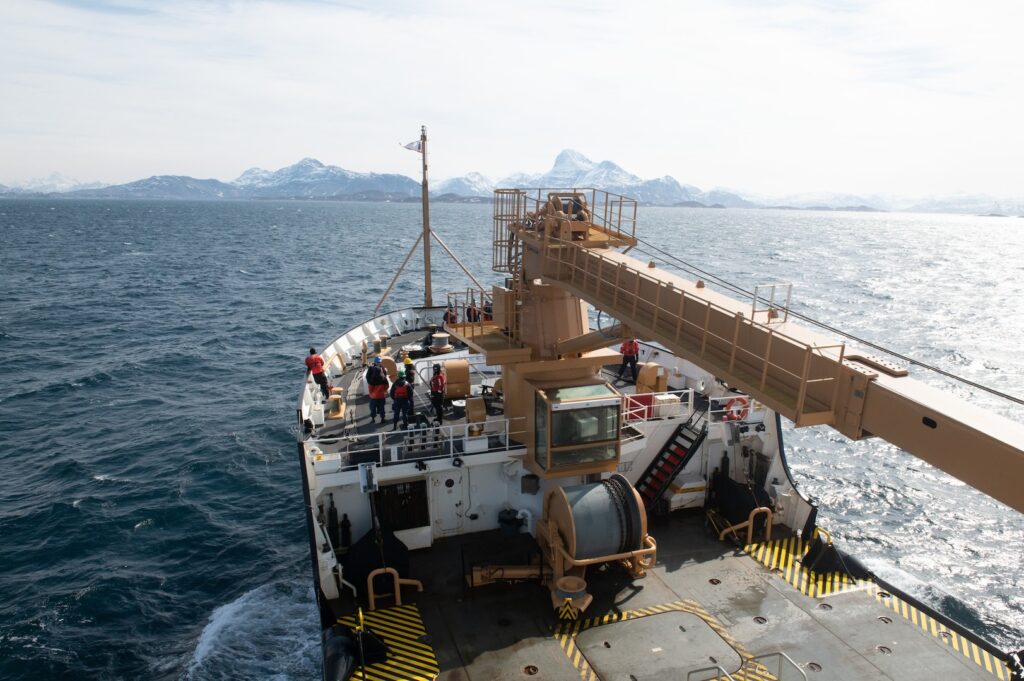
USCGC Sycamore begins Exercise Argus from Nuuk, Greenland
NUUK, Greenland— The crew of USCGC Sycamore (WLB 209) arrived in Nuuk, Greenland, Saturday, in support of Exercise Argus 2023.
During the port visit, U.S. Coast Guard Cmdr. Chad Conrad, Sycamore’s commanding officer and Lt. Anthony Figueroa, Sycamore’s executive officer, met with organizers of the joint, large-scale exercise to discuss plans for Exercise Argus in Southern Greenland.
The crew of Sycamore departed Nuuk Tuesday for the start of the exercise, which includes navigation, damage control, and search and rescue training events.
Exercise Argus is an annual training event designed to enhance capabilities of international partners for responding to search and rescue and marine environmental events in the Arctic region. The exercise takes place from June 12-16, 2023, and affords participating nations opportunities to advance effective partnerships, collaboration and interoperability for a variety of issues affecting the high North region.
The exercise will include maritime and air assets from Greenland, Denmark, France and the United States. Participation in Exercise Argus highlights our collective commitment to safety, environmental protection and international partnerships in the region.
This stop is the second port call for Sycamore’s crew after leaving St. John’s in Newfoundland, Canada.
Sycamore is a 225-foot buoy tender home-ported out of Newport, Rhode Island, with a crew of 48. Sycamore’s primary missions include maintaining aids-to-navigation, promoting economic security through navigation safety of the Marine Transportation System, supporting search and rescue, domestic icebreaking, living marine resources, maritime law enforcement, environmental protection, national defense and homeland security missions.
Fairbanks Morse Defense Contracts with Oceus to Co-Develop Remote Connect Portable 5G Network for Maritime Defense
BELOIT, Wis. – June 13, 2023 – Fairbanks Morse Defense (FMD), an Arcline Investment Management portfolio company, signed a three-year agreement with Oceus to co-develop and deploy Remote ConnectTM, a reliable, secure, portable 5G Broadband Kit to provide maritime defense customers with instant remote connectivity for any device. The technology provides crews with 5G communications access in some of the world’s most remote locations and in areas with extreme interference, ensuring they maintain mission-critical communications while performing essential ship repairs.
Oceus empowers governments and enterprises with intelligent, private 5G communications for critical operations in challenging environments. The patented technology intelligently optimizes for peak performance and eliminates the complexities of deploying and managing private 5G networks.
“Remote Connect will amplify our FM OnBoard technology, allowing technicians who are working in the engine room and other lower decks to have the same reliable connectivity that is available topside. This means they can work with FMD’s remote technicians to monitor assets, detect anomalies, and troubleshoot issues from anywhere in the world without losing their connection,” said Keith Haasl, FMD Vice President of Fairbanks Morse Technology. “This technology showcases FMD’s ongoing commitment to support maritime defense with the best-in-class marine technologies, and we’re looking forward to working with Oceus to identify the many opportunities for this technology.”
The Remote Connect portable 5G Broadband Kit comes in a ruggedized, lightweight case, making it easy to transport. It is instantly deployable from land or sea through a single push-button startup. The battery-powered system will provide over eight hours of active use. When launched, users will have Wi-Fi access through a secure 5G cellular modem and gateway within minutes.
“Secure, reliable connectivity is essential for the Navy as the fleet grows and its demand for transmitting data expands,” said Paul McQuillan – Oceus Chief of Growth and Strategy Officer. “FMD has a strong network throughout the Navy, Military Sealift Command, and the Coast Guard, which makes them an ideal collaborator to help us expand this technology for mission-critical maritime defense.”
Prior to this agreement, Oceus worked with FMD through the FM Defense Accelerator to refine the portable 5G Broadband Kit technology and explore various naval applications.
Four Nations’ Navies Flex Partnership While Operating in the Western Pacific
Four Nations’ Navies Flex Partnership While Operating in the Western Pacific
09 June 2023
From 7th Fleet Public Affairs
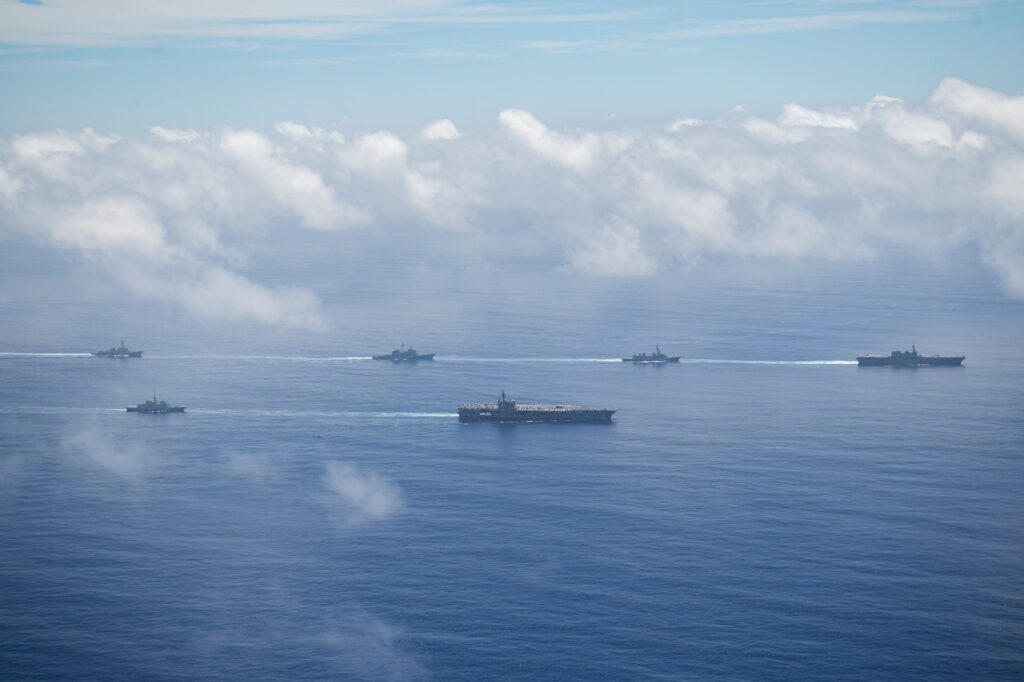
PHILIPPINE SEA – Ships from the navies of Japan, France and Canada joined two U.S. Navy carrier strike groups to operate as a unified force in the Philippine Sea, June 9.
The aircraft carriers USS Nimitz (CVN 68) and USS Ronald Reagan (CVN 76) met the Japan Maritime Self-Defense Force’s large-deck helicopter destroyer JS Izumo (DDH 183) and surface units from Canada and France.
The integrated at-sea exercise brought together more than 12,000 Sailors from across the four maritime nations and supports U.S. Indo-Pacific Command’s Large Scale Global Exercise (LSGE) 23. LSGE demonstrates the U.S. military’s interoperability with allies and partners in support of a free and open Indo-Pacific.
“The credibility of an integrated carrier strike force is the U.S. Navy’s greatest deterrent to those who threaten the international rules based order,” said Rear Adm. Jennifer Couture, commander, CSG 11, aboard USS Nimitz. “Together with our allies and partners, we’re demonstrating our capability to seamlessly integrate across all domains, our readiness to respond to any contingency, and our commitment to uphold freedom of navigation and overflight in the Indo-Pacific region.”
JMSDF Rear Adm. Takahiro Nishiyama, commander, Escort Flotilla 1, said: “The First Surface Unit of the Indo-Pacific Deployment 2023, JS Izumo and JS Samidare, departed their mother ports by June 1 to begin their three-and-a-half-month deployment operations. As the first multinational exercise, I was very excited and reassured to have the opportunity to strengthen cooperation with our important like-minded countries, the Royal Canadian Navy and the French Navy, in addition to the U.S. Navy, with which we have strong bonds of cooperation. I also believe that this exercise embodied the willingness and ability of Japan and our allies and comrades to continue our engagement in the Indo-Pacific region toward the realization of a free and open Indo-Pacific.”
The combined force conducted flight operations and air defense exercise scenarios as well as simulated strikes against maritime targets. Other ships in the partnership included USS Antietam (CG 54), FS Lorraine (D 657) from the French Navy (Marine Nationale), and frigate HMCS Montreal (FFH 336) from the Royal Canadian Navy.
The training and events provided commanders the chance to practice capabilities across the maritime domain as participating forces focused on anti-air, anti-surface, and anti-submarine warfare tactics and procedures. Moreover, cooperative maritime engagements with such enduring partnerships help strengthen existing relationships and increase collective war-fighting readiness, maritime superiority and power projection.
Nimitz from CSG 11 is operating with Ronald Reagan from CSG 5 for the first time since June 2020.
“The combined operations of CSG 5 and CSG 11 — exercising with our Canadian, French and Japanese allies — demonstrates our interoperability, combined capability and common commitment to a free and open Indo-Pacific,” said Rear Adm. Michael “Buzz” Donnelly, commander, CSG 5/Commander, Task Force 70. “As a Pacific nation, our presence allows us to coordinate across all domains and maintain a responsive maritime force that is able to support stability and security in the region by being ready across the full spectrum of naval capabilities.”
U.S. 7th Fleet is the U.S. Navy’s largest forward-deployed numbered fleet, and routinely interacts and operates with allies and partners in preserving a free and open Indo-Pacific region.
Port of Seattle Commissions Third Shore Power System at Pier 66
*****
The “world’s first” port with three ship shore power systems for cruise liners to turn off diesel engines and connect to shoreside electricity to reduce emissions
he Port of Seattle is installing a third shore power system at Pier 66, making it the world’s first port with three of the systems for cruise ships. The technology can significantly reduce emissions and improve air quality by allowing ships to connect to electricity and turn off diesel engines while at the dock.
The port operates the largest and fastest-growing cruise port on the West Coast with more than 200 vessels in a typical season between April and October. Adding a third shore power system is a major component of the port’s Waterfront Clean Energy Strategy, which will help improve air quality in historically underserved communities, modernize and optimize grid resources, support green maritime industry investments, increase resiliency of critical port infrastructure, and spur growth and employment in electrification, renewable fuels, and the clean technology sector.
The new shore power connection is expected to be fully operational by the 2024 Alaska cruise season.
The contract for the shore power system components was awarded in November 2022 to Kingston, WA-based Watts Marine, an innovator and integrator of shore power technology systems. To date, the company has installed ten shore power systems globally at ports in Seattle, San Diego, San Francisco, Halifax, Vancouver BC, Brooklyn, and Long Beach. An estimated 700 cruise ships connect to Watts Marine’s shoreside electrical power equipment each year.
The company facilitates every aspect of the shore power process, from helping the marine industry navigate the fine points of regulatory advising through design, build, heavy equipment installation, and system operation and maintenance. Each shore power system consists of proprietary equipment developed specifically to serve the cruise ship industry. This includes equipment for dual-voltage electrical service, custom-developed electrical cable handling, and electronic monitoring and control.
The Port of Seattle will also use Watts Marine’s innovative, cost-effective Mobile Cable Positioning Device (CPD), which facilitates shore power connections by moving the cabling strategically to the ideal location. The mobile design simplifies moving the system to accommodate docked vessels of all sizes and configurations, making shore power available almost immediately.
The mobile cable positioning device can be used with any shoreside electric power systems, not just Watts Marine installations. The unit is designed to allow the operator to strategically position the Mobile CPD, then plug into shore power cables on the back side while extending the cables from the end of a boom. The vessel’s crew can then reach out, pull the power cables in, and plug them into their connection box.
Once the connection has been made using the mobile CPD, the Watts Marine shoreside operator then selects the ship to be connected from the database in the automation system, which determines the proper operating parameters. Protection relays and redundant safety systems ensure the safety of the ship and shore electrical systems.
Watts Marine’s custom software also allows the specialists in its dedicated control center in Seattle to oversee every connection. All the ship’s systems then run on shore electricity instead of its diesel engines, virtually eliminating fuel emissions while in port.