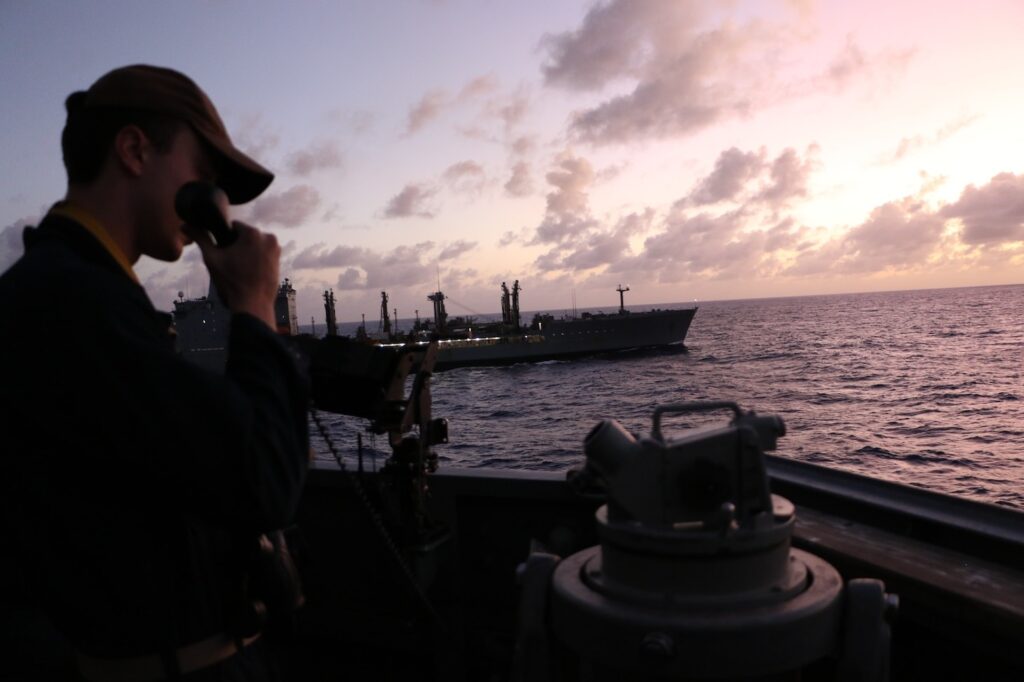
COMBINED FLEET ACTIVITY, Yokosuka – The Arleigh Burke-class guided-missile destroyer USS SHOUP (DDG 86) returned to Combined Fleet Activity Yokosuka, Japan, following the completion of its first Forward-Deployed Naval Forces (FDNF) patrol in the U.S. 7th Fleet (C7F) area of operations, Mar. 23.
SHOUP arrived in Seventh Fleet, Dec. 22′, as the newest FDNF ship under Destroyer Squadron FIFTEEEN to conduct naval operations in the South China Sea in support of U.S. national security.
“I’m extremely excited for SHOUP to join the DESRON 15 and Seventh Fleet Team. We’ve been training for over two years for this opportunity,” said CDR D. R. Tourtelotte, Commanding Officer.
Once SHOUP’s crew had time to acclimate to their new surroundings which included many trips to appreciate what Japan had to offer as their new home. For Her first task in Seventh Fleet, SHOUP joined a U.S.-JMSDF five-ship Surface Action Group for a multiple week-long operations in the Philippine Sea. SHOUP began the patrol just like nothing had changed from previous underways and exercises with the crew’s mindset already established on one goal. Knowing their new role and responsibility. SHOUP’s CMC, CMDCM J. S. Houske expressed urgency through his energetic rendition of the ship’s new command philosophy, “STRENGTH, HONOR, OWNERSHIP, UNITY, PRESERVATION!!!”
Following SHOUP’s underway time of 36 consecutive days out to sea, a port visit was in the plans. Guam was the perfect place to have SHOUP sailors relax as well as replenish much needed stores and supplies to continue to be the most capable destroyer or the “Tip of the Spear” in most cases based out of Yokosuka, Japan. Sailors took advantage of the vast beaches and historical landmarks like Tumon Beach and War in the Pacific Historical Park. SHOUP sailors were in awe of the mesmerizing views displayed at Two Lover’s Point and natural attractions like Pagat Caves.
“The SHOUP team worked extremely hard at sea and accomplished the mission with near-perfection despite a seemingly endless pattern of storms in the Philippine Sea. The port visit in the beautiful island of Guam was a nice change of scenery for the crew. The time in port was used to relax, enjoy the sun, and resupply before setting sail for our homeport of Yokosuka,” comments LCDR T.M. Winters, Executive Officer.
As SHOUP completes its inaugural FDNF patrol, the ship travelled through the Seventh Fleet AOR as it accrued many of accomplishments to be proud of based on the crew’s resiliency and technical prowess. Accomplishments like 750 newly qualified sailors in rating and watch stations, 2 newly appointed LDOs, 1 DESRON SOY, Newly appointed CMDCS Coutcher, 5 Full power runs, over 40 hours combined, 3 newly qualified ESWS Warriors, lastly as a fitting end to help cool down the crew…A successful Ice Cream Social.
“The SHOUP Team had an outstanding first patrol in the Seventh Fleet AOR. I’m very proud of how well this crew performed,” said CDR D. R. Tourtelotte, Commanding Officer.
USS SHOUP, forward-deployed to Yokosuka, Japan operates in support of U.S. national security interests in the C7F area of operations tied to COMBINED FLEET ACTIVITY, Yokosuka. Through it all USS SHOUP proved to be a valuable asset in Seventh fleet to its new DESRON and allies alike.
uAvionix RT-2087/ZPX Miniaturized Transponder Selected for Tactical Resupply Unmanned Aircraft Systems
Bigfork, MT 24 May 2023 – uAvionix Corporation defense customer, SURVICE Engineering of Belcamp, MD has been awarded a production contract from the Navy and Marine Corps Small Tactical Aircraft Systems Program Office. The production efforts will successfully equip U.S. warfighters using Tactical Resupply Unmanned Aircraft Systems (TRUAS) with innovative multirotor drones that augment logistical operations at the forward edge of the battlefield. uAvionix’s AIMS-certified RT-2087/ZPX Combat ID and Air Traffic Control surveillance system has been selected for inclusion in the production effort to satisfy the TRUAS Identification Friend or Foe (IFF) Transponder and ADS-B requirements for UAS operating both in the battlefield and in civilian airspace.
“We congratulate SURVICE Engineering on this important award. The TRUAS program will provide an important function to the U.S. Navy and Marine Corps and demonstrates how innovative small UAS can support the warfighter in multiple roles. The RT-2087/ZPX delivers uncompromised performance in a convenient, rugged, miniaturized form factor that meets the needs of tactical UAS operations,” notes Christian Ramsey of uAvionix Corporation. “Our continued collaboration with SURVICE Engineering highlights the importance of proven and dependable low Size, Weight, and Power (SWaP) avionics and their ability to deliver core functionality while not impacting UAS payload and range performance.”
Small unmanned aircraft systems (sUAS) require low SWaP avionics to save space and weight for operational capabilities such as extended range or heavier packages. Military use of sUAS adds additional requirements to ensure that the UAS itself can be properly identified for airspace deconfliction and battlefield situational awareness. In particular, these Combat UAS must be equipped with transponders that allow armed forces to distinguish friendly aircraft from enemy aircraft. The capability, commonly known as Identification Friend or Foe (IFF), relies on transmissions between an interrogating device and the aircraft where the messages are encrypted to prevent interception by enemy forces. Traditionally the IFF transponders were large and heavy; suitable only for larger aircraft. However, with the advent and AIMS certification of the RT-2087/ZPX in March 2021, UAS used for tactical military operations can now be equipped with a fully functional IFF micro transponder and associated crypto unit measuring in grams instead of pounds.
The uAvionix line of ZPX transponder products, such as the RT-2087/ZPX, enable secure Mode 5 platform identification for UAS. Each uAvionix ZPX transponder has a built-in crypto emulator to support development and testing without the security burdens imposed by using actual cryptos, and ZPX transponders possess Mode S/1090ES ADS-B functionality to comply with civil requirements and simplify equipage for military aircraft having to transit civil airspace.
USS TRUXTUN RETURNS FROM DEPLOYMENT
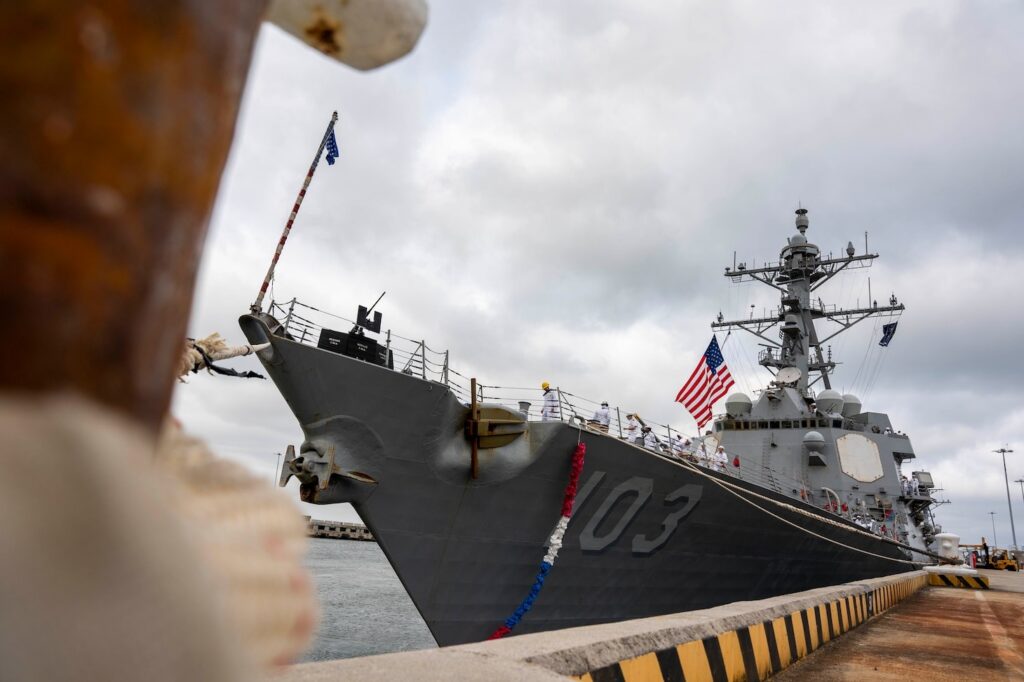
230525-QI061-1194 NORFOLK (May 25, 2023) The Arleigh Burke-class guided-missile destroyer USS Truxtun (DDG 103) returns to Naval Station Norfolk following a nine-month deployment with Carrier Strike Group (CSG) 10. The George H.W. Bush CSG was deployed to the U.S. 5th Fleet and U.S. 6th Fleet areas of operation to defend U.S., allied and partner interests. (U.S. Navy photo by Mass Communication Specialist Nathan T. Beard)
NORFOLK, Va. — The Arleigh Burke-class guided-missile destroyer USS Truxtun (DDG 103) returned to its homeport of Naval Station Norfolk, May 25, 2023, following an eight-month deployment with Carrier Strike Group (CSG) 10, George H.W. Bush CSG, to the U.S. 5th Fleet and U.S. 6th Fleet areas of operation.
“Truxtun’s crew represents the absolute best of America,” said Cmdr. Adam Miller, commanding officer of Truxtun. “They demonstrated exemplary conduct ashore in foreign ports and sustained superior performance operating at sea. From deterring illicit activity in the Red and Arabian Seas to sailing alongside our NATO Allies in the Mediterranean, our crew excelled at every mission tasked to us.” Following completion of a four-week composite training unit exercise, Truxtun deployed in August 2022 alongside the Nimitz-class aircraft carrier USS George H.W. Bush (CVN 77), the Arleigh Burke-class guided-missile destroyers USS Farragut (DDG 99) and USS Delbert D. Black (DDG 119), and the Ticonderoga-class guided-missile cruiser USS Leyte Gulf (CG 55).
Truxtun entered U.S. 5th Fleet in December 2022. While in the Middle East, Truxtun participated in Exercise AMAN, a series of multilateral naval exercises hosted by the Pakistani Navy, and International Maritime Exercise 2023, a U.S. Naval Forces Central Command (NAVCENT) hosted naval training exercise that was combined with the U.S. Naval Forces Europe-Africa-led exercise Cutlass Express 2023, which involved more than 50 partner nations and international organizations operating in the Arabian Gulf, Arabian Sea, Gulf of Oman, Red Sea, Indian Ocean, and East African coastal regions. In January 2023, Truxtun participated in exercise Juniper Oak 23-2, the largest bi-lateral U.S.-Israeli exercise in history. Led by U.S. Central Command and the Israeli Defense Force, Juniper Oak 23-2 was designed to enhance interoperability between the U.S. and Israeli militaries. Juniper Oak 23-2 joined the long-standing “Juniper” series that the U.S. and Israel have conducted for more than 20 years. In April 2023, Truxtun operated off the coast of Sudan in support of Department of State’s evacuation efforts.
Throughout the deployment, the crew conducted scheduled port visits to Split, Croatia; Souda Bay, Crete, Greece; Toulon, France; Aqaba, Jordan; Eilat and Haifa, Israel; and Duqm, Oman. Additionally, the crew hosted key leaders, including Rear Adm. Michael Sciretta, commander, Standing NATO Maritime Group 2, strengthening U.S.-partner relationships across the theaters. “Truxtun is a warship ready for tasking, and that is possible thanks to the talent and dedication of our crew,” Miller said. “I am so proud of every one of our Sailors and thankful for the work they’ve invested to bring us home safely.”
George H.W. Bush is the flagship of CSG-10, George H.W. Bush CSG. CSG-10 is comprised of George H.W. Bush, Carrier Air Wing (CVW) 7, Destroyer Squadron (DESRON) 26, the Information Warfare Commander, and Leyte Gulf.
The ships of DESRON-26 completing deployment within CSG-10 are the Arleigh Burke-class guided-missile destroyers USS Nitze (DDG 94), Truxtun, and Delbert D. Black. The squadrons of CVW-7 embarked aboard the George H.W. Bush are the “Sidewinders” of Strike Fighter Squadron (VFA) 86, the “Jolly Rogers” of VFA-103, the “Knighthawks” of VFA-136, the “Pukin Dogs” of VFA-143, the “Bluetails” of Carrier Airborne Early Warning Squadron (VAW) 121, the “Patriots” of Electronic Attack Squadron (VAQ) 140, the “Nightdippers” of Helicopter Sea Combat Squadron (HSC) 5, and the “Grandmasters” of Helicopter Maritime Strike Squadron (HSM) 46.
For more information about USS Truxtun (DDG 103) or U.S. 2nd Fleet, contact [email protected].
SCSTC Launches Virtual Maintenance Trainer Pilot at the Waterfront
DAHLGREN, Va. – The Navy has authorized the delivery of the most advanced maintenance training systems to the waterfront. To achieve this, Commander, Naval Surface Force, U.S. Pacific Fleet, Commander, Naval Education and Training Command, and Navy Regional Maintenance Center and Naval Sea Systems Command Director, Surface Ship Maintenance and Modernization, have approved Surface Combat Systems Training Command (SCSTC) to execute a six-month Virtual Maintenance Trainer (VMT) pilot program across the waterfront community.
The VMT, an immersive 3D training tool built to support Aegis Weapon System (AWS) maintenance training, is part of the Director, Surface Warfare’s (OPNAV N96) program of record, Surface Training Advanced Virtual Environment-Combat Systems (STAVE-CS). These VMT solutions are currently delivering the right training, at the right time, in the right way in our schools, so Sailors are ready to maintain their equipment at peak capability and reliability to win the high-end fight.
“In an effort to optimize this initiative, we want to test the effectiveness of standalone VMT systems to support maintenance skill, proficiency training, and maintenance support,” said SCSTC’s Commodore, Capt. George A. Kessler, Jr. “Our goal is to get the SPY-1D(V) Radar and Aegis Computer Network Technician [ACNT] VMTs out to the fleet to learn how our ships, training teams, and maintenance teams might utilize the tools to support just in time training prior to a maintenance check, casualty troubleshooting support and maintenance training proficiency. SCSTC will then take that feedback to update the systems and provide a scaled-up plan to better support the fleet.”
From April 2023 through October 2023, SCSTC will collect and analyze data captured from two Baseline 9 (BL 9) Technology Insertion (TI)-16 ships, the Arleigh Burke-class destroyers USS Frank E. Petersen, Jr. (DDG 121) and USS Lenah Sutcliffe Higbee (DDG 123); Regional Maintenance Centers (RMCs) in San Diego and Pearl Harbor; and supporting SCSTC waterfront detachments. To facilitate the delivery of these tools, SCSTC loaded VMT capability on standalone laptops and provided them to each location for use.
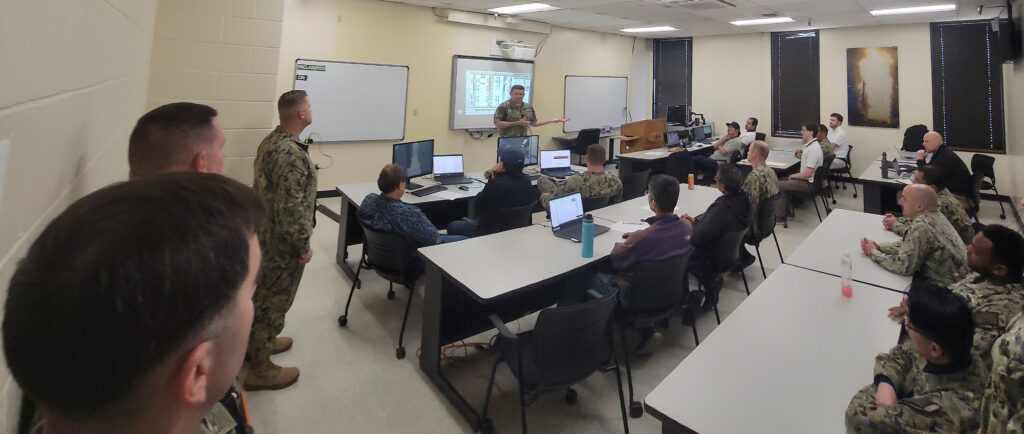
SCSTC and the manufacturer then provided training at each location to cover system specifics to include functionality, operation, employment, and data collection. The initial Train the Trainer (TtT) session was conducted with Frank E. Petersen, Jr., Hawaii RMC, and SCSTC Detachment Middle Pacific, 18-20 April. Separate sessions were conducted with Southwest RMC, SCSTC Detachment Southwest, and Lenah Sutcliffe Higbee. The training was well received and set the baseline for the execution of the pilot over the next six months.
Why have VMTs aboard ships?
A knowledge refresher tool for technicians will be the primary use of VMT aboard ships. The VMT will provide technicians an opportunity to refresh themselves on proper procedures, tools, skills, and techniques needed to support preventive maintenance efforts while at sea.
“Typically, technicians have a number of infrequent maintenance tasks that they need to perform on their systems,” explained Mr. Christopher Odachowski, a management analyst for SCSTC HQ’s technical support directorate, N9, and primary lead for the pilot initiative. “These tasks that support preventive maintenance can be challenging for technicians if they have not performed it in a long time, or have limited experience. The VMTs can be used to practice maintenance virtually in a safe environment to refresh knowledge and build confidence prior to physically performing the check on the tactical equipment. Technicians can also practice complex repairs to the system prior to execution.”
The secondary use of a VMT aboard a ship is for Combat System Training Team events.
“The VMT can be employed in the training environment to simulate system casualties the ships currently train to address throughout the basic and advanced phase of training,” Odachowski said.
The VMT provides realistic casualty control and repair scenarios at a level not seen to date on the waterfront. The Combat Systems Training Team (CSTT) can shift from yellow sticky notes and talking through the casualty response to the technicians actually working through the symptoms, executing the associated work packages, and getting their ship back in the fight.
Execution of pilot aboard ships
The VMT hosts software that is a virtualization of the technical insertion TI-16 AWS hardware set along with a virtualization of SPY-1D(V). Frank E. Petersen, Jr. and Lenah Sutcliffe Higbee were selected for this pilot to maximize applicability since both ships have the TI-16 hardware and AN/SPY-1D(V) with Multi-Mission Signal Processor (MMSP) radar. The ships will conduct a six-month test period comprised of two elements; free play and specific training events, with 557 ACNT scenarios and 247 Aegis SPY-1D scenarios at their disposal.
“DDG 121 and DDG 123 will use the VMT as desired and the system will record utilization and document technician proficiency,” explained Lt. Shane Ortiz, SCSTC HQ’s training directorate’s, N7, waterfront coordinator. “During the initial load-out and training, the ships will also identify specific, upcoming infrequent maintenance checks to conduct targeted training prior to execution and collect feedback upon conclusion of maintenance.”
Why have VMTs at specific waterfront locations?
Typically, technicians and Instructors at the RMCs and SCSTC’s waterfront detachments have been trained in earlier versions of the ACNT or SPY systems but do not receive the specific schoolhouse training on the newest systems that they will have responsibility for in their area of operation.
“Having a VMT onsite, along with initial training on the use and operation of the VMT, will help technicians and Instructors expand their knowledge of these newer systems,” explained Mr. Ron Lavold, a management analyst for SCSTC HQ’s N9 and secondary lead for the pilot program. “The VMT is not solely for apprentice level technicians. This pilot will assist us with our overall goal in expanding the VMT’s utilization across all skill levels.”
Another goal of this pilot is to evaluate the VMT as a potential distance support tool at the RMCs. The VMT is designed as a distributed training tool, with Voice over Internet Protocol (VoIP), and real time live student monitoring. These built-in capabilities potentially could be employed to support forward deployed technicians with troubleshooting of their systems when casualties are beyond their technical expertise.
Execution of pilot at RMCs and SCSTC waterfront detachments
SCSTC and the RMCs will create a recommended training plan for technicians assigned to the RMC maintenance and SCSTC waterfront detachment teams to develop and maintain proficiency on BL 9 and SPY-1D(V) with MMSP radar. RMCs will then execute the recommended training proposals, evaluate the VMT for viability as a potential distance support tool for the fleet, and provide focused feedback on VMT usefulness in preparation for maintenance actions.
Feedback process
SCSTC has created a feedback team that will be collecting quantitative
and qualitative data from VMT users throughout the six-month period to determine efficiency of the VMT as a training tool.
“Quantitative data will be collected from the VMT files recorded in each user profile, bi-weekly usage emails, and a user questionnaire,” said Mr. Eric Hall, a management analyst for SCSTC HQ’s N7. “Qualitative
data will be collected during focused fleet feedback discussions.”
Post Pilot
SCSTC will provide a summary of findings to Navy leadership and recommendation for next steps if the VMT capability aboard ships and onboard RMCs and supporting SCSTC waterfront detachments proves to be beneficial.
“The launch of this VMT initiative is a result of an incredible amount of teamwork between headquarters and our learning sites and detachments, SCSTC AEGIS Training and Readiness Center, SCSTC Det Middle Pacific, SCSTC Det Southwest; Regional Maintenance Centers; and our industry partners,” said SCSTC’s Executive Director, Mr. Brian Deters. “We are excited and look forward to the results of this important event.”
Visit SCSTC on Facebook https://www.facebook.com/SurfaceCombatSystemsTrainingCommand
Navy Scaling Back Planned Triton Deployable Sites from Five to Three
*****
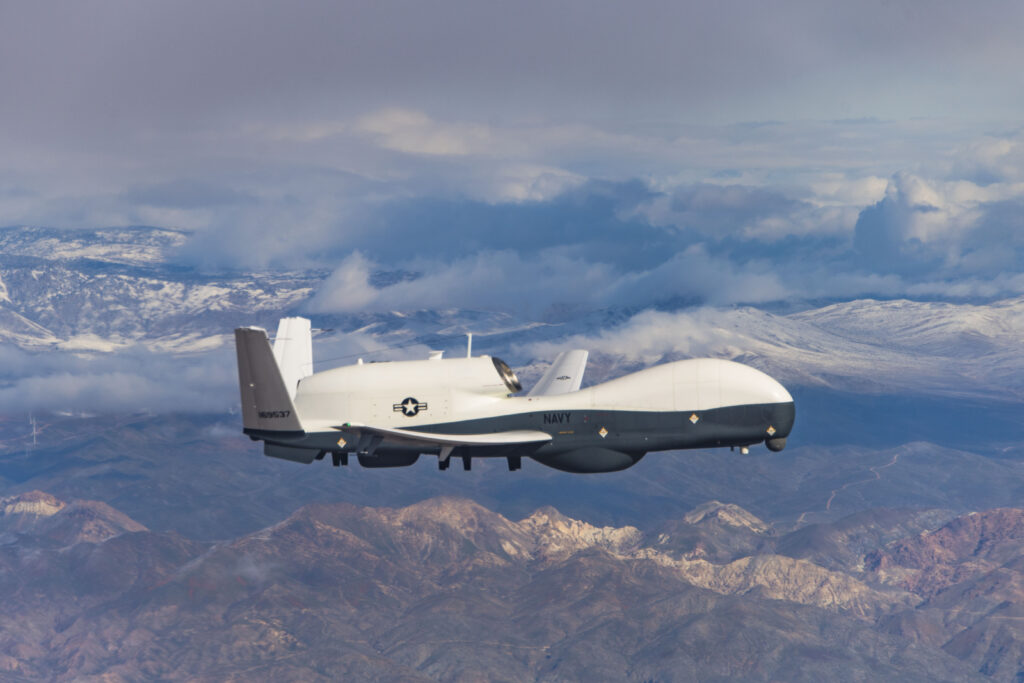
ARLINGTON, Va. — The U.S. Navy is planning to reduce the number of planned deployment sites for its MQ-4C Triton high-altitude, long-endurance unmanned aerial vehicles in accordance with its planned reduction in the number of Tritons being procured.
“FY24 quantity is being reduced from four to two aircraft; a total program of record procurement is being reduced from 70 aircraft to 27,” said a Navy spokesperson in response to a query from Seapower. “This quantity reduction is based on the Joint Requirements Oversite Council re-evaluation of worldwide ISR&T [intelligence, surveillance, reconnaissance, and targeting] requirements that resulted in direction to reduce total MQ-4C deployable locations (orbits) from five to three.”
The Navy had originally planned to establish orbits in Jacksonville, Florida; Whidbey Island, Washington; Sigonella, Sicily; Guam; and a base in the U.S. Central Command area of responsibility. The Navy did not specify which three sites were still planned for the Triton.
At five orbits and four Tritons per orbit — able to keep an aircraft on station 24/7 — the 20 aircraft required was far lower than the planned for procurement of 70. The original planned procurement would have allowed the Navy to purchase them at economic quantities, keep some in storage, and to sustain Triton operations over many years as the early aircraft reached the end of their service lives.
With three orbits, the total number of 12 Tritons required to sustain them would leave 15 available for attrition, training, and depot-level maintenance.
“When determining the number of air vehicles for a program of record, attrition is a part of the equation when considering the lifespan of the program,” the spokesperson said.
Unmanned Patrol Squadron (VUP) 19, home-based at Naval Air Station Jacksonville, Florida, deployed two MQ-4Cs to Andersen Air Force Base in Guam in 2020 to provide MISR&T for the U.S. 7th Fleet while developing the concept of operations and the tactics to refine the Triton’s operations. The detachment operated from Guam; Naval Air Facility Misawa, Japan; and Marine Corps Air Station Iwakuni, Japan, the Navy said in a March 16 release. The detachment returned from deployment in March.
The two deployed Tritons were of the baseline Integrated Functional Capability (IFC) 3 configuration. The squadron has since received newer versions in the IFC 4 configuration, which are equipped with a more capable sensor suite that will allow them to replace the Navy’s fleet of EP-3E Orion electronic reconnaissance aircraft. The MQ-4C will supplement the Navy’s P-8A Poseidon maritime patrol aircraft.
VUP-19 is bringing the Triton to Initial Operational Capability in 2023 with the establishment of an orbit in Guam in support of the 7th Fleet’s Task Force 72.
Northrop Grumman delivered the fourth IFC 4 Triton to the squadron in May to complete the set of aircraft for the Guam orbit while the first aircraft for the second orbit is scheduled to deliver in June, according to Rho Cauley-Bruner, director, Triton program.
HII is Awarded Advance Procurement Contract Modification For Virginia-class Block V Submarines
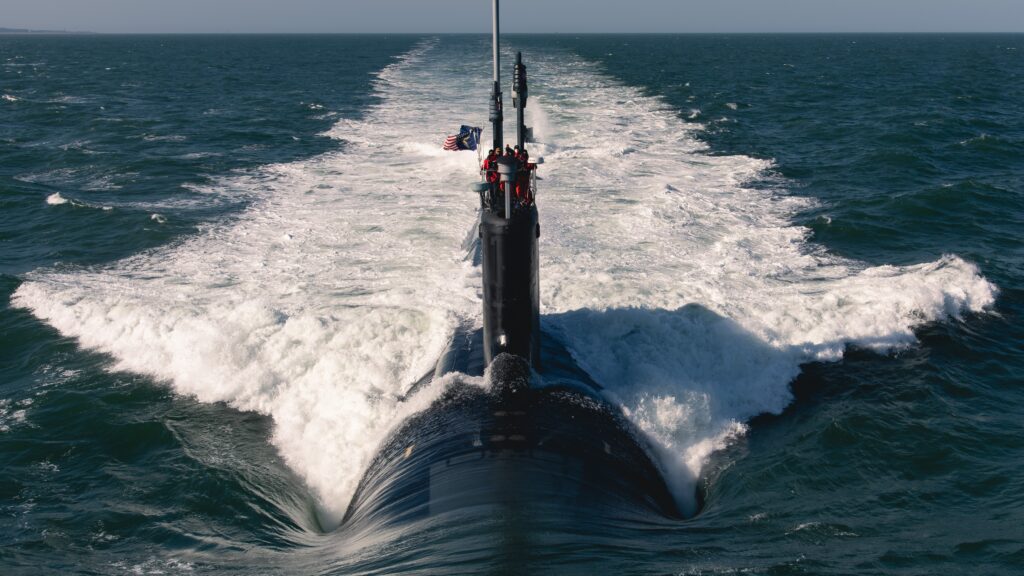
NEWPORT NEWS, Va., May 24, 2023 (GLOBE NEWSWIRE) — HII (NYSE: HII) announced today that its Newport News Shipbuilding division has received a $305.2 million contract modification from General Dynamics Electric Boat to procure long-lead-time material for two additional Block V Virginia-class submarines.
The contract modification brings the overall contract value to $10.2 billion.
“These funds are critically important to stabilizing and providing predictability to the thousands of suppliers across the country who support the Virginia-class program,” said Jason Ward, NNS vice president of Virginia-class submarine construction. “The submarine industrial base is crucial to our shipbuilding success and we look forward to continuing to build these vital national security assets that will deliver to the U.S. Navy with the latest technology.”
NNS is one of only two shipyards capable of designing and building nuclear-powered submarines for the U.S. Navy. The advanced capabilities of Virginia-class submarines increase firepower, maneuverability and stealth.
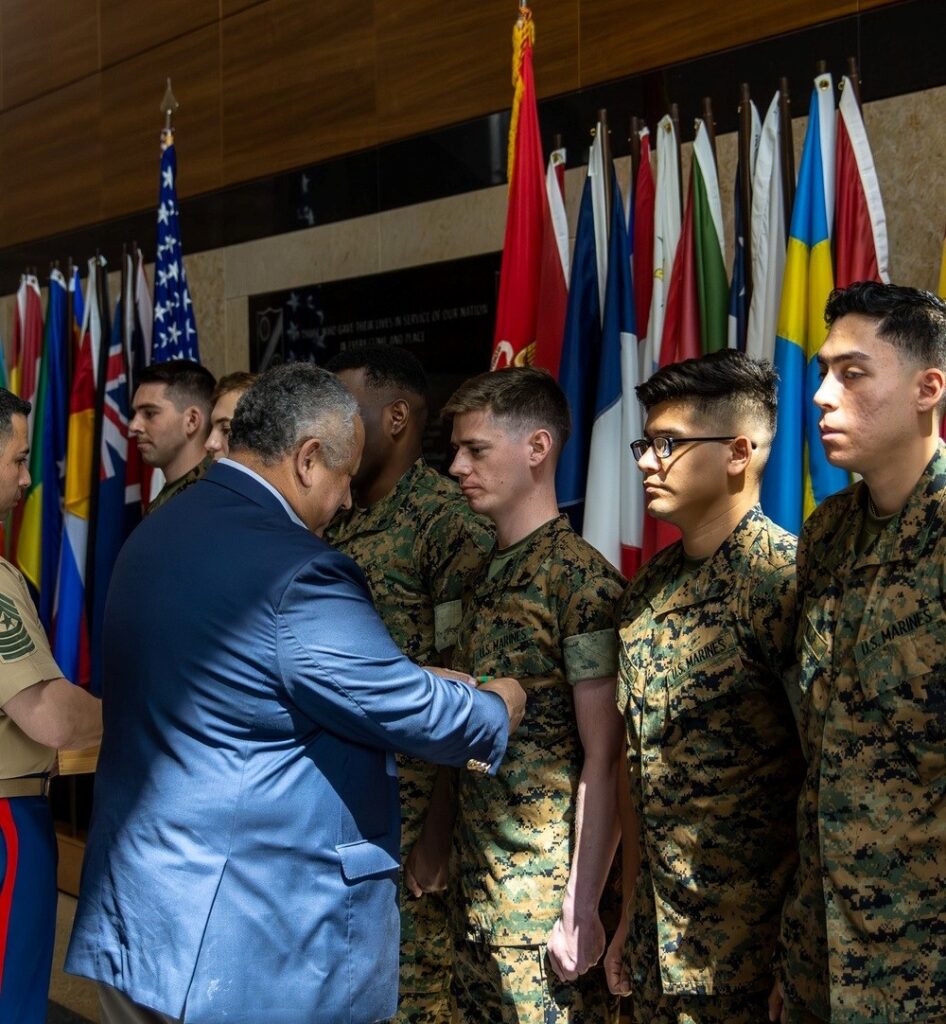
Secretary of the Navy, the Honorable Carlos Del Toro, visited Marine Corps Embassy Security Group Headquarters at Marine Corps Base Quantico, Va., on May 19 to personally thank the Marines with Marine Security Guard Detachment Khartoum for their exceptional performance during the evacuation of the U.S. Embassy in Khartoum, Sudan.
The primary role of an MSG is to protect personnel, classified information, and government property at U.S. diplomatic facilities around the globe. When fighting occurred within Sudan between two militant groups on April 15, the Marines continued their daily duties. As the conflict drew nearer and became more aggressive, the Marines received their orders to begin preparation for an evacuation.
Throughout the operation, the Marines continued to stand both of their posts, which are manned 24 hours a day, 365 days a year. Additionally, the Marine standing Post One provided command and control for the evacuation and provided real-time updates and information to and from the Chief of Mission and embassy personnel. When the evacuation was completed on April 23, the Marines said the feeling was bittersweet.
“It’s a humble feeling being back in the heart of it all, and it reminds you that the greater mission of MCESG is ongoing and we must continue to support that mission,” said Staff Sgt. Derek Ferrari, the Detachment Commander for Detachment Khartoum. “The detachment is deactivated but not disbanded yet, and I continue to be impressed with my Marines’ ability to remain engaged and take are of one another the same way they did in Khartoum.”
French Warship Seizes $108 Million in Drugs during Indian Ocean Seizures
By U.S. Naval Forces Central Command Public Affairs | May 24, 2023
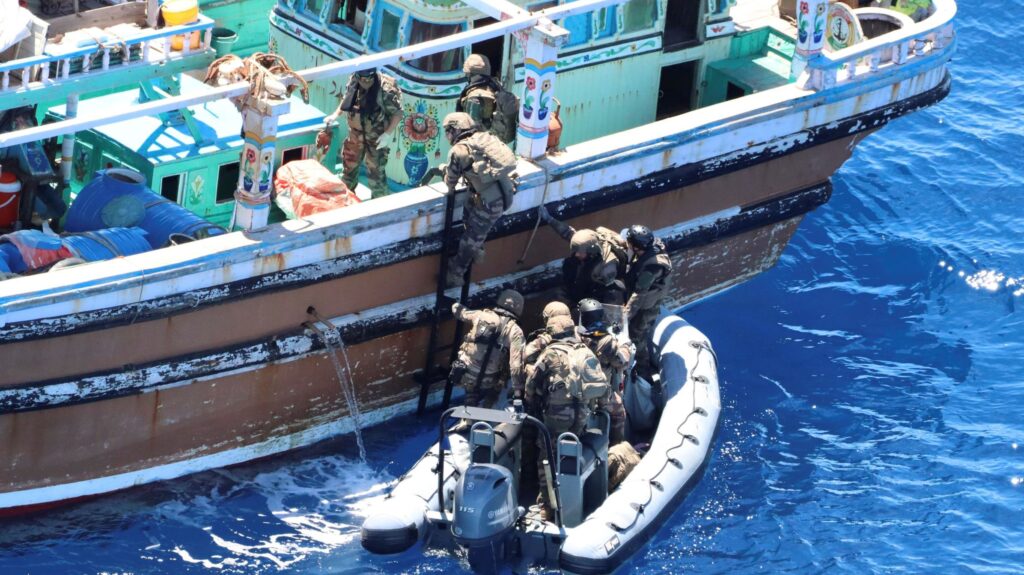
MANAMA, Bahrain — A French warship operating in support of Combined Task Force (CTF) 150 conducted four illegal drug seizures between April 19 and May 18 worth a total estimated U.S. street value of $108 million from fishing vessels transiting international waters in the Indian Ocean.
The warship seized 2,265 kilograms of heroin and 242 kilograms of methamphetamine from four different vessels while patrolling regional waters. CTF 150 is one of five task forces under Combined Maritime Forces, the largest multinational naval partnership in the world.
In 2023, maritime forces supporting CTF 150 have seized illegal drugs worth a combined estimated U.S. street value of $203 million, adding to record-breaking drug interdictions by U.S. and international naval units in 2021 and 2022 totaling more than $1 billion in value.
“It’s been a pleasure working with the French sailors to achieve our mission’s aims together,” said United Kingdom Royal Navy Lt. Francis Henry, a CTF 150 staff officer responsible for coordinating the task force’s counter-narcotics efforts.
CTF 150 conducts maritime security operations in the Gulf of Oman, Arabian Sea and Indian Ocean to disrupt destabilizing activity, promote international rules-based order and help ensure the free flow of commerce.
The task force is headquartered in Bahrain with Combined Maritime Forces, which is led by the commander of U.S. Naval Forces Central Command and U.S. 5th Fleet.
Navy Orders Ninth John Lewis-Class Fleet Replenishment Oiler
*****
ARLINGTON, Va. — The U.S. Navy has ordered construction of the ninth fleet replenishment oiler of the new John Lewis class for the Military Sealift Command.
The Naval Sea Systems Command awarded to General Dynamics National Steel and Shipbuilding Co., San Diego, California, a $736 million contract modification for the detail design and construction of T-AO 213. Work is expected to be completed by March 2028, the Department of Defense said in a May 22 announcement.
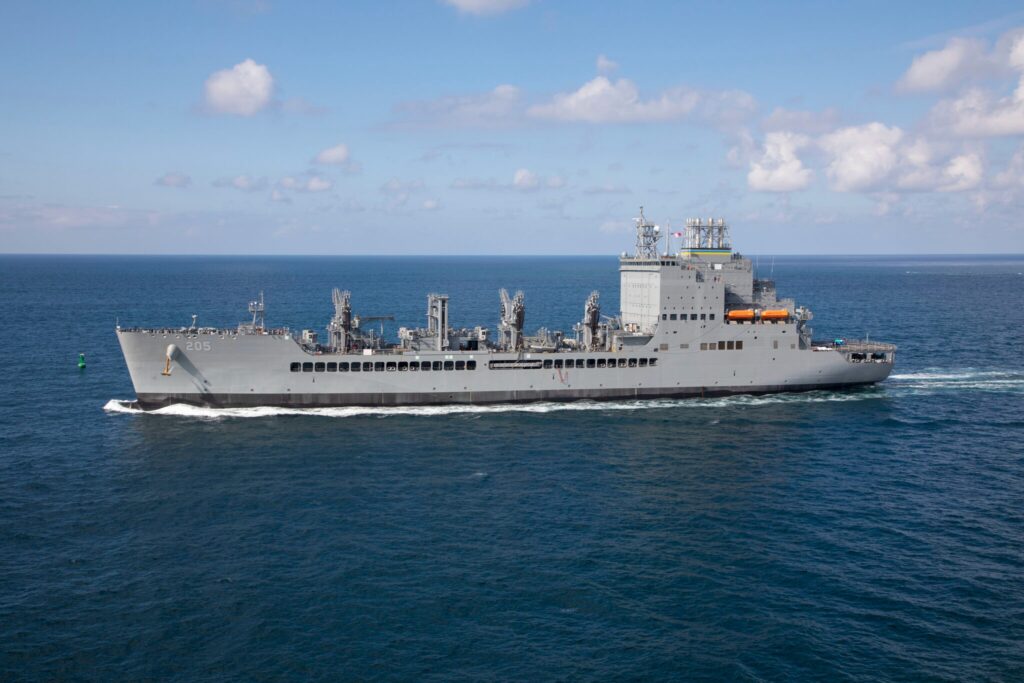
NASSCO delivered the lead ship of the class, USNS John Lewis (T-AO 205), in 2022, the first of six ordered under a 2016 contract. Two more were ordered under a 2022 contract modification, with an option for a third. That option was exercised with the contract award T-AO 213.
Five ships of the class currently are under construction: Harvey Milk (T-AO 206), which will be delivered this year; Earl Warren (T-AO 207); Robert F. Kennedy (T-AO 208); Lucy Stone (T-AO 209); and Sojourner Truth (T-AO 210). Future ships include Thurgood Marshall (T-AO 211) and Ruth Bader Ginsburg (T-AO 212). The Navy plans to procure a total of 20 ships of the class.
The John Lewis class is replacing the Henry J. Kaiser class of fleet replenishment oilers. The new ships can carry 57,000 barrels of oil as well as some dry cargo and frozen stores. They can operate at 20 knots.
Cargo Preference Essential Element For Us Merchant Marine, National Security
Rear Admiral Mark H. Buzby, USN (Ret)
Recently, there have been renewed calls by some to do away with – or greatly diminish – the requirements that govern the sea transportation of cargo that is owned, procured, furnished, or financed by the US Government – better known as Cargo Preference.
A removal of the current 50% requirement would have immediate and devastating effect on the US flag fleet. I state this with the confidence of having observed multiple US flag ships “flag out” of US registry when a change to Cargo preference statutes in 2013 reduced the required US carriage percentage of non-DOD government cargo from 75% to 50%. Doing away with Cargo preference requirements would directly result in the reduction in the size of the already small US flag deep sea fleet, adversely impact the size of the correspondingly small pool of US citizen seafarers, and jeopardize our Nation’s ability to execute sealift of US forces in times of crisis or conflict.
As MARAD Administrator, I testified often of the “three -legged stool” of maritime policy that underpins and supports the U.S.-flag merchant marine: the Jones Act, the Maritime Security Program (and newly enacted Tanker Security Program), and Cargo preference. Cargo preference is the least understood of the three, and it is under direct attack now. Short-sighted detractors are now pushing to end cargo preference for food aid programs like Food for Peace, in which American-grown food is moved on American-flagged ships to help those in need in the some of the poorest parts of the world. This has been a successful program for nearly 70 years helping to provide much needed food and aid to families starving and suffering from famine and conflict. At the same time, these programs support American famers, American truckers, American rail operators, American manufacturers, American milliners, American oil and flour producers, American longshoremen, and American mariners. Currently, only half of all those cargos must travel in US flagged vessels.
We should not underestimate the strong signal that a US flag ship delivering life saving food and aid sends to everyone that the US is there and engaged. Putting food aid on flags of convenience says nothing…just another government hand out. Cargo preference is an important component of global engagement, non lethal and peaceful.
Other Cargo preference statutes date back to 1904, stipulating that 100% of Department of Defense cargo must travel in US flagged vessels, ensuring a safe and secure means to deliver our fighting forces and their sustainment around the globe. Imagine if such a statute was not in place and the movement of military cargos was dependent on the whims of a foreign flag carrier during times of heightened tension or crisis. I don’t think we want to go there.
Lacking a comprehensive national maritime strategy that coherently and comprehensively ties together the contributions of our civilian merchant marine and our uniformed sea services (Navy, Marine Corps, Coast Guard, and NOAA) to our national defense and economic security, the individual elements of maritime policy which are “sailing in loose formation” today are susceptible to attack from special interests not aware of the important role each plays in support of the other. The attacks on Cargo preference are a perfect example; a seemingly detached policy focused on moving food aid and other government cargos helps sustain a sizeable percentage of the US Flag fleet, which provides jobs for the maritime work force, which is the same pool of mariners the US government will depend upon to activate and sail our Ready Reserve Force sealift fleet to transport and sustain US and allied forces in times of national emergency. The math is simple: reduced cargo equals reduced ships, fewer ships equals fewer crews, and fewer crews means we cannot man our sealift ships.
President Xi and the Chinese Communist Party (CCP) have has made their interest in dominating the maritime sector perfectly clear: they construct 80% of ship to shore cranes, 86% of intermodal chassis, and 95% of the worlds shipping containers. Their shipyards turnout 47% of the world’s shipbuilding tonnage, and PRC companies operate over 5,500 merchant ships. They subsidized their shipbuilding industry by over $132 billion from 2010-2018. The CCP knows what the British Empire knew, what the Founding Fathers knew, what Rear Admiral Alfred Thayer Mahan postulated in 1890: control the seas, control the world.
I want to be clear: ending cargo preference will create national security risks, and lack of cargo will continue to shrink the size of the US maritime fleet and reduce US sealift capability at a time when we cannot afford to give up one ship or lose a single mariner. The adverse ripple effect will extend to the shore side maritime and shipbuilding industry as well. I encourage Congress to reject misguided and unwise proposals that will make us even more dependent on the Chinese Communist Party for our economic health and instead support a robust US maritime policy that will sustain the US commercial sealift needed to support US national security.
Rear Admiral Buzby served as Maritime Administrator from 2017-2021. He retired from the US Navy in 2013 after 34 years of service which included command of the US Navy’s Military Sealift Command. Prior to serving as MARAD Administrator, he was President of the National Defense Transportation Association.