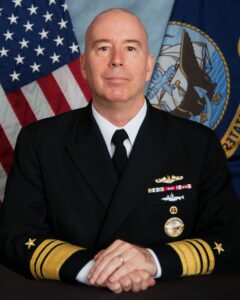
Navy Vice Adm. William J. Houston for appointment to the grade of admiral, with assignment as director, Naval Nuclear Propulsion Program, Department of the Navy/Department of Energy, Washington, D.C. Houston is currently serving as commander, Naval Submarine Forces; commander, Submarine Force, U.S. Atlantic Fleet; and commander, Allied Submarine Command, Norfolk, Virginia.
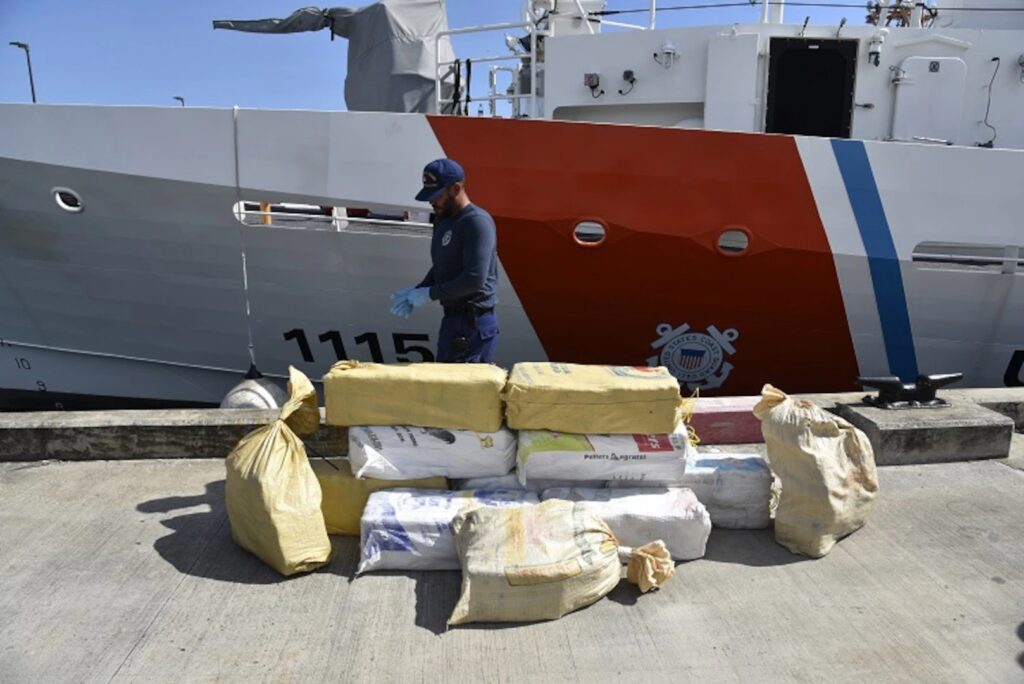
Coast Guard offloads $10.2 million in seized cocaine, transfers 3 smugglers to federal agents in San Juan, Puerto Rico
SAN JUAN, Puerto Rico — The Coast Guard Cutter Joseph Napier crew and Caribbean Corridor Strike Force agents offloaded 901 pounds (411kgs) of cocaine Wednesday in San Juan, Puerto Rico, following the interdiction of a smuggling vessel north of Puerto Rico.
The three men apprehended in this case are Dominican Republic nationals who are facing federal prosecution in District Court of Puerto Rico for Conspiracy to Possess with Intent to Distribute a Controlled Substance Aboard a Vessel Subject to the Jurisdiction of the United States.
The Transnational Organized Crime Division of the U.S. Attorney’s Office for the District of Puerto Rico is leading the prosecution for this case, while Special Agents supporting the Caribbean Corridor Strike Force are leading the investigation.
During a patrol Saturday night, the aircrew of a Coast Guard maritime patrol aircraft detected a suspect go-fast vessel north of Puerto Rico. Coast Guard watch standers at Sector San Juan diverted the cutter Joseph Napier that arrived on scene in pursuit and stopped the 30-foot blue and white go-fast vessel, apprehended three men and recovered 12 bales of suspected contraband that tested positive for cocaine.
“I’m extremely proud of our crew, especially the pursuit team, for their tactical proficiency and resiliency in stopping this drug-smuggling vessel from entering Puerto Rico,” said Lt. DeVonte Weems, Coast Guard Cutter Joseph Napier commanding officer. “It was a great team effort with seamless coordination between Coast Guard surface, aerial, and shoreside units that resulted in a successful interdiction.”
The interdiction is the result of multi-agency efforts involving the Organized Crime Drug Enforcement Task Force (OCDETF), the Caribbean Border Interagency Group and the Caribbean Corridor Strike Force. OCDETF identifies, disrupts, and dismantles the highest-level criminal organizations that threaten the United States using a prosecutor-led, intelligence-driven, multi-agency approach. Additional information about the OCDETF Program can be found at https://www.justice.gov/OCDETF.
Cutter Joseph Napier is a 154-foot fast response cutter that is homeported in San Juan, Puerto Rico.
26th Marine Expeditionary Unit deploys an element to CENTCOM
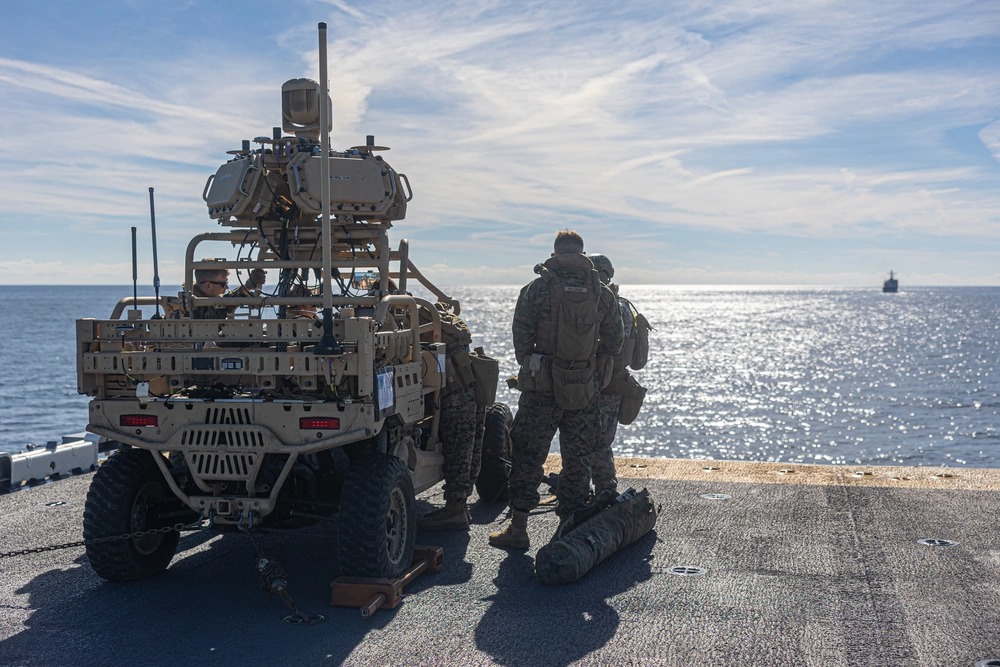
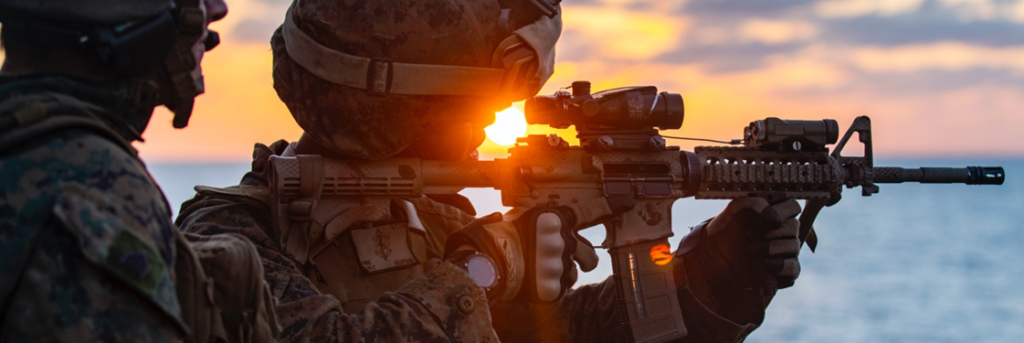
Photo By Cpl. Matthew Romonoyske-Bean | U.S. Marines with the 26th Marine Expeditionary Unit (MEU), track a simulated adversary vessel using the Light Marine Air Defense Integrated System (L-MADIS), and a Counter Unmanned Aerial Surveillance Utility Task Vehicle, during a defense of the amphibious task force (DATF) drill aboard the Wasp-Class Amphibious Assault Ship USS Bataan (LHD 5) Jan. 28, 2023. During PMINT, the 26th MEU embarked the L-MADIS, which is the only counter unmanned aircraft system on the east coast organic to the Marine Corps, which can be employed expeditiously on ship and on land in order to protect high value assets and personnel. The DATF drill positioned Marines and Sailors to augment and reinforce the ship’s security posture while crossing a simulated strait. (U.S. Marine Corps photo by Cpl. Matthew Romonoyske-Bean) see less | View Image Page
A small task-organized element of the 26th Marine Expeditionary Unit (MEU), II Marine Expeditionary Force (II MEF) is deploying on short notice to United States Central Command (CENTCOM) area of operations under the direction of the Combatant Commander, May 1, 2023.
The 26th MEU is entering the final stage of its pre-deployment training program in preparation for a deployment to the tri-COCOM region, including EUCOM, AFRICOM and CENTCOM. As a crisis response force, the 26th MEU is prepared to aggregate forces at a moment’s notice to support operations across the globe.
The 26th MEU serves as one of the Nation’s premier crisis response forces capable of conducting amphibious operations, crisis response, and limited contingency operations, to include enabling the introduction of follow-on forces and designated special operations, in support of theater requirements of the Geographic Combatant Commander. Coupled with the BAT ARG, the 26th MEU serves as a premier stand-in force with a full complement of all-domain capabilities to operate persistently within the littorals or weapons engagement zones of an adversary.
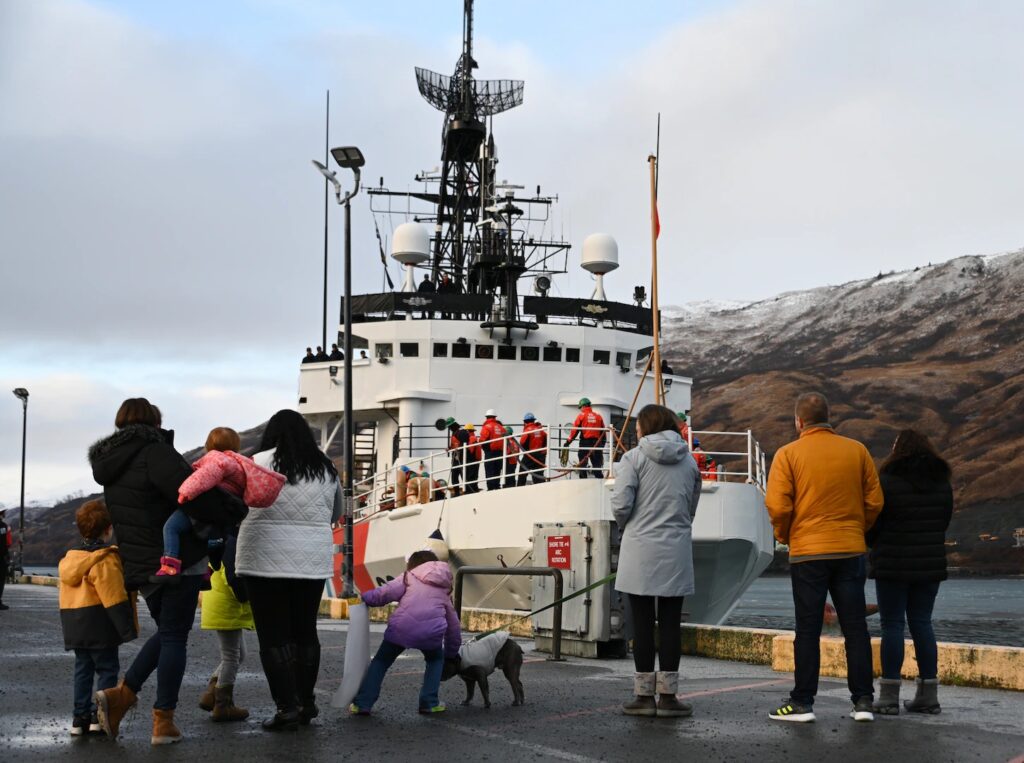
Coast Guard Cutter Alex Haley returns to homeport after completing a 30-day patrol in the Bering Sea
KODIAK, Alaska — The Coast Guard Cutter Alex Haley and crew recently returned to its homeport of Kodiak following a successful 30-day patrol in the Bering Sea.
Nicknamed the “Bulldog of the Bering,” the Alex Haley and crew maintained a vigilant search and rescue presence throughout the Bering Sea and Aleutian Islands enforcing federal fishery laws and ensuring mariners maintained all required safety equipment.
The Alex Haley embarked a Coast Guard MH-65 helicopter and aircrew from Air Station Kodiak for the patrol, significantly increasing the range and speed at which the cutter could respond to search and rescue cases. In early April, the aircrew responded to a medevac request for a patient in King Cove. The helicopter and aircrew navigated over 170 miles in low visibility, successfully transporting the patient to Cold Bay where they were transferred to a higher level of care.
The Alex Haley crew sailed over 2,000 nautical miles from the Alaskan Peninsula to Adak and north of the Pribilof Islands. They also steamed west and crossed the 180th Meridian into the eastern hemisphere where they conducted a time-honored naval ceremony.
Training and drills were performed throughout the patrol ensuring mission readiness. Crewmembers donned firefighting gear for simulated engine room fires, arranged dewatering pumps for flooding drills, and manually navigated the cutter without GPS all of which enhanced proficiency in damage control and navigation.
“As always, I am very proud of the crew’s accomplishments,” said Cmdr. Brian Whisler, Alex Haley’s commanding officer. “They worked incredibly hard during a short 30-day patrol, completing essential qualifications, trainings, and operations. We’re thrilled to return to our families here in Kodiak and begin preparations for the next patrol.”
Alex Haley is a 282-foot Medium Endurance Cutter that performs search and rescue, fisheries law enforcement and vessel safety inspections across Alaska and has been home-ported in Kodiak since 1999.
PARRIS ISLAND, SC – In a milestone emphasizing the Marine Corps’ successful standardization in recruit training, Marine Corps Recruit Depot, Parris Island will deactivate its Fourth Recruit Training Battalion in a ceremony June 15, 2023, and realign personnel between the service’s two recruit training locations.
“This is a moment to celebrate the legacy of so many of our Marines who made the transformation through 4th Recruit Training Battalion,” said Gen. David H. Berger, the Commandant of the Marine Corps. “It’s also a moment to celebrate progress. I’m proud to see our male and female recruits benefit from having access to the quality of all our leaders—at Parris Island and San Diego—through an unchanging, tough, and realistic recruit training curriculum.”
Since 1949 and until recently, Parris Island served as the sole point of entry into the Marine Corps for all enlisted female Marines. Since that time, female Marines have trained under multiple guidons, with 4th Recruit Training Battalion transforming Marines since 1986. Male recruits began training within Fourth Battalion in 2020. Today, successful recruit training standardization makes an all-female training battalion unnecessary, as all recruits have been training in gender-integrated companies since 2022.
“On 1 November 1986, 4th Recruit Training Battalion was established as the Corps’ only unit through which women could earn the title of U. S. Marine,” said Brig. Gen. Walker M. Field, Commanding General of MCRD Parris island and the Eastern Recruiting Region. ”Since then, those Marines have transformed thousands of young women, and since 2021 men, through rigorous basic training and our Corps’ cherished legacy, preparing them to win our nation’s battles. On 15 June 2023, we will bid farewell to 4th Battalion in a deactivation ceremony that concludes her glorious tenure, closing the final chapter of integrating recruit training. We are forever grateful to the Drill Instructors, staff, and legions of Marines who so proudly call 4th Battalion home.”
The personnel move to standardize the recruit training experience includes a portion of the personnel structure previously serving 4th Recruit Training Battalion moving from Parris Island to San Diego. This will create a more similar organization at both depots while MCRD San Diego increases their throughput of integrated training companies to match that of MCRD Parris Island. MCRD San Diego is scheduled to train approximately half of the female Marine population by fiscal year 2024.
“What matters most is making the very best Marines,” said Sgt. Maj. Troy E. Black, Sergeant Major of the Marine Corps. “It won’t be long before there are female Drill Instructors who, as recruits, graduated alongside their male counterparts. They will train recruits and make Marines with that experience.”
The ceremony will be held at Parris Island this summer to formally deactivate the battalion, honor its legacy, and highlight the historic unit’s impact on the transformation of female Marines. More details on the event will follow in a later release.
Second Merchant Vessel Seized within a Week by Iran
From U.S. Naval Forces Central Command Public Affairs
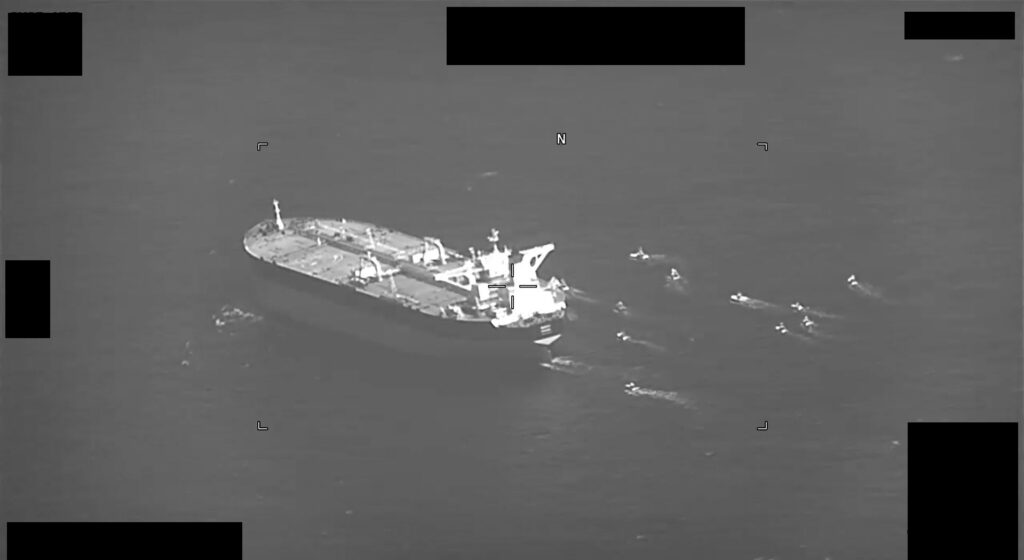
STRAIT OF HORMUZ – On May 3 at approximately 6:20 a.m. local time, Panama-flagged oil tanker Niovi was seized by Iran’s Islamic Revolutionary Guard Corps Navy (IRGCN) while transiting the Strait of Hormuz.
The oil tanker departed Dubai and was transiting from the Arabian Gulf toward the port of Fujairah in the United Arab Emirates when a dozen IRGCN fast-attack craft swarmed the vessel in the middle of the strait. The IRGCN subsequently forced the oil tanker to reverse course and head toward Iranian territorial waters off the coast of Bandar ‘Abbas, Iran.
A previous incident occurred six days ago when the Islamic Republic of Iran Navy seized Marshall Islands-flagged oil tanker Advantage Sweet while it transited international waters in the Gulf of Oman.
Iran’s actions are contrary to international law and disruptive to regional security and stability. Over the past two years, Iran has harassed, attacked or interfered with the navigational rights of 15 internationally flagged merchant vessels.
Iran’s continued harassment of vessels and interference with navigational rights in regional waters are unwarranted, irresponsible and a present threat to maritime security and the global economy.
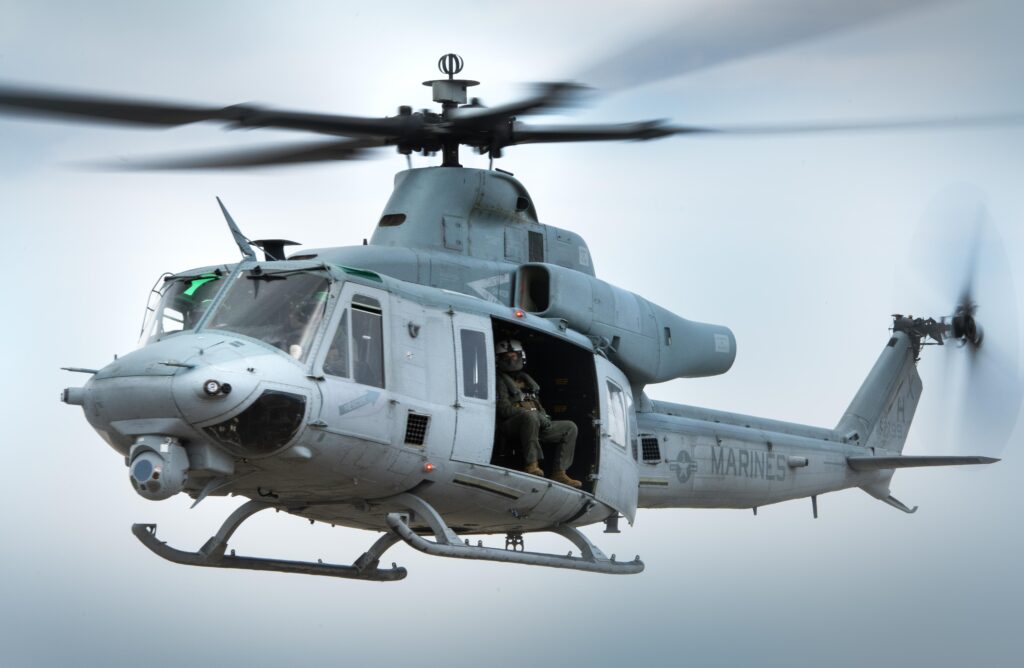
NAVAL AIR SYSTEMS COMMAND, PATUXENT RIVER, Md. — The Marine Corps’ UH-1Y helicopter completed an initial flight to test the data transmission of the new Mobile User Objective System (MUOS) Satellite Communications (SATCOM) capability for MQ-25 Stingray April 26 at Pax River.
The team at both the Dedicated Unmanned Carrier Aviation (UCA) Development Environment (DUDE) lab at Webster Outlying Field in St. Inigoes, Maryland, and the Communications Systems Integration Laboratory (CSIL) at Pax River transmitted data utilizing unique test equipment to the UH-1Y during flight, proving MOUS connectivity, resilience, and viability using a maneuvering aircraft.
“This type of testing is a way to show how two very different programs can team up and develop capabilities together,” said Capt. Daniel Fucito, Unmanned Carrier Aviation (PMA-268) program manager.
MOUS is a communications satellite system that provides global connectivity to military networks. The next generation of this system works much faster and has additional payloads that support new waveform capabilities and compatibility with the legacy UHF satellite communications systems.
“Testing MUOS with H-1 will facilitate the MQ-25 test infrastructure development and ensure MUOS connectivity configuration,” said Ray Belcher, MQ-25 Integrated Test Team communications lead. “It also provides an opportunity for the PMA-268 program team to observe MUOS flight characteristics.”
The MQ-25 Stingray will be the world’s first operational, carrier-based unmanned aircraft that will provide aerial refueling as well as intelligence, surveillance and reconnaissance (ISR) capabilities that will enhance the carrier air wing and carrier strike group.
HII to Provide Shore-Based Training, Engineering and Development Support for the Naval Surface Warfare Center Dahlgren
McLEAN, Va., May 02, 2023 (GLOBE NEWSWIRE) — HII’s (NYSE: HII) Mission Technologies division was awarded a $242 million contract to provide shore-based training, engineering and development support (SBEDS) for the U.S. Navy.
The task order was awarded under the Naval Sea Systems Command’s (NAVSEA) SeaPort Next Generation (SeaPort-NxG) contract to support the Naval Surface Warfare Center Dahlgren Division Dam Neck Activity (NSWCDD DNA) and has a one-year base period plus four one-year options.
“HII is proud to expand our partnership with the U.S. Navy to realize its digital engineering transformation,” said Glenn Goodman, president of Mission Technologies’ LVC Solutions business group. “We have built a strong team with full capabilities across customer requirements and training systems and look forward to supporting this important program.”
With more than two decades supporting the U.S. Navy’s live, virtual, constructive (LVC) training architecture environments, HII’s team will provide a development, security and operations (DevSecOps) model that drives innovation and creates new features at a faster pace, which includes full life-cycle software development and engineering, hardware engineering, systems engineering, cyber engineering, and related integration, testing and lab support.
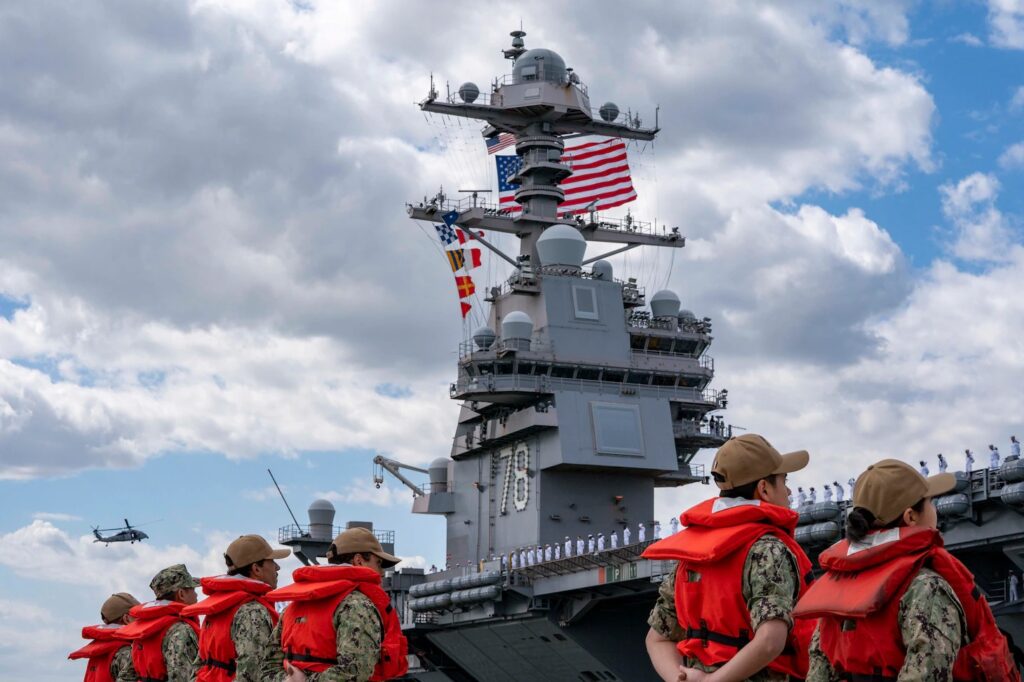
230502-N-QI061-0364 NORFOLK, Va. – Line handlers stand by as the capital ship of the Gerald R. Ford Carrier Strike Group (GRFCSG), the first-in-class aircraft carrier USS Gerald R. Ford (CVN 78), departs Naval Station Norfolk for a routine deployment, May 2. GRFCSG consists of Gerald R. Ford, Carrier Strike Group (CSG) 12, Carrier Air Wing (CVW) 8, Destroyer Squadron (DESRON) 2, Ticonderoga-class guided-missile cruiser USS Normandy (CG 60), and Arleigh Burke-class guided missile destroyers USS Ramage (DDG 61), USS McFaul (DDG 74), and USS Thomas Hudner (DDG 116). (U.S. Navy photo by Mass Communication Specialist 1st Class Nathan T. Beard)
NORFOLK, Va. — The capital ship of the Gerald R. Ford Carrier Strike Group (GRFCSG), the first-in-class aircraft carrier USS Gerald R. Ford (CVN 78), departed Naval Station Norfolk for a routine deployment, May 2.
“This strike group is the cornerstone of our Navy’s forward operations, capable of meeting any tasking provided by regional combatant commanders to ensure peace and stability at sea,” said Rear Adm. Greg Huffman, Commander, Carrier Strike Group 12. “Our presence at sea throughout the deployment will provide reassurance to our partners and Allies that sea lanes will remain open and our joint operations will demonstrate our commitment to interoperability and maritime stability.”
Ford’s second deployment marks the flagship’s first combat deployment, following its two-month deployment to the U.S. 2nd and 6th Fleet areas of operation in autumn 2022.
“The Sailors of Gerald R. Ford are ready and able to perform because of the strenuous training they have put in to get this ship ready to deploy, and also in large part to the support of their families and friends,” said Capt. Rick Burgess, Ford’s commanding officer. “This ship and crew are actively reshaping the face of our Navy’s capabilities and strengthening the future of naval aviation.”
The GRFCSG provides an inherently flexible naval force capable of deploying across combatant commands to meet emerging missions, deter potential adversaries, reassure allies and partners, enhance security and guarantee the free flow of global commerce.
The GRFCSG consists of Carrier Strike Group (CSG) 12 staff, Gerald R. Ford, Carrier Air Wing (CVW) 8, Destroyer Squadron (DESRON) 2 staff and units, Ticonderoga-class guided-missile cruiser USS Normandy (CG 60) and the Information Warfare Commander. In total, the GRFCSG deploys with more than 6,000 Sailors across all platforms ready to respond globally to combatant commander’s tasking.
The ships of DESRON 2 are the Arleigh Burke-class guided-missile destroyers USS Ramage (DDG 61), USS McFaul (DDG 74) and USS Thomas Hudner (DDG 116).
The squadrons of CVW-8 embarked aboard Gerald R. Ford are the “Tridents” of Helicopter Sea Combat Squadron (HSC) 9, the “Bear Aces” of Airborne Command and Control Squadron (VAW) 124, the “Rawhides” of Fleet Logistics Support Squadron (VRC) 40 located in Norfolk, Va., the “Ragin’ Bulls” of Strike Fighter Squadron (VFA) 37, the “Blacklions” a of Strike Fighter Squadron (VFA) 213, the “Golden Warriors” of Strike Fighter Squadron (VFA) 87, the “Tomcatters” of Strike Fighter Squadron (VFA) 31 located in Virginia Beach, Va., the “Gray Wolves” of Electronic Attack Squadron (VAQ) 142 located in Whidbey Island, Wa., and the “Spartans” of Helicopter Maritime Strike Squadron (HSM) 70 located in Mayport, Fla.
Ford is the U.S. Navy’s newest and most advanced aircraft carrier. As the first-in-class ship of Ford-class aircraft carriers, CVN 78 represents a generational leap in the U.S. Navy’s capacity to project power on a global scale. Ford-class aircraft carriers introduce 23 new technologies, including Electromagnetic Aircraft Launch System, Advanced Arresting Gear and Advanced Weapons Elevators. The new systems incorporated onto Ford-class ships are designed to generate a higher sortie rate with a 20% smaller crew than a Nimitz-class carrier, paving the way forward for naval aviation.
For more information about the USS Gerald R. Ford (CVN 78), visit https://www.airlant.usff.navy.mil/cvn78/ and follow along on Facebook: @USSGeraldRFord, Instagram: @cvn78_grford, Twitter: @Warship_78, DVIDS www.dvids.net/CVN78 and LinkedIn at USS Gerald R. Ford (CVN 78).
Navy Declares Initial Operational Capability of Mine Countermeasures Mission Package
By Program Executive Office for Unmanned and Small Combatants Public Affairs
WASHINGTON, D.C. — The Navy’s Littoral Combat Ship (LCS) mine countermeasures mission package (MCM MP) and AN/AQS-20 Sonar Mine Detection Sets achieved initial operational capability (IOC), officials announced on May 1.
IOC was declared by Vice Adm. Scott Conn, deputy chief of naval operations for warfighting requirements and capabilities (OPNAV N9).
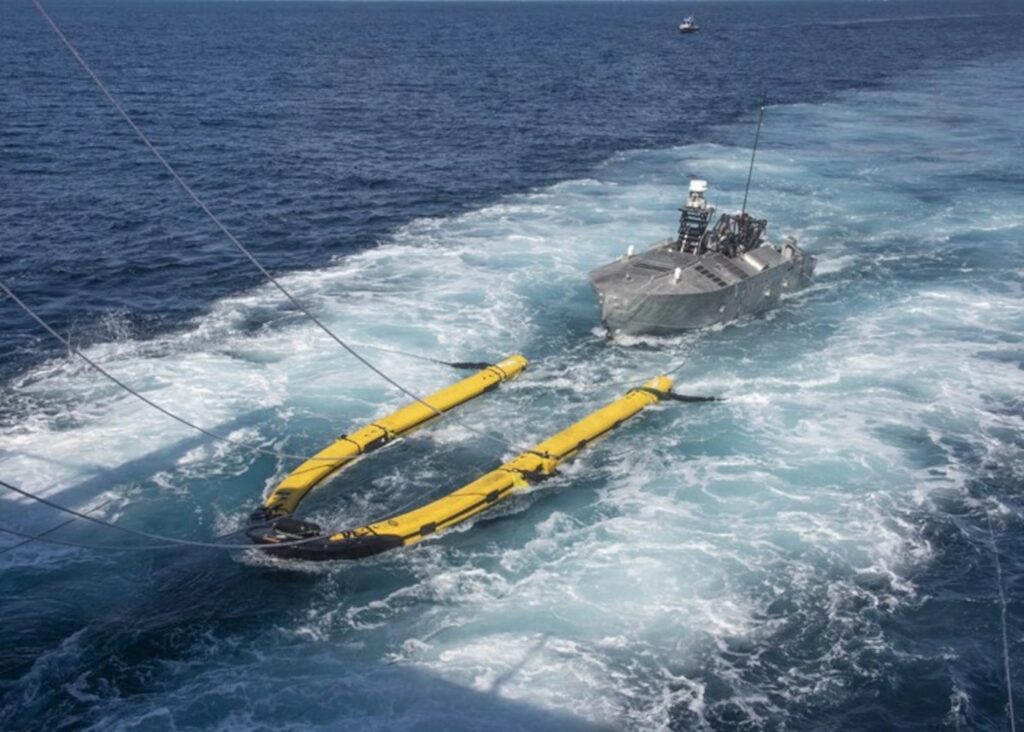
An integrated suite of unmanned maritime systems and sensors, the MCM MP counteracts mines in the littorals while increasing the host vessel’s standoff distance from the threat area. Embarked with the MCM MP, an LCS or a vessel of opportunity can conduct the full spectrum of detect-to-engage operations (hunt, neutralize, and sweep) against mine threats using sensors and weapons deployed from the MCM Unmanned Surface Vehicle (USV), an MH-60S multi-mission helicopter, and associated support equipment.
“The declaration of the MCM MP and AQS-20 IOC is a significant accomplishment for the LCS Mission Modules program and the future of mine countermeasures,” said Capt. Godfrey Weekes, program manager of the LCS mission modules program office (PMS 420). “This milestone enables the Navy to field modern MCM systems to the fleet, replacing aging platforms and sensors. The new equipment utilizes cutting-edge unmanned and autonomous technologies and keeps our Sailors out of harm’s way.”
The AN/AQS-20 is a mine hunting and identification system with sensors housed in an underwater towed body that integrates the Wideband Forward-Looking Sonar (WBFLS), two multi-function Side Look Synthetic Aperture Sonars (MFSLS), and Digital Gap Fill Sonar (DGFS) for the detection, classification, and localization of targets. The integration of the Electro-Optic Identification (EOID) sensor allows additional capability. Like the Unmanned Influence Sweep System (UISS), which achieved IOC in July of 2022, the AN/AQS-20 is towed from the MCM USV.
“Achieving IOC of the entire mine countermeasures mission package is the result of rigorous testing and evaluation of each component of the package and then integrating the systems and the mission to ensure the fleet is receiving the best MCM capabilities possible,” said Rear Adm. Casey Moton, program executive officer, unmanned and small combatants (PEO USC), which oversees the LCS mission modules program. “This is also a critical step in the Navy’s progress towards the hybrid fleet described in Force Design 2045 by providing a modular MCM capability that leverages unmanned technologies to prosecute mines.”
The MCM MP IOC declaration follows rigorous initial operational testing and evaluation (IOT&E) of the full mission package, including the AN/AQS-20 system, during the fall of 2022 aboard USS Cincinnati (LCS 20).
Brig. Gen. Marcus Annibale, director of Expeditionary Warfare (OPNAV N95) and resource sponsor for mine warfare, noted the importance of the IOC declaration.
“Fielding the MCM MP on Independence-Class LCS is one of the top priorities for OPNAV N95 in order to deliver the capability to the warfighters forward in the fleet. Mine countermeasures are a critical enabler for the joint force and in safeguarding sea-lanes for the global commons.” He also added, “This new capability includes advanced technologies in unmanned systems, allowing greater standoff from the LCS platform as the ‘mothership,’ as well as providing greater precision and capacity while keeping our personnel out of the minefield.”
PEO Unmanned and Small Combatants designs, develops, builds, maintains and modernizes the Navy’s expanding family of unmanned maritime systems, mine warfare systems and small surface combatants.