Hershel “Woody” Williams Delivers Supplies to Türkiye 
Release from U.S. Naval Forces Europe-U.S. Naval Forces Africa 

***** 

01 March 2023 

From Petty Officer 2nd Class Conner Blake 

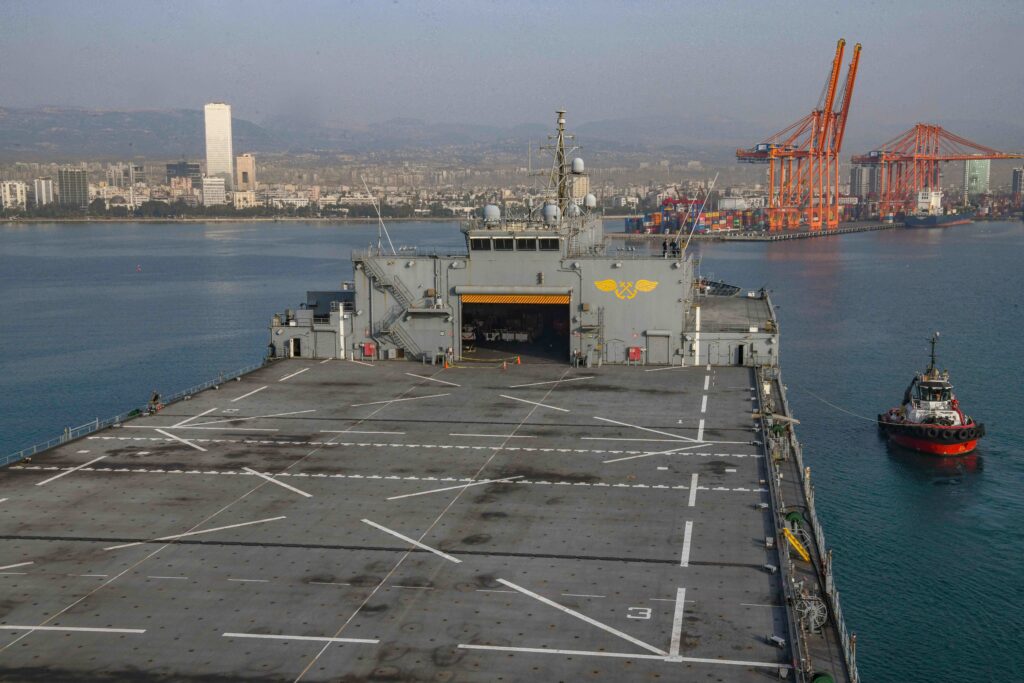
MERSIN, Türkiye – USS Hershel “Woody” Williams (ESB 4) arrived in Mersin, Türkiye, Feb. 28, to deliver disaster relief supplies to Turkish officials for those affected by the Feb. 6 earthquakes. 

The role of U.S. military forces during this disaster relief mission is to rapidly respond to the natural disaster with critically needed capabilities and life-saving equipment, delivering assistance to aid areas the government of Türkiye deems necessary. Hershel “Woody” Williams’ arrival to Mersin demonstrates a continued commitment to successfully completing that mission. 

 
While operating in the U.S. Sixth Fleet area of operations, the Hershel “Woody” Williams’ crew took on over 100 pallets of supplies consisting of hygiene products, clothes, blankets, cots, comfort kits and more. 

 
“To be able to execute this mission really rounds out the mission set the Navy has to offer,” said Lt. Micah Gustafson, Hershel “Woody” Williams Gold military crew (milcrew) supply officer. 

 
After coordinating with Commander, Task Force 63 (CTF-63), the crew was tasked with organizing the pallets so the supplies could be expeditiously delivered to those in need. 

 
“We sorted through and took inventory of the supplies so everything can be delivered as fast as possible to the areas and people who need the aid,” said Petty Officer 1st Class Kyle Son Smith. “This crew is working long hours to execute this mission and we feel honored to have the opportunity to help the people of Türkiye. Everyone has showed a great deal of unity during this mission and I am proud to be a part of it.” 

 
As the crew offloaded the supplies for the Turkish people, Capt. Lenard Mitchell, Hershel “Woody” Williams Gold milcrew commanding officer, said he is proud of the commitment his Sailors have demonstrated while embracing this mission for the greater good. 
“Woody’s warriors always stand ready to answer the call to work with our Allies,” said Mitchell. 

 
Following a 7.8 magnitude earthquake that struck Türkiye on Feb. 6, 2023, U.S. military forces assigned to U.S. European Command are providing humanitarian assistance and disaster relief in support of U.S. Agency for International Development (USAID), the Bureau of Humanitarian Assistance (BHA), and the international community to Turkish people during this tragedy. 

 
Hershel “Woody” Williams is forward-deployed to the U.S. Naval Forces Africa (NAVAF) area of operations, while employed by U.S. Sixth Fleet. The ship is capable of conducting humanitarian and disaster relief operations, as well as supporting a variety of rotary wing aircraft. Hershel “Woody” Williams’ unique capabilities are part of the critical access infrastructure that supports the deployment of forces and supplies to support global missions. 

 
Task Force 63 is headquartered at Naples, Italy. Composed of oilers, provision ships, and repair ships, its mission is the delivery of supplies at sea, and effecting repairs to other ships and equipment of the Fleet. Commander, Task Force 63 (CTF-63) is the operational commander of all the U.S. 6th Fleet air and sea logistics. 

 
Task Force 61/2, under operational control of U.S. Naval Forces Europe and U.S. Sixth Fleet, is responding to the deadly 7.8 and 7.6 magnitude earthquakes that devastated Türkiye on Feb. 6. Hours after the earthquake, U.S. Marines and Sailors established a forward crisis response operations center at Incirlik Air Base, Türkiye, in close coordination with U.S. interagency partners and Turkish officials. 

 
For over 80 years, U.S. Naval Forces Europe-U.S. Naval Forces Africa (NAVEUR-NAVAF) has forged strategic relationships with our Allies and Partners, leveraging a foundation of shared values to preserve security and stability. 

 
Headquartered in Naples, Italy, NAVEUR-NAVAF operates U.S. naval forces in the U.S. European Command (USEUCOM) and U.S. Africa Command (USAFRICOM) areas of responsibility. U.S. Sixth Fleet is permanently assigned to NAVEUR-NAVAF, and employs maritime forces through the full spectrum of joint and naval operations. 
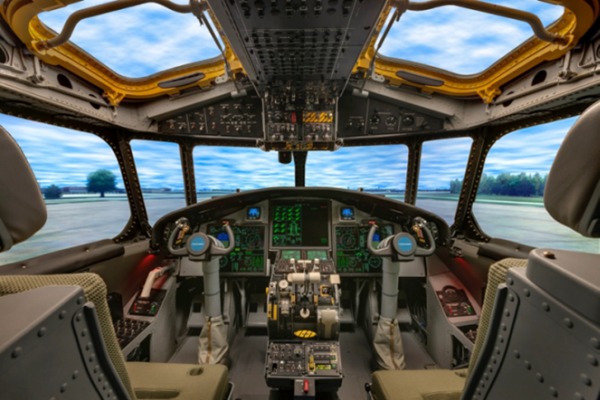


Navy delivers first pilot trainer to deployed carrier airborne early warning squadron 

The Naval Aviation Training Systems and Ranges program office (PMA-205) recently delivered the first Aircrew Procedures Trainer (APT) device to Carrier Airborne Early Warning Squadron (VAW) 125 at Marine Corp Air Station (MCAS) Iwakuni, Japan. Pictured is a cockpit view of an APT device. (U.S. Navy Photo)  

Release from Naval Air Systems Command

***** 

Navy delivers first pilot trainer to deployed carrier airborne early warning squadron 

Published: Feb 28, 2023 

NAVAL AIR SYSTEMS COMMAND, PATUXENT RIVER, Md. — 

The Naval Aviation Training Systems and Ranges program office (PMA-205) recently delivered the first Aircrew Procedures Trainer (APT) device to Carrier Airborne Early Warning Squadron (VAW) 125 at Marine Corps Air Station (MCAS) Iwakuni, Japan.   

This delivery is the first pilot trainer that will be embedded with a forward deployed unit within the VAW community, completing the Navy’s planned platform training system deliveries for deployed aircrew.   

“The delivery of this training device to VAW-125 will revolutionize the way Navy forward-deployed forces train and enable them to win the high-end fight,” said Capt. Kevin McGee, PMA-205 program manager. “The team put in significant effort to deliver this capability and ensure our forward-deployed forces are well equipped to maintain and improve their skills, even when deployed.”  

The APT device provides deployed pilots realistic, high-fidelity simulator training in basic flight operations, navigation, emergency procedures, crew resource management, tactics, instrument procedures, carrier familiarization, and other capabilities. Training time in the simulator minimizes risk by providing a safe environment in which pilots can both practice for muscle memory and learn new skills that can be applied in an operational environment.  

The program office originally procured a trainer for Norfolk, Virginia. One month after contract award, Airborne Command and Control and Logistics Wing signed and approved a requirement for a new device to be delivered to MCAS Iwakuni, Japan. Recognizing the urgent need, the Naval Air Warfare Center Training Systems Division team, along with industry partners, developed a creative solution to quickly meet both this new requirement and the current needs of the Fleet. Within two months of the announcement, the PMA-205 E-2 training systems team negotiated the new delivery location.     

“As with many contracting actions, there were complications and challenges that had to be overcome for this device to be delivered, but with strong partnerships among all stakeholders this new high-fidelity trainer will help maintain the highest standards of readiness to meet Carrier Air Wing goals,” said Dave Adams, PMA-205 E-2 training systems team lead.  

About PMA-205  

PMA-205 provides full life-cycle acquisition of naval aviation training platforms, general training systems, training range instrumentation systems, and distributed mission training centers to provide U.S. Navy and Marine Corps pilots, naval flight officers, aircrew, and maintainers with the training equipment required to provide lethal capability and operational readiness.


SECNAV Renames Ticonderoga-class Guided Missile Cruiser USS Chancellorsville after Robert Smalls 

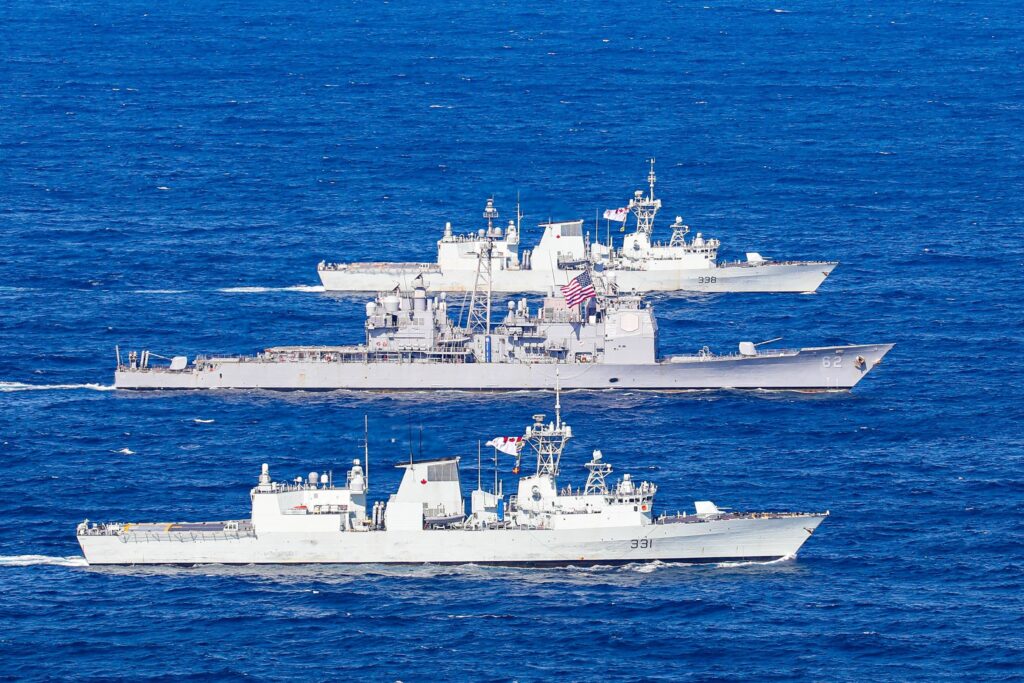
PHILIPPINE SEA (Oct. 30, 2022) The Ticonderoga-class guided-missile cruiser USS Chancellorsville (CG 62) sails alongside Royal Canadian Navy ships HMCS Vancouver (FFH 331) and HMCS Winnipeg (FFH 338) in the Philippine Sea. Chancellorsville is forward-deployed to the U.S. 7th Fleet in support of security and stability in the Indo-Pacific and is assigned to Commander, Task Force 70, a combat-ready force that protects and defends the collective maritime interest of its allies and partners in the region. (U.S. Navy photo by Mass Communication Specialist 2nd Class Justin Stack)

Release from the Secretary of the Navy Public Affairs

***** 

27 February 2023 

WASHINGTON –Secretary of the Navy (SECNAV) Carlos Del Toro announced today that the Ticonderoga-class guided missile cruiser formerly named USS Chancellorsville (CG 62) will be renamed USS Robert Smalls (CG 62). 

This renaming honors Robert Smalls, a skilled sailor and statesman born into slavery in South Carolina.   

The decision arrived after a congressionally mandated Naming Commission outlined several military assets across all branches of service that required renaming due to confederate ties. In September 2022, Secretary of Defense Lloyd Austin accepted all recommendations from the naming commission and gave each service until the end of 2023 to rename their assets.   

“I am proud to rename CG 62 after Robert Smalls. He was an extraordinary American and I had the pleasure of learning more about him last year when I visited his home in South Carolina,” said Del Toro. “The renaming of these assets is not about rewriting history, but to remove the focus on the parts of our history that don’t align with the tenets of this country, and instead allows us to highlight the events and people in history who may have been overlooked. Robert Smalls is a man who deserves a namesake ship and with this renaming, his story will continue to be retold and highlighted.” 

Robert Smalls (1839-1915) was born into slavery in South Carolina. He became a skilled sailor and was an expert navigator of southern coasts. Smalls was conscripted in 1862 to serve as pilot of the Confederate steamer Planter at Charleston. On 13 May 1862, he executed a daring escape out of the heavily fortified Charleston harbor with his family, other enslaved people, and valuable military cargo onboard, and successfully surrendered Planter to the U.S. Navy. Smalls continued as pilot of the ship, but also piloted ironclad Keokuk and other vessels. He ultimately became captain of Planter. An ardent advocate for African Americans, Smalls led one of the first boycotts of segregated public transportation in 1864. This movement led to the city of Philadelphia integrating streetcars in 1867. After the Civil War, Smalls was appointed a brigadier general of the South Carolina militia, and from 1868 to 1874 he served in the South Carolina legislature. In 1874, he was elected to the U.S. House of Representatives and served for five terms, advocating for greater integration. After his time in Congress, Smalls was twice appointed collector of the Port of Beaufort, South Carolina.  He died at Beaufort in 1915.  

The logistical aspects associated with renaming the ship will begin henceforth and will continue until completion with minimal impact on operations and the crew. CG-62 was commissioned in 1989 and named USS Chancellorsville (CG 62) to honor the Battle of Chancellorsville, a Confederate victory during the Civil War. CG-62 is currently assigned to Carrier Strike Group Five and is forward-deployed to Yokosuka, Japan. 


BAE Systems to provide Maritime Indirect Fires System for UK Royal Navy

Release from BAE Systems 

***** 

New automated Ammunition Handling System combined with Mk 45 gun to give UK Royal Navy critical advantage at sea 

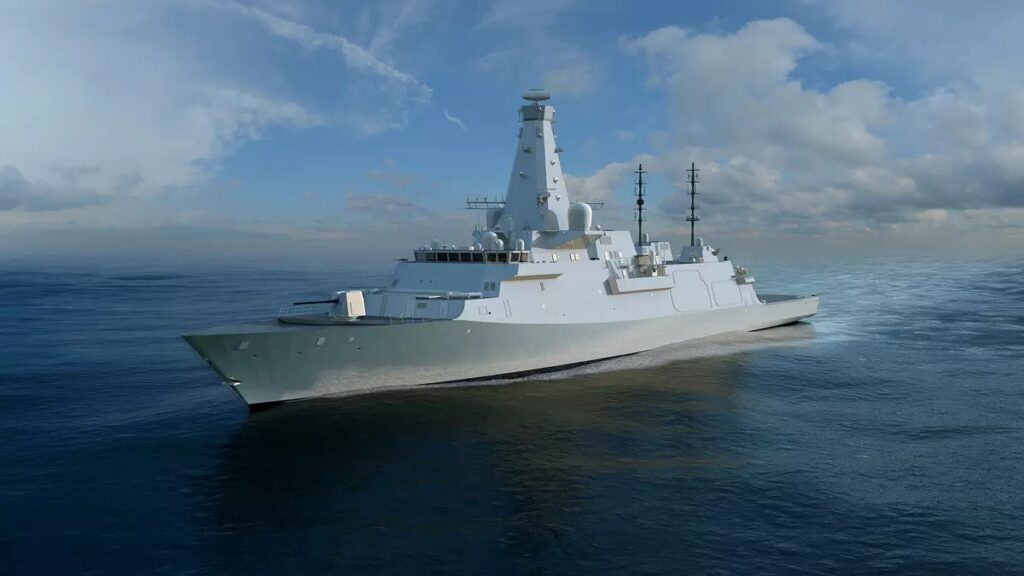
LOUISVILLE, Ky. — Feb. 28, 2023 — BAE Systems, Inc. has received a $219 million (GBP181 million) contract to equip the Royal Navy’s Type 26 frigates with five Mk 45 Maritime Indirect Fire Systems (MIFS). The system combines the 5-inch, 62-caliber Mk 45 Mod 4A naval gun system with a fully automated Ammunition Handling System (AHS).  

“We have innovated and customized the Mk 45 system to provide a critical and reliable fully automatic ammunition handling solution that revolutionizes medium and large caliber naval gunnery,” said Brent Butcher, vice president of the weapon systems product line at BAE Systems, Inc. “The customized, lightweight and compact Mk 45 gun system with AHS provides our customers commonality with the U.S. Navy, a highly-reliable system with security of lifecycle support, and access to future technology upgrades. We look forward to continuing to build these critical partnerships and delivering the MIFS system to our U.K. customer.” 

The Type 26 frigates, the first of which is due to be delivered to the Royal Navy in the mid-2020s, will be one of the world’s most advanced classes of warships, with the primary purpose of anti-submarine warfare. In addition to its range of advanced weapons and sensors, it will also be capable of countering piracy, delivering humanitarian aid and disaster relief. As part of the ships’ world-class capabilities, this innovative, automated naval gun solution will help the Royal Navy increase crew productivity, reduce sailor safety hazards, and improve the operational capability of these advanced warships as they deliver protection to the Royal Navy’s Continuous At Sea Deterrent and Carrier Strike Group.   

Engineering and program support for the new contract will be performed at BAE Systems’ Minneapolis and Louisville, Kentucky production facilities. BAE Systems shipped the main equipment for the first MIFS system at the end of 2022 with installation to follow in 2023. 


Vigor Successfully Completes USS Chosin (CG 65) Modernization at Harbor Island 

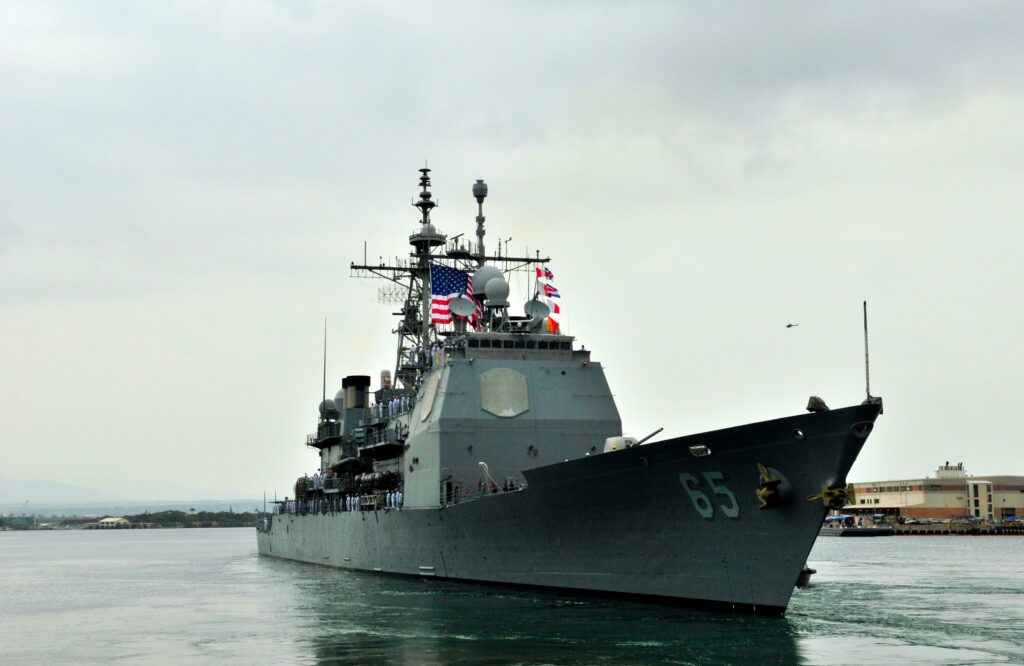
PEARL HARBOR (March 25, 2016) Sailors man the rails aboard USS Chosin (CG-65) as they prepare to depart Pearl Harbor one last time. Chosin will be homeport shifting to San Diego to undergo Cruiser Modernization. (U.S. Navy Photo by Ensign Krystyna Nowakowski/Released)

Release from Vigor Shipyards via email 

************* 

Three-year, highly complex maintenance project was largest in Vigor’s history 

Seattle, WA (February 28, 2023) – Vigor, a Titan company, successfully completed a three-year modernization project on USS Chosin (CG 65) at its Harbor Island shipyard today, sending the U.S. Navy ship back to its homeport of Naval Station Everett. The project, which encompassed more than 1.7 million hours of work for Vigor employees, in addition to work by dozens of subcontractors and the U.S. Navy, was one of the largest, longest and most complex in Vigor’s history.  

“Vigor’s completion of USS Chosin in Seattle represents an incredible success for our skilled workers and the hundreds of people who worked on this project over the last three years,” said Adam Beck, Executive Vice President of Ship Repair for Vigor. “Vigor employees and our many partners successfully managed this very complex project through the COVID-19 pandemic, ultimately returning the ship to the U.S. Navy to continue its service to our nation. We are honored to support the U.S. Navy, and are grateful to all who made this success possible.” 

Vigor employees devoted approximately 1.7 million hours to USS Chosin over the last three years, modernizing weapons, communications and information systems, as well as upgrading many other areas of the ship. They worked in close partnership with the team from the Northwest Regional Maintenance Center (NWRMC) at Naval Station Everett, where USS Chosin is homeported.    

Work on USS Chosin commenced alongside USS Cape St. George (CG 71), which is also scheduled to be completed this year. Both maintenance projects were awarded to Vigor together in 2019.  

“This project was not only important to the Navy and our national defense, it also supported more than 600 family-wage jobs at the Harbor Island shipyard,” Beck said. “This steady work has allowed Vigor to grow the capacity of our skilled workforce in support of Navy readiness and supported industrial jobs and the local economy.” 

As USS Chosin leaves Harbor Island, two other U.S. Navy ships remain at the facility, including USS Cape St. George and USS John Paul Jones (DDG 53). Vigor’s support for the Navy also extends beyond Seattle, with USS Tulsa (LCS 16) currently undergoing maintenance at Swan Island in Portland, OR and USS Michael Murphy (DDG 112) nearing the end of its availability in Hawaii.  


Innovation Lab is Bringing HII Technology to the Next Generation of Shipbuilders 

Release from HII 

***** 

NEWPORT NEWS, Va., Feb. 28, 2023 (GLOBE NEWSWIRE) — HII’s (NYSE: HII) Newport News Shipbuilding division is harnessing the power of technology as it recruits the next generation of shipbuilders. 

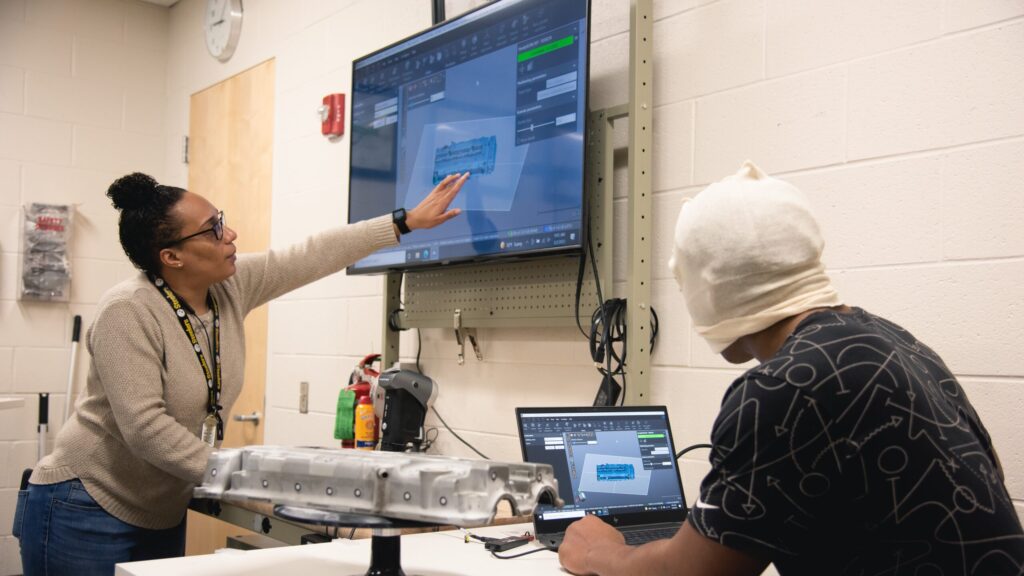
The Ray Bagley Innovation Lab is part of The Newport News Shipbuilding Apprentice School. The mobile laboratory includes stations that cover the various skill sets associated with all 19 trades offered by the school. 

In use since 2021, the lab is part of the orientation process for new apprentices and affords students from K-12 schools the opportunity to explore shipbuilding trades and possible career opportunities. 

“The Ray Bagley Innovation Lab allows students to experience the various trades used to build ships in a safe, controlled environment,” said Dr. Latitia McCane, director of education at The Newport News Shipbuilding Apprentice School. “The unique experience also helps breakdown preconceived ideas about construction trades. We don’t just build ships here, we build careers.” 

Photos accompanying this release are available at: https://hii.com/news/innovation-lab-hii-technology-shipbuilders

The lab is intentionally mobile, allowing the workstations to move into the gymnasium, thus converting the gym into an actual work area. Portions of the equipment also leave campus for community events, such as supporting high school career days in the region. 

On Feb. 17, the Innovation Lab was dedicated in honor of Ray Bagley, retired vice president of trades operations at NNS. Bagley retired in 2018 after serving the company for more than 43 years. He started his career as an apprentice painter and went on to work at all levels of production and construction leadership at NNS. 

HII, Verizon and BayPort Credit Union all have provided financial support for the Ray Bagley Innovation Lab. 

Funded by HII to train and develop the next generation of shipbuilders, The Newport News Shipbuilding Apprentice School offers four- to eight-year, tuition-free apprenticeships in 19 trades and eight optional advanced programs. 

Accredited by the Council for Occupational Education, The Newport News Shipbuilding Apprentice School is certified to offer associate’s degrees of applied science in maritime technology in 26 educational programs. Through partnerships with Virginia Peninsula Community College, Tidewater Community College and Old Dominion University, the Newport News Shipbuilding Apprentice School’s academic program provides the opportunity to earn associate degrees in business administration, engineering and engineering technology and bachelor’s degrees in mechanical or electrical engineering. 


Coast Guard Cutter Juniper returns to homeport after completing a 43-day Operation Blue Pacific patrol 

Release from Coast Guard 14th District 

***** 

HONOLULU – The Coast Guard Cutter Juniper (WLB 201) returns to homeport in Honolulu after a mission in the Pacific to deter illegal fishing and support partner nation’s sovereignty as part of Operation Blue Pacific. 

The crew of the Juniper departed Honolulu mid-January and covered approximately 8,200 nautical miles in the effort to assist Pacific Island partners in protecting maritime governance and a rules-based international order to ensure a free and open Indo-Pacific.  

“Combining efforts to deter illegal, unregulated, and unreported fishing throughout Oceania is more important than ever,” said Lt. Cmdr. Timothy Bonner, the Juniper’s commanding officer. “It was an honor for the Juniper crew to have the opportunity to work with our Fijian partners in assisting them in patrolling their exclusive economic zone.” 

The Juniper embarked four Fijian shipriders representing Fiji’s Police Force, Ministry of Fisheries, Revenue and Customs, and the Republic of Fiji Navy who spent multiple days underway with the crew. 

With support from members of the Juniper, USCG TACLET Pacific, and a Mandarin linguist from the U.S. Marine Corps, the Fijian Shipriders were able to utilize cutter resources to patrol Fijian waters and conduct a fishery boarding in the effort to deter IUU fishing within their EEZ.  

While in Suva, Fiji, the Juniper crew hosted U.S. Ambassador Marie Damour and conducted tours for multiple agencies including Fiji’s Ministry of Fisheries, Revenue and Customs, and Maritime Safety Authority. Multiple Juniper crewmembers visited the William Cross College with representatives from the U.S. Navy, U.S. Embassy, and Republic of Fiji Navy to speak with senior-grade students and hold group discussions about the topic of overcoming gender bias. An interagency rugby match with the Republic of Fiji Navy took place that very same day at the historic Albert’s Park in Suva.  

After departing Fiji, the Juniper crew transited to American Samoa where they serviced multiple aids to navigation (ATON) in Pago Pago Harbor and on Ta’u Island. 

“It is our pleasure to support American Samoa’s maritime transportation system by utilizing our crew’s multi-mission capabilities,” said Lt. j.g. Pryor Miller, the Juniper’s operations officer. “Servicing ATON in the Pacific is essential to providing the needed infrastructure to maintain a maritime transportation system that promotes economic prosperity and an uninterrupted flow of maritime commerce.” 

Throughout the entirety of the patrol, Juniper boarding teams conducted multiple boardings and observation reports of fishing vessels under the Western and Central Pacific Fisheries Commission (WCPFC), which strives to protect the region’s fish stocks on the high seas. The WCPFC has 26 member nations and 7 participating territories, 18 of which have enforcing authority, including the United States.  

Operation Blue Pacific is an overarching multi-mission Coast Guard endeavor, promoting security, safety, sovereignty, and economic prosperity in Oceania while strengthening relationships between partner nations in the Pacific.  

The Juniper is a 225-foot seagoing buoy tender home-ported in Honolulu and is responsible for maintaining aids to navigation, performing maritime law enforcement, port and coastal security, search and rescue and environmental protection. 


HSC-22 CONDUCTS FINAL FLIGHT 

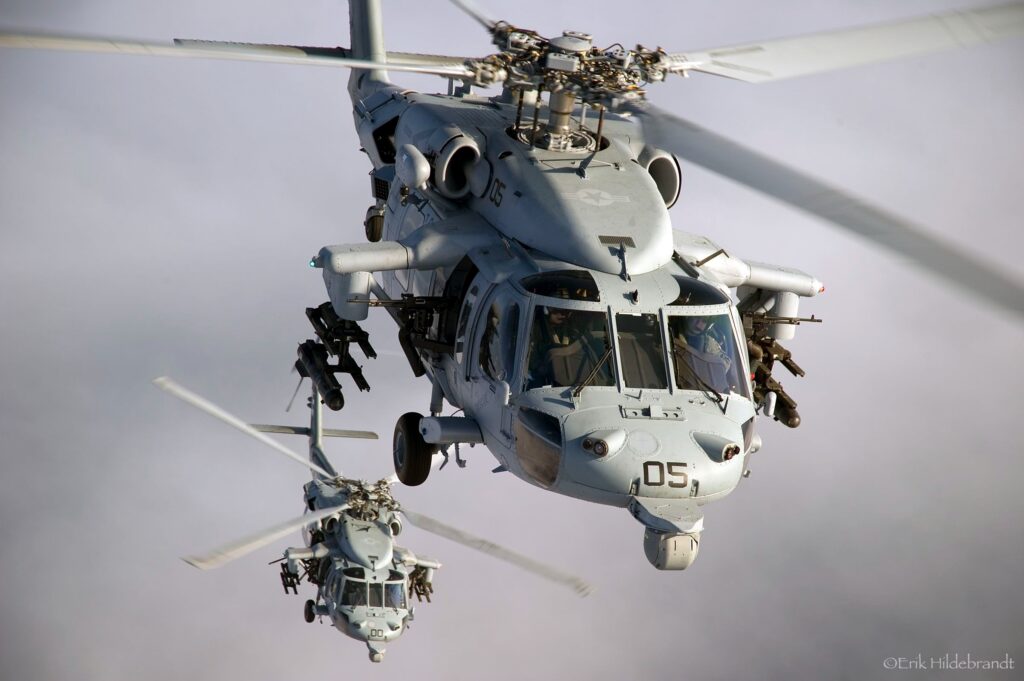
Crusader 05: LT Dan Rosborough HAC LTJG Kevin Teague H2P AWS1 Calah Sanchez Crewchief AWSC Hatler Riddle 2nd Crewman Crusader 00: LT Addison Daniel HAC LTJG Sean Rice H2P AWS2 James White Crewchief AWS2 Robert McCann

Release from Commander, Naval Air Force Atlantic 

***** 

HSC-22 CONDUCTS FINAL FLIGHT 

By COMNAVAIRLANT Public Affairs

23 February 2023 

(NORFOLK, Va.) – The “Sea Knights” of Helicopter Sea Combat Squadron (HSC) 22 conducted their final flight on Wednesday, Feb. 15, 2023, almost 16 years after their first flight in 2006. 

 
As one of the squadrons located on the “seawall” of Naval Station Norfolk, HSC-22 operated the MH-60S helicopter, the Navy’s multi-mission, rotary-wing helicopter, as well as the MQ-8B/C “Fire Scout”, an unmanned aerial vehicle (UAV) used for intelligence, surveillance and reconnaissance in the maritime environment. 
 
Cmdr. Aaron “Dempsey” Berger is the last of 14 commanding officers who have led the squadron to work towards their core mission areas. 
 
“When this squadron was established we were handed a challenge of living up to the standards set by other squadrons,” said Berger. “I believe we’ve risen above and set new standards for other squadrons to meet… I’ve challenged every Sailor as they depart for other commands to take their “get to yes” mentality, work ethic, and organizational standards onward so we, as a Naval Aviation Enterprise can continue to support the National Defense Strategy.” 
 
HSC-22 was the first East Coast HSC squadron to pioneer the integration of rotary UAVs into the existing MH-60S mission sets. For over 5 years, HSC-22 operated three separate aircraft models in the squadron with many members being qualified to operate or perform maintenance on all three platforms. 
 
Designated as one of three east coast expeditionary squadrons, HSC-22 has deployed detachments of personnel and aircraft on nearly every class of ship the U.S. Navy currently operates world-wide. 
 
One of the squadron’s core mission areas in recent years was working with the U.S. Coast Guard under the Joint Interagency Task Force South. This unique opportunity enabled the squadron to exercise the manned-unmanned teaming concept to facilitate the interdiction of illicit trafficking. 
 
Berger closed with acknowledging that even though they have performed their final flight, the “Sea Knights” have proudly lived up to their motto of “Praeses, Armis, Gero”, “Protect, Fight, Support”.  


U.S. Coast Guard Cutter Interdicts Illegal Drugs Shipment in Arabian Sea 

Release from U.S. Naval Forces Central Command Public Affairs 

***** 

U.S. Coast Guard Cutter Interdicts Illegal Drugs Shipment in Arabian Sea 

By U.S. Naval Forces Central Command Public Affairs | February 26, 2023 

MANAMA, Bahrain — 

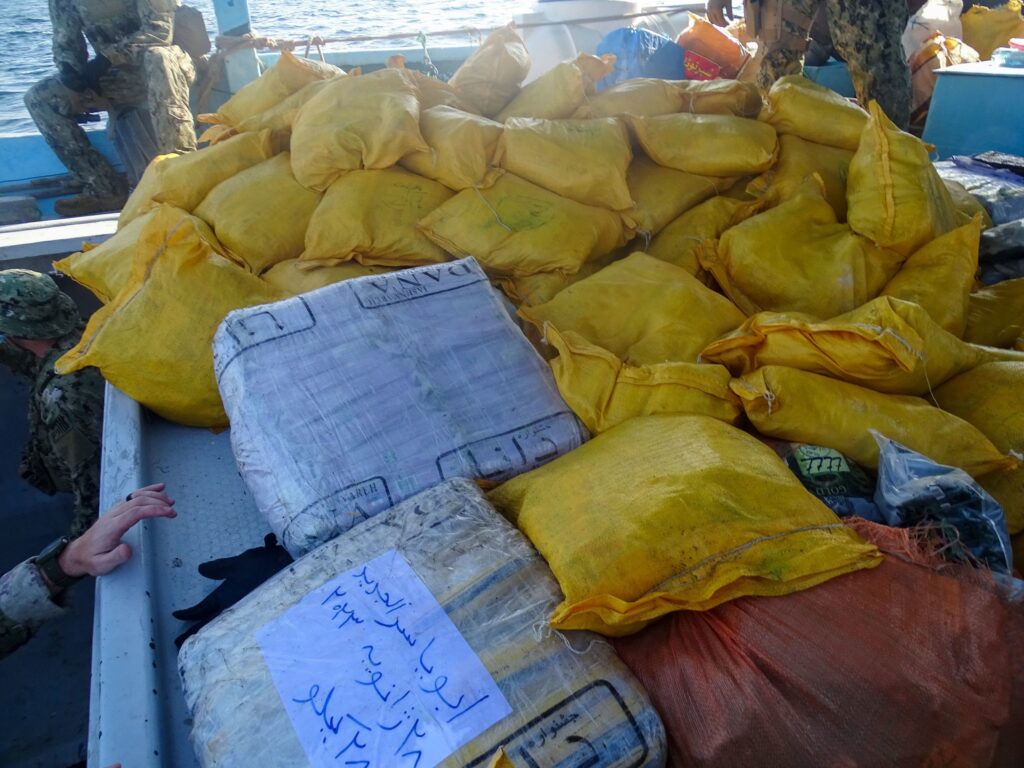
A U.S. Coast Guard ship seized illegal drugs worth $20 million in U.S. street value from a fishing vessel with four mariners transiting international waters in the Arabian Sea, Feb. 25. 

Crewmembers from USCGC John Scheuerman (WPC 1146) discovered 1,350 kilograms of hashish, 276 kilograms of methamphetamine and 23 kilograms of amphetamine pills upon interdicting the vessel during a routine patrol. 

“This is the result of excellent teamwork and multinational collaboration. It is important that we continue relentlessly pursuing any destabilizing maritime activity,” said U.S. Navy Capt. Anthony Webber, commander of Task Force 55, the staff responsible for U.S. 5th Fleet surface forces in the region. “The crew clearly demonstrated John Scheuerman’s motto of ‘selflessness and strength’ during this seizure and I couldn’t be more proud.” 

John Scheuerman was operating in support of Combined Task Force (CTF) 150 at the time. Currently led by the United Kingdom Royal Navy, CTF 150 is one of four task forces organized under the Combined Maritime Forces (CMF). 

CMF is the largest international naval partnership in the world, consisting of 38 member-nations and partners, and has interdicted over $1 billion worth of illicit narcotics during maritime patrols. 


AUSTALUSA CHRISTENS CODY (EPF 14) – THE FIRST EPF FLIGHT II VESSEL 

Release from AustalUSA 

***** 

FEBRUARY 25, 2023 

AUSTALUSA CHRISTENS CODY (EPF 14) – THE FIRST EPF FLIGHT II VESSEL 

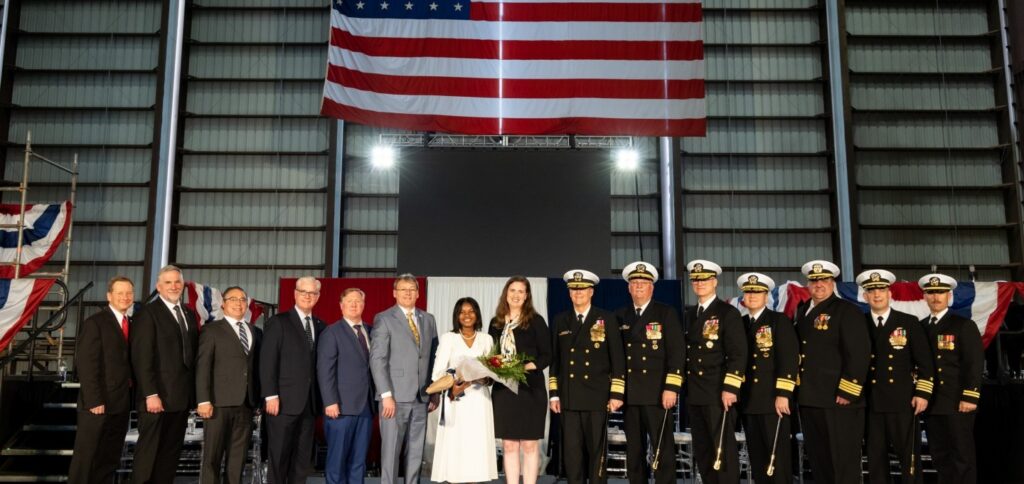
MOBILE, Ala. – Austal USA christened its 14th Expeditionary Fast Transport (EPF), USNS Cody, during a ceremony at its advanced manufacturing facility today. Cody is the first EPF Flight II as well as the first Navy vessel to honor the city of Cody, Wyo.   

The ceremony for the Navy’s first Flight II EPF was well attended by Navy leaders and elected officials. Vice Admiral Francis Morley, principal military deputy to the assistant secretary of the Navy for research, development, and acquisition; Rear Admiral Bruce Gillingham, surgeon general of the U.S. Navy; Rear Admiral Michael Wettlaufer, commander, Military Sealift Command; Rear Admiral Tom Anderson, program executive officer, ships; Honorable Matt Hall, mayor of Cody, Wyo.; and Honorable Greg Reed, Alabama Senate President Pro Tempore all participated in christening events. 

Ship sponsor Averil D. Spencer christened the ship with a ceremonial champagne bottle-break on the bow of the ship. Spencer, an avid philanthropist, is the Founder and Executive Director of Launch gURLs, a nonprofit that aims to close the gender gap in economic opportunities through entrepreneurship programming for adolescent girls globally. 

“Cody represents the future of naval medicine afloat and the ability to provide critical combat care in austere and contested operating environments,” Austal USA President Rusty Murdaugh said. “With her medical capability, Cody will make a name for herself as a new asset to the global humanitarian cause very soon.” 

EPF Flight II provides a Role 2E (expanded) medical capability which includes, among other capabilities, basic secondary health care built around primary surgery; intensive care unit; ward beds; and limited x-ray, laboratory and dental support. The EPF’s catamaran design provides inherent stability to allow surgeons to perform underway medical procedures in an on-board operating suite. The EPF’s catamaran design provides inherent stability to allow surgeons to perform underway medical procedures in an on-board operating suite. Enhanced capabilities to support V-22 flight operations and launch and recover 11-meter Rigid Hull Inflatable Boats complement the ship’s medical facilities. These Flight II upgrades along with EPF’s speed, maneuvrability and shallow water access are key enablers for mission support of future Distributed Maritime Operations and Expeditionary Advanced Base Operations around the world. Flight II retains the capability of the Flight I to support other missions including core logistics capabilities. 

The USNS Cody is one of two EPF Flight II ships under construction at Austal USA with a third under contract.  EPF Flight II ships will augment the future Expeditionary Medical Ships which will be capable of comprehensive, multidisciplinary hospital operations.