Sikorsky Delivers Two More CH-53K® Helicopters To U.S. Marine Corps 

Sikorsky delivered two CH-53K Helicopters to the U.S. Marine Corps in December 2022. The heavy lift helicopters will be based at Marine Corps Air Station New River in Jacksonville, North Carolina.

Release from Sikorsky

***** 

Connecticut factory busy building multi-mission helicopters 

STRATFORD, Conn., Feb. 13, 2023 – Sikorsky, a Lockheed Martin company (NYSE: LMT), delivered two CH-53K helicopters to the U.S. Marine Corps in the final quarter of 2022. These CH-53K heavy lift helicopters join the seven already in operation at Marine Corps Air Station (MCAS) New River in Jacksonville, North Carolina. 

“Sikorsky’s employees are using advanced technologies to manufacture the CH-53K helicopter, which increases capabilities and survivability to the U.S. Marine Corps,” said Bill Falk, director Sikorsky CH-53K program. “With the CH-53K’s transformative technologies, more is possible for the Marine Corps and our allies when deterring threats in the changing battlefield landscape.” 

The CH53K’s heavy-lift capabilities exceed all other U.S. Department of Defense rotary wing platforms and is the only heavy-lift helicopter that will remain in production through 2032 and beyond. 

Production Picks Up in 2023 

Sikorsky is on track to deliver more multi-mission King Stallion™ helicopters to the U.S. Marine Corps in 2023. 

The U.S Navy declared Full Rate Production for the CH-53K program in December 2022; a decision that is expected to increase production to more than 20 helicopters annually in the coming years. The expanded production includes twelve (12) aircraft in various stages of production for the government of Israel. 

Sikorsky is procuring long-lead items and critical materials to support ramping CH-53K production to full rate production in its digital factory. 

U.S. Marine on CH-53K: “A Level of Safety You Can’t Get Anywhere Else” 

The CH-53K is an intelligent aircraft developed to 21st century standards, bringing improved safety and survivability to the warfighter. The CH-53K helicopter will provide many decades of world-wide heavy lift and multi-mission service to the Marine Corps, the Joint Force and our Allies. 

A full authority digital fly-by-wire Flight Control System (FCS) is one of many impressive capabilities setting the CH-53K King Stallion™ heavy lift helicopter apart from any other heavy lift aircraft. “Full authority” means the FCS provides all the aircraft motion – not just supplementing the pilot for stability. 

A digital fly-by-wire FCS is an electronic flight control system teamed with a digital computer that replaces mechanical control systems in an aircraft. It makes the aircraft easier to handle in degraded visual environments. 

For pilots, like Marine Corps Capt. Chris Vanderweerd, the system provides more predictable and stable control responses to improve safety and mission effectiveness. 

“We will take up to 30 fully loaded Marines and [are] able to insert them into a zone in a timely and [safe] manner where they don’t have to risk going in via convoy,” said Vanderweerd, who is with Marine Heavy Helicopter Squadron 461. “We can take them airborne and cut the time drastically that they are in enemy engagement zone essentially.” 

Watch the full video here. 

“The whole fly-by-wire system is awesome,” said Staff Sgt. Dakota Schneider, crew chief with Marine Aviation Weapons and Tactics Squadron (MAWTS) 1, who is supporting the CH-53K at MCAS New River. “It will bring a level of safety that you can’t get anywhere else.” 

Watch the full video here. 

For additional information, visit our website. 


Navy Selects CAES for Block II SEWIP Support 

Release from CAES 

***** 

February 13, 2023 

CAES to Provide Support to the Program Covering Spares, Engineering Services, and Repair for Antenna Array Panel Assemblies 

Arlington, Va. — CAES, a leading provider of mission-critical advanced RF technology, has been awarded an IDIQ contract with value to $38.5M over a five-year period from the U.S. Navy for spares, engineering services, and repairs on antenna array panel assemblies to support the SEWIP Block 2 program. 

The contract was awarded on a sole source basis. Work will be performed at CAES’ Lansdale, Pennsylvania, site and is expected to be complete by February 2028. 

“CAES has a history of performance on critical programs that help our military keep pace as needs evolve,” said Dr. Rob Smith, Senior Vice President and Division General Manager, CAES. “Our extensive knowledge of electronic warfare systems and flawless execution makes us a trusted partner of choice. We’re honored to support the Navy as it continues to implement and maintain essential programs.” 

For over 40 years, CAES has remained one of the premier suppliers of advanced electronic systems, helping to support warfighters in the changing electronic warfare landscape. CAES has supported the SEWIP Block 2 program over the past 10 years, providing antenna array panel assemblies and spares to continue to improve passive electronic counter surveillance capabilities. 

The SEWIP program has upgraded existing AN/SLQ-32 electronic warfare systems. Block 2 has added new defensive technologies and functional capabilities to electronic warfare systems, including improved electronic support receivers and combat system interfaces. These capabilities have allowed the Navy to better detect threats and provide greater situational awareness. 

CAES is a leading designer and manufacturer of advanced electronics and mission systems for defense and commercial use. CAES enables customers to fully exploit the electromagnetic spectrum by combining our decades of experience with electronic warfare systems and advanced technology. For more information about CAES’s electronic warfare capabilities, visit our website here.

About CAES 
CAES is a pioneer of advanced electronics for the most challenging defense and aerospace trusted systems. As a leading provider of advanced RF technology to the United States aerospace and defense industry, CAES delivers high-reliability RF and digital solutions that enable our customers to ensure a safer, more secure planet. On land, at sea and in the air, CAES’ extensive experience in the RF market and enhanced manufacturing capabilities are at the forefront of mission-critical military and aerospace innovation. www.caes.com 


Construction starts on the third Dreadnought Class submarine 

Release from BAE Systems 

******* 

9 Feb 2023 

BAE Systems has today marked the start of construction of the third Dreadnought Class submarine, Warspite, at its shipyard in Barrow-in-Furness, Cumbria.  

Warspite is the third of four Dreadnought Class ballistic missile submarines being designed and built by BAE Systems. Due to enter service from the early 2030s, the boats will carry the UK’s nuclear deterrent and be the biggest, most powerful and technically advanced submarines ever delivered to the Royal Navy. Construction of the first two boats, Dreadnought and Valiant, is already well underway. 

Steve Timms, Managing Director of BAE Systems’ Submarines business, said: 

“Today’s milestone is a really significant moment for the thousands of employees here at BAE Systems and across the submarines enterprise who are working together to deliver the Dreadnought Class. 

“We are immensely proud of the role we play in delivering this truly national endeavour for the Royal Navy and our contribution to protecting national security.” 

Attending today’s ceremony, Defence Procurement Minister Alex Chalk KC MP, said: 

“Our nuclear deterrent protects every UK citizen from the most extreme threats, every minute of every day and progress on the Dreadnought Class is crucial to maintaining our national security. 

“This milestone is a significant step forward in the Dreadnought programme, supporting thousands of jobs and apprenticeships across the country and protecting the UK and our allies for decades to come.” 

BAE Systems Submarines makes a significant contribution to the UK economy, supporting more than 11,000 jobs, the vast majority of which are in Barrow-in-Furness, in the north west of England. The business is continuing to grow its workforce and this year it expects to recruit more than 2,000 new employees. In addition, a record number of apprentices and graduates will join the business with more than 800 roles available in 2023. This early careers population will learn their trade working on one of the world’s most complex engineering programmes. 

Over the life of the Dreadnought programme, an estimated £7.5 billion will be spent with UK suppliers, supporting upwards of 11,800 jobs in the supply chain. 

Alongside the Dreadnought Class, BAE Systems is delivering seven Astute Class hunter killer submarines, four of which are in-service with the Royal Navy. Design and concept work is also underway on the Submersible Ship Nuclear Replacement (SSNR) programme, the eventual replacement to the Astute Class. 


Unified DoD Efforts Supporting Türkiye 

U.S. Marine Corps Brig. Gen. Andrew T. Priddy, Task Force 61/2 commanding general arrives, Feb. 9., at Incirlik Air Base, and is greeted by U.S. Air Force Col. Calvin Powell, 39th Air Base Wing commander. While supporting requirements from USAID, following an earthquake on Feb 6., Task Force, 61/2 is responsible for the coordination of joint U.S. military efforts, providing humanitarian aid and disaster relief to the people of Türkiye. U.S. AIR FORCE / Senior Airman David D. McLoney

Release from the U.S. Navy Chief of Information 

***** 

11 February 2023, From Capt. MacKenzie Margroum TF 61/2 

Marines and Sailors from Task Force 61/2 (TF 61/2), commanded by Brig. Gen. Andrew Priddy, operating under U.S. Naval Forces Europe (NAVEUR) and U.S. Sixth Fleet arrived at Incirlik Air Base in support of humanitarian assistance and disaster relief efforts, Feb. 9. 

The U.S. Department of Defense established a Command and Control Center, commanded by Priddy, to support requirements from the U.S. Agency for International Development (USAID) and to coordinate all U.S. military operations, following a 7.8-magnititude earthquake that tragically struck Türkiye on Feb. 6. 

“We are here in support of USAID to assist the government and people of Türkiye during this time of need,” said Priddy. “Right now, the Navy-Marine Corps team is working alongside the U.S. Army and U.S. Air Force to support the Disaster Assistance Response Team (DART) as they provide aid to the people of Türkiye.” 

Currently, TF 61/2 is overseeing the additional arrival of several U.S. military helicopters. The helicopters arriving include two UH-60s, three HH-60s, and three CH-47s from the U.S. Army, and a few U.S. Navy MH-60S and MH-60R helicopters from the USS GEORGE H W BUSH. These aircraft are in addition to the four UH-60 helicopters currently supporting aid from Incirlik. The primary mission of these aircraft is to support transportation and logistics for the DART and the two U.S. Urban Search and Rescue teams. 

“Our forward deployed integration with U.S. Sixth Fleet enabled us to rapidly respond to this whole of government effort,” said Priddy. “This is the value of the blue-green team, a dynamic world-wide deployable crisis response force.” 

TF 61/2 Marines and Sailors join other U.S. European Command components already on station, in addition to our U.S. allies and partners. The U.S. has helped facilitate 1337 total international aircraft sorties since the recovery efforts initiated. 

“Being able to support USAID’s humanitarian effort is an incredible opportunity,” said Lt. Michael Weaver, a Navy medical planner with TF 61/2. “We are here to assist the USAID Disaster Assistance Response Team as they assess the damage, identify priority needs, and coordinate with the Government of Türkiye.” 


Cooper: U.S. Navy, Partners Put the Squeeze on Iranian Arms Shipments

Seized weapons displayed on the flight deck of a U.S. Navy ship in the U.S. 5th Fleet area of operations, Feb. 1. U.S. NAVY

ARLINGTON, Va. — The maritime forces of U.S. Naval Forces Central Command and their allied and partner navies have enjoyed considerable success in recent months in intercepting Iranian arms shipments to Houthi rebels in Yemen, the Navy’s regional commander said. 

“In fact, in just the last two months alone, five major interdictions at sea have resulted in U.S. and partner maritime forces seizing more than 5,000 weapons, 1.6 million rounds of ammunition, 7,000 proximity fuses for rockets, over 2,000 kilograms of propellant that are used for rocket-propelled grenades, or RPGs, and $60 million worth of illegal drugs,” said Vice Adm. Brad Cooper, commander, U.S. Fifth Fleet and commander, Naval Forces, U.S. Central Command, speaking Feb. 13 during an off-camera, on-the-record briefing transcript of United States-Gulf Cooperation Council Working Group Meetings in Riyadh, Saudi Arabia.  

“And these numbers are part of an overall two-year trend. In 202 — or rather, since 2021 we’ve seized over a billion — with a B — dollars in illicit drugs and nearly 15,000 illegal arms,” Cooper said. “The weapons were unlawfully headed to Yemen, as I think is well-documented.” 

Also speaking at the council was Dana Stroul, U.S. deputy assistant secretary of Defense for the Middle East.  

“Let me start out by saying we have seen no change in Iranian willingness or activities to transfer weapons to the Houthis, despite their work with increasing military cooperation with Russia for the war in Ukraine, number one,” Stroul said. “And number two, there has been a decrease in Houthi attacks against Saudi Arabia because of the truce that has been in place. Now, the actual truce has expired, and at this point in time, all sides are not resuming hostilities, though the truce has not been formally extended.” 

Cooper also leads two major maritime coalitions, the 38-member Combined Maritime Force, which he describes as “the largest maritime partnership in the world,” and the 11-member International Maritime Security Construct.  

“Everything we’ve accomplished both in recent months and over the last two years is the direct result of great work our maritime forces are doing, really, in two key areas, strengthening partnerships and accelerating innovation,” he said. 


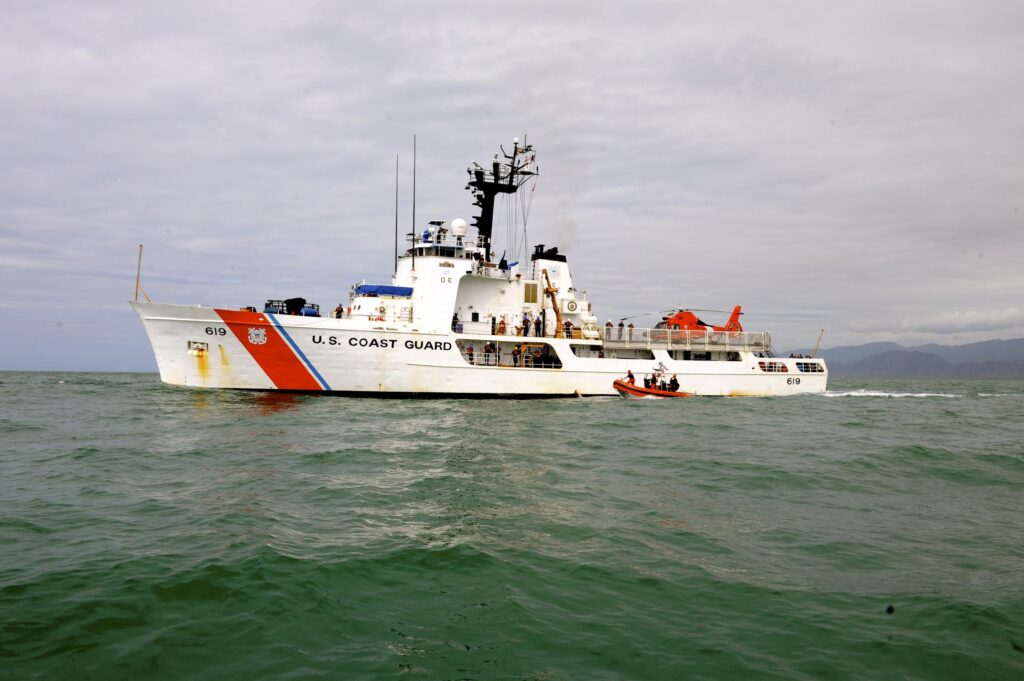
USCGC Confidence’s crew returns home following 40-day Florida Straits patrol 

GONAIVES, Haiti – Crewmembers from Coast Guard Cutter Confidence, home-ported in Port Canaveral, Fla., launch a small boat with Coast Guard District Seven Transport System recovery assist team to surgery the port Nov. 7, 2010 after Hurricane Tomas hit the island of Haiti. The confidence became a staging platform for the MTSRAT and helped survey the channels for possible obstruction to navigation. U.S. COAST GUARD / Petty Officer 3rd Class Sabrina Elgammal

Release from U.S. Coast Guard Atlantic Area 

******* 

CAPE CANAVERAL, Fla. — The crew of the USCGC Confidence (WMEC 619) returned to their home port in Cape Canaveral Friday following a 40-day patrol in the Florida Straits. 

Confidence deployed in support of Homeland Security Task Force – Southeast and Operation Vigilant Sentry to conduct counter drug and maritime safety and security missions in the Coast Guard’s Seventh District area of operations. While underway, Confidence’s crew worked with additional Coast Guard cutters and air assets to detect, deter and intercept unsafe and illegal migrant ventures bound for the United States. 

During the patrol, Confidence’s crew interdicted and cared for 496 migrants. Notably, Confidence worked with numerous Coast Guard air assets to rescue a group of 17 Cuban nationals stranded on islands within Cay Sal Bank, Bahamas. 

Confidence’s patrol efforts highlight the Coast Guard’s critical missions of maintaining maritime safety and preventing the potential for loss of life by deterring migrants from taking to the sea in dangerously overcrowded vessels while attempting to enter the United States through non-legal channels. 

“During this patrol, Confidence responded to record high migration in the Florida Straits,” said Cmdr. Thomas Martin, commanding officer of Confidence. “I am proud of the work the crew did to prevent the loss of life at sea and safeguard our borders.” 

Confidence is a 210-foot, Reliance-class medium endurance cutter with a crew of 82. The cutter’s primary missions include counter drug operations, migrant interdiction, enforcement of federal fishery laws and search and rescue in support of Coast Guard operations throughout the Western Hemisphere. 

For information on how to join the U.S. Coast Guard, visit GoCoastGuard.com to learn about active duty and reserve, officer and enlisted opportunities. Information on how to apply to the U.S. Coast Guard Academy can be found here


Future USS Richard M. McCool Jr. Successfully Installs EASR Antenna

Release from Nava Sea Systems Command 

******* 

NEWS | Feb. 9, 2023 

Future USS Richard M. McCool Jr. Successfully Installs EASR Antenna 

By Team Ships Public Affairs 

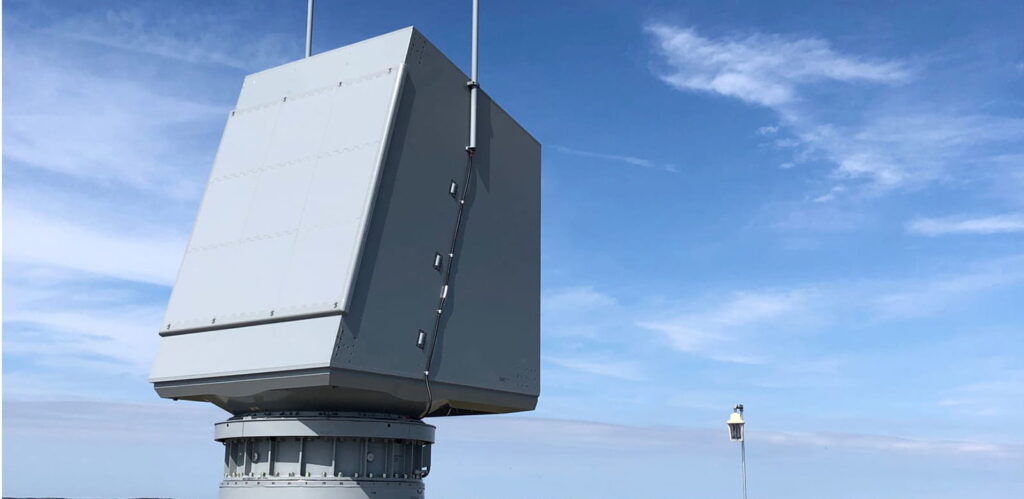
The Enterprise Air Surveillance Radar (EASR) antenna landed on the future USS Richard M. McCool Jr. (LPD 29), Jan.16, 2023. 

This marks the completion of EASR system deliveries for what will be the first LPD 17 Class ship and the first U.S. Navy install and activation of the SPY-6(V)2, rotating variant, S-Band radar. 

“The progress made is a testament to the collaboration across multiple organizations in bringing this next-generation radar to the LPD program. The Navy and our industry partners look forward to systems activation and testing as LPD 29 continues on the path to sea trials later this year,” said Capt. Cedric J. McNeal, Amphibious Warfare Program Manager, Program Executive Office (PEO Ships). 

SPY-6(V)2 provides the U.S. Navy with a common hardware variant for carrier and amphibious ships. In addition to providing hardware and software commonality, the radar will also contribute to increased engagement and overall ship self-defense. 

As with all incremental technology enhancements, the Navy is applying an increased focus to ensure that the system is provided on schedule, integrated into the ship/combat system and activated. Ultimately, EASR will be made ready as an integral sensor in an integrated Ship Self-Defense System to support the ship’s employment. 

As one of the Defense Department’s largest acquisition organizations, PEO Ships is responsible for executing the development and procurement of all destroyers, amphibious ships, special mission and support ships, boats and craft. 


HII Breaks Ground on New Submarine Facility at Newport News Shipbuilding

Release from HII 

******* 

HII Breaks Ground on New Submarine Facility at Newport News Shipbuilding 

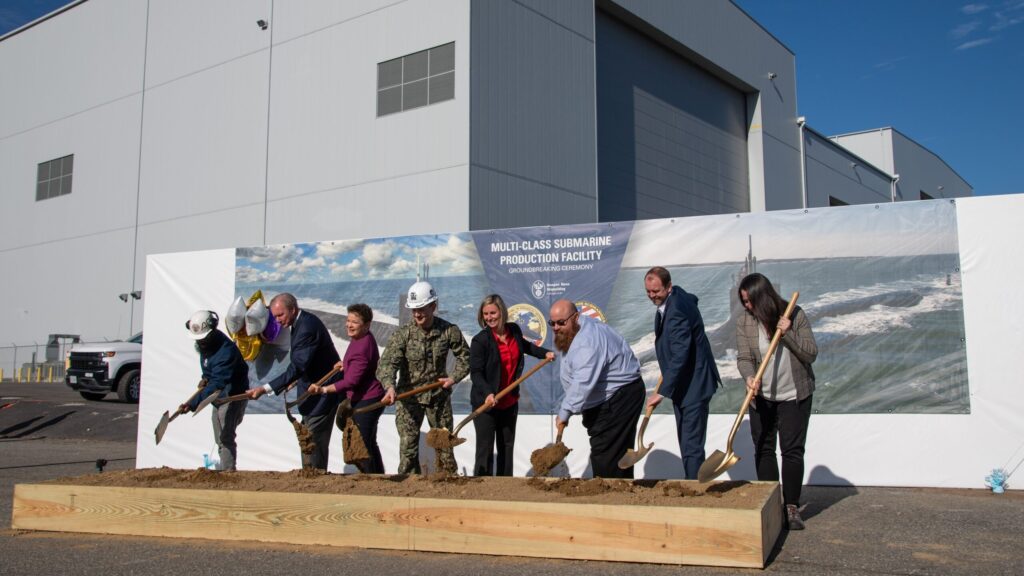
NEWPORT NEWS, Va., Feb. 09, 2023 (GLOBE NEWSWIRE) — Global all-domain defense partner HII (NYSE: HII) recently broke ground on a new project that will support nuclear submarine construction at its Newport News Shipbuilding division. 

The Multi-Class Submarine Production Facility is one of three new facilities, enabling NNS to further support the construction and delivery of Columbia– and Virginia-class submarines. 

“The Navy has made it clear how important both the Columbia- and Virginia-class submarine programs are to our nation’s defense,” said Brandi Smith, NNS vice president of Columbia-class submarine construction. “The Multi-Class Submarine Production Facility is an intentional investment to accelerate our efforts to deliver the highest quality submarines our Navy needs.” 

Wednesday’s groundbreaking marked the first phase of construction. Work on two additional facilities is expected to begin later this year. The Multi-Class Submarine Production Facility is designed to be adaptable, allowing NNS to support both Columbia- and Virginia-class construction. 

The Multi-Class Submarine Production Facility is funded jointly by the Navy and HII, and is part of $1.9 billion in capital investments HII is making at NNS between 2016 and 2025. NNS is one of only two shipyards capable of designing and building nuclear-powered submarines for the U.S. Navy. 

The Navy has identified the Columbia-class as its top acquisition priority. Twelve Columbia-class boats will replace the fleet of Ohio-class nuclear ballistic submarines and take over the role of the nation’s sea-based strategic deterrent; these submarines will provide the most survivable leg of the nation’s strategic triad. 

NNS is a major contractor and shipbuilding partner in the Columbia-class program, designing, constructing and delivering six module sections per submarine under contract to General Dynamics Electric Boat. 

Under a separate teaming agreement with Electric Boat, NNS is also building Virginia-class submarines for the Navy. The advanced capabilities of Virginia-class submarines increase firepower, maneuverability and stealth. 

In November, NNS celebrated the keel authentication for Arkansas (SSN 800), the 27th Virginia-class fast attack submarine, as the shipyard continues to invest in its workforce and facilities to make steady progress on delivering these important assets to the Navy. 


BAE delivers 1,000th F-35 Lightning II fuselage to Lockheed Martin in major milestone for the world’s largest defense programme

Release from BAE Systems 

******* 

BAE delivers 1,000th F-35 Lightning II fuselage to Lockheed Martin in major milestone for the world’s largest defense programme 

7 Feb 2023 

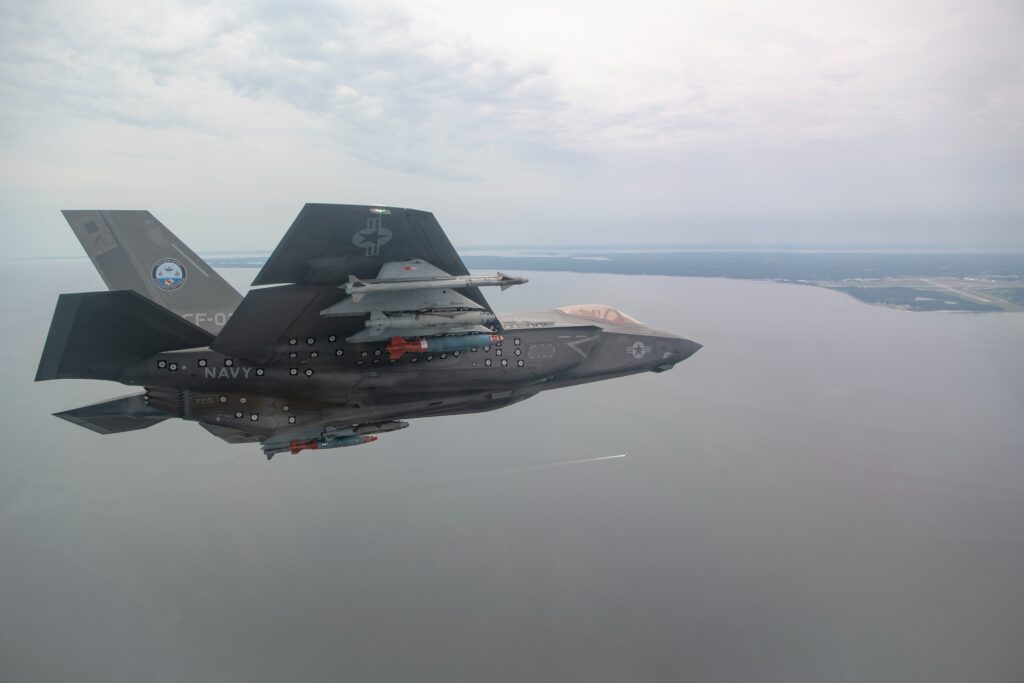
BAE Systems has delivered the 1,000th rear fuselage to Lockheed Martin for the F-35, the world’s most advanced and capable fifth generation fighter. 

More than 1,500 employees at the Company’s facilities in Samlesbury, Lancashire, produce the rear fuselage for every F-35 in the global fleet. The first fuselage was delivered to Lockheed Martin in 2005. 

Speech marks at an event today celebrating the 1000th delivery, Cliff Robson, Group Managing Director, BAE Systems Air, said: 
“This is a significant moment for everyone involved in the programme and a testament to the highly-skilled workforce we have in the North West of England. 

“Our role on the F-35 programme is another example of how we make a substantial contribution to the local and national UK economy and help to deliver capability which is critical for national security.” 

Speech marks Bridget Lauderdale, Lockheed Martin Vice President and General Manager of the F-35 programme, said: 

“The F-35 programme powers economic growth and prosperity for the UK injecting approximately £41billion* into the UK economy and supporting more than 20,000 jobs in the UK supply chain, many of those based in the North West. 

“With more than 500 companies in our UK supply chain, we’re proud of the role that our partnership with BAE Systems has in delivering the world’s most advanced aircraft for the UK and 17 other allied nations.” 

F-35 aircraft inside hangar BAE Systems has been involved in the F-35 programme since its inception and plays key roles across the development, manufacture and sustainment of the aircraft, which is operated by the Royal Air Force, Royal Navy and air forces across the world. 

The F-35s global programme of record amounts to more than 3,000 F-35s amongst the programme’s 17 customers. Work on the programme will continue at BAE Systems’ advanced manufacturing hub at Samlesbury for many years to come. 

Speech marks Susan Addison, Senior Vice President for US Programmes at BAE Systems Air, said: 

 
“This is an important milestone for our business and demonstrates both the expertise of our people and their commitment to delivering for the F-35 programme. 

“The roles we play today are underpinned by a world-class manufacturing pedigree and industrial know-how in the UK, which has been developed through decades of cutting edge experience in combat air programmes. We are proud of what we do for our customers and the air forces who help keep us safe.” 


Shipbuilding Industry Workforce, Not Capacity, Is Limiting Shipbuilding and Repair for Navy

******* 

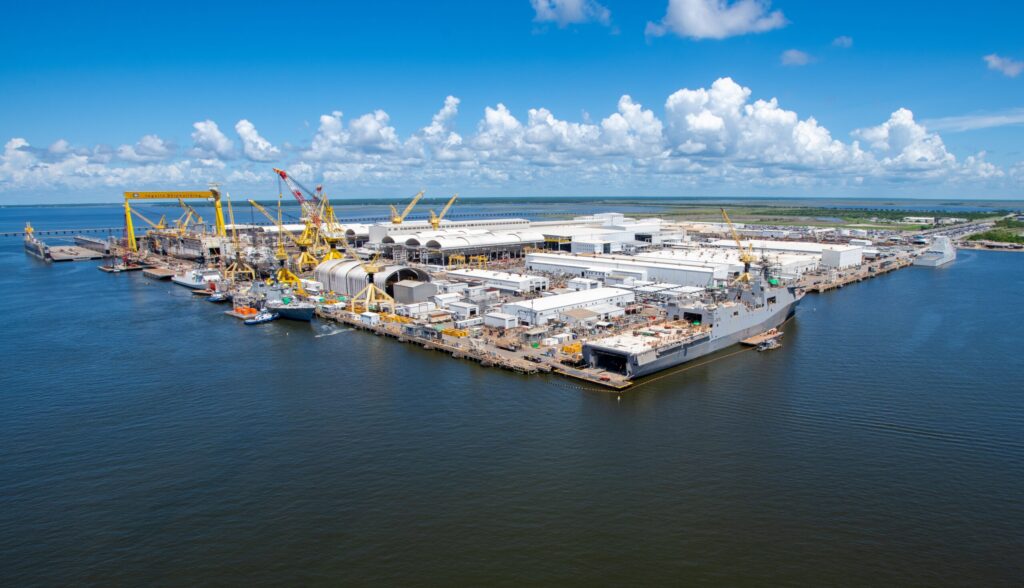
ARLINGTON, Va. — The nation’s shipyards have the facilities capacity to handle increased shipbuilding for the U.S. Navy but are limited by skilled workforce shortages, a shipbuilding executive told Congress, also noting the importance of stability in the demand signal from the Navy.  

“The single biggest issue facing the [shipbuilding] industry is people, and that’s going to be the case going forward, and we’ve got to be more creative in our workforce development,” said Matthew Paxton, president of the Shipbuilders Council of America, testifying Feb. 8 before the House Armed Services Committee. 

In reply to a question from Rep. Bob Wittman, R-Virginia regarding the Navy saying that the shipbuilders cannot deliver three Arleigh Burke destroyers funded last year, Paxton said the shipbuilding industry, “has under-utilized assets, and assets not utilized at all. There is capacity in the shipyard industrial base across new shipbuilding and ship repair. Whatever the demand signal is from Congress, we’re going to meet it … because we’re going to sequence our yards to be more productive and we’re going to train up the workforce and we’re going to deliver those assets.” 

“I think private industry fundamentally disagrees [that] we don’t have the assets,” he said.    

Paxton thanked the committee for its support for federal investments in the shipbuilding industrial base. He also noted that the private shipbuilding industry “every day of the week is investing in their workforce. They have training facilities, apprenticeship programs, they team with local community colleges, so investments like this from the federal level get bang for the buck for what the private industry is doing as well. While we care deeply about the submarine industrial base, the fact is that some of these monies are going to go across other shipbuilding programs is absolutely critical. It’s also critical for our supply chain.” 

“Shipyards and shipyard repair facilities are highly capital-intensive enterprises, … and a lot of our shipyards employ thousands of employees,” Paxton said. “We get a new shipbuilding plan every year. It sends a confusing message industry. To the extent that we can have stable budgets and a stable demand signal, industry will respond accordingly. They have in the past.” 

Paxton added that, “Acquisition strategies like incremental funding, advance procurement, block-buy contracting are huge for shipyards because that gives them long-lead-time materials that they need to sequence ships, to have that [material] come in, whereas some of the material that they are buying [that used to take] only 18 months to get now [takes] two to three years to get.”  

He said the stability of a 10-year horizon “allows shipyards to make critical investments in [their] facilities and in [their] workforce.” 

Paxton also noted that the shipbuilding industry “has benefited when we split various ship sizes across shipyards. There is goodness in trying to get series construction going, keep hot production lines going, and keep the workforce learning.”