DARPA Selects Performer Teams for Liberty Lifter X-Plane Program 

First phase will define the seaplane’s design and capabilities 

Release from Defense Research Projects Agency 

******* 

Two teams — General Atomics working with Maritime Applied Physics Corporation and Aurora Flight Sciences working with Gibbs & Cox and ReconCraft — will develop designs for DARPA’s Liberty Lifter Seaplane Wing-in-Ground Effect full-scale demonstrator. The Liberty Lifter program aims to demonstrate a leap-ahead in operational capability by designing, building, floating, and flying a long-range, low-cost X-Plane capable of seaborne strategic and tactical heavy lift. 

The planned Liberty Lifter demonstrator will be a large flying boat similar in size and capacity to the C-17 Globemaster III transport aircraft. Goals include takeoff and land in Sea State 4, sustained on-water operation up to Sea State 5, and extended flight close to the water in ground effect with the capability to fly out of ground effect at altitudes up to 10,000 feet above sea level. 

“We are excited to kick off this program and looking forward to working closely with both performer teams as they mature their point-of-departure design concepts through Phase 1,” said DARPA Liberty Lifter Program Manager Christopher Kent. “The two teams have taken distinctly different design approaches that will enable us to explore a relatively large design space during Phase 1.” 

The General Atomics team has selected a twin-hull, mid-wing design to optimize on-water stability and seakeeping. It employs distributed propulsion using twelve turboshaft engines. 

Aurora Flight Sciences point-of-departure design more closely resembles a traditional flying boat, with a single hull, high wing and eight turboprops for primary propulsion. 


GA-ASI FLIGHT TESTS LEO SATCOM ON MQ-9A  

Release from GA-ASI 

******* 

Capability Provides Global Coverage That Enables Operations Anywhere in the World 

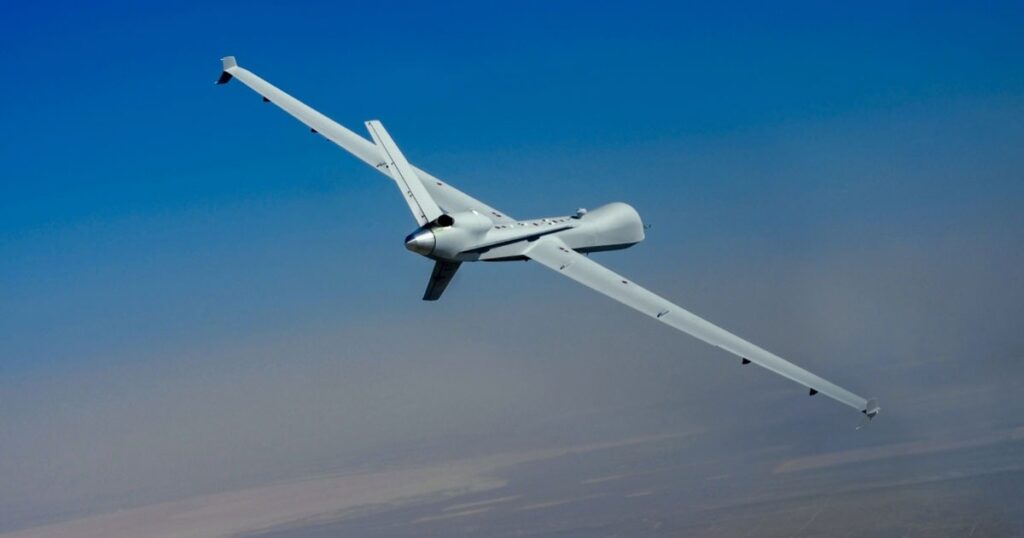
SAN DIEGO – 02 February 2023 – On Dec. 22, 2022, General Atomics Aeronautical Systems, Inc. (GA-ASI) and the Air National Guard (ANG), with joint support from the U.S. Marine Corps (USMC) and U.S. Air Force (USAF), flight tested an MQ-9A remotely piloted aircraft (RPA) equipped with a Low Earth Orbit (LEO) satellite communications (SATCOM) Command and Control system. This groundbreaking capability provides global coverage and connectivity that will enable pole-to-pole operations for GA-ASI’s family of RPA – including models such as the MQ-9B SkyGuardian®/SeaGuardian®, MQ-9A Reaper, and Gray Eagle 25M.  

“This is truly game-changing for our platforms,” said GA-ASI President David R. Alexander. “Using LEO SATCOM not only keeps GA-ASI aircraft connected from the North Pole to the South Pole to allow operations in the most austere environments, but it will also provide resilient connectivity that allows operators to pass much more data to and from the aircraft.” 

Early testing indicates LEO SATCOM significantly reduces latency and can be used in all phases of flight. For customers across the MQ-9 family of systems, LEO SATCOM should decrease operational costs, and the smaller hardware footprint will ultimately increase flexibility and reduce future payload integration costs.  

The MQ-9A flight test was based out of GA-ASI’s Gray Butte Flight Operations Facility near Palmdale, Calif., and followed several weeks of ground testing.  


BAE Systems part of contract award supporting CANES program 

Release from BAE Systems 

******* 

BAE Systems part of contract award supporting CANES program 

MCLEAN, Va. – Feb. 2, 2023 – BAE Systems has been awarded a contract by the Naval Information Warfare Systems Command (NAVWAR) for the Consolidated Afloat Networks and Enterprise Services (CANES) program. The total value of the 10-year indefinite delivery, indefinite quantity (IDIQ) contract is $4.1 billion. BAE Systems is one of eight companies that will be competing for work on the IDIQ program.  

“We look forward to continuing to support the Navy’s CANES mission to update shipboard networks to improve fleet operations,” said Lisa Hand, vice president and general manager of BAE Systems Integrated Defense Solutions. “Our team has a legacy of exceptional quality and production support to NAVWAR, ensuring timely and critical modernization of the afloat networks.”  

CANES is the Navy’s next-generation tactical afloat network and represents a key aspect of the service’s modernization planning by upgrading cybersecurity, command and control, communications, and intelligence systems afloat, and by replacing unaffordable and obsolete networks. Under the terms of the contract, BAE Systems will be responsible for the procurement and production of afloat network devices, spares, laboratory equipment, initial software, software renewal, and maintenance services for surface, shore, and submarine platforms. 

BAE Systems has been supporting the CANES program for the past eight years by sourcing, assembling, testing, and delivering CANES production units for large deck surface ships in Summerville, South Carolina.  


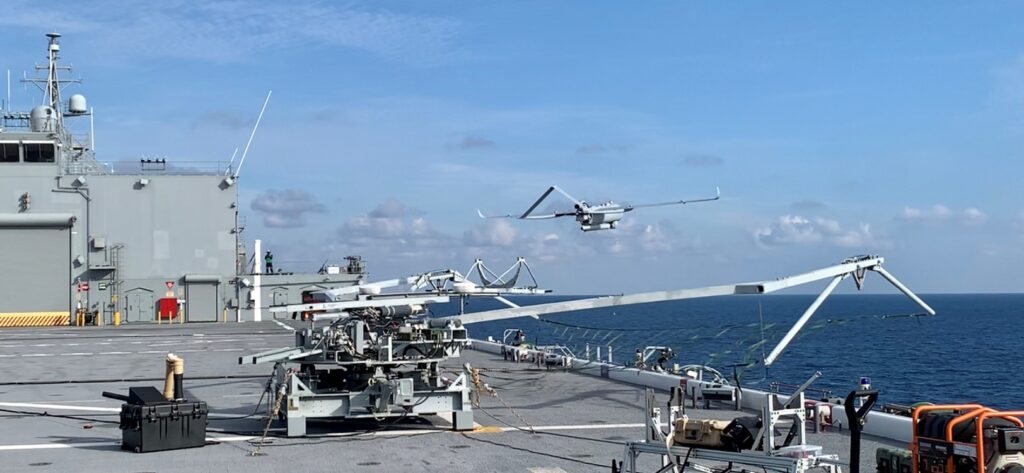
Textron Systems’ Aerosonde® Unmanned Aircraft System (UAS) Takes First Maritime Flight Aboard USS Miguel Keith (ESB 5)  

Release from Textron Systems 

******* 

“Having an unmanned aircraft system operational aboard the ship acting as a remote sensor contributes to overall maritime domain awareness and mission success,” said Wayne Prender, Senior Vice President, Air Systems. “The Aerosonde system is providing added reach beyond the horizon and an ability to operate multi-INT ISR consistently, both great examples of the benefits of teaming unmanned aircraft with manned ships.”  

In addition to the USS Miguel Keith, the Aerosonde unmanned system supports maritime operations aboard the USS Hershel “Woody” Williams (ESB 4) and two DDG-class ships, bringing the total number of U.S. Navy ships supported by the system to four.  

The Aerosonde system has amassed more than 600,000 flight hours while serving multiple U.S. customers and international allies. It is designed for expeditionary land- and sea-based operations in austere environments and is equipped for multiple payload configurations.  


Navy Is Sustaining 10 Operational MQ-8C Fire Scout UAVs; Rest in Storage

******* 

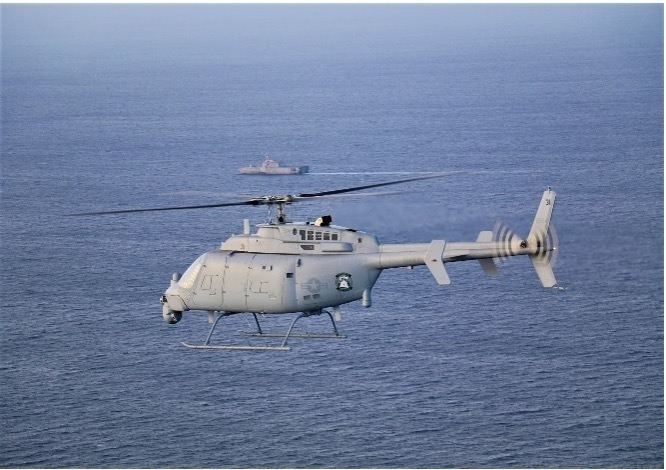
ARLINGTON, Va. — The U.S. Navy is operating and sustaining 10 MQ-8C Fire Scout unmanned aerial vehicles (UAVs), having place the rest in storage, from which the service can easily restore them to service. The Navy also has retired its fleet of smaller MQ-8B versions of the Fire. 

According to information provided by the Navy’s Program Executive Office for Strike and Unmanned Aviation, the Navy will keep in service 10 MQ-8Cs in service of the 38 procured and keep the remaining MQ-8Cs in Level 2 preservation. 

Last year the Navy moved to keep all MQ-8Cs on the West Coast, operated by Helicopter Sea Combat Squadrons 21 and 23. The decision is congruent with the stationing on the West Coast of the Independence-class littoral combat ships on which the Navy will deploy the Mine Countermeasures Mission Package. The MQ-8C, built by Northrop Grumman, is an integral module of that mission package.  

“As Fire Scout’s mission sets continued to evolve, an MQ-8C Endurance Upgrade Rapid Deployment Capability (RDC) effort was approved in Feb 2012,” the Navy said. “The larger MQ-8C, based on the Bell 407 airframe, incorporates the same control avionics as the MQ-8B but with an increased payload capacity and increased endurance. The air vehicles share a common mission control system, which is integrated with the ship’s combat systems. Additionally, the MQ-8 can be controlled by the Mobile Mission Control Station from land-based and larger ship-based sites and has developed a “portable” MCS (MCS-P) that is host platform agnostic. 

“Designed to operate from the Littoral Combat Ship (LCS) and Suitably Equipped air-capable Ships, the MQ-8C Fire Scout system is capable of more than eight hours of operations providing coverage out to 150 nautical miles from the host ship,” the Navy said. “A baseline payload that includes electro-optical/infrared sensors and a laser designator enables Fire Scout to find, track and designate tactical targets, accurately provide targeting data to strike platforms and perform battle damage assessment. The system provides a significant improvement to organic surveillance capability.”  

The Navy will add an optical mine countermeasures payload to the MQ-8C in the future. 

The first deployments of the MQ-8C began in 2022 on USS Milwaukee in the 4th Fleet and USS Jackson in the 7th Fleet during 2022.  

The Navy retired its fleet of MQ-8Bs by October 2022 after 13 years of operations, including operations from frigates off Libya and two years of operations inside Afghanistan. The MQ-8B deployed on board an LCS for the first time in 2014. The Navy procured a total of 30 MQ-8Bs from Northrop Grumman. 


RMC Appoints Retired Four-Star Navy Admiral James Foggo III as Board Chair 

Release from RMC

******* 

Appointment reflects firm’s growth trajectory in defense and commercial markets   

ARLINGTON, Va., Jan. 31, 2023 RMC, the leader in Mission Assurance, Risk Management and Industrial Cybersecurity solutions, today announced the appointment of Admiral James Foggo III, U.S. Navy (Ret.) as Chairperson of its Board of Directors. The appointment will support the company’s high-growth trajectory in the defense and commercial markets. Foggo, a senior executive, industry leader and distinguished military officer, has served on the RMC Board since 2021.  

Foggo is an accomplished strategist, innovator, diplomat and technology integrator who achieved the rank of four-star admiral, formerly serving as commander of the U.S. Naval Forces Europe and Naval Forces Africa as well as the U.S. Sixth Fleet. He currently is Dean of the Center for Maritime Strategy at the Navy League of the United States and a distinguished fellow of the Center for European Policy Analysis and the Council on Competitiveness.  

“Admiral Foggo sits at the intersection of federal, commercial and public interests, providing a unique and expert perspective on the dynamic threats facing our world,” said Vince Kuchar, CEO of RMC. “We are grateful for his invaluable leadership as we expand our mission assurance work and bring military-grade industrial cybersecurity expertise to the commercial sector.”  

Mission Assurance 

RMC has been delivering mission assurance and cybersecurity solutions to U.S. military leaders worldwide for more than a decade. As cyber adversaries increasingly gain malicious access through neglected and unsecured operational technology and industrial control systems, the company has been supporting a growing number of defense and commercial organizations to better protect their operational assets and critical infrastructure.  

“In our growing and complex global threat environment, RMC is helping reduce risks to the critical systems upon which our way of life depends,” said Foggo. “I’m excited to support RMC in harnessing their immense expertise for efficient, accelerated growth.”   

About RMC 

RMC provides a full lifecycle of Mission Assurance and Risk Management solutions, with deep expertise in Critical Infrastructure Protection and Industrial Cybersecurity, to protect our country’s most important and vital assets. Operating worldwide, RMC provides federal government and commercial organizations the analysis, assessments, strategy and remediation required to protect personnel, facilities, networks and critical infrastructure. Founded in 2011, RMC’s headquarters is in Arlington, Virginia. www.RMCGlobal.com 


U.S., International Forces Seize Illegal Drugs in Gulf of Oman

GULF OF OMAN (Jan. 30, 2023) Illicit drugs interdicted by USCGC Emlen Tunnell (WPC 1145) sit on the deck of a fishing vessel for inventory as the U.S. Coast Guard cutter sails in the Gulf of Oman, Jan. 30. (U.S. Coast Guard photo) (Photo by U.S. Coast Guard)

Release from U.S. Naval Forces Central Command Public Affairs 

******* 

By U.S. Naval Forces Central Command Public Affairs | January 31, 2023 

MANAMA, Bahrain — 

A U.S. Coast Guard vessel seized illegal drugs worth a total estimated U.S. street value of $33 million from a fishing vessel transiting international waters in the Gulf of Oman, Jan. 30. 

U.S. Coast Guard cutter USCGC Emlen Tunnell (WPC 1145) was patrolling regional waters in support of Combined Task Force (CTF) 150 when it seized 4,000 kilograms of hashish and 512 kilograms of methamphetamine from the smuggling vessel. 

Currently led by the United Kingdom Royal Navy, CTF 150 is one of four task forces organized under the Combined Maritime Forces (CMF). This was the first drug seizure in 2023 for CMF. 

“This is just the beginning of our work in delivering maritime security operations in the region to stop illicit activities and drug smuggling,” said UK Royal Navy Capt. James Byron, the CTF 150 commander. “This comes as a result of a valued partnership between CTF 150 and all partner nations in Combined Maritime Forces.” 

Byron assumed command of the multinational task force Jan. 18 after Royal Saudi Navy Rear Adm. Abdullah Al-Mutairi led the unit for six months. 

Under Al-Mutairi’s leadership, CTF 150 ships logged more than 10,000 hours on regional patrols and intercepted six shipments of illegal drugs that included opium, heroin, hashish and amphetamines. The combined estimated value of the seized drugs totaled more than $250 million. 

Since 2021, CMF has interdicted $1 billion worth of illicit narcotics during maritime patrols. CMF is the largest international naval partnership in the world consisting of 38 member-nations and partners. 


MQ-4C Triton anti-ice testing underway at Pax River 

Release from Naval Air Systems Command

******* 

Published: Jan 26, 2023 

Naval Air Systems Command, Patuxent River, Md. — 

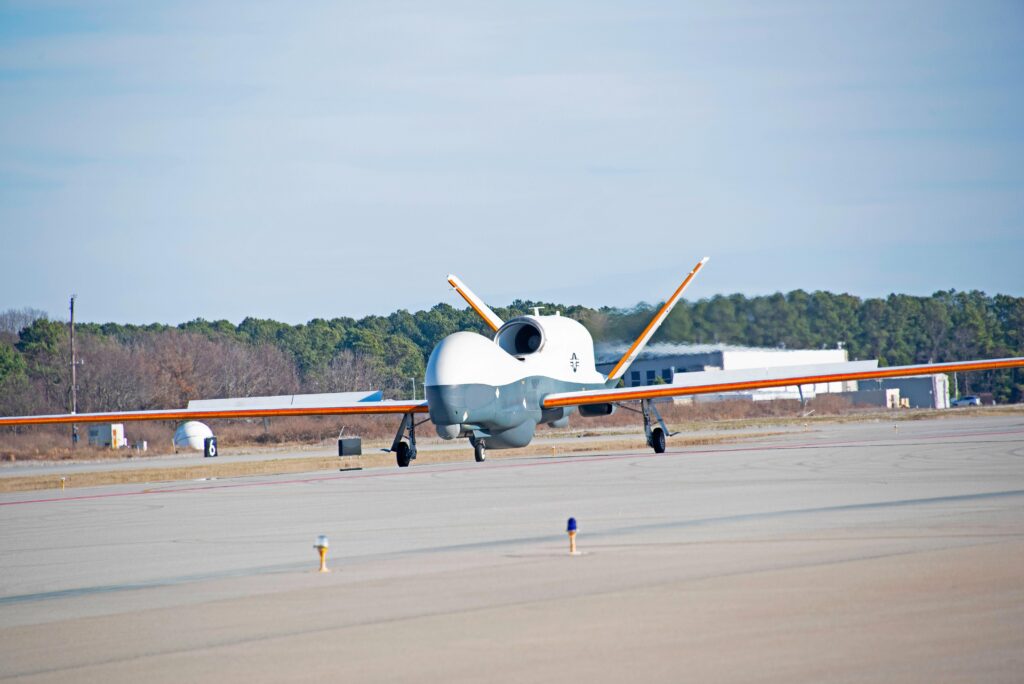
The MQ-4C Triton test team conducted the first flight to assess the unmanned aircraft system’s ability to fly with wing ice accumulation Jan. 25 at Patuxent River. 

This was the first of approximately 15 flights planned through spring 2023 that will clear Triton to fly in icing conditions. 

“Triton’s ability to fly in icing conditions is a top priority for the fleet,” said Capt. Josh Guerre, MQ-4C Triton Program Manager. “The greater ability we have to fly in harsh weather conditions, the more capability we can provide to the fleet.” 

In late 2022, the Integrated Test Team (ITT) installed 3D-printed nylon ice shape blocks designed to simulate ice accumulation on the wings and V-tail if the aircraft were to fly through moderate icing. The orange-colored ice shapes are coated with a coarse grit that makes them textured and rough like ice that accumulates on the inside of a freezer, said Amanda Marge, MQ-4C Triton lead test engineer. 

“The objective is to verify that there’s sufficient stability and control in order to remove the restrictions in the flight clearance for flying in icing conditions – which could significantly increase the fleet’s sortie rate,” she said. 

During the initial flight, the team executed basic flying qualities maneuvers such as control surface pulses, sideslips, and sustained turns at 20,000 feet. The team will analyze data from the flight to confirm that the aircraft responds as predicted to inputs and that the team can safely proceed with further testing.  As flights continue, the average planned duration for ice shape testing will increase to approximately five hours. 

Triton will fly with this simulated ice accumulation on the wings throughout points in the operational envelope to determine the impact on aircraft flying qualities and performance. The testing will enable MQ-4C transits through moderate icing later this year. ”This timeline will support deployment of the latest MQ-4C multi-intelligence variant,” Guerre said. 

The MQ-4C Triton is a long endurance, high altitude UAS that provides up to 24 hours of flight time.  It is currently conducting Intelligence, Surveillance, and Reconnaissance (ISR) missions overseas. 


U.S. Navy Showcases Operational Readiness, Flexibility in Exercise with Israel 

Release from U.S. Naval Forces Central Command Public Affairs

January 29, 2023

******* 

MEDITERRANEAN SEA — 

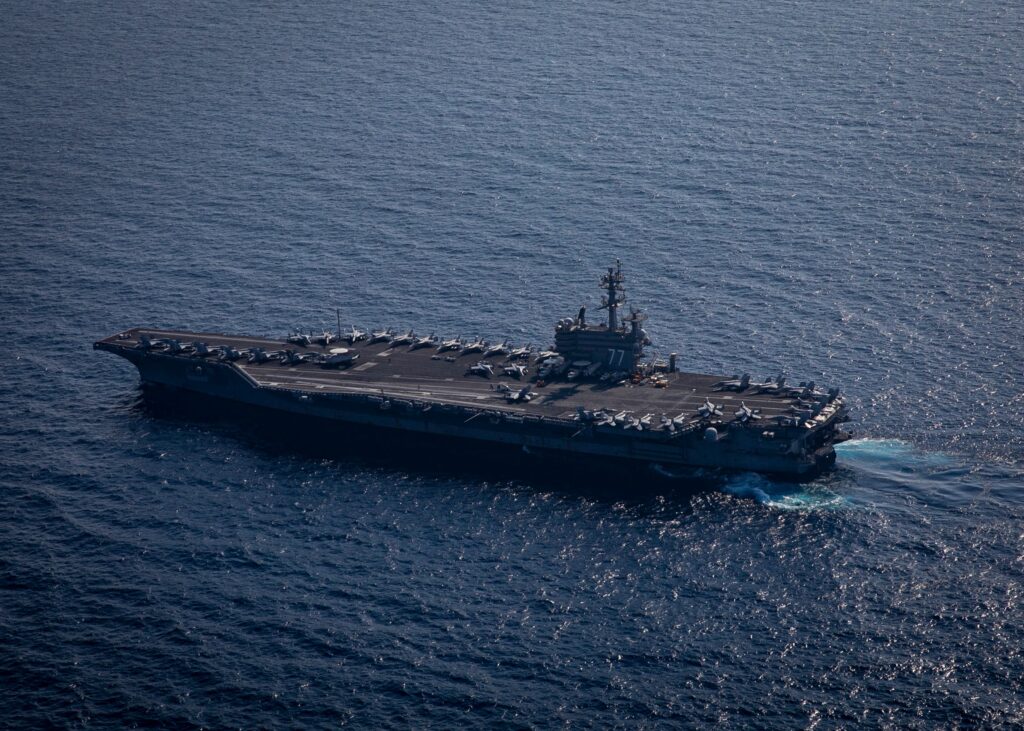
U.S. naval forces participated in the largest-ever bilateral exercise between the United States and Israel last week, which culminated in a visit to aircraft carrier USS George H.W. Bush (CVN 77) on Jan. 26 by senior military leaders from both nations.  

During exercise Juniper Oak 23-2, the George H.W. Bush Carrier Strike Group operated in the Mediterranean Sea in support of U.S. 5th Fleet while still under the operational control of U.S. 6th Fleet. The command-and-control setup demonstrated the inherent flexibility of U.S. naval forces to simultaneously support operations in two regions – Europe and the Middle East.    

“I’m proud of the effort from our team to support Juniper Oak, which showcased a high level of dedication, professionalism and readiness from our Sailors alongside our Israeli partners,” said Rear Adm. Dennis Velez, the strike group commander. “The command-and-control arrangement in Juniper Oak also highlighted the flexibility U.S. Navy carrier strike groups have to operate across multiple theaters of operation, and reflects the value the Navy provides to national security and regional stability anywhere in the world.”  

The strike group coordinated complex, combined military operations with Israel on land, in the air and at sea, involving all elements of the team. Guided-missile destroyer USS Truxtun (DDG 103) participated in a live-fire drill in addition to a large-scale strike with air assets from Carrier Air Wing (CVW) 7.  

Aircraft from CVW-7 involved in the strike exercise included 16 F/A-18 Super Hornets, four E/A-18G Growlers and two E-2D Hawkeyes. Four GBU-16 laser-guided bombs were expended on training targets.  

Additionally, strike group ships also sailed in formation with Israeli vessels in the Eastern Mediterranean. Participating ships included George H.W. Bush, Truxtun, guided-missile cruiser USS Leyte Gulf (CG 55), guided-missile destroyer USS Nitze (DDG 94), and Israeli Navy Sa’ar corvettes INS Hanit, INS Eliat, INS Oz, and INS Tarshis. The Israeli Navy submarine INS Dolphin also joined.  

During Juniper Oak’s final day, top U.S. and Israeli military leaders flew out to George H.W. Bush to meet and discuss the results of the exercise as well as observe carrier flight operations.  

“Juniper Oak has raised our level of planning and our level of implementation of combined operations,” said Israeli Lt. Gen. Hertzi Halevi, chief of the general staff for Israel Defense Forces. “It is always good to have our best partner here with us to learn from each other. This interoperability strengthens our ability to cope with a range of security challenges over the area.”  

The U.S. 5th Fleet operating area includes 21 countries, the Arabian Gulf, Gulf of Oman, Red Sea, parts of the Indian Ocean and three critical choke points at the Strait of Hormuz, Bab al-Mandeb and Suez Canal.  


Navy Accepts Delivery of Future USS Carl Levin 

Release from Naval Sea Systems Command 

******* 

Jan. 26, 2023 

Navy Accepts Delivery of Future USS Carl Levin 

By Team Ships Public Affairs 

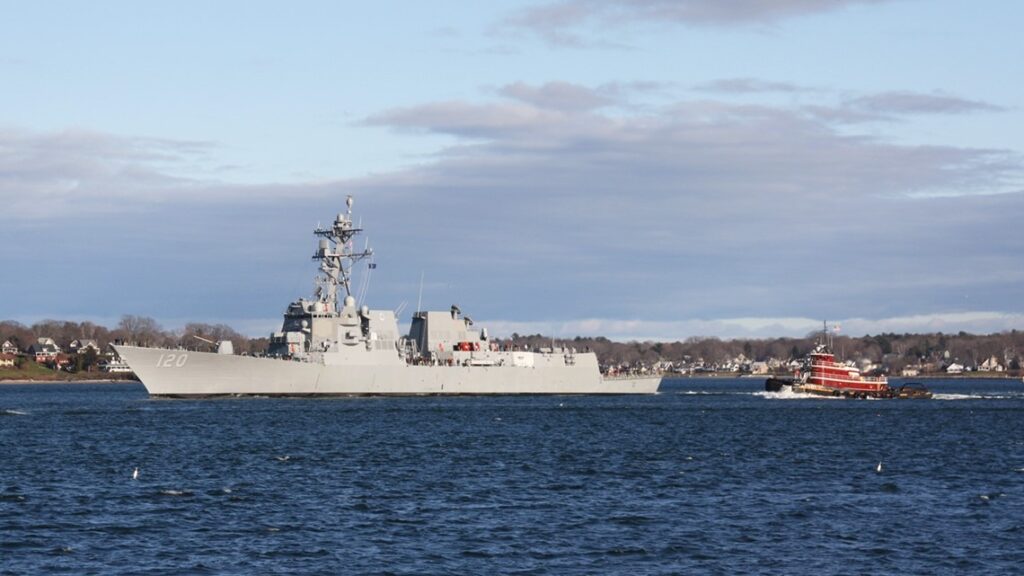
Bath, Maine – The Navy accepted delivery of the future guided missile destroyer USS Carl M. Levin (DDG 120) from General Dynamics Bath Iron Works, Jan. 26. 

Delivery represents the official transfer of the ship from the shipbuilder to the Navy. Prior to delivery, the ship conducted a series of at-sea and pier-side trials to demonstrate its materiel and operational readiness. 

“Delivery of this ship will provide critical capacity to our surface fleet today and well into the future,” said Capt. Seth Miller, DDG 51 program manager, Program Executive Office (PEO) Ships. “All who serve aboard DDG 120 will be a reflection of Sen. Carl M. Levin’s commitment to our Nation through service.” 

A Flight IIA destroyer, DDG 120 is equipped with the latest Aegis Combat System.  The Aegis Combat System provides large area defense coverage against air and ballistic missile targets, and also delivers superior processing of complex sensor data to allow for quick-reaction decision making, high firepower, and improved electronic warfare capability against a variety of threats. 

The shipyard is also in production on future destroyers John Basilone (DDG 122), Harvey C. Barnum Jr. (DDG 124), Patrick Gallagher (DDG 127), Louis H. Wilson Jr. (DDG 126), William Charette (DDG 130), and Quentin Walsh (DDG 132). 

As one of the Defense Department’s largest acquisition organizations, PEO Ships is responsible for executing the development and procurement of all destroyers, amphibious ships, special mission and support ships, boats and craft.