SECNAV Wants to Put Naval Strike Missiles on All Littoral Combat Ships
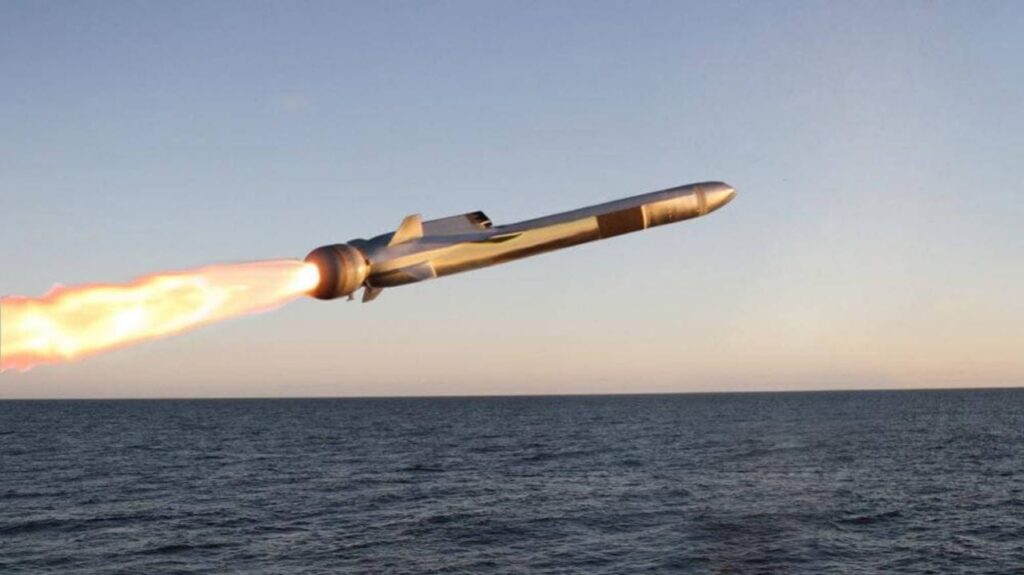
Known for its “sea-skimming” capability, the Naval Strike Missle can fly at very low altitudes over water and land. (Photo: Kongsberg)

ARLINGTON, Va. — Navy Secretary Carlos Del Toro is still keen on the role the littoral combat ship (LCS) have yet to play, despite a troubled history. 

“I’m very enthused about the future of LCS and what we’re going to do with it,” Del Toro said Jan. 11 at the Surface Navy Association’s 2023 National Symposium. “We need to put a Naval Strike Missile on each and every single one of them.” 

Littoral combat ships were designed to be fast, optimally manned, mission-tailored surface combatants that could operate in near-shore and open-ocean environments. The 33rd ship in the LCS program, the future USS Augusta, was christened in December. 

However, LCS, were plagued with reliability and maintainability issues. Serious propulsion problems developed with the newest Freedom-class littoral combat ships. The Navy wanted to retire nine LCS, but Congress pushed back on the plan. The fiscal 2023 National Defense Authorization Act (NDAA), signed into law by President Biden Dec. 23, 2022, blocked early retirement of five of the nine LCS on the Navy’s hit list. 

Creative Use 

Del Toro acknowledged a small number of LCS deemed “least capable in the high-end fight” still may have to go. When he became Navy secretary, Del Toro said he and Navy leaders were confronted with problems on the Freedom class, and, “so we had to make some difficult choices.”

Del Toro noted LCS was being used creatively by the Navy in Central and South American waters. The five-month deployment of USS Sioux City (LCS 11) with the 5th and 6th Fleets demonstrated LCS utility. Sioux City was the first LCS to deploy in the Baltic, Mediterranean and Red seas, the Gulf of Aden, Northern Arabian Sea, Gulf of Oman and Arabian Gulf.

“I look forward to deploying LCS to its fullest with all the years that they have remaining,” Del Toro said.

Concern about COVID Policy 

After his speech, Del Toro met with reporters and was asked about the impact of Defense Secretary Lloyd Austin ending his 2021 mandate requiring all members of the armed forces, to be vaccinated against COVID-19. Austin’s recission of the mandate was required by language in the fiscal 2023 NDAA. 

Before the legislation passed, Del Toro was concerned that a repeal of the vaccine mandate might lead to potential movement restrictions. “It will create almost two classes of citizens in our services – those that can’t deploy and those that can deploy,” he said on Dec.6. 

Del Toro said the Navy Department had followed Austin’s directive, but he expected additional guidance from the Pentagon. 

Asked if he anticipated any short-term problems absent specific guidance, Del Toro said, “No, I think the majority of service members, across all services, quite frankly, get the COVID vaccination whether they’re told to, or not.”  

While more than two million service members have been fully vaccinated, according to the Defense Department, thousands who declined the shot were separated from the military. “I suspect that a lot of people who wanted to leave the military, perhaps, did not go down that path [vaccination], so they could leave the military, perhaps before their contract expired,” Del Toro said.  


Fleet Forces Commander: Surface Warships Need to be ‘Plug and Play’ 

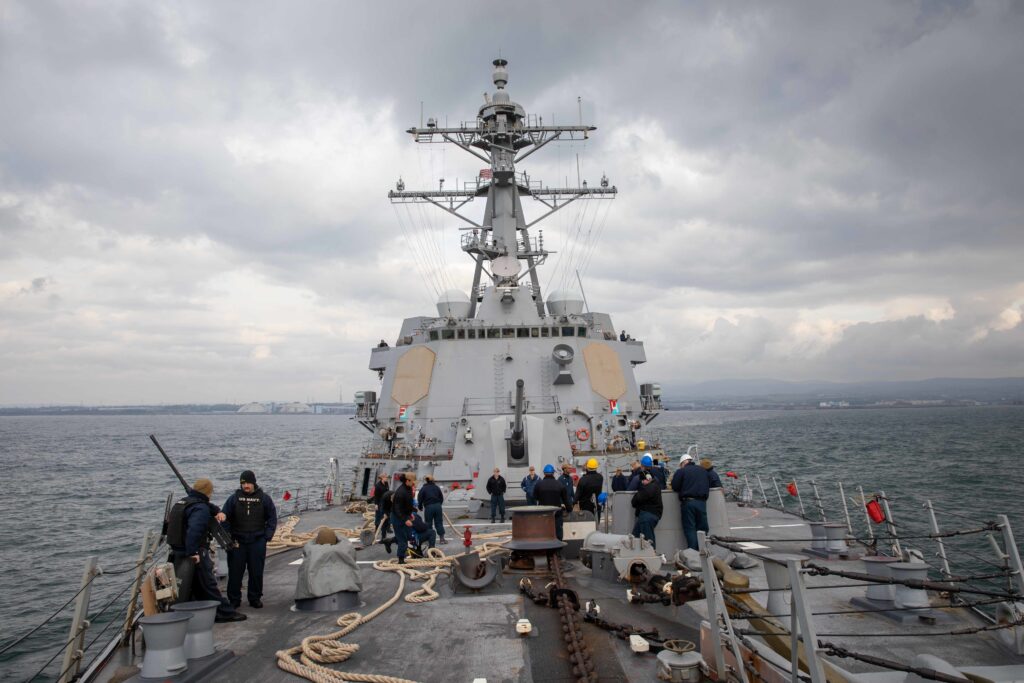
CIVITAVECCHIA, Italy (Jan. 3, 2023) The Arleigh Burke-class guided-missile destroyer USS Nitze (DDG 94) departs Civitavecchia, Italy, following a scheduled port visit, Jan. 3, 2023. The George H.W. Bush Carrier strike Group is on a scheduled deployment in the U.S. Naval Forces Europe area of operations, employed by U.S. 6th Fleet to defend U.S., allied, and partner interests. (U.S. Navy photo by Mass Communication Specialist 2nd Class Cryton Vandiesal)

******

ARLINGTON, Va. — The U.S. Navy’s surface combatants need to be able to operate independently but also integrate with a strike group seamlessly, the admiral in charge of setting fleet doctrine said.  

The Navy needs “to capitalize on our Navy’s greatest strength: its ability to distribute and concentrate lethal effect, and out timing and tempo,” said Adm. Daryl Caudle, commander, U.S. Fleet Forces Command, speaking Jan. 11 at the annual Surface Navy Association symposium in Arlington. 

“This requires our surface combatants to be much more plug and play inherently,” Caudle said. “Our ships should not have to work up together to fight effectively together.” 

Caudle said that ‘[f]rom my vantage point, the way we accomplish this is by redesigning the core carrier strike group. In my view of the model, the core strike group would be built on a CVN [aircraft carrier], of course, an air-defense missile ship, and a re-supply oiler. These units matriculate through the core OFRP [Optimized Fleet Response Plan] based on the CVN’s required phases.” 

The OFRP is the fleet’s standard ship cycle construct that guides a roughly 36-month readiness roadmap. It is designed to provide the fleet with continuously ready, fully certified warships ready to accomplish a full range of on-demand missions at all times. The ships in a strike group go through maintenance, deploy, and stand ready to surge together. 

Deploy Independently, Seamlessly Integrate 

“By removing and de-coupling the requirement that all supporting ships are tied to the CVN’s OFRP phase length, I optimize each surface ship based on a more tailored set of requirements allows me in concept to improve the readiness and availability of our surface Navy to deploy and respond,” Caudle said. “Each surface ship would be trained and certified on their pre-determined set of warfare area competencies beyond basic operations, enabling them to deploy independently and plug into a strike group seamlessly at the point of need. In conflict, this is an absolute necessary.” 

Caudle said the Navy is re-examining training and deployments to align with what already is happening in the fleet.  

“The beauty of this re-designed strike group concept is that it becomes an interchangeable force that can integrate [in a fungible way] into a myriad of environments, with multiple commanders across AORs [areas of responsibility] worldwide,” Caudle said. “This and many other problems and challenges reduce the O [optimized] in the OFRP and are being examined by a cross-functional team led by my fleet readiness officer.” 


CNO Gilday: Shipbuilders Need to Deliver Vessels Faster

The Flight III Arleigh Burke-class guided-missile destroyer Jack H. Lucas, shown on builder’s trials. Congress is pushing the Navy to procure three destroyers per year. 

******* 

ARLINGTON, Va. — The nation’s shipyards need to accelerate their delivery of ships to demonstrate they deserve the maxed-out funding they have received from Congress, Chief of Naval Operations Michael Gilday said Jan. 10 at the Surface Navy Association‘s Annual Symposium. 
 
Gilday said he thought the Navy’s $27.5 billion proposal for shipbuilding in the most recent budget was the maximum that the seven shipyards — five of which build surface ships — could handle, but Congress authorized an additional $4 billion on top of that. One of the main drivers? Congress wants the Navy to buy three destroyers per year. 
 
Now, the shipbuilding industry needs to show that they can produce at the rate the funding requires, he said.

Navy Not Getting What it Pays For

“We are not necessarily getting what we are paying for with respect to two or three ships per year,” Gilday said, noting that industry is also falling short of the two-attack-submarines-per-year production goal. “Right now, I see them a little bit behind on some of our production lines.” 

In November, Congress approved the increase to three destroyers per year as part of the National Defense Authorization Act for 2023, which authorized $816.7 billion in overall defense spending. The Navy asked for two ships as part of a nine-ship multi-year destroyer proposal with an option for a 10th. However, Congress approved a more aggressive buy of 15 destroyers over five years, which would require three per year. HII’s Ingalls Shipbuilding and General Dynamics’ Bath Iron Works would be the primary shipbuilders. 

The Navy has faced continued questions about industrial capacity to build these ships, and the service is likely to face scrutiny in the coming years over shipyard production rates.


Fleet Forces Commander Scolds Weapons Industry for Supply Chain Woes

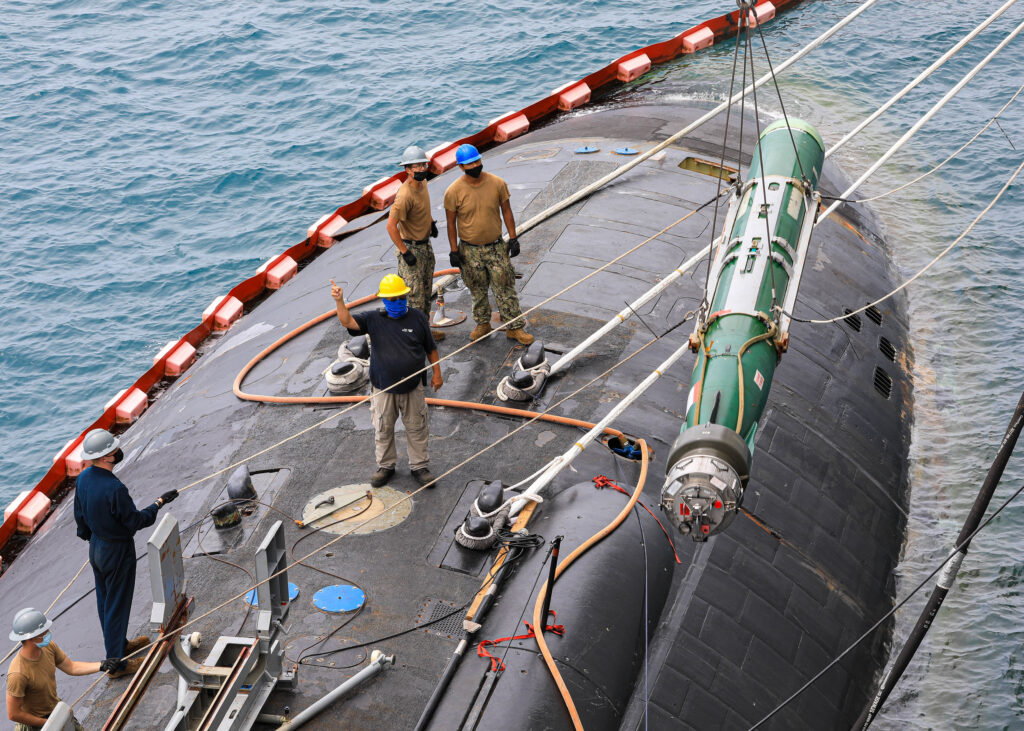
POLARIS POINT, Guam (Sept. 13, 2021) Sailors and civilian mariners assigned to the submarine tender USS Emory S. Land (AS 39) and Sailors assigned to the Los Angeles-class fast-attack submarine USS Asheville (SSN 758) offload a Mark 48 advanced capability torpedo from Asheville during a weapons handling evolution, Sept. 13, 2021. Emory S. Land is one of two U.S. Navy submarine tenders that provide maintenance, berthing and logistical support to submarines and surface ships in the U.S. 5th and 7th Fleet areas of operation. (U.S. Navy photo by Mass Communication Specialist 3rd Class Naomi Johnson)

******* 

ARLINGTON, Va. — The Navy’s admiral who sets manning, training, and equipping the fleet scolded the weapons industry in a blistering response to a question from an audience of naval personnel and defense industry officials about delays in delivery of equipment such as weapons. This countered a common industry citation of supply chain woes related to the COVID-19 pandemic. 

“I’m not as forgiving of the industrial base — I’m just not,” said Adm. Daryl Caudle, commander, U.S. Fleet Forces Command, speaking Jan. 11 at the annual Surface Navy Association symposium in Arlington. “I am not forgiving of the fact that you are not delivering the ordnance that we need.” 

“All this stuff, about COVID this, parts, supply chain this — I just don’t really care. We’ve all got tough jobs,” Caudle said, sparking a round of applause from the audience. “I need SM-6s [Standard Missile-6s] delivered on time, I need Mark 48 torpedoes delivered on time. We’re talking about warfighting, national security and going against a competitor here and a potential adversary that’s like nothing we’ve ever seen, and we kept dilly-dallying around with these deliveries.” 

“I don’t see good accountability, I don’t see a good return on investment from the government side,” he said. “If you want to take me to a room and show me your sob story, I’d be happy to hear it, but at the end of the day, I want the magazines filled, all of the ships’ tubes filled.”  

Robbing Peter to Pay Paul 

“I don’t want to have to bring a strike group back so I can rob Peter to pay Paul so the next one [strike group] can go, and then if I want to help a country out like Ukraine, I’m not sitting, talking about what it is doing to me, I’m talking about, ‘Of course we’re going to help a country, deliver the stuff we need so they can win that conflict against Russia and it’s not going to send me back to the Dark Ages,” Adm. Caudle said.

“I’m frustrated … because it’s so essential to winning, and in my position and for people in the room in uniform, that’s all that matters, and I can’t do that without ordnance,” he said.


MCPON on Recruiting: ‘Pond Has Less Fish in It,’ Service Needs ‘Good Stories’ About Navy

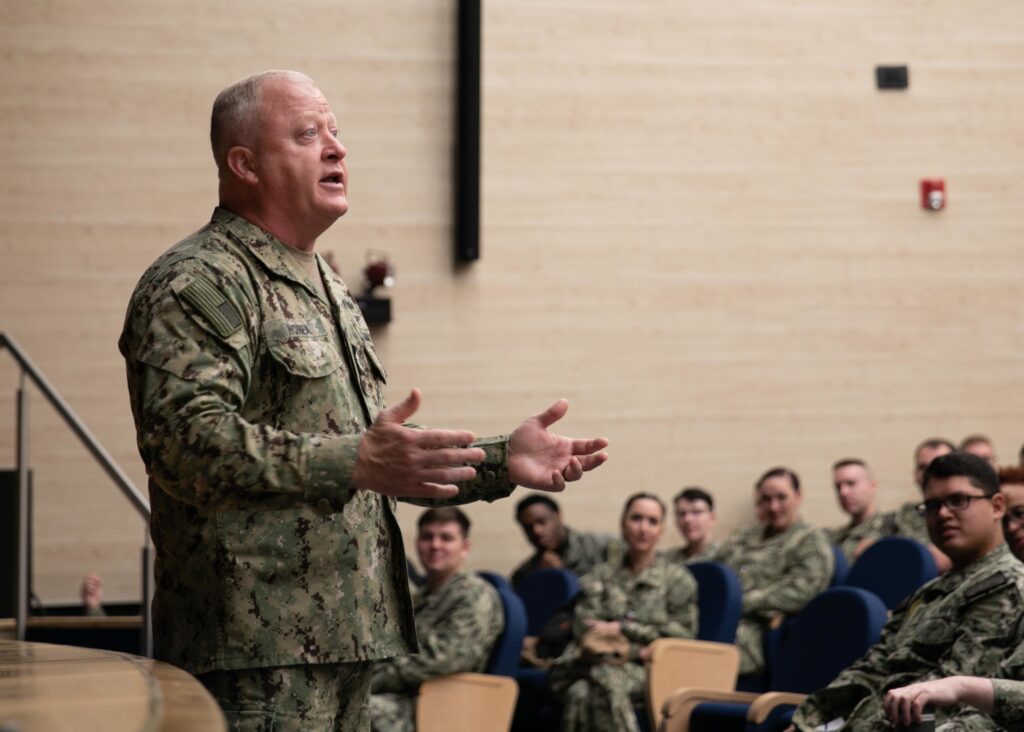
NAVAL SUPPORT ACTIVITY NAPLES, Italy (Nov. 4, 2022) Master Chief Petty Officer of the Navy James Honea speaks to Sailors assigned to Naval Support Activity Naples, Italy during an all-hands call, Nov. 4, 2022. Honea conducted a fleet visit to answer questions and discuss his priorities on topics that included: warfighting competency, mental health, education, and quality of life. (U.S. Navy Photo by Mass Communication Specialist 2nd Class Almagissel Schuring)

*******

ARLINGTON, Va. — The Navy is working hard to address recruitment and retention but struggles with the fact that “the pond has less fish in it,” so more “good stories” need to be told about the Navy, said the Master Chief Petty Officer of the Navy at the Surface Navy Association’s annual symposium here on Jan. 10.

Navy Recruiting Plan

During a media roundtable, MCPON James M. Honea told reporters that recruiters “have a really good plan” but can only do so much. 

“I need more of our good stories to be told about who we are and the good things we have going on,” he said. “Serving our nation in any capacity possible is a great thing.” 

Military officials have blamed external factors such as a low unemployment rate for difficulty in recruiting, although retention has lagged as well. 

 
When asked about how the Navy is dealing with retention, Honea said that he has toured Norfolk to “understand what the barriers were” and interact with sailors directly about their concerns. 
 
“We’ve been addressing those concerns and finding sensible ways to solve those problems,” he said. “Along the way we’re trying to decide what are the quick and easy solutions to some of those problems.”

Suspending High-Year Tenure

The Navy has taken some steps to try to deal with the problem of retention. In December, the service reportedly suspended enlisted high-year tenure for two years — a policy that moved active-duty sailors to the reserve if they did not meet benchmarks. 

Honea said that addressing issues like access to quality medical care, eliminating bureaucracy, and doing other things to ensure a positive experience for sailors are some of his top priorities for helping with retention. 

“We can do better as a Navy,” he said. “We’re getting better — not as quickly as I’d like. … Those are very basic things we should be much better at, so it hurts me that we are not as good as [we can be].”


SECNAV Announces Sponsors for the Future USS Telesforo Trinidad

Release from U.S. Navy, Secretary of the Navy

******* 

SECNAV Announces Sponsors for the Future USS Telesforo Trinidad

WASHINGTON — Secretary of the Navy (SECNAV) Carlos Del Toro announced the sponsors for the future Arleigh Burke-class guided-missile destroyer USS Telesforo Trinidad (DDG 139), Jan. 10 during a celebration at the Rayburn House Office Building.

The ship’s two sponsors are Ms. Christine Trinidad, one of the great-granddaughters of Medal of Honor recipient Petty Officer 2nd Class Telesforo de la Cruz Trinidad; and retired Rear Adm. Connie Mariano, the first Filipino-American in history to become a U.S. Navy Admiral, and the first military woman in American history to be appointed White House Physician.

“A ship’s commanding officer will change hands, and the crew will come and go, but the sponsors hold a special bond through the ship’s entire lifetime,” said Del Toro. “I am excited for the enduring partnership that Christine and Connie will build with this ship and the crew in the years to come.”

Telesforo Trinidad was a fireman in the U.S. Navy who received the Medal of Honor for his actions in Mexican waters near La Paz, on board the USS San Diego on Jan. 21, 1915. He is the second service member, and the first and only sailor of Asian descent to receive the award in peacetime. Trinidad served during both World Wars before retiring to the Philippines.


CENTCOM Naval Chief Says Mesh of Sensors and Unmanned Systems Could Protect Region’s Waters

******* 

ARLINGTON, Va. — An interconnected mesh of sensors and unmanned systems could provide better maritime security in the Middle East than any single Navy could, the head of U.S. Central Command (CENTCOM) naval forces says.

“No Navy acting alone can possibly protect against all the threats,” Vice Adm. Brad Cooper told an audience Jan. 10 at the Surface Navy Association’s 2023 National Symposium. “The region is simply too big,” he said.

Maritime Security in the Middle East 

CENTCOM’s maritime area of responsibility includes the Arabian Gulf, Gulf of Oman, Red Sea, parts of the Indian Ocean and three critical choke points at the Strait of Hormuz, Bab al-Mandeb, and Suez Canal.

“Threats emanating from Iran are very real and they have our attention,” said Cooper, who is also commander of the Navy’s 5th Fleet and Combined Maritime Forces, citing incidents last year and as recently as Jan. 7, 2023.

In late August, the Navy prevented a support ship from Iran’s Islamic Revolutionary Guard Corps Navy from capturing an unmanned surface vessel operated by the 5th Fleet in the Arabian Gulf. A Nov. 15 aerial drone attack on a Liberian-flagged commercial tanker transiting international waters in the Middle East, was identified as a Shahed-136 UAV; the same aerial drone Iran has supplied to Russia for use against Ukraine.

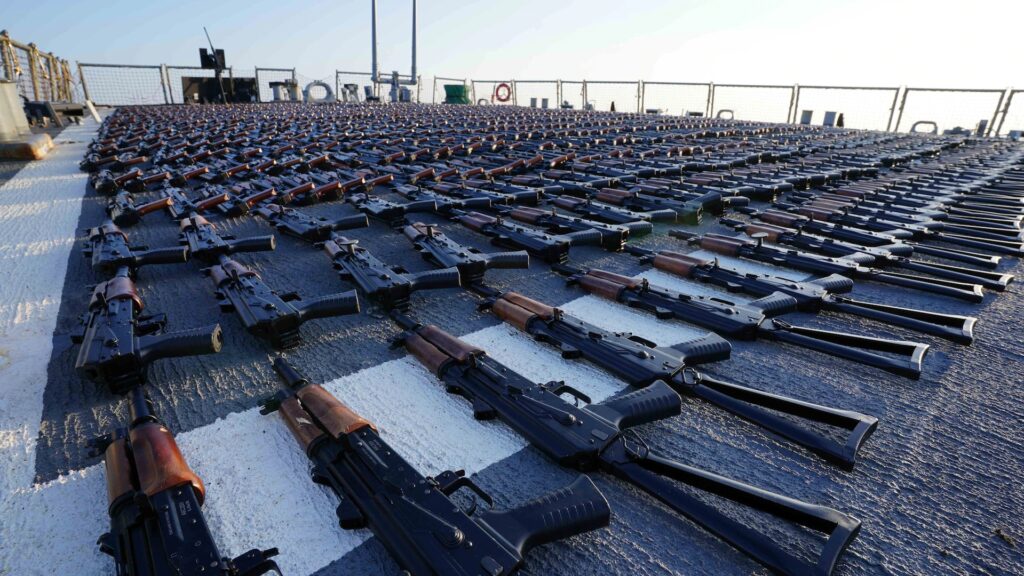
On Jan. 7, U.S. naval forces seized more than 2,000 AK-47 assault rifles from a fishing vessel transiting along a maritime route from Iran to Yemen.

The vessel was sailing on a route historically used to traffic weapons to the Houthis in Yemen. A team from the Cyclone-class patrol ship USS Chinook ship boarded the vessel with support from the Cyclone-class patrol ship USS Monsoon and the guided-missile destroyer USS The Sullivans, according to CENTCOM.

Strengthening Partnerships

The most effective way to monitor the region’s waterways is through strengthening partnerships with other navies and accelerating innovation, Cooper remarked. A good example of that strategy was Digital Horizon, a three-week unmanned and artificial intelligence event in Bahrain.

During Digital Horizon, which ended Dec. 15, Task Force 59 leveraged artificial intelligence to create an interface on one screen, also called a “single pane of glass.” The screen displayed relevant data from multiple unmanned systems for watchstanders in Task Force 59’s Robotics Operations Center. 

The task force was established in 2021 to rapidly integrate unmanned systems and artificial intelligence with maritime operations in the 5th Fleet area of operations. The task force also launched an unmanned aerial vehicle from a U.S. Coast Guard cutter for the first time. The launch enhanced Task Force 59’s ability to create a mesh network for unmanned systems to relay imagery to command centers ashore and at sea in a communications-denied environment. 


Surface Navy Boss Sets Goal of 75 Mission-Capable Ships on Any Day

******* 

ARLINGTON, Va. — The type commander of the Navy’s surface combatant fleet has set a goal of sustaining a fleet of 75 mission-capable (MC) ships.

“We’ve come up with a North Star goal to drive all of our readiness objectives, and that’s get at 75 mission-capable ships ready on any given day,” said Vice Adm. Roy Kitchener, commander, Naval Surface Forces and commander, Naval Surface Force, U.S. Pacific Fleet, speaking to reporters in a virtual roundtable on Jan. 5 — embargoed until Jan. 10.

Data-Accessed Readiness Goals 

“The goal is not arbitrary,” Kitchener said. “It’s not random. It was born from our investment in our data analytics, a really good, thorough assessment across the fleet’s operational requirement. That 75 drives every program and action we take across our force.”

The admiral characterized the initiative as “sharpening the competitive edge” to produce the most capable ships, weapons technologies and the Sailors that will use them, and “getting more ready” for potential conflict in the Western Pacific.

The 75 MC ships initiative is modelled after an effort by the Naval Aviation Enterprise to achieve a certain number of mission-capable strike fighters. The initiative was in an effort to overcome a lack of readiness that was hampering naval aviation’s combat readiness and aircrew flight proficiency and retention.

The surface boss is defining ship readiness in three categories:

  • Not Mission-Capable (NMC): a ship in deep maintenance or just emerged from deep maintenance

  • Mission-Capable (MC): readiness to deploy with a certain level of certification but not fully mission-capable

  • Full Mission-Capable (FMC): all certifications complete, deployed, ready for high-end combat

Kitchener is establishing readiness groups to staff, train, and equip ships for combat; a Surface Response Plan to prioritize and allocate ships where most needed; and surface maintenance operations centers to reduce engineering casualty reports (CASREPs).

He emphasized the need to more fully stock ships with spare parts to make equipment readiness more sustainable when deployed at sea.

The ships included in the North Star goal include all surface warships with the exception of Zumwalt-class guided-missile destroyers and Lewis B. Puller-class expeditionary sea base ships.


IMSC Task Force Completes Maritime Exercise with Unmanned Systems, A.I.

Release from U.S. Naval Forces Central Command Public Affairs 

******* 

MANAMA, Bahrain — The International Maritime Security Construct (IMSC) completed a three-day maritime exercise in the Arabian Gulf, Jan. 9, integrating unmanned systems and artificial intelligence during a naval drill for the second time in six months, U.S. Naval Forces Central Command Public Affairs said in a Jan. 9 release.

IMSC’s operational task force, Coalition Task Force (CTF) Sentinel, completed exercise Sentinel Shield with U.S. Navy guided-missile destroyer USS Delbert D. Black (DDG 119) and two Saildrone Explorer unmanned surface vessels from U.S. 5th Fleet

“We planned this exercise to demonstrate how artificial intelligence and unmanned systems effectively increase CTF Sentinel’s maritime domain awareness to maintain maritime security in Middle Eastern waters,” said Royal Saudi Navy Capt. Alamri Assem, CTF Sentinel’s director of plans.

During the exercise, unmanned and artificial intelligence systems operated in conjunction with Delbert D. Black and CTF Sentinel’s command center ashore in Bahrain. The systems were able to help locate and identify objects in nearby waters and relay visual depictions to watchstanders.

“Saildrones transmitted information on contacts of interest and our watch officers coordinated with the destroyer for further monitoring,” said U.S. Navy Capt. Brian Granger, CTF Sentinel’s deputy commander.

CTF Sentinel previously completed a similar exercise Aug. 23 when Royal Bahrain Naval Force ship RBNS Ahmed Al-Fateh (P20) and U.S. Coast Guard patrol boat USCGC Baranof (WPB 1318) participated with another Saildrone Explorer from U.S. 5th Fleet. The late-summer event was the first time IMSC planners specifically designed a Sentinel Shield exercise to integrate unmanned systems.

IMSC was formed in July 2019 in response to increased threats to freedom of navigation for merchant mariners transiting international waters in the Middle East. IMSC’s operational arm, CTF Sentinel, was established four months later to deter state-sponsored malign activity and reassure the merchant shipping industry in the Bab al-Mandeb and Strait of Hormuz.

IMSC membership currently includes 11 nations: Albania, Bahrain, Estonia, Latvia, Lithuania, Romania, Saudi Arabia, Seychelles, United Arab Emirates, United Kingdom, and the United States.


Navy’s SPY-6 Radar to Reach Initial Operational Capability in 4th Quarter Fiscal 2024

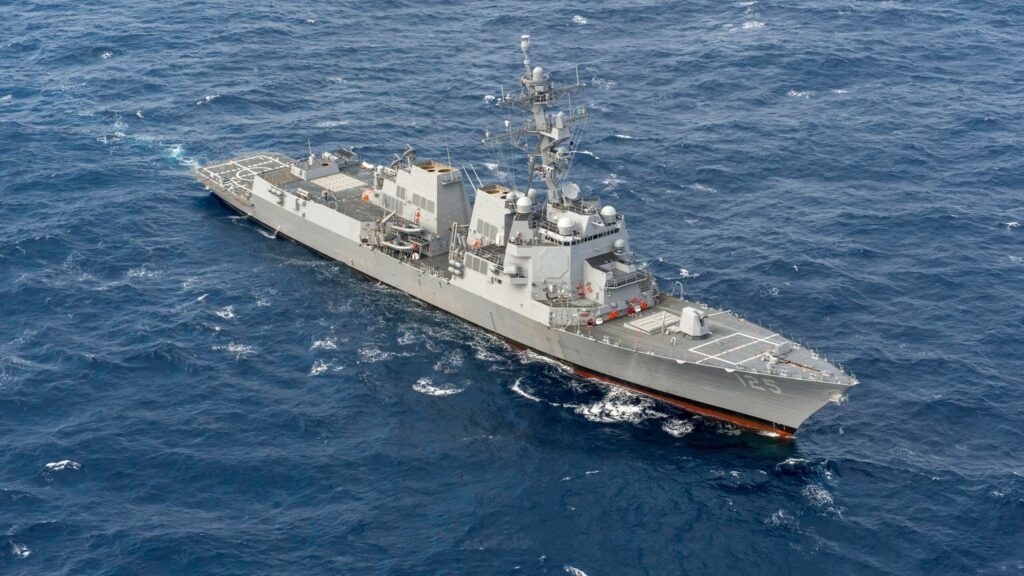
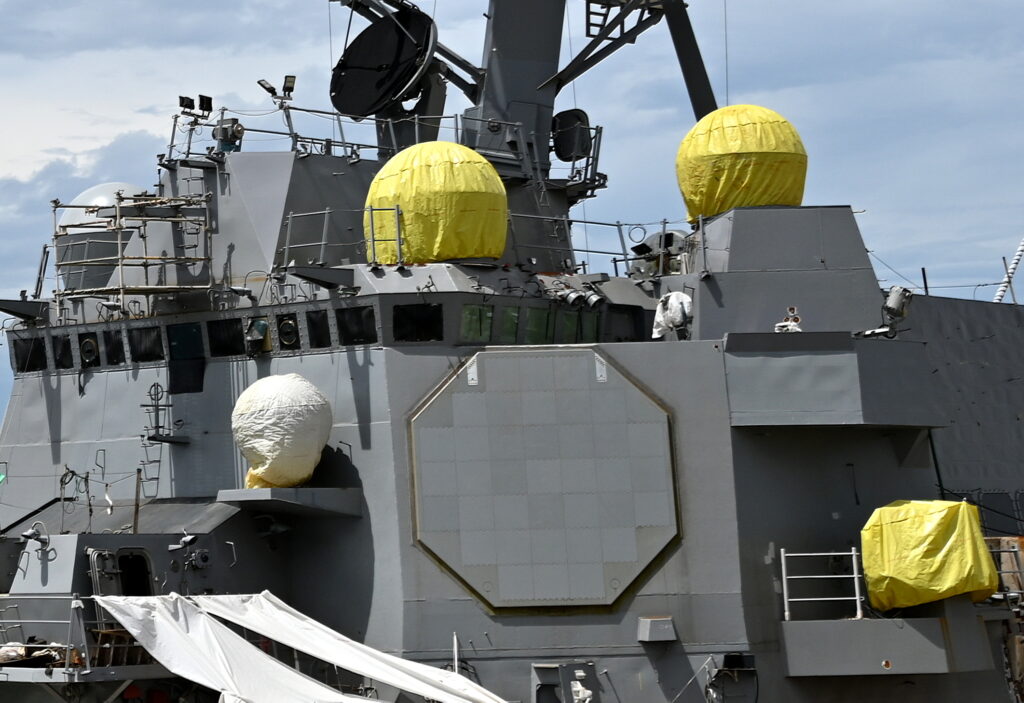
The fixed-face antenna of the SPY-6-(V)1 radar is shown on the future USS Jack H. Lucas (DDG-125), the first ship equipped with the radar. (Raytheon) 

************ 

ARLINGTON, Va. — The U.S. Navy’s new SPY-6(V)1 Air and Missile Defense Radar is scheduled to reach Initial Operational Capability (IOC) during the fourth quarter of fiscal 2024, a Raytheon official said. 

The radar, which first went to sea for trials on Flight III Arleigh Burke-class guided-missile destroyer Jack H. Lucas (DDG 125) in December, met all of its test objectives, said Mike Mills, Raytheon’s senior director for Naval Radar Programs in a Jan. 6 interview with Seapower, noting that the radar will be ready for IOC late next year. 

New Year, New Radar

The fixed-face SPY-6(V)1 replacing the SPY-1 in the newest version of the Arleigh Burke class DDG, Flight III. 

Mills said more software enhancements to the radar will be made as it is readied for the Navy’s acceptance trials scheduled for May or June. 

Raytheon is under contract for 25 SPY-6 radars of the various versions, including six SPY-6(V)1 variants for DDGs. The future USS Ted Stevens (DDG 128) will be the second ship DDG to be fitted with the SPY-6(V)1. 

The SPY-6(V)2 Enterprise Air Search Radar (EASR) is a rotating antenna version that is first being installed on the Flight I San Antonio-class amphibious platform dock ship Richard M. McCool Jr., the transition ship to the Flight II of the class. 

The first SPY-6(V)3 EASR rotating radar has been installed on the future aircraft carrier USS John F. Kennedy (CVN 79), currently under construction.   

The SPY-6(V)4 version has a fixed-face antenna and will be retrofitted on some Flight IIA DDGs in place of the SPY-1. Mills said an adapter plate will be installed on the ships to allow for the retrofit of the SPY-6(V)4 antennas. The existing power systems will be 95% leveraged for re-use, he said. 

Mills said he expects a contract for the (V)4 to be forthcoming this year. 

He said the commonality of the various SPY-6 variants will simplify logistics. They will have common software and common sensor cells.  

Superior Defense Capabilities

All DDGs equipped with the SPY-6 will have defense capability against ballistic missiles, Mills said.   

He also pointed out that the increased range of the SPY-6 will improve the defensive capability of a DDG and free up more missile launchers for offensive capability.  

“We’ve got a whole lot of international interest,” Mills said, noting that several nations that currently use the SPY-1 radars would be potential customers for the SPY-6(V)1. He said his company has given numerous briefings to potential international customers.