Naval Postgraduate School and Stanford University Formalize Partnership to Address Global Climate Change, Energy Security and Sustainability
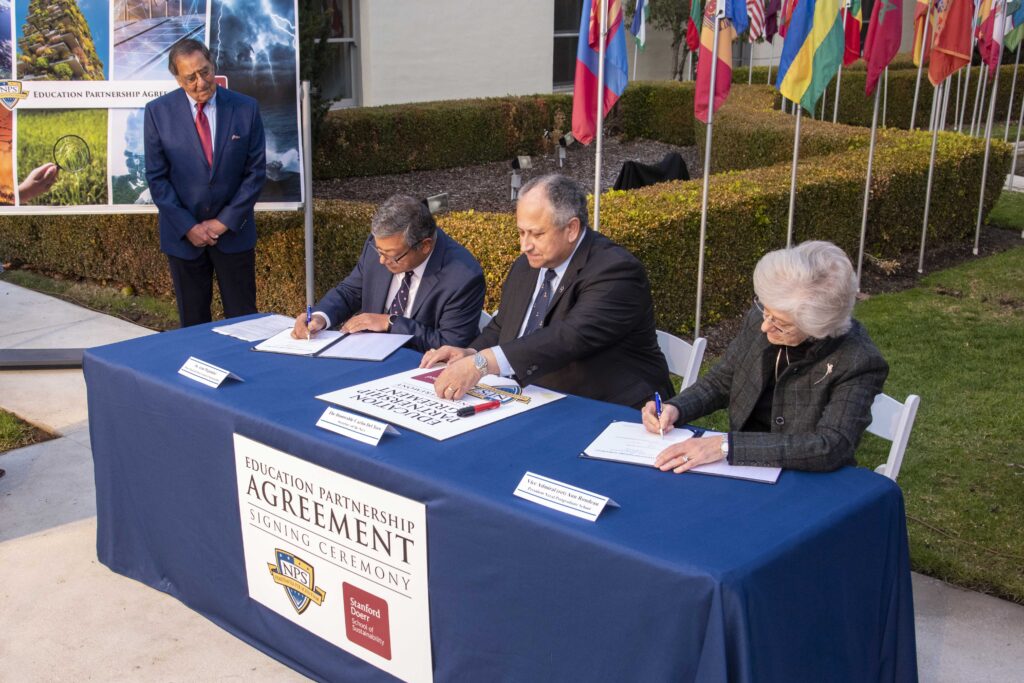
Secretary of the Navy Carlos De Toro was on hand for the signing of an Education Partnership Agreement between the Naval Postgraduate School (NPS) and the Stanford Doerr School of Sustainability on Dec. 15. U.S. NAVY / Javier Chagoya

MONTEREY, Calif. — The Naval Postgraduate School (NPS) and Stanford University Doerr School of Sustainability have created a formal partnership to address the challenging issues of global climate change, energy security and sustainability. 

The announcement was made on Dec. 15 at the NPS campus in Monterey, California. 

The Education Partnership Agreement (EPA) was signed by NPS President Vice Adm. (ret.) Ann E. Rondeau and Dr. Arun Majumdar, dean of the Doerr School of Sustainability, during a ceremony that was presided over by Secretary of the Navy Carlos Del Toro. 

“Bold climate action is a mission imperative for the Department of the Navy, and we must harness all of the tools at our disposal in order to make urgently needed change,” said Del Toro. “This collaboration between the Naval Postgraduate School and Stanford University will bring together two globally recognized hubs of research and innovation, focused on realizing solutions that our Navy and our nation can employ now and in the future.” 

According to a press release from NPS, the Navy’s climate strategy highlights two major performance goals in its response: building climate resilience and reducing climate threats. But, the release said, it also underlines the importance of leveraging and empowering the education of Sailors and Marines to meet the challenges of climate and energy security and sustainability through knowledge and innovation. 

“The combination of expertise, operational experience, education and entrepreneurship in this partnership with Stanford and their Doerr School of Sustainability is truly unique and a powerful contribution to the global climate challenges ahead of us all,” said Rondeau. 

The NPS Climate and Security Network (CSN) brings together the school’s collective expertise on climate security and creates opportunities for interdisciplinary collaboration and information sharing. Through the CSN’s efforts, NPS student and faculty have contributed to the development of key climate strategies and plans within the Department of Defense and conduct research to inform future force design, force generation and deployment considerations. 

The Doerr School is a new addition to the Stanford campus. Launched in May 2022, the school works with local and global collaborators to understand the challenges of climate change and find solutions that can be executed with impact at scale. The school includes multiple academic departments, including the Woods Institute for the Environment and the Precourt Institute for Energy; a sustainability accelerator to drive policy and technology solutions at scale; and a newly established Oceans Department located at the Hopkins Marine Station in Monterey.  

Academic collaboration and research partnerships between NPS and Stanford are not new. Both schools have partnered on research efforts, leveraging each other’s strengths as well as their proximity in Northern California — the schools are 90 minutes apart by car.  

Under the partnership agreement, NPS and the Doerr School of Sustainability will conduct joint research with the CSN and other NPS departments and groups, including the Energy Academic Group, Center for Infrastructure Defense, Meteorology, Oceanography, National Security Affairs, Defense Management and Engineering to investigate climate security, energy security, sustainability and more. 


Naval Medical Research Center Begins Phase 1 Testing of Diarrhea Vaccine

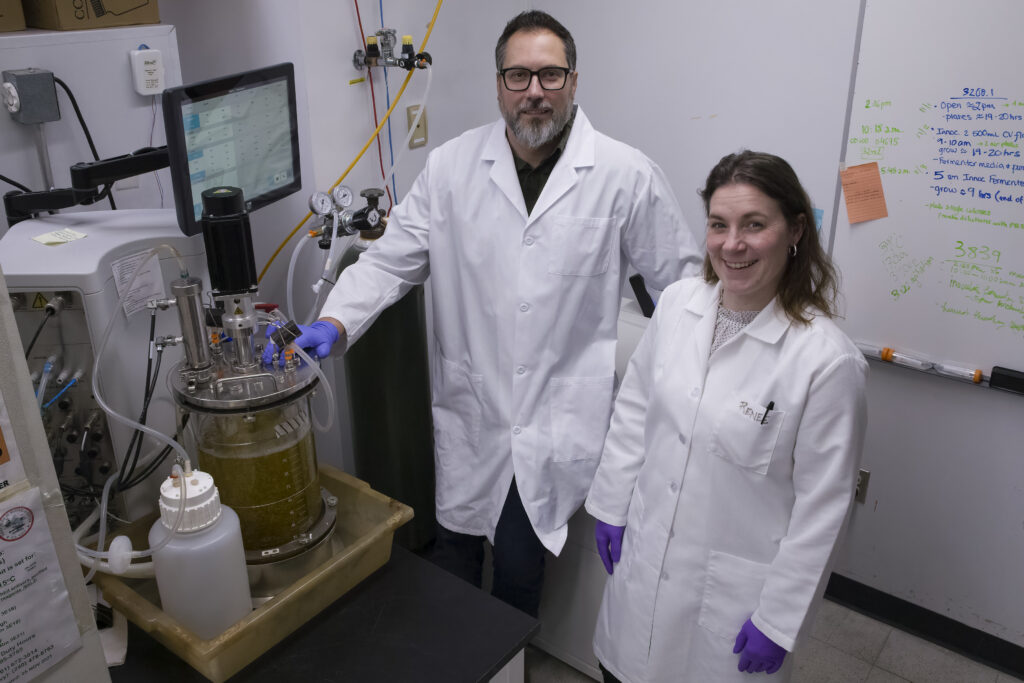
Dr. Frederic Poly and Dr. Renee Laird, research scientists with Naval Medical Research Center (NMRC), pose for a photo in the Enteric Diseases laboratory. NMRC’s Enteric Diseases Department, led by Poly, have partnered with the National Institute of Health’s National Institute of Allergy and Infectious Diseases to begin phase 1 testing of a new vaccine for Campylobacter jejuni, a foodborne pathogen. U.S. NAVY / Michael Wilson

SILVER SPRING, Md. — Researchers with Naval Medical Research Center (NMRC)’s Enteric Diseases Department have partnered with the National Institute of Health’s National Institute of Allergy and Infectious Diseases to begin phase 1 testing of a new Campylobacter jejuni vaccine, NMRC announced in a Dec. 19 release. 
 
Campylobacter jejuni, a foodborne pathogen, is one of the most common causes of diarrheal illness in the U.S. and abroad, and can impact readiness of deployed or traveling service members. 
 
Phase 1 testing, currently underway at Cincinnati Children’s Hospital Medical Center, focuses on the safety and best means of Campylobacter vaccine delivery. Researchers will vaccinate 60 patients in total as part of Phase 1 testing. This first phase of testing is expected to continue through the end of 2023. 
 
Phase 2 testing will involve vaccinating groups of adults with a dose of the vaccine determined in phase 1, to determine its effectiveness in protecting against Campylobacter. NMRC researchers expect to begin phase 2 testing by 2025 at the earliest, depending on funding and the facilities available. 
 
Diarrhea is a frequently occurring illness during military operations, despite modern preventive medicine efforts. The impact of severe diarrhea can be debilitating and impair a service member’s ability to do their job. Acute diarrheal illness during deployment is commonly responsible for loss of duty days, negatively affects mission readiness and may be fatal in the worst cases. 
 
“With really infectious diarrhea, you get cramping, and if you have cramps, you can’t really operate,” said Dr. Frederic Poly, head of NMRC’s Enteric Diseases Department, who has been involved with the project since 2005. “You can develop a fever; you’re going to get dehydrated and you’re going to lose cognitive perception. These are all symptoms that will negatively impact how you function.” 
 
Following recovery from initial infection and bouts of diarrhea, individuals can still experience long-term effects of infection. 
 
“With Campylobacter, there’s potential downstream effects, like irritable bowel syndrome or Guillain-Barré syndrome, which can lead to respiratory and neurological issues,” noted Lt. Yuliya Johnson, a microbiologist with NMRC. “It doesn’t happen to everyone, but there is still an associated risk we hope to mitigate by developing a vaccine.” 
 
According to Poly, this vaccine will be the first developed for use against Campylobacter, and if successful, has the potential to benefit civilian and pediatric populations as well. Vaccination at a young age can curb developmental issues caused by diarrhea that might otherwise affect physical and mental development in children. 
 
Poly, NMRC’s most recent senior civilian of the quarter for science, leads the NMRC Enteric Diseases Department. The department, composed of 23 full time microbiologists, molecular biologists, biochemists and immunologists, researches treatments for the prevention of infectious bacterial diarrhea. 
 
This past year, the department completed development and clinical evaluation of a prophylactic against another military relevant enteric pathogen, ETEC (enterotoxigenic E. coli). The enteric diseases lab is also working on the development of an oral prophylactic to prevent infection from several other intestinal pathogens. 
 
NMRC and its commands are engaged in a broad spectrum of activity from basic science in the laboratory to field studies in austere and remote areas of the world to investigations in operational environments. In support of the Navy, Marine Corps and joint U.S. warfighters, researchers study infectious diseases, biological warfare detection and defense, combat casualty care, environmental health concerns, aerospace and undersea medicine, medical modeling, simulation, operational mission support, epidemiology and behavioral sciences. 


HII Begins Fabrication of Amphibious Assault Ship Fallujah

HII has started fabrication of the future USS Fallujah. HII

PASCAGOULA, Miss. — HII’s Ingalls Shipbuilding division started fabrication of the U.S. Navy’s newest amphibious assault ship Fallujah (LHA 9) on Dec. 19, the company said in a Dec. 20 release. The start of fabrication signifies that the first 100 tons of steel have been cut for the ship and that the shipyard is ready to move forward with the construction of the ship.  

“Our shipbuilders are proud of the work they do for the security of our nation and for our Navy and Marine Corps customers,” said Eugene Miller, Ingalls Shipbuilding LHA program manager. “The start of fabrication on Fallujah is a significant milestone in the construction of this large-deck amphibious ship and demonstrates our ability to maintain a sustained LHA production line at Ingalls.”  

For nearly 50 years, Ingalls has built large-deck amphibious assault ships and is the sole shipbuilder for amphibious ships. Ingalls has delivered 15 large-deck ships, including the Tarawa-class, LHA 1-5; the Wasp-class, LHD 1-8; and most recently the America-class, LHA 6 and LHA 7. The third of the America class, Bougainville (LHA 8), is currently under construction.  

The America class is a multi-functional and versatile ship that is capable of operating in a high density, multi-threat environment as an integral member of an expeditionary strike group, an amphibious task force or an amphibious ready group.  

In October, Ingalls was awarded the $2.4 billion U.S. Navy fixed-price-incentive contract for the detail design and construction of Fallujah. Similar to Bougainville, Fallujah will retain the aviation capability of the America-class design while adding the surface assault capability of a well deck and a larger flight deck configured for F-35B Joint Strike Fighter and MV-22 Osprey aircraft. These large-deck amphibious assault ships also include top-of-the-line medical facilities with full operating suites and triage capabilities.  


HII’s Pharos Demonstrates Launch and Recovery with Navy Snakehead LDUUV

HII collaborated with the U.S. Navy on a research and development effort that advanced the launch and recovery of a large size unmanned undersea vehicle, using an amphibious ship and HII’s Pharos system. HII

NEWPORT, R.I. — HII collaborated with the Navy on a research and development effort that advanced the launch and recovery of a large-size unmanned undersea vehicle (UUV), using an amphibious ship and HII’s Pharos system, the company said in a Dec. 20 release. 

“This is a great example of synergies within HII that accelerate the Navy’s vision for the future fleet,” said Chris Kastner, HII president and CEO. “I’m proud of the cross-division teaming, plus the pace of progress of unmanned systems toward launch and recovery from an amphibious ship.” 

Building on the success of a June 2022 demonstration where HII launched and recovered its large diameter UUV Proteus with its Pharos system, HII entered into two separate Cooperative Research and Development Agreements (CRADA) to further advance the capability to deploy unmanned vehicles from ships. The CRADAs were with Naval Surface Warfare Center Panama City division and the Naval Undersea Warfare Center Division Newport, Rhode Island. 

Led by the company’s Advanced Technology Group, comprised of members from Mission Technologies and Ingalls Shipbuilding divisions, HII designed and constructed a surrogate system which was land tested in Panama City, Florida, to ensure the system could accommodate the Navy’s Snakehead phase one large displacement unmanned undersea vehicle (LDUUV) in a loaded condition. The test demonstrated that Pharos can be adapted to a wide range of vehicles, including LDUUVs. 

Following that successful demonstration, Pharos and the Snakehead LDUUVs were tested at the Navy’s Narragansett Bay Test Facility in Newport. Pharos, with the Snakehead LDUUV embarked in its cradle, was lowered down and pulled up a ramp to simulate disembarking and embarking the system in the well deck of an amphibious ship. The simulation ensured that the 22,000-pound pull was within the existing capabilities of an LPD as operating in the Navy fleet. 

“These demonstrations validate a near term launch and recovery capability for the Pharos system,” said Todd Borkey, HII’s executive vice president and chief technology officer. “HII accelerates the transitioning of new technology into the customer’s mission, thus we are eager to enter the next phase of testing and demonstrate a launch and recovery from an LPD.” 

The Pharos system began as a corporate independent research and development project. Ingalls Shipbuilding developed over 40 launch and recovery concepts from a mothership. These concepts were down-selected to the Pharos system with the objective of demonstrating the launch and recovery capability of a LDUUV from an LPD. Ingalls Shipbuilding and Mission Technologies took the Pharos concept and collaboratively designed, developed and constructed Pharos to enable the demonstrations. 


USCGC Forward Offloads $176 Million Worth of Cocaine in Port Everglades

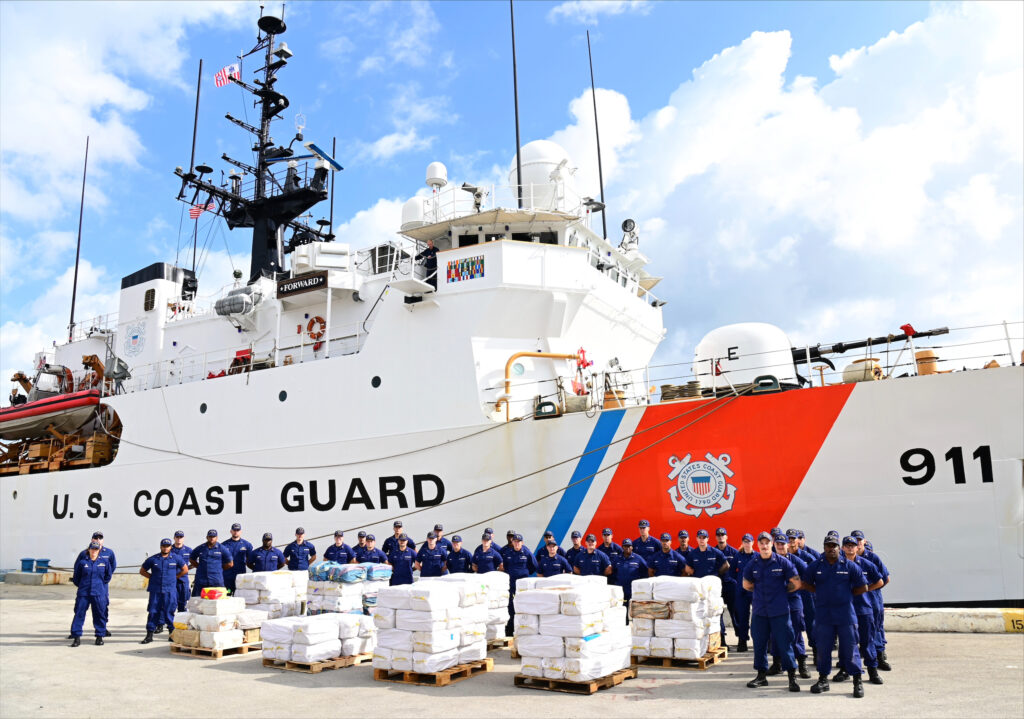
The crew of the Coast Guard Cutter Forward pose with approximately 13,375 pounds of cocaine in Port Everglades, Florida, Dec. 15, 2022. U.S. COAST GUARD / Petty Officer 3rd Class Eric Rodriguez

PORT EVERGLADES, Fla. ­— The crew of the U.S. Coast Guard Cutter (USCGC) Forward (WMEC 911) offloaded approximately 13,375 pounds of cocaine worth an estimated $176 million in Port Everglades, Florida, Dec. 15, the Coast Guard 7th District said in a Dec. 19 release. 

The drugs were interdicted in the international waters of the Caribbean Sea by crews from Forward, Coast Guard Helicopter Interdiction Tactical Squadron and Coast Guard Law Enforcement Detachment 408 on the HNLMS Holland (P840). 

Throughout the patrol, Forward held approximately 18,500 pounds of cocaine on deck worth an estimated $244 million. Earlier this month, Forward transferred approximately 4,365 pounds of cocaine to USCGC Campbell (WMEC 909) and 1,654 pounds of cocaine to the United States Drug Enforcement Administration. Forward also intercepted three suspected narcotics smugglers and held 12 others.  

“Working with the Dutch to support multi-national interests in the Caribbean is greatly rewarding,” said Cmdr. Staci K. Rutsch, Forward’s commanding officer. “Coupled with our ship’s organic law enforcement capabilities, this patrol led to a significant removal of illicit narcotics from the maritime domain. Opposing transnational criminal organizations is important in maintaining our partnerships and keeping our partners in the central Caribbean safe. I could not be more proud of the crew’s hard work in supporting this mission.” 

The fight against drug cartels in the Caribbean Sea and the transnational criminal organizations they are associated with requires a unity of effort in all phases; from detection and monitoring to interdiction and apprehension, and on to criminal prosecutions by international partners and U.S. Attorneys’ Offices in districts across the nation. 

Forward is a 270-foot Famous-class medium-endurance cutter homeported in Portsmouth, Virginia, with a crew of 97. The cutter’s primary missions include law enforcement, search and rescue, protection of living marine resources, homeland security and defense operations, international training and humanitarian operations throughout the Western hemisphere. 


USS Shoup Forward Deploys to Japan

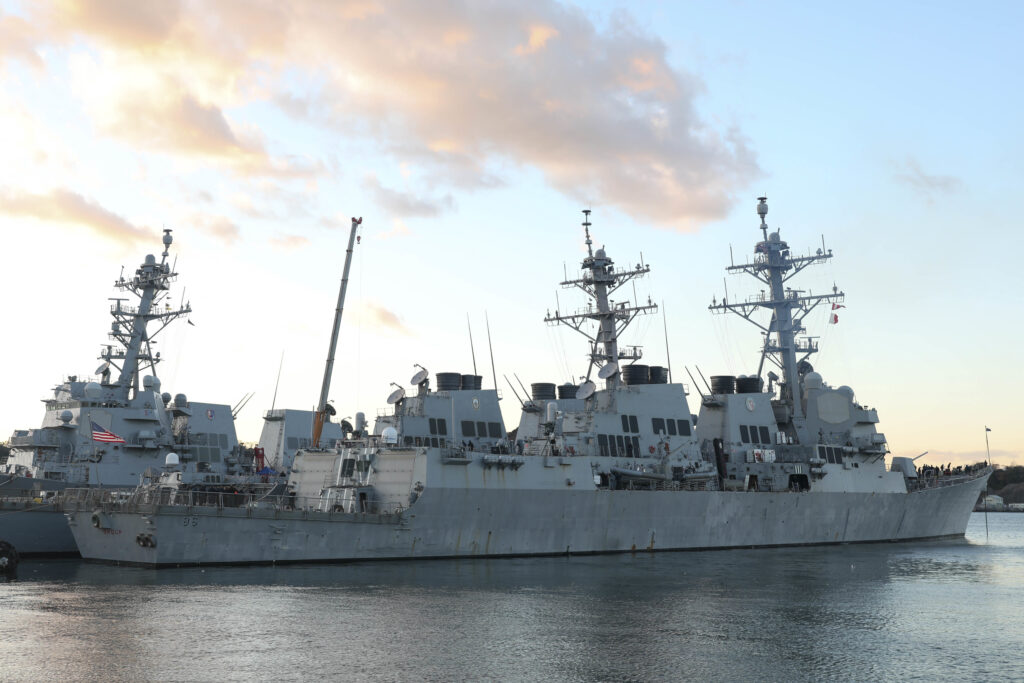
Sailors aboard the Arleigh Burke-class guided-missile destroyer USS Shoup (DDG 86) moor the ship as it arrives at Commander, Fleet Activities Yokosuka, Dec. 19, as the newest addition to Commander, Task Force (CTF) 71/Destroyer Squadron 15. U.S. NAVY / Mass Communication Specialist 2nd Class Zachary Grooman

YOKOSUKA, Japan — Arleigh Burke-class guided missile destroyer USS Shoup (DDG 86) arrived in its new forward-deployed location of Yokosuka, Japan, Dec. 19, joining Commander, Task Force (CTF 71)/Destroyer Squadron (DESRON) 15, the squadron’s Public Affairs said in a release. 
 
The forward presence of USS Shoup enhances the national security of the United States and improves its ability to protect strategic interests. USS Shoup is a multi-mission ship with air warfare, submarine warfare and surface warfare capabilities. It is designed to operate independently or with carrier strike groups, surface action groups and amphibious ready groups. 
 
“We are looking forward to having USS Shoup join our forward-deployed team,” said Capt. Walter Mainor, commander, Task Force 71. “USS Shoup will be instrumental to U.S. 7th Fleet’s ability to strengthen bonds with our Allies and partners, and our continued commitment to regional maritime security and ensuring a free and open Indo-Pacific.” 
 
The United States values Japan’s contributions to the peace, security and stability of the Indo-Pacific and its long-term commitment and hospitality in hosting U.S. forces forward deployed there. These forces, along with their counterparts in the Japan Self-Defense Forces, make up the core capabilities needed by the alliance to meet our common strategic objectives. 
 
Maintaining the most advanced ships and a forward-deployed naval force (FDNF) capability supports the United States’ commitment to the defense of Japan and the security, stability and prosperity of the Indo-Pacific region. This allows the most rapid response times possible for maritime and joint forces, and brings our most capable ships with the greatest amount of striking power and operational capability to bear in the timeliest manner. 
 
“Shoup is excited for the opportunity to join 7th Fleet and the FDNF ships in Yokosuka, Japan” said Cmdr. Dale Tourtelotte, USS Shoup commanding officer. “Our Sailors have trained diligently over the past few years in preparation for this transition. We are ready to support our allies and partners in the region in maintaining maritime security. Additionally, we are appreciative of the hospitality shown to our families who have been living in Japan for the past few months. We are eager to arrive in Yokosuka.” 
 
Shoup is a Flight IIA Arleigh Burke Class Aegis guided missile destroyer that can deploy with two MH-60 variant helicopters. It also has improved ballistic missile defense, anti-air and surface warfare capabilities. The ship is 155 meters in length; displacing approximately 9,200 tons, with a crew size of approximately 270 Sailors. The ship was commissioned June 22, 2002. 
 
CTF 71/DESRON 15 is the Navy’s largest forward-deployed DESRON and the U.S. 7th Fleet’s principal surface force. 7th Fleet is the U.S. Navy’s largest forward-deployed numbered fleet, and routinely interacts and operates with 35 maritime nations in preserving a free and open Indo-Pacific region. 


Future Flight III DDG USS Jack H. Lucas Embarks on First Sea Trials

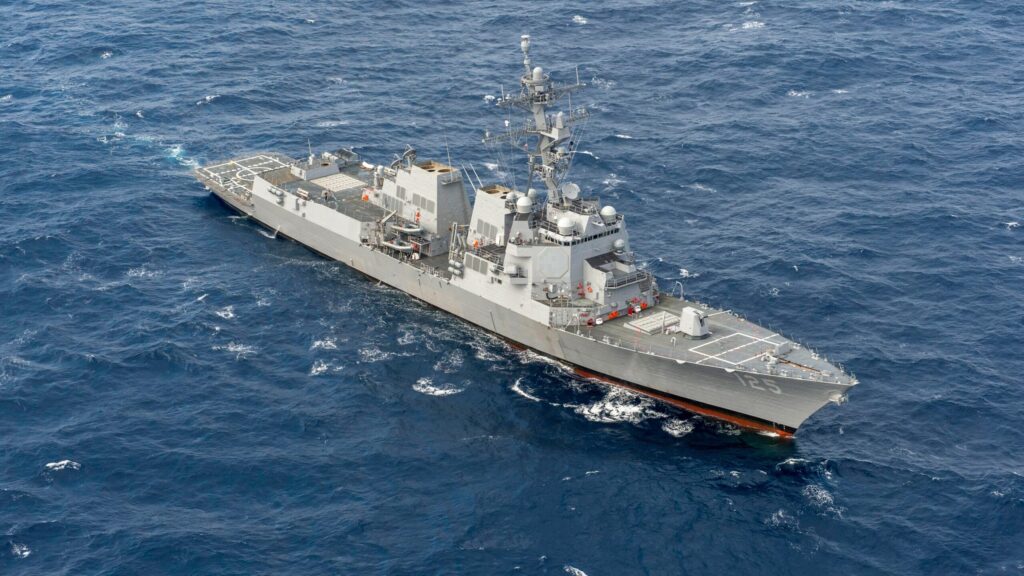
HII announced the successful completion of Builder’s Trials for the future USS Jack H. Lucas, Dec. 15. HII

WASHINGTON — The Navy’s first Flight III Arleigh Burke-class guided missile destroyer, future USS Jack H. Lucas (DDG 125) completed Builder’s Trials on Dec. 15, 2022, Team Ships Public Affairs said in a release. 

Builder’s trials consist of a series of in-port and at-sea demonstrations that allow the shipbuilder to assess the ship’s systems. For DDG 125, these trials also mark the first opportunity to test the new Flight III systems while underway. The trials are conducted by the shipbuilder, Huntington Ingalls Industries’ (HII) Ingalls Shipbuilding division in Pascagoula, Mississippi.   

“Embarking on Builder’s Sea Trials is a significant accomplishment for the DDG 51 program,” said Capt. Seth Miller, DDG 51 class program manager, Program Executive Office (PEO) Ships. “As the first Flight III ship, DDG 125 is the culmination of years of dedication and perseverance to design, build, and integrate the Flight III capability of BL 10, AMDR and the supporting systems such as the new Electric Plant and associated upgrade to the Machinery Control System.” 

The future USS Jack H. Lucas will be the 75th Arleigh Burke (DDG 51) class destroyer, and the first of the DDG 51 Flight III ships. The Flight III upgrade is centered on the AN/SPY-6(V)1 Air and Missile Defense Radar and incorporates upgrades to the electrical power and cooling capacity. Flight III is the fourth Flight upgrade in the proud history of the class, and the largest upgrade to date. 

The DDG 51 Arleigh Burke-class Guided Missile Destroyer (DDG 51) is a multi-mission guided missile destroyer able to operate offensively and defensively, independently, or as units of Carrier Strike Groups, Expeditionary Strike Groups and Surface Action Groups. These ships respond to the full range of military operations including Low Intensity Conflict/Coastal and Littoral Offshore Warfare scenarios and open ocean conflict, providing or augmenting power projection. Flight III ships will fill the critical need for enhanced surface combatant Integrated Air and Missile Defense.   

HII’s Ingalls Shipbuilding division is also under construction on the future Ted Stevens (DDG 128), Jeremiah Denton (DDG 129), George M. Neal (DDG 131) and Sam Nunn (DDG 133). 


Thai Navy Corvette Sinks in Heavy Seas 

The HTMS Sukhothai is seen from the deck of HTMS Kraburi (FFG-457) just prior to sinking. ROYAL THAI NAVY

ARLINGTON, Va. — The Royal Thai Navy (RTN) corvette HTMS Sukhothai (FS 442) has sunk in the Gulf of Thailand after foundering in heavy seas Dec. 1. 

Of the crew of 106 personnel, 75 have been reportedly rescued as the search continues for the remaining 31 crewmembers.   

According to Thai Navy statements, the corvette encountering rough seas which caused flooding of the propulsion and electrical spaces.  The loss of power prevented the ship from pumping out water to regain stability. 

The RTN dispatched ships to assist the Sukhothai, and HTMS Kraburi (FFG 457) arrived just before the ship sank. Other ships and aircraft arrived on the scene to rescue crew members. 

The 251-foot, 960-ton Sukhothai was commissioned in 1987. 

Other Thai Navy ships are assisting in the search for survivors, including the frigate HTMS Bhumibol Adulyadej (FFG-471) and landing platform dock HTMS Angthong (LPD-791). 


Future Littoral Combat Ship Augusta to Be Christened

The future USS Augusta (LCS 34) will soon be christened by the ship’s sponsor, the Honorable Leigh I. Saufley. AUSTAL USA

ARLINGTON, Va. — In a time-honored Navy tradition, the Honorable Leigh I. Saufley, sponsor of the Navy’s newest Independence-variant littoral combat ship the future USS Augusta (LCS 34), will christen the ship during a 10:00 a.m. CDT ceremony on Saturday, Dec. 17, in Mobile, Alabama, the Defense Department said in a Dec. 16 release. 

Saufley, president and dean of the University of Maine School of Law and the former chief justice of the Maine Supreme Judicial Court, will break a bottle of sparkling wine across the bow to symbolically christen the ship at the Austal USA shipyard. Augusta’s commanding officer, Cmdr. Christopher Polnaszek, will represent the ship’s crew in the ceremony.  

The principal speaker with be the Honorable Jerry Carl, U.S. House of Representatives (R-Alabama). Remarks will also be provided by the Honorable Mark O’Brien, mayor of Augusta; Vice Adm. John Mustin, chief of Navy reserve; Ms. E. Anne Sandel, acting principal civilian deputy to the assistant secretary of the Navy for Research, Development, and Acquisition; Mr. Rusty Murdaugh, president, Austal USA; and Mr. Stan Kordana, vice president of Surface Systems, General Dynamics Mission Systems.  

“The future USS Augusta will honor the beautiful, capital city of the pine tree state,” said Secretary of the Navy Carlos Del Toro. “The Honorable Saufley and the ship’s crew will forge a special connection with the fine people of Augusta. This future ship’s Sailors will stand the watch with pride and represent Augusta with the honor, courage, and commitment they deserve.” 

Augusta’s motto, “Protecting the frontier”, continues the legacy of the first USS Augusta (SSN 710), a Los Angeles-class submarine that was in active service for 24 years and decommissioned on Feb. 11, 2009. Augusta is the 17th Independence-variant LCS and 33rd in the LCS class. It is the second ship named in honor of the city of Augusta, Maine. 

Independence-variant Littoral Combat Ships are fast, optimally-manned, mission-tailored surface combatants that operate in near-shore and open-ocean environments, winning against 21st-century coastal threats. LCS integrate with joint, combined, manned and unmanned teams to support forward-presence, maritime security, sea control and deterrence missions around the globe. Currently, Independence-variants USS Charleston (LCS 18) and USS Oakland (LCS 24) are on deployment in the Indo-Pacific. 

The LCS class consists of two variants, Freedom and Independence, designed and built by two separate industry teams. Austal USA, which leads the Independence-variant industry team for even-numbered hulls, is a ship manufacturer headquartered in Mobile, Alabama, with service centers in San Diego and Singapore, and a technology center in Charlottesville, Va. Austal USA has earned 21 safety excellence awards.


USS Ronald Reagan Returns to Yokosuka Following 2022 7th Fleet Deployment

Sailors man the rails as the U.S. Navy’s only forward-deployed aircraft carrier, USS Ronald Reagan (CVN 76), returns to Commander, Fleet Activities Yokosuka, Japan, following its deployment to the western Pacific ocean, Dec. 16. U.S. NAVY / Mass Communication Specialist 3rd Class Oswald Felix Jr.

YOKOSUKA, Japan — The U.S. Navy’s only forward-deployed aircraft carrier USS Ronald Reagan (CVN 76) returned to Yokosuka, Japan Dec. 16, following a seven-month strike group deployment across 7th Fleet, the ship’s public affairs department said in a Dec. 1 release. 

During Ronald Reagan’s deployment, the embarked Carrier Air Wing (CVW) 5 flew more than 17,635 flight hours, and the ship transited nearly 57,000 nautical miles. The strike group departed Yokosuka May 20 and worked closely with Allies and partners in supporting the rules-based international order while maintaining presence and combat flexibility through participation in Carrier Strike Group (CSG) Exercise with Republic of Korea (ROK) Navy, Exercise Valiant Shield 2022 around Guam with more than 13,000 joint force personnel in a U.S.-only biennial field training exercise in June, and operations in the South China Sea in July and August. In August, the ship returned to Yokosuka for a brief maintenance period. 

The strike group returned to sea on Sept. 12 and participated in Maritime Counter Special Operations Exercise with ROK forces near South Korea in September, trilateral and bilateral operations in the Sea of Japan in October, as well as Japan’s International Fleet Review, Malabar 2022, and Keen Sword 2023 in the Philippine Sea in November. 

“Every step of Ronald Reagan Carrier Strike Group’s 2022 patrol was marked by critical and highly valuable coordination with our allies,” said Rear Adm. Michael Donnelly, commander of Task Force (CTF) 70/Carrier Strike Group (CCSG) 5. “We enjoyed the opportunity to conduct extensive, integrated operations and exercises with Japan Maritime Self-Defense Force (JMSDF), Republic of Korea Navy and Royal Australian Navy, sailing side-by-side and integrating liaison officers onto our ships and amongst our crews. As well as the chance to work and exercise with the navies from Canada, India, Republic of Philippines and United Kingdom. Combined with our visits to ports around the Pacific, our patrol demonstrated the combined resolve, common values and credible capability of like-minded nations that is necessary to meet any challenge in ensuring regional stability and security in support of a free and open Indo-Pacific.” 

The strike group conducted its first port visit since 2020, stopping in Guam in June, and during the deployment conducted four successful port visits, making additional stops in Singapore, Busan, Republic of Korea and Manila, Republic of the Philippines, focusing on relationship-building with Allies and partners and conducting numerous community relations events. 

“The crew is incredibly excited to return home to family and friends after more than 6 months at sea,” said Capt. Daryle Cardone, commanding officer, USS Ronald Reagan. “Each USS Ronald Reagan Sailor contributed to building the credible combat power inherent in our ship’s motto of ‘Peace through Strength,’ and it is that strength which further enhanced our integration with regional allies and partners. I am especially proud of the resilience and toughness our crew displayed throughout this deployment, and for the strengthened relationships with allied maritime forces.” 

On the 2022 deployment, the carrier strike group included the Navy’s forward-deployed aircraft carrier USS Ronald Reagan (CVN 76), embarked Carrier Air Wing (CVW) 5, and embarked staffs of Task Force 70 and Destroyer Squadron (DESRON) 15, the Ticonderoga-class guided-missile cruisers USS Antietam (CG 54), USS Chancellorsville (CG 67), USS Shiloh (CG 62) and guided-missile destroyers assigned from Task Force 71. 

While in port, Ronald Reagan will remain in sustainment and ready to immediately redeploy in response to a crisis or other tasking. The crew maintains a high level of training, forward-presence, warfighting proficiency, quick-response posture and readiness to respond to any regional contingency. 

The Ronald Reagan Carrier Strike Group is forward-deployed to the U.S. 7th Fleet area of operations in support of a free and open Indo-Pacific region. 7th Fleet is the U.S. Navy’s largest forward-deployed numbered fleet, and routinely interacts and operates with 35 maritime nations in preserving a free and open Indo-Pacific region.