Coast Guard Cutter Harriet Lane Returns Home Following 81-day Patrol in Oceania
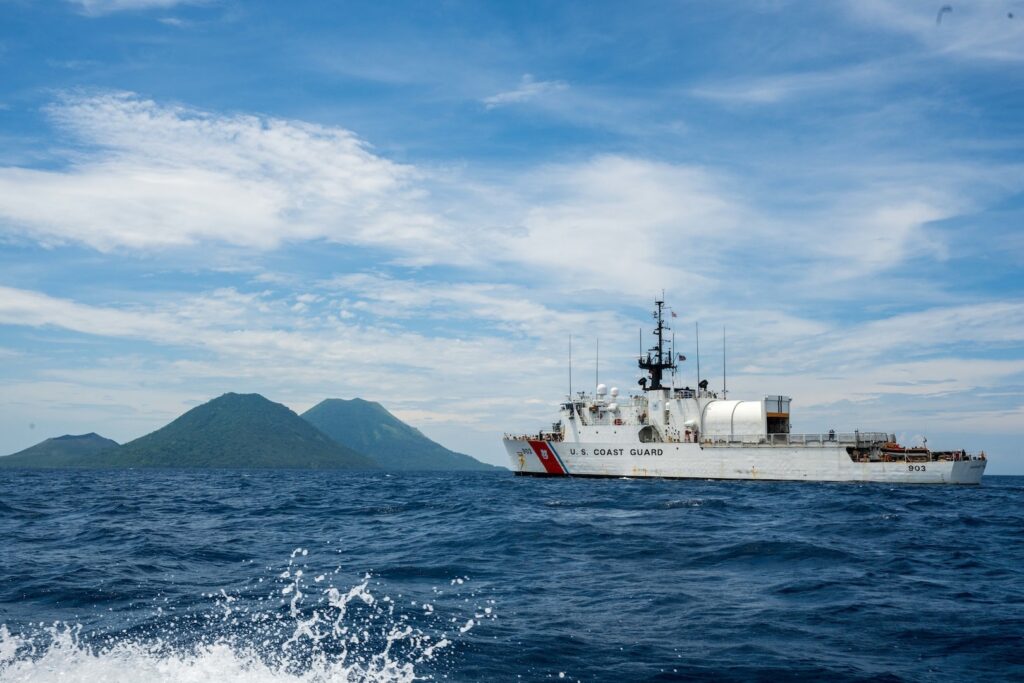
The medium endurance cutter USCGC Harriet Lane (WMEC 903) transits offshore Rabaul, Papua New Guinea, Oct. 26, 2025. Commissioned in 1984, the Harriet Lane is a 270-foot cutter homeported in Honolulu to support Coast Guard missions in the Pacific region. (U.S. Coast Guard Photo by Petty Officer 3rd Class Austin Wiley) 

Release From U.S. Coast Guard Oceania District External Affairs, Dec. 12, 2025

Download video here and here. 

HONOLULU – The crew of USCGC Harriet Lane (WMEC 903) returned to Honolulu Saturday following an 81-day patrol in support of Coast Guard Oceania District’s Operation Blue Pacific. 

The Harriet Lane crew departed Joint Base Pearl Harbor-Hickam in September to conduct joint operations and territorial integrity missions across Oceania. Patrolling more than 16,000 nautical miles throughout Oceania to include the Republic of the Marshall Islands, Papua New Guinea, Vanuatu, Tonga, and American Samoa, the cutter’s crew worked alongside interagency and Pacific Island partners to deter transnational criminal organization activities, facilitate the flow of commerce, and protect critical ocean resources. 

“This patrol was a resounding success for the crew of Harriet Lane and reinforced the Coast Guard’s commitment as a trusted partner across Oceania,” said Cmdr. Justin Matejka, commanding officer, Harriet Lane. “It was a pleasure to partner with the many professional officers from multiple Pacific Island Countries to combat illegal, unreported, and unregulated fishing and transnational criminal organization activity. I am proud of the crew’s incredible commitment to operational success and look forward to being a part of Harriet Lane’s growing impact across the region.” 

The Harriet Lane crew exercised partnerships with the Marshall Islands, Papua New Guinea, Vanuatu, and Tonga through bilateral maritime law enforcement agreements, professional exchanges, and domestic federal maritime law enforcement operations. In total, the Harriet Lane crew and Pacific Island enforcement officers conducted 31 boardings of fishing vessels, resulting in 20 potential violations. 

The crew conducted 15 additional high seas boarding and inspections on commercial fishing vessels, resulting in 2 potential violations of conservation and management measures under the Western and Central Fisheries Commission. 

Enhancing diplomatic relationships within the Pacific Quadrilateral Defence Coordinating Group, the Harriet Lane crew also integrated Royal New Zealand Navy sea riders for a portion of the patrol. 

Harriet Lane’s visit to Tonga included strategic discussions with Defense and Foreign Minister, Crown Prince Tupouto’a ‘Ulukalala, focusing on enhancing bilateral cooperation to address maritime security threats and counter illegal, unreported, and unregulated fishing activity in the region. 

Commissioned in 1984, Harriet Lane is a 270-foot medium endurance cutter homeported in Honolulu to support Coast Guard missions in the Pacific region. The service’s medium endurance cutter fleet supports a variety of Coast Guard missions including search and rescue, law enforcement, maritime defense, and protection of the marine environment. 


AeroVironment Awarded $4.8M Contract for U.S. Coast Guard ROVs

Release From AeroVironment

POTTSTOWN, Pa. – December 11, 2025— AeroVironment, Inc. (“AV”) (NASDAQ: AVAV), a leading provider of underwater robotic systems, today announced it has been awarded a $4.8 million United States Coast Guard contract through its wholly owned subsidiary, VideoRay, to deliver Mission Specialist Defender remotely operated vehicles (ROVs) as part of the Service’s Force Design 2028 modernization initiative.  

The Defender will enhance the Coast Guard’s maritime response capabilities by enabling rapid underwater inspections, pier inspections, hull assessments, subsurface infrastructure surveys, disaster response and search and rescue operations in challenging environments—reducing diver risk while increasing mission safety, operational efficiency, and fleet readiness.  

“The selection of the Mission Specialist Defender reinforces our ability to deliver proven technology to address the most demanding defense and security missions,” said Chris Gibson, Chief Executive Officer at VideoRay. “Customers have come to depend on VideoRay when failure is not an option. As AV’s maritime pillar, we’re proud to contribute to the organization’s all-domain uncrewed systems strategy to ensure the safety and security of our forces.”  

As part of Force Design 2028, the Coast Guard established the Robotics and Autonomous Systems (RAS) Program Executive Office to rapidly integrate unmanned and robotic technologies across all missions, including investments in robotics and autonomous systems designed to build a more agile, technology-enabled, and globally ready force for the evolving maritime domain.  

AV’s $4.8 million award—the largest award of the $11 million executed in fiscal year 2025 for rapid autonomous fleet upgrades—will strengthen Coast Guard operations with proven, advanced maritime robotics. The selection of the Mission Specialist Defender builds on the company’s expanding track record with U.S. and allied defense customers, including the Navy’s Maritime Expeditionary Standoff Response (MESR) program.  

“These unmanned systems provide increased domain awareness, mitigating risk and enhancing mission success as the Coast Guard continues to operate in hazardous environments,” said Anthony Antognoli, the Coast Guard’s first RAS program executive officer, in a separate release issued by the U.S. Coast Guard in September 2025. “The Coast Guard’s mission demands agility, awareness and adaptability. Robotics and autonomous systems deliver all three, enabling us to respond faster, operate smarter and extend our reach where it matters most. We are not waiting for the future to arrive. We are delivering it to the fleet today.”  

Built on a modular, open-architecture design, the Mission Specialist Defender allows operators to easily integrate advanced sensors, manipulators, and specialized payloads. This flexibility ensures adaptability to evolving mission requirements, while field-swappable modules enable on-site maintenance and repairs—minimizing downtime and maintaining operational tempo.  

Details regarding the Mission Specialist Defender can be found at: https://videoray.com/products/mission-specialist-defender  


Teledyne FLIR Defense Awarded $42.5M Contract for U.S. Marine Corps Drones

Release From Teledyne FLIR Defense

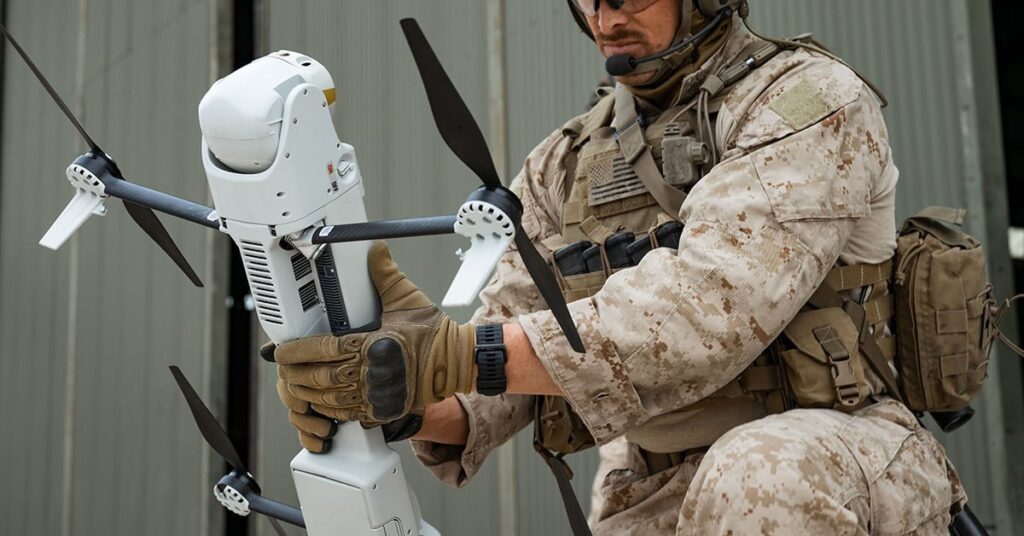
Will deliver more than 600 Rogue 1™ reusable loitering munition systems that enable small units to directly engage enemy targets beyond line of sight 

Highly accurate loitering munition features mission-specific payload options, boosting warfighter efficiency and effectiveness 

BOSTON ― December 5, 2025 ― Teledyne FLIR Defense, part of Teledyne Technologies Incorporated (NYSE:TDY), announced that it has been awarded a $42.5 million contract by the U.S. Marine Corps Systems Command for Delivery Order 3 of its Organic Precision Fires-Light (OPF-L) program. 

Teledyne FLIR Defense will deliver more than 600 of its advanced Rogue 1™ lethal loitering munition systems, along with ground control stations and training kits, for fielding to Marine Corps units starting this summer. 

Organic Precision Fires-Light is a program designed to provide rifle squads and platoons with a man-packable “organic, loitering, precision strike capability to engage the enemy beyond the line of sight.” 

Teledyne FLIR’s Rogue 1 has proven highly successful in multiple exercises against moving and stationary armor, soft-skinned vehicles, and dismounted targets.  Operators can attach modular, mission-specific payloads with lethal effects designed for distinct target types.  An advanced fuzing system on Rogue 1 allows the aircraft to be safely returned to the operator and reused when targets are disengaged or missions aborted, which lightens the pack load for Marines while increasing their tactical effectiveness. 

Rogue 1 also features advanced electro-optical and FLIR Boson® 640+ thermal cameras to deliver day/night long-range reconnaissance and surveillance.  Plus, a novel coupling between sensors and warhead in the gimballed payload enables extremely precise targeting. 

“The accuracy and modularity of the Rogue 1 platform will enhance Marine lethality against whatever threats they may encounter in future conflicts,” said Dr. JihFen Lei, president of Teledyne FLIR Defense.  “We’re honored to support the OPF-L program and will continue to work with the Marine Corps to quickly field technology innovations they need to win on the battlefield.” 

“While Teledyne provides a broad range of unmanned air, ground, and subsea systems, this award represents our first production rate contract in the loitering munition market, following the initial test and evaluation contract in 2024,” said George Bobb, president and chief executive officer of Teledyne Technologies. 

Visit us online to learn more about the wide range of FLIR Defense loitering munitions, unmanned aerial systems and advanced payload options. 


Coast Guard Cutter James Conducts Counter-Drug Patrol in Eastern Pacific Ocean 

From U.S. Coast Guard Southeast District, Dec. 12, 2025 

NORTH CHARLESTON, S.C. — The crew of the U.S. Coast Guard Cutter James (WMSL 754) returned to their home port in Charleston, Wednesday, following a 92-day deployment conducting counter-narcotics operations in the Eastern Pacific Ocean in support of Operation Pacific Viper.   

During the patrol, the James crew interdicted over 46,500 pounds of narcotics valued at nearly $350 million. The James crew conducted nine interdictions and detained 33 suspected drug traffickers. The patrol focused on disrupting illegal narcotics smuggling in collaboration with international partners.  

The James crew worked alongside international partners including Costa Rica, Ecuador, Mexico, and Colombia. The collaboration included multiple partner nation transfers.  

To support maritime governance and strengthen international relations, the James crew transferred 22 detainees pier side in Manta, Ecuador, prior to a visit from Department of Homeland Security Secretary Kristi Noem.  

The James crew worked with the Costa Rican coast guard and national police to transfer two Colombian detainees and offload approximately 9,500 pounds of cocaine in Golfito, Costa Rica. During the visit, James hosted Costa Rican Minister of Security Mario Zamora Cordero.  

“I am exceptionally thankful and proud of this crew’s dedication,” said Capt. Thomas Rodzewicz, commanding officer of the James. “Time away from family and missed holidays is never a small sacrifice, but the crew’s time and commitment to combatting narco-terrorism and protecting our nation from illicit drugs crossing our borders are highlighted by the success of this patrol.”   

The James crew offloaded more than 26,000 pounds of cocaine and 500 pounds of marijuana in Port Everglades, Florida, Monday, before heading home.   

Since 2017, Coast Guard Cutter James crewmembers have interdicted 104 shipments totaling 285,140 pounds of cocaine worth $2.11 billion wholesale and 34,539 pounds of marijuana worth $27.8 million wholesale.  

James is one of four 418-foot Legend-class national security cutters homeported in Charleston under U.S. Coast Guard Atlantic Area Command. The cutter’s primary missions are counter-drug operations and defense readiness.  

Detecting and interdicting narco-terrorism on the high seas involves significant interagency and international coordination. U.S. Southern Command’s Joint Interagency Task Force-South, based in Key West, Florida, detects and monitors both aerial and maritime transit of illegal drugs. Once interdiction becomes imminent, the law enforcement phase of the operation begins, and control of the operation shifts to the U.S. Coast Guard throughout the interdiction and apprehension. Interdictions in the Eastern Pacific Ocean are performed by members of the U.S. Coast Guard under the authority and control of the Coast Guard’s Southwest District, headquartered in Alameda, California.  

The Coast Guard is the United States’ lead federal agency for maritime drug interdiction.  


Collins Elbit Vision Systems Helmet-Mounted Display System+ Achieves Milestone with Navy

Sixth-generation helmet system will provide pilots with superior battlespace awareness 

From Collins Elbit Vision Systems 

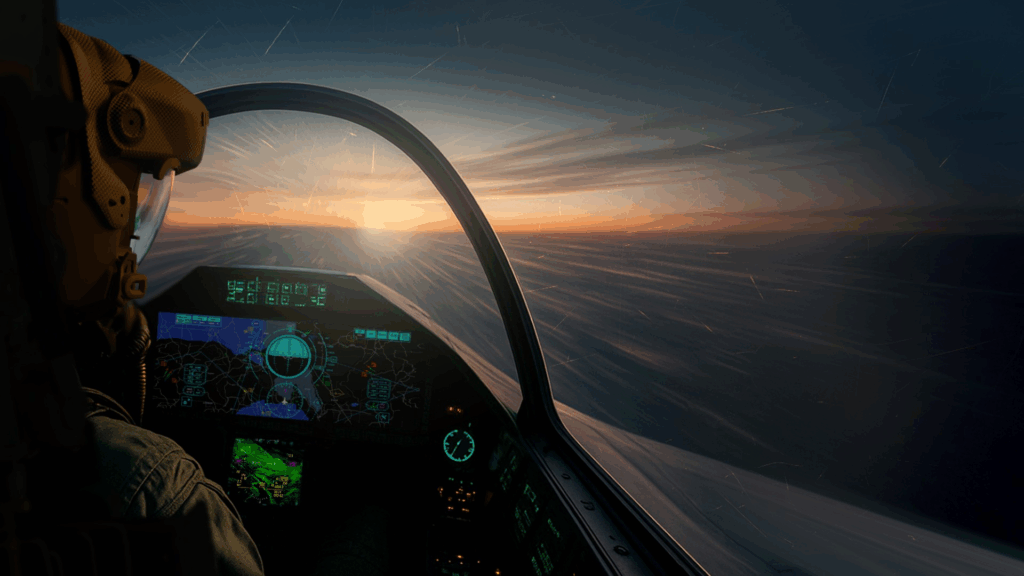
FORT WORTH, TEXAS – Dec.12, 2025 – Collins Elbit Vision Systems (CEVS), a joint venture between Elbit Systems of America (Elbit America) and Collins Aerospace, an RTX (NYSE: RTX) business, has successfully completed the Critical Design Review for the Zero-G Helmet Mounted Display System+ (HMDS+), tailored specifically to meet the United States Navy’s requirements under the Improved Joint Helmet-Mounted Cueing System (IJHMCS) program. This program focuses on adapting and integrating the advanced Zero-G HMDS+ into the F/A-18E/F Super Hornets and EA-18G Growlers, ensuring these aircraft benefit from enhanced operational capabilities that align with the U.S. Navy’s mission needs. 

The Zero-G HMDS+™ is a sixth-generation helmet-mounted display system that provides a fully immersive, high-definition view of the battlespace. This enables aircrew to make split-second decisions at high speeds with superior situational awareness, enhancing mission effectiveness and survivability.  

Captain Joseph Kamara, Naval Aircrew Systems (PMA-202) program manager said, “Aircrew health and safety is our number one priority.  The Zero-G being integrated through our IJHMCS program promises to relieve aircrew of neck and back strain and greatly improve ejection safety. We are excited to be at the leading edge of safety and technology, and this important milestone is a critical step toward deploying this capability for our F/A-18 and EA-18 aircrew.” 

The Zero-G HMDS+ builds on CEVS’ legacy of delivering fourth- and fifth-generation HMDS. It combines combat-tested tracking and low-latency technologies with a cutting-edge display to deliver accurate, real-time information. The superiority of the Zero-G HMDS+ is in its ability to fuse mission data, sensor video and weapon system information while serving as a primary flight instrument. 

“Zero-G is providing sensor fusion at the edge,” said Luke Savoie, Elbit America’s President and CEO and CEVS board member. “This system is critical technology, while remaining lightweight. As fighter aircraft level-up, the HMDs of those systems need to as well. Zero-G provides unmatched head-up, sixth-generation battle management capabilities.”  

 
“When our team began working on the Zero-G HMDS+, our goal was to provide aircrew with the safest, most advanced helmet system on the market,” said Collins Aerospace’s Daniel Karl, co-general manager of CEVS. “This milestone confirms our helmet is ready for the next phase of development and brings us one step closer to delivering this advanced capability to naval aviators.” 

The program will now begin rigorous airworthiness testing and full integration with aircraft avionics and mission systems. Initial operational capability is expected in 2027. The system is planned to be fielded on all operational U.S. Navy and Royal Australian Air Force Super Hornets and Growlers, totaling more than 750 aircraft.  


HII Announces Major Milestone for ROMULUS USV Technology 

From HII 
 

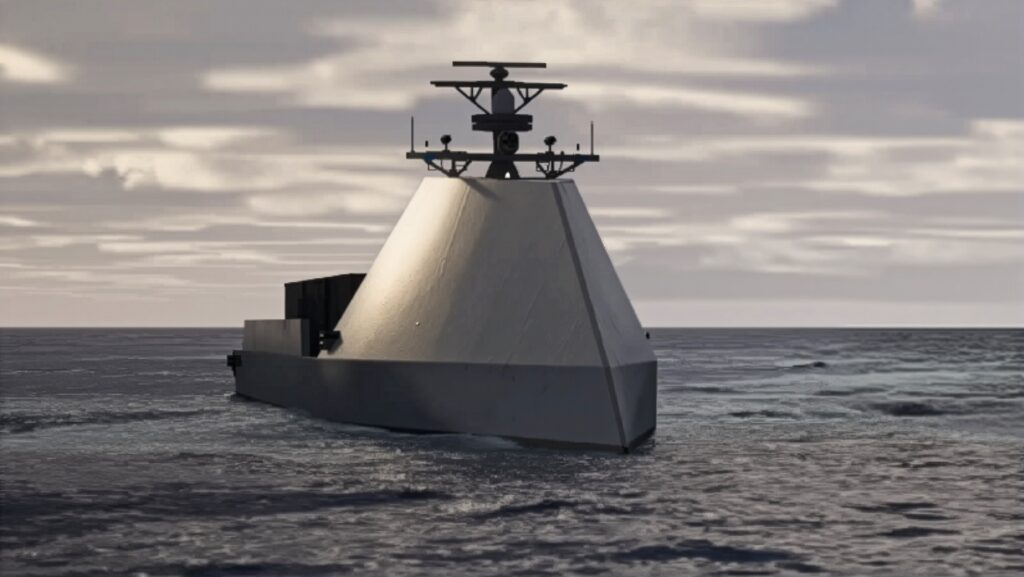
LOREAUVILLE, La., Dec. 11, 2025 (GLOBE NEWSWIRE) — HII (NYSE: HII) executives toured Breaux Brothers Enterprises in Loreauville, Louisiana, and announced that construction of a prototype of ROMULUS, the company’s new unmanned surface vessel (USV) family, has reached 30% completion. The vessel remains on schedule for sea trials in the fourth quarter of 2026. 

During the visit, HII leaders toured the shipyard with build partners Breaux Brothers and Incat Crowther, and reviewed progress on hull construction, integration of the HII’s Odyssey Autonomous Control System (ACS), and outfitting work. 

“ROMULUS is progressing at a pace that reflects the urgency of the mission and the strength of our partnerships,” said Andy Green, president of HII’s Mission Technologies division. “Breaux Brothers and our industry team are delivering a platform that brings scale, autonomy and real operational advantage to the fleet. At 30% complete, the ROMULUS prototype is well on its way to becoming the benchmark for unmanned surface capability.” 

ROMULUS USVs are designed to meet the current and emerging requirements of the U.S. Navy, U.S. Marine Corps, joint forces and allies. They deliver high-endurance, sustained open-ocean autonomy with a focus on lethality, cost efficiency and scalability. 

The family of USVs will support missions including intelligence, surveillance and reconnaissance, counter-unmanned air systems, mine countermeasures, strike, and the launch and recovery of unmanned underwater vehicles (UUV) and unmanned aerial vehicles (UAV). 

Paired with HII’s REMUS UUVs, ROMULUS extends undersea reach and supports a scalable dual-domain force package built for distributed maritime operations. 

This ROMULUS prototype is the first in HII’s modular, AI-enabled ROMULUS USV line. The ships are engineered for rapid, repeatable production and high endurance at sea. With speeds over 25 knots and a range of 2,500 nautical miles, all ROMULUS USVs are designed for mission flexibility across global theaters. 

ROMULUS is built around Odyssey ACS, HII’s proven autonomy suite used across more than 35 USV platforms and over 750 REMUS UUVs in 30 countries. Odyssey enables sustained open-ocean autonomy, multi-agent swarming, modular payload integration, and manned-unmanned teaming. ROMULUS platforms will also feature integrated capabilities from Shield AI, Applied Intuition, and C3 AI for enhanced autonomous performance and lifecycle sustainment. 

The Odyssey software suite’s open-access, government-aligned architecture enables rapid integration of new sensors, payloads and third-party autonomy technologies. It allows industry, government and academia to test and refine capabilities, ensuring ROMULUS evolves in step with emerging naval concepts of operations. 

In November, HII and Shield AI announced that they have successfully completed the first major test of their integrated autonomy solution aboard HII’s ROMULUS 20 USV, marking a key step toward operational deployment of the AI-enabled ROMULUS fleet. 

ROMULUS is being developed with support from HII’s Dark Sea Labs Advanced Technology Group. 


U.S. Navy Partners With Meteomatics to Pilot Weather Drones in Maritime Operations 

From Meteomatics, Dec. 11, 2025 

Meteomatics’ Meteodrones Aim to Fill Persistent Gap in Atmospheric Observation Over the Open Ocean 

NEW YORK CITY, N.Y., December 11, 2025 /EINPresswire.com/ — Weather intelligence and technology company Meteomatics, today announced its work with the U.S. Navy, launching their automated weather drones, Meteodrones, from a moving vessel to collect frequently unobserved atmospheric data critical to maritime operations. Conducted as part of the Advanced Naval Technology Exercise (ANTX) in the Mississippi Sound near Gulfport, the trial has marked a step forward in enhancing operational readiness and safety for naval missions. 
 
Naval operations rely on precise, localized weather intelligence, but capturing these insights on ships has historically proven difficult. Weather balloons are nearly impossible to launch and track reliably from moving vessels, and the broad coverage satellites provide, lack the vertical resolution needed for tactical decisions. This leaves the Navy with a blind spot in the first lower levels of the atmosphere – exactly where weather conditions most influence flight operations, radar performance, and mission safety. 
 
“For the last decade, U.S. military weather services have sought to consistently and reliably measure the atmosphere over the open ocean to improve forecast accuracy and identify atmospheric anomalies,” said Kevin Lacroix, Weather Services Technology Lead, Naval Meteorology and Oceanography Command. “Products with the capability to collect-high resolution, real-time atmospheric data, repeatedly, in environments of interest are valuable to military weather services for sensing the maritime boundary layer of the atmosphere.” 
 
To fill this gap, the U.S. Navy’s Gulfport demonstration tested the Meteodrone’s ability to launch and recover from a moving ship at speeds ranging from 1.5 knots to 16 knots. Operating under FAA regulations, shipboard Meteodrones collected complete vertical atmospheric profiles including temperature, humidity, pressure, dew point, and wind. Across multiple runs, the Meteodrones returned safely for recovery and the system validated stable and autonomous performance in a maritime environment. 
 
With the real-time observations that the Meteodrones collect, the Navy can enhance mission safety by reducing risks for aircraft takeoffs, landing and in-flight operations. Additionally, they are able to strengthen operational readiness and improve awareness of how the environment may extend or degrade radar and communication ranges. 
 
“Beyond the weather forecasting improvements the real-time information gathered by the Meteodrone give us, we have an opportunity to feed critical information into our electromagnetic tactical decision aids, making the safety and security of the ship and the battlegroup more effective by optimizing our radar performance, LaCroix added. “Ship captains will have the confidence to make rapid decisions knowing that the METOC team has given them every advantage possible.” 
 
“This demonstration underscored not just the technical success of our Meteodrones, but also the practical value of capturing critical weather data at sea. By proving that launches and recoveries can be achieved from moving vessels, we’ve shown how Meteomatics can help the Navy bridge one of the most significant gaps in operational forecasting,” said Brad Guay, Head of Government & Defense Solutions at Meteomatics. 
 
Meteomatics is committed to working with the U.S. Navy, and other government partners, to continue bringing innovations from demonstration to deployment. Read more about the drones here


USS Wayne E. Meyer Returns to Pearl Harbor 

From by Carrier Strike Group 11, Nov. 29, 2025 

PEARL HARBOR, HAWAII–Arleigh Burke-class guided-missile destroyer USS Wayne E. Meyer (DDG 108) returned to its homeport of Pearl Harbor following nine months underway in the U.S. 3rd, 5th and 7th Fleet areas of operations, Nov. 29. 
 
Wayne E. Meyer departed Pearl Harbor, March 9, and operated as part of both the Nimitz Carrier Strike Group (NIMCSG) and Carl Vinson Carrier Strike Group (VINCSG). 
 
“Our crew has spent nine months contributing to the enduring missions of deterrence and promoting regional stability and maritime security, including successfully executing combat operations against the Houthi threat in the Gulf of Aden,” said Cmdr. Gerard Mauer, commanding officer of Wayne E. Meyer. “This ship and crew amazes me daily, and I am a proud Captain.” 
 
Wayne E. Meyer conducted defense operations in support of both NIMCSG and VINCSG while operating in the U.S. 5th Fleet area of operations (AOO). 
 
In addition to defense operations with NIMCSG and VINCSG, Wayne E. Meyer also worked alongside U.S. Central Command joint forces and United Kingdom Naval forces while conducting maritime operations to promote increased global maritime security. 
 
While in the U.S. 5th Fleet AOO, Wayne E. Meyer participated in multinational operations and exercises to increase interoperability and promote regional stability and maritime security throughout the Gulf of Aden, Arabian Sea, and Arabian Gulf. 
 
While operating in the U.S. 7th Fleet, Wayne E. Meyer supported operations to uphold a free and open Indo-Pacific, operating as part of the NIMCSG to provide credible deterrence and reassure allies and partners of enduring U.S. commitment to the region. 
 
Wayne E. Meyer, with an air wing detachment from Helicopter Maritime Strike Squadron (HSM) 73, traveled over 50,000 nautical miles, conducted 24 replenishments-at-sea, 20 sea-and-anchor details, and conducted eight port visits. Wayne E. Meyer Sailors were awarded the Combat Action Ribbon for their actions against the Houthi threats in the U.S. 5th Fleet AOO. 
 
Wayne E. Meyer was led by Mauer, Executive Officer Cmdr. Matthew Felton, and Command Master Chief Franklin Dominguez Jr. 


BAE Systems Awarded $1.7B Navy Contract for APKWS Laser-Guidance Kits

Contract enables production of tens of thousands of guidance kits for effective, cost-efficient precision strikes 

Release From BAE Systems 

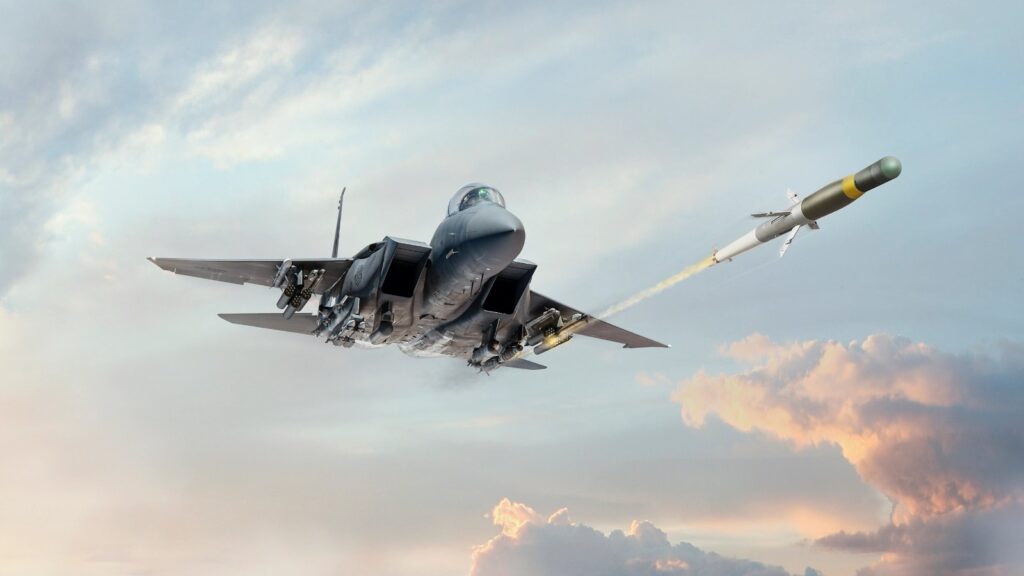
HUDSON, N.H. — December 10, 2025 — The U.S. Navy has awarded BAE Systems a new five-year, indefinite delivery, indefinite quantity contract for APKWS® laser-guidance kits to equip U.S. armed forces with tens of thousands of additional low-cost precision munitions. The contract has a maximum value of $1.7 billion, with an initial $322 million order. 

The new contract supports increased domestic and international demand, enabling the Navy to purchase APKWS guidance kits over a five-year period. The kits are available to all U.S. armed forces, as well as allies via foreign defense sales. The APKWS guidance kit completes the mission and controls the cost. APKWS kits are combat proven as an air-to-surface, surface-to-surface, surface-to-air, and air-to-air munition.  

“This award reinforces the value of proven and cost-efficient precision munitions, which have consistently demonstrated their effectiveness and versatility across multiple platforms and missions,” said Neeta Jayaraman, director of Precision Guidance and Sensing Solutions at BAE Systems. “The APKWS guidance kit provides advanced capabilities to our armed forces and foreign allies, and high-volume production ensures rapid and efficient delivery to the warfighter.” 

APKWS guidance kits transform unguided 2.75-inch rockets into laser-guided rockets for precision strikes. Operators can use the combat-proven kit to engage a range of soft and armored stationary and moving targets, minimizing collateral damage. APKWS guidance kits accurately strike air and ground targets, giving operators the ability to use them in a wide range of missions. The highly versatile kit can be fired by various platforms, including rotary- and fixed-wing aircraft, as well as unmanned aerial vehicles, static and mounted ground platforms, and maritime vessels. 

The APKWS guidance kit is compatible with new and existing inventories of rocket motors, warheads, and fuzes. It requires minimal training to use in the field and has a simple, affordable maintenance concept, making it an efficient way to transform an unguided rocket into the precision munition of choice. 

BAE Systems has been in full-rate production with its APKWS guidance kit for more than 12 years, allowing the U.S. armed forces and its allies to engage a variety of targets at a fraction of the cost of traditional munitions. BAE Systems leverages a robust supply chain and proven manufacturing capacity to deliver the guidance kit with speed and reliability. 

APKWS laser-guidance kits are produced at BAE Systems’ state-of-the-art manufacturing facilities in Hudson, New Hampshire and Austin, Texas.  

For more information about APKWS guidance kits, visit: www.baesystems.com/apkws


HII Deepens Partnership with Babcock International Group for Submarine Construction

Release From HII

ARLINGTON, Va., Dec. 09, 2025 (GLOBE NEWSWIRE) — HII (NYSE: HII) and Babcock International Group (Babcock) announced today they have signed a contract that expands their strategic partnership to further support Virginia-class submarine construction throughput at HII’s Newport News Shipbuilding (NNS) division. Additionally, the contract will build resiliency within HII’s submarine supply base. 

This is the first Virginia-class outsourced contract to Babcock in support of NNS-specific submarine work, authorizing Babcock to build complex submarine assemblies at the Rosyth facility in Scotland for Virginia-class Block VI fast-attack submarines. 

The expansion of the partnership with Babcock will increase the number of suppliers that can perform large structure work with requisite quality. 

“This is a significant next step in delivering on our joint commitment to enhance both organizations’ capabilities, for the benefit of U.S. and U.K. programs,” said Chris Kastner, HII president and CEO. “Leveraging Babcock’s reach and expertise in the U.K. will reinforce our supplier base, strengthen submarine production in the U.S., and support the trilateral AUKUS partnership.” 

David Lockwood, CEO Babcock International Group said, “Babcock’s advanced manufacturing expertise has enabled us to build on our established missile tube assembly capability, to deliver additional components for the U.S. submarine fleet. This expansion of our strategic partnership with HII enables us to optimize our joint capabilities for the benefit of the wider AUKUS security partnership.” 

In July 2023, HII and Babcock entered into a strategic agreement to collaborate on naval and civil nuclear decommissioning and construction opportunities in the U.K. and U.S. 

Since then, the companies have successfully worked across the United States, United Kingdom and Australia, including the Australian Submarine Supplier Qualification (AUSSQ) program to accelerate the identification and qualification of Australian suppliers and products into the U.S. submarine industrial base. The program is working toward expanding to include products entering the U.K. submarine industrial base for the Astute-class. 

At Defence and Security Equipment International (DSEI) earlier this year, Babcock and HII signed a memorandum of understanding to bring together HII’s REMUS unmanned underwater vehicles (UUVs) and Babcock’s world-leading submarine Weapon Handling and Launch Systems (WHLS). The collaboration aims to deliver UUV torpedo tube launch and recovery (TTLR), strengthening the undersea advantage of the U.K. Royal Navy and allied navies.