USCGC Thetis Returns to Homeport following 56-day Patrol

A USCGC Thetis (WMEC 910) boat crew approaches an overcrowded Cuban vessel at sea, Nov. 13, 2022. Thetis completed a 56-day patrol to conduct migrant interdiction operations in support of the Coast Guard’s Seventh District. U.S. COAST GUARD / Petty Officer 3rd Class Bethany Squires

KEY WEST, Fla. — The crew of the U.S. Coast Guard Cutter Thetis (WMEC 910) returned to their homeport in Key West, Saturday following a 56-day Caribbean Sea deployment, the Coast Guard Atlantic Area said in a Dec. 3 release. 

While underway in the Coast Guard Seventh District’s area of operations and in support of Joint Interagency Task Force – South, Thetis conducted migrant interdiction operations. 

Thetis patrolled the southern Florida Straits and Windward Passage, collaborating with numerous Coast Guard assets to detect, deter and intercept vessels engaged in illegal maritime migration. In total, Thetis interdicted, cared for and repatriated 198 Cuban and Haitian migrants in support of the Coast Guard’s Seventh District. 

While transiting to the Windward Passage, Thetis received a report of a small, overcrowded vessel taking on water. Thetis’ crewmembers launched a small boat rescuing everyone onboard the vessel. 

“This case highlights the humanitarian aspect of this mission and emphasizes the importance of the Coast Guard’s presence to ensure safety of life at sea,” said Cmdr. Gavin Garcia, commanding officer of Thetis. “I am extremely proud of our professional and compassionate team.” 

Prior to patrol, Thetis successfully completed the Coast Guard’s biennial shipboard training assessment, known as the tailored ships training accountability, at Naval Station Mayport. For three weeks, a team of evaluators assessed the crew’s operational readiness through a series of drills to include weapons testing, command and control, damage control, engineering, navigation and seamanship skills. Thetis’ crew achieved a 98% average combined drill score. 

Following the assessment, Thetis embarked an MH-65 Dolphin helicopter aircrew from the Coast Guard’s Helicopter Interdiction Tactical Squadron in Jacksonville. The HITRON aircrew performed a series of 40 day and night landings aboard Thetis to enhance proficiency among both assets’ crews. 

Thetis is a 270-foot, Famous-class medium endurance cutter with a crew of 104. The cutter’s primary missions are counterdrug operations, migrant interdiction, enforcing federal fishery laws and search and rescue in support of U.S. Coast Guard operations throughout the Western Hemisphere. 


Royal Navy Orders 1st Cutting-edge Crewless Submarine

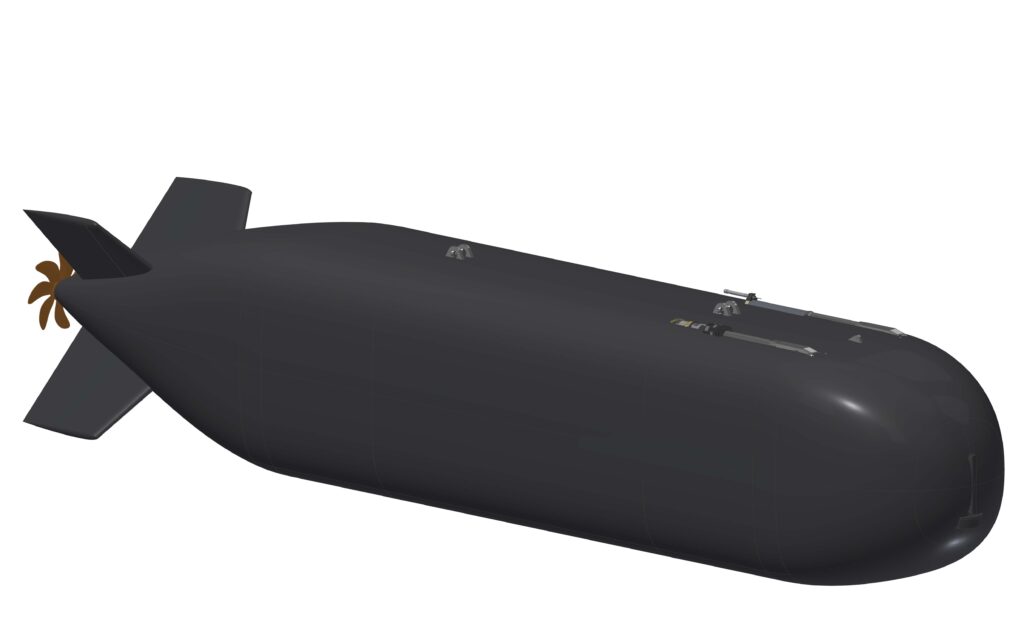
Project CETUS at an angle. U.K. ROYAL NAVY

LONDON — A £15.4 million contract for a cutting-edge crewless submarine has been awarded to Plymouth firm MSubs by the Royal Navy. The vessel will be delivered to the navy in two years’ time and will further advance the U.K.’s ability to protect critical national infrastructure and monitor sub-sea activity, the U.K. Ministry of Defence said in a Dec. 1 release. 

Project Cetus — named after a mythological sea monster — enhances the Royal Navy’s experimentation with autonomous underwater systems. It is the first step in developing an operational autonomous submarine that will work side-by-side with crewed submarines — including the Astute-class hunter-killers and their successors — or independently. 

Its maximum operational depth will exceed that of the current submarine fleet, meaning Cetus will equip the Royal Navy with even greater reach into the oceans in support of U.K. defense. It will be able to cover up to 1,000 miles in a single mission. 

Cetus will be 12 meters long — the length of a double decker bus — 2.2 meters in diameter and weigh 17 tons. It will be the largest and most complex crewless submersible operated by a European navy. The bespoke vessel is being designed and built for the Royal Navy by Plymouth-based tech firm MSubs. This contract will create 10 and support 70 specialist jobs in the city. 

“In order to meet the growing threats to our underwater infrastructure, the Royal Navy needs to be ahead of the competition with cutting edge capabilities,” said Defence Secretary Ben Wallace. “Project Cetus, alongside bringing forward the MROS ships, will help ensure we have the right equipment to protect the security of the U.K. and our Allies. Having the skills base and specialist knowledge to develop and build this vessel in the U.K. is testament to the U.K.’s leading reputation in building surface and sub-surface ships.” 

The vessel’s size means that it will fit inside a shipping container and can therefore be transported around the world to wherever it is needed. It will be designed to operate with all of the ships from the Royal Navy fleet as well as those of our allies. 

Cetus will be a platform for the Royal Navy on which to experiment and build cutting edge technologies and capabilities around, encouraging innovation and developing best practice. The unarmed vessel is battery powered, meaning its effective range can be increased by installing additional batteries. 

It has also been designed to be modular, with an optional section that can be added to double the capacity of the vessel. 

The crewless submarine is the latest step taken by the Royal Navy into autonomous systems, and have been for over a decade. Crewless minehunting systems are already operating in Scotland, and driverless Pacific 24 sea boats are undergoing testing. Various aerial drones are used by ships for reconnaissance and intelligence gathering. 

The Navy has invested in a dedicated tech trials ship, XV Patrick Blackett, to assess and test new equipment and determine how it could be used or integrated into the fleet. Cetus is the equivalent for sub-sea experimentation. 

“This is a hugely exciting moment for Project Cetus as the Royal Navy surges ahead with the development of autonomous technology,” said First Sea Lord Admiral Sir Ben Key.”This Extra Large Autonomous Underwater Vehicle is a capability step-change in our mission to dominate the underwater battlespace. And I am delighted that the project is able to support a small, innovative U.K. company which is at the cutting edge of this sector.” 

The contract is funded by the Anti-Submarine Warfare Spearhead program, run by the Royal Navy’s Develop Directorate, headquartered in Portsmouth. The vessel will be delivered through the Submarine Delivery Agency in Bristol and is the latest in a series of novel underwater technologies being brought to life to deal with the threats of the next decade. 

“The faith the Royal Navy has shown in our small business is humbling and we look forward to working closely together in the future, as we have in the recent past, to develop and deploy Cetus, in the national interest,” said Brett Phaneuf, chief executive officer at MSubs.


Latvia Joins International Maritime Coalition in Middle East as 11th Member

Graphic illustration of the Latvia flag and International Maritime Security Construct logo. U.S. Naval Forces Central Command welcomed Latvia, Dec. 1, as the 11th member of the multinational maritime coalition established three years ago to deter attacks on commercial shipping in the Middle East. U.S. NAVY

MANAMA, Bahrain — U.S. Naval Forces Central Command (NAVCENT) welcomed Latvia, Dec. 1, as the 11th member of a multinational maritime coalition established three years ago to deter attacks on commercial shipping in the Middle East, U.S. Naval Forces Central Command Public Affairs said in a Dec. 1 release. 

Latvia has joined the International Maritime Security Construct (IMSC) and its operational arm, Coalition Task Force Sentinel, which are headquartered in Bahrain with U.S. 5th Fleet. 

Latvia is the third nation to become a member of IMSC this year. Seychelles and Romania joined in October and March respectively. 
 
“We are excited to strengthen and expand IMSC with Latvia’s addition,” said Vice Adm. Brad Cooper, commander of NAVCENT, U.S. 5th Fleet and Combined Maritime Forces. Cooper also serves as IMSC’s multinational task force commander. “Latvia is already a key NATO ally, and we now welcome them to a growing international naval coalition in the Middle East, which protects some of the most important waterways in the world.” 

IMSC was formed in July 2019 in response to increased threats to freedom of navigation for merchant mariners transiting international waters in the Middle East. Coalition Task Force Sentinel was established four months later to deter state-sponsored malign activity and reassure the merchant shipping industry in the Bab al-Mandeb and Strait of Hormuz. 

“Our coalition continues to grow and build commercial and military partnerships,” said United Kingdom Royal Navy Commodore Ben Aldous, commander of IMSC and Coalition Task Force Sentinel. “In an international rules-based system, a shared, common voice resonates louder than a state acting on its own.” 

In addition to Latvia, Seychelles and Romania, IMSC member-nations include Albania, Bahrain, Estonia, Lithuania, Saudi Arabia, the United Arab Emirates, United Kingdom and United States. 


Shipbuilders Council of America Names Frank Collins Senior Defense Advisor

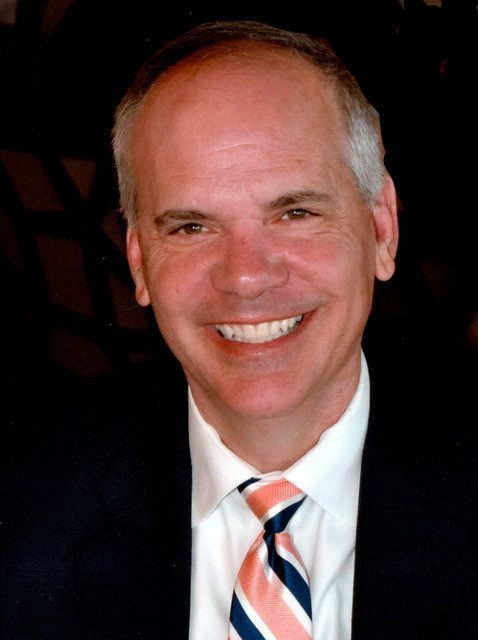
Frank Colinns was named senior defense advisor for the Shipbuilders Council of America, the association announced in a Dec. 2 release. SHIPBUILDERS COUNCIL OF AMERICA

WASHINGTON — The Shipbuilders Council of America (SCA), the national association representing the U.S. shipbuilding, maintenance and repair industry, selected Frank Collins as senior defense advisor, overseeing the organization’s national ship repair and security, as well as the industry workforce development and education initiatives, SCA said in a Dec. 2 release.  

Frank Collins is an accomplished strategic business consultant with over 36 years of public and private sector experience in the ship repair industry. Collins served as chief executive officer of United States Marine Preservation, was a principal government relations representative for Ship Repair at BAE Systems Ship Repair, and was senior vice president at the United States Marine Repair, where he sat on the Executive Operating Committee. Collins also served as a vice president of the Carlyle Management Group (CMG), and previously spent 13 years working on Capitol Hill as a chief of staff for a member of the Defense Appropriations Subcommittee and as district director for a Member who served on and later chaired the House Armed Services Committee. 

“Now more than ever, it is critical that our armed forces have the vessels they need to complete their missions safely and effectively, and SCA will play a critical role in ensuring our U.S. yards are delivering for the country. I am excited to join the dynamic SCA team, and work closely with shipyards across the U.S. on these important issues,” said Mr. Collins.  

“Continued geopolitical issues have demonstrated the need for the U.S. to build and maintain a strong maritime fleet in times of conflict and in times of peace. Frank’s nearly four decades of experience working in Naval operations and national security policy will be critical in advocating on behalf of our industry,” said SCA President Matthew Paxton. “We are honored for Frank to come aboard the SCA team and provide his unique insight on national ship repair and workforce development.” 

Capt. Joe O’Conor (ret.), the current senior defense advisor for SCA, is retiring from his position after serving at SCA since 2017. 

“We are tremendously excited to welcome Frank to our association and his decades of expertise — from both the private and public sector — that will serve our more than 82 shipyards and 87 partner organizations,” said SCA Chairman and President of Bollinger Shipyards, Ben Bordelon. “As we welcome Frank, our entire SCA board of directors and members from coast to coast will also miss the knowledge, advice and friendship of Joe O’Conor. On behalf of the entire Association, we thank Joe for his years of dedicated service to the nation and to our industry, and we offer our deepest well wishes as he sets sail on his next voyage into retirement.  

Mr. Paxton continued the well wishes for retirement to Captain O’Conor, saying, “Joe has been a tremendous leader, colleague and friend throughout his dedicated service in the Navy and as a public and civil servant. We will miss his leadership in our association, but we hope Joe enjoys fair winds and following seas in his retirement.” 

Throughout his distinguished career, Captain O’Conor served a wide range of duty assignments in the Navy including commanding the USS O’Bannon (DD-987) and pre-commissioning Executive Officer of USS Monterey (CG 61), among numerous high-level operations of other ships and staff. He also served several tours in Washington, DC as Chief of Naval Operations Staff in the Pentagon as well as a Congressional Liaison Officer for the Navy on Capitol Hill. 


Vigor Begins Maintenance Work on Destroyer USS John Paul Jones

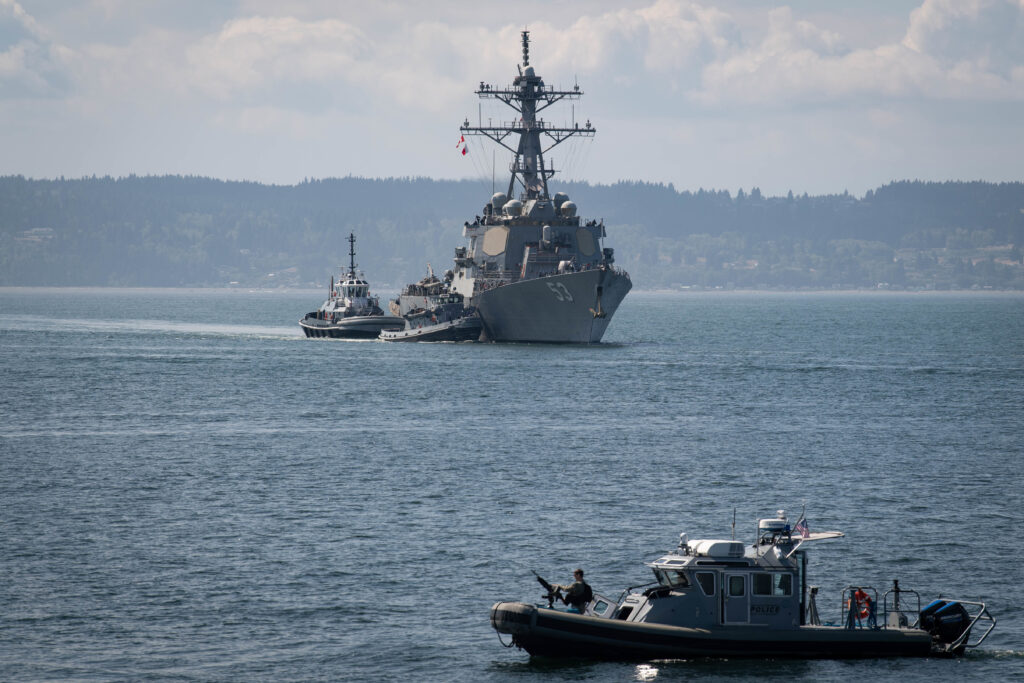
The Arleigh Burke-class guided-missile destroyer USS John Paul Jones (DDG 53) arrives to its new homeport at Naval Station Everett, Washington, Aug. 23, 2021. U.S NAVY / Mass Communication Specialist 2nd Class Aranza Valdez

SEATTLE, Wash. — Vigor, a Titan company, has been awarded a $131 million U.S. Navy contract to complete a docking selected restricted availability (DSRA) on USS John Paul Jones (DDG 53) at Harbor Island in Seattle, the company said in a Dec. 1 release. The ship arrived at Harbor Island on Nov. 4, becoming the fourth U.S. Navy vessel currently undergoing maintenance at the Seattle shipyard.  

“We are excited to welcome USS John Paul Jones to Harbor Island, where our skilled workers will offer excellent service in support of the U.S. Navy,” said Adam Beck, executive vice president of Ship Repair at Vigor. “Vigor is proud to have built a reputation of completing challenging availabilities safely and with excellent quality. We are grateful the Navy continues to choose our shipyards for this critical work.”  

The DSRA will consist of underwater hull preservation, propulsion overhaul, structural work, valve overhaul, sonar work, deck preservation and significant modifications and alterations. The project will employ more than 600 skilled workers during its year-long stay at Harbor Island. 

In addition to USS John Paul Jones, USS Chosin (CG 65), USS Omaha (LCS 12) and USS Cape St. George (CG 71) are currently undergoing maintenance at Harbor Island. This is the first time since Vigor began operating the Harbor Island shipyard in 2011 that four U.S. Navy ships have been onsite undergoing maintenance concurrently. Additionally, USS Tulsa (LCS 16) has recently arrived at Vigor’s Swan Island shipyard in Portland, Oregon, while work commenced earlier this year on USS Michael Murphy (DDG 112) at Pearl Harbor Naval Shipyard.  

“Vigor’s deep relationship with the U.S. Navy supports hundreds of jobs across the Pacific Northwest, Alaska and Hawaii,” Beck said. “We are grateful for the continued opportunity to support our national defense, and our skilled workers look forward to showing our standard of excellence in our work. Not only do Vigor employees consistently perform tremendous work, they do so while making Vigor shipyards among the safest in the industry.”


Marine Corps Adds Cherry Point Squadron to F-35B Operators

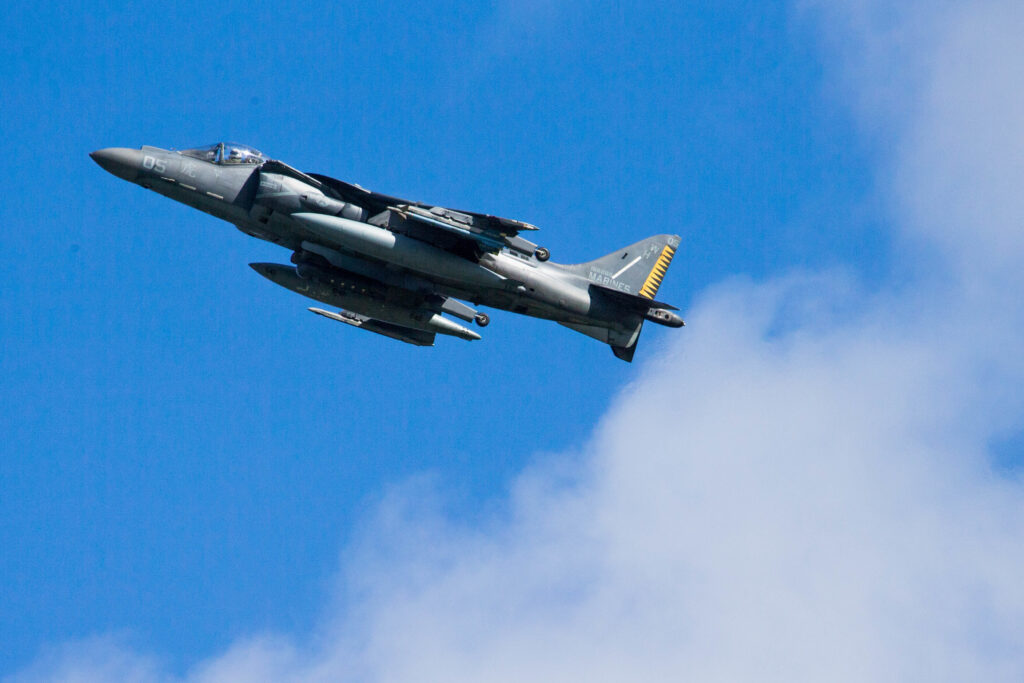
A U.S. Marine Corps AV-8B Harrier assigned to Marine Attack Squadron 542 flies over Bodo, Norway during Fjord Fury, June 6, 2018. U.S. MARINE CORPS / Lance Cpl. Jailine L. Martinez

ARLINGTON, Va. — The Marine Corp is converting another AV-8B Harrier II attack squadron to F-35B Lightning II strike fighters, the first F-3B fleet squadron to be based on the East Coast. 

Marine Attack Squadron 542 (VMA-542) — the Tigers — was re-designated Marine Fighter Attack Squadron 542 (VMFA-542) in ceremonies held at the squadron’s base at Marine Corps Air Station Cherry Point, North Carolina, as it retires its last Harriers in favor of the Lightning II. The squadron is scheduled to be operational with its F-35Bs by next summer. 

VMA-542’s last detachment of Harriers deployed to the Baltic Sea in 2022 on board USS Kearsarge and operated for a period from Estonia in during the Russian invasion of Ukraine. 

With the transition of VMFA-542, the only two AV-8B squadrons, VMA-223 and VMA-231, both based at Cherry Point, will remain flying in the Marine Corps. The last AV-8Bs are scheduled for retirement in fiscal 2027.  

VMA-542 activated in March 1942 during World War as Marine Night Fighter Squadron 542 and flew its F6F-3N Hellcats in combat in the Pacific, including the Battle of Okinawa. In 1948, the squadron was re-designated Marine All-Weather Fighter Squadron 542 and was equipped with F7F-3N/4N Tigercat fighters, which the squadron flew in the Korean War. In 1951, the squadron returned to the United States for transition to the F3D-2 Skyknight jet night fighter. In 1958 the squadron switched to the F4D-1 Skyray fighter.  

In 1963, the squadron was redesignated VMFA-542 as it upgraded to the F-4B Phantom II. From July 15 until January 1970, the Tigers flew combat missions over Southeast Asia during the Vietnam War. The squadron was de-activated on June 30, 1970, but re-activated on Jan. 12, 1972, as the second AV-8A Harrier squadron. In May 1986, the Tigers completed transition to the AV-8B Harrier II. 

With the Harrier II, VMA-542 participated in combat operations such as Operation Desert Shield and Desert Storm in Southwest Asia, Operation Noble Anvil in Kosovo, Operation Iraqi Freedom in Iraq, Operation Enduring Freedom in Afghanistan, Operation Odyssey Dawn in Libya, Operation Odyssey Lightning in Libya, Operation Inherent Resolve in Afghanistan, as well as deployments in support of multiple Marine Expeditionary Units, according to 1st Lt. Hudson Sadler of the 2nd Marine Aircraft Wing.


HII Delivers Destroyer Lenah Sutcliffe Higbee to U.S. Navy

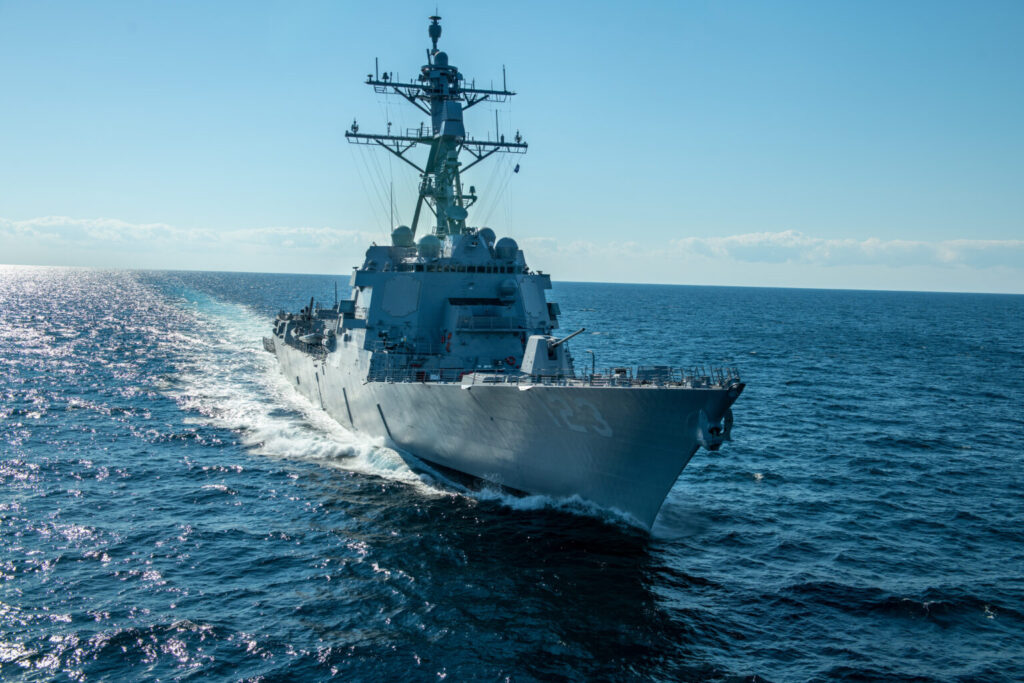
Arleigh Burke-class guided missile destroyer Lenah Sutcliffe Higbee HII

PASCAGOULA, Miss. — HII’s Ingalls Shipbuilding division delivered the Arleigh Burke-class guided missile destroyer Lenah Sutcliffe Higbee (DDG 123) to the U.S. Navy Dec. 1, the company said in a release. Delivery of DDG 123 represents the official transfer of the ship from the shipbuilder to the Navy. 

“Delivering an incredibly capable finished ship to the Navy is always an important event for our Ingalls team,” said Kari Wilkinson, president of Ingalls Shipbuilding. “We are absolutely committed to the work that we do for our customers, communities and country.” 

Lenah Sutcliffe Higbee is the 34th Arleigh Burke-class destroyer Ingalls has delivered to the Navy and will be the final Flight IIA ship built at Ingalls as the Navy transitions to Flight III destroyers. Ingalls currently has in production the future Arleigh Burke-class Flight III destroyers Jack H. Lucas (DDG 125), Ted Stevens (DDG 128), Jeremiah Denton (DDG 129) and George M. Neal (DDG 131). 

Arleigh Burke-class destroyers are highly capable, multi-mission ships that can conduct a variety of operations, from peacetime presence and crisis management to sea control and power projection, all in support of the national defense strategy. Guided missile destroyers are capable of simultaneously fighting air, surface and subsurface battles. These ships contain a myriad of offensive and defensive weapons designed to support maritime defense needs well into the 21st century. 

DDG 123 is named to honor Lenah Sutcliffe Higbee, a Navy nurse and first woman to receive the Navy Cross for her heroic actions during World War I. Higbee joined the Navy in October 1908 as part of the newly established Navy Nurse Corps, a group of women who would become known as “The Sacred Twenty,” and became the second superintendent of the Navy Nurse Corps in January 1911. The ship’s motto truly reflects the heritage of this naval hero — Bellatrix illa, meaning “she is a warrior.”


Amphibious Assault Ship USS Tripoli Returns Home from Maiden Deployment

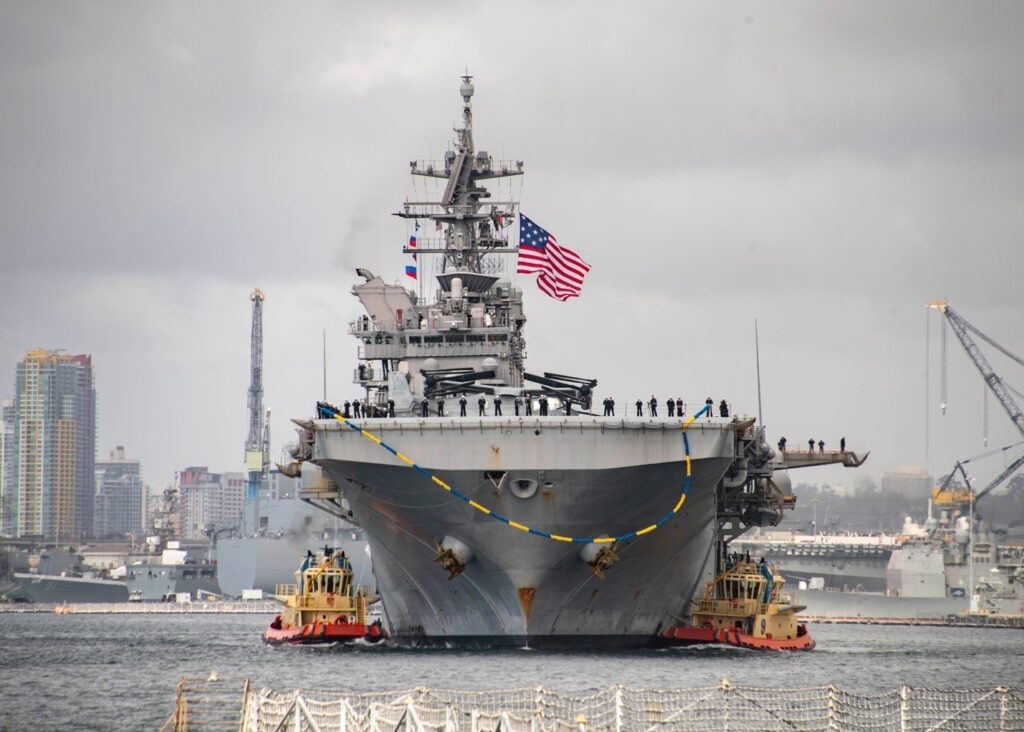
Amphibious assault carrier USS Tripoli (LHA 7) transits San Diego Harbor as the ship returns to homeport, Nov. 29, 2022. Tripoli returned to Naval Base San Diego following its initial deployment to the U.S. 3rd and 7th Fleets in support of a free and open Indo-Pacific. U.S. NAVY / Mass communication Specialist 2nd Class Brett McMinoway

SAN DIEGO — USS Tripoli’s deployment to the U.S. 3rd and 7th Fleet areas of operations was particularly significant for its diplomatic and military engagements with regional partners and Allies, as well as successful integration with the 31st Marine Expeditionary Unit (MEU) to support maritime security operations, theater security cooperation, crisis response and maintaining a forward Navy-Marine Corps presence, Expeditionary Strike Group Three said in a Nov. 30 release. 

“I am proud of Tripoli for a successful first deployment,” said Rear Adm. James Kirk, commander, Expeditionary Strike Group (ESG) 3. “The ship and crew are on the leading edge, setting the example and testing the limits of the assault ship. LHAs are designed to support the future of the Marine Corps Air Combat Element, and Tripoli has done just that. I am excited to see what else they can bring to the fight.” 
 
The U.S. Marine Corps embarked 16 F-35Bs aboard Tripoli, which flew missions in support of exercises Valiant Shield 22 and Noble Fusion. The Navy and Marine Corps team seamlessly integrated to complete training and certification exercises before joining the Armed Forces of the Philippines for bilateral exercise Kamandag 2022. Overall, the crew completed 2,052 hours of flight operations and traveled 40,303 nautical miles during exercise support. Tripoli operated alongside other partners and Allies throughout the Indo-Pacific during the deployment, including Japan and the Republic of Singapore. Port calls included stops in Tasmania, Australia, Japan, Singapore and the Philippines. 
 
“The Sailors and Marines aboard Tripoli went above and beyond during this deployment to demonstrate the unique capabilities of this ship,” said Capt. John C. Kiefaber, Tripoli’s commanding officer. “Whether it was launching and recovering aircraft at night, acting as a base of operations for the 31st Marine Expeditionary Unit to conduct operations ashore or serving as an instrument of diplomacy to our ally and partner nations, the crew performed their duties professionally and demonstrated why they are the Navy’s greatest asset. I couldn’t be more proud.” 
 
During the deployment, 140 Tripoli Sailors advanced to the next highest paygrade. The crew also excelled at earning individual qualifications; more than 167 Sailors earned their Enlisted Surface Warfare Specialist (ESWS) qualification, 192 Sailors earned their Enlisted Air Warfare Specialist (EAWS) qualification and 3 Sailors earned their Enlisted Information Warfare Specialist (EIWS) qualification, a new program for Tripoli. In the Wardroom, 12 officers earned their Surface Warfare Officer qualification, three officers earned their Surface Warfare Supply Corps Officer qualification, two officers earned their Naval Aviation Supply Officer qualification, four officers earned their Surface Warfare Medical Department Officer qualification and 16 officers earned their Officer of the Deck (Underway) qualification. 
 
“A Sailor earning their primary warfare pin is a great way for them to better themselves and it’s a milestone in their career, but also it’s important Sailors have a deeper understanding of the role that they and their shipmates play in the ship’s operations,” said Command Master Chief Matthew Logsdon. 
 
Tripoli, an America-class amphibious assault ship, commissioned in July 2020. The ship is homeported in San Diego and operates under ESG 3. Amphibious assault ships provide the ability to operate seamlessly and simultaneously on the sea, ashore and in the air allowing the integration of forces to be distributed more broadly, and increasing operational unpredictability anywhere around the globe by varying our domain, forces and timing. 
 
ESG 3 comprises four amphibious squadrons, 15 amphibious warships and eight naval support elements including approximately 18,000 active-duty and reserve Sailors and Marines. As deputy commander for Amphibious and Littoral Warfare, U.S. 3rd Fleet; Commander, ESG 3 also oversees Mine Countermeasures Group 3 and the 14 littoral combat ships and tow subordinate divisions under Littoral Combat Ship Squadron 1. ESG 3 is postured in support of U.S. 3rd Fleet as a globally responsive and scalable naval command element, capable of generating, deploying, and employing naval forces and formations for crisis and contingency response, forward presence, and major combat operations focusing on amphibious operations, humanitarian and disaster relief and support to defense civil authorities, and expeditionary logistics.


BAE Systems Demonstrates Effectiveness of APKWS Against Agile, High-Speed Military Drones

70mm rockets guided by APKWS guidance kits went 5 for 5 against agile, high-speed Class-2 unmanned aerial systems in testing. BAE SYSTEMS

HUDSON, N.H. — BAE Systems completed additional ground-to-air test firings to prove the effectiveness of 70mm rockets guided by APKWS guidance kits against Class-2 unmanned aerial systems (UAS) that weigh roughly 25-50 pounds and can travel at speeds exceeding 100 miles per hour, the company said in a Nov. 29 release. 

During the demonstration in Southern Arizona, five APKWS-guided counter-UAS rockets were fired from a containerized weapon system and destroyed all targets, including fast-moving drones. The test results further demonstrate APKWS guidance kits’ ability to enable low-cost, precision strikes against airborne threats. 

“Militarized drones are becoming more prevalent in conflicts around the world, and we’re giving our customers an efficient way to counter them without wasting expensive missiles,” said Greg Procopio, director of Precision Guidance and Sensing Solutions at BAE Systems. “Our tests demonstrate that APKWS guidance kits have the flexibility to engage a variety of targets to meet the evolving mission needs of the warfighter.” 

The 70mm rockets can destroy Class-2 aerial drones by combining standard motors and warheads with APKWS guidance kits and proven proximity/point-detonation fuzes. The resulting precision munition is a low-cost, supersonic, lock-on-after-launch strike weapon with a large 10-pound warhead that can destroy large drones in a matter of seconds with or without direct contact. 

Combat-proven APKWS-guided rockets are highly effective against a variety of soft and armored stationary and moving targets. They can be fired by many different platforms, including jets, helicopters, trucks, boats and weapon stations, and stowed APKWS guidance kits protect seeker optics from adjacent rocket fire, unlike nose-mounted seeker optics. APKWS guidance kits are the only U.S. government program of record for 70mm laser-guided rockets. The kits are available to all U.S. armed forces, as well as U.S. allies via Foreign Military Sales. 

APKWS guidance kits are produced at BAE Systems manufacturing facilities in Hudson, New Hampshire and Austin, Texas.


SeeByte to Extend U.S. Navy Autonomous Systems and Machine Learning Capability

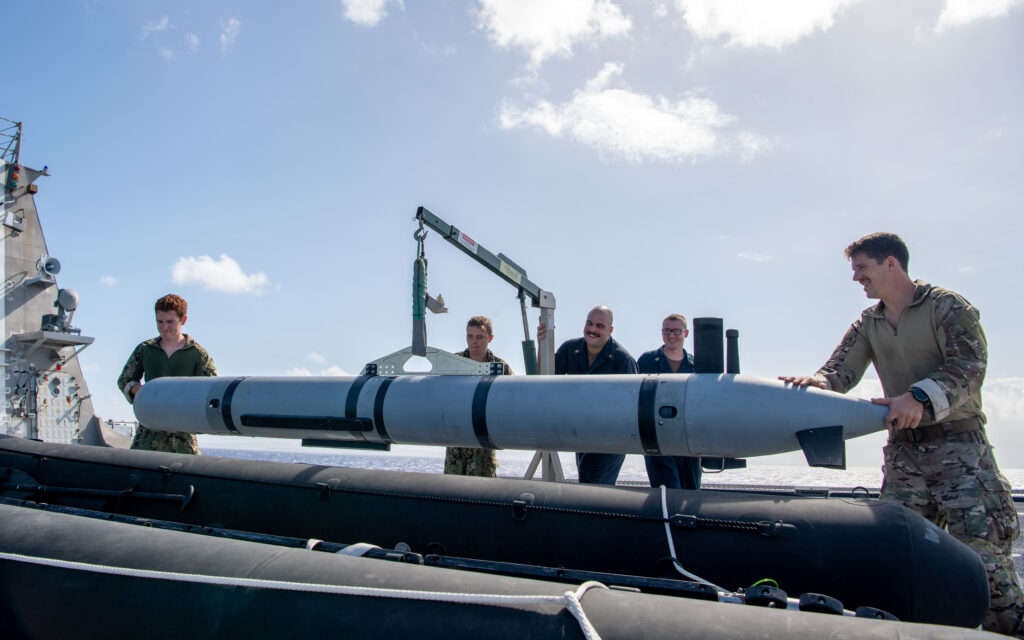
Sailors assigned to the Independence-variant littoral combat ship USS Charleston (LCS 18) and Explosive Ordnance Disposal Mobile Unit 5 transport a simulated Mark 18 Mod 2 Kingfish unmanned underwater vehicle during a mine countermeasures exercise. U.S. NAVY / Mass Communication Specialist 2nd Class Ryan M. Breeden

EDINBURGH — SeeByte Ltd, a developer of smart software solutions for uncrewed maritime systems, has been awarded an indefinite-delivery/indefinite-quantity (IDIQ) contract to support the U.S. Navy’s Mk18 Uncrewed Underwater Vehicle Family of Systems program, the company announced in a Nov. 29 release. 

The awarded IDIQ has a total potential value of $87 million and a duration of up to 10 years. Under this contract, SeeByte will provide engineering, technical support, training and simulation services including upgrades to SeeByte’s Mission-Level Autonomy system, Neptune, development of Automatic Target Recognition modules and a bespoke training and simulation toolkit (Unmanned Systems Simulator). 

The U.S. Navy uses the Mk18 Mod 1 Swordfish and Mk1 Mod 2 Kingfish UUVs for mine countermeasures.