USS Gerald R. Ford Joins Allies for Exercise Silent Wolverine
The USS Gerald R. Ford (CVN 78) steams in the Atlantic Ocean in formation with the German frigate FGS Hessen, Ticonderoga-class guided-missile cruiser USS Normandy, Danish frigate HDMS Peter Willemoes, Canadian frigate HMCS Montreal, Arleigh Burke-class guided-missile destroyer USS Thomas Hudner, Spanish Armada frigate Álvaro de Bazán, Dutch frigate HNLMS De Zeven Provincien, French frigate FS Chevalier Paul, Dutch frigate HNLMS Van Amstel and Arleigh Burke-class guided-missile destroyer USS McFaul, Nov. 7. U.S. NAVY / Mass Communication Specialist 3rd Class Jacob Mattingly
ATLANTIC OCEAN — USS Gerald R. Ford (CVN 78), the U.S. Navy’s newest and most advanced aircraft carrier, joined six NATO allies for exercise Silent Wolverine in the Eastern Atlantic Ocean on Nov. 8, U.S. Naval Forces Europe and Africa Public Affairs said Nov. 9.
Silent Wolverine tests the first-in-class aircraft carrier capabilities through integrated high-end naval warfare scenarios alongside participating NATO allies. Exercise participants include Canada, Denmark, Germany, France, the Netherlands, Spain, and the United States.
“The challenges of tomorrow are upon us — in the here and now. Silent Wolverine demonstrates our commitment to deepening interoperability with our allies and partners, while testing the advanced, cutting-edge warfighting capabilities of the Ford-class aircraft carrier in a highly relevant operational environment,” said Adm. Stuart B. Munsch, commander, U.S. Naval Forces Europe and Africa, and Allied Joint Force Command Naples.
Gerald R. Ford is a first-in-class U.S. aircraft carrier that incorporates 23 new technologies comprised of significant advances in propulsion, power generation, ordnance handling and aircraft launch systems. The Ford-class aircraft carrier generates an increased aircraft launch and recovery capability with a 20 percent smaller crew than Nimitz-class aircraft carriers.
“We are honored to be sailing alongside some of the most capable navies in the world during our first deployment as we increase our proficiencies and demonstrate the warfighting capabilities that Ford brings to the fight,” said Rear Adm. Greg Huffman, commander, Carrier Strike Group 12.
The Gerald R. Ford CSG consists of the Ford-class aircraft carrier USS Gerald R. Ford (CVN 78), Ticonderoga-class guided-missile cruiser USS Normandy (CG 60), and Arleigh Burke-class guided missile destroyers USS McFaul (DDG 74), and USS Thomas Hudner (DDG 116). The Gerald R. Ford CSG is conducting their first deployment to the U.S. European Command area of responsibility to exercise with allies.
USCGC Dependable Returns Home after Month-Long Patrol in Florida Straits
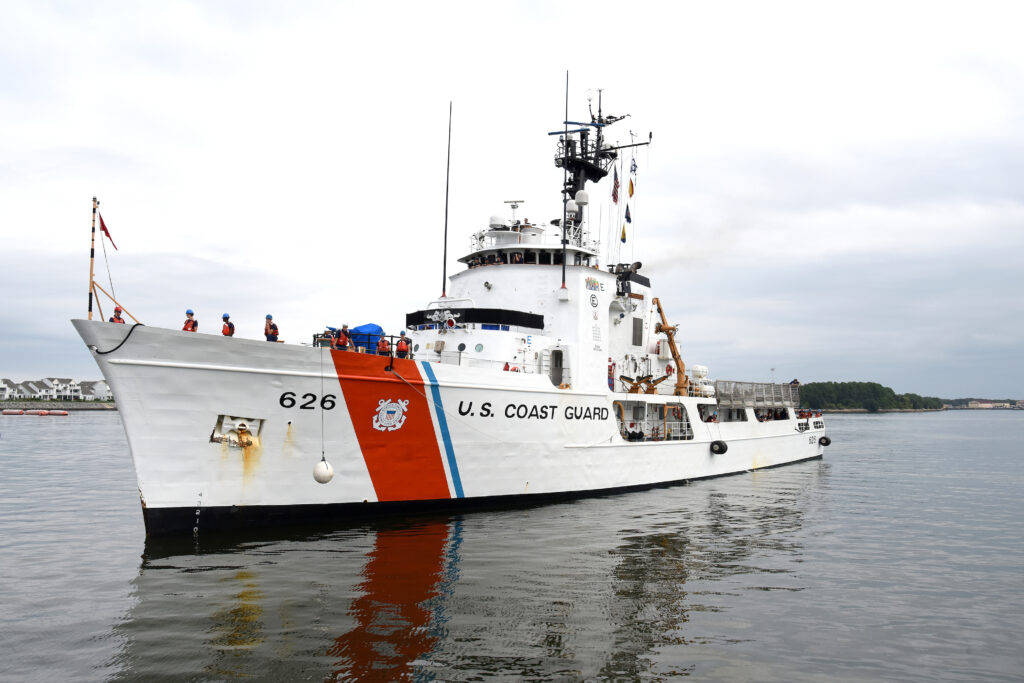
The Coast Guard Cutter Dependable transits toward the pier at Joint Expeditionary Base Little Creek, Fort Story in Virginia Beach, Virginia, Sept. 27, 2016. U.S. COAST GUARD / Petty Officer 1st Class Melissa Leake
VIRGINIA BEACH, Va. — The crew of the U.S. Coast Guard Cutter Dependable (WMEC 626) returned to their homeport in Virginia Beach, Nov. 5, following a 29-day patrol in the Florida Straits, the Coast Guard Atlantic Area said in a release.
In support of the Coast Guard’s 7th District, Dependable’s crew conducted migrant interdiction operations, collaborating with numerous Coast Guard assets and Department of Homeland Security boats and aircraft to detect, deter and intercept unsafe and illegal ventures bound for the United States.
During the patrol, Dependable’s crew assisted with the interdiction of 193 migrants and cared for a total of 297 migrants that were interdicted by various Coast Guard and other law enforcement entities working within the Florida Straits.
“The crew began preparing for this Florida Straits patrol back in July, including qualifying over 50 crewmembers to stand watch and care for migrants embarked on board the cutter,” said Lt. Cmdr. Dana Prefer, executive officer on board Dependable. “All of the training and preparation paid off as it was truly a team effort to interdict, process and care for almost 300 migrants throughout our patrol.”
Dependable is a 210-foot Reliance-class medium-endurance cutter with a crew of 67. The cutter’s primary missions include counterdrug operations, migrant interdiction, enforcement of federal fishery laws and search and rescue in support of Coast Guard operations throughout the Western Hemisphere.
Coast Guard Cutter Active Returns to Port Angeles after Eastern Pacific Patrol
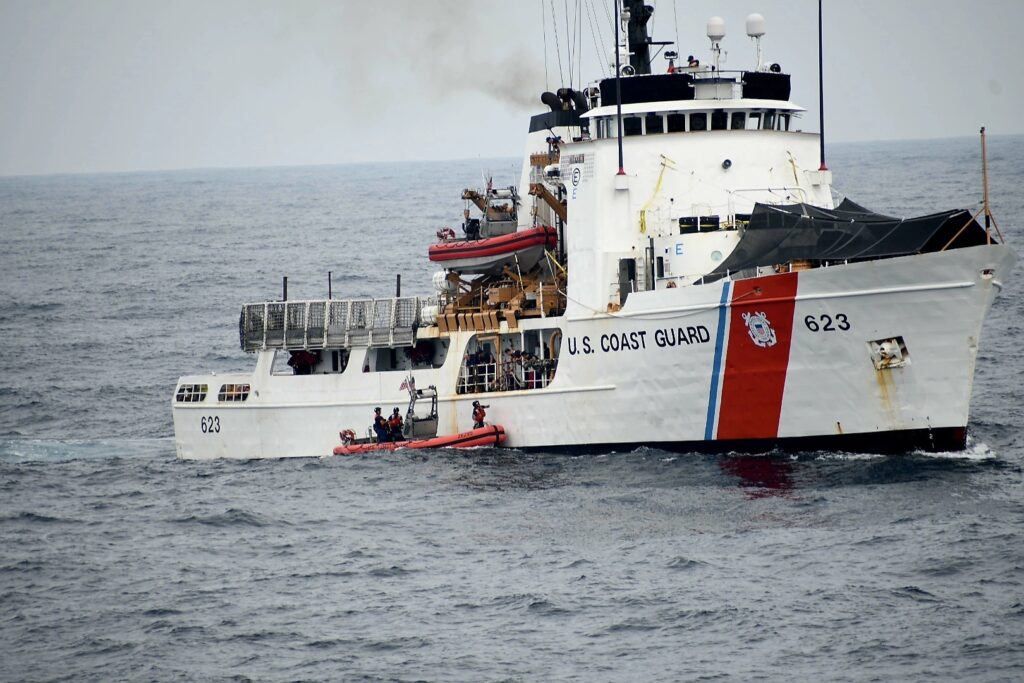
Coast Guard Cutter Active (WMEC 618) crewmembers aboard the cutter’s 26-foot Small Boat pull alongside the Coast Guard Cutter Steadfast (WMEC 623) to transfer parts and provisions while the cutters patrol the Eastern Pacific Ocean, Sept. 20, 2022. U.S. COAST GUARD / Chief Petty Officer Shane Sexton
PORT ANGELES, Wash. — The Coast Guard Cutter Active (WMEC 618) and crew returned to their homeport Friday after a 65-day patrol in international waters of the Eastern Pacific Ocean near Central and South America, the Coast Guard Pacific Area said in a Nov. 5 release.
Coast Guard cutters operating in the Eastern Pacific Ocean often collaborate to prevent and deter Transnational Criminal Organizations (TCOs) from successfully transporting narcotics destined for the United States.
During this patrol, the Active’s crew rendezvoused with Coast Guard Cutters Steadfast (WMEC 623) and Bertholf (WMSL 750) to conduct joint operations. Active’s crew also partnered with maritime patrol aircrews from Joint Interagency Task Force-South (JIATF-S) who aid in the detection of ships suspected of drug smuggling.
Crewmembers aboard Active transited more than 10,000 nautical miles from the Strait of Juan de Fuca to the southern hemisphere during the patrol. The crew sighted an abundance of marine wildlife throughout the patrol, and rescued sea turtles trapped in fishing gear.
The Active’s crew departed Port Angeles Sept.1 and transited to San Diego for a logistics stop. While in San Diego, the crew completed unscheduled repairs, enabling the Active to continue its southbound journey along the coast of Mexico and Central America in pursuit of illegal drug smuggling vessels.
“The Active crew performed superbly in every assigned mission,” said Cmdr. Brian Tesson, commanding officer of the Active. “They were presented with various challenges from engineering casualties to abundant tropical weather systems. This crew consistently stepped up with a can-do attitude, ingenuity and fortitude in the face of adversity, defining what it means to work aboard the ‘Li’l Tough Guy.’ Our success as a team is due in no small part to the families and support network at home who enable us to focus on the mission; for them I am most grateful.”
The Active and other Coast Guard cutters frequently patrol this 42-million square mile region with the assistance of JIATF-S to interdict and disrupt drug shipments, thereby reducing the flow of drugs and disrupting the TCOs that traffic them. JIATF-S is a multiagency organization that coordinates with international partners in detecting and monitoring illicit narcotics trafficking and other organized crime flowing from Latin America to the United States.
The Active, a 57-year-old, 210-foot medium endurance cutter nicknamed “Li’l Tough Guy” is equipped with two deployable small boats and a flight deck capable of conducting underway flight operations with Coast Guard MH-65 Dolphin helicopter aircrews.
HII Announces REMUS 620 Next-Generation, Submarine-Deployable Medium UUV
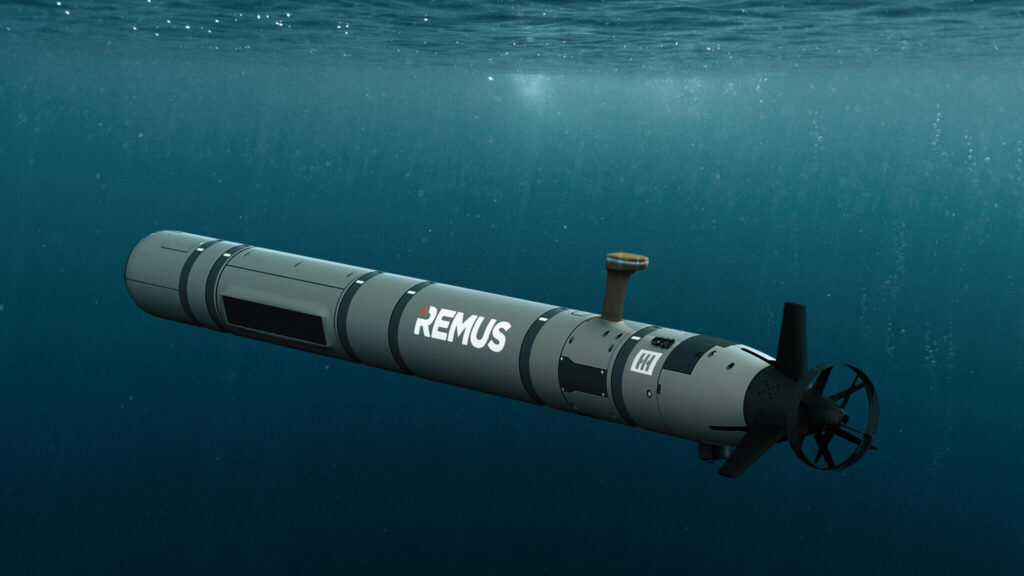
HII’s REMUS 620 HII
ARLINGTON, Va. — HII’s Mission Technologies division has developed a new generation of medium unmanned underwater vehicle (MUUV) — the REMUS 620 — that leverages advances incorporated in its smaller REMUS 300 UUV, the company said in a Nov. 7 press conference and news release.
The REMUS 620 is based on the design of the REMUS 300, which has been selected by the U.S. Navy as its new Lionfish small UUV. The REMUS 620 will feature longer range and endurance, capable of a battery endurance of up to 110 hours and a range of 275 nautical miles. With a synthetic-aperture sonar installed, the REMUS 620 will have a battery life of 78 hours and a range of 200 nautical miles. The MUUV can sprint up at 8 knots and will have a navigation accuracy of 0.1% of distance travelled, said Duane Fotheringham, president of Mission Technologies’ Unmanned Systems business group.
The 12 ¾-inch-diameter REMUS 620 has the same size and weight as the REMUS 600, of which the company has delivered 175 to customers in the United States, United Kingdom, Australia and Japan. The REMUS 600 is the basis for the U.S. Navy’s MUUVs currently used by mine countermeasures squadrons (Mk18 Mod 2 Kingfish), Naval Oceanographic Office (Littoral Battleship Sensing-Autonomous Undersea Vehicle) and submarine force (LBS-Razorback). The REMUS 620 is designed for such missions as mine countermeasures, hydrographic surveys, intelligence collection, surveillance, cyber warfare and electronic warfare.
The REMUS 620, developed with HII’s internal funding, features modern core electronics and navigation and communications systems and modular, open architecture interfaces to accommodate wet or dry payloads, including towed payloads and custom payloads developed by customers. The UUV includes HII’s Odyssey suite of advanced autonomy solutions for intelligent, robotic platforms, including the Odyssey Mission Management Software.
Mission data can be offloaded from the UUV by a removable hard drive, WiFi and Iridium satellite link, with other options including line-of-sight RF, high-data rate transmission, acoustic modems, optical modems and plug-in ethernet, Fotheringham said.
The REMUS 620 features several interchangeable batteries that can be quickly exchanged for fully charged batteries.
The REMUS 620 can be deployed from submarines, surface combatants, amphibious warfare ships, small manned or unmanned craft and helicopters. The new UUV can also be a platform from which to launch small UUVs or UAVs.
Fotheringham said that the U.S. Navy has said it has launched and recovered REMUS 600 Razorbacks from the dry-deck shelters of submarines and out of torpedo tubes.
“Recently there has been quite a bit in the press about the Navy’s efforts for launch and recovery of UUVs back into the torpedo tubes,” he said. “Those stories indicated the Razorback vehicles are being tested with that capability of recovery back into a torpedo tube.”
He said the capability to recover UUVs back into a torpedo tube is being worked by Woods Hole Oceanographic Institution, where the REMUS technology originally was developed.
“That solution that [Woods Hole] is developing for torpedo tube recovery is also compatible with the REMUS 620,” Fotheringham said.
“Retaining a forward strategic advantage requires the ability to deliver a multitude of effects from under the sea,” Fotheringham said. “The REMUS 620 is the first medium UUV designed to accurately deliver this range of advanced above-and-below water effects at long range.”
“We are prototyping and building the first vehicle now,” Fotheringham said. “We expect the first vehicle to be completed and in the water in 2023 with customer delivery in late ’23 or early ‘24.”
He said HII was in discussions with the U.S. Navy about the REMUS 620 but was not free to offer details.
Senator Praises Bollinger Shipyards Acquisition of VT Halter Marine and ST Engineering Halter Marine Offshore
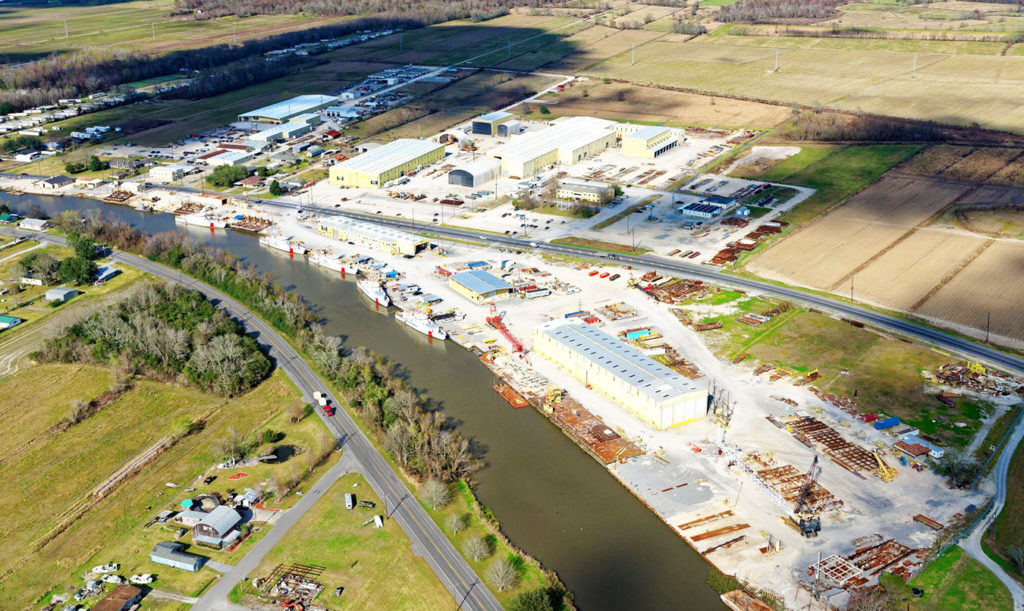
Aerial image of Bollinger’s shipyard at Lockport, Louisiana. BOLLINGER SHIPYARDS
TUPELO, Miss. — U.S. Senator Roger Wicker, R-Miss., a leading seapower advocate in the Senate, praised the the planned acquisition of VT Halter Marine Inc., and ST Engineering Halter Marine Offshore in Pascagoula, Miss., by Bollinger Shipyards, in a Nov. 7 statement.
“This is an exciting new chapter for shipbuilding in Mississippi. Bollinger Shipyards, and its leaders, bring a wealth of knowledge and experience in domestic shipbuilding,” Wicker said. “This new partnership will help Mississippi’s talented shipbuilders continue to produce world-class ships for our nation, including the Coast Guard Polar Security Cutter.”
Bollinger Shipyards, the largest privately owned and operated shipbuilder in the United States, announced Nov. 6 that it had entered into an agreement to acquire VT Halter Marine, Inc. and ST Engineering Halter Marine Offshore (“STEHMO”), together a leader in the design, engineering, construction, and repair of complex, state-of-the-art vessels for government and commercial customers, from parent company ST Engineering North America, a leading technology, defense and engineering group. The transaction expands Bollinger’s new construction and repair capacity and capabilities to better serve its key defense and commercial customers.
“For over 75 years, my family has been dedicated to providing our government and commercial customers with the highest levels of quality, support and service in the U.S. shipbuilding industry,” said Ben Bordelon, CEO and president of Bollinger Shipyards. “The addition of VT Halter Marine and STEHMO in Pascagoula, Mississippi, is strategic as it further strengthens our position in the industry and U.S. defense industrial base by allowing Bollinger to expand our footprint, capabilities and suite of innovative solutions that we can provide to our customers. From Day One, the Bollinger team will leverage our proven and best-in-class management team, operational excellence and existing capability to ongoing commercial and government programs, especially the Polar Security Cutter program.”
This acquisition creates expanded opportunities for Bollinger to better serve and deepen its relationships with its key defense and commercial customers with an increased capacity and footprint, improved efficiencies, enhanced economies of scale and access to a large skilled workforce, including increased engineering capacity. It also brings expanded capabilities for future programs, including an ACAT I program.
Bollinger’s acquisition increases the shipyard’s growing new construction and repair portfolio. All ongoing programs are to be conveyed with the transaction. Notably, the Polar Security Cutter (PSC) program for the U.S. Coast Guard and the Auxiliary Personnel Lighter-Small (APL(S)) program for the U.S. Navy. Given the proximity to Bollinger’s existing facilities, Bollinger will be able to support further efficiencies and resolution of any potential capacity constraints.
In addition to construction of the U.S. Coast Guard Sentinel-class Fast Response Cutter (FRC) program, Bollinger builds the Mine Countermeasures Unmanned Surface Vessel (MCM USV) and the Towing, Salvage and Rescue Ships (T-ATS) programs for the U.S. Navy, as well as the Regional-Class Research Vessel for the National Science Foundation and Oregon State University. Bollinger also has two active contracts with General Dynamics Electric Boat to build a 618-foot by 140-foot state-of-the-art Floating Dry Dock and a 496-foot by 95-foot Pontoon Launcher, both of which will support the construction and launching of the U.S. Navy’s Columbia-class ballistic-missile submarines. In addition, Bollinger is participating in industry studies for two government programs, including the U.S. Navy’s Large Unmanned Surface Vehicle (LUSV) program and the U.S. Navy’s Light Amphibious Warship (LAW) program.
Bordelon continued, “Bollinger takes great pride in being a major job creator in Louisiana. Today, we’re excited to grow and expand that legacy to Mississippi’s Gulf Coast. We have always said that our greatest strength has and continues to be our people. By combining our skilled workforces, we’ll ensure coastal Mississippi remains synonymous with defense shipbuilding and remains a major part of our industrial base.”
The acquisition includes 378 acres comprising two shipyards in Pascagoula and two dormant yards north of Pascagoula. The newly acquired yards will be renamed Bollinger Mississippi Shipbuilding and Bollinger Mississippi Repair. The Pascagoula facilities are strategically located with direct, deep-water access to the Gulf of Mexico and houses corporate office space, engineering, fabrication, warehousing and a foreign trade zone. The shipyard consists of 225,000 square feet of covered production area in the main fabrication assembly buildings. The facility is capable of producing Panamax-sized vessels up to 50,000 dead-weight tons and features an expanded 225.6-meter (740-foot) tilt-beam launch system.
Submarine USS Chicago Returns Home from Final Deployment
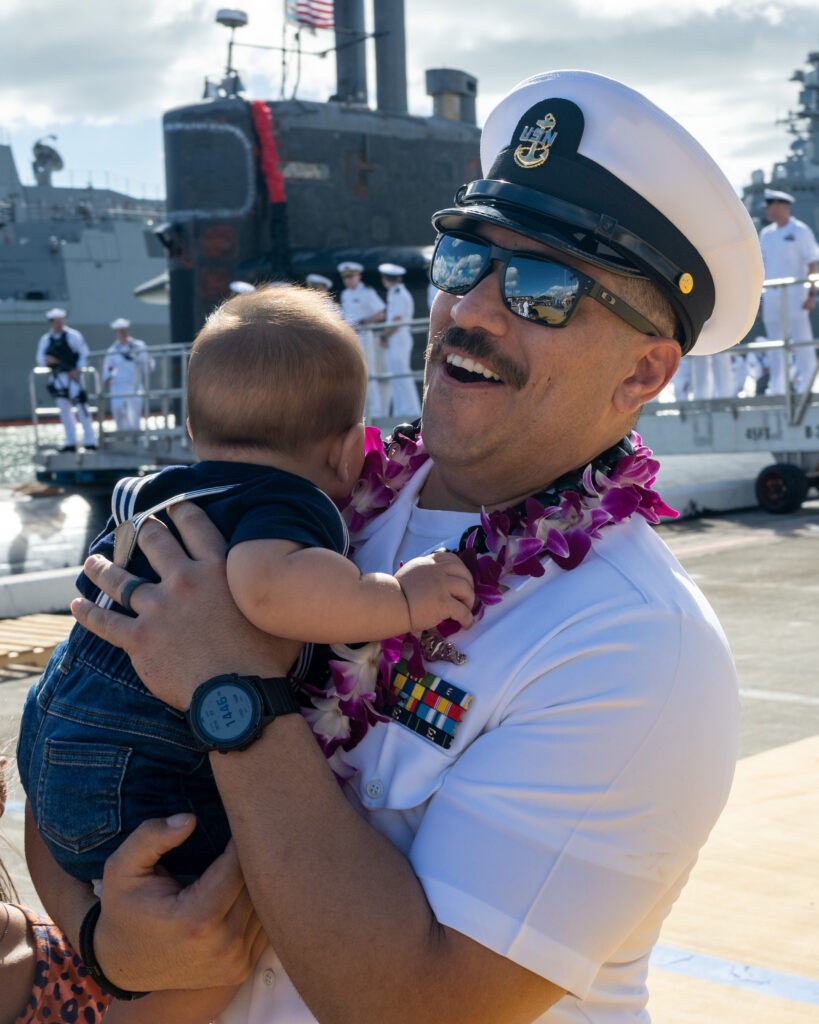
Chief Electronics Technician (Navigation) Antonio Vasquez, assigned to the Los Angeles-class fast-attack submarine USS Chicago (SSN 721) reunites with his family after the boat returns to Joint Base Pearl Harbor-Hickam from deployment in the U.S. 7th Fleet area of operations. U.S. NAVY / Electronics Technician 2nd Class Leland T. Hasty II
JOINT BASE PEARL HARBOR-HICKAM, Hawaii — The Los Angeles-class fast-attack submarine USS Chicago (SSN 721) returned to Joint Base Pearl Harbor-Hickam following a seven-month deployment, Nov. 2, 2022, commander, Submarine Force, U.S. Pacific Fleet, said in a Nov. 4 release.
It was the submarine’s final deployment before decommissioning, which is scheduled to begin in 2023 following 37 years of service.
Chicago departed Pearl Harbor March 28, 2022, for a regularly scheduled deployment, during which the submarine and its crew performed a full spectrum of operations, to include anti-submarine and anti-surface warfare in the Indo-Pacific region.
“I’m extremely proud of not only the Chicago Sailors but the Chicago families and supporters,” said Chicago’s commanding officer, Cmdr. Andrew Kopacz, from Hartford, Wisconsin. “Being gone from home is a challenge for the crew and we could not have remained focused on the mission without knowing our families were strong back at home. This crew demonstrated the fortitude, resiliency, and enthusiasm that make this country great. We are eager to reunite with our families and enjoy some down time in their company.”
Chicago’s crew trained to be combat-ready prior to departure and maintained those high standards throughout the deployment.
“The toughness and positive attitude displayed by the entire Chicago crew has been extraordinary,” said Master Chief Information Systems Technician (Submarines) Christopher Kyser, from Warner Robins, Georgia, Chicago’s Chief of the Boat. “The work put in by Chicago Sailors to maintain a presence at sea has been impressive. I couldn’t be more proud of the work our Sailors have put in over the last seven months to keep the oldest submarine in the force in top shape during her last deployment. Special thanks to all the families for keeping the home front secure and enabling us to accomplish our primary mission. None of this would be possible without your sacrifice.”
During the deployment, more than 50 Chicago Sailors became fully qualified in submarines, earning their submarine warfare specialist designation dolphins.
“The most memorable part of deployment has been seeing my junior Sailors qualify for their dolphins,” said Torpedoman’s Mate 1st Class Devon Schilling, from Sacramento, Calif. “I have been on board Chicago for five years, and I have never been more proud than I am now, seeing the boys I trained turn into men. I am always proud to gain a new brother or sister of the ‘fin.”
Chicago was commissioned Sept. 27, 1986. Chicago is the thirty-fourth Los Angeles-class submarine and the fourth U.S. Navy ship to be named for the city of Chicago, Illinois. It is 360 feet long with a beam of 33 feet.
USCGC Reliance Returns Home Following 67-Day Migrant-Interdiction Patrol
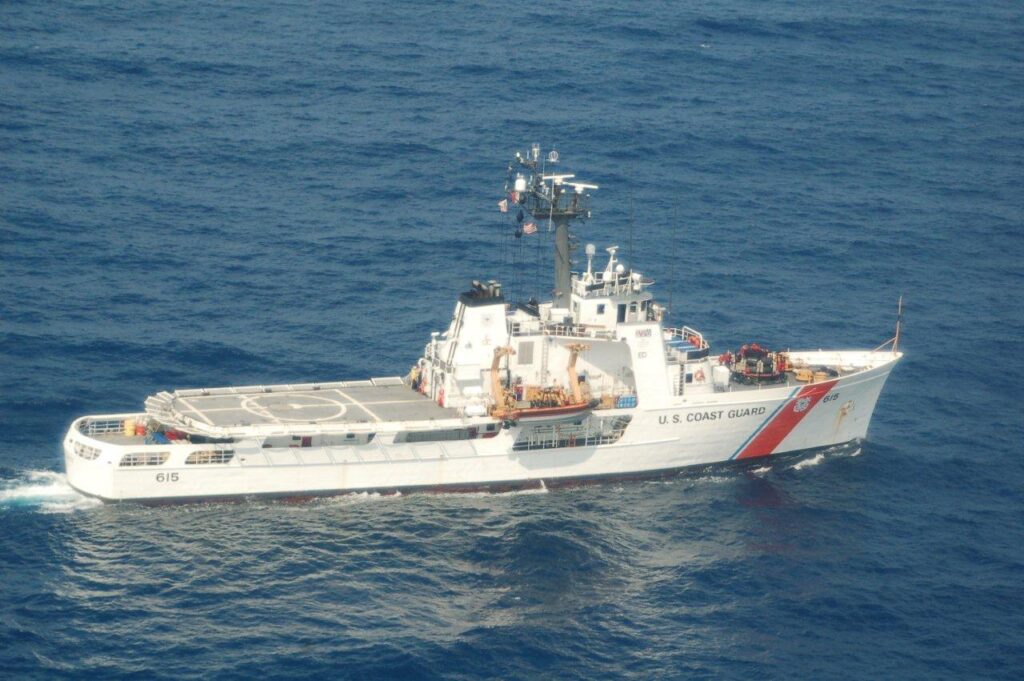
Coast Guard Cutter Reliance patrols the Western Caribbean in support of the Joint Interagency Task Force – South October 2014. U.S. COAST GUARD / Petty Officer 3rd Class Clinton McDonald
PENSACOLA, Fla. — The crew of U.S. Coast Guard Cutter Reliance (WMEC 615) returned to their homeport in Pensacola, Nov. 4, following a 67-day Caribbean Sea patrol.
During the patrol, Reliance’s crew collaborated with numerous Coast Guard assets and other Department of Homeland Security boats and aircraft to detect, deter and intercept unsafe and illegal ventures to the United States.
In support of the Coast Guard’s Seventh District, Reliance primarily patrolled the South Florida Straits, south of the Florida Keys and the Windward-passage, off the northwest coast of Haiti, contributing to the interdiction and care of 613 migrants and 13 detainees. Additionally, Reliance’s crew repatriated 120 migrants to Santiago, Cuba, marking the first visit by a U.S. warship to the port in more than 50 years.
“I am extremely pleased by this crew and proud to be a part of this team. Reliance departed homeport shorthanded and was immediately put to the test, performing especially high-tempo migrant interdiction operations. At all hours of day and night, the Reliance crew responded superbly, facilitating the safe care and repatriation of a historic surge of Cuban migrants while also completing qualification requirements and robust training exercises necessary following the summer transfer season,” said Cmdr. Brian Chapman, commanding officer of Reliance.
Reliance is a 210-foot medium-endurance cutter homeported in Pensacola with a crew of 77. The cutter’s primary missions are counter-drug operations, migrant interdiction, enforcement of federal fishery laws and search and rescue in support of Coast Guard operations throughout the Western Hemisphere.
Coast Guard Cutter Oliver Berry Conducts Bilateral Shiprider Boardings with Samoa
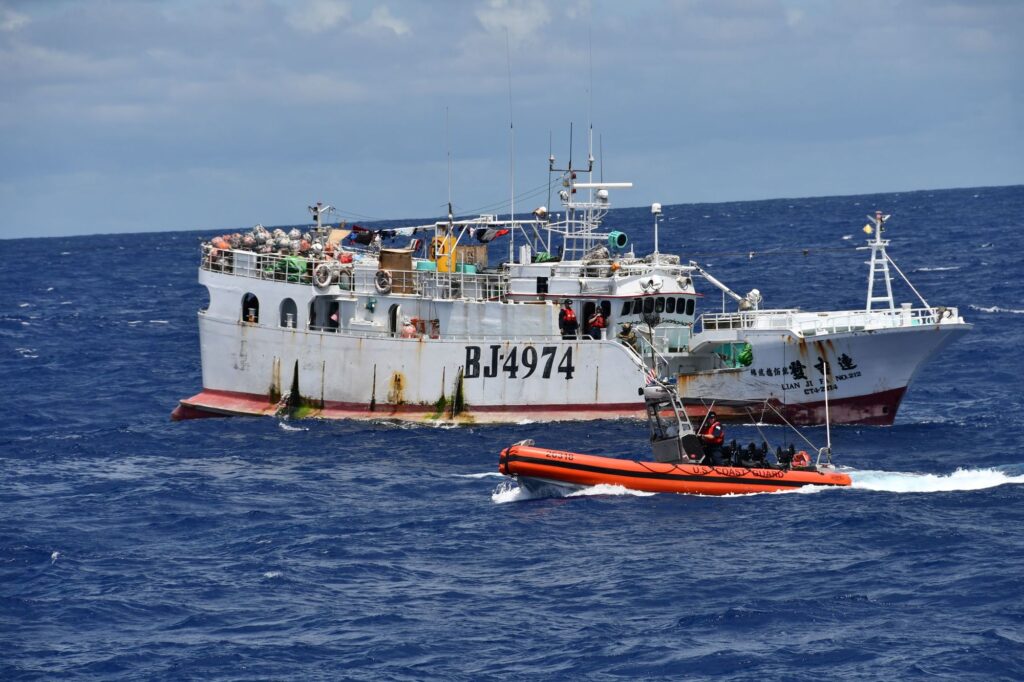
Crew members from the U.S. Coast Guard Cutter Oliver Berry board a foreign flagged fishing vessel. U.S. COAST GUARD
HONOLULU — The Coast Guard Cutter Oliver Berry (WPC 1124), a 154-foot Fast Response Cutter homeported in Honolulu, patrolled the Independent State of Samoa’s exclusive economic zone while partnering with Samoan Maritime Police and Fisheries Officers, where they executed four safety and living marine resources boardings on Samoan and foreign flagged fishing vessels in Samoan waters, identifying six violations, the Coast Guard 14th District said in a Nov. 4 release.
During their expeditionary patrol across Oceania, Oliver Berry’s crew is collaborating with partner governments like Samoa to conduct bilateral shiprider boardings to strengthen maritime domain awareness and resource security within their EEZs; an EEZ is the area of coastal water within a certain distance of a nation’s coastline to which the country claims exclusive rights for drilling, fishing and other economic ventures.
The U.S. Coast Guard employs 11 bilateral law enforcement agreements with Pacific Island Forum nations, including Samoa, to help ensure the nations’ maritime resource security and sovereignty. These programs highlight the shared commitment to ensuring security and freedom of navigation in the Pacific.
“Collaborating with our partners throughout Oceania is essential in ensuring a free and open Blue Pacific,” said Lt. Cmdr. Micah Howell, commanding officer of the Oliver Berry. “It is a privilege, and we are proud to support Samoa through dedicated partnership in the effort to maintain maritime governance and security.”
Oliver Berry’s crew also enjoyed a multitude of community engagements during their time in Samoa. These engagements included crew visits to the National University of Samoa Maritime School and Samoa’s Victim Support Camp, and a beach cleanup with staff from the U.S. Embassy, Peace Corps and Samoa Tourism Authority.
The crew also provided tours of Oliver Berry for the Maritime Division of the Ministry of Police, Prisons and Corrections Services, the Ministry of Works, Transport and Infrastructure, the Ministry of Agriculture and Fisheries, members of the media and students from the National University of Samoa Maritime School and St. Mary’s College.
Oliver Berry’s crew will continue patrolling the Blue Pacific across the high seas in support of Samoa, Tonga and Kiribati to combat illegal, unregulated fishing, demonstrating the United States Coast Guard’s enduring commitment to our partner nations throughout Oceania.
Navy Installs 3D Printer for Metal Parts on USS Bataan
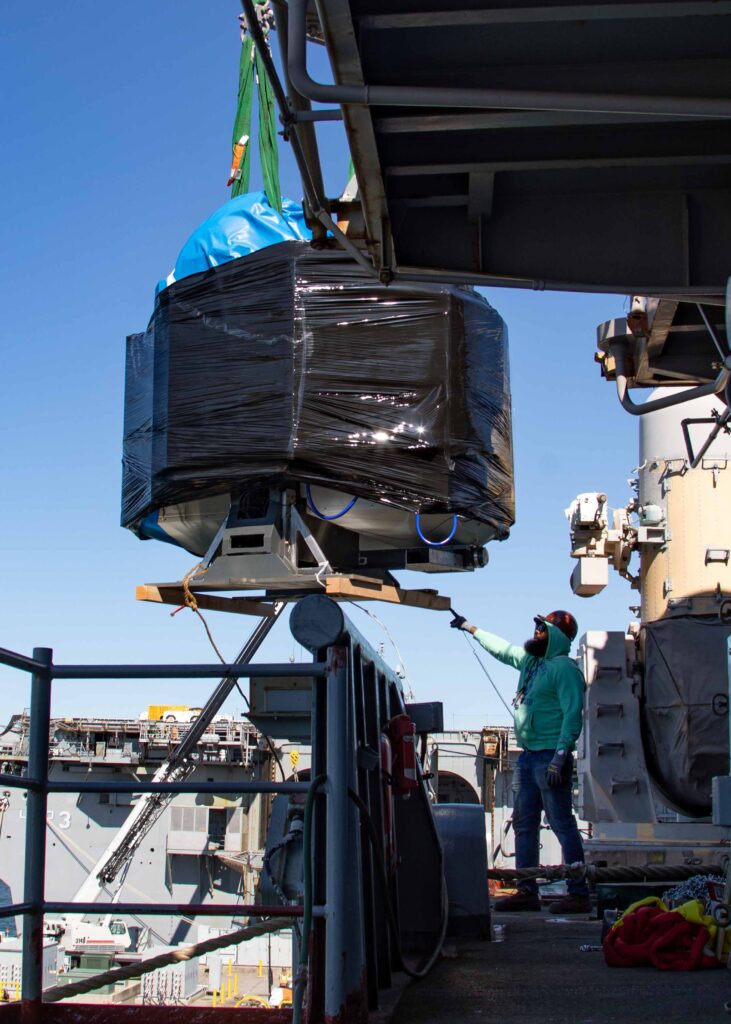
Kenya Latham, assigned to East Coast Repair, coordinates the on load of a three dimensional printer aboard the Wasp-class amphibious assault ship USS Bataan (LHD 5), Oct. 19, 2022. U.S. NAVY / Mass Communication Specialist 2nd Class Darren Newell
ARLINGTON, Va. — The U.S. Navy has installed a 3D printer capable of producing metal parts for ships on the amphibious ship USS Bataan (LHD 5) in an experiment that could be expanded to across the fleet, a Navy official told Seapower in an interview.
The Navy has already experimented with 3D-printing parts, but they have used polymer printers in the past. But since most of the parts that need replacing are metal, they have limited utility — hence the impetus for this test, said Jim Pluta, additive manufacturing program manager at Naval Sea Systems Command. The Navy completed installation of a metal 3D printer on the Bataan on Nov. 3.
“When sailors deploy forward and they’re out on a ship at sea and something breaks, that’s when you know you need a replacement part,” Pluta said. “Sometimes they have it on ship, and sometimes they don’t.”
As a result, if a part breaks and there is no replacement immediately available, the crew has to wait for a part to be delivered or has to make do until the ship returns to port.
“If there’s a failure of a smaller subcomponent, rather than order that larger assembly or larger system, they can print that smaller subcomponent that failed,” Pluta said. “They reverse engineer or design it using CAD [computer-aided design] and create a replacement part that maybe didn’t exist or existed only from the manufacturer. Instead, they print that part on demand and put it into the larger system, and it can be brought up to fully mission capable again.”
Pluta said the research and development into this system has been going on for about four years, starting with the polymer printers that are fairly inexpensive to install. But a 3D printer for metal has been the main goal, he said.
“Most everything aboard ship is made of metal and not plastic,” he said. “We’re looking at this as a fairly permanent installation.”
Pluta says it’s possible this technology will go on the entire fleet, although it is much better suited at the moment for larger ships like aircraft carriers and amphibious ships. But it could go on other vessels, such as submarines, as long as the Navy can find printers that can handle the shipboard motion, vibration and acceleration. Printers can also have a large footprint, so the space it takes up is also a factor.
Pluta said even if printers couldn’t be placed on every ship, there could be a model where a printer is shared among a carrier strike group that is underway, with a printer on one ship producing parts that are shared between the vessels.
“Ideally those larger vessels could take requests from ships that accompany it,” he said. “They’ve demonstrated that recently where we installed a printer on [aircraft carrier USS John C.] Stennis [CVN 74] and used the printer for prototyping with a polymer printer. So, they’ve demonstrated that capability.”
CNO Visits Republic of Korea; Meets with ROK Leadership and Sailors
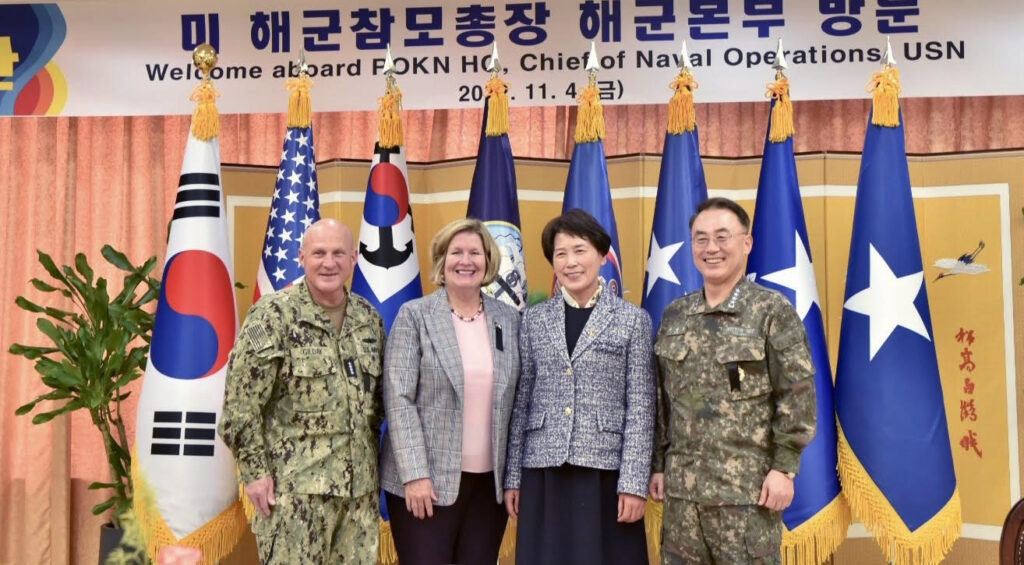
U.S. Chief of Naval Operations Adm. Mike Gilday poses for a photo with Chief of Naval Operations of the Republic of Korea Navy Adm. Lee, Jong-Ho, and their spouses while Gilday visited U.S. Navy Sailors in Busan, Republic of Korea (ROK), Nov. 3. U.S. NAVY / Cmdr. Courtney Hillson
BUSAN, Republic of Korea — Chief of Naval Operations (CNO) Adm. Mike Gilday and his wife Linda Gilday visited the Republic of Korea (ROK), Nov. 3-4, to meet with U.S. Sailors and military leaders, as well as ROK officials, the CNO’s Public Affairs Office said in a Nov. 4 release.
Adm. Gilday met with the Chief of Naval Operations of the Republic of Korea Navy Adm. Lee, Jong-Ho, and Commander, Republic of Korea Fleet Vice Adm. Kang, Dong Hoon.
“The alliance and close relationship between our naval forces is a linchpin of security in Northeast Asia,” said Gilday. “Our alliance provides a stabilizing and deterring presence and our commitment to the defense of the Republic of Korea remains ironclad.”
“Lately, the DPRK [Democratic People’s Republic of Korea] is raising levels of provocation by launching missiles and artillery shells, flying warplanes and seriously threatening peace and security in the international community,” said Lee. “We have to bolster the two navies’ military engagement and combined defense posture to prepare for the current, critical security situation.”
“The U.S. remains committed to peace and prosperity through the region in order to maintain a free and open Indo-Pacific,” Gilday added.
CNO visited Seoul, Busan and Gyerong, ROK. At each engagement, Gilday emphasized the significance of presence and the strength of the partnership between the U.S. and ROK navies, as well as the importance of forward-deployed naval forces. Throughout his visit, Adm. Gilday spoke with U.S. Sailors, as well as service members assigned to the ROK navy.
He also offered his sympathies to ROK following the recent tragedy in Seoul.
“With great sorrow, my wife Linda and I grieve alongside the people of Korea,” said the CNO. “Our hearts are heavy. We will never forget the strength of the families and the community with whom we met over the past two days.”
The Gildays also toured Commander, Naval Forces Korea headquarters, attended an awards ceremony and reenlisted Sailors.
The U.S. and Republic of Korea navies regularly operate together for many bilateral exercises and operations. Joint exercise Vigilant Storm started this week and focuses on building interoperability and readiness. Recently, both navies participated in the Korean-led exercise Hoguk, an annual exercise conducted by ROK marines. The ROK recently also hosted the 2022 Multinational Mine Countermeasures Exercise and Symposium at Busan Naval Base, which was an opportunity for leaders from multiple nations to meet and share knowledge about mine countermeasures.
This past September, USS Ronald Reagan (CVN 76) pulled into Busan, for the first time since 2017, marking the Japan-based carrier’s first trip to the ROK in nearly four years. CNO Gilday visited ROKS Marado (LPH 6112) over the summer during exercise Rim of the Pacific 2022.
Gilday’s visit to ROK precedes a trip to Japan for the Japan Maritime Self Defense Force International Fleet Review and Western Pacific Naval Symposium.