U.S., U.K. Navies Conduct Unmanned Exercise in Arabian Gulf

Naval forces from the United States and United Kingdom conducted a bilateral exercise in the Arabian Gulf, Oct. 7. U.S. NAVY

MANAMA, Bahrain — Naval forces from the United States and United Kingdom conducted a bilateral exercise in the Arabian Gulf, Oct. 7, which featured the use of unmanned systems and artificial intelligence to enhance maritime monitoring by crewed ships and operators ashore, U.S. Naval Forces Central Command Public Affairs said in an Oct. 7 release. 

The one-day exercise, called Phantom Scope, occurred in international waters off the coast of Bahrain with forces from U.S. 5th Fleet and the UK Royal Navy. Three Saildrone Explorer unmanned surface vessels (USVs) participated alongside guided-missile destroyer USS Delbert D. Black (DDG 119), fast response cutter USCGC Robert Goldman (WPC 1142) and Royal Navy mine countermeasures vessels HMS Chiddingfold (M37) and HMS Bangor (M109). 

“Putting more eyes out on the water enhances our picture of the surrounding seas and enables us to position our crewed ships to react more rapidly,” said Vice Adm. Brad Cooper, commander of U.S. Naval Forces Central Command, U.S. 5th Fleet and Combined Maritime Forces. 

During the exercise, unmanned and artificial intelligence systems operated in conjunction with crewed ships and naval command centers ashore in Bahrain. Sensors from unmanned vessels were able to locate and identify training aides in the water and relay visual depictions to the command centers. 

“Whenever we work in the maritime environment, particularly when working alongside international partners, it is critical we have relevant maritime domain awareness,” said Royal Navy Commodore Adrian Fryer, commander of UK’s maritime component based in the Middle East.   

“Alongside the more traditional methods, uncrewed systems are an essential tool, and the future, in building this understanding, the picture they provide can enhance the security and stability of the maritime environment,” Fryer added. 

U.S. 5th Fleet established an unmanned systems and artificial intelligence task force in September 2021 to integrate new technologies into U.S. Navy operations across the Middle East. 

In the past 12 months, Task Force 59 has amassed more than 25,000 hours of experience integrating new unmanned systems and artificial intelligence. The task force has also established operating hubs in Bahrain and Aqaba, Jordan in close cooperation with regional partners. 

“We have already achieved more today than many might have imagined possible when we started,” said Cooper. “Our goal is a distributed and integrated network of systems operated with our partners to significantly expand how far we can see.”
General Dynamics Electric Boat Awarded $533 Million for Virginia-Class Submarine Support

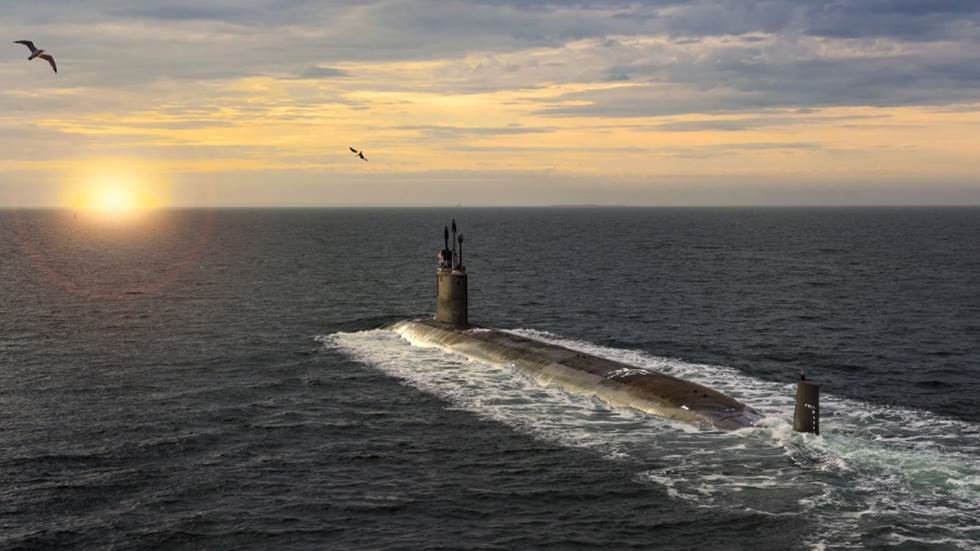
Virginia-class attack submarine. GENERAL DYNAMICS

GROTON, Conn. — General Dynamics Electric Boat, a business unit of General Dynamics, announced Oct. 6 it was awarded a U.S. Navy contract modification for lead-yard support, development studies and design efforts related to Virginia-class attack submarines. 

The contract modification has a value of $532.9 million. Work will be performed in Groton, Connecticut, and Newport News, Virginia, and is expected to be completed by October 2023.  

“We are proud to continue to support the design and engineering of Virginia-class submarines to ensure they have the superior warfighting capabilities the U.S. Navy needs to defend our Nation,” said Kevin Graney, president of Electric Boat. “The continued evolution of the Virginia class over the last two decades guarantees our sailors the asymmetric advantage they deserve.” 

General Dynamics Electric Boat designs, builds, repairs and modernizes nuclear submarines for the U.S. Navy. Headquartered in Groton, the company employs approximately 18,000 people. 


Coast Guard Interdicts 87 Lanchas off Texas Coast in Fiscal 2022

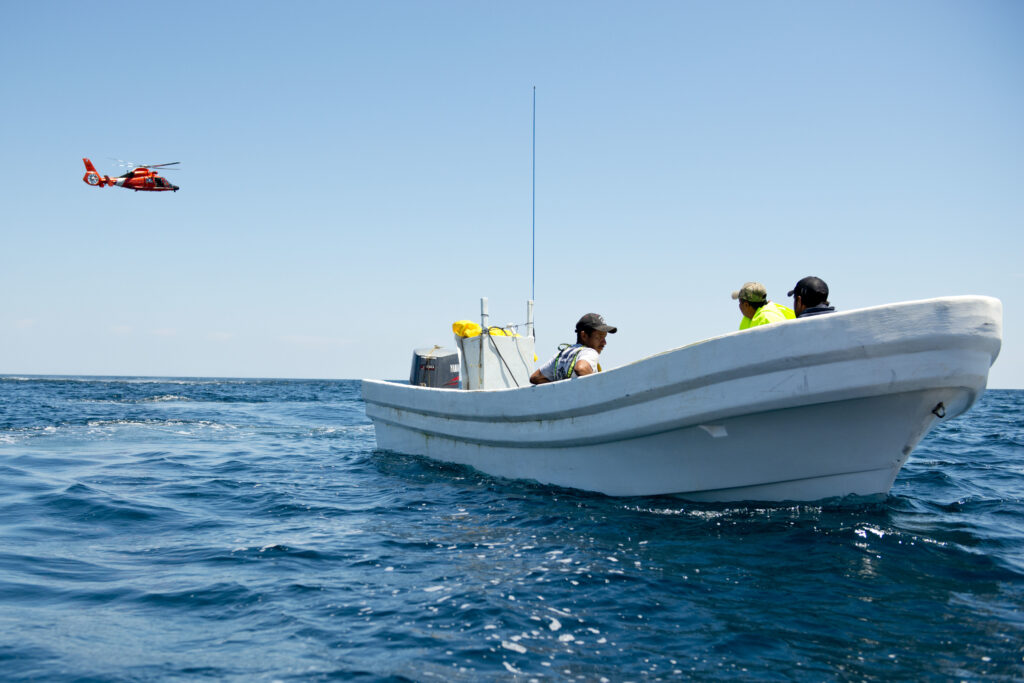
Coast Guardsmen from Station South Padre Island, Texas, catch and detain Mexican nationals aboard a lancha after crews in Coast Guard aircraft spotted them fishing illegally in U.S. territorial waters Friday, May 1, 2015. U.S. COAST GUARD / Petty Officer 1st Class Andrew Kendrick

CORPUS CHRISTI, Texas — Coast Guard law enforcement crews interdicted 87 lanchas, seized 15,809 pounds of catch and detained 373 fishermen off the Texas coast during fiscal year 2022, the Coast Guard 8th District said in a release. 

Since the first recorded lancha interdiction in the late 1980s, the Coast Guard has seen a significant uptick in the detection of the vessels, recording an 11.5 percent increase in interdicted lanchas from fiscal year 2021. 

A noteworthy case from this year occurred on Aug. 30, when Coast Guard crews interdicted three lanchas with a total of 14 Mexican fishermen, 2,425 pounds of red snapper and 440 pounds of shark aboard. 

To counter illegal, unreported and unregulated fishing, the Coast Guard utilizes a layered approach for operations through aircraft, small boats and cutters. 

Up to 27 million tons of fish are caught illegally each year throughout the world. IUU fishing accounts for 20 to 30 percent of global annual catch. Global losses from IUU fishing are estimated to be as much as $23.5 billion per year. 

“We view the lancha issue as an immediate threat to our living marine resources, border security, and U.S. sovereignty,” said Lt. Cmdr. Brendan Dunn, assistant chief of enforcement, Coast Guard District Eight. “In recent years, the illegal trade of red snapper, grouper, shark and other reef fish species has become extremely lucrative for the transnational criminal organizations operating in Mexico. With the continual increase of at-sea lancha interdictions, we would like to recognize the tremendous efforts of our field units at Coast Guard Sector and Air Station Corpus Christi, Station South Padre Island, our fast response cutters and patrol boats. We also thank our regional, state and federal partners for their tenacious commitment, professionalism, and teamwork to support this mission.” 

A lancha is a fishing boat used by Mexican fishermen that is approximately 20-30 feet long with a slender profile. They typically have one outboard motor and are capable of traveling at speeds exceeding 30 mph. Lanchas pose a major threat, usually entering the United States Exclusive Economic Zone near the U.S.-Mexico border in the Gulf of Mexico with the intent to smuggle people, drugs or poach the United States’ natural resources. 


Coast Guard Offloads $6.5 million in Seized Cocaine, Transfers 4 Smugglers

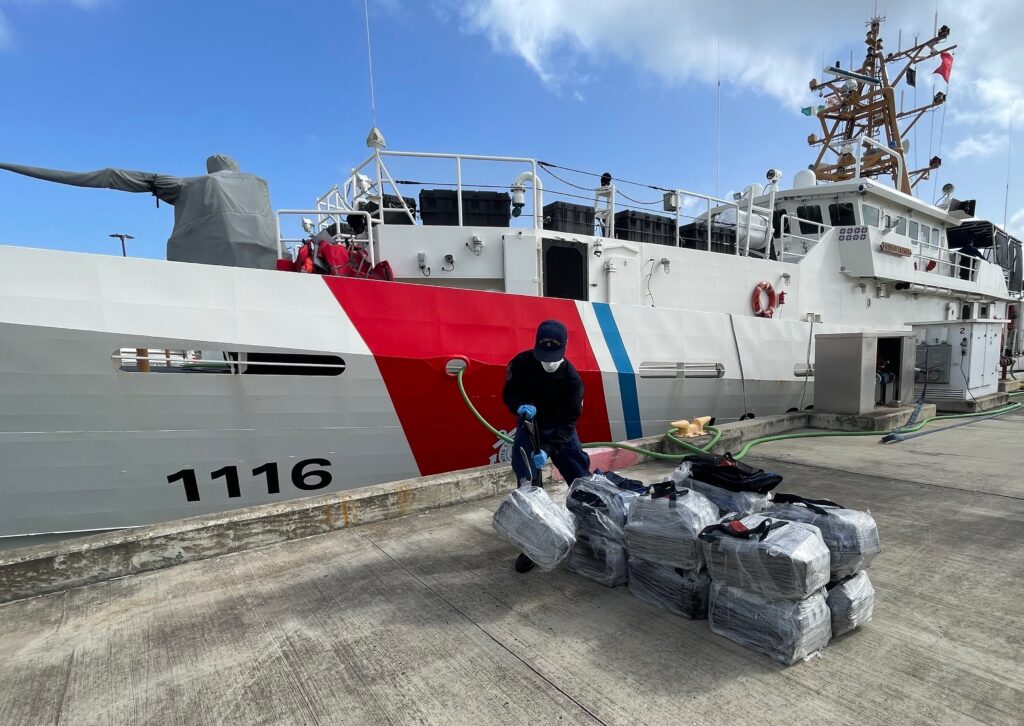
The crew of the Coast Guard Cutter Winslow Griesser and Caribbean Corridor Strike Force agents offloaded 721 pounds (327kgs) of cocaine Oct. 5, 2022 in San Juan, Puerto Rico, following the interdiction of a smuggling vessel in the Mona Passage Sept. 26, 2022. U.S. COAST GUARD / Ricardo Castrodad

SAN JUAN, Puerto Rico — The crew of the Coast Guard Cutter Winslow Griesser and Caribbean Corridor Strike Force agents offloaded 721pounds (327kgs) of cocaine Oct. 5 in San Juan, Puerto Rico, following the interdiction of a smuggling vessel in the Mona Passage, the Coast Guard 7th Disrict said in a release. 

The four men apprehended in this case claimed to be Dominican Republic nationals who are facing federal prosecution in Puerto Rico for Conspiracy to Possess with Intent to Distribute a Controlled Substance Aboard a Vessel Subject to the Jurisdiction of the United States. This charge carries carry a minimum sentence of 10 years imprisonment and a maximum sentence of imprisonment for life.  An additional charge includes Assaulting Federal Officers with a Deadly Weapon, which carries a maximum sentence of 20 years imprisonment.  

The Transnational Organized Crime Assistant U.S. Attorney Jorge Matos from the U.S. Attorney’s Office for the District of Puerto Rico is leading the prosecution for this case, while Special Agents supporting the Caribbean Corridor Strike Force are leading the investigation. 

During the late-night hours of Sept. 26, 2022, the aircrew of a Customs and Border Protection Air and Marine multi-role enforcement aircraft detected a suspect go-fast vessel in waters northwest of Desecheo Island, Puerto Rico. With Coast Guard Cutter Winslow Griesser in pursuit, the smugglers jettisoned multiple bales of suspected contraband into the water. The Winslow Griesser crew stopped the suspect vessel, apprehended the four men and recovered 12 bales of the jettisoned contraband, which later tested positive for cocaine. 

“I cannot be prouder of the Winslow Griesser crew, especially our small boat crew, whose skill and professionalism were instrumental in stopping this drug smuggling go-fast vessel,” said Lt. Cmdr. Mark Tatara, cutter Winslow Griesser commanding officer. “We appreciate our Customs and Border Protection and our Coast Guard watchstanders who worked seamlessly to ensure a successful outcome in this case that helped keep these drugs from reaching the shores of Puerto Rico and bring those responsible to justice.” 

Cutter Winslow Griesser is a 154-foot fast response cutter that is homeported in San Juan, Puerto Rico. 


Navy Invests in Land-Based Test Site for New Frigate 

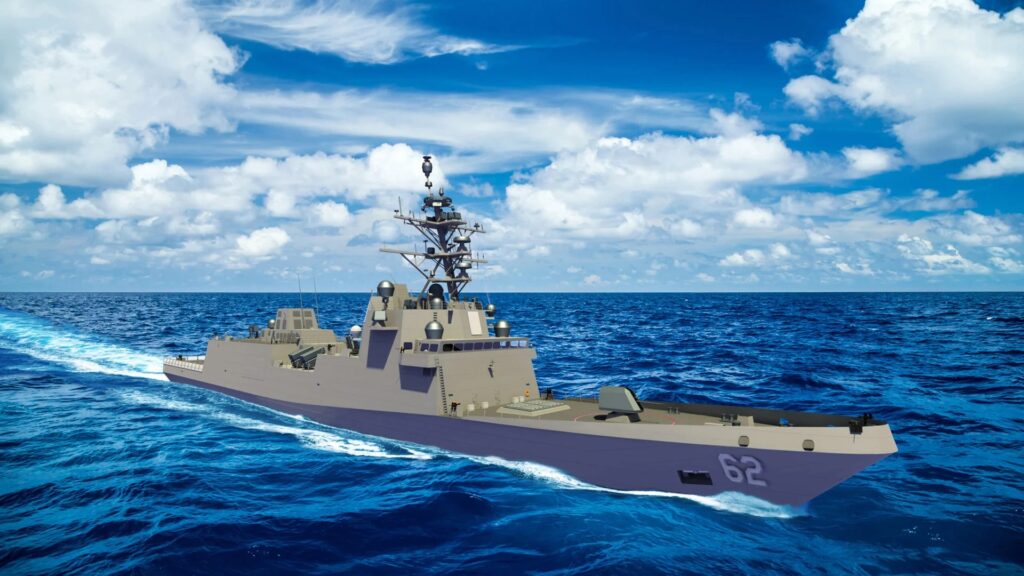
An artist’s conception of the future USS Constellation. FINCANTIERI MARINETTE MARINE

ARLINGTON, Va. — The U.S. Navy has invested funding toward building the land-based engineering test site for the Constellation-class guided-missile frigate (FFG).  

The Navy’s Supervisor of Shipbuilding, Conversion, and Repair, Bath, Maine, has awarded to Fincantieri Marinette Marine, Marinette, Wisconsin, a $76.7 million firm-fixed-fee contract modification “for procurement of long-lead time material for the land-based engineering site for the Constellation-class frigate,” the Defense Department contract announcement said. 

The land-based test site to be built in Philadelphia will be used to test the propulsion system and other machinery of the frigate design to reduce risk and identify and fix problems before they would be manifest in the lead ship of the class.  

The land-based engineering test site was mandated by the Fiscal 2021 National Defense Authorization Act as an expression on Congressional intent regarding solving engineering problems as construction proceeds.   

The construction of the U.S. Navy’s next class of guided-missile frigates officially began Aug. 31 with the first steel for the ship cut in a small ceremony at the Fincantieri Marinette Marine Shipyard in Marinette, Wisconsin.  

The future USS Constellation (FFG 62) will be the lead ship of a class of at least 20 frigates and is slated for delivery in 2026. The hull of the frigate is be based on the Italian FREMM-class frigate and will be equipped with proven weapons and combat systems.   

Work on the contract is expected to be completed by October 2025.


Coast Guard Awards Birdon America Inc. to Design, Build River Buoy, Inland Construction Tenders

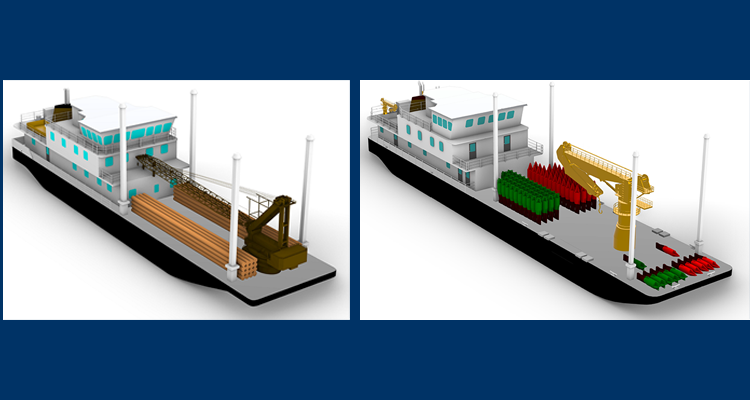
Artist’s rendering of the Inland Construction Tender (left) and River Buoy Tender. U.S. COAST GUARD

WASHINGTON — On Oct. 5, 2022, the Coast Guard Waterways Commerce Cutter (WCC) Program awarded Birdon America, Inc. of Denver, Colorado, an indefinite-delivery, indefinite-quantity firm fixed price contract with economic price adjustments for the detail design and construction of its river buoy and inland construction tenders. 

The initial award is worth $28.49 million. The contract includes options for the construction of a total of 16 river buoy tenders and 11 inland construction tenders. 

If all contract line items are exercised, the total contract value is estimated at $1.19 billion. 

River buoy tenders service short-range aids to navigation (ATON) on the western rivers. They set, relocate and recover buoys to mark the navigable channel in the rivers as the water level changes and also establish and maintain fixed aids, lights and day beacons. 

Inland construction tenders construct, repair and maintain fixed ATON within inland waterways along the Eastern Seaboard and Gulf of Mexico. They are the only Coast Guard platform with the capability to drive and remove piles, erect towers and effect major structural changes.  

The Coast Guard has a statutory mission to develop, establish and maintain maritime ATON. WCCs will perform a critical part of this mission on the inland waterways and western rivers. The WCCs will replace the legacy inland tender fleet, which has an average vessel age of over 57 years and includes ships still in service at 78 years old. This contract award ensures the Coast Guard will continue to meet its vital missions throughout the Marine Transportation System. 

“This contract award is an important milestone for the new inland fleet that will improve our operational capability on the Western Rivers, and Inland Waterways” said Adm. Linda Fagan, commandant, U.S. Coast Guard. 

The new WCCs will have greater endurance, speed and deck load capacity than their predecessors. The ships will also feature improved habitability and will accommodate mixed-gender crews. 


Stage 2 of the Coast Guard Offshore Patrol Cutter Moves Forward

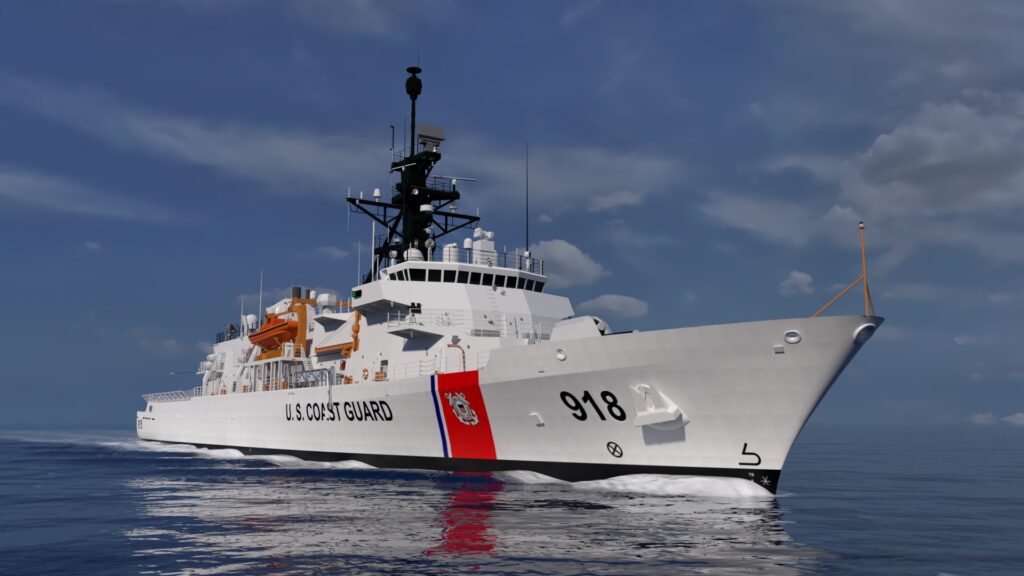
Artist’s rendition of a Stage 1 Offshore Patrol Cutter. LEONARDO DRS

WASHINGTON — The Coast Guard today issued a notice to Austal USA, the offshore patrol cutter (OPC) Stage 2 contractor, to proceed on detail design work to support future production of OPCs, Coast Guard Headquarters said in a release. The Coast Guard issued the notice following the withdrawal of an award protest filed in July with the Government Accountability Office by an unsuccessful Stage 2 offeror. 

The Coast Guard on June 30, 2022, awarded a fixed-price incentive (firm target) contract through a full and open competition to Austal USA to produce up to 11 offshore patrol cutters. The initial award is valued at $208.26 million and supports detail design and long lead-time material for the fifth OPC, with options for production of up to 11 OPCs in total. The contract has a potential value of up to $3.33 billion if all options are exercised. 

The Coast Guard’s requirements for OPC Stage 2 detail design and production were developed to maintain commonality with earlier OPCs in critical areas such as the hull and propulsion systems, but provide flexibility to propose and implement new design elements that benefit lifecycle cost, production and operational efficiency and performance. 

The 25-ship OPC program of record complements the capabilities of the service’s national security cutters, fast response cutters and polar security cutters as an essential element of the Department of Homeland Security’s layered maritime security strategy. The OPC will meet the service’s long-term need for cutters capable of deploying independently or as part of task groups and is essential to stopping smugglers at sea, interdicting undocumented non-citizens, rescuing mariners, enforcing fisheries laws, responding to disasters and protecting ports. 


Navy Approves Northrop Grumman’s New Navigation Capability for Fleet Deployment 

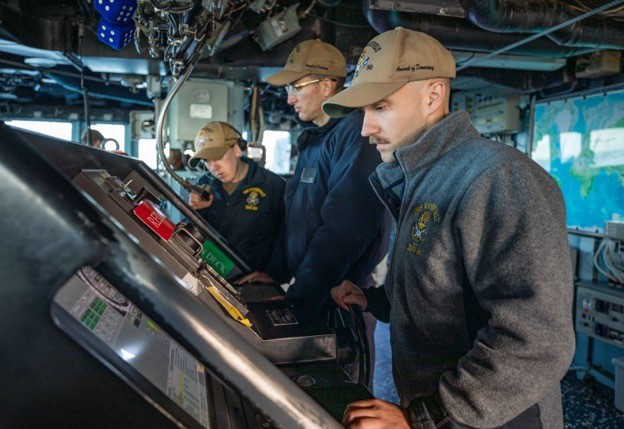
Sailors stand watch on the bridge aboard the Arleigh Burke-class guided-missile destroyer USS Roosevelt (DDG 80) as the ship conducts a replenishment-at-sea with the dry cargo and ammunition ship USNS William McLean (T-AKE 12), Oct. 1, 2022. U.S. NAVY / Mass Communication Specialist 2nd Class Danielle Baker

CHARLOTTESVILLE, Va.— The U.S. Navy has approved Northrop Grumman Corporation’s new Electronic Chart Display and Information System (Navy ECDIS) for deployment to its fleet, the company said in an Oct. 5 release. 

The Navy’s Operational Test and Evaluation Force (OPTEVFOR) issued a formal determination that Navy ECDIS is “operationally suitable, operationally effective and cyber survivable.” This new capability will be a core element to all U.S. Navy bridge and navigation systems. 

Navy ECDIS processes and displays multiple chart formats including digital nautical charts developed by the National Geospatial-Intelligence Agency. The system tracks targets from the vessel’s navigation radar, enabling creation of route plans, automation of plan execution and monitoring progress along the route. Safety checking functions analyze chart data and radar targets to warn of hazards to safe navigation while underway. 

“Our agile approach to developing Navy ECDIS enabled software to be developed in sprints, with customer input at every step of the way,” said Todd Leavitt, vice president, naval and oceanic systems, Northrop Grumman. “This workflow allowed the Navy to see and evaluate results of their input as they came up and saved them both time and money.” 

Navy ECDIS will provide the next generation of navigation capabilities to the fleet including compliance with the standard for mission interoperability with NATO allies, implementing cybersecurity requirements as well as enhancements to the human machine interface to simplify operation, improve situational awareness and increase the safety of navigation. 

OPTEVFOR’s approval of Navy ECDIS is the culmination of nearly a year of rigorous government testing. The test and approval process began with sea trials on the amphibious assault ship USS Kearsarge (LHD 3) and continued with evaluation activities at Naval Surface Warfare Center, Philadelphia Division (NSWCPD). 

The Navy has directed the Nimitz-class aircraft carrier USS Theodore Roosevelt (CVN 71) to be the first ship in the fleet to receive Navy ECDIS. NSWCPD will perform the installation this October. The Navy plans to install the system on 115 ships in the next three years, demonstrating the power of scalability of software defined systems such as Navy ECDIS. 

Northrop Grumman developed and fielded the Navy’s current ECDIS software, Voyage Management System, which has since become a core element of the bridge and navigation system on every U.S. Navy ship and submarine. Northrop Grumman’s broad range of navigation systems provides precise, survivable, secure, resilient and agile solutions for sea, land, air and space. 


Keel Authenticated for the Future USNS Saginaw Ojibwe Anishinabek 

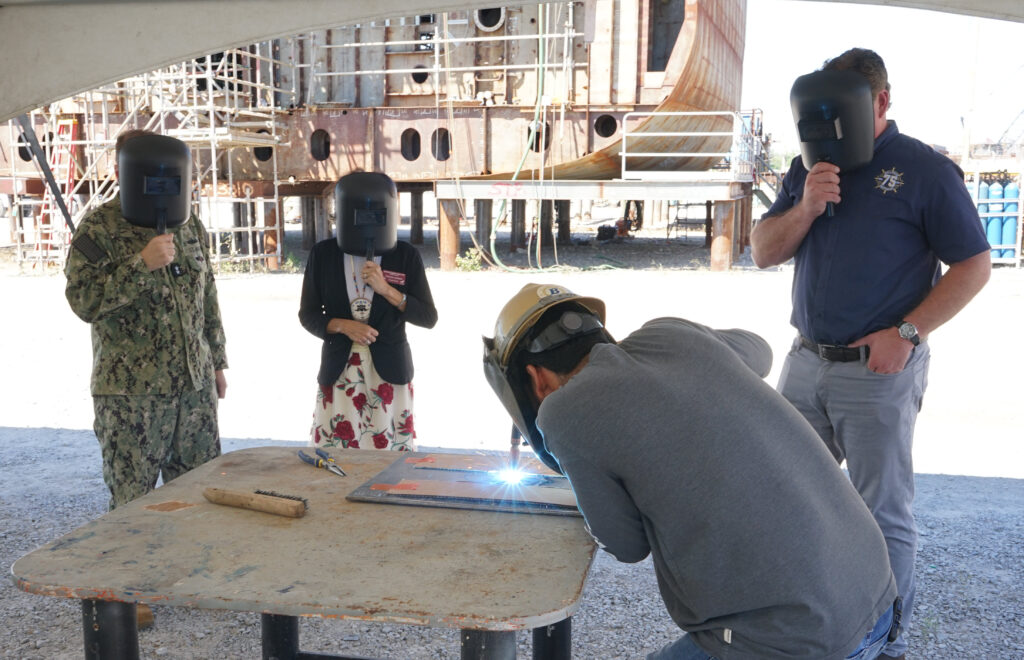
The keel for the future USNS Saginaw Ojibwe Anishinabek (T-ATS 8) was ceremonially laid at Bollinger Houma Shipyards in Houma, LA, Oct. 3. Bollinger Houma Shipyards

WASHINGTON — The keel for the future USNS Saginaw Ojibwe Anishinabek (T-ATS 8) was ceremonially laid at Bollinger Houma Shipyards, Oct. 3, Team Ships Public Affairs said in an Oct. 5 release.   

Named for the Saginaw Chippewa Tribe, the ship honors the original people of modern-day Michigan and their proud tradition of service to their country. Ojibwe is also referred to as Chippewa and Anishinabek means “original people.” The keel authenticator was the Honorable Theresa Peters Jackson, Chief of the Saginaw Chippewa Tribe. 

“This is an awesome Navy day as we gather to celebrate this multi-mission platform and the range of capabilities it will bring to the fleet, including towing, salvage, rescue, oil spill response and humanitarian assistance,” said Rear Adm. Tom Anderson, Program Executive Officer, Ships. “It is an honor to be joined by members of the Saginaw Chippewa Tribe as the keel is authenticated for their namesake ship and we are excited to honor their heritage and commitment to service of country.” 

The Navajo class (T-ATS) provides ocean-going tug, salvage, and rescue capabilities to support fleet operations. T-ATS replaces and fulfills the capabilities that were previously provided by the Fleet Ocean Tug (T-ATF 166) and Rescue and Salvage Ships (T-ARS 50) class ships. 

In addition to T-ATS 8, Bollinger is constructing USNS Navajo (T-ATS 6) and USNS Cherokee Nation (T-ATS 7) and is under contract for USNS Lenni Lenape (T-ATS 9) and USNS Muscogee Creek Nation (T-ATS 10). 


Keel Authenticated for Pathfinder-Class T-AGS 67 

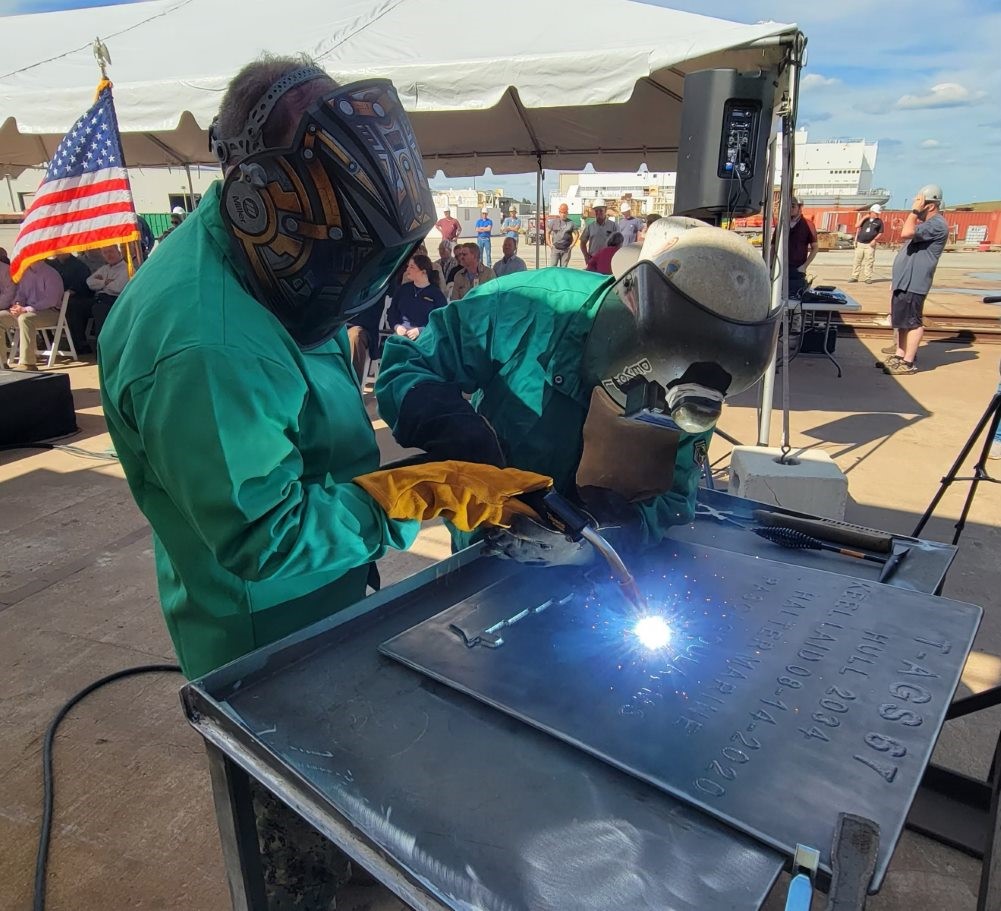
The keel of the next oceanographic survey ship (T-AGS 67) was ceremonially laid at Halter Marine in Pascagoula, MS, Oct. 4. Here, Halter Marine welders etch names and the hull number into the keel plate. Halter Marine

WASHINGTON — The keel for the Navy’s next oceanographic survey ship (T-AGS 67) was ceremonially laid at Halter Marine in Pascagoula, MS, Oct. 4, Team Ships Public Affairs said in an Oct. 5 release. The keel authenticator was Rear Adm. Tom Anderson, Program Executive Officer, Ships. 

“This is an awesome Navy day as we gather to celebrate the start of construction of the eighth ship in the Pathfinder class,” Anderson said. “We look forward to delivering another ship that provides significant capability in undersea warfare and charting the world’s coastlines.” 

Equipped with a moon pool for unmanned vehicle deployment and retrieval, T-AGS 67 will be a multi-mission ship that will perform acoustic, biological, physical and geophysical surveys, providing much of the U.S. military’s information on the ocean environment. The vessel will be more than 350 feet in length with an overall beam of 58 feet.   

T-AGS 67 will be operated by the Military Sealift Command (MSC). MSC consists of non-combatant, civilian crewed ships that replenish U.S. Navy ships, chart ocean bottoms, conduct undersea surveillance, tactically preposition combat cargo at sea and move military equipment and supplies used by deployed U.S. forces around the world.