Navy’s VP-9 Conducts Harpoon Shot in Atlantic Thunder 2022 
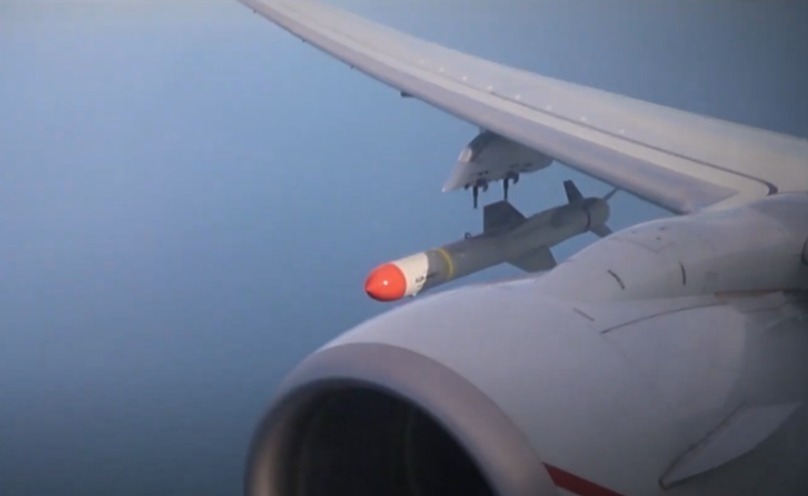
An AGM-84D Harpoon missile is deployed off the wing of the P-8A by VP-9 during Atlantic Thunder 2022. U.S. NAVY / Lt. Joseph Reed

SIGONELLA, Sicily — Patrol Squadron Nine (VP-9) recently had the unique opportunity to participate in Atlantic Thunder 2022, a joint, multi-phase, multinational exercise designed to increase NATO interoperability and strengthen the United States-United Kingdom strategic partnership, the squadron said in a release.

The highlight of the exercise for VP-9 occurred with a coordinated time-on-target strike of the decommissioned Oliver Hazard Perry Class frigate USS Boone. 

Various joint and multinational assets collaborated on the Hebrides Deep Sea Range off Scotland’s northwest coast in order to achieve the exercise’s main tactical objective, sinking the decommissioned USS Boone. Combat Air Crew Six (CAC-6) was selected to carry out the coordinated time on target strike portion of the exercise with the AGM-84D Harpoon, an anti-ship missile developed by Boeing. Among the other assets that joined CAC-6 and VP-9 in other phases of the exercise were the Royal Navy’s HMS Westminster and its Agusta-Westland AW159 Wildcat Helicopter, three Royal Air Force Typhoons of the 41st Squadron, one U.S. Air Force McDonnell-Douglas F-15E Strike Eagle, and a U.S. Navy submarine. Additionally, range clearance safety was provided by other U.S. P-8As from VP-9’s sister squadron, VP-46. 

Atlantic Thunder 2022 proved to be a rousing success for all participants, as it not only accomplished all of its primary objectives and sunk the decommissioned USS Boone, but according to the U.K.’s after action report, the process “achieved several firsts for the U.K. and U.S. in terms of advanced warfighting techniques and delivering complex weapon effects against a realistic target.”

Ultimately, the ship formerly known as the USS Boone stood no chance against the “remarkable amount of combined firepower within a short period.”

First to hit the ex-Boone were two SM-6 missiles, courtesy of the HMS Westminster. This was followed in short order by the coordinated Harpoon shot conducted by CAC-6 and the HMS Westminster. At precisely 1521Z, the AGM-84D Harpoon launched from the P-8A had a rendezvous with two surface launched AGM-84D Harpoons via the HMS Westminster into the hull of the ex-Boone. The HMS Westminster’s portion of coordinated time on target strike included passive over-the-horizon-targeting generated by U.S. Naval Integrated Fires, marking the first time this type of targeting has ever been accomplished against a real life target with multinational collaboration.

Raymond O’Toole, Principle Deputy Director, Operational Test and Evaluation from the Office of the Secretary of Defense remarked on this coordinated targeting, saying, “What we’ve demonstrated through this exercise is a new capability — to gain and exchange information for targeting purposes.” 

Coordinated time on target shots such as the one conducted by CAC-6 and the HMS Westminster require precise multinational cooperation via detailed planning, communications, and tactical data link employment from multiple nations and services. Successful coordinated shots are remarkably effective in overwhelming a potential combatant’s defenses by delivering rapid amounts of ordnance on target simultaneously and from multiple trajectories and domains.

“What we’ve seen in Atlantic Thunder today, is that with Royal Air Force, U.S. Air Force, U.S. Navy, and Royal Navy all operating together [with] helicopters, fixed-wing aircraft, ships, and a submarine, every one of which is capable of going to war tomorrow, we’ve proven it today for the first time in decades in the Atlantic,” summed up Royal Navy Rear Adm. James Parkin. 

Following VP-9’s successful coordinated Harpoon shot with the HMS Westminster, the ex-Boone endured several more rounds of punishment from exercise participants. The three RAF Typhoons arrived in short order to deploy four Paveway IV precision guided missiles onto ex-Boone. This was quickly followed by the Wildcat Helicopter’s two Martlet missiles and shortly thereafter two Joint Direct Attack Munitions dropped by the F-15E Strike Eagle. The sub-launched munition and explosive ordnance disposal live charges delivered the final blow against the ex-Boone, sending her to the depths of the North Atlantic in over 6,500 feet of water. 

Notably, the decommissioned USS Boone was prepared and configured specifically to meet stringent Environmental Protection Agency standards. This was done to mitigate potential adverse effects and keep risk to the environment as low as practicable. In addition to the ex-Boone’s configuration, strict acoustic and visual monitoring from multiple sources on the range ensured that the risk posed by the exercise to marine mammals was extremely low. 

VP-9’s contribution to Atlantic Thunder 2022 was critical to the exercise’s overall success and demonstrated the P-8A’s and MPRF’s ability to provide long range, coordinated strike capability in the maritime domain, with the added challenge of multi-national and multi-service planning and coordination. 

Commanded by Cmdr. James J. Donchez, and based out of NAS Whidbey Island, Washington, the 279 Sailors assigned to VP-9 are currently deployed to the 6th Fleet area of responsibility and operate the P-8A Poseidon Maritime Patrol Aircraft. 
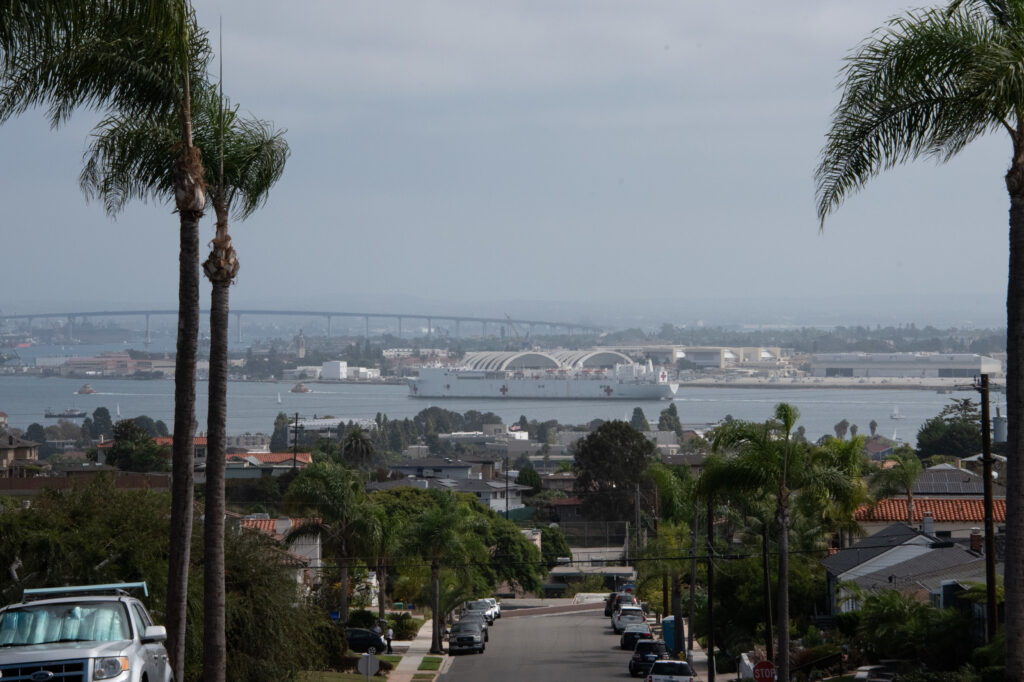


USNS Mercy Concludes Pacific Partnership 2022 

Military Sealift Command hospital ship USNS Mercy (T-AH 19) returns to San Diego, Sept. 30. Mercy participated in the 17th annual Pacific Partnership mission, the largest annual multinational humanitarian assistance and disaster relief preparedness mission conducted throughout the Indo-Pacific region. U.S. NAVY / Senior Chief Mass Communication Specialist Rosa Paschall

SAN DIEGO — Military Sealift Command hospital ship USNS Mercy (T-AH 19) returned to its homeport Sept. 30 following completion of the 17th annual Pacific Partnership mission, U.S. 3rd Fleet Public Affairs said in an Oct. 1 release. 

Pacific Partnership is the largest annual multinational humanitarian assistance and disaster relief preparedness mission conducted throughout the Indo-Pacific region. 

“It has truly been an honor to lead a diverse crew of committed men and women on the Pacific Partnership 2022 team,” said Pacific Partnership 2022 Mission Commander Capt. Hank Kim. “We set out to strengthen ties and create new friendships with our host and partner nations, and we achieved this with resounding success.” 

The mission team worked collectively with participating host and partner nations to enhance regional interchangeability and disaster response capabilities, increase security and stability in the region, and foster new and enduring friendships in the Indo-Pacific. 

“One of the mission highlights was seeing the multinational knowledge exchange and passion for learning from everyone who was a part of Pacific Partnership,” said Capt. Jeffrey Feinberg, Mercy’s commanding officer. “Every participant brought something new to the table, whether it was a safer way to construct the foundation for a building, a new approach to a patient procedure, or a more efficient means for disaster response. That collaboration is what enhances every nation’s capacity to respond to crisis and provides an enduring impact. That, and the friendships we make, are what will remain long after Mercy returns home.” 

Host nations included Vietnam, Palau, the Philippines, and Solomon Islands. Partner nations included Australia, Chile, Japan, the Republic of Korea, and the United Kingdom. 

Pacific Partnership saw more than 15,000 patients, completed 10 major construction projects, participated in more than 80 host nation outreach events, and conducted humanitarian assistance and disaster relief workshops in each mission stop during the five-month mission. 


Coast Guard PSU Returning Home Following 9-Month Deployment 

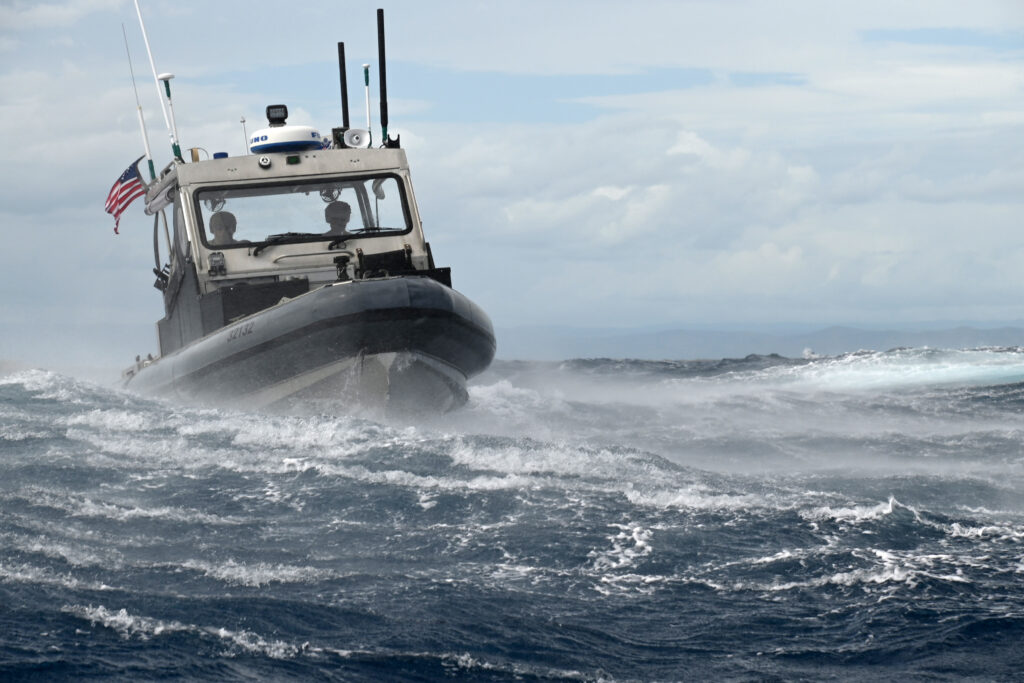
Coast Guardsmen from Port Security Unit 307 conduct seaward security for Department of Defense assets and personnel at Naval Station Guantanamo Bay, Cuba, April 25. During the nine-month deployment, unit operations focused on maritime defense, providing more than 30,000 hours of around-the-clock waterside and shore side anti-terrorism and force protection. U.S. COAST GUARD / Lt. Cmdr. Glenn Sanchez

CLEARWATER, Fla. — Members from Coast Guard Port Security Unit (PSU) 307 returned home to Clearwater Oct. 3 following a nine-month deployment to Guantanamo Bay, Cuba, the Coast Guard 7th District said in a release.  

During the deployment, unit operations focused on seaward security, providing more than 30,000 hours of around-the-clock waterside and shore side anti-terrorism and force protection defense security to Department of Defense assets and personnel at Naval Station Guantanamo Bay.  

“I could not be more proud of the crew of Port Security Unit 307 for their highly successful deployment, where they flawlessly executed their mission with skill and precision,” said Cmdr. Gregory S. Rogers, PSU 307’s commanding officer. “Our members excelled in every task that was assigned and proved their ability to execute complex operations and training in a joint operating environment.”  

PSU 307 also escorted marine traffic in and out of port and enforced the naval defense sea area security zone around the base. Unit personnel worked closely with service members from Naval Station Guantanamo Bay Security Forces, Marine Corps Security Forces Company, and Air Force and Army personnel conducting interagency operations and training at Naval Station Guantanamo Bay.  

“Our personnel lived up to the Coast Guard’s core values of honor, respect and devotion to duty and truly set the example. It is my privilege to have served with this outstanding crew,” said Rogers. “I want to thank our families, because without their support this deployment have been impossible. We have now completed our mission and it is now time spend valuable time with our families.”  

Commissioned in 1999, PSU 307 is one of eight U.S. Coast Guard port security units located across the United States. PSUs are Coast Guard Reserve-staffed units and deployable specialized forces assigned to the commander of Coast Guard Pacific Area in Alameda, California. PSUs support our nation with well-equipped, trained, and organized expeditionary forces who can rapidly deploy worldwide for anti-terrorism and force protection operations or point defense of high value assets.  

PSU 307 has an extensive operational history. They have deployed to the Middle East four times since 2001 in support of Operations Iraqi Freedom and Enduring Freedom. Following the terrorist attacks of Sept. 11, 2001, PSU 307 secured Boston Harbor and protected U.S. naval vessels in Providence, Rhode Island. The unit also conducts humanitarian service missions, including deployments to New Orleans in the aftermath of Hurricane Katrina, Haiti following the earthquake in 2010, Puerto Rico following Hurricane Maria in 2017, and New Orleans following Hurricane Ida in 2021.  

As both a federal law enforcement agency and an armed force, the Coast Guard is uniquely positioned to conduct defense operations in support of combatant commanders on all seven continents. The service routinely provides forces in joint military operations worldwide, including cutters, boats, aircraft, and deployable specialized forces.  


Navy Recruiting Announces Results for Fiscal 2022 and Goals for 2023 

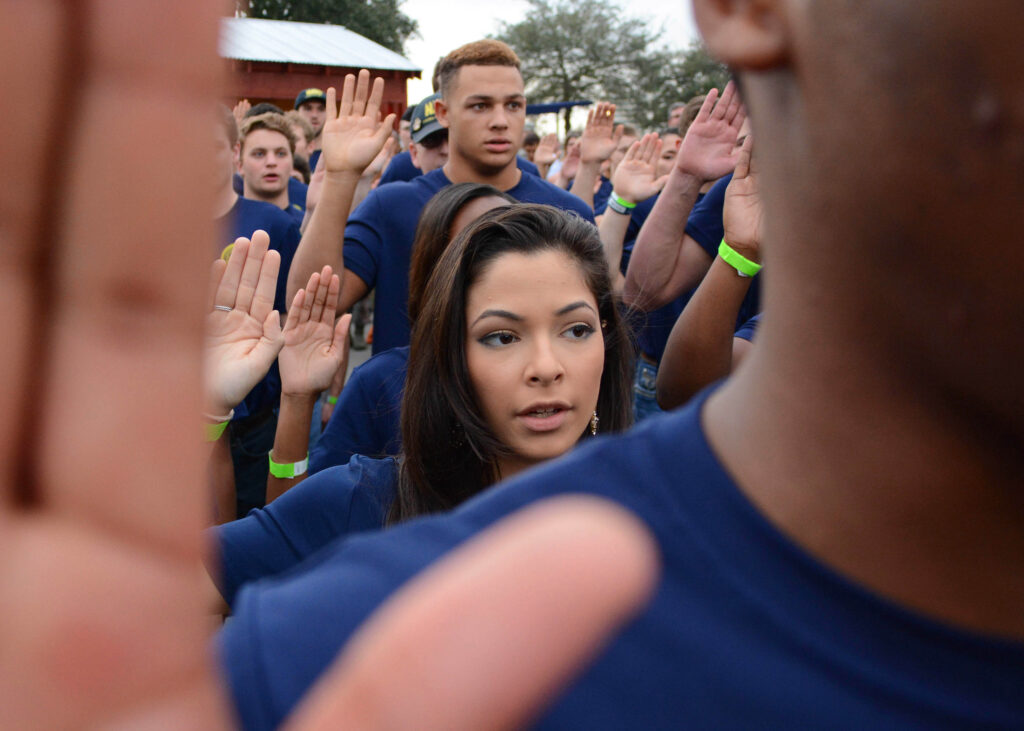
Approximately 100 future Sailors from across Navy Recruiting District Houston took the Oath of Enlistment Wednesday, March 4, during a joint swear in ceremony at the Houston Rodeo. U.S. NAVY / Mass Communication Specialist 1st Class Chris Fahey

MILLINGTON, Tenn. — Fiscal year 2022 Navy recruiting completed Sept. 30, with the Navy reaching its goal in enlisted active duty recruiting, while falling short of its goals in reserve enlisted and both active and reserve officer recruiting, said Petty Officer 2nd Class Cody Anderson of Navy Recruiting Command in a release.

FY22 has been a highly challenging recruiting environment, with competition for top talent fierce within the branches of the Department of Defense and the private sector, where major corporations have begun offering incentive packages to compete with the military. As all branches of the military have struggled to make mission, the Navy implemented multiple initiatives in order to accomplish their accession goal.

The Navy finished FY22 with the following numbers.
FY22 Goal Actual 
Enlisted (Active) 33,400 33,442 
Officer (Active) 2,507 2,298* 
Enlisted (Reserve) 7,400 5,442* 
Officer (Reserve) 1,360 982* 
*Preliminary numbers, which may change slightly based on Sept. 30 activity.

“We’ve completed a very challenging year, and I am very proud of the tremendous efforts our Recruiters gave to bring in the nation’s top talent and build the future of the fleet,” Rear Adm. Alexis “Lex” Walker, commander, Navy Recruiting Command said. “The coming year promises to be even more challenging, as we are not starting the year in as strong a position as FY22. In order to achieve our mission goals this year, we will need an all-hands-on-deck effort, not only from our recruiters, but from throughout the active and reserve fleet, our retired Navy veterans, and our community leaders around the country who are centers of influence in the lives of the young people we are trying to recruit. We are going to do everything within our power to ensure that our recruiters are empowered and have the assets they need in order to accomplish the mission.” 
 
While the enlisted active accessions reached their mission goal, this came at a heavy price. The Navy entered FY22 with a relatively healthy Delayed Entry Program (DEP) pool and finished the year with the lowest DEP pool in 40 years. DEP allows future Sailors to be contracted to join but remain on hold before shipping off to Recruit Training Command (boot camp). The goal of the program is to acclimate future service members to the military environment, military rank structure, history, customs and courtesies and to improve their physical fitness prior to shipping out. It also allows the military flexibility in when they ship future service members to regulate the flow of future Sailors to boot camp and follow on training schools. 
 
Draining the DEP pool to critically low levels brings many new challenges for the upcoming year. Around a third of those remaining in DEP are future Sailors who are seniors in high school, who cannot ship until after graduation in May/June 2023. So the Navy is expected to be in a contract-and-ship posture, where future Sailors are shipped to boot camp within weeks or even days of contracting to serve. This posture is expected to persist through FY23. 

For fiscal 2023, the goals are 37,700 enlisted (active); 8,100 enlisted (reserve); and 1,732 officer (reserve). The goals for active-duty officers are usually released in the first quarter of the fiscal year.

To bring more future Sailors into the DEP pool, the Navy has been offering multiple incentives to generate a greater interest in naval service among qualifying applicants. In August, Navy Recruiting Command announced enlistment bonuses up to $50,000 and student loan repayment up to $65,000. This offers the opportunity for future Sailors to earn a substantial sum as they begin their careers. The loan repayment program remains in place for FY23, and the bonus structure for the start of FY23 is posted at this link, with a maximum bonus remaining $50,000.

“The maximum current enlistment bonus is $50,000, and the maximum loan repayment is $65,000,” said Walker. “They are not mutually exclusive, so if a future Sailor maximizes both, that adds up to a life-altering $115,000, and the opportunity to serve in the world’s finest Navy.”

In addition to bonuses and loan repayment, leadership throughout the Navy is engaged in helping to improve Navy recruiting numbers. Secretary of the Navy Carlos Del Toro has begun sending letters to high school principals to promote military service and to foster school access for recruiters. These initial letters will be followed up with a letter from Commander, Navy Recruiting Command to further foster a relationship with these centers of influence.

CNRC also began the Every Sailor is a Recruiter program in July. The goal of the program is for U.S. Navy Sailors all over the world to share their positive experiences of naval service with qualifying applicants and provide referrals based upon these interactions.

“Every Sailor has a voice, and it’s not just up to recruiters to represent the Navy back at home, but it is their duty to share their experiences and inspire people to serve their country,” Master Chief Navy Counselor Gerald Allchin, NRC national chief recruiter said. “Growing up in Cleveland, Ohio, I know first-hand how rare it can be in non-fleet concentration areas to hear anything about the Navy. So, I tell my shipmates to share your stories!”

This program will be a force multiplier and will make the Navy more competitive in today’s challenging labor market. Navy leadership is currently determining the best way to recognize and award Sailors that provide referrals who ultimately join.

To address Reserve recruiting shortfalls, the Navy altered its recruiting command structure this summer, standing up Navy Recruiting Reserve Command to specifically tackle these challenges. Part of this restructure’s focus is on Canvasser Recruiter professionals. They make up 65% of NRRC and carry a critical portion of the NRRC enlisted goal and 100% of the officer mission goal.

“Our success depends upon CANREC professionals, and I am continually amazed at their commitment,” said Capt. Karen Muntean, commander of NRRC. “These individuals are Selected Reservists and civilian professionals who have committed themselves to joining our challenging recruiting charge. Their role is to recruit for the reserve mission, educate active duty, civilians and veterans on the benefits of serving in the Navy Reserve, and partner with military and industry organizations.”

CNRC consists of a command headquarters, two Navy Recruiting Regions, NRRC, and 26 NTAGs that serve more than 1,000 recruiting stations around the world. Their mission is to attract the highest quality candidates to assure the ongoing success of America’s Navy. 


Cruiser USS Port Royal Decommissioned at Pearl Harbor  

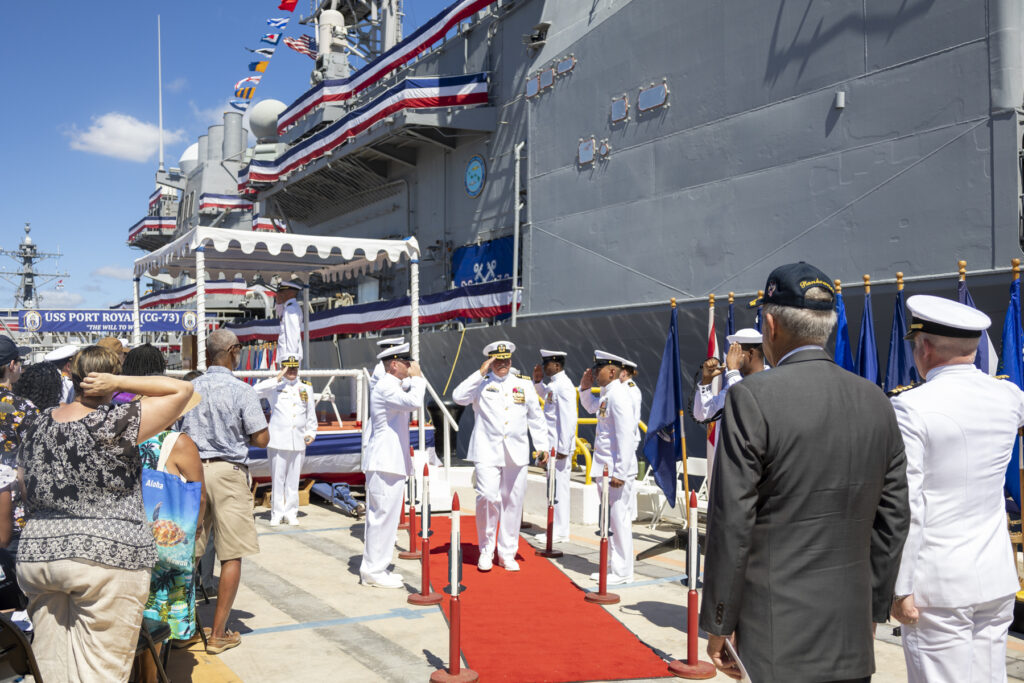
USS Port Royal Decomissioning at Joint Base Pearl Harbor-Hickam, Hawaii, Sept. 29. U.S. NAVY / Ens. Brianna McLaughlin

PEARL HARBOR, Hawaii – USS Port Royal (CG 73), the 27th ship of the Ticonderoga class guided-missile cruiser, recognized more than 28 years of naval service during a decommissioning ceremony Sept. 29 at Joint Base Pearl Harbor-Hickam, Commander, Naval Surface Force, U.S. Pacific Fleet Public Affairs said in a release. 

During the ceremony, guest speaker Capt. Joe Ring, commander, Naval Surface Group Middle Pacific (COMNAVSURFGRU MIDPAC) wished current and former crew members and their families fair winds and following seas as they bid farewell to their ship. 
 
“The operations Port Royal Sailors supported when the nation called provided tremendous significance to their lives as well as the legacy of the United States Navy,” said Ring. “They left an indelible legacy for the future. To remain ahead of our competitors, we must now invest and provide our Sailors with the most advanced systems and warfighting capabilities that will enable us to maintain our competitive edge.” 
 
Port Royal’s commanding officer, Capt. Michael “Mike” Wagner, reflected on the service of his crew and those who came before. 
 
“USS Port Royal and generations of Sailors served our nation with honor and distinction for more than 28 years,” said Wagner. “Port Royal deployed all over the globe and earned numerous awards and accolades during her time of service. We are proud of what this ship and her crews accomplished.” 
 
Port Royal maintained a crew of 40 officers, 31 chiefs and 300 enlisted Sailors. The ship was built in Pascagoula, Mississippi, by Ingalls Shipyard Company and commissioned July 9, 1994, in Savannah, Georgia. 
 
CG 73 is the second ship in the U.S. Navy to be commissioned as Port Royal. The first ship of the fleet to bear the name “USS Port Royal” was a wooden 1163-ton “double-ender” side wheel steam gunboat, built in New York City. Commissioned in April 1862, Port Royal was soon sent to the Hampton Roads and James River areas, taking part in the battle at Sewell’s Point on May 8-9, 1862, and at Fort Darling on May 15, 1862. The first USS Port Royal was decommissioned in May 1866 and sold in October of that year. 
 
The current Port Royal’s rich deployment history spans two decades, starting in December 1995 as part of the Nimitz battle group Carrier Group Seven. Following her first deployment, Port Royal became the first Navy cruiser to integrate women into the crew. The ship returned from her final deployment in July 2022. During the ship’s 28 plus years of commissioned service, Port Royal made numerous deployments to the Arabian Gulf, Mediterranean Sea, and operated prominently throughout the Indo-Pacific region supporting peace and stability and working alongside allied and partner navies. 


Coast Guard District 14 Commander Participates in Pacific Island leaders Panel 

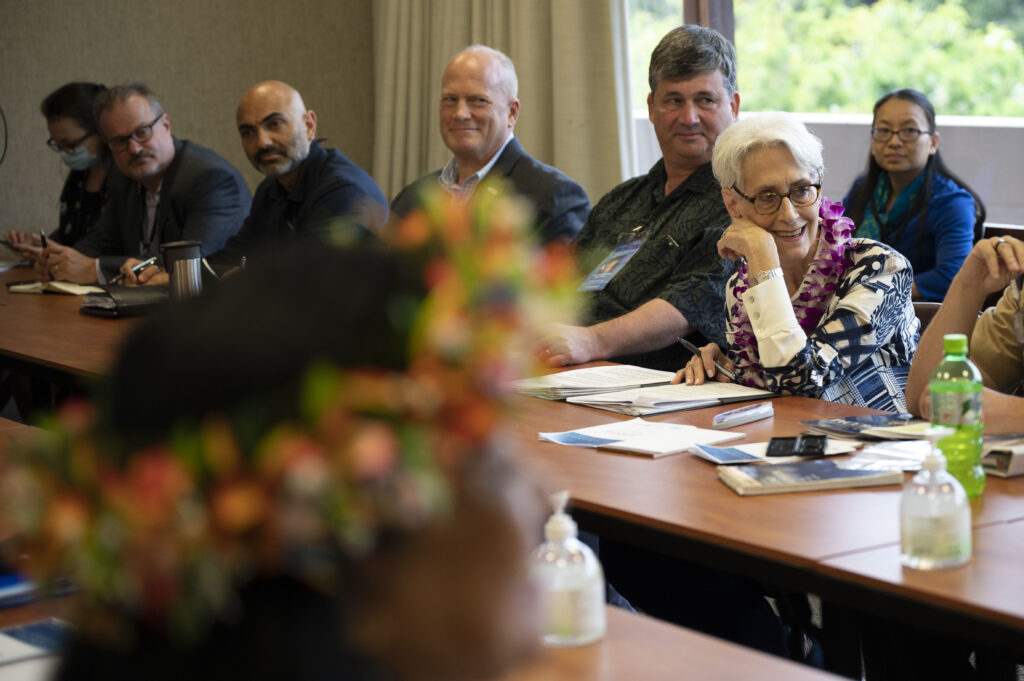
Leaders from 14 countries representing the Pacific Islands met in Honolulu, Hawaii to convene Pu’uhonua: The Pacific Way Forward, Sept 12. U.S. COAST GUARD / Chief Petty Officer Shannon Smith

HONOLULU — Leaders from 14 countries representing the Pacific Islands met in Honolulu, Hawaii to convene Pu’uhonua: The Pacific Way Forward, the 12th Pacific Islands Conference of Leaders, Sept. 12, the Coast Guard 14th District said in a release. 

The Pacific Islands Conference of Leaders is a multi-day leadership conference that strengthens and promotes interagency and multi-national cooperation within the Indo-Pacific region. This conference is a key opportunity for Pacific Island leaders to partner together and address pressing challenges, including economic and environmental resilience, water and food security, health security, maritime domain awareness, and strengthening democratic institutions and good governance. 

Leaders representing the Federated States of Micronesia, Guam, Tonga, Nauru, Niue, Palau, Republic of the Marshall Islands, Samoa, Solomon Islands, Tuvalu, French Polynesia, Commonwealth Northern Mariana Islands, Fiji and the United States, gathered together to corroborate ongoing engagements in the Pacific Islands and build vital connections within and beyond the Indo-Pacific region. 

U.S. Coast Guard District 14 Rear Adm. Michael Day provided key insight on the vital relationships the Coast Guard holds with partner nations and the crucial role the Coast Guard provides its Indo-Pacific allies. This cooperation promotes the 11 bilateral ship-rider agreements with Pacific Island Countries in addition to the Coast Guard’s more traditional missions such as maritime law enforcement, safeguarding navigation, life, and property, and humanitarian aid. These ship-rider agreements ensure resource security and maritime sovereignty within the Indo-Pacific. 

“Listening to the leaders at this conference reminded me of the important role the Coast Guard can play in supporting a rules based order in the Pacific,” said Day. “When done the pacific way, governance in this region will continue to dissuade malign actors and encourage a care for our shared resources.” 

U.S. Coast Guard District 14 Operation Blue Pacific is one example of the U.S. commitment to advancing a peaceful and sovereign Indo-Pacific. Through Operation Blue Pacific, the Coast Guard has strengthened its relationships with Pacific Island Countries by supporting governments that may be threatened or weakened by powers that challenge rules-based international order through inter-state aggression, economic coercion, maritime hybrid warfare, gray zone activities, and overreaching territorial claims. 

The Coast Guard collaborates with its Indo-Pacific partners with patrols that enforce their laws to protect fisheries and other natural resources within their EEZs, combat illegal fishing and other maritime threats to the Pacific, and perform search and rescue and humanitarian assistance. 


Cold War Era Emissions Control Could Protect Navy Assets from Cyber Attacks, Expert Says

The Arleigh Burke-class guided-missile destroyer USS Paul Ignatius (DDG 117) sails through the Baltic Sea, Sept. 4. U.S. NAVY / Mass Communication Specialist 2nd Class Aaron Lau

ARLINGTON, Va. — A rediscovered Cold War practice and the U.S. Navy’s unique command and control culture could protect the service’s assets from cyberattack, according to a U.S. Naval Academy cybersecurity expert.

While most information systems across the Defense Department tend to be similar, “the Navy has a different command and control culture,” Martin Libicki, holder of the academy’s Keyser Chair of Cybersecurity Studies, told a live-streamed panel discussion at Annapolis on Cyber Disruption and Disinformation Sept. 29.

Historically, the Navy has put a premium on independent action, “and one of the things navies do to protect themselves against sophisticated adversaries is not communicate. It’s called emissions control. We used to do it a lot in the Cold War, then we forgot it,” he said.

“Now we’re relearning it and that tends to isolate certain Navy assets from the rest of the world. The more you isolate them, the harder it is to carry out cyber operations against them,” noted Libicki, who researches cyberwar and the general impact of information technology on domestic and national security.

The discussion, presented by the U.S. Naval Institute, focused largely on Russia’s use of cyberattacks and disinformation before, as well as since it began its illegal invasion of Ukraine in February.

Bilyana Lilly, geopolitical risk lead at the Krebs Stamos Group and previously a cyber expert at Deloitte and the RAND Corp., noted that Russians hacked the Facebook accounts of Ukrainian military leaders to send messages urging their troops to surrender. “The Russians are trying to erode the Ukrainians’ will to fight,” she said.

Lilly also stressed the importance for the United States as well as Ukraine to practice cyber civil defense: Training the population to recognize disinformation and be aware that they could be a target. The Russian government has a military doctrine that stipulates “every single one of us is a target. I think that message has to be made very clear,” she said.


Navy Awards Advance Acquisition for Low-Rate Initial Production of MQ-25 

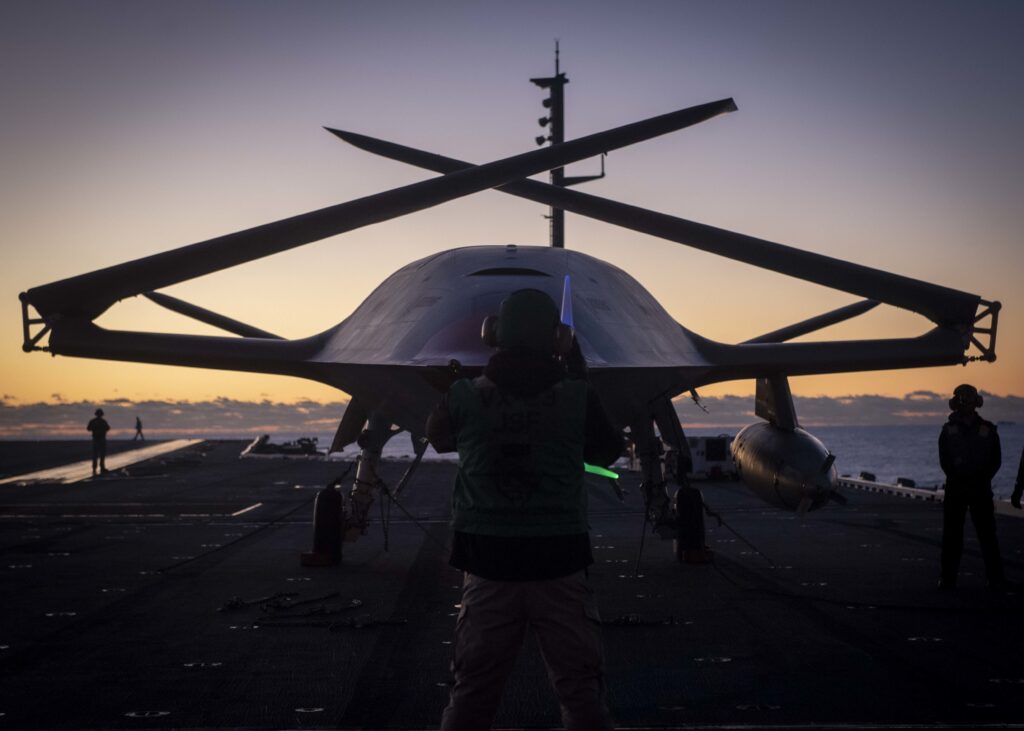
A Boeing unmanned MQ-25 aircraft is given operating directions on the flight deck aboard the aircraft carrier USS George H.W. Bush (CVN 77). U.S. NAVY / Mass Communication Specialist 3rd Class Hillary Becke

ARLINGTON, Va. — The U.S. Navy has awarded Boeing a contract for advanced acquisition of the MQ-25A Stingray aerial refueling unmanned aerial vehicle.  

The Naval Air Systems Command awarded Boeing a $47.5 million “firm-fixed-price advance acquisition contract for the production and delivery of MQ-25 Stingray low-rate initial production lot 1 for the U.S. Navy,” a Sept. 28 Defense Department contract announcement said. 

Boeing was selected Aug. 30, 2018, for the design, development, fabrication, testing, delivery and support of four MQ-25As, followed in April 2020 with an order for three more, according to the Navy’s program office. The MQ-25 test asset, known as T1, made its first flight Sept. 19, 2019. In summer 2021, the MQ-25 T1 test asset successfully refueled three different carrier-based aircraft: F/A-18F, F-35C and E-2D aircraft in 2021. The Unmanned Carrier Aviation Demonstration was conducted in December 2021 on board the USS George H.W. Bush (CVN 77). This event marked the first time the MQ-25 T1 test asset was tested aboard an aircraft carrier. 

The MQ-25 will leverage existing line-of-sight and beyond-line-of-sight communications links and interface with existing ship- and land-based command and control systems.MQ-25 will be an integral part of the future carrier air wing, increasing the mission effectiveness range with its enhanced refueling capabilities and increasing the number of F/A-18E/Fs available for the strike fighter mission by relieving them of the tanking role. The MQ-25 will also pioneer manned-unmanned teaming and pave the way for future unmanned systems to pace emerging threats. 

The MQ-25 Stingray is designed to deliver a robust aerial refueling capability and secondary intelligence, surveillance and reconnaissance capability that extend the range and operational capability of the carrier air wing and carrier strike group, according to the Navy’s program office. The MQ-25 will leverage existing line-of-sight and beyond-line-of-sight communications links and interface with existing ship- and land-based command and control systems.  

The MQ-25A is scheduled to achieve initial operational capability in 2025. It is anticipated that 72 air vehicles will be procured. 

Work under this contract is expected to be completed in September 2026. 


Gerald R. Ford to Deploy at Last, With Slightly Reduced Air Wing

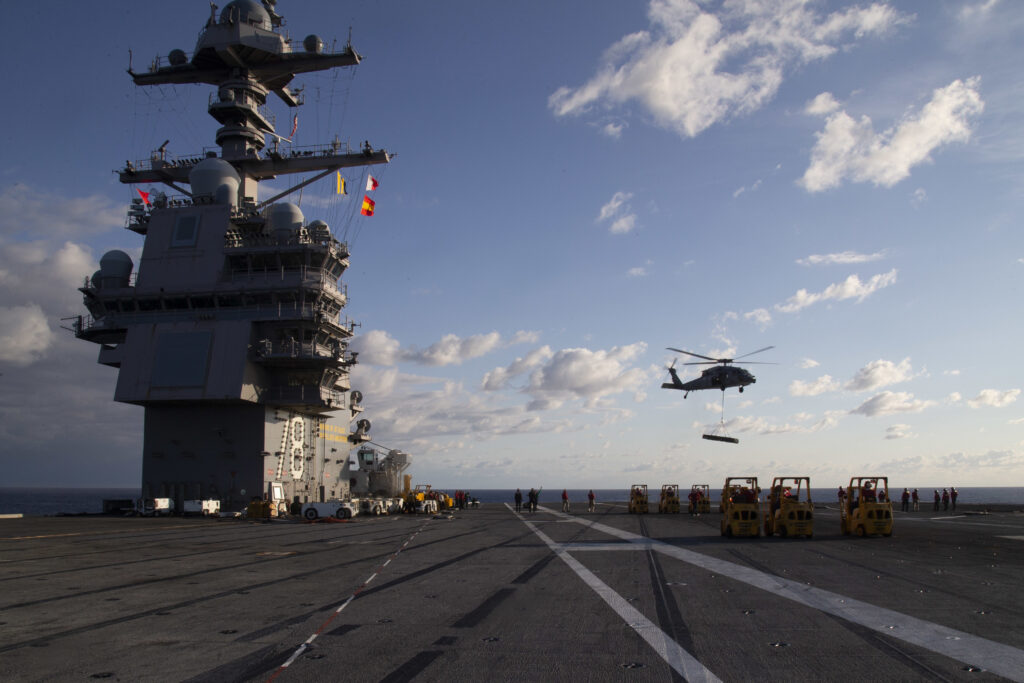
Sailors assigned to the first-in-class aircraft carrier USS Gerald R. Ford (CVN 78) and the “Tridents” of Helicopter Sea Combat Squadron (HSC) 9 conduct an ammunition onload, Sept. 25, 2022. U.S. NAVY / Mass Communication Specialist 1st Class William Spears

ARLINGTON, Va. — The lead ship U.S. Navy’s newest class of nuclear-powered aircraft carrier, USS Gerald Ford (CVN 78), will depart Norfolk, Virginia, next week on its first major deployment. The carrier is scheduled to deploy next year in support of regional combatant commanders. 

The Ford is making what the Navy calls a “service-retained” deployment, meaning it is operating by the authority of the chief of naval operations under command and control of the U.S. 2nd Fleet, rather than under the command and control control of a regional combatant commander under the Global Force Management Concept.  

Vice Adm. Daniel Dwyer, commander of the U.S. 2nd Fleet, said Carrier Strike Group 12 (CSG 12), of which the Ford is a part, will range throughout the Atlantic Ocean operating with navies of allied and partner nations. 

Dwyer, speaking to reporters Sept. 26, said the deployment would provide the Ford CSG commander “a chance to test the carrier’s air operability prior to embarking on its first Global Force Management deployment next year. This historic service-retained deployment is an opportunity for the U.S. Navy to come together with other members of the NATO Alliance to exercise and train together within the Atlantic and its littorals while testing out advanced technologies on the first new class of U.S. aircraft carrier in more than 40 years.” 

CSG-12 and Destroyer Squadron Two staffs will be embarked in the Ford, as will Carrier Air Wing Eight. Deploying with the group will be Ticonderoga-class guided-missile cruiser USS Normandy (CG 60); the Arleigh Burke-class guided-missile destroyers USS Ramage (DDG 61), USS McFaul (DDG 74), and USS Thomas Hudner (DDG 116); the Legend-class national security cutter USCGC Hamilton (WMSL 753); the Henry J. Kaiser-class fleet replenishment oiler USNS Joshua Humphpries (T-AO 188), and the Lewis and Clark-class dry cargo and ammunition ship USNS Robert E. Peary (T-AKE 5). 

Units from eight allied and partner nations that will operate with the CSG and include ships from Canada, Denmark, Finland, France, Germany, The Netherlands, Spain and Sweden. The CSG includes 17 ships and one submarine. 

While deployed, the Ford CSG will conduct group steaming, air-defense exercises, maritime domain awareness, long-range maritime strike, distributed maritime operations, antisubmarine warfare exercises and naval integration, Dwyer said. 

“Innovation and interoperability are the key focal points of this deployment,” Dwyer said. “And we will work together with allies and partner nations to strengthen our collective defense of the Atlantic by maturing our integration for future maritime operations.”  

All eight squadrons of Carrier Air Wing Eight will be onboard for the deployment but some will not be at full strength in terms of numbers of aircraft.  

“It won’t be the full complement, but it will be nearly the entire air wing,” Dwyer said. “And that is not because of any lack of capacity aboard Ford, but only where the air wing is in the Global Force Management process. We’re still sizing the numbers, but it will be a fairly full air wing, but not the complete air wing.” 

New Technology

The Ford, commissioned in 2017, is deploying with 43 new technologies, including the Electro-Magnetic Aircraft Launch System, and the Advanced Arresting Gear. 

The Ford’s commanding officer, Capt. Paul Lanzilotta, said in a Sept. 29 interview that all systems have been tested and are ready to go, and some will go through further operational testing. 

Lanzilotta, a native on Long Island, New York, is an E-2 Hawkeye naval flight officer. He said the Ford has “incredible network connectivity.” 

Several Ford crew members were made available for interviews on Sept. 29 pierside in Norfolk. 

Chief Machinist’s Mate (select) Kera Archambeault, who accrued two previous deployments on the Nimitz-class aircraft carrier USS Carl Vinson (CVN 70), said the Ford has better amenities for the crew, “like all spaces having better air conditioning, the food is really good, the gallies are really open to bring everyone together.” 

“We’re very by the book here,” said Boatswain’s Mate Second Class Patrick Schlosser, for whom this will be his first deployment, asked about the ease of maintenance on a new ship. “There are a lot of new systems — this is the biggest, the baddest, the newest ship in the fleet — there are a lot of learning curves that we have to get across. We are able to conduct and do what we need to do regularly with a relative amount of ease and we’re pretty efficient at it. … This crew is ready for anything that comes at us. Everybody would overcome any obstacle that they deal with as far as maintenance goes and any equipment that we deal with.” 


U.S. Navy Warship Seizes $10 Million in Drugs in Gulf of Oman 

An interdiction team from guided-missile destroyer USS Delbert D. Black (DDG 119) approaches a fishing vessel in the Gulf of Oman, Sept. 28, as an MH-60R Sea Hawk attached to Helicopter Maritime Strike Squadron 48 provides aerial support. U.S. NAVY / MC3 Jeremy R. Boan

MANAMA, Bahrain — A U.S. Navy guided-missile destroyer seized 7,200 kilograms of hashish worth an estimated $10 million from a fishing vessel transiting international waters in the Gulf of Oman, Sept. 28, NAVCENT Public Affairs said Sept. 29. 

USS Delbert D. Black (DDG 119) was operating in support of U.S. 5th Fleet, headquartered in Manama, Bahrain. The ship began patrolling waters across the Middle East in August. 

“This seizure is a testament to the professionalism and determination of the ‘Trailblazer’ team,” said Cmdr. Mark Gallagher, commanding officer of Delbert D. Black. “I’m proud of our commitment to regional security and countering illicit activity on the high seas across the Middle East region.” 

Delbert D. Black’s seizure occurred one day after USCGC Charles Moulthrope (WPC 1141) seized 2,410 kilograms of heroin worth $85 million from another fishing vessel transiting the Gulf of Oman Sept. 27. The U.S. Coast Guard ship was operating under Combined Maritime Forces, the world’s largest multinational naval partnership. 

Forces from CMF’s 34 member-nations have conducted 13 successful drug interdictions in 2022, resulting in seizures of heroin, methamphetamine, amphetamine pills and hashish worth a combined value of nearly $300 million. 

Delbert D. Black is an Arleigh Burke-class destroyer named for the first Master Chief Petty Officer of the Navy. The ship is deployed as part of the USS George H. W. Bush Carrier Strike Group and has a crew of more than 300 Sailors in addition to an embarked aviation detachment from Helicopter Maritime Strike Squadron 48.