CNO, Commander of Belgian Navy Discuss Increasing Capabilities and Capacity
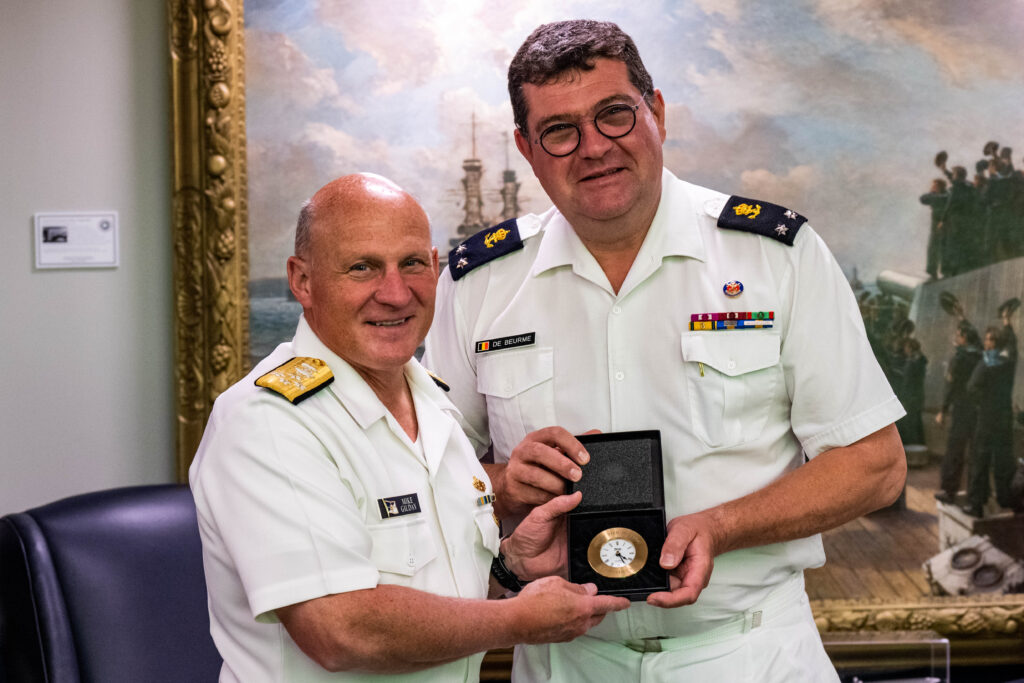
Chief of Naval Operations Adm. Mike Gilday meets with Commander of the Belgian Navy Rear Adm. Jan de Beurme at the Pentagon for an office call, Sept. 23. U.S. NAVY / Mass Communication 1st Class Michael Zingaro
WASHINGTON — Chief of Naval Operations Adm. Mike Gilday met with the Commander of the Belgian Navy Rear Adm. Jan de Beurme at the Pentagon for an office call on Sept. 23, the CNO’s Public Affairs office said in a release.
The leaders discussed building maritime capabilities and capacity, as well as deterrence, defense and the need to continue to protect the stability and prosperity of the seas.
“Collectively, our capacity expands when we sail in company with like-minded navies around the world, and we are grateful for the continued partnership and collaboration with Belgium,” said Gilday. “We will continue to strengthen the bonds we share through increased operations, interoperability, and continued cooperation.”
Both heads of navy emphasized the need to develop high-end warfare capabilities, such as advanced mine countermeasures and ballistic-missile defense, while also leveraging enhanced capabilities and technology. The Belgian navy is currently leading a Belgian-Dutch mine countermeasures replacement program, which will supply the Belgian and Royal Netherlands navies with six new minehunter vessels each.
The U.S. Navy and Belgian navy regularly operate together around the world. In July, the Navy participated in the Bulgarian exercise Breeze alongside Allies and partners Albania, Belgium, Georgia, Greece, Italy, Latvia, Romania, Turkey and the United Kingdom. This summer the U.S. and Belgium were two of the 16 NATO Allied and partner nations that participated in exercise Baltic Operations 22, the premier maritime-focused exercise in the Baltic Region.
Beurme attended the U.S.-led 2021 International Seapower Symposium in Newport, Rhode Island, and will see Gilday again in Venice, Italy, next month for the Trans-Regional Seapower Symposium. This was their first official meeting.
USCGC Tahoma Returns to New Homeport after 66-day Patrol
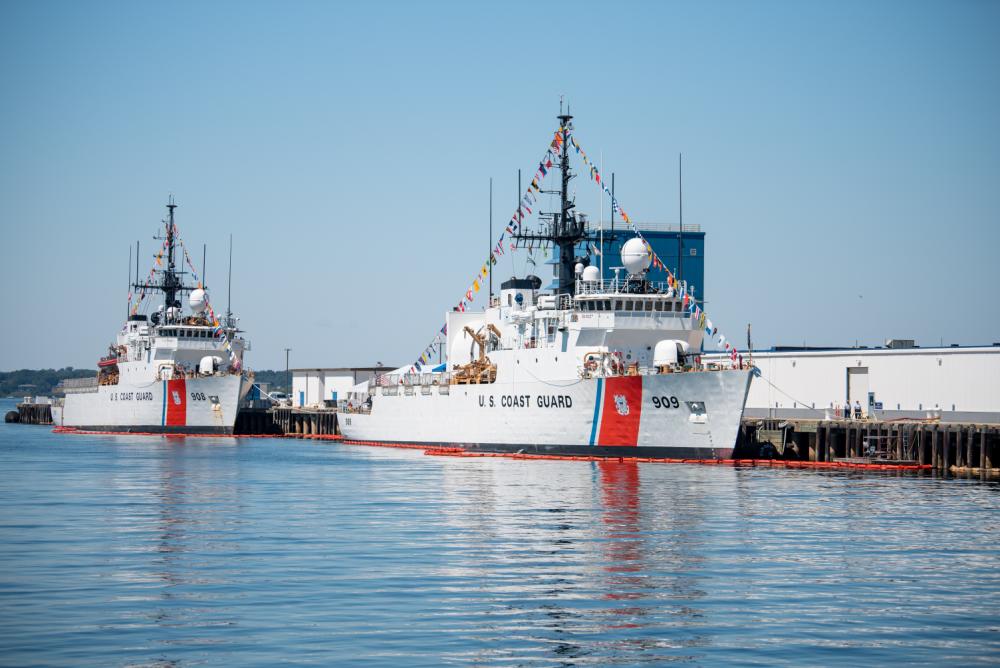
The Coast Guard Cutter Tahoma. U.S. COAST GUARD
Newport, R.I. — The crew of the USCGC Tahoma (WMEC 908) returned to their new homeport Sept. 19 after a 66-day patrol in the Northeast Atlantic Ocean and Caribbean Sea, the Coast Guard Atlantic Area said in a release.
During the patrol, Tahoma conducted living marine resource enforcement, search and rescue, and migrant interdiction operations.
Tahoma departed its previous homeport at Portsmouth Naval Shipyard in Kittery, Maine, for the final time in July, conducting a fisheries enforcement patrol to support the sustainability of economically important fisheries and ensure the safety of the U.S. commercial fishing fleet. Over a 32-day period, Tahoma’s crew conducted 55 commercial fishing vessel boardings, identifying 34 safety violations and four violations of fisheries law.
In August, Tahoma shifted patrol efforts to the Caribbean Sea, in response to a rise in maritime migration from Cuba, to detect, deter and intercept unsafe and illegal ventures to the United States. Tahoma intercepted and cared for 350 migrants across 27 separate cases.
“I am very proud of Tahoma’s crew for their efforts over the past two months. The crew’s ability to transition between two very different missions is a testament to their dedication, perseverance, and devotion to duty. I am proud of the significant impact this crew made on the safety and sustainability of the North Atlantic commercial fishing industry as well as their efforts in responding to the current increase in maritime migration from Cuba,” said Cmdr. Piero Pecora, commanding officer of Tahoma.
Tahoma is a 270-foot medium-endurance cutter homeported in Newport with 100 crewmembers. The cutter’s primary missions are counter drug operations, migrant interdiction, enforcing federal fishery laws and search and rescue in support of Coast Guard operations throughout the Western Hemisphere.
Analyst: Unmanned Systems Developers Need to Create Platforms That Allow Human Interaction
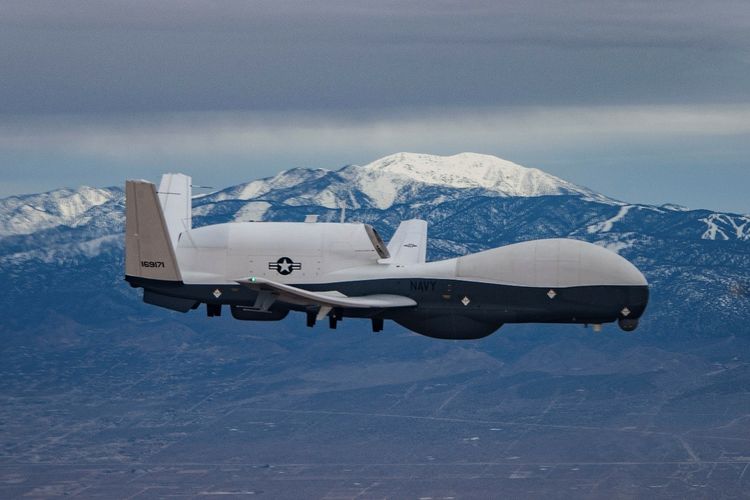
Unmanned systems that can operate alone, such as this MQ-4C Triton, could take on more missions if they could also be controlled by people for some missions, a defense analyst said Sept. 22. NORTHROP GRUMMAN
ALEXANDRIA, Va. — The developers of unmanned systems must do more to create platforms that can operate in the “messy middle” between being totally autonomous and being controlled remotely by humans, with some autonomy but also some ability for humans to interact with the vehicle, an analyst said Sept. 22 during a defense industry event.
Bryan Clark, a senior fellow and director of the Center for Defense Concepts and Technology at Hudson Institute, told attendees of the AUVSI Defense conference that a lot of focus has been placed on getting unmanned systems to the field faster, and the way to do that is to introduce a manned element to make the system more flexible — which also opens up new missions the platform can do.
“It requires you to increase the level of human involvement in the machine and operate in this ‘messy middle’ where you have varying levels of human-machine interaction,” he said after the event.
Right now, most unmanned platforms fall in two categories: a completed automated intelligence, surveillance, and reconnaissance platform that operates independently of the manned force, and remotely operated vehicles that are entirely dependent on human input.
“Those are basically the bulk of the unmanned vehicle spectrum,” Clark said. “There’s not that much in the middle where you have the mixed operator-machine interaction. It’s hard to build a force around that, because you’re not sure how much operator intervention you need for a particular mission and scenario, but that’s where the value lies.
“If you have a force that can operate between a lot and a little human intervention depending on the vehicle, it gives your commanders lots of options, and it mitigates some of the automation shortfalls,” he continued.
Clark said the Navy is already having to take that approach with some unmanned surface vehicles that were supposed to be entirely automated for months at a time.
“They are finding out they’re not lasting as long as they were hoping,” he said. “It’s not a six-month deployment — it’s more like a week at a time, and then they need to fix and maintain and refuel them, and some cases may have to put people on there all the time.”
It is the same situation with unmanned aerial vehicles, such as MQ-4C Tritons that can operate on their own but would need human intervention in order to be used for something more “creative” like as a targeting platform for missile attacks. “You need humans operating sensors and telling the vehicle where to go,” he said.
“It’s the messy middle where you have an undefined level of automation and human interaction by design,” he added. “That’s where 90% of the DoD mission set lies. Until you are ready to bring unmanned systems into that middle part where most of the work is, you’re never going to realize their benefits.”
Cruiser USS Anzio Decommissioned After 30 Years of service
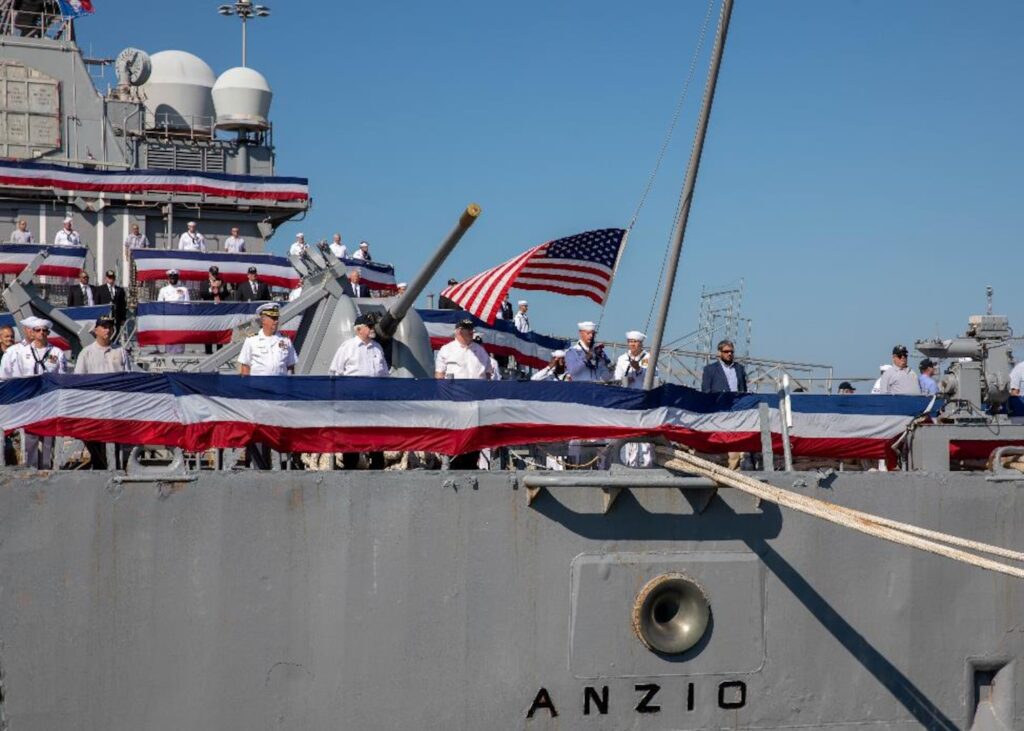
Sailors and plank owners of the Ticonderoga-class, guided-missile cruiser USS Anzio (CG 68) haul down the pennants, the jack and the ensign during the ship’s decommissioning ceremony onboard Naval Station Norfolk, Sept. 22. Anzio was decommissioned after 30 years of service. U.S. NAVY / Mass Communication Specialist 3rd Class Bradley Rickard
NAVAL STATION NORFOLK — With plank owners, former crew members, and families of the Battle of Anzio veterans looking on, USS Anzio (CG 68) crew decommissioned their ship at a Naval Station Norfolk ceremony Sept. 22, Naval Surface Force Public Affairs said in a release.
Retired Capt. H. Wyman Howard Jr., Anzio’s first commanding officer, fondly remembered how the ship was brought to life three decades ago.
“Four hundred young men with the average age of 20 years old, 66% of whom had never been to sea before, ran onto Anzio and brought her alive,” said Howard during his remarks.
“At the commissioning, I wrote the following letter to Team Anzio: ‘This day marks the most significant milestone in the life of Anzio: she comes alive! … Whether you fought at the Anzio beachhead, welded a piece of her steel, supervised her construction, or gave your love and support to us during 20 months of hard work, you are a valued member of Team Anzio. Thank you for all the hours, hard work, and sacrifices you made to make this day a reality.’”
The event comes just months after the ship’s 30th commissioning anniversary. Hundreds gathered to celebrate the ship’s distinguished history and military service.
Anzio was built by Ingalls Shipbuilding in Pascagoula, Miss., and commissioned in Norfolk, May 2, 1992.
It is the second ship to bear the name Anzio and honors the Allied Forces beachhead invasion at Anzio and Nettuno, Italy, during World War II. The strategic importance of the Battle of Anzio to the overall Allied effort in Europe, however, is often underestimated. The two German corps engaged on the Anzio front were originally destined for Normandy. The success of the Allied landings on the beaches in France in June 1944 were due largely to the tenacity of the Allied forces at Anzio.
The Ticonderoga-class, guided-missile cruiser deployed for the first time Oct. 20, 1994, as part of the Dwight D. Eisenhower Battle Group. During that deployment the crew participated in operations conducted in the Mediterranean Sea, Indian Ocean, Arabian Gulf, Adriatic Sea and Black Sea. It would be the first of many Anzio deployments.
Over the years, the Anzio team supported Operation Iraqi Freedom, firing more than a dozen Tomahawk missiles while on station and served as the flagship for Combined Task Force 151 supporting anti-piracy efforts off the horn of Africa. The crew also picked up 10 U.S. Navy Sailors for transport and medical evaluations after being held in Iranian custody having been captured after their two naval boats unintentionally entered Iranian waters.
After decommissioning, the ship is slated to be towed in November to the Navy’s Inactive Ship’s facility in Philadelphia, Pa., where it will be in a Logistical Support Asset status.
U.K. and U.S. Conduct SINKEX during Atlantic Thunder 22
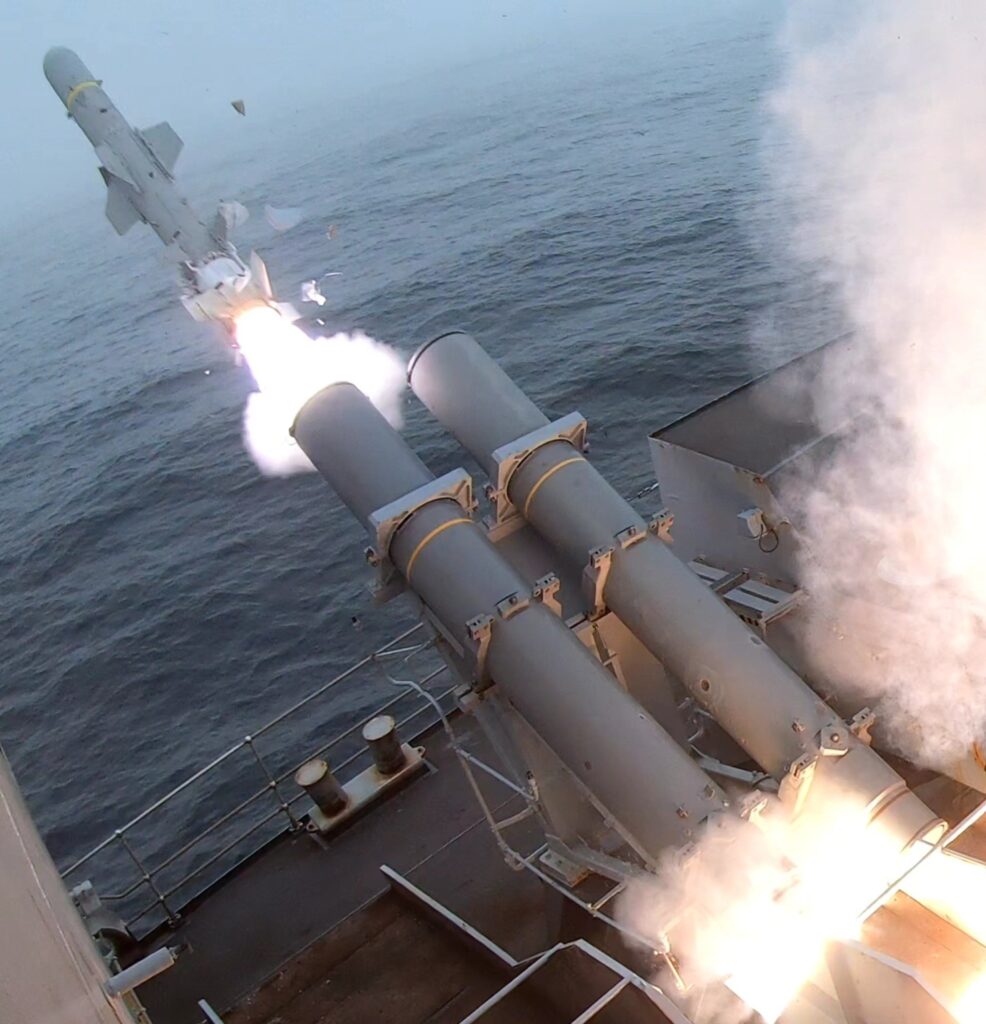
The U.K. and U.S. navies conducted a sinking exercise Sept. 7 in the North Atlantic. U.S. NAVY
ATLANTIC OCEAN — Ships and aircraft from the United Kingdom and the United States conducted a long-planned multi-domain sinking exercise (SINKEX) called Atlantic Thunder 22 in the North Atlantic, Sept. 7, U.S. Naval Forces Europe-Africa Public Affairs said Sept. 23.
Atlantic Thunder 22 participants, assigned to U.S. Naval Forces Europe, U.S. Air Forces Europe, the U.K. Royal Navy and U.K. Royal Air Force sank the decommissioned guided missile frigate ex-USS Boone, during the live-fire SINKEX to develop combined proficiency in tactics, targeting and live-firing against a surface target at sea.
“Sinking exercises not only provide excellent opportunities to gain real world operational experience in long range maritime strikes but also demonstrate the collective power of our combined forces,” said Rear Adm. Oliver “Ollie” Lewis, U.S. Naval Forces Europe-Africa’s (NAVEUR-NAVAF) Director of Maritime Operations. “Most importantly, gaining real world proficiency in the tactics, techniques and procedures we have developed and tested alongside our British Allies not only validate our weapons systems but ultimately contribute to NATO alliance readiness.”
The exercise was not only a unique and valuable opportunity for sharpening and proving partner capabilities, but also an exercise of multiple firsts.
The ex-Boone was struck by Martlet air-to-surface missiles from Wildcat helicopters assigned to the Type 23 frigate HMS Westminster. The helicopters provided inaugural laser targeting for fixed-wing U.K Royal Air Force Typhoons using Paveway IV precision guided munitions.
A U.S. Navy P-8 Poseidon maritime patrol aircraft assigned to Patrol Squadron 46 shot a long range anti-ship missile. U.S. Air Force F-15E Eagles, assigned to 494th Fighter Squadron, dropped maritime strike joint direct attack munitions.
Finally at sea, the U.S. Navy Arleigh Burke guided-missile destroyer USS Arleigh Burke (DDG 51) struck the ex-Boone with a Standard Missile 6 (SM-6), the first anti-ship SM-6 engagement in the U.S. European Command area of responsibility, while HMS Westminster fired the first live RGM-84D Harpoon missile salvo from the U.K. since 2004.
Also aboard Arleigh Burke, Marines assigned to the 22nd Marine Expeditionary Unit provided vital imagery and battle damage assessment by deploying a V-BAT 128 vertical take-off and landing unmanned aerial vehicle, marking the first launch of a V-BAT 128 from an Arleigh Burke guided-missile destroyer.
“Ex Atlantic Thunder has demonstrated that U.K. and U.S. naval and air forces can integrate to deliver an end-to-end kill chain against a maritime target at long range,” said Cmdr. Ed Moss-Ward, commanding officer of HMS Westminster. “The integration of high end weapons, sensors and communications with our NATO allies is key to the collective war fighting capability of the Alliance demonstrated by the sinking exercise. The firings have supported the development of the Royal Navy’s targeting and weapon capabilities, and afforded opportunity to conduct realistic training to validate tactics and operating procedures.”
Former U.S. Navy vessels used in SINKEXs, referred to as hulks, are prepared in strict compliance with regulations prescribed and enforced by the Environmental Protection Agency under a general permit the Navy holds pursuant to the Marine Protection, Research and Sanctuaries Act.
Prior to being transported for participation in a sinking exercise, each vessel undergoes a rigorous cleaning process for environmental safety. Aligned with U.K. Ministry of Defense environmental policy, robust monitoring was conducted above and below the sea’s surface with trained personnel using specialized equipment to reduce the overall risk of inadvertently impacting the marine environment and marine mammals during the SINKEX.
Ex-Boone is a decommissioned guided missile frigate, which entered United States Naval service, May 15, 1982. It was decommissioned on Feb. 23, 2012. The 20th ship of the Oliver Hazard Perry class, it was the first ship named for Vice Adm. Joel Thompson Boone, a Medal of Honor recipient and the most highly decorated medical officer during World War I.
Admiral: Safety, Retention, and Efficiency Are Navy’s Top Priorities for Shipyard Workers
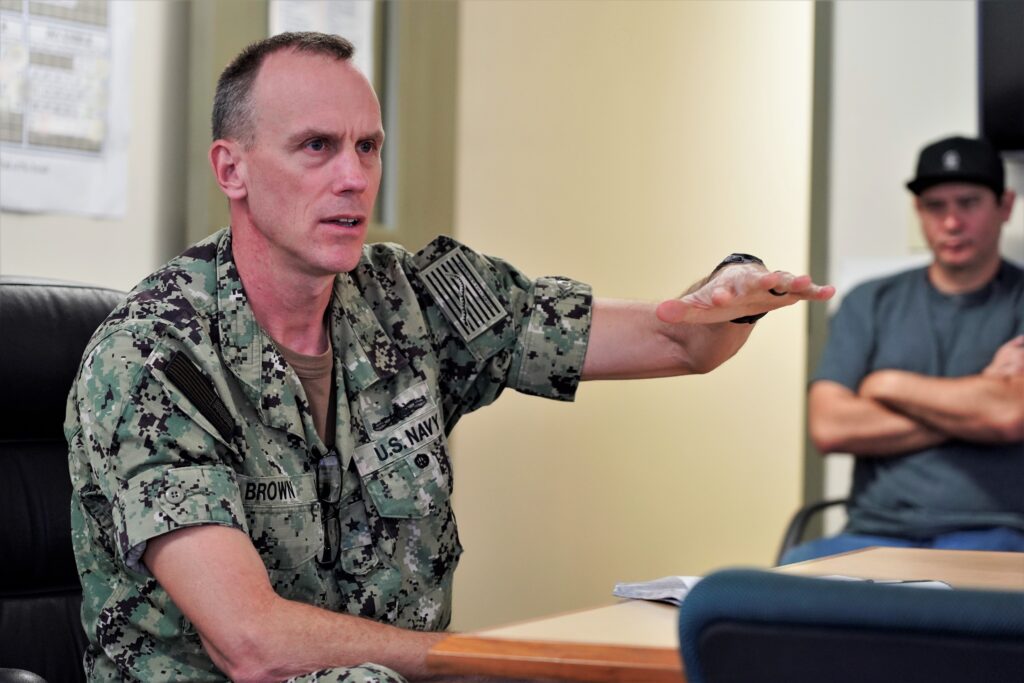
Rear Adm. Scott Brown visited Pearl Harbor Naval Shipyard and Intermediate Maintenance Facility (PHNSY & IMF) in May to review shipyard operations in his new role as the deputy commander for industrial operations, Naval Sea Systems Command. U.S. NAVY / Marc Ayalin
VIRGINIA BEACH, Va. — Retaining shipyard workers and increasing their efficiency are the top priorities — aside from ensuring their safety — for the Navy’s deputy commander of industrial operations, he said at an American Society of Naval Engineers Conference in Virginia Beach on Sept. 20.
Rear Adm. Scott Brown, deputy commander of logistics, maintenance and industrial operations at Naval Sea Systems Command, said the Navy is doing all it can to maximize its workforce’s capabilities while also growing it to meet maintenance challenges.
The Navy has been battling a submarine maintenance backlog for years, causing the service to even resort to sending some attack submarines to private yards and hiring more personnel. A Congressional Budget Office report predicted the Navy is likely to see labor supply shortages for the next few decades.
Brown said his top three priorities were safety, production capacity, and throughput and efficiency.
On the subject of safety, he stated there were 37,000 shipyard workers and their safety remains his top priority. After that, he is focused on production capacity as retention proves difficult in a hot economy where there is a high demand for workers. His office is trying to deal with that by focusing on retention so there are fewer gaps the Navy must fill through hiring, he said.
The final priority is throughput in efficiency, as Brown stated he wanted to make the workforce they have now as productive as they can possibly be.
Marine Corps ACVs Ok’d for Open-Ocean Waterborne Operations
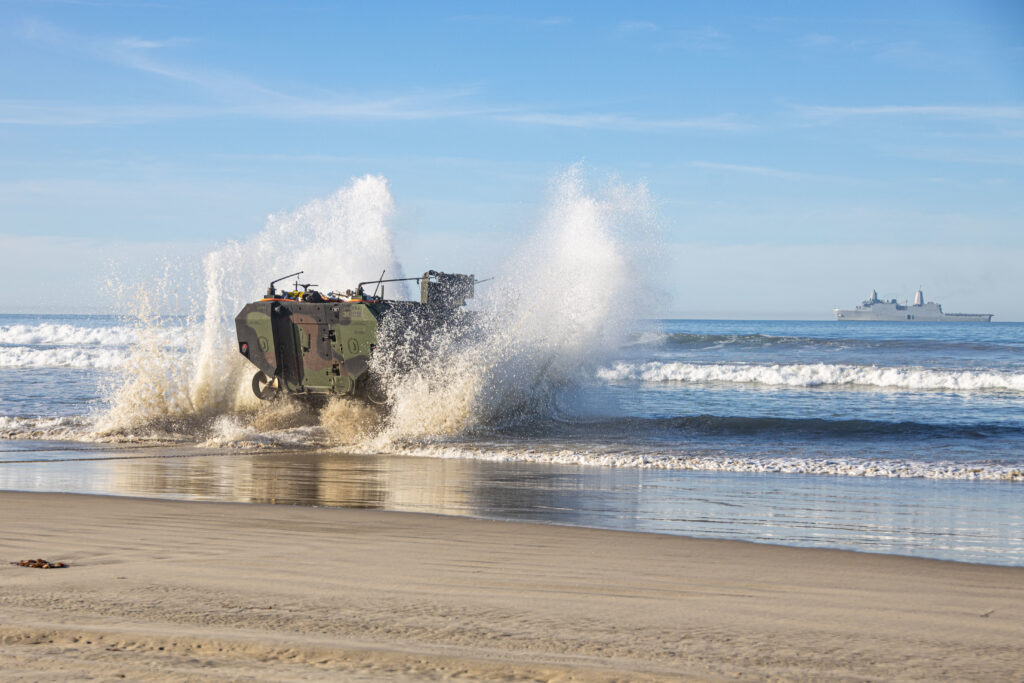
U.S. Marines assigned to the 3rd Assault Amphibian Battalion, 1st Marine Division, conduct waterborne training with an Amphibious Combat Vehicle from shore to loading amphibious transport dock ship USS Anchorage (LPD 23) at Marine Corps Base Camp Pendleton, California, Feb. 12. U.S. MARINE CORPS / Lance Cpl. Willow Marshall
ARLINGTON, Va. — Marine Corps Amphibious Combat Vehicles are authorized to return to open-ocean waterborne operations following the establishment of interim guidance to enhance operational safety when conducting ACV training, Headquarters Marine Corps said Sept. 22.
On July 20, the Marine Corps paused all waterborne ACV operations as a result of a training incident at Marine Corps Base Camp Pendleton, California, two days prior. The service immediately began an internal review to ensure the assault amphibian community’s practices and procedures maintain a capable and ready force without sacrificing the safety of Marines and Sailors.
On July 22, Headquarters Marine Corps authorized ACV water operations in protected waters only, Area 21 and the Del Mar Boat Basin, to sustain crew proficiency and meet entry-level training requirements, but open-ocean and surf restrictions remained until Sept. 22.
“We remain steadfast to the safety of our Marines who conduct amphibious operations, and expect strict adherence to established standards that allows our ACVs to return to waterborne operations,” said Lt. Gen. David J. Furness, deputy commandant for Plans, Policies and Operations. “Our training and discipline allows us to continue sharpening our warfighting abilities to remain the Nation’s premier expeditionary force in readiness.”
The interim maximum surf conditions identified include a significant breaker height of four feet, which allows the ACV to operate safely while maintaining a high-state of readiness for the ACV community. The interim maximum surf conditions are conservative and derive from existing safe operating surf conditions for U.S. Navy and Marine Corps landing craft, and allows the service to better understand surf conditions through ongoing vehicle testing.
Prior to the implementation of the interim guidance, ACV operations remained restricted to protected waters and land operations, to include live-fire training.
U.S., Israel Complete Unmanned Exercise in Gulf of Aqaba
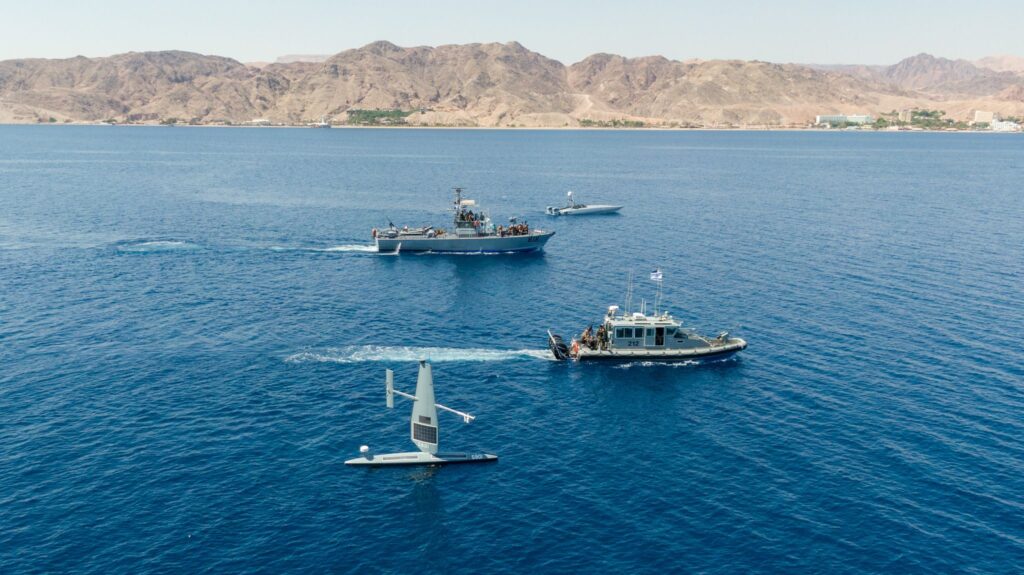
Vessels from the Israeli Navy and U.S. Naval Forces Central Command operate in the Gulf of Aqaba with two unmanned surface vessels, a Devil Ray T-38, top, and Saildrone Explorer, bottom, during exercise Digital Shield, Sept. 21. U.S. NAVY
MANAMA, Bahrain — Forces from Israel and the U.S. completed a four-day exercise in the Gulf of Aqaba on Sept. 22, U.S. Naval Forces Central Command Public Affairs said.
The exercise, called Digital Shield, was a bilateral training event between U.S. Naval Forces Central Command and Israeli naval forces that focused on enhancing maritime awareness using unmanned systems and artificial intelligence in support of vessel boarding operations.
U.S. participants included members of NAVCENT’s unmanned systems and artificial intelligence task force, Task Force 59, and the U.S. Coast Guard. A Devil Ray T-38 and Saildrone Explorer unmanned surface vessel also participated.
“Integrating unmanned systems with our partners advances our integration efforts,” said Lt. Cmdr. William Ricketts from Task Force 59. “Ultimately, we are strengthening ties and innovating new capabilities with regional partners to enhance maritime security.”
NAVCENT established Task Force 59 in September 2021 to integrate new unmanned systems and artificial intelligence into U.S. naval operations across the Middle East. Since its launch, the task force has operated a suite of new unmanned systems based at operational hubs in Bahrain and Aqaba, Jordan.
The task force partners with industry and international forces for operational evaluation and employment. The Middle East region’s unique geography, climate and strategic importance offer an ideal environment for unmanned innovation.
NAVCENT is headquartered in Manama, Bahrain, and includes maritime forces operating in the Arabian Gulf, Gulf of Oman, Red Sea, parts of the Indian Ocean and three critical choke points at the Strait of Hormuz, Suez Canal and Bab al-Mandeb.
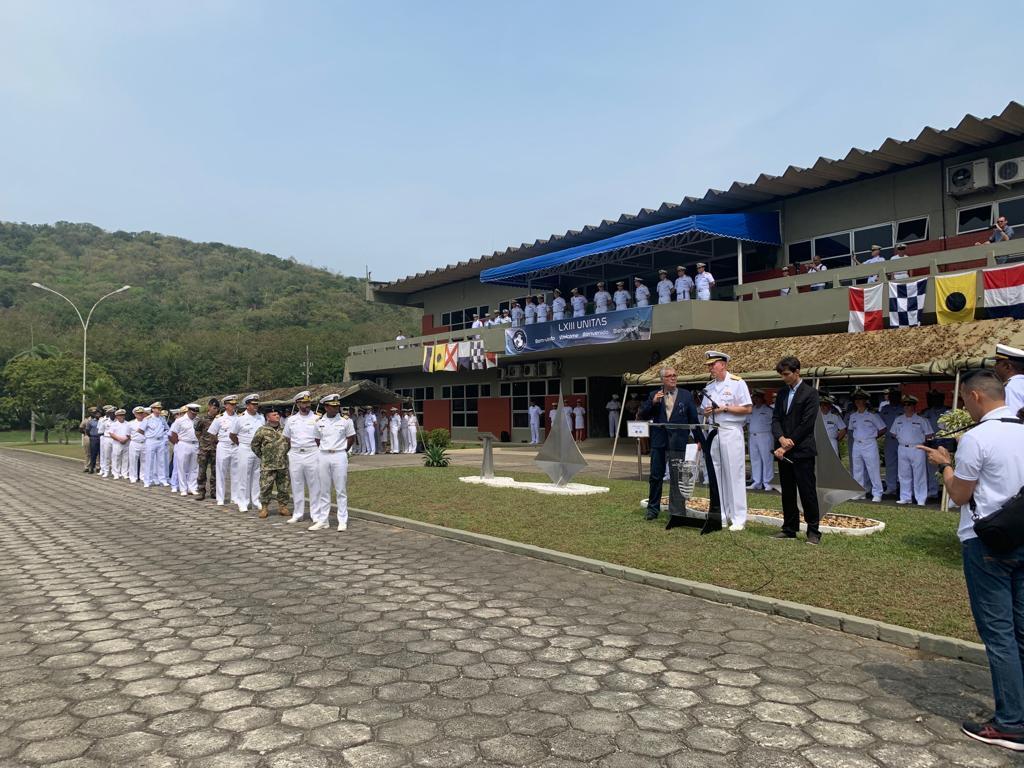
UNITAS Concludes After Successful Exercise
Commander, U.S. Naval Forces Southern Command/U.S. 4th Fleet, Rear Adm. Jim Aiken, congratulates participants for their performance at the UNITAS LXIII Closing Ceremony in Rio de Janeiro, Sept. 22. U.S. NAVY / Cmdr. Myers Vasquez
RIO DE JANEIRO – UNITAS LXIII (63), the world’s longest-running multinational maritime exercise concluded with a closing ceremony in Rio De Janeiro on Sept. 22, U.S. Naval Forces Southern Command / U.S. 4th Fleet said in a release.
UNITAS, Latin for “unity,” was conceived in 1959, first executed in 1960 and held every year since. This year marked the 63rd iteration of the world’s longest-running annual multinational maritime exercise.
This year’s exercise was hosted by the Brazilian navy and included 19 warships/vessels, one submarine and 21 aircraft that conducted scenario-driven joint and combined operations and training in and off the coast of Rio De Janeiro. The exercise coincided with Brazil’s bicentennial, a historical milestone commemorating 200 years of the country’s independence and the birth of their navy.
“It is exciting to see 19 nations from across Central and South America, the Caribbean, Europe, and Africa participating in UNITAS,” said Rear Adm. Jim Aiken, commander, U.S. Naval Forces Southern Command/U.S. 4th Fleet. “This exercise is a demonstration of not only our commitment to the region, but also the strong relationships forged between our nations. The Western Hemisphere is our shared home and exercises like UNITAS reinforce our permanent geographical and cultural ties, connecting us to our shared history and our shared future.”
Navy and marine forces from Brazil, Cameroon, Chile, Colombia, Dominican Republic, Ecuador, France, Guyana, Jamaica, Mexico, Namibia, Panama, Paraguay, Peru, South Korea, Spain, United Kingdom, Uruguay and the United States participated in the exercise.
While the overarching goal was to develop and test command and control of forces at-sea, training in this exercise addressed the spectrum of maritime operations. Specifically, there were scenarios addressing electronic warfare, anti-air warfare and air defense, anti-surface warfare, live fire, maritime interdiction, littoral operations and amphibious operations.
“One of the main benefits of UNITAS is the ability of all participating nations to train together, and exchange ideas and tactics,” said Capt. Meger Chappell, deputy commander, Destroyer Squadron 40, and deputy commander, UNITAS Task Group 138.20. “Over the course of the exercise I saw firsthand how the participating nations came together as a multinational task force to meet all objectives. Together we have strengthened our maritime partnerships, enhanced our proficiency and improved our collaboration and interoperability.”
The exercise progressed in phases, beginning in port with sporting events and community relations projects to build relations between partner nations.
The at-sea phase included a multi-threat, multi-day scenario that allowed participants to work together, further increasing preparedness for real-world crises that would require a multinational force response effort. Events included: surface tactical maneuvers, illegal drug trafficking training, live-fire exercises, anti-submarine warfare exercises, air defense exercises and maritime interdiction operations.
The amphibious phase included U.S. Marines with partner nations taking positions at areas along the coast to train in support of greater naval operations. This phase also consisted of landing from naval vessels.
CNO Meets with Chief of Royal Australian Navy; Discusses Increased Operations and Partnership
Chief of Naval Operations Adm. Mike Gilday hosted the new head of the Royal Australian Navy, Vice Adm. Mark Hammond, at the Pentagon on Sept. 22. U.S. NAVY / Chief Mass Communication Specialist Amanda Gray
WASHINGTON (NNS) — Chief of Naval Operations Adm. Mike Gilday hosted the Royal Australian Navy’s Chief of Navy Vice Adm. Mark Hammond at the Pentagon on Sept. 22, Gilday’s press office announced.
During the visit, the two leaders focused on interoperability and their ongoing work to expand and strengthen maritime security in the Indo-Pacific region.
“Our partnership with Australia is rooted in our shared common values and friendship,” said Gilday. “Our history and like-minded goals allow us to work seamlessly together across a range of military operations to keep the seas open and free.”
Gilday and Hammond discussed progress of the trilateral security partnership signed in September 2021, known as AUKUS — referencing Australia, the United Kingdom, and United States — which was implemented to develop and provide joint advanced military capabilities to promote security and stability in the Indo-Pacific region.
Since the announcement, each of the participating countries have reaffirmed their commitment to a free and open Indo-Pacific, and more broadly to an international system that respects human rights, the rule of law and the peaceful resolution of disputes free from coercion.
“We are excited for the future and are honored to work with the Royal Australian Navy day-in and day-out, committed to a warfighting force capable of assurance, deterrence, and the high-end fight,” said Gilday.
The U.S. and Australian navies share mutual interest in maintaining freedom of navigation and adherence to the rules-based international order.
The two navies conduct frequent cooperative deployments, and regularly operate together during flagship theater exercises like Pacific Partnership, Rim of the Pacific and Australian-led Kakadu.
This was Gilday’s first in-person meeting with Hammond, who assumed command of the Royal Australian Navy in June 2022.