HII Places Second Nikon SLM Solutions NXG 600E Order
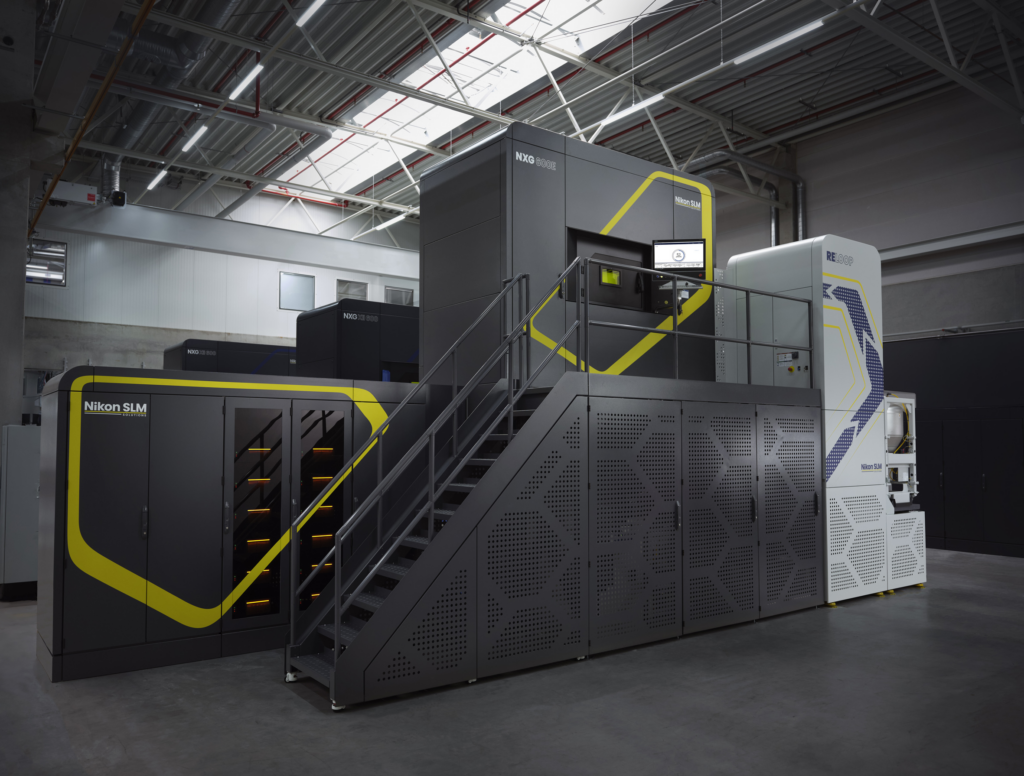
Long Beach, CA, USA – Nikon SLM Solutions, a unit of Nikon Advanced Manufacturing and global leader in laser powder bed fusion (L-PBF) metal additive manufacturing, today announced that HII’s (NYSE: HII) Newport News Shipbuilding (NNS) division has placed a second NXG 600E order, further strengthening its advanced manufacturing capabilities in support of U.S. Navy shipbuilding and the Maritime Industrial Base (MIB).
The order builds on a previously announced NXG 600E acquisition and reflects HII’s continued investment in large-format metal additive manufacturing to enable production of large, complex components and replacement of legacy castings for critical naval applications.
Through close collaboration with HII, Nikon SLM Solutions will lead parameter development and process maturation for L-PBF production of NiAlBr components, expanding material capability for additive manufacturing within U.S. Navy supply chains and supporting long-term maritime readiness.
“This second NXG 600E order reflects HII’s leadership and long-term commitment to advancing the maritime industrial base through additive manufacturing,” said Hamid Zarringhalam, CEO of Nikon Advanced Manufacturing and Chairman of the Board, Nikon SLM Solutions. “Expanding critical materials capabilities such as Nickel Aluminum Bronze is a foundational part of Nikon Advanced Manufacturing’s holistic approach, combining scalable platforms, material and process development, and
U.S.-based production and support. Together with HII, we are enabling additive manufacturing to move from isolated applications to a repeatable, industrial capability that supports U.S. Navy shipbuilding at scale.”
Keel Laid for Future USNS Ruth Bader Ginsburg
From Team Ships, Feb. 13, 2026
SAN DIEGO - The keel for the future USNS Ruth Bader Ginsburg (T-AO 212) was authenticated at the General Dynamics NASSCO shipyard on Feb. 13. The event marked a major construction milestone for the John Lewis-class replenishment oiler.
The ship’s namesake, Ruth Bader Ginsburg, was an advocate for justice who served on the U.S. Supreme Court for 27 years.
Keel laying authentication ceremonies are a centuries-old tradition marking a significant construction milestone where a ship transitions from design to reality. The keel was authenticated when the ship’s sponsor, Jane Ginsburg, daughter of the late Justice, welded her initials onto a steel plate. This plate will be permanently affixed to the ship’s hull, remaining with the vessel throughout its entire service life as a symbol of its beginning.
“This keel laying marks the first of many significant milestones for this ship and we are excited to bring this vessel to the Fleet,” said John Lighthammer, program manager, Auxiliary and Special Mission Shipbuilding Program Office.
John Lewis-class replenishment oilers are a critical component of the Navy’s Combat Logistics Force and are a cornerstone of the Navy’s fuel delivery capability. These 746-foot vessels are engineered to provide robust support, with the capacity to carry up to 162,000 barrels of diesel ship fuel, jet fuel, and other cargo.
Operated by the Military Sealift Command, these ships enable the Navy’s warships to remain at sea for extended periods, providing the fuel, supplies, and provisions necessary to sustain global missions.
As a Department of War’s acquisition organization, PEO Ships is responsible for executing the development and procurement of all destroyers, amphibious ships and craft, and auxiliary ships, including special mission ships, sealift ships and support ships.
UTIC Highlights Investments, Collaboration, and Workforce Development
From The Undersea Technology Innovation Consortium, Feb. 12, 2026
MIDDLETOWN, R.I. – The Undersea Technology Innovation Consortium (UTIC) had a significant year of growth in 2025, expanding its membership and accelerating innovation in undersea and maritime technologies.
In 2025, UTIC marked the 100th prototype project award, representing $1.5 billion in total prototype project funding to UTIC members to advance critical innovation for the U.S. Navy across the undersea tech domain. The consortium also continued its commitment to workforce development, surpassing $100,000 in awarded STEM scholarships to help build the next generation of maritime and undersea tech talent.
UTIC’s membership, representing 300 organizations across over 40 states, highlights increasing national engagement from industry and academic partners. In addition, UTIC convened more than 200 undersea tech industry leaders through two Industry Days, an AUKUS Forum, and a Defense Investment Forum, creating opportunities for collaboration, knowledge-sharing, and partnership.
In 2025, UTIC entered into a Cooperative Research and Development Agreement (CRADA) with Naval Undersea Warfare Center (NUWC) Division Newport, strengthening collaboration to advance innovative technologies that support the U.S. Navy’s most critical missions.
These milestones underscore UTIC’s growing role as a national leader for collaboration, innovation, and investment in undersea and maritime technologies.
“UTIC is committed to propelling undersea tech advancement. The ongoing success of our partnership with the Navy, combined with our strong commitment to workforce development and collaboration, fosters innovation across the undersea and maritime domains,” said Molly Donohue Magee, UTIC CEO.
Military Sealift Command Delivers Needed Cargo to Antarctica
Feb. 12, 2026 | By Sarah Cannon, Military Sealift Command Pacific
The Military Sealift Command chartered heavy lift ship Plantijngracht is conducting cargo offload operations at McMurdo Station, Antarctica, as part of MSC’s ongoing support of the annual Antarctic resupply mission: Operation Deep Freeze 2026.
The Plantijngracht arrived in Winter Bay, Antarctica, Feb. 4, where its crew offloaded a 65-ton floating modular causeway system. Sections of the system were assembled on the ship’s deck before being offloaded, connected and floated into place by the Army’s 7th Transportation Battalion. The causeway is being used instead of the traditional ice pier this year due to the size and weight of the ship’s cargo.
While the focus of the mission is on cargo delivery, the causeway system came with its own unique set of challenges that planners had to anticipate and account for to ensure a smooth operation.
“The [causeway system] adds to the overall timeline of the cargo offload. It takes approximately three to four days to build at the start of the operation and the same amount of time to break down at the end,” said Marie Morrow, the ship’s liaison to the Joint Task Force Support Forces Antarctica staff. “Weather starts to deteriorate quickly in the second half of February, as the summer season comes to a close, so those extra six to eight days can increase the likelihood of weather challenges.”
Once the system was in place and secure, the ship was met by members of Navy Cargo Handling Battalion 1 and cargo offloading operations began. The ship is delivering 372 pieces of cargo, consisting of containers filled with dry goods and supplies needed for survival at the remote Antarctic outpost.
Logistical moves are nothing new for Military Sealift Command; in fact, around the world, they are almost a daily occurrence. However, moving cargo in the harshest environment on Earth is a mission unto itself. Antarctica is known for its bitterly cold temperatures, harsh winds, ice conditions and weather that can change in a matter of minutes. All factors that need to be considered as operations unfold.
“The austere environment adds a lot of challenges to the operation. Unpredictable weather conditions, freezing cargo gear and high winds are common hurdles faced in the cargo operation. Ice conditions vary from year to year and bring different problems,” Morrow said.
The presence of thick ice can slow down the ship’s arrival at the station. Little to no ice or open water conditions can cause shoreside erosion at the wharf.
“To handle all of the challenges, we control what we can within the operation,” she said. “We use past lessons learned to handle challenges that come up.”
Following the offload, the ship will be loaded with containers of retrograde cargo for transportation off the continent. This includes trash and recyclable materials for disposal and equipment no longer required at the station, as well as the causeway system.
Before departing McMurdo Station, the crew will also load ice-core samples that will be stored on the ship in a subzero freezer. The samples will be delivered to the U.S. for scientific study.
“The cargo delivery from California to Antarctica is one of the longest supply chains in the world. The ship plays a huge role in delivering cargo that supplies and sustains multiple stations on the continent,” Morrow said. “The crews are always quite enthusiastic to be a part of such a unique and remote operation. For most, it is a once-in-a-lifetime opportunity.”
US Navy transfers 10 TH-57 helicopters to Sri Lanka Air Force
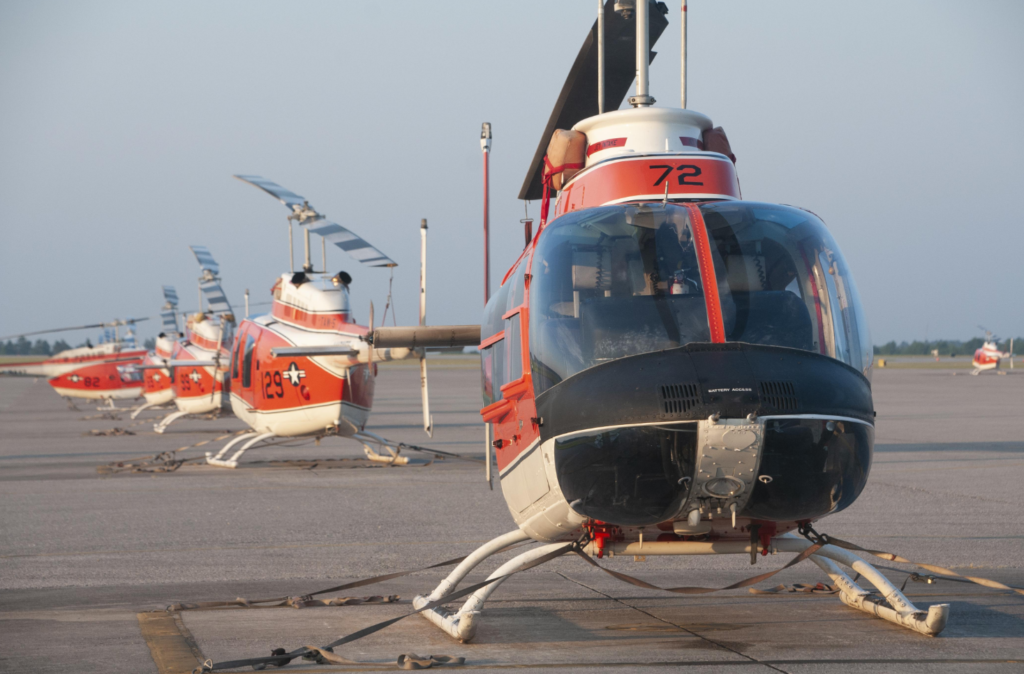
Ten U.S. Navy TH-57 Sea Ranger helicopters, like the ones pictured here, are being donated to Sri Lanka under the U.S. Excess Defense Articles Program, strengthening the defense cooperation between the United States and Sri Lanka.
From Naval Air Systems Command, Feb. 12, 2026
NAS Patuxent River, Md. — The United States Navy recently transferred 10 TH-57 Sea Ranger helicopters to the Sri Lanka Air Force, strengthening the defense cooperation between the United States and Sri Lanka.
“The transfer of excess helicopters reflects the United States Navy’s commitment to international partnership,” said Naval Undergraduate Flight Training Systems Program Office (PMA-273) program manager Capt. Duane Whitmer. “By providing platforms that still have significant operational value, we aim to support the Sri Lanka Air Force’s ability to respond to humanitarian assistance, disaster relief and training needs while strengthening the long-standing relationship between our two nations.”
The U.S. donated the TH-57s to Sri Lanka in early January at no cost for the aircraft under the U.S. Excess Defense Articles (EDA) Program. The helicopters will be used for Sri Lanka’s Air Force pilot training, in its operational fleet, and for disaster response and humanitarian assistance.
“Defense cooperation is an important pillar of international relations and initiatives like the transfer of excess helicopters help build trust, interoperability and mutual understanding between partner nations,” said Douglas Mankin, Naval Air Systems Command’s Security Cooperation Office foreign military sales lead for the Adversary and Specialized Aircraft Program Office (PMA-226). “The United States values its relationship with Sri Lanka and remains committed to working together to promote regional stability and shared security interests.”
The United States Navy used the TH-57 Sea Ranger — a military derivative of the commercial Bell Jet Ranger 206 — for pilot training since it became operational in 1968 and recently replaced the aircraft with the TH-73 Thrasher.
This initiative underscores the United States’ continued commitment to supporting Sri Lanka’s defense readiness, humanitarian assistance efforts and long-term regional stability. The first batch of aircraft is scheduled to arrive in Sri Lanka as early as February, with additional deliveries to follow.
PMA-273 at Naval Air Station Patuxent River oversees the TH-57 and TH-73 programs. PMA-273 develops and oversees diverse and carrier-capable naval flight training systems where student pilots and undergraduate military flight officers acquire mission-critical aviation skills necessary to carry out current and future missions of the U.S. Navy.
PMA-226 at Marine Corps Air Station Cherry Point, North Carolina, is responsible for 20 Type/Model/Series aircraft and airworthiness for upwards of 50 contractor aircraft. While the headquarters remains at Cherry Point, there are teams of acquisition professionals across the country managing the diverse portfolios of platforms and services.
SNC Signs Charter with Northrop Grumman and GA-ASI to Deliver Freedom Trainer for UJTS
From SNC, Feb. 11, 2026
SNC signed an Executive Charter with Northrop Grumman and GA-ASI to define an industry teaming in pursuit of the U.S. Navy’s UJTS program.
Team Freedom reinforces SNC’s commitment to delivering a clean-sheet, purpose-built, high-performance trainer for the U.S. Navy with low-life-cycle cost.
This collaboration supports American manufacturing that strengthens the U.S. Defense Industrial Base and opens new opportunities for Foreign Military Sales in countries including Japan, UK, Canada, Australia and others.
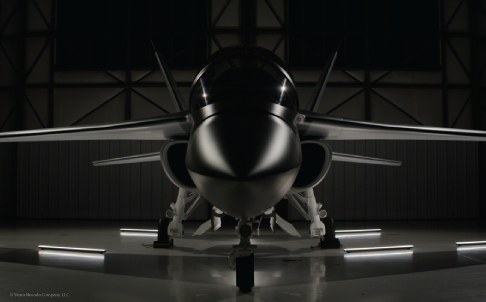
SPARKS, Nev. (Feb. 11, 2026) – SNC, a global leader in aerospace and national security, today announced it signed an Executive Charter with Northrop Grumman (NYSE: NOC) and General Atomics Aeronautical Systems, Inc. (GA-ASI) to define and execute production and manufacturing teaming relationships for its Freedom Trainer™. This strategic collaboration would combine SNC’s clean-sheet design with the expertise of Northrop Grumman and GA-ASI, to deliver a zero-compromise training solution for the U.S. Navy’s Undergraduate Jet Training System (UJTS) program.
Part of SNC’s Freedom Family of Training Systems (FoTS), the Freedom Trainer is a digitally designed clean-sheet aircraft laser focused on the Naval Training mission. At its core, the Freedom Trainer is a high performance and low-life-cycle-cost design with an Open System Architecture. Digitally integrated with a comprehensive Ground-Based Training System and Integrated Logistic System, Freedom offers the Navy a modern training system-of-systems that will meet Naval Aviation training needs for generations.
The Freedom Trainer is the only UJTS entrant specifically designed to meet Naval Aviation’s demanding training needs, including Field Carrier Landing Practice (FCLP) through touchdown. This ensures early and repetitive exposure to the Navy’s unique no-flare landing technique – a crucial skill for all combat-focused naval aviators – and reduces the need for more costly basic training later in the pipeline utilizing operational, carrier-based aircraft like the F/A-18, F-35 and F/A-XX.
Northrop Grumman’s extensive experience in aircraft production and investment in capacity ensures the Freedom Trainer is built with speed and to the most exacting standards. GA-ASI brings a proven track record in advanced manufacturing and cutting-edge technologies, ensuring precision and reliability at every step of the production process. Their robust capabilities complement SNC’s innovative design and elite systems integration, creating a training solution that is unmatched in its performance, durability and cost efficiency.
“We are committed to bringing together a world class team to deliver the Freedom Trainer as the complete solution to prepare our naval aviators with the skills and instincts they need from the start,” said Fatih Ozmen, CEO of SNC. “We look forward to welcoming Northrop Grumman and GA-ASI to Team Freedom. Together, we will shape the future of Naval Aviation training.”
“For decades Northrop Grumman has been a trusted partner in producing next gen aircraft across a spectrum of capability and mission sets, with speed and at scale,” said Tom Jones, president, Northrop Grumman Aeronautics Systems. “Leveraging our experience and our investment in capacity in support of this SNC-led team, and delivering this highly capable and efficient training system to the U.S. Navy, is an opportunity we’re excited to be exploring.”
“GA-ASI is excited to join this industry team focused on training solutions for the U.S. Navy,” said GA-ASI CEO Linden Blue. “I expect our advanced manufacturing capabilities to be an important component of Team Freedom.”
The Freedom Trainer offers significant cost savings, with engine-related lifecycle costs 40 percent lower than the current T-45 platform. With 30-40% longer sortie durations than competing platforms, the Freedom Trainer maximizes instructor and student training efficiency. Digital Training System Infrastructure ensures seamless integration across all training devices, from simulators to live aircraft, while the digital data package guarantees flexibility to adapt to future mission needs. With a 16,000-hour airframe lifespan, and industry leading lifecycle cost efficiency, the Freedom Trainer is purpose-built to deliver uncompromised Naval Aviator training performance.
The Freedom Trainer replaces end-of-life U.S. Navy and International training aircraft at significantly lower O&M with a high-performance trainer aircraft that enables the U.S. Navy and Partner Nation FMS customers to meet or exceed 4th, 5th and 6th Generation aircrew training needs. Freedom is a natural FMS mechanism to build partnership capacity and further reduce Navy life-cycle costs.
The Freedom Family of Training Systems is supported by a respected team of industry leaders committed to delivering the most advanced aviation and training capabilities. SNC’s Team Freedom includes CAE-USA, Cubic, Red 6, Martin Baker and Williams International.
Team Freedom redefines the aerospace industrial base through disruptive innovation and speed combined with an open architecture approach to deliver the training capabilities the Navy wants at a lifecycle cost the Navy needs.Combining high performance and cost-efficiency in a comprehensive training package, the Freedom FoTS is setting a new benchmark for Naval Aviation training.
NAVIFOR Showcases Information Warfare Dominance at WEST 2026
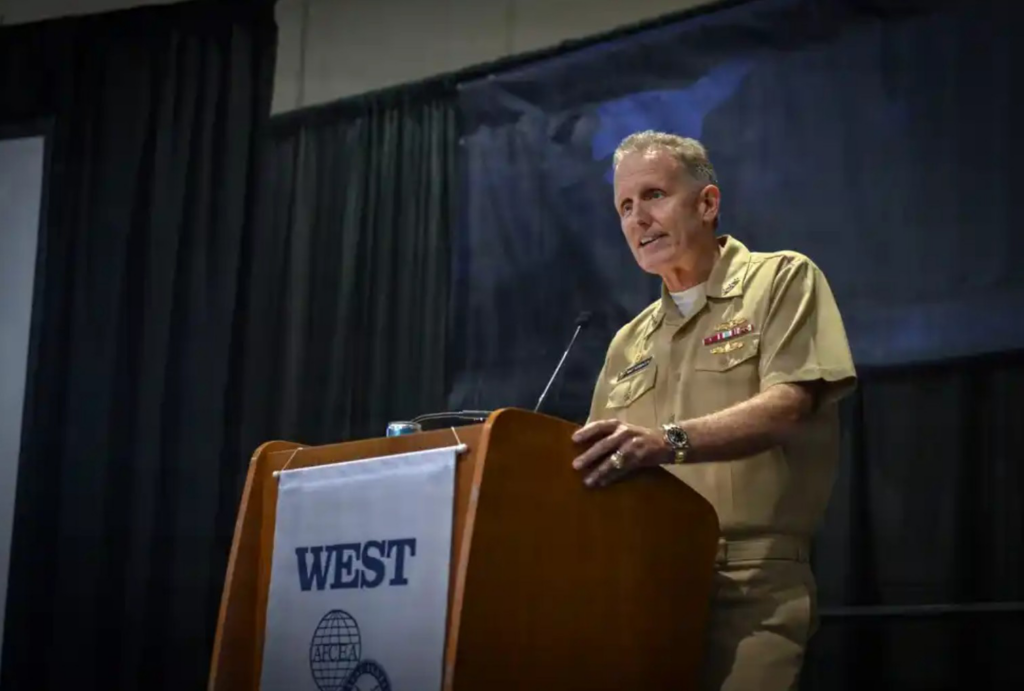
Vice Adm. Mike Vernazza, Commander, Naval Information Forces, addresses a crowd industry leaders, service members and media personnel during the Armed Forces Communications & Electronics Association International. The premier naval conference and exposition on the West coast, West is now in its 36th year of bringing military and industry leaders together. (U.S. Navy photo by Mass Communication Specialist 2nd Class Ray McCann)
San Diego – SAN DIEGO – Naval Information Forces (NAVIFOR) had a significant presence at the West 2026 conference this week at the San Diego Convention Center. As a leader in the Information Warfare (IW) community, NAVIFOR highlighted its latest advancements and strategic initiatives aimed at ensuring the Navy’s competitive edge in sustaining maritime dominance.
This year marked the 11th year for the Navy Information Warfare Pavilion, which featured displays, technology demonstrations, and direct engagement with IW subject matter experts and Sailors. The pavilion served as a central hub for collaboration between the military, industry, and academia.
Further showcasing NAVIFOR’s leadership, Vice Adm. Mike Vernazza, commander of Naval Information Forces, the Navy’s “IBoss” participated in two key panel discussions: “What is Required to Achieve 80 percent Surge Readiness?” and “From Learning to Lethality: Accelerating Technological Leadership Through Warfighter Education.”
“Our participation in these panels was a tremendous opportunity to underscore a fundamental truth: readiness and lethality are forged by our Information Warfare Sailors,” said Vernazza.
“Ultimately, our goal is to provide a worldclass professional IW force, trained, equipped and certified to conduct what our Nation may ask, manned with confident, resilient Sailors who are masters of their craft.”
Vernazza, also spoke at the Navy’s IW pavilion, and his remarks emphasized the critical evolution of information warfare. ”IW is no longer just a supporting element; we are a primary warfighting function delivering decision advantage and lethality to the fleet, from seabed to space,” stated the IBoss.
His addresses underscored the command’s focus on its people, readiness, and the operationalization of IW. ”It cannot be understated that our people have always been and remain our greatest advantage,” Vernazza emphasized. He highlighted several key initiatives driving the community forward, including:
Initiated the stand-up of Information Warfare Squadrons (IWRONs) to place IW Commanders in command earlier, modeling the structure after Air Wings and Destroyer Squadrons. This includes the ongoing 48-month pilot program for IWRON Two on the East Coast and the upcoming IWRON on the West Coast.
Graduated the first Navy officers from the Space Force Weapons Instructor Course, integrating space knowledge directly into the Fleet and partnering with the Space Force.
Collaborated on an AI Master’s Degree program with the Naval Post Graduate School, with NAVIFOR sponsoring the first cohort.
Supported the United Kingdom’s 2025 deployment of the Prince of Wales with an embedded IW officer, enhancing combined capabilities.
Partnered with the Naval Postgraduate School (NPS) to launch a practical, applied AI Master’s Degree program for both IW and URL officers. Also, invested IW talent in the NPS AI Task Force.
Instituted “Tech Times” for IW rates around the world to provide dedicated time for Sailors to deepen their technical expertise with senior mentorship.
Launched the second round of the “Big Ideas Challenge” to crowd-source innovation from Sailors.
Shifted IW’s role to a recognized Certifying Authority for the Basic Phase of training for ships, with a dramatic increase in rigor and quantifiable results. This was marked by the first-ever IW Battle “E” awards.
Solidified the concept of the Maritime Operations Centers (MOCs) as a warfighting platform, standardizing systems, updating guidance and driving toward full certification of every Fleet MOC by 2027.
Launching a pilot program, in collaboration with the surface warfare community, to place more experienced O-4 level IW Department Heads directly onto Destroyers, pairing them with advanced IW equipment to increase capability and lethality. Vernazza’s message was one of proactive innovation and an unrelenting commitment to maintaining dominance in a rapidly changing battlespace. ”To get outcomes we have never had, we must do things we have never done. That is the journey we are on,” he asserted, pointing to a future where IW readiness is paramount.
NAVIFOR’s participation in West 2026 provided a key opportunity to demonstrate how the command is preparing for the future fight. As Vice Adm. Vernazza concluded, “The future of warfare will be won by those who can out-think, out-maneuver, and out-innovate the adversary. Naval Information Forces is ready for that challenge.”
NAVIFOR’s mission is to generate, directly and through our leadership of the IW Enterprise, agile and technically superior manned, trained, equipped, and certified combat-ready IW forces to ensure our Navy will decisively DETER, COMPETE, and WIN.
For more information on NAVIFOR, visit the command Facebook page at https://www.facebook.com/NavalInformationForces/ or the public web page at https://www.navifor.usff.navy.mil.
Cutlass Express 2026: Innovation to Drive the Fight Against Trafficking And Illegal Fishing
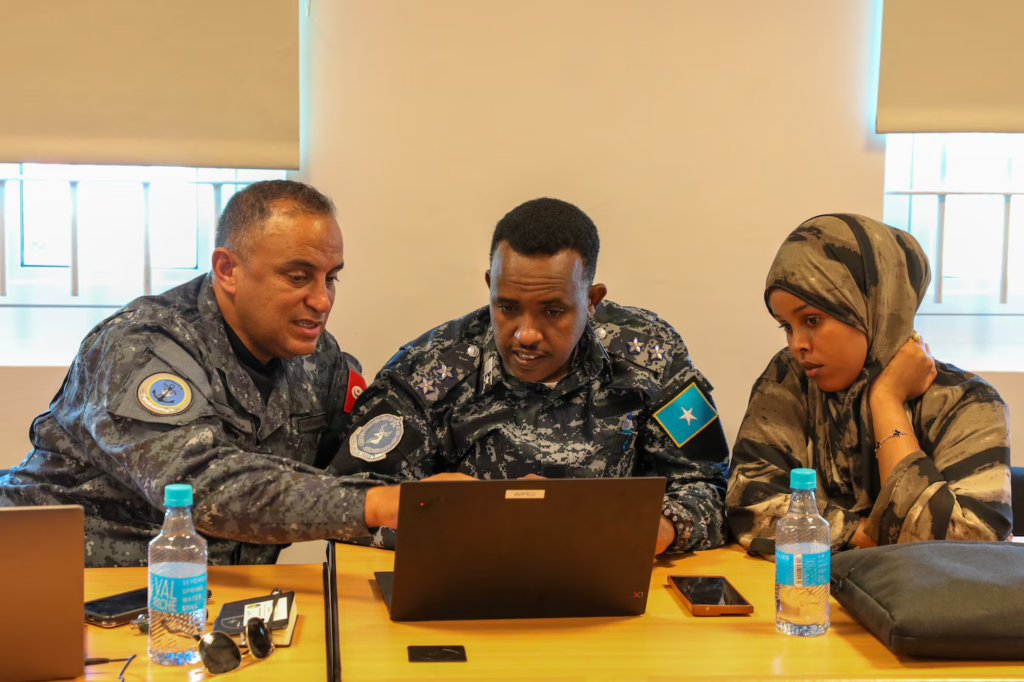
Partner nations work together using a sea vision tool called SMARTMast, during Cutlass Express 2026 (CE 26). CE 26 is one of three regional Express series exercises sponsored by U.S. Africa Command and enabled by U.S. 6th Fleet as part of a comprehensive strategy to provide collaborative opportunities amongst African forces and international partners in order to address maritime security concerns.
By U.S. Sixth Fleet Public Affairs, Feb. 11, 2026
PORT LOUIS, Mauritius – Cutlass Express 2026 (CE26) arrives at a decisive moment for maritime security in the Western Indian Ocean, where drug trafficking, human smuggling, and illegal, unreported and unregulated (IUU) fishing continue to threaten coastal economies and regional stability. More than half of African regional economic activity relies on safe and lawful use of the maritime environment.
Illicit maritime activity thrives in vast, lightly monitored waters, placing significant pressure on African nations charged with protecting their maritime domains. CE26 focuses on strengthening maritime governance, enhancing maritime domain awareness, and improving coordinated regional responses—core elements needed to counter these persistent threats.
“Exercises like Cutlass Express are no longer just about interoperability; they are about how fast we introduce and integrate cuttingedge technology to address realworld threats,” said U.S. Air Force Lt. Col. Jared Bindl, Chief of Science, Technology, and Innovation at U.S. Africa Command.
STRENGTHENING MARITIME GOVERNANCE TO COUNTER TRAFFICKING AND IUU FISHING
Nations participating in CE26 train together to sharpen their ability to disrupt maritime trafficking networks and illegal fishing operations, both of which directly undermine regional prosperity. CE26 focuses on improving maritime domain awareness, building tactical interdiction skills, and enhancing informationsharing in the Maritime Operations Centers (MOCs). These capabilities are foundational to deterring illicit actors who rely on unmonitored waters to move narcotics, smuggle people, or exploit fisheries.
Protecting Africa’s maritime environment is a shared strategic priority for U.S. Africa Command and its African partners. By strengthening maritime institutions and improving coordination at sea, African partner nations are better able to safeguard coastal resources and reinforce ruleoflaw across the region.
INNOVATION AT SEA: EXPANDING PARTNERS’ ABILITY TO DETECT AND DISRUPT ILLICIT ACTIVITY
A central theme of CE26 is the adoption of practical, adaptable technologies that enhance awareness in large or remote maritime regions. SmartMast, SeaVision, and Lightfish are examples of systems that give operators a clearer picture of their waters by detecting vessel movement, highlighting nighttime anomalies and feeding realtime information into regional commandandcontrol centers. These tools enable small patrol craft to detect and report potential illicit maritime activity, including signs of illegal fishing or trafficking, and rapidly pass that information to national and regional maritime operations centers that coordinate responses
By expanding maritime awareness and improving how information moves between ships and operations centers, U.S. Africa Command and its African partners are strengthening their ability to protect coastal waters, counter illicit activity, and respond more effectively to emerging maritime threats.
BUILDING AN INTEGRATED REGIONAL RESPONSE AGAINST ILLICIT MARITIME NETWORKS
CE26 includes advanced visit, board, search and seizure (VBSS) drills, commandpost exercises and informationsharing scenarios that replicate realworld interdiction operations. These events challenge partner nations to coordinate investigations, track suspicious vessels and execute controlled boardings—skills essential for counternarcotics and counterIUU fishing missions across the Western Indian Ocean.
The exercise also reinforces the importance of synchronized, multinational action. U.S. Africa Command highlights that maritime cooperation enables partners to protect territorial waters, respond to crises, and counter illegal activity that transcends national boundaries. Improving interoperability across navies and coast guards strengthens deterrence and supports regional governance efforts.
CE26 demonstrates what is possible when innovation and partnership converge. Emerging technologies, from SmartMast to unmanned vessels like Lightfish, are helping partner nations build the situational awareness needed to identify traffickers, disrupt illicit networks and prevent illegal fishing across vast maritime zones. These advances directly support the longterm stability and economic resilience of East African coastal nations.
As Lt. Col. Bindl noted, deploying new sensor technologies across the exercise “is fundamentally enhancing our collective ability to secure the seas and counter illicit maritime activities.” The result is a stronger, more integrated maritime security environment—one where partner nations have the tools, training and shared operational picture needed to defend their waters and protect the region’s future.
PCU John F. Kennedy (CVN 79) Completes Builder’s Sea Trials
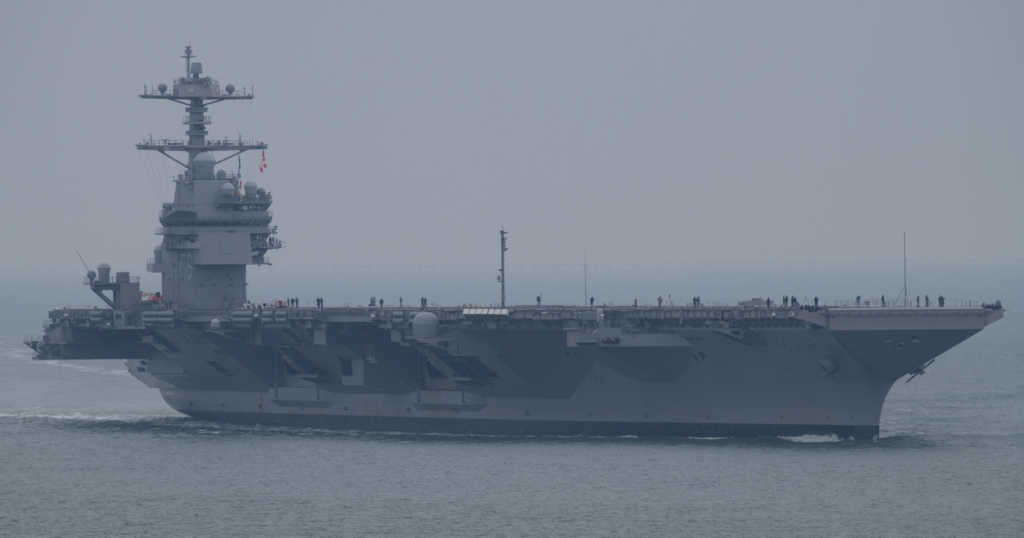
NEWPORT NEWS, Va. – Program Executive Office Aircraft Carriers (PEO CVN) announced the successful completion of Builder’s Sea Trials (BST) for the future USS John F. Kennedy (CVN 79), at Newport News Shipbuilding (NNS), a division of HII, in Newport News, Virginia, Feb. 4.
From Naval Sea Systems Command, Feb. 12, 2026
WASHINGTON, D.C. — Program Executive Office Aircraft Carriers (PEO CVN) announced the successful completion of Builder’s Sea Trials (BST) for the future USS John F. Kennedy (CVN 79), at Newport News Shipbuilding (NNS), a division of HII, in Newport News, Virginia, Feb. 4.
Completion of Builder’s Trials marks a significant shipbuilding milestone for the future John F. Kennedy, the second ship in the Gerald R. Ford-class of aircraft carriers designed to improve survivability, increase lethality, and drive down total ownership cost over their expected 50-year lifespan.
“Seeing this Navy-industry team take CVN 79 to sea for the first time was nothing short of thrilling,” said Rear Adm. Casey Moton, Program Executive Officer for Aircraft Carriers (PEO CVN). “Thanks to the tireless efforts of thousands of proud American workers across the maritime industrial base, we are one step closer to delivering another Gerald R. Ford-class aircraft carrier to the fleet.”
Throughout BST, Sailors from the Pre-Commissioning Unit (PCU) assigned to John F. Kennedy, shipbuilders from NNS, and personnel from the Navy’s Supervisor of Shipbuilding (SUPSHIP), Naval Sea Systems Command (NAVSEA), and PEO CVN worked side-by-side testing many of the ship’s key systems and technologies.
Prior to getting underway, John F. Kennedy conducted a five-day “Fast Cruise,” a multi-day pier side training evolution that brings the ship to life prior to getting underway during new construction or after an extended maintenance availability. This simulated underway period exercises the ship’s ability to operate at sea and affords the crew the opportunity to transition to an operational mindset before getting underway.
“There are millions of fingerprints contributing to this successful sea trial, both of the hard-working patriots who built this great ship and of the Sailors who are now bringing her to life,” said Capt. Doug Langenberg, commanding officer of PCU John F. Kennedy (CVN 79). “John F. Kennedy going to sea for the first time is truly momentous. This event is a result of years of hard work and an incredible shared effort between our shipbuilding partners and this crew who have worked side-by-side to get to this day. I’m proud of this crew and this opportunity to finally take this ship to sea where she belongs.”
With the conclusion of Builder’s Trials, the team will resume completion work while also addressing any issues identified during trials. The next major milestone for the ship will be Acceptance Trials, the timeline for which is currently under review.
“We’re making steady progress towards completion of the ship with all required capability,” said Capt. Mark Johnson, Program Manager for Gerald R. Ford-class New Construction. “We continue to work closely with the shipbuilder to ensure that the nation’s next aircraft carrier is delivered to the Navy on the fastest possible path to combat readiness.”
Marine Corps to Retire Last AV-8B Harrier IIs in June
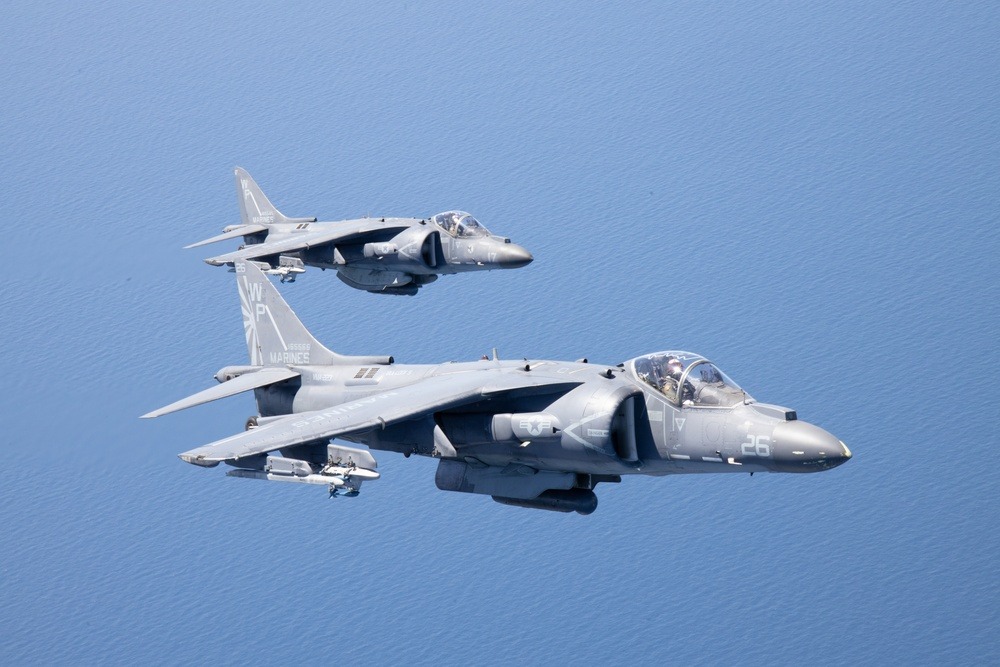
ARLINGTON, Va. — The U.S. Marine Corps plans to retire its last Boeing AV-8B Harrier II vertical-takeoff and landing attack jets this summer, according to the 2026 Marine Corps Aviation Plan released Feb. 10, 2026.
The Corps operates only one remaining Marine attack squadron (VMA), VMA-223, which is based at Marine Corps Cherry Point, North Carolina. The squadron will conduct the last flight of a Harrier on June 3, during a series of ceremonies scheduled for June 1 through June 5.
VMA-223 currently has a detachment of AV-8Bs assigned to the 22nd Marine Expeditionary Unit deployed on board the amphibious assault ship USS Iwo Jima (LHD 7). The Iwo Jima has been operating in the U.S. Southern Command’s area of responsibility in support of Operations Southern Spear and Absolute Resolve. This is the last scheduled deployment of the AV-8B.
VMA-223 is scheduled to be redesignated a Marine fighter attack squadron in fiscal 2027 as it trains to fly the F-35B Lightning II short takeoff/vertical landing strike fighter.
The Marine Corps began flying Harriers in 1971, beginning with the AV-8A and later AV-8C versions. The much-improved AV-8B Harrier II version entered service in January 1985. Further upgrades resulted in the night-attack AV-8B(NA) version, with many further upgraded with radar as the AV-8B Harrier II Plus version.
AV-8Bs served in numerous combat operations, including Operations Desert Storm and Desert Shield, Operation Allied Force, Operation Odyssey Dawn, Operations Enduring Freedom and Iraqi Freedom, Operations Inherent Resolve and Resolute Support, and most recently in Operation Southern Spear.
“Equipped with precision-guided munitions (PGMs), an advanced LITENING targeting pod, and LINK-16, the Harrier has a distinguished legacy of destroying surface targets and escorting friendly aircraft, providing the Marine Corps with a relevant and survivable fight-tonight capability,” the aviation plan said.