Navy Accepts Delivery of Fleet Replenishment Oiler USNS John Lewis
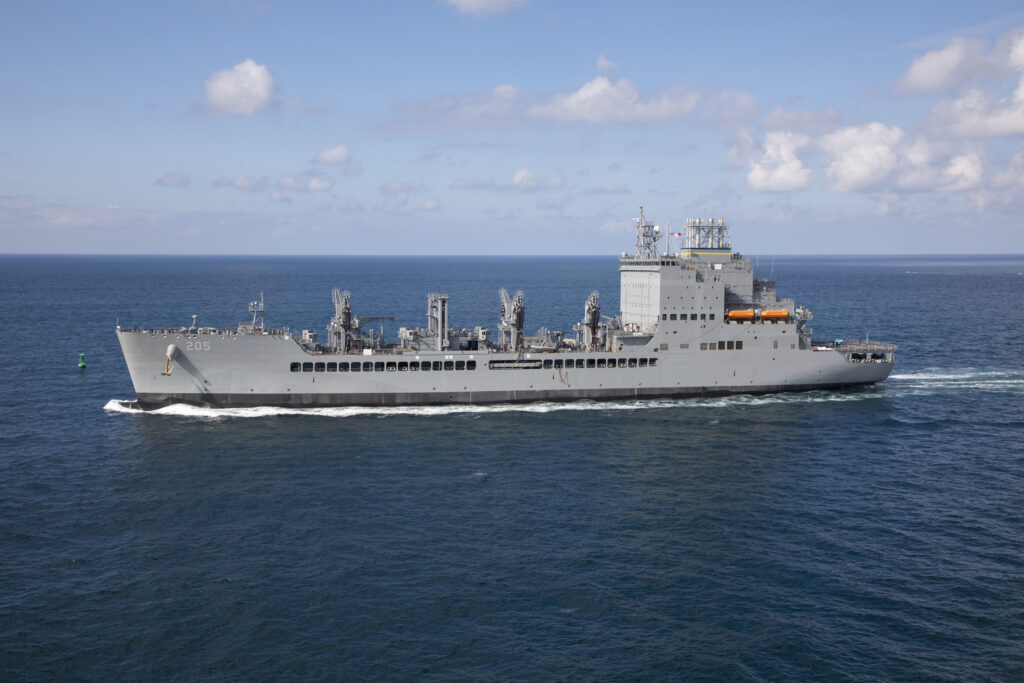
The USNS John Lewis (T-AO 206), the lead ship of a new class of fleet replenishment oilers. U.S. NAVY
WASHINGTON — The Navy accepted delivery of the lead ship of its new class of fleet replenishment oilers, USNS John Lewis (T-AO 205) on July 27, Team Ships Public Affairs said July 29.
T-AO 205’s delivery follows the completion of acceptance trials with the Navy’s Board of Inspection and Survey to test the readiness and capability of the craft and to validate requirements.
“USNS John Lewis will provide much needed capability to the fleet as the primary fuel pipeline at sea,” said John Lighthammer, program manager of the Auxiliary and Special Mission Shipbuilding Program Office. “This is the first of a 20-ship class providing the Sailors and merchant mariners another tool to support at-sea operations.”
The new John Lewis-class T-AOs will be operated by Military Sealift Command to provide diesel fuel and lubricating oil, and small quantities of fresh and frozen provisions, stores, and potable water to Navy ships at sea, and jet fuel for aircraft. The new T-AOs will add capacity to the Navy’s Combat Logistics Force and become the cornerstone of the fuel delivery system.
General Dynamics Electric Boat Awarded $698M Contract Mod to Overhaul USS Hartford
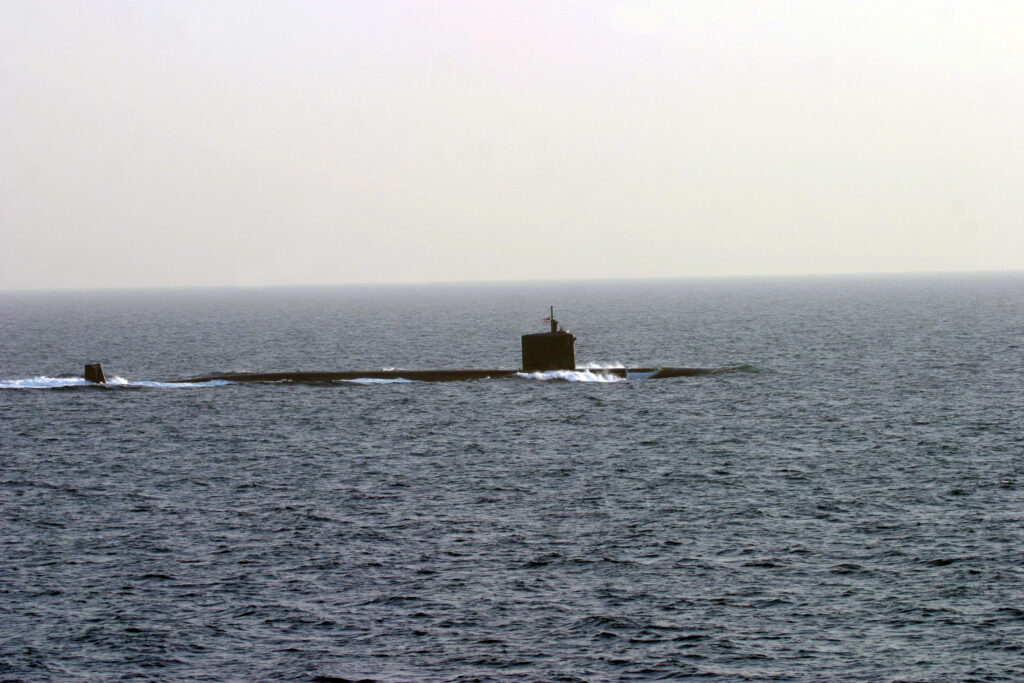
The Los Angeles-class attack submarine USS Hartford, shown underway in the Persian Gulf in 2009. U.S. NAVY
GROTON, Conn. — General Dynamics Electric Boat announced June 29 it was awarded a modification of the previously awarded U.S. Navy contract for the repair, maintenance and modernization of the submarine USS Hartford (SSN 768).
The contract modification has a value of $697.9 million. Work will be performed at the company’s shipyard in Groton, Connecticut, and is expected to be completed in October 2026.
USS Hartford is a Los Angeles-class submarine built by General Dynamics Electric Boat and commissioned in 1994.
“This engineered overhaul of the USS Hartford will enhance its warfighting capability and extend the ship’s service life, returning a valuable asset to the U.S. Navy submarine fleet,” said Kevin Graney, president of General Dynamics Electric Boat.
Navy to Commission Amphibious Transport Dock Ship Fort Lauderdale
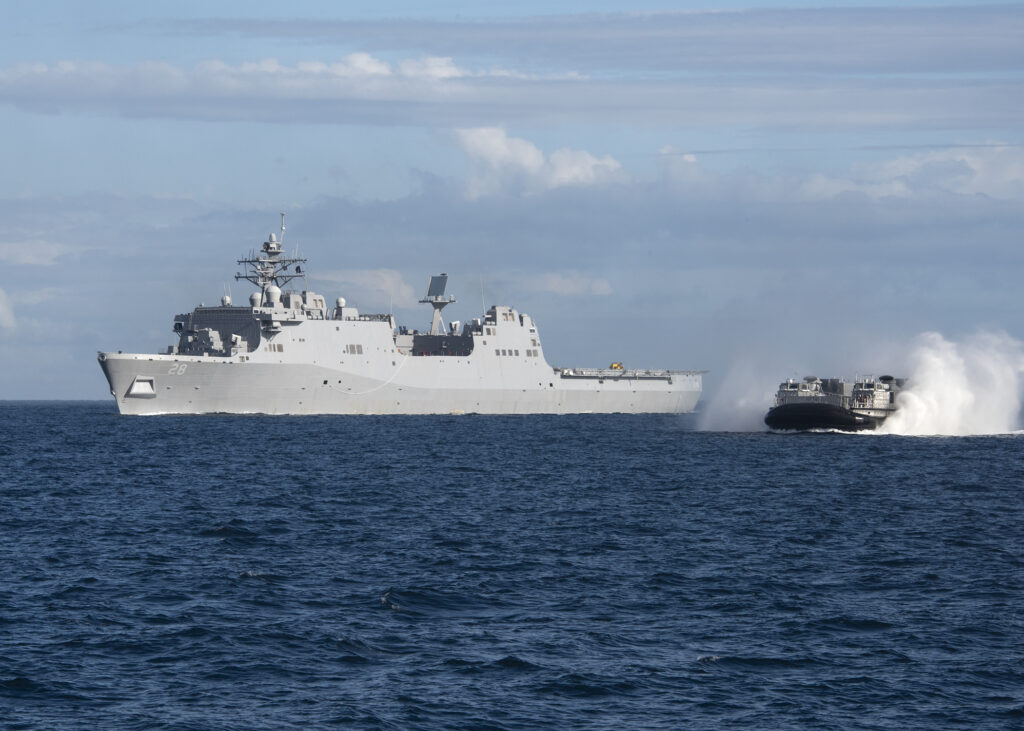
The Navy’s newest amphibious transport dock ship, USS Fort Lauderdale, transports the Navy’s newest connectors to their new homeport. U.S. NAVY
ARLINGTON, Va. — The Navy will commission its newest amphibious transport dock, the future USS Fort Lauderdale (LPD 28), during a 10 a.m. EDT ceremony Saturday, July 30, in Fort Lauderdale, Florida, the Defense Department said July 29.
The future USS Fort Lauderdale is the first naval ship to honor the city of Fort Lauderdale, Florida.
“Tomorrow we commission the future USS Fort Lauderdale, bringing a powerful war ship with a dedicated and determined crew to life,” said Secretary of the Navy Carlos Del Toro. “This ship will play an integral part in strengthening America’s partnerships and protecting our country’s security abroad.”
The future USS Fort Lauderdale is the 12th San Antonio-class ship, designed to support embarking, transporting, and bringing elements of 650 Marines ashore by landing craft or air-cushion vehicles. A flight deck hangar further enhances the ship’s capabilities, which can support the MV-22 Osprey tilt-rotor aircraft.
The ceremony will be live streamed at: USS Fort Lauderdale Commissioning. The link becomes active approximately 10 minutes prior to the event (9:50 a.m. EDT).
Initial Operating Capability Declared for Unmanned Influence Sweep System
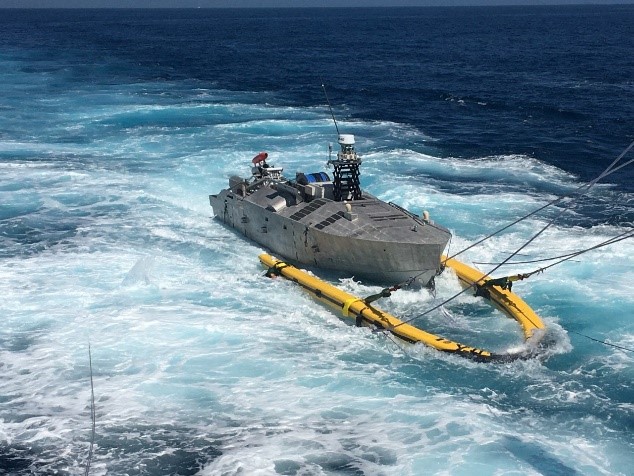
The Minecountermeasure Unmanned Surface Vehicle is recovered onboard USS Manchester (LCS 14) during Unmanned Influence Sweep System initial operational test and evaluation June 2021. U.S. NAVY
WASHINGTON, D.C. — Program Executive Office, Unmanned and Small Combatants (PEO USC) announced July 28 the Unmanned Influence Sweep System, a critical component of the Navy’s suite of mine countermeasure technologies, has achieved initial operating capability, or IOC.
The Office of the Chief of Naval Operations declared UISS IOC on July 22. The program completed formal testing and delivered a system with logistics and training material with appropriately trained Fleet personnel to execute minesweeping as part of the Mine Countermeasures Mission Package.
“UISS’s declaration of IOC is a monumental achievement for the Navy’s Mine Countermeasures Mission Package,” said Capt. Godfrey “Gus” Weekes, LCS Mission Modules (PMS 420) Program Manager. PMS 420 is the office that oversees the Unmanned Influence Sweep System within PEO USC.
Capable of being operated from littoral combat ships, shore, or vessels of opportunity, the Unmanned Influence Sweep System provides acoustic and magnetic minesweeping coupled with the semi-autonomous, diesel-powered, aluminum-hulled Mine Countermeasures Unmanned Surface Vehicle. The MCM USV is an integral part of the mine countermeasures mission package and serves as the tow platform for both minesweeping and mine hunting missions.
Notably, this is also the first IOC of an unmanned surface platform by the U.S. Navy, marking an important milestone in the evolution toward a hybrid fleet of manned and unmanned systems.
“Over the years, the program has worked tirelessly to mature and field the UISS system that will keep the Navy’s most valuable asset, our sailors, safer by keeping them out of the minefield. With this declaration, the program is inching closer toward system-wide IOC for the MCM MP,” Weekes said.
Coast Guard Cutter Vigilant Returns Home after 68-day Patrol
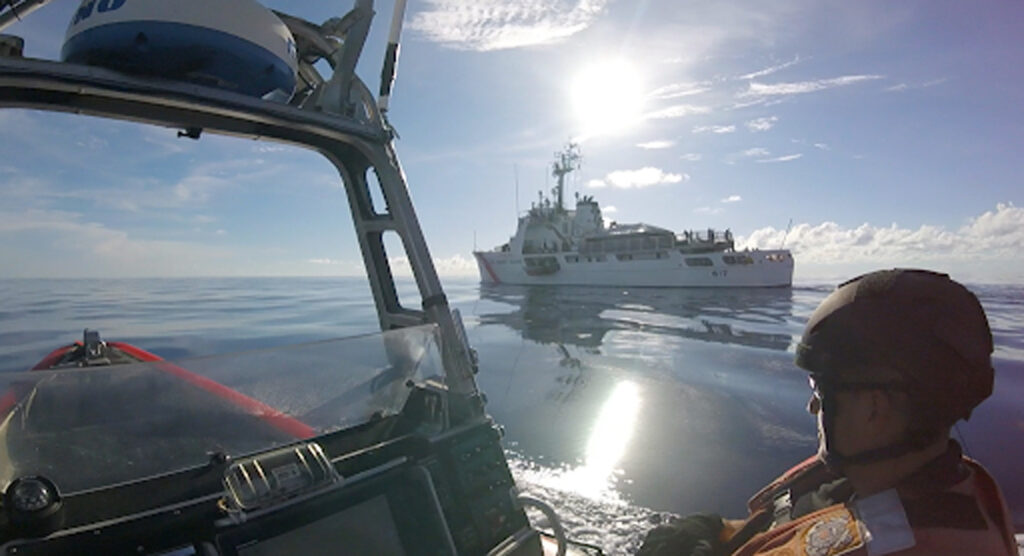
The Coast Guard Cutter Vigilant (WMEC 617) small boat crewman approaches the cutter in the Caribbean Sea, July 22. The Vigilant crew repatriated 147 Haitian migrants interdicted in the high seas. U.S. COAST GUARD
JACKSONVILLE, Fla. — The Coast Guard Cutter Vigilant’s crew returned to Port Canaveral on July 22 after completing a 68-day patrol in the Caribbean Sea, the Coast Guard Atlantic Area said July 28.
The crew’s deployment was focused on collaborating with other Coast Guard assets to detect, deter, and intercept unsafe and illegal migrant voyages en route to the United States.
During the patrol, the crew interdicted 19 vessels with 460 Cuban and Haitian migrants attempting to illegally enter the United States, and aided a group of Cubans stranded on an island.
In support of Coast Guard Sector Key West, Vigilant’s crew interdicted 18 vessels while patrolling in the Florida Straits. During the patrol, the crew approached a grossly overloaded sailing vessel with 147 Haitian migrants onboard. The cutter’s crew provided care and medical attention to the migrants before repatriating them to Haiti.
As a tropical depression with 40 mph winds and 10 to 12-foot seas approached the Florida Straits, Vigilant’s crew interdicted three overloaded and unseaworthy homemade vessels in a 12-hour period, saving 44 Cuban migrants.
The crew also supported the Coast Guard 7th District Operation Southeast Watch in the Windward Pass. Operation Southeast watch is an interagency effort to detect and deter vessels engaged in illegal maritime migration. While in the Windward Pass, the crew oversaw and coordinated patrol assignments for aircraft and seven other cutters off the coast of Haiti. Vigilant’s crew worked with Coast Guard Cutter William Trump’s crew to interdict an overloaded and unstable sailing vessel, rescuing 107 Haitian migrants.
“During this 68-day patrol, Vigilant’s crew supported homeland security objectives by deterring illegal maritime migration,” said Cmdr. Jay Guyer, commanding officer of the Vigilant. “Interdicting and rescuing nearly 500 people over a two-month patrol is a testament to the incredible professionalism of our crew.”
Vigilant, a 210-foot Reliance-class medium-endurance cutter, patrols the Caribbean Sea and Eastern Pacific Ocean, performing counter-drug operations, migrant interdiction operations, search and rescue, and fisheries enforcement.
Hospital Ship USNS Comfort to Deploy to Southern Command Region
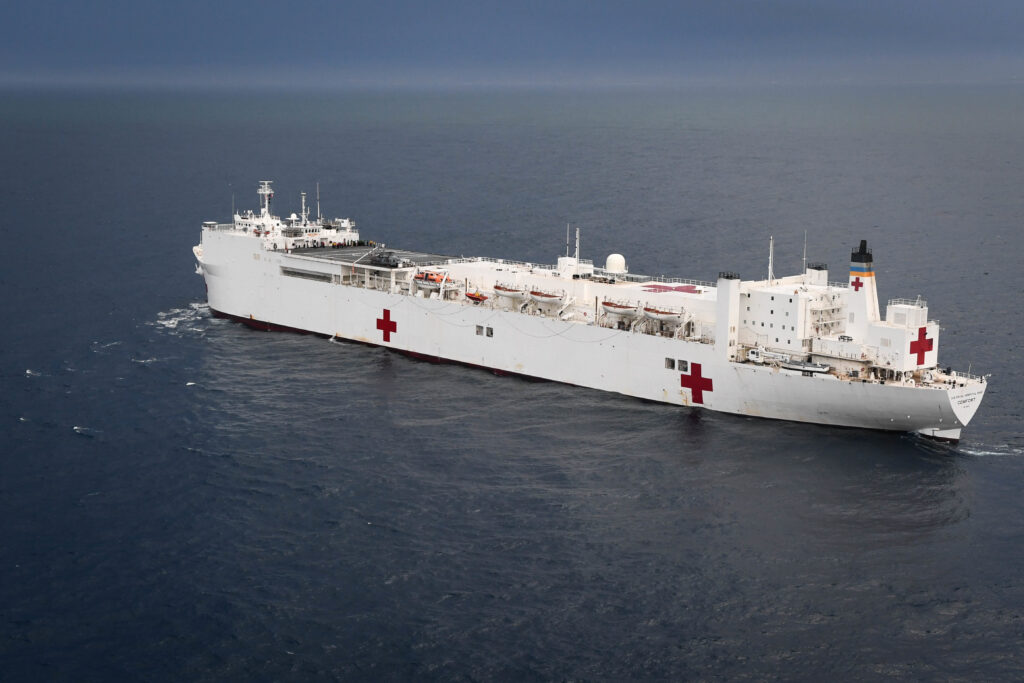
The Military Sealift Command hospital ship USNS Comfort (T-AH 20) sails off the coast of Puerto Rico to provide humanitarian relief in this 2017 photo. U.S. NAVY / Mass Communication Specialist 1st Class Ernest R. Scott
ARLINGTON, Va. — The Defense Department will deploy a hospital ship to the U.S. Southern Command region during the fall of 2022, the department said.
“The Department of Defense plans to deploy the United States Naval Ship Comfort, a Mercy-class hospital ship, to conduct medical assistance in support of regional partners in the fall of 2022,” the release said. “During each port visit, the USNS Comfort typically provides medical assistance to about 3,500-8,000 people.”
The initiative is one of several the department announced in the wake of the XV Conference of Defense Ministers of the Americas (CDMA), which convened on July 25-29, 2022, in Brasilia, Brazil.
“CDMA is the premier hemispheric defense ministerial for strategic-level engagement with the top defense officials of the Americas, and convenes every two years,” the release said.
The USNS Comfort, one of two hospital ships operated by the Military Sealift Command, last visited the region in 2019, prior to the outbreak of the COVID-19 pandemic. It provided medical care in 12 nations in Central America, South America, and the Caribbean.
“The Department of Defense is committed to its role as the most trusted defense ally and partner for its neighbors to the north and south, building on its longstanding cooperation across a range of areas to foster mutual security throughout the Western Hemisphere,” the department said.
The Comfort’s sister ship, USNS Mercy, currently is deployed to the Western Pacific region as a participant in the Pacific Partnership humanitarian assistance effort.
The U.S. Navy is procuring medical versions of the Austal-built expeditionary fast transport ship to provide medical care for military operations and humanitarian care and disaster relief.
U.S. Navy Holds UAS Wide-Area Mission Demonstration
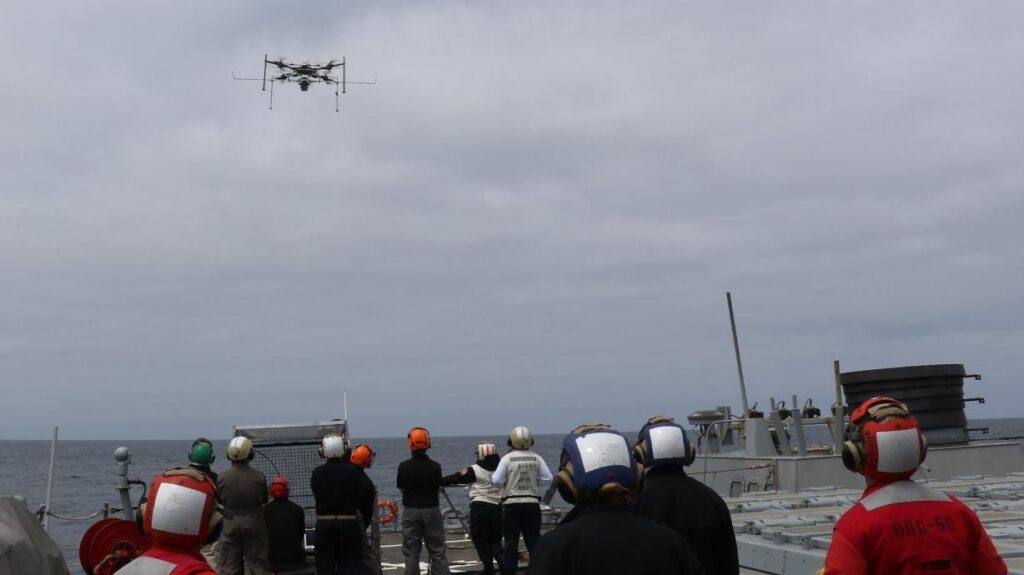
The Navy conducts a demonstration aboard USS Paul Hamilton (DDG-60) July 12 to identify and examine unmanned aircraft systems capable of wide-area missions from a Navy vessel at long ranges for extended periods while sending information back to the vessel. U.S. NAVY
PATUXENT RIVER, Md. — The Navyrecently completed an unmanned aircraft system wide-area mission demonstration to assess capabilities that could benefit the fleet in the future, Naval Air Systems Command said July 27.
The Navy and Marine Corps Small Tactical UAS program office (PMA-263), Naval Air Warfare Center Aircraft Division AIRWorks, and Navy Warfare Development Command led the sea-based demonstration July 11-15 aboard USS Paul Hamilton (DDG 60) in San Diego.
Two vendors, Insitu Inc. and L3Harris, showcased multiple technologies designed to operate as a portable system in challenging conditions while providing the same wide-area coverage as a shore-based system.
“This event was a great opportunity to evaluate unmanned capability in a relevant environment, learn how it can support and enhance operations, and get direct feedback from the fleet,” said Col. Victor Argobright, PMA-263 program manager. “A lot of work was done in a short time across the enterprise to make this happen.”
Earlier this year, PMA-263 and AIRWorks teamed in collaboration with Innovation and Modernization Patuxent River, the Naval Air Warfare Center Aircraft Division partner for experimentation, technology demonstrations, and prototyping, and with Navy Warfare Development Command’s Fleet Experimentation team to identify and examine a UAS capable of performing wide-area missions from a Navy surface vessel at long ranges for extended periods while relaying accurate, relevant information back to the host vessel.
The team downselected the vendors to participate in the demonstration based on their ability to provide a system able to operate without additional support systems, deploy without dedicated launch or recovery equipment and have maximum portability, self-sufficiency and modularity across UAS hardware and payloads.
“The USS Paul Hamilton team was pleased to be a part of this demonstration,” said Cmdr. Jake Ferrari, the ship’s commanding officer. “To see the energy put behind providing capabilities associated with UAS aboard surface vessels is exciting. I look forward to future efforts that will provide an enduring fleet capability that is integrated into sustained operations.”
The systems demonstrated wide-area surveillance capability across multiple mission sets. The government will review data gathered during the demonstration to further evaluate each system’s performance.
“Both vendors stepped up to the challenge and the crew of the USS Paul Hamilton provided outstanding support and feedback,” said Argobright. “It’s teamwork like this that’s needed to get capability in the hand of sailors as quickly as possible. We will be leveraging this effort and working with Navy leadership on the next steps to make this happen.”
As part of a multi-phased merit-based selection process, the demonstration may lead to Insitu or L3Harris being awarded an Other Transaction Authority prototype project under the authority of 10 U.S.C. 2371b later this year. OTAs are used by the DoD to carry out prototype, research and production projects.
Pacific Partnership Concludes Palau Phase
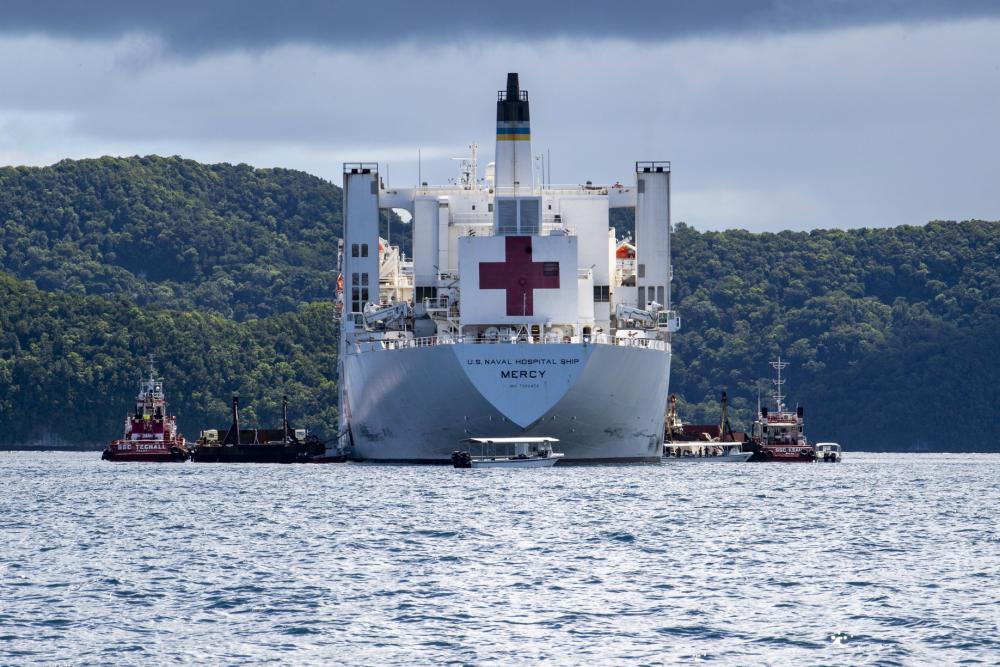
Military Sealift Command hospital ship USNS Mercy (T-AH 19) sits at anchor upon its arrival off the coast of Koror, Palau during Pacific Partnership 2022. U.S. NAVY / Mass Communication Specialist 2nd Class Brandie Nuzzi
KOROR, PALAU — The Palau phase of Pacific Partnership concluded in Koror, Palau, on July 23, Lt.j.g. Molly Sanders wrote in a July 27 U.S 7th Fleet release.
In Palau, the Pacific Partnership 2022 team included representatives from the host nation, Australia, Japan, the United Kingdom and the United States.
During the mission stop, the Pacific Partnership 2022 team conducted more than 100 total medical engagements including more than 50 dental events and five patient surgeries, 71 animals seen for surgical and medical care, two humanitarian assistance and disaster relief workshops with 120 personnel trained, three band concerts with more than 600 attendees, and a search and rescue exercise conducted between four participating nations.
“The USNS Mercy is strengthening relationship between our countries. We greatly appreciate their presence here in Palau to further the capabilities of our local medical practitioners,” said Palau President Surangel S. Whipps Jr.
Participants said the coordination between partner nations during Pacific Partnership 2022 enhanced understanding and cooperation, as well as prepared those involved to respond in case of a natural disaster or humanitarian assistance and disaster relief. Pacific Partnership contributes to regional stability and security through exchanges that foster enduring partnerships, trust, and interoperability between nations.
“It has been our honor to bring Pacific Partnership to Palau,” said Capt. Hank Kim, Pacific Partnership 2022 mission commander. “We worked together to share knowledge and provide care that will instill bonds lasting long after PP22 departs Koror.”
This year’s mission has included stops in Vietnam and Palau and an engineering engagement in Fiji. The hospital ship USNS Mercy (T-AH 19) serves as the Pacific Partnership 2022 mission platform.
Now in its 17th year, Pacific Partnership is the largest annual multinational humanitarian assistance and disaster relief preparedness mission conducted in the Indo-Pacific.
For more information about Pacific Partnership and USNS Mercy, visit www.facebook.com/USNSMERCY, www.facebook.com/pacificpartnership, or https://www.msc.usff.navy.mil/ships/mercy/.
US Navy Exercises Option for L3Harris Submarine Imaging Masts
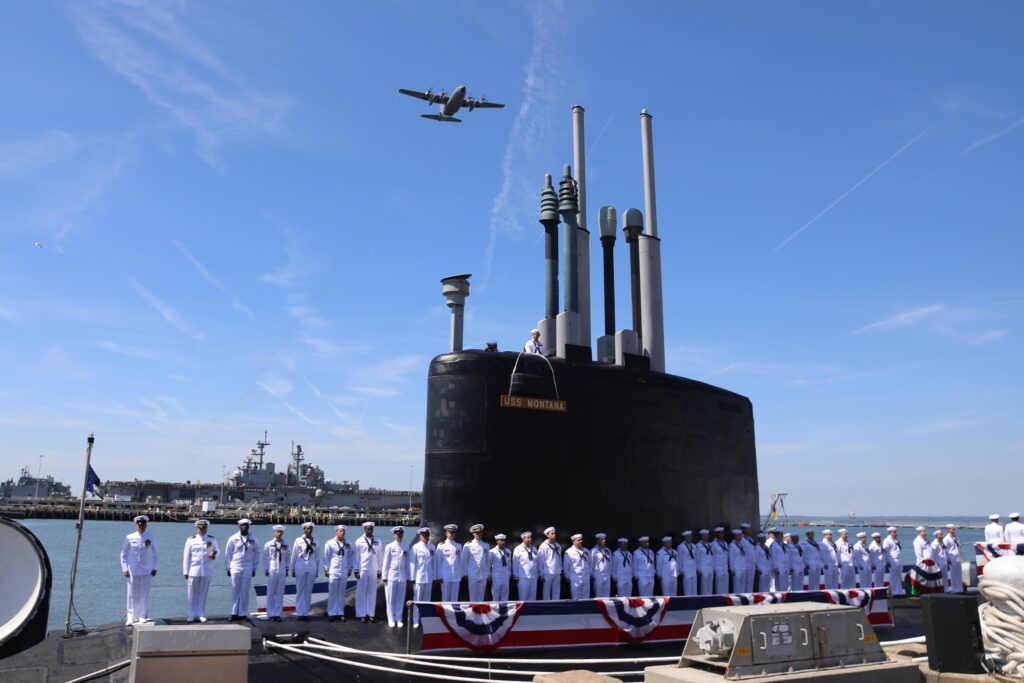
Sailors attached to the Virginia-class fast attack submarine USS Montana (SSN 794) man the boat during a commissioning ceremony in Norfolk, Va., June 25. L3Harris will provide imaging masts for Virginia- and Columbia-class submarines. U.S. NAVY / Senior Chief Mass Communication Specialist John Smolinski
NORTHAMPTON, Mass. — The U.S. Navy exercised an option on a previously awarded L3Harris Technologies’ contract to produce enhanced submarine imaging masts and spares, the company said July 27.
L3Harris will provide two configurations of its Type 20 low-profile mast to meet the Navy’s operational requirements. Production will be performed at L3Harris’ Northampton, Massachusetts, facility, with initial deliveries scheduled to begin in 2024.
As the world’s largest submarine imaging system provider, L3Harris delivers precise, high-resolution optics and integrated sensor packages.
The Type 20 mast is a modular non-hull-penetrating imaging sensor that uses a telescoping universal modular mast to deliver improved high-definition visual imaging capabilities.
“The Type 20 low-profile mast is the next-generation imaging mast that will provide enhanced capabilities to the Virginia- and Columbia-class submarines,” said Rosemary Chapdelaine, president, Maritime, L3Harris. “Under this contract, we will deliver technology advancements to support the U.S. Navy’s mission and operational requirements, which will enable the users to see and control the submarine integrated imaging systems.”
Austal USA Awarded Contract Option for 2 U.S. NAVY T-ATS Ships
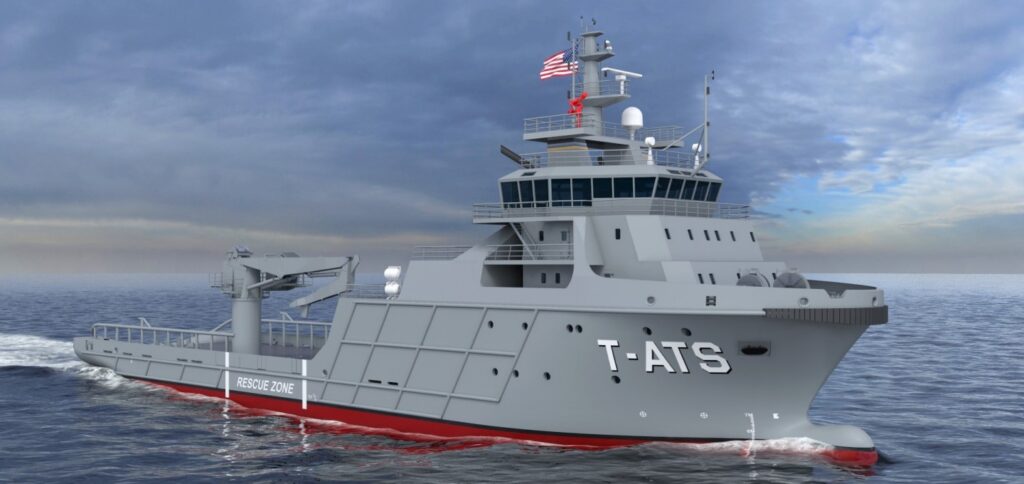
An artist’s conception of a T-ATS craft. AUSTAL USA
MOBILE, Ala. – Austal USA was awarded a $156 million U.S. Navy contract option for the construction of two Navajo-class Towing, Salvage, and Rescue Ships (T-ATS), the company said in a release. With the award, the company is now under contract for four T-ATS, having received awards for T-ATS 11 and 12 in October 2021.
T-ATS will provide ocean-going tug, salvage, and rescue capabilities to support U.S. Navy fleet operations and will be a multi mission common hull platform capable of towing heavy ships. These ships will also be able to support current missions, including oil spill response, humanitarian assistance, and wide area search and surveillance.
The contract award follows Austal USA’s start of construction on its first T-ATS ship earlier this month that was celebrated at a ceremony attended by governmental officials and local community leaders. The highlight of the ceremony had U.S. Rep. Jerry Carl (R-Alabama) pushing the plasma cutter button making the first cut of steel for the ship.
“The T-ATS program is special to our team as it represents the start of construction of a new class of ship for our shipbuilding team. This contract is important because it provides us the backlog to really optimize production over the course of these four ships,” Austal USA President Rusty Murdaugh said. “We’re honored to have this contract and it illustrates the Navy’s continued confidence in our team’s demonstrated ability to deliver capability on-time and on-schedule.”