General Atomics EMALS, AAG Systems on CVN 78 Reach 10,000 ‘Cats and Traps’ Milestone 
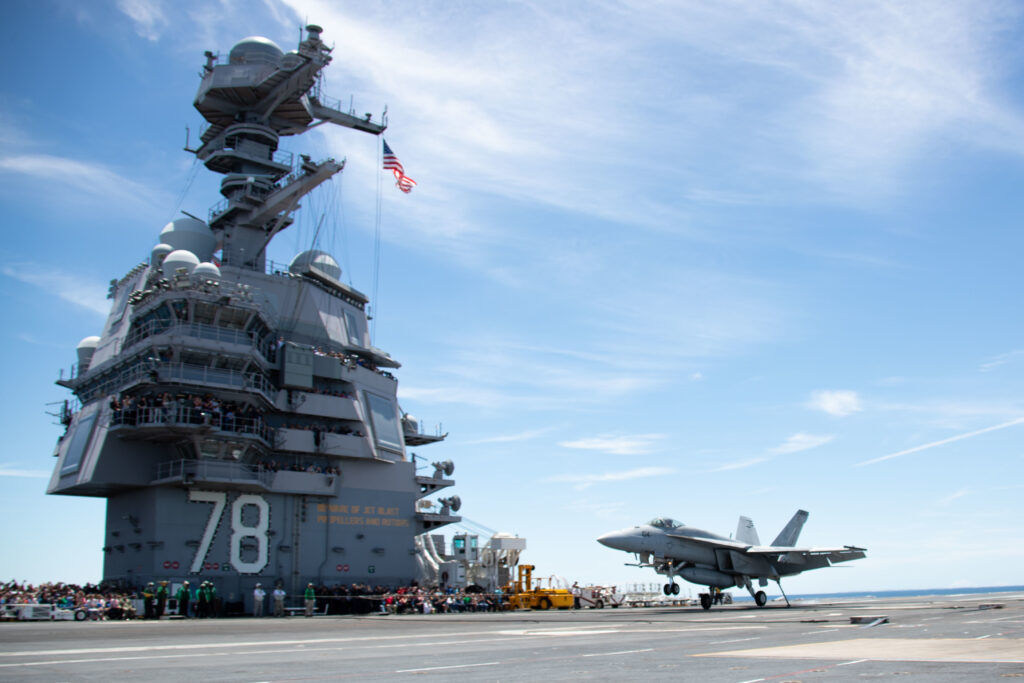
Sailors and their families and friends observe the USS Gerald R. Ford’s (CVN 78) 10,000th recovery from the flight deck, June 25. Friends and family members were invited aboard Ford to experience a day in the life of a Sailor at sea first-hand. U.S. NAVY / Mass Communications Specialist 2nd Class Jackson Adkins

SAN DIEGO — General Atomics Electromagnetic Systems announced July 12 that 10,000 catapult launches and arrested landings using the Electromagnetic Aircraft Launch System and Advanced Arresting Gear have been successfully and safely completed aboard USS Gerald R. Ford (CVN 78).

The first-in-class aircraft carrier completed planned incremental availability in March 2022 and is now preparing for its upcoming deployment.    

“Over the past two years, EMALS and AAG have been rigorously exercised utilizing aircraft in the current air wing. The systems continue to perform successfully in operational, carrier qualification, and training environments and under all weather conditions,” said Scott Forney, president of GA-EMS. “EMALS and AAG offer robust capabilities that are proving transformative, providing greater availability, efficiency and flexibility to safely launch the air wing of today while standing ready to support new aircraft as they join the air wing of the future. We are extremely proud of our team and the ship’s crew as they continue to meet each new milestone and steadily work toward bringing ‘Warship 78’ to the fleet.” 

Under multiple contracts with the Navy, General Atomics Electromagnetic Systems is now supporting CVN 78 sustainment requirements and delivering EMALS and AAG for the next two Ford-class carriers currently under construction, John F. Kennedy (CVN 79) and Enterprise (CVN 80). GA-EMS is also working with the Navy to determine EMALS and AAG contract and schedule requirements for the fourth Ford-class aircraft carrier, Doris Miller (CVN 81). 
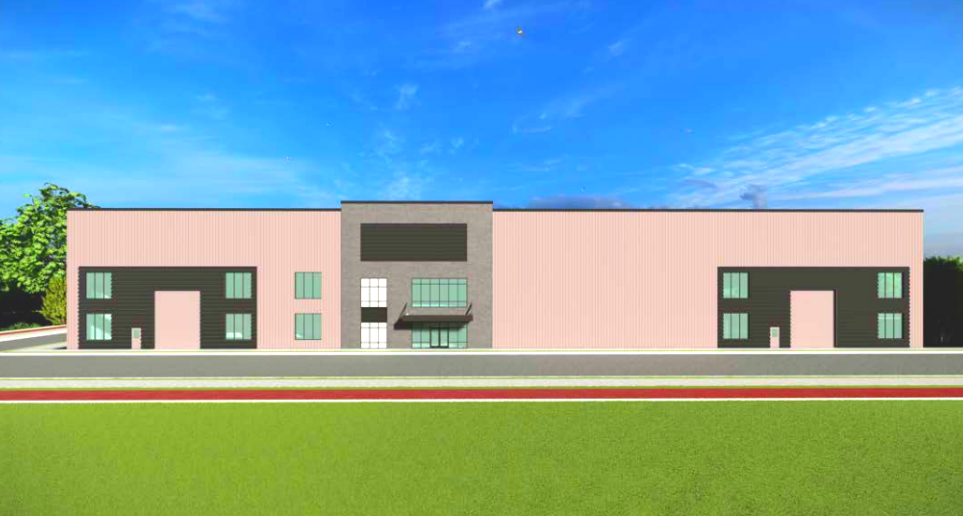


Fairbanks Morse Defense Launches Training and Service Center Campus 

Fairbanks Morse Defense has invested $13 million to create a campus that expands service and hands-on training opportunities for technicians and customers. FAIRBANKS MORSE DEFENSE

BELOIT, Wis. — Fairbanks Morse Defense is launching a 45,000-square-foot training and service center campus in Chesapeake, Virginia.

The defense contractor will move its existing service center from Norfolk, Virginia, to the Chesapeake campus to add a state-of-the-art training facility and further expand advanced service support for its customers. The move represents a $13 million investment in the community.   

“We are excited to have Fairbanks Morse Defense as the newest member of our business community,” said Rick West, mayor of Chesapeake. “The Hampton Roads region has a long and storied history in the defense industry and having Fairbanks Morse Defense locate its new state-of-the-art facility in the city of Chesapeake underscores the city’s commitment to our military and its partners. We look forward to working with Fairbanks Morse Defense as it continues to grow in Chesapeake.” 

The company’s new training and service center campus, located at 733 Curtis Saunders Court, is near Norfolk, Virginia, the largest U.S. Navy and Military Sealift Command fleet concentration in the United States. The U.S. Coast Guard also has a strong presence in the area.  

“Training is the forefront of good maintenance practices, and Fairbanks Morse Defense’s training center is incorporating our cutting-edge mixed reality training technology to provide the most comprehensive, interactive marine equipment training solution available,” said FMD President of Services Jamie McMullin. “This location will strengthen FMD’s position as the preferred service solutions and training provider for our core customers while enhancing our rigorous factory-certified training programs for our large network of field service technicians.”  

The site also provides room for growth, allowing FMD and its expanded family of brands to use additional space as the company integrates new turnkey products, service solutions, and training programs into the training and service center offerings.  

Upon completion in 2023, the site will create approximately 50 new jobs.  


CNO, Netherlands Navy Commander Discuss Partnership and NATO Alliance 

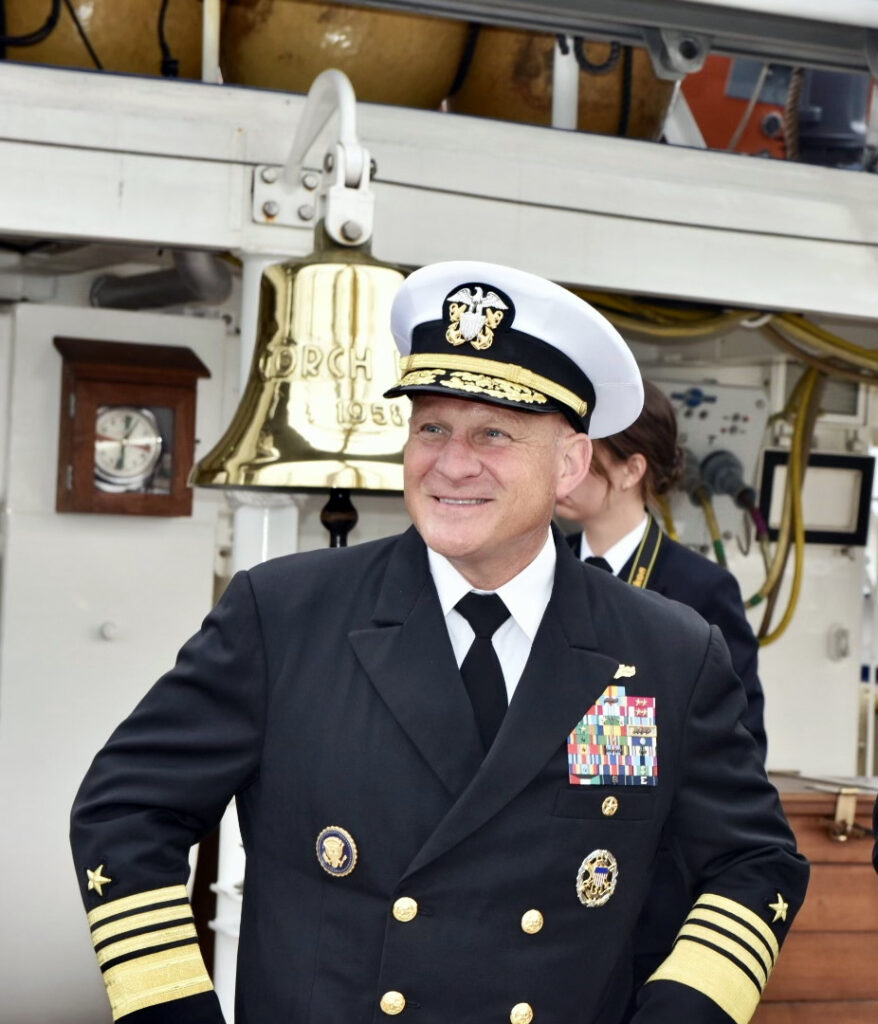
Chief of Naval Operations Adm. Mike Gilday visits the German training ship Gorch Fock during BALTOPS 22. U.S. NAVY / Cmdr. Courtney Hillson

WASHINGTON — Chief of Naval Operations Adm. Mike Gilday met with the commander of the Royal Netherlands Navy, Vice Adm. René Tas, at the Pentagon for an office call on July 12, the CNO’s public affairs office said in a release. 

The leaders discussed global maritime security, strategic competition and their shared commitment to continued cooperation, to include recent naval exercises involving both countries. 

“The Dutch are one of our oldest allies and global maritime partners, and I am grateful for our strong relationship,” said Gilday. “This visit was an important opportunity for us to build upon our solid foundation, look ahead to the future, and reinforce our commitment to unity and to the NATO alliance.” 

Gilday also noted the value and significance of the Royal Netherlands Navy’s maritime reach, the Dutch being one of a handful of European navies with a global presence stretching to the Indo-Pacific. 

“We share the same values and economic interests,” said Tas. “The well-being of our people can only be secured and defended by operating globally. The seas and oceans, just as cyber and space, don’t have borders.” 

The U.S. Navy and Royal Netherlands Navy regularly operate together around the world. Recently, they participated in exercises Formidable Shield and Obangame Express, and conducted joint operations, including USS The Sullivans’ (DDG 68) and HNLMS Evertsen’s (F805) participation in HMS Queen Elizabeth’s 2021 deployment. Last month, both navies participated in BALTOPS 22, the premier maritime-focused exercise in the Baltic Region.  

This meeting was the second in-person discussion between the two heads of navy. 


Start of Construction Marked for T-ATS 11 

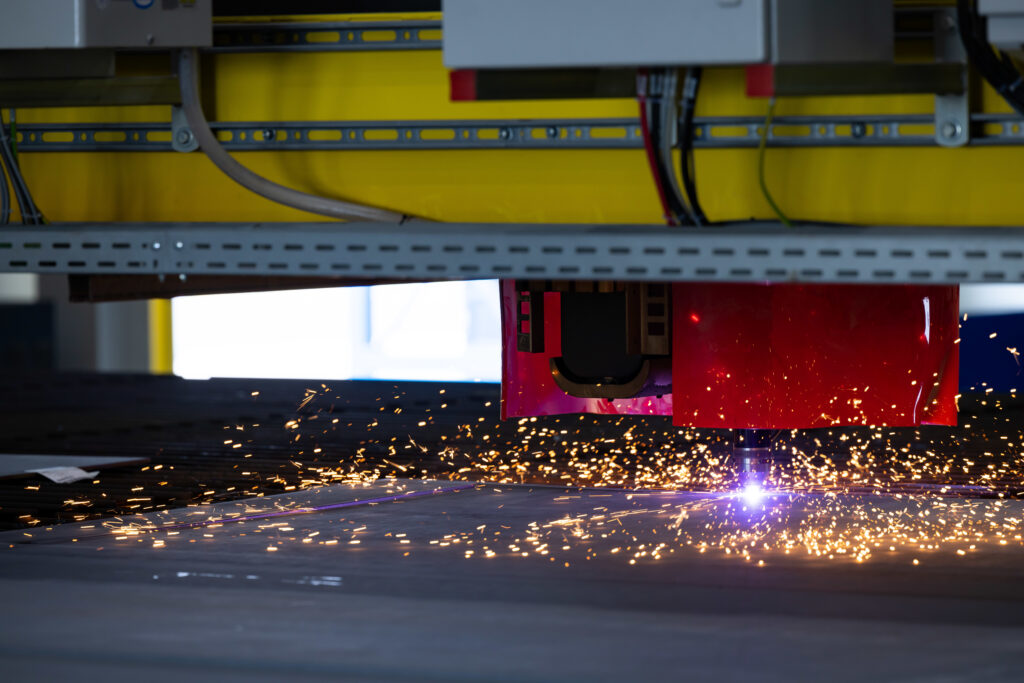
The start of construction of the T-ATS 11 on the new steel line at Austal USA in Mobile, Alabama. AUSTAL USA

WASHINGTON — Construction began on the Navy’s newest towing, salvage and rescue ship, T-ATS 11, at Austal USA’s Mobile, Alabama shipyard on July 11, Team Ships Public Affairs said July 12. 

The Navajo-class (T-ATS) provides ocean-going tug, salvage, and rescue capabilities to support fleet operations. T-ATS replaces and fulfills the capabilities that were previously provided by the Fleet Ocean Tug (T-ATF 166) and Rescue and Salvage Ships (T-ARS 50) class ships. 

“It’s always a great Navy day when we start construction of a new ship to be used to do the nation’s bidding,” said Rear Adm. Tom Anderson, program executive officer, Ships. “It’s an exceptional Navy day when the start of construction also marks the expansion of the shipbuilding industrial base, as it does today, as Austal puts its new facility to work building its very first steel ship, a Navajo-class Towing, Salvage and Rescue Ship, T-ATS 11.” 

Navajo-class ships will be Multi-Mission Common Hull Platforms based on commercial offshore Anchor Handling Tug Supply (AHTS) vessels. T-ATS supports current missions including towing, salvage, rescue, oil spill response, humanitarian assistance and wide area search and surveillance. They also enable future rapid capability initiatives, supporting modular payloads with hotel services and appropriate interfaces. 

T-ATS 11 marks the first steel ship in Austal’s ship construction program. Austal is also contracted to build T-ATS 12, with options for additional ships. 


PEO Attack Submarines Holds Change of Command Ceremony 

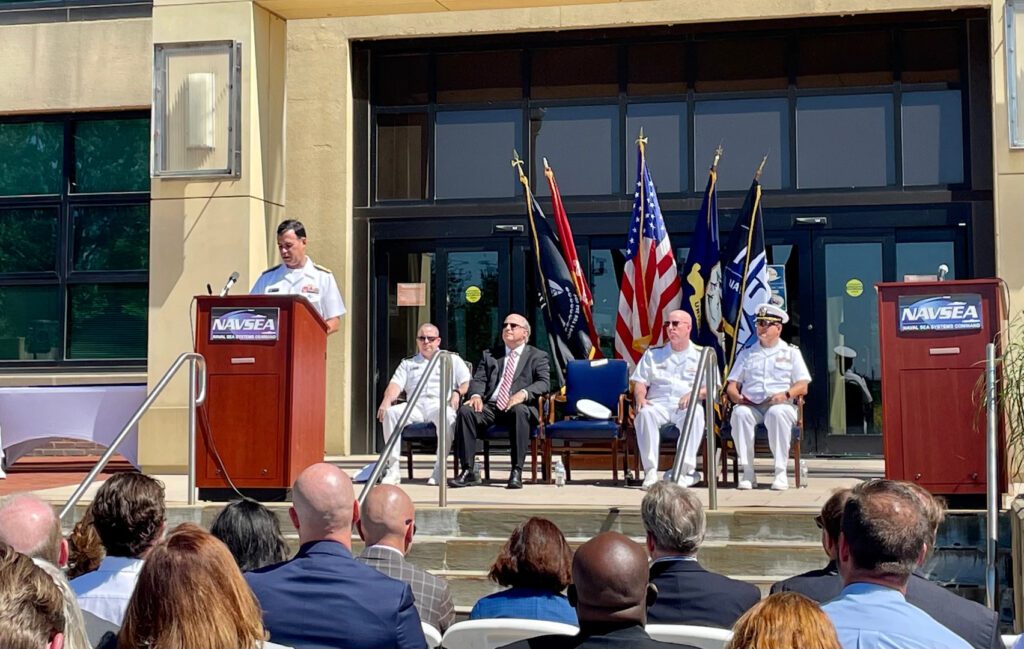
Rear Adm. Jonathan Rucker relieved Rear Adm. David Goggins as Program Executive Office Attack Submarines during a change of command ceremony at the Washington Navy Yard, June 30. U.S. NAVY

WASHINGTON — Rear Adm. Jonathan Rucker relieved Rear Adm. David Goggins as Program Executive Office Attack Submarines (PEO SSN) during a change of command ceremony at the Washington Navy Yard, June 30, Team Public Affairs said in a release. 
 
Vice Adm. William Houston, commander, Naval Submarine Forces, served as the principal speaker and expressed his gratitude for the job done by Goggins. 
 
“Your leadership allowed the submarine force to stay atop of our competitors as the world’s best, most lethal, and premier, first class organization that continues to dominate the undersea — and for that, a huge Bravo Zulu to you,” said Houston. “Your dedication to the mission, our people, and the Force is an outstanding example for all to follow.” 
 
Goggins reflected on the submarine workforce’s many accomplishments such as completing Virginia Block III Follow-On Test and Evaluation and delivering three nuclear-powered submarines and three SSNs from depot availabilities earlier this year. He also noted that submarine acquisition and sustainment is comprised of four key organizations; Team Submarine, Naval Reactors, Strategic Systems Programs and Chief of Naval Operations Undersea Warfare Division. 
 
“Today’s successes and the future success of Team Submarine, PEO SSN, are based on the alignment and collaboration between these key stakeholders,” said Goggins. 
 
Rucker is reporting to PEO SSN after serving as Columbia-class submarine program manager, the Navy’s number one acquisition program. During his tenure, the Columbia program office was awarded the David Packard Excellence in Acquisition Award for 2021 as the top program office in Department of Defense. 
 
Houston expressed the challenges that Rucker may encounter, saying, “You have a significant task ahead of you. The fiscal and geo-political landscape from which our nation navigates will only become more challenging, and you must make it your priority that the overmatch we currently enjoy does not evaporate.” 
 
Rucker’s recent assignments include serving as the assistant program manager (APM) for New Acquisitions, Advanced Undersea Systems Program Office; military assistant for the undersecretary for Defense for Acquisition, Technology, & Logistics (USD (AT&L)); APM for New Construction & Test and led construction and test efforts of 12 submarines. He then assumed command as program manager for Unmanned Maritime Systems, responsible for unmanned maritime systems across both the Surface and Undersea domains. 
 
“I am thankful to be a part of the PEO Fast Attack team. These submarines and undersea systems are built to ensure our undersea advantage,” said Rucker. 


Amphibious Transport Dock Fort Lauderdale Sails Away from Ingalls Shipbuilding 

Amphibious transport dock Fort Lauderdale (LPD 28) show departing from HII’s Ingalls Shipbuilding division on July 11. HII

PASCAGOULA, Miss. — San Antonio-class amphibious transport dock Fort Lauderdale (LPD 28) departed from HII’s Ingalls Shipbuilding division July 11 enroute to its commissioning site in Fort Lauderdale, Florida, HII said in a release. 

“Ingalls Shipbuilders take great pride in knowing that each and every amphibious ship that leaves this shipyard will support our Navy and Marine Corps team defending our nation,” said Ingalls Shipbuilding President Kari Wilkinson. “We at Ingalls remain committed to this partnership and consider it a privilege to serve those who serve.” 

Fort Lauderdale was delivered to the U.S. Navy in March following acceptance sea trials and is the 12th San Antonio-class ship delivered by HII. Additional San Antonio-class ships are under construction at Ingalls, including Richard M. McCool Jr. (LPD 29) and the first Flight II amphibious ship in the San Antonio class, Harrisburg (LPD 30). Later this year, fabrication will begin on the 15th San Antonio-class ship, Pittsburgh (LPD 31). 

“Watching Fort Lauderdale sail away to join the Navy’s fleet is a very proud moment for our entire LPD shipbuilding team and our skilled workforce,” said Mike Pruitt, Ingalls LPD program manager. “Our shipbuilders have done an outstanding job building a mission capable ship for these sailors and our country.” 

LPD 28 is scheduled to be commissioned July 30 in Fort Lauderdale. It is named to honor the Florida city’s historic ties to the U.S. Navy, which date back to the 1830s and include an important naval training center during World War II. 

Amphibious transport docks are a major part of the Navy’s 21st century expeditionary force, deployed with a U.S. Marine Corps Air-Ground Task Force for amphibious and expeditionary crisis response operations that range from deterrence and joint-force enablement to humanitarian assistance and disaster relief. 


Cutter Monroe Returns Home Following 128-Day Deployment 

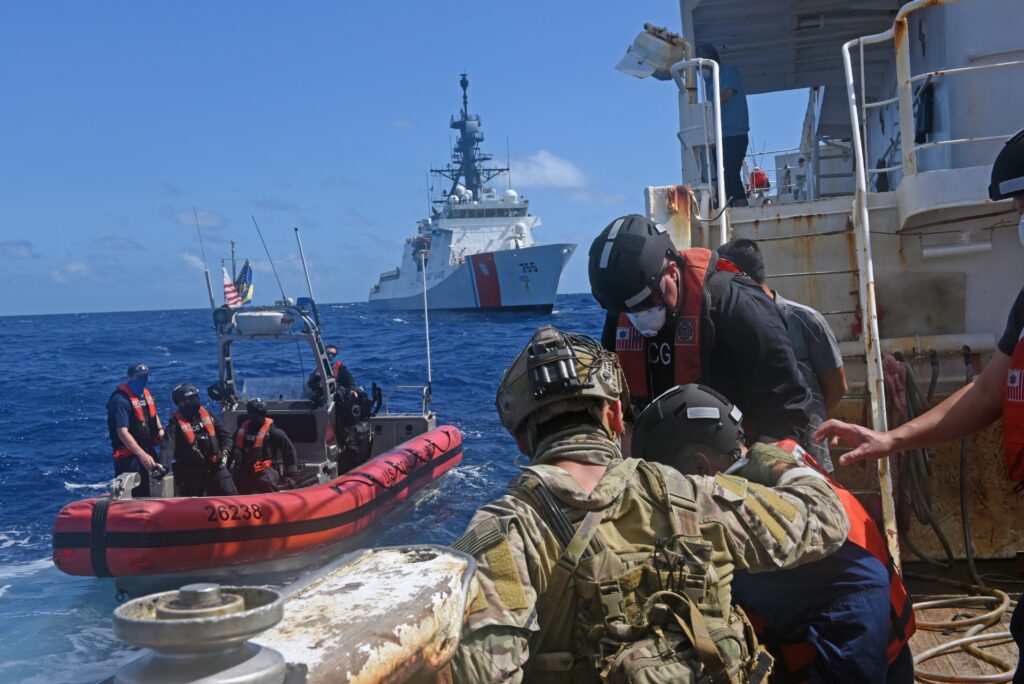
Crew members from Coast Guard Cutter Munro prepare to disembark after conducting a boarding of South Korean-flagged fishing vessel Dong Won in the South Pacific April 14, southwest of the Howland/Baker Islands, as part of Operation Blue Pacific. U.S. COAST GUARD / Petty Officer 1st Class Nate Littlejohn

ALAMEDA, Calif. — The crew aboard U.S. Coast Guard Cutter Munro (WMSL 755) returned to their homeport in Alameda July 10 following a 128-day, 20,000-nautical-mile deployment, the Coast Guard Pacific Area said in a release. 

Munro departed Alameda in early March for a multi-mission deployment to the South and North Pacific Ocean. The deployment aimed to counter illegal, unreported and unregulated fishing and strengthen relationships to enhance maritime sovereignty and security throughout the region. 

Munro’s crew supported Operation Blue Pacific and North Pacific Guard during the patrol. These operations lead and promote international efforts that uphold the principles of security, safety, sovereignty, and economic prosperity in Oceania and the North Pacific through operations and engagements to ensure a free and open Indo-Pacific. 

“Munro’s deployment demonstrated the Coast Guard’s unique authorities in the support of combatting IUU fishing,” said Vice Adm. Andrew J. Tiongson, commander U.S. Coast Guard Pacific Area. “Through Operation Blue Pacific, the Coast Guard aims to strengthen relationships with like-minded nations. Our shared efforts will improve maritime governance within the Pacific Ocean, increase capacity for bilateral search-and-rescue and law enforcement, and promote shared technical expertise and proficiency.” 

As a federal law enforcement agency, the Coast Guard combats illegal fishing and other maritime threats across the Pacific and promotes maritime governance, safety and security through partnerships around the world. 

 “Our relationships in the Pacific are stronger today and our partners are unified in their commitment to security,” said Capt. Rula Deisher, who assumed command of Munro mid-patrol during a change-of-command ceremony in Guam. “It was an incredible opportunity for our crew to work alongside allies, share law enforcement concepts to promote peace, prosperity and the sovereign rights of all nations.” 

Commissioned in 2017, Munro is one of four Coast Guard Legend class national security cutters homeported in Alameda. National security cutters are 418-feet long, and have a range of 12,000 nautical miles, endurance of up to 90 days and can hold a crew of up to 170. Munro is the second cutter named for Signalman First Class Douglas A. Munro, the only Coast Guardsman awarded the Congressional Medal of Honor. 


Australian Defense Minister: AUKUS Subs a Huge Project to ‘Pull Off’ 

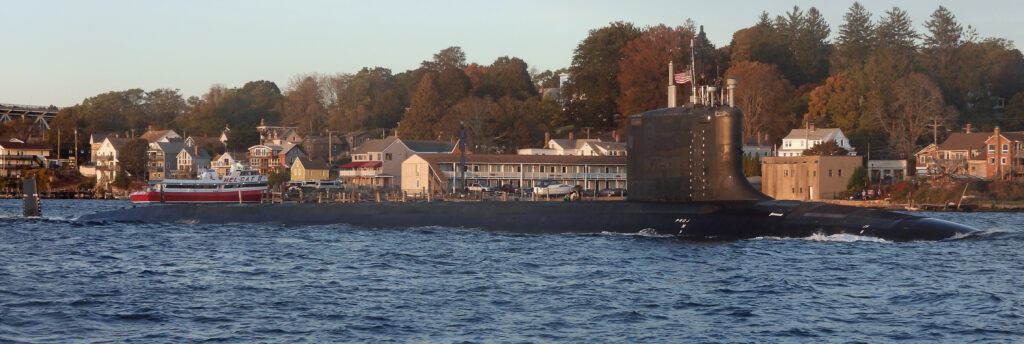
The Virginia-class submarine USS Vermont (SSN 792) transits the Thames River while conducting routine operations in 2020. The AUKUS agreement with Australia would provide the country nuclear submarine capability. U.S. NAVY / Petty Officer 3rd Class Christian Bianchi

WASHINGTON — The new Australian government said it has no illusions of the immensity of the AUKUS plan to build nuclear-powered submarines and the effort required to make it come to pass. 

Last September, Australia, the United States and the United Kingdom announced an agreement — AUKUS — to develop a nuclear-powered submarine capability for Australia.  

“It will be a huge national project to pull this off,” said Richard Marples MP, minister of defense and deputy prime minister of Australia, speaking July 11 at the Center for Strategic and International Studies, a Washington think tank. Marples was in Washington for a meeting with U.S. Defense secretary Lloyd Austin.  

“For a three-ocean nation, the heart of deterrence is undersea capability,” Marples said. “AUKUS will not only make Australia safer, it will make Australia a more potent and capable partner that the United States and the United Kingdom have agreed to work with Australia to meet our needs is not only a game changer, it illustrates why alliances help reinforce, not undermine, our country’s national sovereignty. And I want to recognize the Biden administration and the strong support in Congress for helping bring this agreement to life.  

“In determining the optimal pathway forward, the Australian government is acutely aware of the obligations of nuclear stewardship,” he said. “We are focused on the whole enterprise. Safely stewarding sensitive technology, building the workforce and industrial capacity to support the capability, and ensuring that this initiative sets the strongest possible non-proliferation standards.” 

Marples said Australia, with Collins-class diesel-electric submarines, faces the challenge of an increasing capability gap. 

“How do we get the new capability as soon as possible to minimize any capability gap and then what are we going to do to plug whatever gap exists?” he asked rhetorically. 

“To move to operating a nuclear-powered submarine fleet is as big a national challenge, not just in defense, but in terms of really the whole breadth of government that our country has been presented with, almost at every level, not just in terms of developing the capability but building the industrial base, building the regulation, building the government structures around it,” he said, also noting the cost. “We need to work out how we build this into a budget which has a significant debt associated with it. 

“At every level there are challenges,” he said. “That said, we mean to meet those challenges. This is a huge national challenge for the country but it’s one we’re going to meet.”  


Coast Guard Delivers Water to Drought-Stricken Kiribati at Critical Juncture

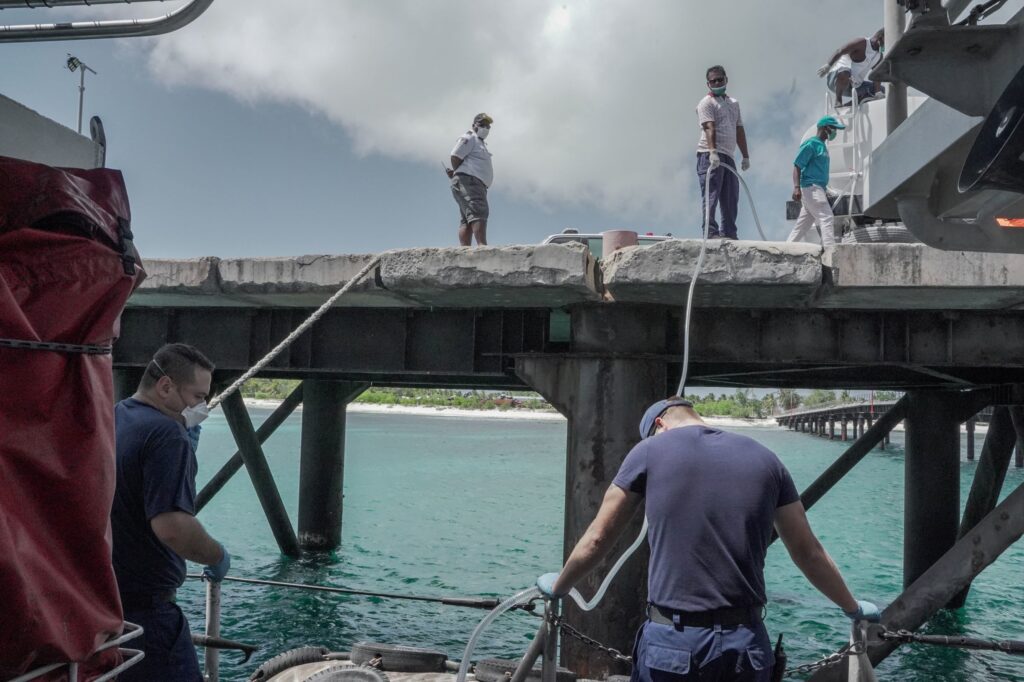
The Coast Guard Cutter Oliver Berry crew conducts a potable water offload while moored up at Kiritimati Island, Kiribati, July 8. U.S. COAST GUARD

HONOLULU — The island nation of Kiribati is surrounded by water. Too much of it, actually, because climate change and rising sea levels are endangering the 33 scattered small, sparsely populated and low-lying islands in the Gilbert, Phoenix and Line chain islands of Micronesia. And, safe drinking water is in short supply.

The government of the Republic of Kiribati recently declared a state of disaster last month due to lasting drought conditions caused by below normal rainfall.

Kiribati is 2,400 miles due south of Hawaii, about half way to Australia, and straddles the equator. It has a population of about 119,000, most of whom live on the island of Tarawa. The country’s highest elevation is 266 feet above sea level on the island of Banaba. 

The Pacific Humanitarian Air Service, operated by the United Nations World Food Programme and UNICEF, transported emergency supplies to Kiribati on July 7, to help with the emergency.

According to the World Food Programme, the delivery included essential supplies, including “water, sanitation, hygiene” and dignity kits with collapsible water containers, buckets with lids, water purification tablets and soap. The shipment also delivered portable water field testing kits to help Kiribati authorities monitor water quality at both source and household levels.

A 2018 declaration by the Pacific Islands Forum nations said climate change is the “single greatest threat to the livelihoods, security and wellbeing of the peoples of the Pacific.”

Melting polar ice and glaciers are causing the sea level to rise, endangering low-lying countries like Kiribati. In fact, the islands may become inhabitable in a matter of decades. Many small islands rely on rain catchment systems for drinking water, so severe drought has a negative impact on the population.

Honolulu-based Coast Fast Response Cutter USCGC Oliver Berry (WPC 1124) delivered  potable drinking water to the island of Kiritimati, working with U.N. representatives to support the local residents amid the national state of emergency. 

In addition to providing humanitarian assistance, the Oliver Berry crew supported Kiribati maritime law enforcement efforts, providing patrol coverage in Kiribati’s exclusive economic zone to deter illegal, unregulated and unreported fishing, support Kiribati resource security and strengthen maritime governance in Oceania.

“The Oliver Berry’s patrol demonstrates the United States Coast Guard’s enduring commitment to our partner nations throughout Oceania,” said Howell. “Instances like these pave the way for future Coast Guard assets to support The Republic of Kiribati and its citizens.” 

Amid the natural disaster is a political storm, too. Kiribati withdrew from a July 11-14 summit of Pacific Islands Forum leaders at the last minute, citing a lack of concern over issues important to the country. 

The withdrawal coincides with efforts by China to have greater influence in Oceania.

The positive presence of a U.S. Coast Guard cutter and crew sends a reassuring message of support at a critical time.


HII Hits Milestone on Aircraft Carrier John F. Kennedy  

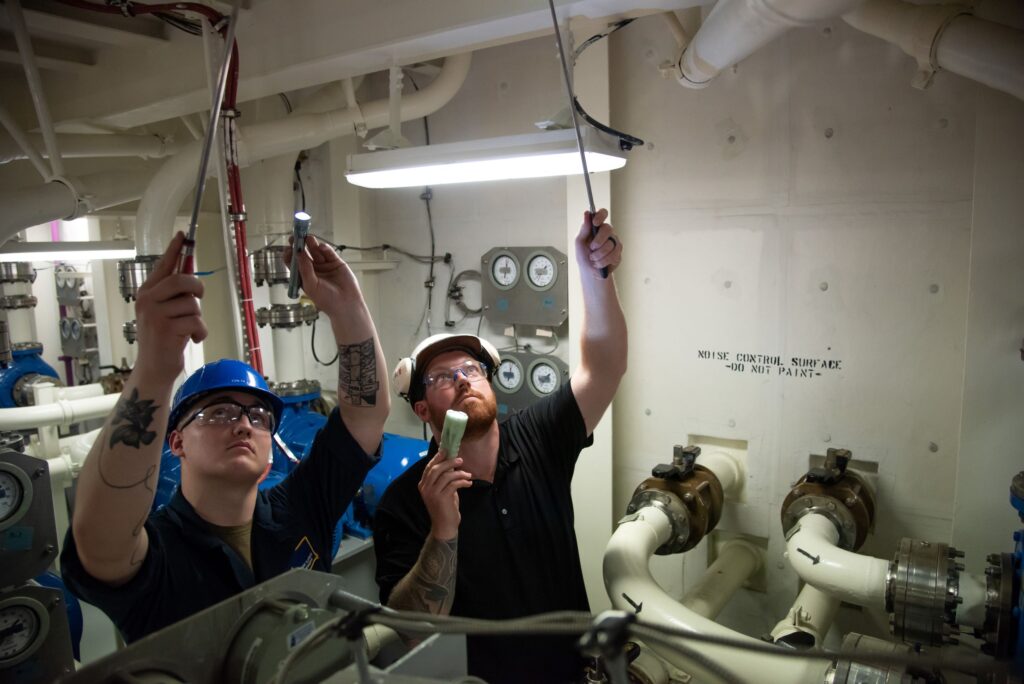
Machinist Mate Second Class Allington Scotland, left, and New New Shipbuilding Construction Supervisor Keith Wright inspect the 1,000th compartment space turned over to the crew of John F. Kennedy (CVN 79). HII

NEWPORT NEWS, Va. — HII, America’s only builder of nuclear-powered aircraft carriers, announced July 11 that its Newport News Shipbuilding division reached a significant milestone in the compartment and systems construction of aircraft carrier John F. Kennedy (CVN 79). 

Newport News recently turned over to the ship’s crew the 1,000th compartment of the 2,615 total spaces. The milestone reflects the shipyard’s steady progress toward delivery of the ship to the Navy. Newport News has also installed more than 9.8 million feet of cable, or more than 1,800 miles, of the approximately 10.5 million feet of cable on John F. Kennedy. 

The most recently completed spaces include electrical and engineering. This allows sailors assigned to the pre-commissioning unit to increase training on the ship while final outfitting and testing progresses. 

“Our shipbuilders are highly skilled, determined and working incredibly hard to bring Kennedy to life,” said Lucas Hicks, vice president, New Construction Aircraft Carrier Programs CVN 78 and CVN 79. “This is about equipping our Sailors with the most advanced aircraft carrier ever built for the U.S. Navy. We are proud to execute for the customer, and finalize the remaining equipment, systems and compartments that will bring us closer to delivering the ship to the Navy.” 

John F. Kennedy, the second ship in the Ford class, is scheduled to be delivered to the Navy in 2024. Two other Ford-class aircraft carriers are currently under construction at Newport News, Enterprise (CVN 80) and Doris Miller (CVN 81). 

The Ford-class aircraft carriers are the first to be designed 100% digitally. Although the ships were designed in a digital environment, paper drawings are still used during the construction process. John F. Kennedy represents a transition to a new digital construction process, with shipbuilders beginning to use visual work instructions on laptops and tablets rather than paper drawings. Enterprise will be the first carrier totally built using the digital tools. 

Ford-class enhancements incorporated into the design include flight deck changes, improved weapons handling systems and a redesigned island, all resulting in increased aircraft sortie generation rates. The Ford class also features new nuclear power plants, increased electrical power-generation capacity, allowance for future technologies, and reduced workload for Sailors, translating to a smaller crew size and reduced operating costs for the Navy. Construction processes on Fordclass carriers are enabled by workforce learning that took place on USS Gerald R. Ford (CVN 78) and those lessons are being applied throughout the Ford class, HII said.