Navy Awards HII $240M Advance Procurement Contract for LPD 32
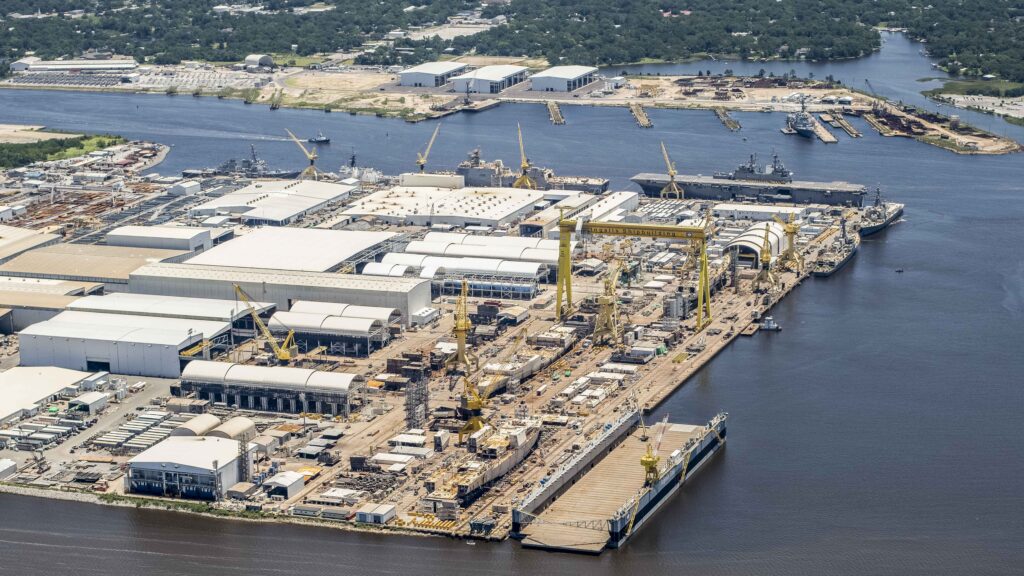
An aerial view of Ingalls Shipbuilding in Pascagoula, Mississippi. HII
PASCAGOULA, Miss. — HII’s Ingalls Shipbuilding division has received a $240 million, cost-plus-fixed-fee advance procurement contract from the U.S. Navy to provide long-lead-time material and advance construction activities for amphibious transport dock LPD 32, the company said June 16.
The ship will be the 16th in the San Antonio-class constructed at Ingalls Shipbuilding.
“Our shipbuilders are proud to continue building these amphibious ships that are integral to the Navy fleet,” Ingalls Shipbuilding President Kari Wilkinson said. “The funds from this contract will be used to purchase long-lead time material and major equipment across a supplier network of nearly 400 companies in 30 states.”
LPD 32 will be the third Flight II amphibious ship in the San Antonio class. LPD Flight II is the next generation amphibious ship to replace Whidbey Island (LSD 41) and Harpers Ferry (LSD 49) classes of dock landing ships. Ingalls has delivered 12 San Antonio-class ships to the U.S. Navy and has two more under construction, including Richard M. McCool Jr. (LPD 29) and Harrisburg (LPD 30). Fabrication of the 15th San Antonio-class ship, Pittsburgh (LPD 31), will begin later this year.
Pacific Amphibious Leaders Collaborate on Regional Cooperation
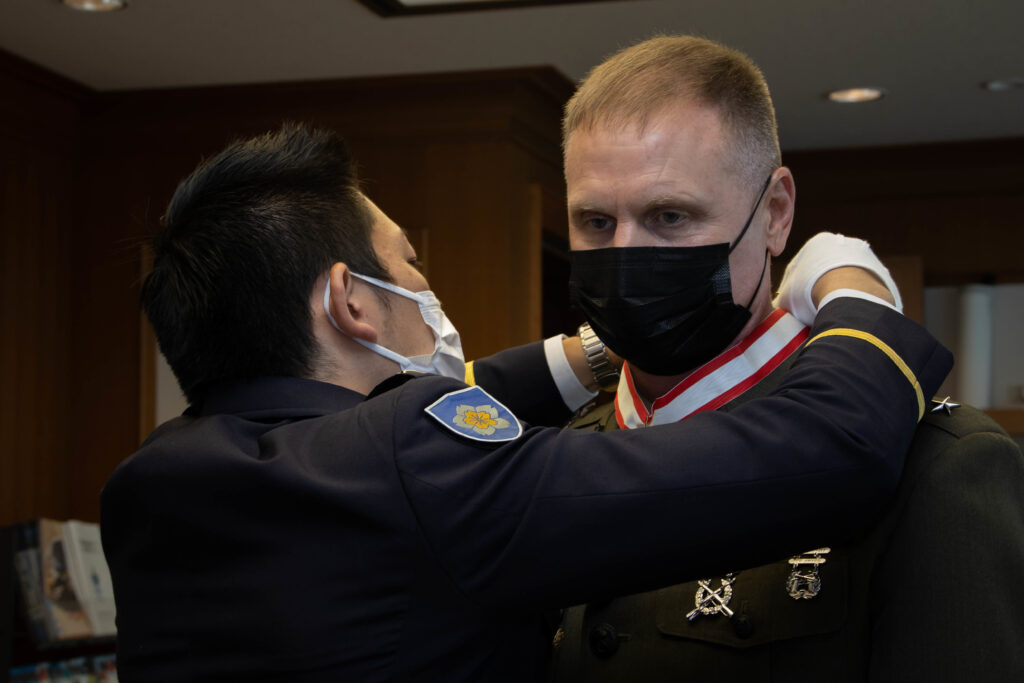
U.S. Marine Corps Lt. Gen. Steven R. Rudder, commander, U.S. Marine Corps Forces, Pacific, is awarded the Order of the Rising Sun after the Pacific Amphibious Leaders Symposium 2022, Tokyo, Japan, June 17. U.S. MARINE CORPS / Lance Cpl. Haley Fourmet Gustavsen
TOKYO — Lt. Gen. Steven R. Rudder, commander, U.S. Marine Corps Forces, Pacific, and General Yoshida Yoshihide, chief of staff, Japan Ground Self-Defense Force, cohosted the eighth iteration of the Pacific Amphibious Leaders Symposium in Tokyo June 13-16, U.S. Marine Corps Forces, Pacific said June 16.
The symposium brought together senior leaders from 18 participating delegations from across the Indo-Pacific, Central America, South America, and Europe to foster dialogue and strengthen relationships in support of a secure and stable Indo-Pacific. It was the first symposium to be hosted by the JGSDF, and the first to be conducted in person since 2019. PALS in 2020 and 2021 were conducted virtually due to the COVID-19 pandemic.
The event consisted of panels, discussions, bi-lateral and tri-lateral engagements and a capabilities demonstration. Participants shared ideas, best practices and recent experiences with amphibious operations. They collaborated on common interests and engaged in meaningful dialogue to advance amphibious interoperability and crisis response capabilities.
“Our outcome was that we established deeper relationships with those partners and allies that were here,” Rudder said. “We were also able to talk about naval integration and joint interoperability, and how we can further regional cooperation.”
PALS is the premier annual gathering of regional amphibious forces. Each of the participating delegations share something in common: they all have a coastline bordering the Indian or Pacific Ocean, or have populations that are affected by disasters arising from their proximity to the sea, such as typhoons and tsunamis, or their proximity to the “Ring of Fire,” which produces earthquakes and volcanic eruptions.
PALS serves as a physical demonstration of the United States’ commitment to its regional allies and partners, and builds on the interactions, developments and dialogues from previous years. These relationships result in increased collective readiness, improved interoperability, and better training. These advances pave the way for enhanced security and stability throughout the Indo-Pacific region.
“PALS 2022 disseminates a powerful message that we do not allow unilateral changes to the status quo by force,” Yoshida said in his closing remarks.
The United States’ sustained commitment to the Indo-Pacific region aims to increase cooperation, enhance regional security, and maintain an environment of peace and prosperity.
“There is no nation that can do it all by themselves,” Rudder said in the closing address. “Everyone has a piece to offer.”
Navy Contracts Northrop Grumman for Multi-Int Upgrades for MQ-4C Triton UAVs
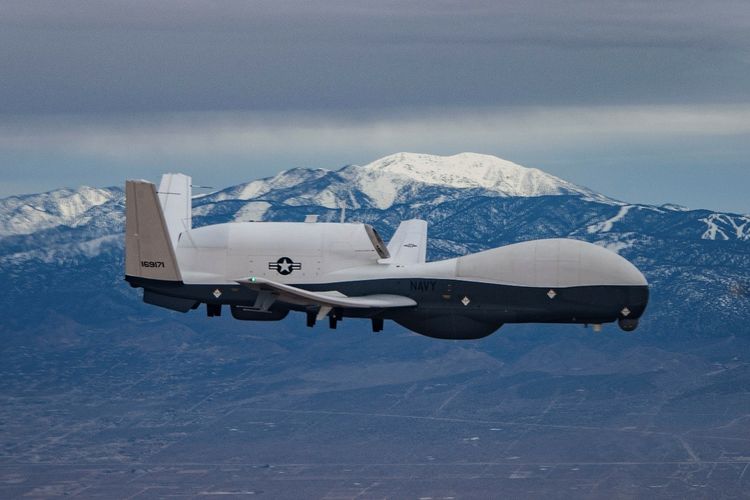
A Northrop Grumman Corp. MQ-4C Triton takes to the skies over the California desert as the Triton low-rate initial production schedule progresses. Known as B8, this is the first production Triton to be upgraded to the multi-intelligence configuration to meet the Navy’s critical maritime intelligence, surveillance, reconnaissance and targeting needs. B8 was delivered to Naval Air Station Patuxent River, Maryland, on Feb. 1. NORTHROP GRUMMAN
ARLINGTON, Va. — The Navy has awarded Northrop Grumman two contracts to upgrade MQ-4C Triton high-altitude, long-endurance unmanned aerial vehicles with a multi-intelligence collection capability.
The Naval Air Systems Command awarded Northrop Grumman Systems Corp. of San Diego a $15.1 million contract modification to a previously awarded, fixed-price incentive contract to provide “additional labor and material to incorporate production engineering change proposals that modify MQ-4C Triton unmanned aircraft system production assets to an Integrated Functional Capability 4.0 [IFC-4] multiple intelligence configuration for the Navy and the government of Australia,” according to a June 14 Defense Department contract announcement.
Another contract issued June 16 awarded the company $20.5 million to incorporate IFC-4 for MQ-4Cs construction numbers B13 through B15.
The MQ-4C’s IFC-4 is designed to bring an enhanced multi-mission sensor capability as part of the Navy’s Maritime Intelligence, Surveillance, Reconnaissance and Targeting transition plan. The Triton in the IFC-4 configuration is designed to complement the Navy’s P-8A Poseidon maritime patrol aircraft and eventually will enable the Navy to retire its EP-3E Orion electronic reconnaissance aircraft. The initial operational capability for the Triton will be declared in 2023 when IFC-4-configured Tritons are deployed in enough quantity to field one complete orbit.
The first production MQ-4C Triton unmanned aerial vehicle to be upgraded to the multi-intelligence configuration was delivered to the U.S. Navy at Naval Air Station Patuxent River, Maryland, on Feb. 1. The Triton, designated B8 by the manufacturer, Northrop Grumman, went through a 30-month modification period to the new configuration.
The two MQ-4Cs that were deployed to Guam for the U.S. 7th Fleet’s Task Force 72 by Unmanned Patrol Squadron 19 (VUP-19) as part of the early operational capability deployment were in the baseline IFC-3 configuration. One has returned to VUP-19’s facility at Naval Station Mayport, Florida, to support training.
Work on the new contract is expected to be completed in April 2025.
Marine Gen. Smith: ’Expeditionary Foraging’ a Component of Light, Mobile Logistics
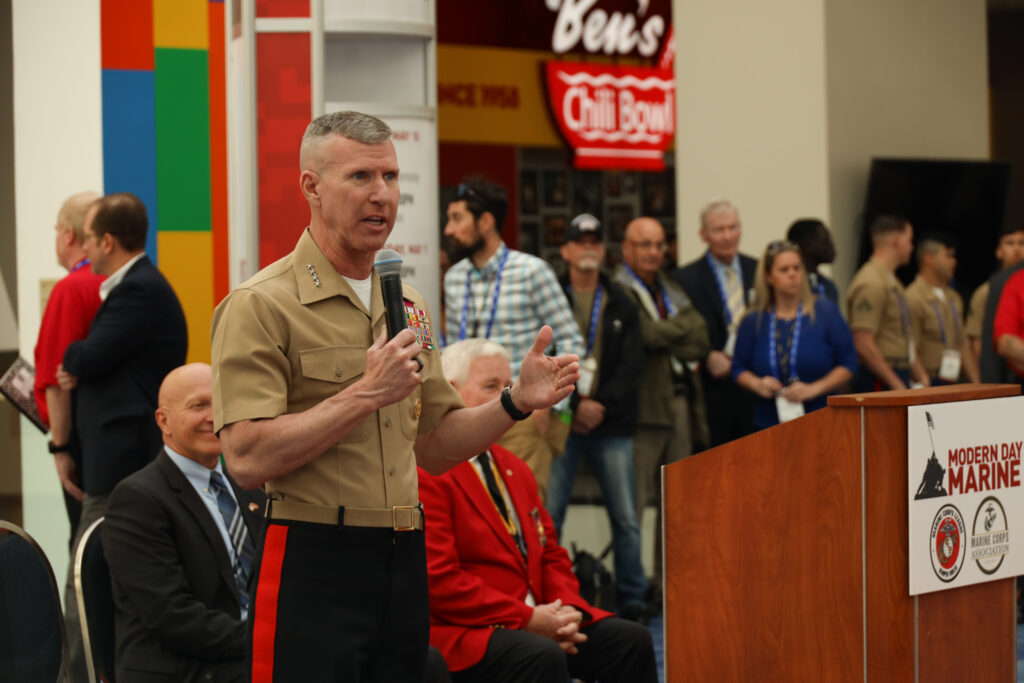
U.S. Marine Corps Gen. Eric M. Smith, the assistant commandant of the Marine Corps, speaks at the ribbon cutting ceremony at Modern Day Marine 2022 in Washington D.C. on May 10. U.S. MARINE CORPS / photo by Cpl. Ellen Schaaf
ARLINGTON, Va. — The Marine Corps warfighting concept of Expeditionary Advance Base Operations needs light, mobile logistics to operate inside an enemy’s weapon engagement zone, the Corps’ assistant commandant said. Among other types of support, those logistics include “expeditionary foraging.”
Gen. Eric M. Smith, speaking on Force Design 2030 in a June 15 webinar of the Stimson Center, a Washington think tank, used the term “expeditionary foraging” to describe contracting with local merchants and vendors to supply disaggregated forces with goods and services that cannot be supplied by sealift or stockpiled because of the need to preserve mobility.
The term “foraging” brings to the mind of an American military historian an image of a soldier in the 19th century “requisitioning” — often stealing — chickens or other food sources from a local farmer to feed a moving army. The term “forage” was even applied to the type of caps — forage caps — worn by soldiers of the era.
Smith has no such thing in mind with the concept of expeditionary foraging. He cited the need to reorganize the 18 Marine combat logistics battalions to “deal with small, 80-to-100-Marine units who are strategically placed in order to facilitate fleet and joint maneuver. They have to be able to support those disaggregated units.
“Those disaggregated units have to need less,” Smith said. “We have a little pushback on this. It’s called ‘expeditionary foraging.’
“Expeditionary foraging is what we do today,” he said. “When we go to the Philippines, we have a contracting officer for a large exercise like Balikatan. That contracting officer pays a Filipino citizen for the use of a vehicle, for food, for water. We do that now. Why would we not do that in conflict? We will be in competition with an adversary for those same assets.
“But first you contract it if you can,” he said. “And then you utilize those assets that exist within any nation before you bring it yourself. It’s standard infantry business. … Expeditionary foraging doesn’t mean you’re out there with a tin cup asking for a handout. We do it now with contracting officers. One of the things we’re working to do is to place those contracting officers forward with those units. They can contract for gravel, trucks, petroleum, all those things that, the more I procure locally, the less I have to bring.”
Smith said the logistics commands of the Army, Navy, and Marine Corps are still needed to support forward-deployed forces, but “we have to blunt [the enemy] in the first few days, so, yes, we take risks to do that. … We can’t build ‘iron mountains’ [of munitions and supplies] anymore. Those days have ended.”
CNO Visits Iceland, Discusses Maritime Security and Partnership 
An Icelandic Coast Guard rescue helicopter Airbus lands to transfer simulated evacuees to Keflavik Air Base during exercise Northern Viking 22 on April 10. U.S. NAVY / Mass Communication Specialist 2nd Class Cameron C. Edy
REYKJAVIK, Iceland — Chief of Naval Operations Adm. Mike Gilday travelled to Iceland June 13-15 as part of a week-long trip to Iceland and Germany, the CNO’s Public Affairs Office said June 15.
Gilday visited Reykjavik and Keflavik Air Base, where he spoke with U.S. Sailors flying the P-8A Poseidon multi-mission maritime patrol and reconnaissance aircraft and Italian air force service members deployed supporting the NATO air policing mission with their F-35A aircraft.
At Reykjavik, Gilday met with Ministry for Foreign Affairs Permanent Secretary Martin Eyjólfsson; Director General of Icelandic Coast Guard, Rear Adm. Georg Kristinn Lárusson; and other senior Icelandic officials. Discussions focused on the U.S. defense relationship with Iceland and items of shared national security interests, to include Arctic security.
“Iceland is the geostrategic linchpin for NATO in the Arctic region and I am grateful for their partnership and collaboration,” said Gilday. “The Arctic is an opportunity to work collaboratively with Allies and partners to keep this a secure and stable region, and we are committed to working together to address challenges and strengthen our collective deterrent against strategic challenges.”
Gilday also toured the Icelandic Coast Guard Headquarters and Joint Rescue Coordination Center.
“It’s a confident feeling to be aware of a great ally with large-scale resources available to back up and assist the Icelandic Coast Guard when and if the scope of its challenges exceeds the capability of the organization and the Icelandic safety system on the ocean around Iceland,” said Lárusson. “It is also very beneficial to receive training, education, and development assistance in fields in which the Iceland Coast Guard is not fully developed.”
While visiting Keflavik, Gilday expressed appreciation for Iceland’s leadership role in enhancing regional cooperation, including maritime search and rescue activities.
At Keflavik Air Base, he spoke with U.S. Navy Sailors from Patrol Squadron (VP) 9 and Patrol Squadron 46 and discussed the importance of their mission in the northern European theater. According to Gilday, the rotational Poseidon aircraft is an integral part of the NATO partnership between the U.S. and Iceland.
“The Navy’s role has never been more consequential or more expansive, and we need a combat-credible naval force that can protect our interests in peace and can prevail in combat, while supporting our Allies and partners,” said Gilday. “The Sailors here in Iceland are just that, they remain postured, and ready, with a credible force to assure, deter, and defend in an increasingly complex security environment, which is possible because of the support and partnership we have with Iceland.”
The U.S. Navy and Iceland conducted Exercise Northern Viking 2022 in April. Exercises like Northern Viking strengthen interoperability and readiness between the U.S., Iceland and Allied nations, and enable execution of multi-domain command and control of joint and coalition forces in the defense of Iceland and the Sea Lines of Communication in the Greenland-Iceland-United Kingdom Gap.
After this visit, Gilday will travel to Europe to visit a ship participating in BALTOPS 22 and meet with other heads of navies, as well as government leaders.
Missile Defense Agency Awards Raytheon $867 Million for SM-3 Block IIA Missiles
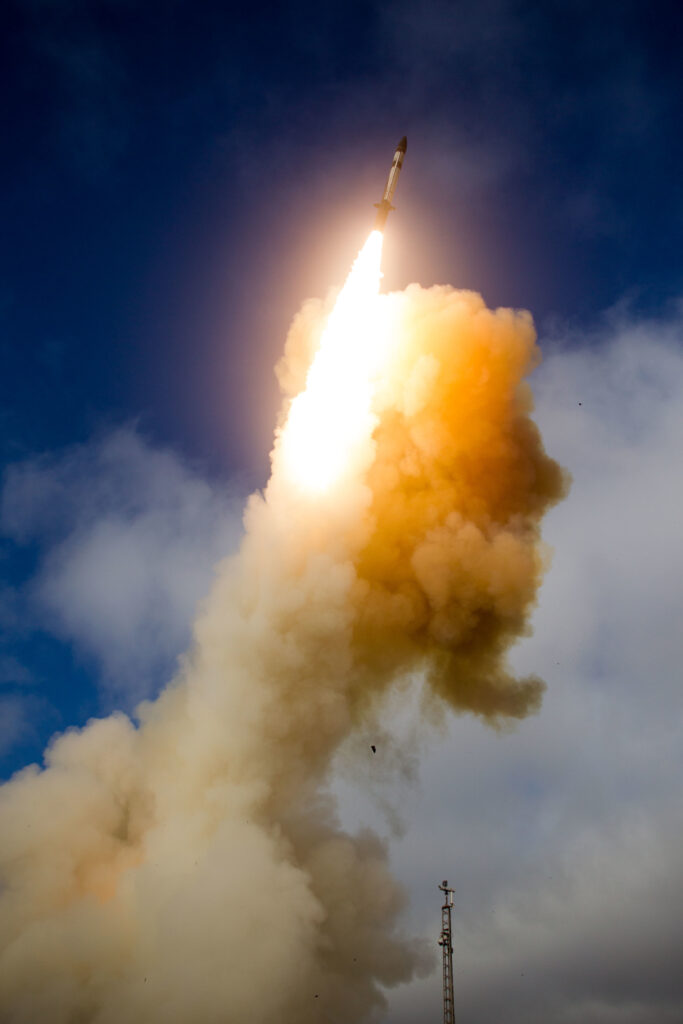
Japanese and U.S. forces announced the successful completion of a Standard Missile-3 (SM-3) Block IIA flight test from the Point Mugu Sea Range, San Nicolas Island, California, in 2018. MISSILE DEFENSE AGENCY / Ralph Scott
TUCSON, Ariz. — Raytheon Missiles & Defense, a Raytheon Technologies business, has been awarded an $867 million Missile Defense Agency contract to deliver SM-3 Block IIA missiles to the United States and partners, the company announced June 14.
“The SM-3 Block IIA interceptor was developed in partnership with Japan, and it features a larger rocket motor and kinetic warhead that allow it to defend broader areas from long-range ballistic missile threats,” said Tay Fitzgerald, president of Strategic Missile Defense at Raytheon Missiles & Defense. “Our strong cooperation with Japanese industry was essential to the development of this next-generation solution that can defeat complex threats around the world from sea and land.”
The SM-3 interceptor is a defensive weapon the U.S. Navy uses to destroy short- to intermediate-range ballistic missiles. The interceptor uses sheer force, rather than an explosive warhead, to destroy targets in space. Its “kill vehicle” hits threats with the force of a 10-ton truck traveling 600 miles per hour. This technique, referred to as “hit-to-kill,” has been likened to intercepting a bullet with another bullet.
The SM-3 Block IIA interceptor’s kinetic warhead has been enhanced, improving the search, discrimination, acquisition and tracking functions, to address advanced and emerging threats. The missile intercepted an advanced ballistic-missile threat in its first live target test in early 2017.
The SM-3 interceptor is a critical piece of the Phased Adaptive Approach for missile defense in Europe. The interceptor is being carried by U.S. Navy ships deployed off Europe’s coast and is now operational at a land-based site in Romania, further enhancing Europe’s protection.
Marine Corps Orders More AeroVironment Puma 3 AE Unmanned Aircraft Systems
An Aerovironment Puma 3 AE small unmanned aircraft system can be launched by hand, bungee, rail or vehicle. AEROVIRONMENT
ARLINGTON, Va. — AeroVironment Inc. received a $6.2 million firm-fixed-price contract award for Puma 3 AE small unmanned aircraft systems and spares on May 3, for the U.S. Marine Corps, the company said in a June 14 release. Delivery is anticipated to be completed in July 2022.
“Puma 3 AE has proven itself as the ideal solution for low-altitude intelligence, surveillance and reconnaissance missions in any operational environment and continues to serve as the backbone of the U.S. Marine Corps Medium Range/Medium Endurance Forces,” said Trace Stevenson, AeroVironment vice president and product line general manager for SUAS.
AeroVironment’s Puma 3 AE delivers mission critical capabilities in all environments. Puma 3 AE has a wingspan of 9.2 feet (2.8 meters), weighs 15 pounds (6.8 kilograms) and can operate up to 37.2 miles (60 kilometers) with AeroVironment’s Long-Range Tracking Antenna. Multi-mission capable, operators can easily swap Puma 3 AE’s payloads quickly, selecting between the Mantis i45 and the enhanced night variant, Mantis i45 N. Puma 3 AE is launchable by hand, bungee, rail, or vehicle, and is recoverable by deep-stall landing, providing class-leading capabilities in challenging environments around the world.
AeroVironment’s SUAS comprise the majority of all unmanned aircraft in the U.S. Department of Defense inventory, and its rapidly growing international customer base numbers more than 50 allied governments, including Ukraine.
BAE Systems to Build Seekers for LRASMs
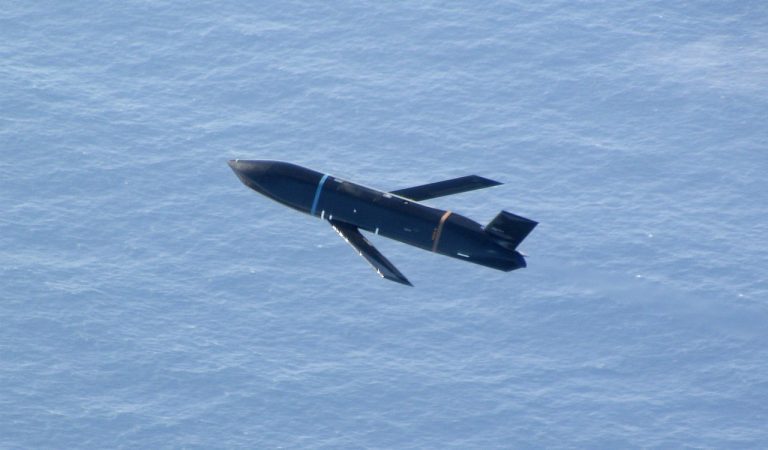
An LRASM in flight. LOCKHEED MARTIN
NASHUA, N.H. — BAE Systems has received a $38 million contract from Lockheed Martin for additional guidance systems for Lockheed Martin’s Long-Range Anti-Ship Missile (LRASM) program, the company said June 14.
BAE Systems’ advanced radio-frequency sensor enables LRASM to strike specific, high-value maritime targets from long range in aggressive electromagnetic warfare environments.
“We’re advancing the state of small electronic warfare systems through our efficient LRASM seeker design, which delivers discriminating capabilities at an affordable cost,” said Larry Glennon, Small Form Factor product line director at BAE Systems. “Our seeker enables the U.S. Navy, U.S. Air Force, and our allies to find the proverbial needle in the haystack with high-performance, multi-mission missiles.”
The LRASM provides warfighters with a capable precision strike weapon intended for use from airborne platforms including B-1B Lancer bombers, F/A-18E/F Super Hornet fighters, F-35 Lightning II fighters, P-8A Poseidon maritime patrol aircraft and surface vessels via the Mark 41 Vertical Launching System. The missile’s diversity of launch platforms, survivability, range and lethality provide critical capability and flexibility to warfighters.
Work on BAE Systems’ seeker takes place at the company’s advanced manufacturing facilities in Wayne, New Jersey, Greenlawn, New York and Nashua, New Hampshire.
BALTOPS 22: A Perfect Opportunity for Research and Resting New Technology
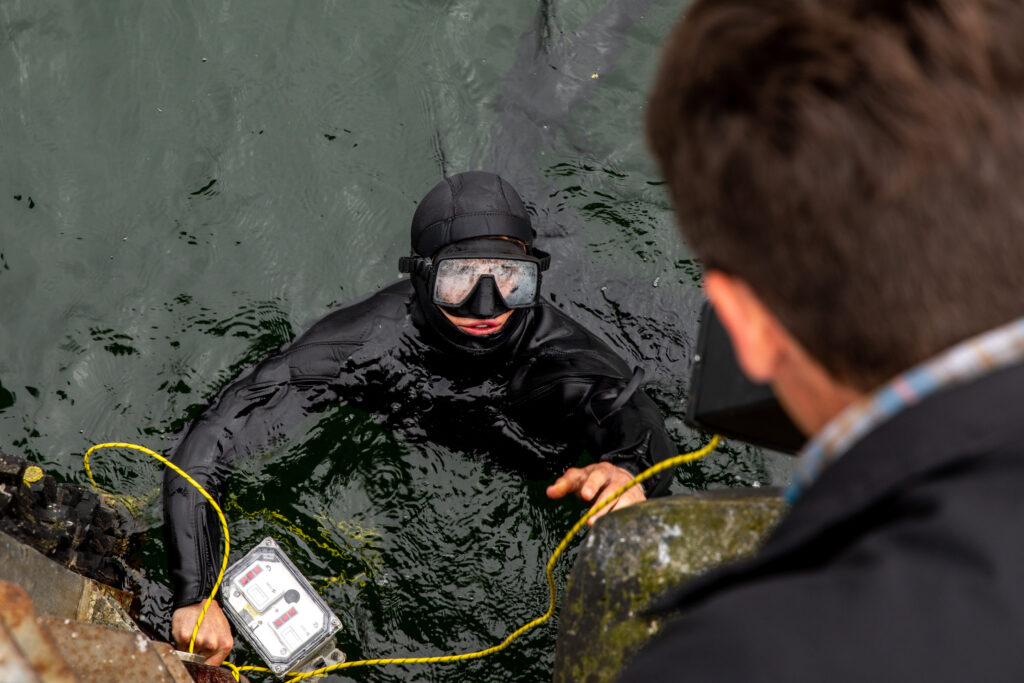
Lt. j.g. Chris Bianchi, assigned to Explosive Ordnance Disposal Mobile Unit (EODMU) 8, prepares mock explosives for a pierside training event during exercise BALTOPS 22, June 10. U.S. NAVY / Mass Communication Specialist 1st Class Daniel James Lanari
BALTIC SEA — A significant focus of BALTOPS every year is the demonstration of NATO mine hunting capabilities, and this year the U.S. Navy continues to use the exercise as an opportunity to test emerging technology, U.S. Naval Forces Europe-Africa Public Affairs said June 14.
In support of BALTOPS, U.S. Navy 6th Fleet partnered with U.S. Navy research and warfare centers to bring the latest advancements in unmanned underwater vehicle mine hunting technology to the Baltic Sea to demonstrate the vehicle’s effectiveness in operational scenarios.
Experimentation was conducted off the coast of Bornholm, Denmark, with participants from Naval Information Warfare Center Pacific, Naval Undersea Warfare Center Newport, and Mine Warfare Readiness and Effectiveness Measuring all under the direction of U.S. 6th Fleet Task Force 68.
BALTOPS is an ideal location for conducting mine hunting experimentation due to the region’s unique environmental conductions such as low salinity and varying bottom types. It is also critical to evaluate emerging mine hunting UUV technology in the Baltic due to its applicability with allied and partner nations. This year experimentation was focused on UUV navigation, teaming operations, and improvements in acoustic communications all while collecting critical environmental data sets to advance the automatic target recognition algorithms for mine detection.
“In prior BALTOPS we demonstrated advanced capabilities to detect, reacquire and collect images of mine contacts, and transfer those images in near real-time to operators through the use of a specialized Office of Naval Research UUV,” said Anthony Constable, Office of Naval Research science advisor to U.S. 6th Fleet. “This year, through the work of NIWC Pacific and NUWC Newport, we are showing that this capability can be integrated into programs of record by executing complex multi-vehicle UUV missions with modified U.S. Navy fleet assets.”
An additional critical objective was to continue to increase the communication range and data transfer capability to give the operators more flexibility in mine hunting operations. Advancements in communication technology, demonstrated this year, have shown a significant improvement in operating ranges over currently used systems. This provides additional standoff flexibility to the U.S. Navy in conducting safe mine hunting operations.
BALTOPS also provides a unique opportunity for the U.S. research, development and acquisition communities to exercise the current and emerging UUV technology in real-world operational environments. This year featured the current and future programs of record for mine hunting UUVs in the Mk18 and Lionfish systems. Both systems were put through the paces over 10 days of mine-hunting operations, collecting over 200 hours of undersea data.
“The major benefit of the BALTOPS experimentation is to provide advanced mine hunting capabilities to the operator in the field. By exercising the future capabilities, U.S. 6th Fleet can provide valuable feedback to help guide the Navy acquisition community responsible for mine hunting UUV development and procurement,” said Lt. Joshua Lynn, U.S. 6th Fleet experimental lead for BALTOPS. “This year we have seen the near- and long-term future in mine hunting UUV technology and we are excited to see how quickly the technology and capabilities are improving.”
USS Sioux City was ‘Built for 5th Fleet’
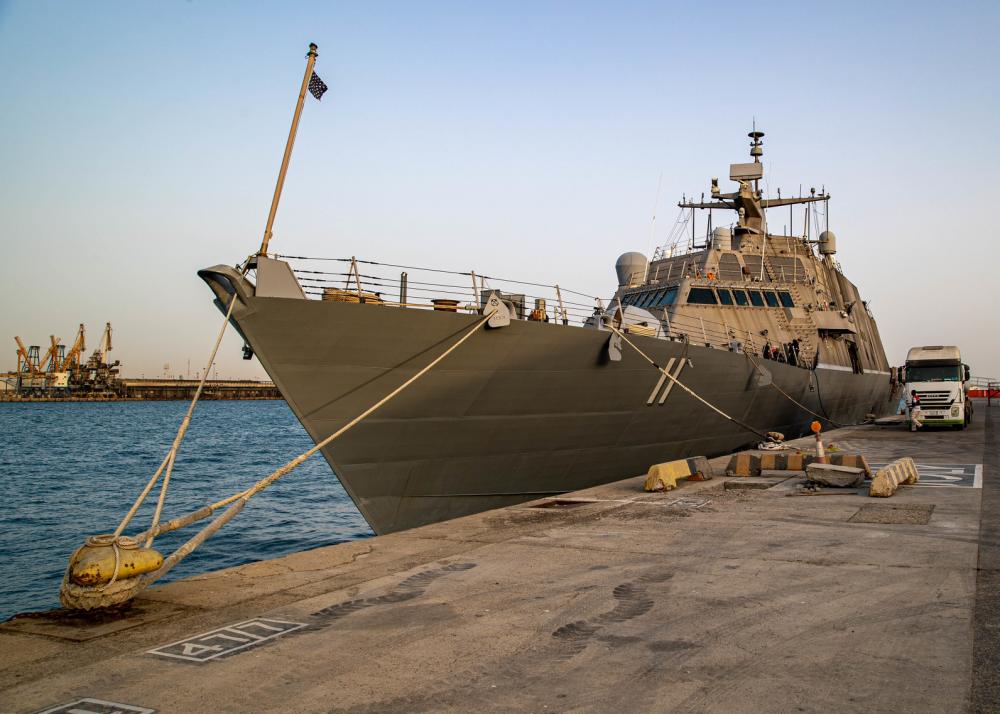
Littoral combat ship USS Sioux City (LCS 11) moored pierside in Jeddah, Saudi Arabia, May 31. Sioux City is deployed to the U.S. 5th Fleet area of operations to help ensure maritime security and stability in the Middle East region. U.S. NAVY / Mass Communication Specialist 3rd Class Nicholas A. Russell
USS Sioux City (LCS 11) has become the first littoral combat ship to deploy to the U.S. 5th Fleet area of responsibility.
According to Capt. Rob Francis, the commander of Destroyer Squadron 50 and Task Force 55, the Freedom-class variant is perfect for this AOR.
The Mayport-based Sioux City was commissioned in 2018. It has more varied deployment experience than any other LCS. It deployed to the U.S. 4th Fleet last year, supporting interdiction operations in the Caribbean with a U.S. Coast Guard Tactical Law Enforcement embarked, and was served with the U.S. 6th Fleet during most of the month of May or its way to the Middle East.
The ship is equipped with the surface warfare mission package. An embarked detachment of a pair of MH-60S Seahawk helicopters from the Sea Knights of Helicopter Sea Combat Squadron (HSC) 22 is assigned to the Sioux City for its deployment.
The ship hasn’t arrived in the Arabian Gulf yet, but is operating in the Red Sea, Bab al-Mandeb and the Gulf of Aden as part of Combined Task Force 153.
“LCS isn’t like anything that has come out to 5th Fleet,” Francis said. “We recognize that that LCS was built for this AOR. We have a CO and a crew that’s 100% locked on to helping us understand how to integrate the Freedom class into our operations, because this is our future.”
Francis said the plan is to conduct patrols and maritime security operations.
“Right now, she’s conducting boardings, and doing the real-world mission we need her to do. She’s also providing air domain awareness for the CAOC, which is something the ship wasn’t designed for. We’ll exercise all of the ship’s capabilities. We want to find out what she can do.”
Francis also said the deployment is a test of the Navy’s support infrastructure in the region.
“We’ll do a planned maintenance availability when they get to here to Bahrain, and we’ll exercise every one of our support capabilities and facilities.”
Francis acknowledged the concerns about LCS fuel consumption and readiness.
“We’ve heard the criticism that LCS has short legs. Okay, if you run it around at 40 knots all the time, that may be true. When she’s station keeping, however, it’s at an economical speed that offers good fuel consumption,” he said. “I don’t have an oiler following her around.”
Francis said Sioux City has met expectations for readiness.
“I look at all of my ships every single day, and Sioux City is green across the board. If you ask me, I’d like three or four more out here tomorrow.”