REMUS 100 Completes 935 Missions with Only Two Days of Downtime
From HII
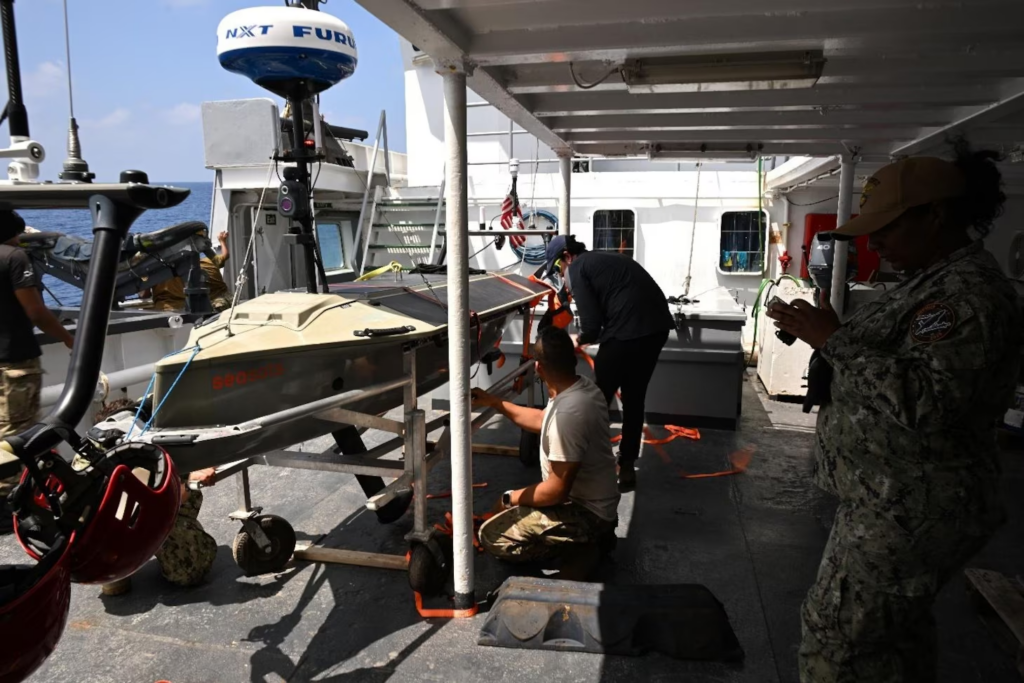
NEWNHAM TAS, Australia, Feb. 10, 2026 (GLOBE NEWSWIRE) — The Australian Maritime College (AMC) and HII (NYSE: HII) today announced a major reliability milestone for AMC’s Legacy REMUS 100 autonomous underwater vehicle (AUV).
Over seven years, the AMC REMUS 100 completed 935 operational deployments with only two days of downtime caused by material issues. During this period the AUV supported the training of more than 400 Royal Australian Navy AUV operators.
Despite frequent use in challenging environments, the system maintained operational availability above 99.9%, which is a standout result for autonomous maritime technology.
This performance record reinforces the REMUS 100’s reputation as one of the most dependable autonomous underwater systems operating today. In 2026, HII REMUS will celebrate 25 years of reliable, innovative service to customers worldwide. To date, more than 750 REMUS AUVs have been delivered to customers in over 30 countries, with more than 90% still in active service.
The legacy REMUS 100 is a versatile, reliable, and easy-to-maintain system that played an important role in oceanographic research, environmental monitoring, and defence operations around the world.
Since the arrival of the REMUS100 at the AMC the vehicle has been maintained in-house by staff at the AMC’s Autonomous Maritime Systems Laboratory in Northern Tasmania, with remote support provided directly from HII technical staff in the U.S.
“This reliability record is an outstanding testament to both the REMUS 100’s robust engineering and technical expertise of the AMC team who maintain and operate the vehicle,” said Chris White, AMCS manager of Defence & Autonomous Systems. “To sustain such high performance across hundreds of missions and diverse marine conditions is a reflection of both the system’s design integrity and the autonomous system technical skills resident at the AMC.”
“The REMUS 100’s reliability has enabled the AMC to plan and execute complex missions with full confidence in the system. This level of dependability has a direct impact on mission success, data quality and training outcomes.” said Duane Fotheringham, president of HII’s Unmanned Systems. “Its performance record reinforces HII’s commitment to delivering innovative, reliable, and upgradeable mission-ready autonomous underwater systems that set industry standards for performance and durability.”
Lightfish Unmanned Vessel First Joint Maritime Launch
VICTORIA, Seychelles – Commander Task Force (CTF) 66 launched a Lightfish Unmanned Surface Vessel (USV) for the first time off a partner nation’s vessel during Cutlass Express 2026 off the coast of the Indian Ocean, Feb. 9.
The launch was part of an unmanned systems training event with the Seychelles Navy, designed to test the Lightfish USV abilities in open ocean with limited connection.
“We are making history at Cutlass Express 2026 by demonstrating our enhanced warfighting skills through our robotic and unmanned capabilities alongside our maritime partners,” said Lt. Bryna Loranger, CTF 66 Operations Officer. “6th Fleet is seeking new ways to build partner maritime domain awareness capabilities during this exercise by promoting interoperability. Through sharing and experimenting with Seychelles Coast Guard assets and infrastructure, we are enhancing our expeditionary robotic autonomous systems capabilities in the U.S. Africa Command area of responsibility.”
CTF 66 is a fully uncrewed task force that uses advanced technologies, like artificial intelligence, to help U.S. 6th Fleet and its partners move faster to maintain a strong presence across Africa’s maritime zones while detecting illegal activity.
CTF 66 is leading the U.S. Navy in innovating its approach to warfighting during an age where information systems, technology, and vulnerabilities in the global economy are being weaponized by adversaries operating in the grey-zone outside the domain of traditional warfare.
“Through exercises like Cutlass Express 2026, we are adapting alongside our partners by integrating unmanned tactics directly into operations,” said Rear Adm. Kelly Ward, Commander, Task Force 66. “We are leaning into this domain hand-in-hand with our partners, translating innovation into warfighting readiness and enhancing maritime security to protect freedom of navigation.”
Cutlass Express 2026 has 19 partners and allies working together through a series of shore-based training events. Cutlass Express provides all participating nations an opportunity to work side-by-side to synchronize and rehearse real-world scenarios that will include visit, board, search and seizure (VBSS) and maritime interdiction training, counter-illegal, unregulated and unreported fishing procedures, and medical training.
Established in May 2024, CTF 66 is U.S. 6th Fleet’s first all-domain task force designed to integrate Robotic and Autonomous Systems (RAS) with naval, joint and NATO partners in the European and African theaters of operations. Since its establishment, the task force drives to innovate and develop unmanned technologies to enhance the way militaries integrate naval platforms across all domains, all enabled by this emerging technology.
CTF 66 currently maintains 22 USVs, however the task force is expecting to double its lethality as additional assets reach operational readiness in the near future. These USVs provide precise maritime domain awareness and serve as force multipliers. This enhanced technology forces adversaries to overextend their defenses and in positions to face complex strategic dilemmas.
Exercises like Cutlass Express 2026 allow CTF 66 to leverage strong collaboration with partners and allied nations to operate large numbers of unmanned systems at scale. These partnerships allow the task force to pre-position and deploy assets into host countries ahead of time using the ‘deploy to employ’ approach, while guaranteeing its immediate readiness in the area of operations.
CTF 66 and their USVs will continue to enhance deterrence, lethality and capabilities within the European and African theaters of operations.
For over 80 years, U.S. Naval Forces Europe and Africa (NAVEUR/NAVAF) has forged strategic relationships with allies and partners, leveraging a foundation of shared values to preserve security and stability. Headquartered in Naples, Italy, NAVEUR/NAVAF operates U.S. naval forces in the U.S. European Command and U.S. Africa Command areas of responsibility.
U.S. 6th Fleet, headquartered in Naples, Italy, conducts the full spectrum of joint and naval operations, often in concert with allied and interagency partners, in order to advance U.S. national interests and security and stability in Europe and Africa.
Marine Corps Passes Fiscal 2025 Financial Audit
From Communication Directorate, Headquarters Marine Corps, Feb.9, 2026
HEADQUARTERS, MARINE CORPS – For the third year in a row, independent auditors verified that the Marine Corps’ financial records are materially accurate, complete, and compliant with federal regulations and issued an unmodified opinion for Fiscal Year 2025.
Three is a pattern of accountability. This repeat achievement reinforces the service’s reputation for accountability, discipline, and leadership. The first and only service to achieve a clean, unmodified audit opinion, the Marine Corps continues to lead department-wide efforts toward effective financial management and delivering accountability to the American taxpayer.
The findings produced by the audit help the service to more efficiently and accurately plan, program, budget, and spend funds appropriated by Congress.
The Marine Corps’ audit process enabled accurate global tracking and reporting of financial transactions, inventory of facilities, equipment and assets, and accounting for taxpayer dollars spent during the last fiscal year. The auditors also tested the Marines Corps’ network, key business systems, and internal controls.
“Passing our third consecutive audit is a direct reflection of who we are as Marines,” said Gen. Eric M. Smith, Commandant of the Marine Corps. “Discipline, accountability, and stewardship are not administrative tasks; they are part of our warfighting culture. When the American people entrust us with their tax dollars, we owe them careful judgment and integrity in how those dollars are spent. Receiving our third consecutive clean audit opinion affirms that Marines take that responsibility seriously at every level, in every unit. I am beyond proud of the work by our Marines, Sailors, and civilians that made this possible.”
Since becoming the first service to pass an annual financial audit, the Marine Corps took additional steps to stabilize its new accounting system and procedures. Independent public accountants contracted by the Department of War Inspector General audited all records. Financial management personnel also gained more hands-on experience, which set conditions for a smoother audit this year.
“With each additional audit year under our belts, we get smarter and adapt, finding new and better ways to get the job done,” said LtGen. James Adams III, Deputy Commandant for Programs and Resources. “But to be clear, the hurdle we pass is no less significant. A financial statement audit is a year-round effort that tests every aspect of how we manage money for the Marine Corps. The sustained focus of our team on doing the job right over time is impressive.”
The auditor’s final report, enclosed in the Marine Corps’ Fiscal Year 2025 Agency Financial Report, highlights seven areas for the Marine Corps to improve upon, referred to as material weaknesses.
The Marine Corps will continue to eliminate these weaknesses through systems improvement and internal controls. While doing this, the Corps will still prioritize the accurate counting and management of its global assets, a challenging task given the vast scope of its operations. By repeating and refining this process, the Corps aims to develop a more fluid and efficient enterprise resource planning system, ultimately positioning itself for long-term mission success and accountability.
CENTCOM Commander Visits Aircraft Carrier in Arabian Sea
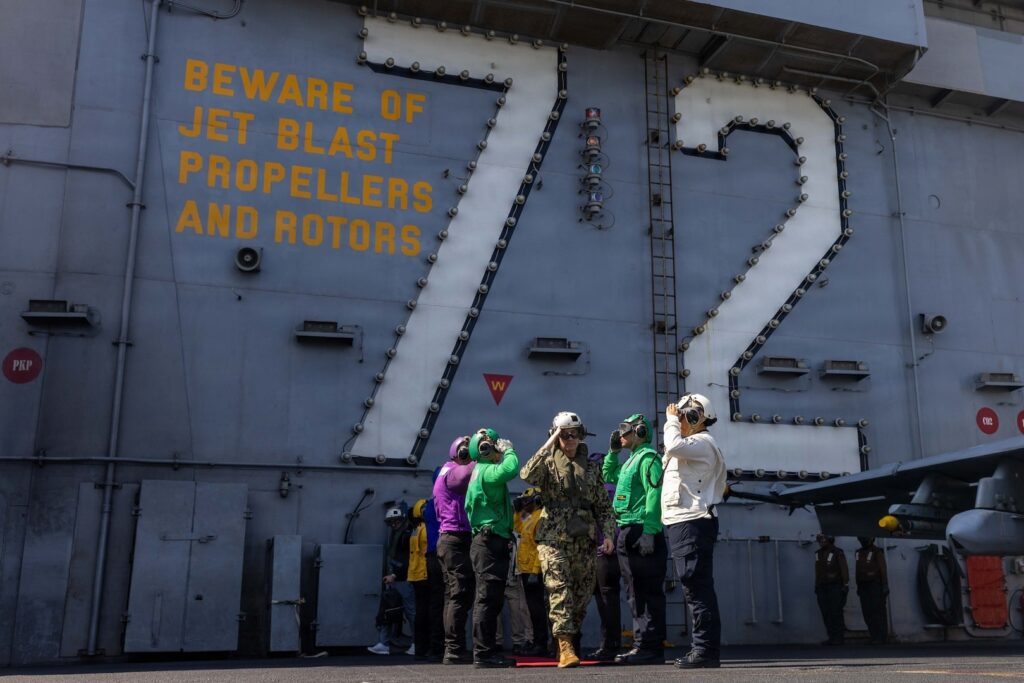
U.S Navy Adm. Brad Cooper, commander of U.S. Central Command, departs Nimitz-class aircraft carrier USS Abraham Lincoln (CVN 72) in the Arabian Sea, Feb. 7, 2026. Abraham Lincoln is deployed to the U.S. 5th Fleet area of operations to support maritime security and stability in the U.S. Central Command area of responsibility. (U.S. Navy photo by MCSN Angel Campbell)
TAMPA, Fla. –The commander of U.S. Central Command (CENTCOM) visited USS Abraham Lincoln (CVN 72), Feb. 7, as it transited the Arabian Sea during a scheduled deployment.
Adm. Brad Cooper visited crew members aboard the nuclear-powered aircraft carrier with U.S. Special Envoy for Peace Missions Steve Witkoff and Jared Kushner. Cooper expressed his gratitude for their service.
“I join the American people in expressing our incredible pride in the Sailors and Marines of the Abraham Lincoln Carrier Strike Group,” said Cooper. “Their dedication to the mission and professionalism are on full display here in the Middle East as they demonstrate U.S. military readiness and strength.”
Based in San Diego, Abraham Lincoln departed for deployment in November and operated in the Indo-Pacific region before arriving in the Middle East in January.
The Abraham Lincoln Carrier Strike Group consists of aircraft carrier Abraham Lincoln; the embarked staffs of Carrier Strike Group (CSG) 3, Destroyer Squadron (DESRON) 21, and Carrier Air Wing (CVW) 9; guided-missile destroyers USS Frank E. Petersen Jr. (DDG 121), USS Spruance (DDG 111) and USS Michael Murphy (DDG 112); and more than 60 fixed-wing and rotary-wing aircraft.
The strike group is operating in the CENTCOM area of responsibility to support maritime security and stability in the region.
Israel MOD Signs $130M Deal with Elbit Systems to Integrate Israeli Systems on CH-53Ks
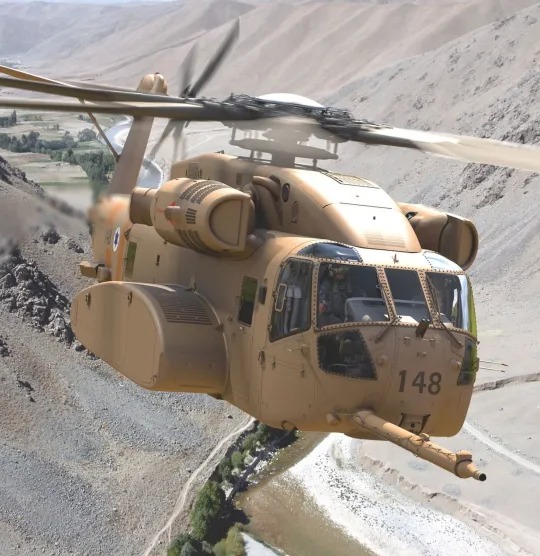
As part of the preparations for receiving the CH-53K “Pereh” helicopters, the Defense Procurement Directorate (DPD) within the Israel Ministry of Defense (IMOD) has signed a deal with Elbit Systems to integrate advanced Israeli technologies, including command and control, avionics, and electronic warfare systems, and the advanced anti-missile DIRCM system, on the 12 new helicopters expected to replace the IDF’s aging “Yas’ur” helicopters. The deal, led by the Deputy Director of the DPD for Air and Sea Procurement, is valued at approximately $130 million (over NIS 400 million).
The CH-53K helicopters were purchased through a Foreign Military Sales (FMS) agreement signed several years ago between the IMOD and the U.S. government. The helicopters are manufactured by Lockheed Martin-Sikorsky and are currently in the assembly process at the main production facility in Connecticut.
Upon completion of assembly, the helicopters are expected to move to a dedicated installation and production line established for adapting the American-configuration helicopters to Israeli systems tailored to the operational requirements defined by the Israeli Air Force (IAF). The integration of Israeli systems is expected to enhance the cockpit environment, enable flight in challenging conditions, and support the identification of safe landing zones and obstacles.
Defense Minister Israel Katz: “This deal marks a major milestone in strengthening the IDF and securing the Israeli Air Force’s operational edge for years ahead. Integrating cutting-edge Israeli systems into the world’s most advanced heavy-lift helicopter ensures these platforms are fully adapted to Israel’s unique combat requirements. We remain committed to advancing domestic ‘blue-and-white’ defense production and incorporating Israeli industries into strategic programs, ensuring production independence, supply continuity, and operational superiority for our forces.”
IMOD Director General Maj. Gen. (Res.) Amir Baram: “The CH-53K helicopters are a key part of the multi-year procurement program the Ministry is pursuing alongside the IDF for fighter squadrons, helicopters, tankers, and various armaments that will define the IDF’s force structure for the coming decade and beyond. Integrating Israeli technologies into the world’s most advanced heavy-lift helicopter demonstrates the technological edge of Israel’s defense industries and the significant potential of incorporating Israeli systems into cutting-edge aircraft platforms.”
Elbit Systems President and CEO, Bezhalel (Butzi) Machlis: “We are honored to take part in the flagship project to upgrade the helicopter fleet and to support the complex needs of the Air Force, through Elbit’s most advanced systems, which will be integrated into the new CH-53K helicopters. These systems, representing the forefront of Elbit’s proven technology, are tailored to the Air Force’s requirements and provide an optimal advanced technological envelope for mission execution and for ensuring pilot safety.”
Naval Mobile Construction Battalion 11 Returns to Indo-Pacific
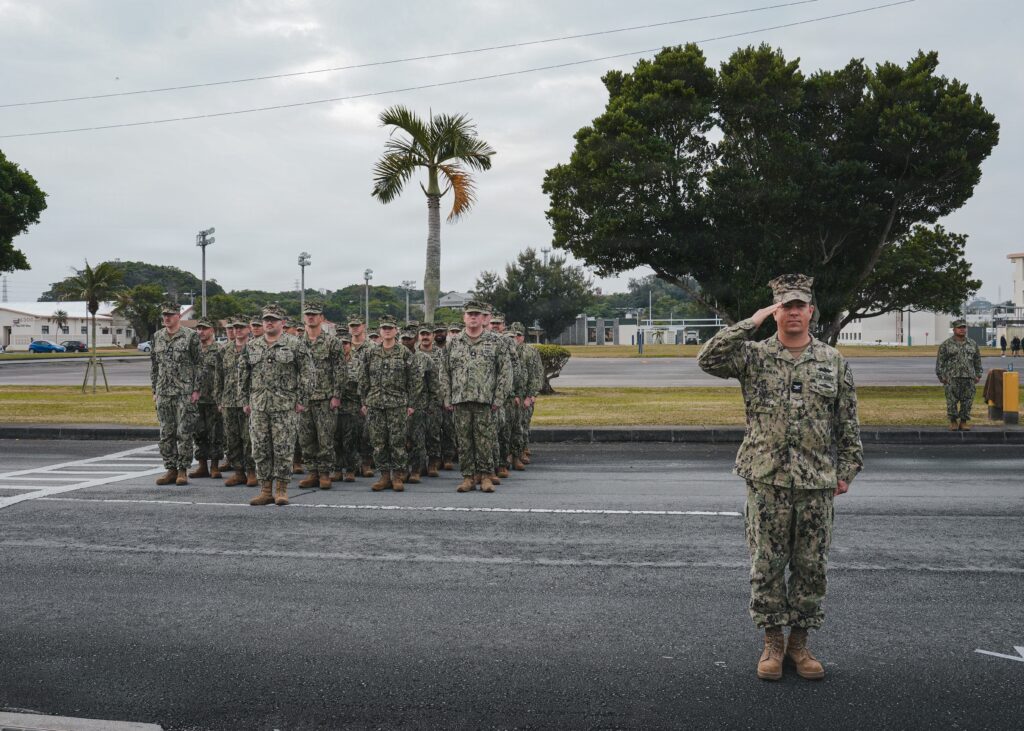
OKINAWA, Japan — Naval Mobile Construction Battalion (NMCB) 11 completed Relief-in-Place / Transfer-of-Authority (RIPTOA) with NMCB-4, returning to the U.S. Indo-Pacific area of responsibility (INDOPACOM) for the first time in more than a decade. This deployment marks a significant milestone for the East Coast-based Seabee battalion and reinforcing U.S. Navy expeditionary construction capabilities in the region.
The battalion’s presence at Camp Shields represents both a strategic operational posture and a symbolic return to a place deeply rooted in NMCB-11’s heritage. Camp Shields is named for Marvin G. Shields, the battalion’s namesake and the only Seabee to be awarded the Medal of Honor, whose legacy continues to define the spirit and mission of “Lucky Eleven.”
“Naval Mobile Construction Battalion 11’s return to the U.S. Indo-Pacific area of responsibility, and especially to Camp Shields, represents both a strategic posture and a symbolic homecoming,” said the battalion’s commanding officer, Capt. James Angerman. “Not only for an East Coast battalion, but for NMCB-11 specifically.”
From its base in Okinawa, NMCB-11 will operate across multiple detachment sites throughout INDOPACOM, providing expeditionary construction, general engineering and force-protection capabilities in direct support of U.S. Navy, joint and coalition forces. The deployment positions the battalion to rapidly respond to operational requirements while enhancing readiness across the theater.
“Camp Shields, named after Marvin G. Shields, nods to an important piece of history for NMCB-11, and serving from this location reinforces the legacy of Seabee excellence that defines Lucky Eleven,” said Angerman. “From Okinawa and our detachment sites around INDOPACOM, we are positioned to rapidly project expeditionary construction, general engineering and force-protection capabilities in direct support of the fleet and joint forces.”
The return of NMCB-11 to the Indo-Pacific comes at a critical time for regional security and cooperation. The battalion’s mission emphasizes interoperability with Allies and partners while supporting contingency operations, exercises and infrastructure development throughout the area of responsibility.
The presence of the battalion in INDOPACOM underscores the enduring role of Seabees in delivering combat-ready engineering solutions and sustaining the Navy’s forward-deployed forces, while honoring a legacy forged in the same region decades ago.
NMCB-11 is forward deployed under Commander, Task Force 75, which executes command and control of assigned Naval Expeditionary Combat Forces across the 7th Fleet area of operations to defend U.S. allied and partner interest.
NSWCDD Delivers Next-Generation MK 38 Defense System
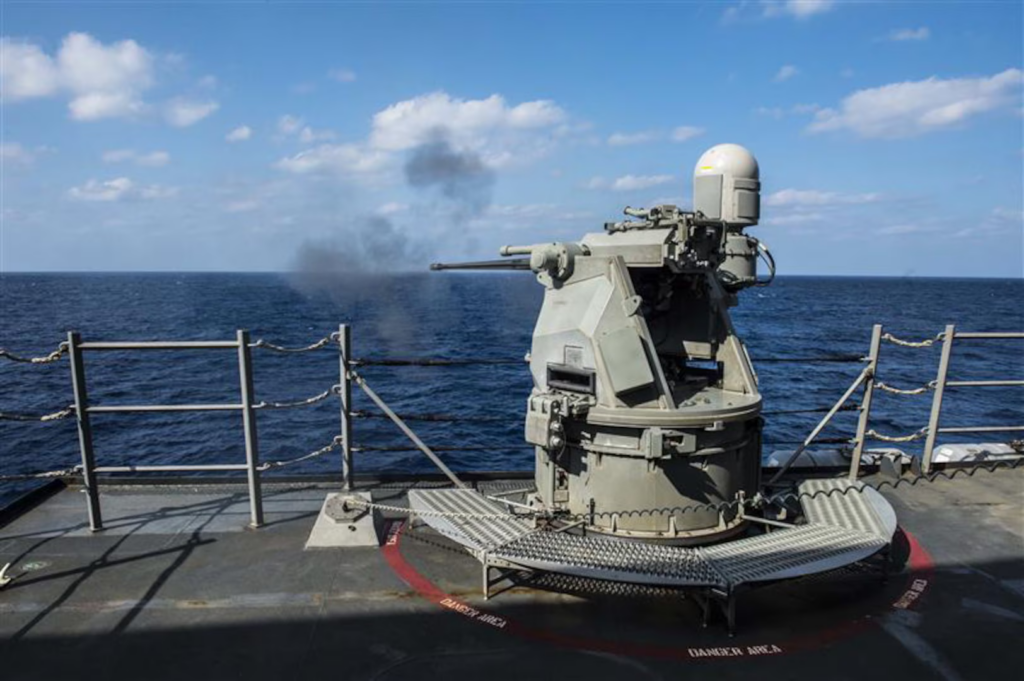
SOUTH CHINA SEA – Arleigh Burke-class guided-missile destroyer USS Mustin (DDG 89) fires its MK 38 25 mm gun during a live-fire drill in 2015. The weapon has since been upgraded to MK 38 MOD 4, which employes a 30 mm gun and integrates with the Aegis Combat System. (U.S. Navy photo by MCSN David Flewellyn)
By Tierney Kunstmann, NSWCDD Corporate Communications, Feb 6, 2026
DAHLGREN, Va. – For decades, the MK 38 family – a key Navy shipboard weapon system – has delivered reliable close-in defense against small, fast, agile threats at sea.
Since its commissioning in 1977 to protect warships primarily from surface threats, the platform has continually evolved – extending its reach, improving precision and adapting to counter a full spectrum of modern maritime dangers.
Now, that evolution has taken another significant leap.
As technical design agent, Naval Surface Warfare Center Dahlgren Division has led the development of the system’s latest upgrade to the MK 38 family – the Mod 4 – which fully integrates the gun with the Aegis Combat System and strengthens defense against unmanned aerial systems and high-speed, maneuverable unmanned surface vehicles. The Mod 4 also delivers the weapon’s first caliber increase in more than 30 years, from 25 mm to 30 mm. With NSWCDD’s connection to Aegis, merging the two was a natural progression and allowed for a smoother transition.
“It is going to greatly improve the ship’s ability to counter modern threats,” said Danny Mudd, technical program lead for MK 38 MOD 4. “With the added caliber, we can reach farther and deliver more damage.”
A proven line of defense
By 1977, the Navy’s long serving 20 mm MK 16 gun had become difficult to maintain. It was also no longer practical; it didn’t use the standard NATO ammunition of the time. It needed an upgrade.
The Chief of Naval Operations directed the development of what became the original MK 38 system, built around the 25 mm MK 242 Bushmaster chain gun – a fully power-operated weapon mounted on the MK 88 support structure. This combination set the standard for modern naval close-in defense, making the MK 38 a more capable, responsive and reliable weapon than previous manually operated or smaller-caliber systems.
Rising tensions in the Persian Gulf in the 1980s accelerated the production and deployment of the MK 38 MOD 1 on various combatant and auxiliary ships and the weapon saw its first operational use during Operation Desert Shield and Desert Storm in the early 1990s.
While the first mods had addressed a critical gap, the U.S. Navy recognized that there was room for improvement. The MK 38 MOD 2 upgrade transformed the mount into the Typhoon Weapon System, which introduced remote-control operation and mount stabilization and allowed the weapon to maintain aim even as the ship pitched and rolled. It also added a new electro-optical/infrared sensor and a laser rangefinder, giving the system reliable day/night target performance. Beyond sensors, Mod 2 brought improved ammunition handling and enhanced interfaces – resulting in faster and more reliable engagement. Testing showed it delivered two to three times the strike accuracy of its predecessor.
The next upgrade, MK 38 MOD 3 fielded in 2017, advanced the design by introducing an optional 7.62 mm coaxial chain gun with as many as 750 ready rounds, more than four times the capacity of the Mod 2. It also incorporated an improved EO/IR sensor that provides 330-degree surveillance capability and multiple fields of view. This sensor is decoupled from the gun, allowing operators to scan independently of the weapon and reducing the chance of alerting an adversary that they’ve been detected.
Meeting evolving threats
The newest upgrade, the MK 38 MOD 4, features several improvements. At its core is the Northrop Grumman MK 44 Bushmaster II 30 mm gun – now capable of employing air-burst munitions – integrated with the MK 48 MOD 2 electro-optical sight system and the MK 134 MOD 0 operator console. This setup transforms the MK 38 MOD 4 into a smarter, more powerful and more precise weapon system, capable of handling modern threats that older guns couldn’t reliably engage.
An optional 12.7 mm coaxial heavy machine gun further expands engagement options and improves responsiveness against a range of threats. The new sensor is fully stabilized and off mount, enabling better accuracy tracking and clearer imagery in challenging visibility.
A July 2022 test on NSWCDD’s Potomac River Test Range successfully identified, tracked and engaged both surface and aerial targets using live ammunition against fixed and moving targets. It also highlighted the enhanced fire-control chain, the 30 mm gun’s improved performance and its ability to counter new challenges.
USS Mustin (DDG 89), an Arleigh Burke-class Aegis guided missile destroyer, was the first U.S. Navy warship to receive the upgrade. Dahlgren Division is now finalizing the configuration so the system can be introduced to a wider set of platforms as fleet requirements evolve.
“We’re tracking the emergence of new threats, now including airborne ones, and adapting accordingly,” Mudd said. “The Mod 4 is designed to deliver greater lethality across a wider range of targets, strengthening overall ship defense and giving us the edge we need.”
Editor’s note: This story is part of an ongoing series exploring the capabilities and developments of the Aegis Combat System. Read the first installment here.
SWIT Prevents Costly Mistakes Before Weapons Reach the Fleet
Rob Pavel, a Shipboard Weapons Integration Team logistician with Naval Air Warfare Center Weapons Division, conducts shipboard weapons integration work in support of the Low-cost Unmanned Combat Attack System aboard USS Santa Barbara (LCS 32). SWIT validates that weapons systems can be safely stored, moved, and handled at sea prior to operational use. LUCAS later successfully launched from the ship’s flight deck Dec. 16, 2025, as part of Task Force Scorpion Strike operations while operating in the Arabian Gulf. (Courtesy photo)
From Naval Air Weapons Division, Point Mugu, Calif., Feb 6, 2026
The Shipboard Weapons Integration Team provides independent assessments that ensure Navy ships can safely store, move, and handle weapons at sea, turning new shipboard firepower into usable fleet capability.
That work happens far from the flight deck and long before a system ever deploys. SWIT evaluates weapons facilities on new construction ships and ship modifications to confirm crews can safely handle ordnance under real operating conditions.
Inside the ship, new capability creates hard questions most people never think about: Where does a weapon go when the ship rolls? Can Sailors move it through narrow passageways without forcing unsafe workarounds? Can crews secure it safely alongside other ordnance?
SWIT answers those questions before a weapon is delivered.
New capability does not fit the ship by default
Barry Olson, head of the Sustainment Program Management and Analysis Department, described SWIT as a reality check for weapons integration.
“These guys work with the safety board and with the fleet on what is real, how we handle stuff, how we load stuff,” Olson said.
Even small ship modifications can create major problems once a ship is underway.
“Sometimes it’ll be a ship mod that messes things up,” Olson said. “They put a vending machine in the aisle and now you can’t get weapons to fit down the aisle anymore.”
By identifying those issues before a system reaches the fleet, SWIT prevents costly rework, deployment delays, and potentially dangerous workarounds. Finding a blocked weapons route in port can save months of delays and costly modifications at sea.
SWIT’s work spans more than unmanned systems.
The team may be asked to plan safe storage and movement for helicopter weapons such as rockets and Hellfire missiles, ship self-defense rounds like Rolling Airframe Missile, and even Army rocket launchers temporarily embarked on cargo ships or tankers to meet urgent fleet needs.
Independent checks built on fleet reality
Bill Ayers, Shipboard Weapons Integration Team lead, said SWIT’s value comes from its role as an independent assessor.
The Office of the Chief of Naval Operations designates SWIT as the Navy’s independent assessor for shipboard weapons facilities, placing the team inside magazines, weapons handling spaces, and ordnance movement routes on new construction and modified ships. Naval Sea Systems Command tasks SWIT to certify that those spaces work as designed and that crews can safely move and secure weapons before a ship enters service.
Rather than relying on drawings alone, Ayers said the team tests ships the way Sailors will actually use them. SWIT brings inert weapons and representative equipment aboard and moves them through intended routes to confirm they can be handled safely.
Those demonstrations matter because ships rarely match the plans. A few inches lost in a passageway or a late modification can block a weapons route and force crews into unsafe solutions.
Rapid response for operational urgency
SWIT’s rapid response capability proved critical when the team deployed on short notice to support Task Force Scorpion Strike aboard USS Santa Barbara (LCS 32) during Central Command operations.
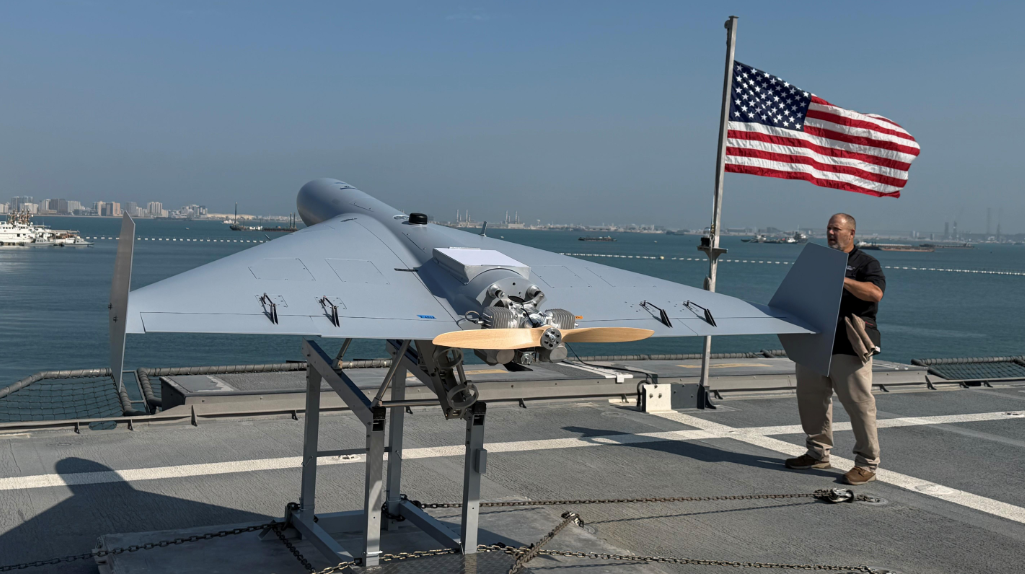
For the Low-cost Unmanned Combat Attack System, SWIT verified shipboard routes, identified required modifications, and confirmed weapons support equipment fit the littoral combat ship’s layout before the system reached the ship. The team’s validation helped ensure the system could be launched safely within a narrow operational window.
On Dec. 16, Santa Barbara launched LUCAS from its flight deck while transiting the Arabian Gulf. It was the first shipboard launch at sea for the drone operated by Naval Forces Central Command’s Task Force 59.
Validation that keeps capability accountable
SWIT does not install weapons. The team validates them.
“We’re the independent validation,” Ayers said. “The program gets to say we’re good to go. The installer gets to say we’re good to go. Then we come in and ask what about this, this and this.”
That role becomes more important as the Navy fields new capability on compressed timelines. By identifying fixes early and testing realistically, SWIT helps ensure speed does not outrun safety or mission readiness.
When a system launches at sea, it can look simple. What you don’t see are the months of assessments that prevented delays, avoided dangerous workarounds, and ensured the ship and crew were ready when the window opened.
For Ayers, the entire process is designed for the warfighter.
“It’s that 19-year-old Sailor on the deck.” Ayers said. “Our job is to make sure that when they have to use this equipment, it works and it’s safe. That’s the only thing that matters.”
Marines Establish Refueling Point in Indo-Pacific
Feb. 6, 2026 | By Marine Corps Lance Cpl. David Getz , 1st Marine Aircraft Wing,
Marines assigned to Marine Wing Support Squadron 171 and Marine Fighter Attack Squadron 232 traveled to Tinian, one of the Northern Mariana Islands, to establish and operate a forward arming and refueling point during an aviation training relocation program aimed at developing expeditionary aviation capabilities and ensuring security throughout the Indo-Pacific region.
“We are out here training to show we can set up a FARP anywhere quickly and provide support wherever the fight is happening,” said Marine Corps Sgt. Kuyler Brown, an expeditionary fuels technician assigned to the support squadron.
The FARP was used to conduct simulated real-world scenarios that gave Marines on the ground experience operating a live FARP and pilots the ability to operate away from their main operating base while receiving continuous support.
“Having a FARP allows us to stay in the fight,” Brown said. “It cuts down on flight time, keeps our jets in the air longer and shows we can set up anywhere and operate.”
Tinian is located near Andersen Air Force Base, Guam, which provides the ability to rapidly refuel and support aircraft, making it a valuable training area for aviation training relocation operations and projecting power throughout the Indo-Pacific region.
Conducting training from island locations like Tinian allows Marines to gain real-world experience practicing FARP assembly, disassembly and sustained aviation operations in austere environments — a key aspect of the expeditionary execution of a FARP.
“This kind of training builds the Marines’ confidence not only in their own capabilities but in each other,” Brown said. “Our Marines know how to do their jobs, and exercises like this prove we can make it happen.”
The successful setup and operation of the FARP at Tinian demonstrated Marine Wing Support Squadron 171’s ability to deploy and support aviation operations in austere environments. Training events like this give Marines the chance to develop their skills and remain ready to support future operations focused on ensuring a free and open Indo-Pacific region.
U.S. Coast Guard Marks 200,000 Pounds of Cocaine Seized in Operation Pacific Viper
From U.S. Coast Guard Headquarters, Feb. 5, 2026
WASHINGTON – The U.S. Coast Guard announced Thursday it has seized more than 200,000 pounds of cocaine in the Eastern Pacific Ocean since launching Operation Pacific Viper in early August.
The Coast Guard reached this milestone following recent interdictions of 13,337 pounds of cocaine by Coast Guard Cutter Seneca and 13,263 pounds by Coast Guard Cutter Robert Ward.
“Operation Pacific Viper has proven to be a crucial weapon in the fight against foreign drug traffickers and cartels in Latin America and has sent a clear message that we will disrupt, dismantle, and destroy their deadly business exploits wherever we find it,” said U.S. Department of Homeland Security Secretary Kristi Noem. “The more than 75 million lethal doses seized during this operation will never reach our schools and neighborhoods to poison our children or tear apart American families. In cutting off the flow of these deadly drugs, the Coast Guard is saving American lives and delivering on President Trump’s promise to Make America Safe Again and reestablish our maritime dominance.”
With 1.2 grams of cocaine being a potentially lethal dose, the total seized through Operation Pacific Viper equates to more than 75 million potentially deadly doses kept off U.S. streets. Eighty percent of all seizures of U.S.-bound narcotics occur at sea, underscoring the impact of Coast Guard maritime interdiction efforts.
“Each Coast Guard drug seizure far from our borders prevents deadly drugs from reaching our communities and disrupts the profit that fuels narco-terrorists,” said Admiral Kevin Lunday, Commandant of the U.S. Coast Guard. “The success of Operation Pacific Viper proves that we own the sea, and the proficiency, vigilance, and heart of our crews is our greatest strength.”
Since its inception, Operation Pacific Viper has accelerated counter-drug operations in the Eastern Pacific, a primary corridor for narcotics smuggling from Central and South America. The Coast Guard has surged cutters, aircraft and tactical teams to interdict, seize and disrupt the flow of cocaine and other illicit drugs. These efforts are a critical component of the broader U.S. strategy to combat narco-terrorism and dismantle transnational criminal organizations.
The Coast Guard’s persistent operations and rapid response have resulted in record seizure amounts, denying criminal organizations billions in illicit revenue and preventing the flow of dangerous drugs into American communities.
Detecting and interdicting narco-terrorism on the high seas involves significant interagency and international coordination. U.S. Southern Command’s Joint Interagency Task Force-South, based in Key West, Florida, detects and monitors both aerial and maritime transit of illegal drugs. Once interdiction becomes imminent, the law enforcement phase of the operation begins, and control of the operation shifts to the U.S. Coast Guard throughout the interdiction and apprehension. Interdictions in the Eastern Pacific Ocean are performed by members of the U.S. Coast Guard under the authority and control of the Coast Guard’s Southwest District, headquartered in Alameda, California.
The Coast Guard is the United States’ lead federal agency for maritime drug interdiction. We are part of the Department of Homeland Security team protecting our nation and are at all times a military service and part of the joint force defending it.