Marine Corps Plans to Activate Second Adversary Aircraft Squadron in 2023 
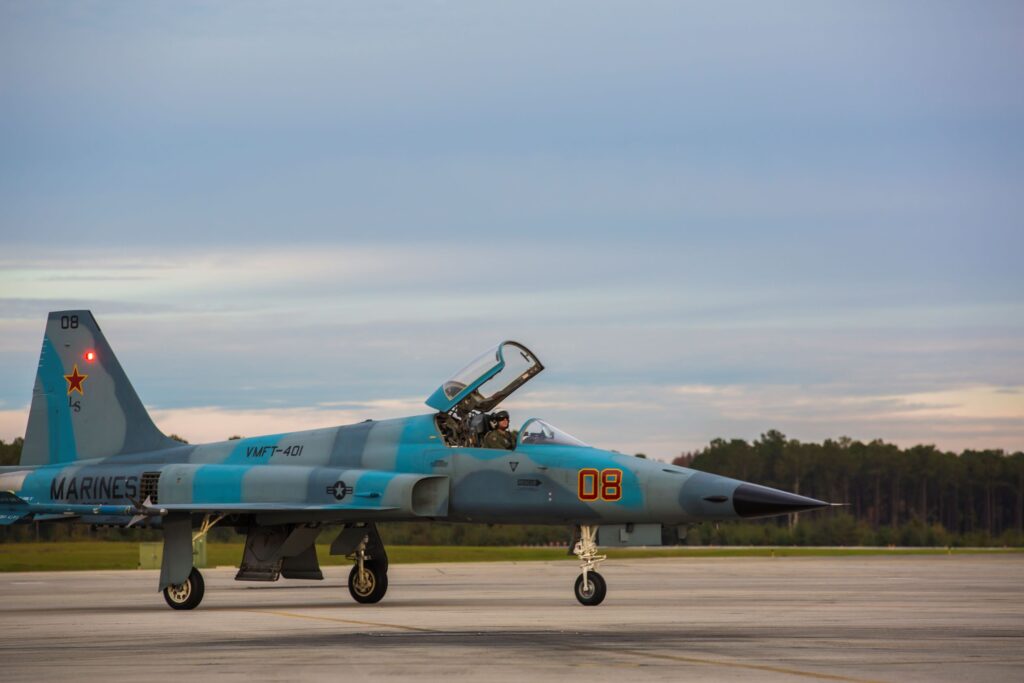
An F-5N Tiger II taxis after landing aboard Marine Corps Air Station Beaufort in South Carolina in 2015 to support Marine Fighter Attack Training Squadron 501 in air-to-air training. U.S. MARINE CORPS AIR STATION BEAUFORT / Sgt. Dengrier Baez

ARLINGTON, Va. — The Marine Corps plans to activate a second adversary aircraft squadron to meet the future aerial combat training needs of its fighter attack squadrons. The second squadron will provide the East Coast with similar training assets as the West Coast.  

According to the 2022 Marine Corps Aviation Plan released this week, Marine Fighter Training Squadron 402 (VMFT-402) will be activated in fiscal 2023 at Marine Corps Air Station Beaufort, South Carolina, scheduled to be safe for flight by the beginning of 2024. 

The Corps has long fielded reserve squadron VMFT-401 at MCAS Yuma, Arizona, which flies Northrop 11 single-seat F-5N and one F-5F Tiger II fighters. The squadron is upgrading to 11 F-5N+ and one F-5F+ aircraft. 

VMFT-402, which also will be a reserve squadron initially, will be equipped with three F-5N+ aircraft but eventually will operate eight F-5N+ and two F-5F+ aircraft.  

To equip the new squadron, the Marine Corps has acquired 11 additional F-5 aircraft from the Swiss air force through the Naval Air Systems Command. The aircraft will be delivered to the Corps over a four-year period beginning in the fourth quarter of 2023.  

The Navy and Marine Corps F-5 fleet is going through upgrades to increase capabilities and extend the service life. The fleet is being upgraded with digital cockpits at a rate of two or three aircraft per year. The Naval Air Systems Command plans to integrate TCTS II Tactical Combat Training System – Increment II (TCTS II) to “allow synthetic adversary injects to decrease the forecasted gap in adversary training.”    

“Serving as a training asset for the entire MAGTF, as well as the joint force, the F-5 has seen adversary requirements grow significantly over the past 13 years,” according to the aviation plan, in large part because of the pilot training requirements of the F-35 fleet replacement squadrons VMFA-501 and VMFA-502. “Annual fleet adversary requirements are expected to also increase for transitioning squadrons from 12,000 air-to-air sorties in [fiscal 2022 to 17,000 sorties per year in order to meet T2.0 requirements in [fiscal 2025].” 

The aviation plan said that “Adversary capacity is the greatest issue in Marine Corps air-to-air training, followed closely by range availability and modernization, and training simulator capabilities. VMFT-401 can source up to 3,300 sorties per year, restrained by aircraft utilization and numbers of F-5s assigned. Combining A/A [air-to-air] requirements for fleet training, FRS [fleet replacement squadron] production and weapon school support, the USMC builds an adversary requirement of nearly 15,000 sorties in 2022. Accordingly, the USMC suffers over an 11,000-sortie capacity gap. Aviation is looking at options to close this gap.” 

The U.S. military uses commercial air services which fly former military jets in the adversary role, but, according to the aviation plan, “commercial air services cannot satisfy all of the adversary requirements. The future lies in multiple solutions that include using the fleet of F-5s efficiently, exploring low-cost training opportunities, incorporating Live, Virtual, Constructive capability, and commercial air services to augment requirements.”      



Boeing Names Northern Virginia Office Its Global Headquarters; Establishes Research & Technology Hub 

Boeing’s Arlington, Virginia campus, now its global headquarters. BOEING

ARLINGTON, Va. — Boeing announced May 5 that its Arlington, Virginia campus just outside Washington, D.C. will serve as the company’s global headquarters.

The aerospace and defense firm’s employees in the region support various corporate functions and specialize in advanced airplane development and autonomous systems. In addition to designating Northern Virginia as its new headquarters, Boeing plans to develop a research and technology hub in the area to harness and attract engineering and technical capabilities. 

“We are excited to build on our foundation here in Northern Virginia. The region makes strategic sense for our global headquarters given its proximity to our customers and stakeholders, and its access to world-class engineering and technical talent,” said Boeing President and CEO Dave Calhoun. 

Boeing will maintain a significant presence at its Chicago location and surrounding region. 

“We greatly appreciate our continuing relationships in Chicago and throughout Illinois. We look forward to maintaining a strong presence in the city and the state,” said Calhoun. “We also want to especially thank [Virginia] Gov. [Glenn] Youngkin for his partnership, and Senator [Mark] Warner for his support as we worked through the process.”  

Over the past two years, Boeing has implemented flexible and virtual solutions that have enabled the company to reduce its office space needs. At its Chicago office, less office space will be required for the employees who will continue to be based there. Boeing will adapt and modernize the workspace to better support future work requirements. 

Research & Technology Hub 

As part of its effort to tap into engineering and technology talent across the U.S and around the world, Boeing plans to establish a research and technology hub in Northern Virginia. The hub will focus on developing innovations in the areas of cyber security, autonomous operations, quantum sciences and software and systems engineering.  

“The future of Boeing is digital,” said Greg Hyslop, Boeing’s chief engineer and executive vice president of Engineering, Test and Technology. “Focusing our R&D and talent development in areas that support digital innovation will fuel the introduction of cutting-edge capabilities. This new hub in Northern Virginia will follow the successful implementation of this technology strategy in other regions.” 

As the nation’s largest exporter, Boeing employs more than 140,000 people and is hiring as the commercial market recovers and the company invests in production, innovation and product development. The company’s three business units will continue to be based at their current headquarters, which include Boeing Commercial Airplanes in Seattle; Boeing Global Services in Plano, Texas; and Boeing Defense, Space and Security in Arlington, Virginia.


USS Sioux City Begins First Deployment of LCS in 6th Fleet 

The Freedom-class littoral combat ship USS Sioux City (LCS 11) transits the Atlantic Ocean, May 3. U.S. NAVY / Mass Communication Specialist 2nd Class Trey Fowler

NAPLES, Italy — In a historic moment for the region, a Freedom-variant littoral combat ship, USS Sioux City (LCS 11), deployed to U.S. 6th Fleet’s area of operations, supporting U.S. and NATO ally and partner interests in Europe and Africa, U.S. Naval Forces Europe and Africa/U.S. 6th Fleet Public Affairs said May 5. 

The deployment provides an opportunity for Sioux City to gain experience in an area littoral combat ships have never before operated. 

“Sioux City’s deployment allows us to integrate the LCS’ unique operational capability into our already diverse fleet,” said Vice Adm. Gene Black, commander, U.S. 6th Fleet. “The agility of littoral combat ships allows them to operate in both near-shore and open-ocean environments, enhancing our ability to provide security and stability across the European theater.” 

The ship’s size, speed, and agility allow it to perform maritime security operations, theater security cooperation engagements, and freedom of navigation patrols — keeping critical maritime commerce routes open, deterring conflict and coercion, and providing a comparable ship to strengthen partnerships with other countries.    

The ship’s motto is “forging a new frontier,” and according to Cmdr. Scott Whitworth, Sioux City’s commanding officer, that is exactly what the crew plans to do. 

“USS Sioux City is a combat ready warship manned by battle-minded Sailors, who are prepared and equipped to execute any mission we are tasked with,” said Whitworth. “This deployment will expand the relevance of these ships, particularly their ability to relieve larger surface combatants in key surface-mission areas.” 

An embarked detachment of two MH-60S Seahawk helicopters from the Sea Knights of Helicopter Sea Combat Squadron 22 supports Sioux City’s deployment. 


General Dynamics Appoints Krugh as President of Bath Iron Works 

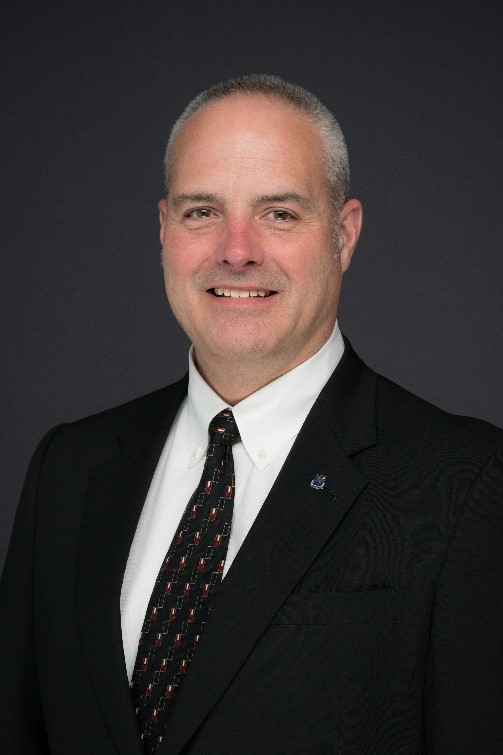
Charles F. Krugh, the new president General Dynamics Bath Iron Works. GENERAL DYNAMICS

RESTON, Virginia – General Dynamics has appointed Gulfstream Aerospace executive Charles F. Krugh as president of General Dynamics Bath Iron Works, General Dynamics said May 5. 

“Chuck’s leadership, proven track record in manufacturing and expertise in managing complex supply chains will be an enabler to Bath Iron Works as it expands and increases the pace of shipbuilding for the U.S. Navy,” said Robert E. Smith, executive vice president for Marine Systems. 

A U.S. Army veteran, Krugh served in a variety of aerospace manufacturing roles before joining General Dynamics in 2011 as a senior vice president and general manager for Jet Aviation. He was appointed as Gulfstream’s vice president for supplier operational support in 2018. 


General: Precise Sensors to Close Kill Chain is a Key Takeaway from Ukraine War

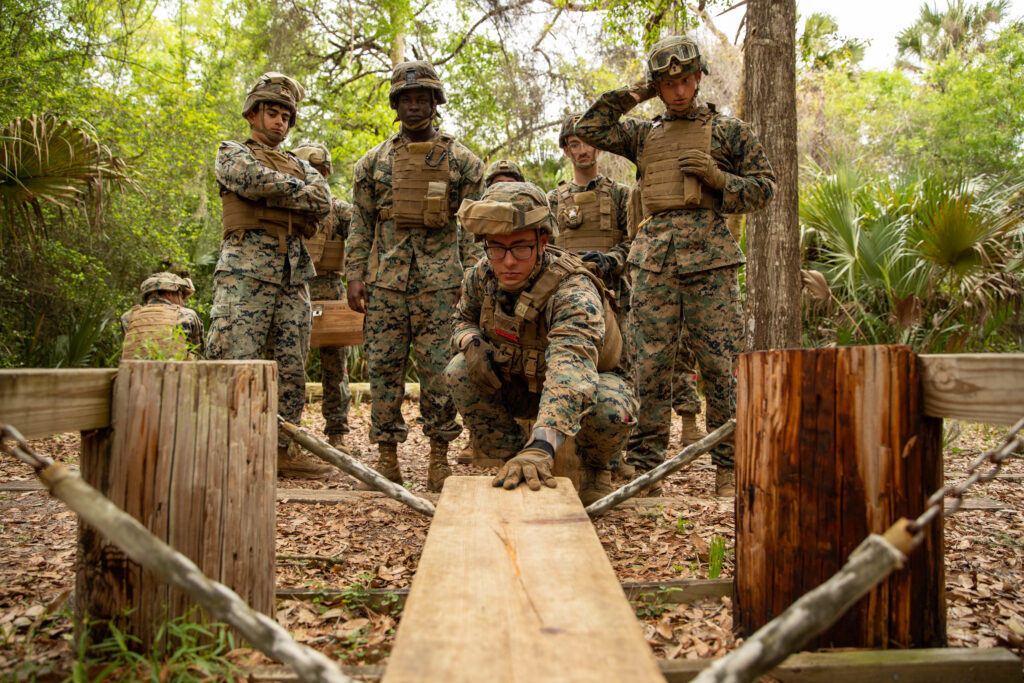
U.S. Marines with Combat Logistics Regiment 37, 3rd Marine Logistics Group, participate in a leadership reaction course during exercise Atlantic Dragon on Camp Blanding, Florida, United States, March 31. U.S. MARINE CORPS / Cpl. Alpha Hernandez

ARLINGTON, Va. — Ukraine’s widespread use of sensor technology to find, target and destroy Russian tanks and command structure is one of the early lessons learned from that conflict, the U.S. Marine Corps’ top requirements officer says.

Discussing the Marines’ Force Design 2030 modernization effort at the Center for Strategic and International Studies on May 4, Lt. Gen. Karsten Heckl, head of Marine Corps Combat Development Command, was asked what strategic and tactical lessons have come out of Russia’s invasion of Ukraine.

“To me, and in conversations with other officers across various services, clearly the ubiquity and proliferation of sensors and the ability to close kill chains accurately, precisely on any target is a major lesson to take away,” said Heckl, who is also deputy commandant for Combat Development and Integration.

While it was too soon to “draw any firm, fast conclusions,” he noted Commandant Gen. David Berger had directed several of his deputies to “make sure we’re harvesting the appropriate lessons from this thing.”

Berger’s Force Design plan seeks to retool the Corps, in size, focus and weaponry to deter a rising China, which the National Defense Strategy identifies as a “pacing challenge” to U.S. interests and the post-1945 world order. Heckl noted that a focus on loitering munitions and organic precision fires, like that seen in Ukraine and the 2020 war between Armenia and Azerbaijan, “is one of the routes Force Design went down early. And we are pursuing that in various forms.”

Logistics is another crucial issue, highlighted by the Russians’ struggle to advance their tank and truck columns.

“The pacing factor in Force Design is logistics in a contested environment,” Heckl said. “As you saw with the Russian invasion of Ukraine, any armor is a massive consumer of fuel. We learned long ago in Iraq and Afghanistan, that fuel trucks on the road immediately became the target.”

While the Marines have disposed of their battle tanks, fuel dependence is still “a significant vulnerability,” for the widely dispersed expeditionary advanced base operations envisioned in Force Design, Heckl said.

“Sustainability, just like [heat] signature management, is first and foremost in every thought, through all our studies, analyses, experiments, exercises, all this campaign of learning. It’s the analytical rigor that underpins every decision the commandant makes on Force Design,” Heckl said.


Marine Corps to Increase KC-130J Force in Pacific to Enhance Mobility of Marine Littoral Regiment 

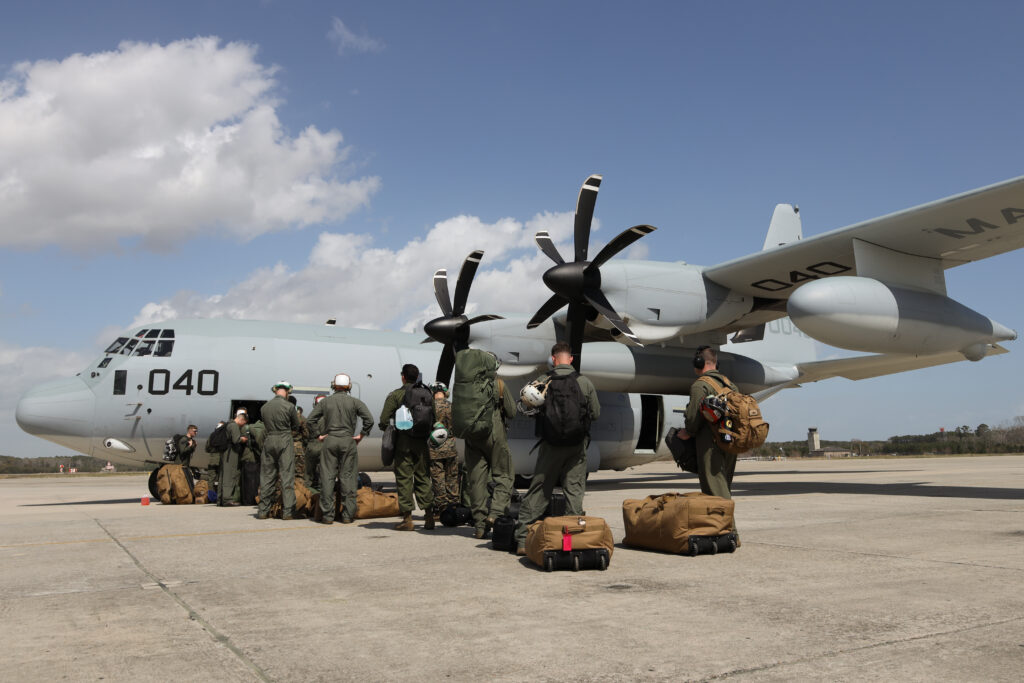
U.S. Marines with Marine All-Weather Fighter Attack Squadron (VMFA(AW)) 533 prepare to board a KC-130J Super Hercules before a flight at Marine Corps Air Station Beaufort, South Carolina, March 7. U.S. MARINE CORPS / Cpl. Lauren Salmon

ARLINGTON, Va. — The Marine Corps plans to activate another KC-130J Super Hercules tanker/transport squadron as part of its aim to provide increased mobility of Marine Corps forces in the Pacific area of responsibility in support of Force Design 2030. 

According to the 2022 Marine Corps Aviation Plan released this week, the Corps plans to activate Marine Aerial Refueler Transport Squadron 153 (VMGR-153) in fiscal 2023. The squadron will be based at Marine Corps Air Station Kaneohe Bay, Hawaii, where two MV-22B Osprey squadrons also are based. 

The additional squadron in Hawaii will enable Marine Forces Pacific to better support aerial refueling, logistics, close air support and multi-sensor imagery reconnaissance in support of expeditionary advance base operations in the Pacific region, particularly for the recently activated 3rd Marine Littoral Regiment, also based in Hawaii. 

VMGR-153 will grow to 17 KC-130J aircraft by fiscal 2026. The East Coast squadron, VMGR-252, based at MCAS Cherry Point, North Carolina, will level out this year at 17 aircraft, and the West Coast squadron, VMGR-352 at MCAS Miramar, California, also will reach a force level of 17 aircraft by the end of fiscal 2022. The squadron based at MCAS Iwakuni, Japan, VMGR-152, will reach a level of 17 aircraft in fiscal 2023.  

The reserve squadron based at Naval Air Station Fort Worth, Texas, VMGR-234, is scheduled to reach a level of 17 aircraft in fiscal 2027. The reserve squadron based at Stewart Air National Guard Base, VMGR-452, has only five KC-130Js and is planned to remain at that level. 

The Marine Corps’ program of record for KC-130Js is 86 aircraft.  

VMGR-252 and VMGR-352 rotate detachments to support the North Africa and East Africa Responses Forces. 

The Marine Corps also plans to sustain the Harvest Hercules Airborne Weapons Kit (Harvest HAWK) program. Ten KC-130J aircraft — five with VMGR-252, four with VMGR-353 and one with test squadron VX-20 — have been modified post-production with the Harvest HAWK to provide the MAGTF a multi-sensor imagery reconnaissance and close air support capability with the MX-20 electro-optical/infra-red imaging system and both wing and door mounted employment of AGM-114P Hellfire and AGM-176 Griffin missiles. A total of six kits are on hand for the 10 fleet aircraft. 


Navy Hospital Ship Departs for Pacific Partnership 2022 

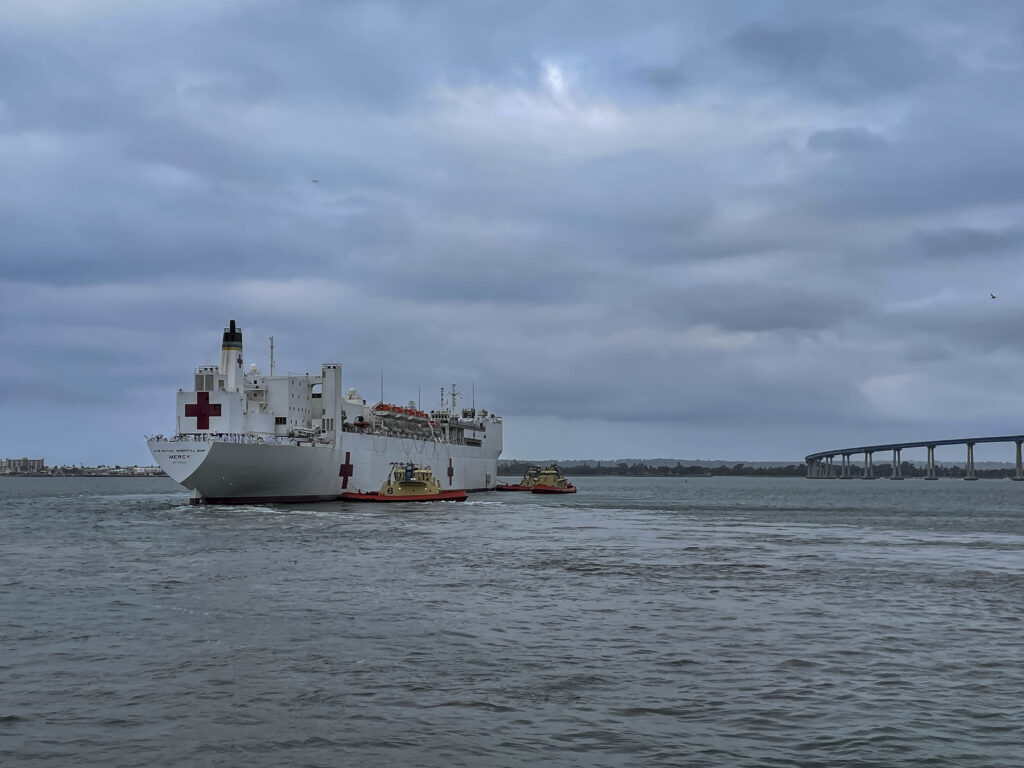
SAMilitary Sealift Command hospital ship USNS Mercy (T-AH 19) departs from Naval Base San Diego, May 3, marking the beginning of Pacific Partnership 2022. U.S. NAVY / Mass Communication Specialist 3rd Class Sang Kim

SAN DIEGO — Military Sealift Command hospital ship USNS Mercy (T-AH 19) departed San Diego, May 3, marking the beginning of Pacific Partnership 2022, the partnership’s public affairs said in a release. 

Now in its 17th year, Pacific Partnership is the largest annual multinational humanitarian assistance and disaster relief preparedness mission conducted in the Indo-Pacific. The Pacific Partnership 22 team will work with host nation counterparts and regional partners to provide tailored medical, dental, and veterinary care and conduct bilateral engineering civic actions, and exchange information related to disaster response processes and procedures. 

As part of PP22, Mercy and the mission team will conduct missions throughout Oceania and the Western Pacific. Typical Pacific Partnership events include the building of schools, medical and engineering expert exchanges, and host nation outreach events. 

“Pacific Partnership is a unifying mission that builds trust among nations to work efficiently together in preparing to respond in crisis,” said U.S. Navy Capt. Hank Kim, Pacific Partnership 22 mission commander.  

“I look forward to exchanging experiences and expertise with our host and partner nations to collectively build skills that will last well after the mission.” 


Navy Awards Austal $230.5 Million Contract for EPF 16 

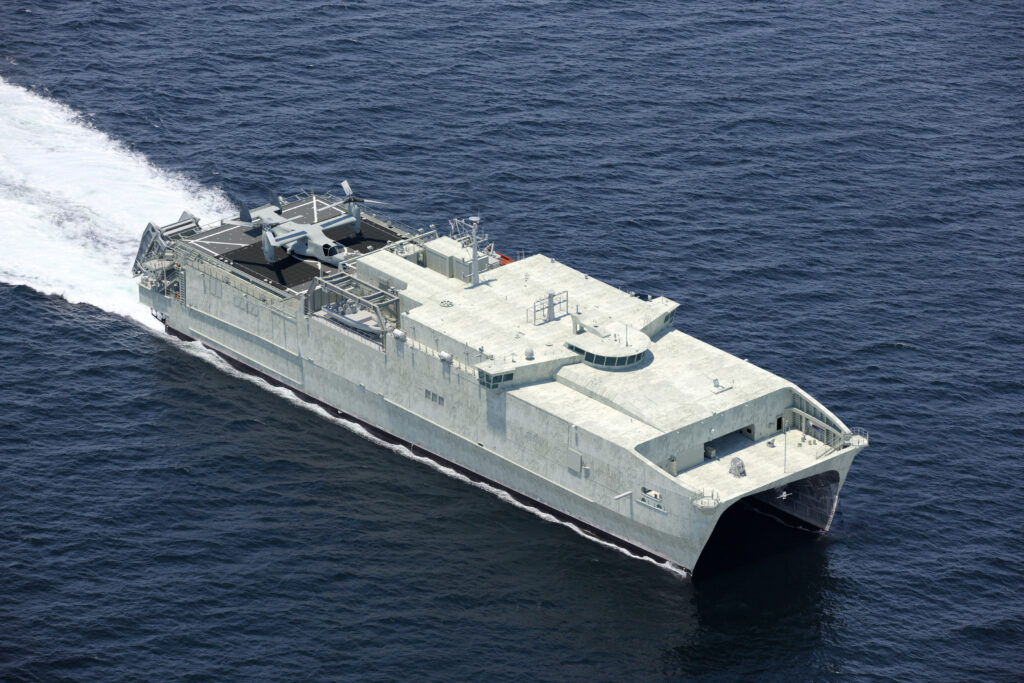
An expeditionary fast transport flight II ship. AUSTAL USA

MOBILE, Ala. — Austal USA has been awarded a $230.5 million contract for the detail design and construction of EPF 16, the Navy’s newest expeditionary fast transport ship, the company said May 3.  

Austal USA has successfully delivered 12 EPFs, on schedule and on budget. Three additional EPFs are currently under construction. EPFs have demonstrated their operational capability to conduct a variety of missions to include humanitarian assistance, disaster relief, maritime security, surveillance, command and control and counter narcotic missions around the globe. The inherent versatility of the EPF design allows for its mission to be tailored to the needs of each fleet and combatant commander’s geographic command. 

“Like the previously delivered EPFs, EPF 16 will benefit from the serial production of this program, resulting not only in a world-class ship but also providing assurance to the U.S. Navy that capability will be delivered on budget and on schedule,” said Austal USA President Rusty Murdaugh. “Our reputation for delivering quality is a direct reflection of the commitment and dedication of our talented shipbuilders and suppliers.” 

EPF 16 will be the third ship constructed in the Flight II configuration. Flight II ships will enhance the original capabilities of the Spearhead class through incorporation of reconfigurable spaces for operating rooms and postsurgical recovery efforts. Combined with the ship’s flight deck that is capable of landing V-22 aircraft, Flight II ships provide unmatched versatility.  

Construction efforts on EPF 16 are expected to commence later this year with delivery projected for 2025. Austal USA is currently under contract to build additional EPFs, the Independence-variant littoral combat ship, and the Navajo-class towing, salvage and rescue ships and is supporting Navy unmanned vessel programs leveraging its advanced machinery control system. 


Marine Corps Aviation Plan Reduces Number of F-35s in Some Squadrons, Keeps 420 F-35s Total 

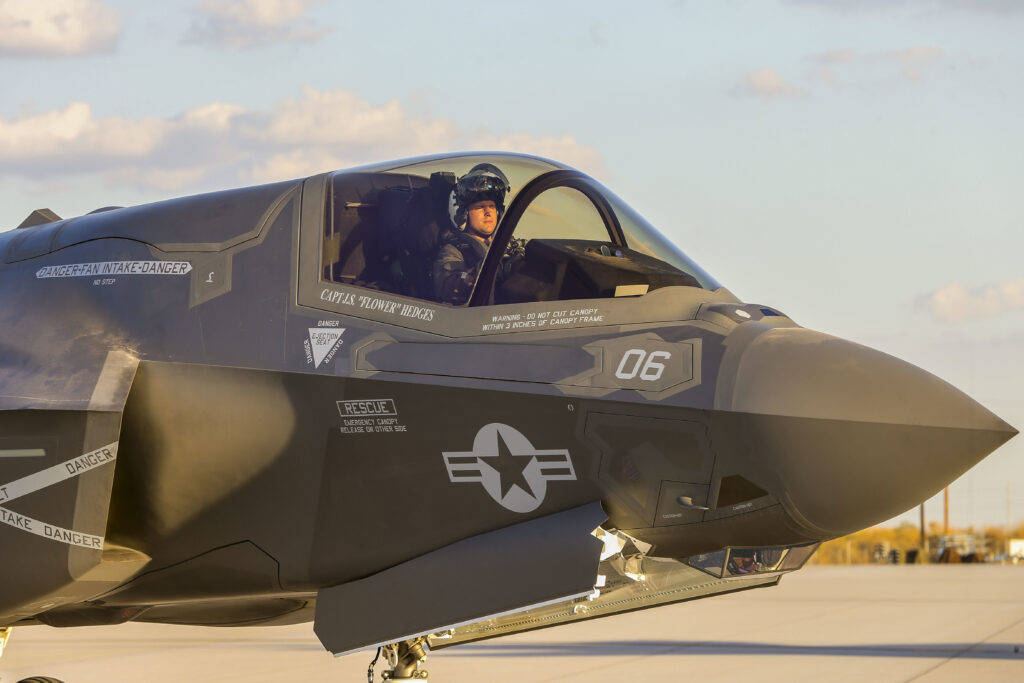
U.S. Marine Corps Maj. Mark Noble, F-35 instructor pilot with Marine Aviation Weapons and Tactics Squadron One, taxis on the runway during a hot load at Marine Corps Air Station Yuma, Arizona, in 2016. U.S. MARINE CORPS / Staff Sgt. Artur Shvartsberg, MAWTS-1 COMCAM

ARLINGTON, Va. — The Marine Corps plans to reduce the number of F-35 Lightning II strike fighters planned for some Marine fighter attack squadrons but is not reducing the program or record of 420 F-35s. 

In the 2022 Marine Corps Aviation Plan released this week, the Corps shows it will reduce the number of F-35Bs in some squadrons from 16 to 10 aircraft. Originally the 16 were going to allow for a six-plane detachment on board an amphibious assault ship in addition to a 10-plane land-based force. In the current plan, all F-35B (and carrier-capable F-35C) squadrons will be equipped with 10 aircraft.  

The plan for F-35 squadrons is in accord with Marine Corps Commandant David H. Berger’s Force Design 2030 plan for restructuring the Marine Corps. 

Lt. Gen. Mark Wise, deputy commandant for Aviation, speaking to reporters May 2 at the Pentagon, said the change in the numbers in the F-35 squadrons “really had to do with what is the optimum way, so starting with the requirement and moving backwards.

“The F-35 is designed to deploy as a division, so 10-airplane [squadrons] were designed to field two divisions with two [aircraft] in backup,” Wise said. “That is the model that we believe is the right direction to go for a Marine expeditionary unit. That way you’re deploying a whole squadron as well. You’re not leaving pieces of it behind. So, you don’t have a command element that’s got to go to one side or go to the other side. With that said, we will continue to learn and evolve and experiment and wargame and do all the things we’ve been doing to make sure that number is right. We have to make sure that the rest of the ACE [Aviation Combat Element] on board the L-class ships, are the numbers are balanced appropriately? Do they all fit? Is all the maintenance able to be done? So, there’s some experimentation to go to make sure we’ve got it perfectly right, but we think we’re off to a pretty good start.” 

Wise said that “overall, our POR [program of record] still remains the same [at 353 F-35Bs and 67 F-35Cs] because if you look at the entirety of the program from start to now, there were certain affordability decisions made early on that had to do with things like our attrition model was truncated in order to meet affordability concerns. So, if you take the attrition model and expand it back to the numbers that we have for those 18 active and two reserve squadrons, your number actually ends up being our POR.”

The Corps intends to upgrade all of its existing F/A-18 Hornet-equipped Marine fighter attack (VMFA) squadrons and convert the remaining AV-8B Harrier II Marine attack (VMA) squadrons to VMFAs. Two more squadrons — one a reserve unit — will be reactivated, while another will be deactivated for about four years and will be reactivated as an F-35C squadron. In all, the plan has the Corps fielding 14 active component and two reserve F-35B squadrons and four active component F-35C squadrons by fiscal 2032. 

The Corps also has two F-35B fleet replacement squadrons, one on each coast. (F-35C training will remain with the Navy’s fleet replacement squadron, VFA-125.) The F/A-18 Hornet fleet replacement squadron, VMFAT-101, will be deactivated in fiscal 2024 and turn its training responsibilities to VMFA-323, a deploying squadron which will maintain a fleet replacement detachment until fiscal 2027.  

Of the Corp’s six remaining active-component Hornet squadrons, five now fly a mix of seven single-seat F/A-18Cs and five two-seat F/A-18Ds. VMFA-323 will retain F/A-18Cs and reserve VMFA-112 will give up its last four F/A-18A++ versions to become an all “C/C+” squadron. 

The four existing Harrier squadrons, all based at Marine Corps Air Station Cherry Point, North Carolina, now fly only the radar-equipped version of the AV-8B. One squadron, VMA-223, also runs a fleet replacement detachment that includes two-seat TAV-8Bs. The Harriers are slated to be phased out in fiscal 2027. 


USNS John Lewis Conducts Acceptance Trials 

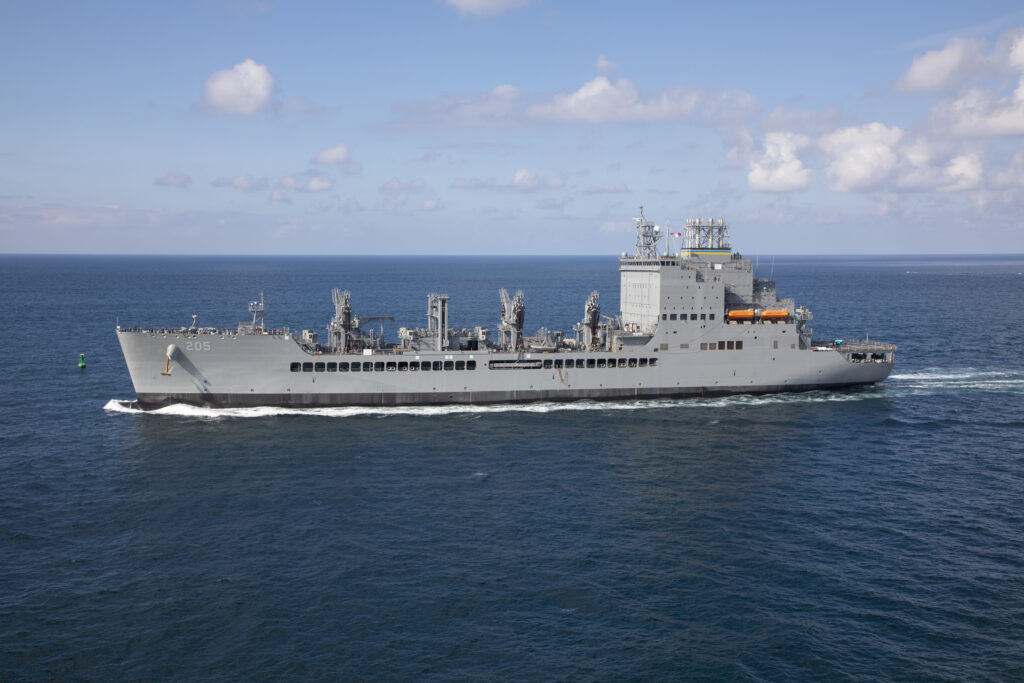
USNS John Lewis (T-AO 205), the Navy’s lead ship of its new class of fleet replenishment oilers, conducted acceptance trials on April 25. GENERAL DYNAMICS NATIONAL STEEL AND SHIPBUILDING CO.

WASHINGTON — USNS John Lewis (T-AO 205), the Navy’s lead ship of its new class of fleet replenishment oilers, conducted acceptance trials on April 25, Team Ships Public Affairs said May 2. 

Acceptance trials consist of a series of in-port and at-sea demonstrations that allow the Navy and the shipbuilder, General Dynamics National Steel and Shipbuilding Co., to assess the ship’s systems and readiness prior to delivery to the Navy. 

“The John Lewis-class oilers will add capacity to the Navy’s Combat Logistics Force and become the cornerstone of the fuel delivery system at sea,” said John Lighthammer, program manager, Auxiliary and Special Mission Shipbuilding Program Office. “We are excited to welcome the USNS John Lewis to the fleet.” 

The John Lewis-class T-AOs will be operated by Military Sealift Command to provide fuel and lubricating oil, and small quantities of fresh and frozen provisions, stores, and potable water to Navy ships at sea, and fuel for the embarked aircraft.   

The oilers feature the capacity to carry barrels of oil, a significant dry cargo capacity, aviation capability and a speed of 20 knots. NASSCO designed the new vessels with double hulls to protect against oil spills and strengthened cargo and ballast tanks.  

NASSCO is currently in production on USNS Harvey Milk (T-AO 206), USNS Earl Warren (T-AO 207), and USNS Robert F. Kennedy (T-AO 208). The future USNS Lucy Stone (T-AO 209) and USNS Sojourner Truth (T-AO 210) are under contract. NASSCO is also currently in production of two Expeditionary Sea Bases (ESB) – the future USS John L. Canley (ESB 6) and USS Robert E. Simanek (ESB 7).