Navy Proposes Elimination of Snakehead LDUUV program 
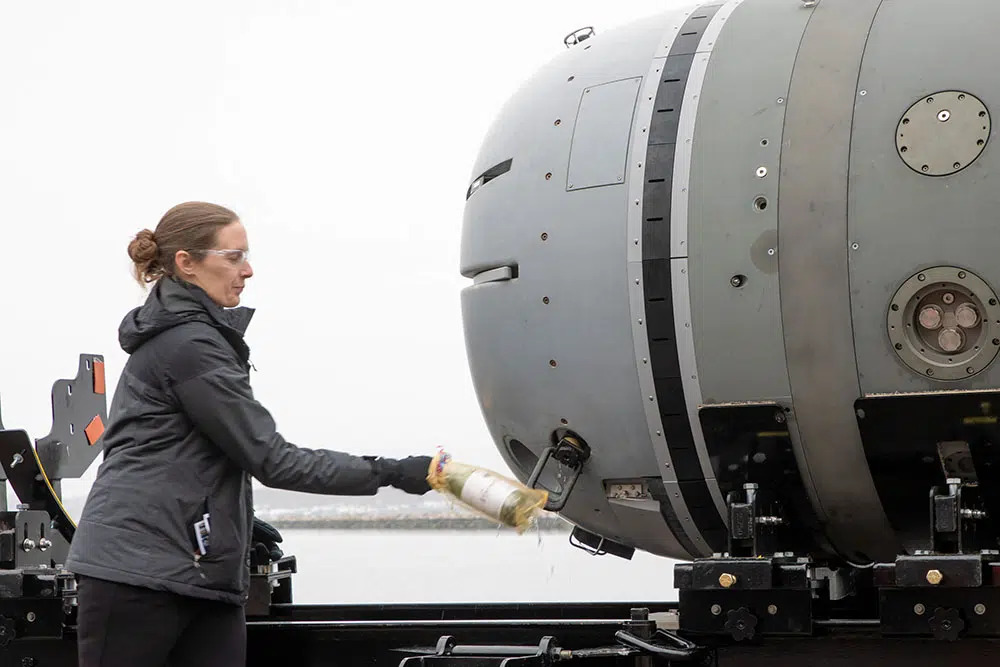
Cheryl Mierzwa, Naval Undersea Warfare Center Division Newport’s technical program manager for the Snakehead Large Displacement Unmanned Undersea Vehicle, christens the underwater vehicle at the Narragansett Bay Test Facility in Newport, Rhode Island, on Feb. 2. U.S. NAVY

ARLINGTON, Va. — Even as the U.S. Navy was christening the first prototype of the Snakehead large-diameter unmanned underwater vehicle (LDUUV) in February, planning was underway to cancel the program. 

The Navy is proposing in its 2023 budget to eliminate the Snakehead program, according to the Navy Department’s recently released Fiscal 2023 budget highlights book. 

The Snakehead is intended to be a major advance in UUVs and designed to be the largest UUV to be deployed on the interfaces of the Navy’s attack submarines. It is designed to be autonomous, modular and reconfigurable, equipped with a government-owned architecture. It features innovative hull materials and certified lithium-ion batteries. It is designed to be deployed from a modernized dry-deck shelter.  

According to the budget highlights book, the major problem in the program was “Misalignment of Snakehead LDUUV design and procurement efforts with submarine hosting interfaces result[ing] in limited availability of host platforms to conduct Snakehead operations.”  

The book also said that “cost and schedule delays associated with LDUUV development and Virginia Class SSN [attack submarine] integration prohibited further investment.” 

The only alternative launch and recover interface for the Snakehead is the Modernized Dry Deck Shelter. The U.S. Special Operations Command in conjunction with the Navy is modernizing three Dry Deck Shelters between 2022 and 2026. They are scheduled to become available for use in 2022, 2023, and 2026, respectively. 

Under Phase One of the Snakehead program, only one vehicle was built. 

The Navy estimates the cancellation of Phase Two of the program and future Snakehead procurement will save the Navy $185.9 million in fiscal 2023, resulting in a total savings of $516.8 million over the Future Years Defense Plan.  

The Snakehead Phase One prototype was christened on Feb. 2 at the Narragansett Bay Test Facility in Newport, Rhode Island, by a team from the Naval Undersea Warfare Center Division Newport and the Program Executive Office for Unmanned and Small Combatants. 


Abraham Lincoln Carrier Strike Group Conducts Exercises with the JMSDF 

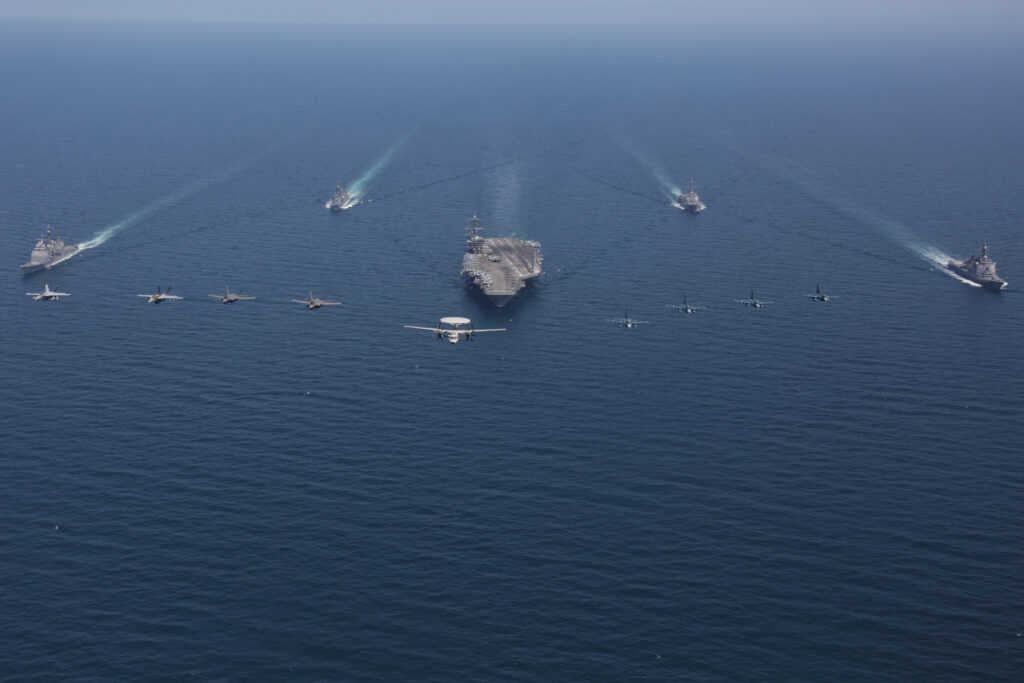
Aircraft from Carrier Air Wing 9 and Japan Air Self-Defense Force fly over the Sea of Japan as the Nimitz-class aircraft carrier USS Abraham Lincoln (CVN 72), center, the Ticonderoga-class guided-missile cruiser USS Mobile Bay (CG 53), left, JMSDF Kongō-class guided-missile destroyer JS Kongō (DDG 173), right, Japan Maritime Self-Defense Force Murasame-class destroyer JS Inazuma (DD 105), back left, and the Arleigh Burke-class guided-missile destroyer USS Spruance (DDG 111) sail in formation during a U.S.-Japan bilateral exercise. U.S. NAVY / Mass Communication Specialist Seaman Aleksandr Freutel

SEA OF JAPAN — The Abraham Lincoln Carrier Strike Group, along with JS Inazuma (DD 105) and JS Kongo (DDG 173), from the Japan Maritime Self-Defense Force, completed bilateral exercises in the Philippine Sea and East China Sea on April 18, said the strike group’s public affairs. 

USS Abraham Lincoln (CVN 72), USS Mobile Bay (CG 52) and USS Spruance (DDG 111) of Carrier Strike Group 3 and JS Inazuma (DD 105) and JS Kongo (DDG 173) of JMSDF Escort Division 11 engaged in various joint events to include enhanced maritime communication operations, air warfare training, and various other drills to hone in on integrated maritime operations and combat readiness. 

“Our enduring commitments to our relationships in the Indo-Pacific region continue to grow and blossom through integrated and bilateral at-sea exercises including the Japan Maritime Self Defense Force,” said Rear Adm. J. T. Anderson, commander, CSG 3. “These exercises demonstrate our collective combat-credible capabilities while safeguarding our shared interests and values.” 

Coordinated maritime engagements and operations with international partners are part of the U.S. Navy’s routine presence in the Indo-Pacific. Since arriving in the U.S. 7th Fleet region in January, CSG 3 units have participated in multiple operations and exercises to include dual carrier operations with USS Carl Vinson (CVN 70), exercises Noble Fusion and Jungle Warfare 2022 and a long-range air demonstration.  

The Abraham Lincoln Carrier Strike Group consists of CSG 3 and includes aircraft carrier USS Abraham Lincoln (CVN 72); Carrier Air Wing (CVW) 9; Destroyer Squadron 21; the Ticonderoga-class guided-missile cruiser USS Mobile Bay (CG 53); and the Arleigh Burke-class guided-missile destroyers USS Fitzgerald (DDG 62), USS Gridley (DDG 101), USS Sampson (DDG 102) and USS Spruance (DDG 111). 

Abraham Lincoln’s embarked air wing consists of the “Wallbangers” of Carrier Airborne Early Warning Squadron (VAW) 117; “Titans” of Fleet Logistics Multi-Mission Squadron (VRM) 30; “Chargers” of Helicopter Sea Combat Squadron (HSC) 14; “Tophatters” of Strike Fighter Squadron (VFA) 14; “Black Aces” of VFA 41; “Wizards” of Electronic Attack Squadron (VAQ) 133; “Black Knights” of Marine Fighter Attack Squadron (VMFA) 314; “Vigilantes” of VFA 151 and “Raptors” of Helicopter Maritime Strike Squadron (HSM) 71. 

ABECSG departed its homeport for a scheduled deployment to the Indo-Pacific on Jan. 3. 


Coast Guard Offloads $11.7M in Cocaine, Transfers 6 Suspected Smugglers  

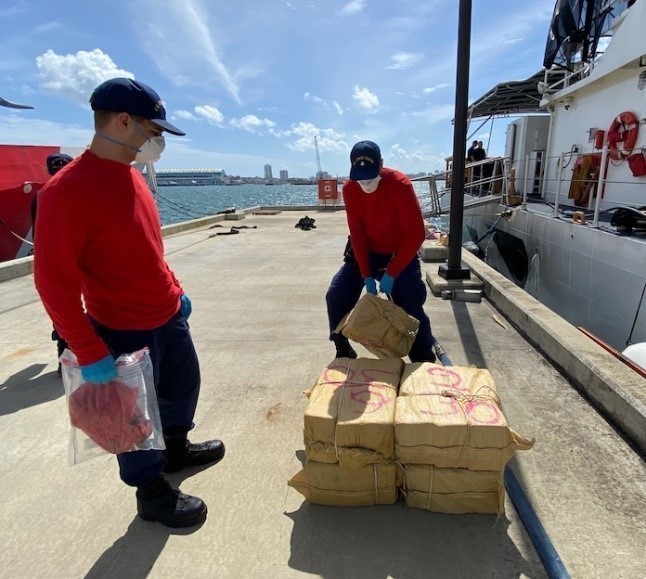
Coast Guard Cutter Heriberto Hernandez crewmembers offload six bales of cocaine, weighing approximately 463 pounds, at Coast Guard Base San Juan April 18, 2022, following the interdiction of a go-fast smuggling vessel near Puerto Rico April 11, 2022. U.S. COAST GUARD

Puerto Rico — Coast Guard Cutters’ Joseph Tezanos and Heriberto Hernandez crews offloaded approximately 1,289 pounds of cocaine and transferred custody of six suspected smugglers at Coast Guard Base San Juan April 18, following two separate vessel interdictions near Puerto Rico, the Coast Guard 7th District said in a release. 

These interdictions are the result of multi-agency efforts involving the Caribbean Border Interagency Group and the Caribbean Corridor Strike Force. The seized cocaine has an estimated wholesale value of approximately $11.7 million. 

The most recent interdiction occurred during a routine patrol April 11, 2022, after the crew of a Customs and Border Protection multi-role enforcement aircraft sighted a suspect vessel in waters northwest of Aguadilla, Puerto Rico. Coast Guard watchstanders in Sector San Juan diverted the cutter Heriberto Hernandez that arrived on scene and interdicted a 25-foot go-fast vessel. The vessel was carrying four men — Dominican Republic nationals — and six bales of suspected contraband, which tested positive for cocaine. The cutter crew apprehended the suspects and seized the contraband. 

During a routine patrol April 6, 2022, the crew of a Customs and Border Protection multi-role enforcement aircraft sighted a suspect vessel north of San Juan, Puerto Rico. Coast Guard watchstanders in Sector San Juan diverted the cutter Joseph Tezanos that arrived on scene and interdicted a 30-foot go-fast vessel. The vessel was carrying three men — Dominican  Republic nationals — and eight bales of suspected contraband, which tested positive for cocaine. The cutter crew apprehended the suspects and seized the contraband. One suspected smuggler from this group, who required medical care ashore, was medically evacuated Thursday to a hospital in Puerto Rico. 

“Safeguarding the nation’s southernmost maritime border is among our top priorities,” said Capt. Gregory H. Magee, Coast Guard Sector San Juan commander. “You can expect to see many more of these interdictions from the Coast Guard and from our local and federal partners as we work together to stop drug smuggling go-fast vessels from making landfall in the Puerto Rico or the U.S. Virgin Islands.” 

Special Agents supporting the Caribbean Corridor Strike Force received custody of the detainees and the seized contraband, and they are leading the investigation into this case. The apprehended smugglers are facing federal prosecution in Puerto Rico on criminal charges of Conspiracy to Import Controlled Substance and Conspiracy to Possess with Intent to Distribute a Controlled Substance Aboard a Vessel Subject to the Jurisdiction of the United States. The charges carry a minimum sentence of 10 years imprisonment and a maximum sentence of imprisonment for life. 

Cutters Heriberto Hernandez and Joseph Tezanos are 154-foot fast response cutters homeported in San Juan, Puerto Rico. 


USS The Sullivans Returns Home After Back-to-Back Deployments 

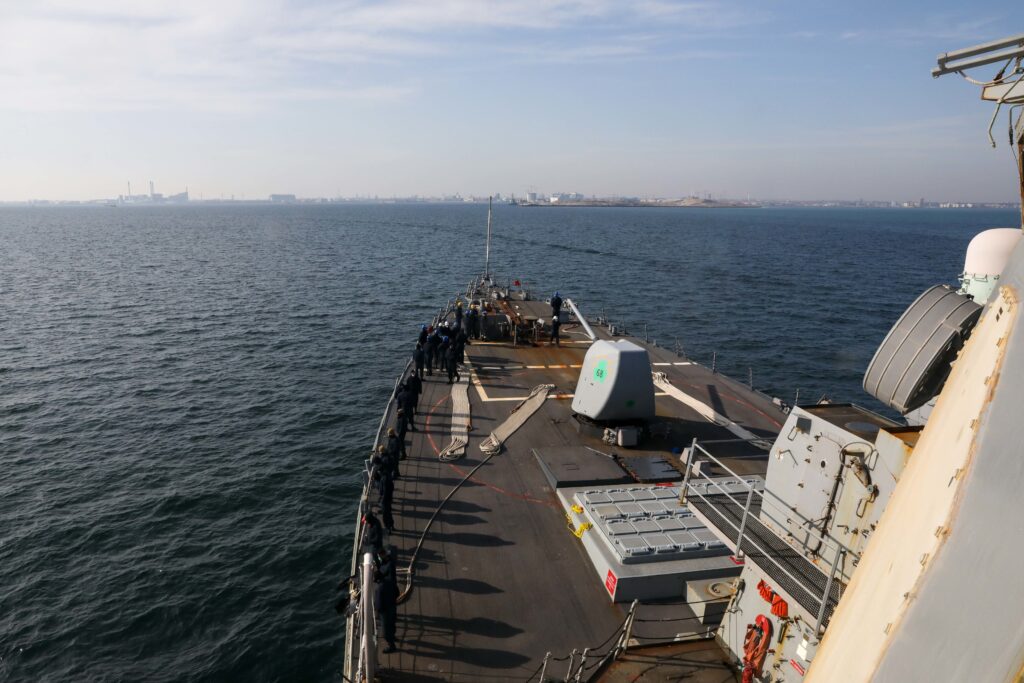
The Arleigh Burke-class guided-missile destroyer USS The Sullivans (DDG 68) pulls into port in Copenhagen, Denmark, March 21, 2022. U.S. NAVY / Mass Communication Specialist 3rd Class Mark Klimenko

JACKSONVILLE, Fla. — The Arleigh Burke-class guided-missile destroyer USS The Sullivans (DDG 68) returned to Naval Station Mayport after a three-month deployment to the European theater of operations on April 18, said U.S. 2nd Fleet Public Affairs. 

This surge deployment follows a 2021 deployment with the Royal Navy’s HMS Queen Elizabeth Strike Group (CSG-21), from which The Sullivans returned home just before Thanksgiving.

The Sullivans was in sustainment when it departed Naval Station Mayport in January 2022. Ships in the sustainment phase of the Optimized Fleet Response Plan remain ready for contingency tasking before entering a maintenance phase. 

“Despite the dynamic schedule and demanding operational tasking, The Sullivans crew displayed resiliency, grit and determined self-sufficiency to accomplish all missions,” said Cmdr. James Diefenderfer, Jr., commanding officer of The Sullivans. “We are incredibly proud of our team’s accomplishments.”

The crew navigated over 20,000 nautical miles, operating in the Irish, North and Baltic Seas, and conducted 12 sea and anchor details, 11 underway replenishments, and port visits to Copenhagen, Denmark; Rotterdam, The Netherlands; Ponta Delgada, Portugal; and Rota, Spain.

While deployed, The Sullivans participated in NATO Exercise Dynamic Guard 2022 in the North Sea. Dynamic Guard, hosted by Norway, is a biannual, multinational electronic warfare exercise series designed to provide tactical training for the NATO Response Force and NATO national units. For the first time in three years, two U.S. vessels participated to further enhance the ongoing cooperation, strength and interoperability between NATO Allies.

The Sullivans continued operations with three NATO countries within Standing NATO Maritime Group (SNMG) 1, which was comprised of the German navy Type 702 Berlin-class replenishment ship FGS Berlin (A1411), the Royal Netherlands Navy Karel Doorman-class multi-purpose frigate HNLMS Van Amstel (F831) and the Royal Danish Navy Iver Huitfeldt-class frigate HDMS Peter Willemoes (F362).

During the ship’s 2021 deployment, the crew operated with the Royal Danish Navy Absalon-class frigate HDMS Esbern Snare (F342) in the U.S. 6th Fleet area of operations. Almost a year later, Esbern Snare escorted The Sullivans through the Danish Strait, demonstrating expert seamanship, navigation and cooperation through one of the busiest waterways in the world.

“While we take time to recover and spend well deserved time at home, we are focusing our efforts on ensuring The Sullivans can continue to operate at peak performance for years to come,” said Diefenderfer. “Our immediate mission is the expert execution of our maintenance availability and continued training to prepare the ship and crew for future tasking. I know this crew will be ready for whatever comes next — we stick together.” 


USS Mitscher Returns to Norfolk After Surge Deployment 

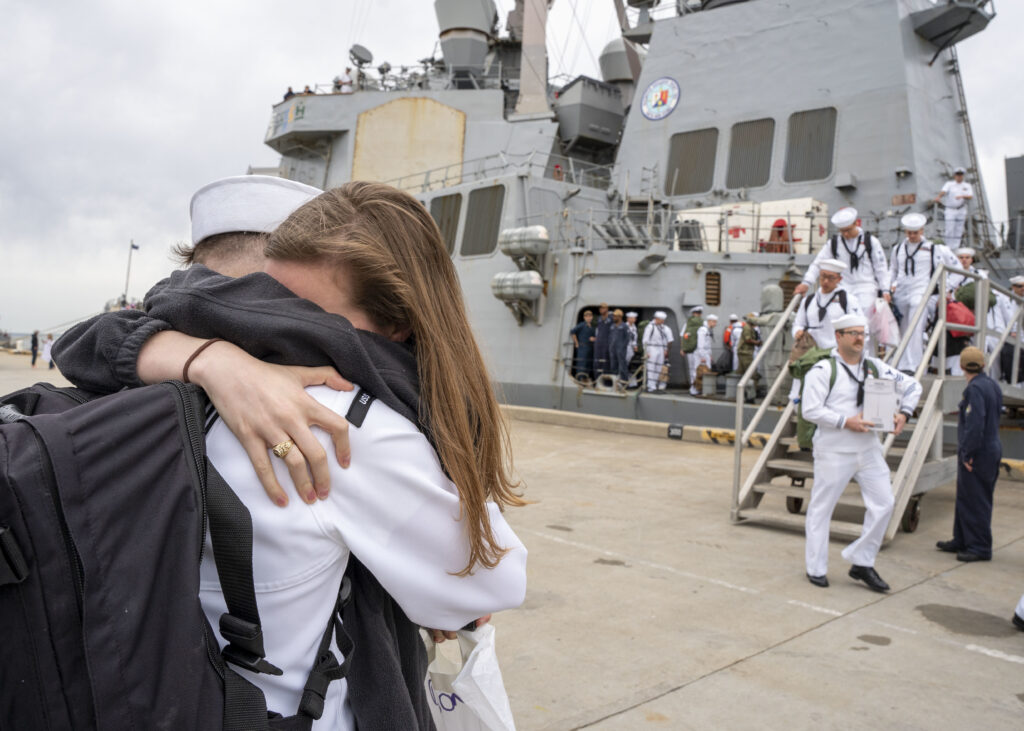
A Sailor assigned to the Arleigh Burke-class guided-missile destroyer USS Mitscher (DDG 57) embraces his wife after the ship’s return to homeport, Naval Station Norfolk, April 16. U.S. NAVY / Mass Communication Specialist 1st Class Ryan Seelbach

NORFOLK, Va. — Nearly 300 Sailors arrived home to Naval Station Norfolk aboard the Arleigh Burke-class guided-missile destroyer USS Mitscher (DDG 57) on April 16 following a surge deployment to the European theater of operations, said the ship’s public affairs.

Mitscher rapidly deployed in January to join the Harry S. Truman Carrier Strike Group (HSTCSG) in the U.S. 6th Fleet area of operations. 

This was the ship’s second homecoming in several months. Mitscher returned from an extended nine-month deployment with the Dwight D. Eisenhower Carrier Strike Group in September 2021. 

While deployed, the ship conducted presence operations and defense of the HSTCSG with the Greek, Italian, Norwegian and Turkish navies. 

“No nation can confront today’s challenges alone,” said Cmdr. Thomas McCandless, commanding officer of Mitscher. “A more resilient and rapidly innovating Navy, combined with a robust set of allies and partners, demonstrate NATO’s commitment to a free and open global commons. I can say without a doubt that our crew rose to the task. With a 10-day notice, Mitscher was able to onload ammunition and deploy with ease.” 

The crew enjoyed one port visit to Aksaz, Turkey, where they toured several historical sites and experienced local hospitality. 

“We arrived in theater and seamlessly integrated with forces who were already on station,” said McCandless. “Mitscher did indeed ‘seize the day.’”


U.S., Iceland Wrap Up Exercise Northern Viking 2022 

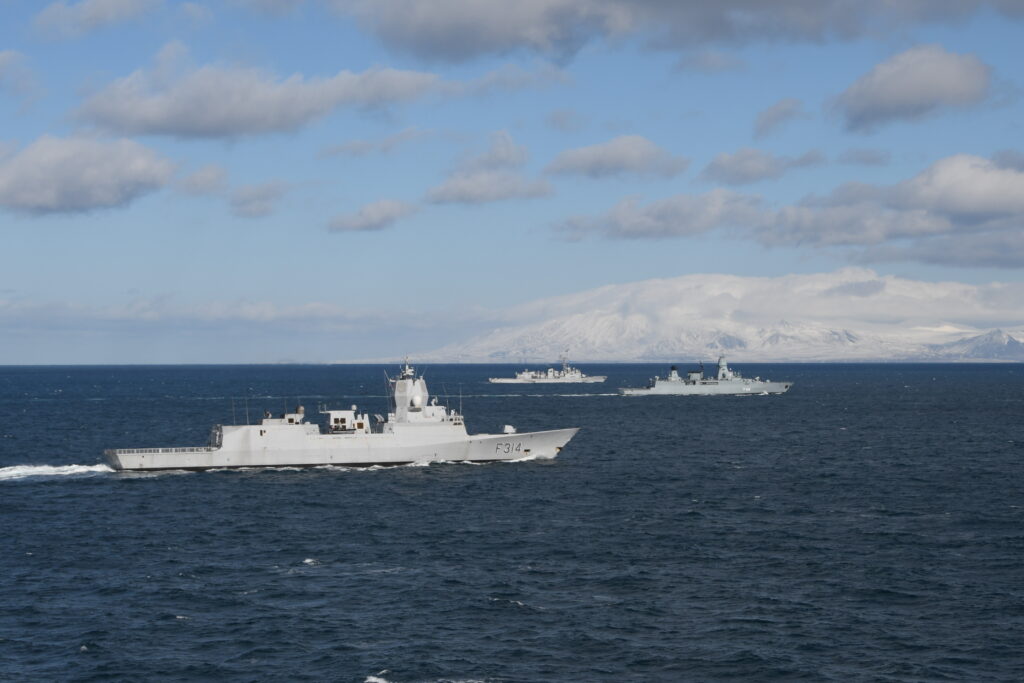
From left to right, the Norwegian Fritdjof Nansen-class frigate HNoMS Thor Heyerdahl (F314), French F70 type frigate FS Latouche-Tréville (D646) and German Sachsen-class air-defense frigate FGS Sachsen (F219) sail in formation in the North Atlantic Ocean in support of exercise Northern Viking 22. FRENCH NAVY

ICELAND — At sea, French, German and Norwegian surface combatants were joined by American and German maritime patrol aircraft in a hunt for adversary submarines while small boats conducted visit, board, search and seizure missions on suspect vessels.

On land, near Keflavík Air Base, an Icelandic coast guard rescue helicopter transported trapped and injured citizens to a temporary medical facility staffed by members of 22nd Marine Expeditionary Unit’s Shock Trauma Platoon and host nation medical personnel for triage and treatment.

For the last two weeks, allied nations have exercised these capabilities and more, coming together to hone their skills and enhance cooperation during the Iceland-hosted, U.S. 6th Fleet-executed exercise Northern Viking 22, U.S. 6th Fleet Public Affairs said April 16. 

“Northern Viking 22 has been incredibly successful for us and for the participating Allies,” said Cmdr. Marvin Ingólfsson, Deputy Commander of Keflavík Air Base. “We have learned from each other these last two weeks and we have shared tactics and procedures, improving our ability to operate together in the defense of Iceland and of the lines of communication that run through this area.” 

The exercise, which began April 2 and concluded April 14, initially focused on protecting the critical infrastructure of Keflavík Air Base. Exercise participants established temporary secondary refueling positions for Allied aircraft while working to neutralize security threats to the base and its personnel. 

“Northern Viking is really important for our cooperation in the high north seas and to our country in defense of law enforcement scenarios,” said Lt. Ásgeir R. Gudjonsson, the Icelandic coast guard improvised explosive device disposal specialist. “It’s good to have a go at actual events and the training is vital for us. We learned that [different EOD teams] differ a bit, but they’re close — so we can work really well together.” 

The first week of the exercise also included air defense scenarios, coordinated shiphandling evolutions and hydrographic and airfield surveys. Throughout the exercise, allied maritime forces practiced a variety of evolutions to enhance their cooperation and coordination in defending Iceland and the sea lines of communication in the Greenland, Iceland, United Kingdom (GIUK) gap. 

Participants shifted their focus during the latter half of the exercise to the Marines of the 22nd Marine Expeditionary Unit and Royal Marine Commandos as they conducted multiple ship-to-shore operations, a natural progression in complexity of the overall exercise. Marines and Sailors from the USS Kearsarge Amphibious Ready Group and 22nd MEU participated in a tactical recovery of aircraft and personnel, simulated raids on illicit compounds and visit, board, search and seizure operations. 

Northern Viking 22, led by the U.S. 6th Fleet as a maritime-focused event for the first time in decades, established a framework for future iterations of the Northern Viking exercise. As units and personnel depart Iceland for their own national taskings and future missions, the planning cycle for Northern Viking 24 is right around the corner. With lessons learned and invaluable training experiences and opportunities to look back on, exercise planners look forward to building on the successes of Northern Viking 22. 


CMS: The Navy’s Seven Operational Imperatives for This Decade

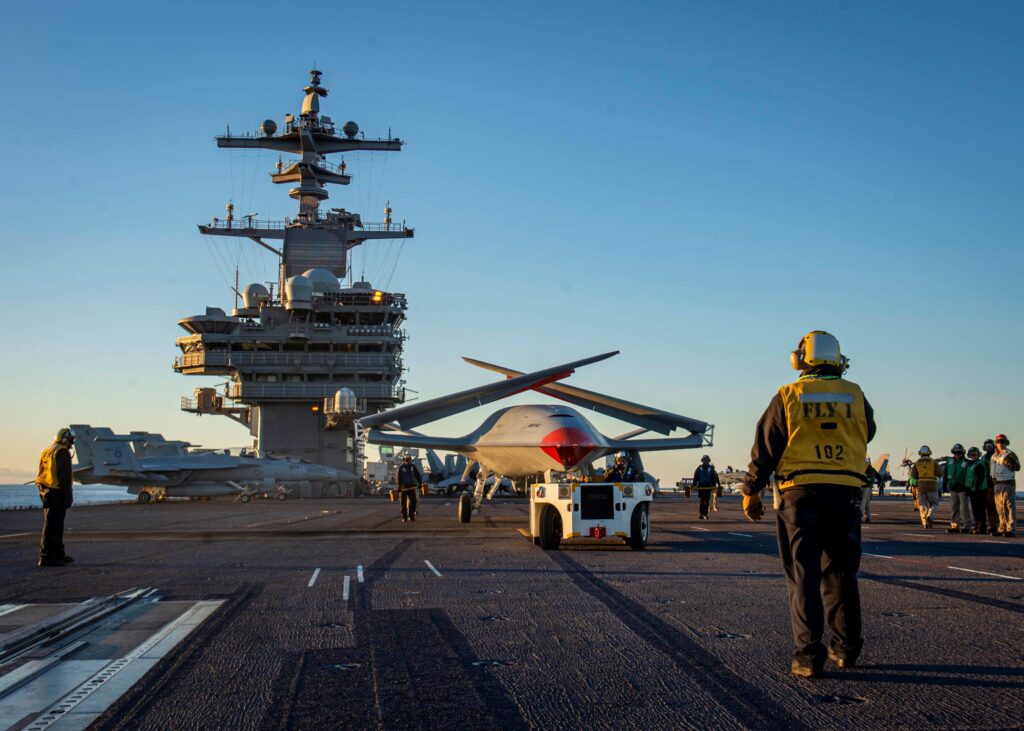
A Boeing unmanned MQ-25 aircraft is given operating directions on the flight deck aboard the aircraft carrier USS George H.W. Bush (CVN 77). Its initial operating capability as an aerial refueling tanker will extend the range, operational capability and power projection of the carrier air wing and carrier strike group. U.S. NAVY / Mass Communication Specialist 3rd Class Brandon Roberson

Chief of Naval Operations Adm. Mike Gilday laid out a 500-ship force earlier this year ahead of the current defense budget submission. The service has worked to balance between recapitalizing for a new, 2045 force structure, and what it needs for the so-called “fight tonight,” approaching period of 2027-2030 when China may attempt reunification with Taiwan by force.

Grouping these by operational level of war problems can help the Navy prioritize between what it needs today in case of Chinese or additional Russian aggression now, and what the service needs as it moves toward its future force structure. These are not in a specific priority, but the final imperative is the most vital.

  1. Readiness of the existing force: Some experts would suggest that the only “ready” navy units are those currently deployed and those coming to relieve them. While not as exciting as new construction, the funding for regular scheduled overhaul and updating of current Navy ships, the training of their crews and their outfitting in terms of spare parts, fuel and above all ammunition is of vital importance. Only 30% of the total cost of any new ship is incurred in its building with a full 70% devoted to the upkeep and maintenance of the ship across its lifetime. Like a car that does not receive regular dealer service, a warship that does not undergo regular maintenance starts to decline in overall readiness. Paying these readiness bills on time ensures that the existing force is ready in the event of hostile action.
  2. Logistics, logistics, logistics: The bogged-down Russian invasion of Ukraine again shows that amateurs do tactics and experts think about logistics. Current U.S. naval combat logistics and sealift forces are small, aged in years and designed around a “just in time, hub and spoke” delivery method that maximizes peacetime efficiency but is ill-suited to fleet-level combat. This is especially true in terms of the Navy’s “distributed maritime operations” doctrine that needs a distributed logistics force for resupply during extended combat operations. Rebuilding both combat logistics and sealift to include delivery “over the beach” of fuel and supplies to Marines must remain a top operational imperative.
  3. Get the M/Q-25A in the air before 2025: The Navy and Marine Corps have made great strides in carrier air wing aircraft readiness since 2016, but the services must go the extra mile to further reduce the burden on the F/A-18 E/F force and extend the range of the carrier air wing in general. Carrier aircraft have adopted “buddy tanking” for years to extend the range of strike aircraft in an increasingly dangerous Indo-Pacific menaced by People’s Republic of China missiles and aircraft. Getting the M/Q-25A drone tanker integrated into the airwing not only extends its strike range now but is a bridge to using the drone as a potential unmanned strike aircraft.
  4. Scouting the bridge to unmanned futures: There is still uncertainty surrounding projected Navy unmanned systems. Congress does not seem fully convinced the Navy can make them work in combat, and many questions remain on the network connectivity and reliability of these platforms over extended periods of time at sea. However, one aspect of unmanned systems is proving itself in the here and now. Unmanned units employed as long-term distributive sensors are operating commercially with great success in measuring current, temperature and a host of other environmental factors. The U.S. Navy 5th Fleet, located in the Persian Gulf region, just completed a very successful experiment with an unmanned intelligence, surveillance, and reconnaissance platforms called Task Force 59. TF 59’s unmanned units successfully operated over time and provided commanders with real-time information crucial to targeting opponent ships, submarine sand aircraft. Naval tactics expert Capt. Wayne Hughes said being able to “attack effectively first” depended on effective scouting that found opponents without revealing one’s own force locations. Expendable unmanned scouting units can fulfill that function and serve as an operational bridge to further unmanned systems development.
  5. Train to Fight: Perhaps a subset of the readiness and scouting imperatives, but it’s still vital to train to fight at expected levels of organization and chaos. Throughout much of the post-Cold War era individual Navy carrier strike or amphibious ready groups ventured alone as deployed assets, secure in general U.S. sea control over wide areas of the world’s oceans. The rise of the PRC’s navy and the return of a revanchist Russia has ended that blanket level of security and U.S. naval forces will again have to fight for sea control before undertaking other missions. Training to fight at larger levels of organization such as the three-carrier battle force gets Sailors and Marines used to operating in these larger formations. As Russia’s ground force mishaps in Ukraine have shown, if forces do not train and get used to fighting in larger formations it is unlikely that they will perform well in combat in those groupings.
  6. Stay ahead in the undersea environment: Many documents extol the U.S. lead in undersea systems, especially in its nuclear attack and ballistic missile submarine designs. Since the days of the Walker Spy ring in the 1980s, however, the Russians and others have sought to duplicate or steal elements of the U.S. undersea advantage. No such advantage can be taken for granted as well and the U.S. Navy should seek to expand its undersea capabilities with supporting unmanned systems and forward-deployed infrastructure to support undersea operations. The Navy had 11 deployable submarine tenders at the end of the Cold War and today has only two. If fleet operations (including submarines) must be distributive, then submarine maintenance and logistics, especially weapons reloading, should be equally dispersed as needed. The only way to get there is by adding more submarine tenders to the fleet.
  7. It’s time to take the maritime strategy “off the shelf.” Back in June 1990 during his confirmation hearings before the Senate Armed Services Committee as Chief of Naval Operations, Adm. Frank Kelso was asked by Sen. John McCain what the Navy intended to do with its maritime strategy to globally fight the Soviet Union now that the communist state appeared in full retreat and the Cold War over. Kelso responded, “Military strategy needs a specific enemy,” and with the end of the Cold War, “the issues before us seem to be ones of naval policy and not strategy.” Kelso further stated the maritime strategy for combatting a global great power opponent should be “put on the shelf” and could be “taken down” when needed if another global opponent reappeared. The U.S. now faces two nuclear-armed great power opponents and it’s time to pull a maritime strategy down from Kelso’s shelf. It will not be the same as its 1980s predecessor, but only a service-generated blueprint that serves as a guide, and not a directive for combatant commanders to follow can integrate all these operational imperatives in a single, authoritative source. A strategy that gives Congress and the American people an idea of what their Navy does in peace and what it could do in war is vital to securing public support for the other operational imperatives. It should speak in terms of numbers of ships, maps, geographic lines of effort that show what the Navy might do, which allies and partners might join the U.S. war effort, and suggest what goals the U.S. would pursue in great power war to have a definition of how such a conflict might end. Open-ended commitments in the Middle East over decades have soured the public on any extensive military operations and telling them “how wars end” is just as important as how the military means to wage them.

All these operational imperatives are important, but the strategy is perhaps the most valuable as it ties together all of the imperatives in a single package for both Congress, American citizens and the industrial organizations that can bring the other imperatives to life.


State Dept. Approves Possible Sale of AH-1Z Helicopters to Nigeria 

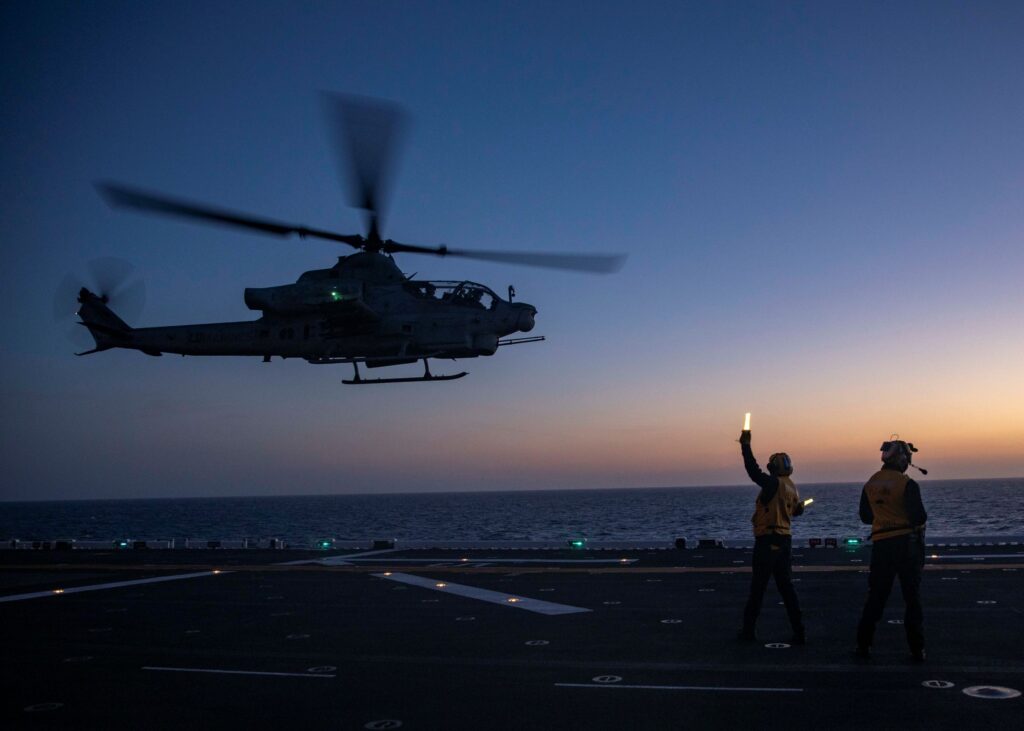
Airman Kory Vogel signals an AH-1Z Viper on the flight deck of amphibious assault ship USS Makin Island (LHD 8), April 13. U.S. NAVY / Mass Communication Specialist 3rd Class Nadia Lund

WASHINGTON — The U.S. State Department has approved a possible Foreign Military Sale to Nigeria of 12 Bell AH-1Z attack helicopters and related equipment for an estimated cost of $997 million, the Defense Security Cooperation Agency said in an April 14 release. 

The sale would make Nigeria the third foreign nation to order the AH-1Z, the others being Bahrain and the Czech Republic. The main operator of the AH-1Z is the U.S. Marine Corps.  

Nigeria has requested to buy 12 AH-1Z Viper attack helicopters as well as associated avionics, sensor systems, and spare engines and parts. The deal also includes 2,000 Advanced Precision Kill Weapon System (APKWS) guidance sections for 2.75-inch rockets. 

The announcement said the possible sale also would include “tools and test equipment; technical data and publications; personnel training and training equipment; mission planning system; U.S. government and contractor engineering; technical, and logistics support services; U.S. government and contractor assistance and oversight of facilities construction to include the provisioning of plans, drawings and specifications.” 

“The proposed sale will better equip Nigeria to contribute to shared security objectives, promote regional stability and build interoperability with the U.S. and other Western partners,” the announcement said. “This sale will be a major contribution to U.S. and Nigerian security goals. Nigeria will have no difficulty absorbing the equipment and services into its armed forces.” 

The principal contractors will be Bell Helicopter, Textron, of Fort Worth, Texas, and General Electric Co., of Lynn, Massachusetts. 


USS Forrest Sherman Returns to Norfolk from Surge Deployment 

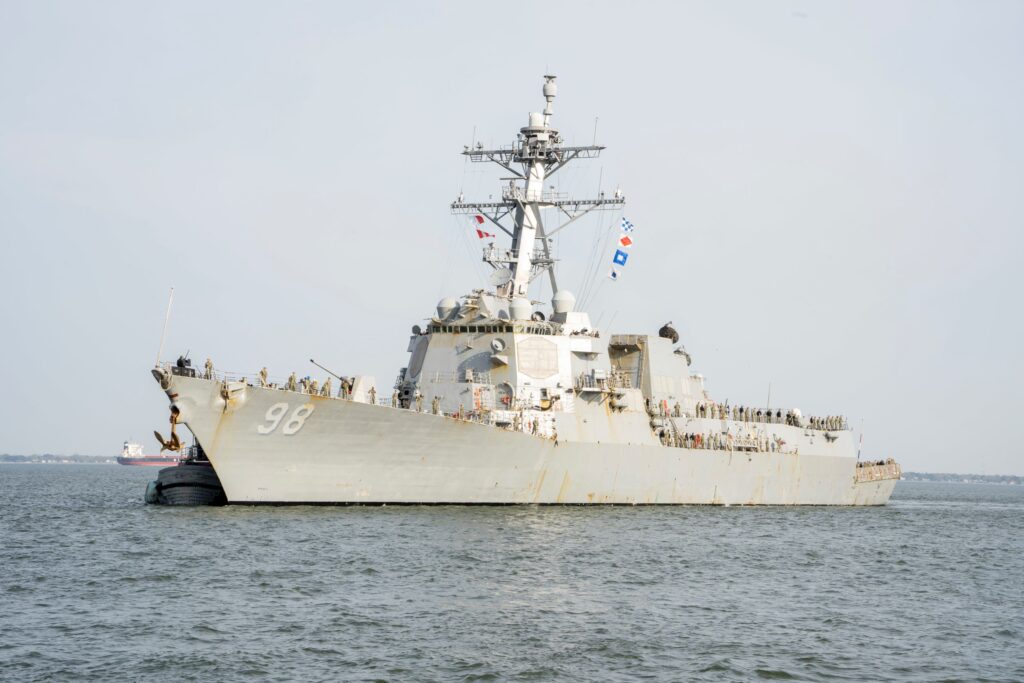
The USS Forrest Sherman (DDG 98) returned to Naval Station Norfolk on April 13 after a surge deployment. U.S. NAVY

NAVAL STATION NORFOLK — The Arleigh Burke-class guided-missile destroyer USS Forrest Sherman (DDG 98) returned home to Naval Station Norfolk on April 13 following a surge deployment, the U.S. 2nd Fleet said. 

Forrest Sherman operated with NATO Allies and partners in the Eastern Atlantic, North Sea and Baltic Sea over the past three months. 
 
The crew conducted over 200 hours of flight operations, 11 drills with NATO Allies and partners, six strait transits and six replenishments-at-sea. The drills required close coordination of maneuvering operations, cross-deck flight operations, and flashing light and flag-hoist drills with navies from Denmark, France, Germany, Italy, The Netherlands, Poland and Sweden. 
 
During the deployment, Forrest Sherman completed port visits to Stockholm, Sweden, and Gdansk, Poland, strengthening the U.S. commitment to security in the region. While in port Stockholm, the crew hosted Ambassador Erik Ramanathan, the U.S. ambassador to Sweden; Rear Adm. Ewa Skoog Haslum, chief of the Swedish navy and commander maritime component command; and several Swedish flag officers. In port Gdansk, members of the crew volunteered in a community relations event where they assisted in the packing, loading, sorting and distribution of donations to Ukrainian refugees in the Gdansk region. 
 
“The Forrest Sherman crew displayed their relentless fighting spirit during this deployment,” said Cmdr. Greg Page, commanding officer of the ship. “Their dedication to executing the mission is evident in their hard work. They are deeply committed to each other and this ship, which was evident when they were tasked to prepare for this deployment under a condensed certification timeline. The crew was excited to showcase our ship’s capabilities while operating with NATO Allies and European partners in theater.” 
 
U.S. 2nd Fleet, re-established in 2018 in response to the changing global security environment, develops and employs maritime forces ready to fight across multiple domains in the Atlantic and Arctic in order to ensure access, deter aggression and defend U.S., allied and partner interests. 


Erik K. Raven Sworn in as Undersecretary of the Navy 

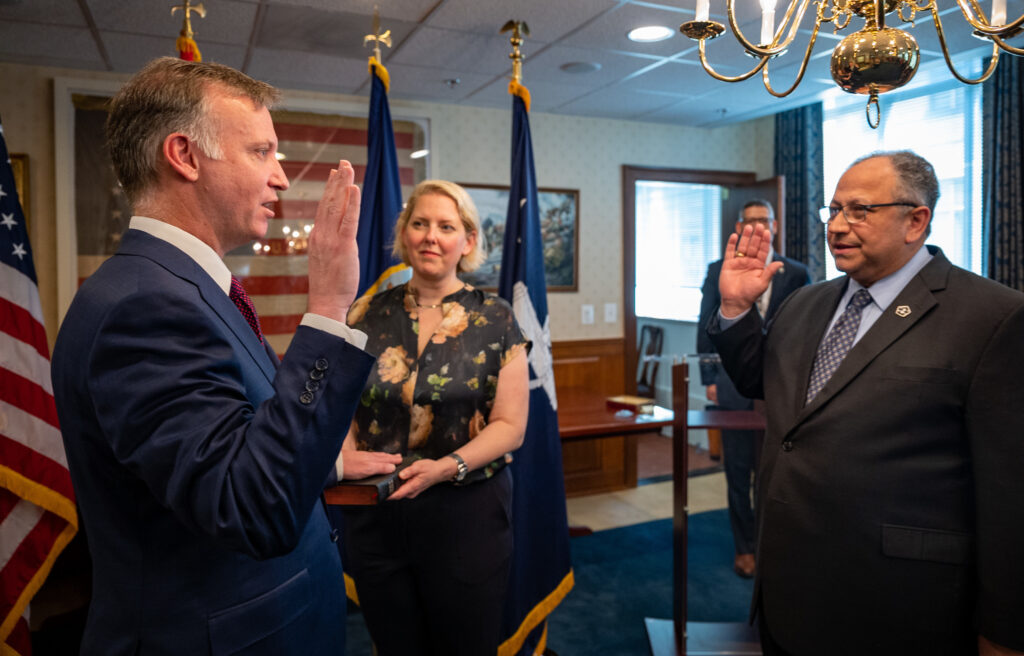
Erik K. Raven, left, is sworn in as the 34th undersecretary of the Navy by Secretary of the Navy Carlos Del Toro April 13. U.S. NAVY / Mass Communication Specialist 2nd Class T. Logan Keown

WASHINGTON — Erik K. Raven was sworn into the Department of the Navy as undersecretary of the Navy during a private ceremony at the Pentagon on April 13, the Navy announced. 

It is such an honor to join the Navy and Marine Corps team after spending the last 24 years on Capitol Hill,” said Raven. “Throughout my career, I have established some great relationships within the Department of the Navy and I look forward to building more. I am thrilled to join Secretary Del Toro, the assistant secretaries of the Navy, the chief of naval operations, commandant of the Marine Corps and everyone else in the department on our shared priorities of strengthening our maritime dominance, building a culture of warfighting excellence and strengthening our relationships with strategic partners.” 

Born in San Francisco, Raven graduated from College of Marin with a Bachelor of Arts in international relations from Connecticut College and a Master of Arts degree in international history from the London School of Economics. 

Raven began his career in the offices of Sens. Dianne Feinstein, Edward Kennedy and Robert Byrd, serving in a variety of staff roles. In 2006, Raven became a professional staffer for the United States Senate Committee on Appropriations. He has since served as principal adviser to the Democratic chairs and vice chairs of the Committee on Appropriations and Subcommittee on Defense on budget matters relating to the Department of Defense and intelligence community. 

On Dec. 13, 2021, President Biden nominated Raven to be the next undersecretary of the Navy and he was confirmed by the Senate on April 7. 

“The Department of the Navy welcomes Undersecretary Raven with open arms. I have no doubt he will utilize his extensive congressional experience to benefit the Sailors, Marines and civilians in the Department,” said Del Toro. “I also want to thank Assistant Secretary for Energy, Installations and Environment Meredith Berger for performing the duties of undersecretary these last eight months. Her professionalism, thoughtfulness and recommendations have been critical when we announced the AUKUS partnership, collectively responded to the situation impacting Red Hill and the people of Hawaii, rolled out the [fiscal year 2022-2023] budget and handled countless other issues both internal and external to the department.”