Navy Fleet Would Shrink Further Under 2023 Ship Decommissioning Plan  
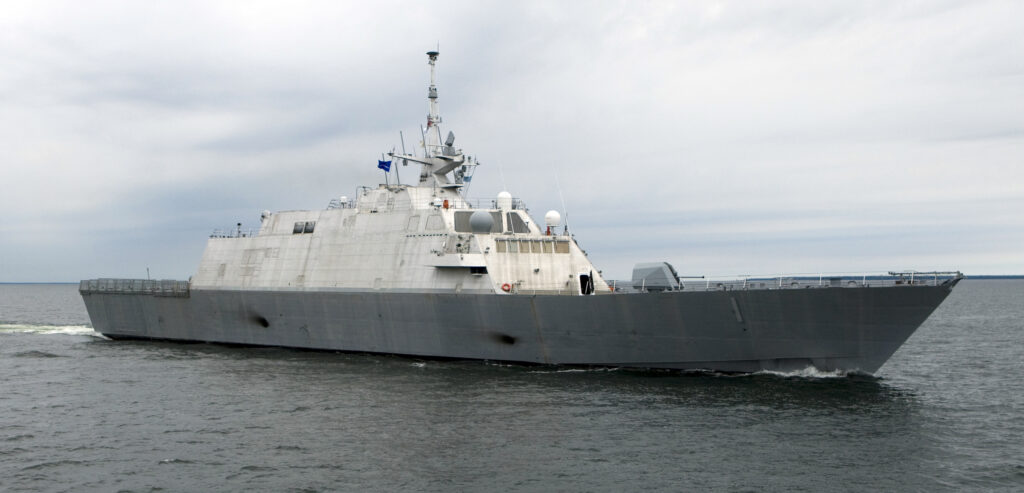
The first U.S. Navy Littoral Combat Ship, Freedom. The Navy plans to retire nine LCS, most or all from the Freedom class. U.S. NAVY

ARLINGTON, Va. — Normally the number of new U.S. Navy ships requested for the next a new fiscal year garners the most attention of reporters, but this time it was the number of ships the Navy is seeking to decommission that drew the most attention.  

Under the Future Years Defense Plan, the size of the Navy’s battle force would shrink from 298 today to 280 in fiscal 2027. Chief of Naval Operations Adm. Michael Gilday has advocated divesting in order to invest, and this budget supports that concept.  

During the Navy Department’s March 28 fiscal 2023 budget briefing at the Pentagon, Rear Adm. John Gumbleton, deputy assistant secretary of the Navy for Budget, said the Navy is requesting the retirement of 24 ships, compared with the construction of nine battle force ships. 

Gumbleton listed the types of the 24 ships targeted for retirement: 

  • 9 littoral combat ships
  • 5 Ticonderoga-class guided-missile cruisers
  • 2 Los Angeles-class nuclear-powered attack submarines 
  • 2 Henry J. Kaiser fleet replenishment oilers
  • 4 Whidbey Island- or Harpers Ferry-class dock landing ships
  • 2 Montford Point-class expeditionary transfer dock ships

He said the retirements would save the Navy $3.6 billion over the Future Years Defense Plan. 

Most, if not all, of the littoral combat ship retirements would be of the troubled Freedom variant and would save the Navy $50 million annually. Also, under the 2023 plan the LCS antisubmarine warfare mission package would not be installed on the remaining LCSs, with the ASW mission taken up by the new Constellation-class frigate. 

The two Montford Point-class expeditionary transfer dock ships are less than 10 years old and their proposed retirement reflects changes in Marine Corps amphibious operational concepts toward more distributed maritime operations. 

The Navy recently has pointed our more problems with the older Ticonderoga-class guided-missile cruisers to the level of safety concerns being a major issue.  

The nine battle force ships requested for 2023 by the Navy include:  

  • 2 Virginia-class SSNs 
  • 2 Flight III Arleigh Burke-class guided-missile destroyers
  • 1 Constellation-class guided-missile frigate
  • 1 America-class amphibious assault ship
  • 1 Flight II San Antonio-class amphibious transport dock ship
  • 1 John Lewis-class fleet replenishment oilers 
  • 1 Navajo-class towing, salvage and rescue ship

For 2022, the Navy requested eight ships, but Congress increased the number to 13 in the enactment of that budget. 

The 2023 budget would continue to fund the Columbia-class ballistic-missile submarine, the Ford-class aircraft carriers, and advance procurement for two Virginia-class nuclear-powered attack submarines. 

Gumbleton said 2023 would be the last year for procurement of the San Antonio-class transport dock ship. 

Also, under the Future Years Defense Plan, production of the Constellation-class guided-missile frigate would alternate one and two ships year by year.  

Procurement of the light amphibious warship and the submarine tender replacement would begin in fiscal 2025, followed by the next-generation logistics ship in 2026. Research and development funding is provided for the large unmanned surface vessel and the extra large unmanned underwater vessel. 

The 2023 budget also would fund the purchase of two used sealift ships for the Maritime Administration’s Ready Reserve Force. 

The fiscal 2023 also requests funding for two LCAC 100-class ship-to-shore connectors and the service-life extension of two LCAC 01-class connectors; but does not request more new LCU 1700-class utility landing craft. The plan also would fund advance procurement funds for the refueling and comprehensive overhaul of the USS Harry S. Truman (CVN 75), which the Navy not long ago wanted to decommission to fund other priorities.  

Rep. Rob Wittman (R-Virginia), ranking member of the House Armed Services Committee’s Seapower and Projection Forces panel, has been critical of the Navy’s “divest to invest” strategy, which is shrinking the fleet. He issued a statement March 28, excerpted below:    

“I am particularly disappointed that even as we aim to grow our naval and projection forces, this budget continues the divest to invest strategy that will shrink our fleet once again, underinvest in the fifth-generation fighters we need to compete with peer adversaries, reduces our Air Force tanker force structure and once again prioritizes future technologies over the capacity and capabilities servicemembers need now to ensure we have a credible American military. I will work with my colleagues in Congress this year to ensure that we deliver a defense budget that genuinely invests in the national security of our nation.” 


Navy Deploys More EA-18G Electronic Attack Jets to EUCOM 

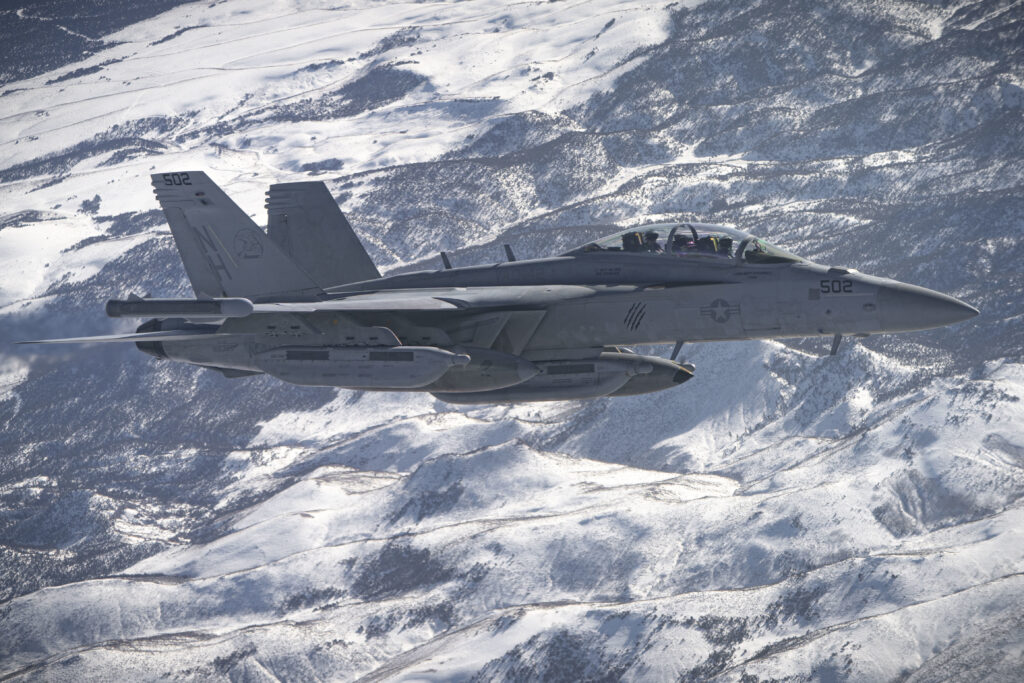
A U.S. Navy EA-18G Growlers assigned to the “Garudas” Electronic Attack Squadron (VAQ) 134, Naval Air Station Whidbey Island, Washington, waits to receive air-to-air refueling from a Royal Air Force Voyager tanker assigned to 101 Squadron, RAF Brize Norton, United Kingdom, during a Red Flag-Nellis 22-1 mission Feb. 3, 2022, at Nellis Air Force Base, Nevada. U.S. AIR FORCE / Airman 1st Class Zachary Rufus

ARLINGTON, Va. — A squadron of U.S. Navy EA-18G Growler electronic warfare aircraft has been deployed to the European Command as part of the build-up of forces in support NATO’s eastern flank. 

According to Defense Department spokesman John Kirby, the six EA-18Gs of Electronic Attack Squadron 134 (VAQ-134) — the Garudas — and their support personnel were to be staged by March 28 at Spangdahlem Air Base in Germany, home of the U.S. Air Force’s 52nd Fighter Wing, which fields one squadron of F-16CJ fighters. The EA-18Gs are home-based at Naval Air Station Whidbey Island, Washington. Spangdahlem is approximately 650 miles from the borders of NATO countries in Eastern Europe with Ukraine. 

“The purpose of this deployment is to bolster readiness, enhance NATO’s collective defense posture and further increase air integration capabilities with our allied and partner nations,” Kirby said in a release. “They are not being deployed to be used against Russian forces in Ukraine. They are being deployed completely in keeping with our efforts to bolster NATO’s deterrence and defense capabilities along that eastern flank. The deployment is not in response to a perceived threat or incident.” 

The Navy has five-land-based expeditionary VAQ squadrons in addition to nine carrier-based VAQ squadrons, all equipped with EA-18Gs. For many years they deployed to bases in Southwest Asia to support combat in Afghanistan, Iraq, and Syria, and currently deploy to Misawa, Japan. The Navy’s Growlers provide electronic attack support for all of the armed services. The aircraft can jam enemy radars and communications and fire anti-radiation missiles at radar sites. 

“I am extremely proud of the men and women in VAQ-134,” said Navy Capt. Christopher M. Bahner, commander, Electronic Combat Wing, U.S. Pacific Fleet, in a Defense Department release. “The Garudas have performed exceptionally well during their planned work-up cycle and stand ready to support U.S. expeditionary and allied task forces in Europe. Expeditionary EA-18G squadrons integrate with joint and coalition forces to provide our commanders capabilities to defend our forces in all potential phases of operation, while allowing our Carrier Air Wing EA-18G squadrons to remain at sea, defending freedom of navigation with our carrier strike group teams.” 

Another EA-18G squadron, VAQ-137, currently is deployed with Carrier Air Wing One on board USS Harry S. Truman in the Mediterranean Sea. VAQ-137 has been flying patrols over Romania and Poland in support of NATO operations since the Russian invasion of Ukraine. 


Marine Corps Orders 36 More Amphibious Combat Vehicles 

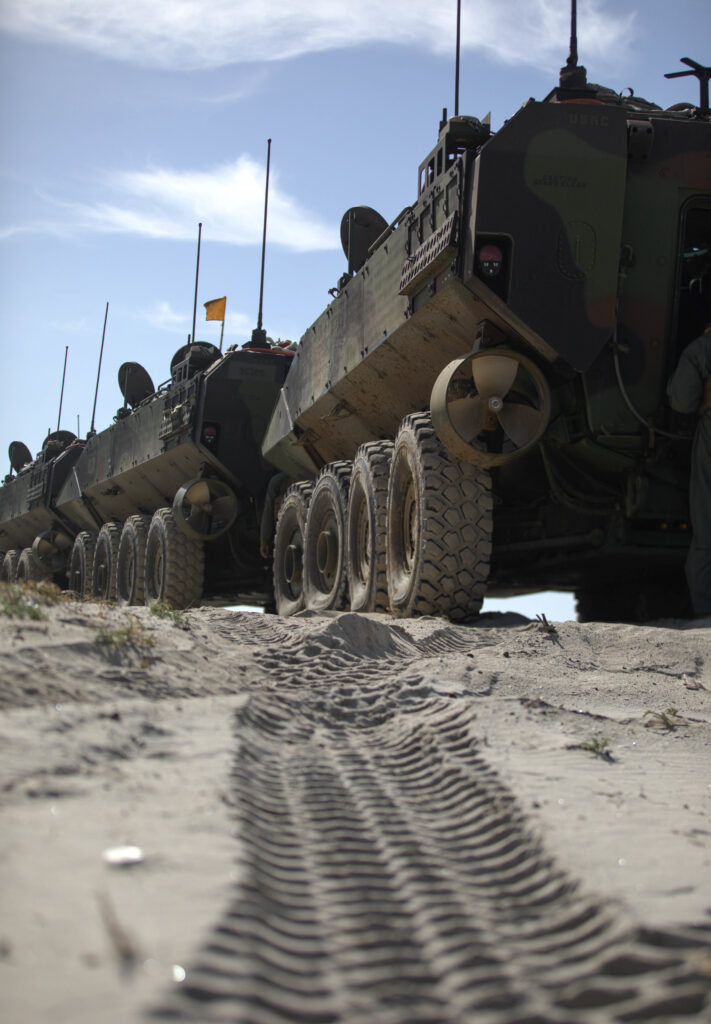
U.S. Marine Corps amphibious combat vehicles with 3d Assault Amphibian Battalion, 1st Marine Division, conduct movement on the shore after a successful training evolution at Marine Corps Base Camp Pendleton, California, March 13. U.S. MARINE CORPS / 2nd Lt. Joshua Estrada

ARLINGTON, Va. — The Marine Corps has ordered 36 more Amphibious Combat Vehicles, the Defense Department announced March 25. 

Marine Corps Systems Command, Quantico, Virginia, awarded BAE Systems Land & Armaments L.P., Sterling Heights, Michigan, a $173.6 million contract modification for a full-rate production lot of ACVs and “associated production, and fielding and support costs.” The deliveries are expected to be completed by March 2024. 

The ACV is an amphibious armored vehicle — with a crew of three Marines — designed to carry 13 Marines in shock-mounted seats from ship to shore in an opposed landing and to carry those Marines inland. Its V-shaped hull is designed to provide blast protection from mines.  

In addition to the personnel carrier versions (ACV-P), BAE Systems has delivered the prototype of the command variant (ACV-C) and is under contract to design and develop the 30mm cannon-armed variant (ACV-30) and the recovery variant (ACV-R). 

The contract raises the number of ACV-Ps ordered so far to more than 250. They are in full-rate production.

The ACV achieved initial operational capability on Nov. 13, 2020. The ACV is replacing the AAV7 family of assault amphibious vehicles that have been in service since the early 1970s. 


HII Christens Flight III Destroyer Jack H. Lucas  

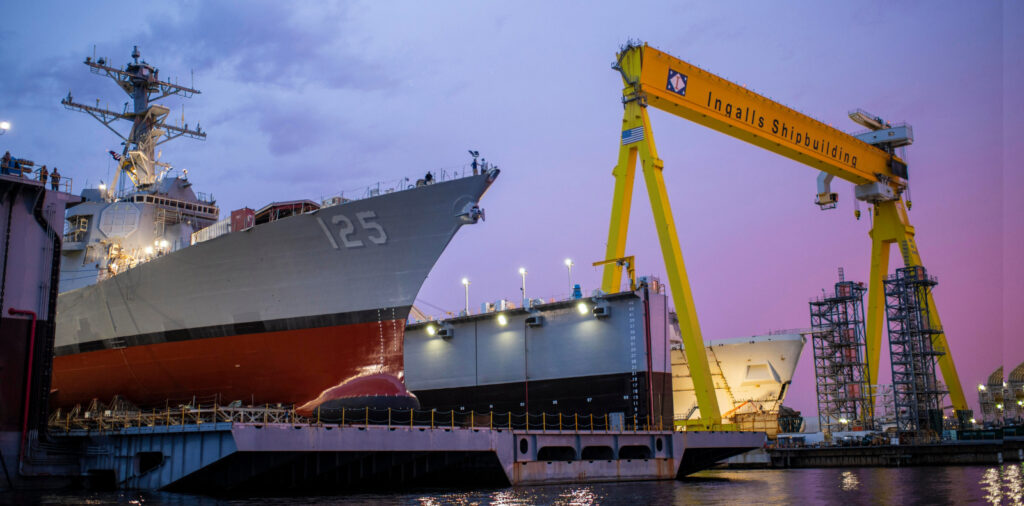
HII christened the pre-commissioning unit Jack H. Lucas on March 26. HII

PASCAGOULA, Miss. — HII christened pre-commissioning unit Jack H. Lucas (DDG 125) on March 26 at the company’s Ingalls Shipbuilding division, the company said in a release. 

Jack H. Lucas, a longtime resident of Hattiesburg, Mississippi, was the youngest Marine and youngest service member in World War II awarded the Medal of Honor. During a close firefight with Japanese soldiers, Lucas saved the lives of three Marines when he unhesitatingly placed himself on two grenades. 

“Jack H. Lucas made a selfless decision to choose others and country over self,” Ingalls Shipbuilding President Kari Wilkinson said. “Our Ingalls shipbuilders have a deep appreciation and respect for what sailors and Marines do on behalf of our nation. We are proud to support them and to provide them this remarkable ship, our first Flight III destroyer.” 

Chief of Naval Operations, Adm. Mike Gilday, was the keynote speaker. 

“Jack H. Lucas is not only the most capable and sophisticated surface combatant ever built by man, but it also represents the bridge from the past to the future, as we bring a new radar, the Aegis Baseline 10, and a new electric plant onto an already highly capable platform,” Gilday said. “Such an evolution would be impossible without the shipbuilders of Huntington Ingalls Industries and the Pascagoula community. Flight III represents the dedication and commitment of our Sailors and civilians — the skill and innovation of our shipyards and industry partners — and the commitment of the American people to keep the seas free and open for all.” 

“You have built the finest destroyer in the world,” Gilday said. 

Jack H. Lucas is cosponsored by Ruby Lucas, widow of the ship’s namesake, and Catherine B. Reynolds, chairman and CEO of the Catherine B. Reynolds Foundation. Together, the two sponsors officially christened the ship and made remarks during the ceremony. 

“May the Jack H. Lucas be indestructible, just like he was,” Ruby Lucas said. “This first of its kind ship is advanced in integrity, courage and commitment to serve our great country. Jack never ran from a fight, and I’m certain that all aboard his namesake will represent Jack with honor. Just as I feel his spirit with me, be assured that he will be with all of you all the time.” 

U.S. Sen. Roger Wicker and U.S. Rep. Steven Palazzo, both of Mississippi, delivered remarks. Other speakers included Meredith Berger, performing the duties of undersecretary of the Navy, and Maj. Gen. Jason Bohm, commanding general, Marine Corps Recruiting Command.  


U.S. Coast Guard Decommissions Three Cutters in Bahrain 

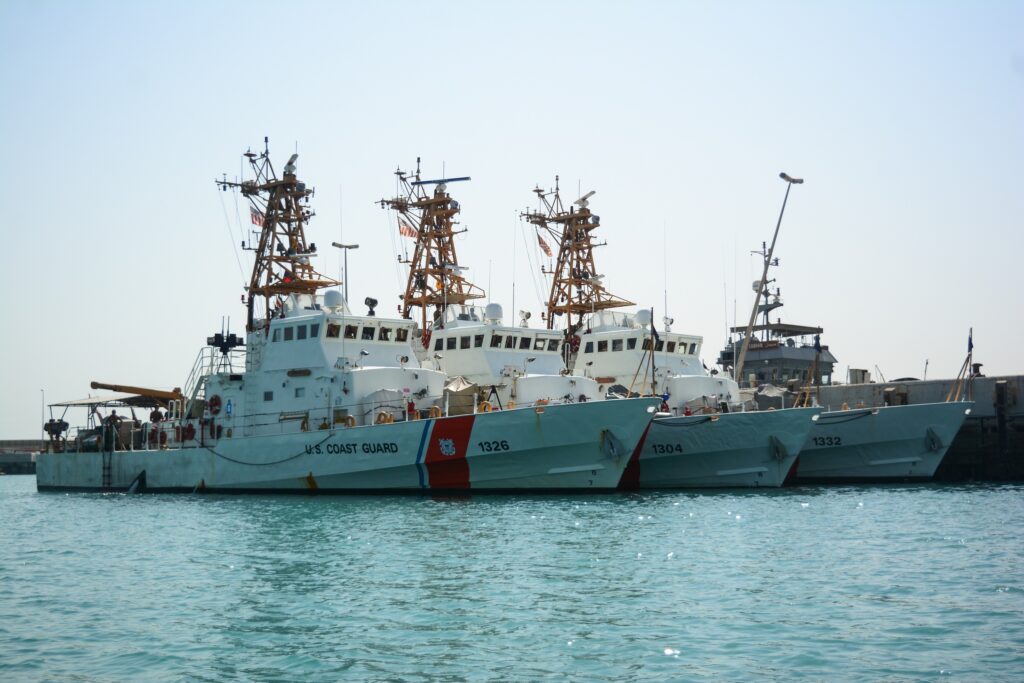
USCGC Monomoy (WPB 1326), USCGC Maui (WPB 1304), and USCGC Wrangell (WPB 1332) sit pierside in the U.S. 5th Fleet Area of Operations. U.S. COAST GUARD

NAVAL SUPPORT ACTIVITY BAHRAIN — The U.S. Coast Guard decommissioned three Island-class patrol boats, March 22, in a ceremony at Naval Support Activity Bahrain, U.S. 5th Fleet Public Affairs said in a release. 

Rear Adm. Keith Smith, deputy commander of U.S. Coast Guard Atlantic Area, attended the ceremony and commemorated 102 years of combined active service by USCGC Maui (WPB 1304), Monomoy (WPB 1326), and Wrangell (WPB 1332).  

“For nearly two decades, these cutters and the Coast Guardsmen that crewed them have worked closely with our [U.S. Naval Forces Central Command] partners and served as the heart of Coast Guard operations in the Middle East,” said Smith. 

Maui was originally homeported in Miami and conducted counter-narcotics and other law enforcement activities near United States for 18 years. 

Monomoy was previously homeported in Woods Hole, Massachusetts. The ship helped secure New York City’s harbor immediately following terrorist attacks in the United States on Sept. 11, 2001. 

In 2004, Maui and Monomoy arrived in the U.S. 5th Fleet region where they have remained for the next 18 years in support of U.S. 5th Fleet maritime security operations. 

Previously homeported in Portland, Maine, Wrangell conducted counter-narcotics and maritime patrol operations along the East Coast of the United States before deploying to the Middle East in 2003. 


Navy to Christen Guided-Missile Destroyer Jack H. Lucas 

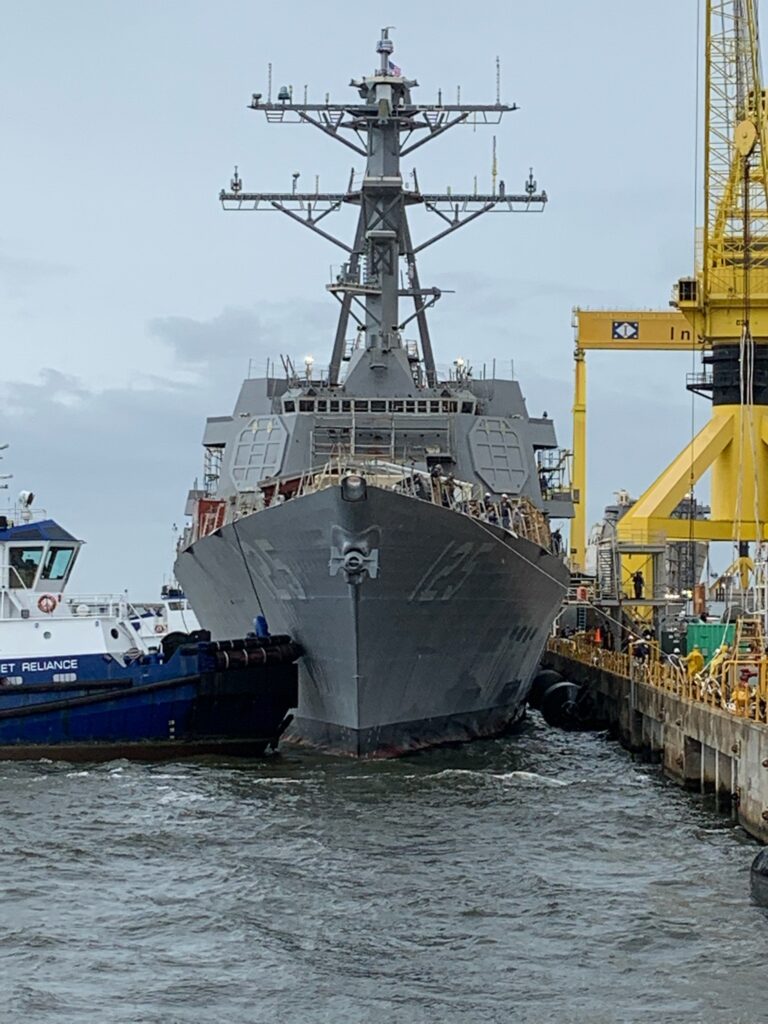
The future Jack H. Lucas (DDG 125), an Arleigh Burke-class guided missile destroyer (Flight III configuration) successfully launched at Huntington Ingalls Industries, Ingalls Shipbuilding division, June 4, 2021. HUNTINGTON INGALLS INDUSTRIES

ARLINGTON, Va. — The U.S. Navy will christen the future USS Jack H. Lucas (DDG 125), the first Flight III Arleigh Burke-class guided-missile destroyer, during a 10 a.m. CDT ceremony on Saturday, March 26, in Pascagoula, Mississippi, the Defense Department announced. 

Jacklyn Harold “Jack” Lucas, the ship’s namesake, served as a U.S. Marine during World War II and was awarded the Medal of Honor at the age of 17, making him the youngest recipient. Private First Class Lucas received the award during the Iwo Jima campaign when he hurled himself on two grenades to absorb the explosion with his own body and protect his fellow Marines. Surviving the blast, Lucas lived until June 5, 2008, when he died from cancer. The future USS Jack H. Lucas (DDG 125) is the first combat warship to bear his name. 

Chief of Naval Operations Adm. Michael Gilday will deliver the christening ceremony’s principal address. Mississippi’s Sen. Roger Wicker and Rep. Steven Palazzo will attend, along with Meredith Berger, performing the duties of the undersecretary of the Navy; Maj. Gen. Jason Bohm, commanding general, Marine Corps Recruiting Command; and Kari Wilkinson, president of Ingalls Shipbuilding will also provide remarks. In Navy tradition, the ship’s sponsors, Ruby Lucas and Catherine B. Reynolds, will christen the ship by breaking a bottle of sparkling wine across the bow. 

“The future USS Jack H. Lucas will serve as a constant reminder of the immense impact actions taken by any one Sailor or Marine can truly have,” said Navy Secretary Carlos Del Toro. “Private First Class Lucas is a national hero and this ship and crew will honor his legacy for decades to come.” 

The ship will be the 73rd Arleigh Burke-class destroyer and is one of 20 ships currently under contract for the DDG 51 program. The Flight III upgrade is centered on the AN/SPY-6(V)1 Air and Missile Defense Radar, which enables Flight III ships to perform anti-air warfare and ballistic missile defense simultaneously. The Flight III baseline begins with DDGs 125-126 and continues with DDG 128 and follow-on ships. The future USS Jack H. Lucas will be 509.5 feet long and 59 feet wide, with a displacement of 9,496 tons. The ship will homeport in San Diego. 


Bollinger Delivers the Future USCGC Pablo Valent 

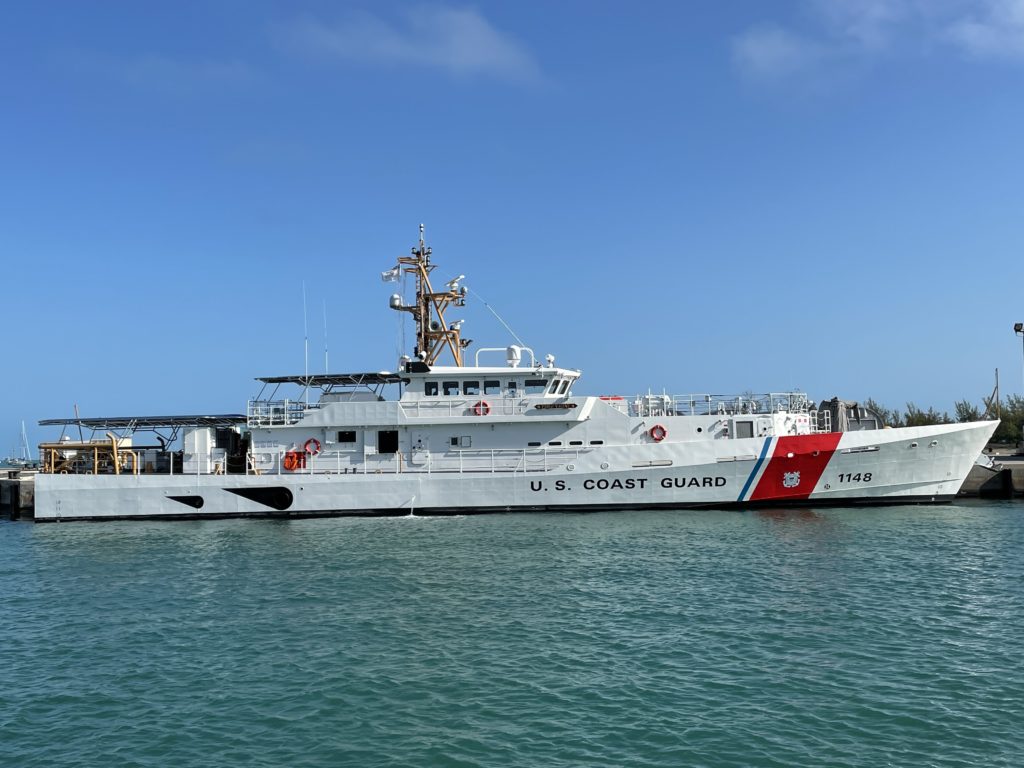
The U.S. Coast Guard Cutter Pablo Valent, delivered to the Coast Guard on March 17. BOLLINGER SHIPYARDS

LOCKPORT, La. — Bollinger Shipyards LLC delivered the U.S. Coast Guard Cutter Pablo Valent to the service in Key West on March 17, the company said in a release.

This is the 174th vessel Bollinger has delivered to the U.S. Coast Guard over a 35-year period and the 48th fast response cutter delivered under the current program. 

“The early delivery of the USCGC Pablo Valent is another win in Bollinger’s nearly four-decade partnership supporting the men and women of the United States Coast Guard,” said Bollinger president and CEO Ben Bordelon. “We are incredibly proud that the FRC platform is a model program for government acquisition and has surpassed all historical quality benchmarks for vessels of this type and complexity. The results are in the detail and the continued early delivery of truly extraordinary Coast Guard cutters that will serve our nation for decades to come.” 

The USCGC Pablo Valent is the first of three FRCs to be homeported in St. Petersburg, Florida. Sector St. Petersburg has become one of the Coast Guard’s largest commands, with an area of responsibility encompassing over 400 nautical miles of coastline along Florida’s west coast and the third largest U.S. port for domestic trade. The sector has responsibility for five primary operational missions: search and rescue; marine safety; maritime law enforcement; ports, waterways and coastal security; and living marine resources. 

This week, President Joe Biden signed the Consolidated Appropriations Act for fiscal 2022, which included $130 million for two additional FRCs, continuing the program beyond its 64-vessel program of record. This is the second time Congress has added FRCs beyond the original 58 vessel program of record. 

Each FRC is named for an enlisted Coast Guard hero who distinguished themselves in the line of duty. The Florida Keys Hurricane of September 1919 was one of the worst in Texas history, heavily damaging the Brazos Life-Saving Station and leveling the Coast Guard Station at nearby Aransas. Seventy-seven-ton schooner Cape Horn had been fishing far out in the Gulf as the storm descended on the schooner and its crew of eight, capsizing the vessel and flooding the hold. The men clung to the flooded hulk as the strong hurricane pushed it toward the Texas coast.

The Brazos Station lookout spotted the Cape Horn and took immediate action. The crew launched the surfboat in some of the worst sea conditions ever experienced in the area. Although the men were skilled surfmen, the boat shipped seas constantly as waves boarded the vessel from the stern. Pablo Valent and the rest of the crew held the boat steady and safely landed with all 15 occupants. For their valiant efforts, Valent and the rest of the Brazos crew received the Silver Life-Saving Medal. Valent went on to have a successful career in the Coast Guard, taking command of the Brazos Station (a.k.a. Port Isabel Coast Guard Station) in 1935, becoming the first Hispanic American in the service to do so. Valent retired after 28 years of service in the Coast Guard. 


Navy’s New Hovercraft Delivers Helicopter for Air Force 

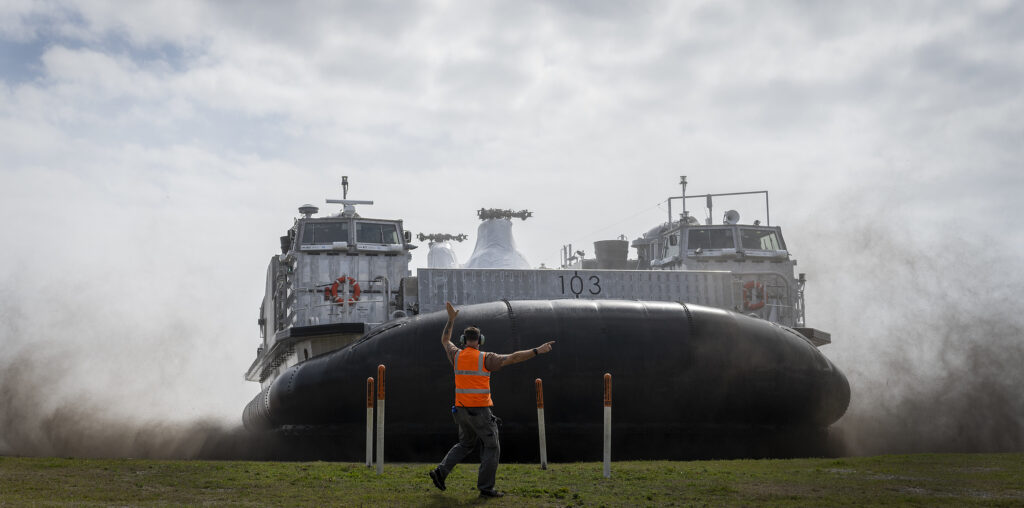
Skip Whitmore, Naval Surface Warfare Center Panama City, marshals a Landing Craft Air Cushion vehicle onto shore south of Hurlburt Field, Florida, Feb. 24. The amphibious landing craft carried a CH-46 Sea Knight helicopter from Pensacola to be used for training purposes within Eglin Air Force Base range. U.S. AIR FORCE / Samuel King Jr.

ARLINGTON, Va. — An unusual transport mission last month demonstrated the capabilities and versatility of the Navy’s new LCAC 100-class ship-to-shore connector. 

The Air Force 96th Test Wing at Eglin Air Force Base, Florida, requested the assistance of the Naval Surface Warfare Center – Panama City Division to solve a problem in transporting a CH-46 helicopter from Naval Air Station Pensacola, Florida, to Eglin. The retired helicopter was to be used to “support future training operations for the Air Force Special Operations Command Special Tactics Training Squadron,” Jeremy Roman of the NSWC PCD public affairs office said in a March 23 release. 

“With a height of nearly 17 feet, transporting the helicopter by land would have required extensive preparation work in order to lower the height to safely maneuver on public highways,” Roman said.   

The 96th Test Wing and the NSWC PCD determined the best solution was using one of the LCAC 100-class ship-to-shore connectors, which recently entered fleet service, to transport the helicopter over the water to Eglin.

LCAC 103, the third production LCC 100-class SSC, was selected for the mission, conducted on Feb. 24. 

“LCAC 103 transited from Panama City, Florida, to NAS Pensacola where the CH-46 was loaded and then transported to Eglin AFB,” Roman said. “The LCAC 103 then displayed its amphibious capability by transiting from water to shore at Eglin AFB where the CH-46 was rolled off the deck onto dry land. LCAC 103 further demonstrated the SSC amphibious capabilities by transiting across Santa Rosa Island at the Eglin AFB Test Range to navigate back to base via the most efficient route to NSWC PCD. This long-distance, land-hopping mission, supported post-delivery test and trials objectives by successfully gaining reliability growth hours while demonstrating required capabilities for Navy and Marine Corps expeditionary forces.” 

“NSWC PCD is a Navy research, development, test and evaluation laboratory, and this mission displayed the fruit of the RDT&E and acquisition teamwork which is providing this critical expeditionary capability to the fleet. It is always a bonus when that capability supports our sister military branches and partners,” said Randy Whitehead, NSWC PCD Air Cushion Vehicle and Seabasing technical program manager, in the release.

“This was an excellent demonstration of key capabilities such as the LCAC’s unique combination of range, speed, amphibious versatility and lift capacity. It not only allowed us to successfully execute this mission but also showed how SSC can bring more to the table for future Distributed Maritime Operations.” 

The LCAC 100-class SSC is built by Textron Systems and is replacing the older LCAC 01 class hovercraft in the fleet. Testing of the LCAC 100 craft is conducted at NSWC PCD. Recently, two LCAC 100s were delivered to the fleet’s Assault Craft Unit 4 at Little Creek, Virginia. 


Israeli Air Force Leader Takes Flight in CH-53K 

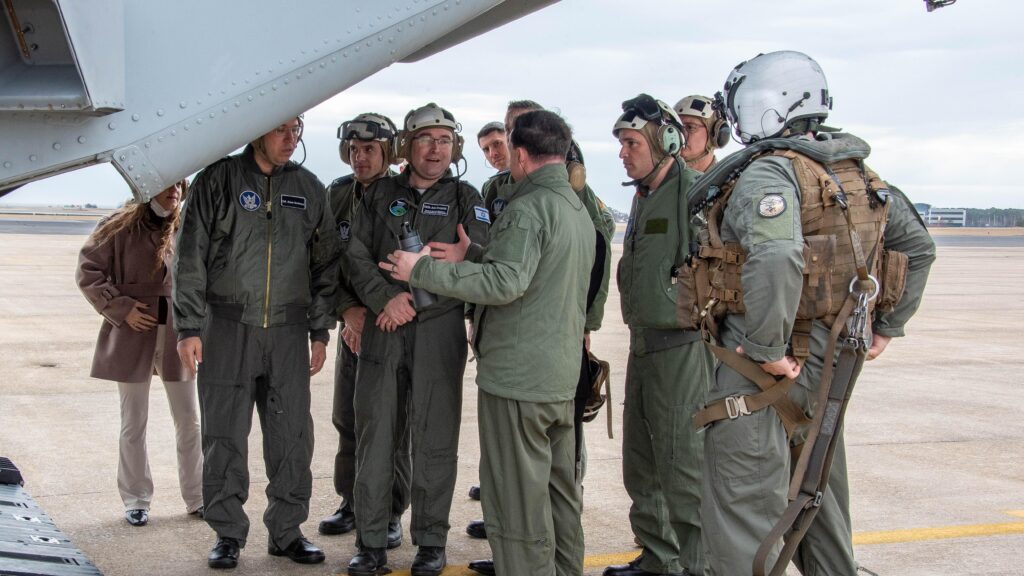
Brig. Gen. Eyal Grinboim, Israeli air force chief of staff, along with his staff, discuss the capabilities of the CH-53K prior to flying on the aircraft. U.S. NAVY

PATUXENT RIVER, Md. — Israeli air force Chief of Staff Brig. Gen. Eyal Grinboim visited Naval Air Station Patuxent River in February for a program update and flight on the CH-53K heavy lift helicopter, Naval Air Systems Command said March 23. 

Grinboim and his staff met with Maj. Gen. Gregory Masiello, program executive officer for air anti-submarine warfare, assault and special mission programs. Masiello and Col. Jack Perrin, program manager, Heavy Lift Program Office (PMA-261), gave the IAF group an overview of the CH-53K program and a status update on current tests and production. 

The visit included an opportunity to co-pilot the aircraft. U.S. Marine Corps Lt. Col. Luke Frank, pilot and officer in charge of CH-53K detachment for Marine Operational Test and Evaluation Squadron 1, provided pre-flight safety instructions before leading the group in a flight. The flight demonstrated the power and capabilities of the CH-53K aircraft. 

Grinboim’s visit to the program office was the first since Israel’s decision last year to purchase the CH-53K. The IAF signed a letter of offer and acceptance on Dec. 30, 2021, with the U.S. government. The agreement is for purchase of 12 CH-53K aircraft with first deliveries planned in 2025. 

As the long-range logistic support backbone for the U.S. Marine Corps, the CH-53K will support Israeli special operations programs first, as well as provide the Israeli Defense Forces with a platform that has the speed, safety and gross weight capability to support all of its missions, including troop and cargo transport, and search and rescue. 

The CH-53K program is on track to achieve Initial Operational Capability in 2022. VMX-1 completed all initial operational test and evaluation scheduled events, including a real-world, non-test event recovering a 14,000-pound downed Navy H-60 from a 12,000 feet high zone in the mountains of Northern California. The CH-53K will transport Marines, heavy equipment and supplies during ship-to-shore movement in support of amphibious assault and subsequent operations ashore. 


Navy’s E-2D Distributed Readiness Trainers Improving Readiness, Capability 

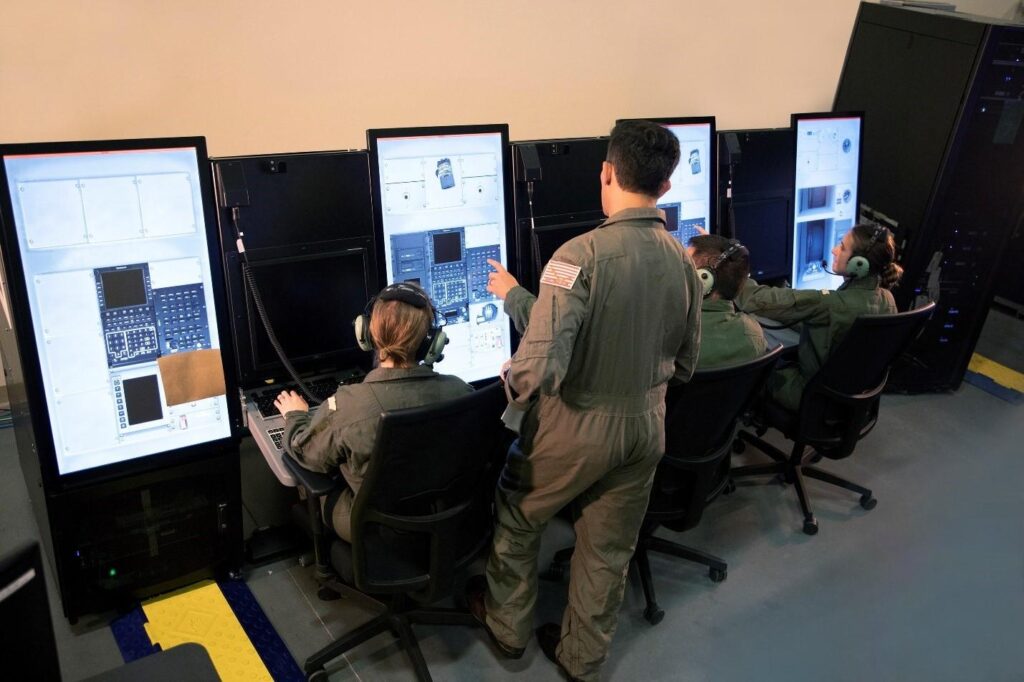
Naval aviators train on E-2D distributed readiness trainers, which are training devices capable of elements of two, five crewmember aircraft to conduct a single training scenario simultaneously and execute the full list of tactics, techniques, and procedures. U.S. NAVY

PATUXENT RIVER, Md. — The aircrew from Carrier Airborne Command & Control Squadron 125 (VAW-125), an E-2D Advanced Hawkeye squadron, recently completed two weeks of on-site readiness training following the installation of two E-2D Distributed Readiness Trainers by the Naval Aviation Training Systems and Ranges program office, Naval Air Systems Command said March 23.   

These medium-fidelity trainers contain a complete mock-up of the E-2D weapons system and are available via commercial off-the-shelf components, allowing them to be operational faster than higher fidelity trainers. The D-DRT uses touch screen technology and are less expensive to maintain than the legacy trainers, which improves reliability and reduces lifecycle costs.   

“Our ability to cycle through reps and sets of advanced tactics, techniques and procedures in a short amount of time will make the warfighter more lethal at a much lower cost to the taxpayer,” said David Adams, PMA-205 Training Systems integrated product team lead.   

The devices were installed to coincide with the squadron’s return from deployment, for use immediately upon return. PMA-205 team members were on hand to provide instruction on their operation.

“The event provided VAW-125 an increased level of combat readiness and the ability to maintain combat effectiveness without costly travel to traditional training locations,” said PMA-205 program manager, Capt. Lisa Sullivan.   

A multidisciplinary PMA-205 team conducted the training and provided aircrew with “hands-on” instruction to learn how to operate the devices and get the most out of their training. The trainers can accommodate an E-2D element of two five-crewmember aircraft to conduct a single training scenario simultaneously and execute the full list of tactics, techniques, and procedures.    

Cmdr. Ryan Mann, executive officer of the E-2 Weapons School, said, “These devices have received a significant amount of positive feedback from the E-2D community, and it is very excited about its capabilities.” Future developments and iterations of the D-DRT will add additional capability to improve readiness.