U.S. Coast Guard Patrols EEZ in Partnership With Samoa 
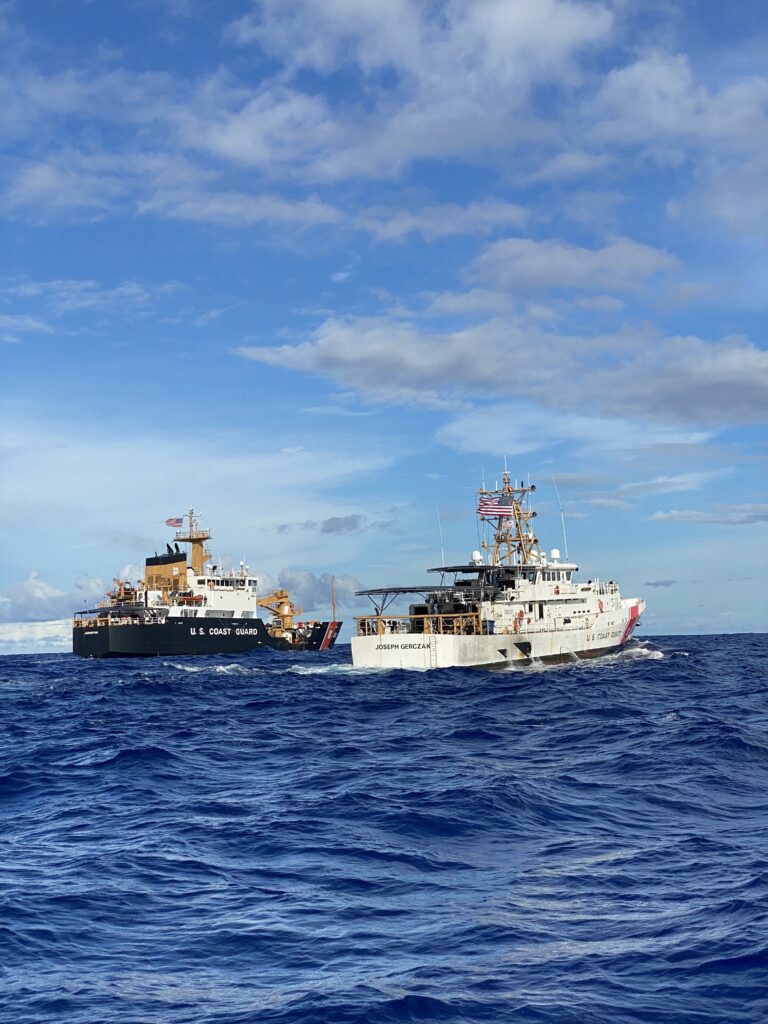
Crews from the U.S. Coast Guard Cutter Juniper (WLB 201) and USCGC Joseph Gerczak (WPC 1126) conducted security patrol operations in Samoa’s exclusive economic zone throughout February 2022, to protect fisheries and other natural resources. U.S. COAST GUARD

HONOLULU — Working with the government of Samoa, crews from the U.S. Coast Guard Cutter Juniper (WLB 201) and USCGC Joseph Gerczak (WPC 1126) conducted security patrol operations in Samoa’s exclusive economic zone throughout February 2022, to protect fisheries and other natural resources, the Coast Guard 14th District said Feb. 28. 
 
The Juniper and Joseph Gerczak crews helped fill the operational presence needed to deter illegal, unreported, and unregulated fishing while Samoa’s Nafanua II patrol boat is down. 
 
“We always look forward to assisting our partners in the region,” said Cmdr. Jeff Bryant, the 14th District’s chief of enforcement. “The United States offered to assist the government of Samoa by providing security and sovereignty operations in Samoan waters due to the absence of their patrol boat.” 
 
The cutters have been underway in Oceania supporting Operation Aiga, designed to integrate Coast Guard capabilities and operations with the United States’ Pacific Island Country partners to effectively and efficiently protect shared national interests, combat IUU fishing and strengthen maritime governance on the high seas. 
 
As a trusted partner in the Pacific, the Coast Guard employs 11 bilateral shiprider agreements with Pacific Island Forum nations, like Samoa, to support resource security and fisheries enforcement. These agreements enabled the Coast Guard to aid host-nation sovereignty while patrolling Samoa’s EEZ. 
 
The United States Coast Guard and the government of Samoa have a history of partnership. In 2019, the Coast Guard cutters Walnut and Joseph Gerczak visited Apia Harbor and conducted patrol operations with officials from Samoa’s Ministry of Police and Ministry of Fisheries on board. In 2021, the crew of the Oliver Berry conducted similar patrols while Samoa’s patrol boat underwent repairs. 
 
“Operation Aiga is named that for a reason. Aiga means family in Samoan and that’s how we view our Pacific neighbors,” says U.S. Ambassador to Samoa Tom Udall. “This is real partnership. Together we can stop those who seek to steal valuable resources that simply don’t belong to them.”  
 
With a population of approximately 40 million people covering an area of 3.3 million square miles, Oceania is regularly patrolled by the Coast Guard and its international partners to protect and support those who call it home. 


SECNAV Names Future T-AO USNS Thurgood Marshall, Sponsors for USS Doris Miller 

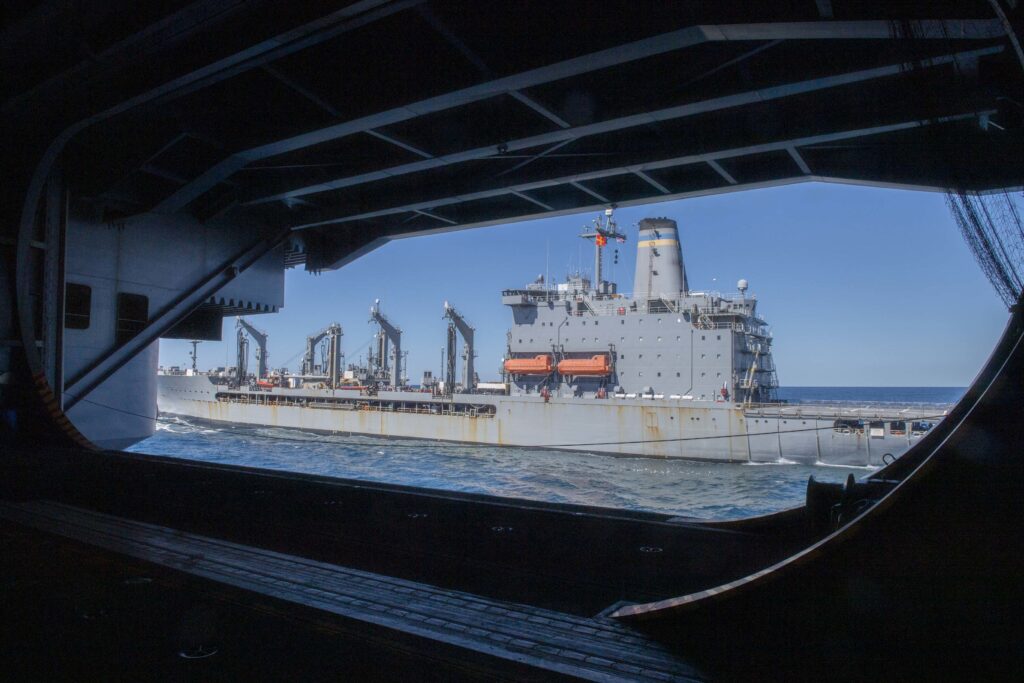
Aircraft carrier USS Nimitz (CVN 68) performs a replenishment-at-sea with the fleet replenishment oiler USNS Pecos (T-AO 197). A future John Lewis-class replenishment oiler will be named USNS Thurgood Marshall, Secretary of the Navy Carlos Del Toro announced Feb. 25. U.S. NAVY / Mass Communication Specialist 3rd Class David Negron

WASHINGTON — During Black History Month, Secretary of the Navy Carlos Del Toro announced on Feb. 25 the sponsors for the USS Doris Miller and that a future John Lewis-class replenishment oiler (T-AO) ship will be named USNS Thurgood Marshall to honor the former Supreme Court justice and civil rights activist. 

The future USNS Thurgood Marshall (T-AO 211) will be the first naval vessel to bear this name. However, it is not the first U.S. Navy ship to be named after a Supreme Court justice. 

“It is my pleasure to recognize the tremendous lifelong contributions of the Honorable Thurgood Marshall by naming T-AO 211 after him. This naming selection enables a legacy of continued conversations and visibility, essentially a living memorial to be seen around the world, of a historic figure in the continued fight for civil and human rights, and I am pleased to share this decision during Black History Month,” said Del Toro. “Continued diversity and inclusion efforts are critical to the mission success of the Navy and Marine Corps team. Selecting Thurgood Marshall as the namesake aligns with the diversity, equity and inclusion efforts that I have implemented in my strategic guidance since serving as secretary.”

The name selection follows the naval tradition of honoring people who have fought for civil and human rights. Born in 1908, Thurgood Marshall was a civil rights leader turned Supreme Court justice. Marshall made history as the first Black justice to serve on the U.S. Supreme Court when he was confirmed by the U.S. Senate in 1967. Of his 25-year tenure on the Supreme Court, he is most noted for his work toward affirmative action, stopping Jim Crow segregation and the landmark case Brown v. Board of Education. 

The future T-AO 211 is the seventh of the TAOs awarded to the Navy, with the first delivered in 2021. The class and lead ship is named in honor of Rep. John Lewis (D-Georgia).  

T-AOs are fleet oilers designed to transfer fuel to the Navy’s operating carrier strike groups. The oilers have the ability to carry a load of 162,000 barrels of oil, maintain significant dry cargo capacity, aviation capability and a speed of 20 knots. NASSCO designed the vessels with double hulls that protect against oil spills and strengthened cargo and ballast tanks. The John Lewis-class T-AO measures 742-feet in length with a full load displacement of 49,850 tons. 

Ship Sponsors

Along with announcing the ship’s name, Del Toro also announced the sponsors for the future USS Doris Miller (CVN 81) as Charlene Austin and Taya Miller, who in their role as the ship’s sponsors will represent a lifelong relationship with the ship and crew. 

Charlene Austin is not only the spouse of Secretary of Defense Lloyd Austin, but possesses an extensive history of professional and volunteer work supporting initiatives for military families. Taya Miller is the great-niece of Doris “Dorie” Miller, and was selected by the Doris Miller family to represent the family on behalf of the late Doris Miller and her late mother, Vickie Miller. Matrons of Honor for the USS Doris Miller are represented by members of the Dorie Miller family: Lakisha Bledsoe-Stansberry, Carra Miller Boykins, Tina Shedd and Selena James. 


Coast Guard Creates Cyber Mission Specialist Rating 

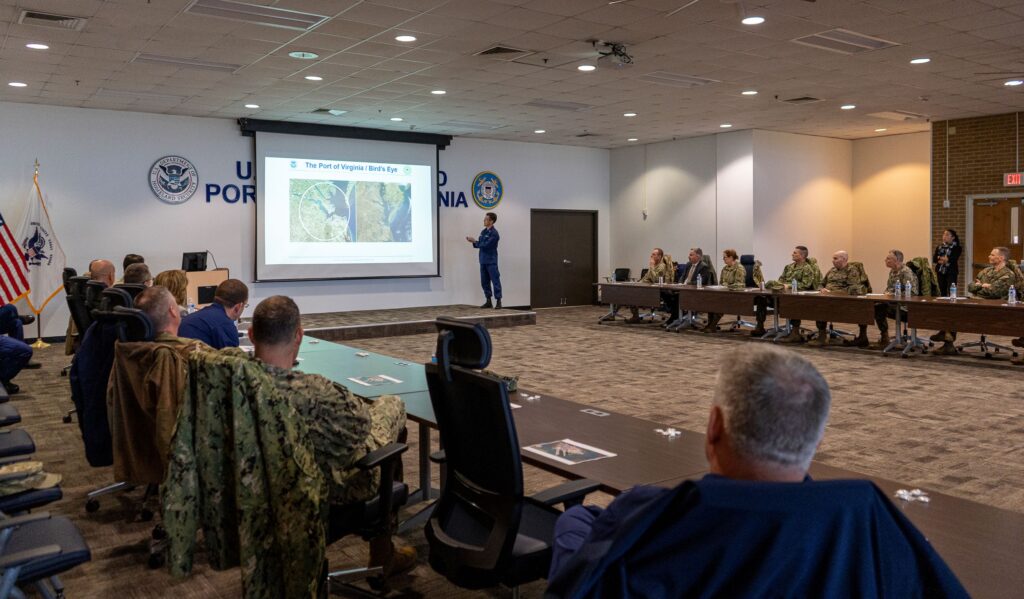
Coast Guard Capt. Samson Stevens shows an aerial view of the Port of Virginia during the Cyber Component Commanders’ Conference aboard Coast Guard Base Portsmouth, Virginia, March 6, 2020. The service has now created a cyber mission specialist rating. U.S. COAST GUARD / Seaman Katlin Kilroy

ARLINGTON, Va. — The Coast Guard commandant has announced the creation of a cyber mission specialist rating and corresponding chief warrant officer specialty to increase the focus and professionalism of the service’s cyber capabilities. 

Commandant Adm. Karl Schultz made the announcement during his Feb. 24 annual “State of the Coast Guard Address” before an audience at Coast Guard Air Station Clearwater, Florida.  

In a Feb. 25 message to the Coast Guard, Shultz further amplified the announcement, saying, “Cyberspace is an operational domain continuously evolving while growing in importance and complexity. Operations in cyberspace require a professional and skilled workforce [military and civilian]. Competition to recruit, retain, and grow cyber talent is constant. A dedicated CMS enlisted rating with accessions beginning at the E-5 paygrade, as is done with the diver rating and an accompanying CYBR [cyber] specialty, will best provide a trained, proficient, and professional workforce to enable and conduct cyberspace operations. 

“Members of the CMS rating and CYBR specialty will have the opportunity to serve in a broad range of missions,” he said. “The Coast Guard’s cyber program plays a critical role operating a secure cyberspace for the Service, protecting the Marine Transportation System against malicious actors seeking to identify new ways to exploit cyberspace, and countering adversaries’ intent on disrupting Coast Guard operations or negatively impacting national interests. Members of the CMS rating and CYBR specialty will continue to serve in critical positions within [Coast Guard] Cyber Command, U.S. Cyber Command, DHS Cybersecurity and Infrastructure Security Agency areas, districts and sectors and elsewhere as required. 


Israel Adapts Iron Dome Missile Defense to Navy Corvettes 

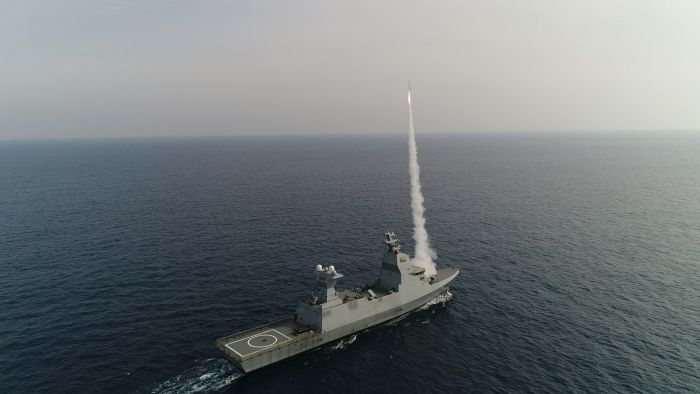
Israel has successfully tested the C-Dome, a naval configuration of the Iron Dome defense system. RAFAEL

HAIFA, Israel — The Israel Missile Defense Organization, Israeli Defense Forces and Rafael Advanced Defense Systems have completed a successful series of live-fire tests of the C-Dome, an advanced naval configuration of the Iron Dome defense system, Rafael said Feb. 25.

The C-Dome was operated for the first time aboard the Israeli Naval Ship Magen, a Sa’ar 6 corvette, against multiple advanced threats. Crew members of the INS Magen led the C-Dome tests. 

“I commend the DDR&D [Directorate for Defense R&D, parent of the missile defense organization], IDF and Rafael for the completion of an unprecedented test,” said Defense Minister Benny Gantz. “The systems that we are developing as part of Israel’s multi-tier missile defense array enable us to operate against Iranian proxies in the region and defend against their weapon systems, which are constantly being upgraded. We continue to be two steps ahead of them and we will continue developing and upgrading our capabilities in order to maintain security superiority in the region and to defend the citizens and assets of the state of Israel.” 

The test campaign consisted of a number of scenarios simulating advanced threats, including rockets, cruise missiles and unmanned aircraft. The C-Dome is capable of successfully intercepting such threats. 

This successful live-fire test is an important milestone and demonstrates the operational capability of the Israeli navy to defend the strategic assets and vital interests of Israel against current and evolving threats. 

The C-Dome onboard missile defense system is based on the Iron Dome defense system developed by Rafael, with the command-and-control system developed by mPrest. C-Dome interfaces with the Sa’ar 6’s Adir radar, developed by Israel Aerospace Industries’ Elta division. It joins other advanced systems that make up Israel’s multi-tier missile defense array, including the Arrow and David’s Sling systems. Development of C-Dome was led by the Israel Missile Defense Organization. 

“The success of this test constitutes a significant technological breakthrough in the field of missile defense and is the result of the directorate’s vision and cooperation with the IDF and Israeli defense industries,” said Brig. Gen. (Res.) Danny Gold, head of the Directorate for Defense R&D in the ministry of defense. 

“Today we mark another historic milestone for the Iron Dome defense system — the completion of a series of successful offshore tests of the missile defense system onboard a naval vessel,” said Moshe Patel, director of the Israel Missile Defense Organization. “The advanced detection system accurately identified various threats including rocket fire, cruise missiles and UAVs. The system successfully intercepted the threats with surgical precision. The success of today’s tests further strengthens our confidence in our missile defense systems as well as the ability of the Israeli navy to defend the maritime assets of the state of Israel.” 


Austal Lays Keel of Future LCS USS Kingsville 

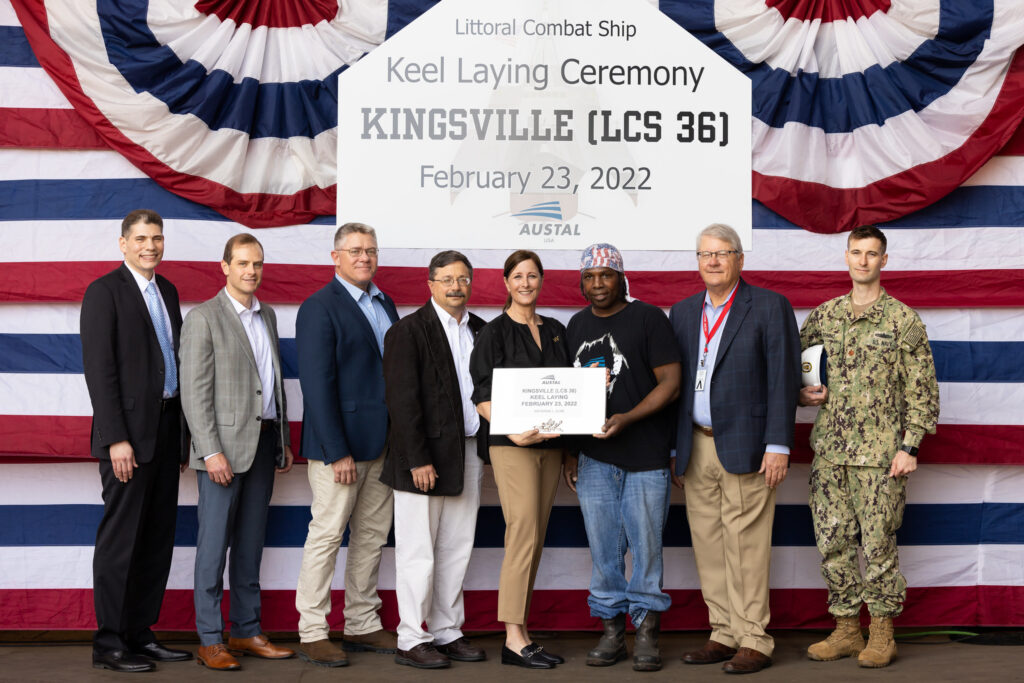
Ship sponsor Katherine Kline, center, welded her initials onto a USS Kingsville keel plate with the assistance of Austal A-class welder Joseph Bennett Jr., to the right of Kline. AUSTAL USA

MOBILE, Ala. — Austal USA celebrated the keel laying of the future littoral combat ship USS Kingsville (LCS 36) at its ship manufacturing facility on Feb. 23, the company said in a release.   

Kingsville will be an Independence-variant LCS, one of 18 the Navy has contracted Austal to build. The ship is the first U.S. Navy ship named for the city of Kingsville in Texas. 

A keel laying ceremony is the formal recognition of the start of a ship’s construction.  At Austal USA, the keel laying symbolically recognizes module erection in final assembly and the ceremonial beginning of a ship. 

The ship’s sponsor is Katherine Kline, a member of the sixth generation of the King Ranch family, decendents of Capt. Richard King who founded the King Ranch located in Kingsville, Texas, in 1853. Naval Air Station Kingsville, located three miles from Kingsville, was founded in 1942 and continues a special relationship with the King Ranch. 

As the keel authenticator, Kline welded her initials onto an aluminum keel plate with the assistance of Austal USA A-class welder, Joseph Bennett Jr. 


Commandant Names Future Polar Security Cutter ‘Polar Sentinel’ 

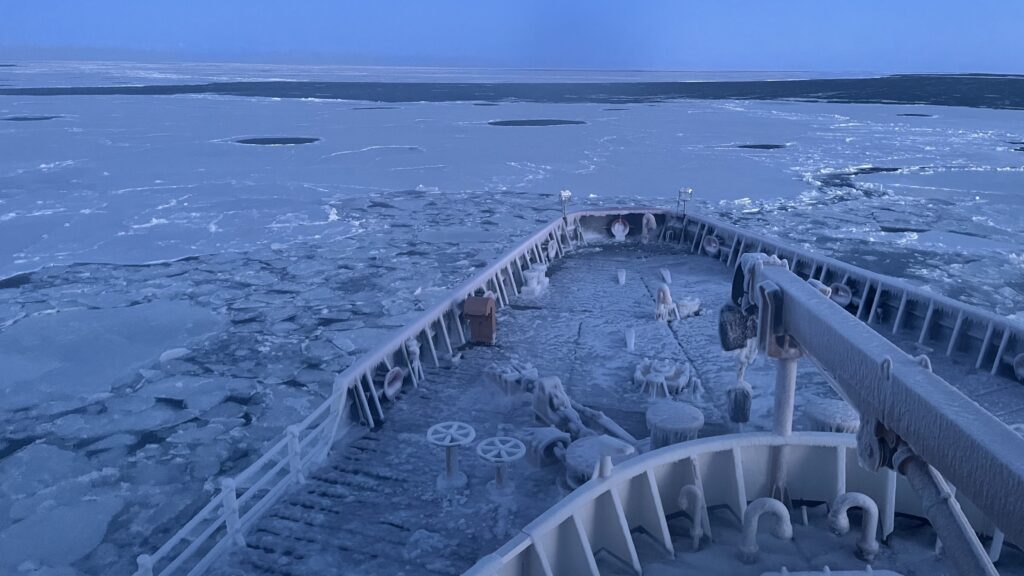
The Coast Guard Cutter Polar Star (WAGB 10) transits in the Chukchi Sea, Dec. 19, 2020. The first future polar security cutter will be named Polar Sentinel. U.S. COAST GUARD / Lt. Jared Payne

ARLINGTON, Va. — The commandant of the Coast Guard used the occasion of his annual “State of the Coast Guard” address to announce the name of the first future polar security cutter. 

“Today, I am excited to name the first polar security cutter; that name will be Polar Sentinel,” said Commandant Adm. Karl Schultz, speaking Feb. 24 before an audience at Coast Guard Air Station Clearwater in Florida.  

The name is in keeping with the Coast Guard’s earlier class of polar icebreakers, one of which — the Polar Star — is the only operational heavy icebreaker in the U.S. military services and is badly in need of replacement. The first PSC is expected to be delivered by Halter Marine in 2025. Halter Marine also is under contract for a second PSC. 

“Detailed work remains underway in preparation for construction of our first polar security cutter,” Schultz said. “That will be a state-of-the-art ship requiring exacting designs, complex steel work and systems integration. … When our fleet of polar security cutters becomes operational, the work of these uniquely capable assets will be essential to protecting our economic, our environmental and our national security interests in what we call the high latitude regions.”   

The commandant said the Our Coast Guard “is amidst [its] largest shipbuilding effort since the Second World War as we build the fleet that will serve the nation for decades to come.” 

He said the the 10th national security cutter to be named for the first master chief petty officer of the Coast Guard, the Charles Calhoun, will be christened in June. 

He also noted the first offshore patrol cutter, the Argus, is more than 60% complete and the second OPC, the Chase, is “well on its way.” 

Shultz said the Coast Guard anticipates “awarding the largest acquisition contract in the history of our service for the next 11 offshore patrol cutter hulls” this spring.

The newly competed OPC contract award follows the earlier OPC contract award to Eastern Shipbuilding Group for the first nine OPCs. The Coast Guard plans to procure a total of 25 OPCs, which will replace 28 medium-endurance cutters, some of which are more than 50 years old. 

“That legacy fleet [of medium-endurance cutters] loses nearly 500 patrol days on an annual basis due to unplanned maintenance and repairs,” the admiral said, noting that if all those days were lost from counter-narcotics patrols, it would result in 44,000 pounds of illegal drugs that could have been interdicted from reaching the United States. 

Shultz also said the service is making progress on the acquisition of 30 waterways commerce cutters, noting that “these new tenders will have greater endurance, speed and deck-load capacity to efficiently maintain 28,000 aids to navigation, marking over 12,000 miles of navigable inland waterways. These aids to navigation are a critical component of our marine transportation system, upon which cargoes and commodities comprising 25% of our nation’s gross domestic product move annually. 

“For the first time in history, our inland fleet will be able to accommodate mixed-gender crews, providing all enlisted members of our service these unique afloat experiences,” he said. 


NGC to Equip USMC with Next Generation Handheld Targeting Device 

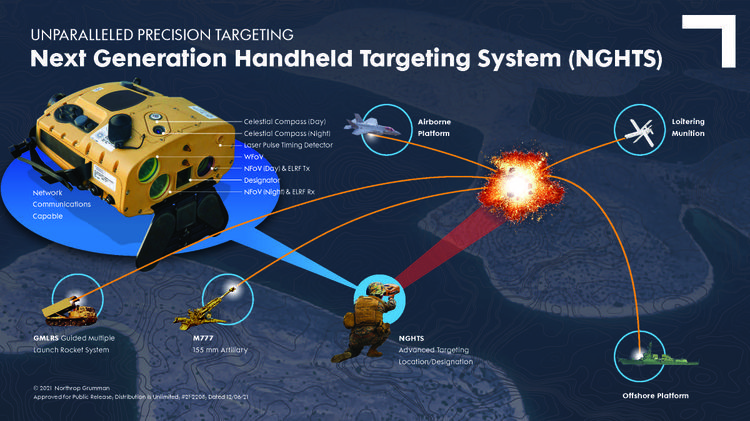
APOPKA, Fla. — Northrop Grumman Corp. has been selected to provide the U.S. Marine Corps with the Next Generation Handheld Targeting System (NGHTS). This compact targeting device provides unparalleled precision targeting and is capable of operation in GPS-denied environments, the company said in a Feb. 22 release. 

“NGHTS will significantly enhance the ability of Marines to identify ground targets under a wide range of conditions,” said Bob Gough, vice president, navigation, targeting and survivability, Northrop Grumman. “Connected to military networks, NGHTS can provide superior situational awareness and accurate coordinates for the delivery of effects from beyond the line of sight.” 

Northrop Grumman’s NGHTS is capable of performing rapid target acquisition, laser terminal guidance operation and laser spot imaging functions. Its high-definition infrared sensors provide accuracy and grid capability over extended ranges. Additional features include a high-definition color display and day/night celestial compasses. 


Navy Launches Design Efforts for Modernize VLF System for C-130 Aircraft 

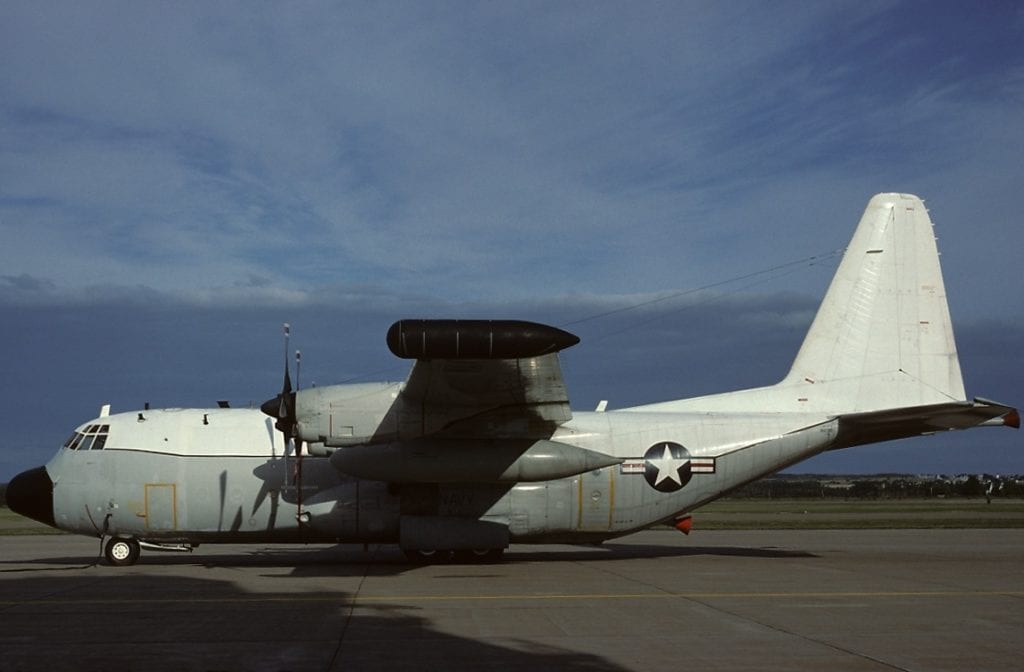
A Lockheed EC-130Q Hercules, which previously handled the Navy’s TACAMO work. The Navy has now decided to acquire the C-130J-30 Super Hercules as its platform for communicating with deployed ballistic-missile submarines. WIKIPEDIA / Alain Rioux

ARLINGTON, Va. — The U.S. Navy has awarded a developmental design contract to an aerospace company for very low frequency communications systems modernization for integration into C-130 aircraft.  

The Naval Air Systems Command awarded Collins Aerospace of Cedar Rapids, Iowa, a $48.3 million contract for “developmental design and risk reduction engineering efforts for airborne very low frequency systems modernization in support of Airborne Strategic Command, Control, and Communications Program Office (PMA-271) program capability requirements,” according to a Feb. 22 Defense Department contract announcement. 

The VLF system would be installed on C-130 aircraft, which is planned by the Navy to assume the TACAMO strategic communications role from the E-6B Mercury aircraft.  

The communications role called TACAMO by the Navy — a term meaning “Take Charge and Move Out” — has been performed for three decades by the E-6 Mercury, a variant of the Boeing 707 airliner. After the Cold War, the Airborne National Command Post role previously performed by Air Force EC-135 “Looking Glass” aircraft was incorporated into the E-6 with the installation of the Airborne Launch Control System, combining the TACAMO and ALCS in one platform.  

The Navy has performed the TACMO mission since 1963, beginning with four C-130G (later EC-130G) Hercules aircraft, later augmented by eight newer EC-130Q Hercules. The E-6 replaced the EC-130s, giving the two TACAMO squadrons, VQ-3 and VQ-4, a faster, quieter, more comfortable platform for the long missions.  

The TACAMO aircraft are equipped with a long trailing-wire antenna used to relay very low frequency radio messages to submerged ballistic-missile submarines. The airframes go through considerable stress as they maintain high angle of bank for prolonged periods to maintain tight orbits to wind the trailing-wire antenna into a vertical position, needed for the radio waves to penetrate the water most effectively.  

A request for information issued Dec. 18, 2020, by PMA-271 announced the Navy “intends to negotiate and award sole-source contracts to Lockheed Martin Corporation, Marietta, [Georgia], for the efforts associated with the procurement of up to three C-130J-30 “Stretch” green airframes in [fiscal 2022/2023] for testing and analysis.  

The C-130J is the current, much more modern version of the C-130 and is flown by the Air Force, Marine Corps and Coast Guard, as well as many foreign air forces. The C-130J-30 is similar but has a 15-foot-longer fuselage. The rugged C-130J is able to operate from many more airfields than the current E-6B Mercury.  

“Specifically, this contract provides non-recurring engineering effort to address size, weight, and power cooling in the components, systems, subsystems, or weapons replaceable assembly, model-based systems engineering development, weight reduction analysis, cyber security risk assessment and logistics analysis,” the announcement said. 

The contract work is expected to be completed in March 2024. 


Keel of LPD Harrisburg Authenticated at Ingalls Shipbuilding 

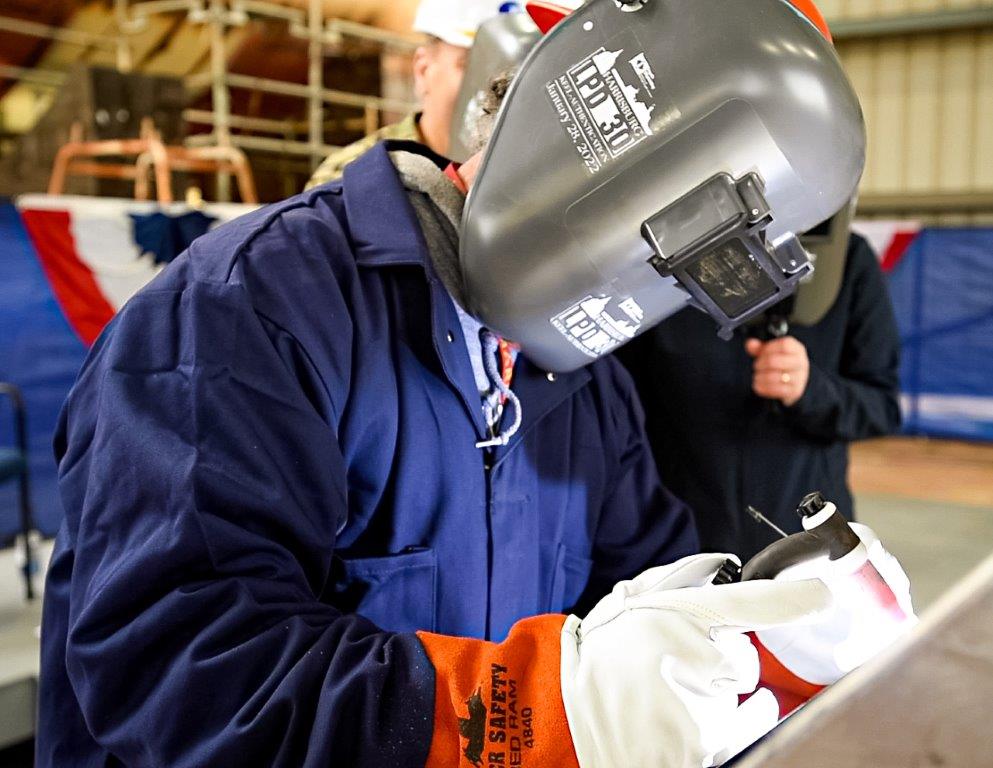
Ingalls pipe welder Stephen Guiney welds the initials of Alexandra Curry onto the keel plaque that will be permanently part of the San Antonio-class amphibious transport dock Harrisburg (LPD 30). HII / Luis Solis

NEWPORT NEWS, Va. — HII’s Ingalls Shipbuilding division ceremonially has authenticated the keel of the San Antonio-class amphibious transport dock Harrisburg (LPD 30), the company said Feb. 23.

The ship’s sponsor, Alexandra Curry, a resident of Middletown, Pennsylvania, and wife of the Middletown mayor, was unable to attend the ceremony, so Program Executive Officer Ships Rear Adm. Tom Anderson stepped in to declare the keel “truly and fairly laid.” 

“While she could not join us, we welcome Mrs. Curry in spirit as she is now an important part of our shipbuilding family,” said Kari Wilkinson, president of Ingalls Shipbuilding. “We look forward to being with her throughout the life of the ship, and we are very grateful for her commitment to this crew. She is a true patriot, with deep respect and gratitude for military service.” 

The keel ceremony marked the start of construction for Harrisburg by welding the initials of the ship’s sponsor into a ceremonial plate. 

Harrisburg is being built at Ingalls Shipbuilding and will be the first Flight II amphibious ship in the San Antonio class. LPD Flight II is the next generation amphibious ship to replace Whidbey Island (LSD 41) and Harpers Ferry (LSD 49) classes of dock landing ships. Ingalls has delivered 11 San Antonio-class ships to the U.S. Navy and has three more under construction. 

The San Antonio class is a major part of the Navy’s 21st century amphibious assault force. The 684-foot-long, 105-foot-wide ships are used to embark and land Marines, their equipment and supplies ashore via air cushion or conventional landing craft and amphibious assault vehicles, augmented by helicopters or vertical takeoff and landing aircraft such as the MV-22 Osprey. The ships support a Marine Air Ground Task Force across the spectrum of operations, conducting amphibious and expeditionary missions of sea control and power projection to humanitarian assistance and disaster relief missions throughout the first half of the 21st century. 


Coast Guard Commissions 46th Sentinel-Class Fast Response Cutter 

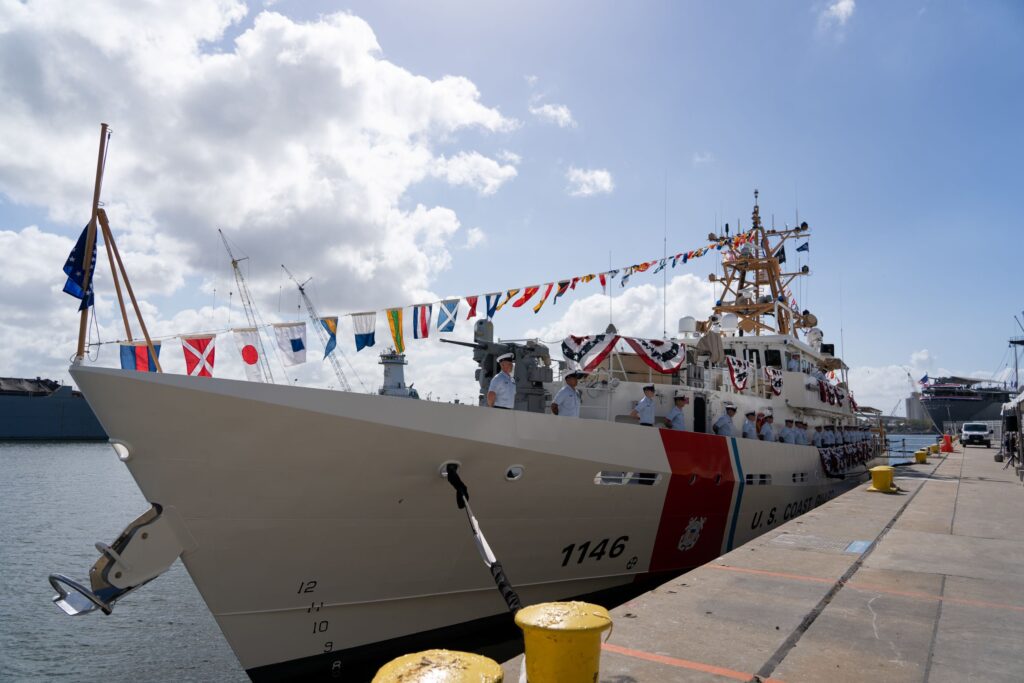
The Coast Guard Cutter John Scheuerman’s crew stand at attention during the vessel’s commissioning ceremony in Tampa, Florida, Feb. 23. U.S. COAST GUARD / Petty Officer 1st Class Travis Magee

TAMPA, Fla. — The U.S. Coast Guard commissioned the USCGC John Scheuerman (WPC 1146), Patrol Forces Southwest Asia’s fifth 154-foot Sentinel-class cutter, into service at the Port of Tampa in Tampa, Florida, Feb. 23, the Coast Guard Atlantic Area said in a release. 

Adm. Karl Schultz, commandant of the U.S. Coast Guard, presided over the ceremony. Nancy Vannoy, John Scheuerman’s niece, is the ship’s sponsor. 

The cutter’s namesake is Seaman 1st Class John Scheuerman, a native of Toledo, Ohio, who served in the U.S. Coast Guard Reserves from Oct. 16. 1942, to Sept. 9, 1943. While serving aboard the U.S.S. LCI (L) 319 during the amphibious allied invasion of Italy, Scheuerman exhibited conspicuous gallantry and intrepidness in action. Observing an enemy fighter plane diving for a strafing attack as his vessel approached the assault beaches in the Gulf of Salerno, Scheuerman manned his battle station at an exposed antiaircraft gun and, with courage and aggressive determination, exerted every effort to direct accurate gunfire against the hostile aircraft. Although mortally wounded before he could deliver effective fire, he remained steadfast at his post in the face of imminent death, thereby contributing materially to the protection of his ship against further attack. The U.S. Coast Guard awarded the Silver Star and Purple Heart Medals to Scheuerman posthumously for his heroism. 

“This is an exciting time for each member of the crew,” said Lt. Trent Moon. “We’re honored to be a part of this historical day and look forward to our upcoming transit to Bahrain and continuing the legacy of the ship’s namesake.” 

The John Scheuerman was officially delivered to the U.S. Coast Guard on Oct. 21, 2021, in Key West, Florida. It is the 46th Sentinel-class fast response cutter and the fifth of six Fast response cutters to be homeported in Manama, Bahrain, which will replace the aging 110-foot Island-class patrol boats, built by Bollinger Shipyards 30 years ago. Each of these cutters carries the name of a U.S. Coast Guard enlisted hero.