Philippines Acquires BrahMos Supersonic Anti-Ship Missiles
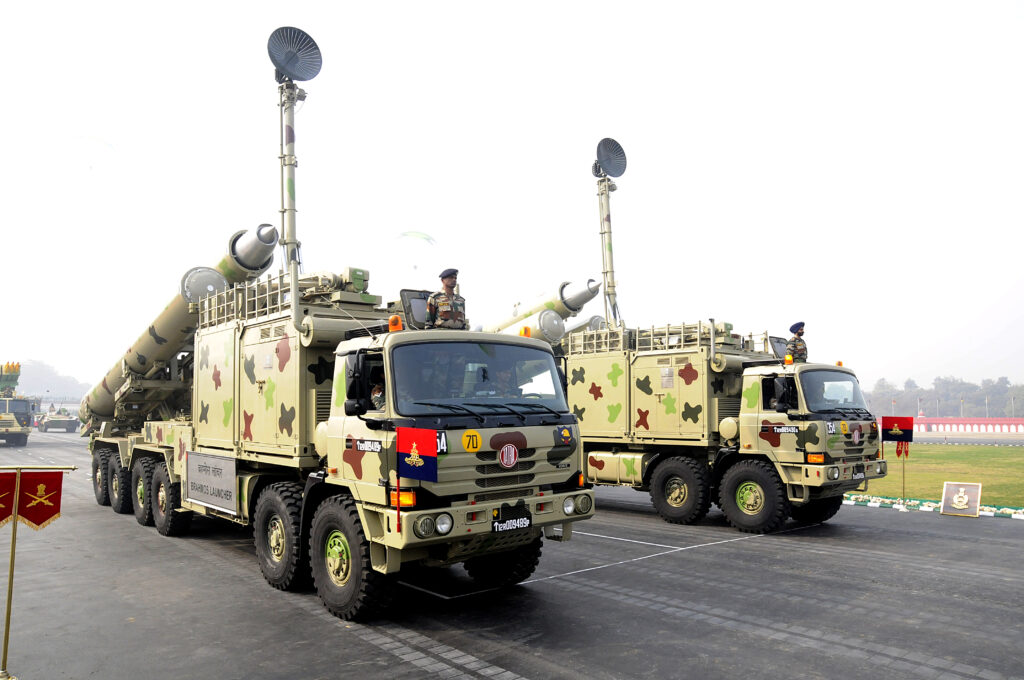
Indian army BrahMos missiles mounted on mobile autonomous launchers. WIKIPEDIA

The Philippines Department of National Defense has contracted for BrahMos shore-based anti-ship missile system. The $368 million contract is for three batteries, as well as launcher vehicles, command and control, training and support.

“Equipping our navy with this vital asset is imperative as the Philippines continues to protect the integrity of its territory and defend its national interests. As the world’s fastest supersonic cruise missiles, the BrahMos missiles will provide deterrence against any attempt to undermine our sovereignty and sovereign rights, especially in the West Philippine Sea,” said Defense Secretary Delfin N. Lorenzana.

The BrahMos uses either an active radar homing system or satellite targeting to deliver its 440-pound warhead. The missile travels at Mach 4 and can reach targets up to 180 miles away. The cruise missile can be used against fixed land targets as well as ships at sea.

The Philippines have been alarmed by Chinese claims to large portions of the South China Sea, including Philippine islands. India, as well, has been engaged in hostilities with China at the border in Ladakh. Both nations are modernizing their militaries, and China is a major motivation.

The BrahMos program began in 1998. BrahMos is a joint Russian-Indian project, and comes in land-based and ship-mounted versions. The weapon is operational with India’s navy and army. India has been seeking export customers for Brahmos for some time. The Philippines deal is the first.

The BrahMos anti-ship batteries will be operated by the Philippines marines. Additional BrahMos systems for precision strike land attack missions are being sought for the army artillery regiment.

The installed radar with the launcher system has limited range, nowhere near the range of the weapon. The system is best employed as part of an integrated with a intelligence, surveillance reconnaissance engagement network, which can include land, sea and space-based sensors, something the Philippines need to develop.

Vice Adm. Hill: MDA Pushes Space-Based Sensor for Tracking Hypersonic Missiles for Fleet Defense 

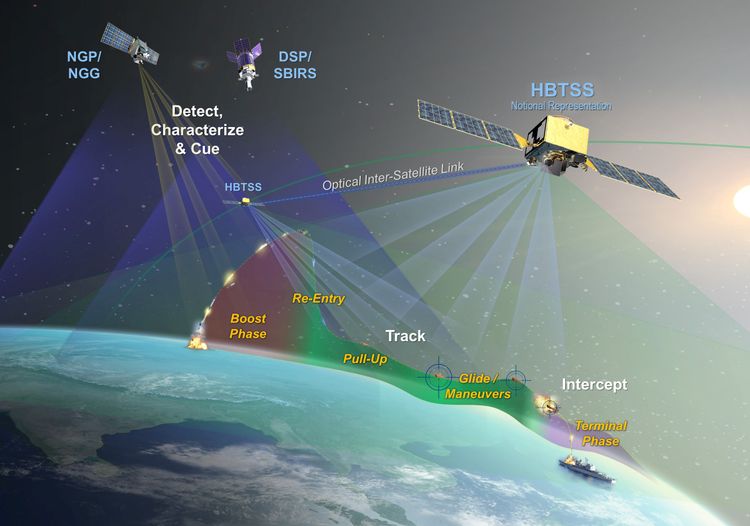
A graphic illustrates how Hypersonic and Ballistic Tracking Space Sensor satellites would provide continuous tracking and handoff to enable targeting of enemy missiles launched from land, sea or air. NORTHROP GRUMMAN

ARLINGTON, Va. — With hypersonic missiles emerging as a serious threat to U.S. Navy ships, the Missile Defense Agency is focused on the use of a space-based sensor for hypersonic regional defense to provide tracking of both hypersonic and ballistic missiles all the way to hand off to the terminal phase.  

The MDA has been designated the Defense Department’s executive agent for defense against hypersonic missiles. 

“It’s going to maneuver and come in at a high velocity,” said Vice Adm. Jon Hill, speaking Feb. 2 during the Combat Systems Symposium conducted by the American Society of Naval Engineers, noting the challenge of defeating hypersonic missiles. 

Hill said that tracking of a hypersonic missile in flight will be the job of the Hypersonic and Ballistic Tracking Space Sensor, a satellite with sensors to detect and track hypersonic missiles. Defense against the missiles in the terminal phase would be the job of the ship-based Aegis Combat System and Standard surface-to-air missiles. 

Hill said of hypersonic missiles that with existing sensors “we’re seeing them, we’re capturing data, we’re collecting on them, though noting that the U.S. sensors are “not always in the exact right place, because many of them are land-based and stationary because sensors are purpose built for a particular part of the battlespace. 

“We have that and the SM-6 missile with its nascent capability to take on a hypersonic [missile],” he said. “We didn’t call it that back when we got the letter from the CNO [chief of naval operations] to go develop this program. But the whole idea was to handle high-speed maneuver. [The SM-6] is really the nation’s only hypersonic defense capability.” 

“We can do warning today on hypersonics, so we’re not at zero,” he said. 

“We’re going to take those first hypersonic tracking space-based sensors in coordination with the U.S. Space Force and we’re going to get them on in orbit,” he said. “That’s through a competitive process and we’re really excited about that. We did so much risk-reduction on the ground we’re absolutely confident that those sensors are going to deliver what we need when we put them up.” 

The admiral said terminal defense is necessary but not sufficient to defeat hypersonic missiles. 

“We’re going to leverage space cueing and fire control from space because, to handle maneuvers across the globe, you’ve got to look down” he said. “Field of view is limited from radars and we’re running out of islands to put radars on. 

Under the concept, the HBTSS would detect a missile’s launch and the separation of the first and second stages of the rocket motors. The satellite’s data is continuously relayed and is used to create a track of the hypersonic glide vehicle. The remote track data passed via satellite to an Aegis ship to compute an intercept with a glide-phase interceptor.  


Official: Navy Interested in Moving Away from Towed Sensors for USVs 

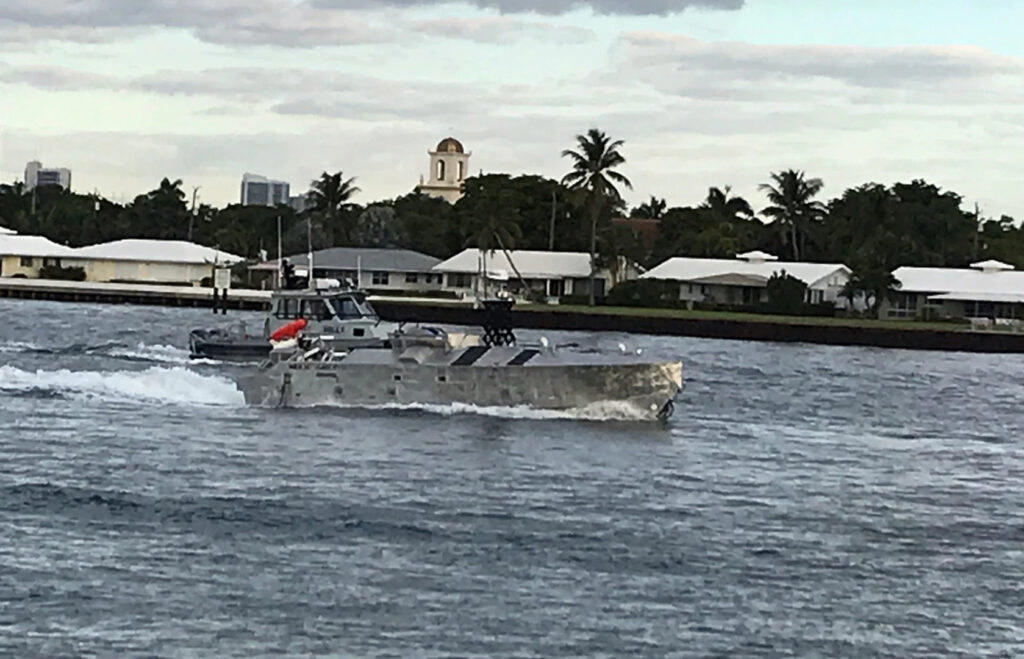
The Mine Countermeasures USV heads out for an operational assessment in this November 2019 photo. U.S. NAVY

ARLINGTON, Va. — The use of towed sensors provides a measure of survivability for small unmanned surface vessels but presents other problems such that the Navy is looking to move away from towed sensors in favor of onboard sensors, a Navy official said. 

The Navy is soon to award a production award for the Textron-built Mine Countermeasures USV, equipped with the Unmanned Influence Sweep System, a towed sensor, said George Saroch, director for unmanned surface vessels at Naval Sea Systems Command, speaking Feb. 1 during a panel discussion at the Technology, Systems and Ships Symposium conducted by the American Society of Naval Engineers. 

In 2017, Saroch said, the Navy recognized the versatility of the MCM USV and decided to build the boat to handle various payloads, which soon would include the AQS-20 mine-hunting towed sonar and eventually the Barracuda mine-neutralization munition. He sees these as building blocks to a single-sortie detect-to-engage mine countermeasures system. 

“So, fundamentally, it’s focused on building a boat, and then we have separate contracts for the payloads,” he said. 

The UISS has been through operational testing and shock testing, he said. The MCM USV with the mine-hunting AQS-20C system will be going through developmental and operational test this spring and summer.  

Saroch stressed the importance of automatic target recognition as necessary to avoid the expenditure of neutralization charges on objects other than mines. 

However, Saroch said the Navy is “very interested in getting away from towing things. You can snag a lot of things when you tow systems, a lesson from the [MH-53E MCM helicopter] community” which often snags objects while towing MCM systems through the water. 

“We’re learning that lesson over again about snagging things,” he said, noting that the Navy is trying to move sensors back aboard the boat, “which brings some other operational capabilities.” 


Meier: Ford CVN to Range Widely in the Atlantic for U.S. 2nd Fleet 

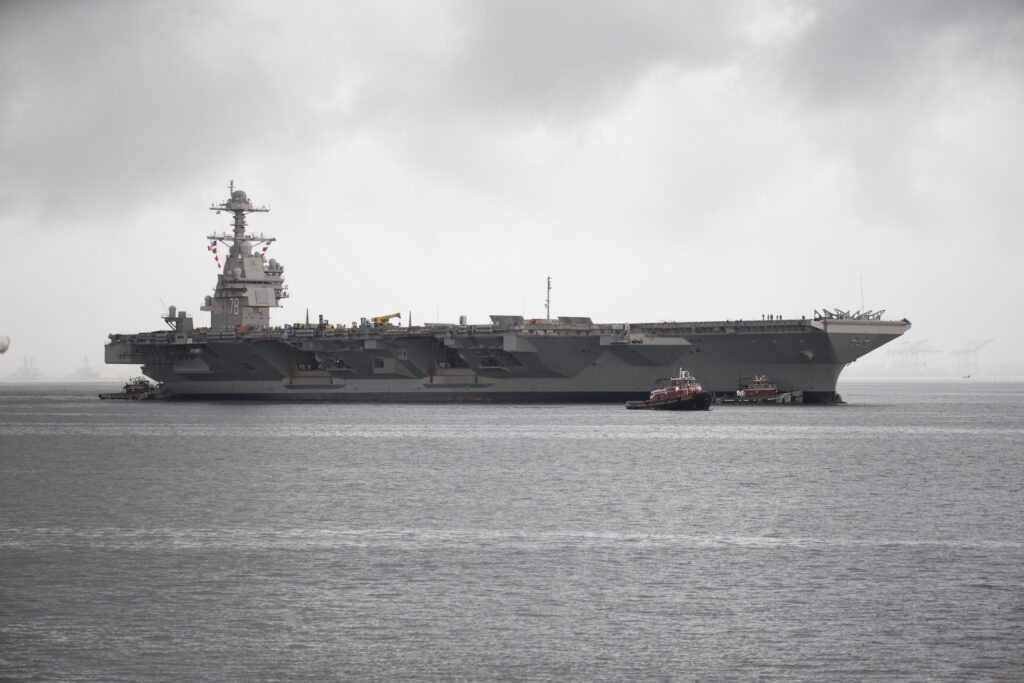
The aircraft carrier USS Gerald R. Ford (CVN 78) departed Naval Station Norfolk to transit to Newport News Shipyard in support of its planned incremental availability, a six-month period of modernization, maintenance, and repairs, Aug. 20, 2021. U.S. NAVY / Mass Communication Specialist 1st Class William Spears

ARLINGTON, Va. — The Navy’s newest aircraft carrier, the USS Gerald R. Ford (CVN 78), will operate all over the North Atlantic this year when it completes its current shipyard availability, a Navy admiral said, and will operate under the auspices of the U.S. 2nd Fleet. 

“Ford is doing amazingly well, coming out of the shipyard her for initial employment,” said Rear Adm. John F. Meier, commander, Naval Air Force Atlantic, speaking Feb. 1 during a panel discussion at the Technology, Systems and Ships Symposium conducted by the American Society of Naval Engineers. 

“I think it’s a great opportunity for us to demonstrate the new technology,” Meier said. “We’re going to do that as a service-retained employment, so not part of the normal global force deployment schedule, but we will be working with partners, we’ll be working all over the place as 2nd Fleet takes charge of that carrier and operates with a wide variety of operations up and down the coast, across the Atlantic [and] down in the Caribbean.” 

Meier said the Ford’s upcoming operations would be “a really great opportunity to show off that aircraft carriers are in fact extremely maneuverable, upwards of 700 [nautical] miles a day. And robust — most especially robust when you think about the refueled range of the aircraft that fly from them.”  

The Ford currently is in a planned incremental availability at Newport News Shipbuilding. All 11 weapon elevators have been certified as of December. Since it began flight operations, it has completed 8,100 catapult launches and the same number of arrested landings, said Rear Adm. Jim Downey, program executive officer for aircraft carriers, also speaking at the event. 


Future USS Fort Lauderdale Completes Acceptance Trials 

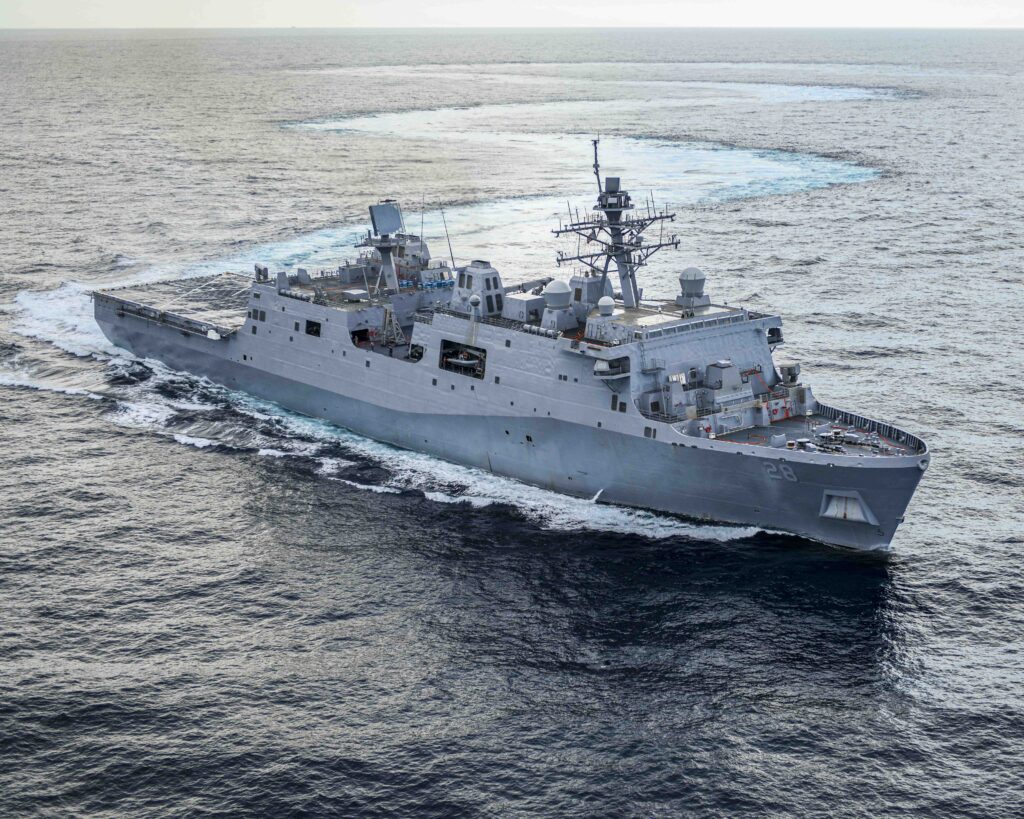
The San Antonio-class amphibious transport dock Fort Lauderdale (LPD 28), which has completed acceptance trials. HUNTINGTON INGALLS INDUSTRIES

WASHINGTON — The future USS Fort Lauderdale (LPD 28), the Navy’s 12th San Antonio class-amphibious transport dock ship, completed acceptance trials Jan. 31, Team Ships Public Affairs said in a release. 

Acceptance trials consist of integrated testing to demonstrate the capability of the platform and installed systems across all mission areas to effectively meet its requirements. These demonstrations are used to validate the quality of construction and compliance with Navy specifications and requirements prior to delivering the craft to the Navy. LPD 28 will now prepare for delivery in a few weeks. 

“With the completion of both builder’s and acceptance trials, we are confident that LPD 28 has proven the operational readiness of the vessel and the capabilities it will soon bring to the fleet,” said Capt. Cedric McNeal, program manager, Amphibious Warfare Program Office, Program Executive Office Ships. “The collaboration between the Navy and our industry partners ensures that we’ll have a capable and ready ship for our Sailors.” 

The San Antonio-class is designed to support embarking, transporting, and landing Marines and their equipment by conventional or air-cushioned landing craft. The ship’s capabilities are further enhanced by its flight deck and hangar, enabling the ship to operate a variety of Marine Corps helicopters and the Osprey tilt-rotor aircraft. Because of the ships inherent capabilities, they are able to support a variety of amphibious assault, special operations, expeditionary warfare, or disaster relief missions, operating independently or as part of amphibious ready groups, expeditionary strike groups, or joint task forces. 

In addition to LPD 28, Huntington Ingalls Industries’ Ingalls Shipbuilding Division is currently in production of the future USS Richard S. McCool (LPD 29) and the future USS Harrisburg (LPD 30), with LPD 31 planned for start of fabrication later this spring. LPD 28 and 29 will serve as transition ships to LPD 30 – the first LPD 17 Flight II ship. 

LPD 28 and LPD 29 will incorporate design innovations and cost-reduction strategies based upon lessons learned and improved technologies.  The ships will have a more traditional mast in place of the two Advanced Enclosed Mast/Sensors and an updated deckhouse and boat valley design. 


General Atomics Demonstrates Autonomous Flight Termination Units During Navy/Army Hypersonic Rocket Test Flight    

The launch of the successful test of General Atomics’ Autonomous Flight Termination Units. GENERAL ATOMICS ELECTROMAGNETIC SYSTEMS

SAN DIEGO — General Atomics Electromagnetic Systems announced Feb. 1 that its Autonomous Flight Termination Units carried onboard two sounding rockets were successfully demonstrated and performed as expected during a High Operational Tempo for Hypersonics test flight campaign sponsored by the Navy Strategic Systems Programs and Army Hypersonic Program Office on Oct. 20, 2021, at Wallops Island, Virginia.  

The AFTUs help assure missile flight safety and were part of a test campaign to demonstrate technologies to advance the development of the Navy’s Conventional Prompt Strike and the Army’s Long Range Hypersonic Weapon offensive hypersonic strike capability.  

“GA-EMS’ long-established cooperative relationship with the Army, Navy and Sandia National Labs has been key to the design and advancement of hypersonic weapons technologies,” said Scott Forney, president of GA-EMS. “Test flight demonstrations such as this are a critical part of the process toward verifying and inserting this technology into future hypersonic weapon systems. We are pleased the AFTUs performed successfully, advancing the readiness of the AFTU technology. This represents a major step in proving the AFTU’s capability to successfully operate in the hypersonic environment for which they were designed.”    

GA-EMS’ state-of-the-art AFTU offers greater flexibility to assure flight safety for missiles launched for space applications or military weapons testing. Integrated aboard a missile, the AFTU takes a pre-launch defined mission profile and compares it with what the launched missile experiences as it flies. If the flight profile rules or boundaries are violated during flight, the AFTU will command the vehicle to destruct. The AFTU’s compact, lightweight design reduces the size, weight, and power requirements aboard the test vehicle.  

“The missile and space flight industry must provide a means of preventing a launch or aeronautical vehicle and its hazards, including any payload hazards, from reaching any populated or other protected area in the event of a vehicle failure,” Forney said. “Our AFTUs provide the flexibility to operate independently or can be paired to operate together to share data, with the ability to continue the flight should one fail, thus increasing mission assurance.”  


Center for Maritime Strategy Hosts Ribbon Cutting

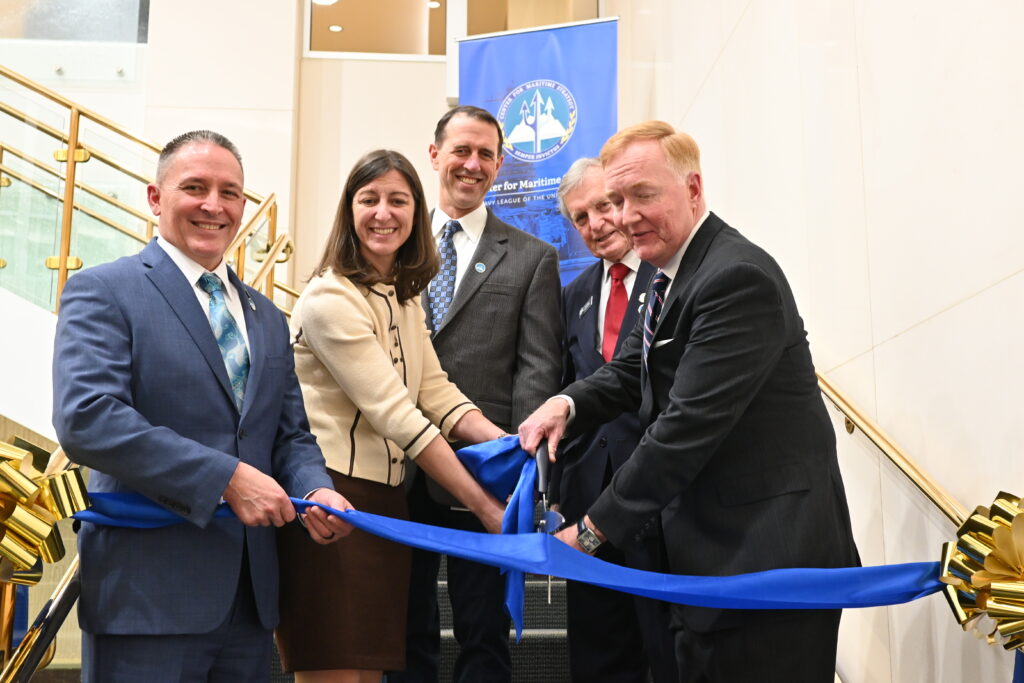
Navy League CEO Mike Stevens, Rep. Elaine Luria (D-Virginia), former Chief of Naval Operations Adm. John Richardson, Navy League President David Reilly and Center for Maritime Strategy Dean Jamie Foggo cut the ribbon on the new CMS. NAVY LEAGUE / Brett Davis

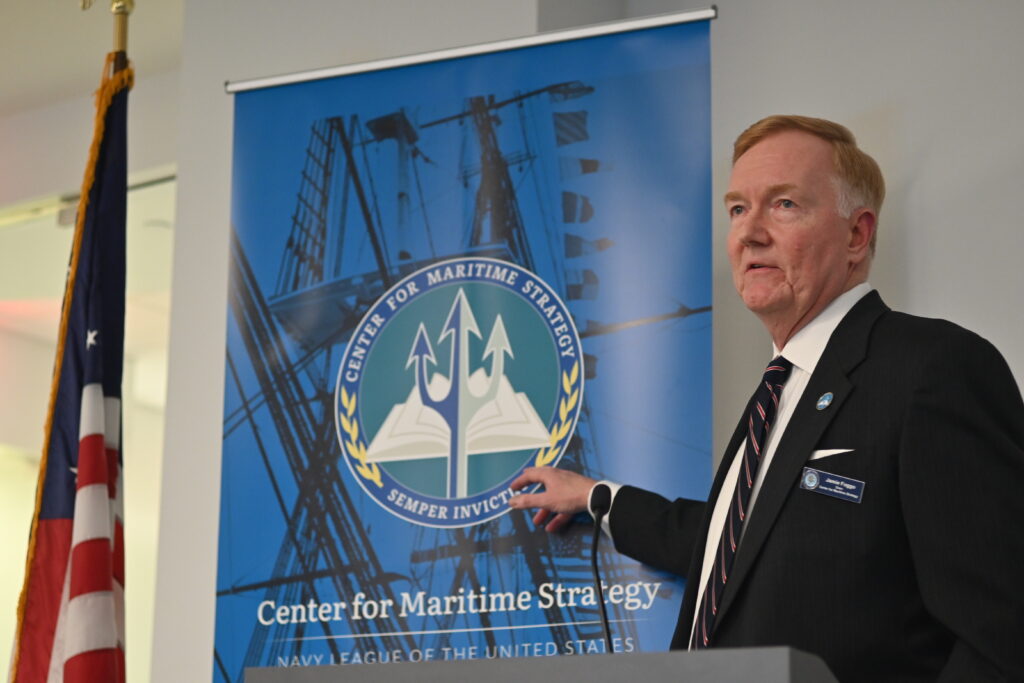
ARLINGTON, Va. — The new Center for Maritime Strategy at the Navy League of the United States held its ribbon-cutting opening ceremony on Jan. 31, with the center’s first dean, retired Adm. Jamie Foggo, saying it will provide thought leadership and advocacy for all the sea services and advocate for a strong industrial base to build the needed platforms that support them.

“Ninety percent of the world’s traded goods go via the sea … there are a lot of actors and factors out there that threaten these sea lines of communication,” Foggo said during the ceremony at the Navy League building in Arlington, Virginia.

He noted the last National Defense Strategy called out five adversaries: China, Russia, Iran, North Korea and violent extremist organizations, all of which remain formidable opponents.

Foggo cited a speech by former Chief of Naval Operations John Richardson about the narrow margin of victory at Midway, which turned the tide in the Pacific in World War II.

“With adversaries surrounding us and our interests, resources tight, and lots of domestic concerns at home, the margins to victory in any future conflict may once again be razor thin,” Foggo said. “It’s our goal in the Center for Maritime Strategy to help the maritime services in collaboration with our leadership in the administration and Capitol Hill, think through this and come up with a winning combination of strategy, force structure, and resources.”

Rep. Elaine Luria, D-Virginia, a two-decade Navy veteran, speaks at the CMS ribbon cutting. NAVY LEAGUE / Brett Davis

Congressional Viewpoint

Rep. Elaine Luria, D-Virginia, a 20-year Navy veteran and vice chair of the House Armed Services Committee, was the keynote speaker at the event.

“We need a real center like this who can think through and justify” the Navy’s needs, including the number of ships required to fulfill its mission, Luria said.

In the days of President Theodore Roosevelt, a former under secretary of the Navy who supported the founding of the Navy league, shipbuilding was robust, Luria said, and “that was part of the American psyche.”

The message about the importance of the sea services needs to “get outside of this room” and be part of the “dialogue with the American people.”

Attendees at the event included active-duty admirals, congressional staffers, retired flag officers, naval attaches from allies and partners from around the world, representatives from prestigious think tanks and leaders from industry.

Center for Maritime Strategy Dean Jamie Foggo discusses the new center’s logo. NAVY LEAGUE / Brett Davis


Navy Looking to Launch Analysis of Alternatives for SSN(X) Within the Next Year 

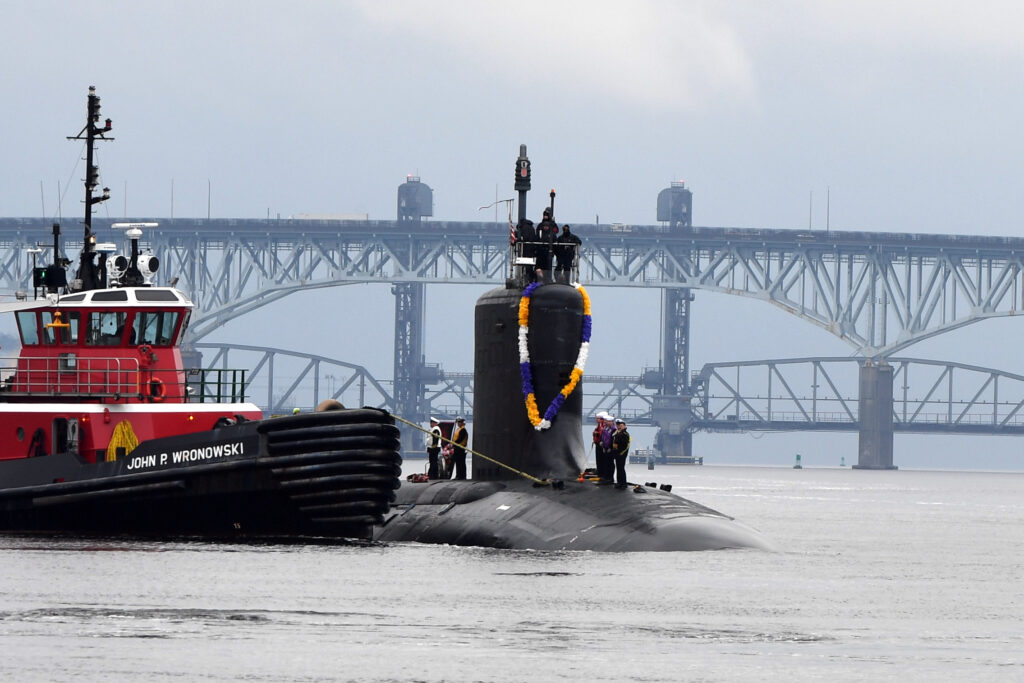
The Virginia-class submarine USS Minnesota (SSN 783) transits the Thames River toward Naval Submarine Base New London in Groton, Conn., Nov. 26, 2021. U.S. NAVY / Chief Petty Officer Joshua Karsten

ARLINGTON, Va. — The Navy plans to begin a formal Analysis of Alternatives for its next generation nuclear-powered attack submarine, or SSN(X), a senior program official said. 

“We are looking at starting an AoA here probably within the next year said Lisa Radocha, executive director of the Navy’s Program Executive Office – Attack Submarines, speaking Jan. 31 on a panel at the Technology, Systems and Ships Symposium conducted by the American Society of Naval Engineers. 

Radocha said the Initial Capabilities Document for the SSN(X) is now under development. Research and development funds for the SSN(X) program are in the fiscal 2022 budget. 

She said the SSN(X) design will feature increased speed, an increased horizontal payload, improved acoustic superiority, and higher operational availability. 

Radocha pointed out that the period between the delivery of the first Virginia-class SSN and the planned delivery of the first SSN(X) will be four decades. She said one of her concerns is holding onto the engineering and design expertise in the shipbuilding industrial base for the SSN(X) program. 

The Virginia-class SSN program will total 48 boats. The technological improvements over the seven blocks of the Virginia SSN will help to reduce risk for the SSN(X) program. 

Radocha said her focus is creating an “on-ramp” for the SSN(X) program over the next two fiscal years.  

Last August, during the Navy League’s Sea-Air-Space Expo, Rear Adm. (now Vice Adm.) Bill Houston, then-director, Undersea Warfare, Division, Office of the Chief of Naval Operations and now commander, Submarine Forces, labeled the SSN(X) as “the ultimate apex predator for the maritime domain.” 

Houston said the SSN(X) has “got to be faster, carry a significant punch, a bigger payload, a larger salvo rate. It’s got to have acoustic superiority and simultaneously we’re going to work on operational availability with respect to maintenance and life of the ship.” 

The admiral explained that the SSN(X) is timed to capitalize on the ‘very robust” design team for the Columbia-class SSBN when that program is ramping down amid production of the SSBNs. 


Indonesia’s New Fast-Attack Trimaran Combines Speed and Stealth

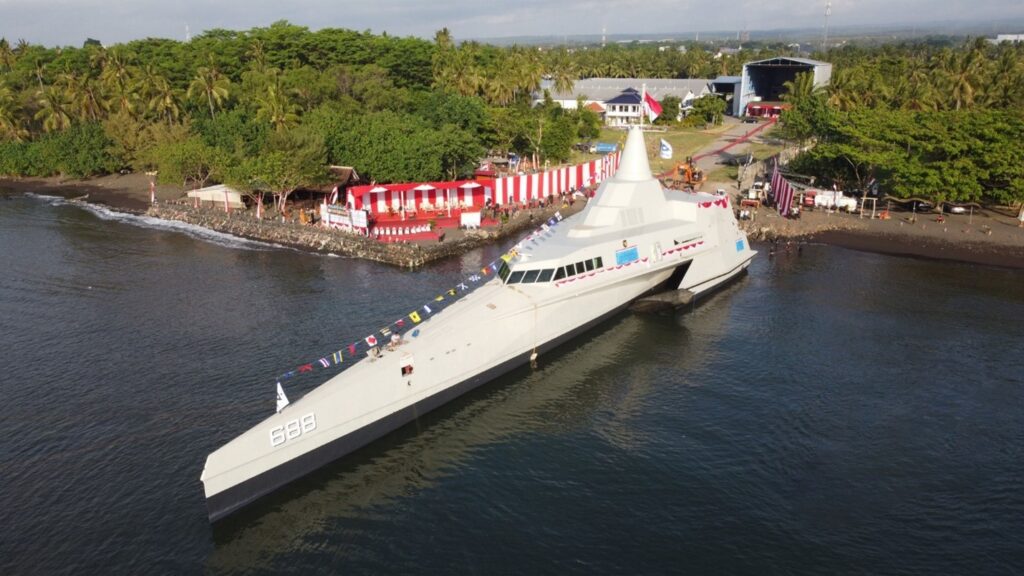
The Indonesian navy’s first stealth trimaran fast-attack craft, KRI Golok. PT LUNDIN

INDONESIA — The Indonesian navy commissioned its first stealth trimaran fast attack craft, KRI Golok (688), at Surabaya on the island of Java on Jan. 14. The ship was built by PT Lundin at Banyuwangi, on Java’s eastern tip, from composite fiber materials.

The commissioning ceremony took place at the naval base in Surabaya, East Java. Also commissioned at the ceremony was the lead ship in a new class of hospital ships KRI dr. Wahidin Sudirohusodo (991),

Speaking at the ceremony, Adm. Yudo Morgono, chief of the Indonesian navy, said, “This type of ship is not only important to support naval operations as part of the task force and the navy fleet, but is a tangible manifestation of the navy’s commitment to modernizing defense equipment in humanitarian operations.”

The term “golok” refers to a cutting took, similar to a machete, which can serve as a tool or weapon.  During the naming ceremony last August, Margono said the composite material offers high strength, light weight, excellent fatigue resistance and is virtually corrosion free. The Indonesian navy sees the trimaran design and material as a prototype development purposes.

“With its high speed and high destructive power, it is hoped that this ship will be able to carry out the hit and run fast missile boat tactic,” Margono said.

The ship has not yet been fitted with weapons, but is able to mount a gun up to 76mm and can carry up to eight antiship missiles, such as the RBS 15, Naval Strike Missile, Harpoon or Exocet.

According to a video prepared by PT Lundin, the ship has greatly reduced radar, infrared, acoustic and magnetic signatures. The weapons and RHIB are concealed inside the structure or discretely shaped to maintain stealth.

PT Lundin said the composite and carbon fiber foam-sandwich material — fabricated with fire-resistant vinyl ester resin — creates a structure that is much lighter than steel or aluminum, resin but has similar fire-resistance and ballistics protection properties and superior protection from blast and underwater explosions.

According to an Indonesian navy statement, the fast attack craft has an overall length of 205 feet (62.53 meters); a 52.5-foot (16 meter) beam; a 61-foot mast height (18.7 meters), and a current displacement of 245 tons. The ship will be heavier after the installation of weapons. The trimaran can achieve speeds up to 30 knots, and can cruise at 16 knots for 2,000 nautical miles. The ship and its 25-person crew will have an endurance of 40 days. Additional personnel, such as special forces or a humanitarian assistance landing party can also be carried.

The wave-piercing trimaran can cut through waves instead of ride over them, maintain higher speeds and heavier sea states.  An enclosed hangar on the stern can carry a 12-meter RHIB.

The trimaran, with four water jets, is well suited for Indonesia’s archipelagic operations. The FAC is extremely maneuverable, has a shallow draft and can literally back up onto a beach — where its radar signature becomes indistinguishable from the land — waiting for targets to engage.

Golok is powered by four 1800 HP MAN V12 diesel engines, each connected to a Marine Jet Power 550 waterjets. In a company video, PT Lundin refers to the trimaran as the “ultimate in high-speed missile boats.”


Marines Test JAGM on Land Targets  

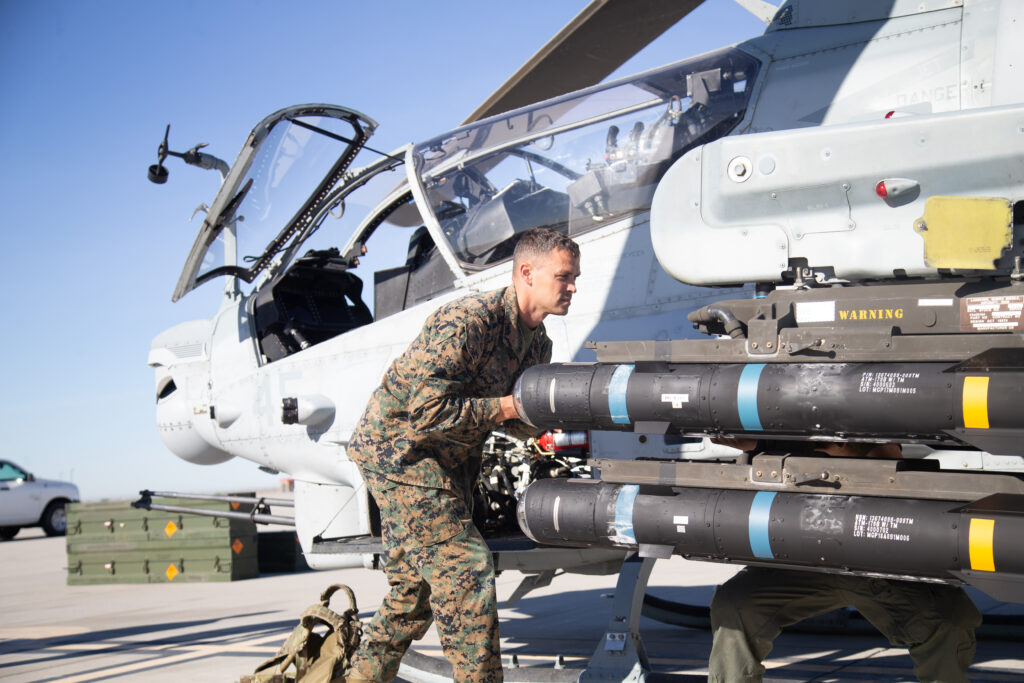
U.S. Marine Corps Chief Warrant Officer 3 Michael Brawn, aviation ordnance officer, Marine Operational Test and Evaluation Squadron 1 (VMX-1), loads a joint air-to-ground missile onto an AH-1Z Viper during an operational test at Marine Corps Air Station Yuma, Arizona, Dec. 6, 2021. U.S. MARINE CORPS / Cpl. Gabrielle Sanders

WASHINGTON — Marines from Marine Operational Test & Evaluation Squadron 1 (VMX-1) conducted an operational test and evaluation of the Joint Air-to-Ground Missile from an AH-1Z Viper, Dec. 6, 2021, at Marine Corps Air Station Yuma, Arizona, the Marine Corps said in a Jan. 31 release.  

VMX-1 continues testing and analyzing the capabilities of the JAGM on land targets after they evaluated the effectiveness of the missile on maritime targets in November 2021 at Eglin Air Force Base in Florida.   

Personnel from Air Test and Evaluation Squadron Two One (HX-21), Naval Air Systems Command Direct and Time Sensitive Strike program office (PMA-242), Army Program Executive Office Missiles and Space, as well as industry partners were on location to observe and analyze the data from the test event. This event can lead to significant improvements in lethality of attack helicopters by arming them with newer munitions equipped with two sensor technologies and optimizes missile performance on land targets.    

“I am proud of all the work and professionalism demonstrated by the joint team striving to hit major milestones of the JAGM initial operational test and evaluation,” said VMX-1 Commanding Officer Col. Byron Sullivan. “The analysts, coordinators, and controllers meticulously pour over all the data captured so this weapon system can bring the necessary firepower to the warfighter.” 

The team observed the test of eight separate shots against armored and light armored vehicles in a variety of operational scenarios. Ultimately, the data collected is analyzed to determine overall system effectiveness and refine the tactics, techniques and procedures of employing this weapon in expeditionary advanced base operations, such as strike operations and close air support.   

“Watching the joint team perform the JAGM test is like observing a highly-skilled professional football team with seasoned offensive coordinators calling the right plays for an offense that flawlessly executes play after play,” said Maj. Thomas Hutson, the Assault Support department head at VMX-1 and member of the JAGM test team. 

This test is part of a larger effort to upgrade the AH-1Z and UH-1Y aircraft, in alignment with the Commandant’s vision of force modernization to maintain a competitive edge against potential adversaries.    

The mission of VMX-1 is to conduct operational test and evaluation of Marine Corps aviation platforms and systems.