Fairbanks Morse to Provide Engine Parts for Coast Guard Icebreaking Tugboats
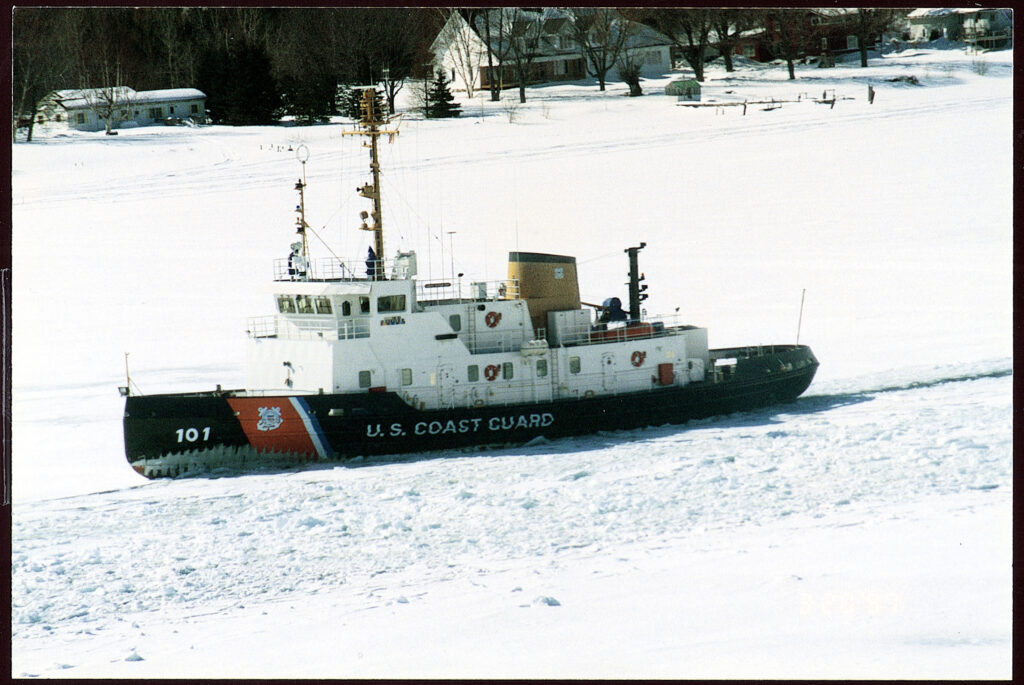
The Coast Guard Cutter Katmai Bay (WTGB 101) was the first of nine 140-foot Bay Class tugs built for the Coast Guard’s domestic icebreaking mission. U.S. COAST GUARD
BELOIT, Wis. — Fairbanks Morse Defense, a portfolio company of Arcline Investment Management, has been awarded a five-year indefinite-delivery/indefinite-quantity requirements contract by the U.S. Coast Guard Surface Forces Logistic Center, the company announced Jan. 10.
The agreement, worth up to $13 million, makes FMD the required source of supply for all opposed piston engine parts listed in the contract’s schedule of supplies. These parts primarily support OP engines on nine 140-foot Bay Class Icebreaking Tugboats (WTGBs).
Since 1977, WTGBs have been used as critical icebreakers on many Northeast and Midwestern U.S. rivers and the Great Lakes, ensuring waterways remain open year-round. More than 15 million tons of cargo such as food and petroleum products, as well as 90% of the nation’s home heating oil, are transported annually in January and February along Northeast waterways, making it essential that these channels are kept open to avoid supply chain disruptions.
The contract also includes provisions for engine parts onboard the U.S. Coast Guard’s decommissioned high endurance cutters (WHECs) that have been transferred or are in the process of being transferred to foreign navies.
“Fairbanks Morse Defense delivers an advantage to the U.S. Coast Guard by offering best-in-class marine technologies, OEM [original equipment manufacturer] parts, and turnkey services,” said FMD CEO George Whittier. “As a trusted partner to the Coast Guard, we live our ironclad commitment to the fleet and crew every day, on every job. Manufactured in the U.S. and serviced worldwide, our proven marine technology is engineered for excellence to ensure reliable operation and minimal downtime.”
HII Launches Amphibious Transport Dock Richard M. McCool Jr.
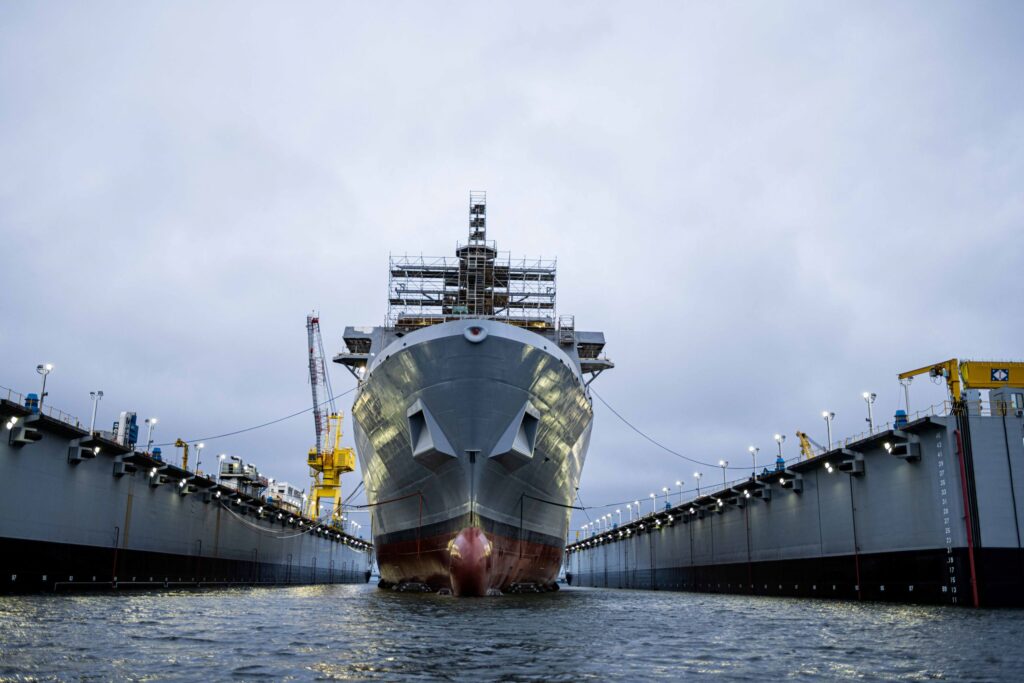
Huntington Ingalls Industries launched amphibious transport dock ship Richard M. McCool Jr. on Jan. 7. HUNTINGTON INGALLS INDUSTRIES
PASCAGOULA, Miss. — Huntington Ingalls Industries’ Ingalls Shipbuilding division announced Jan. 7 the successful launch of amphibious transport dock Richard M. McCool Jr. (LPD 29).
Richard M. McCool Jr., the 13th LPD in the San Antonio class of amphibious assault force ships, will support U.S. amphibious assault, special operations and expeditionary warfare missions through the first half of the 21st century.
“The LPD class ships, like all of our programs, are critically important to U.S. national security,” said Kari Wilkinson, president of HII’s Ingalls Shipbuilding division. “In addition, thousands of Americans, from engineers to electricians, have worked on LPD 29 over the years. Ingalls Shipbuilding is proud to build them and even more proud of the talented people that make up our shipbuilding team.”
With the assistance of tugs, Richard M. McCool Jr. came off the floating dry dock Wednesday morning, after first being translated via Ingalls’ rail car system. The dock was moved away from the pier and then ballasted to float off the ship.
Launching Richard M. McCool Jr. is the first of a series of significant milestone events in bringing the ship to life, and eventual delivery to the U.S. Navy which is planned for later next year.
Ingalls Shipbuilding is building the entire San Antonio class of ships, the newest addition to the Navy’s 21st century amphibious assault force. The 684-foot-long, 105-foot-wide ships that displace 25,000 tons are used to embark and land Marines, their equipment and supplies ashore via air cushion or conventional landing craft and amphibious assault vehicles, augmented by helicopters or vertical takeoff and landing aircraft such as the MV-22 Osprey.
USCGC Stone Returns to Homeport after 61-Day Patrol
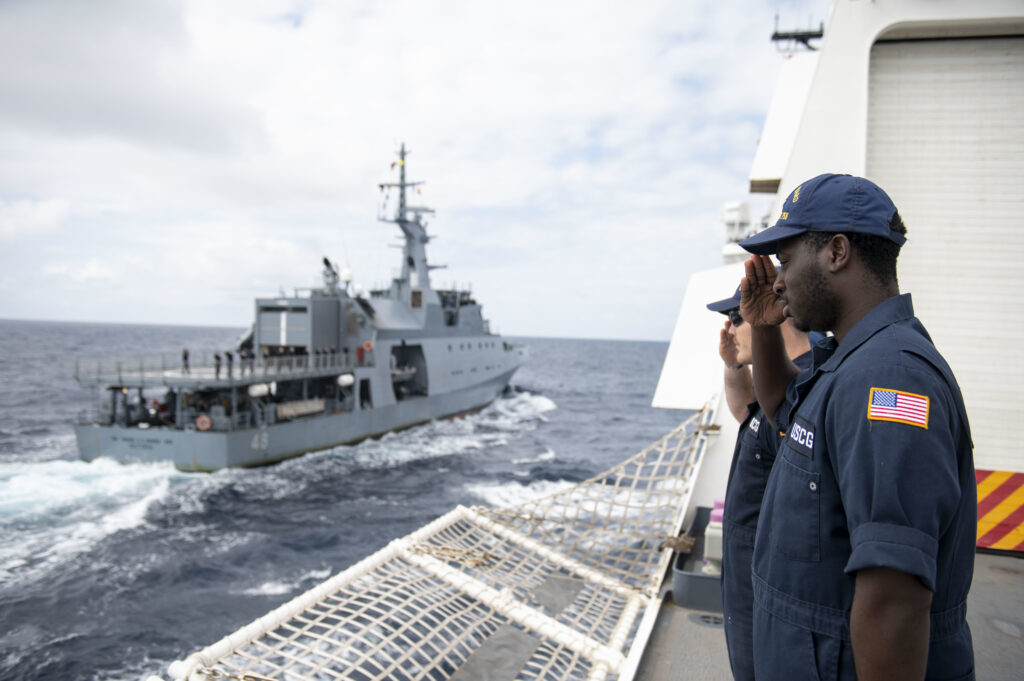
The crews of U.S. Coast Guard Legend-class national security cutter USCGC Stone (WMSL 758) and the Colombian navy OPV-80 offshore patrol vessel ARC Victoria (PZE-48) conduct passing exercises in the Eastern Pacific Ocean, Dec. 4, 2021. U.S. Coast Guard / Petty Officer 2nd Class Shannon Kearney
NORTH CHARLESTON, S.C. — USCGC Stone (WMSL 758) returned to its homeport in Charleston following a 61-day patrol in the Caribbean Sea and Eastern Pacific Ocean in support of the U.S. Coast Guard Pacific Area, the Coast Guard’s Joint Interagency Task Force South and the Coast Guard 11th District, the Coast Guard Atlantic Area said Jan. 7.
Stone’s crew successfully interdicted two suspected drug smuggling vessels, recovering approximately 2,246 pounds of cocaine and 4,870 pounds of marijuana with an estimated combined street value of $57.1 million. The cutter’s crew subsequently transferred 20 suspected narcotics smugglers to the 7th Coast Guard District and U.S. Drug Enforcement Administration personnel, signaling the culmination of a successful joint interagency effort in the Eastern Pacific.
The Stone embarked observers from Panama, Costa Rica, Colombia, Ecuador, and the National Oceanic and Atmospheric Administration to perform joint operations to combat illegal, unreported, and unregulated fishing and conduct counter-drug operations off the coast of South America.
An embarked MH-65 helicopter aircrew from the U.S. Coast Guard’s Helicopter Interdiction Tactical Squadron was integral in counter-drug operations. Interagency partners provided additional aerial surveillance and reconnaissance support throughout the patrol.
During the cutter’s port call in Manta, Ecuador, Stone’s commanding officer, Capt. Clinton Carlson, attended an international IUUF symposium with Arthur Young, the embarked National Oceanic and Atmospheric Administration enforcement officer, to share experiences and increase awareness of the regional issue. The crew of the Stone also participated in a friendly soccer match with Cuerpo de Guardacostas de la Armada personnel from the local coast guard station while in Manta.
“This is our crew’s first patrol outside of their initial shakedown cruise, and I am extremely proud of the dedication and pride they have shown toward getting qualified to conduct the missions expected of a national security cutter crew,” said Carlson. “Throughout these past months, everyone aboard displayed enthusiasm during the drills we’ve run every week and have proven that through teamwork and a shared understanding of the mission, we can accomplish even the most difficult tasks. I am honored to lead this impressive crew of Coast Guard women and men.”
The fight against drug cartels in the Eastern Pacific Ocean and the Caribbean Sea requires unity of effort in all phases from detection, monitoring, and interdictions, to criminal prosecutions for these interdictions by U.S. attorney’s offices from the Middle District of Florida, the Southern District of Florida and the Southern District of California. The law enforcement phase of counter-smuggling operations in the Eastern Pacific Ocean is conducted under the authority of the 11th Coast Guard District, headquartered in Alameda. The interdictions, including actual boardings, are led and conducted by U.S. Coast Guard members.
The Stone is the ninth Legend-class national security cutter in the Coast Guard fleet and currently is homeported in Charleston, South Carolina. The national security cutters can execute the most challenging national security missions, including support to U.S. combatant commanders.
The Charleston-based Legend-class cutters fall under the command of the U.S. Coast Guard Atlantic Area. Based in Portsmouth, Virginia, U.S. Coast Guard Atlantic Area oversees all Coast Guard operations east of the Rocky Mountains to the Arabian Gulf. In addition to surge operations, they also allocate ships to work with partner commands and deploy to the Caribbean and Eastern Pacific to combat transnational organized crime and illicit maritime activity.
Lockheed Martin Upgrading SPY-1 Radars on 21 DDGs to Counter Evolving Threats
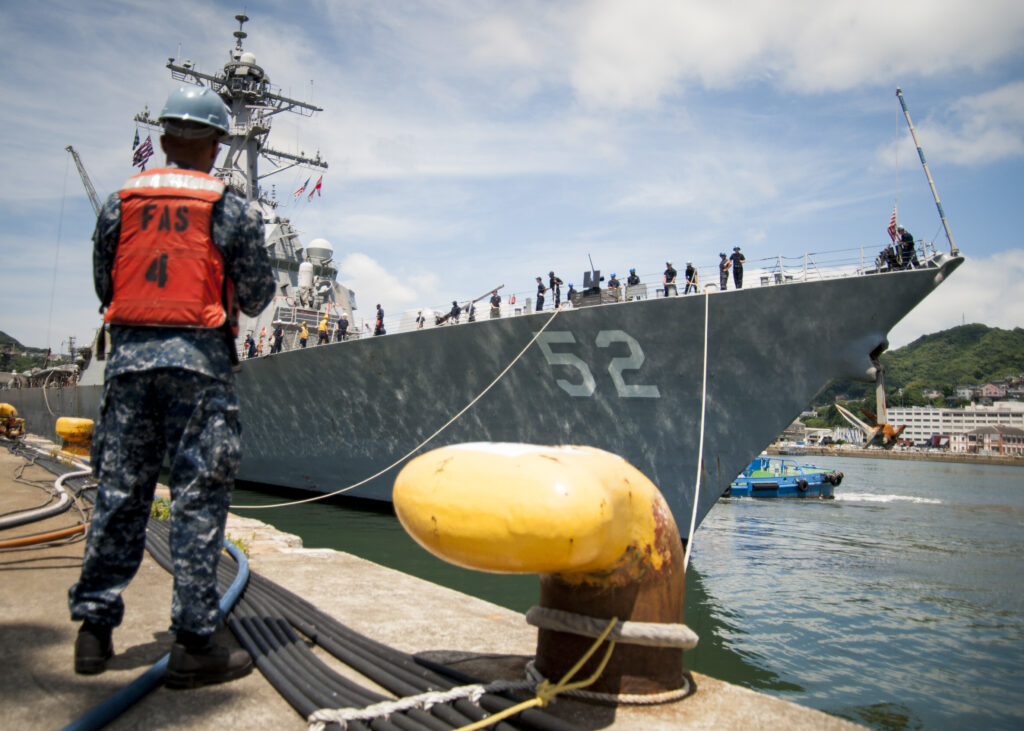
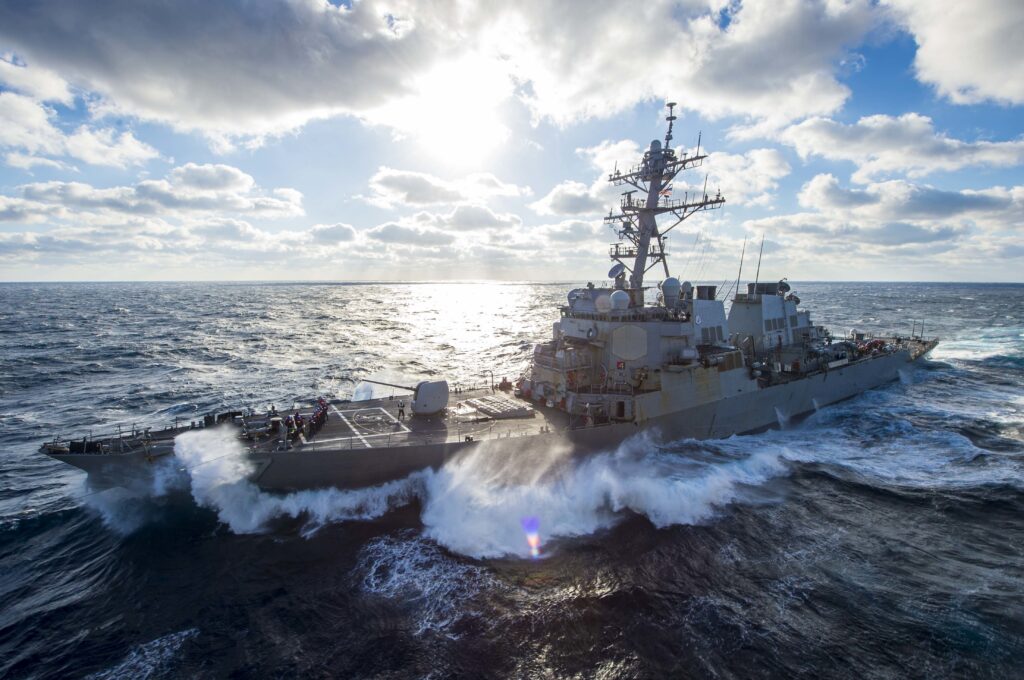
Arleigh Burke-class guided-missile destroyer USS Barry (DDG 52) pulls into Commander, U.S. Fleet Activities Sasebo, Japan, in 2016. U.S. NAVY / Mass Communication Specialist 3rd Class Kristopher S. Haley
ARLINGTON, Va. — Lockheed Martin is continuing to upgrade primary radars on a number of the U.S. Navy’s guided-missile destroyers (DDGs), a company official said. Older SPY-1 versions are being modified with digital Low Noise Amplifiers, or LNAs, which can improve their sensitivity and thereby improve the accuracy, range and discrimination of the radar.
“How do you develop a low-cost, high-payoff solution to keep SPY-1 relevant as the threat evolves?” Jon Rambeau, Lockheed Martin’s vice president and general manager for Integrated Warfare Systems and Sensors, asked rhetorically in an interview with Seapower, pointing to the LNA as a step in that direction.
The SPY-1 radar is the primary sensor of the Aegis Combat System on the U.S. Navy’s Ticonderoga-class cruisers and Flight I, II and IIA Arleigh Burke DDGs and is used to detect and track aircraft, cruise missiles and ballistic missiles.
The LNA is part of the upgrade of the 21 Flight I and II DDGs to enable a “full BMD [ballistic missile-defense] capability in accordance with the 2030 Missile Defense Review,” Rambeau said.
He said Lockheed Martin is under contract for upgrading nine SPY-1 arrays under funding provided by the Navy and the Missile Defense Agency. The arrays are being tested and made ready for installation of the DDGs.
Rambeau there was “some discussion around the Navy’s future plans for those 21 ships and that’s something we’re watching very carefully.”
He said the LNA upgrade may be something the company thinks can be relevant for international customers as well.
Marine Corps ACVs Set to Return to Unrestricted Amphibious Operations
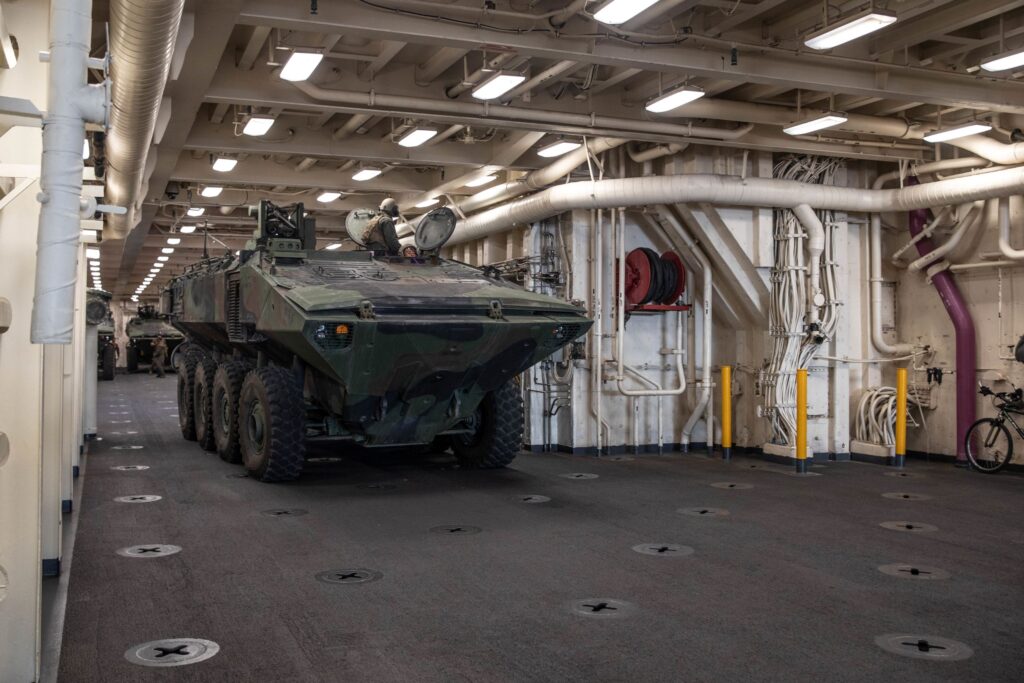
A U.S. Marine Corps amphibious combat vehicle, with 3d Assault Amphibian Battalion, 1st Marine Division, is loaded onto the amphibious assault dock landing ship USS Anchorage (LPD 23) during a strategic mobility exercise Oct. 19, 2021. U.S. MARINE CORPS / Corps Cpl. Cameron Hermanet
ARLINGTON, Va. — Marine Corps Amphibious Combat Vehicles are set to return to unrestricted waterborne operations following the development of a new tow rope solution designed to address previous issues with the vehicle’s towing mechanism, the Marine Corps said Jan. 6.
In September 2021, the Marine Corps suspended ACV operations in unprotected waters while it worked to resolve the towing issues that were identified in several after action reports from the field.
“Amphibious operations, including the use of amphibious ship-to-shore connectors, is a foundational aspect of Marine Corps operations and is critical to the future force and its ability to remain the Nation’s premier expeditionary force in readiness,” said Lt. Gen. David Furness, deputy commandant for plans, policies and operations.
Once equipped with and trained to employ the new tow rope solution, units are authorized to use the ACV to conduct unrestricted amphibious operations, including self-recovery operations in the open ocean and through the surf zone.
Prior to the receipt and installation of the new replacement tow ropes, ACV operation remains restricted to land mobility, gunnery operations, and amphibious operations in protected waters.
In addition to the new equipment and training requirements are the 18 tasks that units must complete, validate and certify prior to the resumption of waterborne operations. These tasks stem from the comprehensive investigation into the facts and circumstances surrounding the July 2020 AAV tragedy.
The tasks cover a variety of requirements, including ensuring training and qualifications for crew and embarked personnel are properly equipped, vehicles have passed required inspections and operations are conducted with safety boats, sea state assessments and positive communication.
Bollinger Delivers to Coast Guard Sixth FRC for Basing in Bahrain
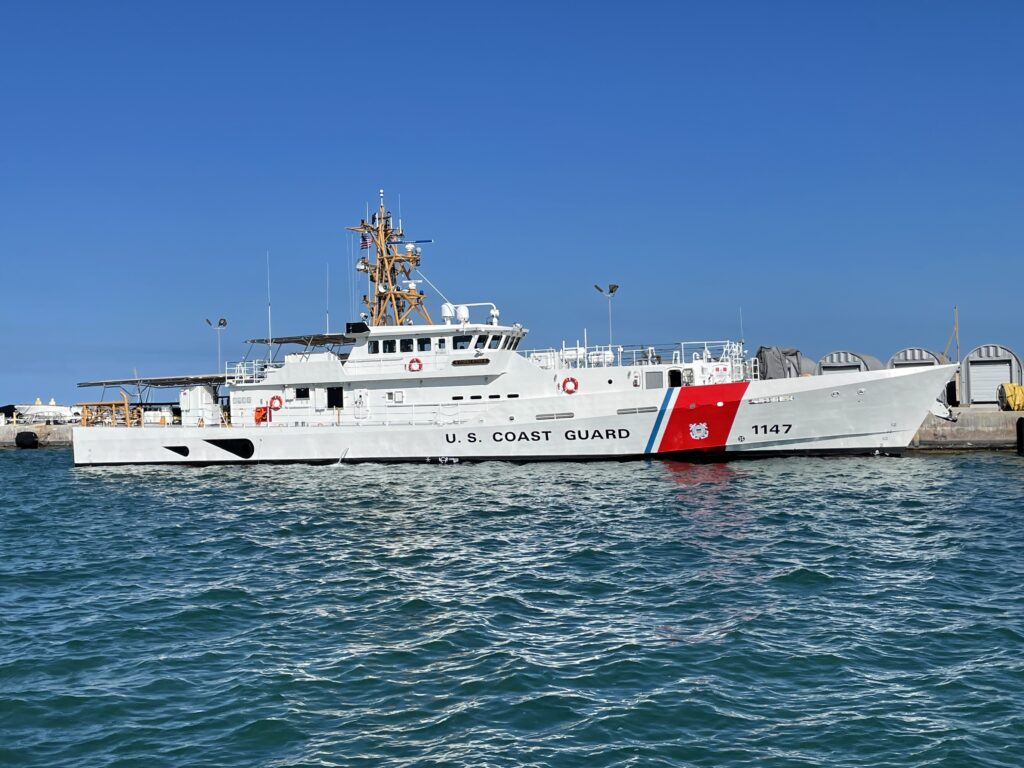
The U.S. Coast Guard Cutter Clarence Sutphin, now delivered to the service in Key West, Florida, and bound for Bahrain. BOLLINGER SHIPYARDS LLC
LOCKPORT, La. — Bollinger Shipyards LLC has delivered the USCGC Clarence Sutphin to the U.S. Coast Guard in Key West, Florida, the company said Jan. 6. This is the 170th vessel Bollinger has delivered to the U.S. Coast Guard over a 35-year period and the 47thFast Response Cutter delivered under the current program.
The Clarence Sutphin is the final of six FRCs to be home-ported in Manama, Bahrain, which will replace the aging 110-foot Island-class patrol boats, built by Bollinger Shipyards 30 years ago, supporting the Patrol Forces Southwest Asia, the U.S. Coast Guard’s largest overseas presence outside the United States.
“Ensuring that the brave men and women of the U.S. Coast Guard have the most state-of-the-art, advanced vessels as they work to build and maintain the necessary regional alliances to ensure maritime security in the region is a top priority,” said Bollinger President and CEO Ben Bordelon. “Bollinger is proud to continue enhancing and supporting the U.S. Coast Guard’s operational presence in the Middle East and ensuring it remains the preferred partner around the world.”
Earlier this year at the commissioning ceremony of the USCGC Charles Moulthrope, U.S. Coast Guard Commandant Adm. Karl Schultz lauded the “enhanced seakeeping” capabilities of the PATFORSWA-bound FRCs, saying “these ships are truly going to be game changing in their new theater of operations” and “offer increased opportunities for integrated joint operations with our Navy and Marine Corps colleagues” as the Coast Guard seeks to be part of the whole-of-government solution set in the region.
PATFORSWA is composed of six cutters, shoreside support personnel, and the Maritime Engagement Team. The unit’s mission is to train, organize, equip, support and deploy combat-ready Coast Guard Forces in support of U.S. Central Command and national security objectives. PATFORSWA works with Naval Forces Central Command in furthering their goals to conduct persistent maritime operations to forward U.S. interests, deter and counter disruptive countries, defeat violent extremism and strengthen partner nations’ maritime capabilities in order to promote a secure maritime environment.
Each FRC is named for an enlisted Coast Guard hero who distinguished themselves in the line of duty. Clarence Sutphin, Boatswain Mate First Class, USCG, was awarded the Bronze Star Medal for his courageous actions during the invasion of Saipan Island in 1944. His citation reads: “For heroic achievement in action against enemy Japanese forces during the invasion of Saipan, Marianas Islands, on June 15 and 16, 1944. Swimming with a line through heavy surf to a tank lighter stranded on a reef, SUTPHIN remained aboard under mortar and artillery fire until the boat was salvaged. Returning to the beach, he aided in salvaging another tank lighter under enemy fire and, when a mortar shell struck a group of eight Marines, promptly treated the wounded and moved them to a first aid station. His courage and grave concern for the safety of others reflects the highest credit upon SUTPHIN and the United States naval service.”
CNO Emphasizes Hypersonics During Alabama Visit
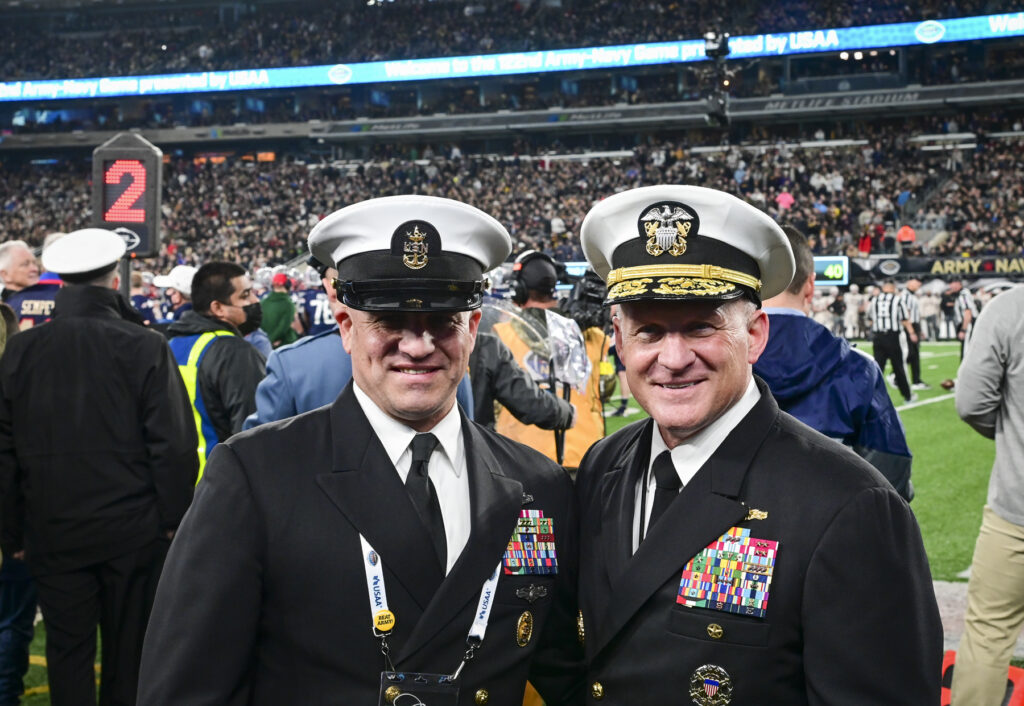
Chief of Naval Operations (CNO) Adm. Mike Gilday, right, and Master Chief Petty Officer of the Navy Russell Smith, shown here during the 122nd Army-Navy football game. U.S. NAVY / Mass Communication Specialist 1st Class Sean Castellano
HUNTSVILLE, Ala. — Chief of Naval Operations Adm. Mike Gilday traveled to Courtland and Huntsville, Alabama, Jan. 6, to visit Dynetics and Lockheed Martin facilities with Alabama Rep. Mo Brooks, the CNO’s public affairs officer said in a release.
Gilday toured facilities and received updates about hypersonic weapon technology development, advancements, and capabilities.
“In order to maintain a warfighting advantage against the increasingly aggressive modernization efforts of our primary challengers, it is imperative to accelerate the development and fielding of hypersonic capabilities,” Gilday said. “Our partnerships with the Army and industry are paramount as we transition hypersonics from developmental to operational systems at speed and scale that will meet the needs of our Sailors, Soldiers and the nation.”
Hypersonic weapons, capable of flying at speeds greater than five times the speed of sound, or Mach 5, are highly maneuverable and operate at varying altitudes. The U.S. Navy and Army are working together to expand hypersonic capabilities through the use of a common glide body, common missile design and joint test opportunities to field hypersonic weapon systems in the mid- to late-2020s.
“Hypersonic systems provide a combination of speed, maneuverability and altitude that enables highly survivable, long-range, rapid defeat of time-critical, heavily-defended and high value targets,” Gilday said. “Delivering hypersonic weapons continues to be one of the Navy’s highest priorities, which the Navigation Plan makes clear.”
“I appreciate Adm. Mike Gilday for taking the time to visit Courtland and Huntsville as part of the Navy and Army’s collaboration with industry, government national laboratories, and academia to field hypersonic warfighting capability,” said Brooks.
“As the co-chair of the newly formed House Hypersonics Caucus, I’m doing all I can to help my congressional colleagues understand that hypersonic systems are absolutely vital to America’s missile defenses and should be an urgent priority.” Brooks said. “China and Russia are diligently strengthening their hypersonics capabilities and America must keep pace.”
The Navy and Army have been working in collaboration with industry, government national laboratories, and academia to field hypersonic warfighting capability.
This visit marked CNO’s first trip to Huntsville and Courtland.
BAE Systems to Modernize USS Mitscher
The Arleigh Burke-class guided-missile destroyer USS Mitscher (DDG-57) prepares to conduct a fueling-at-sea with the Nimitz-class aircraft carrier USS Dwight D. Eisenhower (CVN 69) in February 2021. U.S. NAVY / Mass Communication Specialist 3rd Class Cameron Pinske
NORFOLK, Va. — BAE Systems has received a $1.9 million contract from the U.S. Navy for the maintenance and modernization of the Arleigh Burke-class guided-missile destroyer USS Mitscher (DDG 57). The value of the competitively awarded contract could reach $101.2 million if all options are exercised.
Under the docking selected restricted availability contract awarded, BAE Systems will dry-dock the ship, perform underwater hull preservation work, support the Navy’s efforts to upgrade the ship’s Aegis combat system and its command-and-control equipment and refurbish the living spaces for the ship’s 285 crewmembers. The work is expected to begin in March 2022 and to be completed in April 2023.
“Our team looks forward to the preservation and upgrade work aboard USS Mitscher,” said Mike Bruneau, vice president and general manager of BAE Systems Norfolk Ship Repair. “With our subcontractor teammates and Navy personnel alongside, we will apply our experience with the DDG class to ensure this ship returns to the fleet mission-ready and fully capable to support our national security.”
BAE Systems’ Norfolk shipyard is performing similar work aboard the guided-missile destroyer USS Stout (DDG 55).
USS Mitscher is the second U.S. Navy ship named in honor of Adm. Marc Mitscher (1887-1947), who served as commander of the Fast Carrier Task Force 58 in the Pacific, the Navy’s main striking force during the latter half of World War II. The current ship was commissioned in December 1994.
Leonardo DRS Taps Cari Ossenfort as VP/GM for its Naval Electronics Business
Cari Ossenfort, Leonardo DRS’ new senior vice president and general manager of Naval Electronics. LEONARDO DRS
ARLINGTON, Va. — Leonardo DRS Inc. has named Cari Ossenfort as the senior vice president and general manager of the company’s Naval Electronics business unit, responsible for the business by leading operations, programs, business strategy and future growth opportunities, the company announced Jan. 6.
Ossenfort brings more than 20 years of experience in engineering, operations and leadership in the defense and commercial industries, including working on a range of programs for U.S. military and government agencies.
Most recently, she was the Leonardo DRS corporate vice president of operational excellence and quality, responsible for the creation, evolution, growth and strategy for that program. In her time in the role, Ossenfort successfully developed and executed company-wide performance improvement initiatives across eight business units and the corporate office by addressing operational inefficiencies and driving standardization throughout the more than 6,500-person employee base.
“We are excited to have someone of Cari’s caliber lead our Naval Electronics business,” said Bill Lynn, CEO of Leonardo DRS. “Her experience, foresight and leadership qualities will help chart a clear path forward to grow the business and support our important U.S. Navy customer in existing and future programs.”
Before her role leading the Leonardo DRS operational excellence program, she was the vice president and general manager for the L3 Infrared Products group leading the infrared focal plane business in Dallas, Texas.
Ossenfort is a trained engineer and has held multiple senior engineering, operations, and management roles in previous positions at Leonardo DRS, Raytheon, Texas Instruments and Avery Dennison. She received her engineering degree and master’s in business administration from Auburn University.
The Leonardo DRS Naval Electronic business is a leader in naval computing infrastructure, network and data distribution and middleware enterprise services, as well as world-class advanced manufacturing and support capabilities of critical importance to the U.S. Navy and other military branches.
Aegis Going Through Substantial Digital Transformation, Lockheed Martin Says
USS Wayne E. Meyer (DDG 108) arrives recently at Naval Surface Warfare Center, Port Hueneme Division with the help of a tug boat. The ship’s namesake is the late Rear Adm. Wayne Meyer, widely recognized as the Father of the Aegis Weapon System, considered a cornerstone of the military service. U.S. NAVY / Photo by Eric Parsons
ARLINGTON, Va. — The Aegis Combat System is going through substantial digital transformation as its processing speed is increased and more sensors and weapons are integrated with it, a Lockheed Martin official said.
The Aegis Combat System’s “relevance to the fleet has never been greater,” said Jon Rambeau, Lockheed Martin’s vice president and general manager for Integrated Warfare Systems and Sensors, in an interview with Seapower.
Rambeau, who formerly worked with the company’s Acoustic Rapid Capability Insertion programs to periodically and rapidly upgrade U.S. Navy submarine sensor capabilities through software refreshes, is now continuing the same concept with Aegis.
The company is implementing automated test capabilities for Aegis. Rambeau cited the implementation of those on Baseline 10 version as “the most comprehensive evolution of Aegis we’ve ever undertaken. … So, we we’ve automated about 20,000 of our software test procedures as part of our Baseline 10 efforts to try to improve our efficiency and speed of capability to the fleet.”
He said the company is “working to implement model-based engineering processes across the board with the goal of getting the same quality product we’ve always delivered but getting that to the fleet much more rapidly. So, we’re focused on speed of capability to make sure we’re keeping the fleet relevant.”
In a broader perspective, Rambeau said the company is working to focus its culture on creating an environment where government, small business and academia can integrate efforts with the company to work seamlessly across the Aegis enterprise. He credited the work of the Forge, a Navy software development “ecosystem” activity designed to field advanced capability more rapidly, and said the company is working to be positioned to receive the capabilities developed by the Forge “and make sure we’re bring the systems engineering rigor and the collaboration to support the responsible integration of those capabilities into the Aegis baseline.”
Rambeau also said the company is working to keep Aegis relevant by integrating future hard-kill and soft-kill capabilities, including that of reducing the cost per kill of systems to defeat ballistic and hypersonic missiles. He cited the company’s HELIOS laser weapon system, which is the first laser weapon system integrated with Aegis and is going through its first installation on the Arleigh Burke-class guided missile destroyer USS Preble.