Navy Stands Up High-Powered Microwave Division to Refocus Directed Energy Efforts
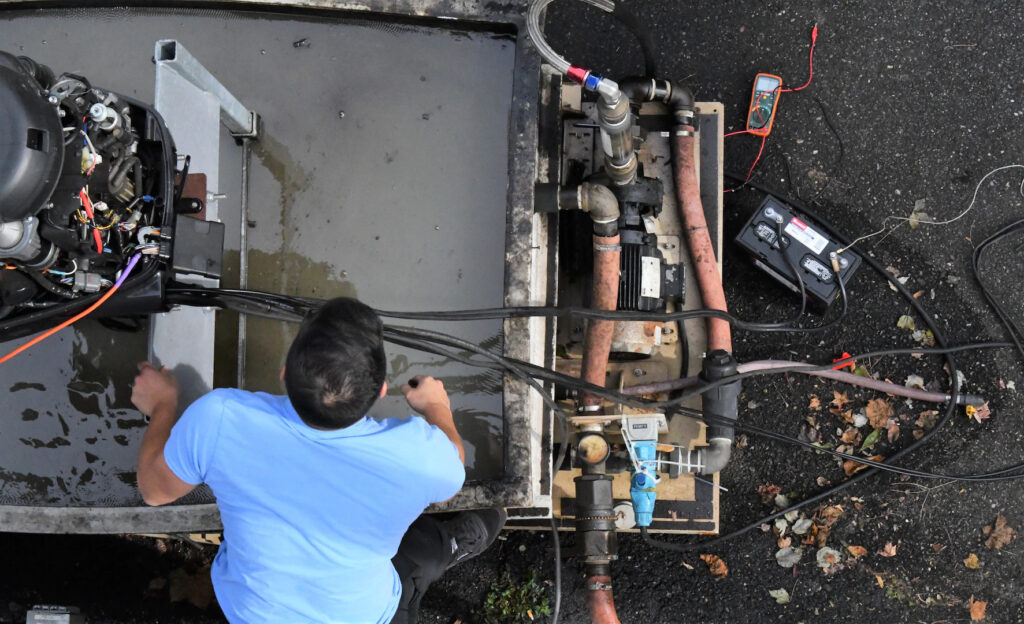
Nhan Bhui, a statistician at Naval Surface Warfare Center Dahlgren Division, works on a boat motor. Using high powered microwaves, Bhui and scientist Thomas Salvato are testing vessel stopping efforts. NAVAL SEA SYSTEMS COMMAND

DAHLGREN, Va. — Under the directed energy umbrella, there are two significant areas of interest: high-energy laser and high-power microwave weapon systems, or HPM. At Naval Surface Warfare Center Dahlgren Division, the growing demand from the operational community for novel directed energy weapon systems resulted in a corresponding growth in NSWCDD’s technical capability in this area, the center said Jan. 5.  

During a recent reorganization of the Integrated Engagement Systems Department, leadership looked at the two directed energy areas historically maintained in a single division and made the strategic decision to split them into respective divisions, recognizing the need for continued growth and development in both areas that have similar technical roots. 

“HPM and lasers work in parallel in a lot of areas,” said NSWCDD HPM Weapon Systems Division Head Kevin Cogley, who spent several years working with high energy lasers before making the move to lead the new division. 

“One thing that is unique in the HPM arena is that we can have graduated effects. In HPM, we can have a range of effects on target — from basically jamming a device to physically destroying electrical systems,” he explained. “HPM is very different than many other weapon systems because in many cases you may not see any outward physical effects during an engagement but will see nearly-instant results on the target’s operational performance. Using HPM, we can give our Sailors a capability that could be a desirable alternative to firing a kinetic weapon.” 

Both high energy lasers and HPM projects require significant development costs, but “the cost per shot is pennies” instead of million-dollar weapons, according to Cogley. “When you look at a historically kinetic weapon system, DE brings a wealth of benefits in terms of magazine depth. We can keep shooting as long as there is power.” 

The added “magazine depth” that directed energy can provide creates a strong argument for its use, compared to kinetic technologies. 

“The Navy has strategic objectives to provide effective and affordable ship defense solutions that address growing threats to our ability to project power and protect freedom of the seas,” explained Navy Senior Technologist for DE Dr. Frank Peterkin. “The Dahlgren mission to deliver warfare systems to the fleet includes bringing forward new technical solutions like DE in general and HPM specifically, offering great promise to meet these goals.” 

Over the last five or six years, DE has been a high-level thrust for the Office of the Secretary of Defense, with funding approximately doubling for research and development efforts. 

The technical split of directed energy within the department, separating high-energy laser systems and HPMs, sets NSWCDD ahead of the curve for HPM testing. According to NSWCDD Deputy Director of the Research Institute for DE Matt McQuage, Dahlgren is one of two places in the country with a specific HPM division, acting alongside the Air Force Research Lab in New Mexico. 

The two centers collaborate on the largest HPM projects in the country, offense applications, counter unmanned aerial systems and integrated air defense topics. The talents and expertise of the members of the Dahlgren HPM Weapon Systems Division results in the development of game-changing weapon system technologies that provides the warfighter with a unique capability to execute their mission. 


Israel to Purchase CH-53K King Stallion Helicopters

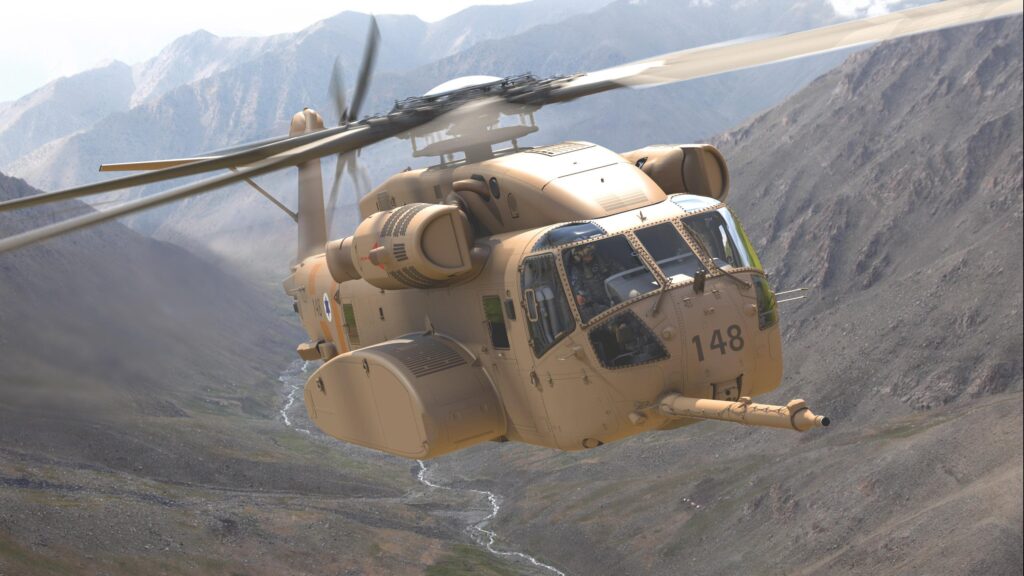
An artist’s rendering of a CH-53K helicopter for the Israeli air force. SIKORSKY

NAVAL AIR STATION PATUXENT RIVER, Md. — The Israeli air force signed a letter of acceptance with the United States government on Dec. 30 to purchase the CH-53K King Stallion heavy lift helicopter, Naval Air Systems Command said Jan. 4. 

“We’re happy the IAF recognizes the unrivaled capabilities and performance of the K and have chosen to move forward with us,” said Col. Jack Perrin, program manager, heavy lift helicopter program office (PMA-261). “Welcome to the CH-53K family.” 

The CH-53K is the most powerful helicopter ever built by the U.S. government and will replace the IAF’s current fleet of modified CH-53D Yasur helicopters, which have been flying for over 50 years.   

The signed agreement states first deliveries of the aircraft are planned for 2025. In addition to the aircraft, the agreement includes T408-GE-400 engines; facilities study, design and construction; spare and repair parts; support and test equipment; publications and technical documentation; aircrew and maintenance training; U.S. government and contractor engineering, technical and logistics support services; and other related elements of logistics and program support. 

As the long-range logistic support backbone for the U.S. Marine Corps, the CH-53K will support Israeli special operations programs first, as well as provide the Israeli defense forces with a platform that has the speed, safety and gross weight capability to support all of its missions, including troop and cargo transport, and search and rescue. 

The decision wraps up a multi-year negotiation process. In the end, the King Stallion offered more capabilities and the latest technology compared to the competition. During this period, PMA-261 hosted multiple visits by IAF leadership as they compared aircraft, including orientation flights and flight evaluations with IAF pilots and acquisitions professionals. 

The CH-53K King Stallion program is in the initial operational test and evaluation stage and is on track to achieve initial operational capability in early 2022, with first fleet deployment planned for fiscal 2024. 


Fairbanks Morse Defense Acquires Federal Equipment Co.

BELOIT, Wis. — Fairbanks Morse Defense, a portfolio company of Arcline Investment Management, has acquired Federal Equipment Co., Fairbanks said Jan. 5. 

The acquisition significantly expands FMD’s product capabilities and services for shipyard, defense, and industrial customers, with emphasis on its support for and offerings to the U.S. nuclear navy. 

The transaction includes FEC Military, a global leader in designing and manufacturing mission-critical components and systems for the U.S. Navy and U.S. Coast Guard, including its advanced cargo elevators, engineered doors and specialized material handling equipment. The transaction also includes FEC’s commercial business, which delivers handling solutions to manufacturing customers outside the defense market. 

“Fairbanks Morse Defense is committed to the values that define us as a leading defense contractor. The capabilities, experience, and quality reputation that we’re acquiring with FEC reinforce this commitment and solidify our position as a proven, single-source provider to our naval customers,” said FMD CEO George Whittier. “Both FEC and Fairbanks Morse Defense have highly experienced teams who understand the critical role that our customers play in protecting the nation, and they are all dedicated to delivering the highest quality service in support of that mission. Combining our knowledge and capabilities makes us a powerful asset for the defense industry.”  

The FEC acquisition adds extensive capabilities to FMD, solidifying Fairbanks Morse Defense’s position as an integrated defense contractor and turnkey solutions provider to the Navy and Coast Guard. In recent years, FMD has completed multiple acquisitions to better serve defense customers, including its acquisitions of Hunt Valve Company, Ward Leonard, and Welin Lambie.   

Founded in Ohio in 1982, FEC has approximately 145 employees. The company is headquartered on its campus near Cincinnati, Ohio, which includes two facilities totaling 100,000 square feet. In addition, FEC has begun construction on a 50,000 square foot facility, which will further increase its manufacturing capacity and capabilities. This building is expected to open in mid-2022. 


HII Demonstrates Open Architecture Autonomy Integration Capability with Sea Machines’ SM300

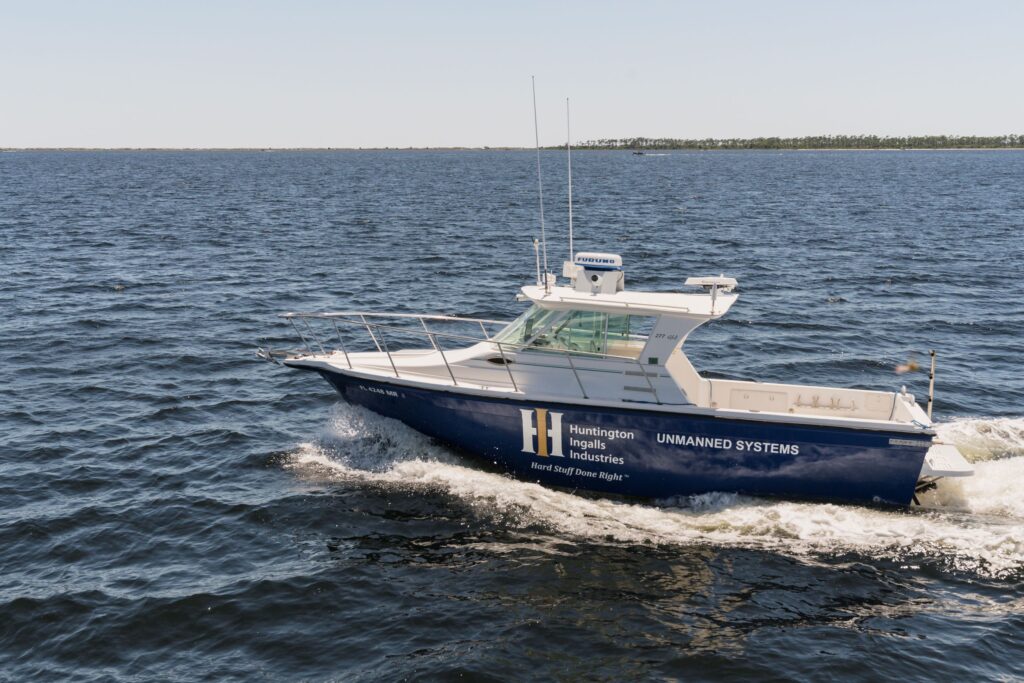
The Proteus unmanned surface vessel, outfitted with Sea Machines Robotics’ SM300 autonomy system. HUNTINGTON INGALLS INDUSTRIES

NEWPORT NEWS, Va. — Huntington Ingalls Industries’ Technical Solutions division announced on Jan. 5 the successful integration of its advanced autonomy solutions with Sea Machines Robotics’ SM300 autonomy product. 

The integration of these autonomous capabilities supports complex mission planning and collaboration between unmanned systems. 

The demonstration, which took place late last year in the Chesapeake Bay off the coast of Virginia Beach, involved overlaying HII’s collaborative autonomy and mission planning behaviors with the Sea Machines SM300 system on an unmanned surface vessel. 

“This represents an important milestone in our continued autonomy development,” said Duane Fotheringham, president of Technical Solutions’ Unmanned Systems business group. “The integration was seamless and illustrates the immense potential for our open architecture autonomy to work collaboratively with other autonomous systems.” 

Sea Machines’ SM300 system can be outfitted to ocean-capable vessels to enable remotely commanded USV operations or can work alongside an onboard crew to elevate the capability, precision and endurance of a mission-driven vessel. During the demonstration, HII’s autonomy managed mission delegation and enabled collaborative autonomy with other unmanned systems while providing the SM300 system information to manage the USV heading and speed. 

“Sea Machines’ products are developed to integrate readily with the wide range of vessel types. Our goal is to fit seamlessly into a vessel’s command and control stack which in some cases will include information and control systems from other autonomy systems either above or below our technology,” said Michael G. Johnson, CEO of Sea Machines. “We are encouraged by the rapid progress demonstrated by the HII team as they integrate their technology with our product to elevate the capability of their customers.” 

The open architecture and modularity of HII’s autonomy make it a flexible, scalable option for customers seeking to enhance their current autonomy platform with additional advanced capabilities. HII’s collaborative autonomy enables complex mission delegation to multiple unmanned assets that all share situational awareness. Together, HII and Sea Machines will offer varying levels of autonomy complexity for different operations. 

In July 2020, HII announced a minority share investment in Boston-based Sea Machines as part of its expansion into the unmanned systems. This investment complemented other company investments in autonomy, artificial intelligence and machine learning, cyber, C5ISR, and advanced modeling and simulation to support a more integrated, connected force. In May of 2021, the SM300 was integrated on an HII test platform. Since then, HII has further developed and refined its own autonomy solutions, including collaborative autonomy, advanced health monitoring, and sensor fusion and perception, which have been fielded on 23 vessel types for more than 6,000 hours. 


Navy’s Newest Fire Scout UAV Version Prepares for Westpac Deployment

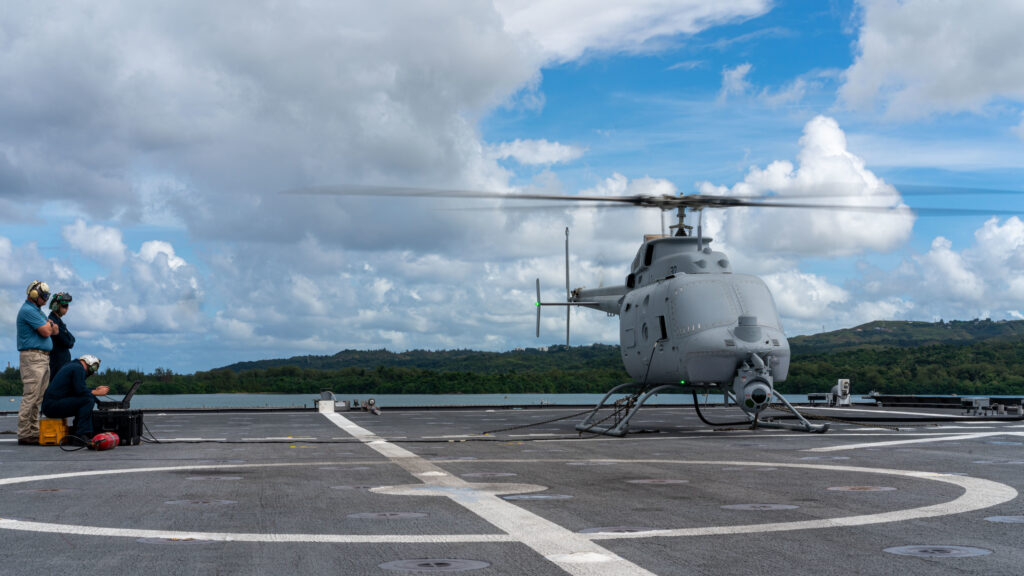
Sailors attached to Helicopter Sea Combat Squadron (HSC) 23, assigned to the Independence-variant littoral combat ship USS Jackson (LCS 6) and Naval Engineering Technology (NET) technicians perform ground turns on an MQ-8C Fire Scout on the flight deck of Jackson. U.S. NAVY / Mass Communication Specialist 3rd Class Andrew Langholf

ARLINGTON, Va. — The newest version of the Navy’s Fire Scout UAV is being prepared for deployment to the Western Pacific, according to an official photograph. 

An MQ-8C Fire Scout was depicted in a Dec. 22 official Navy photograph taken on the deck of Independence-class littoral combat ship USS Jackson (LCS 6) while in port in Apra Harbor, Guam. The caption stated the Jackson was part of Destroyer Squadron Seven “on a rotational deployment in the U.S. 7th Fleet area of operation to enhance interoperability with partners and serve as a ready-response force in support of a free and open Indo-Pacific region.” 

The MQ-8C in the photograph was going through predeployment functional ground checks for a detachment of Helicopter Sea Combat Squadron 23 — based at Naval Air Station North Island, California — that will operate the MQ-8C from the USS Jackson.  

The MQ-8C, which achieved initial operational capability in June 2019, is an upgrade to the Fire Scout System mainly in that it uses a Bell 407 airframe, which is larger than the earlier-design MQ-8B’s airframe and equipped with more powerful engines, thus having a greater payload and endurance, up to 12 hours on station. 

The MQ-8C can carry the ZPY-8 search radar or an electro-optical/infrared sensor and uses the same ground control station and the MQ-8B. The Navy plans to add more capability in the form of Link 16 data link, passive targeting, and a mine-countermeasures payload. 

Northrop Grumman was under contract to deliver 38 MQ-8Cs, all of which have been delivered. The company has delivered 30 of the earlier MQ-8B version. 

Editor’s note: This article has been updated and corrected from a previous version.


USS Milwaukee Returns to Sea After COVID Confinement

The Freedom-variant littoral combat ship USS Milwaukee (LCS 5) steams through the ocean, Dec 16, 2021. U.S. NAVY / Mass Communication Specialist 3rd Class Aaron Lau

NAVAL STATION GUANTANAMO BAY — USS Milwaukee (LCS 5) a Freedom variant littoral combat ship, returned to sea Jan. 3 after being in port as a result of a portion of the crew testing positive for COVID-19, Cmdr. Katherine L Meadows, U.S. Naval Forces Southern Command and U.S. 4th Fleet Public Affairs, said in a statement. 

The ship departed with all crew members, which includes the “Sea Knights” of Helicopter Sea Combat Squadron (HSC) 22 Detachment 5 and embarked U.S. Coast Guard Law Enforcement Detachment. 

“It is great to be heading back out to sea.” said Cmdr. Brian Forster, USS Milwaukee commanding officer. “The crew worked together as a team to ensure we are ready to conduct the mission. My entire crew is feeling great, healthy and excited for the next portion of our deployment.” 

Milwaukee has been in port since Dec. 20, when it arrived for a regularly scheduled port visit. 

While all Sailors onboard were 100% immunized, a portion of the crew tested positive for COVID-19. All affected Sailors exhibited mild or no symptoms. 

Since being in port, Sailors were also afforded the opportunity to receive the COVID-19 booster shot. While not mandatory, the booster is recommended for Sailors. 

The ship’s crew will continue to follow aggressive cleaning protocols, wear masks and social distance while at sea to ensure they remain mission ready. 

Milwaukee departed its homeport of Naval Station Mayport, Florida, Dec. 14 for its regularly scheduled deployment to the U.S. 4th Fleet area of operations. Milwaukee will support the Joint Interagency Task Force South’s mission, which includes counter-illicit drug trafficking missions in the Caribbean and Eastern Pacific. 


UISS Conducts Successful Underwater Explosion Shock Test

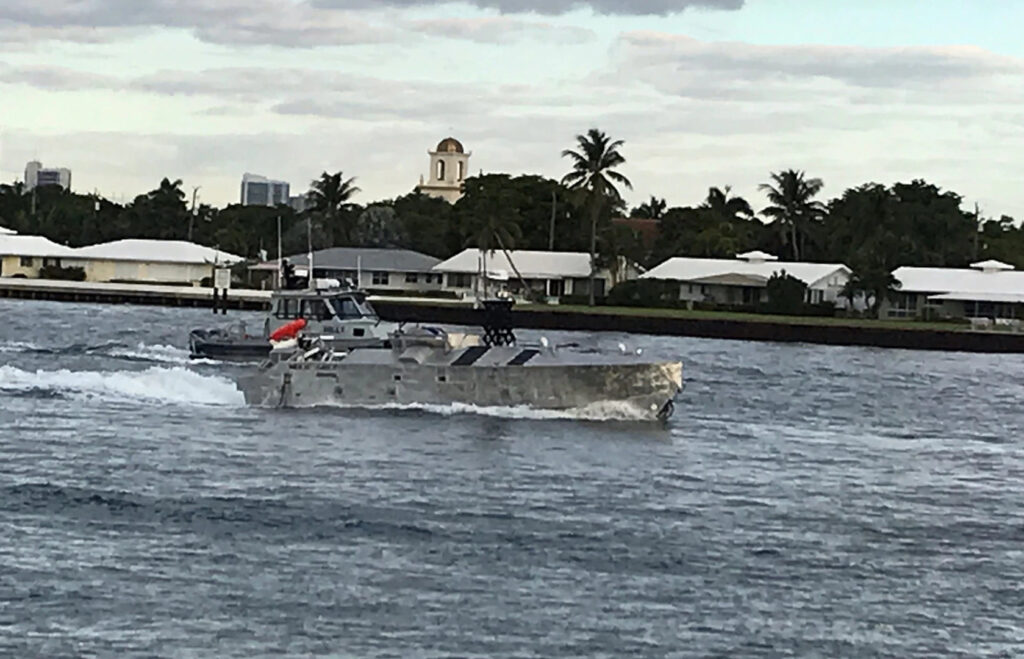
The Unmanned Influence Sweep System heads out for an operational assessment in this November 2019 photo. U.S. NAVY

ABERDEEN, Md. — The Program Executive Office for Unmanned and Small Combatants announced on Jan. 4 the successful completion of underwater explosion shock testing on the Unmanned Influence Sweep System, a component of the Navy’s suite of mine countermeasure technologies. 

The test was conducted by the Aberdeen Test Center and Naval Surface Warfare Center Carderock with assistance from Textron and NSWC Panama City. 

The series of shock trials is key for testing the survivability of UISS and its ability to execute its mission in hazardous environments.  

Capable of being hosted from littoral combat ships, operated from shore, or vessels of opportunity, Unmanned Influence Sweep System provides acoustic and magnetic minesweeping coupled with the unmanned, semi-autonomous, diesel-powered, aluminum-hulled mine countermeasures unmanned surface vehicle, or MCM USV. 

“The UISS UNDEX test demonstrates the survivability of the MCM USV,” said LCS Mission Modules Program Manager Capt. Godfrey “Gus” Weekes. “This brings us one step closer to delivering the MCM mission package to the fleet.”  

The series of successful tests demonstrate the growing maturity of the UISS program. The program completed shipboard initial operational test and evaluation onboard USS Cincinnati (LCS 20) in June 2021 and Cyber initial operational test and evaluation in September 2021, ensuring the program is on schedule to achieve initial operating capability in 2022.  

“Completion of these tests showcased the capability and resiliency of the MCM USV, and is a critical milestone for the program,” Weekes said. “The MCM USV is the centerpiece of the MCM mission package, and this test demonstrates the final steps we’re taking for MCM mission package IOT and E and fielding.” 

In addition to minesweeping capability, the MCM USV will employ modular payloads to bring additional MCM capabilities to the fleet. The MCM USV is currently undergoing integration testing of the AQS-20C towed mine hunting sonar, which provides detection, identification, classification and localization of volume and bottom mine-like objects. The MCM USV is an integral part of the MCM mission package, which will replace the Navy’s aging Avenger-class minesweeping ships and MH-53Es Sea Dragon helicopters. 


USS Abraham Lincoln Deploys with First Marine Corps F-35C Squadron

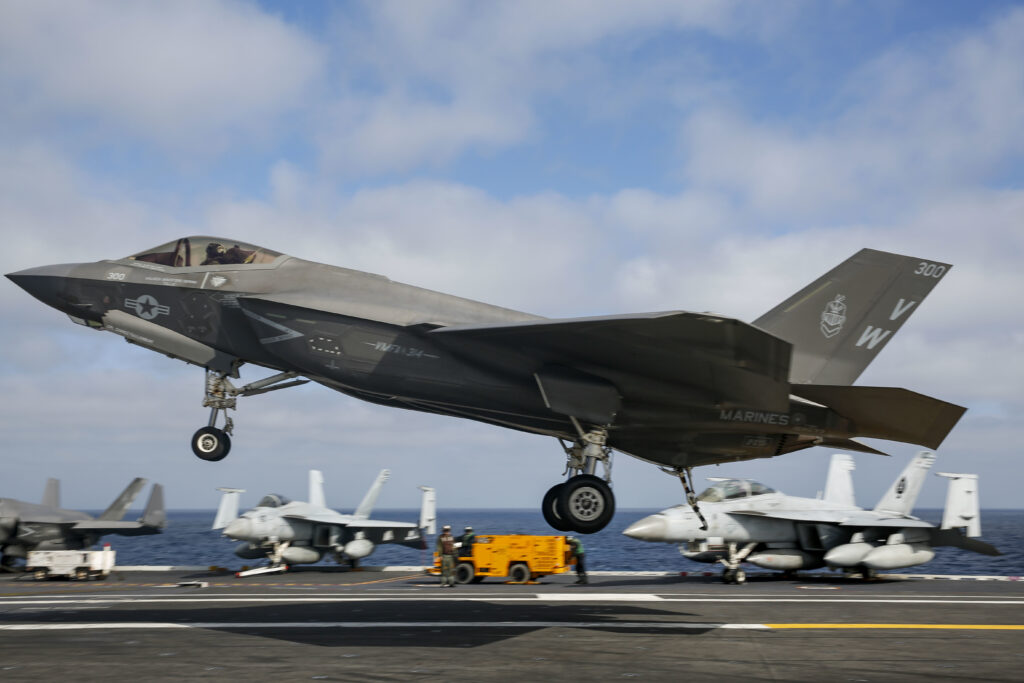
An F-35C Lightning II, assigned to the “Black Knights” of Marine Fighter Attack Squadron (VMFA) 314, prepares to land on the flight deck of the aircraft carrier USS Abraham Lincoln (CVN 72). Abraham Lincoln is underway conducting routine operations in the U.S. 3rd Fleet. U.S. NAVY / Mass Communication Specialist 3rd Class Michael Singley

SAN DIEGO — The USS Abraham Lincoln (CVN 72) departed on a regularly scheduled deployment Jan. 3 as the centerpiece of a carrier strike group that included the Marine Corps’ first F-35C Lightning II squadron.  

The Abraham Lincoln Carrier Strike Group (CSG) is led by the command staff of CSG 3 and consists of Nimitz-class aircraft carrier USS Abraham Lincoln (CVN 72), Carrier Air Wing Nine (CVW-9), the Ticonderoga-class guided-missile cruiser USS Mobile Bay (CG 53), and the Arleigh Burke-class guided-missile destroyers of Destroyer Squadron 21 (DESRON 21) — USS Fitzgerald (DDG 62), USS Gridley (DDG 101), USS Sampson (DDG 102) and USS Spruance (DDG 111). 

CVW-9 includes Marine Fighter Attack Squadron 314 (VMFA-314), the Corps’ first F-35C squadron. The deployment marks the second carrier deployment of the F-35C.  

The Marine Corps plans to field a total of four F-35C squadrons and have committed two of them to the Tactical Air Integration program of deploying with CVWs. 

The USS Carl Vinson (CVN 70) currently is deployed to the Indo-Pacific region with the Navy’s first fleet F-35C squadron, Strike Fighter Squadron 147 (VFA-147), on board. 

CVW-9 also includes VFA-14, equipped with F/A-18F Super Hornet Strike Fighters; VFAs 14 and 151, equipped with F/A-18Es; Electronic Attack Squadron 133 (VAQ-133), with EA-18G Growler electronic attack aircraft; Airborne Command and Control Squadron 117 (VAW-117) with E-2D Advanced Hawkeye aircraft; Helicopter Sea Combat Squadron 14 (HSC-14) with MH-60S Seahawk helicopters; Helicopter Maritime Strike Squadron 71 (HSM-71) with MH-60R Seahawk helicopters; and a detachment of Fleet Logistics Multi-Mission Squadron 30 (VRM-30), equipped with the CMV-22B Osprey carrier-onboard delivery aircraft.  
 
“The entire CSG 3 team is trained and ready to deter and, if necessary, win conflicts as called upon by our nation’s leaders,” said Rear Adm. J.T. Anderson, commander, Carrier Strike Group 3, in a release from U.S. 3rd Fleet. “As we leave today on this routine, scheduled deployment, I know the Sailors and Marines of this team will continue to serve this great nation and its people. It is our honor to do so.”  


NAVSEA Orders Two More Mark VI Patrol Boats for Ukraine

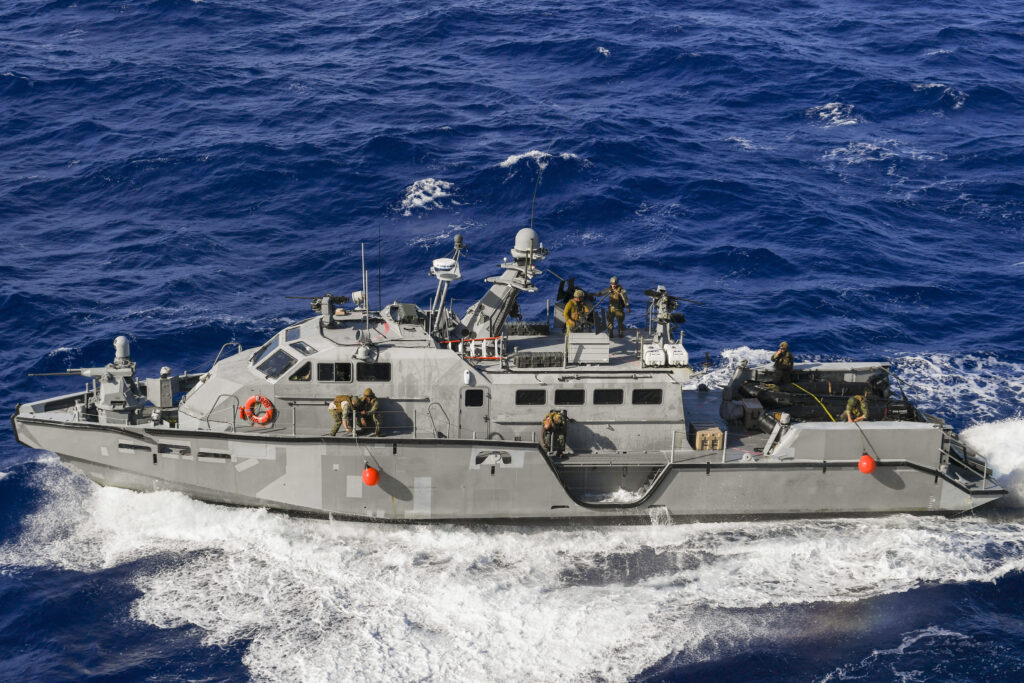
A Mark VI is launched from the amphibious dock landing ship USS Ashland (LSD 48) in the Philippine Sea in February 2021. U.S. NAVY / Mass Communication Specialist 3rd Class Madysson Anne Ritter

ARLINGTON, Va. — The U.S. Navy has ordered two more Mark VI patrol boats for the government of Ukraine, the Defense Department said. 

The Naval Sea Systems Command awarded SAFE Boats International of Bremerton, Washington, a $25.6 million firm-fixed-price modification “for the exercise of options for construction, outfitting, reactivation, and training of two Mark VI patrol boats,” the Dec. 30 announcement said. 

The order is funded with some of the $125 million Ukraine Security Assistance Initiative funds through the fiscal year 2021 Building Partner Capacity initiative. 

In June 2020, the U.S. State Department has approved the possible foreign military sale of up to 16 Mark VI patrol boats and related equipment to Ukraine for an estimated cost of $600 million, the Defense Security Cooperation Agency said. The December order brings the total ordered to date to 12 boats. 

“This action reaffirms the U.S. commitment to providing defensive lethal weapons to enable Ukraine to more effectively defend itself against Russian aggression,” the Defense Department said of an earlier sale of Mark VI boats to Ukraine.   

The patrol boats will be operated by the Ukrainian navy to defend territorial waters and other maritime interests. They each will be armed with two MSI Seahawk A2 gun systems and two Mk44 cannons and equipped with electro-optical/infrared sensors and loud-speaker systems.   

Mark VI patrol boats are used by the Navy Expeditionary Combat Command for escort of high-value ships, coastal patrol, and other maritime security missions.   

The boats will be built in Tacoma, Washington, and deliveries are expected to be completed by March 2026. 


750 F-35s in Service as 2022 Begins, Lockheed Martin Says

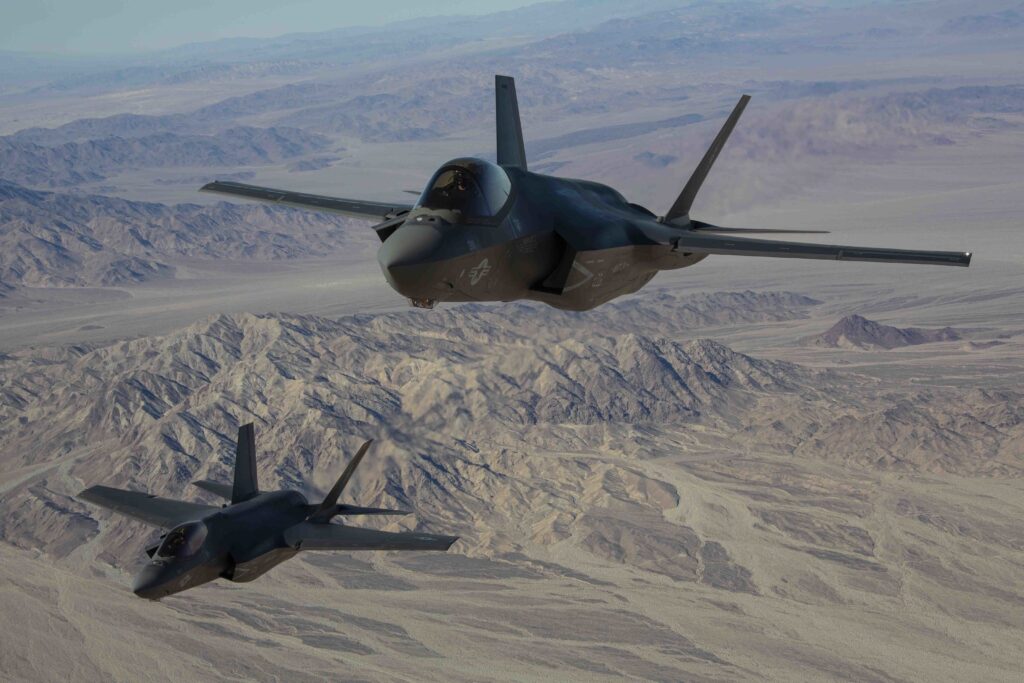
U.S. Marines with Marine Fighter Attack Squadron 314 and Marine Aerial Refueler Transport Squadron 352, Marine Aircraft Group 11, 3rd Marine Aircraft Wing, conduct a new expeditionary landing demonstration with M-31 arresting gear Interim Flight Clearance (IFC), on Marine Corps Air Ground Combat Center Twentynine Palms, Calif., Dec. 3rd, 2020. This new capability allows the F-35C Lightning II to land on smaller runways anywhere in the world and ensures extended flexibility in combat operations. U.S. MARINE CORPS / Cpl. Cervantes, Leilani

FORT WORTH, Texas — Lockheed Martin completed another successful year as the F-35 program continued to expand its global footprint and enhance operational capabilities, the company said Jan. 3.  

In 2021, two new countries, Switzerland and Finland, selected the F-35 for their new fighter programs. Additionally, Denmark received its first F-35 and the Royal Netherlands Air Force became the eighth nation to declare their F-35 fleet ready for initial operational capability. The F-35’s operational capabilities continued to advance and further demonstrated its value as the most advanced node in the 21st century battlespace. Last year alone, the F-35 successfully participated in a series of flight tests and exercises, including Project Hydra, Northern Edge, Orange Flag, Talisman Sabre and Flight Test-6. 

“The F-35 joint enterprise team continues to provide unmatched combat capability to the 21st century battlespace through the F-35,” said Bridget Lauderdale, vice president and general manager of the F-35 program. “Providing unparalleled support to the growing fleet, participating in numerous joint, all-domain exercises and meeting our delivery target during a global pandemic is no small feat while the F-35 was also chosen by Switzerland and Finland as their next fighter.” 

The F-35’s operational performance remains strong. Some of the F-35A deployments and exercises demonstrated over 80% mission capable rates. As one of the most reliable aircraft in the U.S. fighter fleet, 93% of F-35 parts are performing better than predicted. 

In the last year, F-35s were part of four base and ship activations and participated in more than 60 deployments and detachments, including the first U.S. Navy F-35C deployment aboard the USS Carl Vinson. During the first deployment of the Royal Navy’s flagship HMS Queen Elizabeth as part of the UK’s Carrier Strike Group 2021, F-35Bs from the U.S. Marine Corps and Royal Air Force flew nearly 1,300 sorties, more than 2,200 hours and conducted 44 combat missions.  

These program achievements are enabled by employing digital technologies, which were vital to achieving 142 deliveries in 2021. Smart tools, connected machines and augmented realities all contribute to the delivery and sustainment of aircraft.  

“Lockheed Martin is investing in digital technology that advances the F-35’s 5th Gen capabilities long after delivery,” Lauderdale added. “We’re embracing digital transformation to enable faster development and continuous deployment of software, using digital models and supercomputers to augment physical test data with simulation-based verification, and automating data processes to save time and glean insights that improve sustainment.” 

With more than 750 aircraft operating from 30 bases and ships around the globe, the F-35 plays a critical role in the integrated deterrence of the U.S. and its allies. More than 1,585 pilots and 11,545 maintainers are trained and the F-35 fleet has flown nearly 470,000 cumulative flight hours. Nine nations have F-35s operating from a base on their home soil, 12 services have declared initial operational capability and six services have employed F-35s in combat.