Navy Orders Additional TH-73A Helicopters to Train Naval Aviators
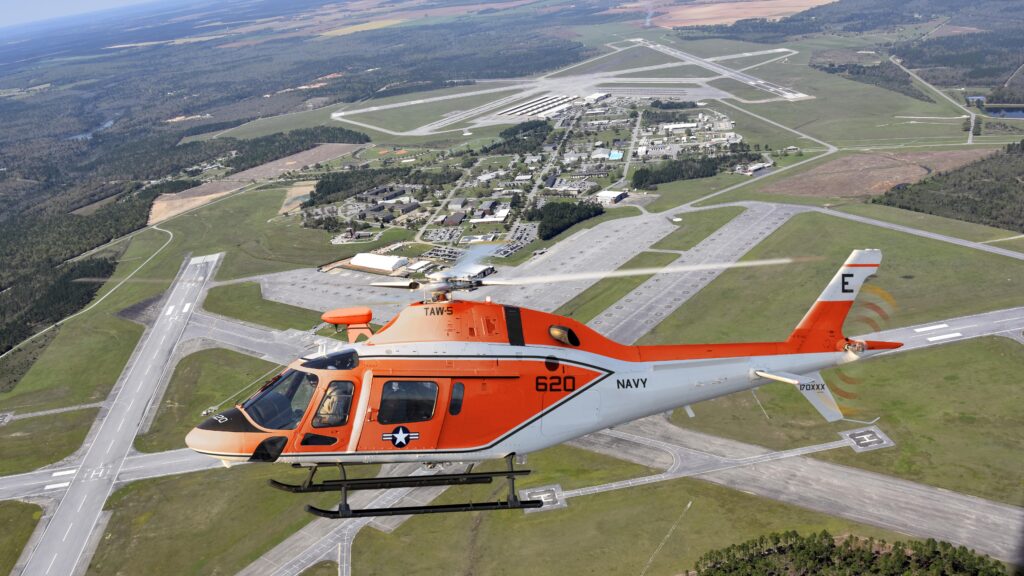
A Leonardo TH-73A helicopter. LEONARDO

PHILADELPHIA — The newly established partnership between Leonardo and the U.S. Navy on the advanced training of next-generation helicopter pilots grew in December with the U.S. Department of Defense buying an additional 36 TH-73A rotorcraft, with initial spares, for $159.4 million, the company announced Dec. 22. 

This third lot brings the total number of aircraft on order to 104 of the total requirement for 130, with delivery continuing into 2024. The fleet will be used to collectively train student pilots from the U.S. Navy, Marine Corps and Coast Guard, along several NATO allies. 

In January 2020, Leonardo, through AgustaWestland Philadelphia Corp., was awarded a firm-fixed-price contract valued at $176 million for the production and delivery of an initial 32 TH-73A helicopters. The agreement — which included an initial package of spares, support, dedicated equipment, and specific pilot and maintenance training services — was confirmed that following November through the order of a second lot of aircraft through a $171 million contract modification for an additional 36 helicopters. 

All TH-73As will be fully produced at the Leonardo’s plant in Philadelphia where the AW119 is exclusively built on an FAA Certified Part 21 production line. The site operates today as a supplier and partner to the U.S. DoD through the TH-73A program for the U.S. Navy, of which Leonardo is prime contractor, in addition to the Boeing MH-139A program for the U.S. Air Force.  

Located in Philadelphia since the early 1980s, the plant today employs 700 of Leonardo’s 7,000 employees active in the U.S. and has become a Divisional Center of Excellence for production, support, engineering and training activities. The Philadelphia site includes production of the AW119, AW139 and the AW609 tilt-rotor, as well as support, maintenance and repair services. Pilot and maintenance technician training is performed at the training academy, co-located at the same campus as all other U.S. functions, which was inaugurated earlier this year as part of an $80 million dollar expansion. 

A delivery ceremony for the first TH-73A to the U.S. Navy took place in June 2021 in Philadelphia. Based on the IFR instrument flight rules variant of the commercial model AW119Kx, the TH-73A, which will replace the TH-57B/C Sea Ranger first introduced in 1968, is perfectly suited for both initial and advanced training.  

Equipped with a powerful and reliable Pratt & Whitney PT-6 engine and characterized by dual safety and hydraulic systems and advanced digital avionics by Genesys Aerosystems, the TH-73 can perform every phase of the U.S. Navy’s training program without compromise. The new system will allow the U.S. Navy to upgrade its technologies from analogue to digital and is expected to be in service until after 2050. 

The fleet will be based at Naval Air Station Whiting Field in Milton, Florida. After being awarded the initial contract and in order to support the fleet once operational, Leonardo announced plans to build a 100,000 square foot support center immediately adjacent to NAS Whiting Field in partnership with the City of Milton, Santa Rosa County and Space Florida. Site work has already begun and the facility’s completion is expected by the end of 2023.      


U.S. Navy Ships Interdict Heroin Worth $4 Million in Arabian Sea

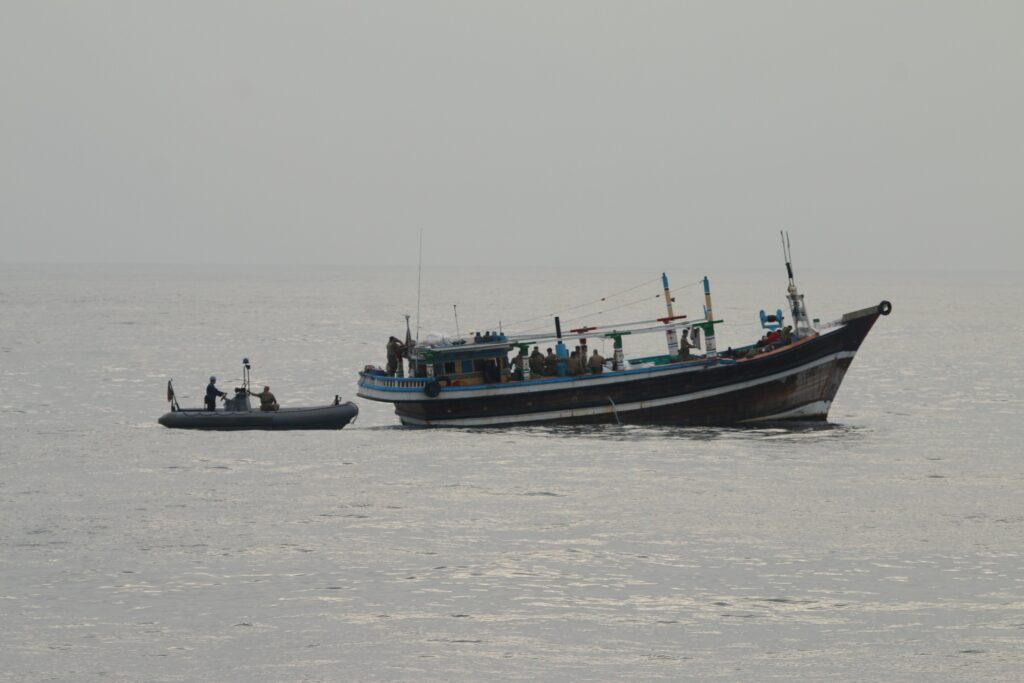
Two U.S. Navy ships seized 385 kilograms of heroin worth approximately $4 million from a stateless fishing vessel transiting the Arabian Sea, Dec. 27. U.S. NAVY

MANAMA, Bahrain — Two U.S. Navy ships seized 385 kilograms of heroin worth approximately $4 million from a stateless fishing vessel transiting the Arabian Sea, Dec. 27, Naval Forces Central Command said Dec. 30. 

U.S. Coast Guard personnel embarked aboard USS Tempest (PC 2) and USS Typhoon (PC 5) discovered the illegal shipment while conducting a flag verification boarding in accordance with customary international law. The confiscated drugs were destroyed at sea by U.S. forces. 

The coastal patrol ships were operating as part of an international task force called Combined Task Force 150, which has increased regional patrols to locate and disrupt unlawful maritime activity. CTF 150 is one of three task forces under Combined Maritime Forces. 

“This latest seizure is a demonstration that CTF 150 and assigned surface and air assets are ready to conduct interdiction operations 365 days a year,” said Royal New Zealand Navy Capt. Brendon Clark, commander of CTF 150. 

In 2021, CTF 150 has seized illegal drugs worth more than $193 million (at regional wholesale prices) during counter-narcotics operations at sea. This is a higher total value than the amount of drugs the task force interdicted in the previous four years combined. 

“This interdiction highlights the incredible work of our ships and Sailors and serves as a reminder of the value in having forward-deployed naval forces on scene and ready,” said Lt. Cmdr. Jordan Bradford, Typhoon’s commanding officer, who is  from Ocean Springs, Mississippi. 

International naval forces operating in support CTF 150 regularly conduct maritime security and counter-terrorism operations at sea outside the Arabian Gulf to disrupt criminal and terrorist organizations and their related illicit activities, including the movement of personnel, weapons, narcotics and charcoal. These efforts help ensure legitimate commercial shipping transits the region free from non-state threats. 

“We were able to execute this interdiction safely and with precision due to the tireless efforts of all involved,” said Lt. Cmdr. Matt Intoccia, a native of Collegeville, Pennsylvania, and the commanding officer of Tempest. “I am proud of our collective contribution to regional stability and look forward to more opportunities for operational success.” 

The U.S. Navy released the stateless fishing vessel and its nine crew members, who identified themselves as Iranian nationals, after seizing the drugs. 

Combined Maritime Forces is the largest multinational naval partnership in the world. The organization includes 34 nations and is headquartered in Bahrain with U.S. Naval Forces Central Command and U.S. 5th Fleet. 


Navy Orders 65 Production BQM-177A Aerial Target Drones from Kratos

The Navy’s newest subsonic aerial target, BQM-177A, conducts a training test flight from USS Barry (DDG-52) Sept. 9, 2021, off the coast of Japan. U.S. NAVY

SAN DIEGO — Kratos Defense & Security Solutions Inc. announced Dec. 28 that its division Kratos Unmanned Aerial Systems has been awarded a $50.1 million contract modification to a previously awarded firm-fixed-price contract to exercise an option to procure 65 BQM-177A Subsonic Aerial Targets. 

The order includes 50 for the Navy, seven for Japan and eight for Saudi Arabia, as well as associated technical and administrative data in support of full rate production lot three. The Naval Air Systems Command, Patuxent River, Maryland, is the contracting activity.  

“The Kratos team is incredibly proud to receive this third consecutive full-rate production option award supporting our U.S. Navy customer,” said Steve Fendley, president of Kratos Unmanned Systems Division. “We are also excited that 15 of these drone aircraft will support the U.S. government’s foreign allies. Throughout the challenges of the last two years, Kratos has remained focused on developing, producing, and delivering target and tactical drone systems to support the established and forecasted customer needs.” 


U.S. Navy Seizes 1,400 Assault Rifles During Illicit Weapons Interdiction

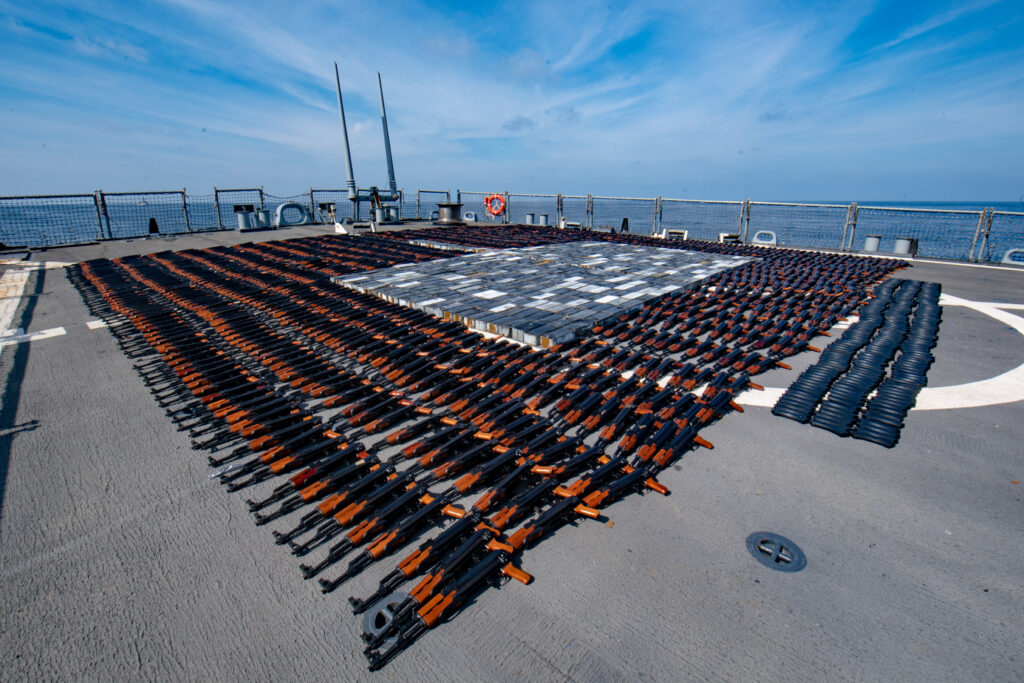
Illicit weapons seized from a stateless fishing vessel in the North Arabian Sea are arranged for inventory aboard guided-missile destroyer USS O’Kane’s (DDG 77) flight deck, Dec. 21. U.S. NAVY / Mass Communication Specialist Seaman Elisha Smith

MANAMA, Bahrain – U.S. 5th Fleet ships seized approximately 1,400 AK-47 assault rifles and 226,600 rounds of ammunition from a stateless fishing vessel during a flag verification boarding in accordance with customary international law in the North Arabian Sea, Dec. 20, NAVCENT public affairs said Dec. 22.

U.S. Navy patrol coastal ships USS Tempest (PC 2) and USS Typhoon (PC 5) found the weapons during a search conducted by embarked U.S. Coast Guard personnel. The illicit weapons and ammunition were later transported to guided-missile destroyer USS O’Kane (DDG 77) where they await final disposition.

The stateless vessel was assessed to have originated in Iran and transited international waters along a route historically used to traffic weapons unlawfully to the Houthis in Yemen. The direct or indirect supply, sale or transfer of weapons to the Houthis violates U.N. Security Council Resolutions and U.S. sanctions.

The vessel’s five crew members identified themselves as Yemeni nationals and will be returned to Yemen.

After removing the crew and illicit cargo, U.S. naval forces determined the stateless vessel was a hazard to navigation for commercial shipping and sank it.

U.S. naval forces regularly perform maritime security operations in the Middle East to ensure the free flow of legitimate trade and to disrupt the transport of illicit cargo that often funds terrorism and other unlawful activity. U.S. Navy warships operating in the U.S. 5th Fleet region have seized approximately 8,700 illicit weapons in 2021.

Guided-missile cruiser USS Monterey (CG 61) seized dozens of advanced Russian-made anti-tank guided missiles, thousands of Chinese Type 56 assault rifles, and hundreds of PKM machine guns, sniper rifles and rocket-propelled grenade launchers from a stateless vessel transiting the North Arabian Sea in May.

In February, guided-missile destroyer USS Winston S. Churchill (DDG 81) seized a cache of weapons off the coast of Somalia, including thousands of AK-47 assault rifles, light machine guns, heavy sniper rifles, rocket-propelled grenade launchers and crew served weapons. The inventory also included barrels, stocks, optical scopes and weapon systems.

The U.S. 5th Fleet area of operations encompasses approximately 2.5 million square miles of water area and includes the Arabian Gulf, Gulf of Oman, Red Sea, parts of the Indian Ocean and three critical choke points at the Strait of Hormuz, Suez Canal and Strait of Bab al Mandeb.


16-year-old Sea Cadet Participates in Historic World War II Dive in Pearl Harbor

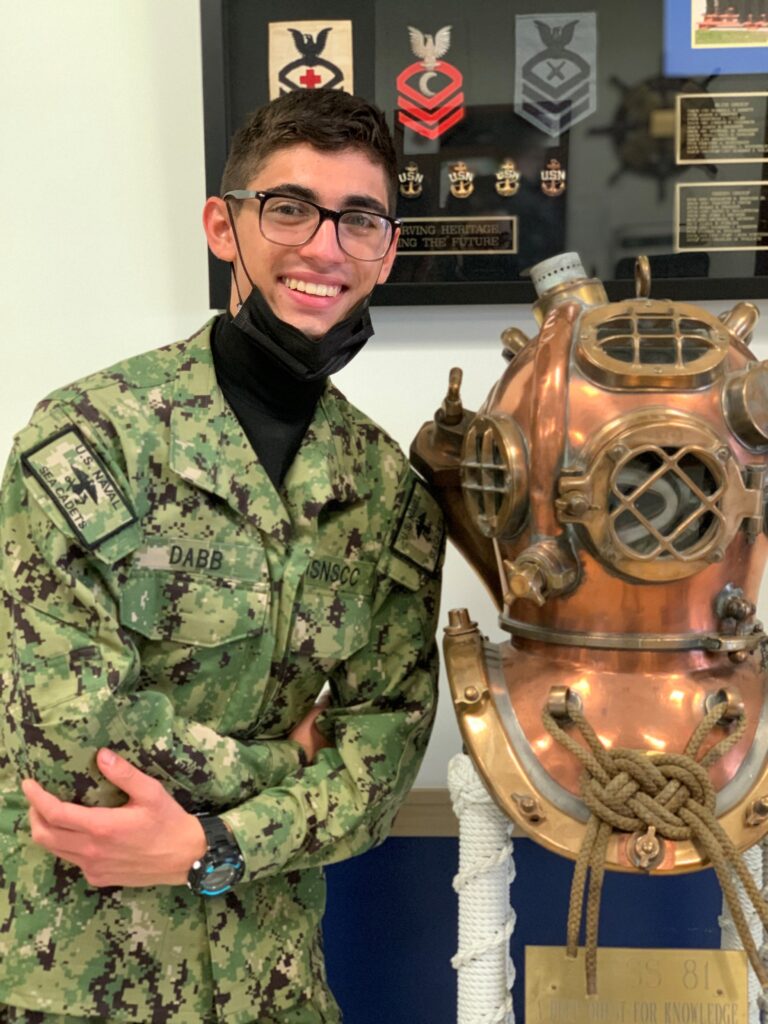
Sea Cadet Petty Officer 3rd Class Jack Dabb participated in the first dive to USS Utah, submerged in Pearl Harbor for 80 years. U.S. NAVAL SEA CADET CORPS / Brittany DiPippo

NEWPORT, Rhode Island – Sixteen-year-old Sea Cadet Petty Officer 3rd Class Jack Dabb, from Battleship New Jersey (BB-62) Division in Camden, New Jersey, attended a Sea Cadet Leadership Training in Newport and had an opportunity to share a once-in-a-lifetime experience on Dec. 28.

The commanding officer of the training, retired Master Chief Avionics Maintenance Technician (AW/IW) Barry Crawford, realized a rare convergence of history was about to occur and saw an opportunity for Dabb to bring a little of his personal story to his classmates.

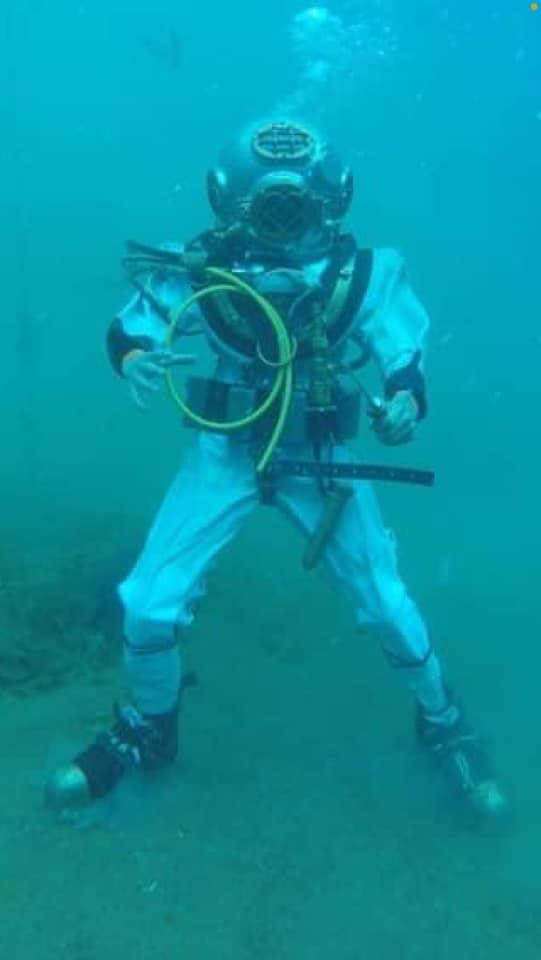
Dabb is also the youngest member of the Classic Diving Organization, LLC, and participates in deep-sea dives on historic vessels. In December 2021, just a couple of weeks before attending POLA in Newport, he had the privilege of participating in the first live dive to USS Utah (BB-31), submerged in Pearl Harbor for 80 years. Watch the historic dive: https://youtu.be/zjQipLBHohU.

“This leadership training event in Newport is held at Tomich Hall, which is where the U.S. Navy teaches advanced leadership to senior enlisted members of the military. The school’s namesake refers to Chief Watertender Peter Tomich, who posthumously received the Medal of Honor for his actions on board USS Utah on Dec. 7, 1941,” said Crawford.

Tomich and his fellow shipmates remain entombed onboard Utah. Still, Tomich is credited with saving the lives of hundreds of men through his heroic and selfless actions. For the Chief Petty Officers, Tomich is an iconic hero of our Navy’s past we reference when developing the leaders of today.”

Sea Cadet Dabb during the dive to the USS Utah. SEA CADETS

With cooperation between the U.S. Navy and the National Park Service, the Classic Diving Organization chose Dabb to participate in this rare event. Watch Dabb on Facebook live on Dec. 28, 2021 at 1 p.m. EST, share his diving experience.

“Jack was selected to participate as a crew member and safety diver for the USS Utah live dive broadcast with the National Park Service due to his vast experience with the MK-V diving apparatus,” said U.S. Navy Master Diver John Hopkins, Jr., and co-founder of the Classic Diving Organization, who is stationed at Hickam Air Force Base in Pearl Harbor.

“Jack was an important team member, and with his assistance, it made the event so much easier. This event was to bring back attention to the salvage efforts that took place after the attack on Dec. 7, 1941. This was the first live dive event for Utah, and it was the final piece for the remembrance events for the 80th anniversary of the attack.”

Hopkins added that Dabb has participated with the diving organization on other events in the past.

“He flawlessly folded into our team, and all of us, including the Park Service personnel, appreciated his time, effort, and great work ethic. It is always a joy to work with Jack, and I look forward to working with him again in the future,” said Hopkins.

Crawford added that having the opportunity to present pictures and Dabb’s experience diving to USS Utah and inside Tomich Hall was amazing.

“The faculty assigned to the U.S. Navy Senior Enlisted Academy were invited to the presentation, making a rare connection to things they walk by each day at work,” said Crawford. “Chief Tomich’s Medal of Honor, citation from President Roosevelt, and relics from Utah are on the hallowed quarterdeck at Tomich Hall.”

Crawford added that thousands of Navy leaders have walked by these cherished objects and could only imagine what Tomich sacrificed for his shipmates. “And here we have this 16-year-old Sea Cadet who saw it and shared it with us. What a great experience for us and the 85 participants of POLA Newport 2021.”

What does Dabb think about all this? “Diving on the USS Utah was an experience like no other. I truly can never express what this opportunity means to me because it was so monumental. It made me realize that without history, we have no future.”

For more information about U.S. Naval Sea Cadet Corps, visit www.seacadets.org.


Advanced Weapons Elevators Completed Aboard USS Gerald R. Ford

The aircraft carrier USS Gerald R. Ford (CVN 78) departed Naval Station Norfolk to make the transit to Newport News Shipyard in support of its planned incremental availability, a six-month period of modernization, maintenance, and repairs, Aug. 20. U.S. NAVY / Mass Communication Specialist 1st Class Ryan Seelbach

WASHINGTON — On Dec. 22, the 11th and final advanced weapons elevator aboard USS Gerald R. Ford (CVN 78) was turned over to the ship’s crew, according to Program Executive Office Aircraft Carriers public affairs.

AWEs on this first-of-class aircraft carrier operate using several advanced technologies, including electromagnetic motors instead of more labor intensive, hydraulic systems. The advanced technology enables fewer sailors to safely move ordnance from weapons magazines to the flight deck with unparalleled speed and agility.

“This is a significant milestone for the Navy, ship, and her crew,” said Rear Adm. James P. Downey, Program Executive Officer for Aircraft Carriers. “With completion of this final AWE, we now have the entire system to operate and train with.”

Downey added the Navy-industry AWE team worked tirelessly in port and at sea to complete the elevators to ensure the availability of needed materials and engineering expertise. Multiple vendors have collaborated along the way to ensure seamless support to multi-shift, shipboard production efforts.

“The Navy-industry teaming provided the opportunities for hundreds of craftsmen, technicians and engineers, working around the clock — through multiple underway and holiday periods — to get these advanced systems on line and operational,” said Downey.

The team logged the milestone in the midst of the ship’s six-month planned incremental availability at Huntington Ingalls Industries-Newport News Shipbuilding facility in Hampton Roads, Virginia. Gerald R. Ford is scheduled to complete the PIA this spring, followed by training and deployment.

“The end game is always operational readiness,” added Downey, “and Ford is on track to complete this PIA on schedule, conduct sea trials, and to move on to follow-on tasking.”


Austal Delivers Future USS Canberra to U.S. Navy

The future USS Canberra (LCS 3). AUSTAL USA

MOBILE, Ala. — The U.S. Navy took delivery of the future USS Canberra (LCS 30) at Austal USA on Dec. 21, the company announced, the second Independence-variant littoral combat ship Austal delivered to the Navy in 2021.

“With two ship launches, two christenings, and now the successful completion of sea trials and delivery for LCS 30, it has been a busy last couple of months at Austal USA,” said Austal USA President Rusty Murdaugh. “All of these milestones require extensive coordination between Austal, our vendors and our Navy teammates and I’m proud to say that these partnerships grow stronger with each milestone achievement.”

Acceptance Trials for LCS 30 were completed in early November, demonstrating to the Navy the successful operation of the ship’s major systems and equipment. Delivery documents were signed onboard the future USS Canberra and the crew will now begin preparing the ship for her commissioning into the fleet.

Four LCSs are currently under construction by the company, including the future USS Santa Barbara (LCS 32). Final assembly is underway on the future USS Augusta (LCS 34) and modules are under construction on the future USS Kingsville (LCS 36) and the future USS Pierre (LCS 38).

Two Expeditionary Fast Transports are also under construction at the shipyard, with a third under contract. In October, Austal USA was awarded a contract for the detailed design and construction of two U.S. Navy Towing, Salvage, and Rescue Ships (T-ATS), the first contract for Austal’s new steel construction facility.

Austal has recently been awarded several post-delivery service-related contracts for the LCS program including sustainment execution contracts for both variants of LCS on the East and West coasts and an indefinite delivery indefinite quantity contract to support LCS deployed to the western Pacific and Indian Ocean.


Biden Permits Defense Production Act to be Used to Strengthen Submarine Industrial Base

Tugboats guide the USS Minnesota (SSN 783) to the pier as the Virginia-class nuclear-powered fast-attack submarine returns to Naval Submarine Base New London following a regularly-scheduled deployment in 2021. The Defense Production Act can now be used to scale production of Virginia-class subs. U.S. NAVY / Mass Communication Specialist 2nd Class Tristan B. Lotz

On Dec. 21, President Biden signed three determinations permitting the use of the Defense Production Act to strengthen the U.S. submarine industrial base, the Department of Defense announced Dec. 22.

The expansion of the authority will allow the U.S. Navy to maintain its maritime superiority, the DoD said.

Scaling the production of Virginia-class attack submarines will ensure the U.S. Navy can meet its missions to maintain open sea lanes for global communication and commerce, enhance diplomatic partnerships and grow a robust underwater warfare capability, the DoD said. Through the DPA, the U.S. Navy can make key investments with the manufacturers and suppliers executing the submarine shipbuilding plan.

These activities will strengthen the shipbuilding industrial base and allow its heavy manufacturing and large scale fabrication suppliers to meet growing demand and expand the maritime workforce training pipeline.

“Ensuring a robust, resilient and competitive domestic defense industrial base that has the capability, capacity and workforce to meet the Virginia-class submarine undersea warfighting mission is essential to our national security,” said a memo attributed to Biden.

The DoD said it continues to work with key stakeholders to use Defense Production Act authorities to address risks and challenges across the submarine enterprise supply chain. These authorities expand options and opportunities to accelerate and scale critical investments across key markets.

More information about the DPA is available here, and the presidential determination can be found here.


Austal USA Awarded Contract for Next Generation Logistics Ship Design Studies

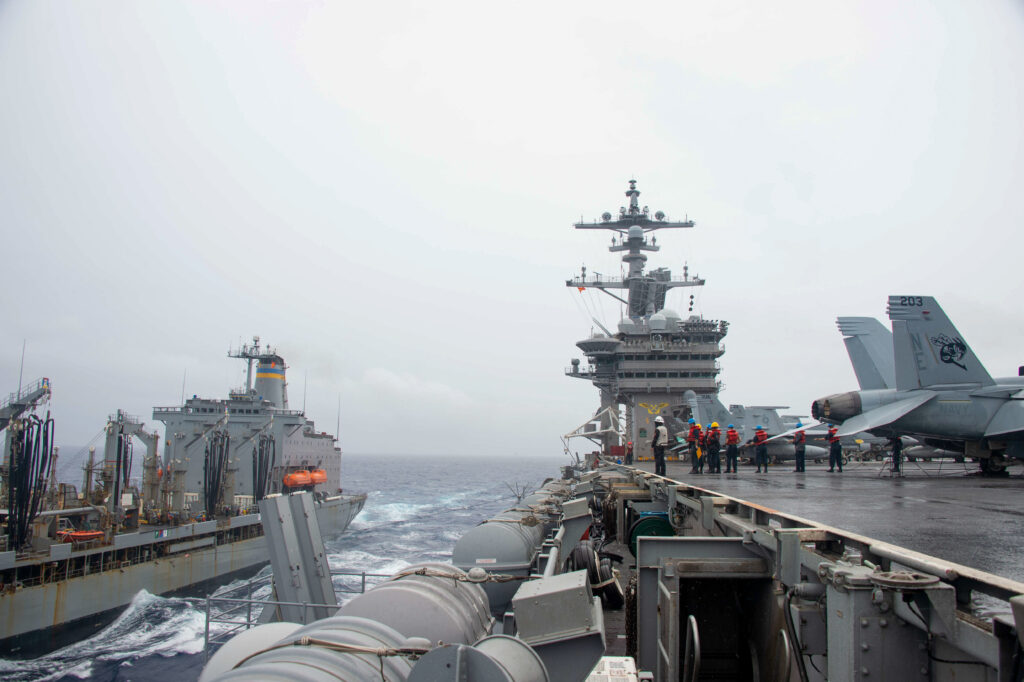
Nimitz-class aircraft carrier USS Carl Vinson (CVN 70) conducts a replenishment-at-sea with Henry J. Kaiser-class fleet replenishment oiler USNS Rappahannock (T-AO 204), The next-generation logistics ship is intended to be a smaller than current combat logistics force ships such as the Rappahannock. U.S. NAVY / Mass Communication Specialist Seaman Elizabeth Grubbs

MOBILE, Ala. — Austal USA was awarded a contract to perform design studies for the U.S. Navy’s next generation logistics ship program Dec. 20, the company announced.

This contract requires Austal to develop a new baseline design and perform specific trade studies for the Navy’s newest logistics ship. Austal, as the shipbuilder and design agent, will be the prime contractor.

“Austal is excited to begin work on another U.S. Navy steel shipbuilding program,” Austal USA President Rusty Murdaugh said. “This contract, combined with our recent T-ATS ship construction contract award and the concept studies we are performing on the LAW p[light amphibious warships] rogram, demonstrate our commitment to bring the same industry leading quality to steel ships as we have been delivering for aluminum ships.”

The next generation logistics ship program represents a new class of medium-sized at-sea supply ships intended to support small surface combatants such as littoral combat ships and frigates as well as the Navy’s planned LAW. The mission of the NGLS fleet will include refueling, rearming, and resupply of naval assets.

Austal USA’s reputation of completing major military vessel contracts on schedule and on budget gives the company a strong foundation to provide a highly capable and cost effective NGLS design to the Navy.


MRIC Live Fire Tests Deemed a Success, Marine Corps Says

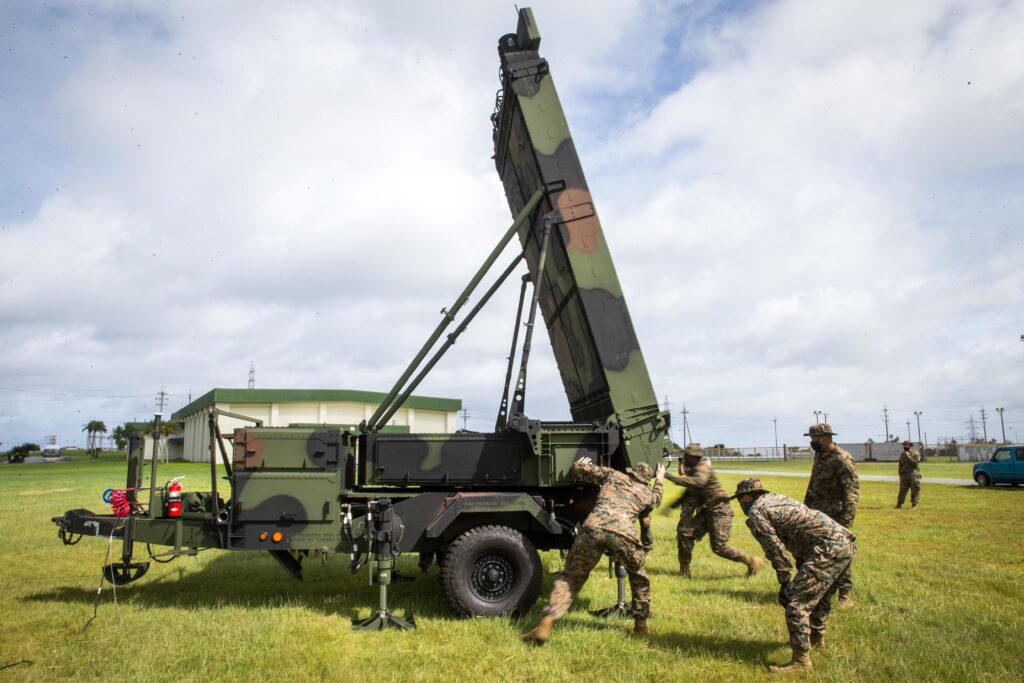
U.S. Marines with 12th Marine Regiment, 3rd Marine Division, adjust a Ground and Air Task Oriented Radar system at Marine Corps Air Station Futenma, Okinawa, Japan, Aug. 10, 2020. The G/ATOR is part of the Corps’ Medium Range Intercept Capability, tested Dec. 16. U.S. MARINE CORPS / Cpl. Savannah Mesimer

The U.S. Marine Corps’ Medium Range Intercept Capability prototype, developed as part of a mid-tier acquisition rapid prototyping effort, successfully engaged targets Dec. 16, 2021, at White Sands Missile Range, the Corps announced.

This first round of tests is part of a series of live fire events scheduled for fiscal year 2022 all of which will be carried out against relevant and increasingly more challenging cruise missile profiles. This test series will stress the system and define the system’s proficiency and potential.

The MRIC prototype is being developed by the Ground Based Air Defense program office at Program Executive Officer Land Systems in support of a Fleet Marine Forces modernization initiative. The effort will inform counter-air defense requirements and any subsequent acquisition activities.

“The MRIC is a missile system which detects, tracks, identifies and defeats enemy cruise missiles threats and other manned and other unmanned aerial threats,” said program manager Don Kelley. “It is planned to provide ground based air defense for permanently fixed and operationally semi-fixed sites.”

The MRIC currently integrates existing Marine Corps systems — specifically, the Ground/Air Task Oriented Radar and Common Aviation Command and Control System — with the Israeli Iron Dome mini-Battle Management Control and Tamir missile.

The project team built upon the lessons learned from an initial demonstration in Aug. 2019. Since then, MRIC has been formally designated a middle tier acquisition–rapid prototype program.

Additional live fire testing is planned during the remainder of fiscal 2022. Pending results, the Marine Corps will decide whether to potentially certify the prototype for deployment, establish an MRIC program of record or both.