Navy to Commission Guided-Missile Destroyer Daniel Inouye
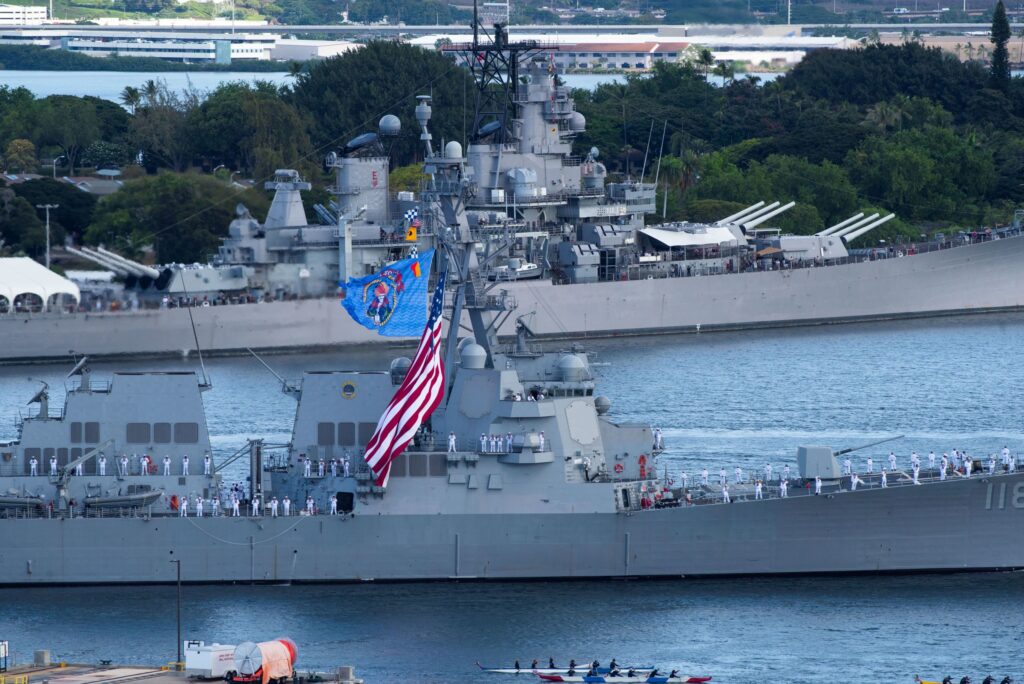
The U.S. Navy’s newest guided-missile destroyer, the USS Daniel Inouye (DDG 118), sails through Pearl Harbor as Sailors man the rails, Nov. 18. U.S. NAVY / Jason Treffry

ARLINGTON, Va. — The Navy will commission the future USS Daniel Inouye (DDG 118), an Arleigh Burke-class destroyer, during a 10:00 a.m. (HST) ceremony at Joint Base Pearl Harbor-Hickham on Dec. 8. 

The future USS Daniel Inouye is named in honor of the late U.S. Sen. Daniel Inouye, who served as a Hawaii representative in the Senate from 1963 until he died in 2012.   

Secretary of the Navy Carlos Del Toro will deliver the keynote address at the ceremony. Remarks will also be provided by Hawaii Gov. David Ige; Rep. Kaiali’i Kahele (D-Hawaii); Honolulu Mayor Rick Blangiardi; Adm. Samuel Paparo, commander, U.S. Pacific Fleet; Ken Inouye, son of Sen. Inouye; and Ed Kenyon, director of new construction programs, General Dynamics Bath Iron Works.  

“The late Sen. Daniel Inouye spent his entire life in public service, both in uniform and out,” said Del Toro. “Sen. Inouye’s life is one to be emulated and the crew of this warship will not only be inspired by his legacy, but will stand the watch with the honor and dignity deserving of a ship bearing his name.” 

The ship’s sponsor Irene Hirano Inouye, Inouye’s wife, established a strong bond with the crew before her passing on April 7, 2020. At the keel laying in 2018, she welded her initials into the ship’s keel and, in 2019, broke a bottle of champagne on the bow in a christening ceremony. During a “mast stepping” ceremony, she placed items special to Inouye in the ship’s mast.

The commissioning ceremony coincides with the 80th Anniversary of Pearl Harbor Remembrance Commemoration events. On Dec. 7, 1941, Daniel Inouye was a 17-year-old senior at Honolulu’s McKinley High School and rushed to a Red Cross aid station to help civilians and Sailors wounded in the attack. 

On April 21, 1945, while serving with the 442nd Infantry Regiment Combat Team in Italy during World War II, an exploding grenade shattered his right arm during an assault. Despite the intense pain, he refused evacuation. He remained at the head of his platoon until they broke the enemy resistance and his troops deployed in defensive positions, continuing to fight until the regiment’s position was secured. Later in life, he received the Medal of Honor for his extraordinary heroism during the assault. 

Cmdr. DonAnn Gilmore, of Anniston, Alabama, is the ship’s commanding officer and leads a crew of 329 officers and enlisted Sailors. Gilmore is a graduate of The Pennsylvania State University. She previously commanded Mine Countermeasures Crew Exultant. 

“This crew put a tremendous amount of work into preparing to bring USS Daniel Inouye to life on Dec. 8. We all share a deep sense of pride and honor to represent our namesake, the late senator and U.S. Army Medal of Honor recipient Daniel Inouye and those he represented for 53 years in the House and Senate,” said Gilmore. “Through USS Daniel Inouye’s service to our nation, every Sailor aboard will strive to make ours the preeminent ship on the waterfront. We embody the ship’s motto, a battle cry adopted from Sen. Inouye’s Army unit, the 442nd Regimental Combat Team. We will ‘go for broke!’ as Daniel Inouye did on the battlefield and in halls of the Senate.” 

The ship is nearly 510 feet long and has a navigational draft of 33 feet. As a Flight IIA destroyer, DDG 118 is equipped with Aegis Baseline 9, which provides improved, integrated air and missile defense capabilities, increased computing power, and radar capable of quickly detecting and reacting to modern air warfare and ballistic missile defense threats. 

Built by General Dynamics Bath Iron Works in Bath, Maine, Daniel Inouye was christened June 22, 2019, and delivered to the Navy on March 8, 2021. USS Daniel Inouye’s homeport is Joint Base Pearl Harbor-Hickam, Hawaii. 

The ceremony will be livestreamed at: https://www.dvidshub.net/webcast/27385. The link becomes active approximately 10 minutes before the event (9:50 a.m. HST). 


Coast Guard Conducted 78 Lancha Interdictions in Fiscal 2021 Along Texas Coast

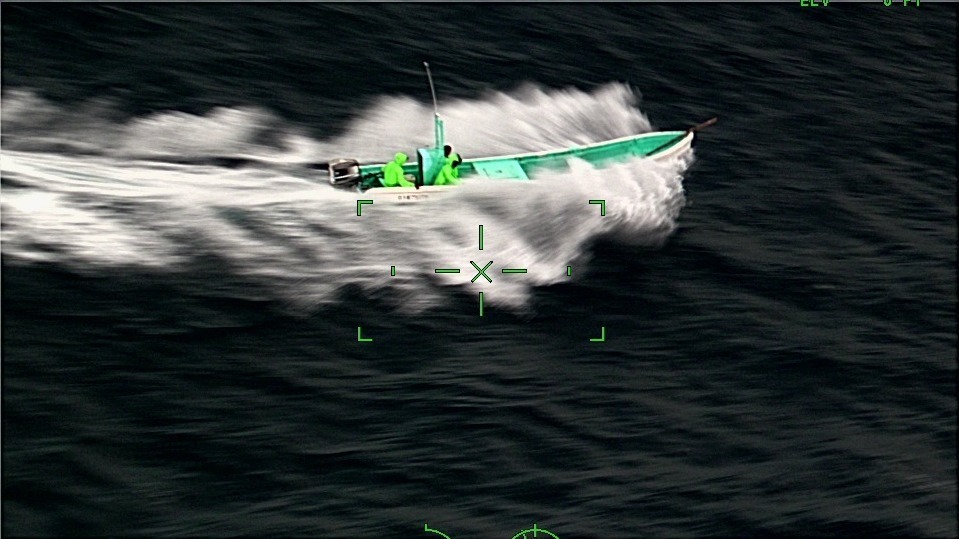
A Coast Guard Sector and Air Station Corpus Christi HC-144 Ocean Sentry captures imagery of a lancha near South Padre Island, Texas, Sept. 30. U.S. COAST GUARD

CORPUS CHRISTI, Texas — Coast Guard law enforcement crews interdicted 78 lanchas, seized 15,484 pounds of catch and detained 208 fishermen during fiscal year 2021 along the Texas coast, the Coast Guard 8th District said Dec. 5. 

Since the first recorded lancha interdiction in the late 1980s, the Coast Guard has seen a significant uptick in the detection of the vessels, recording close to 300 lancha interdictions in the past three fiscal years combined. 

A noteworthy case from this year was on Aug. 4, when Coast Guard Station South Padre Island worked with Coast Guard Sector and Air Station Corpus Christi, Texas Parks and Wildlife and the Coast Guard Cutter Pelican to interdict four lanchas with a total of 320 pounds of red snapper and 1,160 pounds of shark in one day. 

In cooperation with other law enforcement agencies, the Coast Guard uses a layered approach to combat illegal, unreported, and unregulated fishing through aircraft, small boats and cutters, as well as improved technology on those assets, resulting in the drastic increase in lancha interdictions. 

“The crew at Station South Padre Island takes their role of protecting our natural resources from poaching along the Maritime Boundary Line very seriously,” said Lt. Cmdr. Daniel Ippolito, commanding officer of Coast Guard Station South Padre Island. “The last few years of record-breaking lancha interdictions speak to the steadfast commitment, professionalism, and teamwork of the Coast Guard crews and our partners at Texas Parks and Wildlife to this mission. We ask that the public continue to stay vigilant and report any instances of illegal fishing to the Coast Guard or Texas Parks and Wildlife.” 

A lancha is a fishing boat used by Mexican fishermen that is approximately 20-30 feet long with a slender profile. They typically have one outboard motor and are capable of traveling at speeds exceeding 30 mph. Lanchas pose a major threat, usually entering the United States’ exclusive economic zone near the U.S.-Mexico border in the Gulf of Mexico with the intent to smuggle people, drugs, or poach natural resources. 


HII Begins Fabrication of Destroyer George M. Neal

Ingalls Burner specialist Jason Jackson, right, starts fabrication of the Arleigh Burke-class guided missile destroyer George M. Neal (DDG 131) in the Ingalls Shipbuilding Steel Fabrication Shop, observed by Bob Poppenhouse, Ingalls DDG 131 ship program manager; Matt Park, general foreman for Ingalls Fabrication Shop; and Lance Carnahan, director of Ingalls Hull department. INGALLS SHIPBUILDING / Shane Scara

NEWPORT NEWS, Va. — Huntington Ingalls Industries’ Ingalls Shipbuilding division officially started fabrication Dec. 6 of the Arleigh Burke-class (DDG 51) destroyer George M. Neal (DDG 131), the company said in a release. 

“Start of fabrication is our first opportunity to formally celebrate and reflect on our contributions as shipbuilders,” Ingalls Shipbuilding President Kari Wilkinson said. “We are very proud of what we do here for the country and endeavor to do our part in building and activating what will be the newest Flight III destroyer.” 

Ingalls has delivered 33 Arleigh Burke-class destroyers to the Navy. Other destroyers currently under construction include Lenah Sutcliffe Higbee (DDG 123), Jack H. Lucas (DDG 125), Ted Stevens (DDG 128) and Jeremiah Denton (DDG 129). 

The new destroyer’s name honors a Korean War veteran, Aviation Machinist’s Mate 3rd Class George M. Neal, who was awarded the Navy Cross for his heroic actions while attempting to rescue a fellow service member. Neal volunteered as crewman to fly in a helicopter deep into North Korean mountains to attempt the rescue of a Marine aviator who had been shot down and was trapped by the enemy. During the rescue attempt, under heavy enemy fire, Neal’s helicopter was disabled and crashed. He assisted his pilot and the rescued aviator in evading enemy forces for nine days before being captured and held as a prisoner of war. Neal was eventually released and returned to the U.S. with more than 320 fellow POWs in 1952. 


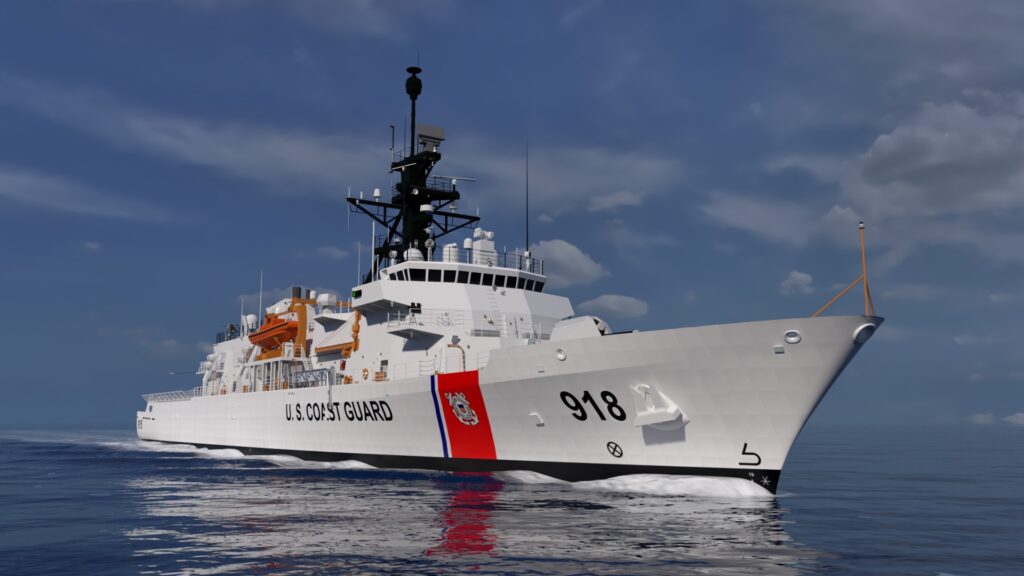
Leonardo DRS to Provide Fourth Shipset of Hybrid Electric Drive Technology for Coast Guard OPCs

Leonardo DRS will provide the Auxiliary Propulsion System for the Coast Guard’s new fleet of Offshore Patrol Cutters. LEONARDO DRS

ARLINGTON, Va. — Leonardo DRS Inc. has again been awarded a contract by Eastern Shipbuilding Group to provide the Auxiliary Propulsion System for the fourth shipset in the U.S. Coast Guard’s new fleet of Offshore Patrol Cutters, Leonardo DRS said Dec. 6.

This platform is the first combined diesel electric or diesel propulsion system application for the Coast Guard. Eastern Shipbuilding Group is the prime contractor and builder of these next-generation Offshore Patrol Cutters. 

Under the contract, Leonardo DRS will provide its high-performance, permanent magnet motor-based Auxiliary Propulsion System, which has been optimized to meet the Coast Guard’s operational tempo and provides capability for the ship to operate much more efficiently at slower speeds, increases mission duration capability, reduces emissions, and provides emergency take-home capability in the event of a failure of the main propulsion diesel engines. When coupled to the main propulsion gearbox, the system allows the ship to operate quietly and efficiently during loitering operations while providing superior fuel economy for increased on-station operations and capability. 

Maximizing use of the electric drive increases the platform’s green credentials and reduces operational time on the main propulsion engines, providing additional multiple benefits. Because electric motors are virtually maintenance free, life cycle costs over the planned 40-year vessel life are minimized by reducing maintenance hours needed on the engines. Using propulsion diesel engines at slow speeds adds significant wear and tear on the engines and increases the potential for coking/wet stacking. By adding this electric Auxiliary Propulsion System, the Coast Guard can expect to have a built-in advantage of reducing not only fuel and maintenance requirements, but total lifecycle costs and increased safety for the fleet. The main engine overhaul cycle, typically planned at 15 years, can be extended to 25 years.  

“Leonardo DRS is a leading innovator in the naval hybrid electric drive technology arena, and we are proud to be able to provide our advanced technology to the Coast Guard’s fleet of next-generation Cutters,” said Jon Miller, senior vice president and general manager of the Leonardo DRS Naval Power business. “These new propulsion systems will give operational flexibility while significantly increasing cost savings in yearly maintenance and fuel, enabling crews to put more focus on their missions.” 


Marine CH-53Ks Partner with Navy to Test Future Force Operating Concepts

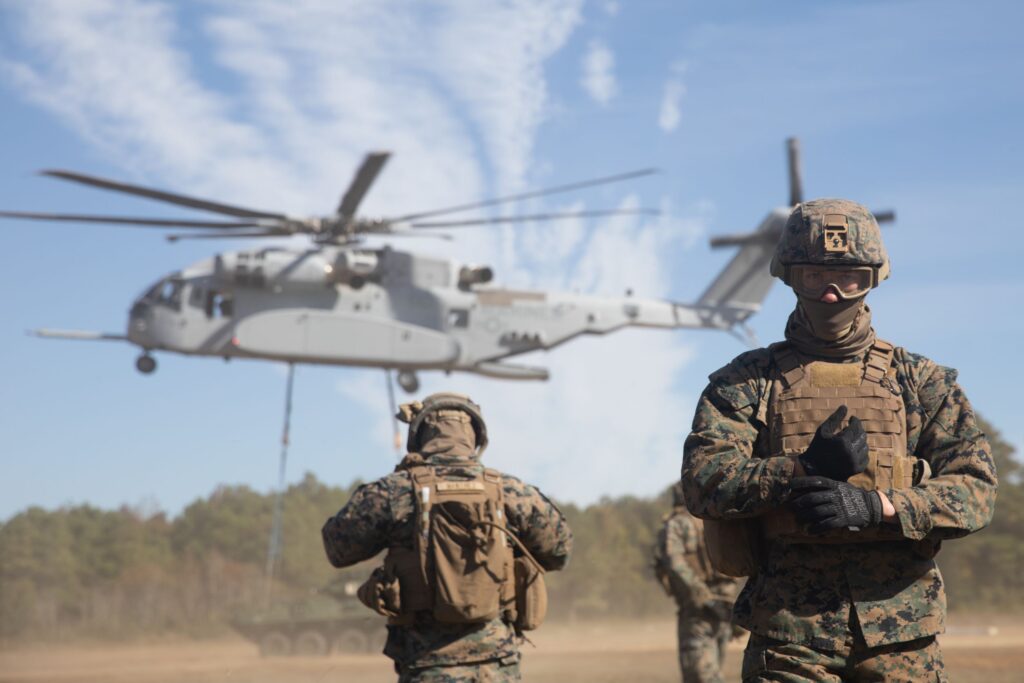
U.S. Marine Corps Pfc. Zackary Riffle with Combat Logistics Battalion 24, Combat Logistics Regiment 2, 2nd Marine Logistics Group waits for a CH-53K King Stallion to take off during a Helicopter Support Team operation at Tactical Landing Zone Albatross on Camp Lejeune, North Carolina, Nov. 19. U.S. MARINE CORPS / Lance Cpl. Meshaq Hylton

ARLINGTON, Va. — In a first for the Marine Corps, Marines from Marine Operational Test & Evaluation Squadron One (VMX-1) conducted over-the-horizon heavy lift and troop transport ship-to-shore operations aboard CH-53K King Stallions over the Atlantic Ocean, Nov. 19-21, Headquarters Marine Corps said Dec. 3.  

These exercises are a critical component of the Marine Corps’ future force operating concepts, such as expeditionary advanced base operations and distributed operations.  

“We are excited to continue advancing the commandant’s vision of the future force by partnering with the Navy and finding ways to optimize how we operate and thrive in a strategic competition environment,” said VMX-1 Commanding Officer Col. Byron Sullivan. “We remain the nation’s naval expeditionary force, ready to fight in any clime or place at any time.” 

VMX-1, evaluating the King Stallion’s ability to meet program specification for the over-the-horizon heavy lift evolution, tested the King Stallion’s capability to transport a 27,000-pound light armored vehicle (LAV-25) from the Wasp-class amphibious assault ship USS Iwo Jima (LHD 7) to a landing zone ashore. The troop transport evolution evaluated the King Stallion’s ability to move troops over the horizon to a location ashore and return to ship without refueling, covering as much as 220 nautical miles roundtrip.  

Combat Logistics Battalion 24 and 2d Battalion, 2d Marines from Camp Lejeune, North Carolina, provided personnel and equipment to assist VMX-1 with their testing, and sailors from the USS Iwo Jima assisted VMX-1 with shipboard and flight deck operations.  

The Marine Corps is progressing through initial operational test and evaluation (IOT&E) of the CH-53Ks prior to fielding them to the Fleet Marine Force. The pilots, maintainers, and contractors of VMX-1, the squadron tasked with conducting operational test and evaluation of Marine Corps aviation platforms and systems, play a significant role in shaping the tactics, techniques and procedures of CH-53K utilization. Additionally, VMX-1 personnel will put the aircraft through rigorous evaluations in order to determine its suitability and effectiveness before arriving to the fleet.  

“We have the most professional and capable individuals maintaining the aircraft and are also appreciative to the Blue-Green Team, who demonstrate the superb ability to operating harmoniously,” said VMX-1 CH-53K Detachment Operations Officer Maj. Joshua Banks.  


Navy League Announces Active-Duty Military Now Eligible for Membership

Marines hike to the next training location during Exercise Baccarat in Aveyron, Occitanie, France, Oct.16. U.S. MARINE CORPS / Lance Cpl. Jennifer Reyes

ARLINGTON, Va. — The Navy League of the United States announced Dec. 2 it has opened membership to active-duty service personnel from every branch of the military to join the organization as individual members. 

The Navy League is a nonprofit civilian, educational and advocacy organization that supports America’s sea services: the Navy, Marine Corps, Coast Guard and U.S.-flag Merchant Marine.

This historical change in the Navy League’s bylaws, passed by its board of directors, has shifted its membership from an all-civilian organization to a joint civilian and active-duty organization. The Navy League currently has 30,000 members in 200 councils around the globe.  

“This important shift in our membership eligibility will lend to greater diversity and gravitas to the Navy League’s mission of education, advocacy and support to our sea services and its members.” said Navy League National President Dave Reilly. “This change also provides an important growth opportunity for the Navy League as we continue to expand our membership and the Navy League’s impact on our sea services.”  

Navy League councils, located primarily in the United States but also around the world, offer service members important ties to their community and a direct way to continue to serve the country once they transition out of service.   

Navy League member benefits include transition assistance, members-only discounts, council membership and a subscription to Seapower magazine. Active-duty sea service members’ children and grandchildren are also eligible to apply for a Navy League Foundation scholarship to aid in college tuition.  

Members can choose to join for one-, two-, three-, four- or five-year periods or can opt to join as a lifetime member. More information on active-duty membership, including an application, can be found on https://www.navyleague.org/become-a-member/active-duty-membership.   


Service Logisticians: Mini Nuclear Reactors Might be a Solution to Future Expeditionary Energy Needs

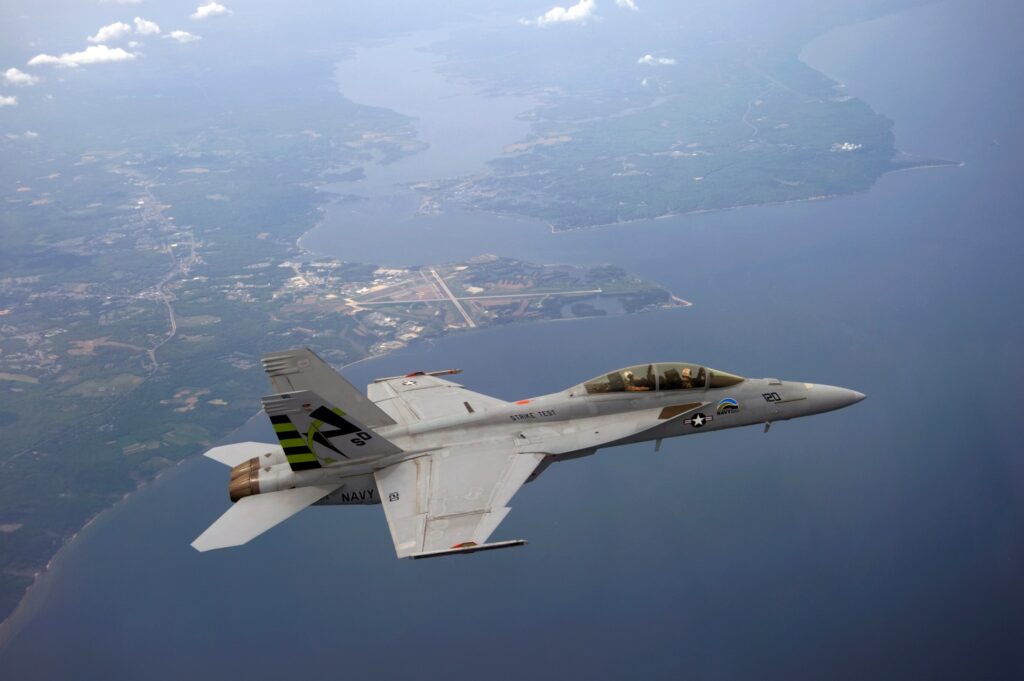
The Green Hornet flies over Naval Air Station Patuxent River April 22, 2010. On Earth Day 2010, the Super Hornet became the first Navy aircraft to demonstrate alternative fuel capability using a 50/50 blend of camelina biofuel and the Navy’s primary jet fuel, jet propellant (JP)-5. U.S. NAVY

ARLINGTON, Va. — Top logisticians of the U.S. Navy, Marine Corps and the other armed services told a congressional panel Dec. 2 they are exploring the development of deployable, micro nuclear reactors as an energy source for warfighters in remote and austere environments.

“The Marine Corps clearly appreciates the value and potential future benefits of alternative energy sources,” Lt. Gen. Edward Banta, deputy commandant for Installations and Logistics, told a House Armed Services Committee hearing on operational energy and logistics challenges.

“Through our Marine Corps Warfighting Lab, we have been involved in looking at hydrogen fuel as a potential future source, and I would think that combining that with both micro grids as well as potential micro reactors would provide  great benefits to us in the future, but particularly operating in an expeditionary area environment,” Banta added.

Rep. John Garamendi (D-California), the subcommittee chair, noted in his opening statement the Defense Department is the world’s “largest single consumer of petroleum products,” using more than 85 million barrels of fuel in Fiscal 2017 at a cost of nearly $8.2 billion. “Such expensive requirements invite risk,” both to frontline troops who need it and those who provide it, he said.

The Pentagon defines operational energy as the energy required for training, moving and sustaining military forces and weapons platforms for military operations. The term includes energy used by tactical power systems, generators and weapons platforms.

For years, the individual services have been exploring alternative fuels, such as the Navy’s Green Hornet project — an F/A-18 Super Hornet strike fighter jet powered by a 50-50 biofuel blend — to save both money and the environment. However, lessons learned in the austere and isolated distances of Iraq and Afghanistan over the last 20 years showed the need not only for alternative fuels, but innovative ways to transport and store energy. Planners expect that need to grow with widely dispersed, highly mobile ships and ground units operating in contested areas of the vast Indo-Pacific region.

In 2015, Russia announced plans to build up to 30 small transportable nuclear reactors for the Arctic to provide electricity to remote bases under development as part of Russia’s Arctic militarization.

An image describing ways to transport a small nuclear reactor, from a GAO report on Project Pele, a DoD effort to design and build a prototype mobile nuclear reactor. GAO

Rep. Doug Lamborn of Colorado, the ranking Republican on the Readiness subcommittee raised the issue of small reactors as a promising solution to frontline forces’ energy needs, such as Project Pele, the Defense Department’s Strategic Capabilities Office project to design, build, and demonstrate a prototype mobile nuclear reactor.

“Anything that allows us the freedom to maneuver, we’re obviously very interested in,” said Vice Adm. Rick Williamson, the deputy chief of Naval Operations for Fleet Readiness and Logistics. To be able “to divorce the operational fleet from the logistics tether gives us maneuverability. Maneuverability equals survivability.”

While the Navy already has very big reactors to power aircraft carriers and submarines, “we have to look at the problem of sustaining the fleet as a whole. That is going to be done both ashore and afloat. So, if there is potential there [in small reactors], obviously it provides tremendous operational advantage for us,” Williamson said.

“I don’t think we can afford to not explore it within the realm of demand reduction,” Air Force Lt. Gen. Sam Barrett, the Joint Staff Director for Logistics, told the subcommittee.


Sofar Launches Wayfinder Weather Routing for Dynamic Voyage Optimization

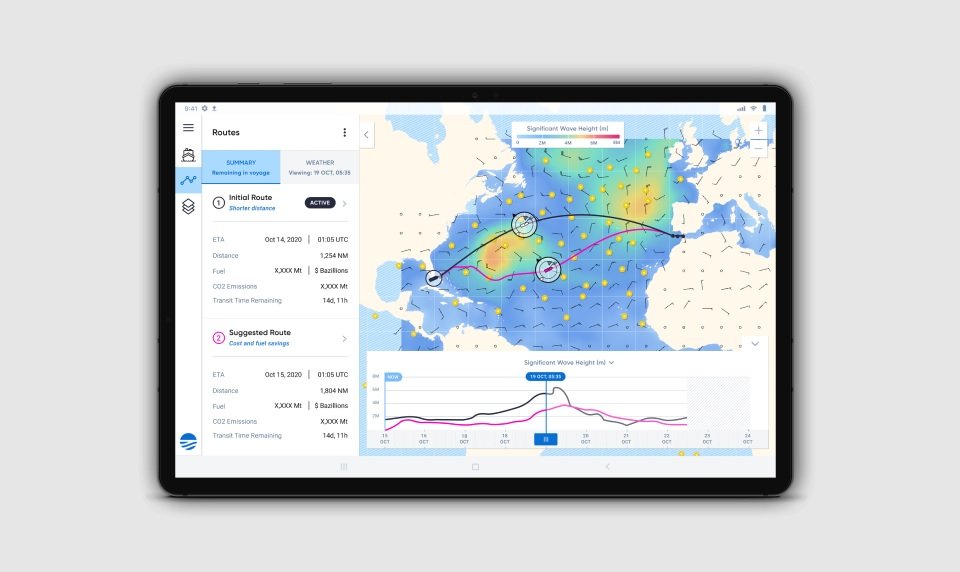
Sofar Ocean’s new Wayfinder application. SOFAR OCEAN

SAN FRANCISCO, Calif. — Sofar Ocean has launched Wayfinder – The Dynamic Route Optimization Platform, a real-time, data-powered application to radically improve maritime route efficiency and reduce fuel emissions, the company said in a release. 

Sofar’s proprietary open ocean sensor network and weather forecasts, combined with real-time market variables and personalized vessel performance models, deliver high-accuracy weather routing and daily speed and routing guidance to ensure more efficient and safer routes. 

Optimized voyage and speed profiles can produce massive reductions of greenhouse gas emissions according to the International Maritime Organization. According to the IMO, with voyage optimization you can see anywhere from 1-10% reduction in GHG. With today’s optimization solutions there is no concept of continuous weather monitoring and daily updates to ensure that ships are always on the most optimal path. Wayfinder’s unique value is that it’s powered by the best weather data with continuously optimized routing recommendations. This gives fleet operators and captains the most recent weather and routing context they need to maximize voyage profitability, minimize safety risks, and track closer toward carbon neutrality with each transit. 

Several major commercial shipping companies including Singapore-based Berge Bulk, Greece-based Star Bulk and Seaven as well as U.S.-based Class society ABS are leveraging the new technology to streamline fleet efficiency by identifying more direct, cost-effective, and energy-efficient routes. 

As a pioneer in shipping sustainability, Berge Bulk has aggressively pursued decarbonization strategies over the last decade. In support of this initiative, they were one of the first pilot customers of the Wayfinder platform. According to their CEO, James Marshall, “Wayfinder allows us to increase vessel utilization and efficiency, ensuring that we balance profitability with emissions reduction objectives. By using Wayfinder’s data and voyage optimization, we’ve seen 

efficiency gains in the range of 4.5% on dedicated voyages, which translates into as many as 14 additional sailing days per year per vessel.”  

“Wayfinder is the Google Maps or Waze of the ocean. It’s your voyage partner — always looking out for the best options among the trillions of possible routes in the ocean,” said Tim Janssen, CEO and cofounder of Sofar Ocean. “Like navigation apps on land, Wayfinder integrates seamlessly into the captain’s workflow and is easy to use. It constantly updates its recommendations based on the latest weather data powered by thousands of live weather sensors, variations in the bunker and charter market, and vessel performance dynamics. Ocean intelligence is in our team’s DNA, and Wayfinder is a big step toward our mission of building a more connected ocean.” 


Marines Test JAGM From AH-1Z Viper

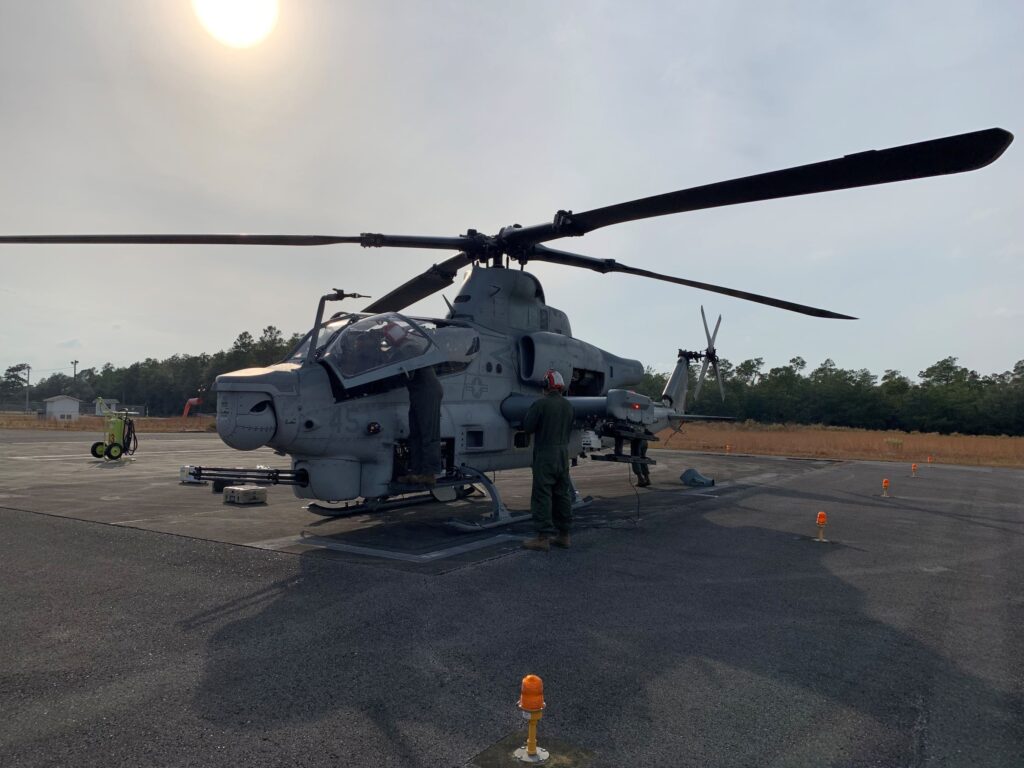
Marine Corps aviation ordnance Marines assigned to Marine Operational Test & Evaluation Squadron One (VMX-1) conduct operational checks on an AH-1Z Viper to ensure the aircraft remains ready during the operational test and evaluation of the joint air-to-ground missile, Nov. 4. U.S. MARINE CORPS / Maj. Jay Hernandez

ARLINGTON, Va. — Marines from Marine Operational Test & Evaluation Squadron 1 (VMX-1) conducted an operational test and evaluation of the joint air-to-ground missile (JAGM) from an AH-1Z Viper, Nov. 3-7 at Eglin Air Force Base in Florida, the Corps announced Dec. 2. 

VMX-1 fired and evaluated the JAGM to determine its suitability and effectiveness to support expeditionary advanced base operations, such as conducting sea denial operations within the littorals and supporting sea control operations.   

Personnel from Air Test and Evaluation Squadron 21 (HX-21), Naval Air Systems Command Direct and Time-Sensitive Strike program office (PMA-242), Army Program Executive Office Missiles and Space, Air Force 780th Test Squadron, as well as industry partners, were on location to observe and analyze the data from the test event. This event can lead to significant improvements in lethality of attack helicopters by arming them with newer munitions equipped with two sensor technologies and optimizes missile performance on maritime targets.    

“Watching these professionals from across the services and industry come together to test the effectiveness and work on improvement for this weapon system is truly a phenomenal experience,” said VMX-1 Commanding Officer Col. Byron Sullivan. “The team is doing everything possible to ensure this capability will be the needed upgrade that enhances our ability to use precision strikes against fast-moving maritime targets.” 

The team observed the test from locations across Eglin Air Force Base, honing in on weather considerations, telemetry and instrumentation, coordinating with the pilots, and observing the impact zone. Ultimately, the data collected will be analyzed to determine overall system effectiveness and develop the tactics, techniques, and procedures for its employment.   

“Executing this type of concept development is very critical to get it right on paper and put more effective systems in the hands of the warfighter,” said Maj. Thomas Hutson, the Assault Support department head at VMX-1 and member of the JAGM test team. 

This test is part of a larger effort to upgrade the AH-1Z and UH-1Y aircraft, in alignment with the Commandant’s vision of force modernization vision to maintain a competitive edge against potential adversaries.    

The mission of VMX-1 is to conduct operational test and evaluation of Marine Corps aviation platforms and systems. 


HII Delivers Guided Missile Destroyer Frank E. Petersen Jr. to U.S. Navy

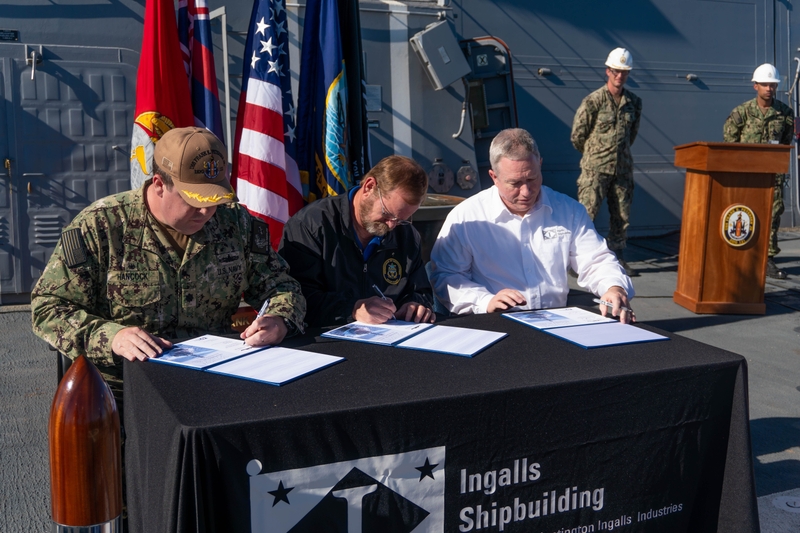
Signing ceremonial documents declaring delivery of Frank E. Petersen Jr. (DDG 121) from Ingalls Shipbuilding to the U.S. Navy are, from left, Navy Cmdr. Daniel Hancock, prospective commanding officer DDG 121; Billy Oaks, superintendent, Aegis Combat System, Supervisor of Shipbuilding, Gulf Coast; and Donny Dorsey, Ingalls DDG 121 ship program manager. In the background are Cmdr. Sean Doherty, left, DDG program manager’s representative; and Chief Petty Officer Yamina Bolar, DDG 121 chief Aegis fire controlman. HUNTINGTON INGALLS INDUSTRIES / Shane Scara

NEWPORT NEWS, Va. — Huntington Ingalls Industries’ Ingalls Shipbuilding division delivered the Arleigh Burke-class guided missile destroyer Frank E. Petersen Jr. (DDG 121) to the U.S. Navy during a signing ceremony Nov. 30. This milestone officially transfers custody from HII to the U.S. Navy. 

“I am again very proud of our DDG team today,” said Kari Wilkinson, Ingalls Shipbuilding president. “Not only have they completed another major program milestone, but they have done so in the face of a pandemic. This team, and all of our shipbuilders across our entire portfolio, are what shipbuilding is all about.” 

Delivery of DDG 121 marked the 33rd destroyer Ingalls has built for Navy, with four more currently under construction, including Lenah Sutcliffe Higbee (DDG 123), Jack H. Lucas (DDG 125), Ted Stevens (DDG 128) and Jeremiah Denton (DDG 129). 

Arleigh Burke-class destroyers are highly capable, multi-mission ships and can conduct a variety of operations, from peacetime presence and crisis management to sea control and power projection, all in support of the United States military strategy. Guided missile destroyers are capable of simultaneously fighting air, surface and subsurface battles. The ship contains myriad offensive and defensive weapons designed to support maritime defense needs well into the 21st century. 

DDG 121 is named for Frank E. Petersen Jr., who was the U.S. Marine Corps’ first African-American aviator and general officer. After entering the Naval Aviation Cadet Program in 1950, Petersen would go on to fly more than 350 combat missions during the Korean and Vietnam wars.