Construction Begins on Future USS Robert E. Simanek
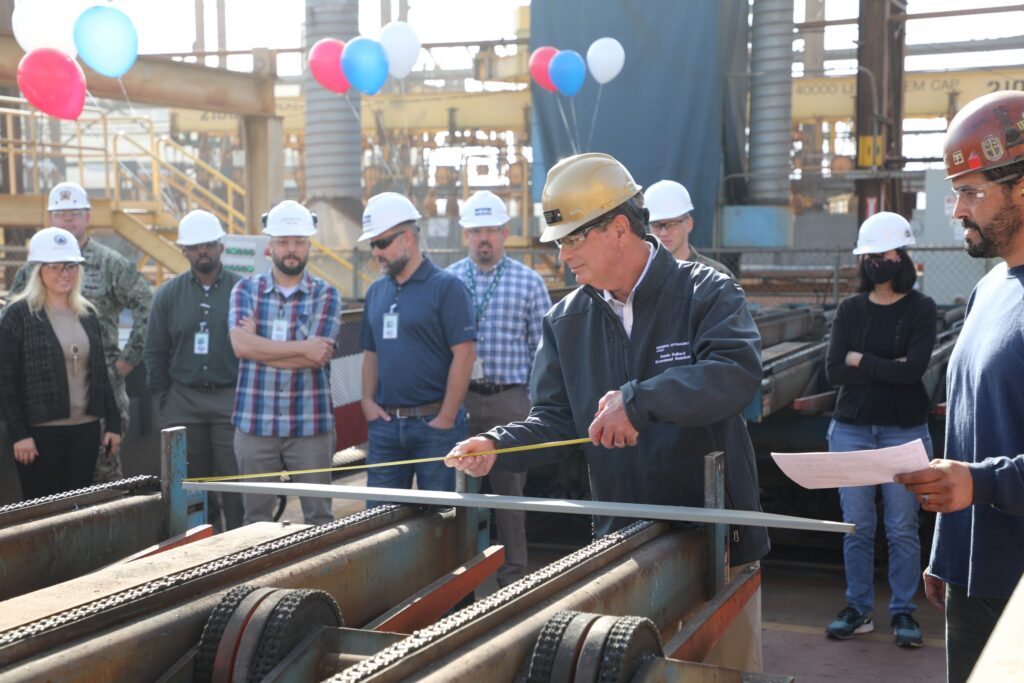
Construction started on the fifth Expeditionary Sea Base, the future USS Robert E. Simanek (ESB 7), at General Dynamics National Steel and Shipbuilding Co. in San Diego Dec. 1. U.S. NAVY

SAN DIEGO — Construction started on the fifth Expeditionary Sea Base (ESB), the future USS Robert E. Simanek (ESB 7), at General Dynamics National Steel and Shipbuilding Co. in San Diego during a small ceremony, Dec. 1, Team Ships Public Affairs said in a release. 

The ESB ship class is highly flexible and used across a broad range of military operations supporting multiple operational phases, similar to the Expeditionary Transfer Dock class. Acting as a mobile sea base, they are part of the critical access infrastructure that supports the deployment of forces and supplies to provide prepositioned equipment and sustainment with flexible distribution. 

“ESBs are optimized to support the core capabilities of aviation facilities, berthing, special operations, equipment staging support, and command and control operations,” said Tim Roberts, Strategic and Theater Sealift program manager, Program Executive Office Ships. “The ESBs have demonstrated their ability to enhance the fleet’s flexibility and capability as they operate around the world. The addition of the future USS Robert E. Simanek will help continue to provide critical access in the maritime domain.” 

The ship is named in honor of Marine Corps veteran Robert E. Simanek, who was awarded the Medal of Honor after he threw himself on an enemy grenade shielding his fellow Marines during the Korean War. 

In 2019, the Navy made the decision to commission all Expeditionary Sea Base ships to allow them to conduct a broader and more lethal mission set, compared to original plans for them to operate with a USNS designation. ESBs are commanded by a Navy O-6 with a hybrid-manned crew of military personnel and Military Sealift Command civilian mariners. This designation provides combatant commanders greater operational flexibility as to how the platform is employed. 

GD-NASSCO has delivered three other ESBs and is currently constructing the future USS John L. Canley (ESB 6). 


Harry S. Truman Carrier Strike Group Departs on Deployment

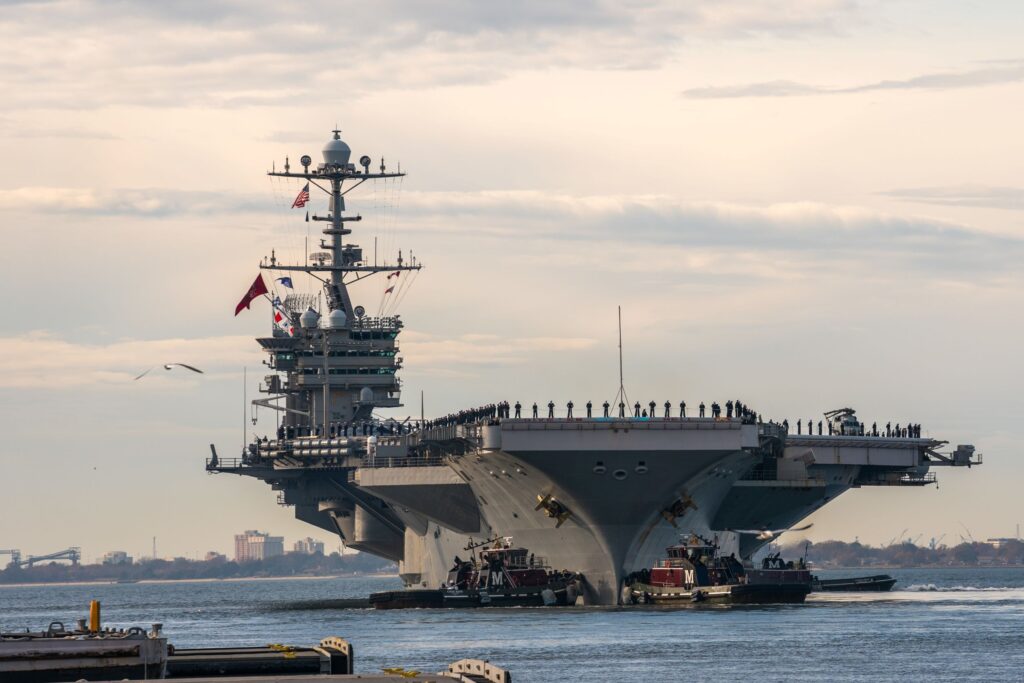
The Harry S. Truman Carrier Strike Group departed Naval Station Norfolk, Virginia, and Mayport, Florida for a regularly scheduled deployment Dec. 1. U.S. NAVY

ARLINGTON, Va. — The Harry S. Truman Carrier Strike Group (HSTCSG) departed Naval Station Norfolk, Virginia, and Mayport, Florida for a regularly scheduled deployment, Dec. 1, the USS Harry S. Truman Carrier Strike Group Public Affairs said in a release. 

Elements of the strike group, commanded by Rear Adm. Curt Renshaw, include flagship USS Harry S. Truman (CVN 75), commanded by Capt. Gavin Duff; the nine squadrons of Carrier Air Wing (CVW) 1; staffs of Carrier Strike Group (CSG) 8; and the Ticonderoga-class cruiser USS San Jacinto (CG 56). 
 
In addition, the strike group will include the guided-missile destroyers of Destroyer Squadron (DESRON) 28 commanded by Capt. Todd Zenner which includes USS Bainbridge (DDG 96), USS Cole (DDG 67), USS Gravely (DDG 107), and USS Jason Dunham (DDG 109). The Royal Norwegian Navy’s frigate HNoMS Fridtjof Nansen (F310) will join the strike group, and operate as part of the strike group throughout the entire deployment. 

The Harry S. Truman Carrier Strike Group will be conducting operations to support maritime security and stability in international waters across the globe. Carrier strike groups have a wide range of capabilities to respond wherever and whenever required through a variety of mission sets. Additionally, strike groups possess the flexibility and sustainability to fight major wars and ensure freedom of the seas. 
 
The deployment follows months of intense training and preparation to include the Board of Inspection and Survey as well as various international maritime exercises such as Group Sail and Composite Training Unit Exercise, an intense multilateral combined exercise that assessed the strike group’s abilities to conduct military operations at sea and project power ashore in late October. 

“The team within the strike group has come together in an impressive manner these last few months,” said Rear Adm. Curt Renshaw, commander, CSG 8. “They have become an integrated, multi-mission team capable of conducting the full spectrum of combat operations to ensure security in the maritime. I have no doubt that we are prepared for any challenge while on this deployment.” 

The strike group units will work alongside allied and partner maritime forces, focusing on theater security cooperation efforts, which help to further regional stability. 
 
“During this training cycle, we have learned how to train and fight side by side whether it is onboard the same ship, in the skies, or across the seas,” Duff said. “While we serve as the flag ship, we are never nearly as capable or as strong as we are when we deploy as a strike group.” 
 
HNoMS Fridtjof Nansen (F310) joined the strike group under the Cooperative Deployment Program, which emphasizes the strengthening of defense partnerships and capabilities between the United States and bilateral or multilateral partners. 
 
“HNoMS Fridtjof Nansen is ready and excited to embark upon this important deployment. The hospitality and professionalism [the] U.S. Navy has provided during our harbor stay and sea periods have been excellent, ensuring that we are an integrated asset of Carrier Strike Group 8. It is truly an honor for us to be the first Norwegian cooperative deployer in history. And this marks yet another milestone in the overall defense cooperation between Norway and our most important ally, USA,” said Commanding Officer Ruben Grepne-Takle. 
 
Squadrons of CVW 1 include Strike Fighter Squadrons (VFA) 11 “Red Rippers;” VFA-211 “Fighting Checkmates;” VFA-34 “Blue Blasters;” VFA-81 “Sunliners;” Electronic Attack Squadron (VAQ) 137 “Rooks;” Carrier Airborne Early Warning Squadron (VAW) 126 “Seahawks;” Helicopter Sea Combat Squadron (HSC) 11 “Dragon Slayers;” Helicopter Maritime Strike Squadron (HSM)72 “Proud Warriors;” and a detachment from Fleet Logistics Support Squadron (VRC) 40 “Rawhides.” 


Planning Underway for Pearl Harbor Naval Shipyard Detachment Guam

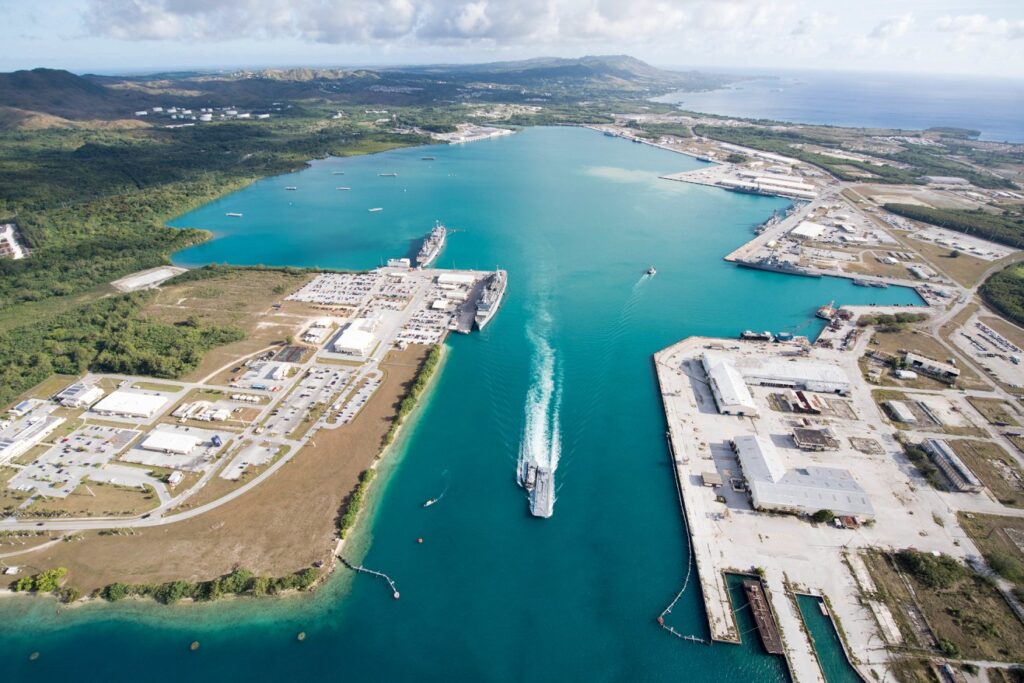
The U.S. Navy is planning to establish a detachment of the Pearl Harbor Naval Shipyard and Intermediate Maintenance Facility in Guam. NAVAL SEA SYSTEMS COMMAND

ARLINGTON, Va. — Planning is underway for the establishment in Guam of a detachment of the Pearl Harbor Naval Shipyard and Intermediate Maintenance Facility (PHNSY & IMF), the yard’s assistant project superintendent for Execution Planning said Nov. 30. 

The need for the detachment in Guam is to “close the existing maintenance gaps in executing submarine maintenance in Guam,” said Brandon Wright, the assistant project superintendent. 

The naval base in Apra Harbor, Guam, is the home to five Los Angeles-class attack submarines and two submarine tenders which support U.S. Pacific Fleet operations in the Western Pacific and Indian Ocean. The establishment of a PHNSY & IMF detachment underscores the growing importance of Guam in countering the growing Chinese naval power in the region. 

Wright said in September 2019 “a comprehensive 221-page study, released by Beth Kuanoni and her team, identified the workforce, training, facilities, and equipment requirements needed to provide the capacity and capabilities for a PHNSY & IMF detachment in Guam.” 

The detachment was approved in December 2019, which led to Phase I of the Guam 2025 Plan, Wright said, and the formation of the Guam Implementation Team (GIT). 

“Under the leadership of GIT director Alex Desroches, the team is identifying facility needs that include shop workspaces, administrative and management spaces, equipment, information technology, material spaces and storage. In parallel with the temporary facility build-up, military construction projects are in place for permanent detachment facilities with a target end date of 2028,” Wright said. 

“The biggest challenge is the grand scope of requirements necessary to stand up a shipyard detachment in a remote location,” Desroches said. “This includes everything from an organizational change request and approval through the Office of the Chief of Naval Operations to identifying and securing the resource requirements in the program objective memorandum and budget, to developing strategies to recruit and fill billets in Guam, and developing local processes for material, work execution and work certification.” 

When fully manned, the Guam detachment will include 170 civilian workers and 400 military personnel.  

“Civilian employees will provide management, guidance, training, mentoring and development of Sailors, who will be the primary wrench-turning workforce, Wright said.  

“The Guam Detachment is unique and we can’t use the current templates being used at Fleet Maintenance in Pearl Harbor, Portsmouth Naval Shipyard Detachment in Point Loma or the Puget Sound Naval Shipyard Detachment in Yokosuka,” Desroches said. “The primary workforce will consist of active-duty Sailors who have transferred from the ship tenders to the shipyard detachment, as well as expeditionary maintenance support needs and additional issues associated with Guam’s remote location. We are building a new organization from scratch that is at the tip of the spear, supporting five forward-deployed submarines with the highest optempo in the fleet.” 


NGC to Increase Inventory of AARGM for US Navy and German AF

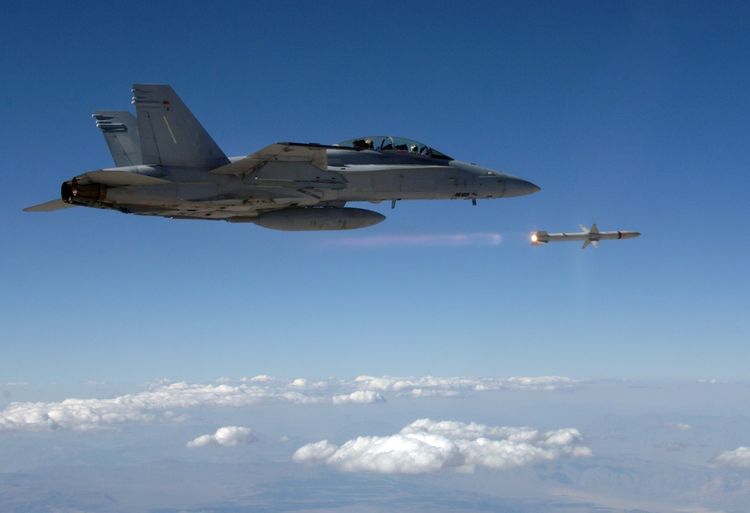
An AGM-88E2 AARGM is launched from an F/A-18 during testing. NORTHROP GRUMMAN

LOS ANGELES — Northrop Grumman has received a $153 million dollar contract award from the U.S. Navy for full-rate production of lots 10 and 11 of the AGM-88E2 Advanced Anti-Radiation Guided Missile (AARGM), the company said Dec. 1. The contract includes production of missiles for the U.S. Navy and German air force. 

“As threats continue to evolve, AARGM remains an affordable solution to continue protecting the U.S. Navy and our allies with their critical missions every day,” said Gordon Turner, vice president, advanced weapons, Northrop Grumman. “The ability to detect and defeat the rapid proliferation of today’s surface-to-air-threats, while remaining out of harm’s way, is paramount to mission success.” 

Northrop Grumman has produced more than 1,500 AARGM missiles for the international cooperative acquisition program with the U.S. Navy, serving as the executive agent, and the Italian air force. The missile provides a supersonic, air-launched tactical missile system that upgrades legacy AGM-88 HARM systems with advanced capability to perform suppression and destruction of enemy air defense systems. 

AARGM is the most advanced system for pilots against modern surface-to-air threats. Providing a combination of precision, survivability and lethality, the system is able to rapidly engage land- and sea-based air-defense threats as well as striking time-sensitive targets. 

As a prime contractor, Northrop Grumman also is developing the Advanced Anti-Radiation Guided Missile – Extended Range (AARGM-ER) in partnership with the U.S. Navy. The AARGM-ER will include a new rocket motor and warhead to provide an advanced capability to detect and engage enemy air defense systems. AARGM is currently deployed with the U.S. Navy and U.S. Marine Corps on the F/A-18C/D Hornet, F/A-18E/F Super Hornet, and U.S. Navy and Royal Australian Air Force EA-18G Growler aircraft; AARGM is also integrated on the Italian air force’s Tornado Electronic Combat aircraft. 


Coast Guard Buoy Tender Departs San Francisco for Major Maintenance Period

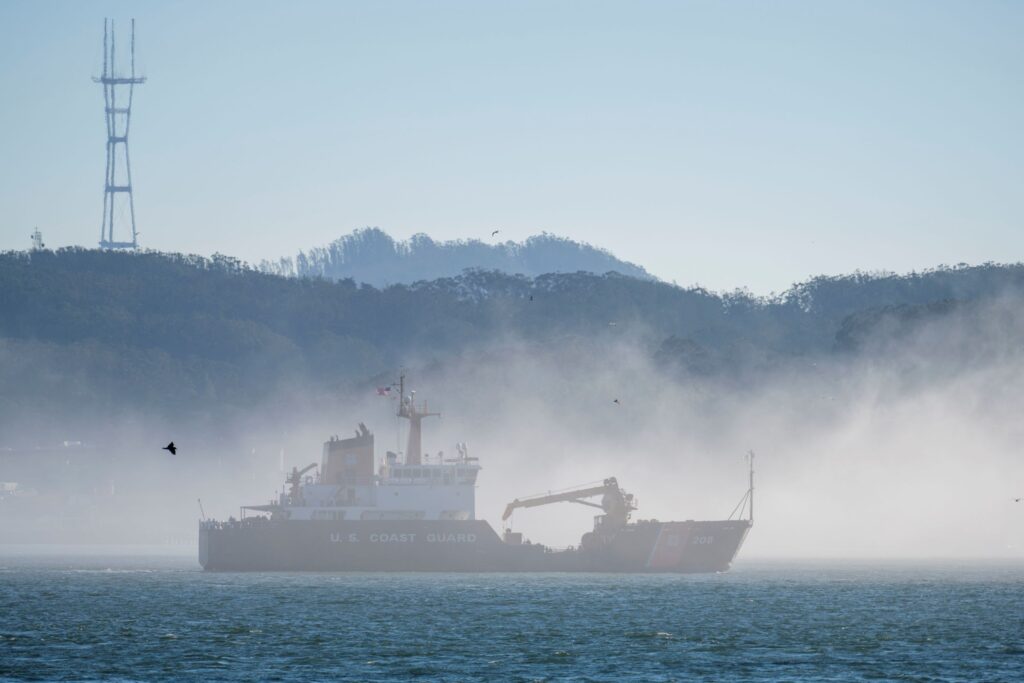
The Coast Guard Cutter Aspen (WLB 208) departs the San Francisco Bay Area Nov. 29. The Aspen served the California coastline since Sept. 28, 2001. U.S. COAST GUARD / Petty Officer 3rd Class Taylor Bacon

ALAMEDA, Calif. — The Coast Guard Cutter Aspen (WLB 208) and crew departed the Bay Area Nov. 29 for the last time as a San Francisco-based cutter and are en route to the Coast Guard Yard in Baltimore to undergo major maintenance and overhaul, the Coast Guard 11th District said Nov. 30.   
   
This marks the end of two decades of service along the California Coastline for the Aspen as one of 16 of the nation’s Juniper class sea-going buoy tenders. The 225-foot ship and its 48-person crew have been stationed at Yerba Buena Island since Sept. 28, 2001.  
   
Aspen’s area of responsibility encompassed the coastal areas from the Oregon-California border to San Diego. In addition to its primary buoy tender operations, the cutter also has a long history in search and rescue, drug and migrant interdiction and marine pollution prevention and response missions. Since 2005, the cutter has worked with U.S. partners in Mexico to interdict tens of millions of dollars in illicit narcotics in support of U.S. Southern Command and Joint Interagency Task Force South objectives, most recently interdicting $3.2 million worth of cocaine in 2017.  In 2007, Aspen responded to the Cosco Busan oil spill in San Francisco and the Deepwater Horizon oil spill in the Gulf of Mexico in 2010 to assist in oil spill cleanup efforts.    
   
The crew is slated to travel approximately 6,000 miles over the course of 40 days and pass from the Pacific to the Atlantic by way of the Panama Canal. The Aspen is scheduled to undergo a $20 million, 12-month major maintenance availability (MMA) overhaul.  
   
The MMA is a planned dry dock event at the Coast Guard Yard, the first such major availability in the life of this class of ship. The availability will recapitalize many of the ship’s critical systems, to include complete crane replacement, topside preservation work and technology modernization. The availability is designed to ensure that the cutter can reach its designed 30-year service life. Aspen will be the 11th 225-foot Juniper Class buoy tender to begin the MMA period.  

The Coast Guard Cutter Alder (WLB 216) formerly homeported in Duluth, Minnesota, is slated to be brought back into service in summer of 2022 by the former Aspen crew and re-homeported in San Francisco. The Aspen’s scheduled final destination will be Homer, Alaska, in early 2023.  

“It has been a privilege to serve along California’s rugged, oftentimes austere coastline; the beauty is without parallel, and the Pacific Ocean’s winds, current, fog and constant swells offshore continue to mold us as the stern teachers they are,” said Lt. Cmdr. Paul Ledbetter, the Aspen’s commanding officer. “The U.S. is and always has been a maritime nation, and my crew relishes the challenges of keeping the maritime transportation system up and running in our capacity as a WLB. We look forward to continuing to serve this great country when we return to San Francisco aboard the Coast Guard Cutter Alder next year.” 
   
Coast Guard Aids to Navigation Team San Francisco will be standing by to perform routine maintenance on the Aspen’s buoys throughout the Bay Area. Additionally, the Coast Guard Cutter George Cobb, a 175-foot buoy tender homeported in San Pedro, is slated to maintain all aids to navigation south of San Francisco and the Coast Guard Cutter Elm, a 225-foot buoy tender homeported in Astoria, Oregon, is also slated to assist throughout Northern California in spring 2022. 


Electrowatch Completes Revere Sensitization Treatments on USS Vicksburg

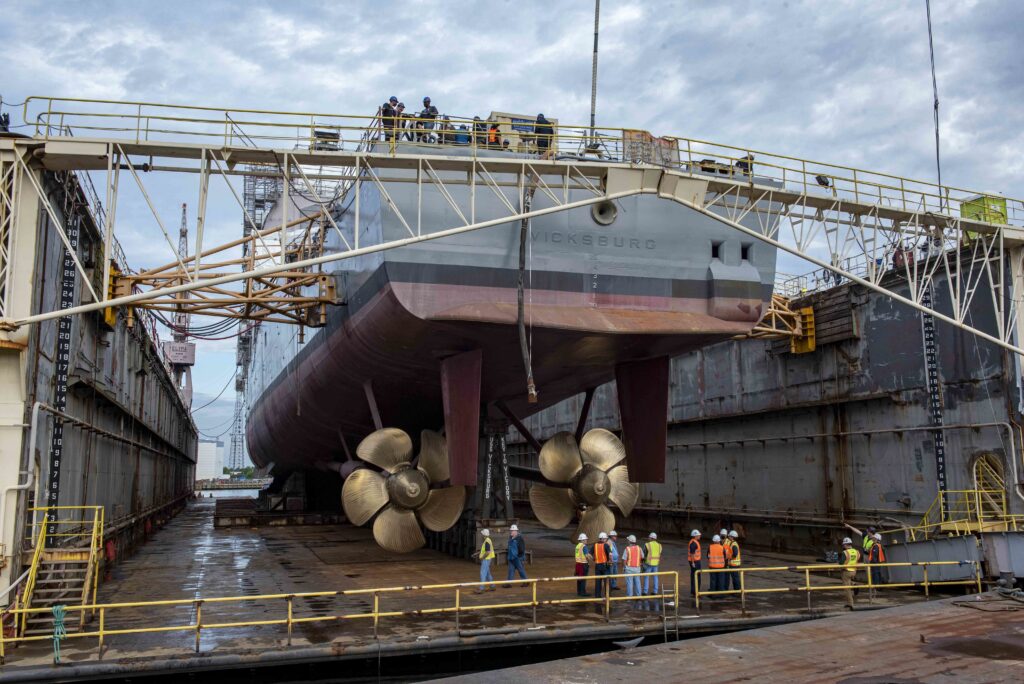
The Ticonderoga-class guided missile cruiser USS Vicksburg (CG 69), shown here awaiting dry dock flooding in June 2021. U.S. NAVY / Mass Communication Specialist 3rd Class Brandon Roberson

Norfolk, Va. — ElectraWatch, an Austal USA company, completed two successful reverse sensitization treatments of aluminum alloy in service on the U.S. Navy Ticonderoga-class guided missile cruiser USS Vicksburg (CG 69) in September 2020 and July 2021. 

The process of reverse sensitization involves careful heating to restore shipboard aluminum to near-factory condition from a “sensitized” state, an out-of-spec condition susceptible to cracking that can develop at sea. This treatment reduces the need for replacement of the material or alternative surface treatment which is costly and time-consuming. Follow-up measurements verified the material had been returned to within specification. 

“I’m proud of the hard work our engineering team has done to accomplish these treatments,” ElectraWatch General Manager Ryan Dunn said. “These results validate the Navy’s confidence in ElectraWatch and the process we have developed.  Our cutting-edge tools and processes represent a major improvement over previous methods and will serve to extend the service life of the Ticondergoa-class ships.”            

Donald Tubbs, ElectraWatch’s Senior Test & Research Engineer, explains: “These tests are the result of several years of collaboration with waterfront managers and the Navy’s technical and research and development communities.” 

5000-Series Aluminum Alloy (Marine Grade) is used extensively on U.S. Navy guided-missile cruiser superstructures. The specific alloy used, AA5456, can become sensitized after long exposures to elevated temperatures, such as those that arise at sea during solar heating. Once sensitized, the combination of a corrosive environment like seawater and stress can lead to cracking of the plate. 

By carefully controlling time and temperature, the reverse senstization treatment can return to near-factory condition or “heal” aluminum alloy that may have previously required costly complete replacement. Used in tandem with ElectraWatch’s proprietary non-destructive Degree of Sensitization Probe, which has been successfully used to conduct over 9,000 fleet-based sensitization measurements, the Navy now has a turnkey solution to conduct better-informed, cost-saving maintenance planning that limits scope creep and reduces the amount of aluminum replaced.      


BAE Systems Provides First Zero-Emission Fuel Cell Propulsion System for U.S. Vessel

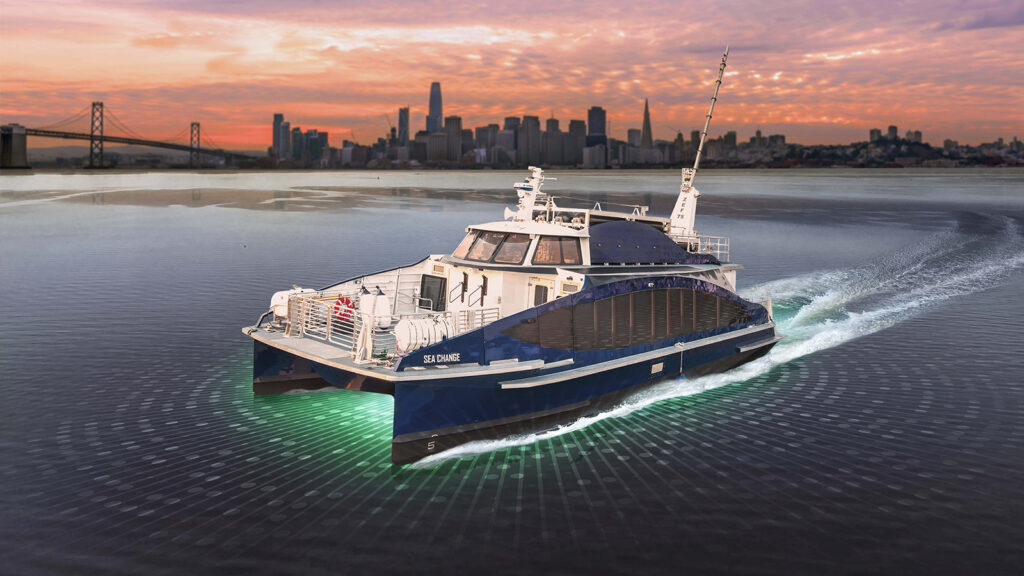
BAE Systems successfully installed its zero-emission propulsion system in the first U.S. hydrogen fuel cell powered marine vessel, the Sea Change. BAE SYSTEMS

SAN FRANCISCO and ENDICOTT, N.Y. — BAE Systems successfully installed its zero-emission propulsion system in the first U.S. hydrogen fuel cell-powered marine vessel, the Sea Change, the company said Nov. 30. 

BAE Systems provided its HybriGen Power and Propulsion solution to Zero Emission Industries for integration on the Sea Change vessel that will operate in the San Francisco Bay Area. The Sea Change project is funded and owned by SWITCH Maritime, an impact investment firm building the first fleet of zero-carbon, electric-drive maritime vessels for adoption by existing ship owners and operators.  

BAE Systems’ propulsion system interfaces with a hydrogen and fuel cell system provided by Zero Emission Industries and lithium-ion batteries to power the vessel without the need for a traditional combustion engine. The all-electric system eliminates diesel fuel use and reduces engine maintenance to create a clean mode of transportation. 

“We are committed to getting our customers to zero emissions with highly reliable and flexible systems that are proven on land and in the water,” said Steve Trichka, vice president and general manager of Power & Propulsion Solutions at BAE Systems. “This historic milestone is the next step on that journey, as we provide San Francisco with an innovative solution that reduces emissions and creates a new clean form of daily transportation for hundreds of commuters.” 

BAE Systems worked with the vessel’s builder, All American Marine, and designer, Incat Crowther, after previously teaming with both companies on multiple projects. BAE Systems uses proven controls and components that have passed certification and inspection by the U.S. Coast Guard. 

The project is also partially funded by a $3 million grant from the California Air Resources Board, administered by the Bay Area Air Quality Management District, that comes from the California Climate Investments initiative, a California statewide program that puts billions of cap-and-trade dollars to work reducing greenhouse gas emissions, strengthening the economy, and improving public health and the environment, particularly in disadvantaged communities.   


Oshkosh Defense Receives $591.6M JLTV Order for Army, Marine Corps, Others

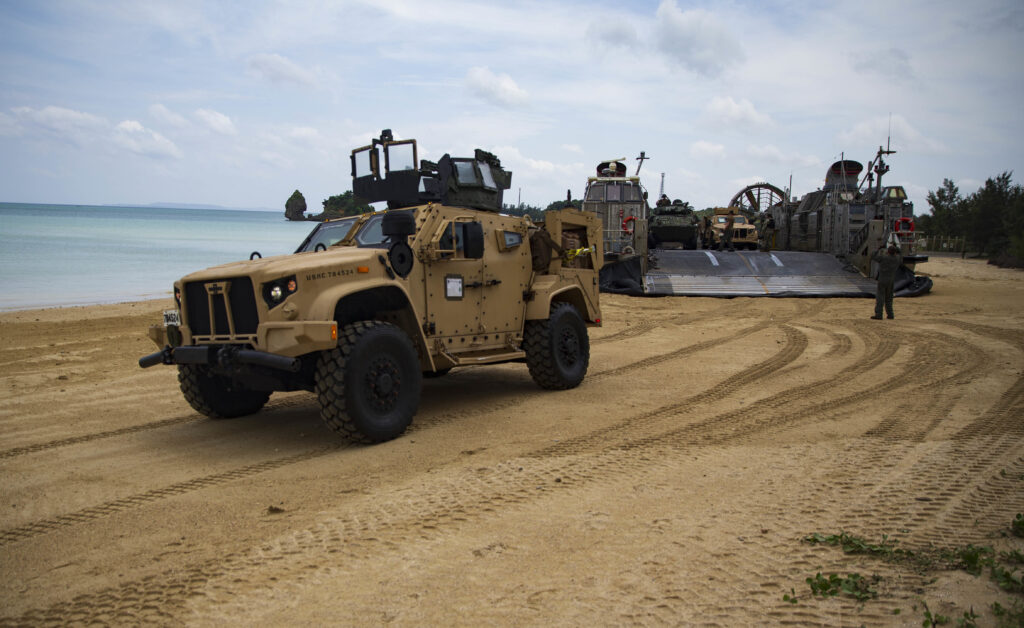
U.S. Marines with Battalion Landing Team 3/5, 31st Marine Expeditionary Unit land on the beach in a joint light tactical vehicle (JLTV) to begin a light armored reconnaissance raid reherasal at Camp Schwab, Okinawa, Japan, June 19. U.S. MARINE CORPS / Sgt. Daisha R. Ramirez

OSKOSH, Wis. — The U.S. Army Contracting Command – Detroit Arsenal (ACC-DTA) has awarded Oshkosh Defense a $591.6 million order for 1,669 Joint Light Tactical Vehicles (JLTV), 868 companion trailers and associated packaged and installed kits, the company said Nov. 29. 

The order includes Oshkosh Defense JLTVs for the U.S. Army, Marine Corps, Air Force and Navy. As part of the order, 125 vehicles will also be delivered to NATO and allied partners, including Brazil, Lithuania, Montenegro and Slovenia. 

Since winning the competitive JLTV contract in 2015, Oshkosh Defense, a wholly owned subsidiary of Oshkosh Corp., has built more than 14,000 JLTVs, and that number continues to grow. 

“Our team takes great pride in designing and building a versatile platform that can survive the extreme demands of future combat,” said George Mansfield, vice president and general manager of Joint Programs for Oshkosh Defense. “That’s what we do and what we’ve been doing for decades. And Oshkosh’s vast tactical wheeled vehicle experience, expertise and knowhow grows with every vehicle that comes off our production line.” 

International momentum surrounding the Oshkosh Defense JLTV also continues to grow as customers seek a light tactical vehicle with lethal capabilities, fleet commonality attributes and design flexibility. 

“Integrated lethality on an agile and protected vehicle like the Oshkosh JLTV is quickly filling capability gaps that exist in many international militaries,” said John Lazar, vice president and general manager of International Programs for Oshkosh Defense. “This past year, we’ve seen an increased interest in the Oshkosh JLTV from international customers with dynamic demonstrations and live fires across Europe, with more planned for 2022.” 


CNO, CMC: Training Systems Need to Be Linked Like Operational Systems

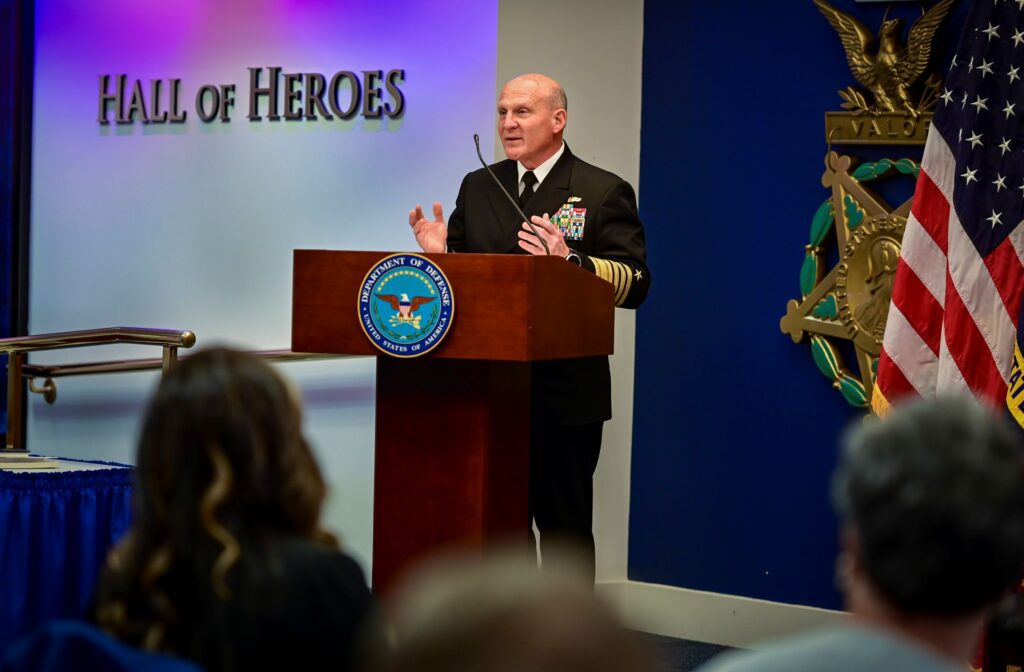
Chief of Naval Operations Adm. Mike Gilday, shown here delivering remarks during the Vice Adm. James Bond Stockdale Leadership Award ceremony in the Pentagon. U.S. NAVY / Mass Communication Specialist 1st Class Sean Castellano

ARLINGTON, Va. — The systems used to train Sailors and Marines need to be linked like their operational counterparts to make training realistic and relevant, the uniformed leaders of the Navy and Marine Corps said. 

Chief of Naval Operations Adm. Michael M. Gilday and Commandant of the Marine Corps Gen. David H. Berger were participating Nov. 30 in a fireside chat at the Interservice/Industry Training, Simulation and Education Conference (I/ITSEC) in Orlando, Florida. They covered a wide range of topics related to training and simulation. 

The two service chiefs said as their services proceed with increased integration and distribution and work together as a naval force, their training systems need to be linked to provide the realism needed to develop warfighting proficiency. 

Berger pointed out that proprietary training systems pose the same challenge to integration as operational systems. 

“How do we link them together?” he asked the audience. 

Gilday pointed out the need for getting better at integrating lessons learned in exercises. He referred to the insights gained over the past year in fleet battle problems and fleet exercises, including a global large-scale exercise involving five fleets and 30,000 Sailors and Marines.  

“As we develop those capabilities, there needs to be a continuous feedback loop … getting real-time feedback from operators,” Gilday said, noting the services also need the capability to record the training to enhance critiques and learning from the training. 

What “live virtual constructive [LVC] training has allowed us to do is to test ourselves, to mature our warfighting concepts, to hone our skills, to sharpen those skills, to learn from them,” he said. 

“We need the training capabilities that we’re going to invest in to be realistic and relevant,” he said. “So, to that end, they need to be based on physics-based performance aspects, not only of our forces but of potential adversaries. 

“We need to rely on LVC more and more,” Gilday said, noting the increasing encroachment on training ranges “is just a fact of life” that can be accommodated by increased use of LVC.  

He said it “is easy to take your eye off the training piece” in the competing demands of manning, training, equipping and supplying a warfighting force.  

Berger stressed the urgency of increasing the pace of improving training capabilities, arguing, “we cannot be comfortable going at a comfortable, deliberate pace.” 

The CMC also said training must be elevated in priority from its current state, and personnel must not only train to become proficient on their platforms but be able to out-think adversaries. 

Berger pointed out in aviation training, student pilots start together in training but proceed at different paces toward graduation according to their proficiency. He said other warfare communities may need to adopt the same concept. He also pointed out that in many training pipelines, there are no incentives to learn faster or learn more, saying “we’re not built for that right now.”  


Marine F-35B Squadron Completes Historic Deployment on HMS Queen Elizabeth

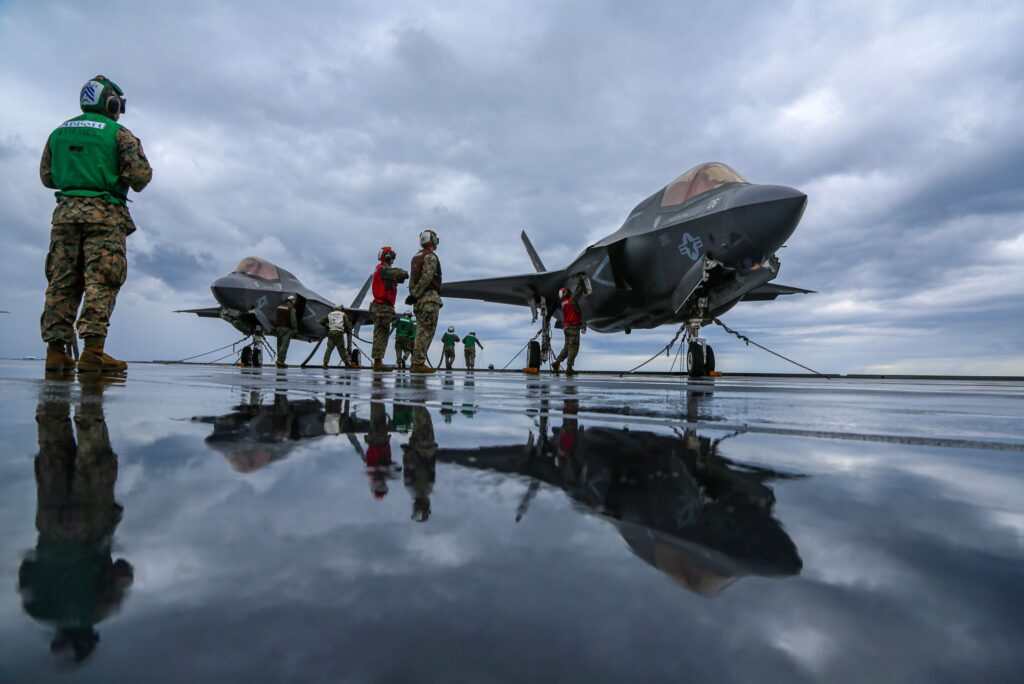
U.S. Marines with Marine Fighter Attack Squadron (VMFA) 211 conduct pre-flight checks on an F-35B Lightning II on the flight deck of HMS Queen Elizabeth in the Mediterranean Sea on Nov. 24. VMFA-211 aircraft landed at Naval Station Rota as the first stop on their redeployment to Marine Corps Air Station Yuma, Arizona. U.S. MARINE CORPS / 1st Lt. Zachary Bodner

ARLINGTON, Va. — The U.S. Marine Corps F-35B squadron that deployed on board the U.K. Royal Navy aircraft carrier departed the ship last week for Naval Station Rota, Spain, from which the squadron would return to its home base of Marine Corps Air Station Yuma, Arizona. 

Marine Fighter Attack Squadron 211 (VMFA-211) — known as the Wake Island Avengers — completed a six-month deployment on board HMS Queen Elizabeth to the Western Pacific, Indian Ocean, and Mediterranean Sea as a unit of the U.K. Carrier Strike Group.  

According to a spokesperson of the HMS Queen Elizabeth, VMFA-211 and its Royal Air Force/Royal Navy counterpart, the Dambusters of 617 Squadron, flew 1,278 sorties, “clocking up more than 2,200 hours in skies around the globe. They also carried out 44 missions in support of the U.S.-led Operation Inherent Resolve — conducting air strikes against Daesh [Islamic State].” 

“The 10 F-35B of VMFA-211 undertook their final launch from HMS Queen Elizabeth ­bringing to a close 16 months of integration with the United Kingdom Carrier Strike Group,” said Capt. James Blackmore, Royal Navy Air Wing and Strike Warfare Commander. “Embarked for the whole of CSG21, forging ever-greater links between the U.K. and the U.S., VMFA-211 and the 200-plus Marines have been an integral part of the inaugural deployment. Operating with a range of allies, especially the U.S., provides an invaluable opportunity to gain further experience of the highly capable Lightning F-35B with Merlin and Wildcat helicopters from the Queen Elizabeth-class carriers. I wish the Wake Island Avengers well with their future operations.” 

“The CSG21 deployment has seen VMFA-211, a U.S. Marine Corps F-35B squadron, integrated throughout,” said Commodore Steve Moorhouse, commander, U.K. Carrier Strike Group. “It has been the most tangible demonstration of the U.K. and U.S. special relationship and our united efforts to ensure stability, security and freedom of the seas. As the U.K. Carrier Strike Group says farewell to our Marine Corps colleagues, I wish to thank them for their commitment, loyalty, professionalism and great humor. The achievements on this deployment have been ground-breaking and raised the bar in terms of integration. As the saying goes; if you want to go fast, go alone but if you want to go strong then go together. Semper fidelis.”