AeroVironment’s New Mantis i45 N Multi-Sensor Imaging Payload Delivers Advanced ISR for Night Ops
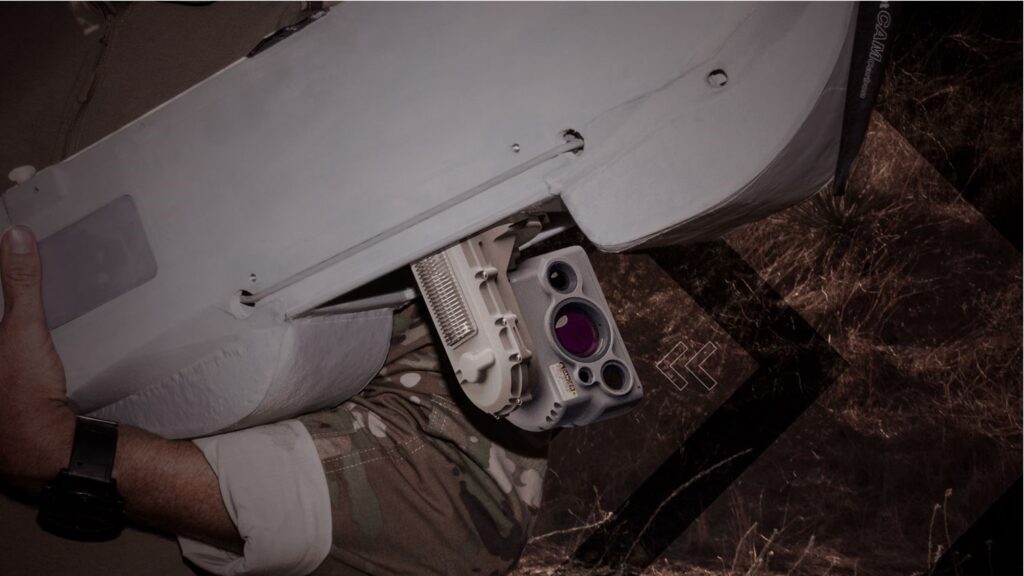
AeroVironment’s new Mantis i45N imaging payload, intended for nighttime imaging. AEROVIRONMENT

ARLINGTON, Va. — AeroVironment Inc. introduced the Mantis i45 N, a multi-sensor nighttime imaging payload compatible with Puma2 AE, Puma3 AE and Puma LE small unmanned aircraft systems (UAS), the company said Nov. 16. 

Lightweight (905 grams) and compact, the new Mantis i45 N joins AeroVironment’s expansive Mantis product line of micro-gimbals delivering high-quality video and imagery downlink to UAS operators.  

Mantis i45 N is a dual-axis, gyro-stabilized, multi-sensor nighttime imaging payload designed for maximum visibility during low-light or nighttime intelligence, surveillance and reconnaissance (ISR) operations. The next-generation imaging system features improved long-wave IR (LWIR) thermal cameras with narrow-angle 32 mm and wide-angle 9.2 mm IR with 7.6x electronic zoom, allowing operators to capture high-resolution video at extended range. Designed for both superior night and low-light performance, the new imaging system also includes an upgraded 5-megapixel monochrome low-light camera sensor and high-powered 860 nm laser illuminator. Through its advanced suite of sensors, the Mantis i45 N payload allows Puma UAS operators to extend aircraft standoff distance for covert operations. 

“Today’s battlefield is dynamic and UAS operators increasingly rely on multiple payloads to successfully complete their missions,” said Charles Dean, AeroVironment vice president for global business development and sales of UAS. “The new Mantis i45 N is a game changer during low-light or nighttime ISR operations, delivering increased situational awareness and advanced threat detection in any environment.”  

Built on the trusted and battlefield proven Mantis i45, the enhanced night variant Mantis i45 N maintains the same housing form-factor, allowing for a quick and simple change-out of payloads between day and night operations. Plug and play operational, no software updates are required for Puma UAS avionics or ground control stations for legacy system compatibility. Mantis i45 N is also natively compatible with AeroVironment’s Crysalis next-generation ground control solution. 


L3Harris Opens Canadian Facility to Address Growing Wescam MX Product Demand

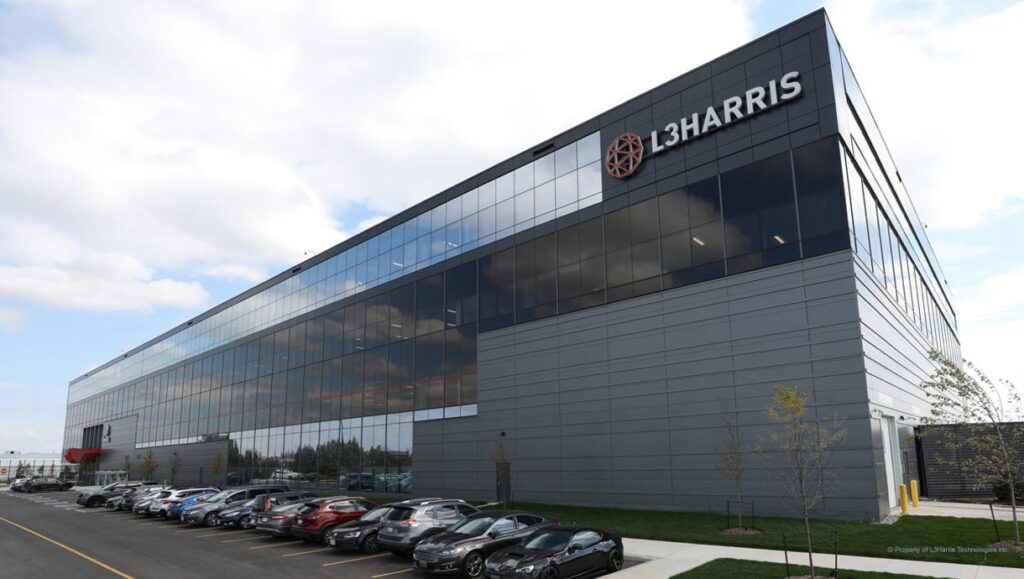
L3Harris’ new 330,000 square-foot Canadian facility increases Wescam MX product production and program execution capabilities. L3HARRIS

MELBOURNE, Fla. — L3Harris Technologies has opened its new $110 million (USD) state-of-the-art facility in Waterdown, Ontario, Canada, to address the growing demand for its Wescam MX-Series electro-optical and infrared imaging technologies, the company said in a Nov. 16 release.  

The new 330,000-square-foot facility is designed to create cross-functional efficiencies across research and development, engineering, assembly, service and office space. Currently 1,250 employees work either remotely or out of this new facility. By the end of 2025, L3Harris anticipates more than 1,500 employees will report into this location.  

The investment in the new facility represents L3Harris’ commitment to its global customers and partners, and employees throughout the region. The purpose-built facility has been designed to maximize efficiency and sustainability — increasing overall manufacturing over its previous capacity by 80%.  

“This larger and leaner factory enables us to optimize production flow, enhancing L3Harris’ ability to meet our customers’ needs quicker, while increasing capacity for larger program execution and future growth,” said Sean Stackley, president, Integrated Mission Systems, L3Harris.  

L3Harris’ Wescam MX systems are active in more than 80 countries. Operating across air, land and maritime domains, these intelligence, surveillance and reconnaissance and targeting systems support more than 200 different platforms. 


Coast Guard Icebreaker Polar Star Begins 25th Antarctic Voyage

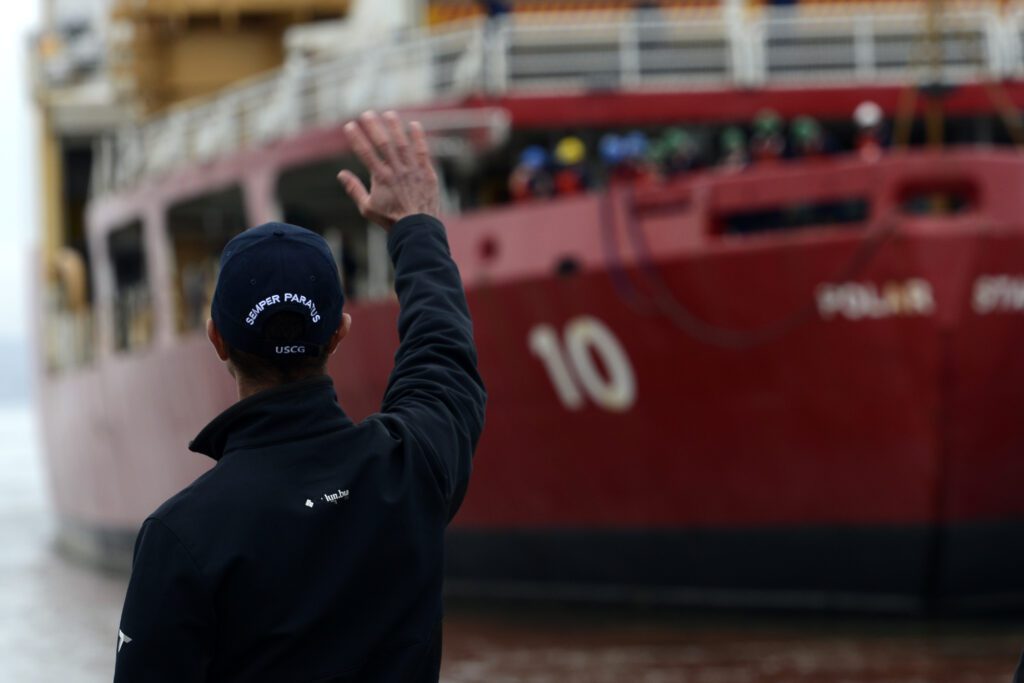
A family member of a Coast Guardsman aboard Cutter Polar Star (WAGB-10) waves as the cutter departs Seattle Saturday, Nov. 13. U.S. COAST GUARD / Petty Officer 3rd Class Michael Clark

SEATTLE — The United States’ only heavy icebreaker departed its homeport in Seattle Nov. 13 with a crew of 159 U.S. Coast Guard men and women and is heading toward Antarctica, the Coast Guard Pacific Area said in a release.   

This year marks Coast Guard Cutter Polar Star’s 25th journey to Antarctica in support of Operation Deep Freeze, an annual joint military mission to resupply the United States Antarctic stations in support of the National Science Foundation, the lead agency for the United States Antarctic Program.  

Each year, the Polar Star crew breaks a navigable channel through ice, sometimes as much as 21 feet thick to allow fuel and supply ships to reach McMurdo Station, which is the largest Antarctic station and the logistics hub of the U.S. Antarctic Program. 

“Maintaining and operating a 45-year-old ship in the harshest environment on the planet makes for arduous duty, but the women and men aboard Polar Star are committed to our important mission,” said Capt. William Woityra, Polar Star’s commanding officer. “The team is excited for this once-in-a-lifetime opportunity to visit a part of the world that most will never get to see.” 

The U.S. Coast Guard is recapitalizing its polar icebreaker fleet to ensure continued access to the Polar regions, project U.S. sovereignty, and to protect the country’s economic, environmental, and national security interests.   

“It’s vitally important that the U.S. maintains its leadership role in Antarctica,” said Vice Adm. Michael F. McAllister, commander Coast Guard Pacific Area. “The Coast Guard has an enduring commitment to the U.S. Antarctic Program through the Deep Freeze mission to provide uninhibited access to the region. We are proud to support a 60-year legacy of peaceful international cooperation for science and preservation of the pristine Antarctic environment and we will continue to ensure adherence to rules-based order into the future.” 

Through Operation Deep Freeze, the U.S. Coast Guard provides direct logistical support to the National Science Foundation and maintains a regional presence that preserves Antarctica as a scientific refuge.   


Virginia-Class SSN New Jersey Christened at Newport News Shipbuilding

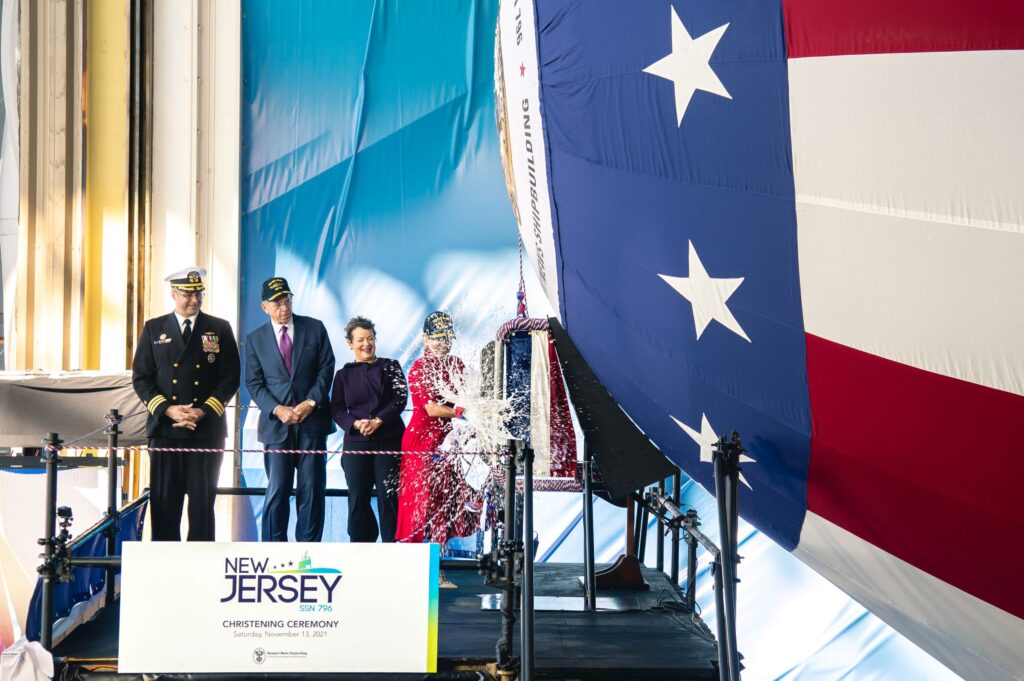
Ship’s sponsor Susan DiMarco christens pre-commissioning unit New Jersey (SSN 796) during ceremony on Saturday, Nov. 13, at Newport News Shipbuilding. Also pictured (left to right) are Cmdr. Carlos Otero, the ship’s prospective commanding officer; retired Navy Adm. Michael Mullen, former chairman of the Joint Chiefs of Staff and former chief of naval operations; and Jennifer Boykin, president of Newport News Shipbuilding division. HUNTINGTON INGALLS INDUSTRIES

NEWPORT NEWS, Va. — Huntington Ingalls Industries christened pre-commissioning unit New Jersey (SSN 796) Nov. 13 at the company’s Newport News Shipbuilding division, the company said in a release. 

“The christening is a Navy and shipbuilder tradition that celebrates the hard work and dedication of the women and men who are building this magnificent submarine, readying her for the next phase of construction, which includes launch, testing, sea trials and delivery to the Navy,” said Jennifer Boykin, president of Newport News Shipbuilding. “We commemorate these American builders during a challenging time in our nation’s history. 

“When New Jersey joins the Navy’s fleet, she will deliver firepower for freedom, taking with her the skill of her shipbuilders, the spirit of her sponsor, the courage of her commander and crew and the pride of her fellow New Jerseyans,” Boykin added. “These characteristics, united, forge a strong national defense that defines America.” 

Susan DiMarco, a New Jersey resident, retired dentist and wife of former Secretary of Homeland Security Jeh Johnson, serves as the ship’s sponsor and performed the traditional honor of breaking a bottle of American sparkling wine across the submarine’s bow during the ceremony. 

“As citizens today, we are more divided and disconnected from one another than at any time in our last 50 years, but the efforts that went into building New Jersey say otherwise,” DiMarco said. “In order to complete this great ship there must have been vital partnership and purpose. As a country, we are cooperative, generous and tenacious, and we can work together on exceptional ideas.” 

The ceremony took place outside of Newport News Shipbuilding’s Module Outfitting Facility and was attended by more than 1,800 guests, including Newport News Shipbuilding employees who are building New Jersey, members of the submarine’s crew, Navy personnel and other government officials, including Jeh Johnson. 

U.S. Rep. Bobby Scott, of Virginia, and U.S. Rep. Donald Norcross, of New Jersey, both delivered remarks. Other speakers included New Jersey Gov. Phil Murphy; Jay Stefany, acting assistant secretary of the Navy for research, development and acquisition; Vice Adm. Johnny Wolfe Jr., director of the Navy’s strategic systems programs; and Kevin Graney, president of General Dynamics Electric Boat. 

Ceremony participants included U.S. Rep. Elaine Luria, of Virginia; Capt. Andrew P. Johnson, commanding officer of Supervisor of Shipbuilding, Conversion and Repair, Newport News; and Cmdr. Carlos Otero, the ship’s prospective commanding officer. 

Retired U.S. Navy Adm. Michael Mullen, former chairman of the Joint Chiefs of Staff and former chief of naval operations, provided the keynote address. 

“Today is a day of gratitude, especially to the 4,000 men and women whose hard work put New Jersey together,” said Mullen, adding that the nation must prevail in an ideological battle against an adversary it has not seen before. 

“The future USS New Jersey will be a critical — some say the most critical — arrow in our quiver,” he said. 

The company reached the pressure hull complete milestone in February, meaning all of the ship’s hull sections were joined to form a single, watertight unit. This was one of the last major milestones before the submarine was christened and floated off to a pier-side berth for additional outfitting and testing. 

New Jersey is the 23rd Virginia-class submarine and the 11th to be delivered by Newport News Shipbuilding. It is first submarine designed with a modification for gender integration. Construction began in March 2016 and is 82% complete. The submarine is scheduled to be delivered to the U.S. Navy in late 2022. 

A video of the ceremony, along with additional information on New Jersey, DiMarco and the Virginia-class submarine program, can be found at: https://nns.huntingtoningalls.com/SSN796 


Future USNS Apalachicola Christened at Austal USA

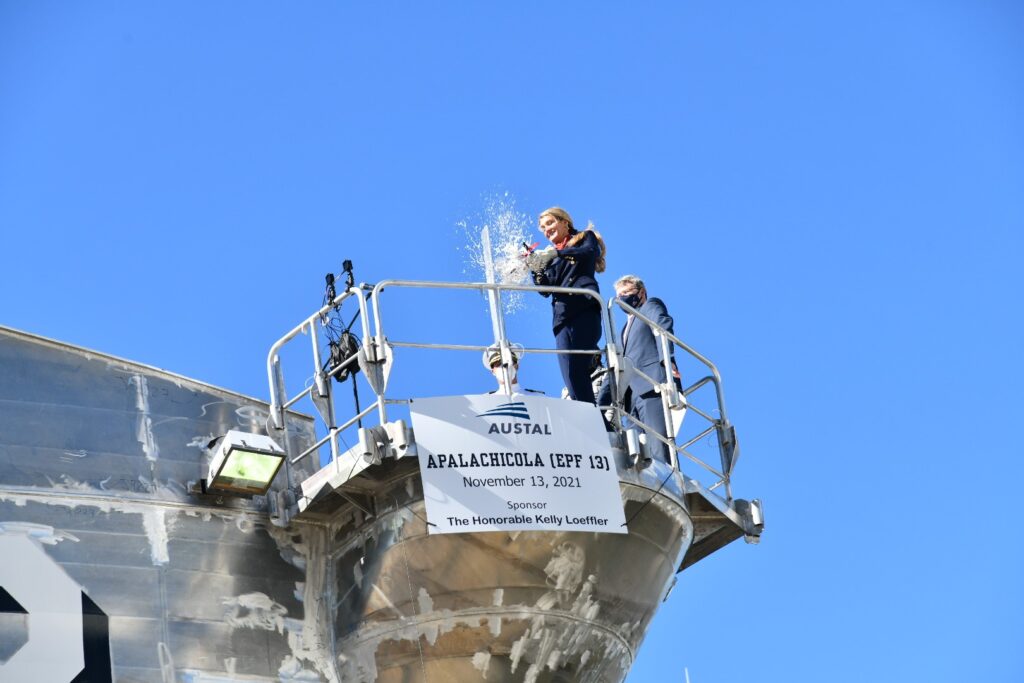
Austal USA christened Expeditionary Fast Transport (EPF-13) USNS Apalachicola during a ceremony at its state-of-the-art ship manufacturing facility on Nov. 13. AUSTAL USA

MOBILE, Ala. — Austal USA christened Expeditionary Fast Transport (EPF-13) USNS Apalachicola during a ceremony at its state-of-the-art ship manufacturing facility Nov. 13, the company said in a release.  Austal has delivered twelve EPFs since December 2012. USNS Apalachicola is slated for delivery this summer. 

Former Sen. Kelly Loeffler, ship sponsor of USNS Apalachicola, performed the ceremonial bottle break over the bow of the ship, the 13th EPF designed and constructed by Austal USA and the second U.S. Navy ship to be named after the Florida coast city. The first Navy ship named Apalachicola (YTB-767), A Natick-class large harbor tug, was also built in Mobile at Mobile Ship Repair in 1963. 

“Today we celebrate the christening of the 13th EPF with an Austal team of more than 3,000 employees,” said Austal USA President Rusty Murdaugh. “Apalachicola’s sister ships are successfully supporting naval commands on the U.S. East and West Coasts, along with forward deployments in the Middle East, Africa, Mediterranean, South America, and Asia regions. In the coming months, this highly complex, high-speed ship will join the others to support our great Navy.” 

EPFs have performed humanitarian assistance, disaster relief, maritime security, surveillance, command and control, counter narcotics, and additional operations in almost every region of the world. A unique characteristic of EPF 13 is that Austal USA has been contracted to design, procure, implement, and demonstrate EPF 13 as an autonomous platform, allowing EPF 13 to operate autonomously while retaining the capability for manned operation, reducing cost and centralizing ship operations to the bridge. 

Apalachicola is one of two Expeditionary Fast Transport ships Austal USA is currently building for the U.S. Navy, while the start of construction on the future USNS Point Loma (EPF 15) will commence at the end of this month. Five littoral combat ships (LCS) are also under various stages of construction at the Gulf Coast shipyard. 


Coast Guard, Partners Rescue 17 Mariners in 2 Days

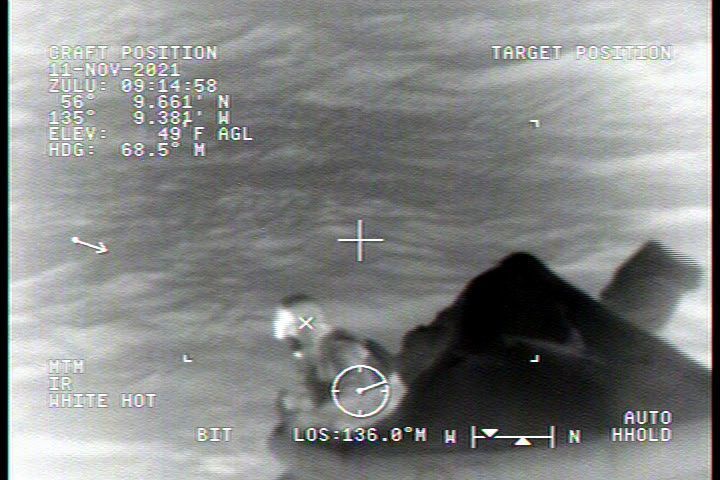
The Coast Guard rescued four people from a raft in the water Npvember 10, 2021, approximately 13 nautical miles west of Cape Ommaney, Alaska. U.S. COAST GUARD / Petty Officer 3rd Class Alexandria Preston

ALAMEDA, Calif. — Over the course of two days, Nov. 11-12, Coast Guard crews, partner agencies and volunteers responding to three maritime emergencies rescued a total of 17 boaters in dire straits off the Alaska, California and Micronesia coasts, the Coast Guard Pacific Area said Nov. 12.   

All three cases highlight the importance of mariners properly equipping and training for survival at sea, as well as the value of government and industry partnerships. 

Off the coast of Federated States of Micronesia, six people survived at sea and were found Thursday on a 24-foot skiff located 40 miles southeast of the Mortlock Islands after an eight-day search involving the U.S. Coast Guard, the U.S. Navy, Federated States of Micronesia first responders, Caroline Islands first responders and local good Samaritans. 

The crew of a good Samaritan vessel, Nord Rubicon, rescued seven fishermen in a life raft 350 miles off the coast of Monterey, California, Wednesday after their 85-foot commercial fishing boat caught fire and became engulfed in flames. Multiple emergency position indicating radio beacon and personal locator beacon alerts immediately notified U.S. Coast Guard crews the vessel was in peril. Coast Guard watchstanders used the Automated Mutual-Assistance Vessel Rescue System to request help from nearby ships. The Nord Rubicon crew, located just 80 miles away, diverted from their course, retrieved the fishermen and took them safely to shore. Video is available here

Wednesday, Coast Guard aircrews in Alaska rescued four fishermen after they abandoned their 53-foot fishing boat sinking 13 miles west of Cape Ommaney, Alaska. The Coast Guard Sector Juneau command duty officer for the rescue, Nicholas Meyer, credits their survival to their proper use of an EPIRB, VHF radio, survival suits, life raft and training. 

“The safeguarding of lives at sea, particularly along our coastal waters and in support of our closest international partners, continues to be our highest priority,” said Vice Adm. Michael F. McAllister, commander Coast Guard Pacific Area. “This week’s impressive rescues demonstrate our resolve to be Semper Paratus — always ready. Thanks to the valuable relationships we’ve built with partner agencies, the valuable contributions of good Samaritans, and the focus these mariners had on ensuring they were ready for emergencies at sea, 17 people are alive today who may not otherwise be. This was a fitting tribute on Veteran’s Day yesterday, knowing the Coast Guard veterans who came before us laid the foundation for the incredible work our men and women do today.” 


Navy to Christen Submarine New Jersey

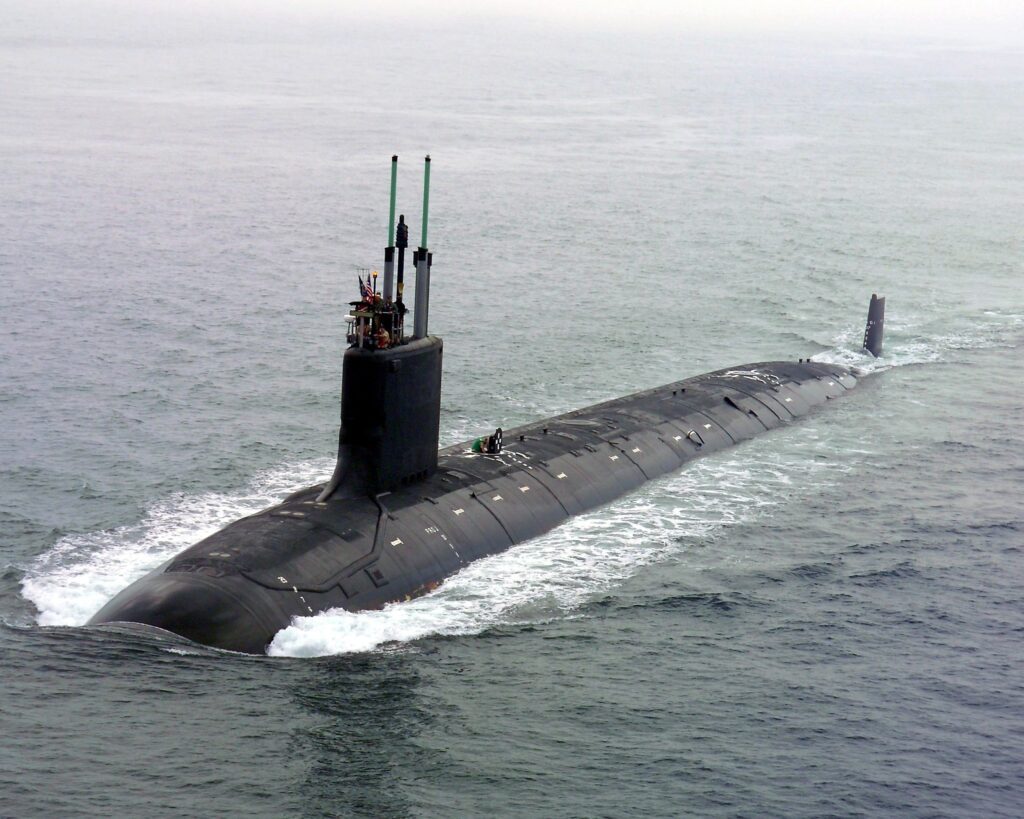
USS Virginia, the first of the Virginia-class of fast-attack submarines, in 2004. The Navy will christen the newest Virginia-class submarine, the future USS New Jersey (SSN 796) on Saturday, Nov. 13. GENERAL DYNAMICS ELECTRIC BOAT / Wikipedia

ARLINGTON, Va. — The Navy will christen one of its newest Virginia-class fast-attack submarines, the future USS New Jersey (SSN 796), during an 11 a.m. EST ceremony Saturday, Nov. 13, 2021, at Huntington Ingalls Industries in Newport News, Virginia, the Defense Department said Nov. 12. 

The principal speaker will be retired Adm. Michael Mullen, the 17th chairman of the Joint Chiefs of Staff and the 28th chief of naval operations. Frederick “Jay” Stefany, acting assistant secretary of the Navy for research, development and acquisition and Vice Adm. Johnny Wolfe Jr., director, Strategic Systems Programs, will also deliver remarks. The submarine’s sponsor, Susan DiMarco Johnson, will christen the ship by breaking a bottle of sparkling wine across the bow in a time-honored Navy tradition. 

“Shipbuilding has always played a key role in shaping the future of our national security,” said Mullen. “The impressive community of men and women involved in the construction of the future USS New Jersey should be extremely proud as they continue a legacy of extraordinary USS New Jersey ships and the future of our maritime security.” 

The future USS New Jersey (SSN 796) is the third Navy vessel named in recognition of the state and is the 5th Block IV Virginia-class submarine to be built. The first USS New Jersey (Battleship No. 16) commissioned in 1906 and then sailed as part of the around-the-world cruise of the Great White Fleet. It spent most of its career in the Atlantic and West Indies, decommissioning in 1920. 

The second USS New Jersey (BB 62) was commissioned in early 1943 before sailing for the Pacific. It served as a fast carrier escort and shore bombardment platform in the war against Japan, earning nine battle stars through the end of World War II. Although decommissioned in the post-war drawdown, it returned to service three more times over the next 45 years: once for the Korean War, once for Vietnam and again for service in the 1980s at the end of the Cold War. New Jersey now serves as a museum ship in Camden, New Jersey. 

Virginia-class submarines are built to operate in the world’s littoral and deep waters while conducting antisubmarine warfare, anti surface ship warfare, strike warfare, special operations forces support, intelligence, surveillance, and reconnaissance, irregular warfare and mine warfare missions. Their inherent stealth, endurance, mobility and firepower directly enable these submarines to support five of the six maritime strategy core capabilities: sea control, power projection, forward presence, maritime security and deterrence. Virginia-class submarines are replacing Los Angeles-class fast-attack submarines as they retire. 


Navy to Christen Future USNS Apalachicola

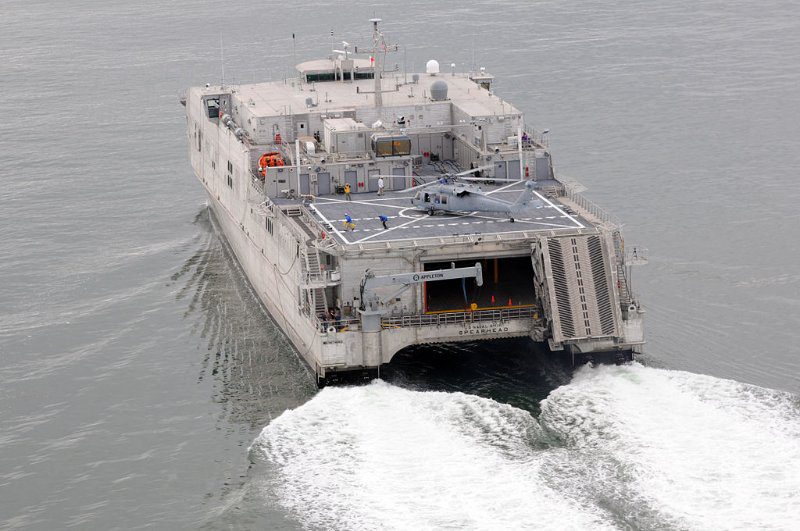
USNS Spearhead, the lead ship in the Spearhead class of expeditionary fast transport ships. AUSTAL / Phil Beaufort

ARLINGTON, Va. — The Navy will christen its 13th Spearhead-class expeditionary fast transport, the future USNS Apalachicola (T-EPF 13), during a 10:00 a.m. CT ceremony Saturday, Nov. 13 in Mobile, Alabama, the Defense Department said Nov. 12. 

Brenda Ash, mayor of Apalachicola, Florida, will deliver the principal ceremonial address. Remarks will also be provided by Vice Adm. Darse Crandall, judge advocate general of the Navy; Bilyana Anderson, deputy assistant secretary of the Navy for Ships; Steven Cade, executive director, Military Sealift Command; Rusty Murdaugh, president of Austal USA; and Stan Kordana, vice president of Surface Systems, General Dynamics Mission Systems. Former Georgia Sen. Kelly Loeffler, the ship’s sponsor, will christen the ship by breaking a bottle of sparkling wine across the bow in a time-honored Navy tradition. 

“This ship honors the city of Apalachicola, Florida, a city that represents America’s fighting spirit and dedication to duty,” said Secretary of the Navy Carlos Del Toro. “Apalachicola, like the other ships in the EPF class, will provide our warfighters the necessary high-speed sealift mobility and agility to accomplish any mission. I am thankful for this ship and its crew who will serve our nation for decades to come.” 

The future USNS Apalachicola is the 13th ship in its class and will be operated by the Navy’s Military Sealift Command. The ship is named in honor of the city of Apalachicola and will be the second U.S. Navy ship to bear that name. The first Apalachicola (YTB 767) was a Natick-class large harbor tug launched in 1963. The tugboat spent the majority of its service in the Puget Sound-area providing harbor services to various ships. Apalachicola was stricken from the Navy List in 2002. 

EPF class ships are designed to transport 600 short tons of military cargo 1,200 nautical miles at an average speed of 35 knots. The ship can operate in shallow-draft ports and waterways, interfacing with roll-on/roll-off discharge facilities and on/off-loading the Abrams main battle tank (M1A2). 

The EPF includes a flight deck for helicopter operations and an off-load ramp that will allow vehicles to drive off the ship quickly. EPF’s shallow draft (less than 15 feet) further enhances littoral operations and port access. This makes the EPF an extremely flexible asset for support of a wide range of operations, including maneuver and sustainment, relief operations in small or damaged ports, flexible logistics support, or as the key enabler for rapid transport. 


Navy Contracts 5 Companies to Compete for Future Possible Shipyard Modernization Projects

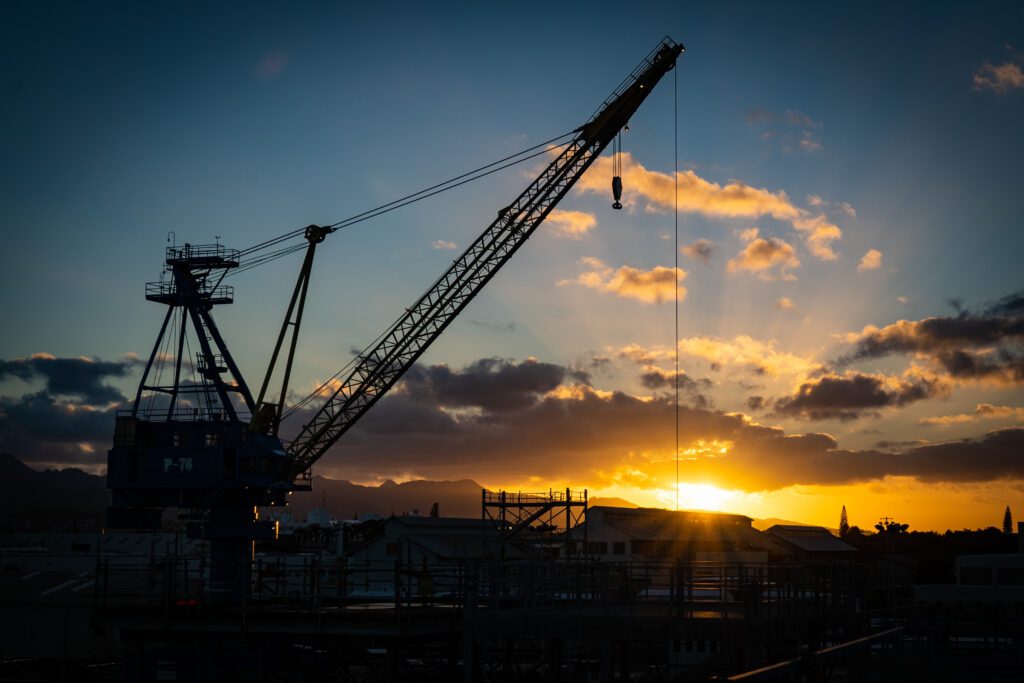
Pearl Harbor Naval Shipyard & IMF, (February 11, 2021) Sunrise over the Ko`olau Mountains with a portal crane P-76 in the foreground at Pearl Harbor Naval Shipyard and Intermediate Maintenance Facility. U.S. NAVY / Public Affairs Specialist Dave Amodo

WASHINGTON — Naval Facilities Engineering Systems Command awarded contracts to five companies to facilitate the award of future task orders for potential military construction projects at Pearl Harbor Naval Shipyard and Intermediate Maintenance Facility (PHNSY & IMF) in Hawaii and Puget Sound Naval Shipyard (PSNS) & IMF in Washington, the command said in a release. 
 
The five companies may compete for future task orders for pre-construction planning, preparation, and constructability reviews associated with construction of waterfront facilities such as warehouses, dry docks, piers, and other site improvements, as well as dredging and incidental design, environmental, and other services related to the Navy’s Shipyard Infrastructure Optimization Program (SIOP). 
 
“These contracts will help the Navy begin design and renovation work at Pearl Harbor Naval Shipyard and Puget Sound Naval Shipyard once we’ve completed all the regulatory processes, including agency and government-to-government consultations and public engagement,” said Rear Adm. John Korka, NAVFAC’s commander, and the Navy’s chief of civil engineers. “It involves industry partners in our planning efforts, a lesson we learned from our SIOP efforts to date. This will facilitate healthy competition and, ultimately, help us deliver the best solution we can for our Navy and our Nation.” 
 
The contracts are for up to eight years or a combined cumulative value of $8 billion, whichever comes first. While the contracts are primarily for SIOP-related work at PHNSY and PSNS, task orders may also be issued for work at other sites in NAVFAC’s areas of responsibility. 
 
“The Navy depends on our shipyards returning combat-ready ships and submarines to the fleet,” said Korka. “SIOP guides the Navy’s investment plan to achieve that. It’s a once-in-a-century effort that the NAVFAC team is proud to be part of.” 
 
SIOP is a joint effort between NAVFAC, Naval Sea Systems Command and Commander, Navy Installations Command to recapitalize and modernize the infrastructure at the Navy’s four public shipyards, including repairing and modernizing dry docks, recapitalizing and reconfiguring shipyard facilities, and modernizing the shipyards’ industrial plant equipment. 
 
The awardees for this contract are Reston, Virginia-based Bechtel National; Honolulu, Hawaii-based Dragados/Hawaiian Dredging/Orion JV; Burlingame, California-based ECC Infrastructure; Vancouver, Washington-based SIOP MACC, AJV; and Sylmar, California-based TPC-NAN joint venture. 
 
For more information about the Shipyard Infrastructure Optimization Program, visit https://www.navsea.navy.mil/Home/Shipyards/SIOP/


Cutter Spencer Returns to Portsmouth After Patrolling the Eastern U.S. Coast

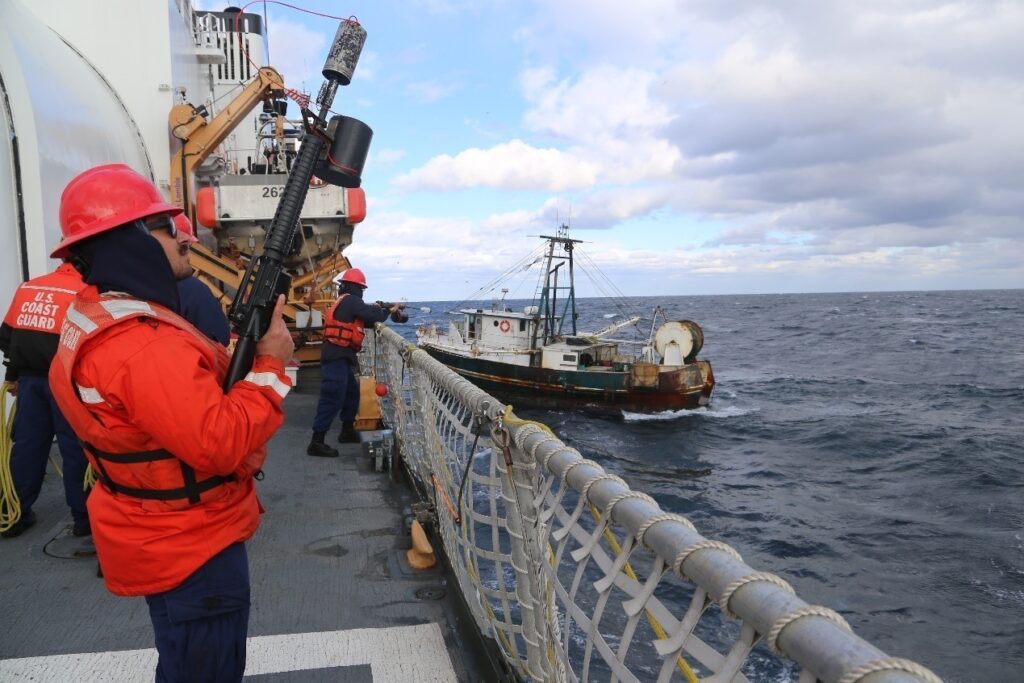
Gunner’s mates aboard Coast Guard Cutter Spencer shoot messenger lines to a disabled fishing vessel 100 miles off the coast of New York to bring the vessel in tow. U.S. COAST GUARD / Chief Petty Officer Katharine Ingham

PORTSMOUTH, Va. — The crew of Coast Guard Cutter Spencer returned home to Portsmouth after a 33-day patrol Nov. 10, the Coast Guard 5th District said in a release. 

During the patrol, the crew conducted operations south of Key West, Florida, in support of efforts to deter illegal immigration and conduct safety of life at sea operations. Shifting gears halfway through the patrol, Spencer’s crew exercised their multi-mission capability in the Northeast to enforce federal commercial fishing regulations in an effort to deter over-fishing and illegal fishing. The crew also assisted in multiple search and rescue cases off the coast of New England, towing one vessel over 100 miles to safety. 

Spencer also completed a routine aviation evaluation that enables the cutter to perform landings and conduct operations with a variety of military aircraft. The training exercise occurred in Miami, supported by an MH-60T Jayhawk helicopter crew from Coast Guard Air Station Clearwater, Florida. 

“Overall, this was a short patrol but we accomplished a lot for the Coast Guard and for our unit,” said Cmdr. Corey Kerns, commanding officer of the Spencer. “This deployment included an excursion south of the Keys to support the fleet of Fast Response Cutters. Our mission then shifted to domestic fisheries, enforcing regulations that promote the longevity of this multi-billion-dollar industry that our nation depends on. In between, we were able to support three search and rescue operations, conduct a lot of training, and get home before Thanksgiving.” 

The Spencer is a 270-foot medium-endurance cutter with a 100-person crew.