Icebreaker Departs for Arctic Deployment, Circumnavigation of North America
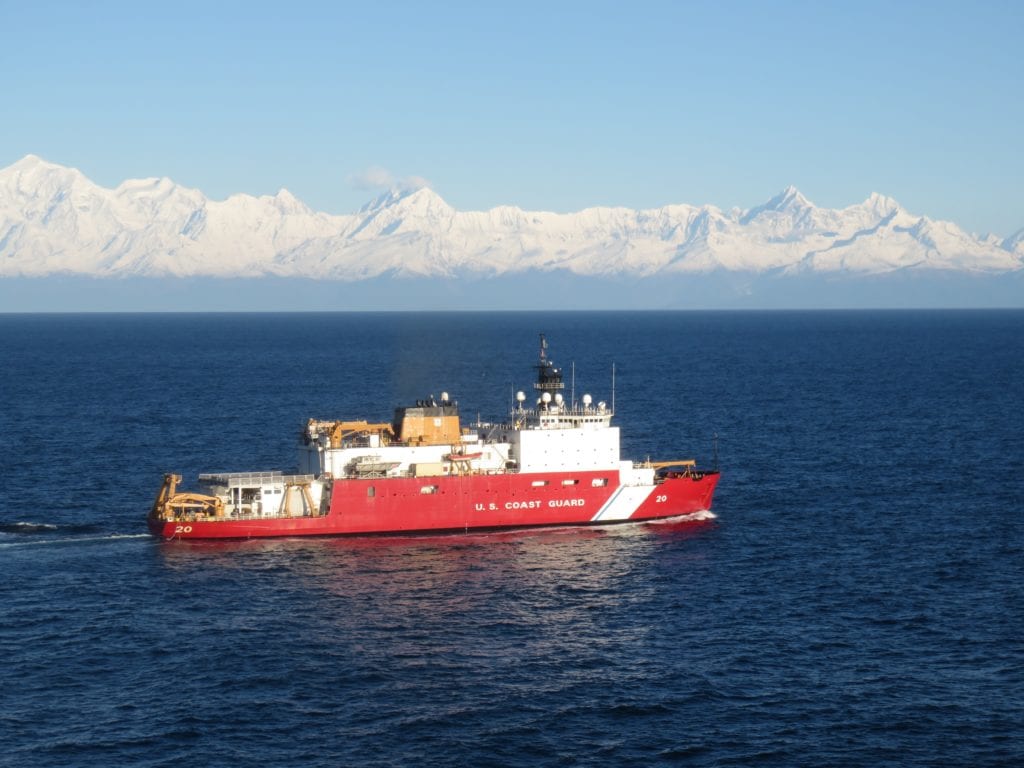
The Coast Guard Cutter Healy (WAGB-20), a polar-class ice breaker, transits Southeast Alaskan waters Nov. 24, 2018. The Healy is one of two ice breakers in U.S. service. U.S. COAST GUARD / Lt. Kellen Browne
SEATTLE — The Coast Guard Cutter Healy (WAGB 20) departed Seattle on Saturday, July 10, for a months-long Arctic deployment and circumnavigation of North America, the Coast Guard Pacific Ares said in a July 16 release.
The crew aboard Healy, a 420-foot medium icebreaker, will provide U.S. surface presence in the Arctic, conduct high latitude science and research missions, engage in exercises and professional exchanges with foreign navies and patrols, and conduct other operations as directed throughout the deployment.
Healy is scheduled to circumnavigate North America via the Northwest Passage and the Panama Canal. Healy’s deployment supports the Coast Guard’s Arctic Strategy while providing critical training opportunities for polar sailors and future operations in the Arctic.
The crew will promote U.S. interests along the U.S. and Russia maritime boundary line.
“Healy’s deployment provides opportunities to deepen the Coast Guard’s cooperation and commitment with our Arctic allies and partners and to support scientific exploration to increase understanding of the changing Arctic environment and associated impacts,” said Coast Guard Pacific Area Commander Vice Adm. Michael McAllister.
The Healy deploys annually to the Arctic to support multiple science missions and Operation Arctic Shield, the service’s annual operation to execute U.S. Coast Guard missions, enhance maritime domain awareness, strengthen partnerships, and build preparedness, prevention, and response capabilities across the Arctic domain.
Commissioned in 1999, Healy is one of two active polar icebreakers in the Coast Guard’s fleet. The Seattle-based Coast Guard Cutter Polar Star (WAGB 10) is a heavy polar icebreaker commissioned in 1976.
The U.S. Coast Guard is recapitalizing its polar icebreaker fleet to ensure continued access to the polar regions and to protect the country’s economic, commercial, environmental, and national security interests. The Polar Security Cutter is still in the design phase, and Halter Marine is working toward completing the necessary work to begin construction on this incredibly complex, state-of-the-art icebreaker. The contract delivery date for the first Polar Security Cutter is 2024.
Bell Begins UH-1Y Production for the Czech Republic
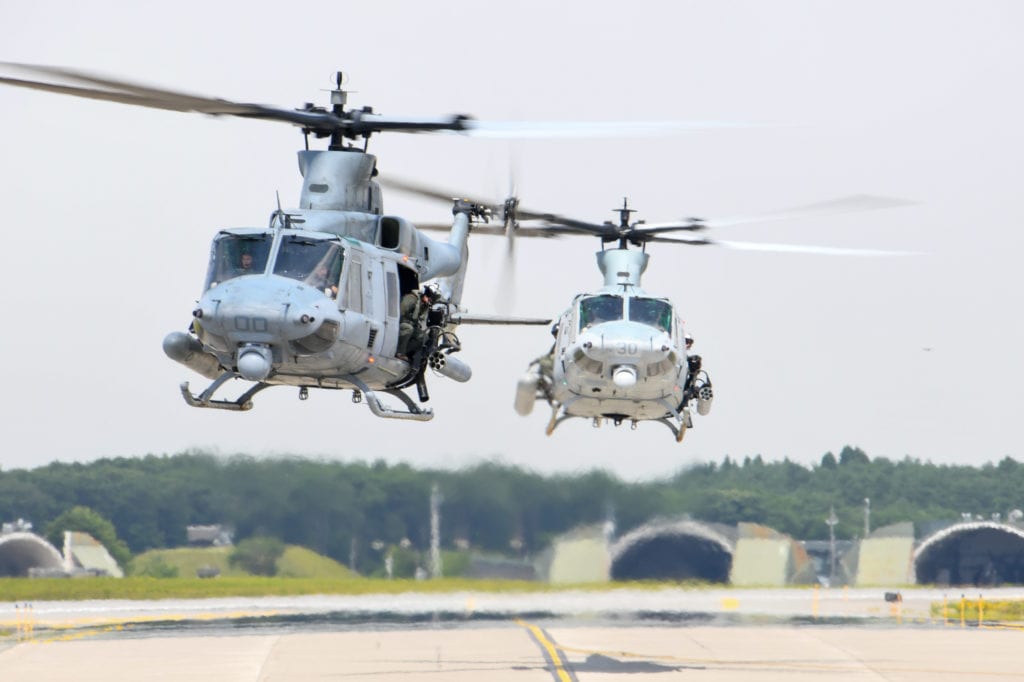
Two UH-1Y Venoms, assigned to the “Vipers” of Marine Light Attack Helicopter Squadron (HMLA) 169, prepare to land at Naval Air Facility (NAF) Misawa, Japan, on July 15. U.S. NAVY / Mass Communication Specialist 3rd Class Benjamin Ringers
CRESTVIEW, Fla. — Bell Textron Inc., a Textron Inc. company, has restarted UH-1Y Venom helicopter production for the first international operator. Crestview Aerospace has completed manufacturing the first of eight cabins at the Crestview Florida facility. The aircraft will complete final assembly at the Bell Amarillo Assembly Center.
The helicopters are part of the 2020 U.S. Department of Defense contract awarded to Bell for the production and delivery of eight UH-1Y and four AH-1Z helicopters for the government of the Czech Republic.
“Crestview Aerospace is honored and grateful for the opportunity to team with Bell on the continued production of the UH-1Y cabin for the first international customer,” said Paul Kohlmeier, senior vice president, Strategy and Business Development, Crestview Aerospace. “Crestview continues to build in the same high quality and reliability into the international Venom helicopters that underpin the aircraft currently operated by the United States Marine Corps around the world.”
Bell delivered the final UH-1Y for the U.S. Marine Corps program of record in April 2018 and has continued to produce and deliver the AH-1Z as part of the H-1 production contract for 349 H-1 aircraft, consisting of 160 UH-1Y and 189 AH-1Z.
The UH-1Y shares 85 percent commonality of parts with the AH-1Z. The commonality between the aircraft enabled critical component supply chains to remain active during AH-1Z production for the USMC.
“Time, logistics, and man-hours are all strategic resources,” said Mike Deslatte, vice president and H-1 program director, Bell. “Commonality helps ensure everything between the Viper and Venom, from manufacturing, maintenance, and upgrades, remains seamless while simultaneously providing lower program and life cycle costs. It’s a real tactical advantage on multiple levels.”
The UH-1Y and AH-1Z share the same engines, integrated mission system and dynamic components, such as the four-bladed rotor system. Both aircraft are specifically designed and produced for expeditionary operations. Together, they provide a full spectrum of military operations, unlike any other helicopter duo.
Bell anticipates production for the Marine Corps through early 2022, followed by continued production for foreign military customers. Bell has two signed Foreign Military Sales cases in production, Bahrain and the Czech Republic.
Navy Helicopter Crew Rescued After Crash Near Mt. Hogue, California
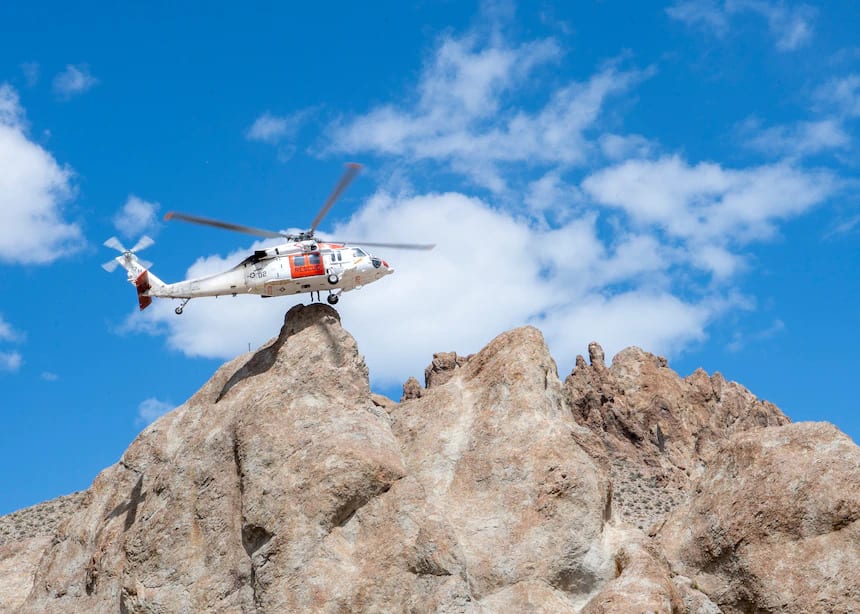
The MH-60S Knighthawk helicopter that crashed, assigned to the “Longhorns” of Helicopter Search and Rescue (SAR) Squadron, conducts a one wheel during a simulated SAR training exercise in February. U.S. NAVY / Mass Communication Specialist 2nd Class Ryan M. Breeden
NAVAL AIR STATION FALLON, Nev. — A Navy MH-60S Knighthawk helicopter crashed near Mt. Hogue, California, at approximately 5 p.m. on July 16, while conducting search and rescue (SAR) operations, the Navy said in a July 17 release. All four crewmembers survived the crash without injury and have been safely recovered.
The aircraft, call sign Longhorn 02, was supporting Mono County search and rescue efforts to locate a lost hiker in the rugged high-altitude terrain in the National Forest south of Boundary Peak, 120 miles south of NAS Fallon. The aircrew consists of four personnel — a pilot, co-pilot, and two crewmen.
The crash site is at 11,700 feet above sea level, in very rugged terrain. The crew were able to communicate following the impact, but a follow-on helicopter mission launched on the evening on July 16 from NAS Fallon was unable to retrieve them. An overnight kit was dropped to the survivors, who spent the night on mountain.
On the morning of July 17, an additional MH-60S, Longhorn 01, launched from NAS Fallon, and provided on-scene coordination, but could not affect a rescue. A CH-47 Chinook from Mather Air Force Base was called in for its superior high-altitude performance characteristics. It dropped off a ground SAR team that met up with the survivors while the CH-47 returned to Mammoth Lakes for fuel. The Chinook returned to the scene, and at approximately 2 p.m., the crew of Longhorn 02 was safely recovered aboard the CH-47.
All military support for civil mutual aid SAR missions are coordinated by the Air Force Rescue Coordination Center at Tyndall Air Force Base, Florida. Pursuant to the National SAR Plan of the United States, military aircraft may also be used for civil SAR/medevac needs to the fullest extent practicable on a non-interference basis with primary military duties according to applicable national directives, plans, guidelines and agreements.
The cause of the crash is unknown. The Navy will conduct a mishap investigation, with support from the Naval Safety Center. Following the on-site investigation, the aircraft will be removed from its current position on U.S. Forest Service land.
USS Dwight D. Eisenhower Returns from Deployment, IKE CSG Earns Navy Unit Commendation
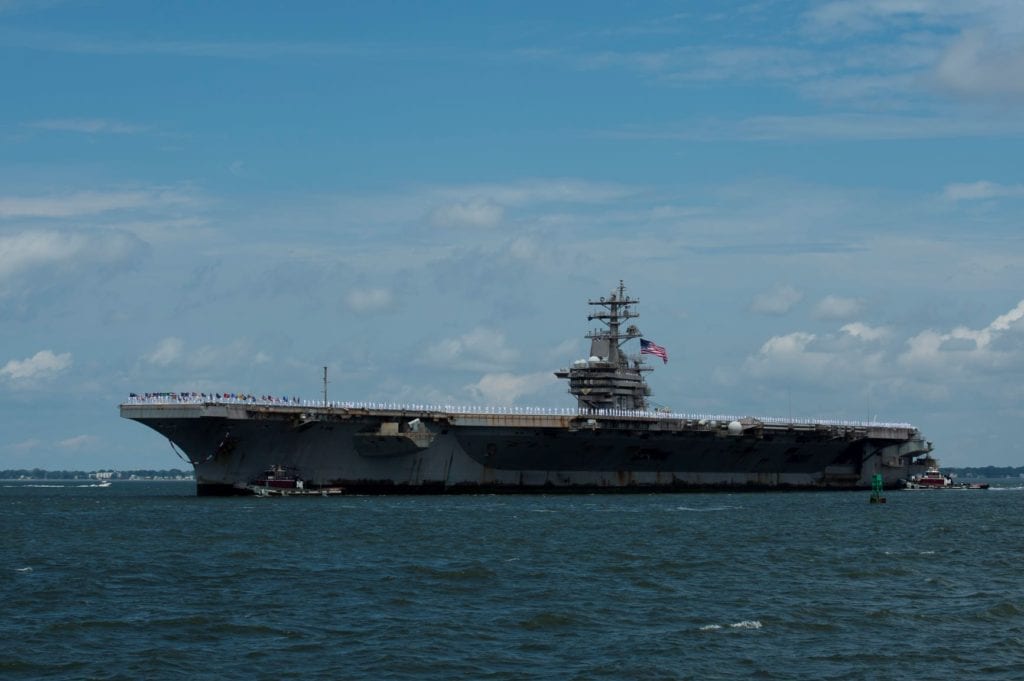
The aircraft carrier USS Dwight D. Eisenhower (CVN 6) returned to Naval Station Norfolk on July 18 following a six-month deployment. U.S. NAVY
NORFOLK, Va. – The Nimitz-class aircraft carrier USS Dwight D. Eisenhower (CVN 69) (IKE) returned home to Naval Station Norfolk July 18 following a six-month deployment to the U.S. 5th and 6th Fleet areas of operation, the U.S. 2nd Fleet said in a release.
It was the third homecoming in as many days for the Dwight D. Eisenhower Carrier Strike Group (IKE CSG). The Arleigh Burke-class guided-missile destroyer USS Laboon (DDG 58) returned to Nofolk July 16 and the Arleigh Burke-class guided-missile destroyer USS Thomas Hudner (DDG 116) returned to its homeport in Naval Station Mayport, Florida, July 17.
Additionally, more than 1,800 Navy aviators from the nine squadrons of Carrier Air Wing Three (CVW-3) returned to their home bases at Naval Air Station Oceana, Naval Station Norfolk, Naval Air Station Whidbey Island, and Naval Air Station Jacksonville July 13.
The Ticonderoga-class guided-missile cruiser USS Vella Gulf (CG 72) will return to Norfolk July 23. Meanwhile, the Ticonderoga-class guided-missile cruiser USS Monterey (CG 61) and Arleigh Burke-class guided-missile destroyers USS Mitscher (DDG 57) and USS Mahan (DDG 72) remain on deployment and will return to Norfolk at a future date.
In addition to homecoming news, it was announced that the courageous efforts of the IKE CSG’s Sailors were recognized by Acting Secretary of the Navy Thomas Harker with the Navy Unit Commendation for operational excellence.
“The Sailors of the Eisenhower Carrier Strike Group and their families have served and sacrificed a tremendous amount by answering the nation’s call to duty, spanning two deployments with only a short reset in between,” said Rear Adm. Scott F. Robertson, commander, Carrier Strike Group 2. “Nevertheless, our well-trained, exceptional Sailors rose to each challenge, enabling our strike group to be a dynamic force across great distances conducting simultaneous missions between both 5th and 6th Fleet.”
The Eisenhower Carrier Strike Group departed Norfolk for deployment Feb. 18 after successfully completing a six-week, historic composite training unit exercise (COMPTUEX). This year’s COMPTUEX included a NATO vignette and incorporated integrated training with SEALs from Naval Special Warfare Group 2 for the first time in recent history.
While in 6th Fleet, the IKE CSG supported national security interests in Europe through increased theater cooperation and maintaining a forward naval presence. While in the Atlantic Ocean and transiting through the Mediterranean Sea, the IKE CSG conducted Exercise Lightning Handshake 21, a U.S.-led, bi-lateral maritime exercise with the Royal Moroccan Navy and Royal Moroccan Air Force. The strike group also participated in Exercise Sea Shield 21, a multinational naval exercise hosted by Romania, alongside ships from nine different nations to conduct operations across the entire spectrum of naval warfare. The IKE CSG also worked alongside the Israeli navy and conducted passing exercises with the Hellenic, Italian, Albanian and Turkish navies.
In 5th Fleet, the Eisenhower Carrier Strike Group and French Navy (Marine Nationale) Charles de Gaulle Carrier Strike Group (CDGSG) conducted dual carrier operations in the Arabian Sea. Shortly after the dual carrier operations, the IKE CSG ships participated in submarine familiarization exercises and conducted passing exercises with the Canadian navy in the Arabian Sea and later with the Egyptian navy in the Red Sea. The strike group’s ships also participated in joint air operations in support of maritime surface warfare exercises with the United Arab Emirates, U.S. Coast Guard, Joint Aviation Command, Royal Saudi Naval Forces and U.S. Air Forces Central.
Embarked to Eisenhower, CVW-3 supported both missions Operation Inherent Resolve (OIR) and Operation Freedom’s Sentinel (OFS), in the Arabian Sea as a continuation of the United States’ commitment to maritime security, stability, as well as to ensure safe passage and deescalate tensions throughout international waters in 5th Fleet.
During its final month in 5th Fleet, the IKE CSG provided naval aviation support for the responsible, deliberate and safe drawdown of U.S. and coalition forces from Afghanistan April 28 to June 23 in support of OFS. CVW-3 conducted a total of 6,100 sorties and 12,401 flight hours throughout the strike group’s deployment.
“The courage and effort put forth by the Sailors of CVW-3 over these many months speaks great volumes to their unwavering commitment to success, no matter what kind of adversity emerges over the horizon,” said Capt. Marcos A. Jasso, commander, Carrier Air Wing Three. “Our Sailors gave it their all each and every day during this deployment and I am honored to have served with our great air wing and flight deck crew. I wish them all a relaxed and enjoyable time off after deployment. The whole strike group deserves it. They’ve all earned it.”
The Eisenhower Carrier Strike Group sailed more than 190,000 nautical miles, operating dynamically across multiple fleets with our NATO allies, partners and friends. The strike group’s ships completed multiple strait and choke point transits, including the Strait of Gibraltar, the Suez Canal, Strait of Hormuz and Strait of Bab el Mandeb.
“As the flagship of the strike group, we maneuvered IKE into the right battlespace for launching and recovering air wing missions ashore and over the horizon,” Campagna said. “IKE Sailors operated decisively and safely with a clear sense of purpose.”
“It took diligence, hard work, and grit from everyone to ensure our strike group remained safe and combat-ready throughout this deployment. What we do while deployed is no small feat considering we are the only Navy that can operate in a sustained manner with the kind of combat power we provide,” said Rear Adm. Robertson. “I am exceedingly proud of each and every one of our Sailors for their exceptional performance and it has been an honor to serve alongside this team of warfighters for the Eisenhower Strike Group’s 2021 mission. However, we still have a few of our strike group’s ships that remain on station and we should keep them and their families in our thoughts until they return to Norfolk.”
Dwight D. Eisenhower Carrier Strike Group is a multiplatform team of ships, aircraft and more than 5,000 Sailors, capable of carrying out a wide variety of missions around the globe. The Navy provides a ready, flexible force capable of responding to a broad range of contingencies.
Navy Christens the First Ship in the T-AO Fleet Oiler Program
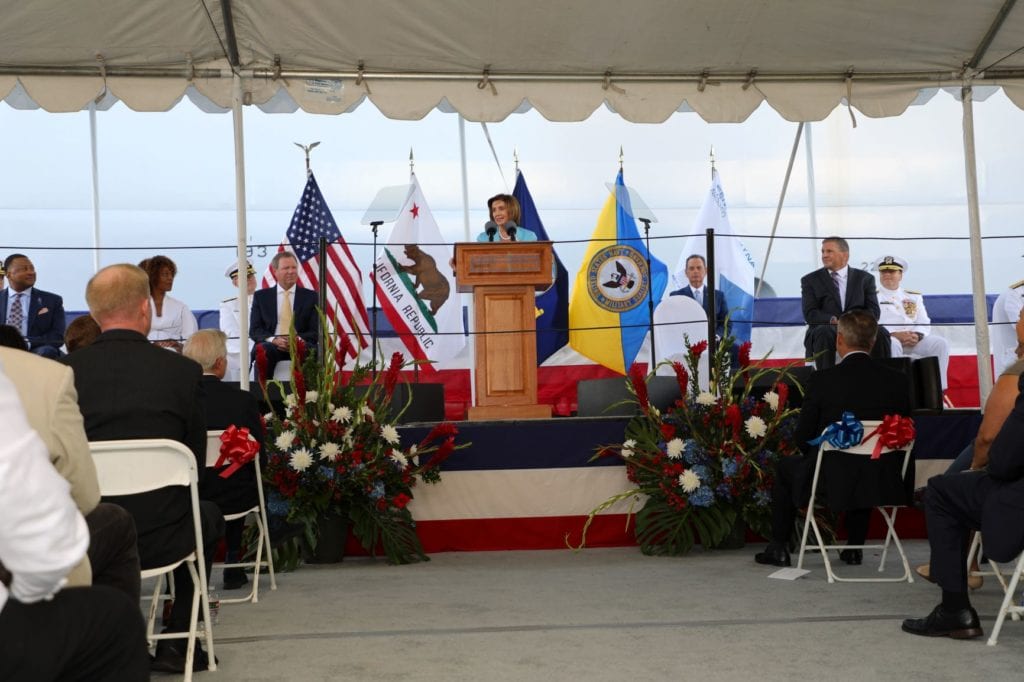
Speaker of the House Nancy Pelosi speaks at the christening of the future USNS John Lewis, the first ship in the U.S. Navy’s new John Lewis-class fleet oiler program. U.S. NAVY
SAN DIEGO – The future USNS John Lewis (T-AO 205), the first ship in the U.S. Navy’s John Lewis-class fleet oiler program, was christened July 17 during a ceremony in San Diego, the Navy said in a release.
House Speaker Nancy Pelosi, D-California, served as the principal speaker at the ceremony.
“As House Speaker, I am deeply honored to lead this congressional delegation of many friends of our beloved late Congressman John Lewis to honor his beautiful and saintly life,” said Speaker Nancy Pelosi. “John Lewis was a warrior for freedom and, as a titan of the civil rights movement, his courage and goodness helped transformed our nation. In the halls of the Capitol, he was fearless in his pursuit of a more perfect union, whether fighting to defend voting rights, end anti-LGBTQ discrimination or respect the dignity and worth of every person.”
Following Pelosi, the ship’s sponsor, Alfre Woodard Spencer, spoke briefly about the ship’s namesake.
John Lewis “lives in the unalterable truths he spoke to power,” said Spencer. “John Lewis lives in all those spaces where people reach out their hands to pull others up to the lives that they deserve. And now he lives in the name and the embodiment of this mighty sailing vessel and its mission of fortifying and sustaining those who have committed themselves to the service of our nation.”
Following her remarks, Spencer christened the ship with the traditional champagne bottle break alongside the hull.
Additional remarks were provided by U.S. Navy representatives, Marcus Tyner, nephew of the ship’s namesake, and Dave Carver, president of General Dynamics NASSCO.
“The christening ceremony today takes on a very special meaning, for it marks the one-year anniversary, to the day, of John Lewis’ passing.” Carver said. “Just as its namesake, this majestic vessel will be instrumental in shaping the future of our Nation. The shipbuilders of NASSCO are proud to ensure Congressman John Lewis’ legacy will live on in this ship.”
Former Navy Secretary Ray Mabus declared the John Lewis-class of oilers be named after leaders who fought for civil and human rights. The class and the first ship honors Congressman and American civil rights leader John Lewis.
In 2016, General Dynamics NASSCO was awarded the contract by the U.S. Navy for the detailed design and construction of the next generation of fleet oilers, the John Lewis-class (T-AO 205), previously known as the TAO(X). The contract calls for the design and construction of six 742-foot-long oilers with a full load displacement of 49,850 tons. Designed to transfer fuel to U.S. Navy carrier strike group ships operating at sea, the oilers have the capacity to carry 157,000 barrels of oil, a significant dry cargo capacity, aviation capability and up to a speed of 20 knots.
In addition to the christening of this ship, three ships in the T-AO class fleet oiler program for the U.S. Navy — the future USNS Harvey Milk (T-AO 206), the future USNS Earl Warren (T-AO 207), and the future USNS Robert F. Kennedy (T-AO 208) — are currently under construction. The second ship, the future USNS Harvey Milk (T-AO 206) is scheduled to launch later this year.
Marine Corps Selects Textron, GDLS for Advanced Recon Vehicle Prototypes
Concept art for Textron’s Advanced Reconnaissance Vehicle entry. TEXTRON SYSTEMS
QUANTICO, Va. — The Marine Corps selected Textron Systems and General Dynamics Land Systems for Advanced Reconnaissance Vehicle pre-award and will begin negotiations for Other Transaction Agreement awards of ARV prototypes, the Marine Corps said in a July 16 release.
Pending successful negotiations, Army Contracting Command–Detroit Arsenal will award the ARV OTAs utilizing the Ground Vehicle Systems OTA with the National Advanced Mobility Consortium.
A key Fleet Marine Force modernization initiative, the ARV Command, Control, Communications and Computers/Unmanned Aerial Systems will host a suite of C4 equipment, sensors, and operate both tethered and untethered UAS.
The ARV C4/UAS will employ an effective mix of reconnaissance, surveillance, target acquisition, and C4 systems to sense and communicate. These systems will enable ARV to serve as the manned hub of a manned/unmanned team and deliver next-generation, multi-domain, mobile reconnaissance capabilities.
Program Manager-Light Armored Vehicles (LAV), located at the Detroit Arsenal, Michigan, manages the ARV effort. PM LAV falls within the portfolio of programs managed by the Marine Corps’ Program Executive Officer-Land Systems, Quantico, Virginia.
The period of performance for the agreements is 22 months, with prototype delivery expected in the first quarter of fiscal year 2023 and six months of government evaluation that will complete in the third quarter.
The Marine Corps is working to validate the ARV requirement to serve as a mobile protected hub of manned capability with the C4 to effectively operate robotic autonomous systems-enabled teams through a competitive prototyping effort with multiple industry partners.
The effort gained momentum following an industry engagement held in December 2020. PM LAV solicited proposals for prototypes through the consortium on March 30, 2021. The Marine Corps received responses on May 3 and promptly began evaluations.
In parallel to competitive prototyping, the Marine Corps is also pursuing an effort to define the trade space of a government off-the-shelf solution using the Amphibious Combat Vehicle. The data from the ARV competitive prototyping efforts and the ACV study will jointly inform a Marine Corps decision point in fiscal year 2023.
Navy to Christen First John Lewis-Class Oiler
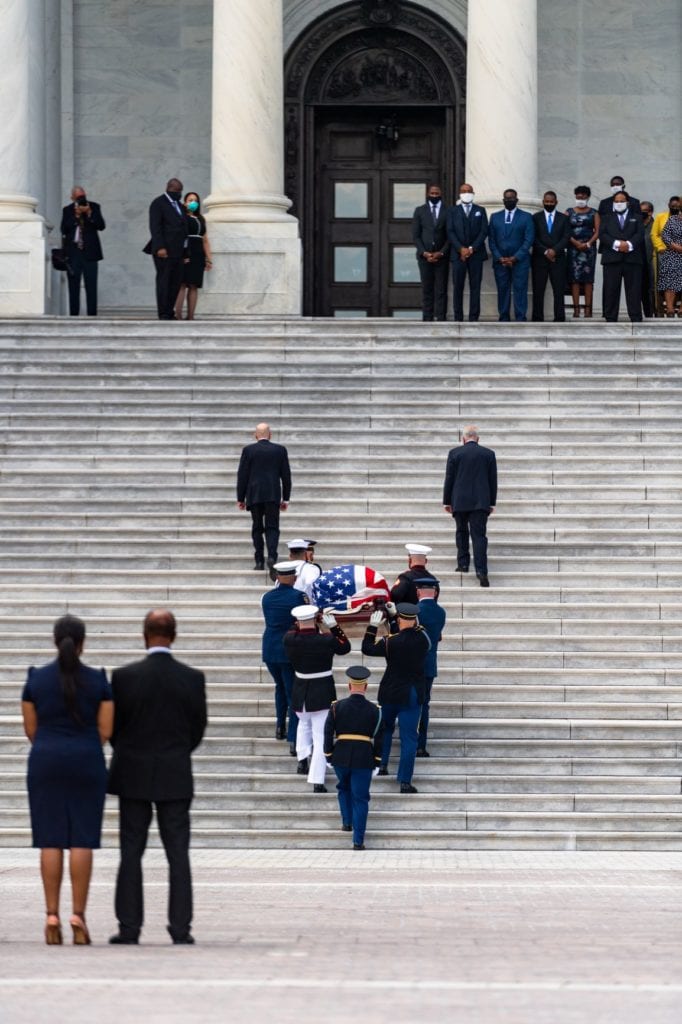
An Armed Forces Body Bearer Team carries the flag-draped casket of Rep. John Lewis at the U.S. Capitol, Washington, D.C., July 27, 2020. DoD personnel are honoring the congressman by providing military funeral honors during his congressional funeral events. U.S. ARMY / Spc. Zachery Perkins
ARLINGTON, Va. — The Navy will christen its first-in-class John Lewis-class replenishment oiler, the future USNS John Lewis (T-AO 205), during a 9 a.m. PDT ceremony Saturday, July 17, in San Diego, California, the Defense Department announced in a July 16 release.
Speaker of the House of Representatives, Rep. Nancy Pelosi, D-California, will deliver the ceremonial principal address. Remarks will also be provided by James Geurts, performing the duties of Under Secretary of the Navy; Vice Adm. Ross Myers, commander, Fleet Cyber Command and commander, U.S. 10th Fleet; Rear Adm. Michael Wettlaufer, commander, Military Sealift Command; and Marcus Tyner, nephew of the ship’s namesake. In a time-honored Navy tradition, the ship’s sponsor, Alfre Woodard Spencer, will christen the ship by breaking a bottle of sparkling wine across the bow.
“Tomorrow we christen the first John Lewis-class replenishment oiler,” said acting Secretary of the Navy Thomas Harker. “Leaders like Representative Lewis taught us that diversity of backgrounds and experiences help contribute to the strength of our nation. There is no doubt that the future Sailors aboard this ship will be galvanized by Lewis’ legacy.”
The future USNS John Lewis is the first ship in its class and will be operated by the Navy’s Military Sealift Command. The ship is named in honor of the late politician and civil rights leader. John Lewis-class oilers will be named for other prominent civil rights leaders and activists.
The John Lewis-class ships are based on commercial design standards and will recapitalize the current T-AO 187-class fleet replenishment oilers to provide underway replenishment of fuel to U.S. Navy ships at sea. These ships are part of the Navy’s Combat Logistics Force.
In June 2016, the Navy awarded a $3.2 billion contract to General Dynamics NASSCO in San Diego for the design and construction of the first six ships of the Future Fleet Replenishment Ship, the John Lewis-class (T-AO 205), with construction commencing in September 2018. The Navy plans to procure 20 ships of the new class.
Lewis passed July 17, 2020; the christening marks the one-year anniversary of his death.
Acting SECNAV Names Future Expeditionary Fast Transport Ship Point Loma
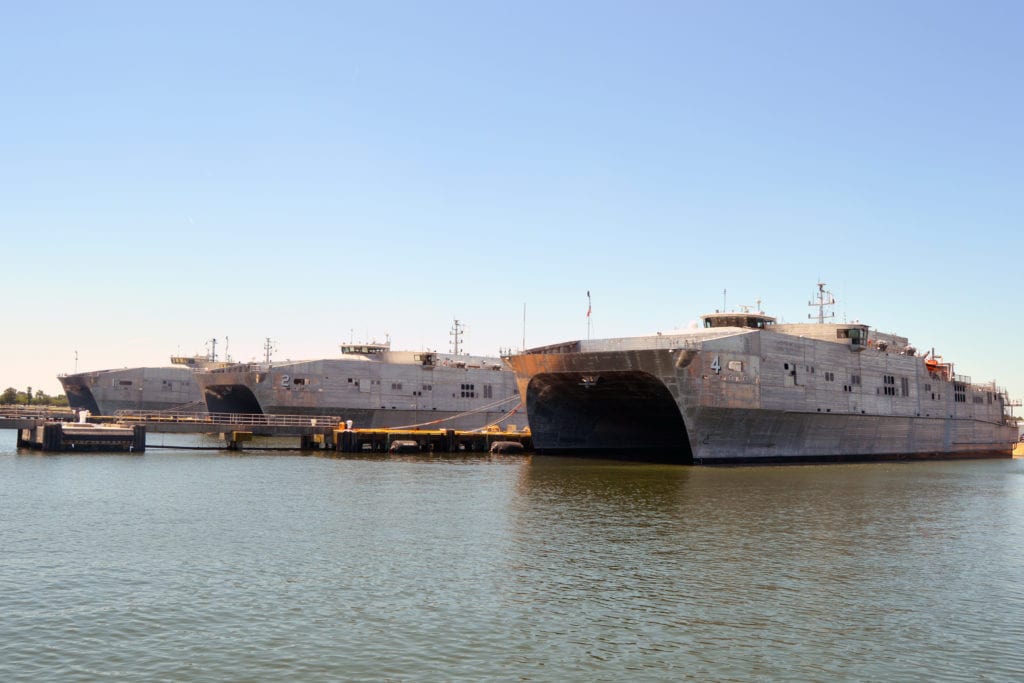
Expeditionary Fast Transport vessels USNS Spearhead (T-EPF 1), USNS Choctaw County (T-EPF 2) and USNS Fall River (T-EPF 4) at Joint Expeditionary Base Little Creek-Fort Story in 2015. A future Spearhead-lass EFP will be named USNS Point Loma after the San Diego seaside community. U.S. NAVY / Brian Suriani
ARLINGTON, Va. — A future Spearhead-class Expeditionary Fast Transport (EFP) ship will be named USNS Point Loma, the Navy said in a 16 July release.
Acting Secretary of the Navy Thomas W. Harker announced July 16 that a future Spearhead-class Expeditionary Fast Transport (EFP) ship will be named to honor the San Diego seaside community of Point Loma.
The future USNS Point Loma (T-EPF-15) will be the second naval vessel to bear this name, the first being a deep submergence support ship that was decommissioned in 1993. Currently, eight Navy vessels honor the state of, or a location in, California.
“It is my honor to recognize the enduring support of the community and residents of Point Loma, who for generations have provided the Navy and Marine Corps with critical support and infrastructure integral to the Department of the Navy’s mission,” Harker said. “So many Sailors and Marines have called this community home, and like I, a California native, have seen and felt the support from this community. The crew of the future USNS Point Loma will honor this time-honored relationship and will continue to serve this community and the nation for generations to come.”
The name selection follows the naval tradition of honoring small American cities or communities with ties to the Navy. The community of Point Loma has a long-standing naval presence, beginning in 1901 with the establishment of the Naval Coaling Station, La Playa, which later became Naval Supply Center San Diego, Point Loma Annex in 1943. The Naval Training Center San Diego in Point Loma served as a basic training facility for over seven decades, and the Fort Rosecrans National Cemetery is the site of a monument for Sailors killed in a boiler explosion on board USS Bennington (Gunboat No. 4) in 1905.
Currently, Naval Base Point Loma comprises six installations and provides support to 70 U.S. Pacific Fleet afloat and shore-based tenant commands headquartered on the base.
The future T-EPF-15 is the last of the 15 EPFs ordered by the Navy, with the first delivered in 2012. The Navy has accepted delivery of 10 EPFs with USNS Burlington (T-EPF 10) being the most recent delivery in November 2018. Austal USA in Mobile, Alabama, was awarded the contract to build T-EPF-15 in February 2021.
EPFs are commercial-based catamarans designed to be highly capable and affordable, allowing flexibility to the fleet with their ability to access harsh ports with minimal external assistance. EPFs maintain a variety of roles including humanitarian assistance, maritime security and disaster relief, among others. The vessel is designed to operate in shallow-draft ports and waterways and includes a flight deck for helicopter operations and an off-load ramp that allow vehicles to drive off the ship. The future T-EPF-15 will also include an expeditionary medical capability.
Along with announcing the ship’s name, Harker also recognized the future USNS Point Loma’s sponsor, Beth Asher, who in her role as the ship’s sponsor will represent a lifelong relationship with the ship and crew.
Naval Special Warfare Welcomes CQT Class 115; First Woman Operator
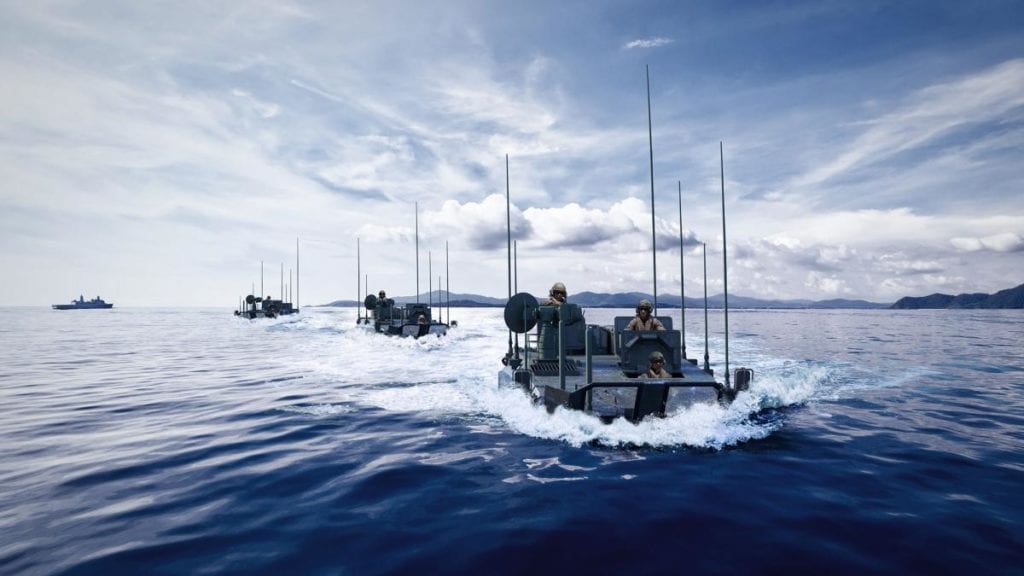
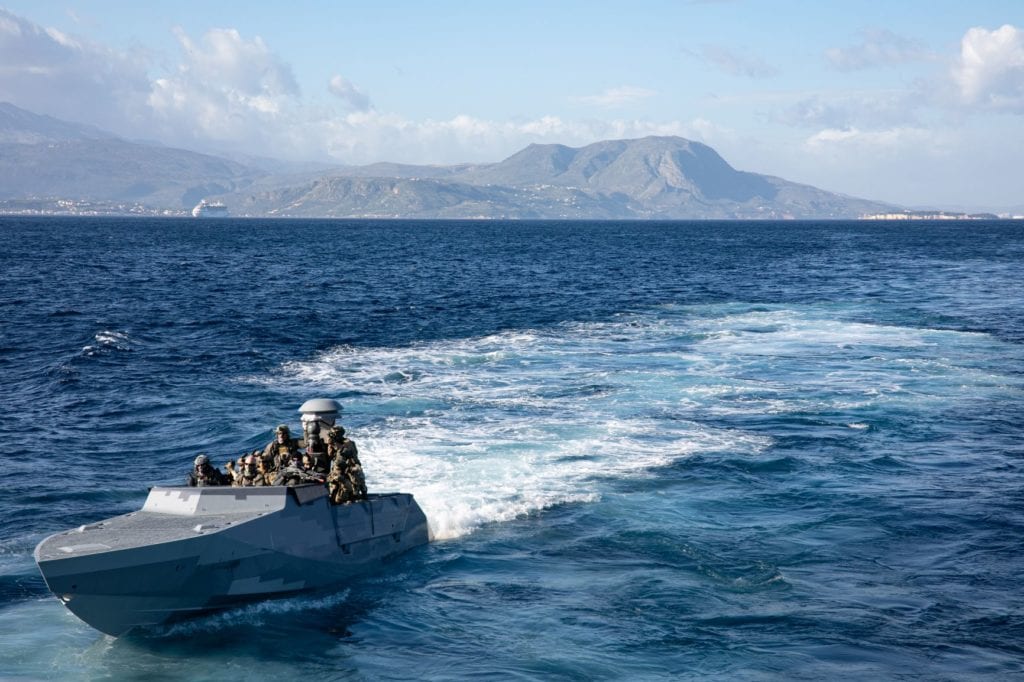
A combatant craft assault craft (CCA) in the Mediterranean Sea, May 26, 2021. U.S. NAVY / Mass Communication Specialist 2nd Class Eric Coffer
CORONADO, Calif. – Candidates of Crewman Qualification Training (CQT) Class 115 completed Naval Special Warfare’s (NSW) assessment and selection pipeline to become Special Warfare Combatant-craft Crewmen (SWCC), earning their pins and graduating, Thursday, July 15, 2021, the Navy Special Warfare Command said in a release.
Graduates of any NSW assessment and selection pipeline have met the rigorous standards to enter their chosen profession, demonstrating they possess the character, cognitive and leadership attributes required to join the force. Historically, about 35 percent of SWCC candidates make it to graduation.
Among the 17 graduates is NSW’s first woman operator. The SWCC assessment and selection pipeline challenges candidates through adversity, always upholding validated, gender-neutral and operationally relevant standards.
“Becoming the first woman to graduate from a Naval Special Warfare training pipeline is an extraordinary accomplishment, and we are incredibly proud of our teammate,” said Rear Adm. H. W. Howard, commander, U.S. Naval Special Warfare Command. “Like her fellow operators, she demonstrated the character, cognitive and leadership attributes required to join our force.”
Following graduation, the newly minted SWCCs will report to either a Special Boat Team or follow-on training. The continuum of qualification and training over the course of an NSW operator’s career includes continuously advancing skills in core and additional competencies.
SWCC are experts in covert insertion and extraction, utilizing a unique combination of capabilities with weapons, navigation, radio communication, first aid, engineering, parachuting and special operations tactics.
Naval Special Warfare Center, located on Naval Amphibious Base Coronado, provides initial assessment and selection and subsequent advanced training to the Sailors who make up the Navy’s SEAL and Special Boat communities. These communities support the NSW mission, providing maritime special operations forces to conduct full-spectrum operations, unilaterally or with partners, to support national objectives. For more information on the NSW pipeline, visit https://www.sealswcc.com/.
Caudle Nominated to Lead U.S. Fleet Forces Command
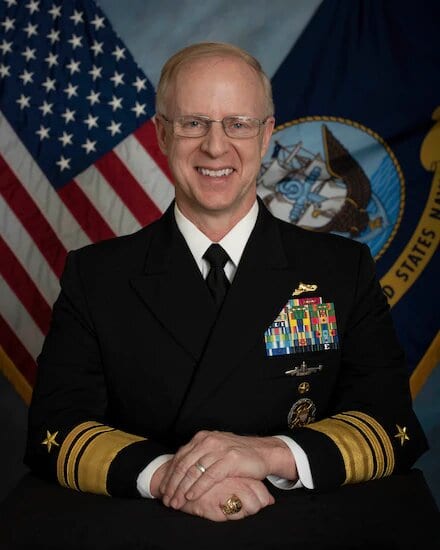
Vice Adm. Daryl L. Caudle, nominated for assignment as commander, U.S. Fleet Forces Command. U.S. NAVY
ARLINGTON, Va. — Secretary of Defense Lloyd J. Austin III announced July 15 the president has made the following nominations, including a new commander for U.S. Fleet Forces Command:
Navy Vice Adm. Daryl L. Caudle for appointment to the rank of admiral, and assignment as commander, U.S. Fleet Forces Command, Norfolk, Virginia. Caudle is currently serving as commander, Naval Submarine Forces; commander, Submarine Force, U.S. Atlantic Fleet; and commander, Allied Submarine Command, Norfolk, Virginia. If confirmed by the Senate, Caudle would relieve Adm. Christopher Grady.
Marine Corps Lt. Gen. Eric M. Smith for appointment to the rank of general, and assignment as assistant commandant of the Marine Corps. Smith is currently serving as the deputy commandant for combat development and integration, Headquarters, U.S. Marine Corps; and commanding general, Marine Corps Combat Development Command, Marine Corps Base Quantico, Virginia.
Navy Vice Adm. James W. Kilby for reappointment to the rank of vice admiral, and assignment as deputy commander, U.S. Fleet Forces Command, Norfolk, Virginia. Kilby is currently serving as deputy chief of naval operations for warfighting requirements and capabilities, N-9, Office of the Chief of Naval Operations, Washington, D.C.
Navy Rear Adm. Frank D. Whitworth III for appointment to the rank of vice admiral, and assignment as director of intelligence, J-2, Joint Staff, Washington, D.C. Whitworth is the incumbent director of intelligence, J-2, Joint Staff, Washington, D.C.
Caudle is a native of Winston Salem, North Carolina and a 1985 graduate of North Carolina State University (magna cum laude) with a degree in Chemical Engineering. He was commissioned after attending Officer Candidate School in Newport, Rhode Island.
Caudle holds advanced degrees from the Naval Postgraduate School, Master of Science (distinction) in Physics from Old Dominion University, and Master of Science in Engineering Management. He also attended the School of Advanced Studies, University of Phoenix, where he obtained a Doctor of Management in Organizational Leadership with a specialization in Information Systems and Technology.
His doctoral dissertation research was conducted on military decision-making uncertainty regarding the use of force in cyberspace. He is also a licensed professional engineer.
His early sea tours included assignments as division officer, USS George Washington Carver (SSBN 656G); engineer, USS Stonewall Jackson (SSBN 634B); engineer, USS Sand Lance (SSN 660); and executive officer of USS Montpelier (SSN 765).
Caudle’s first command assignment was as commanding officer of USS Jefferson City (SSN 759). As deputy commander, Submarine Squadron 11, he served as Commanding Officer of USS Topeka (SSN 754) and USS Helena (SSN 725) due to emergent losses of the normally assigned commanding officers. He also commanded Submarine Squadron 3.
His tours ashore include assignments as assistant force nuclear power officer, commander Submarine Force, U.S. Atlantic Fleet; Officer-in-Charge of Moored Training Ship (MTS 635); deputy commander of Submarine Squadron 11; assistant deputy director for information and cyberspace policy on the Joint Staff (J-5) in Washington, D.C.; and chief of staff, commander Submarine Force, U.S. Pacific Fleet.
His other flag assignments include deputy chief for security cooperation, Office of the Defense Representative, Pakistan where he directly supported coalition forces for Operation Enduring Freedom; deputy commander, Joint Functional Component Command-Global Strike; deputy commander, U.S. 6th Fleet; director of operations U.S. Naval Forces Europe-Africa; commander, Submarine Group Eight, where he directed combat strikes using the first ever dual Carrier operations with allies in support of Operation Inherent Resolve. He also designed the plan and directed combat sorties for Operation Odyssey Lightning to counter violent extremists in Libya; and commander, Submarine Force, U.S. Pacific Fleet.
Prior to this assignment, he was Vice Director for Strategy, Plans, and Policy on the Joint Staff (J-5) in Washington, D.C
Vice Admiral Caudle assumed his current duties in November 2019. As commander, Submarine Forces, he is the undersea domain lead, and is responsible for the submarine force’s strategic vision. As commander, Submarine Force Atlantic, he commands all Atlantic-based U.S. submarines, their crews and supporting shore activities. These responsibilities also include duties as commander, Task Force (CTF) 114, CTF 88, and CTF 46.
As commander, Allied Submarine Command, he is the principle undersea warfare advisor to all North Atlantic Treaty Organization strategic commanders.