Navy Completes Refits for Three Oceanographic Research Ships to Add Years of Service
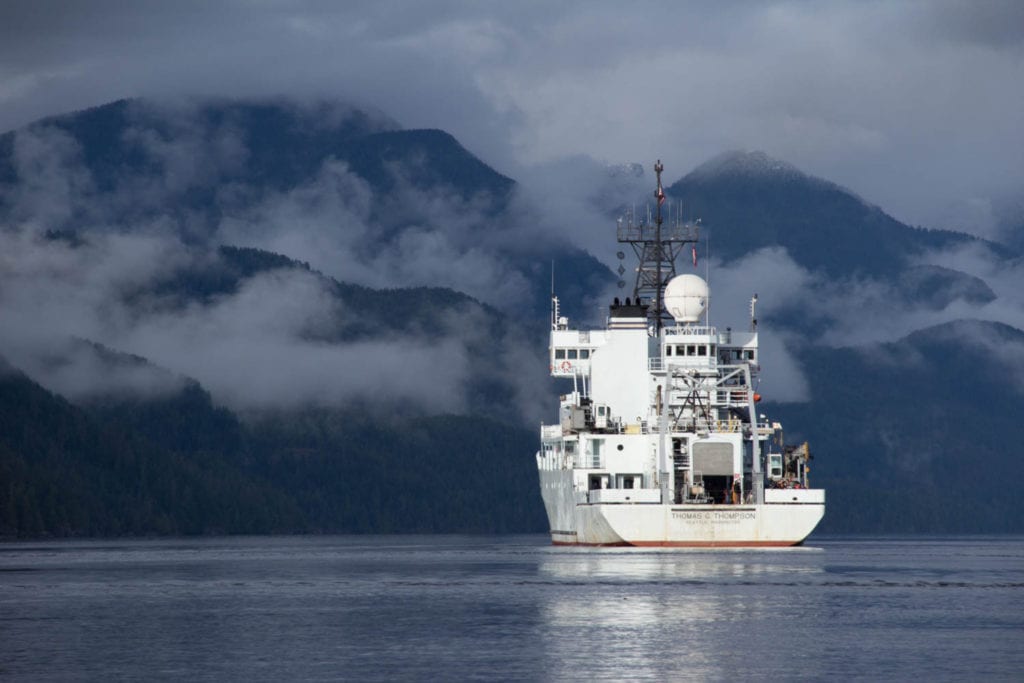
Research Vessel (R/V) Thomas G. Thompson (AGOR 23) in Nootka Sound. UW OCEANOGRAPHY – UNIVERSITY OF WASHINGTON

The Navy has completed refitting three of its oldest but largest oceanographic research ships (AGORs), permitting them to serve for an additional 15 years. The global-class ships, R/V Thomas G. Thompson (AGOR 23), R/V Roger Revelle (AGOR 24) and R/V Atlantis (AGOR 25), entered service between 1991 and 1998 and were built for a 30-year service life.

The final ship, Atlantis, will complete its overhaul on July 10. Rob Sparrock, program manager for research ships with the Office of Naval Research (ONR), said the Navy’s investment of $150 million for all three of the research ships was a good value. “We’ve extended their service lives by at least 15 years, so we got 45 years of service for less than the cost of one new ship with a 30-year service life.”

Sparrock manages six Navy-owned oceanographic research vessels; the historic deep-submersible vehicle Alvin; and the Floating Instrument Platform, or FLIP, which are charter-leased to U.S. academic research institutions to operate and maintain in support of Navy and U.S. ocean research objectives.

ONR also employs other oceanographic platforms, such as unmanned underwater vehicles and unmanned air vehicles, which are used to collect field data through the Naval Research Facilities program.

The Thomas G. Thompson  was delivered to the Office of Naval Research on July 8, 1991 and is operated by the University of Washington. A permanent civilian crew is assigned to the ship, but various researchers deploy in support of their specific programs and are typically funded by the National Science Foundation, Navy, NOAA and other federal/state agencies.

Because her expected service life was 30 years, she would have been retired this year.  Instead, Vigor Industrial shipyard in Seattle was contracted to renovate the ship, which began in June of 2016 at a cost of $52 million. 

Sparrock said the ships were upgraded with new diesel engines, which are more reliable and environmentally friendly, as well as quieter, an important attribute in oceanographic research. The ships now have better laboratory and work spaces, along with improved habitability, new berthing spaces and a gym.

“They’re 25 to 30 years old, but we’ve made them ‘newer’ and greener than most research vessels,” he said.

During the refit, the propulsion system was largely replaced with new diesel generators, overhauled propulsion motors, and new switchboards, control systems and alarms. Electrical cable and pipework were replaced as well as the air conditioning, refrigeration, sewage and freshwater systems. New research and navigation instruments were also added.

The two newest Navy Ocean-class AGORs, R/V Neil Armstrong and R/V Sally Ride, are five and six years old, respectively. By conducting the service life extensions on the oldest on the Navy’s 15 research ships, Sparrock said the Navy’s ocean-going fleet is “good for another 10 to 15 years.”
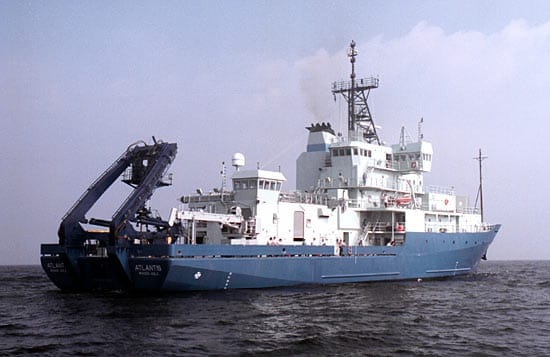
R/V Atlantis. WOODS HOLE OCEANOGRAPHIC INSTITUTION

The AGORs are operated by partner academic institutions. A fourth ship of the class, the NOAAS Ronald H. Brown, was built for and operated by the National Oceanic and Atmospheric Administration. All four ships were built at VT Halter Marine in Pascagoula, Mississippi.

While Atlantis can perform the same kinds of research as the other Globals, and will sometimes deploy without the deep submergence vessel, only Atlantis can support Alvin.  They’re a pair. “Atlantis will perform 280 to 300 days of underway science a year, with 100-plus days devoted to Alvin work.” Sparrock said.

Atlantis is operated by Woods Hole Oceanographic Institution (WHOI), and is the mothership to the Navy’s deep-diving Alvin bathyscaph. Although Alvin first entered service in 1964, it has been systematically modernized and upgraded over the years to remain quite youthful, and has made more than 5,000 dives.

“She’s been rebuilt so often that it’s not a 60-year-old platform we’re refurbishing, said Sparrock. “Most recently, we upgraded her to have a 6,500-meter depth capability.”

Sparrock said Alvin is the last of the Navy’s deep ocean research submersibles, and has a long history of finding lost nuclear weapons, discovering previously unknown hydrothermal vents and associated sea life, and locating the Titanic.  “It’s a fascinating tool of the Academic Research Fleet,” Sparrock said. “Alvin is a national treasure.”

In addition to the Global-class ships, there are also regional-class and local-class ships, which perform missions in coastal waters. The National Science Foundation and State Institutions also own ships in the Academic Research Fleet. Scheduling for the 18 vessels of the U.S. Academic Research Fleet is coordinated by the University-National Oceanographic Laboratory System (UNOLS), an organization representing 59 academic institutions and national laboratories that conduct in oceanographic research and work together to coordinate the oceanographic ship and research facility schedules.

NOAA’s Ronald H. Brown and the U.S. Coast Guard medium icebreaker USCGC Healy are not part of the academic research fleet per se, but participate in UNOLS scheduling.

Saildrone’s New Surveyor Autonomous Research USV Completes Ocean Crossing from San Francisco to Hawaii

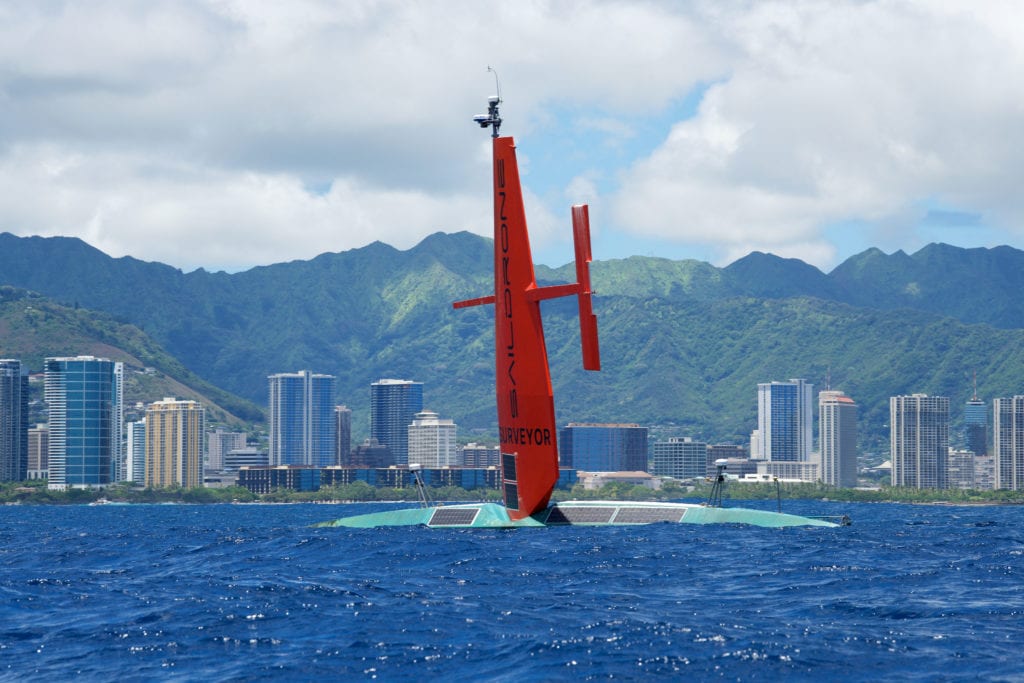
Saildrone’s Surveyor arrived in Hawaii on July 8 after a voyage from San Francisco to Honolulu. SAILDRONE

HONOLULU – The uncrewed, autonomous, Saildrone Surveyor arrived in Hawaii July 8 after a groundbreaking first voyage from San Francisco to Honolulu, Saildrone Inc. said in a release.  

While ocean crossings are nothing new for Saildrone’s autonomous surface vehicles, the Saildrone Surveyor is a new, much larger class of vehicle optimized for deep-ocean mapping. During the 28-day voyage, the Saildrone Surveyor sailed 2,250 nautical miles and mapped 6,400 square nautical miles of seafloor. 

Using renewable wind and solar energy for its primary power source, the Saildrone Surveyor is the only vehicle in the world capable of long-endurance, uncrewed ocean mapping operations. The valuable data it collects will help address issues impacting our world including climate change, offshore renewable energy, natural resource management, and maritime safety. 

Measuring 72 feet long (22 meters) and weighing 14 tons, the Saildrone Surveyor carries a sophisticated array of acoustic instruments, normally carried by large, manned survey ships. The Surveyor’s sensors interrogate the water column looking at underwater ecosystems and map the seafloor in high resolution to a depth of 23,000 feet (7,000 meters). 

Multibeam data from the Saildrone Surveyor has been calibrated and assessed by an external team from the University of New Hampshire (UNH), which normally calibrates large government survey vessels. “The data quality from the Surveyor is of very high quality, as good as anything we have seen from a ship,” said Larry Mayer, director for the UNH Center for Coastal and Ocean Mapping. “Due to the wind-powered nature of the vehicle, it is very quiet, and this enables the very accurate acoustic measurements needed to map to these depths.” 

The ocean covers more than 70% of the planet, but more than 80% remains unmapped and unexplored. The lack of ocean exploration is largely due to the high cost of access to our oceans, which has traditionally been undertaken by large ships. These ships can cost hundreds of millions of dollars to build and hundreds of thousands of dollars per day to operate. The Saildrone Surveyor represents a paradigm shift in the cost of ocean access, performing the same job as a survey ship but at a fraction of the cost and carbon footprint. 

“This successful maiden voyage marks a revolution in our ability to understand our planet,” said Richard Jenkins, Saildrone founder and CEO. “We have solved the challenge of reliable long-range, large-payload remote maritime operations. Offshore survey can now be accomplished without a large ship and crew; this completely changes operational economics for our customers. Based on this achievement, I am excited to apply Saildrone Surveyor technology to other markets normally reserved for large ships, such as homeland security and defense applications. The implications of a low-carbon solution to these critical maritime missions are significant.” 

With this successful proof of concept voyage, Saildrone Inc. of California, will now build a fleet of Surveyors to be manufactured at U.S. shipyards. Saildrone intends to map the entire Earth’s oceans in the next 10 years. 


Norway’s First P-8A Poseidon Rolls Out with New Livery

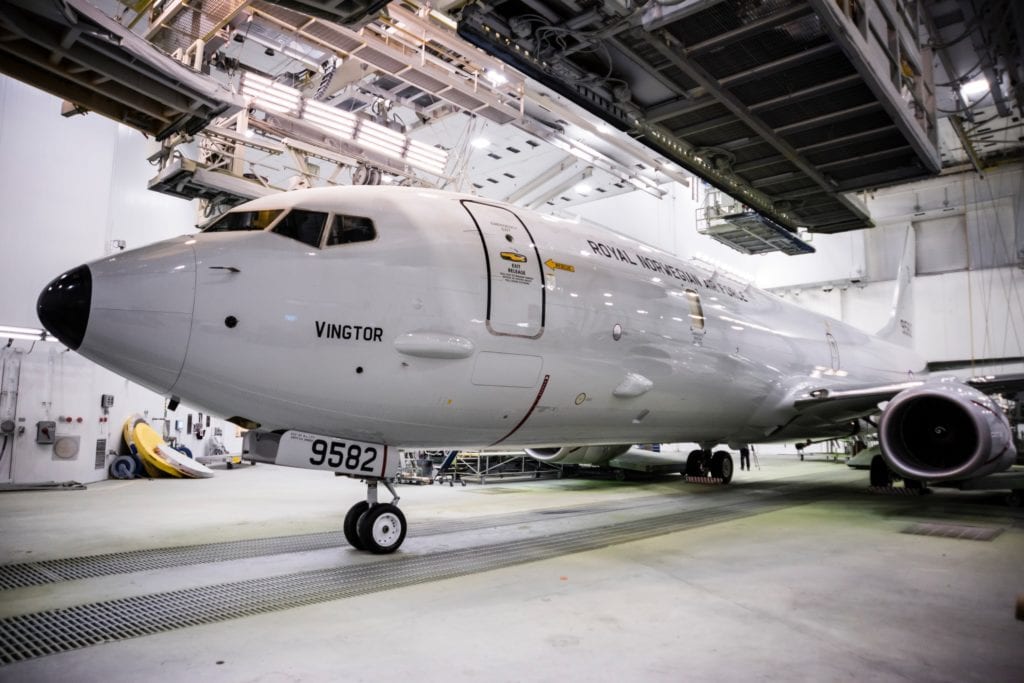
Norway’s first P-8A Poseidon, Vingtor, rolled out of the paint show in Renton, Washington, on July 9. It will return to the factory floor to prepare for flight testing. BOEING

RENTON, Wash. — The first P-8A Poseidon aircraft for Norway today rolled out of the paint shop in Renton, in Royal Norwegian Air Force livery, Boeing said in a July 9 release. Norway is one of eight nations to have acquired the P-8A as their new multi-mission maritime patrol aircraft. 

Recently, the air force revealed the names of its five P-8A Poseidon aircraft: Vingtor, Viking, Ulabrand, Hugin and Munin. The names are inspired by Norse mythology and continue a tradition of almost 80 years that started when the names Vingtor, Viking and Ulabrand were used on Norway’s PBY-5 Catalina maritime patrol aircraft in 1942. Since then, other maritime patrol aircraft operated by the Royal Norwegian Air Force have carried those names, including its current P-3 fleet, which will be replaced by the P-8.  

Norway’s first P-8A aircraft – Vingtor – will now return to the factory floor to be prepared for flight testing. First flight is scheduled for later this month, and mission systems will be installed on the aircraft after that. 


Navy Orders MH-60R Helicopters to Replace Transfers to Greece

An MH-60R Seahawk helicopter assigned to the Swamp Foxes of Helicopter Maritime Strike Squadron (HSM) 74 flies in front of the guided-missile cruiser USS San Jacinto (CG 56). U.S. NAVY / FRENCH NAVY / Chief Petty Officer Bruno Gaudry

ARLINGTON, Va. — The Navy has ordered three MH-60R helicopters from the manufacturer to replace three transferred to the government of Greece. 

The Naval Air Systems Command awarded Lockheed Martin a $129 million contract modification for the production and delivery of three MH-60R Seahawk helicopters “as replacement-in-kind for the Navy,” the Defense Department said in a June 29 contract announcement.   

The three replacement-in-kind (RIK) aircraft are in support of the Hellenic navy Foreign Military Sales, said Liz Mildenstein, a spokeswoman for the Naval Air Systems Command. “The U.S. Navy issued three ‘green’ exportable MH-60Rs to the Hellenic navy in order to support the stated delivery schedule in the FMS case. The RIK aircraft are to replenish the U.S. Navy inventory.” 

The Naval Air Systems Command, through the Foreign Military Sales Program, originally awarded a $194 million contract modification to Lockheed Martin for four MH-60Rs and three airborne low-frequency sonar systems to be used by the helicopters for Greece, according to an Oct. 26 Defense Department contract announcement.  

The MH-60R is the U.S. Navy’s maritime strike and anti-submarine helicopter. The helicopter type also has been ordered and/or exported to the Royal Australian Navy, the Royal Danish Air Force, and the Royal Saudi Navy, the Republic of Korea Navy and the Indian Navy.  


CTF Sentinel Completes Third Joint Exercise in the Arabian Gulf 

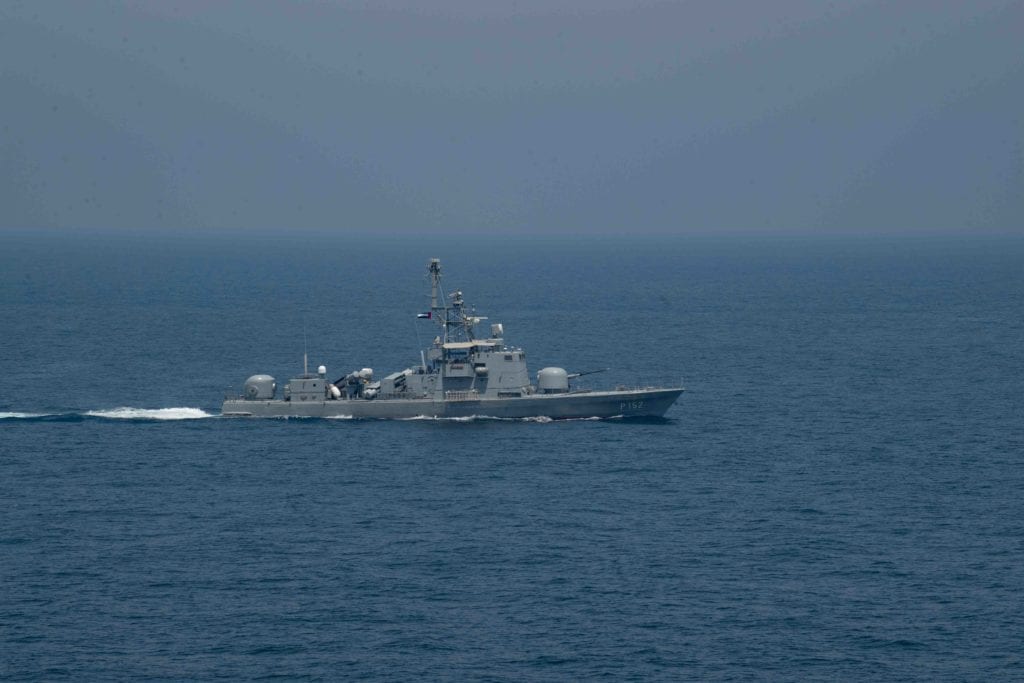
United Arab Emirates Navy missile patrol boat Marban (P 152) operates in formation with guided-missile cruiser USS Monterey (CG 61), not pictured, during a Coalition Task Force (CTF) Sentinel Shield-led interoperability exercise in the Arabian Gulf, June 26. U.S. NAVY / Mass Communication Specialist Seaman Chelsea Palmer

MANAMA, Bahrain — Coalition Task Force (CTF) Sentinel completed its third iteration of combined exercise Sentinel Shield in the Arabian Gulf, showcasing interoperability between coalition warships June 26, the task force spokeswoman said in a July 8 release. 

During the exercise, the United Arab Emirates Navy missile patrol boat Marban (P152) and United States Navy guided-missile cruiser USS Monterey (CG 61) conducted synchronized tactical maneuvers while testing communications across systems and platforms with each other and merchant vessels.  

“Two of our Gulf Coast Country partners participated in this exercise,” said Commodore Adrian Fryer, Royal Navy, CTF Sentinel commander. “Every engagement helps us promote partnerships, maintain our edge and remain vigilant in upholding the free flow of commerce in the region, and support the global economy.” 

Regular training between Sentinel and Sentry patrols throughout the Arabian Gulf is a vital part of the CTF Sentinel mission.  

Sentinels are large naval assets, such as frigates and destroyers, which provide overwatch of two critical choke points, the Strait of Hormuz and the Bab el-Mandeb Strait. Sentries are smaller naval vessels, such as patrol craft and corvettes, which patrol key transit areas between the choke points.  

Each exercise increases synchronicity between partner nations enabling them to continue deterring state-sponsored malign activity in the region.  

“On behalf of the crew of the Marban, it has been an honor to work with the USS Monterey on this mission that has increased our level of coordination which plays an important role at sea,” said United Arab Emirates Lt. Cdr. Saleh Almehrzi, commanding officer of the Marban. 

The exercise was successful and we hope there will be many more opportunities to work alongside coalition members in the future to further our partnership.” 

U.S. Navy Capt. Joseph Baggett, commanding officer of USS Monterey, highlighted the critical nature of CTF Sentinel’s mission and the importance of continued training exercises with our partners. 

“Regional security and stability are directly linked to enhanced cooperation, understanding, and collaboration with key regional partners, like the UAE Navy, and it was an absolute honor to train and learn from our operations with Marban,” said Baggett. 

CTF Sentinel is a multinational maritime effort to promote maritime stability, ensure safe passage, and enhance freedom of navigation throughout key waterways in the Arabian Gulf, Strait of Hormuz, the Bab el-Mandeb Strait, and the Gulf of Oman. 


Boeing to Support RAF Poseidon Fleet and Train Crews for Next Five Years

Aviation Machinist’s Mate 3rd Class Audulio Garza, assigned to the “Grey Knights” of Patrol Squadron (VP) 46, signals to the pilots of a P-8A Poseidon anti-submarine warfare patrol aircraft, Dec. 14, 2020, in Lossiemouth, Scotland. U.S. NAVY / Mass Communication Specialist 2nd Class Austin Ingram

LOSSIEMOUTH, Scotland — Boeing and the U.K. Ministry of Defence have signed an agreement for Boeing to support the Royal Air Force’s (RAF) fleet of Poseidon MRA1 maritime patrol aircraft and train the crews that operate them, the company announced. 

“Our new Poseidon fleet continues to grow from strength to strength and is already defending the U.K.’s maritime interests at home and abroad,” said Defence Secretary Ben Wallace. “This contract with Boeing Defence UK secures our critical submarine-hunting aircraft capabilities whilst also creating a home-grown training enterprise and creating over 150 British jobs.” 

Under the aircraft and training support contract, valued at $321.6 million (£233.5 million), Boeing will provide maintenance services, spares and repairs, including tools and ground support equipment, as well as supply chain management, forecasting and inventory management, and airworthiness services for the RAF’s P-8 fleet. 

The training element of the contract will offer a suite of training systems and courseware to prepare aircrew and maintainers to safely and effectively operate and maintain the fleet. Boeing will provide the flight instructors to train P-8A pilots, and under the terms of a subcontract, Burgess Hill-based CAE UK will create more jobs in the UK to provide rear crew and engineering instructors, and console operators and controllers who will perform role playing and support functions during training and mission rehearsal exercises. 

These agreements will create 150 jobs in the United Kingdom, including more than 100 at RAF Lossiemouth in northern Scotland. Boeing employees are already working alongside RAF personnel at the station in Moray, supporting the current fleet of five Poseidons. 

“The P-8A Poseidon brings the RAF critical reconnaissance capabilities, and we are proud to be a trusted partner in helping to keep RAF aircrew trained, and the P-8A mission ready,” said Anna Keeling, managing director of Boeing Defence UK. “We are excited to see our continued growing presence in Scotland with the creation of these highly-skilled jobs, in addition to our existing footprint of more than 2,500 employees across the U.K., reaffirming our commitment to help strengthen the aerospace and defense sector in Scotland.” 

The RAF is on contract for nine Poseidon aircraft with five already delivered and the remaining four scheduled for later this year, when around 200 Boeing employees are expected to be based at RAF Lossiemouth focused on maintenance, training and support. 

The second of two Operational Flight Trainers, jointly developed by Boeing and CAE for the Poseidon fleet, arrived at RAF Lossiemouth last month. Both will be installed in the Boeing-built Strategic Facility, which accommodates three Poseidon aircraft, squadrons and mission support facilities. 

The P-8A Poseidon supports maritime surveillance, anti-submarine warfare and anti-ship warfare for the United Kingdom and increases protection of the country’s nuclear deterrent and Queen Elizabeth class aircraft carriers. More than a dozen U.K.-based suppliers produce components for the P-8, making up five percent of every P-8 aircraft around the world. Marshall Aerospace and Defence Group has built and delivered more than 900 auxiliary fuel tanks from its production facility in Cambridge. 


Congressman Asks SECDEF to Direct Recission of SLCM-N Cancellation Memo

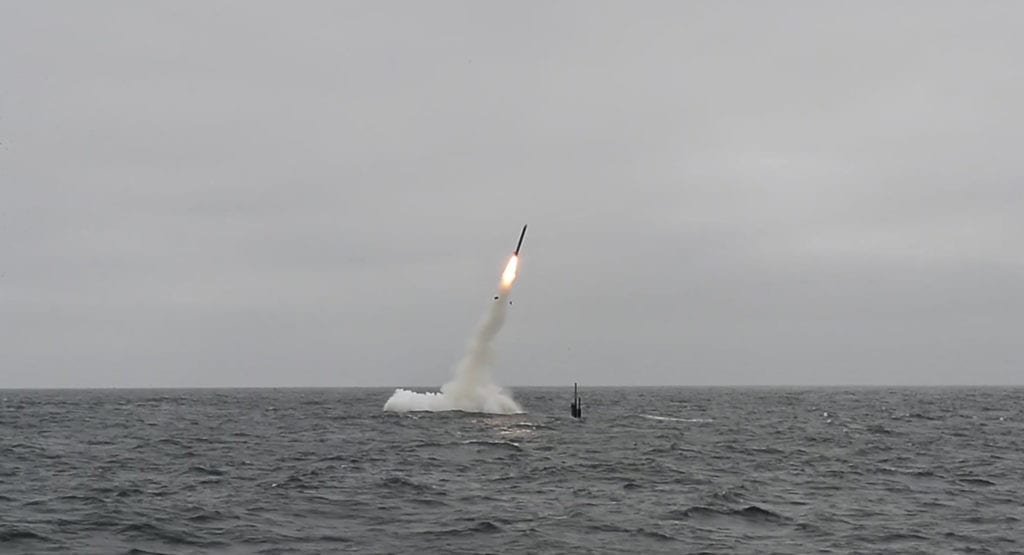
The crew of the Los Angeles-class fast-attack submarine USS Annapolis (SSN 760) successfully launches Tomahawk cruise missiles off the coast of southern California as part of a Tomahawk Flight Test (TFT) June 26, 2018. U.S. NAVY / Mass Communication Specialist 1st Class Ronald Gutridge

ARLINGTON, Va. — The ranking member of the Strategic Forces subcommittee of the House Armed Services Committee HASC) said he asked Secretary of Defense Lloyd Austin to direct the acting Navy Secretary to rescind a directive that cancels a sea-launched nuclear cruise missile program, the SLCM-N. 

The Defense Department’s (DoD’s) 2018 Nuclear Posture Review (NPR) said the department would pursue a Sea-Launched Cruise Missile-Nuclear (SLCM-N) “leveraging existing technologies to help ensure its cost effectiveness. SLCM will provide a needed non-strategic regional presence, an assured response capability. It also will provide an arms-control compliant response to Russia’s non-compliance with the Intermediate-range Nuclear Forces Treaty, its non-strategic nuclear arsenal, and its other destabilizing behaviors.”   

The review asserted an SLCM “will not require or rely on host nation support to provide deterrent effect. They will provide additional diversity in platforms, range, and survivability, and a valuable hedge against future nuclear ‘break out’ scenarios.”

The president’s 2022 budget would, if approved by Congress, fund the SLCM-N in 2022. But a memorandum by Acting Navy Secretary Thomas Harker — issued before the summit meeting in Switzerland between U.S. President Biden and Russian President Vladimir Putin — directed that the SLCM-N be defunded in the 2023 budget, said Rep. Mike Turner, R-Ohio, speaking July 7 in a webinar of the Hudson Institute. 

“The acting secretary of the Navy issues a memorandum that instructed the staff constructing the budget for 2023 to defund this sea-launched cruise missile,” Turner said. “It is currently funded in this [2022] budget as it came over from President Biden’s submission. In his testimony, he [Harker] claimed to not have spoken to anyone” and made the decision “just on his own.” 

Turner pointed out the need for a flexible deterrent, that SLCM-N is “a weapon that is absolutely needed” to counter Russia’s INF treaty violations.  

“The acting secretary, in saying that he didn’t speak to anyone, the secretary of defense and the chief of staff have all said that they were not involved officially,” Turner said. “Now, what’s horrible about this is that Biden was on his way to go meet with Putin to have their so-called summit, and on Biden’s agenda was, of course, arms control, and here we have the acting secretary of the Navy basically telling Russia that we’re not going to field this, we’re not going to develop it, we’re going to defund it. And it really undermined the president that the acting secretary admitted that he understood that his actions had undermined the president of the United States.” 

In June 15 testimony before the HASC, Harker said that, in considering the 2023 budget in work, “my initial guidance was based on the fact that the overall posture review and the [updated] National Defense Strategy have not been completed, so I didn’t want anyone to assume that [SLCM-N] would be in until we had further guidance from the Nuclear Posture Review.” 

Turner said he sees an undercurrent of within DoD that is undermining the U.S. nuclear strategic deterrent through universal disarmament of the United States.  

“Here we have a missile that has a capability that we need and that we have this desire for arms control,” Turner said, noting that canceling a needed capability “would unilaterally concede and get nothing from the Russians or Chinese in any concessions in their systems. But that undercurrent of policy at DoD really has to be brought forward. … The [next] Nuclear Posture Review is ongoing; even the assessment of alternatives for the SLCM itself is ongoing.  

“Now I’ve asked the secretary of defense to direct the acting secretary of the Navy to rescind this direction,” Turner said. “I certainly hope that he does that. It sends the wrong message.” 

The HASC chairman, Rep. Adam Smith, D-Washington, has stated his opposition to the SLCM as being destabilizing to the nuclear balance.  


AeroVironment Debuts Crysalis Ground Control System

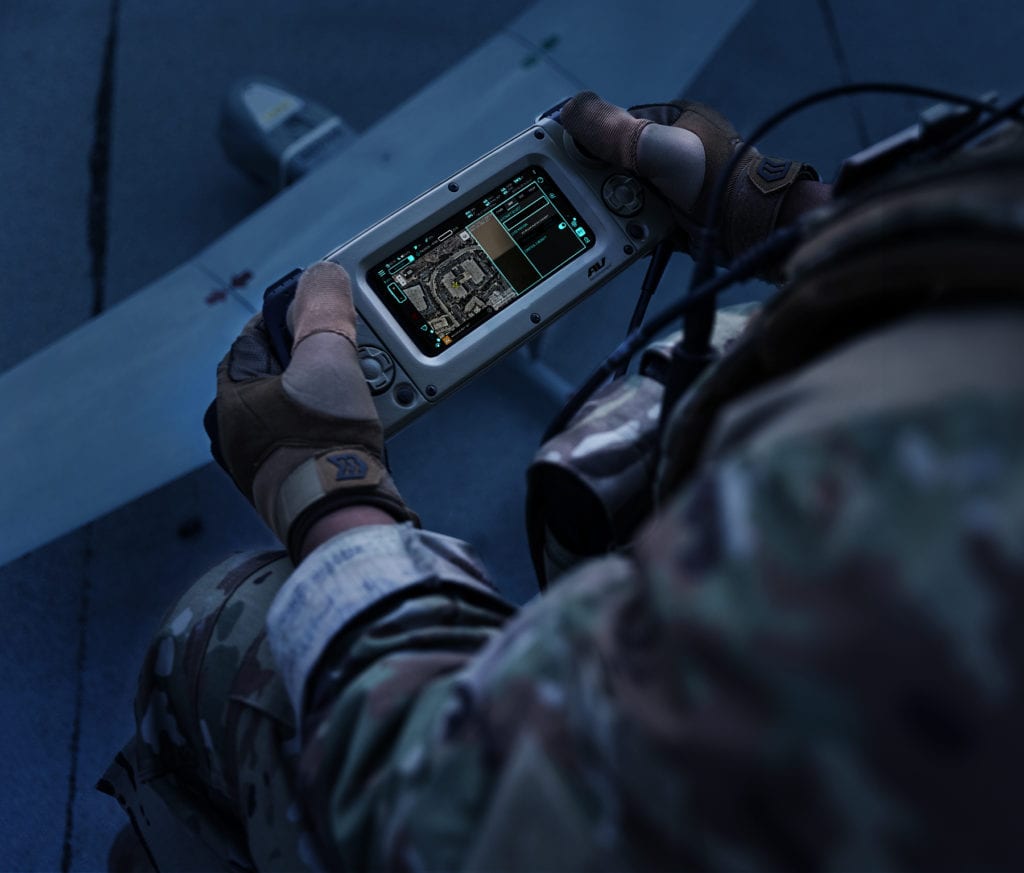
The new Crysalis ground control station, shown here in its Ultralight form. AEROVIRONMENT

Unmanned aircraft maker AeroVironment announced Crysalis, a new flexible, cross-platform ground control system the company says will form the command-and-control basis for all its products going forward.

Company President and CEO Wahid Nawabi and other company officials announced the product in a live video press conference on July 6, saying the goal is to make command and control much simpler for the warfighter and provide a “window” to all the systems they control, eventually including air, ground and maritime equipment.

“With the introduction of Crysalis, we are streamlining command and control of our small UAS and empowering warfighters with actionable intelligence at the speed of war to increase their tactical decision making,” Nawabi said. “Crysalis can be integrated into our portfolio of intelligent, multi-domain robotic systems and deliver easy-to-use, yet powerful new capabilities that enable our customers to succeed in full spectrum operations.”

Crysalis, which the company calls “ground control, simplified,” is built around hardware, software and antennas and comes in four sizes: RVT, or remote video terminal, the smallest, wearable, phone-based system; Ultralight, also wearable, but which adds joysticks and physical controls and is the smallest size that allows full command and control; Tactical, which adds a battery splitter for hot-swapping batteries for longer power life; and Command, a laptop-based variant intended for a fixed or semi-fixed command post location.

It’s cross platform with Windows, Android and Linux, and is flexible in that an Android-powered Crysalis system on a phone could interact with a Windows system on a laptop.

Ease of use is key to reduce “cognitive load” on warfighters, Nawabi said, and the system is designed to put critical information front and center. Size was also a key driver for the system because, as Chief Software Engineer Mark Graybill said, “Weight is about how much ammo you can’t pack.”


Cutter Thetis Returns from 47-Day Counter-Drug Patrol

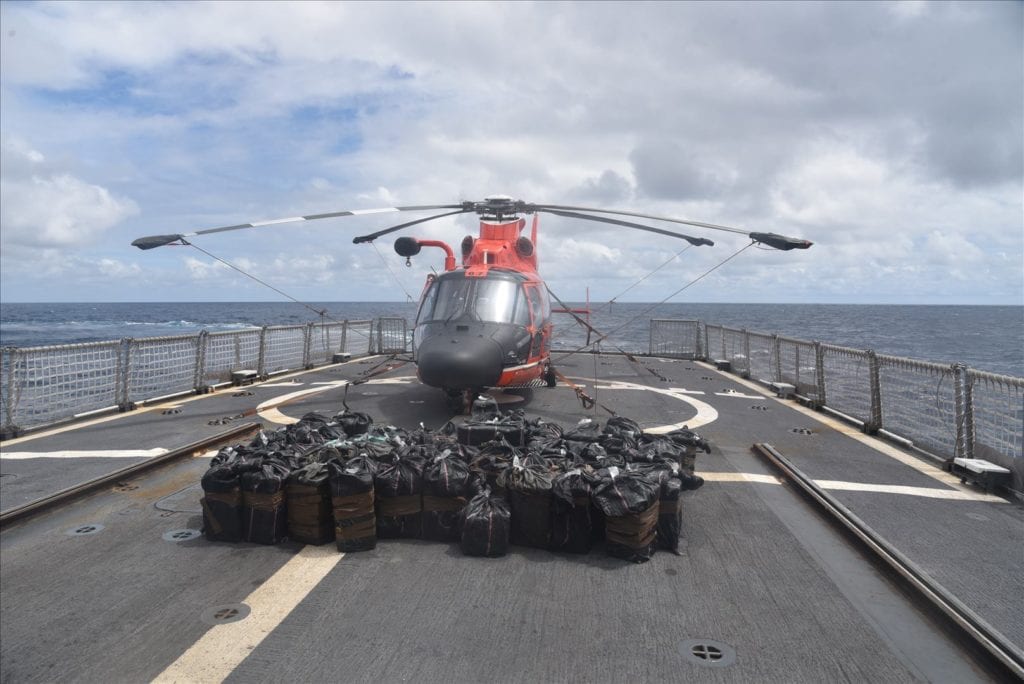
A Coast Guard Helicopter Interdiction Tactical Squadron MH-65 Dolphin helicopter is aboard the Coast Guard Cutter Thetis during a patrol in the Eastern Pacific Ocean, June 12, 2021. The Coast Guard Cutter Thetis returned home to Key West, Florida after completing a 47-day patrol to the Caribbean Sea and Eastern Pacific Ocean. U.S. COAST GUARD

KEY WEST, Fla. — The Coast Guard Cutter Thetis, a 270-foot Famous-class cutter, and crew returned to Key West, Saturday, July 3, following a 47-day deployment to the Caribbean Sea and Eastern Pacific Ocean working with U.S. Southern Command’s Joint Interagency Task Force South, the Coast Guard7th District said in a release.  

Thetis’ crew interdicted three suspected smugglers and approximately 4,000 pounds of cocaine with a street value of $75 million. The Thetis crew deployed with an MH-65 helicopter and aviation detachment capable of conducting airborne use of force from the Coast Guard’s Helicopter Interdiction Tactical Squadron based in Jacksonville, Florida.   

The Thetis crew also conducted joint counter-narcotic and seamanship training with the Panamanian navy, in which they participated in communications exercises, non-compliant vessel pursuit tactics and medical training while at sea with Panamanian partners.   

“The Coast Guard maintains a consistent presence in the region while also leveraging support from our maritime partner nations,” said Cmdr. Justin Nadolny, Thetis’ commanding officer. “It was a pleasure to have the opportunity to train and operate with the Panamanian navy, they are a true group of professionals and together we continue to disrupt the flow of illicit contraband into the United States.”  


Cutter Alex Haley Returns to Kodiak from Bering Sea Patrol

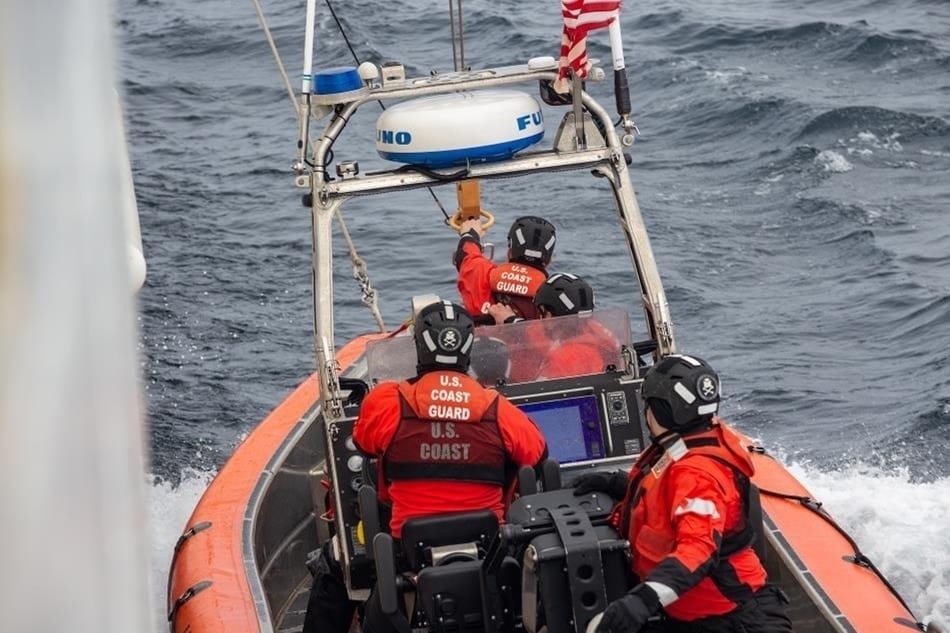
Coast Guard Cutter Alex Haley boat crew members prepare to disconnect from the forward-davit connection during rescue-and-assistance training in the Bering Sea, May 28, 2021. Small boats deployed from Coast Guard cutters are used in a variety of missions including law enforcement and search and rescue. U.S. COAST GUARD

KODIAK, Alaska —The crew of the Coast Guard Cutter Alex Haley returned to homeport on Tuesday, June 29 following a 52-day Bering Sea patrol, the Coast Guard 17th District said in a July 2 release. 

While deployed, the crew of the Alex Haley provided search and rescue capability to the fisheries in the Bering Sea. Their embarked MH-65 helicopter crew from Air Station Kodiak conducted a search and rescue mission in the coastal town of Akutan. The aircrew transported a severely injured resident to a higher level of medical care. 

The crew also maintained a law enforcement presence throughout the Aleutian chain. They conducted 17 law enforcement boardings, ensured compliance with maritime laws and regulations, and protected the U.S. Exclusive Economic Zone by patrolling the maritime boundary line to prevent the illegal harvesting of U.S. fish stocks. 

“Assuming the duties as commanding officer of Alex Haley during a patrol afforded me the opportunity to learn a great deal about the ship and its crew,” said Cmdr. Brian Whisler commanding officer of the Alex Haley. “While such a significant transition can prove challenging, the crew continually maintained impressive work ethic and professionalism in the execution of our primary missions. Their dedication to the people and communities we serve proves Alex Haley crew members is a vital asset in the Bering Sea region.” 

The Alex Haley is a 282-foot medium-endurance cutter that has been homeported in Kodiak since 1999. The crew routinely operate throughout the Bering Sea, Gulf of Alaska, and Pacific Ocean. The cutter’s ability to operate in extreme weather conditions provides the mission flexibility necessary to perform search and rescue, fisheries law enforcement, and vessel safety inspections across Alaska.