Coast Guard Cutter Midgett Returns to Hawaii Following 79-day Counterdrug Patrol

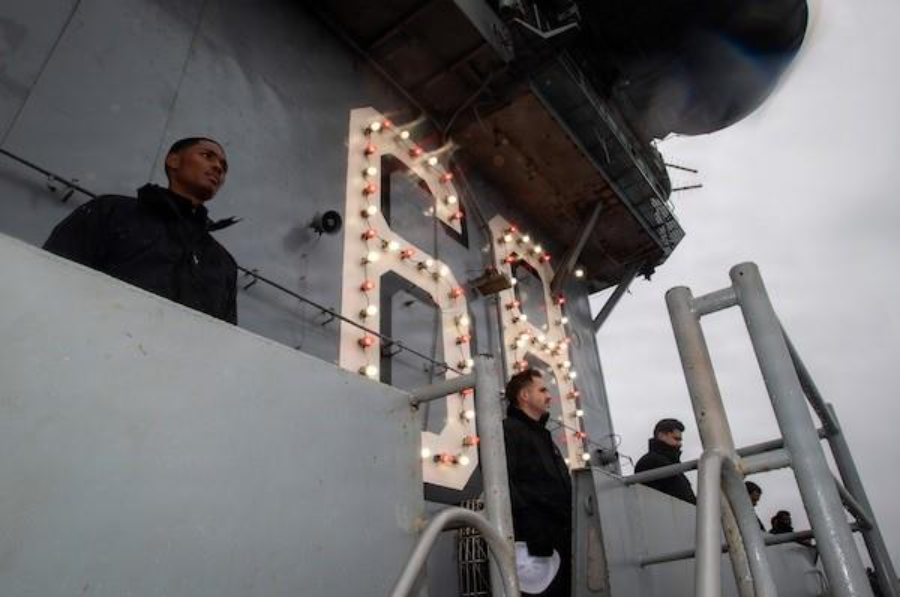
Crew members of the U.S. Coast Guard Cutter Midgett (WMSL 757) stand at parade rest on the flight deck of the cutter in San Diego, Sept. 25, 2025. The Midgett’s crew prepared to offload drugs interdicted in the Eastern Pacific during counter-narcotic patrols, eliminating 21,126 pounds of cocaine worth an estimated $156 million in value. (U.S. Coast Guard photo by Petty Officer 3rd Class Roberto A. Nieves Felix) 

Release From U.S. Coast Guard Oceania District

HONOLULU – The Coast Guard Cutter Midgett (WMSL 757) crew returned to their Honolulu home port Friday after a 79-day deployment to the Eastern Pacific Ocean in support of the counterdrug mission “Operation Pacific Viper.” 

While patrolling international waters off the Pacific coasts of Mexico and Central America, Midgett’s crew apprehended 19 suspected drug smugglers and interdicted four suspected drug smuggling vessels, preventing 21,126 pounds of cocaine, with an estimated value of more than $156.4 million, from reaching U.S. shores. 

The drugs were offloaded in San Diego on September 25 by the Midgett crew and multiagency partners. The Midgett deployed to the region under the tasking of Joint Interagency Task Force – South (JIATF-S) in support of the Coast Guard’s Operation Pacific Viper. 

During the deployment, Midgett’s crew conducted counterdrug missions in the Coast Guard’s Southwest District area of responsibility countering transnational criminal organizations and preventing illegal narcotics from reaching the United States. The trafficking of illegal drugs poses an urgent threat to the American people, and the men and women of the U.S. Coast Guard do everything in their power to interdict drugs before they reach our shores and our citizens. 

Detecting and interdicting narco-terrorism on the high seas involves significant interagency and international coordination. Joint Interagency Task Force-South based in Key West conducts the detection and monitoring of aerial and maritime transit of illegal drugs. Once interdiction becomes imminent, the law enforcement phase of the operation begins, and control of the operation shifts to the U.S. Coast Guard throughout the interdiction and apprehension. Interdictions in the Eastern Pacific Ocean are performed by members of the U.S. Coast Guard under the authority and control of the Coast Guard’s Southwest District, headquartered in Alameda, California. 

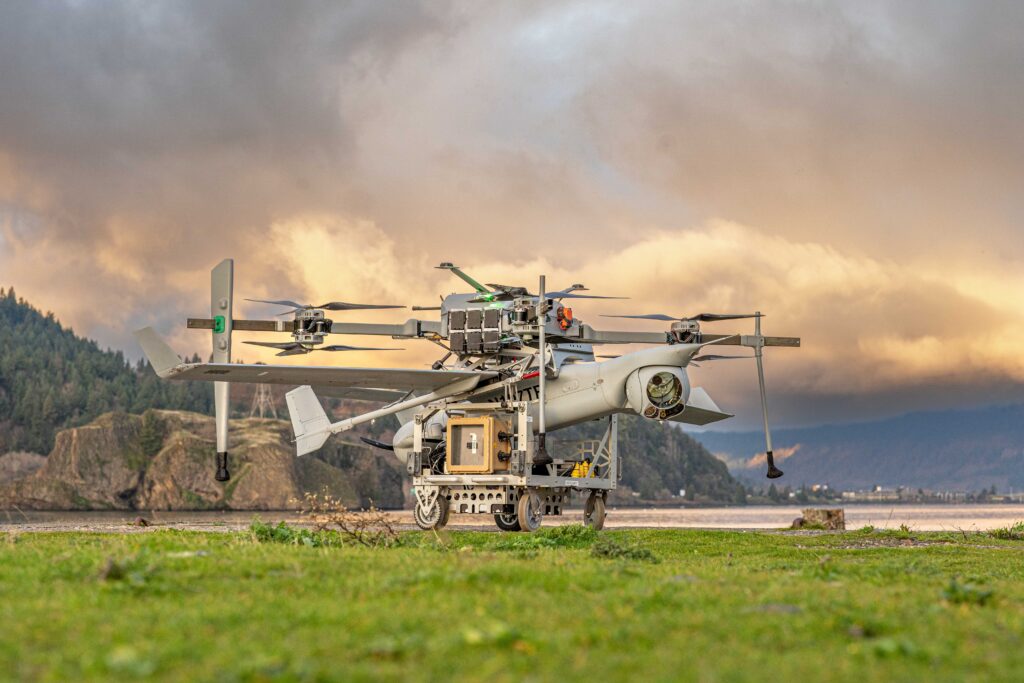
Midgett’s crew worked alongside other Coast Guard units including law enforcement personnel from Tactical Law Enforcement Team South (TACLET SOUTH), Helicopter Interdiction Tactical Squadron (HITRON) crews, contractors operating V-BAT Unmanned Aerial Systems (UAS), and Department of War assets. Notably, the ship achieved a significant milestone with HITRON—accomplishing their 1,000th interdiction of suspected drug smuggling vessels. 

“This deployment showcased the power of partnerships in combating transnational crime,” said Capt. Brian Whisler, Midgett’s commanding officer. “From HITRON and TACLET SOUTH to the entire JIATF-S team, the Midgett crew worked seamlessly with our partners to achieve significant results. I am deeply impressed by the dedication and skill of every member of this crew, who consistently exceeded expectations during challenging circumstances. We are incredibly proud of our contribution to Operation Pacific Viper and remain steadfast in our commitment to control, secure, and defend our borders and maritime approaches.” 

Midgett, commissioned in 2019, is the eighth Legend-class national security cutter and is one of two homeported in Honolulu. The cutter’s primary missions are counter-drug operations and defense readiness. 


Flying Ship Company Selected as a Winner of Army xTechSearch 9 Competition

LEESBURG, Va., October 7, 2025 — The Flying Ship Company (FSC), a pioneer in autonomous wing-in-ground-effect (WIG) cargo logistics, has been selected as a winner in the U.S. Army xTechSearch 9 Competition in the Contested Logistics and Sustainment technical domain. Flying Ship was granted an initial award of $25,000 with up to $250,000 available in follow-up Phase I SBIR funding to further mature prototype demonstrations. 

“We are honored to be selected a winner in the U.S. Army’s xTechSearch 9 Competition, in which the Army recognizes FSC’s solutions as a potential game-changer for resupply, sustainment, and movement of materiel in adversarial environments,” said Flying Ship Company Founder and CEO Bill Peterson. “This award, along with our Phase I SBIR award from AFWERX last year and continued interest from the U.S. Navy and Marine Corps, demonstrates significant customer interest in our innovations across the military service branches.” 

The xTechSearch program seeks breakthrough commercial technologies that can provide critical advantages to the U.S. Army. In the 2025 contest, finalists were selected from a highly competitive field and underwent rigorous evaluations by Army and DoD subject-matter experts. Less than 5% of applicants were selected as winners and admitted to the next phase of the accelerator program, which includes workshops and tailored support, and is designed to help position emerging companies for long-term success and integration into the Army and DoD ecosystem. 

In today’s era where anti-access/area denial (A2/AD) efforts have become more relevant, traditional supply lines such as ocean shipping, ports and airlift are increasingly vulnerable to interdiction. This is especially acute in maritime domains, where adversaries may leverage submarines, missiles, or mines to disrupt seaborne logistics. FSC’s autonomous WIG platforms travel low over the water, under radar and above sonar, and deliver large payloads on water or to flat shorelines, bypassing chokepoints and constrained harbor infrastructure. 

“Winning the xTechSearch 9 competition provides third-party validation of our technological direction and increases credibility with potential defense customers,” Peterson said. “But it also affirms the commercial promise of FSC’s platforms and positions the company for accelerated growth and investment as we move towards production of initial versions.”  

“The commercial maritime and offshore logistics sectors are actively adopting autonomous technologies,” Peterson continued. “Our patented autonomous WIG platforms are on track to capture share from conventional shipping, helicopter lift, and sea barges, positioning us for outsized returns as the first-mover provider of autonomous WIG logistics solutions.” 

The Flying Ship Company is honored by this recognition from the U.S. Army and excited to move rapidly toward demonstration, adoption, and value generation for both national security and commercial markets. This selection represents a pivotal inflection point—not just for our company, but for the future of maritime logistics. 


HII Completes Initial Sea Trials of Virginia-Class Submarine Massachusetts 

From HII 

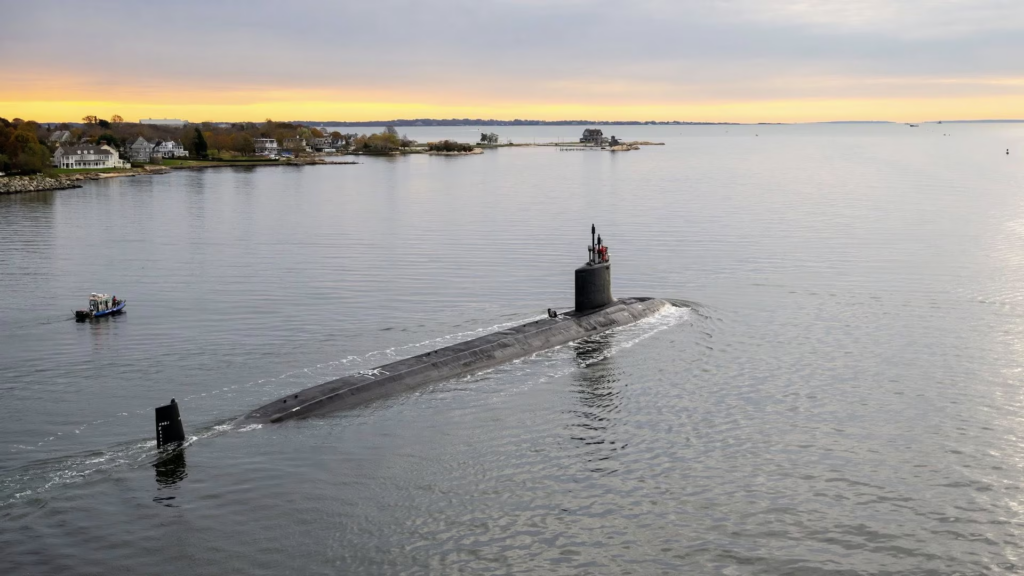
NEWPORT NEWS, Va., Oct. 07, 2025 (GLOBE NEWSWIRE) — HII (NYSE: HII) announced today that its Newport News Shipbuilding division has successfully completed initial sea trials for Virginia-class attack submarine Massachusetts (SSN 798). 

Over the course of several days at sea, the NNS and Navy team conducted testing of systems and components, including submerging the submarine for the first time and high-speed maneuvers while on the surface and submerged. The testing program will continue at NNS ahead of delivering the boat to the U.S. Navy. 

“Our entire team at Newport News Shipbuilding understands the importance of delivering capability to our fleet,” NNS President Kari Wilkinson said. “Proving capabilities through this first sea trial for Massachusetts is an important step in demonstrating this and we are honored to support the mission.” 

The boat, the 25th Virginia-class submarine, was christened in May 2023; Massachusetts will be the 12th delivered by NNS. 


Airbus, Team Lakota Connector Partners Demonstrate Second Autonomous Flight Test

WASHINGTON (October 7, 2025) — Airbus U.S. Space & Defense, in partnership with Shield AI, L3Harris, and Parry Labs released footage of its second autonomous test flight today utilizing new technology from Team Lakota Connector.  

The test flight, which took place last month in Grand Prairie, Texas, focused on the integration of waypoint navigation onto the aircraft and represents a significant step in the development of the MQ-72C Lakota Connector program for the U.S. Marine Corps. 

“Successfully testing this technology just two weeks after aircraft integration reinforces the proven performance and agility of our Team Lakota Connector partners,” said Rob Geckle, Chairman and CEO of Airbus U.S. Space and Defense. “The collective team is excited to deliver the warfighter an edge in austere environments.” 

Airbus U.S. is currently in the second year of the Aerial Logistics Connector Middle Tier of Acquisition (MTA) Rapid Prototyping Program, which aims to provide the service with aircraft prototypes to demonstrate capabilities to the warfighter through a series of operational demonstrations and experiments. 

In May 2024, Naval Air Systems Command (NAVAIR) awarded Airbus U.S. Space & Defense a Phase I Other Transaction Authority (OTA) through the Naval Aviation Systems Consortium, based on its unmanned UH-72 Logistics Connector concept, a variant of the proven UH-72 Lakota platform. 

The Aerial Logistics Connector effort is one of several initiatives across the Department of Defense aimed at delivering logistical support in distributed environments during peer or near- peer conflicts. 


Kratos Awarded Phase 1 for AN/SPY-1 Organic Sustainment Capability for U.S. Navy 

From Kratos Defense & Security Solutions, Oct. 6, 2025 

Projected Initial Ceiling Across Program Phases $175 Million 

155,000-Square-Foot Indiana Radar Integration Complex Will Deliver Next-Generation Readiness for Naval Surface Fleet 

SAN DIEGO, Oct. 06, 2025 (GLOBE NEWSWIRE) – Kratos Defense & Security Solutions, Inc. (Nasdaq: KTOS), a technology company in defense, national security, and global markets, announced today that it has been awarded Phase 1 to begin developing an organic sustainment capability for the U.S. Navy’s AN/SPY-1 radar systems. Known internally to Kratos as Project Anaconda, the single-award agreement has an initial total projected ceiling of $175 million across multiple phases. 

https://www.globenewswire.com/NewsRoom/AttachmentNg/3a81fd3f-604f-44dd-b027-4da8722fe005

The AN/SPY-1 radar remains one of the most critical assets in the Navy’s fleet, enabling ballistic missile defense, integrated air and missile warfare, and persistent maritime domain awareness across Aegis-equipped cruisers and destroyers. With many systems projected to remain in service through 2065, the Navy has prioritized building long-term, organic sustainment and depot-level support capacity to ensure uninterrupted fleet readiness. 

Central to Kratos’ solution is the new, Kratos owned and operated, state-of-the-art Indiana Radar Integration Complex (IRIC), strategically located within 1.5 miles of Naval Surface Warfare Center (NSWC) Crane. The 155,000-square-foot facility is expected to be operational in 2027 providing the U.S. Navy with a dedicated infrastructure for AN/SPY-1 sustainment and modernization. 

Under Phase 1, Kratos will lead a cross-industry team to: 

  • Establish the foundation for the IRIC at NSWC Crane, a purpose-built facility to support AN/SPY-1 battle sparing, testing, and prototyping 

  • Develop initial organic repair, overhaul, and modernization processes for AN/SPY-1 transmitter, signal processor, and antenna subsystems 

  • Advance digital engineering, artificial intelligence–enabled data management, and prototype sustainment technologies 

  • Coordinate closely with NSWC Crane, Program Executive Office Integrated Warfare Systems, and Navy fleet stakeholders to ensure alignment with fleet sustainment priorities and readiness 

“This strategic award validates Kratos’ proven approach of making significant internal investments in national security-focused infrastructure and capabilities to generate significant value for all Kratos stakeholders, including the United States,” said Eric DeMarco, President and CEO of Kratos. “The AN/SPY-1 program and our new IRIC represent the intersection of Kratos’ core philosophies: rapidly developing affordable, real-world solutions for critical defense needs, while providing true long-term value to our government customers, the U.S. taxpayer, and our entire stakeholder community. We anticipate that the Anaconda program will generate multi-decade value for both the United States Navy and Kratos.” 

“Kratos’ MACH-TB contract award, the establishment of Prometheus Energetics LLC, and now the AN/SPY-1 sustainment contract award demonstrate Kratos’ commitment to pursuing business in the Crane region,” said Dave Carter, President of Kratos Defense and Rocket Support Services Division. “Like our investments in Oriole, Zeus, Erinyes, and Prometheus, this initiative will rapidly provide the competency needed to sustain warfighter capabilities. Kratos is proud to be a member of the Indiana Uplands community.” 

“Phase 1 at Crane sets the stage for the Navy’s first organic sustainment capability for the AN/SPY-1 radar,” said Roger A. Becker, Indiana site director for Kratos. “By combining advanced prototyping, workforce development, and strong industry-government collaboration, we are building a foundation that will ensure readiness is delivered through 2065.” 

The contract will be executed in multiple phases, with additional work authorized as milestones are achieved. This phased approach allows the Navy and Kratos to mitigate risk, accelerate key capabilities, and scale sustainment infrastructure to meet long-term fleet requirements. 


RTX, Anduril Complete Successful Test of Advanced Solid Rocket Motor  

Recent test demonstrates collaborative innovation in rocket motor development  

ARLINGTON, Va. (October 7, 2025) — Raytheon, an RTX (NYSE: RTX) business, and Anduril have successfully conducted a static fire test of an advanced solid rocket motor under a contract with the Air Force Research Laboratory Munitions Directorate. 

In response to the increasing global demand for munitions, Raytheon has been working with domestic and international partners to enhance U.S.-based rocket motor manufacturing capacity. 

“This test demonstrates more than just a technical achievement,” said Colin Whelan, president of Advanced Technology at Raytheon. “It’s about building a more robust and adaptable supply base for solid rocket motors that can rapidly respond to emerging national security needs.” 

By partnering with Anduril, Raytheon is expanding the defense technology ecosystem and addressing critical limitations in the rocket motor supply base. This collaboration exemplifies the company’s composable weapons strategy, which aims to create more flexible and adaptable missile systems through strategic partnerships. 

“Designing and firing a Highly Loaded Grain rocket motor is one of the most technically demanding tasks in the solid rocket motor industry,” said LTG (ret.) Neil Thurgood, Senior Vice President, Anduril Industries. “Achieving this result highlights the strength of Anduril’s engineering team and demonstrates our ability to deliver high-performance propulsion solutions in a domain long defined by a small set of providers.” 


Marines Bid Farewell to the Assault Amphibious Vehicle 

CAMP PENDLETON, Calif. (June 29, 2021) U.S. Marines with 3d Assault Amphibian Battalion, 1st Marine Division, emerge from the water in an AAV-P7/A1 amphibious assault vehicle (AAV) during water operations training at Marine Corps Base Camp Pendleton, California, June 29, 2021.(U.S. Marine Corps photo by Sgt. Jamin M. Powell)pinterest sharing button 

By Staff Sgt. Claudia Nix, U.S. Marine Corps Training and Education Command     

Oct. 2, 2025 

MARINE CORPS BASE QUANTICO, Va. – The Assault Amphibious Vehicle was officially decommissioned during an AAV Sundown Ceremony at the Assault Amphibian School at Camp Pendelton, California, Sept. 26. 
 
The ceremony honored both the vehicle’s 53 years of service to the Marine Corps and the Marines and Sailors who served with it, while marking the transition to the Corps’ next amphibious platform, the Amphibious Combat Vehicle. Col. Lynn W. Berendsen, commanding officer of the Assault Amphibian School, delivered remarks paying tribute to those who operated and maintained the AAV throughout its service. 
 
The AAV replaced the Landing Vehicle, Tracked, which entered combat in August 1942 during the Solomon Islands Campaign. The LVT was the first vehicle capable of moving Marines from ship to shore and continue inland under fire. It proved decisive in battles like Tarawa, Inchon and later in during the Vietnam War where the following generations of amphibious vehicles carried Marines across beaches, rivers and flooded terrain. 
 
The AAV was introduced in 1972, originally designated as the Landing Vehicle, Tracked, Personnel-7, featuring a water-jet propulsion system and a stern ramp that sped up ship-to-shore movement. Service life extension programs during the 1980s upgraded the vehicles with new engines, transmissions and weapon stations, after which it was redesignated the AAV-7A1. Over the decades, AAVs received additional upgrades to meet operational demands. 
 
“The AAV-P7 has been many things, a ship to shore connector, an armored fighting vehicle, a troop carrier, a logistics platform and even sometimes a live boat,” said Berendsen. “Most importantly it was in a place where Marines made their mark in combat in service and in sacrifice.” 
 
From Grenada and Somalia to the Persian Gulf and Iraq, the AAV carried Marines throughout combat, supported humanitarian missions, and amphibious landings. During its service, it transported personnel, delivered supplies, and provided protected mobility in both littoral and inland environments. Its legacy is not only in its capabilities but also in the countless Marines who operated it and relied on it to accomplish their missions. 
 
“The AAV gave Marines both mobility and armored protection allowing them to close with the enemy and seize objectives at speed,” said Berendsen. “In the desert, just as in the Pacific beaches decades earlier, showed it was more than a connector, it was a fighting vehicle at the heart of the Marine Air Ground Task Force.” 
 
The ACV, successor to the AAV, is an eight-wheeled armored personnel carrier built for expeditionary operations. With multiple variants for personnel transport, command and control, recovery, and fire support, the ACV integrates seamlessly with naval shipping and amphibious connectors. The introduction of the ACV supports the Marine Corps’ modernization efforts aligning with Force Design, advancing a lighter, faster, and more resilient force capable of operating in contested environments and contributing to joint and naval operations. 
 
The final pass of three AAVs drove across the parade deck marked the close of a historic chapter and the Marine Corps’ continued evolution toward modern, expeditionary amphibious operations. 


Former PEO, Ships, Joins Hanwha Defense USA as President of U.S. Shipbuilding

Release From Hanwha

ARLINGTON, Va., Oct. 6, 2025 – Retired U.S. Navy Rear Admiral and former Program Executive Officer, Ships Tom Anderson has joined Hanwha Defense USA as President of U.S. Shipbuilding.  

Anderson served in the U.S. Navy for 34 years, including leadership roles as PEO, Ships and acting Commander, Naval Sea Systems Command (NAVSEA), where he was responsible for acquiring, maintaining and modernizing the U.S. Navy’s ships.   

Over the course of his career, he served in a variety of industrial, fleet, program office and headquarters assignments in ship design and construction, maintenance, budgeting and requirements for the Navy’s ships, submarines and systems. 

Anderson will be responsible for the execution of Hanwha’s U.S. shipbuilding programs and shipyard operations, including developing the company’s strategy for future shipbuilding programs as well as building the company’s shipbuilding infrastructure and associated workforce to accommodate future growth.   

“Tom has had a distinguished and impactful naval career, and we are delighted to bring his deep industry expertise, creative thinking, and demonstrated leadership to Hanwha,” said Mike Smith, President and CEO of Hanwha Defense USA.  “This is a pivotal time for the Navy and U.S. shipbuilding writ large.  Tom brings a wealth of experience and unique perspectives that will accelerate the delivery of novel solutions to our customers’ most elusive industrial base challenges.”  

“Hanwha’s global defense strategy is focused on our evolution into a multi-domestic company that brings leading technology, deeper partnerships and sovereign capacity to each of the markets we serve,” said Michael Coulter, Hanwha Global Defense President and CEO. “I am excited to welcome Tom to our team as we continue to invest in capacity in the United States.”   

Last December, Hanwha—a global conglomerate with a world-class shipbuilding arm—acquired the Philly Shipyard for $100 million. With the acquisition, Hanwha is focused on revitalizing the Hanwha Philly Shipyard as part of its wider goal of increasing U.S. maritime capacity and the U.S. maritime industrial base.  

Drawing on its decades of shipbuilding expertise and know-how, Hanwha is making significant investments in expanding its Philadelphia shipyard’s capabilities with technological advancements, workforce training and smart systems, creating significantly more shipbuilding capacity and thousands of new skilled manufacturing jobs in the U.S. 


REMUS 620 Conducts First Torpedo Tube Recovery and Swimout

Joint Team Hits Key Milestone in Submarine-Launched UUV Ops 

Release From HII

NEWPORT NEWS, Va., Oct. 06, 2025 (GLOBE NEWSWIRE) — A joint team from HII (NYSE: HII), Woods Hole Oceanographic Institution (WHOI), and the U.S. Navy’s Naval Undersea Warfare Center Division Newport (NUWC Division Newport) has successfully completed the first recovery of a second-generation REMUS 620 into a Virginia-class submarine torpedo tube and shutterway test fixture at Seneca Lake, New York. 

This milestone, achieved less than seven months after integrating WHOI’s Yellow Moray torpedo tube launch and recovery (TTL&R) technology into the next-generation REMUS 620 medium unmanned undersea vehicle (UUV), marks a major step forward in the U.S. Navy Submarine Force’s efforts to launch and recover autonomous undersea vehicles from submarine torpedo tubes. 

An in-water test by the joint team confirmed the ability of REMUS 620 to conduct complex autonomous navigational and communication protocols in safely docking with the shock and fire enclosure capsule (SAFECAP) loaded into a submerged Virginia-class submarine fixture. The REMUS 620 also successfully demonstrated reverse swimout launch and safe separation during this test period. 

“This successful docking validates the research and development investments and efforts of HII; specifically the REMUS 620 engineers working in close cooperation with our WHOI teammates. We leveraged WHOI’s previous three years of TTL&R work, lessons learned, and expertise to greatly accelerate our progress in successfully getting to this important milestone,” said Duane Fotheringham, president of the Unmanned Systems group in HII’s Mission Technologies division. 

Carl Hartsfield, director and senior program manager at Oceanographic Systems Lab (OSL) of the Woods Hole Oceanographic Institution, stated: “Despite a highly compressed schedule, our teams rapidly conducted testing runs, quickly evaluated the data, and made substantive adjustments to the vehicle. This is a real testament to the teamwork and professionalism between our three organizations. The REMUS 620 team’s thorough preparation working hand in hand with our technical experts at the OSL in advance was clear during all phases of the successful testing. We were also extremely impressed with the Seneca Lake NUWC support provided throughout the test schedule.” 


Blue Water Autonomy Appoints Senior Leaders from Defense and Tech to Advisory Board

Former Navy and Pentagon leaders join to support scale-up, autonomy roadmap, and strategic positioning. 

Release From Blue Water Autonomy 

BOSTON – Oct. 6, 2025 –  Blue Water Autonomy, the Boston-based technology and shipbuilding company designing and producing highly adaptable unmanned ships for the U.S. Navy, today announced the formation of its Advisory Board. Blue Water Autonomy’s founding Advisory Board members include: 

  • RADM (ret.) Tom Anderson, former Program Executive Officer, Ships (PEO Ships) 

  • Stephen Rodriguez, Chairman of Blue Forge Alliance & dual-use investor 

  • Michael Stewart, former Director, Navy Disruptive Capabilities Office and Unmanned Task Force 

  • VADM (ret.) Roy Kitchener, former Commander, Naval Surface Forces Pacific 

Together, these leaders bring decades of experience in shipbuilding, naval operations, autonomy, and innovation policy, and have scaled defense technologies from government and the private sector. 

“As we enter the next phase of growth, this advisory board brings the expertise and leadership we need to scale fast – and to do it right,” said Rylan Hamilton, CEO and co-founder of Blue Water Autonomy. “We’re thrilled to welcome such a distinguished group who’ve spent their careers solving the exact problems we’re tackling today: how to accelerate naval capability, integrate new technologies responsibly, and strengthen the industrial base. Each of these leaders brings a firsthand understanding of Navy acquisition priorities and operational needs.” 

This announcement follows a string of recent company milestones, including a $50 million Series A investment led by Google Ventures, securing a shipyard partnership with Conrad Shipyards to begin vessel construction, a new Washington D.C. office, and recent executive hires. 

Deep Naval Experience and Technical Vision 

Rear Adm. Anderson most recently served as the Navy’s Program Executive Officer for Ships, where he oversaw the acquisition and delivery of surface combatants, amphibious ships, logistics support vessels, and more. His leadership at NAVSEA included multiple roles in design, maintenance, and modernization across 30+ ship programs. 

Stephen Rodriguez is a leading voice in dual-use technology adoption and national security investment. He is currently Chairman of Blue Forge Alliance, a key Navy partner focused on maritime industrial base revitalization. He also chairs Booz Allen Hamilton’s Defense Technology Board and works with dual-use startups through One Defense, a strategic advisory he founded. An Operating Partner at DCVC focused on defense investing, he is a Board Advisor or Director to 15 companies including several in the maritime industrial base. 

Michael Stewart brings a unique mix of operational, policy, and business experience to Blue Water. As Director of the Navy’s Disruptive Capabilities Office, he led efforts to rapidly field emerging technologies to operational commanders. He previously served as Executive Director of the Unmanned Task Force and has held senior roles at the Office of the Secretary of Defense, The Boeing Company, and NATO. 

With 39 years of dedicated service, Vice Adm. Roy Kitchener deployed and served around the world. He commanded destroyers, a cruiser, and an expeditionary strike group. His last assignment on active duty was as commander, Naval Surface Forces/Naval Surface Force U.S. Pacific Fleet – “the SWO Boss”. 

“Blue Water Autonomy is revolutionizing naval operations by tackling the toughest hull, mechanical, and electrical (HM&E) autonomy challenges. These challenges have hindered delivering long endurance, long range, cutting-edge USVs that enhance the U.S. Navy’s mission readiness and operational reach,” said Michael Stewart, former Director of the Navy’s Disruptive Capabilities Office. “The company’s innovative approach and strategic partnerships position them as a game-changer in maritime technology.” 

“We are at an inflection point where the future of naval dominance will not be measured solely by the tonnage of our manned fleet, but by our ability to field a resilient, distributed, and software-defined force,” said Rodriguez from Washington D.C. “Long-range unmanned surface vessels represent the vanguard of this new maritime paradigm. They are not merely assets; they are a critical test of our entire defense industrial ecosystem. If we fail to create the agile acquisition pathways and collaborative bridges between our traditional shipbuilders and the autonomous systems trailblazers, we risk building a hollow navy – possessing the hardware of the 21st century but lacking the software-driven adaptability and scalable industrial base required to win a future conflict.” 

Advancing Autonomy with Urgency 

Blue Water Autonomy was founded in 2024 by robotics engineers and Navy veterans to accelerate the deployment of autonomous surface ships for operational use – not just R&D demos. The company’s platform is designed for modular multi-mission operations, rapid production at U.S.-based shipyards, and months-long autonomy at sea. 

The new advisory board reflects Blue Water’s commitment to combining startup speed with real-world accountability, Navy mission alignment, and credibility in front of government stakeholders.