Navy’s Unmanned Integrated Battle Problem 21 to Culminate in Missile Shoot
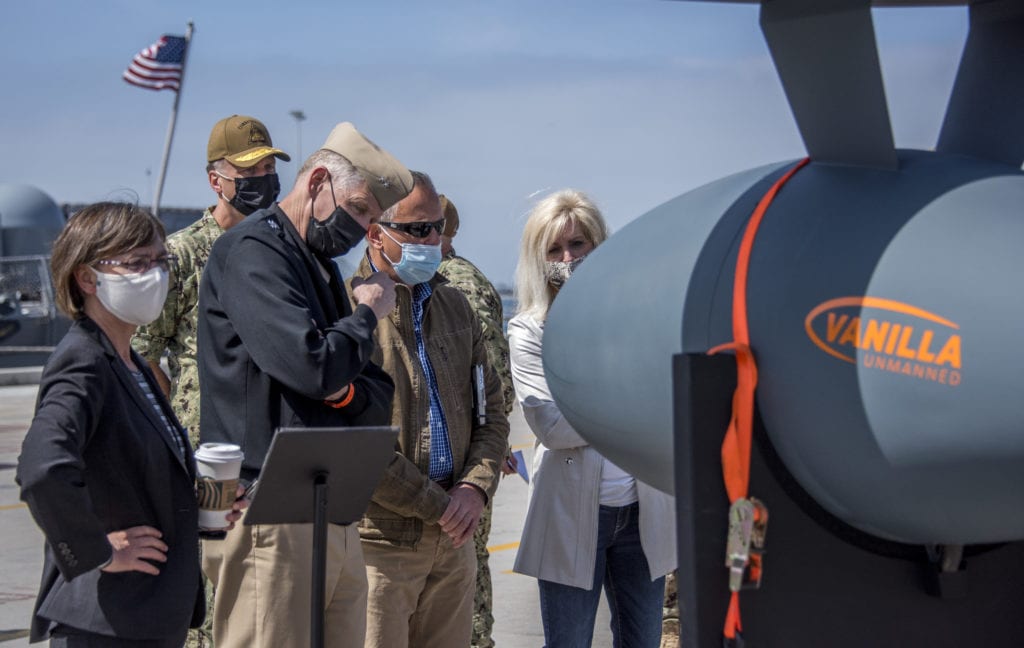
Chief of Naval Research, Rear Adm. Lorin Selby, observes a Vanilla Ultra Endurance unmanned aerial vehicle on Pier 12 during Integrated Battle Problem 21 (UxS IBP 21) Distinguished Visitors Day at Naval Base San Diego, April 16. U.S. Pacific Fleet’s UxS IBP 21, April 19-26, integrates manned and unmanned capabilities into the most challenging operational scenarios to generate war fighting advantages. U.S. NAVY / Mass Communication Specialist 2nd Class Natalie M. Byers

ARLINGTON, VA. — The U.S. Navy’s first large-scale unmanned systems (UxS) integrated battle problem (IBP) will involve manned/unmanned teaming and has a goal of developing a targeting solution for a planned missile shoot, the IBP executive agent said. 

The battle problem, led by the U.S. Pacific Fleet and executed by U.S. 3rd Fleet, began April 19 and is being conducted under the command of Rear Adm. James Aiken, commander, Carrier Strike Group Three. 

“This integrated battle problem provides an operational approach to integrating and adapting unmanned technology with our manned fleet,” Aiken said, speaking April 20 in a teleconference with reporters. “Various manned systems, including littoral combat ships, two classes of destroyers, an amphibious transport dock ship, and fixed and rotary-wing aircraft will test their enhanced capabilities alongside unmanned systems through operationally challenging scenarios and vignettes during this exercise. 
 
“This exercise generates warfighting advantages for our fleet by providing the operational environment to work through tactics, techniques, procedures, command and control, to integrate the fleet and we are ready to execute,” he said. “Our operational integration of these unmanned systems is here in our fleet today above the sea, on the sea and below the sea.   

“We want to move to a capability, to start applying operational concepts,” he said. “Foundationally, when actually planning this exercise, Sailors were part of the planning.

“Our goal for this exercise is to evaluate these unmanned systems and how they can actually team with manned systems,” he said. “As we team all those together, we will be able to evaluate what we can do and what we can’t do in trying to create a warfighting advantage … then we’re going to make sure we get it into the hands of the Sailors. We need to move things from the technical community to the tactical community.” 

Aiken said one of the vignettes of most interest is the most challenging: using “a combination of manned and unmanned assets in order to get after a target and provide a targeting solution. At range we’re going to put a missile on the target.” 

The admiral was not at liberty to name the type of missile to be used. 

Unmanned systems participating in the IBP include two medium-displacement unmanned surface vessels, Sea Hunter and its new sister ship, Seahawk; MQ-8B Fire Scout UAV; MQ-9 Sea Guardian UAV; Vanilla ultra-long-endurance UAV; Office of Naval Research’s Super Swarm Project; and the Ocean Aero Triton-Class Dual-Modality Underwater and Surface Autonomous Vehicle. 

Manned ships participating in the IBP include the Zumwalt-class guided-missile destroyer (DDG) USS Michael Monsoor; the Arleigh Burke-class DDGs USS Spruance, USS John Finn, USS Stockdale and USS Fitzgerald; Ticonderoga-class guided-missile cruiser USS Princeton; Freedom-class littoral combat ship (LCS) USS Fort Worth; Independence-class LCS USS Coronado; San Antonio-class amphibious transport dock ship USS Anchorage; and Los Angeles-class attack submarine USS Hampton.  

Manned aircraft participating include the P-8A Poseidon, E-2C Hawkeye, EA-18G Growler, MH-60R Seahawk and MH-60S Seahawk. 


Bollinger Shipyards Acquires Gulf Island Fabrication’s Shipyard Facilities

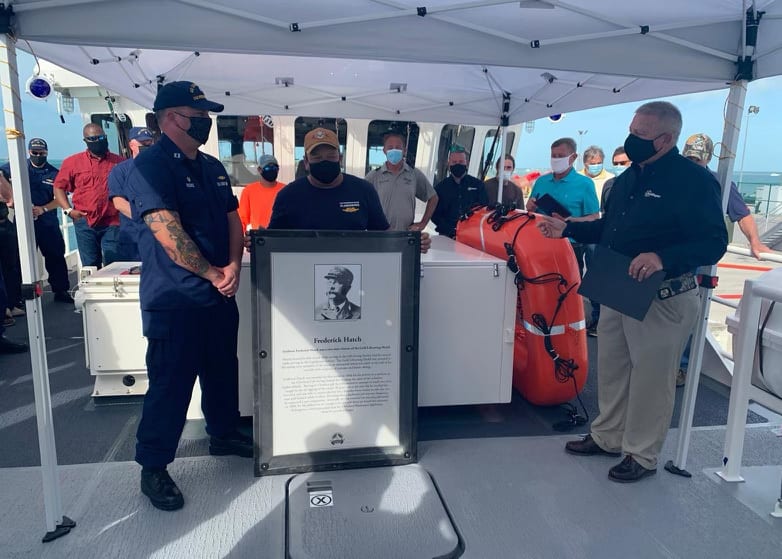
The Coast Guard accepts delivery of its newest Sentinel-class fast response cutter (FRC), the Coast Guard Cutter Frederick Hatch (WPC 1143), from Bollinger Shipyards in Key West, Florida, Feb. 10, 2021. Bollinger has now acquired Gulf Island Fabrication’s shipyard facilities, expanding its construction and repair capacity. U.S. COAST GUARD / Ensign Alexandra Hughes

LOCKPORT, La. — Bollinger Shipyards, a privately-held designer and builder of steel military and commercial vessels for the past three quarters of a century, has acquired Gulf Island Fabrication Inc.’s shipyard facilities, expanding Bollinger’s new construction and repair capacity and capabilities to better serve its key defense and commercial customers, the company said in an April 19 release. Financial terms of the transaction were not disclosed. 

This acquisition creates expanded opportunities for Bollinger to better serve and deepen its relationships with key defense and commercial customers with an increased capacity for new projects and footprint, access to a larger workforce skilled in steel construction, improved efficiencies and enhanced economies of scale. Current customers for Bollinger include the U.S. Coast Guard, U.S. Navy, General Dynamics-Electric Boat, and non-defense and commercial customers servicing energy production to dredging. Gulf Island had been building the Towing, Salvage and Rescue Ships for the U.S. Navy and Regional Class Research Vessels for the National Science Foundation and Oregon State University. These projects conveyed with the transaction.  
 
“The addition of the new Houma shipyard further strengthens our position within the U.S. defense industrial base as a leading shipbuilder and vessel repair company,” said Ben Bordelon, CEO and president of Bollinger Shipyards. “For 75 years, we’ve developed a deep expertise in and proven track record of building reliable, high endurance steel vessels for the Coast Guard, Navy and our commercial customers. As the needs of these customers change and grow, we are constantly looking for ways to invest in and expand our capabilities and innovative solutions so that we can continue to provide them with the highest levels of quality, support and service in our industry.”  

Bordelon continued, “For three quarters of a century, Bollinger’s greatest strength has and continues to be our people and their American ingenuity and quality craftsmanship. I am excited to welcome the Gulf Island Shipyard employees into the Bollinger family. Together, we will ensure that the ‘Bollinger standard’ will be the high bar we measure ourselves against for superior quality and safety as we work to deliver the next generation of American made high-performance vessels for our government and commercial customers.”  

The new Bollinger Houma facility encompasses 437 acres on the west bank of the Houma Navigation Canal, of which 283 acres is unimproved land that is available for expansion. The facility includes 18,000 square feet of administrative and operations facilities, 160,000 square feet of covered fabrication facilities and 20,000 square feet of warehouse facilities. It also has 6,750 linear feet of water frontage, including 2,350 feet of steel bulkheads. Located just 30 miles from the Gulf of Mexico, the strategic location provides short and unrestricted access to the newly acquired Houma facility from open waters. 

The acquisition also includes a 15,000-short ton drydock, a 4,000-short ton drydock, a 3,000-short ton drydock and a 1,500-short ton drydock.  

Bollinger’s acquisition increases the shipyard’s growing new construction and repair portfolio. In December of last year, Congress appropriated funds for Bollinger to build four additional Sentinel-class Fast Response Cutters (FRCs) for the U.S. Coast Guard. In addition to construction of the FRC, Bollinger is under contract to construct an Ocean Transport Barge and Floating Dry Dock for General Dynamics Electric Boat Division. In addition, Bollinger is participating in industry studies for five government programs, including the U.S. Coast Guard’s Offshore Patrol Cutter and the U.S. Navy’s Common Hull Auxiliary Multi-Mission Platform, Auxiliary General Ocean Surveillance, Large Unmanned Surface Vehicle and Light Amphibious Warship programs. 


Elbit Awarded $41M Order as Part of the Night Vision Goggles IDIQ Contract for U.S. Marine Corps

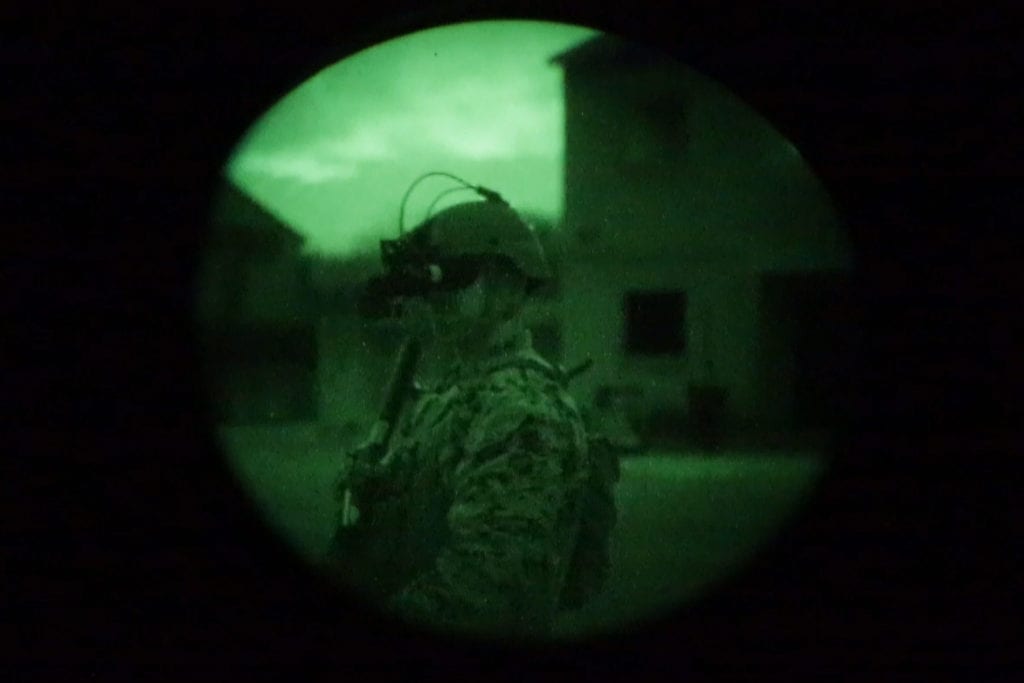
A view of a Marine through the Squad Binocular Night Vision Goggle at night. In January 2020, a group of Marines with The Basic School assessed the Squad Binocular Night Vision Goggle night vision system comprising an image-intensifier binocular and enhanced clip-on thermal imager. U.S. MARINE CORPS / Sgt. Kirstin Spanu

HAIFA, Israel — Elbit Systems Ltd.’s U.S. subsidiary, Elbit Systems of America LLC, has been awarded a delivery order valued at approximately $41 million for the supply of night vision systems and various spare components to the U.S. Marine Corps, the company said in an April 20 release. The order will be executed in Roanoke, Virginia, and will be supplied through March 2022. 

This order is part of a $249 million five-year Squad Binocular Night Vision Goggles indefinite delivery indefinite quantity (IDIQ) contract from Sept. 6, 2019, under which the U.S. Marine Corps are supplied with Squad Binocular Night Vision Goggle (SBNVG) systems consisting of high-performance, white phosphor image intensifier binoculars, modular uncooled thermal imaging sensors and common external power supplies — providing Marines improved mobility and situational awareness during night operations. 

“Marines need to quickly understand their surroundings and act to engage their targets — no matter the light conditions — and Elbit Systems of America’s SBNVG provides this power in a lightweight, adjustable system that is an ideal upgrade,” said Raanan Horowitz, president and CEO of Elbit Systems of America. 


Inaugural Unmanned Battle Problem 21 to begin April 19

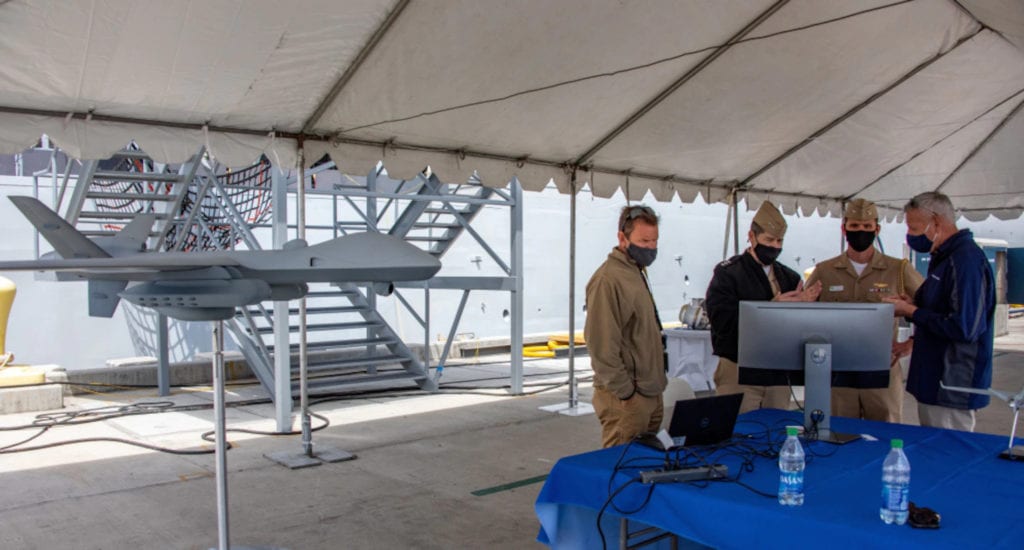
 Vice Adm. Michael Moran, principal military deputy assistant Secretary of the Navy (Research, Development and Acquisition), speaks with representatives from General Atomics Aeronautical about the MQ-9 Sea Guardian unmanned aircraft at Pier 12 on Naval Base San Diego. U.S. Pacific Fleet’s UxS IBP 21, April 19-26, integrates manned and unmanned capabilities into the most challenging operational scenarios to generate war fighting advantages. U.S. NAVY

SAN DIEGO – The Navy begins its inaugural multi-domain manned and unmanned capabilities exercise April 19, the U.S. 3rd Fleet said in an April 16 release. The exercise will feature unmanned capabilities “Above the Sea, On the Sea and Below the Sea.” 

Led by U.S. Pacific Fleet and executed by U.S. 3rd Fleet, Unmanned Integrated Battle Problem 21 will generate warfighting advantages by integrating multi-domain manned and unmanned capabilities into the most challenging operational scenarios. 
 
The exercise will feature operational, unmanned systems such as the MQ-9 Sea Guardian Unmanned Aerial Vehicle, the Medium Displacement Unmanned Surface Vessels Sea Hunter and Sea Hawk, and small and medium Unmanned Undersea Vehicles with modular payloads. 

“Building off advances achieved over the past decade in unmanned aviation, Pacific Fleet is answering the Chief of Naval Operations’ drive to put the Navy’s Unmanned Campaign Plan into action,” says Rear Adm. Robert M. Gaucher, director of maritime headquarters at U.S. Pacific Fleet. “Furthermore, by exercising our full range of unmanned capabilities in a Pacific warfighting scenario, UxS IBP21 directly supports U.S. Indo-Pacific Command’s warfighting imperative of driving lethality through experimentation.” 

Unmanned systems alongside the traditional, manned naval force will give the U.S. Navy the advantage needed to fight, win and deter potential aggressors. This exercise will directly inform warfighters, warfare centers and developers to further incorporate unmanned capabilities in day-to-day Fleet operations and battle plans. 
 
“The overall goal is to integrate our unmanned capabilities across all domains to demonstrate how they solve CNO and Fleet Commander Key Operational Problems,” says Gaucher. “To get after these problems, UxS IBP21 will include maneuvering in contested space across all domains; targeting and fires; and intelligence, reconnaissance and surveillance.” 


USS The Sullivans Deploys in Support of British Carrier Task Group 21

The Arleigh Burke-class guided-missile destroyer USS The Sullivans (DDG 68), departed Mayport, Florida, April 19, for deployment to participate in HMS Queen Elizabeth (R08) Strike Group. U.S. NAVY

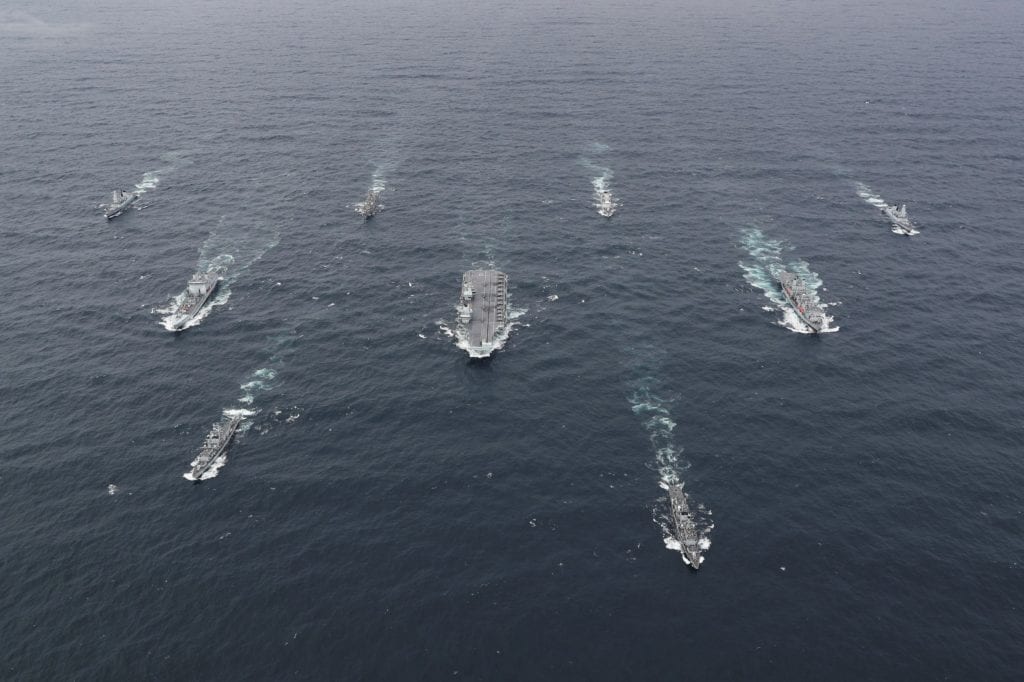
MAYPORT, Fla. — The Arleigh Burke-class guided-missile destroyer USS The Sullivans (DDG 68), departed Mayport, Florida, April 19, for deployment to participate in HMS Queen Elizabeth (R08) Strike Group, the U.S. 2nd Fleet said in a release. 

The inclusion of U.S. forces in the strike group will improve expeditionary capabilities and interoperability between NATO allies, demonstrating the United States’ commitment to the NATO alliance. 

“It is an honor to sail in this elite multi-national strike group on the frontline demonstrating a fully integrated force that showcases the special relationship that our countries have,” said Cmdr. David Burkett, commanding officer of The Sullivans. “USS The Sullivans’ namesakes would be extremely proud of us as we boldly show that, we stick together!”

The ship is named after the five Sullivan brothers who died when their ship, the USS Juneau, was sunk by a Japanese submarine during the battle of Guadalcanal in World War II. It is the second Navy ship to be named after the brothers.

The Sullivans recently participated in a successful Composite Unit Training Exercise alongside the Iwo Jima Amphibious Ready Group and the 24th Marine Expeditionary Unit that included a NATO vignette and training with SEALS from an East Coast-based Naval Special Warfare Group. 
 
The vignette, developed by Carrier Strike Group Four and Combined Joint Operations from the Sea Centre of Excellence (CJOS COE), consisted of familiarity training designed to facilitate allied maritime interoperability and integration, in practical terms using NATO procedures, messaging formats and chat capabilities. 
 
The vignette developed and refined a clear list of interoperability requirements for future Navy force generation, and improved allied maritime command-and-control linkages. 
 
“To ensure truly effective deterrence and defense in the North Atlantic, we need to make sure that the navies of NATO can work as one team, and that means interoperability is vital,” said Commodore Tom Guy, Royal Navy, deputy director CJOS COE. “This NATO vignette has been a great step forward in pursuing allied interoperability. CJOS COE looks forward to continuing to develop this for future deploying strike groups.” 
 
In Oct. 2020, USS The Sullivans participated in U.K.-led exercise Joint Warrior 20-2 as part of HMS Queen Elizabeth Strike Group. The exercise provided pre-deployment opportunities for the international strike group. 


Coast Guard Cutter Escanaba Returns Home to Boston After 61-Day Patrol

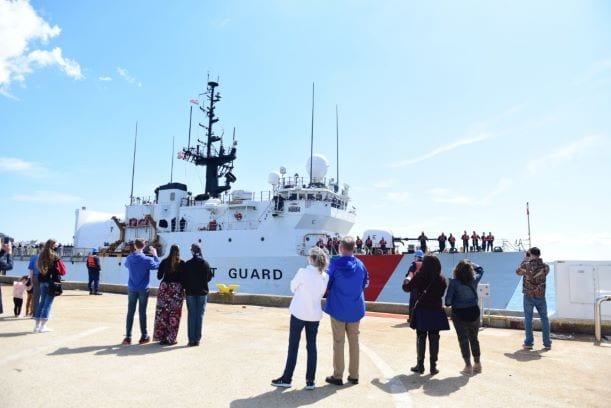
The crew of Coast Guard Cutter Escanaba (WMEC 907), returned home to Boston, Tuesday, following a 61-day counter-narcotics patrol in the Caribbean Ocean. U.S. COAST GUARD

BOSTON —The crew of Coast Guard Cutter Escanaba (WMEC 907), returned home to Boston, Tuesday, following a 61-day counter-narcotics patrol in the Caribbean Ocean, the Coast Guard 1st District said in an April 19 release.  

The 270-foot Escanaba’s 100-person crew supported operation Leeward Horizon and Unified Resolve, presidential initiatives designed to disrupt transnational criminal organizations in Central and South America. 

Escanaba’s crew deployed with two members from the Barbadian Coast Guard, helping strengthen a vital maritime partnership and improving the interoperability between the two nations.  

While transiting to their operational area, Escanaba’s crew provided humanitarian and medical assistance to 25 Haitian migrants including five children and a pregnant woman. The migrants were rescued from an unseaworthy vessel and were ultimately repatriated to Haiti. 

The crew of Escanaba also rescued two mariners stranded at sea approximately 25 miles from St. Lucia and conducted two boardings of Venezuelan fishing vessels actively fishing in the territorial seas of other countries These boardings assisted in the disruption and reporting of wide spread illegal, unregulated and unreported fishing (IUU) in the area.  

“I am very pleased with the total team effort from our crew on this patrol,” said Cmdr. Mike Nalli, Escanaba’s commanding officer. “We completed multiple training events with partner nations to combat the flow of illegal drugs into our country and disrupt the criminal networks which operate in that part of the Caribbean. Overall, the crew and I are thrilled with what we accomplished and are excited to be home.”  

In addition, the crew of Escanaba also completed a biennial training assessments in Mayport, Florida prior to patrol departure. This training evaluated their overall readiness in five warfare categories: Weapons Systems, Command and Control, Damage Control and Medical, Engineering, and Navigation and Seamanship. Demonstrating proficient mission capabilities, the crew completed over 65 drills and evaluations, earning an overall score of 96%.  

Known as “The Pride of Boston,” the Escanaba is a medium-endurance cutter homeported in Boston. 


Crowley Completes First U.S. Design for Fully Electric Tug with Autonomous Technology

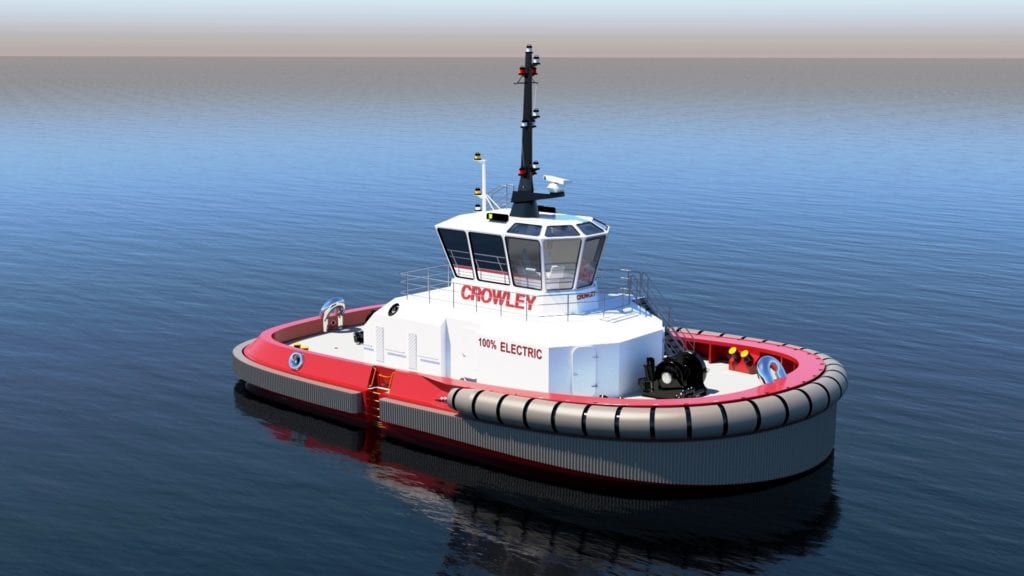
An illustration of Crowley’s fully electric tugboat with autonomous technology. CROWLEY ENGINEERING SERVICES

SEATTLE — Crowley Engineering Services has completed the design of the first fully electric U.S. tugboat with autonomous technology, providing operators a sustainable and high-performing system for ship assist and harbor services in any port, the company said in a April 19 release. 

The Crowley design, powered by the expertise of recently integrated subsidiary Jensen Maritime, leverages a large battery system and power saving technology to operate in a fully electric mode while producing zero air emissions or greenhouse gases. The 82-foot tug will provide 70 short tons of bollard pull, featuring an Azimuthing drive propulsion system with two 1,800 kW motors and a 6 MWh battery.  

The new design is featured in an animated video available here

The design also supports fully customizable features to meet the vessel design requirements with the future in mind. The platform design can be adjusted for alternate power capacities suitable for a standard hybrid framework if desired. The fully modular batteries allow for upgrades as technology changes. In addition, Crowley has developed an onshore charging station to fully support charging and reliable performance at the home port. 

“Crowley’s design provides operators the tugboat solution to continue serving ships quickly and powerfully, while reducing their environmental impact by eliminating a carbon footprint,” said Ray Martus, vice president, Crowley Engineering Services. “This new design sets the standard for innovation by showing that sustainability and power can work together seamlessly in our maritime industries.” 

With no exhaust stack, the tug has 360 degrees of visibility from the pilot’s station, allowing the operator to see without obstruction. The tug has also been designed for future autonomous operation to increase the safety and efficiency of the operation including integrated automation and control systems. The intelligent maneuvering and control system offers more efficient vessel operations and allows masters to focus holistically on the overall control and positioning of the vessel in increasingly busy harbors. 


Vice Adm. Linda L. Fagan Nominated to be Coast Guard Vice Commandant, First Coast Guard Female 4-Star Admiral

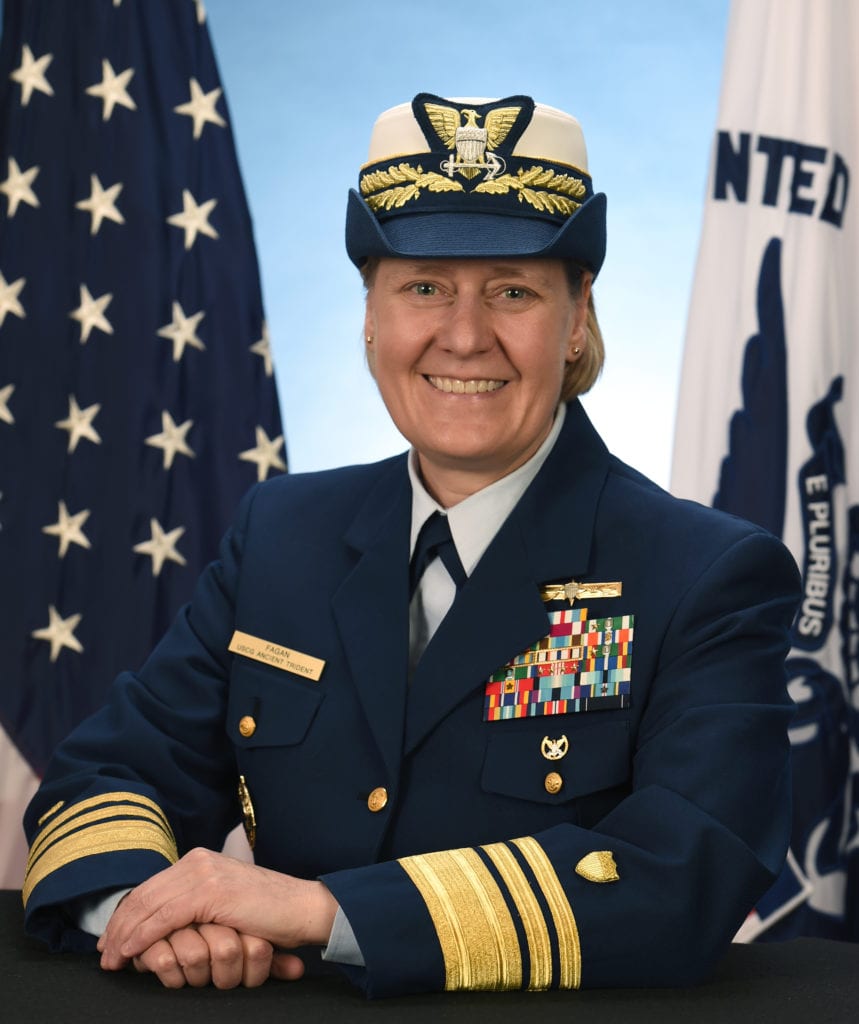
Vice Adm. Linda L. Fagan, nominated to be the next vice commandant of the U.S. Coast Guard. U.S. COAST GUARD

WASHINGTON – Vice Adm. Linda L. Fagan has been nominated by the White House to be the next vice commandant of the U.S. Coast Guard, the service’s headquarters announced in an April 19 release. 

She currently serves as the commander of the Coast Guard Pacific Area, overseeing all Coast Guard missions from the Rocky Mountains to the waters off the East Coast of Africa. Fagan concurrently serves as commander, Defense Force West and provides Coast Guard mission support to the Department of Defense and Combatant Commanders. Fagan is a 1985 graduate of the Coast Guard Academy and is the Coast Guard’s first-ever Gold Ancient Trident, the officer with the longest service record in the Marine Safety field. 

“Vice Adm. Fagan is an outstanding leader with 36 years of Coast Guard operations, policy-making, joint service, and interagency experience,” said Adm. Karl L. Schultz, commandant of the U.S. Coast Guard. “Throughout her distinguished career, she has been a top performer and a trailblazer. As the Coast Guard’s first female four-star admiral, and President Biden’s nominee to serve as the Coast Guard’s 32nd vice commandant, Adm. Fagan will be instrumental in moving the Service forward at a critical juncture in our history.” 

Secretary of Homeland Security Alejandro N. Mayorkas released a statement on Fagan’s nomination.

“I am pleased that President Biden has nominated Vice Admiral Linda Fagan to be the vice commandant of the United States Coast Guard,” it says. “She is a superb leader who, as the 32nd vice commandant, will guide the Coast Guard at a time when its mission of securing our maritime borders, ports, and waterways has never been more important. If confirmed, Vice Admiral Fagan would serve as the first woman to be promoted to a 4-star rank in the Coast Guard.  We are grateful to Vice Admiral Fagan for continuing her service to country, for the trail she has blazed, and for inspiring us all.”

Pending confirmation, Fagan is expected to relieve current Vice Commandant of the Coast Guard Adm. Charles W. Ray on June 18. 


HII Announces Commercial Release of REMUS 300 Unmanned Underwater Vehicle

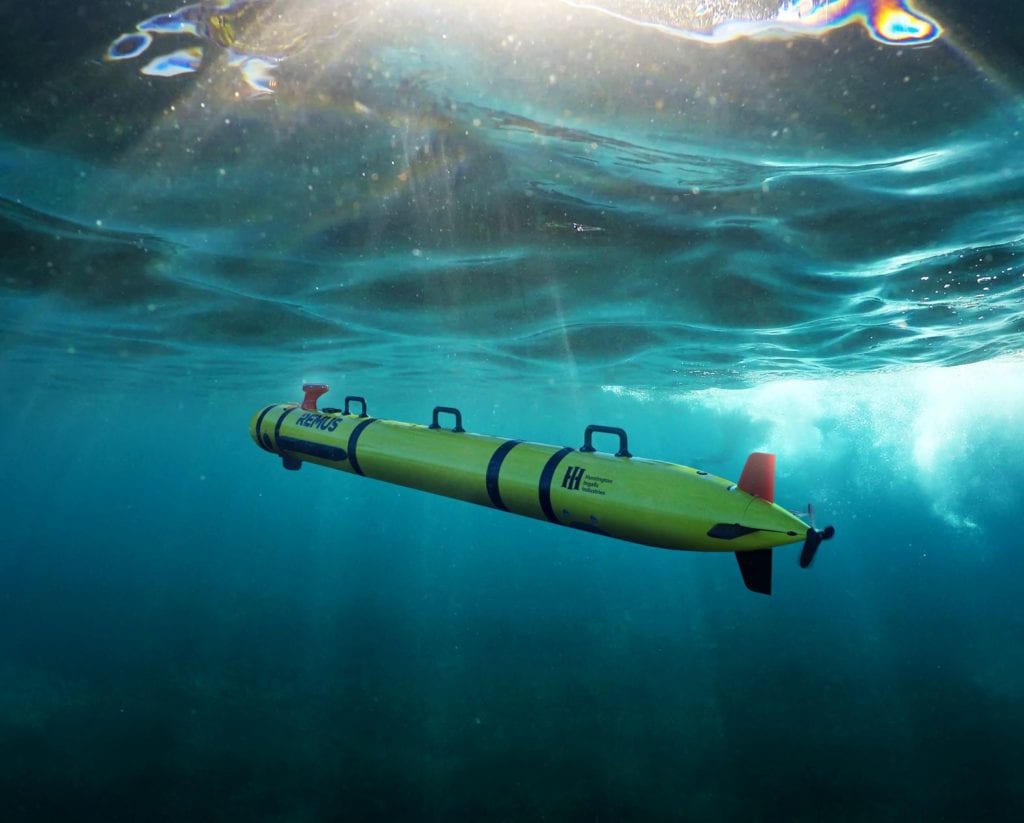
Huntington Ingalls Industries’ Technical Solutions division has announced the commercial release of its REMUS 300 unmanned underwater vehicle, shown here in an artist’s rendering. HUNTINGTON INGALLS INDUSTRIES

NEWPORT NEWS, Va. — Huntington Ingalls Industries announced on April 19 the commercial release of its REMUS 300 unmanned underwater vehicle (UUV). This new, open architecture, small-class UUV can dive to depths of 305 meters (1,000 feet) and has endurance options up to 30 hours.  

“The REMUS 300 is the most advanced small-class UUV on the market,” said Duane Fotheringham, president of the Unmanned Systems business group in HII’s Technical Solutions division. “It combines everything we’ve learned from more than 20 years of development on our REMUS 100 systems with enhancements like advanced modularity and a more robust structure and sensors. We’re excited to offer this solution to customers who are looking to dive deeper and go longer with a flexible, man-portable system.”  

Built on the REMUS Technology Platform, the REMUS 300 has compact and efficient core electronics, advanced autonomy and a common operating system that allows for interoperability with the entire REMUS family of systems. Its open architecture design and modularity enable integration of the latest hardware and software, with an optional hardware development kit and software development kit to enable third-party integration.  

The REMUS 300 design incorporates feedback from hundreds of REMUS 100 users and provides the ability to exchange payloads, allowing application flexibility. Common applications include mine countermeasures, hydrographic survey, rapid environmental assessment, search and recovery, and marine research. Modular energy sections allow for field replacement of 1.5, 3.0 or 4.5 kilowatt-hour lithium-ion batteries enabling up to 10, 20 or 30 hours of endurance.  

More than 500 REMUS UUVs have been sold to 25 countries worldwide. Standard configurations of the REMUS 300 can now be acquired internationally and commercially, with orders being accepted now for delivery in 2022.  

Learn more about the new REMUS 300 UUV at: https://tsd.huntingtoningalls.com/capabilities/unmanned-systems/unmanned-underwater-vehicles/remus300m/.  


HII Achieves Milestone in RCOH of USS George Washington

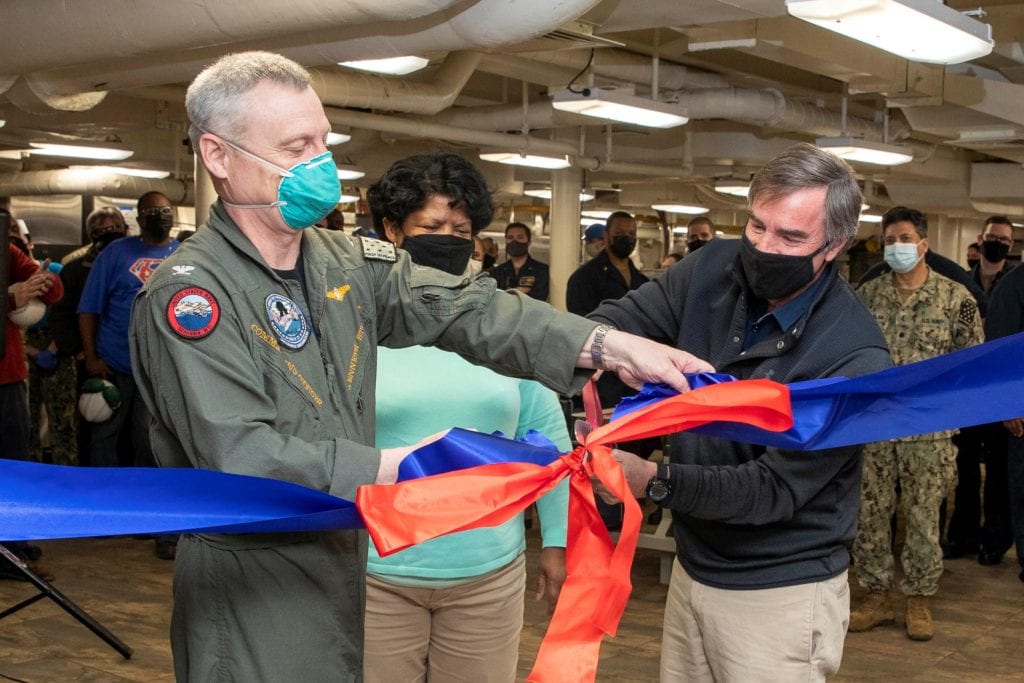
The aircraft carrier USS George Washington (CVN 73) celebrated the reopening of the aft crew mess with a ribbon-cutting ceremony on April 16, 2021. Pictured (Left to right): Capt. Kenneth Strong, the ship’s commanding officer; CVN 73 program director Thomasina Wright; and Scott Menkes, deputy project supervisor for Supervisor of Shipbuilding, Newport News. U.S. NAVY / MCSN Dakota Nack

NEWPORT NEWS, Va. — Huntington Ingalls Industries’ Newport News Shipbuilding division reached a major milestone on the refueling and complex overhaul (RCOH) of USS George Washington (CVN 73), the company said in an April 16 release. 

Following a ribbon-cutting ceremony, Sailors ate the first meal prepared in the galley in the nearly three years since the ship arrived at Newport News. The opening of the crew galley is one of the last significant steps before the first 1,100 Sailors are expected to move aboard in June. 

“George Washington has gone through a transformation since it arrived at Newport News for the mid-life refueling overhaul and maintenance availability,” said Todd West, Newport News’ vice president, in-service aircraft carrier programs. “The crew beginning their move aboard and the reopening of berthing spaces and galleys, all supporting our nearing completion of the RCOH, is a sign that the ship is being brought back to life. We look forward to continuing our work with our Navy partners to redeliver the ship to the fleet.” 

The Nimitz-class aircraft carrier is in the final stages of testing, which is designed to exercise all aspects of the propulsion plant systems and will certify the systems and components for future operations over the next 25 years of service. The RCOH is more than 85% complete, and the ship is on track to be re-delivered to the Navy in 2022.