Aircraft Carrier Industrial Base Coalition Confident of Another Dual-CV Buy
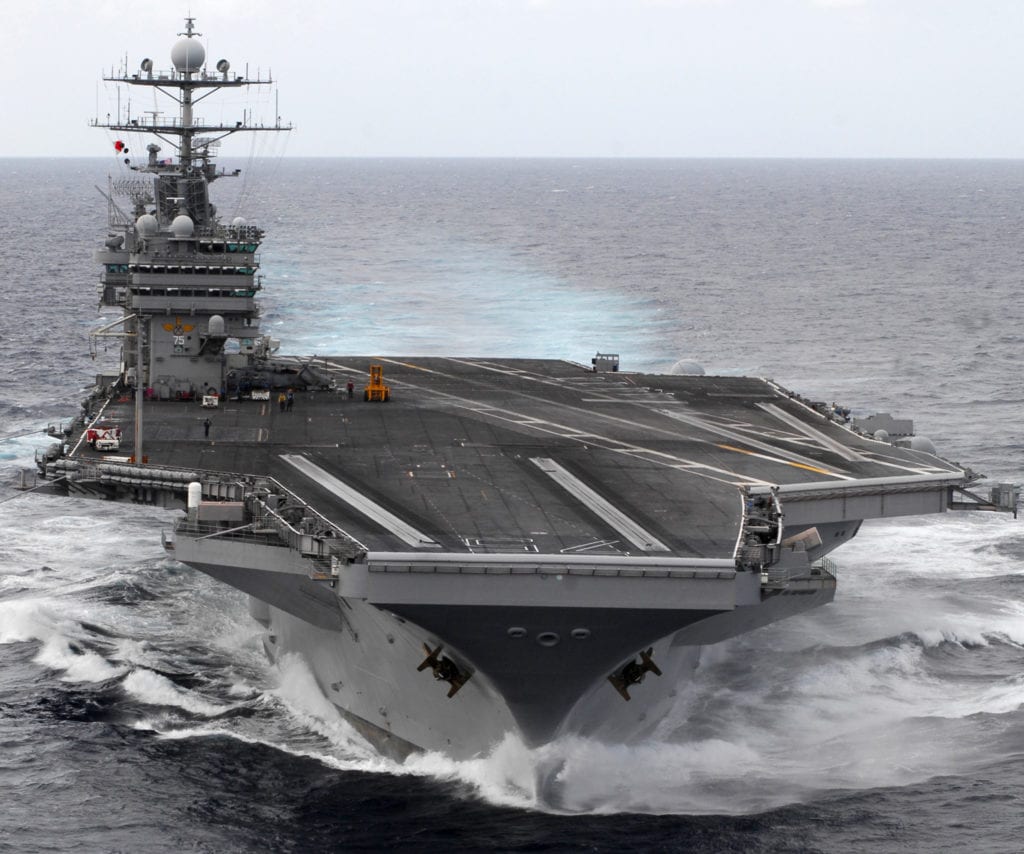
The Nimitz-class aircraft carrier USS Harry S. Truman (CVN 75), due to be retired, a move opposed by the Aircraft Carrier Industrial Base Coalition. U.S. NAVY

ARLINGTON, Va. — The chairman of the industrial coalition of suppliers for the Navy’s aircraft carriers said the coalition supports continuing to build large aircraft carriers instead of light ones and predicts there will be another dual-carrier procurement in the future. 

“We’re strong supporters of the large platform,” said Rick Giannini, chairman of the Aircraft Carrier Industrial Base Coalition (ACIBC), who also is president and chief executive officer of Milwaukee Valve Co. in New Berlin, Wisconsin, in an interview with Seapower

Giannini said the size of the Navy’s carrier aircraft demand a large flight deck to sustain a high sortie rate and that a large aircraft carrier is the most survivable airfield. 

The Navy will be conducting an analysis of the concept of light aircraft carriers. 

“I believe the L-class ships [amphibious assault ships] operating with the F-35B would fit that bill,” said Rear Adm. Gregory Harris, the Navy’s director for Air Warfare, speaking last month at a Navy League Special Topic Breakfast webinar, sponsored by General Dynamics. “Others would disagree.”   

Harris said he is “confident that over the long run we’ll find that there’s not a compelling return on investment to make a smaller carrier just [because of] speed, station-keeping, the air wing that you would put on top of that carrier, and the ability to have the fuel for the air wing and for the carrier to have for the surface combatants.”   

The ACIBC members meet on Capitol Hill every year to lobby Congress. This year’s virtual session included more than 260 companies holding more than 123 scheduled meetings with members of Congress to impress upon them the importance of aircraft carriers to the national defense. 

“We’re doing everything we can to get that message out,” Gianni said.  

The ACIBC represents the more than 2,000 supplier companies in 46 states, supporting 92,000-plus jobs. These companies inject over $8.8 billion into our nation’s economy. 

He was critical of proposed initiatives to retire the USS Harry S. Truman instead of refueling it for another quarter century of service, noting the Navy risks falling below the legally mandated number of 11 aircraft carriers. 

That leads right back to the industrial base, because for us it’s all about stability and predictability of where those funds ae coming from,” Giannini said, noting that the Navy’s two-ship buy of CVN 80 and 81 brought a lot of stability to the suppliers. 

“We’re always concerned when a new administration comes in every time these things are starting over for the next ship in the class,” he said. “We’re fortunate right now; we have two [CVNs] in the pipeline — orders in [fiscal 2019] for eight years of work. We’re still confident that the reasons carriers have been required for the last 50 years aren’t going to be any different than the requirements for the next 50 to 100 years. 

“We remain confident there will be another block buy for [CVNs] 82 and 83, because it is the best way to spend the nation’s money, which is to ensure that the supply base has this steady and predictable stream of work, so we can lower the cost,” he said. 

Giannini pointed to the example of a class of valves supplied by his company that, because of the last dual-carrier buy, were produced at 20-25% lower cost. Not only is the cost being reduced because the orders for both ships come at once, but additional cost savings come by being able to order materials at today’s prices rather than at future prices. 


USS Oakland Commissioning Ceremony Set for April 17

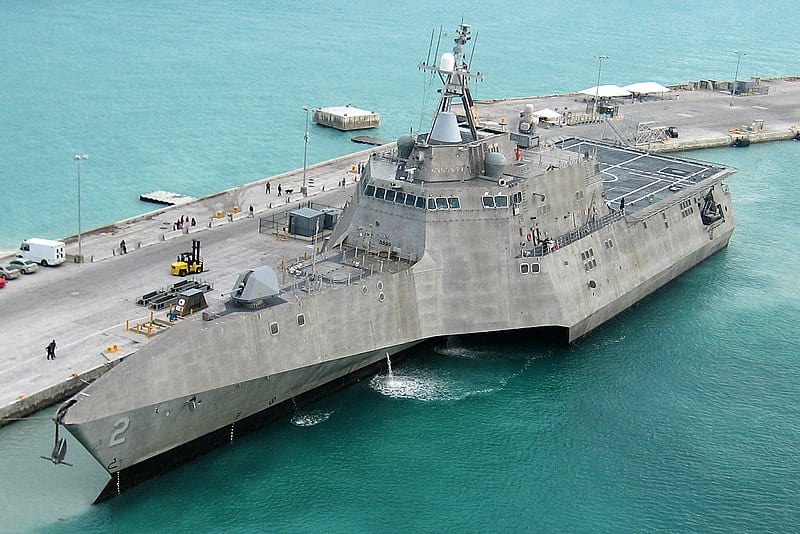
The USS Independence, a sister ship to the future USS Oakland, which will be commissioned on Saturday, April 17. U.S. NAVY

ARLINGTON — The Navy’s newest Freedom-variant littoral combat ship, the future USS Oakland (LCS 24), will be commissioned at 10:00 a.m. PST on Saturday, April 17, 2021 in Oakland, California, the Defense Department said in an April 16 release. 

Due to public health and safety concerns related to the novel coronavirus (COVID-19) pandemic, the commissioning will be a private event. The ceremony will be live-streamed for those unable to attend. The following link will become active approximately five minutes prior to the event (9:55 a.m. PST): https://allhands.navy.mil/Live-Stream.   

Acting Secretary of the Navy Thomas W. Harker, will deliver the commissioning ceremony’s principal address. Ms. Kate Brandt, Google sustainability officer, is the ship’s sponsor. The ceremony will be highlighted by a time-honored Navy tradition when Ms. Brandt gives the order to “man our ship and bring her to life!” 

Cmdr. Francisco X. Garza, a native of Phoenix, Arizona, is the ship’s commanding officer and leads a crew of 70 officers and enlisted personnel. The 3,200-ton Oakland was built by General Dynamics/Austal USA in Mobile, Alabama. The ship is 421 feet in length, has a beam of 103 feet, and a navigational draft of 15 feet. The ship is powered by two gas turbine engines, two main propulsion diesel engines, and four waterjets to reach speeds up to 40-plus knots. 

“The USS Oakland crew is excited and ready to bring our ship to life and join the fleet,” said Garza. “We are privileged to be a part of this ship and embody the spirit of the people of Oakland. As plank owners and future crew members build a positive legacy for this ship, the city of Oakland will experience those successes with us.” 

Oakland is the third ship to bear the name. She is the 12th Independence-variant LCS and the 297th ship to join our battle force. The littoral combat ship is a fast, agile, focused-mission platform designed to operate in near-shore environments, while capable of open-ocean tasking and winning against 21st-century coastal threats such as submarines, mines, and swarming small craft. The LCS is capable of supporting forward presence, maritime security, sea control, and deterrence. 

USS Oakland will be homeported at Naval Base San Diego, California. 


Five Marine Officers Nominated, Renominated to Lt. General

Lt. Gen. David G. Bellon, reappointed to the grade of lieutenant general and assigned as commander, Marine Forces Reserve, one of several nominations announced April 16. U.S. MARINE CORPS

ARLINGTON, Va. – Secretary of Defense Lloyd J. Austin III announced April 16 that the president has made the following nominations: 

Marine Corps Lt. Gen. David G. Bellon for reappointment to the grade of lieutenant general, and assignment as commander, Marine Forces Reserve; and commander, Marine Forces South. Bellon is currently serving as commander, U.S. Marine Forces Reserve, New Orleans, Louisiana. 

Marine Corps Lt. Gen. George W. Smith Jr. for reappointment to the grade of lieutenant general, and assignment as commanding general, I Marine Expeditionary Force. Smith is currently serving as the deputy commandant for plans, policies, and operations, Headquarters, U.S. Marine Corps, Washington, D.C. 

Marine Corps Maj. Gen. Edward D. Banta for appointment to the grade of lieutenant general, and assignment as deputy commandant for installations and logistics, Headquarters, U.S. Marine Corps. Banta is currently serving as commander, Marine Corps Installations Command; and assistant deputy commandant for installations and logistics (facilities), Headquarters, U.S. Marine Corps, Washington, D.C. 

Marine Corps Maj. Gen. Kevin M. Iiams for appointment to the grade of lieutenant general, and assignment as commanding general, Training and Education Command. Iiams is currently serving as the assistant deputy commandant for combat development and integration; and deputy commanding general, Marine Corps Combat Development Command, Marine Corps Base Quantico, Virginia. 

Marine Corps Maj. Gen. William M. Jurney for appointment to the grade of lieutenant general, and assignment as commanding general, II Marine Expeditionary Force. Jurney is currently serving as commanding general, Marine Air Ground Task Force Training Command; and commanding general, Marine Corps Air Ground Combat Center, Twentynine Palms, California. 


Flag Officers Newly Nominated as Vice Admirals and Commanders for Three Fleets

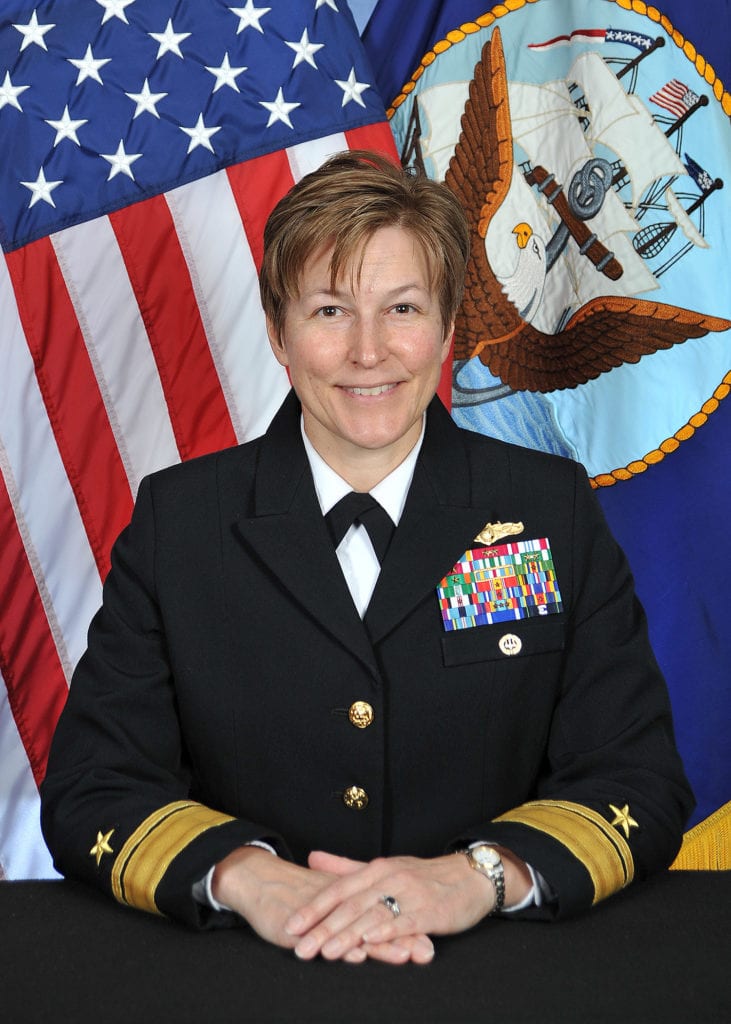
Rear. Adm. Kelly A. Aeschbach, one of six nominations for vice admiral announced on April 15. U.S. NAVY

ARLINGTON, Va. — Defense Secretary Lloyd J. Austin III announced a number of Navy flag officer nominations by the president on April 15, including six for vice admiral, three of which would assume command of the U.S. 3rd, 5th and 7th Fleets.   

Austin said the president has made the following nominations: 

Navy Rear Adm. Kelly A. Aeschbach for appointment to the grade of vice admiral, and assignment as commander, Naval Information Forces, Suffolk, Virginia. Aeschbach is currently serving as director, National Maritime Intelligence Integration Office; and commander, Office of Naval Intelligence, Washington, D.C. 

Navy Vice Adm. Scott D. Conn for reappointment to the grade of vice admiral, and assignment as deputy chief of naval operations for warfighting requirements and capabilities, N-9, Office of the Chief of Naval Operations, Washington, D.C. Conn is currently serving as commander, Third Fleet, San Diego, California. 

Navy Rear Adm. Charles B. Cooper II for appointment to the grade of vice admiral, and assignment as commander, U.S. Naval Forces, Central Command; commander, Fifth Fleet; and commander, Combined Maritime Forces, Manama, Bahrain. Cooper most recently served as commander, Naval Surface Force, Atlantic, Norfolk, Virginia. 

Navy Rear Adm. John V. Fuller for appointment to the grade of vice admiral, and assignment as inspector general, Department of the Navy, Washington, D.C. Fuller is currently serving as deputy director for force protection, J-8, Joint Staff, Washington, D.C. 

Navy Rear Adm. Stephen T. Koehler for appointment to the grade of vice admiral, and assignment as commander, Third Fleet, San Diego, California. Koehler is currently serving as deputy commander, U.S. Pacific Fleet, Pearl Harbor, Hawaii. 

Navy Rear Adm. Karl O. Thomas for appointment to the grade of vice admiral, and assignment as commander, Seventh Fleet, Yokosuka, Japan. Thomas is currently serving as assistant deputy chief of naval operations, plans and strategy, N3/N5B, Office of the Chief of Naval Operations, Washington, D.C. 

Navy Rear Adm. (lower half) Robert T. Clark has been nominated for appointment to the grade of rear admiral. Clark is currently serving as deputy commander, Seventh Fleet, Yokosuka, Japan. 

Navy Rear Adm. (lower half) Nancy S. Lacore has been nominated for appointment to the grade of rear admiral. Lacore is currently serving as chief of staff, U.S. Naval Forces Europe/U.S. Naval Forces Africa/Sixth Fleet, Naples, Italy. 

Navy Rear Adm. (lower half) Eileen H. Laubacher has been nominated for appointment to the grade of rear admiral. Laubacher is currently serving as senior defense official/defense attaché – India, New Delhi, India.  

Navy Rear Adm. (lower half) Theodore P. LeClair has been nominated for appointment to the grade of rear admiral. LeClair is currently serving as mobilization assistant to the director for operations, J3, U.S. Indo-Pacific Command, Camp H. M. Smith, Hawaii. 


EUCOM Commander Seeks More Destroyers, F-35s to Deter Russian Belligerence

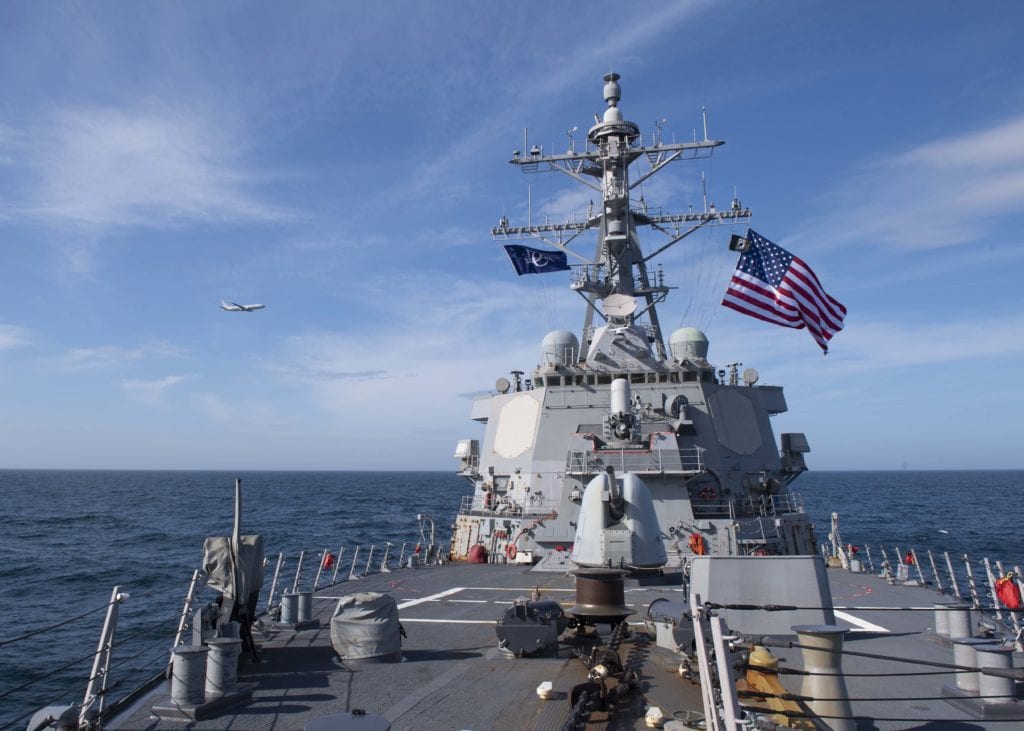
A Boeing P-8 Poseidon flies over the Arleigh Burke-class guided-missile destroyer USS Donald Cook (DDG 75) during a photo exercise in the Black Sea, Feb. 9, 2021. Donald Cook, forward-deployed to Rota, Spain, is on patrol in the U.S. Sixth Fleet area of operations in support of regional allies and partners and U.S. national security in Europe and Africa. U.S. NAVY / Mass Communication Specialist 3rd Class Will Hardy

ARLINGTON, Va. — The Air Force general heading U.S. European Command says more Navy destroyers and Air Force strike fighters are what he needs to both deter and monitor Russia’s aggressive behavior from Arctic waters to the Black Sea.

 “I see a concerted effort on behalf of Russia’s maritime forces in the Baltic, in the Barents and Black seas,” Gen. Tod Walters told a House Armed Services Committee April 15 during a hearing on national security challenges and U.S. military activities in Europe. Improving overall strategic indications and warnings (I&W), as well as command and control (C2), “starts with two destroyers to improve our ability to see undersea and it also culminates with F-35s.”

Wolters said he anticipated receiving the first set of U.S. F-35 Lightning II joint strike fighters in Britain this Fall. There are already 30 non-U.S. F-35s in Europe and the total number is expected to reach 450 jets by 2030. “And we’re programmed now with the United States Navy in the 2025 and 2026 timeframe to hopefully receive two additional destroyers,” he said.

There are four destroyers already based in Rota, Spain, which Wolters described as “the workhorses of deterrence,” projecting U.S. presence into the Mediterranean and Black seas and then back out again and up to the Arctic. Two more, also to be based in Rota, are required because of a consistent increase in Russian undersea activity in the Greenland-Iceland-United Kingdom gap. The historic maritime chokepoint in the 20th century is an access lane to the Atlantic Ocean for Arctic-based Russian subs. “The destroyers’ participation in undersea warfare, C2 and I&W is absolutely, positively critical,” Wolters said.

While the U.S. submarine fleet is “performing admirably,” Wolters said, command and control involves other assets like the Boeing P-8 Poseidon maritime patrol aircraft and destroyers.

“To comprehensively defend in this area, from undersea to all the way to 25,000 feet with a P-8, we need to make sure we have the right hardware and software, and we’re traversing in that direction,” Wolters said, adding. “It’s very challenging with respect to numbers.”

 Asked by Virginia Republican Rep. Robert Wittman if he believed Russia’s seizure of Crimea in 2014 “gives them a strategic foothold in that area” and helps efforts to modernize the Black Sea fleet?” Wolders said “our vigilance is sky high” in the Barents and Baltic seas, as well as the Black Sea. “And every point that you alluded to with respect to potential intentions, we are preparing for, and planning for and expecting it occur.”

Laura Cooper, the deputy assistant secretary of defense for Russia, Ukraine, and Eurasia, who also testified at the hearing, said the Pentagon had increased its focus on the Black Sea. “And we’re taking an approach that looks holistically at all of our allies and partners in the region,” she said, adding, “We’ve started with efforts to build maritime domain awareness capacity” in Ukraine, Georgia, Bulgaria and Romania.


Coast Guard Cutter Shearwater Decommissioned after 19 Years of Service

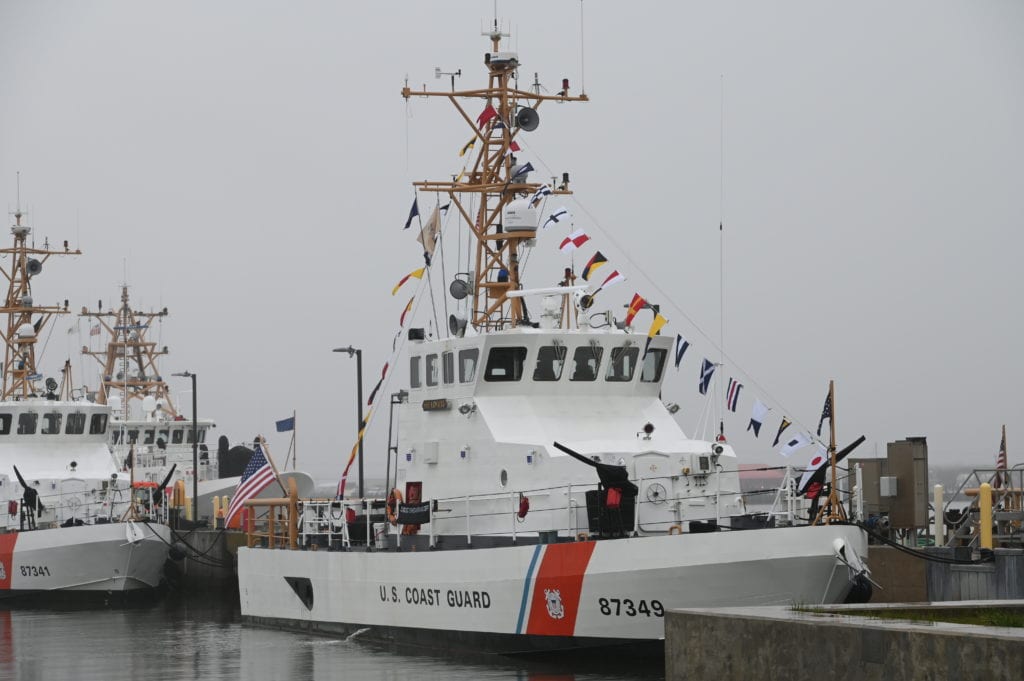
Coast Guard Cutter Shearwater, homeported in Cape May, New Jersey, is moored to the pier prior to the cutter’s decommissioning ceremony at Coast Guard Training Center Cape May, April 15, 2021. Coast Guard Cutter Shearwater was the 49th vessel of the Marine Protector Class of Coast Guard Patrol Boats. U.S. COAST GUARD / Petty Officer 3rd Class Kimberly Reaves

CAPE MAY, N.J. – The Coast Guard decommissioned the cutter Shearwater during a ceremony at Coast Guard Training Center Cape May that was presided over by Capt. Jonathan Theel, the commanding officer of Coast Guard Sector Delaware Bay, April 15, 2021, the Coast Guard 5th District said in a release. 

Shearwater was one of the Coast Guard’s 70 remaining 87-foot Marine Protector-class patrol boats. Training Center Cape May is now the homeport to three Coast Guard Fast Response Cutters.  

Commissioned in 2002, the Shearwater was the 49th of 73 coastal patrol boats built for search and rescue, ports, waterways, and coastal security, living marine resource enforcement, marine safety, and marine environmental protection.  

“Shearwater is a special ship that has served District 5 throughout the course of her history,” said Master Chief Petty Officer Tony Martinez, commanding officer of the Shearwater. “With a who’s who of prominent Coast Guard members, including high profile command master chiefs and command cadres with multiple tours, Shearwater boasted some of the finest crews throughout her tenure. She has been a fixture in both of her homeports, remaining durable and dependable throughout her history. I personally want to thank all of the crews for their dedication and service to our great nation as they were instrumental to Shearwater’s mission of takin’ care of business.” 

Shearwater’s keel was laid on April 30, 2002 at Bollinger Shipyards in Lockport, Louisiana. Shearwater was launched on Aug. 6, 2002, and commissioned on Oct. 5, 2002.  

Over the past 19 years of service, Shearwater’s crews conducted a wide range of operations. Living up to the Shearwater’s motto “Takin’ Care of Business,” coined by the commissioning crew, crews completed 1,664 activities ranging from law enforcement boardings to search and rescue responses throughout the Mid-Atlantic region. From 2002 to 2018, the ship was homeported at Coast Guard Base Portsmouth, Virginia. Upon relocating to Cape May in 2018, the ship was dubbed “the Queen of the Cape” by a Coast Guard Auxiliarist.  

During the cutter’s last year of service, the sunset crew of 12 enlisted crew members continued this legacy, conducting high profile operations including the disentanglement of a leatherback turtle off of Cape May in August of 2020, and an 18-hour tow of a disabled fishing vessel 70 nautical miles east of Cape Charles, Virginia. 

“With a strong personal connection to the first officer in charge of this ship, I felt an immense honor being the final OIC aboard Shearwater,” said Martinez. “As I pause and reflect, remembering the first time I saw the ship from an 87 on the other end of the pier, the pride I feel commanding this ship is indescribable. To lead this sunset crew and watch them grow over the past two years has been humbling and rewarding. I am grateful for their dedication and service and look forward to staying in touch and following their careers. While our business here is done, we will proudly carry on Shearwater’s legacy of hard work and reliability.” 


Navy Holds Decommissioning Ceremony for Fire-Damaged USS Bonhomme Richard

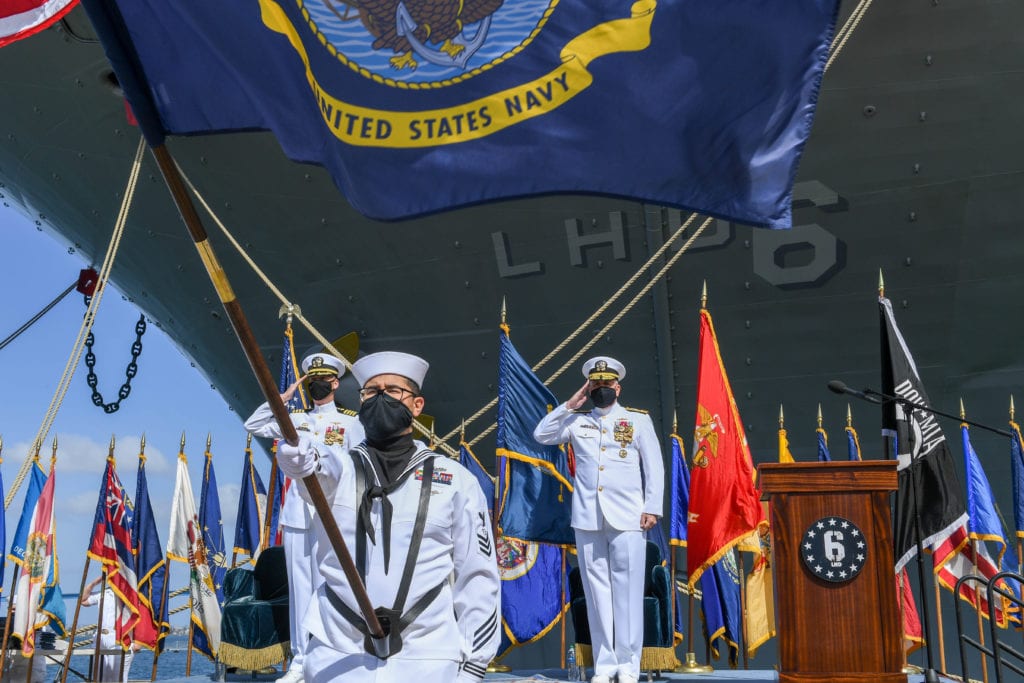
Rear Adm. Philip Sobeck, Commander, Expeditionary Strike Group Three, and Capt. G. S. Thoroman, commanding officer, amphibious assault ship USS Bonhomme Richard (LHD 6), salute the ensign for colors during a decommissioning ceremony for Bonhomme Richard at Naval Base San Diego April 14. The ceremony highlighted the history of the ship, its crew, and their legacy. Due to health and safety concerns related to COVID-19, the event was closed to the public. U.S. NAVY / Mass Communication Specialist 2nd Class Alex Millar

SAN DIEGO — The U.S. Navy held a decommissioning ceremony for amphibious assault ship USS Bonhomme Richard (LHD 6) at Naval Base San Diego April 14, the Naval Surface Force Public Affairs said in a release. 

The Bonhomme Richard had been severely damaged in a fire that began on July 12 while in port going through an extensive maintenance availability. The Navy determined the funds required to repair the 22-year-old ship or convert it to an alternate use would be better spent on other priorities.  
 
The ceremony highlighted the history of the ship, its crew, and their legacy. Bonhomme Richard was the third ship to bear the name. It was named in honor of John Paul Jones’ famous frigate, named the French equivalent for “Good man Richard.” This was in honor of Benjamin Franklin, the U.S. Ambassador to France at the time. The name Bonhomme Richard is derived from Franklin’s pen name. 
 
“[The original Bonhomme Richard] Sailors gave their all to prevail against seemingly impossible odds, and they won.” said Rear Adm. Philip Sobeck, commander, Expeditionary Strike Group 3. “They taught us that you don’t always save the ship, but you never stop fighting. The reputation of that fighting spirit began to proceed our Navy wherever we sailed and that same spirit persists today.” 
 
Like the previous five Wasp-class ships, Bonhomme Richard was designed to embark, deploy, and land elements of a Marine landing force in amphibious assault operations by helicopter, landing craft, or amphibious vehicles. 
 
Throughout its history, Bonhomme Richard projected power and maintained presence by serving as the cornerstone of Amphibious Ready Groups (ARG) or Expeditionary Strike Groups (ESG). It transported and landed elements of the Marine Expeditionary Unit (MEU) or Marine Expeditionary Brigade (MEB) with a combination of aircraft and landing craft. 
 
Not long after commissioning, the ship was called to action for Operation Stabilize in February 2000, providing peacekeeping and humanitarian operations of the coast of East Timor. This made Bonhomme Richard the first U.S. Navy ship to make a Western Pacific deployment in the 2000s. 
 
Bonhomme Richard’s following deployment put it in the spotlight of Operation Iraqi Freedom. The ship offloaded
more than a thousand Marines and their equipment from the 3rd Battalion, 1st Marines into Kuwait. After delivering attack and transport helicopters, as well as troops and vehicles, Bonhomme Richard took position just miles off the coast of Kuwait to launch AV-8B Harrier aircraft into Iraq. From the deck of Bonhomme Richard, Marine Attack Squadrons (VMA) 211 and 311 flew missions into Iraq and expended more than 175,000 pounds of ordnance and provided close air support to Marines on the ground. In total, the ship launched more than 800 sorties in support of Operation Iraqi Freedom. More than 500 of those were combat launches. 


Navy, Coast Guard Formalize Partnership Between Naval Postgraduate School and Coast Guard Research and Development Center

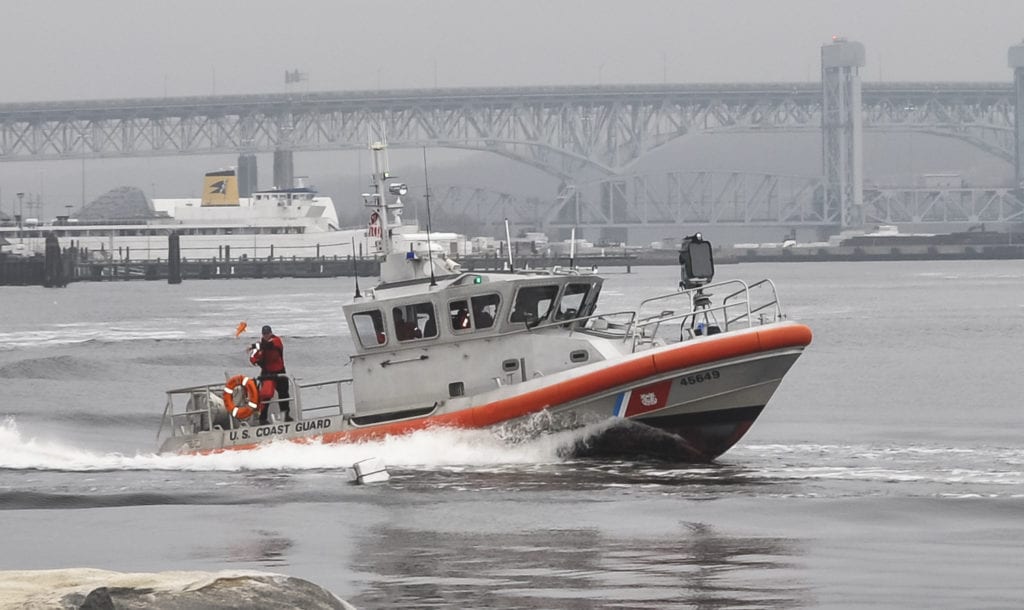
A Coast Guard crewmember jettisons a Maritime Object Tracking Technology marker as part of a Coast Guard Research and Development Center technology demonstration on the Thames River, New London, Connecticut, Thursday, Feb. 15, 2018. U.S. COAST GUARD RESEARCH AND DEVELOPMENT CENTER

The U.S. Naval Postgraduate School (NPS) and Coast Guard Research and Development Center (RDC) signed a new five-year memorandum of understanding (MOU) on April 14, 2021, which facilitates collaboration on joint research that directly supports common defense priorities and Coast Guard statutory missions. 

NPS President retired Vice Adm. Ann E. Rondeau and RDC Commanding Officer Capt. Dan Keane met on a virtual platform to both sign the document that will continue and enhance collaborative research and educational cooperation between the two institutions. The document establishes a framework for future collaboration, joint research and access to capabilities.

“The Tri-Service Maritime Strategy (TSMS), Advantage at Sea, prioritizes developing future capability and capacity for both the Navy and the Coast Guard,” said Rondeau. “Our formalized partnership not only strengthens the strong ties between NPS and the Coast Guard, but it brings to bear our defense-focused faculty and operationally experienced Navy and Coast Guard students in joint projects to develop our future force and support that strategy.”

Keane said partnerships are vital to the RDC portfolio accomplishment strategy, such as with Department of Defense and Department of Energy labs, the Federal Lab Consortium, and academia. “Perhaps one our strongest and most impactful partnerships is with the Naval Postgraduate School,” he said.

“Since an MOU was signed three years ago, the RDC has become a topic sponsor, we have proposed questions related to our portfolio that have turned into academic products; NPS researchers have worked with our researchers on summer studies; and we have provided platforms for NPS experimentation. We believe that we have just scratched the surface and the future is incredibly bright,” said Keane. “The partnership is strong today, and is only going to grow stronger in the future. We are excited about the next five years.”

According to a joint statement about the signing, the MOU will help focus NPS on aspects of the TSMS that chiefly fall to the Coast Guard to define research projects that those students, and NPS faculty, can work on together and advance toward solving key maritime challenges. “In addition to identifying thesis topics of mutual interest, the MOU includes access and use of each institution’s unique laboratories and facilities, and involves other key research exchanges to mutually advance their mission of research and education for warfighting advantage,” the statement said.

Planning is underway to facilitate joint research projects on such things including renewable energy, additive manufacturing, maritime-domain awareness and wargaming.

There is a small cohort of mid-career Coast Guard officers attending NPS as students, joining the 600 naval officers and 300 Marine Corps officers attending the school.

According to NPS Dean of Research Dr. Jeffery Paduan, NPS has an impressive cadre of subject matter experts. The school offers masters and doctorate programs in 70 different fields of studies with 227 tenure-track faculty and 347 non-tenure track faculty. 

Paduan said both NPS and RDC have distinguished histories as leading research institutions. “The Navy and Coast Guard face overlapping challenges at sea, and both of our organizations complement each other in addressing these problems. This MOU will lead to many more joint projects and shared benefits.”

Students will benefit from thesis topics and capstone projects of mutual interest, with access  to each institution’s unique laboratories, facilities, expertise and research capabilities at sea and ashore.

Rondeau said the teaming brings opportunities to understand and solve problems, and solidifies a promising “partnership in science, technology, education, learning and teaming — and in the end, winning. This MOU opens up our apertures to possibilities that are in front of us. I truly believe this has power beyond even what we can imagine today.”


China and International Crime Cartels Threaten U.S. Influence in the Americas, Commanders Say

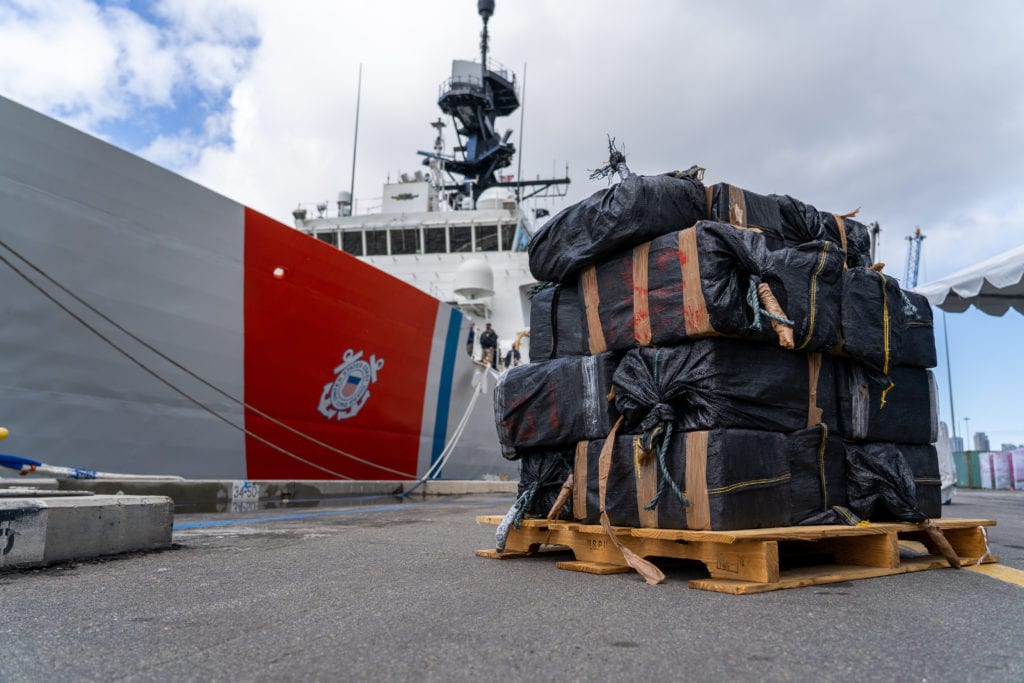
The crew of the Coast Guard Cutter Bertholf (WMSL-750) offloads approximately 7,500 pounds of seized cocaine and marijuana in San Diego, March 20, 2021. The drugs, worth an estimated $126.7 million, were seized in international waters of the Eastern Pacific Ocean between January and February representing 10 suspected drug smuggling vessel interdictions off the coasts of Mexico, Central and South America. U.S. COAST GUARD / Petty Officer 2nd Class Travis Magee

ARLINGTON, Va. — The chaos created by transnational organized crime groups in Central and South America is creating opportunities for China and Russia to undermine United States influence in the Western Hemisphere, top U.S. military commanders say.

“Two of the most significant threats are China and transnational criminal organizations,” Navy Adm. Craig S. Faller told a House Armed Services Committee hearing April 14. China is the “Number One strategic threat of the 21st century,” said Faller, the commander of U.S. Southern Command (Southcom), adding “the Chinese Communist Party with its insidious, corrosive and corrupt influence seeks global dominance.”

Faller said China was increasing its influence in the Western Hemisphere with more than 40 commercial port deals, making significant loans for political and economic leverage, pushing its IT structure and “engaging in predatory practices” like illegal fishing by industrial fleets.

Southcom’s 2021 posture statement to Congress notes that South and Central America have been reeling under a wave of challenges, including the coronavirus pandemic that has savaged Brazil, political instability and corruption in Venezuela and back-to-back hurricanes that devastated Central America,  prompting mass migrations north. The statement notes external state actors like China and Russia are “looking to exploit the conditions posed by these threats.”

Russia has been pushing narratives on social media about U.S. mismanagement of COVID-19 and claiming U.S. government sanctions are choking the Venezuelan people at their most vulnerable time. Meanwhile, China is offering $1 billion in loans to the region for their COVID-19 vaccine and improvements to medical infrastructure, securing agreements with Argentina, Brazil, Peru, and Venezuela. “This will further indebt the region to the PRC [People’s Republic of China], which already holds $165 Billion in loans,” according to the posture statement.

“Transnational criminal organizations (TCOs) pose a direct threat to our national security,” Faller testified. “They traffic in arms, humans, drugs and claim tens of thousands of lives here in the United States each year. Their murderous tactics has resulted in 43 of the 50 most violent cities of the world in this hemisphere. They drive illegal migration, and they allow bad actors like China to gain influence.”

Air Force Gen. Glen VanHerck, commander, U.S. Northern Command (Northcom) and the North American Aerospace Defense Command, agreed, saying the rise of TCOs “and subsequent instability they create has generated opportunities for our competitors to exploit.”

He noted China has been very active making deals in the Caribbean including a facility in the Bahamas, part of Northcom’s Area of Operations. China has new and very aggressive ambassador and the largest embassy in the Bahamas. “They do have access right now to an over watch, if you will, of Navy test and training facilities, [off Florida] which is very concerning,” VanHerck said. 


Navy’s Triton UAV Performing Better than Expected, Admiral Says

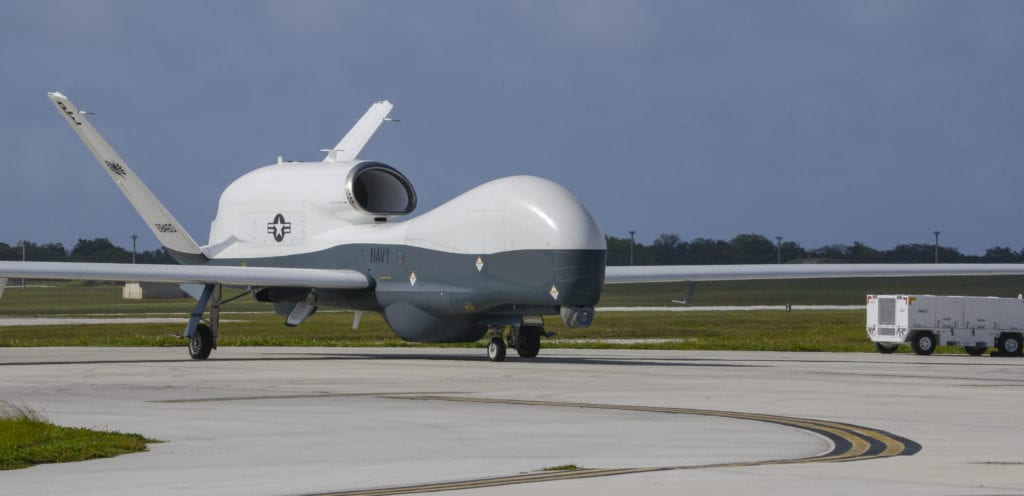
An MQ-4C Triton taxis at Andersen Air Force Base. U.S. AIR FORCE / Senior Airman Michael S. Murphy

ARLINGTON, Va. — The admiral in charge of developing the Navy’s unmanned aerial vehicles said the MQ-4C Triton UAV is doing well a more than a year into its first operational deployment to Guam, as the Navy looks to prove operations at other locations. 

Unmanned Patrol Squadron 19, the Navy’s first Triton squadron, deployed two MQ-4Cs to Guam in January 2020 to establish Early Operational Capability, providing surveillance for the U.S. 7th Fleet and also exercising the logistics train that will support future deployments. 

“Triton is doing very, very well,” said Rear Adm. Brian Corey, program executive officer for Unmanned and Strike Weapons, speaking April 14 at the Unmanned Systems-Defense webinar of the Association for Unmanned Vehicle Systems International. “In fact, it’s doing better than we expected in Guam.  

“We just finished a two-hour review with the Navy’s Air Boss, Vice Adm. [Kenneth] Whitesell, on how Triton is doing,” Corey said. “First off, anyone that has operated an air force knows that airplanes work and then they break. We have an air force of two [Tritons] and we put Triton out there [Guam] with Early Operational Capability, knowing that we didn’t have a fully fleshed-out set of depot-level maintenance and that sort of thing.   

“So, we have had some amazing success here over these last several months,” he said. “We got over there, we were able to fly, we were able to interact in the airspace until we could fly in the entire Pacific region, until we got cooperation from our partners.  

“We are delivering the products that Triton is intended to deliver to the 7th Fleet and to the [Pacific] Fleet commander, he said. “We’re able to do that in the number of missions a month that they are looking for.” 

Corey said the next operational step for the Triton is “to prove that we can operate somewhere other than Guam and we’ll be working on that through the fall while we finish up IFC 4 [Integrated Functional Capability 4], the follow-on capability for Triton.”