Navy’s Next-Generation Air Dominance Increment to Replace EA-18G, Admiral Says
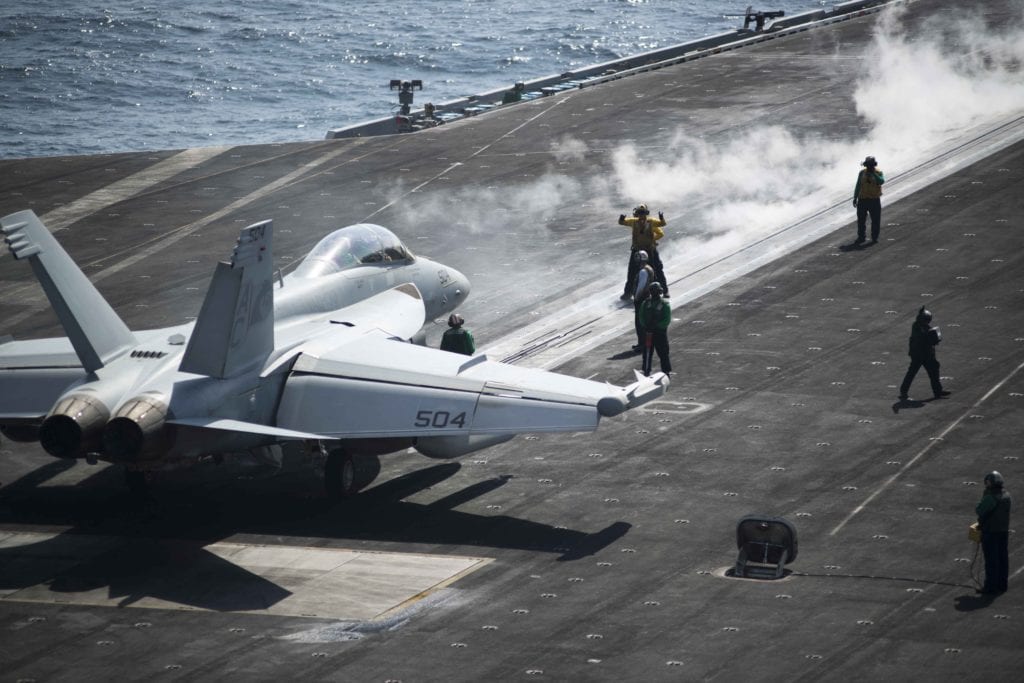
An EA-18G Growler prepares to launch from the flight deck of the aircraft carrier USS Harry S. Truman (CVN 75) in this 2013 photo. The Growler is due to be replaced by the Navy’s Next-Generation Air Dominance (NGAD) family of systems. U.S. NAVY / Mass Communication Specialist 2nd Class Lyle H. Wilkie III
ARLINGTON, Va. — The U.S. Navy’s Next-Generation Air Dominance (NGAD) family of systems is planned to include a replacement for the EA-18G Growler electronic attack aircraft in addition to the F/A-18E/F Super Hornet strike fighter, a senior official said.
Rear Adm. Gregory Harris, the Navy’s director for Air Warfare, speaking in a March 30 Navy League Special Topic Breakfast webinar, sponsored by General Dynamics, said Increment 2 of the NGAD program is the planned phase to replace the EA-18G.
Harris said NGAD’s Increment 1, the F/A-XX — the planned replacement for the F/A-18E/F — will be the centerpiece of the NGAD family of systems.
“We’re going through the study portions of what [Increment] 2 will be to replace the EA-18G Growler, and we expect that family of systems will accommodate manned and unmanned.”
The F/A-XX “may or not be manned,” Harris said. “The platform meets the fixed-wing portion of the Next-Generation Air Dominance family of systems. We truly see NGAD as more than just a single aircraft. We believe that as manned/unmanned teaming comes online, we will integrate those aspects of manned and unmanned teaming into that. We euphemistically refer to it as our ‘little buddy,’ an adjunct air-to-air platform, EW [electronic warfare] platform, discussion of whether it could be an advanced early warning platform. We will have to replace the E-2D sometime in the future.”
The admiral noted that the notional carrier air wing of the future may have a 60-40 percent manned-unmanned split, but over time will shift to a 40-60 percent manned/unmanned split.
“A lot of that is going to be dependent on the success we see with the MQ-25 Stingray and our ability to truly operate around the aircraft carrier and safely execute that both on the flight deck and in the airplane,” he said.
Harris said the NGAD is in the concept refinement phase and is the Navy is working closely with the Air Force NGAD program, “recognizing that the two will likely be different as far as mold lines just based on different services’ needs, but a lot of the internal mission systems will be similar and open mission system architecture and government-referenced design that will enable us to use best of breed.”
He said the NGAD program is looking to avoid “vendor lock,” whereby the program is locked into using a particular mission system when a superior, less costly or more sustainable system becomes available.
“Industry should look at different ways to team,” Harris said. “Our industry primes get very comfortable with the folks they’ve worked with in the past. Some of that has worked out very well for us; other times it may not have worked a well as well would have liked. I recommended that they broaden their view and look at as many of those folks as they can to team. This will enable a lot of the smaller companies to work into the niche market they may be very successful at.”
Unmanned Missile Carrier a Potential for Aerial Manned/Unmanned Teaming, Admiral Says
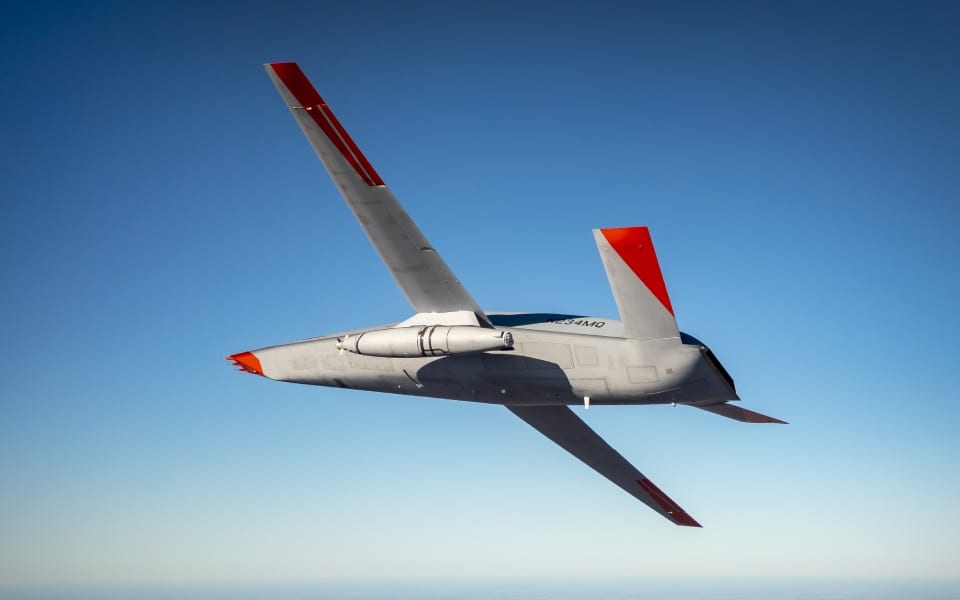
The Boeing-owned MQ-25 T1 test asset, a predecessor to the engineering development model aircraft being produced under a 2018 contract award. THE BOEING CO.
ARLINGTON, Va. — As the Navy looks forward to fielding its MQ-25A Stingray unmanned carrier-based aerial refueling tanker, it is looking to the future potential of unmanned carrier-based aircraft in other missions, including those involving manned/unmanned teaming and incorporating artificial intelligence. A missile-carrying unmanned aerial vehicle (UAV) is within the imaginable possibilities.
Acknowledging the complexity of developing UAVs for aerial warfare, Rear Adm. Gregory Harris, the Navy’s director for Air Warfare, speaking in a March 30 Navy League Special Topic Breakfast webinar, sponsored by General Dynamics, discussed his current thinking regarding said manned/unmanned teaming for tactical combat aircraft.
“Having an unmanned platform out there as an adjunct missile carrier I see as not a step too far too soon,” Harris said. “I could have an unmanned friend — typically I say a flying Dorito chip — but I’m thinking it doesn’t have to be that way. An unmanned system with missiles I can clearly in my mind envision a way to say: ‘Defensive combat spread; shoot on this target, and I will squeeze the trigger,’ or ‘I will just enable that unmanned platform to shoot a designated target.’ That doesn’t stretch beyond the realm of my imagination.”
“When I have that unmanned platform making decisions which target anything it wants to shoot on, that’s where I start to have that scratched both from a policy standpoint,” he said. “What’s the rule of order going to be when Hal is out there executing a strike on itself?” he said, referencing the renegade computer than took over a spaceship in the motion picture 2001: A Space Odyssey. “I jokingly look at all of the movies out there and they typically don’t end well when we do that.
“In the next two or three years we’ll probably have a better idea of whether a replacement for the F/A-18E/F will be manned or unmanned,” Harris said. “I believe it most likely will be manned. I’m open to the other aspects of it. A family of systems definitely will include manned and unmanned systems.”
Harris said the development of the MQ-25 “has been very successful,” noting the Boeing prototype has been flying with its aerial refueling store.
He said the MQ-25 will be able to carry fuel for up to three carrier launch and recovery cycles or be able to pass 14,000 to 16,000 pounds of fuel up to 500 nautical miles on a strike mission. It will have some unspecified intelligence, surveillance and reconnaissance capability.
Flight Control Technology Set to Dive Underwater for Submarine Mobility
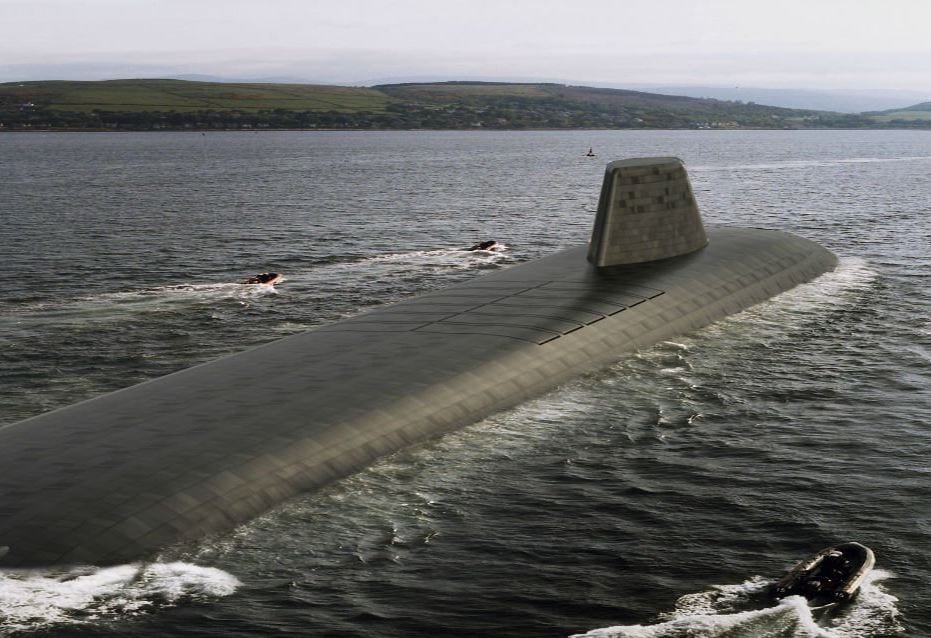
An artist’s rendering of future Successor-class submarine, the first of which will be named Dreadnought. Successor-class is the United Kingdom’s future ballistic missile submarine, to replace the Vanguard class. U.K. ROYAL NAVY
ROCHESTER, U.K. — BAE Systems is taking decades of flight controls expertise underwater on-board the United Kingdom’s next-generation submarine, Dreadnought. This innovative approach involves adapting controls that are usually used in fly-by-wire aircraft and applying them in a marine environment, the company said in a March 29 release.
The complete Active Vehicle Control Management (AVCM) system will oversee all major aspects of the submarines’ maneuvering capability to the highest levels of safety and reliability, similar to existing systems on modern air transport platforms.
“With over 50 years of avionics experience, we already have a great understanding of how to develop complex, control systems for hi-tech platforms,” said Jon Tucker, director for Maritime Controls at BAE Systems Controls and Avionics. “However, taking our technology underwater brings exciting new challenges and we are proud to support the Dreadnought program and play an important part in our national security effort.”
Similar to how fly-by-wire works for aircraft — whereby electronic systems are used to control the movement of aircraft — the company’s engineers are developing electronics that control the heading, pitch, depth and buoyancy of the Dreadnought class among other critical elements with added safety benefits.
Work has already begun, supporting more than 130 highly skilled jobs in Rochester, U.K, with the number expected to grow. The program is one of the largest developmental projects taking place at the Rochester site and the company says it has made significant investments at the site to create new labs and workspaces to support the program.
The innovation has been developed by engineers in the BAE Systems’ Electronic Systems business working closely with colleagues across the company’s Maritime and Air sectors to develop a world-class system as part of BAE System’s Active Vehicle Control One-Team. Its engineers will continue to develop the technologies with a view to expanding its applications to both other underwater and surface vessels.
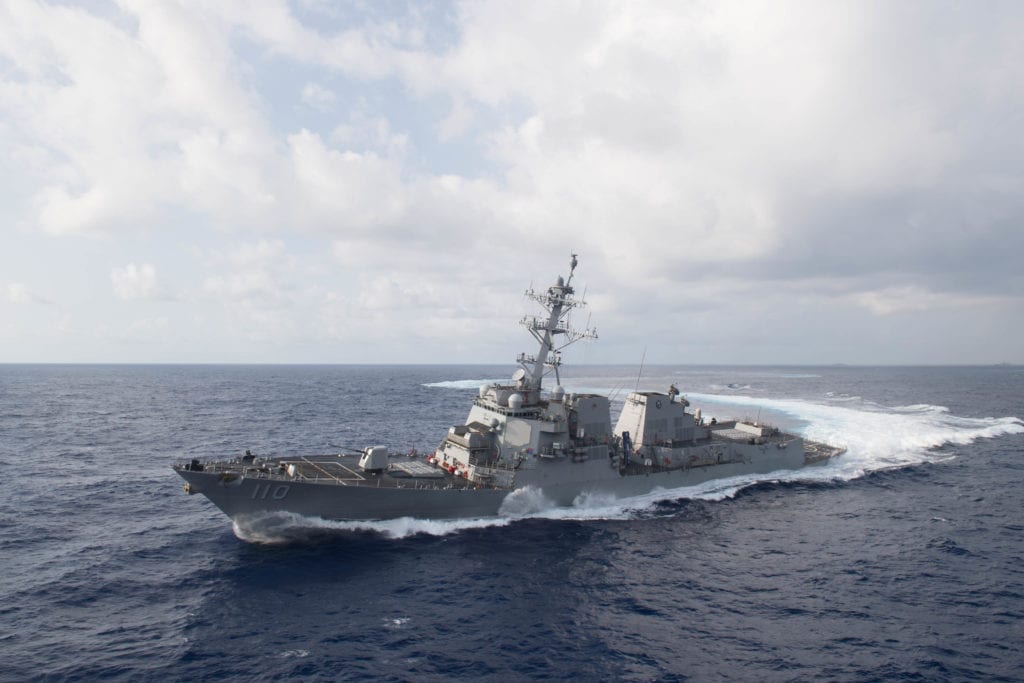
The guided-missile destroyer USS William P. Lawrence (DDG 110) practices ship maneuvers as it transits the Pacific Ocean. U.S. NAVY / Mass Communication Specialist 2nd Class Jessica O. Blackwell
WASHINGTON NAVY YARD, D.C. — A Navy team responsible for developing and testing Surface Ship Undersea Warfare Combat System Suites (AN/SQQ-89A(V)15) rapidly improved the anti-submarine warfare (ASW) capability of a guided missile destroyer for a February exercise, the Naval Sea Systems Command said in a March 29 release.
According to the PEO IWS 5.0 program office, Naval Sea Systems Command, this will expedite modernization of ASW.
The Navy was upgrading 10 to 12 ships per year with the latest AN/SQQ-89A(V)15 system, and that would take approximately seven to eight years to modernize the entire cruiser and destroyer population of ships.
However, with the successful virtualization of the SQQ-89A(V)15, approximately half of the population of ships per year could be upgraded so that every other year all cruisers and destroyers would be operating the latest greatest capability.
The integrated team led by Program Executive Office Integrated Warfare Systems (PEO IWS) and supported by NAVSEA’s Naval Undersea Warfare Center in Newport, Rhode Island, Navy research labs and industry, demonstrated the ability to reduce the time it takes to complete the virtual ASW combat system upgrade to USS William P. Lawrence (DDG 110), an Arleigh Burke-class guided-missile destroyer built by Northrop Grumman Shipbuilding, in just two days following equipment validation and verification.
The team successfully installed the 14v19 virtualization appliance equipped with a virtual version of the most recent ASW capability software, Advanced Capability Build (ACB)-19, onboard USS William P. Lawrence. The team then connected the suite’s virtualization appliance directly into the ship’s existing SQQ-89A(V)15 legacy Technical Insertion (TI-14) hardware infrastructure to complete the integration and upgrade.
SQQ-89A(V)15 Program Manager Capt. Jill Cesari said this proof-of-concept demonstration also reduces upgrade costs significantly, removing the requirement for hull cuts, minimizing hardware change-outs, and reducing the time to modernize these combat systems from 6 to 9 months of shipyard times to a matter of weeks.
“This will allow the Navy to upgrade ships with the latest, greatest software more frequently,” Cesari said.
EXU-1 Leads EOD Cross-Functional Team Effort
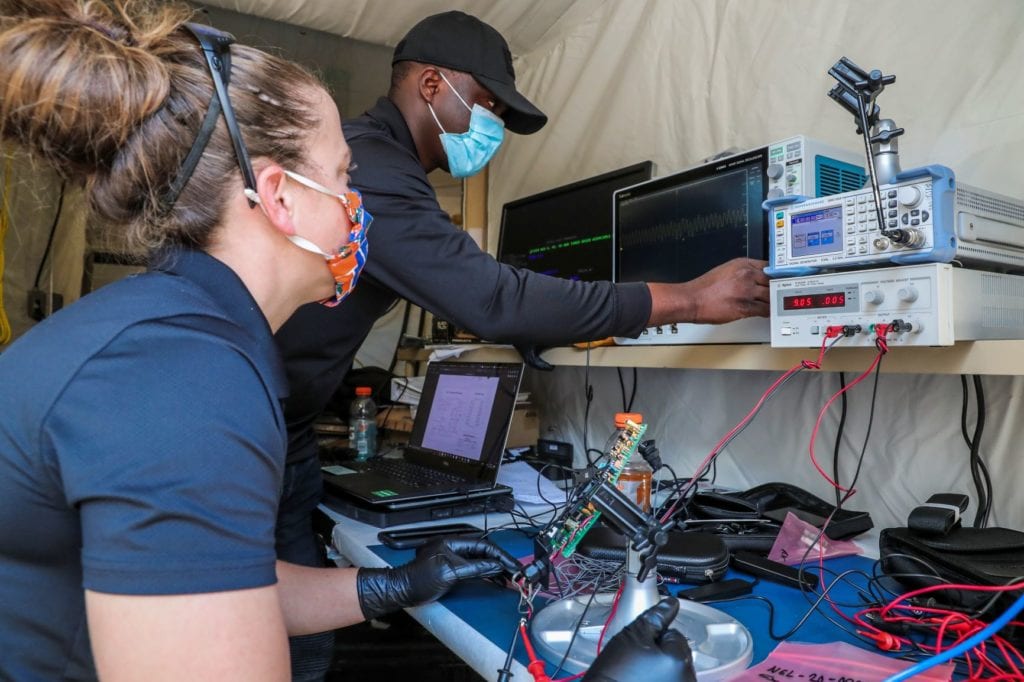
Electronics engineers assigned to Exploitation Unit One conduct electronic analysis of evidence collected during a site exploitation training scenario at Naval Surface Warfare Center Indian Head Division, October 2020. U.S. NAVY / Matthew Poynor
INDIAN HEAD, Md. — When sending care packages overseas to deployed troops, the contents usually contain items such as toiletries, snacks, video games and other types of sundries. For the personnel attached to Expeditionary Exploitation Unit 1 (EXU-1), however, the packages they are sending aren’t meant to entertain, but to provide critical knowledge and training to joint force explosive ordnance disposal (EOD) operators in the form of a comprehensive Level 1 Collection and Exploitation Guide.
EXU-1 is leading the Navy EOD exploitation cross-functional team (CFT) to identify exploitation-specific shortfalls in training and equipment across the Navy EOD force, establish communication channels with the intelligence community, and create solutions in line with the Navy’s 2020-2030 EOD Strategic Plan, the unit said in a March 30 release.
“Out of this role, EXU-1 assembled and produced a ‘Level 1 Collection and Exploitation Guide’ for deployed joint force EOD units to use,” said EODCS Devon Bryan, EXU-1’s Operations Department leading chief petty officer. “The guide identifies tools and processes as instructed by EXU-1’s exploitation experts to teach operators how to collect various types of evidence, conduct post-blast investigations, handle and package materials, and help identify what material is important to document or collect if possible.”
While in theater, EXU-1’s Technical Exploitation Platoons collect and process evidence of value through various methods such as X-ray images, chemical and electronic analysis, fingerprints, and DNA. This enables laboratories to reverse engineer electronic systems for countermeasures development, and compile biometric, forensic, and technical data to drive intelligence. These efforts often lead to the identification and exploitation of hostile networks responsible for the production and use of those materials, as well as attribute state sponsors to acts of aggression.
As the Navy’s only forward-deployed weapons technical exploitation unit, EXU-1 can leverage the knowledge base and skill set of its subject matter experts to increase the chance of success and strategic impact for deployed EOD operators.
“If EOD teams out in the field come across an exploitation opportunity, they can use our guide and conduct a basic Level 1 collection and exploitation. We are adapting the operator’s recon skill set and applying it to these opportunities, increasing EOD community impact with regards to collecting and reporting technical intelligence,” Bryan said.
To date, EXU-1 has delivered more than 4,000 copies to Navy EOD mobile and training units, the FBI’s Terrorist Explosive Device Analytical Center Counter-Improvised Explosive Device Collaboration Center, and the Naval EOD School at Eglin Air Force Base. The publication is already used by deployed forces and as a baseline document for curriculum development in Canada and Germany.
In addition to a reference sheet, EXU-1 is spearheading the creation of an expeditionary technical exploitation publication through the Expeditionary Warfare Development Command. According to EXU-1’s Operations Officer Lt. Chris Price, this Navy tactics, techniques and procedures publication will inform operators, staffs and the interagency on relevant tactical and operational considerations for conducting exploitation, and how these operations can affect decision-making at the strategic level. It is the first Navy publication that outlines the full spectrum of the expeditionary exploitation mission to include organizations and tactics, techniques and procedures. The release of this publication will further EXU-1 CFT’s objectives to improve force integration and increase exploitation capability and capacity across the Navy EOD community.
“I’m extremely proud of the work our team is accomplishing,” said EXU-1’s Commanding Officer Cmdr. Edgar Britt. “Through our field guides and providing exploitation expertise to critical naval doctrine, EXU-1 is committed to not only deploying forces forward to deliver exploitation capability but also working with our partners to ensure the most lethal and capable force is ready to meet our nation’s needs.”
EXU-1 is an operationally deployable Type II, Echelon V command aligned under Naval Surface Warfare Center Indian Head Division (NSWC IHD). The unit hosts a variety of platoons designed to collect, process, exploit and analyze improvised threats, advanced weapons systems, munitions, ordnance, unmanned systems, and strategic infrastructure on land and sea to provide real-time targeting information and intelligence to EOD forces. EXU-1 was commissioned in June 2018 as an Echelon V command and reports to NSWC IHD Commanding Officer Capt. Eric Correll, who serves as the immediate superior in command to EXU-1.
USS Arleigh Burke Prepares for Homeport Shift to Rota
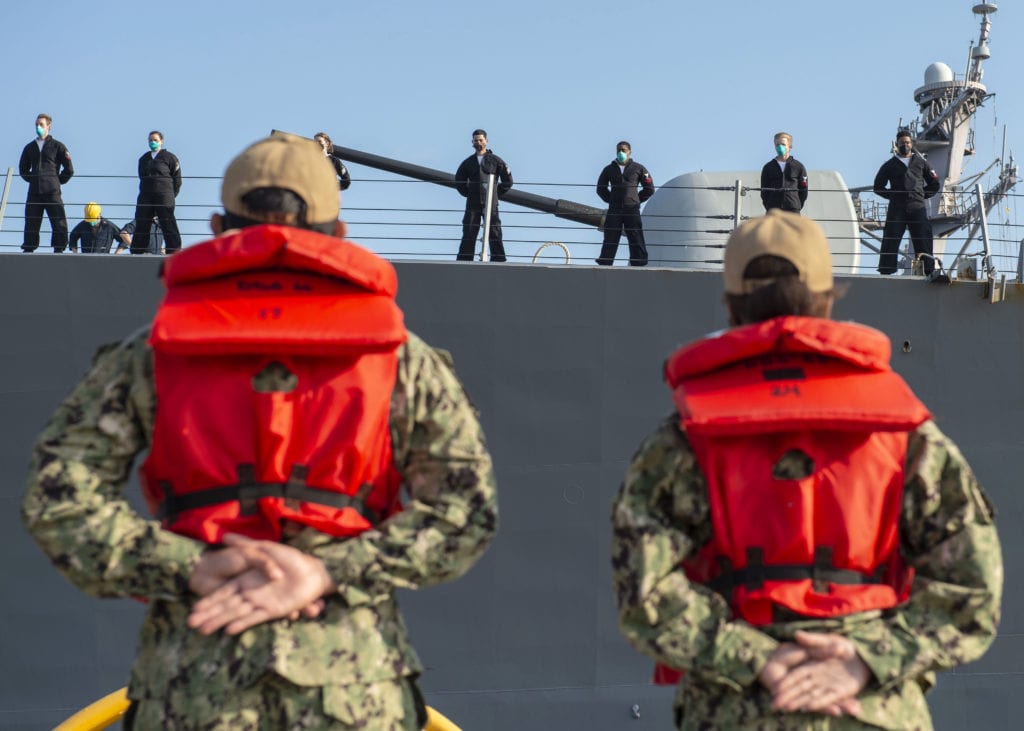
Sailors aboard the guided-missile destroyer USS Arleigh Burke (DDG 51) man the rails as they get underway from Naval Station Norfolk Mar. 26. Arleigh Burke will replace USS Donald Cook (DDG 75) as one of four forward deployed naval forces (FDNF) located in Spain. Arleigh Burke will join USS Ross (DDG 71), USS Roosevelt (DDG 80), and USS Porter (DDG 78) as the newest member of FDNF Rota. U.S. NAVY / Mass Communication Specialist 2nd Class Kris R. Lindstrom
NORFOLK, Va. – The guided-missile destroyer USS Arleigh Burke (DDG 51) departed from Naval Station Norfolk, Mar. 26, commencing the ship’s homeport shift to Rota, Spain, the U.S. 2nd Fleet Public Affairs said in a March 27 release.
Arleigh Burke will replace USS Donald Cook (DDG 75) as one of four forward-deployed naval forces (FDNF) located in Spain. The ship is named after U.S. Navy Admiral Arleigh Burke (1901-1996) who distinguished himself during World War II and the Korean War, and served as chief of naval operations during the Eisenhower and Kennedy administrations. Arleigh Burke, the lead ship of its class of Aegis-equipped guided-missile destroyers, was commissioned in Burke’s honor in 1991. The honor of naming a vessel after a living figure had only been bestowed four times since 1861.
“As one of the most technologically advanced destroyers in the entire United States Navy, we are excited to provide additional capability to 6th Fleet operations,” said Cmdr. Patrick Chapman, commanding officer, USS Arleigh Burke. “However, even stronger than the technology we have been outfitted with is the strength of our crew. Every day we train to be the most effective crew possible, one that is ready for sustained forward presence in the 6th Fleet Area of Operations.”
Arleigh Burke was the first U.S. Navy destroyer in the world equipped with the Aegis Weapons Systems and departs for 6th Fleet with the latest Aegis baseline nine upgrades. This higher capability ship is effective in high-threat areas conducting anti-air, antisubmarine, anti-surface, and strike operations.
To prepare for the homeport shift, Arleigh Burke took part in the Iwo Jima Amphibious Ready Group’s Composite Training Unit Exercise (COMPTUEX). COMPTUEX is designed to fully integrate a strike group as a cohesive, multi-mission fighting force, and test the group’s ability to carry out sustained combat operations from the sea. Upon completion of COMPTUEX, Arleigh Burke is certified and ready to execute the full spectrum of maritime operations in any theater.
“I am immensely proud of the perseverance of our crew, and of our families who have supported us through our arduous training cycle,” said Hospital Corpsman 1st Class Jason Waters. “Despite the COVID-19 pandemic, the crew was able to remain healthy and continue with one of the most rigorous schedules I have experienced in my career. Arleigh Burke’s crew and families have performed beyond all expectations. There is no doubt in my mind that we are ready for 6th Fleet.”
In addition to certifying in support of naval operations worldwide, Arleigh Burke Sailors and their families have been focused on preparing for the move to Spain. Arleigh Burke’s leadership team traveled from Norfolk to Naval Station Rota to participate in educational briefings and question-and-answer sessions concerning the homeport shift process and life in Spain. Naval Station Rota also supported virtual meetings for Norfolk crewmembers and their families to learn about the complicated homeport shift process.
The U.S. Navy will continue to meet combatant commander requirements around the world, but in order to do so, protective steps must be taken to ensure the health and safety of Sailors and their families from exposure to COVID-19.
Arleigh Burke will join USS Ross (DDG 71), USS Roosevelt (DDG 80), and USS Porter (DDG 78) as the newest member of FDNF Rota, replacing USS Donald Cook (DDG 75). Donald Cook will return to her new home at Naval Station Mayport, whereas she was previously homeported at Naval Station Norfolk.
USS Fort McHenry Decommissioning Ceremony Marks 33 Years of Service
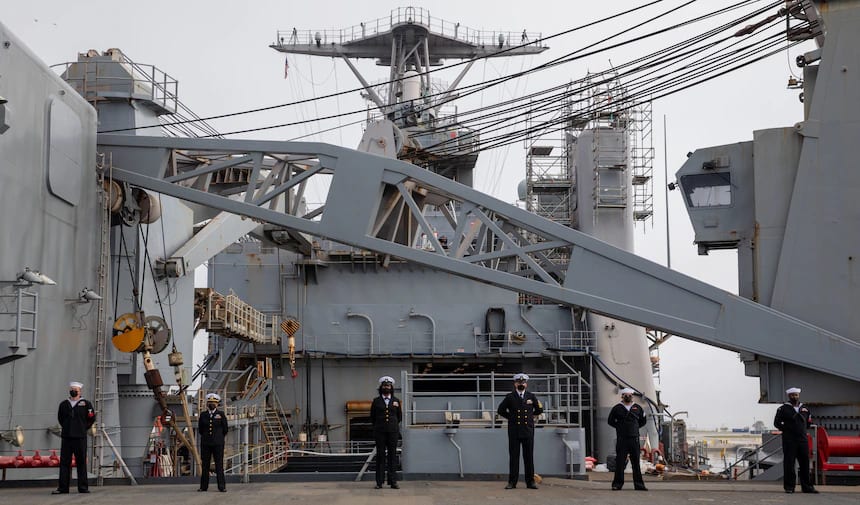
Sailors aboard the Whidbey Island-class dock landing ship USS Fort McHenry (LSD 43) main the rails during the decommissioning ceremony at Naval Station Mayport, March 27, 2021. U.S. NAVY / Mass Communication Specialist Seaman Aaron Lau
NORFOLK, Va. — The Whidbey Island-class dock landing ship USS Fort McHenry (LSD 43) held a small, COVID-conscious decommissioning ceremony at Naval Station Mayport, Florida, on March 27 before its inactivation, which will occur in April, the U.S. Fleet Forces Command said in a release.
Rear Adm. Robert Katz, commander, Expeditionary Strike Group (ESG) 2 presided over the ceremony, which included the remaining ship’s crew and several of its previous commanding officer, including the ship’s commissioning commanding officer, Capt. George “Dusty” Rhodes, who retired in 1999 and featured prominently in the ceremony.
“I am humbled to be with you on this bittersweet day as we gather here at Naval Station Mayport to commemorate this ship’s 33 years of commissioned service,” said Katz. “The history of Fort McHenry lies within each of the ship’s Sailors, and it is my hope this pride in their namesake guided all who crossed its quarterdeck and reported for duty.”
Fort McHenry was commissioned on Aug. 8, 1987, at Lockheed Shipyard in Seattle.
“During my 17 years of sea duty and four commands at sea, I have no doubt that the Fort McHenry crew was the best with whom I ever served,” said Rhodes. “They were always more than willing to do whatever it took to fulfill the mission. It is remarkable how closely they have stuck together over the past 34 years. I am proud to be among them.”
After arriving in San Diego on Sept. 30, 1987 the ship remained homeported there until 1995 when it replaced the USS San Bernardino (LST 1189) as a forward-deployed ship based in Sasebo, Japan.
Fort McHenry’s first deployment to the Western Pacific took place between June 16 and Dec. 16, 1988, as part of an Amphibious Ready Group (ARG) along with embarked Marines from the 15th Marine Expeditionary Unit. The other ships of the ARG were USS New Orleans (LPH 11), USS Mobile (LKA 115), USS Ogden (LPD 5) and USS Fresno (LST 1182). During the deployment Fort McHenry participated in exercises Cobra Gold-88, Valiant Usher 88-6 and Valiant Blitz 89-1 and the Sailors and Marines got some well-earned liberty during port visits to Okinawa, the Philippines, Thailand, Australia, South Korea and Pearl Harbor, Hawaii.
Over the next few decades, Fort McHenry would shift homeport, and deploy several more times, supporting Operations Desert Shield, Desert Storm, Vigilant Warrior and Enduring Freedom. Its crews would assist with humanitarian assistance efforts domestically, such as oil spill cleanup in the Prince William Sound and internationally, supporting disaster relief efforts in East Timor in 2001, the Philippines and Indonesia in 2004,
In November 1994, the ship received the first women to be permanently assigned to the crew — two lieutenants who reported aboard as the Supply Officer and Electrical Officer.
The ship’s final deployment was as part of the USS Kearsarge (LHD 3) Amphibious Ready Group and concluded in July 2019. While deployed to the Europe, Africa and the Middle East area of operations, Fort McHenry, along with embarked Marines from the 22nd Marine Expeditionary Unit, conducted maritime security operations and provided a forward naval presence in these critical regions.
During the deployment, Fort McHenry Sailors conducted a burial at sea for the remains of 34 veterans and two military spouses, a passing exercise with Egyptian navy ships in the Northern Arabian Sea and conducted more than 15 strait transits and port visits to Romania, the United Arab Emirates, Germany and Latvia. The ship capped off their deployment by participating in exercise Baltic Operations 2019.
“The last crew of Fort McHenry has performed with toughness and resiliency,” said Fabrizio, the ship’s final commanding officer. “Like their predecessors onboard, their efforts during the last phase of the ship’s active service and the inactivation process have been nothing short of amazing.”
The ship will be inactivated on April 16, 2021, and will be designated as Out of Commission in Reserve. That same day, it is scheduled to be towed by a seagoing tug to the Naval Inactive Ship Maintenance Facility in Philadelphia.
Navy Announces New Assignments for Flag Officers
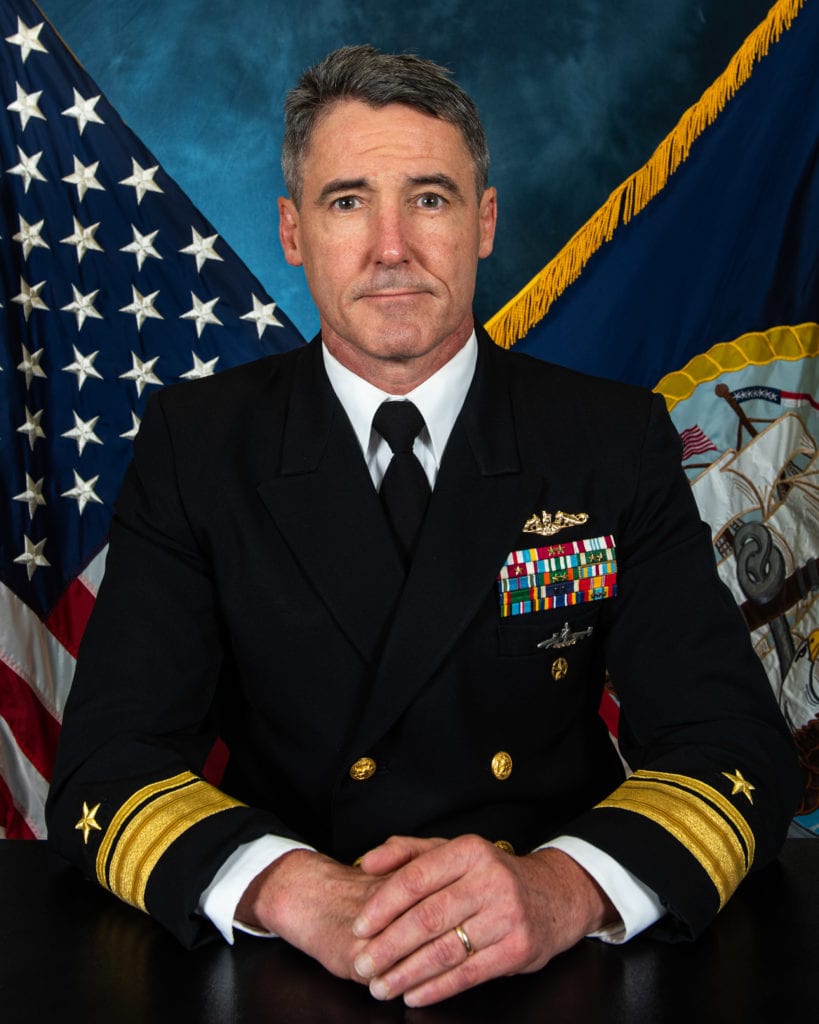
Rear Adm. Blake L. Converse, assigned as deputy commander, U.S. Pacific Fleet, one of a number of new assignments announced March 29. U.S. NAVY
ARLINGTON, Va. — The acting secretary of the Navy and chief of naval operations announced on March 29 the following assignments:
Rear Adm. Blake L. Converse will be assigned as deputy commander, U.S. Pacific Fleet, Pearl Harbor, Hawaii. Converse is currently serving as commander, Submarine Force, U.S. Pacific Fleet, Pearl Harbor, Hawaii.
Rear Adm. Frederick W. Kacher will be assigned as assistant deputy chief of naval operations for operations, plans and strategy, N3/N5B, Office of the Chief of Naval Operations, Washington, D.C. Kacher is currently serving as commander, Expeditionary Strike Group Seven; and commander, Amphibious Force, Seventh Fleet, Okinawa, Japan.
Rear Adm. (lower half) James A. Aiken, selected for promotion to rear admiral, will be assigned as commander, U.S. Naval Forces, Southern Command; and commander, U.S. Fourth Fleet, Jacksonville, Florida. Aiken is currently serving as commander, Carrier Strike Group Three, Bremerton, Washington.
Rear Adm. (lower half) Joseph D. Noble Jr., selected for promotion to rear admiral, will be assigned as director, logistics operations, Defense Logistics Agency; and commander, Joint Regional Combat Support, Fort Belvoir, Virginia. Noble is currently serving as commander, Naval Supply Systems Command Weapons Systems Support, Philadelphia, Pennsylvania.
Rear Adm. (lower half) Dean A. VanderLey, selected for promotion to rear admiral, will be assigned as commander, Naval Facilities Engineering Systems Command Pacific; and director, Fleet Civil Engineer, U.S. Pacific Fleet, with additional duties as fleet civil engineer, N46, U.S. Pacific Fleet, Pearl Harbor, Hawaii. VanderLey is currently serving as commander, Naval Facilities Engineering Systems Command Atlantic with additional duties as fleet civil engineer (N01CE), U.S. Fleet Forces Command, Norfolk, Virginia.
Rear Adm. (lower half) Peter G. Vasely, selected for promotion to rear admiral, will be assigned as commander, special operations, Special Operations Joint Task Force – Afghanistan, U.S. Special Operations Command, Kabul, Afghanistan. Vasely is currently serving as director for operations, Defense Intelligence Agency, Washington, D.C.
Rear Adm. (lower half) Stephen D. Barnett will be assigned as commander, Navy Region Southwest, San Diego, California. Barnett is currently serving as commander, Navy Region Northwest, Silverdale, Washington.
Rear Adm. (lower half) Michael A. Brookes will be assigned as director, J2, U.S. Southern Command, Doral, Florida. Brookes is currently serving as director of intelligence, J2, U.S. Strategic Command, Offutt Air Force Base, Nebraska.
Rear Adm. (lower half) Timothy J. Kott will be assigned as commander, Navy Region Hawaii; and commander, Naval Surface Group Middle Pacific, Pearl Harbor, Hawaii. Kott is currently serving as commander, Carrier Strike Group One, San Diego, California.
Rear Adm. (lower half) Carl A. Lahti will be assigned as commander, U.S. Naval Forces, Japan; and commander, Navy Region Japan, Yokosuka, Japan. Lahti is currently serving as commandant, Naval District Washington, Washington, D.C.
Rear Adm. (lower half) Matthew N. Ott III will be assigned deputy chief of staff for Fleet Ordnance and Supply; and fleet supply officer, N41, U.S. Fleet Forces Command, Norfolk, Virginia. Ott is currently serving as executive director, operational contract support, Office of the Under Secretary of Defense for Acquisition and Sustainment, Washington, D.C.
Rear Adm. (lower half) Milton J. Sands will be assigned as commander, Special Operations Command Africa, U.S. Special Operations Command, Stuttgart, Germany. Sands is currently serving as commander, Naval Service Training Command, Great Lakes, Illinois.
Capt. Christopher D. Alexander, selected for promotion to rear admiral (lower half), will be assigned as commander, Naval Surface and Mine Warfighting Development Center, San Diego, California. Alexander is currently serving as commanding officer, Surface Warfare Officer School Command, Newport, Rhode Island.
Capt. Sean R. Bailey, selected for promotion to rear admiral (lower half), will be assigned as deputy commander, U.S. Naval Forces, U.S. Central Command; and deputy commander, U.S. Fifth Fleet, Manama, Bahrain. Bailey is currently serving as chief of staff, Naval Air Force Atlantic, Norfolk, Virginia.
Capt. Thomas R. Buchanan, selected for promotion to rear admiral (lower half), will be assigned as deputy director for plans and policy, DJ5, U.S. Central Command, Tampa, Florida. Buchanan is currently serving as commandant of midshipman, U.S. Naval Academy, Annapolis, Maryland.
Capt. Christopher J. Cavanaugh, selected for promotion to rear admiral (lower half), will be assigned as director, Maritime Headquarters (N03), U.S. Pacific Fleet, Pearl Harbor, Hawaii. Cavanaugh is currently serving as director, submarine/nuclear power distribution (PERS-42), Navy Personnel Command, Millington, Tennessee.
Capt. Brad J. Collins, selected for promotion to rear admiral (lower half), will be assigned as commander, Navy Region Northwest, Silverdale, Washington. Collins is currently serving as chief of staff, Navy Installations Command, Washington, D.C.
Capt. Jennifer S. Couture, selected for promotion to rear admiral (lower half), will be assigned as commander, Naval Service Training Command, Great Lakes, Illinois. Couture is currently serving as assistant chief of staff, Naval Surface Force, Atlantic, Norfolk, Virginia.
Capt. William R. Daly, selected for promotion to rear admiral (lower half), will be assigned as deputy director for policy, plans, strategy, capabilities and resources, J-5/8, U.S. European Command, Stuttgart, Germany. Daly is currently serving as chief of staff, Naval Surface Forces, U.S. Pacific Fleet, San Diego, California.
Capt. Ronald A. Foy, selected for promotion to rear admiral (lower half), will be assigned as deputy director for global operations, J-3, Joint Staff, Washington, D.C. Foy is currently serving as deputy commander, Naval Special Warfare Command, Virginia Beach, Virginia.
Capt. Patrick J. Hannifin, selected for promotion to rear admiral (lower half), will be assigned as deputy director for political-military affairs (Asia), J5, Joint Staff, Washington, D.C. Hannifin is currently serving as director, aircraft carrier requirements, N98, Office of the Chief of Naval Operations, Washington, D.C.
Capt. Oliver T. Lewis, selected for promotion to rear admiral (lower half), will be assigned as deputy director for political-military affairs (Europe, NATO, Russia), J-5, Joint Staff, Washington, D.C. Lewis is currently serving as executive assistant to the chief of naval operations, Office of the Chief of Naval Operations, Washington, D.C.
Capt. Benjamin R. Nicholson, selected for promotion to rear admiral (lower half), will be assigned as U.S. Indo-Pacific Command representative, Guam, Commonwealth of the Northern Mariana Islands, Federated States of Micronesia, Republic of Palau; commander, U.S. Naval Forces, Marianas; and commander, Joint Region Marianas, Guam. Nicholson is currently serving as executive assistant to the vice chairman of the Joint Chiefs of Staff, Joint Staff, Washington, D.C.
Capt. Randall W. Peck, selected for promotion to rear admiral (lower half), will be assigned as president, Board of Inspection and Survey, Virginia Beach, Virginia. Peck is currently serving as commanding officer, USS John C. Stennis (CVN 74), Norfolk, Virginia.
Capt. Ronald J. Piret, selected for promotion to rear admiral (lower half), will be assigned as commander, Naval Meteorology and Oceanography Command, Stennis Space Center, Mississippi. Piret is currently serving as chief of staff, Naval Meteorology and Oceanography Command, Stennis Space Center, Mississippi.
Capt. Benjamin G. Reynolds, selected for promotion to rear admiral (lower half), will be assigned as director of Maritime Headquarters, U.S. Naval Forces Europe/Africa/Sixth Fleet, Naples, Italy. Reynolds is currently serving as director, Operations Division, Office of the Assistant Secretary of the Navy for Financial Management and Comptroller; and director, Operations Division, Fiscal Management Division, N821, Office of the Chief of Naval Operations, Washington, D.C.
Capt. Mark A. Schafer, selected for promotion to rear admiral (lower half), will be assigned as commander, Navy Region Korea; commander, U.S. Naval Forces Korea; and commander, Naval Component, U.S. Forces Korea, United Nations Command, Korea, Busan, Korea. Schafer is currently serving as deputy, staff operations and plans, Joint Special Operations Command, Tampa, Florida.
DOT Announces Funding Availability for Port Infrastructure Development Program
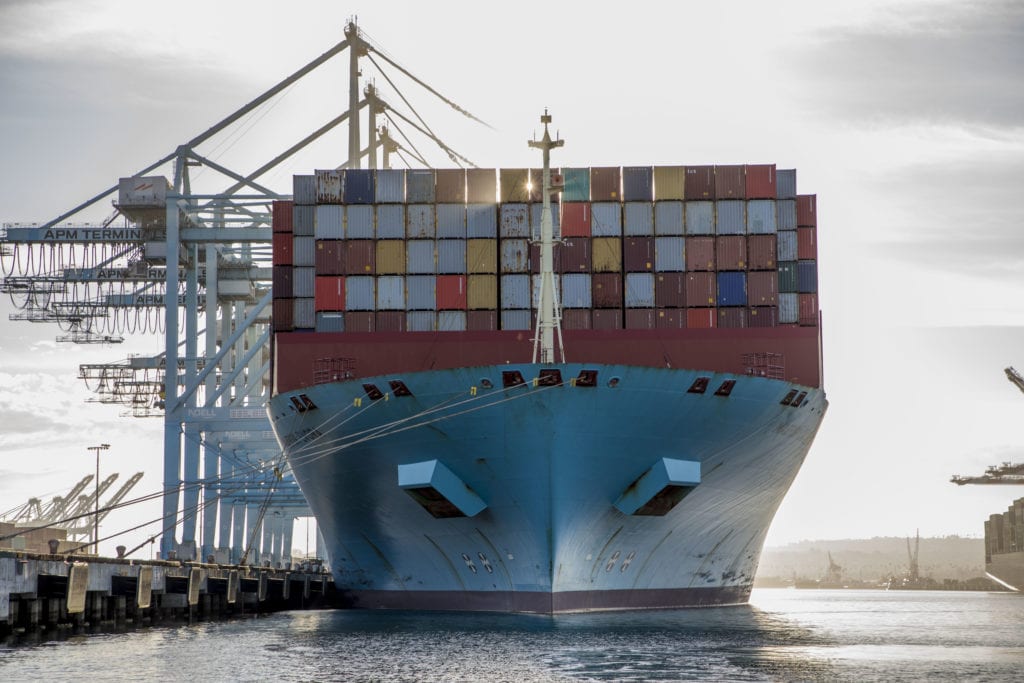
A cargo ship at the Port of Los Angeles. PORT OF LOS ANGELES
WASHINGTON – The U.S. Department of Transportation’s Maritime Administration announced on March 29 a Notice of Funding Opportunity (NOFO) encouraging states and port authorities to apply for $230 million in discretionary grant funding for port and intermodal infrastructure-related projects through the Port Infrastructure Development Program (PIDP).
“Our nation’s ports are a key part of our critical infrastructure. They create jobs and make our economy more resilient and sustainable,” said U.S. Secretary of Transportation Pete Buttigieg. “This funding will build upon local investments in infrastructure to deliver long-term economic benefits to American workers and communities, while also addressing climate and equity.”
Buttigieg announced this funding at a White House event focused on the development of offshore wind energy programs. Over the past two years, 12 percent of Port Infrastructure Development Program grant applicants included the anticipated development of wind energy facilities and the movement of wind energy components as part of their project proposals. This year’s grant funding will bolster these efforts. More information about the development of these offshore wind energy programs can be found here.
The Port Infrastructure Development Program supports the efficient movement of commerce upon which our economy relies. The grants are awarded on a competitive basis to support projects that strengthen and modernize port infrastructure and support the Nation’s long-term economic vitality. In keeping with the priorities of the Biden-Harris Administration, the department’s review process will also consider how proposed projects address climate change and environmental justice impacts and advance racial equity, reduce barriers to opportunity, and meet challenges faced by rural areas.
“State and local authorities are working to position ports to take advantage of a clean energy economy,” said Acting Maritime Administrator Lucinda Lessley. “These infrastructure grants will continue to bolster their efforts while creating jobs in these communities and the U.S. maritime industry as a whole.”
Previous grants have supported projects such as infrastructure resiliency and shore-side improvements to facilitate wind energy projects.
The Consolidated Appropriations Act 2021, made $230 million available for the Port Infrastructure Development Program, with $205 million reserved for grants to coastal seaports and Great Lakes ports. The minimum award size is $1 million, with a federal cost-share not to exceed 80%. The federal cost share can be higher for certain categories of projects. To provide technical assistance, the department will host a series of webinars during the Port Infrastructure Development Program grant application process. Details and registration information regarding these webinars will be made available at www.transportation.gov/portgrants.
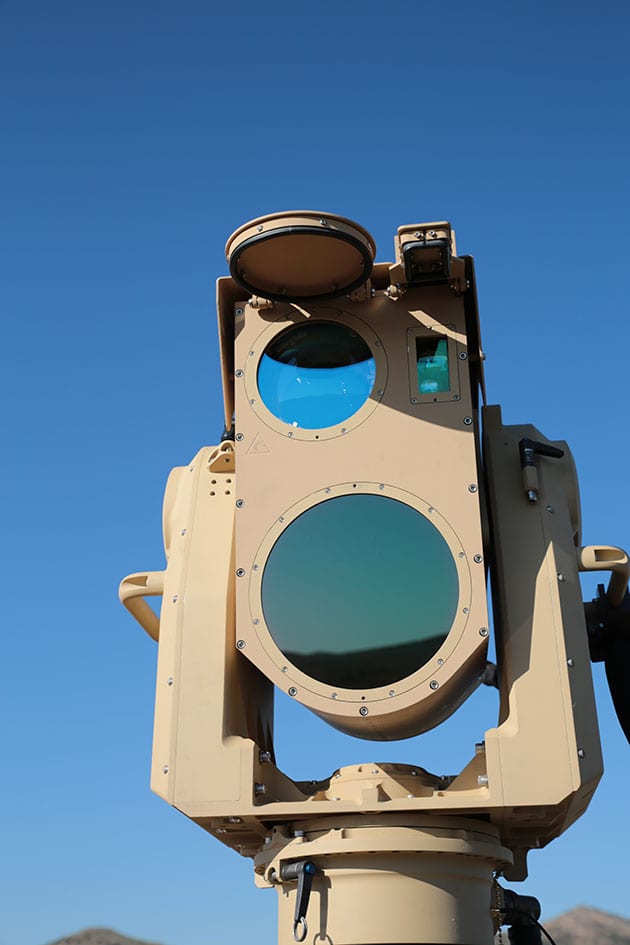
ST. LOUIS — Boeing was awarded a $2.5 million contract by the U.S. Marine Corps to sustain the service’s Compact Laser Weapon System (CLWS) units, the company said in a March 29 release.
The five-year contract includes maintenance services for the Boeing-built CLWS units defending against hostile unmanned aerial systems in theater. Each CLWS unit is equipped with a best-in-class beam director and acquisition, tracking and pointing software to deliver precision protection.
“We’re honored to continue our partnership with the Marine Corps,” said Kurt Sorenson, Boeing program manager for CLWS. “This will ensure that their systems continue to operate at the highest levels in defense of our warfighters.”
Boeing recently increased the maximum beam power and reliability of the CLWS units – providing enhanced protection against larger and more numerous threats at greater range, as well as enabling them to defeat threats more quickly and efficiently.
Boeing has more than 40 years of innovation and experience building directed energy systems, and has produced laser weapons for use in the air, on land and at sea.