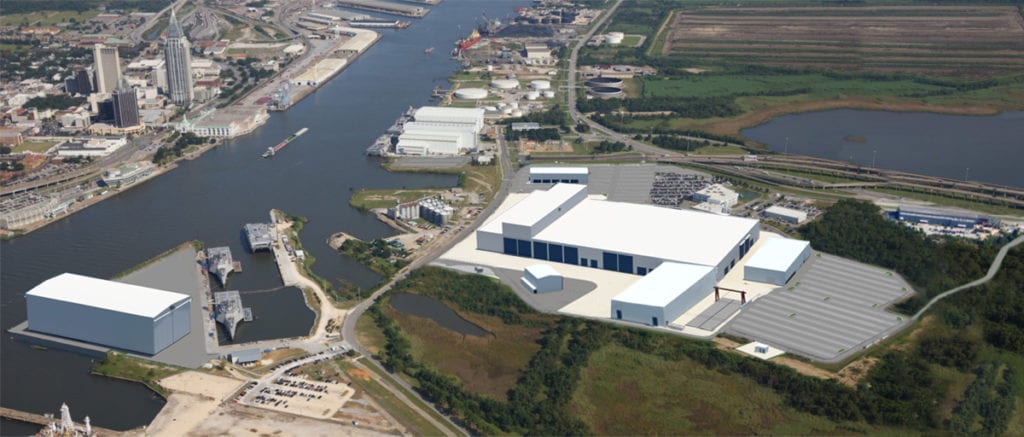
An artist’s conception of Austal USA’s new steel shipbuilding facility. AUSTAL USA
MOBILE, Ala. — Austal USA broke ground on its steel manufacturing line March 26, positioning the company to start steel production in April 2022, the company said in a release. This addition of steel capability ensures Austal USA will remain a major contributor to the U.S. shipbuilding industrial base.
“This world-class steel manufacturing line is a treasure for the Gulf Coast, the U.S. Navy and the U.S. Coast Guard that will provide a much needed boost to the defense industrial base and our Nation’s defense,” said Rep. Jerry Carl, R-Alabama, the congressman for Alabama’s 1st District.
The ceremony marked the start of a new era for Austal USA as the company adds steel shipbuilding capability to its growing business portfolio.
“As demand for the greater and larger Navy and Coast Guard fleets grows, Austal USA is investing to meet those changing requirements,” said Rusty Murdaugh, the company’s interim president. “We’re investing in our people, we’re investing in our processes and we’re investing in our facilities and capabilities.”
Just as Austal helped turn Mobile into the nation’s premier location for construction of aluminum ships, the company is poised to do the same for steel. During World War II, residents of Mobile built steel Liberty ships that were critical to the war effort. In the coming years, Austal will look to build and deliver steel ships needed by the U.S. Coast Guard and Navy.
Founded on innovation, effectiveness and efficiency, Austal USA will bring its proven lean manufacturing processes and facility design to the steel shipbuilding market. These processes have helped deliver 24 ships to the Navy in the last nine years.
Navy Orders One Additional MQ-4C Triton UAV
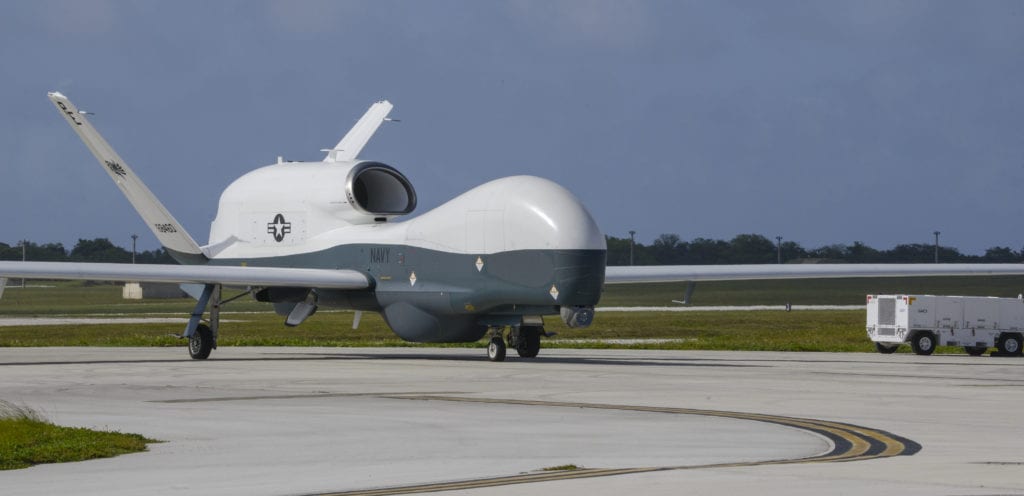
An MQ-4C Triton taxis at Andersen Air Force Base. U.S. AIR FORCE / Senior Airman Michael S. Murphy
ARLINGTON, Va. — The U.S. Navy has ordered an additional MQ-4C Triton high-altitude, long-endurance unmanned aerial vehicle.
The Naval Air Systems Command has awarded Northrop Grumman Systems Corp. a $98.9 million contract modification to a previously awarded, fixed-priced incentive contract “for one additional low-rate initial production Lot Five MQ-4C Triton unmanned aircraft system,” the Defense Department said in a March 26 contract announcement.
The order brings LRIP Lot 5 to three Tritons and, counting orders of the four previous LRIP lots, the Navy has ordered a total of 15. The service plans to procure a total of 68 production Tritons.
The Navy has taken delivery of three LRIP 1 Tritons so far, in addition to its two prototypes used for development and testing.
Last year, the Navy began an Early Operational Capability deployment of the Triton to Guam with a detachment of unmanned Patrol Squadron 19. The Navy plans to deploy three orbits overseas by 2025, and later establish two orbits from bases in the continental United States.
Work on the new order is expected to be completed in January 2025.
Iwo Jima ARG and 24th MEU Deploy After Redefining Integrated Training
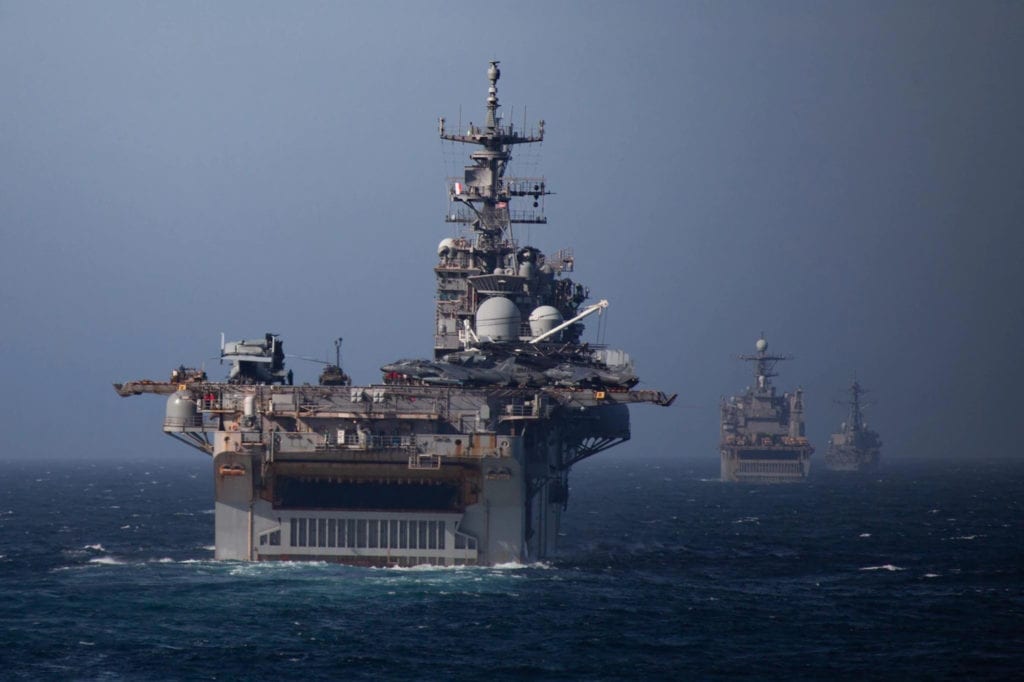
The amphibious assault ship USS Iwo Jima (LHD 7) and ships of the Iwo Jima Amphibious Ready Group (ARG), embarked with the 24th Marine Expeditionary Unit, simulate a strait transit during a composite unit training exercise (COMPTUEX) off the Atlantic coast, March 1, 2021. COMPTUEX is a month-long training event designed to test the ARG-MEU’s capabilities against the full spectrum of military operations. U.S. MARINE CORPS / Lance Cpl. Davis Harris
NORFOLK, Va. — The Iwo Jima Amphibious Ready Group (ARG) and the 24th Marine Expeditionary Unit (MEU) deployed March 25 after completing an intensive, month-long composite training exercise (COMPTUEX) and brief in-port maintenance period, the U.S. 2nd Fleet said in a release.
The ARG-MEU’s COMPTUEX was designed to fully integrate roughly 3,700 Sailors and Marines into one cohesive contingency force while testing the units’ abilities to carry out sustained operations from the sea. During the exercise, the Blue-Green team executed virtual and live evolutions challenging every major warfare area, including responses to surface and subsurface contacts, electronic attacks, surface and air amphibious assaults, and precision airstrikes.
COMPTUEX was led by Commander, Carrier Strike Group (CSG) 4 and Expeditionary Operations Training Group (EOTG) staff, during which both groups of assessors provided training and mentorship while evaluating the warfighting capabilities of all units. There were two distinct phases of training that increased in complexity and intensity over time.
At sea, simulated attacks by hostile aircraft, ships, and submarines required active responses by the ARG-MEU in real-time. Additionally, there were several live visit, board, search, and seizure (VBSS) exercises those fully integrated elements of the ARG and MEU at the tactical team level.
On shore, the landing force conducted raids in daytime and nighttime urban environments. They executed multiple tactical recoveries of aircraft and personnel missions, utilizing Navy as well as Marine aviation assets.
The ARG-MEU team was also assessed on their ability to integrate Navy and Marine Corps forces in a variety of warfare areas, essential to ensuring readiness in a variety of joint mission sets.
“The ARG-MEU proved we are adaptable and can respond to a variety of complex and rapidly changing situations,” said Capt. Darren Nelson, commodore of Amphibious Squadron (PHIBRON) 4. “Our success depended on being innovative, thinking strategically, planning operationally, and acting tactically. The training we completed is unique in that only an ARG-MEU conducts this type of combined training in the military.”
The 24th MEU, based out of Camp Lejeune, North Carolina, is the first East Coast MEU to embark ships with the Department of Defense’s new Joint Light Tactical Vehicle (JLTV). The JLTV is a versatile ground transport vehicle now used by all ground-based elements within the MEU, providing state-of-the-art protection and technology to troops in tow.
Additionally, in response to the commandant of the Marine Corps’ new force design, the MEU embarked with a robust Light-Armored Reconnaissance detachment.
“As the nation’s crisis response force, the ARG-MEU team must remain ready to respond at a moment’s notice when crises arise,” explained Col. Eric D. Cloutier, commanding officer, 24th MEU. “This exercise gave our team the opportunity to train how we fight across a range of military operations, providing a force-in-readiness to the fleet that is prepared to decisively engage when called upon.”
Emphasizing flexibility during the month-long evolution, this Marine Air-Ground Task Force (MAGTF) conducted a company-sized amphibious live-fire raid event. During this raid, nearly 100 Marines and Sailors converged on targets at Camp Lejeune’s newest range. Finally, the month of ship-to-shore operations culminated with an amphibious assault by a fighting force of nearly 600 Marines and Sailors.
Driving the ARG-MEU’s broad spectrum of expeditionary capabilities is its overall readiness as a fighting force. Most notably, this Navy-Marine Corps team took a deliberate approach to maximizing readiness through pre-deployment training while also joining forces to combat COVID-19, using coordinated mitigation procedures before their final at-sea period. In addition to conducting a restriction-of-movement (ROM) prior to embarking for the training exercise and adhering to 100% mask-wearing and other health and safety mitigations, the ARG-MEU were among the first units prioritized to receive the COVID-19 vaccines once they were approved for emergency use across the Department of Defense.
“The entire ARG-MEU is estimated to have over 90% voluntarily immunized once the last few people receive their second dose underway,” said Nelson. “The impressive number was achieved by making the vaccine available to everyone and by doing everything possible to educate our Sailors and Marines about the vaccine.”
The ARG consists of the amphibious assault ship USS Iwo Jima (LHD 7), transport dock ship USS San Antonio (LPD 17), and dock landing ship USS Carter Hall (LSD 50). Embarked detachments for the Iwo Jima ARG include PHIBRON 4, Fleet Surgical Team (FST) 6, Helicopter Sea Combat Squadron (HSC) 26, Tactical Air Control Squadron (TACRON) 21, Naval Beach Group (NBG) 2, Beach Master Unit (BMU) 2, Assault Craft Unit (ACU) 2 and 4, and Sailors from Amphibious Construction Battalion (ACB) 2. Also, joining the training were USS Arleigh Burke (DDG 51) and USS The Sullivans (DDG 68).
The 24th MEU consists of a ground combat element, Battalion Landing Team (BLT) 1/8, a logistics combat element, Combat Logistics Battalion (CLB) 24, and an aviation combat element, Medium Tilt-Rotor Squadron (VMM) 162 Reinforced.
The Iwo Jima ARG-MEU team is manned, trained and equipped to fulfill amphibious requirements in support of maritime security and stability. Amphibious ready groups and larger amphibious task forces provide military commanders a wide range of flexible capabilities including maritime security operations, expeditionary power projection, strike operations, forward naval presence, crisis response, sea control, deterrence, counter-terrorism, information operations, security cooperation and counter-proliferation, and humanitarian assistance and disaster relief.
Navy Accepts Delivery of First Tomahawk Block 5 Missile
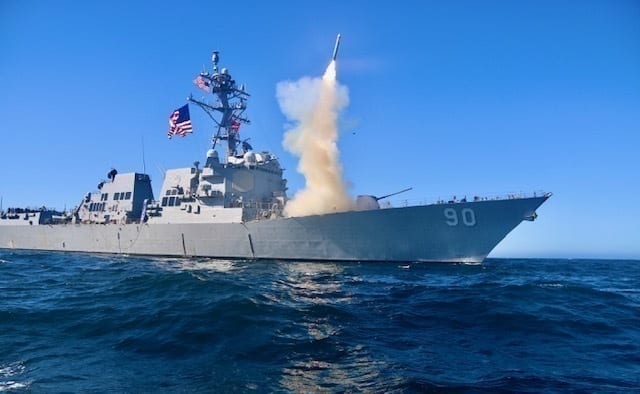
The guided-missile destroyer USS Chafee (DDG 90) launches a Block 5 Tomahawk, the weapon’s newest variant, during a three day missile exercise in November 2020. This event marked the first time a Block 5 Tomahawk missile was operationally tested, marking the Navy’s transition to a more advanced capability for the fleet. U.S. NAVY / Ens. Sean Ianno/Released
ARLINGTON, Va.—The U.S. Navy accepted its first Block 5 Tomahawk cruise missile from Raytheon Missiles & Defense in March 25 ceremonies at the company’s facility in Tucson, Arizona.
The missile is one of the first five Block 4 Tactical Tomahawk missiles that have been inducted into the recertification process, which takes missiles at the midlife 15-year mark for overhaul, modernization, and re-certification as Block 5 versions.
All Block 5s will feature a new data-link radio and antennas and navigation system. The Block 5a version also will feature a new seeker kit to hit moving targets and will be called the Maritime Strike Tomahawk (MST). The Block 5b version will feature the Joint Multi-Effects Warhead System.
Deliveries of all-new Block 5 missiles will begin in late 2021, said Kim Ernzen, vice president of Naval Power at Raytheon Missiles & Defense, speaking during the ceremonies on Zoom.
Chris Daily, program area director, Naval Air Missiles, for Raytheon Missiles & Defense, said the Tomahawk “remains our “nation’s weapon of choice” and that “delivery of the Block 5 is the next evolutionary step for the Tomahawk.”
Ernzen noted that the Tomahawk entered service in 1983 and first was used in combat in 1991 during the Persian Gulf War. More that 2,300 Tomahawks have been fired in combat and 500 have been used in test firings. More than 4,000 had been delivered by 2017.
She said the highly survivable Tomahawk is “counted on for its precision” and that Raytheon is “taking existing capability and making it even better.”
Capt. John Red, the Navy’s Tomahawk Weapon System program manager, also speaking in the event, noted that each Tomahawk now only needs to return to Raytheon’s factory only once in the lifecycle of the missile, 15 years after production, for another 15-year life extension.
During the ceremonies, Ernzen and Red signed symbolically the DD250 form signifying the official transfer of the first Block 5 missile.
The Navy ultimately will field only the Block 5 version once the remaining Block 4 Tactical Tomahawks have been converted to Block 5s. The earlier Block 3 versions, which first entered service in 1994, are being withdrawn from use and are being demilitarized.
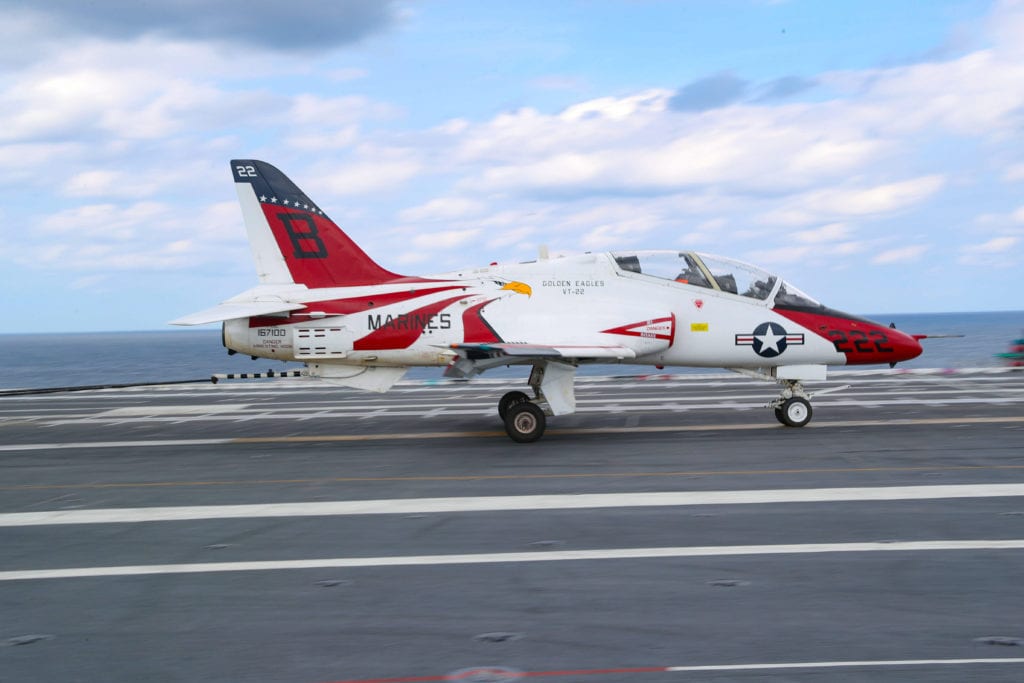
Navy T-4C Jet Trainer Crashes in Texas; 2 Ejections
A T-45C Goshawk, reported to be the same one that crashed, lands on the flight deck of the aircraft carrier USS Gerald R. Ford (CVN 78), March 15, 2021. U.S. NAVY / Chief Mass Communication Specialist RJ Stratchko
ARLINGTON, Va. — A U.S. Navy training jet crashed March 24 in Texas, but both crew members ejected safely.
The T-45C Goshawk crashed at approximately 2 p.m. Central time three miles northeast of Nava/ Outlying Field Orange Cove, Texas, the Navy said in a release.
“The two occupants, an instructor, and a student, safely ejected from the aircraft and reported minor injuries,” the release said. “They were transported to a local medical treatment facility for evaluation. Navy and local emergency services responded to the scene and extinguished a small brush fire. Navy personnel are on scene and are cooperating with local authorities.
The aircraft was assigned to Training Air Wing Two at Naval Air Station Kingsville, Texas, was being flown by the Golden Eagles of Training Squadron 22.
The incident is under investigation.
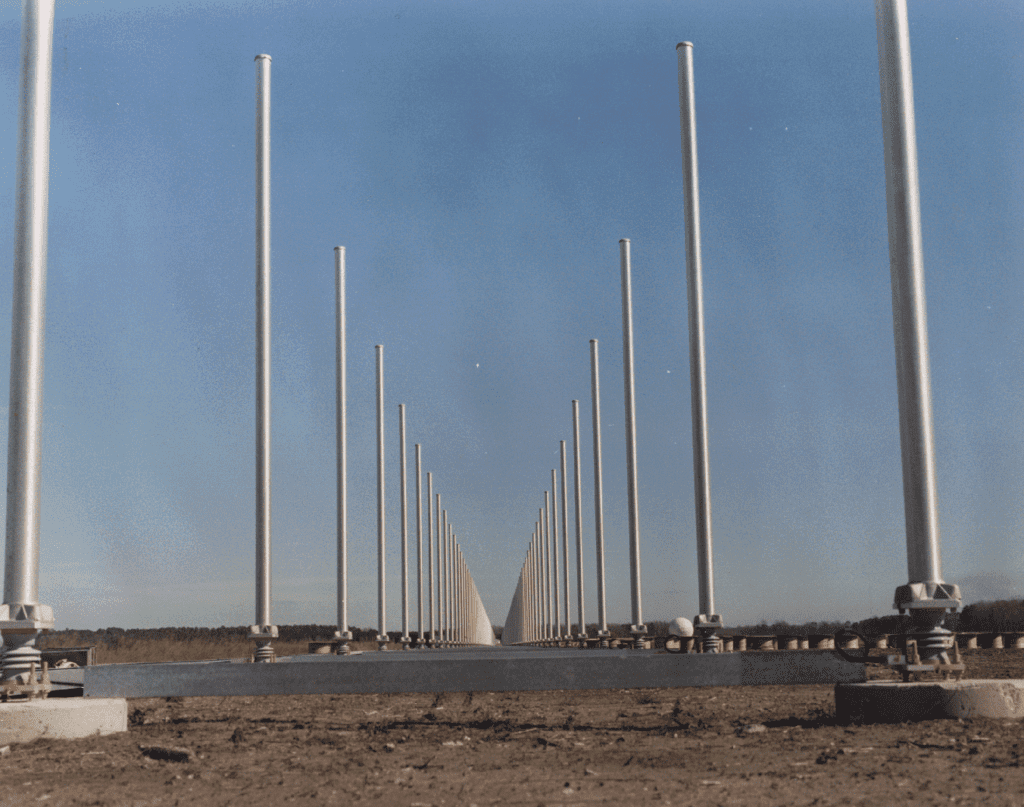
Raytheon to Continue to support U.S. Navy Counter-Narco-Terrorism Operations
U.S. Navy AN/TPS–71 Relocatable Over-the-Horizon Radar (ROTHR) stations. U.S. NAVY / Wikipedia
ARLINGTON, Va. — Raytheon Intelligence & Space (RI&S), a Raytheon Technologies business, will continue operating and maintaining the U.S. government’s Relocatable Over-the-Horizon Radar (ROTHR) system under a $146 million, five-year contract, the company said in a March 24 release.
Originally developed to track long-range targets for aircraft and ships, ROTHR is now the primary detection system for border security and drug smuggling interdiction for the Joint Interagency Task Force South. In 2020 alone, ROTHR contributed to the seizure of 26 metric tons of cocaine from drug smugglers attempting to cross into U.S. territory.
“Raytheon Technologies’ ROTHR systems have supported U.S. Navy operations for over 30 years,” said John DeSimone, vice president of Cybersecurity, Training and Services for RI&S. “We will continue to work closely with the Navy and JIATF South to help protect our national security.”
The contract covers operations and maintenance at six ROTHR locations in Puerto Rico, Texas and Virginia. Each radar provides more than 2.5 million square miles of coverage area, resulting in extremely low operational costs.
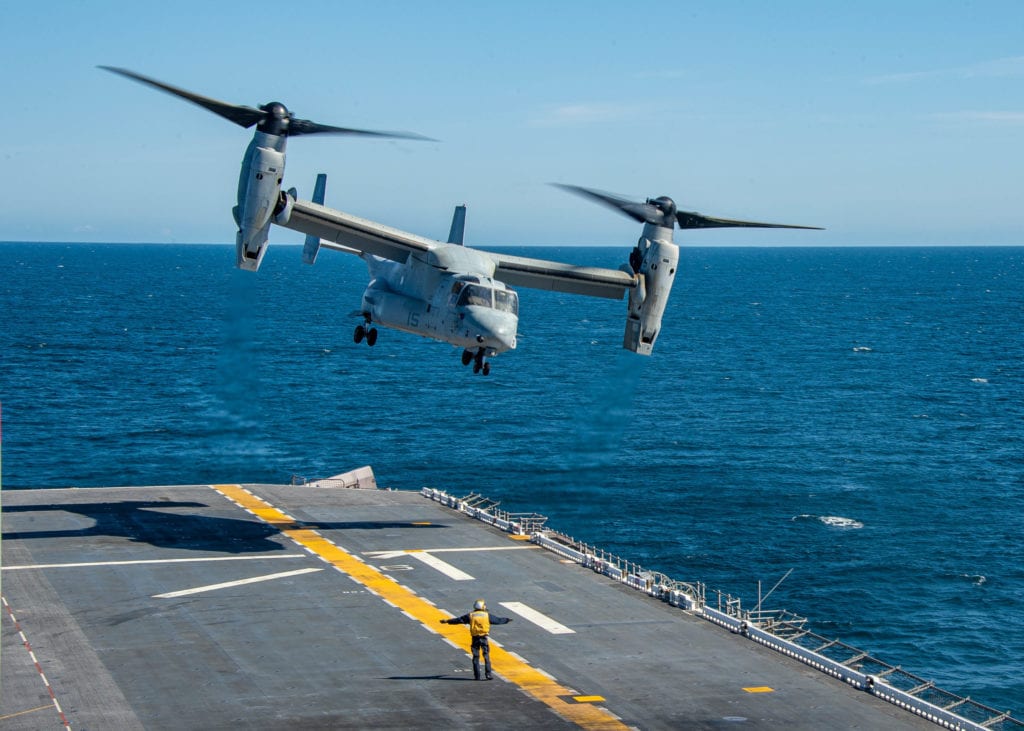
Bell Boeing V-22 Osprey Soars Past 600,000 Fleet Flight-hours
An MV-22 Osprey tiltrotor aircraft, attached with Marine Medium Tiltrotor Squadron (VMM) 165 (Reinforced), 11th Marine Expeditionary Unit, takes off from the flight deck of Wasp-class amphibious assault ship USS Essex (LHD 2) on March 21. U.S. NAVY / Mass Communication Specialist 3rd Class Brett McMinoway
ARLINGTON, Va., and Fort Worth, Texas– The Bell Boeing V-22 Osprey has logged more than 600,000 flight-hours, providing continuous customer support to maintain mission readiness and transport critical cargo and personnel, Bell and Boeing said March 24 in a joint release.
Built by Bell Textron Inc., a Textron Inc. company, and Boeing, the V-22 fleet has grown to more than 400 aircraft and is operated by the United States Marine Corps, U.S. Air Force, U.S. Navy and the Japan Ground Self-Defense Force.
The V-22 is the only military production tiltrotor aircraft in the world. Its speed, range, maneuverability and logistical capability make it one of the most versatile and cost-effective solutions for its customers.
“There is no other aircraft in the world capable of matching the unique capabilities of the Osprey,” said Kurt Fuller, Bell V-22 vice president and Bell Boeing program director. “The 600,000 flight-hours represent countless tactical, logistical and humanitarian assistance missions, and the dedication of the men and women who maintain and operate the aircraft every day to keep it an advanced aircraft.”
Bell Boeing directly supports V-22 readiness by providing comprehensive global services to V-22 squadrons, including maintenance support, training, on-site field representatives, data analytics and new and repaired parts. For example, the Naval Air Systems Command recently awarded Bell Boeing a contract to deliver and install kits for nacelle improvements and the conversion area harness onto the CV-22 aircraft for the Air Force. The program refines the design of the nacelles and wiring harnesses for better reliability and maintainability, ultimately reducing repair time and improving readiness.
“Each V-22 flight hour is the product of a team effort,” said Col. Matthew Kelly, V-22 Joint Program Office program manager. “Enabled by pilots, maintainers, testers, engineers, the program workforce and our industry partners who, together, ensure safe and effective V-22 operation.”
Recent program accomplishments include the V-22’s latest variant, the CMV-22B, assigned to the “Titans” of Fleet Logistics Multi-Mission Squadron 30, completing the first delivery of an F-35 engine to the USS Carl Vinson, along with successful paradrops with the U.S. Navy’s parachuting team, “The Leap Frogs,” earlier in the year.
“From its first flight over 30 years ago to achieving this significant flight-hour milestone, the V-22 has a demonstrated legacy of mission success,” said Shane Openshaw, Boeing V-22 vice president and Bell Boeing V-22 deputy program director. “As we look at optimizing future sustainment and support, our customer partnerships and commitment to innovation, flexibility and agility will ensure we build on the aircraft’s ability to support whatever the mission demands.”
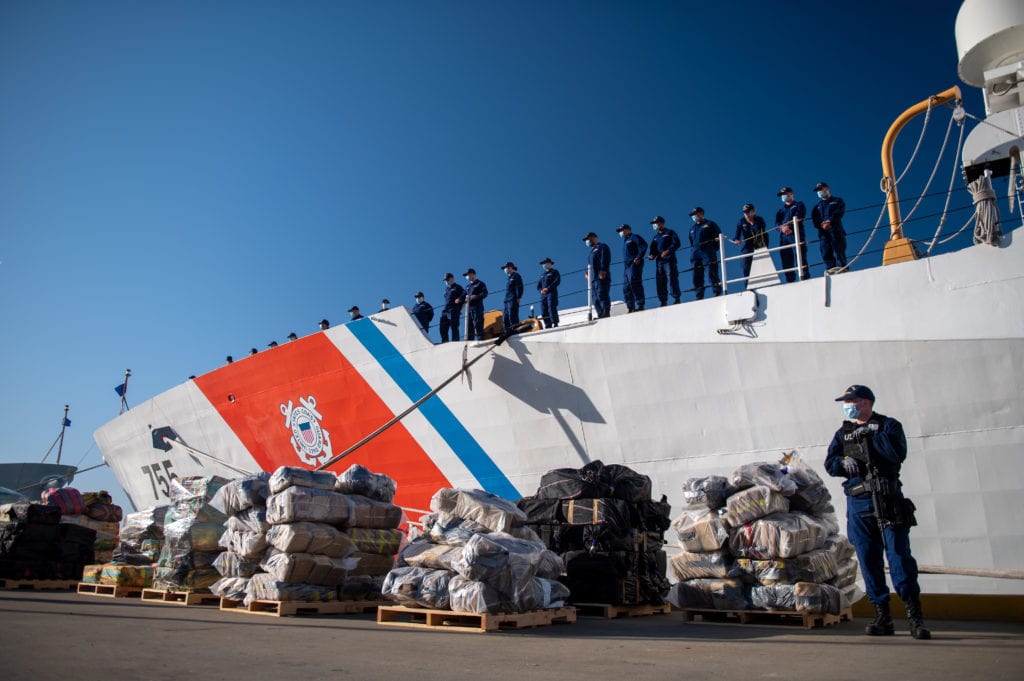
Coast Guard Offloads More than 19,600 Pounds of Cocaine, Marijuana
The crew of the Coast Guard Cutter Munro gather in formation behind seized contraband during a drug offload in Alameda, California, March 23, 2021. U.S. COAST GUARD / Petty Officer 3rd Class Taylor Bacon
ALAMEDA, Calif. — The crew of the Coast Guard Cutter Munro (WMSL 755) offloaded approximately 8,200 pounds of seized cocaine and 11,450 pounds of marijuana March 23 at the ship’s homeport at Coast Guard Base Alameda, the Coast Guard Pacific Area said in a release.
Prior to the Munro’s arrival in Alameda, the crew transferred 12 detainees, approximately 9,200 pounds of cocaine and 2,150 pounds of marijuana to law enforcement officials in San Diego.
The drugs, in total worth an estimated $330 million, were seized in international waters of the Eastern Pacific Ocean between January and March, representing 15 suspected drug smuggling vessel interdictions off the coasts of Mexico, Central and South America by the following Coast Guard and Navy ships:
The Coast Guard Cutter Munro (WMSL 755) crew was responsible for nine interdictions, seizing approximately 10,200 pounds of cocaine and 11,450 pounds of marijuana.
The Coast Guard Cutter Bear (WMEC 901) crew was responsible for two interdictions, seizing approximately 66 pounds of cocaine.
The Coast Guard Cutter Vigilant (WMEC 617) crew was responsible for one interdiction, seizing approximately 1,870 pounds of cocaine.
The Coast Guard Cutters Bear and Munro conducted a joint interdiction, seizing approximately 3,747 pounds of cocaine.
Coast Guard Law Enforcement Detachment 107 deployed aboard the USS Freedom (LCS 1) was responsible for two interdictions, seizing approximately 1,600 pounds of cocaine and 2,150 pounds of marijuana.
“National security cutters like Munro are national-level assets and are game changers for the United States government’s maritime interdiction capability,” said Vice Adm. Linda Fagan, the commander of Coast Guard Pacific Area. “As your Coast Guard, we use our unique capabilities and authorities as a military service and a law enforcement agency to secure the nation’s maritime border and to disrupt illegal activity of dangerous cartels. This offload demonstrates another successful cycle of justice.”
“Transnational criminal organizations have not slowed down due to the pandemic, and the Coast Guard women and men continue to protect our nation on the frontlines,” said Capt. Blake Novak, the commanding officer of the Munro. “Our crew intercepted a group of suspected smugglers, on average, every 90 hours for 45 days straight, seizing nearly 30,000 pounds of cocaine and marijuana valued at over $330 million. Maintaining such a high level of performance was only possible because of a total team effort. This crew set the bar for excellence, and I am incredibly proud of all of them.”
Munro is one of four national security cutters homeported in Alameda. These Legend class cutters are 418-feet long, 54-feet wide, and have a 4,600 long-ton displacement. They have a top speed in excess of 28 knots, a range of 12,000 nautical miles, endurance of up to 90 days and can hold a crew of nearly 150.
China is the Biggest Challenge and Taiwan the Biggest Risk: INDO-PACOM Nominee Says
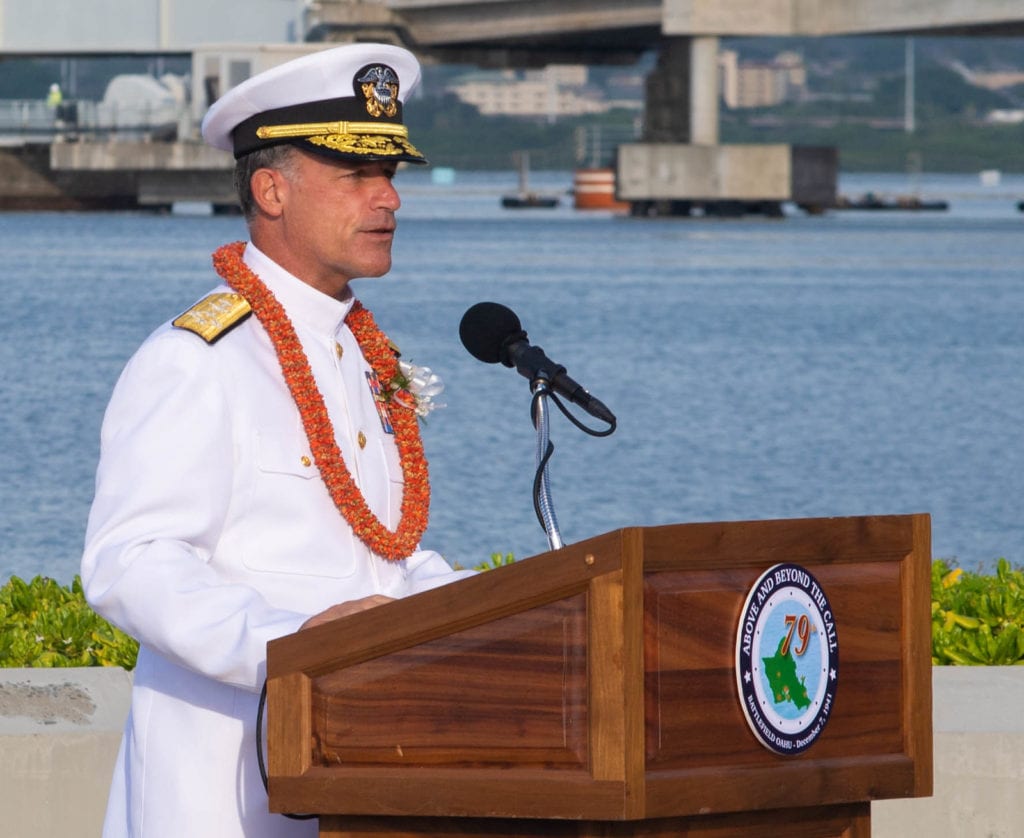
Adm. John Aquilino, Commander, U.S. Pacific Fleet, speaks during the 79th Pearl Harbor Remembrance Day ceremony at the Pearl Harbor National Memorial in Honolulu, Hawaii, in 2020.Aquilino, nominated to be the next commander of Indo-Pacific Command, testified before the Senate Armed Services Committee March 23, 2021. U.S. NAVY / Mass Communication Specialist 2nd Class Jessica O. Blackwell
ARLINGTON, Va. — The Navy admiral nominated to lead U.S. Indo-Pacific Command says his immediate challenge is to deter China from seizing Taiwan, while assuring regional allies and partners that the United States is serious about opposing Beijing’s belligerence.
“This problem is much closer to us than most think,” Adm. John C. Aquilino, currently commander of the U.S. Pacific Fleet, told the Senate Armed Services Committee at his confirmation hearing March 23.
“The Indo-Pacific is the most consequential reason for America’s future and remains the priority theater for the United States,” he said, adding that the region includes four of the five security challenges for the U.S. military: China, Russia, North Korea and violent extremist organizations.
But “of all the threats we face, [Defense Secretary Lloyd J.] Austin was very clear when he stated, ‘China is our pacing threat,’” Aquilino added. The admiral said he agreed with the assessment of the departing INDO-PACOM commander, Adm. Philip S. Davidson, that the most dangerous concern with China was if it used “military force against Taiwan.” To deter that, forward deployed U.S. forces rely on the support of “our allies and partners –those nations with common values,” he said.
While the threat of a Chinese attack is not immediate, Aquilino said it was likely sooner than the six years Davidson projected in testimony before the committee March 9. If China seized Taiwan and subsequently based ships and aircraft there, “it would certainly extend their reach. It would extend the contested environment. It would threaten our allies and partners, think [of] the Philippines,” he said.
Aquilino said conducting exercises with allies and partner nations, like Japan, Korea and India would complement the administration’s focus on deterrence through diplomatic, development and economic means. He also said the Pacific Deterrence Initiative (PDI) a multibillion dollar fund created by Congress last year, “is the foundational approach” to advancing capabilities and capacity in lethality, force design and logistics to help strengthen partnerships for an integrated joint force.
Reclaiming Taiwan, which broke away from the People’s Republic of China in 1949, is important “because the rejuvenation of the Chinese Communist Party is at stake,” the admiral said, adding “They view it as their No. 1 priority.” The fate of the island nation of 23 million, located about 100 miles from China, puts U.S. credibility on the line with regional partners. “The status of the United States as a partner with our allies and partners also is at stake should we have a conflict in Taiwan,” Aquilino said.
“The United States maintains its longstanding commitments as outlined in the Three Communiqués, the Taiwan Relations Act, and the Six Assurances. We will continue to assist Taiwan in maintaining a sufficient self-defense capability,” Aquino said in written answers to questions previously submitted by the committee.
A 1984 U.S. Naval Academy graduate and naval aviator since 1986, Aquilino was nominated in December 2020 by then-President Trump for the INDO-PACOM post but was not confirmed by the Senate before the change in administrations. He was nominated again by President Joe Biden, Austin announced March 5.
A graduate of the Navy Fighter Weapons School (TOPGUN), Aquilino made several extended deployments in support of operations Deny Flight, Deliberate Force, Southern Watch, Noble Eagle, Enduring Freedom and Iraqi Freedom. His flag assignments have included deputy director, Joint Force Coordinator on the Joint Staff; commander, CSG-2, director of Maritime Operations, U.S. Pacific Fleet and commander, U.S. Naval Forces Central Command, U.S. 5th Fleet, Combined Maritime Forces.
Navy Orders 10th Block V Virginia-Class Attack Submarine
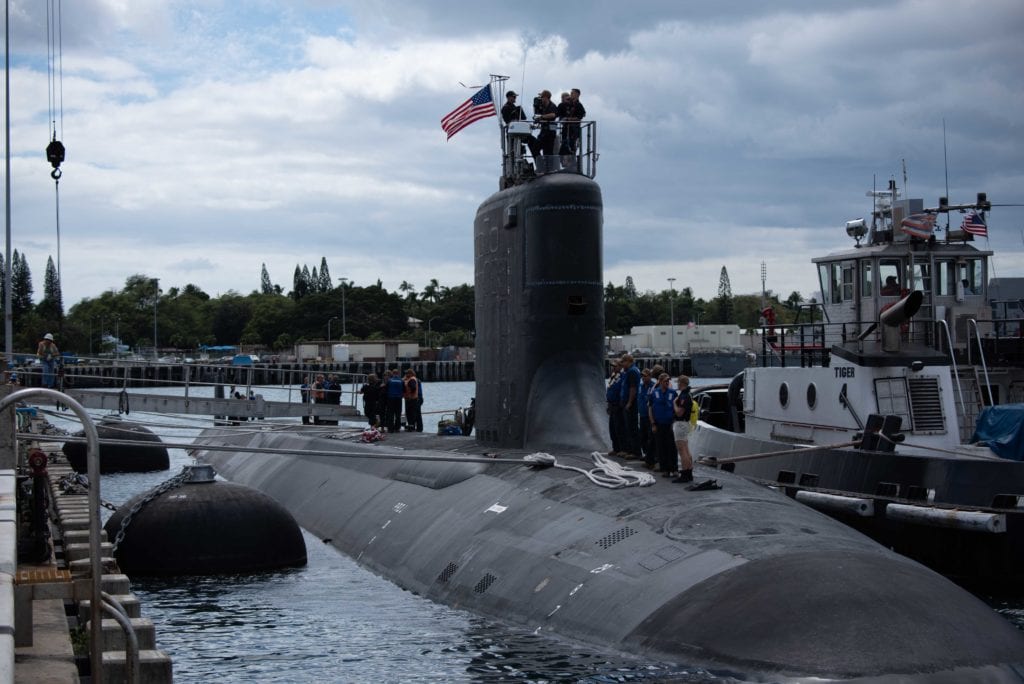
The U.S. Navy has exercised a contract option for a tenth Block V version of the Virginia-class submarine to join its other Virginia-class subs, including the USS Illinois, shown here preparing to leave Pearl Harbor in 2019. U.S. NAVY / Mass Communication Specialist 1st Class Daniel Hinton
ARLINGTON, Va. — The Navy has exercised a contract option and ordered a tenth Block V version of the Virginia-class nuclear-powered attack submarine (SSN).
The Naval Sea Systems Command awarded General Dynamics Electric Boat a $2.4 billion fixed-price incentive modification to a contract for the SSN, according to a March 19 Defense Department contract announcement. Electric Boat subcontracts Huntington Ingalls Newport News Shipbuilding for part of the work on the program.
This 460-foot, 10,200-ton Block V SSN, like seven of its nine sister Block Vs, will include a Virginia Payload Module, an 84-foot-long section of launch tubes which can fire 28 Tomahawk cruise missiles, in addition to the 12 launch tubes in the submarine’s bow, giving the submarine a payload of 40 Tomahawks.
Work on this contract option is expected to be completed by 2030. This SSN will bring to 38 the number of Virginia-class SSNs in the fleet.